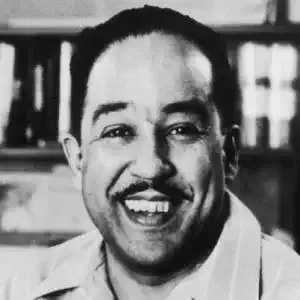
Identification and basic context
James Mercer Langston Hughes was an American poet, social-class activist, novelist, playwright, and columnist. He is widely regarded as a central figure of the Harlem Renaissance. Born in Joplin, Missouri, he later established his primary residence in Harlem, New York City. Hughes wrote in English and became a powerful voice for Black Americans.
Childhood and education
Hughes's childhood was marked by frequent moves and instability. He attended high school in Cleveland, Ohio, where he began writing poetry. He briefly attended Columbia University in New York City but felt more connected to the vibrant cultural life of Harlem. He graduated from Lincoln University, a historically black college, where he continued to develop his writing.
Literary trajectory
Hughes's literary career began to flourish in the 1920s during the Harlem Renaissance. His first collection of poetry, The Weary Blues (1926), was critically acclaimed and established his distinctive voice. He went on to publish numerous poetry collections, novels, plays, essays, and an autobiography. He also worked as a journalist and editor, further solidifying his influence.
Works, style, and literary characteristics
Hughes's major works include The Weary Blues, Fine Clothes to the Jew, The Dream Keeper and Other Poems, and Montage of a Dream Deferred. His poetry is characterized by its focus on the lives and experiences of ordinary Black Americans, its use of blues and jazz rhythms, and its accessible language. Themes include racial injustice, the dreams and struggles of Black people, the beauty of Black culture, and the search for identity. His style is often described as lyrical, musical, and direct. He embraced various forms, from traditional verse to free verse, incorporating colloquialisms and African American vernacular.
Cultural and historical context
Hughes was a pivotal figure during the Harlem Renaissance, a period of immense artistic and intellectual flowering for Black Americans in the 1920s and 1930s. He actively engaged with the social and political issues of his time, including racism, economic inequality, and the fight for civil rights. His work reflects the Great Migration, the urban experiences of Black Americans, and the cultural pride of the era.
Personal life
Hughes traveled extensively, living in various parts of the United States and abroad, including time in Africa and Europe. His personal life was marked by a commitment to his community and a dedication to his art. He maintained strong connections with other artists and intellectuals of the Harlem Renaissance.
Recognition and reception
Hughes received significant recognition during his lifetime and posthumously. He won numerous awards for his poetry and was widely celebrated for his contributions to American literature and his role in promoting Black culture and consciousness. His work continues to be studied, performed, and admired.
Influences and legacy
Hughes was influenced by poets like Carl Sandburg and Vachel Lindsay, as well as the musical traditions of blues and jazz. His legacy is profound; he is credited with shaping modern Black literature and bringing the experiences of Black Americans to a national audience. His innovative use of musical forms in poetry and his consistent advocacy for racial equality have had a lasting impact on subsequent generations of writers and activists.
Interpretation and critical analysis
Hughes's poetry is often analyzed for its powerful portrayal of the Black experience in America, its celebration of Black culture, and its subtle yet firm critique of racial injustice. His use of blues and jazz structures is frequently examined for its contribution to the musicality and emotional depth of his verse.
Curiosities and lesser-known aspects
Hughes was a prolific writer who also worked as a translator, a lyricist for musical productions, and wrote a popular newspaper column, "The Hughes", under various pseudonyms. He often drew inspiration from everyday conversations and observations.
Death and memory
Langston Hughes died in New York City in 1967. He is remembered as one of America's most important poets, a key figure of the Harlem Renaissance, and a tireless advocate for civil rights and Black identity.