Langston Hughes

Langston Hughes

1902–1967 · lived 65 years US US

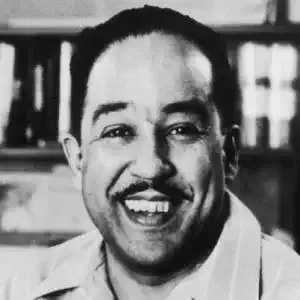
James Mercer Langston Hughes was an American poet, social activist, novelist, playwright, and columnist who was the central figure of the Harlem Renaissance. His powerful and accessible poetry often captured the experiences, joys, and struggles of Black Americans, using rhythms and language drawn from blues and jazz music. Hughes celebrated Black culture and identity, advocating for racial equality and social justice throughout his prolific career. His work remains deeply influential, continuing to resonate with readers for its authenticity, musicality, and enduring message of hope and resilience.

n. 1902-02-01, Joplin · m. 1967-05-22, Nova Iorque

20,841 Views

Wisdom and War

Wisdom and War

We do not care-
That much is clear.
Not enough
Of us care
Anywhere.
We are not wise-
For that reason,
Mankind dies.
To think
Is much against
The will.
Better-
And easier-
To kill.
Read full poem
Bio

Identification and basic context

James Mercer Langston Hughes was an American poet, social-class activist, novelist, playwright, and columnist. He is widely regarded as a central figure of the Harlem Renaissance. Born in Joplin, Missouri, he later established his primary residence in Harlem, New York City. Hughes wrote in English and became a powerful voice for Black Americans.

Childhood and education

Hughes's childhood was marked by frequent moves and instability. He attended high school in Cleveland, Ohio, where he began writing poetry. He briefly attended Columbia University in New York City but felt more connected to the vibrant cultural life of Harlem. He graduated from Lincoln University, a historically black college, where he continued to develop his writing.

Literary trajectory

Hughes's literary career began to flourish in the 1920s during the Harlem Renaissance. His first collection of poetry, The Weary Blues (1926), was critically acclaimed and established his distinctive voice. He went on to publish numerous poetry collections, novels, plays, essays, and an autobiography. He also worked as a journalist and editor, further solidifying his influence.

Works, style, and literary characteristics

Hughes's major works include The Weary Blues, Fine Clothes to the Jew, The Dream Keeper and Other Poems, and Montage of a Dream Deferred. His poetry is characterized by its focus on the lives and experiences of ordinary Black Americans, its use of blues and jazz rhythms, and its accessible language. Themes include racial injustice, the dreams and struggles of Black people, the beauty of Black culture, and the search for identity. His style is often described as lyrical, musical, and direct. He embraced various forms, from traditional verse to free verse, incorporating colloquialisms and African American vernacular.

Cultural and historical context

Hughes was a pivotal figure during the Harlem Renaissance, a period of immense artistic and intellectual flowering for Black Americans in the 1920s and 1930s. He actively engaged with the social and political issues of his time, including racism, economic inequality, and the fight for civil rights. His work reflects the Great Migration, the urban experiences of Black Americans, and the cultural pride of the era.

Personal life

Hughes traveled extensively, living in various parts of the United States and abroad, including time in Africa and Europe. His personal life was marked by a commitment to his community and a dedication to his art. He maintained strong connections with other artists and intellectuals of the Harlem Renaissance.

Recognition and reception

Hughes received significant recognition during his lifetime and posthumously. He won numerous awards for his poetry and was widely celebrated for his contributions to American literature and his role in promoting Black culture and consciousness. His work continues to be studied, performed, and admired.

Influences and legacy

Hughes was influenced by poets like Carl Sandburg and Vachel Lindsay, as well as the musical traditions of blues and jazz. His legacy is profound; he is credited with shaping modern Black literature and bringing the experiences of Black Americans to a national audience. His innovative use of musical forms in poetry and his consistent advocacy for racial equality have had a lasting impact on subsequent generations of writers and activists.

Interpretation and critical analysis

Hughes's poetry is often analyzed for its powerful portrayal of the Black experience in America, its celebration of Black culture, and its subtle yet firm critique of racial injustice. His use of blues and jazz structures is frequently examined for its contribution to the musicality and emotional depth of his verse.

Curiosities and lesser-known aspects

Hughes was a prolific writer who also worked as a translator, a lyricist for musical productions, and wrote a popular newspaper column, "The Hughes", under various pseudonyms. He often drew inspiration from everyday conversations and observations.

Death and memory

Langston Hughes died in New York City in 1967. He is remembered as one of America's most important poets, a key figure of the Harlem Renaissance, and a tireless advocate for civil rights and Black identity.

Poems

47

Wisdom and War

Wisdom and War

We do not care-
That much is clear.
Not enough
Of us care
Anywhere.
We are not wise-
For that reason,
Mankind dies.
To think
Is much against
The will.
Better-
And easier-
To kill.
344

Walkers with the Dawn

Walkers with the Dawn

Being walkers with the dawn and morning,
Walkers with the sun and morning,
We are not afraid of night,
Nor days of gloom,
Nor darkness--
Being walkers with the sun and morning.
342

When Sue Wears Red

When Sue Wears Red

When Susanna Jones wears red
her face is like an ancient cameo
Turned brown by the ages.
Come with a blast of trumphets, Jesus!


When Susanna Jones wears red
A queen from some time-dead Egyptian night
Walks once again.
Blow trumphets, Jesus!


And the beauty of Susanna Jones in red
Burns in my heart a love-fire sharp like a pain.
Sweet silver trumphets, Jesus!
358

To Artina

To Artina

I will take you heart.
I will take your soul out of your body
As though I were God.
I will not be satisfied
With the touch of your hand
Nor the sweet of your lips alone.
I will take your heart for mine.
I will take your soul.
I will be God when it comes to you.
489

Trumpet Player

Trumpet Player

The Negro
With the trumpet at his lips
Has dark moons of weariness
Beneath his eyes
where the smoldering memory
of slave ships
Blazed to the crack of whips
about thighs

The negro
with the trumpet at his lips
has a head of vibrant hair
tamed down,
patent-leathered now
until it gleams
like jetwere
jet a crown

the music
from the trumpet at his lips
is honey
mixed with liquid fire
the rhythm
from the trumpet at his lips
is ecstasy
distilled from old desire-

Desire
that is longing for the moon
where the moonlight's but a spotlight
in his eyes,
desire
that is longing for the sea
where the sea's a bar-glass
sucker size

The Negro
with the trumpet at his lips
whose jacket
Has a fine one-button roll,
does not know
upon what riff the music slips

It's hypodermic needle
to his soul
but softly
as the tune comes from his throat
trouble
mellows to a golden note
430

The Negro Mother

The Negro Mother

Children, I come back today
To tell you a story of the long dark way
That I had to climb, that I had to know
In order that the race might live and grow.
Look at my face -- dark as the night --
Yet shining like the sun with love's true light.
I am the dark girl who crossed the red sea
Carrying in my body the seed of the free.
I am the woman who worked in the field
Bringing the cotton and the corn to yield.
I am the one who labored as a slave,
Beaten and mistreated for the work that I gave --
Children sold away from me, I'm husband sold, too.
No safety , no love, no respect was I due.


Three hundred years in the deepest South:
But God put a song and a prayer in my mouth .
God put a dream like steel in my soul.
Now, through my children, I'm reaching the goal.


Now, through my children, young and free,
I realized the blessing deed to me.
I couldn't read then. I couldn't write.
I had nothing, back there in the night.
Sometimes, the valley was filled with tears,
But I kept trudging on through the lonely years.
Sometimes, the road was hot with the sun,
But I had to keep on till my work was done:
I had to keep on! No stopping for me --
I was the seed of the coming Free.
I nourished the dream that nothing could smother
Deep in my breast -- the Negro mother.
I had only hope then , but now through you,
Dark ones of today, my dreams must come true:
All you dark children in the world out there,
Remember my sweat, my pain, my despair.
Remember my years, heavy with sorrow --
And make of those years a torch for tomorrow.
Make of my pass a road to the light
Out of the darkness, the ignorance, the night.
Lift high my banner out of the dust.
Stand like free men supporting my trust.
Believe in the right, let none push you back.
Remember the whip and the slaver's track.
Remember how the strong in struggle and strife
Still bar you the way, and deny you life --
But march ever forward, breaking down bars.
Look ever upward at the sun and the stars.
Oh, my dark children, may my dreams and my prayers
Impel you forever up the great stairs --
For I will be with you till no white brother
Dares keep down the children of the Negro Mother.
617

The Weary Blues

The Weary Blues

Droning a drowsy syncopated tune,
Rocking back and forth to a mellow croon,
I heard a Negro play.
Down on Lenox Avenue the other night
By the pale dull pallor of an old gas light
He did a lazy sway ....
To the tune o' those Weary Blues.
With his ebony hands on each ivory key
He made that poor piano moan with melody.
O Blues!
Swaying to and fro on his rickety stool
He played that sad raggy tune like a musical fool.
Sweet Blues!
Coming from a black man's soul.
O Blues!
In a deep song voice with a melancholy tone
I heard that Negro sing, that old piano moan-"
Ain't got nobody in all this world,
Ain't got nobody but ma self.
I's gwine to quit ma frownin'
And put ma troubles on the shelf."


Thump, thump, thump, went his foot on the floor.
He played a few chords then he sang some more-"
I got the Weary Blues
And I can't be satisfied.
Got the Weary Blues
And can't be satisfied--
I ain't happy no mo'
And I wish that I had died."
And far into the night he crooned that tune.
The stars went out and so did the moon.
The singer stopped playing and went to bed
While the Weary Blues echoed through his head.
He slept like a rock or a man that's dead.
697

The Blues

The Blues

When the shoe strings break
On both your shoes
And you're in a hurryThat's
the blues.

When you go to buy a candy bar
And you've lost the dime you had-
Slipped through a hole in your pocket somewhereThat's
the blues, too, and bad!

Submitted by Denice Jackson
373

Sylvester’s Dying Bed

Sylvester’s Dying Bed

I woke up this mornin’
’Bout half-past three.
All the womens in town
Was gathered round me.


Sweet gals was a-moanin’,
“Sylvester’s gonna die!”
And a hundred pretty mamas
Bowed their heads to cry.


I woke up little later
’Bout half-past fo’,
The doctor ‘n’ undertaker’s
Both at ma do’.


Black gals was a-beggin’,
“You can’t leave us here!”
Brown-skins cryin’, “Daddy!
Honey! Baby! Don’t go, dear!”


But I felt ma time’s a-comin’,
And I know’d I’s dyin’ fast.
I seed the River Jerden
A-creepin’ muddy past—
But I’s still Sweet Papa ’Vester,
Yes, sir! Long as life do last!


So I hollers, “Com’ere, babies,
Fo’ to love yo’ daddy right!”
And I reaches up to hug ’em—
When the Lawd put out the light.


Then everything was darkness
In a great ... big ... night.
364

Still Here

Still Here

been scared and battered.
My hopes the wind done scattered.
Snow has friz me,
Sun has baked me,


Looks like between 'em they done
Tried to make me


Stop laughin', stop lovin', stop livin'--
But I don't care!
I'm still here!
328

Quotes

40

Videos

50

Comments (0)

Share
Log in to post a comment.

No comments yet. Be the first to comment.