Langston Hughes

Langston Hughes

1902–1967 · lived 65 years US US

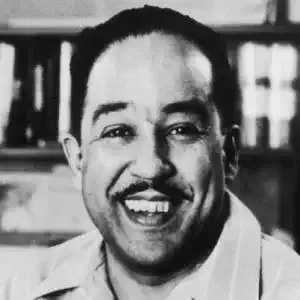
James Mercer Langston Hughes was an American poet, social activist, novelist, playwright, and columnist who was the central figure of the Harlem Renaissance. His powerful and accessible poetry often captured the experiences, joys, and struggles of Black Americans, using rhythms and language drawn from blues and jazz music. Hughes celebrated Black culture and identity, advocating for racial equality and social justice throughout his prolific career. His work remains deeply influential, continuing to resonate with readers for its authenticity, musicality, and enduring message of hope and resilience.

n. 1902-02-01, Joplin · m. 1967-05-22, Nova Iorque

20,841 Views

Wisdom and War

Wisdom and War

We do not care-
That much is clear.
Not enough
Of us care
Anywhere.
We are not wise-
For that reason,
Mankind dies.
To think
Is much against
The will.
Better-
And easier-
To kill.
Read full poem
Bio

Identification and basic context

James Mercer Langston Hughes was an American poet, social-class activist, novelist, playwright, and columnist. He is widely regarded as a central figure of the Harlem Renaissance. Born in Joplin, Missouri, he later established his primary residence in Harlem, New York City. Hughes wrote in English and became a powerful voice for Black Americans.

Childhood and education

Hughes's childhood was marked by frequent moves and instability. He attended high school in Cleveland, Ohio, where he began writing poetry. He briefly attended Columbia University in New York City but felt more connected to the vibrant cultural life of Harlem. He graduated from Lincoln University, a historically black college, where he continued to develop his writing.

Literary trajectory

Hughes's literary career began to flourish in the 1920s during the Harlem Renaissance. His first collection of poetry, The Weary Blues (1926), was critically acclaimed and established his distinctive voice. He went on to publish numerous poetry collections, novels, plays, essays, and an autobiography. He also worked as a journalist and editor, further solidifying his influence.

Works, style, and literary characteristics

Hughes's major works include The Weary Blues, Fine Clothes to the Jew, The Dream Keeper and Other Poems, and Montage of a Dream Deferred. His poetry is characterized by its focus on the lives and experiences of ordinary Black Americans, its use of blues and jazz rhythms, and its accessible language. Themes include racial injustice, the dreams and struggles of Black people, the beauty of Black culture, and the search for identity. His style is often described as lyrical, musical, and direct. He embraced various forms, from traditional verse to free verse, incorporating colloquialisms and African American vernacular.

Cultural and historical context

Hughes was a pivotal figure during the Harlem Renaissance, a period of immense artistic and intellectual flowering for Black Americans in the 1920s and 1930s. He actively engaged with the social and political issues of his time, including racism, economic inequality, and the fight for civil rights. His work reflects the Great Migration, the urban experiences of Black Americans, and the cultural pride of the era.

Personal life

Hughes traveled extensively, living in various parts of the United States and abroad, including time in Africa and Europe. His personal life was marked by a commitment to his community and a dedication to his art. He maintained strong connections with other artists and intellectuals of the Harlem Renaissance.

Recognition and reception

Hughes received significant recognition during his lifetime and posthumously. He won numerous awards for his poetry and was widely celebrated for his contributions to American literature and his role in promoting Black culture and consciousness. His work continues to be studied, performed, and admired.

Influences and legacy

Hughes was influenced by poets like Carl Sandburg and Vachel Lindsay, as well as the musical traditions of blues and jazz. His legacy is profound; he is credited with shaping modern Black literature and bringing the experiences of Black Americans to a national audience. His innovative use of musical forms in poetry and his consistent advocacy for racial equality have had a lasting impact on subsequent generations of writers and activists.

Interpretation and critical analysis

Hughes's poetry is often analyzed for its powerful portrayal of the Black experience in America, its celebration of Black culture, and its subtle yet firm critique of racial injustice. His use of blues and jazz structures is frequently examined for its contribution to the musicality and emotional depth of his verse.

Curiosities and lesser-known aspects

Hughes was a prolific writer who also worked as a translator, a lyricist for musical productions, and wrote a popular newspaper column, "The Hughes", under various pseudonyms. He often drew inspiration from everyday conversations and observations.

Death and memory

Langston Hughes died in New York City in 1967. He is remembered as one of America's most important poets, a key figure of the Harlem Renaissance, and a tireless advocate for civil rights and Black identity.

Poems

47

Children's Rhymes

Children's Rhymes

By what sends
the white kids
I ain't sent:
I know I can't
be President.
What don't bug
them white kids
sure bugs me:
We know everybody
ain't free.


Lies written down
for white folks
ain't for us a-tall:
Liberty And Justice--
Huh!--For All?
348

Bound No’th Blues

Bound No’th Blues

Goin’ down the road, Lawd,
Goin’ down the road.
Down the road, Lawd,
Way,way down the road.
Got to find somebody
To help me carry this load.


Road’s in front o’ me,
Nothin’ to do but walk.
Road’s in front of me,
Walk…an’ walk…an’ walk.
I’d like to meet a good friend
To come along an’ talk.


Hates to be lonely,
Lawd, I hates to be sad.
Says I hates to be lonely,
Hates to be lonely an’ sad,
But ever friend you finds seems
Like they try to do you bad.


Road, road, road, O!
Road, road…road…road, road!
Road, road, road, O!
On the no’thern road.
These Mississippi towns ain’t
Fit fer a hoppin’ toad.
352

Brass Spittoons

Brass Spittoons

Clean the spittoons, boy.
Detroit,
Chicago,
Atlantic City,
Palm Beach.
Clean the spittoons.
The steam in hotel kitchens,
And the smoke in hotel lobbies,
And the slime in hotel spittoons:
Part of my life.
Hey, boy!
A nickel,
A dime,
A dollar,
Two dollars a day.
Hey, boy!
A nickel,
A dime,
A dollar,
Two dollars
Buy shoes for the baby.
House rent to pay.
Gin on Saturday,
Church on Sunday.
My God!
Babies and gin and church
And women and Sunday
All mixed with dimes and
Dollars and clean spittoons
And house rent to pay.
Hey, boy!
A bright bowl of brass is beautiful to the Lord.
Bright polished brass like the cymbals
Of King David’s dancers,
Like the wine cups of Solomon.
Hey, boy!
A clean spittoon on the altar of the Lord.
A clean bright spittoon all newly polished—
At least I can offer that.
Com’mere, boy!
454

As I Grew Older

As I Grew Older

It was a long time ago.
I have almost forgotten my dream.
But it was there then,
In front of me,
Bright like a sun--
My dream.
And then the wall rose,
Rose slowly,
Slowly,
Between me and my dream.
Rose until it touched the sky--
The wall.
Shadow.
I am black.
I lie down in the shadow.
No longer the light of my dream before me,
Above me.
Only the thick wall.
Only the shadow.
My hands!
My dark hands!
Break through the wall!
Find my dream!
Help me to shatter this darkness,
To smash this night,
To break this shadow
Into a thousand lights of sun,
Into a thousand whirling dreams
Of sun!
902

April Rain Song

April Rain Song

Let the rain kiss you
Let the rain beat upon your head with silver liquid drops
Let the rain sing you a lullaby
The rain makes still pools on the sidewalk
The rain makes running pools in the gutter
The rain plays a little sleep song on our roof at night
And I love the rain.
402

-50

-50


I’m all alone in this world, she said,
Ain’t got nobody to share my bed,
Ain’t got nobody to hold my hand—
The truth of the matter’s
I ain’t got no man.


Big Boy opened his mouth and said,
Trouble with you is
You ain’t got no head!
If you had a head and used your mind
You could have me with you
All the time.


She answered, Babe, what must I do?


He said, Share your bed—
And your money, too.
319

Acceptance

Acceptance


God in His infinite wisdom
Did not make me very wise-
So when my actions are stupid
They hardly take God by surprise
522

Quotes

40

Videos

50

Comments (0)

Share
Log in to post a comment.

No comments yet. Be the first to comment.