
Ethics and Morality

John Greenleaf Whittier
Cassandra Southwick
To the God of all sure mercies let my blessing rise today,
From the scoffer and the cruel He hath plucked the spoil away;
Yes, he who cooled the furnace around the faithful three,
And tamed the Chaldean lions, hath set His handmaid free!
Last night I saw the sunset melt though my prison bars,
Last night across my damp earth-floor fell the pale gleam of stars;
In the coldness and the darkness all through the long night-time,
My grated casement whitened with autumn's early rime.
Alone, in that dark sorrow, hour after hour crept by;
Star after star looked palely in and sank adown the sky;
No sound amid night's stillness, save that which seemed to be
The dull and heavy beating of the pulses of the sea;
All night I sat unsleeping, for I knew that on the morrow
The ruler said the cruel priest would mock me in my sorrow,
Dragged to their place of market, and bargained for and sold,
Like a lamb before the shambles, like a heifer from the fold!
Oh, the weakness of the flesh was there¯the shrinking and the shame;
And the low voice of the Tempter like whispers to me came,
'Why sit'st thou thus forlornly,' the wicked murmur said,
'Damp walls thy bower beauty, cold earth thy maiden bed?
'Where be the smiling faces, and voices soft and sweet,
Seen in thy father's dwelling, hoard in the pleasant street?
Where be the youths whose glances, the summer Sabbath through,
Turned tenderly and timidly unto thy father's pew?
'Why sit'st thou here, Cassandra? Bethink thee with what mirth
Thy happy schoolmates gather around the warm, dark hearth;
How the crimson shadows tremble on foreheads white and fair,
On eyes of merry girlhood, half hid in golden hair.
'Not for thee the hearth-fire brightens, not for thee kind words are spoken,
Not for thee the nuts of Wenham woods by laughing boys are broken;
No first-fruits of the orchard within thy lap are laid,
For thee no flowers of autumn the youthful hunters braid.
'O weak, deluded maiden!¯by crazy fancies led,
With wild and raving railers an evil path to tread;
To leave a wholesome worship, and teaching pure and sound,
And mate with maniac women, loose-haired and sackcloth-bound,
'And scoffers of the priesthood, who mock at things divine,
Who rail against thy pulpit, and holy bread and wine;
Bore from their cart-tail scourgings, and from the pillory lame,
Rejoicing in their wretchedness, and glorying in their shame.
'And what a fate awaits thee!¯a sadly toiling slave,
Dragging the slowly lengthening chain of bondage to the grave!
Think of thy woman's nature, subdued in hopeless thrall,
The easy prey of any, the scoff and scorn of all!'
Oh, ever as the Tempter spoke, and feecle Nature's fears
Wrung drop by drop the scalding flow of unavailing tears,
I wrestled down the evil thoughts, and strove in silent prayer
To feel, O Helper of the weak! that Thou indeed wert there!
I thought of Paul and Silas, within Philippi's call,
And how from Peter's sleeping limbs the prison shackles fell,
Till I seemed to hear the trailing of an Angel's robe of white,
And to feel a blessed presence invisible to sight.
Bless the Lord for all his mercies!¯for the peace and love I felt,
Like the dew of Hermon's holy hill, upon my spirit melt;
When 'Get behind me, Satan! ' was the language of my heart,
And I felt the Evil Tempter with all his doubts depart.
Slow broke the gray cold morning; again the sunshine fell,
Flocked with the shade of bar and grate within my lonely cell;
The hoar-frost melted on the wall, and upward from the street
Came careless laugh and idle word, and tread of passing feet.
At length the heavy bolts fell back, my door was open cast,
And slowly at the sheriff's side, up the long street I passed;
I heard the murmur round me, and felt, but dared not see,
How, from every door and window, the people gazed on me.
And doubt and fear fell on me, shame burned upon my cheek,
Swam earth and sky around me, my trembling limbs grew weak;
'Oh Lord, support thy handmaid, and from her soul cast out
The fear of men, which brings a snare, the weakness and the doubt.
Then the dreary shadows scattered, like a cloud in morning's breeze,
And a low deep voice within me seemed whispering words like these:
'Though thy earth be as the iron, and thy heaven a brazen wall,
Trust still His loving-kindness whose power is over all.'
We paused at length, where at my feet the sunlit waters broke
On glaring roach of shining beach, and shingly wall of rock;
The merchant-ships lay idle there, in hard clear lines on high,
Treeing with rope and slender spar their network on the sky.
And there were ancient citizens, cloak-wrapped and grave and cold,
And grim and stout sea-captains with faces bronzed and old,
And on his horse, with Rawson, his cruel clerk at hand,
Sat dark and haughty Endicott, the ruler of the land.
And poisoning with his evil words the ruler's ready ear,
The priest leaned over his saddle, with laugh and scoff and jeer;
It stirred my soul, and from my lips the soul of silence broke,
As if through woman's weakness a warning spirit spoke.
I cried 'The Lord rebuke thee, thou smiter of the meek,
Thou robber of the righteous, thou trampler of the weak!
Go light the cold, dark hearth-stones,¯go turn the prison lock
Of the poor hearts though hast hunted, thou wolf amid the flock!'
Dark lowered the brows of Endicott, and with a deeper red
O'er Rawson's wine-empurpled cheek the flash of anger spread;
'Good people, ' quoth the white-lipped priest, 'heed not her words so wild,
Her Master speaks within her¯ the Devil owns his child!'
But gray heads shook, and young brows knit, the while the sheriff read
That law the wicked rulers against the poor have made,
Who to their house of Rimmon and idol priesthood bring
No bonded knee of worship, nor gainful offering.
Then to the stout sea-captains the sheriff, turning, said¯
'Wish of ye, worthy seamen, will take this Quaker maid?
On the Isle of fair Barbados, or on Virginia's shore
You may hold her at a higher price than Indian girl or Moor!'
Grim and silent stood the captains; and when again he cried,
'Speak out my worthy seamen!' no voice, no sign replied;
But I felt a hard hand press my own, and kind words met my ear,¯
'God bless thee, and preserve thee, my gentle girl and dear!'
A weight seemed lifted from my heart, a pitying friend was nigh,
I felt it in his hard, rough hand, and saw it in his eye;
And when again the sheriff spoke, that voice, so kind to me,
Growled back its stormy answer like the roaring of the sea.
'Pile my ship with bars of silver, pack with coins of Spanish gold
From keel-piece up to deck-plank, the roomage of her hold,
By the living God that made me! I would sooner in your bay
Sink ship and crew and cargo, than bear this child away!'
'Well answered, worthy captain, shame on their cruel laws!'
Ran through the crowd in murmurs loud the people's just applause.
'Like the herdsmen of Tekoa, In Israel of old,
Shall we see the poor and righteous again for silver sold ?'
I looked on haughty Endicott; with weapon half-way drawn,
Swept around the throng his lion glare of bitter hate and scorn;
Fiercely he drew his bridle-rain, and turned in silence back,
And sneering priest and baffled clerk rode murmuring in his track.
Hard after them the sheriff looked, in bitterness of soul,
Thrice smote his staff upon the ground, and crushed his parchment-roll.
'Good friends,' he said, 'since both have fled, the ruler and the priest
Judge ye, if from their further work I be not well released.'
Loud was the cheer which, full and clear, swept round the silent bay,
As, with kind words and kinder looks, he bade me go my way;
For he who turns the courses of the streamlet of the glen,
And the river of great waters, had turned the hearts of men.
Oh, at that hour the very earth seemed changed beneath my eye,
A holier wonder round no rose the blue walls of the sky,
A lovelier light on rock and hill and stream and woodland lay,
And softer lapsed on sunnier sands the waters of the bay.
Thanksgiving to the Lord of life! To him all praises be,
Who from the hands of evil men hath set his handmaid free;
All praise to Him before whose power the mighty are afraid,
Who take the crafty in the snare which for the poor is laid!
Sing, O my soul, rejoicingly, on evening's twilight calm
Uplift the loud thanksgiving, pour forth the grateful psalm;
Let all dear hearts with me rejoice, as did the saints of old,
When of the Lord's good angel the rescued Peter told.
And weep and howl, ye evil priests and mighty men of wrong,
The lord shall smite the proud, and lay His hand upon the strong.
Woe to the wicked rulers in his avenging hour!
Woe to the wolves who seek the flocks to raven and devour!
But let the humble ones arise, the poor in heart be glad,
And let the mourning ones again with robes of praise be clad,
For he who cooled the furnace, and smoothed the stormy wave,
And tamed the Chaldean lions, is mighty still to save!
394

Alexander Pope
To Lady Mary Wortley Montagu
I.
In beauty, or wit,
No mortal as yet
To question your empire has dared:
But men of discerning
Have thought that in learning
To yield to a lady was hard.
II.
Impertinent schools,
With musty dull rules,
Have reading to females denied;
So Papists refuse
The Bible to use,
Lest flocks should be wise as their guide.
III.
'Twas a woman at first
(Indeed she was curst)
In knowledge that tasted delight,
And sages agree
The laws should decree
To the first possessor the right.
IV.
Then bravely, fair dame,
Resume the old claim,
Which to your whole sex does belong;
And let men receive,
From a second bright Eve,
The knowledge of right and of wrong.
V.
But if the first Eve
Hard doom did receive,
When only one apple had she,
What a punishment new
Shall be found out for you,
Who tasting, have robb'd the whole tree?
392

Ella Wheeler Wilcox
Older Than You
We are younger in years! Yes, that is true;
But in some things we are older than you.
For instance, you sometimes say with a smile,
'It will do to drink wine once in a while.'
We say, 'It will not do at all!'
Wine is an imp of old Alcohol.
So are gin and beer, and cider, too.
If you drink up them, they will eat up you.
'Cider is not a strong drink,' you say.
Ah! but, my friend, it opens the way
For brandy and whiskey to follow fast.
It has done it many a time in the past.
It tempts and teases the appetite.
Let it alone, boys, keep to the right;
Onward and upward we mean to go.
Heaven is reached that way, you know.
People who drink are behind the time.
They are back with darkness, and woe, and crime.
This age is progressive. You people who drink,
Though ever so little, just pause and think-
Think of the anguish that liquor makes;
Think of the hearts that it burdens and breaks.
Let it alone: stop drinking to-day-
This is what we, the children, say.
395

William Shakespeare
Sonnet 12: When I do count the clock that tells the time
When I do count the clock that tells the time,
And see the brave day sunk in hideous night;
When I behold the violet past prime,
And sable curls all silvered o'er with white;
When lofty trees I see barren of leaves
Which erst from heat did canopy the herd,
And summer's green all girded up in sheaves
Borne on the bier with white and bristly beard,
Then of thy beauty do I question make
That thou among the wastes of time must go,
Since sweets and beauties do themselves forsake
And die as fast as they see others grow;
And nothing 'gainst Time's scythe can make defence
Save breed, to brave him when he takes thee hence.
395
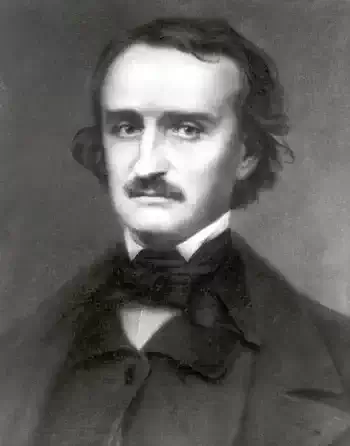
Edgar Allan Poe
Lenore
Ah, broken is the golden bowl! the spirit flown forever!
Let the bell toll!- a saintly soul floats on the Stygian river;
And, Guy de Vere, hast thou no tear?- weep now or nevermore!
See! on yon drear and rigid bier low lies thy love, Lenore!
Come! let the burial rite be read- the funeral song be sung!
An
anthem for the queenliest dead that ever died so young
A
dirge for her the doubly dead in that she died so young.
"Wretches! ye loved her for her wealth and hated her for her pride,
And when she fell in feeble health, ye blessed her- that she died!
How shall the ritual, then, be read?- the requiem how be sung
By you- by yours, the evil eye,- by yours, the slanderous tongue
That did to death the innocence that died, and died so young?"
Peccavimus; but rave not thus! and let a Sabbath song
Go up to God so solemnly the dead may feel no wrong.
The sweet Lenore hath "gone before," with Hope, that flew beside,
Leaving thee wild for the dear child that should have been thy
bride.
For her, the fair and debonair, that now so lowly lies,
The life upon her yellow hair but not within her eyes
The life still there, upon her hair- the death upon her eyes.
"Avaunt! avaunt! from fiends below, the indignant ghost is riven
From
Hell unto a high estate far up within the HeavenFrom
grief and groan, to a golden throne, beside the King of
Heaven!
Let no bell toll, then,- lest her soul, amid its hallowed mirth,
Should catch the note as it doth float up from the damned Earth!
And I!- to-night my heart is light!- no dirge will I upraise,
But waft the angel on her flight with a Paean of old days!"
393

Lord Byron
To Dives. A Fragment
Unhappy Dives! in an evil hour
'Gainst Nature's voice seduced to deeds accurst!
Once Fortune's minion, now thou feel'st her power;
Wrath's vial on thy lofty head bath burst.
In Wit, in Genius, as in Wealth the first,
How wondrous bright thy blooming morn arose!
But thou went smitten with th' unhallow'd thirst
Of crime unnamed,
and thy sad noon must close
In scorn, and solitude unsought, the worst of woes.
394
William Shakespeare
Sonnet 120: That you were once unkind befriends me now
That you were once unkind befriends me now,
And for that sorrow which I then did feel
Needs must I under my transgression bow,
Unless my nerves were brass or hammer'd steel.
For if you were by my unkindness shaken
As I by yours, you've pass'd a hell of time,
And I, a tyrant, have no leisure taken
To weigh how once I suffered in your crime.
O, that our night of woe might have remember'd
My deepest sense, how hard true sorrow hits,
And soon to you, as you to me, then tender'd
The humble slave which wounded bosoms fits!
But that your trespass now becomes a fee;
Mine ransoms yours, and yours must ransom me.
391
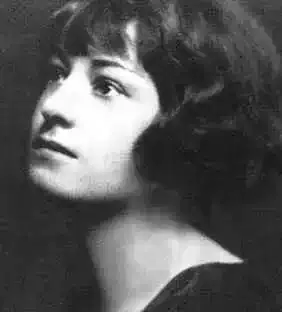
Dorothy Parker
Theory
Into love and out again,
Thus I went, and thus I go.
Spare your voice, and hold your pen
Well
and bitterly I know
All the songs were ever sung,
All the words were ever said;
Could it be, when I was young,
Some one dropped me on my head?
Thus I went, and thus I go.
Spare your voice, and hold your pen
Well
and bitterly I know
All the songs were ever sung,
All the words were ever said;
Could it be, when I was young,
Some one dropped me on my head?
391
Ella Wheeler Wilcox
The Messenger
She rose up in the early dawn,
And white and silently she moved
About the house. Four men had gone
To battle for the land they loved,
And she, the mother and the wife,
Waited for tidings from the strife.
How still the house seemed! and her tread
Was like the footsteps of the dead.
The long day passed; the dark night came.
She had not seen a human face.
Some voice spoke suddenly her name.
How loud it echoed in that place,
Where, day on day, no sound was heard
But her own footsteps. 'Bring you word,'
She cried to whom she could not see,
'Word from the battle-plain to me?'
A soldier entered at the door,
And stood within the dim firelight;
'I bring you tidings of the four,'
He said, 'who left you for the fight.'
'God bless you, friend,' she cried, 'speak on!
For I can bear it. One is gone?'
'Ay, one is gone!' he said. 'Which one?'
'Dear lady, he, your eldest son.'
A deathly pallor shot across
Her withered face; she did not weep.
She said: 'It is a grievous loss,
But God gives His belovèd sleep.
What of the living-of the three?
And when can they come back to me?'
The soldier turned away his head:
'Lady, your husband, too, is dead.'
She put her hand upon her brow;
A wild, sharp pain was in her eyes.
'My husband! Oh, God, help me now!'
The soldier heard her shuddering sighs.
The task was harder than he thought.
'Your youngest son, dear madam, fought
Close at his father's side; both fell
Dead, by the bursting of a shell.'
She moved her lips and seemed to moan.
Her face had paled to ashen gray:
'Then one is left me-one alone,'
She said, 'of four who marched away.
Oh, overruling, All-wise God,
How can I pass beneath Thy rod!'
The soldier walked across the floor,
Paused at the window, at the door,
Wiped the cold dew-drops from his cheek
And sought the mourner's side again.
'Once more, dear lady, I must speak:
Your last remaining son was slain
Just at the closing of the fight,
'Twas he who sent me here to-night.'
'God knows,' the man said afterward,
'The fight itself was not so hard.'
390
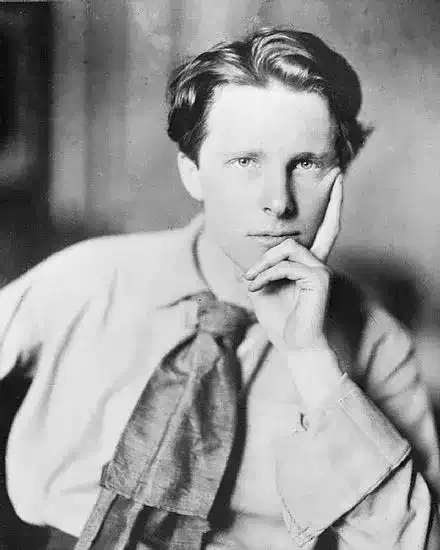
Rupert Brooke
I: Peace
Now, God be thanked Who has watched us with His hour,
And caught our youth, and wakened us from sleeping,
With hand made sure, clear eye, and sharpened power,
To turn, as swimmers into cleanness leaping,
Glad from a world grown old and cold and weary,
Leave the sick hearts that honour could not move,
And half-men, and their dirty songs and dreary,
And all the little emptiness of love!
Oh! we, who have known shame, we have found release there,
Where there's no ill, no grief, but sleep has mending,
Naught broken save this body, lost but breath;
Nothing to shake the laughing heart's long peace there
But only agony, and that has ending;
And the worst friend and enemy is but Death.
392

Robert Louis Stevenson
Historical Associations
Dear Uncle Jim. this garden ground
That now you smoke your pipe around,
has seen immortal actions done
And valiant battles lost and won.
Here we had best on tip-toe tread,
While I for safety march ahead,
For this is that enchanted ground
Where all who loiter slumber sound.
Here is the sea, here is the sand,
Here is the simple Shepherd's Land,
Here are the fairy hollyhocks,
And there are Ali Baba's rocks.
But yonder, see! apart and high,
Frozen Siberia lies; where I,
With Robert Bruce William Tell,
Was bound by an enchanter's spell.
390
Ella Wheeler Wilcox
The Spirit Of Great Joan
Back of each soldier who fights for France,
Aye, back of each woman and man
Who toils and prays through these long tense days.
Is the spirit of Great Joan.
For the love she gave, and the life she gave,
In the eyes of God sufficed
To crown her with light, and power, and might,
That made her second to Christ.
And so in that hour at the Marne she came,
To the seeing eyes of men;
And the blind of view still felt and knew
That her spirit had come again.
And she will come in each crucial hour
And joy shall follow despair,
For Joan sees her France on its knees
And she hears the voice of its prayer.
There is no hate in the heart of France,
But a mighty moral force
That takes its stand for her worshipped land,
And cannot be swerved from its course.
For this is the way with France to-day,
Her courage comes from faith,
And she bends her knee ere she straightens her arm;
In her forward rush toward death.
A jungle of beasts in the heart of the Hun-
War to the world laid bare.
And war has revealed, that France concealed,
Only the lion's lair.
A lioness fighting to save her own,
She fights as a lioness can,
And strength to the end shall the Unseen send,
In the spirit of Great Joan.
392
Ella Wheeler Wilcox
A Pin
Oh, I know a certain lady who is reckoned with the good,
Yet she fills me with more terror than a raging lion would.
The little chills run up and down my spine whene’er we meet,
Though she seems a gentle creature, and she’s very trim and neat.
And she has a thousand virtues and not one acknowledged sin,
But she is the sort of person you could liken to a pin.
And she pricks you and she sticks you in a way that can’t be said.
If you seek for what has hurt you – why, you cannot find the head.
But she fills you with discomfort and exasperating pain.
If anybody asks you why, you really can’t explain!
A pin is such a tiny thing, of that there is no doubt,
Yet when it’s sticking in your flesh you’re wretched till it’s out.
She’s wonderfully observing – when she meets a pretty girl,
She is always sure to tell her if her hair is out of curl;
And she is so sympathetic to her friend who’s much admires,
She is often heard remarking, ‘Dear, you look so worn and tired.’
And she is an honest critic, for on yesterday she eyed
The new dress I was airing with a woman’s natural pride,
And she said, ‘Oh, how becoming! ’ and then gently added, ‘it
Is really a misfortune that the basque is such a fit.’
Then she said, ‘If you heard me yester eve, I’m sure, my friend,
You would say I was a champion who knows how to defend.’
And she left me with the feeling – most unpleasant, I aver –
That the whole world would despise me is it hadn’t been for her.
Whenever I encounter her, in such a nameless way
She gives me the impression I am at my worst that day.
And the hat that was imported (and cost me half a sonnet) ,
With just one glance from her round eyes becomes a Bowery bonnet.
She is always bright and smiling, sharp and pointed for a thrust;
Use does not seem to blunt her point, nor does she gather rust.
Oh! I wish some hapless specimen of mankind would begin
To tidy up the world for me, by picking up this pin!
392
William Shakespeare
Sonnet 91: Some glory in their birth, some in their skill
Some glory in their birth, some in their skill,
Some in their wealth, some in their body's force,
Some in their garments though new-fangled ill,
Some in their hawks and hounds, some in their horse;
And every humour hath his adjunct pleasure,
Wherein it finds a joy above the rest,
But these particulars are not my measure;
All these I better in one general best.
Thy love is better than high birth to me,
Richer than wealth, prouder than garments' costs,
Of more delight than hawks and horses be;
And having thee, of all men's pride I boast—
Wretched in this alone, that thou mayst take,
All this away and me most wretched make.
391

Edna St. Vincent Millay
Oh, Oh, You Will Be Sorry
Oh, oh, you will be sorry for that word!
Give me back my book and take my kiss instead.
Was it my enemy or my friend I heard,
"What a big book for such a little head!"
Come, I will show you now my newest hat,
And you may watch me purse my mouth and prink!
Oh, I shall love you still, and all of that.
I never again shall tell you what I think.
I shall be sweet and crafty, soft and sly;
You will not catch me reading any more:
I shall be called a wife to pattern by;
And some day when you knock and push the door,
Some sane day, not too bright and not too stormy,
I shall be gone, and you may whistle for me.
388

Johann Wolfgang von Goethe
Valediction
I ONCE was fond of fools,
And bid them come each day;
Then each one brought his tools
The carpenter to play;
The roof to strip first choosing,
Another to supply,
The wood as trestles using,
To move it by-and-by,
While here and there they ran,
And knock'd against each other;
To fret I soon began,
My anger could not smother,
So cried, "Get out, ye fools!"
At this they were offended
Then each one took his tools,
And so our friendship ended.
Since that, I've wiser been,
And sit beside my door;
When one of them is seen,
I cry, "Appear no more!"
"Hence, stupid knave!" I bellow:
At this he's angry too:
"You impudent old fellow!
And pray, sir, who are you?
Along the streets we riot,
And revel at the fair;
But yet we're pretty quiet,
And folks revile us ne'er.
Don't call us names, then, please!"--
At length I meet with ease,
For now they leave my door-
'Tis better than before!
388

William Butler Yeats
A Coat
I MADE my song a coat
Covered with embroideries
Out of old mythologies
From heel to throat;
But the fools caught it,
Wore it in the world's eyes
As though they'd wrought it.
Song, let them take it,
For there's more enterprise
In walking naked.
Covered with embroideries
Out of old mythologies
From heel to throat;
But the fools caught it,
Wore it in the world's eyes
As though they'd wrought it.
Song, let them take it,
For there's more enterprise
In walking naked.
390
Ella Wheeler Wilcox
War
I
There is no picturesqueness and no glory,
No halo of romance, in war to-day.
It is a hideous thing; Time would turn grey
With horror, were he not already hoary
At sight of this vile monster, foul and gory.
Yet while sweet women perish as they pray,
And new-born babes are slaughtered, who dare say
'Halt!' till Right pens its 'Finis' to the story!
There is no pathway, but the path through blood,
Out of the horrors of this holocaust.
Hell has let loose its scalding crimson flood,
And he who stops to argue now is lost.
Not brooms of creeds, not Pacifistic words
Can stem the tide, but swords-uplifted swords!
II
Yet, after Peace has turned the clean white page
There shall be sorrow on the earth for years;
Abysmal grief, that has no eyes for tears,
And youth that hobbles through the earth like age.
But better to play this part upon life's stage
Than to aid structures that a tyrant rears,
To live a stalwart hireling torn with fears,
And shamed by feeding on a conqueror's wage.
Death, yea, a thousand deaths, were sweet in truth
Rather than such ignoble life. God gave
Being, and breath, and high resolve to youth
That it might be Wrong's master, not its slave.
Our road to Freedom is the road to guns!
Go, arm your sons! I say, Go, arm your sons!
III
Arm! arm! that mandate on each wind is whirled.
Let no man hesitate or look askance,
For from the devastated homes of France
And ruined Belgium the cry is hurled.
Why, Christ Himself would keep peace banners furled
Were He among us, till, with lifted lance,
He saw the hosts of Righteousness advance
To purify the Temples of the world.
There is no safety on the earth to-day
For any sacred thing, or clean, or fair;
Nor can there be, until men rise and slay
The hydra-headed monster in his lair.
War! horrid War! now Virtue's only friend;
Clasp hands with War, and battle to the end!
389

Carl Sandburg
Bronzes
I
The bronze General Grant riding a bronze horse in Lincoln
Park
Shrivels in the sun by day when the motor cars whirr
by in long processions going somewhere to keep appointment
for dinner and matineés and buying and
selling
Though in the dusk and nightfall when high waves are
piling
On the slabs of the promenade along the lake shore near
by
I have seen the general dare the combers come closer
And make to ride his bronze horse out into the hoofs
and guns of the storm.
II
I cross Lincoln Park on a winter night when the snow
is falling.
Lincoln in bronze stands among the white lines of snow,
his bronze forehead meeting soft echoes of the newsies
crying forty thousand men are dead along the
Yser, his bronze ears listening to the mumbled roar
of the city at his bronze feet.
A lithe Indian on a bronze pony, Shakespeare seated with
long legs in bronze, Garibaldi in a bronze cape, they
hold places in the cold, lonely snow to-night on their
pedestals and so they will hold them past midnight
and into the dawn.
388
Johann Wolfgang von Goethe
To The Husbandman
SMOOTHLY and lightly the golden seed by the furrow is cover'd;
Yet will a deeper one, friend, cover thy bones at the last.
Joyously plough'd and sow'd! Here food all living is budding,
E'en from the side of the tomb Hope will not vanish away.
Yet will a deeper one, friend, cover thy bones at the last.
Joyously plough'd and sow'd! Here food all living is budding,
E'en from the side of the tomb Hope will not vanish away.
387
Carl Sandburg
Two Neighbors
Faces of two eternities keep looking at me.
One is Omar Khayam and the red stuff
wherein men forget yesterday and to-morrow
and remember only the voices and songs,
the stories, newspapers and fights of today.
One is Louis Cornaro and a slim trick
of slow, short meals across slow, short years,
letting Death open the door only in slow, short inches.
I have a neighbor who swears by Omar.
I have a neighbor who swears by Cornaro.
Both are happy.
Faces of two eternities keep looking at me.
Let them look.
389
Ella Wheeler Wilcox
Which are You?
There are two kinds of people on earth to-day;
Just two kinds of people, no more, I say.
Not the sinner and saint, for it's well understood,
The good are half bad, and the bad are half good.
Not the rich and the poor, for to rate a man's wealth,
You must first know the state of his conscience and health.
Not the humble and proud, for in life's little span,
Who puts on vain airs, is not counted a man.
Not the happy and sad, for the swift flying years
Bring each man his laughter and each man his tears.
No; the two kinds of people on earth I mean,
Are the people who lift, and the people who lean.
Wherever you go, you will find the earth's masses,
Are always divided in just these two classes.
And oddly enough, you will find too, I ween,
There's only one lifter to twenty who lean.
In which class are you? Are you easing the load,
Of overtaxed lifters, who toil down the road?
Or are you a leaner, who lets others share
Your portion of labor, and worry and care?
388

Emily Dickinson
I know some lonely Houses off the Road
I know some lonely Houses off the Road
A Robber'd like the look of-
Wooden barred,
And Windows hanging low,
Inviting to-
A Portico,
Where two could creep
One-
hand the Tools-
The other peep-
To make sure All's Asleep-
Old fashioned eyes-
Not easy to surprise!
How orderly the Kitchen'd look, by night,
With just a Clock-
But they could gag the Tick-
And Mice won't bark-
And so the Walls-don't tell
None-
will-
A pair of Spectacles ajar just stir-
An Almanac's aware-
Was it the Mat-winked,
Or a Nervous Star?
The Moon-slides down the stair,
To see who's there!
There's plunder-where-
Tankard, or SpoonEarring-
or Stone-
A Watch-Some Ancient Brooch
To match the Grandmama-
Staid sleeping-there
Day-rattles-too
Stealth's-slow-
The Sun has got as far
As the third Sycamore-
Screams Chanticleer
"Who's there"?
And Echoes-Trains away,
Sneer-"Where"!
While the old Couple, just astir,
Fancy the Sunrise-left the door ajar!
389
Johann Wolfgang von Goethe
Explanation Of An Ancient Woodcut
EARLY within his workshop here,
On Sundays stands our master dear;
His dirty apron he puts away,
And wears a cleanly doublet to-day;
Lets wax'd thread, hammer, and pincers rest,
And lays his awl within his chest;
The seventh day he takes repose
From many pulls and many blows.
Soon as the spring-sun meets his view,
Repose begets him labour anew;
He feels that he holds within his brain
A little world, that broods there amain,
And that begins to act and to live,
Which he to others would gladly give.
He had a skillful eye and true,
And was full kind and loving too.
For contemplation, clear and pure,--
For making all his own again, sure;
He had a tongue that charm'd when 'twas heard,
And graceful and light flow'd ev'ry word;
Which made the Muses in him rejoice,
The Master-singer of their choice.
And now a maiden enter'd there,
With swelling breast, and body fair;
With footing firm she took her place,
And moved with stately, noble grace;
She did not walk in wanton mood,
Nor look around with glances lewd.
She held a measure in her hand,
Her girdle was a golden band,
A wreath of corn was on her head,
Her eye the day's bright lustre shed;
Her name is honest Industry,
Else, Justice, Magnanimity.
She enter'd with a kindly greeting;
He felt no wonder at the meeting,
For, kind and fair as she might be,
He long had known her, fancied he.
"I have selected thee," she said,
"From all who earth's wild mazes tread,
That thou shouldst have clear-sighted sense,
And nought that's wrong shouldst e'er commence.
When others run in strange confusion,
Thy gaze shall see through each illusion
When others dolefully complain,
Thy cause with jesting thou shalt gain,
Honour and right shalt value duly,
In everything act simply, truly,--
Virtue and godliness proclaim,
And call all evil by its name,
Nought soften down, attempt no quibble,
Nought polish up, nought vainly scribble.
The world shall stand before thee, then,
As seen by Albert Durer's ken,
In manliness and changeless life,
In inward strength, with firmness rife.
Fair Nature's Genius by the hand
Shall lead thee on through every land,
Teach thee each different life to scan,
Show thee the wondrous ways of man,
His shifts, confusions, thrustings, and drubbings,
Pushings, tearings, pressings, and rubbings;
The varying madness of the crew,
The anthill's ravings bring to view;
But thou shalt see all this express'd,
As though 'twere in a magic chest.
Write these things down for folks on earth,
In hopes they may to wit give birth."--
Then she a window open'd wide,
And show'd a motley crowd outside,
All kinds of beings 'neath the sky,
As in his writings one may spy.
Our master dear was, after this,
On Nature thinking, full of bliss,
When tow'rd him, from the other side
He saw an aged woman glide;
The name she bears, Historia,
Mythologia, Fabula;
With footstep tottering and unstable
She dragg'd a large and wooden carved-table,
Where, with wide sleeves and human mien,
The Lord was catechizing seen;
Adam, Eve, Eden, the Serpent's seduction,
Gomorrah and Sodom's awful destruction,
The twelve illustrious women, too,
That mirror of honour brought to view;
All kinds of bloodthirstiness, murder, and sin,
The twelve wicked tyrants also were in,
And all kinds of goodly doctrine and law;
Saint Peter with his scourge you saw,
With the world's ways dissatisfied,
And by our Lord with power supplied.
Her train and dress, behind and before,
And e'en the seams, were painted o'er
With tales of worldly virtue and crime.--
Our master view'd all this for a time;
The sight right gladly he survey'd,
So useful for him in his trade,
Whence he was able to procure
Example good and precept sure,
Recounting all with truthful care,
As though he had been present there.
His spirit seem'd from earth to fly,
He ne'er had turned away his eye,
Did he not just behind him hear
A rattle of bells approaching near.
And now a fool doth catch his eye,
With goat and ape's leap drawing nigh
A merry interlude preparing
With fooleries and jests unsparing.
Behind him, in a line drawn out,
He dragg'd all fools, the lean and stout,
The great and little, the empty and full,
All too witty, and all too dull,
A lash he flourish'd overhead,
As though a dance of apes he led,
Abusing them with bitterness,
As though his wrath would ne'er grow less.
While on this sight our master gazed,
His head was growing well-nigh crazed:
What words for all could he e'er find,
Could such a medley be combined?
Could he continue with delight
For evermore to sing and write?
When lo, from out a cloud's dark bed
In at the upper window sped
The Muse, in all her majesty,
As fair as our loved maids we see.
With clearness she around him threw
Her truth, that ever stronger grew.
"I, to ordain thee come," she spake:
"So prosper, and my blessing take!
The holy fire that slumb'ring lies
Within thee, in bright flames shall rise;
Yet that thine ever-restless life
May still with kindly strength be rife,
I, for thine inward spirit's calm.
Have granted nourishment and balm,
That rapture may thy soul imbue,
Like some fair blossom bathed in dew."--
Behind his house then secretly
Outside the doorway pointed she,
Where, in a shady garden-nook,
A beauteous maid with downcast look
Was sitting where a stream was flowing,
With elder bushes near it growing,
She sat beneath an apple tree,
And nought around her seem'd to see.
Her lap was full of roses fair,
Which in a wreath she twined with care.
And, with them, leaves and blossoms blended:
For whom was that sweet wreath intended?
Thus sat she, modest and retired,
Her bosom throbb'd, with hope inspired;
Such deep forebodings fill'd her mind,
No room for wishing could she find,
And with the thoughts that o'er it flew,
Perchance a sigh was mingled too.
"But why should sorrow cloud thy brow?
That, dearest love, which fills thee now
Is fraught with joy and ecstasy.
Prepared in one alone for thee,
That he within thine eye may find
Solace when fortune proves unkind,
And be newborn through many a kiss,
That he receives with inward bliss;
When'er he clasps thee to his breast.
May he from all his toils find rest
When he in thy dear arms shall sink,
May he new life and vigour drink:
Fresh joys of youth shalt thou obtain,
In merry jest rejoice again.
With raillery and roguish spite,
Thou now shalt tease him, now delight.
Thus Love will nevermore grow old,
Thus will the minstrel ne'er be cold!"
While he thus lives, in secret bless'd,
Above him in the clouds doth rest
An oak-wreath, verdant and sublime,
Placed on his brow in after-time;
While they are banish'd to the slough,
Who their great master disavow.
387