
Ethics and Morality

William Shakespeare
Sonnet 58: That god forbid that made me first your slave
That god forbid that made me first your slave,
I should in thought control your times of pleasure,
Or at your hand the account of hours to crave,
Being your vassal, bound to stay your leisure!
O, let me suffer, being at your beck,
The imprison'd absence of your liberty;
And patience, tame to sufferance, bide each cheque,
Without accusing you of injury.
Be where you list, your charter is so strong
That you yourself may privilege your time
To what you will; to you it doth belong
Yourself to pardon of self-doing crime.
I am to wait, though waiting so be hell;
Not blame your pleasure, be it ill or well.
390
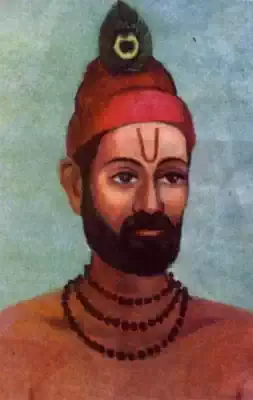
Kabir
His Death In Benares
His death in Benares
Won't save the assassin
From certain hell,
Any more than a dip
In the Ganges will send
Frogs—or you—to paradise.
My home, says Kabir,
Is where there's no day, no night,
And no holy book in sight
To squat on our lives.
Won't save the assassin
From certain hell,
Any more than a dip
In the Ganges will send
Frogs—or you—to paradise.
My home, says Kabir,
Is where there's no day, no night,
And no holy book in sight
To squat on our lives.
387
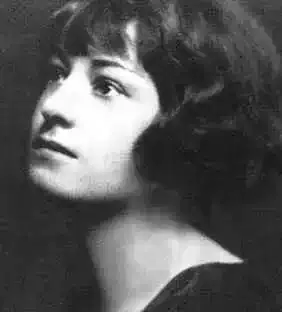
Dorothy Parker
Two-Volume Novel
The sun's gone dim, and
The moon's turned black;
For I loved him, and
He didn't love back.
The moon's turned black;
For I loved him, and
He didn't love back.
389

Robert Louis Stevenson
Men Are Heaven's Piers
MEN are Heaven's piers; they evermore
Unwearying bear the skyey floor;
Man's theatre they bear with ease,
Unfrowning cariatides!
I, for my wife, the sun uphold,
Or, dozing, strike the seasons cold.
She, on her side, in fairy-wise
Deals in diviner mysteries,
By spells to make the fuel burn
And keep the parlour warm, to turn
Water to wine, and stones to bread,
By her unconquered hero-head.
A naked Adam, naked Eve,
Alone the primal bower we weave;
Sequestered in the seas of life,
A Crusoe couple, man and wife,
With all our good, with all our will,
Our unfrequented isle we fill;
And victor in day's petty wars,
Each for the other lights the stars.
Come then, my Eve, and to and fro
Let us about our garden go;
And, grateful-hearted, hand in hand
Revisit all our tillage land,
And marvel at our strange estate,
For hooded ruin at the gate
Sits watchful, and the angels fear
To see us tread so boldly here.
Meanwhile, my Eve, with flower and grass
Our perishable days we pass;
Far more the thorn observe - and see
How our enormous sins go free -
Nor less admire, beside the rose,
How far a little virtue goes.
386

Muhammad Iqbal
The goat replied, 'This complaint is unjust
Though truth is always bitter
I shall speak what is fair
This pasture, and this cool breeze
This green grass and this shade
Such comforts, were beyond our lot!
They were a far cry for us speechless poor!
We owe these pleasures to Man
We owe all our happiness to Man
We derive all our prosperity from him
What is better for us, freedom or bondage to him?
Hundreds of dangers lurk in the wilderness
May God protect us from the wilderness!
We are heavily indebted to him
Unjust is our complaint against him
If you appreciate the life's comforts
You would never complain against Man'
Hearing all this the cow felt embarrassed
She was sorry for complaining against Man
She mused over the good and the bad
And thoughtfully she said this
'Small though is the body of the goat
Convincing is the advice of the goat! '
384

William Butler Yeats
Crazy Jane Reproved
I care not what the sailors say:
All those dreadful thunder-stones,
All that storm that blots the day
Can but show that Heaven yawns;
Great Europa played the fool
That changed a lover for a bull.
Fol de rol, fol de rol.
To round that shell's elaborate whorl,
Adorning every secret track
With the delicate mother-of-pearl,
Made the joints of Heaven crack:
So never hang your heart upon
A roaring, ranting journeyman.
Fol de rol, fol de rol.
386

Ella Wheeler Wilcox
The Beautiful Blue Danube
They drift down the hall together;
He smiles in her lifted eyes.
Like waves of that mighty river
The strains of the ‘Danube’ rise.
They float on its rhythmic measure,
Like leaves on a summer stream;
And here, in this scene of pleasure,
I bury my sweet dead dream.
Through the cloud of her dusky tresses,
Like a star, shines out her face;
And the form of his strong arm presses
Is sylph-like in its grace.
As a leaf on the bounding river
Is lost in the seething sea,
I know that for ever and ever
My dream is lost to me.
And still the viols are playing
That grand old wordless rhyme;
And still those two are swaying
In perfect tune and time.
If the great bassoons that mutter,
If the clarinets that blow,
Were given the chance to utter
The secret things they know.
Would the lists of the slain who slumber
On the Danube’s battle-plains
The unknown hosts outnumber
Who die ‘neath the ‘Danube’s’ strains?
Those fall where the cannons rattle,
‘Mid the rain of shot and shell;
But these, in a fiercer battle,
Find death in the music’s swell.
With the river’s roar of passion
Is blended the dying groan;
But here, in the halls of fashion,
Hearts break, and make no moan.
And the music, swelling and sweeping,
Like the river, knows it all;
But none are counting or keeping
The lists of those who fall.
386

John Greenleaf Whittier
After Election
THE day's sharp strife is ended now,
Our work is done, God knoweth how!
As on the thronged, unrestful town
The patience of the moon looks down,
I wait to hear, beside the wire,
The voices of its tongues of fire.
Slow, doubtful, faint,they seem at first:
Be strong, my heart, to know the worst!
Hark! there the Alleghanies spoke;
That sound from lake and prairie broke,
That sunset-gun of triumph rent
The silence of a continent!
That signal from Nebraska sprung,
This, from Nevada's mountain tongue!
Is that thy answer, strong and free,
O loyal heart of Tennessee?
What strange, glad voice is that which calls
From Wagner's grave and Sumter's walls?
From Mississippi's fountain-head
A sound as of the hisoh's tread!
There rustled freedom's Charter Oak!
In that wild burst the Ozarks spoke!
Cheer answers cheer from rise to set
Of sun. We have a country yet!
The praise, O God, be thine alone!
Thou givest not for bread a stone;
Thou hast not led us through the night
To blind us with returning light;
Not through the furnace have we passed,
To perish at its mouth at last.
O night of peace, thy flight restrain!
November's moon, be slow to wane!
Shine on the freedman's cabin floor,
On brows of prayer a blessing pour;
And give, with full assurance blest,
The weary heart of Freedom rest!
386

Rudyard Kipling
The Veterans
To-day, across our fathers' graves,
The astonished years reveal
The remnant of that desperate host
Which cleansed our East with steel.
Hail and farewell! We greet you here,
With tears that none will scorn--
O Keepers of the House of old,
Or ever we were born!
One service more we dare to ask--
Pray for us, heroes, pray,
That when Fate lays on us our task
We do not shame the Day!
386
William Shakespeare
Sonnet 41: Those petty wrongs that liberty commits
Those petty wrongs that liberty commits,
When I am sometime absent from thy heart,
Thy beauty and thy years full well befits,
For still temptation follows where thou art.
Gentle thou art and therefore to be won,
Beauteous thou art, therefore to be assailed;
And when a woman woos, what woman's son
Will sourly leave her till she have prevailed?
Ay me! but yet thou mightest my seat forbear,
And chide try beauty and thy straying youth,
Who lead thee in their riot even there
Where thou art forced to break a twofold truth,
Hers by thy beauty tempting her to thee,
Thine, by thy beauty being false to me.
385
Ella Wheeler Wilcox
I Step Across The Mystic Border-Land
I step across the mystic border-land,
And look upon the wonder-world of Art.
How beautiful, how beautiful its hills!
And all its valleys, how surpassing fair!
The winding paths that lead up to the heights
Are polished by the footsteps of the great.
The mountain-peaks stand very near to God:
The chosen few whose feet have trod thereon
Have talked with Him. and with the angels walked.
Here are no sounds of discord-no profane
Or senseless gossip of unworthy things-
Only the songs of chisels and of pens,
Of busy brushes, and ecstatic strains
Of souls surcharged with music most divine.
Here is no idle sorrow, no poor grief
For any day or object left behind-
For time is counted precious, and herein
Is such complete abandonment of Self
That tears turn into rainbows, and enhance
The beauty of the land where all is fair,
Awed and afraid, I cross the border-land.
Oh, who am I, that I dare enter here
Where the great artists of the world have trod-
The genius-crowned aristocrats of Earth?
Only the singer of a little song;
Yet loving Art with such a mighty love
I hold it greater to have won a place
Just on the fair land's edge, to make my grave,
Than in the outer world of greed and gain
To sit upon a royal throne and reign.
386

Jonathan Swift
A Maypole
Deprived of root, and branch and rind,
Yet flowers I bear of every kind:
And such is my prolific power,
They bloom in less than half an hour;
Yet standers-by may plainly see
They get no nourishment from me.
My head with giddiness goes round,
And yet I firmly stand my ground:
All over naked I am seen,
And painted like an Indian queen.
No couple-beggar in the land
E'er joined such numbers hand in hand.
I joined them fairly with a ring;
Nor can our parson blame the thing.
And though no marriage words are spoke,
They part not till the ring is broke;
Yet hypocrite fanatics cry,
I'm but an idol raised on high;
And once a weaver in our town,
A damned Cromwellian, knocked me down.
I lay a prisoner twenty years,
And then the jovial cavaliers
To their old post restored all three -
I mean the church, the king, and me.
386

Carl Sandburg
'Boes
I waited today for a freight train to pass.
Cattle cars with steers butting their horns against the
bars, went by.
And a half a dozen hoboes stood on bumpers between
cars.
Well, the cattle are respectable, I thought.
Every steer has its transportation paid for by the farmer
sending it to market,
While the hoboes are law-breakers in riding a railroad
train without a ticket.
It reminded me of ten days I spent in the Allegheny
County jail in Pittsburgh.
I got ten days even though I was a veteran of the
Spanish-American war.
Cooped in the same cell with me was an old man, a
bricklayer and a booze-fighter.
But it just happened he, too, was a veteran soldier, and
he had fought to preserve the Union and free the
niggers.
We were three in all, the other being a Lithuanian who
got drunk on pay day at the steel works and got to
fighting a policeman;
All the clothes he had was a shirt, pants and shoes-somebody
got his hat and coat and what money he
had left over when he got drunk.
383
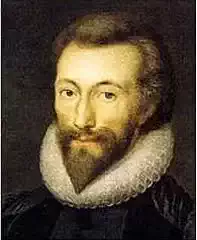
John Donne
Satire IV
Well; I may now receive, and die. My sin
Indeed is great, but yet I have been in
A purgatory, such as fear'd hell is
A recreation and scant map of this.
My mind, neither with pride's itch, nor yet hath been
Poison'd with love to see, or to be seen.
I had no suit there, nor new suit to show,
Yet went to court; but as Glaze which did go
To'a mass in jest, catch'd, was fain to disburse
The hundred marks, which is the statute's curse,
Before he 'scap'd; so'it pleas'd my destiny
(Guilty of my sin of going) to think me
As prone to all ill, and of good as forget{-}
Full, as proud, as lustful, and as much in debt,
As vain, as witless, and as false as they
Which dwell in court, for once going that way.
Therefore I suffered this; towards me did run
A thing more strange, than on Nile's slime the sun
E'er bred, or all which into Noah's ark came;
A thing which would have pos'd Adam to name;
Stranger than seven antiquaries' studies,
Than Afric's monsters, Guiana's rarities;
Stranger than strangers; one, who for a Dane,
In the Danes' massacre had sure been slain,
If he had liv'd then; and without help dies,
When next the 'prentices 'gainst strangers rise;
One, whom the watch, at noon, lets scarce go by;
One, to whom the examining justice sure would cry,
"Sir, by your priesthood, tell me what you are."
His clothes were strange, though coarse; and black, though bare;
Sleeveless his jerkin was, and it had been
Velvet, but 'twas now (so much ground was seen)
Become tufftaffaty; and our children shall
See it plain rash awhile, then nought at all.
This thing hath travell'd, and, saith, speaks all tongues,
And only knoweth what to all states belongs.
Made of th' accents and best phrase of all these,
He speaks one language. If strange meats displease,
Art can deceive, or hunger force my taste,
But pedants' motley tongue, soldiers' bombast,
Mountebanks' drug-tongue, nor the terms of law
Are strong enough preparatives, to draw
Me to bear this; yet I must be content
With his tongue, in his tongue, call'd compliment;
In which he can win widows, and pay scores,
Make men speak treason, cozen subtlest whores,
Out-flatter favourites, or outlie either
Jovius, or Surius, or both together.
He names me, and comes to me; I whisper, "God!
How have I sinn'd, that Thy wrath's furious rod,
This fellow, chooseth me?" He saith, "Sir,
I love your judgment; whom do you prefer,
For the best linguist?" And I seelily
Said, that I thought Calepine's dictionary.
"Nay, but of men, most sweet Sir?" Beza then,
Some Jesuits, and two reverend men
Of our two Academies, I named. There
He stopp'd me, and said; "Nay, your apostles were
Good pretty linguists, and so Panurge was;
Yet a poor gentleman all these may pass
By travel." Then, as if he would have sold
His tongue, he prais'd it, and such wonders told,
That I was fain to say, "If you'had liv'd, sir,
Time enough to have been interpreter
To Babel's bricklayers, sure the tower had stood."
He adds, "If of court life you knew the good,
You would leave loneness." I said, "Not alone
My loneness is; but Spartan's fashion,
To teach by painting drunkards, doth not last
Now; Aretine's pictures have made few chaste;
No more can princes' courts, though there be few
Better pictures of vice, teach me virtue."
He, like to a high-stretch'd lute-string, squeak'd, "O sir,
'Tis sweet to talk of kings." "At Westminster,"
Said I, "the man that keeps the abbey tombs,
And for his price doth with whoever comes
Of all our Harrys and our Edwards talk,
From king to king, and all their kin can walk.
Your ears shall hear nought, but kings; your eyes meet
Kings only; the way to it is King street."
He smack'd and cried, "He's base, mechanic, coarse,
So are all your Englishmen in their discourse.
Are not your Frenchmen neat?" "Mine? As you see,
I have but one Frenchman, look--he follows me."
"Certes they are neatly cloth'd. I of this mind am,
Your only wearing is your grogaram."
"Not so, sir, I have more." Under this pitch
He would not fly; I chaff'd him; but as itch
Scratch'd into smart, and as blunt iron ground
Into an edge, hurts worse; so I (fool) found
Crossing hurt me. To fit my sullenness,
He to another key his style doth dress,
And asks, "What news?" I tell him of new plays.
He takes my hand, and as a still which stays
A sembrief, 'twixt each drop, he niggardly,
As loth to enrich me, so tells many a lie,
More than ten Holinsheds, or Halls, or Stows,
Of trivial household trash, he knows. He knows
When the Queen frown'd, or smil'd, and he knows what
A subtle statesman may gather of that;
He knows who loves; whom; and who by poison
Hastes to an office's reversion;
He knows who'hath sold his land, and now doth beg
A licence, old iron, boots, shoes, and egg{-}
Shells to transport; shortly boys shall not play
At span-counter, or blow-point, but shall pay
Toll to some courtier; and wiser than all us,
He knows what lady is not painted. Thus
He with home meats tries me. I belch, spew, spit,
Look pale and sickly, like a patient, yet
He thrusts on more; and as if he'd undertook
To say Gallo-Belgicus without book,
Speaks of all states, and deeds, that have been since
The Spaniards came, to the loss of Amiens.
Like a big wife, at sight of loathed meat,
Ready to travail, so I sigh and sweat
To hear this Macaron talk. In vain; for yet,
Either my humour, or his own to fit,
He, like a privileg'd spy, whom nothing can
Discredit, libels now 'gainst each great man.
He names a price for every office paid;
He saith, our wars thrive ill, because delay'd;
That offices are entail'd, and that there are
Perpetuities of them, lasting as far
As the last day; and that great officers
Do with the pirates share, and Dunkirkers.
...
Toughly and stubbornly I bear this cross; but the' hour
Of mercy now was come; he tries to bring
Me to pay a fine to 'scape his torturing,
And says, "Sir, can you spare me"--I said, "Willingly";
"Nay, sir, can you spare me a crown"? Thankfully I
Gave it, as ransom; but as fiddlers, still,
Though they be paid to be gone, yet needs will
Thrust one more jig upon you; so did he
With his long complimental thanks vex me.
But he is gone, thanks to his needy want,
And the prerogative of my crown; scant
His thanks were ended, when I (which did see
All the court fill'd with more strange things than he)
Ran from thence with such, or more haste than one
Who fears more actions doth make from prison.
383
Ella Wheeler Wilcox
The King Of Candyland
Have you heard of the king of Candy land?
Well, listen while I sing,
He has pages on every hand,
For he is a mighty king,
And thousands of children bend the knee,
And bow to this ruler of high degree.
He has a smile, oh! like the sun!
And his face is round and bland,
His bright eyes twinkle and glow with fun,
As the children kiss his hand.
And everything toothsome, melting, sweet,
He scatters freely before their feet.
But wo! for the children who follow him,
With loving praises and laughter,
For he is a monster ugly and grim
That they go running after.
And when they get well into the chase
He lifts his masque and shows his face.
And ah! but that is a gruesome sight
For the followers of the king.
The cheeks grow pale that once were bright,
And they sob instead of sing.
And their teeth drop out and their eyes grow red,
And they cannot sleep when they go to bed.
And after they see the monster's face,
They have no peaceful hour.
And they have aches in every place,
And what was sweet seems sour.
Oh wo! for that sorrowful foolish band
Who follow the king of Candy land.
382

Henry Wadsworth Longfellow
The Song Of Hiawatha I: The Peace-Pipe
On the Mountains of the Prairie,
On the great Red Pipe-stone Quarry,
Gitche Manito, the mighty,
He the Master of Life, descending,
On the red crags of the quarry
Stood erect, and called the nations,
Called the tribes of men together.
From his footprints flowed a river,
Leaped into the light of morning,
O'er the precipice plunging downward
Gleamed like Ishkoodah, the comet.
And the Spirit, stooping earthward,
With his finger on the meadow
Traced a winding pathway for it,
Saying to it, 'Run in this way!'
From the red stone of the quarry
With his hand he broke a fragment,
Moulded it into a pipe-head,
Shaped and fashioned it with figures;
From the margin of the river
Took a long reed for a pipe-stem,
With its dark green leaves upon it;
Filled the pipe with bark of willow,
With the bark of the red willow;
Breathed upon the neighboring forest,
Made its great boughs chafe together,
Till in flame they burst and kindled;
And erect upon the mountains,
Gitche Manito, the mighty,
Smoked the calumet, the Peace-Pipe,
As a signal to the nations.
And the smoke rose slowly, slowly,
Through the tranquil air of morning,
First a single line of darkness,
Then a denser, bluer vapor,
Then a snow-white cloud unfolding,
Like the tree-tops of the forest,
Ever rising, rising, rising,
Till it touched the top of heaven,
Till it broke against the heaven,
And rolled outward all around it.
From the Vale of Tawasentha,
From the Valley of Wyoming,
From the groves of Tuscaloosa,
From the far-off Rocky Mountains,
From the Northern lakes and rivers
All the tribes beheld the signal,
Saw the distant smoke ascending,
The Pukwana of the Peace-Pipe.
And the Prophets of the nations
Said: 'Behold it, the Pukwana!
By the signal of the Peace-Pipe,
Bending like a wand of willow,
Waving like a hand that beckons,
Gitche Manito, the mighty,
Calls the tribes of men together,
Calls the warriors to his council!'
Down the rivers, o'er the prairies,
Came the warriors of the nations,
Came the Delawares and Mohawks,
Came the Choctaws and Camanches,
Came the Shoshonies and Blackfeet,
Came the Pawnees and Omahas,
Came the Mandans and Dacotahs,
Came the Hurons and Ojibways,
All the warriors drawn together
By the signal of the Peace-Pipe,
To the Mountains of the Prairie,
To the great Red Pipe-stone Quarry,
And they stood there on the meadow,
With their weapons and their war-gear,
Painted like the leaves of Autumn,
Painted like the sky of morning,
Wildly glaring at each other;
In their faces stem defiance,
In their hearts the feuds of ages,
The hereditary hatred,
The ancestral thirst of vengeance.
Gitche Manito, the mighty,
The creator of the nations,
Looked upon them with compassion,
With paternal love and pity;
Looked upon their wrath and wrangling
But as quarrels among children,
But as feuds and fights of children!
Over them he stretched his right hand,
To subdue their stubborn natures,
To allay their thirst and fever,
By the shadow of his right hand;
Spake to them with voice majestic
As the sound of far-off waters,
Falling into deep abysses,
Warning, chiding, spake in this wise :
'O my children! my poor children!
Listen to the words of wisdom,
Listen to the words of warning,
From the lips of the Great Spirit,
From the Master of Life, who made you!
'I have given you lands to hunt in,
I have given you streams to fish in,
I have given you bear and bison,
I have given you roe and reindeer,
I have given you brant and beaver,
Filled the marshes full of wild-fowl,
Filled the rivers full of fishes:
Why then are you not contented?
Why then will you hunt each other?
'I am weary of your quarrels,
Weary of your wars and bloodshed,
Weary of your prayers for vengeance,
Of your wranglings and dissensions;
All your strength is in your union,
All your danger is in discord;
Therefore be at peace henceforward,
And as brothers live together.
'I will send a Prophet to you,
A Deliverer of the nations,
Who shall guide you and shall teach you,
Who shall toil and suffer with you.
If you listen to his counsels,
You will multiply and prosper;
If his warnings pass unheeded,
You will fade away and perish!
'Bathe now in the stream before you,
Wash the war-paint from your faces,
Wash the blood-stains from your fingers,
Bury your war-clubs and your weapons,
Break the red stone from this quarry,
Mould and make it into Peace-Pipes,
Take the reeds that grow beside you,
Deck them with your brightest feathers,
Smoke the calumet together,
And as brothers live henceforward!'
Then upon the ground the warriors
Threw their cloaks and shirts of deer-skin,
Threw their weapons and their war-gear,
Leaped into the rushing river,
Washed the war-paint from their faces.
Clear above them flowed the water,
Clear and limpid from the footprints
Of the Master of Life descending;
Dark below them flowed the water,
Soiled and stained with streaks of crimson,
As if blood were mingled with it!
From the river came the warriors,
Clean and washed from all their war-paint;
On the banks their clubs they buried,
Buried all their warlike weapons.
Gitche Manito, the mighty,
The Great Spirit, the creator,
Smiled upon his helpless children!
And in silence all the warriors
Broke the red stone of the quarry,
Smoothed and formed it into Peace-Pipes,
Broke the long reeds by the river,
Decked them with their brightest feathers,
And departed each one homeward,
While the Master of Life, ascending,
Through the opening of cloud-curtains,
Through the doorways of the heaven,
Vanished from before their faces,
In the smoke that rolled around him,
The Pukwana of the Peace-Pipe!
383
Kabir
Hey brother, why do you want me to talk?
Hey brother, why do you want me to talk?
Talk and talk and the real things get lost.
Talk and talk and things get out of hand.
Why not stop talking and think?
If you meet someone good, listen a little, speak;
If you meet someone bad, clench up like a fist.
Talking with a wise man is a great reward.
Talking with a fool? A waste.
Kabir says: A pot makes noise if it's half full,
But fill it to the brim - no sound.
384
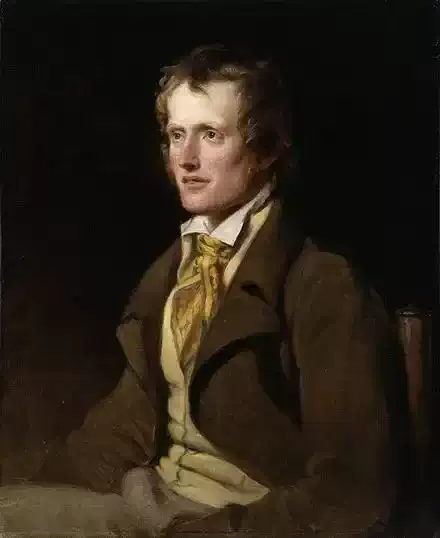
John Clare
The Shepherds Calendar - July
Daughter of pastoral smells and sights
And sultry days and dewy nights
July resumes her yearly place
Wi her milking maiden face
Ruddy and tand yet sweet to view
When everywhere's a vale of dew
And raps it round her looks that smiles
A lovly rest to daily toils
Wi last months closing scenes and dins
Her sultry beaming birth begins
Hay makers still in grounds appear
And some are thinning nearly clear
Save oddly lingering shocks about
Which the tithman counteth out
Sticking their green boughs where they go
The parsons yearly claims to know
Which farmers view wi grudging eye
And grumbling drive their waggons bye
In hedge bound close and meadow plains
Stript groups of busy bustling swains
From all her hants wi noises rude
Drives to the wood lands solitude
That seeks a spot unmarkd wi paths
Far from the close and meadow swaths
Wi smutty song and story gay
They cart the witherd smelling hay
Boys loading on the waggon stand
And men below wi sturdy hand
Heave up the shocks on lathy prong
While horse boys lead the team along
And maidens drag the rake behind
Wi light dress shaping to the wind
And trembling locks of curly hair
And snow white bosoms nearly bare
That charms ones sight amid the hay
Like lingering blossoms of the may
From clowns rude jokes they often turn
And oft their cheeks wi blushes burn
From talk which to escape a sneer
They oft affect as not to hear
Some in the nooks about the ground
Pile up the stacks swelld bellying round
The milking cattles winter fare
That in the snow are fodderd there
Warm spots wi black thorn thickets lind
And trees to brake the northern wind
While masters oft the sultry hours
Will urge their speed and talk of showers
When boy from home trotts to the stack
Wi dinner upon dobbins back
And bottles to the saddle tyd
Or ballancd upon either side
A horse thats past his toiling day
Yet still a favorite in his way
That trotts on errands up and down
The fields and too and fro from town
Long ere his presence comes in sight
Boys listen wi heart felt delight
And know his footsteps down the road
Hastening wi the dinner load
Then they seek in close or meadows
High hedgerows wi grey willow shadows
To hide beneath from sultry noon
And rest them at their dinner boon
Where helping shepherd for the lass
Will seek a hillock on the grass
The thickset hedge or stack beside
Where teazing pismires ne'er abide
And when tis found down drops the maid
Proud wi the kind attention paid
And still the swain wi notice due
Waits on her all the dinner through
And fills her horn which she tho dry
In shoyness often pushes bye
While he will urge wi many a smile
It as a strength to help her toil
And in her hand will oft contrive
From out his pocket pulld to slive
Stole fruit when no one turns his eve
To wet her mouth when shes adry
Offerd when she refuses ale
Noons sultry labour to regale
Teazd wi the countless multitude
Of flyes that every where intrude
While boys wi boughs will often try
To beat them from them as they lye
Who find their labour all in vain
And soon as scard they swarm again
Thus while each swain and boy and lass
Sit at their dinner on the grass
The teams wi gears thrown on their backs
Stand pulling at the shocks or racks
Switching their tails and turning round
To knap the gadflys teazing wound
While dob that brought the dinners load
Too tricky to be turnd abroad
Needing the scuttle shook wi grain
To coax him to be caught again
Is to a tree at tether tyd
Ready for boy to mount and ride
Nipping the grass about his pound
And stamping battering hooves around
Soon as each ground is clear of hay
The shepherd whoops his flocks away
From fallow fields to plentys scenes
Shining as smooth as bowling greens
But scard wi clipping tides alarms
They bleat about the close in swarms
And hide neath hedges in the cool
Still panting tho wi out their whool
Markd wi the tard brands lasting dye
And make a restless hue and cry
Answering the lambs that call again
And for their old dams seek in vain
Running mid the stranger throng
And ever meeting wi the wrong
Fiegn wi some old yoe to abide
Who smells and tosses them aside
And some as if they know its face
Will meet a lamb wi mended pace
But proving hopes indulgd in vain
They turn around and blair again
Till weand from memory half forgot
They spread and feed and notice not
Save now and then to lambs shrill crys
Odd yoes in hoarser tone replys
Still may be seen the mowing swain
On balks between the fields of grain
Who often stops his thirst to ease
To pick the juicy pods of pease
And oft as chances bring to pass
Stoops oer his scythe stuck in the grass
To seek the brimming honey comb
Which bees so long were toiling home
And rifld from so many flowers
And carried thro so many hours
He tears their small hives mossy ball
Where the brown labourers hurded all
Who gather homward one by one
And see their nest and honey gone
Humming around his rushing toil
Their mellancholly wrongs awhile
Then oer the sweltering swaths they stray
And hum disconsolate away
And oft neath hedges cooler screen
Where meadow sorrel lingers green
Calld 'sour grass' by the knowing clown
The mower gladly chews it down
And slakes his thirst the best he may
When singing brooks are far away
And his hoopd bottle woeful tale
Is emptied of its cheering ale
That lulld him in unconsious sleep
At dinners hour beneath a heap
Of grass or bush or edding shock
Till startld by the country clock
That told the hours his toil had lost
Who coud but spare an hour at most
And wearing past the setting sun
He stays to get his labour done
The gipsey down the meadow brook
Wi long pole and reaping hook
Tyd at its end amid the streams
That glitters wi the hot sunbeams
Reachs and cuts the bulrush down
And hawks them round each neighboring town
Packd at his back or tyd in loads
On asses down the dusty roads
He jogs and shouts from door to door
His well known note of calling oer
Offering to huswives cheap repairs
Mending their broken bottomd chairs
Wi step half walk half dance, and eye
Ready to smile on passers bye
Wi load well suiting weather warm
Tuckd carlessly beneath his arm
Or peeping coat and side between
In woolen bag of faded green
Half conseald and half displayd
A purpose tell tale to his trade
The gipsey fiddler jogs away
To village feast and holiday
Scraping in public house to trye
What beer his music will supply
From clowns who happy wi the din
Dance their hand naild hilos thin
Along the roads in passing crowds
Followd by dust like smoaking clouds
Scotch droves of beast a little breed
In swelterd weary mood proceed
A patient race from scottish hills
To fatten by our pasture rills
Lean wi the wants of mountain soil
But short and stout for travels toil
Wi cockd up horns and curling crown
And dewlap bosom hanging down
Followd by slowly pacing swains
Wild to our rushy flats and plains
At whom the shepherds dog will rise
And shake himself and in supprise
Draw back and waffle in affright
Barking the traveller out of sight
And mowers oer their scythes will bear
Upon their uncooth dress to stare
And shepherds as they trample bye
Leaves oer their hooks a wondering eye
To witness men so oddly clad
In petticoats of banded plad
Wi blankets oer their shoulders slung
To camp at night the fields among
When they for rest on commons stop
And blue cap like a stocking top
Cockt oer their faces summer brown
Wi scarlet tazzeles on the crown
Rude patterns of the thistle flower
Untrickd and open to the shower
And honest faces fresh and free
That breath of mountain liberty
The pindar on the sabbath day
Soon as the darkness waxes grey
Before one sun beam oer the ground
Spindles its light and shadow round
Goes round the fields at early morn
To see what stock are in the corn
To see what chances sheep may win
Thro gaps the gipsey pilfers thin
Or if theyve forcd a restless way
By rubbing at a loosend tray
Or nuzling colt that trys to catch
A gate at night left off the latch
By traveller seeking home in haste
Or the clown by fareys chas'd
That listning while he makes a stand
Opens each gate wi fearful hand
And dreads a minute to remain
To put it on the latch again
And cows who often wi their horns
Toss from the gaps the stuffing thorns
These like a fox upon the watch
He in the morning trycs to catch
And drives them to the pound for pay
Carless about the sabbath day
Soon as the morning wakens red
The shepherd startles from his bed
And rocks afield his moving pace
While folded sheep will know his face
Rising as he appears in sight
To shake their coats as in delight
His shadow stalking stride for stride
Stretches a jiant by his side
Long as a tree without a top
And oft it urges him to stop
Both in his journey and his song
And wonders why it seems so long
And bye and bye as morning dies
Shrinks to an unbrichd boy in size
Then as the evening gathers blue
Grows to a jiants length anew
Puzzld the more he stops to pause
His wisdom vainly seeks the cause
Again his journey he pursues
Lengthening his track along the dews
And his dog that turnd to pick
From his sides the sucking tick
Insects that on cattle creep
And bites the labourer laid asleep
Pricks up his ears to see twas gone
Ana shakes his hide and hastens on
And the while the shepherd stayd
Trailing a track the hare had made
Bolts thro the creeping hedge again
And hurring follows wi the swain
The singing shouting herding boys
Follows again their wild employs
And ere the sun puts half his head
From out his crimson pillowd bed
And bawls behind his cows again
That one by one lobs down the lane
Wi wild weeds in his hat anew
The summer sorts of every hue
And twigs of leaves that please his eye
To his old haunts he hallows bye
Wi dog that loiters bv his side
Or trotts before wi nimble stridc
That waits till bid to bark and run
And panteth from the dreaded sun
And oft amid the sunny day
Will join a partner in his play
And in his antic tricks and glee
Will prove as fond of sport as he
And by the flag pool summer warm
He'll watch the motions of his arm
That holds a stick or stone to throw
In the sun gilded flood below
And head oer ears he danses in
Nor fears to wet his curly skin
The boys field cudgel to restore
And brings it in his mouth ashore
And eager as for crust or bone
He'll run to catch the pelted stone
Till wearied out he shakes his hide
And drops his tail and sneaks aside
Unheeding whistles shouts and calls
To take a rest where thickly falls
The rush clumps shadows there he lyes
Licking his skin and catching flyes
Or picking tween his stretching feet
The bone he had not time to eat
Before when wi the teazing boy
He was so throngd wi plays employ
Noon gathers wi its blistering breath
Around and day dyes still as death
The breeze is stopt the lazy bough
Hath not a leaf that dances now
The totter grass upon the hill
And spiders threads is hanging still
The feathers dropt from morehens wings
Upon the waters surface clings
As stedfast and as heavy seem
As stones beneath them in the stream
Hawkweed and groundsels fairey downs
Unruffld keep their seeding crowns
And in the oven heated air
Not one light thing is floating there
Save that to the earnest eye
The restless heat swims twittering bye
The swine run restless down the street
Anxious some pond or ditch to meet
From days hot swoonings to retire
Wallowing in the weeds and mire
The linnets seek the twiggs that lye
Close to the brook and brig stones drye
At top and sit and dip their bills
Till they have drunk their little fills
Then flurt their wings and wet their feathers
To cool them in the blazing weathers
Dashing the water oer their heads
Then high them to some cooling sheds
Where dark wood glooms about the plain
To pick their feathers smooth again
The young quick's branches seem as dead
And scorch from yellow into red
Ere autumn hath its pencil taen
Their shades in different hues to stain
Following behind the crawling ploughs
Whiping oft their sweating brows
The boys lead horses yokd in pairs
To jumping harrows linkd that tears
And teazes the hard clods to dust
Placing for showers in hopes their trust
The farmer follows sprinkling round
Wi turnip seed the panting ground
Providing food for beast and sheep
When winters snows are falling deep
Oft proving hopes and wishes vain
While clouds disperse that promisd rain
When soon as ere the turnip creeps
From out the crust burnt soil and peeps
Upon the farmers watching eye
Tis eaten by the jumping flye
And eager neath the midday sun
Soon as each plough teams toil is done
Scarse waiting till the gears are taen
From off their backs by boy and swain
From hayfilld racks they turn away
Nor in the stable care to stay
Hurr[y]ing to the trough to drink
Or from the yard ponds muddy brink
Rush in and wi long winded soak
Drink till theyre almost fit to choak
And from the horsbees teazing din
Thrust deep their burning noses in
Almost above their greedy eyes
To cool their mouths and shun the flyes
Deaf to the noise the geese will make
That grudge the worthy share they take
Boys now neath green lanes meeting bough
Each noons half holiday from plough
Take out their hungry teams till night
That nipp the grass wi eager bite
Wi long tails switching never still
They lounge neath trees when eat their fill
And stamp and switch till closing day
Brushing the teazing flyes away
Endless labour all in vain
That start in crowds to turn again
When the sun is sinking down
And dyes more deep the shadows brown
And gradual into slumber glooms
How sweet the village evening comes
To weary hinds from toil releasd
And panting sheep and torturd beast
The shepherd long wi heat opprest
Betakes him to his cottage rest
And his tird dog that plods along
Wi panting breath and lolling tongue
Runs eager as the brook appears
And dashes in head over ears
Startling reed sparrow broods to fiye
That in the reed woods slumberd nigh
And water rotts in haste to hide
Nibbling the sedges close beside
Lapping while he floats about
To quench his thirst then drabbles out
And shakes his coat and like the swain
Is happy night is come again
The beast that to the pond did creep
And rushd in water belly deep
The gad flyes threatning hums to shun
And horse bee darting in the sun
Lashing their tails the while they stood
And sprinkling thick their sides wi mud
Snuff the cool air now day is gone
And linger slow and idly on
To the pebbly fore to drink
And drop and rest upon its brink
Ruminating on their beds
Calm as the sky above their heads
The horse whose mouth is seldom still
Is up and cropping at his will
The moisting grass unteazd and free
In summer eves serenity
Uncheckt by flyes he grazes on
Right happy that the day is gone
Ne'er leaving off to turn around
His stooping head to knap the wound
And tail that switchd his sides all day
Is quiet now the suns away
The cowboys as their herd plod on
Before them homward one by one
Grows happy as their toil grows short
And full of fancys restless sport
Oft starts along wi sinking day
Acting proud their soldier play
Wi peeld bark sash around each waist
And rush caps oer each beaver placd
Stuck wi a headaches red cockade
And wooden swords and sticks displayd
For flags-thus march the evening troop
While soon one strikes a whistle up
And others wi their dinner tins
The evenings falling quiet dins
Patting wi hollow sounding tums
And imitating pipes and drums
Calling their cows that plod before
Their army marching from the moor
And thus they act till met the town
Carless of laughs from passing clown
Even their dogs too tird for play
Loiter on their evening way
Oft rolling on the damping grass
Or stopping wi the milking lass
Waiting a chance the ways conseal
A mouth full from her pails to steal
Dropping down to pick a bone
The hedger from his wallets thrown
Or found upon some greensward platt
Where hayfolks at their dinner sat
Sweet the cows breath down the lane
Steaming the fragrance of the plain
As home they rock and bawling wait
Till boys run to unloose the gate
And from their milksheds all adry
Turn to the pump wi anxious eye
Where shoud the maids wi boys repair
To fill the dashing bucket there
They hurry spite of threatning clown
And kick the milkers bucket down
And horses oft wi eager stoop
Will bend adown to steal a sup
Watching a moments chance to win
And dip their eager noses in
As by they pass or set it down
To rest or chatter to a clown
And knats wi their small slender noise
Bother too the troubld boys
And teaze the cows that while she chides
Will kick and turn to lick their sides
And like so many hanting sprites
Will bite and weal the maid anights
Who dreams of love and sleeps so sound
As ne'er to feel each little wound
Till waken by the morning sun
She wonders at the injury done
Thinking in fears simplicity
That faireys dreaded mistery
On her white bosom in the dark
Had been and left each blisterd mark
The fox begins his stunt odd bark
Down in its dew bed drops the lark
And on the heath amid the gorse
The night hawk stints the feeding horse
That pricks his ear wi startling eye
And snorts to hear its trembling crye
The owlet leaves his ivy tree
Into its hive slow sails the bee
The mower seeks his cloaths and hides
His scythe home bent wi weary strides
And oer his shoulder swings his bag
Bearing in hand his empty cag
Hay makers on their homward way
Into the fields will often stray
Among the grain when no one sees
Nestle and fill their laps wi peas
Sheep scard wi tweenlight doubting eye
Leap the path and canter bye
Nipping wi moment stoops the plain
And turning quick to gaze again
Till silence upon eve awaits
And milkmaids cease to clap the gates
And homward to the town are gone
Wi whispering sweethearts chatting on
And shepherds homward tracks are past
And dogs rude barks are still at last
Then down they drop as suits their wills
Or nips the thyme on pismire hills
Where nought is seen but timid hares
That nights sweet welcome gladly shares
And shadows stooping as they stoop
Beside them when the moon gets up
Reviving wi the ruddy moon
The nightingale resumes his tune
What time the horsboy drives away
His loose teams from the toils of day
To crop the closes dewy blade
Where the hay stacks fencd and made
Or on the commons bushy plain
To rest till the sun comes again
Whistling and bawling loud and long
The burthen of some drawling song
That grows more loud as eve grows late
Yet when he opes the clapping gate
He cant help turning in his joys
To look if his fear damping noise
Has raisd a mischief in the wind
And wakd a ghost to stalk behind
And when hes turnd them safe aground
And hookd the chain the gate around
Wi quicker speed he homward sings
And leaves them in the mushroom rings
Wi the dewdrunk dancing elves
To eat or rest as suits themselves
And as he hastes from labour done
An owlets whoop een makes him run
And bats shill flickerings bobbing near
Turns his heart blood cold wi fear
And when at home wi partner ralph
He hugs himself to think hes safe
And tells his tale while others smile
Of all he thought and feard the while
The black house bee hath ceasd to sing
And white nosd one wi out a sting
That boys will catch devoid of dread
Are in their little holes abed
And martins neath the mossey eves
Oft startld at the sparrow thieves
That in their house will often peep
Breaking their little weary sleep
And oft succeed when left alone
In making their clay huts their own
Where the cock sparrow on the scout
Watches and keeps the owner out
The geese have left the home close moats
And at the yard gate clean their coats
Or neath their feathers tuck their heads
Asleep till driven to their sheds
The pigeon droves in whisking flight
Hurrying to their coats ere night
In coveys round the village meet
And in the dove coat holes retreat
Nor more about the wheaten grounds
The bird boys bell and clapper sounds
Retiring wi the setting sun
His toil and shout and song is done
The shrill bat wi its flitting mate
Starts thro the church vaults iron grate
Deaths daily visitors and all
He meets save slanting suns that fall
At eve as if they lovd to shed
Their daily memory oer the dead
Hodge neath the climbing elms that drop
Their branches oer a dove coat top
Hath milkd his cows and taken in
On yokes the reeking pales or tin
And been across the straw to chain
The hen roost wicket safe again
And done his yard rounds hunting eggs
And taen his hat from off the peggs
To scamper to the circling cross
To have a game at pitch and toss
And day boy hath his supper got
Of milk before twas hardly hot
Eager from toil to get away
And join the boys at taw to play
Neath black smiths cinder litterd shed
Till the hour to go to bed
Old gossips on the greensward bench
Sit where the hombound milking wench
Will set her buckets down to rest
And be awhile their evening guest
To whom their box is held while she
Takes the smallest nips that be
That soon as snift begins to teaze
And makes her turn away to sneeze
While old dames say the sign is plain
That she will dream about her swain
And toss the cloaths from off her bed
And cautions her of roguish ned
Holding their hands agen their hips
To laugh as up she starts and trip
In quickend speed along the town
Bidding good night to passing clown
From the black smiths shop the swain
Jogs wi ploughshares laid again
And drops them by the stable shed
Where gears on pegs hang over head
Ready for driving boys to take
On fore horse when their toils awake
The kitchen wench wi face red hot
As blazing fire neath supper pot
Hath cleand her pails and pansions all
And set them leaning by the wall
And twirld her whool mop clean again
And hung it on the pales to drain
Now by the maids requesting smile
The shepherd mounts the wood stack pile
Reard high against the orchard pales
And cause of thorns she oft bewails
Prickd hands and holes in sunday gown
He throws the smoothest faggot down
And hawls it in at her desire
Ready for the kitching fire
Beneath the elderns village shade
Oer her well curb leans the maid
To draw the brimming bucket up
While passing boy to beg a sup
Will stop his roll or rocking cart
And the maidens gentle heart
Gives ready leave-the eager clown
Throws off his hat and stoops adown
Soaking his fill then hastens on
To catch his team already gone
Eager from toil to get release
And in the hay field feed at peace
The weary thresher leaves his barn
And emptys from his shoes the corn
That gatherd in them thro the day
And homward bends his weary way
The gardener he is sprinkling showers
From watering pans on drooping flowers
And set away his hoe and spade
While goody neath the cottage shade
Sits wi a baskett tween her knees
Ready for supper shelling peas
And cobler chatting in the town
Hath put his window shutter down
And the knowing parish clerk
Feign to do his jobs ere dark
ilath timd the church clock to the sun
And wound it up for night and done
And turud the hugh kev in the door
Chatting his evening story oer
Up the street the servant maid
Runs wi her errands long delayd
And ere the door she enters in
She stops to right a loosend pin
And smooth wi hasty fingers down
The crumpling creases in her gown
Which Rogers oggles rudly made
For may games forfeit never paid
And seizd a kiss against her will
While playing quoits upon the hill
Wi other shepherds laughing nigh
That made her shoy and hurry bye
The blacksmiths gangling toil is oer
And shut his hot shops branded door
Folding up his arms to start
And take at ease his evening quart
And farmer giles his business done
Wi face a very setting sun
Jogging home on dobbins back
From helping at the clover stack
The horse knows well nor trys to pass
The door where for his custom glass
He nightly from the saddle jumps
To slake his thirst or cheer the dumps
Leaving old dob his breath to catch
Wi bridle hanging at the latch
The shepherd too will often spare
A sixpence to be merry there
While the dog that trackd his feet
Adown the dusty printed street
Lies as one weary loath to roam
Agen the door to wait him home
While the taylors long day thirst
Is still unquenchd tho fit to burst
Whose been at truants merry play
From sheers and bodkin all the day
Still soaks the tankard reeling ripe
And scarce can stoop to light his pipe
The labourer sitting by his door
Happy that the day is oer
Is stooping downwards to unloose
His leathern baffles or his shoes
Making ready for his rest
Quickly to be the pillows guest
While on mothers lap wi in
The childern each their prayers begin
That taen from play are loath to go
And looking round repeating slow
Each prayer they stammer in delay
To gain from bed a longer stay
Goody hath set her spinning bye
Deafend by her chattering pye
That calls her up wi hungry rage
To put his supper in the cage
That done she sought a neighbours door
A minutes time to gossip oer
And neath her apron now tis night
Huddles for home, her candle light
Hid from the wind-to burn an hour
As clouds wi threatend thunder lower
The mastiff from his kennel free
Is now unchaind at liberty
In readiness to put to rout
The thieves that night may bring about
Thus evening deepning to a close
Leaves toil and nature to repose
384
Robert Louis Stevenson
Sonnet I
NOR judge me light, tho' light at times I seem,
And lightly in the stress of fortune bear
The innumerable flaws of changeful care -
Nor judge me light for this, nor rashly deem
(Office forbid to mortals, kept supreme
And separate the prerogative of God!)
That seaman idle who is borne abroad
To the far haven by the favouring stream.
Not he alone that to contrarious seas
Opposes, all night long, the unwearied oar,
Not he alone, by high success endeared,
Shall reach the Port; but, winged, with some light breeze
Shall they, with upright keels, pass in before
Whom easy Taste, the golden pilot, steered.
384
Ella Wheeler Wilcox
The Temperance Army
Though you see no banded army,
Though you hear no cannons rattle,
We are in a mighty contest,
We are fighting a great battle.
We are few, but we are right:
And we wage the holy fight,
Night and day, and day and night.
If we do not fail or falter,
If we do not sleep or slumber,
We shall win in this great contest,
Though the foe is twice our number.
This the burden of our song,
'We are few, but we are strong,
And right must triumph over wrong.'
O my sisters! O my brothers!
There is death all round about us.
Must we, then, sit down discouraged?
Will you let the wine-cup rout us?
Hear the drunkard's awful wail!
See the mourners, bowed and pale!
Will you, coward, then say 'fail'?
Say not that your heart is with us
When you do not help or aid us.
All who love the cause sincerely
Can do something: God has made us
Tongues to talk with: you can say
Something, if you will, each day,
That will help us on our way,
Though you are not highly gifted,
Though you are not bard or poet,
Though you cannot preach or lecture,
You can love the cause, and show it
Boldly, in each thing you do.
Seeking all that's pure and true,
This will be a help from you.
You can say the liquor traffic
Is a curse to any nation;
You can say that prohibition
Is a blessing and salvation.
You can sow good seeds, and, though
You may never see them grow,
They will not be lost, I know.
In this mighty temperance contest,
Where no guns or cannons rattle,
Though you cannot lead the army
Or be chieftain of the battle,
With that mighty sword, the tongue,
You can fight against the wrong,
You can sing some temperance song.
Say not that you cannot aid us!
Drops of water make the river-
Make the mighty Mississippi,
That flows on hand on for ever.
Every word you say for Right
Gives us courage, gives us might,
And brings nearer, morn and night.
383

Paul Laurence Dunbar
Distinction
"I am but clay," the sinner plead,
Who fed each vain desire.
"Not only clay," another said,
"But worse, for thou art mire."
Who fed each vain desire.
"Not only clay," another said,
"But worse, for thou art mire."
384
Ella Wheeler Wilcox
Idler's Song
I sit in the twilight dim
At the close of an idle day,
And I list to the soft sweet hymn,
That rises far away,
And dies on the evening air.
Oh, all day long,
They sing their song,
Who toil in the valley there.
But never a song sing I,
Sitting with folded hands,
The hours pass me by Dropping
their golden sands -
And I list, from day to day,
To the 'tick, tick, tock'
Of the old brown clock,
Ticking my life away.
And I see the twilight fade,
And I see the night come on,
And then, in the gloom and shade,
I weep for the day that's gone -
Weep and wail in pain,
For the misspent day
That has flown away,
And will not come again.
Another morning beams,
And I forget the last,
And I sit in idle dreams
Till the day over - past.
Oh, the toiler's heart is glad!
When the day is gone
And the night comes on,
But mine is sore and sad.
For I dare not look behind!
No shining, golden sheaves
Can I ever hope to find:
Nothing but withered leaves.
Ah! dreams are very sweet!
But will not please
If only these
I lay at the Master's feet.
And what will the Master say
To dreams and nothing more?
Oh, idler, all the day!
Think, ere thy life is o'er!
And when the day grows late,
Oh, soul of sin!
Will He let you in,
There at the pearly gate?
Oh, idle heart, beware!
On, to the field of strife!
On, to the valley there!
And live a useful life!
Up, do not wait a day!
For the old brown clock,
With its 'tick, tick, tock, '
Is ticking your life away.
382

Henry Van Dyke
Victor Hugo
Heart of France for a hundred years,
Passionate, sensitive, proud, and strong,
Quick to throb with her hopes and fears,
Fierce to flame with her sense of wrong!
You, who hailed with a morning song
Dream-light gilding a throne of old:
You, who turned when the dream grew cold,
Singing still, to the light that shone
Pure from Liberty's ancient throne,
Over the human throng!
You, who dared in the dark eclipse,--
When the pygmy heir of a giant name
Dimmed the face of the land with shame,--
Speak the truth with indignant lips,
Call him little whom men called great,
Scoff at him, scorn him, deny him,
Point to the blood on his robe of state,
Fling back his bribes and defy him!
You, who fronted the waves of fate
As you faced the sea from your island home,
Exiled, yet with a soul elate,
Sending songs o'er the rolling foam,
Bidding the heart of man to wait
For the day when all should see
Floods of wrath from the frowning skies
Fall on an Empire founded in lies,
And France again be free!
You, who came in the Terrible Year
Swiftly back to your broken land,
Now to your heart a thousand times more dear,--
Prayed for her, sung to her, fought for her,
Patiently, fervently wrought for her,
Till once again,
After the storm of fear and pain,
High in the heavens the star of France stood clear!
You, who knew that a man must take
Good and ill with a steadfast soul,
Holding fast, while the billows roll
Over his head, to the things that make
Life worth living for great and small,--
Honour and pity and truth,
The heart and the hope of youth,
And the good God over all!
You, to whom work was rest,
Dauntless Toiler of the Sea,
Following ever the joyful quest
Of beauty on the shores of old Romance,
Bard of the poor of France,
And warrior-priest of world-wide charity!
You who loved little children best
Of all the poets that ever sung,
Great heart, golden heart,
Old, and yet ever young,
Minstrel of liberty,
Lover of all free, winged things,
Now at last you are free,--
Your soul has its wings!
Heart of France for a hundred years,
Floating far in the light that never fails you,
Over the turmoil of mortal hopes and fears
Victor, forever victor, the whole world hails you!
384

George Herbert
Virtue
Sweet day, so cool, so calm, so bright
The bridal of the earth and sky:
The dew shall weep thy fall tonight,
For thou must die.
Sweet rose, whose hue, angry and brave,
Bids the rash gazer wipe his eyes:
Thy root is ever in its grave,
And thou must die.
Sweet spring, full of sweet days and roses,
A box where sweets compacted lie:
My music shows ye have your closes,
And all must die.
Only a sweet and virtuous soul,
LIke seasoned timber, never gives;
But though the whole world turn to coal.
Then chiefly lives.
382