
Ethics and Morality

Nazim Hikmet
A Sad State Of Freedom
You waste the attention of your eyes,
the glittering labour of your hands,
and knead the dough enough for dozens of loaves
of which you'll taste not a morsel;
you are free to slave for others--
you are free to make the rich richer.
The moment you're born
they plant around you
mills that grind lies
lies to last you a lifetime.
You keep thinking in your great freedom
a finger on your temple
free to have a free conscience.
Your head bent as if half-cut from the nape,
your arms long, hanging,
your saunter about in your great freedom:
you're free
with the freedom of being unemployed.
You love your country
as the nearest, most precious thing to you.
But one day, for example,
they may endorse it over to America,
and you, too, with your great freedom--
you have the freedom to become an air-base.
You may proclaim that one must live
not as a tool, a number or a link
but as a human being--
then at once they handcuff your wrists.
You are free to be arrested, imprisoned
and even hanged.
There's neither an iron, wooden
nor a tulle curtain
in your life;
there's no need to choose freedom:
you are free.
But this kind of freedom
is a sad affair under the stars.
Translated by Taner Baybars
381

Carl Sandburg
Choices
They offer you many things,
I a few.
Moonlight on the play of fountains at night
With water sparkling a drowsy monotone,
Bare-shouldered, smiling women and talk
And a cross-play of loves and adulteries
And a fear of death
and a remembering of regrets:
All this they offer you.
I come with:
salt and bread
a terrible job of work
and tireless war;
Come and have now:
hunger.
danger
and hate.
381

Rudyard Kipling
The Hyaenas
After the burial-parties leave
And the baffled kites have fled;
The wise hyaenas come out at eve
To take account of our dead.
How he died and why he died
Troubles them not a whit.
They snout the bushes and stones aside
And dig till they come to it.
They are only resolute they shall eat
That they and their mates may thrive,
And they know that the dead are safer meat
Than the weakest thing alive.
(For a goat may butt, and a worm may sting,
And a child will sometimes stand;
But a poor dead soldier of the King
Can never lift a hand.)
They whoop and halloo and scatter the dirt
Until their tushes white
Take good hold in the army shirt,
And tug the corpse to light,
And the pitiful face is shewn again
For an instant ere they close;
But it is not discovered to living men --
Only to God and to those
Who, being soulless, are free from shame,
Whatever meat they may find.
Nor do they defile the dead man's name --
That is reserved for his kind.
380

Walt Whitman
Manhattan Streets I Saunter'd, Pondering
MANHATTAN'S streets I saunter'd, pondering,
On time, space, reality--on such as these, and abreast with them,
prudence.
After all, the last explanation remains to be made about prudence;
Little and large alike drop quietly aside from the prudence that
suits immortality.
The Soul is of itself;
All verges to it--all has reference to what ensues;
All that a person does, says, thinks, is of consequence;
Not a move can a man or woman make, that affects him or her in a day,
month, any part of the direct life-time, or the hour of death,
but the same affects him or her onward afterward through the
indirect life-time.
The indirect is just as much as the direct,
The spirit receives from the body just as much as it gives to the
body, if not more.
Not one word or deed--not venereal sore, discoloration, privacy of
the onanist, putridity of gluttons or rum-drinkers, peculation,
cunning, betrayal, murder, seduction, prostitution, but has
results beyond death, as really as before death.
Charity and personal force are the only investments worth anything.
No specification is necessary--all that a male or female does, that
is vigorous, benevolent, clean, is so much profit to him or
her, in the unshakable order of the universe, and through the
whole scope of it forever.
Who has been wise, receives interest,
Savage, felon, President, judge, farmer, sailor, mechanic, literat,
young, old, it is the same,
The interest will come round--all will come round.
Singly, wholly, to affect now, affected their time, will forever
affect all of the past, and all of the present, and all of the
future,
All the brave actions of war and peace,
All help given to relatives, strangers, the poor, old, sorrowful,
young children, widows, the sick, and to shunn'd persons,
All furtherance of fugitives, and of the escape of slaves,
All self-denial that stood steady and aloof on wrecks, and saw others
fill the seats of the boats,
All offering of substance or life for the good old cause, or for a
friend's sake, or opinion's sake,
All pains of enthusiasts, scoff'd at by their neighbors,
All the limitless sweet love and precious suffering of mothers,
All honest men baffled in strifes recorded or unrecorded,
All the grandeur and good of ancient nations whose fragments we
inherit,
All the good of the dozens of ancient nations unknown to us by name,
date, location,
All that was ever manfully begun, whether it succeeded or no,
All suggestions of the divine mind of man, or the divinity of his
mouth, or the shaping of his great hands;
All that is well thought or said this day on any part of the globe-or
on any of the wandering stars, or on any of the fix'd stars,
by those there as we are here;
All that is henceforth to be thought or done by you, whoever you are,
or by any one;
These inure, have inured, shall inure, to the identities from which
they sprang, or shall spring.
Did you guess anything lived only its moment?
The world does not so exist--no parts palpable or impalpable so
exist;
No consummation exists without being from some long previous
consummation--and that from some other,
Without the farthest conceivable one coming a bit nearer the
beginning than any.
Whatever satisfies Souls is true;
Prudence entirely satisfies the craving and glut of Souls;
Itself only finally satisfies the Soul;
The Soul has that measureless pride which revolts from every lesson
but its own.
Now I give you an inkling;
Now I breathe the word of the prudence that walks abreast with time,
space, reality,
That answers the pride which refuses every lesson but its own.
What is prudence, is indivisible,
Declines to separate one part of life from every part,
Divides not the righteous from the unrighteous, or the living from
the dead,
Matches every thought or act by its correlative,
Knows no possible forgiveness, or deputed atonement,
Knows that the young man who composedly peril'd his life and lost it,
has done exceedingly well for himself without doubt,
That he who never peril'd his life, but retains it to old age in
riches and ease, has probably achiev'd nothing for himself
worth mentioning;
Knows that only that person has really learn'd, who has learn'd to
prefer results,
Who favors Body and Soul the same,
Who perceives the indirect assuredly following the direct,
Who in his spirit in any emergency whatever neither hurries or,
avoids death.
380

John Donne
Elegy III: Change
Although thy hand and faith, and good works too,
Have seal'd thy love which nothing should undo,
Yea though thou fall back, that apostasy
Confirm thy love; yet much, much I fear thee.
Women are like the Arts, forc'd unto none,
Open to'all searchers, unpriz'd, if unknown.
If I have caught a bird, and let him fly,
Another fouler using these means, as I,
May catch the same bird; and, as these things be,
Women are made for men, not him, nor me.
Foxes and goats; all beasts change when they please,
Shall women, more hot, wily, wild then these,
Be bound to one man, and did Nature then
Idly make them apter to endure than men?
They are our clogges, not their owne; if a man be
Chain'd to a galley, yet the galley is free;
Who hath a plow-land, casts all his seed corn there,
And yet allows his ground more corn should bear;
Though Danuby into the sea must flow,
The sea receives the Rhene, Volga, and Po.
By nature, which gave it, this liberty
Thou lov'st, but Oh! canst thou love it and me?
Likeness glues love: Then if so thou do,
To make us like and love, must I change too?
More than thy hate, I hate it, rather let me
Allow her change, then change as oft as she,
And so not teach, but force my opinion
To love not any one, nor every one.
To live in one land is captivity,
To run all countries, a wild roguery;
Waters stink soon, if in one place they bide,
And in the vast sea are worse putrified:
But when they kiss one bank, and leaving this
Never look back, but the next bank do kiss,
Then are they purest; Change is the nursery
Of music, joy, life, and eternity.
381

Ella Wheeler Wilcox
At The Hop
‘Tis time to dress. Dost hear the music surging
Like sobbing waves that roll up from the sea?
Yes, yes, I hear – I yield – no need of urging;
I know your wishes, - send Lisette to me.
I hate the ballroom; hate its gilded pleasure;
I hate the crowd within it, well you know;
But what of that? I am your lawful treasure –
And when you would display me I must go.
You bought me with a mother’s pain and trouble.
I’ve been a great expense to you always.
And now, if you can sell me, and get double
The sum cost – why, what have I to say?
You’ve done your duty: kept me in the fashion,
And shown off me at every stylish place.
‘Twas not your fault I had a heart of passion;
‘Twas not your fault I ever saw his face.
The dream was brief, and beautiful, and tender,
(O, God! to live those golden hours once more.
The silver moonlight, and his dark eyes’ splendour,
The sky above us, and the sea below.)
Come, come, Lisette, bring out those royal laces;
To-night must make the victory complete.
Among the crowd of masked and smiling faces,
I’ll move with laughter, and with smiles most sweet.
Make me most fair! with youth and grace and beauty.
I needs must conquer bloated age and gold.
She shall not say I have not done my duty;
I’m ready now – a daughter to be sold!
380

Robert Louis Stevenson
Sonnet VII
The strong man's hand, the snow-cool head of age,
The certain-footed sympathies of youth -
These, and that lofty passion after truth,
Hunger unsatisfied in priest or sage
Or the great men of former years, he needs
That not unworthily would dare to sing
(Hard task!) black care's inevitable ring
Settling with years upon the heart that feeds
Incessantly on glory. Year by year
The narrowing toil grows closer round his feet;
With disenchanting touch rude-handed time
The unlovely web discloses, and strange fear
Leads him at last to eld's inclement seat,
The bitter north of life - a frozen clime.
381
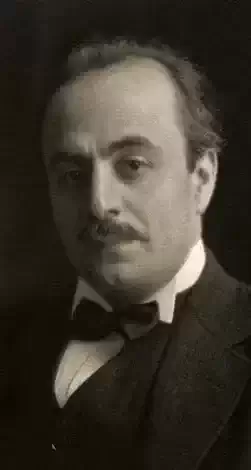
Khalil Gibran
Laws XIII
Then a lawyer said, "But what of our Laws, master?"
And he answered:
You delight in laying down laws,
Yet you delight more in breaking them.
Like children playing by the ocean who build sand-towers with constancy and then
destroy them with laughter.
But while you build your sand-towers the ocean brings more sand to the shore,
And when you destroy them, the ocean laughs with you.
Verily the ocean laughs always with the innocent.
But what of those to whom life is not an ocean, and man-made laws are not
sand-towers,
But to whom life is a rock, and the law a chisel with which they would carve it in their
own likeness?
What of the cripple who hates dancers?
What of the ox who loves his yoke and deems the elk and deer of the forest stray and
vagrant things?
What of the old serpent who cannot shed his skin, and calls all others naked and
shameless?
And of him who comes early to the wedding-feast, and when over-fed and tired goes
his way saying that all feasts are violation and all feasters law-breakers?
What shall I say of these save that they too stand in the sunlight, but with their backs
to the sun?
They see only their shadows, and their shadows are their laws.
And what is the sun to them but a caster of shadows?
And what is it to acknowledge the laws but to stoop down and trace their shadows
upon the earth?
But you who walk facing the sun, what images drawn on the earth can hold you?
You who travel with the wind, what weathervane shall direct your course?
What man's law shall bind you if you break your yoke but upon no man's prison door?
What laws shall you fear if you dance but stumble against no man's iron chains?
And who is he that shall bring you to judgment if you tear off your garment yet leave it
in no man's path?
People of Orphalese, you can muffle the drum, and you can loosen the strings of the
lyre, but who shall command the skylark not to sing?
380
Ella Wheeler Wilcox
In the Long Run
In the long run fame finds the deserving man.
The lucky wight may prosper for a day,
But in good time true merit leads the van,
And vain pretense, unnoticed, goes its way.
There is no Chance, no Destiny, no Fate,
But Fortune smiles on those who work and wait,
In the long run.
In the long run all goodly sorrow pays,
There is no better thing than righteous pain,
The sleepless nights, the awful thorn-crowned days,
Bring sure reward to tortured soul and brain.
Unmeaning joys enervate in the end,
But sorrow yields a glorious dividend
In the long run.
In the long run all hidden things are known,
The eye of truth will penetrate the night,
And good or ill, thy secret shall be known,
However well 't is guarded from the light.
All the unspoken motives of the breast
Are fathomed by the years and stand confest
In the long run.
In the long run all love is paid by love,
Though undervalued by the hosts of earth;
The great eternal Governemnt above
Keeps strict account and will redeem its worth.
Give thy love freely; do not count the cost;
So beautiful a thing was never lost
In the long run.
380

Claude Mckay
The Lynching
His Spirit in smoke ascended to high heaven.
His father, by the cruelest way of pain,
Had bidden him to his bosom once again;
The awful sin remained still unforgiven.
All night a bright and solitary star
(Perchance the one that ever guided him,
Yet gave him up at last to Fate's wild whim)
Hung pitifully o'er the swinging char.
Day dawned, and soon the mixed crowds came to view
The ghastly body swaying in the sun
The women thronged to look, but never a one
Showed sorrow in her eyes of steely blue;
And little lads, lynchers that were to be,
Danced round the dreadful thing in fiendish glee.
377
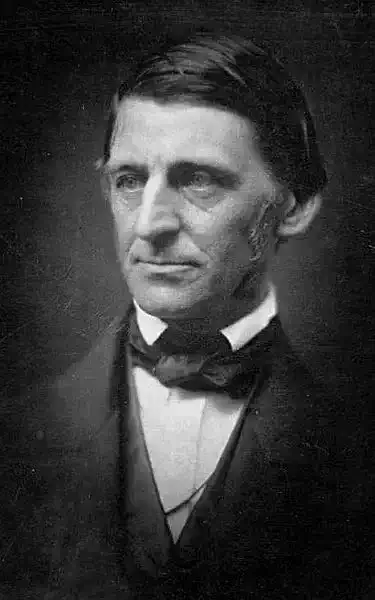
Ralph Waldo Emerson
The Park
The prosperous and beautiful
To me seem not to wear
The yoke of conscience masterful,
Which galls me everywhere.
I cannot shake off the god;
On my neck he makes his seat;
I look at my face in the glass,
My eyes his eye-balls meet.
Enchanters! enchantresses!
Your gold makes you seem wise:
The morning mist within your grounds
More proudly rolls, more softly lies.
Yet spake yon purple mountain,
Yet said yon ancient wood,
That night or day, that love or crime
Lead all souls to the Good.
377

Henry Wadsworth Longfellow
The Revenge of Rain-in-the-Face
In that desolate land and lone,
Where the Big Horn and Yellowstone
Roar down their mountain path,
By their fires the Sioux Chiefs
Muttered their woes and griefs
And the menace of their wrath.
"Revenge!" cried Rain-in-the-Face,
"Revenue upon all the race
Of the White Chief with yellow hair!"
And the mountains dark and high
From their crags re-echoed the cry
Of his anger and despair.
In the meadow, spreading wide
By woodland and riverside
The Indian village stood;
All was silent as a dream,
Save the rushing a of the stream
And the blue-jay in the wood.
In his war paint and his beads,
Like a bison among the reeds,
In ambush the Sitting Bull
Lay with three thousand braves
Crouched in the clefts and caves,
Savage, unmerciful!
Into the fatal snare
The White Chief with yellow hair
And his three hundred men
Dashed headlong, sword in hand;
But of that gallant band
Not one returned again.
The sudden darkness of death
Overwhelmed them like the breath
And smoke of a furnace fire:
By the river's bank, and between
The rocks of the ravine,
They lay in their bloody attire.
But the foemen fled in the night,
And Rain-in-the-Face, in his flight
Uplifted high in air
As a ghastly trophy, bore
The brave heart, that beat no more,
Of the White Chief with yellow hair.
Whose was the right and the wrong?
Sing it, O funeral song,
With a voice that is full of tears,
And say that our broken faith
Wrought all this ruin and scathe,
In the Year of a Hundred Years.
378

William Shakespeare
Sonnet 21: So is it not with me as with that Muse
So is it not with me as with that Muse
Stirr'd by a painted beauty to his verse,
Who heaven itself for ornament doth use
And every fair with his fair doth rehearse
Making a couplement of proud compare,
With sun and moon, with earth and sea's rich gems,
With April's first-born flowers, and all things rare
That heaven's air in this huge rondure hems.
O' let me, true in love, but truly write,
And then believe me, my love is as fair
As any mother's child, though not so bright
As those gold candles fix'd in heaven's air:
Let them say more than like of hearsay well;
I will not praise that purpose not to sell.
379

Johann Wolfgang von Goethe
The Reckoning
LEADER.
LET no cares now hover o'er us
Let the wine unsparing run!
Wilt thou swell our merry chorus?
Hast thou all thy duty done?
SOLO.
Two young folks--the thing is curious--
Loved each other; yesterday
Both quite mild, to-day quite furious,
Next day, quite the deuce to pay!
If her neck she there was stooping,
He must here needs pull his hair.
I revived their spirits drooping,
And they're now a happy pair.
CHORUS.
Surely we for wine may languish!
Let the bumper then go round!
For all sighs and groans of anguish
Thou to-day in joy hast drown'd.
SOLO.
Why, young orphan, all this wailing?
"Would to heaven that I were dead!
For my guardian's craft prevailing
Soon will make me beg my bread."
Knowing well the rascal genus,
Into court I dragg'd the knave;
Fair the judges were between us,
And the maiden's wealth did save.
CHORUS.
Surely we for wine may languish!
Let the bumper then go round!
For all sighs and groans of anguish
Thou to-day in joy hast drown'd.
SOLO.
To a little fellow, quiet,
Unpretending and subdued,
Has a big clown, running riot,
Been to-day extremely rude.
I bethought me of my duty,
And my courage swell'd apace,
So I spoil'd the rascal's beauty,
Slashing him across the face.
CHORUS.
Surely we for wine may languish!
Let the bumper then go round!
For all sighs and groans of anguish
Thou to-day in joy hast drown'd.
SOLO.
Brief must be my explanation,
For I really have done nought.
Free from trouble and vexation,
I a landlord's business bought.
There I've done, with all due ardour,
All that duty order'd me;
Each one ask'd me for the larder,
And there was no scarcity.
CHORUS.
Surely we for wine may languish!
Let the bumper then go round!
For all sighs and groans of anguish
Thou to-day in joy hast drown'd.
LEADER.
Each should thus make proclamation
Of what he did well to-day!
That's the match whose conflagration
Should inflame our tuneful lay.
Let it be our precept ever
To admit no waverer here!
For to act the good endeavour,
None but rascals meek appear.
CHORUS.
Surely we for wine may languish!
Let the bumper then go round!
For all sighs and groans of anguish
We have now in rapture drown'd.
TRIO.
Let each merry minstrel enter,
He's right welcome to our hall!
'Tis but with the selfÄtormentor
That we are not liberal;
For we fear that his caprices,
That his eye-brows dark and sad,
That his grief that never ceases
Hide an empty heart, or bad.
CHORUS.
No one now for wine shall languish!
Here no minstrel shall be found,
Who all sighs and groans of anguish,
Has not first in rapture drown'd!
379
Rudyard Kipling
The Ship That Found Herself
We now, held in captivity,
Spring to our bondage nor grieve--
See now, how it is blesseder,
Brothers, to give than receive!
Keep trust, wherefore we were made,
Paying the debt that we owe;
For a clean thrust, and the shear of the blade,
Will carry us where would go.
Spring to our bondage nor grieve--
See now, how it is blesseder,
Brothers, to give than receive!
Keep trust, wherefore we were made,
Paying the debt that we owe;
For a clean thrust, and the shear of the blade,
Will carry us where would go.
378

Emily Dickinson
A first Mute Coming
A first Mute Coming-
In the Stranger's House-
A first fair Going-
When the Bells rejoice-
A first Exchange-of
What hath mingled-been-
For Lot-exhibited to
Faith-alone-
In the Stranger's House-
A first fair Going-
When the Bells rejoice-
A first Exchange-of
What hath mingled-been-
For Lot-exhibited to
Faith-alone-
379
Ella Wheeler Wilcox
Where Are The Temperance People? In Reply To A Query
Where are the temperance people?
Well, scattered here and there:
Some gathering in their produce
To show at the autumn fair;
Some threshing wheat for market,
And others threshing rye,
That will go to the fat distiller
For whiskey by-and-by.
And some are selling their hop crops
At a first-rate price, this year,
And the seller pockets the money,
While the drunkard swallows the beer.
And some 'staunch temperance workers'(?)
Who'd do anything for the cause,
Save to give it a dime or a moment,
Or work for temperance laws,
May be seen from now to election,
Near any tavern stand
Where liquor flows in plenty,
With a voter on either hand.
And these temperance office-seekers
That we hear of far and near
Are the ones who furnish the money
That buys the lager-beer.
But these are only the black sheep
Who want the temperance name
Without living up to the precepts,
And so bring themselves to shame.
And the true, brave temperance people,
Who have the cause at heart,
Are doing the work that's nearest,
Each his allotted part:
Some lifting the fallen drunkard,
Some preaching unto men,
Some aiding the cause with money,
And others with the pen.
Each has a different mission,
Each works in a different way,
But their works shall melt together
In one grand result, some day.
And one, our chief (God bless him),
Is working day and night:
With his sword of burning eloquence,
He is fighting the noble fight.
Whether in lodge or convention,
Whether at home or abroad,
He is reaping a golden harvest
To lay at the feet of God.
Where are the temperance people?
All scattered here and there,
Sowing the seeds of righteous deeds,
That the harvest may be fair.
379
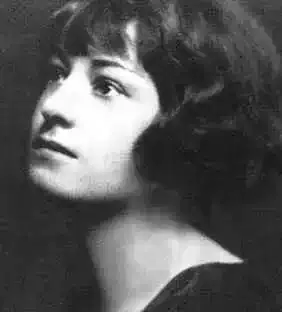
Dorothy Parker
Philosophy
If I should labor through daylight and dark,
Consecrate, valorous, serious, true,
Then on the world I may blazon my mark;
And what if I don't, and what if I do?
Consecrate, valorous, serious, true,
Then on the world I may blazon my mark;
And what if I don't, and what if I do?
379
Johann Wolfgang von Goethe
Three Palinodias - 01
"Incense is hut a tribute for the gods,--
To mortals 'tis but poison."
THE smoke that from thine altar blows,
Can it the gods offend?
For I observe thou hold'st thy nose--
Pray what does this portend?
Mankind deem incense to excel
Each other earthly thing,
So he that cannot bear its smell,
No incense e'er should bring.
With unmoved face by thee at least
To dolls is homage given;
If not obstructed by the priest,
The scent mounts up to heaven.
377
William Shakespeare
Sonnet 152: In loving thee thou know'st I am forsworn
In loving thee thou know'st I am forsworn,
But thou art twice forsworn, to me love swearing,
In act thy bed-vow broke and new faith torn,
In vowing new hate after new love bearing.
But why of two oaths' breach do I accuse thee,
When I break twenty? I am perjured most;
For all my vows are oaths but to misuse thee
And all my honest faith in thee is lost,
For I have sworn deep oaths of thy deep kindness,
Oaths of thy love, thy truth, thy constancy,
And, to enlighten thee, gave eyes to blindness,
Or made them swear against the thing they see;
For I have sworn thee fair; more perjured I,
To swear against the truth so foul a lie!
378
Ella Wheeler Wilcox
The Foolish Elm
The bold young Autumn came riding along
One day where an elm-tree grew.
'You are fair,' he said, as she bent down her head,
'Too fair for your robe's dull hue.
You are far too young for a garb so old;
Your beauty needs color and sheen.
Oh, I would clothe you in scarlet and gold
Befitting the grace of a queen.
'For one little kiss on your lips, sweet elm,
For one little kiss, no more,
I would give you, I swear, a robe more fair
Than ever a princess wore.
One little kiss on those lips, my pet,
And lo! you shall stand, I say,
Queen of the forest, and, better yet,
Queen of my heart alway.'
She tossed her head, but he took the kiss'
Tis the way of lovers bold-
And a gorgeous dress for that sweet caress
He gave ere the morning was old.
For a week and a day she ruled a queen
In beauty and splendid attire;
For a week and a day she was loved, I ween,
With the love that is born of desire.
Then bold-eyed Autumn went on his way
In search of a tree more fair;
And mob winds tattered her garments and scattered
Her finery here and there.
Poor and faded and ragged and cold
She rocked in her wild distress,
And longed for the dull green gown she had sold
For her fickle lover's caress.
And the days went by and Winter came,
And his tyrannous tempests beat
On the shivering tree, whose robes of flame
He had trampled under his feet.
I saw her reach up to the mocking skies
Her poor arms, bare and thin;
Ah, well-a-day! it is ever the way
With a woman who trades with sin.
378

William Blake
The Two Songs
I heard an Angel Singing
When the day was springing:
"Mercy, pity, and peace,
Are the world's release."
So he sang all day
Over the new-mown hay,
Till the sun went down,
And the haycocks looked brown.
I heard a devil curse
Over the heath and the furse:
"Mercy vould be no more
If there were nobody poor,
And pity no more could be
If all were happy as ye:
And mutual fear brings peace,
Misery's increase
Are mercy, pity, and peace."
At his curse the sun went down,
And the heavens gave a frown.
380
Ella Wheeler Wilcox
Death Of Labour
Methought a great wind swept across the earth,
And all the toilers perished. Then I saw
Pale terror blanch the rosy face of mirth,
And careless eyes grow full of fear and awe.
The sounds of pleasure ceased; the laughing song
On folly's lip changed to an angry cures:
A nameless horror seized the idle throng,
And death and ruin filled the universe.
378

John Greenleaf Whittier
An Artist Of The Beautiful
GEORGE FULLER
Haunted of Beauty, like the marvellous youth
Who sang Saint Agnes' Eve! How passing fair
Her shapes took color in thy homestead air!
How on thy canvas even her dreams were truth!
Magician! who from commonest elements
Called up divine ideals, clothed upon
By mystic lights soft blending into one
Womanly grace and child-like innocence.
Teacher I thy lesson was not given in vain.
Beauty is goodness; ugliness is sin;
Art's place is sacred: nothing foul therein
May crawl or tread with bestial feet profane.
If rightly choosing is the painter's test,
Thy choice, O master, ever was the best.
379