
Science and Reason

William Blake
Proverbs of Hell (Excerpt from The Marriage of Heaven and H
In seed time learn, in harvest teach, in winter enjoy.
Drive your cart and your plow over the bones of the dead.
The road of excess leads to the palace of wisdom.
Prudence is a rich, ugly old maid courted by Incapacity.
He who desires but acts not, breeds pestilence.
The cut worm forgives the plow.
Dip him in the river who loves water.
A fool sees not the same tree that a wise man sees.
He whose face gives no light, shall never become a star.
Eternity is in love with the productions of time.
The busy bee has no time for sorrow.
The hours of folly are measur'd by the clock; but of wisdom, no clock can measure.
All wholesome food is caught without a net or a trap.
Bring out number, weight and measure in a year of dearth.
No bird soars too high, if he soars with his own wings.
A dead body revenges not injuries.
The most sublime act is to set another before you.
If the fool would persist in his folly he would become wise.
Folly is the cloak of knavery.
Shame is Pride's cloke.
Prisons are built with stones of law, brothels with bricks of religion.
The pride of the peacock is the glory of God.
The lust of the goat is the bounty of God.
The wrath of the lion is the wisdom of God.
The nakedness of woman is the work of God.
Excess of sorrow laughs. Excess of joy weeps.
The roaring of lions, the howling of wolves, the raging of the stormy sea, and the
destructive sword, are portions of eternity, too great for the eye of man.
The fox condemns the trap, not himself.
Joys impregnate. Sorrows bring forth.
Let man wear the fell of the lion, woman the fleece of the sheep.
The bird a nest, the spider a web, man friendship.
The selfish, smiling fool, and the sullen, frowning fool shall be both thought wise, that
they may be a rod.
What is now proved was once only imagin'd.
The rat, the mouse, the fox, the rabbit watch the roots; the lion, the tyger, the horse,
the elephant watch the fruits.
The cistern contains: the fountain overflows.
One thought fills immensity.
Always be ready to speak your mind, and a base man will avoid you.
Every thing possible to be believ'd is an image of truth.
The eagle never lost so much time as when he submitted to learn of the crow.
The fox provides for himself, but God provides for the lion.
Think in the morning. Act in the noon. Eat in the evening. Sleep in the night.
He who has suffer'd you to impose on him, knows you.
As the plow follows words, so God rewards prayers.
The tygers of wrath are wiser than the horses of instruction.
Expect poison from the standing water.
You never know what is enough unless you know what is more than enough.
Listen to the fool's reproach! it is a kingly title!
The eyes of fire, the nostrils of air, the mouth of water, the beard of earth.
The weak in courage is strong in cunning.
The apple tree never asks the beech how he shall grow; nor the lion, the horse, how
he shall take his prey.
The thankful receiver bears a plentiful harvest.
If others had not been foolish, we should be so.
The soul of sweet delight can never be defil'd.
When thou seest an eagle, thou seest a portion of genius; lift up thy head!
As the caterpiller chooses the fairest leaves to lay her eggs on, so the priest lays his
curse on the fairest joys.
To create a little flower is the labour of ages.
Damn braces. Bless relaxes.
The best wine is the oldest, the best water the newest.
Prayers plow not! Praises reap not!
Joys laugh not! Sorrows weep not!
The head Sublime, the heart Pathos, the genitals Beauty, the hands and feet
Proportion.
As the air to a bird or the sea to a fish, so is contempt to the contemptible.
The crow wish'd every thing was black, the owl that every thing was white.
Exuberance is Beauty.
If the lion was advised by the fox, he would be cunning.
Improvement makes strait roads; but the crooked roads without improvement are
roads of genius.
Sooner murder an infant in its cradle than nurse unacted desires.
Where man is not, nature is barren.
Truth can never be told so as to be understood, and not be believ'd.
Enough! or too much.
1,225

John Keats
On First Looking Into Chapman's Homer
Much have I travell'd in the realms of gold,
And many goodly states and kingdoms seen;
Round many western islands have I been
Which bards in fealty to Apollo hold.
Oft of one wide expanse had I been told
That deep-brow'd Homer ruled as his demesne;
Yet did I never breathe its pure serene
Till I heard Chapman speak out loud and bold:
Then felt I like some watcher of the skies
When a new planet swims into his ken;
Or like stout Cortez when with eagle eyes
He star'd at the Pacific--and all his men
Look'd at each other with a wild surmise-Silent,
upon a peak in Darien.
982
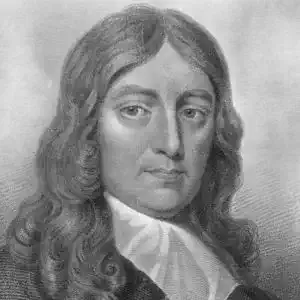
John Milton
Paradise Lost: Book 08
The Angel ended, and in Adam's ear
So charming left his voice, that he a while
Thought him still speaking, still stood fixed to hear;
Then, as new waked, thus gratefully replied.
What thanks sufficient, or what recompence
Equal, have I to render thee, divine
Historian, who thus largely hast allayed
The thirst I had of knowledge, and vouchsafed
This friendly condescension to relate
Things, else by me unsearchable; now heard
With wonder, but delight, and, as is due,
With glory attributed to the high
Creator! Something yet of doubt remains,
Which only thy solution can resolve.
When I behold this goodly frame, this world,
Of Heaven and Earth consisting; and compute
Their magnitudes; this Earth, a spot, a grain,
An atom, with the firmament compared
And all her numbered stars, that seem to roll
Spaces incomprehensible, (for such
Their distance argues, and their swift return
Diurnal,) merely to officiate light
Round this opacous Earth, this punctual spot,
One day and night; in all her vast survey
Useless besides; reasoning I oft admire,
How Nature wise and frugal could commit
Such disproportions, with superfluous hand
So many nobler bodies to create,
Greater so manifold, to this one use,
For aught appears, and on their orbs impose
Such restless revolution day by day
Repeated; while the sedentary Earth,
That better might with far less compass move,
Served by more noble than herself, attains
Her end without least motion, and receives,
As tribute, such a sumless journey brought
Of incorporeal speed, her warmth and light;
Speed, to describe whose swiftness number fails.
So spake our sire, and by his countenance seemed
Entering on studious thoughts abstruse; which Eve
Perceiving, where she sat retired in sight,
With lowliness majestick from her seat,
And grace that won who saw to wish her stay,
Rose, and went forth among her fruits and flowers,
To visit how they prospered, bud and bloom,
Her nursery; they at her coming sprung,
And, touched by her fair tendance, gladlier grew.
Yet went she not, as not with such discourse
Delighted, or not capable her ear
Of what was high: such pleasure she reserved,
Adam relating, she sole auditress;
Her husband the relater she preferred
Before the Angel, and of him to ask
Chose rather; he, she knew, would intermix
Grateful digressions, and solve high dispute
With conjugal caresses: from his lip
Not words alone pleased her. O! when meet now
Such pairs, in love and mutual honour joined?
With Goddess-like demeanour forth she went,
Not unattended; for on her, as Queen,
A pomp of winning Graces waited still,
And from about her shot darts of desire
Into all eyes, to wish her still in sight.
And Raphael now, to Adam's doubt proposed,
Benevolent and facile thus replied.
To ask or search, I blame thee not; for Heaven
Is as the book of God before thee set,
Wherein to read his wonderous works, and learn
His seasons, hours, or days, or months, or years:
This to attain, whether Heaven move or Earth,
Imports not, if thou reckon right; the rest
From Man or Angel the great Architect
Did wisely to conceal, and not divulge
His secrets to be scanned by them who ought
Rather admire; or, if they list to try
Conjecture, he his fabrick of the Heavens
Hath left to their disputes, perhaps to move
His laughter at their quaint opinions wide
Hereafter; when they come to model Heaven
And calculate the stars, how they will wield
The mighty frame; how build, unbuild, contrive
To save appearances; how gird the sphere
With centrick and eccentrick scribbled o'er,
Cycle and epicycle, orb in orb:
Already by thy reasoning this I guess,
Who art to lead thy offspring, and supposest
That bodies bright and greater should not serve
The less not bright, nor Heaven such journeys run,
Earth sitting still, when she alone receives
The benefit: Consider first, that great
Or bright infers not excellence: the Earth
Though, in comparison of Heaven, so small,
Nor glistering, may of solid good contain
More plenty than the sun that barren shines;
Whose virtue on itself works no effect,
But in the fruitful Earth; there first received,
His beams, unactive else, their vigour find.
Yet not to Earth are those bright luminaries
Officious; but to thee, Earth's habitant.
And for the Heaven's wide circuit, let it speak
The Maker's high magnificence, who built
So spacious, and his line stretched out so far;
That Man may know he dwells not in his own;
An edifice too large for him to fill,
Lodged in a small partition; and the rest
Ordained for uses to his Lord best known.
The swiftness of those circles attribute,
Though numberless, to his Omnipotence,
That to corporeal substances could add
Speed almost spiritual: Me thou thinkest not slow,
Who since the morning-hour set out from Heaven
Where God resides, and ere mid-day arrived
In Eden; distance inexpressible
By numbers that have name. But this I urge,
Admitting motion in the Heavens, to show
Invalid that which thee to doubt it moved;
Not that I so affirm, though so it seem
To thee who hast thy dwelling here on Earth.
God, to remove his ways from human sense,
Placed Heaven from Earth so far, that earthly sight,
If it presume, might err in things too high,
And no advantage gain. What if the sun
Be center to the world; and other stars,
By his attractive virtue and their own
Incited, dance about him various rounds?
Their wandering course now high, now low, then hid,
Progressive, retrograde, or standing still,
In six thou seest; and what if seventh to these
The planet earth, so stedfast though she seem,
Insensibly three different motions move?
Which else to several spheres thou must ascribe,
Moved contrary with thwart obliquities;
Or save the sun his labour, and that swift
Nocturnal and diurnal rhomb supposed,
Invisible else above all stars, the wheel
Of day and night; which needs not thy belief,
If earth, industrious of herself, fetch day
Travelling east, and with her part averse
From the sun's beam meet night, her other part
Still luminous by his ray. What if that light,
Sent from her through the wide transpicuous air,
To the terrestrial moon be as a star,
Enlightening her by day, as she by night
This earth? reciprocal, if land be there,
Fields and inhabitants: Her spots thou seest
As clouds, and clouds may rain, and rain produce
Fruits in her softened soil for some to eat
Allotted there; and other suns perhaps,
With their attendant moons, thou wilt descry,
Communicating male and female light;
Which two great sexes animate the world,
Stored in each orb perhaps with some that live.
For such vast room in Nature unpossessed
By living soul, desart and desolate,
Only to shine, yet scarce to contribute
Each orb a glimpse of light, conveyed so far
Down to this habitable, which returns
Light back to them, is obvious to dispute.
But whether thus these things, or whether not;
But whether the sun, predominant in Heaven,
Rise on the earth; or earth rise on the sun;
He from the east his flaming road begin;
Or she from west her silent course advance,
With inoffensive pace that spinning sleeps
On her soft axle, while she paces even,
And bears thee soft with the smooth hair along;
Sollicit not thy thoughts with matters hid;
Leave them to God above; him serve, and fear!
Of other creatures, as him pleases best,
Wherever placed, let him dispose; joy thou
In what he gives to thee, this Paradise
And thy fair Eve; Heaven is for thee too high
To know what passes there; be lowly wise:
Think only what concerns thee, and thy being;
Dream not of other worlds, what creatures there
Live, in what state, condition, or degree;
Contented that thus far hath been revealed
Not of Earth only, but of highest Heaven.
To whom thus Adam, cleared of doubt, replied.
How fully hast thou satisfied me, pure
Intelligence of Heaven, Angel serene!
And, freed from intricacies, taught to live
The easiest way; nor with perplexing thoughts
To interrupt the sweet of life, from which
God hath bid dwell far off all anxious cares,
And not molest us; unless we ourselves
Seek them with wandering thoughts, and notions vain.
But apt the mind or fancy is to rove
Unchecked, and of her roving is no end;
Till warned, or by experience taught, she learn,
That, not to know at large of things remote
From use, obscure and subtle; but, to know
That which before us lies in daily life,
Is the prime wisdom: What is more, is fume,
Or emptiness, or fond impertinence:
And renders us, in things that most concern,
Unpractised, unprepared, and still to seek.
Therefore from this high pitch let us descend
A lower flight, and speak of things at hand
Useful; whence, haply, mention may arise
Of something not unseasonable to ask,
By sufferance, and thy wonted favour, deigned.
Thee I have heard relating what was done
Ere my remembrance: now, hear me relate
My story, which perhaps thou hast not heard;
And day is not yet spent; till then thou seest
How subtly to detain thee I devise;
Inviting thee to hear while I relate;
Fond! were it not in hope of thy reply:
For, while I sit with thee, I seem in Heaven;
And sweeter thy discourse is to my ear
Than fruits of palm-tree pleasantest to thirst
And hunger both, from labour, at the hour
Of sweet repast; they satiate, and soon fill,
Though pleasant; but thy words, with grace divine
Imbued, bring to their sweetness no satiety.
To whom thus Raphael answered heavenly meek.
Nor are thy lips ungraceful, Sire of men,
Nor tongue ineloquent; for God on thee
Abundantly his gifts hath also poured
Inward and outward both, his image fair:
Speaking, or mute, all comeliness and grace
Attends thee; and each word, each motion, forms;
Nor less think we in Heaven of thee on Earth
Than of our fellow-servant, and inquire
Gladly into the ways of God with Man:
For God, we see, hath honoured thee, and set
On Man his equal love: Say therefore on;
For I that day was absent, as befel,
Bound on a voyage uncouth and obscure,
Far on excursion toward the gates of Hell;
Squared in full legion (such command we had)
To see that none thence issued forth a spy,
Or enemy, while God was in his work;
Lest he, incensed at such eruption bold,
Destruction with creation might have mixed.
Not that they durst without his leave attempt;
But us he sends upon his high behests
For state, as Sovran King; and to inure
Our prompt obedience. Fast we found, fast shut,
The dismal gates, and barricadoed strong;
But long ere our approaching heard within
Noise, other than the sound of dance or song,
Torment, and loud lament, and furious rage.
Glad we returned up to the coasts of light
Ere sabbath-evening: so we had in charge.
But thy relation now; for I attend,
Pleased with thy words no less than thou with mine.
So spake the Godlike Power, and thus our Sire.
For Man to tell how human life began
Is hard; for who himself beginning knew
Desire with thee still longer to converse
Induced me. As new waked from soundest sleep,
Soft on the flowery herb I found me laid,
In balmy sweat; which with his beams the sun
Soon dried, and on the reeking moisture fed.
Straight toward Heaven my wondering eyes I turned,
And gazed a while the ample sky; till, raised
By quick instinctive motion, up I sprung,
As thitherward endeavouring, and upright
Stood on my feet: about me round I saw
Hill, dale, and shady woods, and sunny plains,
And liquid lapse of murmuring streams; by these,
Creatures that lived and moved, and walked, or flew;
Birds on the branches warbling; all things smiled;
With fragrance and with joy my heart o'erflowed.
Myself I then perused, and limb by limb
Surveyed, and sometimes went, and sometimes ran
With supple joints, as lively vigour led:
But who I was, or where, or from what cause,
Knew not; to speak I tried, and forthwith spake;
My tongue obeyed, and readily could name
Whate'er I saw. Thou Sun, said I, fair light,
And thou enlightened Earth, so fresh and gay,
Ye Hills, and Dales, ye Rivers, Woods, and Plains,
And ye that live and move, fair Creatures, tell,
Tell, if ye saw, how I came thus, how here?--
Not of myself;--by some great Maker then,
In goodness and in power pre-eminent:
Tell me, how may I know him, how adore,
From whom I have that thus I move and live,
And feel that I am happier than I know.--
While thus I called, and strayed I knew not whither,
From where I first drew air, and first beheld
This happy light; when, answer none returned,
On a green shady bank, profuse of flowers,
Pensive I sat me down: There gentle sleep
First found me, and with soft oppression seised
My droused sense, untroubled, though I thought
I then was passing to my former state
Insensible, and forthwith to dissolve:
When suddenly stood at my head a dream,
Whose inward apparition gently moved
My fancy to believe I yet had being,
And lived: One came, methought, of shape divine,
And said, 'Thy mansion wants thee, Adam; rise,
'First Man, of men innumerable ordained
'First Father! called by thee, I come thy guide
'To the garden of bliss, thy seat prepared.'
So saying, by the hand he took me raised,
And over fields and waters, as in air
Smooth-sliding without step, last led me up
A woody mountain; whose high top was plain,
A circuit wide, enclosed, with goodliest trees
Planted, with walks, and bowers; that what I saw
Of Earth before scarce pleasant seemed. Each tree,
Loaden with fairest fruit that hung to the eye
Tempting, stirred in me sudden appetite
To pluck and eat; whereat I waked, and found
Before mine eyes all real, as the dream
Had lively shadowed: Here had new begun
My wandering, had not he, who was my guide
Up hither, from among the trees appeared,
Presence Divine. Rejoicing, but with awe,
In adoration at his feet I fell
Submiss: He reared me, and 'Whom thou soughtest I am,'
Said mildly, 'Author of all this thou seest
'Above, or round about thee, or beneath.
'This Paradise I give thee, count it thine
'To till and keep, and of the fruit to eat:
'Of every tree that in the garden grows
'Eat freely with glad heart; fear here no dearth:
'But of the tree whose operation brings
'Knowledge of good and ill, which I have set
'The pledge of thy obedience and thy faith,
'Amid the garden by the tree of life,
'Remember what I warn thee, shun to taste,
'And shun the bitter consequence: for know,
'The day thou eatest thereof, my sole command
'Transgressed, inevitably thou shalt die,
'From that day mortal; and this happy state
'Shalt lose, expelled from hence into a world
'Of woe and sorrow.' Sternly he pronounced
The rigid interdiction, which resounds
Yet dreadful in mine ear, though in my choice
Not to incur; but soon his clear aspect
Returned, and gracious purpose thus renewed.
'Not only these fair bounds, but all the Earth
'To thee and to thy race I give; as lords
'Possess it, and all things that therein live,
'Or live in sea, or air; beast, fish, and fowl.
'In sign whereof, each bird and beast behold
'After their kinds; I bring them to receive
'From thee their names, and pay thee fealty
'With low subjection; understand the same
'Of fish within their watery residence,
'Not hither summoned, since they cannot change
'Their element, to draw the thinner air.'
As thus he spake, each bird and beast behold
Approaching two and two; these cowering low
With blandishment; each bird stooped on his wing.
I named them, as they passed, and understood
Their nature, with such knowledge God endued
My sudden apprehension: But in these
I found not what methought I wanted still;
And to the heavenly Vision thus presumed.
O, by what name, for thou above all these,
Above mankind, or aught than mankind higher,
Surpassest far my naming; how may I
Adore thee, Author of this universe,
And all this good to man? for whose well being
So amply, and with hands so liberal,
Thou hast provided all things: But with me
I see not who partakes. In solitude
What happiness, who can enjoy alone,
Or, all enjoying, what contentment find?
Thus I presumptuous; and the Vision bright,
As with a smile more brightened, thus replied.
What callest thou solitude? Is not the Earth
With various living creatures, and the air
Replenished, and all these at thy command
To come and play before thee? Knowest thou not
Their language and their ways? They also know,
And reason not contemptibly: With these
Find pastime, and bear rule; thy realm is large.
So spake the Universal Lord, and seemed
So ordering: I, with leave of speech implored,
And humble deprecation, thus replied.
Let not my words offend thee, Heavenly Power;
My Maker, be propitious while I speak.
Hast thou not made me here thy substitute,
And these inferiour far beneath me set?
Among unequals what society
Can sort, what harmony, or true delight?
Which must be mutual, in proportion due
Given and received; but, in disparity
The one intense, the other still remiss,
Cannot well suit with either, but soon prove
Tedious alike: Of fellowship I speak
Such as I seek, fit to participate
All rational delight: wherein the brute
Cannot be human consort: They rejoice
Each with their kind, lion with lioness;
So fitly them in pairs thou hast combined:
Much less can bird with beast, or fish with fowl
So well converse, nor with the ox the ape;
Worse then can man with beast, and least of all.
Whereto the Almighty answered, not displeased.
A nice and subtle happiness, I see,
Thou to thyself proposest, in the choice
Of thy associates, Adam! and wilt taste
No pleasure, though in pleasure, solitary.
What thinkest thou then of me, and this my state?
Seem I to thee sufficiently possessed
Of happiness, or not? who am alone
From all eternity; for none I know
Second to me or like, equal much less.
How have I then with whom to hold converse,
Save with the creatures which I made, and those
To me inferiour, infinite descents
Beneath what other creatures are to thee?
He ceased; I lowly answered. To attain
The highth and depth of thy eternal ways
All human thoughts come short, Supreme of things!
Thou in thyself art perfect, and in thee
Is no deficience found: Not so is Man,
But in degree; the cause of his desire
By conversation with his like to help
Or solace his defects. No need that thou
Shouldst propagate, already Infinite;
And through all numbers absolute, though One:
But Man by number is to manifest
His single imperfection, and beget
Like of his like, his image multiplied,
In unity defective; which requires
Collateral love, and dearest amity.
Thou in thy secresy although alone,
Best with thyself accompanied, seekest not
Social communication; yet, so pleased,
Canst raise thy creature to what highth thou wilt
Of union or communion, deified:
I, by conversing, cannot these erect
From prone; nor in their ways complacence find.
Thus I emboldened spake, and freedom used
Permissive, and acceptance found; which gained
This answer from the gracious Voice Divine.
Thus far to try thee, Adam, I was pleased;
And find thee knowing, not of beasts alone,
Which thou hast rightly named, but of thyself;
Expressing well the spirit within thee free,
My image, not imparted to the brute;
Whose fellowship therefore unmeet for thee
Good reason was thou freely shouldst dislike;
And be so minded still: I, ere thou spakest,
Knew it not good for Man to be alone;
And no such company as then thou sawest
Intended thee; for trial only brought,
To see how thou couldest judge of fit and meet:
What next I bring shall please thee, be assured,
Thy likeness, thy fit help, thy other self,
Thy wish exactly to thy heart's desire.
He ended, or I heard no more; for now
My earthly by his heavenly overpowered,
Which it had long stood under, strained to the highth
In that celestial colloquy sublime,
As with an object that excels the sense
Dazzled and spent, sunk down; and sought repair
Of sleep, which instantly fell on me, called
By Nature as in aid, and closed mine eyes.
Mine eyes he closed, but open left the cell
Of fancy, my internal sight; by which,
Abstract as in a trance, methought I saw,
Though sleeping, where I lay, and saw the shape
Still glorious before whom awake I stood:
Who stooping opened my left side, and took
From thence a rib, with cordial spirits warm,
And life-blood streaming fresh; wide was the wound,
But suddenly with flesh filled up and healed:
The rib he formed and fashioned with his hands;
Under his forming hands a creature grew,
Man-like, but different sex; so lovely fair,
That what seemed fair in all the world, seemed now
Mean, or in her summed up, in her contained
And in her looks; which from that time infused
Sweetness into my heart, unfelt before,
And into all things from her air inspired
The spirit of love and amorous delight.
She disappeared, and left me dark; I waked
To find her, or for ever to deplore
Her loss, and other pleasures all abjure:
When out of hope, behold her, not far off,
Such as I saw her in my dream, adorned
With what all Earth or Heaven could bestow
To make her amiable: On she came,
Led by her heavenly Maker, though unseen,
And guided by his voice; nor uninformed
Of nuptial sanctity, and marriage rites:
Grace was in all her steps, Heaven in her eye,
In every gesture dignity and love.
I, overjoyed, could not forbear aloud.
This turn hath made amends; thou hast fulfilled
Thy words, Creator bounteous and benign,
Giver of all things fair! but fairest this
Of all thy gifts! nor enviest. I now see
Bone of my bone, flesh of my flesh, myself
Before me: Woman is her name;of Man
Extracted: for this cause he shall forego
Father and mother, and to his wife adhere;
And they shall be one flesh, one heart, one soul.
She heard me thus; and though divinely brought,
Yet innocence, and virgin modesty,
Her virtue, and the conscience of her worth,
That would be wooed, and not unsought be won,
Not obvious, not obtrusive, but, retired,
The more desirable; or, to say all,
Nature herself, though pure of sinful thought,
Wrought in her so, that, seeing me, she turned:
I followed her; she what was honour knew,
And with obsequious majesty approved
My pleaded reason. To the nuptial bower
I led her blushing like the morn: All Heaven,
And happy constellations, on that hour
Shed their selectest influence; the Earth
Gave sign of gratulation, and each hill;
Joyous the birds; fresh gales and gentle airs
Whispered it to the woods, and from their wings
Flung rose, flung odours from the spicy shrub,
Disporting, till the amorous bird of night
Sung spousal, and bid haste the evening-star
On his hill top, to light the bridal lamp.
Thus have I told thee all my state, and brought
My story to the sum of earthly bliss,
Which I enjoy; and must confess to find
In all things else delight indeed, but such
As, used or not, works in the mind no change,
Nor vehement desire; these delicacies
I mean of taste, sight, smell, herbs, fruits, and flowers,
Walks, and the melody of birds: but here
Far otherwise, transported I behold,
Transported touch; here passion first I felt,
Commotion strange! in all enjoyments else
Superiour and unmoved; here only weak
Against the charm of Beauty's powerful glance.
Or Nature failed in me, and left some part
Not proof enough such object to sustain;
Or, from my side subducting, took perhaps
More than enough; at least on her bestowed
Too much of ornament, in outward show
Elaborate, of inward less exact.
For well I understand in the prime end
Of Nature her the inferiour, in the mind
And inward faculties, which most excel;
In outward also her resembling less
His image who made both, and less expressing
The character of that dominion given
O'er other creatures: Yet when I approach
Her loveliness, so absolute she seems
And in herself complete, so well to know
Her own, that what she wills to do or say,
Seems wisest, virtuousest, discreetest, best:
All higher knowledge in her presence falls
Degraded; Wisdom in discourse with her
Loses discountenanced, and like Folly shows;
Authority and Reason on her wait,
As one intended first, not after made
Occasionally; and, to consummate all,
Greatness of mind and Nobleness their seat
Build in her loveliest, and create an awe
About her, as a guard angelick placed.
To whom the Angel with contracted brow.
Accuse not Nature, she hath done her part;
Do thou but thine; and be not diffident
Of Wisdom; she deserts thee not, if thou
Dismiss not her, when most thou needest her nigh,
By attributing overmuch to things
Less excellent, as thou thyself perceivest.
For, what admirest thou, what transports thee so,
An outside? fair, no doubt, and worthy well
Thy cherishing, thy honouring, and thy love;
Not thy subjection: Weigh with her thyself;
Then value: Oft-times nothing profits more
Than self-esteem, grounded on just and right
Well managed; of that skill the more thou knowest,
The more she will acknowledge thee her head,
And to realities yield all her shows:
Made so adorn for thy delight the more,
So awful, that with honour thou mayest love
Thy mate, who sees when thou art seen least wise.
But if the sense of touch, whereby mankind
Is propagated, seem such dear delight
Beyond all other; think the same vouchsafed
To cattle and each beast; which would not be
To them made common and divulged, if aught
Therein enjoyed were worthy to subdue
The soul of man, or passion in him move.
What higher in her society thou findest
Attractive, human, rational, love still;
In loving thou dost well, in passion not,
Wherein true love consists not: Love refines
The thoughts, and heart enlarges; hath his seat
In reason, and is judicious; is the scale
By which to heavenly love thou mayest ascend,
Not sunk in carnal pleasure; for which cause,
Among the beasts no mate for thee was found.
To whom thus, half abashed, Adam replied.
Neither her outside formed so fair, nor aught
In procreation common to all kinds,
(Though higher of the genial bed by far,
And with mysterious reverence I deem,)
So much delights me, as those graceful acts,
Those thousand decencies, that daily flow
From all her words and actions mixed with love
And sweet compliance, which declare unfeigned
Union of mind, or in us both one soul;
Harmony to behold in wedded pair
More grateful than harmonious sound to the ear.
Yet these subject not; I to thee disclose
What inward thence I feel, not therefore foiled,
Who meet with various objects, from the sense
Variously representing; yet, still free,
Approve the best, and follow what I approve.
To love, thou blamest me not; for Love, thou sayest,
Leads up to Heaven, is both the way and guide;
Bear with me then, if lawful what I ask:
Love not the heavenly Spirits, and how their love
Express they? by looks only? or do they mix
Irradiance, virtual or immediate touch?
To whom the Angel, with a smile that glowed
Celestial rosy red, Love's proper hue,
Answered. Let it suffice thee that thou knowest
Us happy, and without love no happiness.
Whatever pure thou in the body enjoyest,
(And pure thou wert created) we enjoy
In eminence; and obstacle find none
Of membrane, joint, or limb, exclusive bars;
Easier than air with air, if Spirits embrace,
Total they mix, union of pure with pure
Desiring, nor restrained conveyance need,
As flesh to mix with flesh, or soul with soul.
But I can now no more; the parting sun
Beyond the Earth's green Cape and verdant Isles
Hesperian sets, my signal to depart.
Be strong, live happy, and love! But, first of all,
Him, whom to love is to obey, and keep
His great command; take heed lest passion sway
Thy judgement to do aught, which else free will
Would not admit: thine, and of all thy sons,
The weal or woe in thee is placed; beware!
I in thy persevering shall rejoice,
And all the Blest: Stand fast;to stand or fall
Free in thine own arbitrement it lies.
Perfect within, no outward aid require;
And all temptation to transgress repel.
So saying, he arose; whom Adam thus
Followed with benediction. Since to part,
Go, heavenly guest, ethereal Messenger,
Sent from whose sovran goodness I adore!
Gentle to me and affable hath been
Thy condescension, and shall be honoured ever
With grateful memory: Thou to mankind
Be good and friendly still, and oft return!
So parted they; the Angel up to Heaven
From the thick shade, and Adam to his bower.
988

Emily Dickinson
Arcturus is his other name
"Arcturus" is his other name
I'd
rather call him "Star."
It's very mean of Science
To go and interfere!
I slew a worm the other day-
A "Savant" passing by
Murmured "Resurgam"-"Centipede"!
"Oh Lord-how frail are we"!
I pull a flower from the woods-
A monster with a glass
Computes the stamens in a breath-
And has her in a "class"!
Whereas I took the Butterfly
Aforetime in my hat-
He sits erect in "Cabinets"-
The Clover bells forgot.
What once was "Heaven"
Is "Zenith" now-
Where I proposed to go
When Time's brief masquerade was done
Is mapped and charted too.
What if the poles should frisk about
And stand upon their heads!
I hope I'm ready for "the worst"-
Whatever prank betides!
Perhaps the "Kingdom of Heaven's" changed-
I hope the "Children" there Won't be "new fashioned" when I come-
And laugh at me-and stare-
I hope the Father in the skies
Will lift his little girl-
Old fashioned-naught-everything-
Over the stile of "Pearl."
1,006

Rudyard Kipling
The Secret of the Machines
Modern Machinery
We were taken from the ore-bed and the mine,
We were melted in the furnace and the pit--
We were cast and wrought and hammered to design,
We were cut and filed and tooled and gauged to fit.
Some water, coal, and oil is all we ask,
And a thousandth of an inch to give us play:
And now, if you will set us to our task,
We will serve you four and twenty hours a day!
We can pull and haul and push and lift and drive,
We can print and plough and weave and heat and light,
We can run and race and swim and fly and dive,
We can see and hear and count and read and write!
Would you call a friend from half across the world?
If you'll let us have his name and town and state,
You shall see and hear your cracking question hurled
Across the arch of heaven while you wait.
Has he answered? Does he need you at his side-
You can start this very evening if you choose
And take the Western Ocean in the stride
O seventy thousand horses and some screws!
The boat-express is waiting your command!
You will find the Mauritania at the quay,
Till her captain turns the lever 'neath his hand,
And the monstrouos nine-decked city goes to sea.
Do you wish to make the mountains bare their head
And lay their new-cut forests at your feet?
Do you want to turn a river in its bed,
Or plant a barren wilderness with wheat?
Shall we pipe aloft and bring you water down
From the never-failing cisterns of the snows,
To work the mills and tramways in your town,
And irrigate your orchards as it flows?
It is easy! Give us dynamite and drills!
Watch the iron-shouldered rocks lie down and quake,
As the thirsty desert-level floods and fills,
And the valley we have dammed becomes a lake.
But remember, please, the Law by which we live,
We are not built to comprehend a lie,
We can neither love nor pity nor forgive.
If you make a slip in handling us you die!
We are greater than the Peoples or the Kings-
Be humble, as you crawl beneath our rods!--
Our touch can alter all created things,
We are everything on earth--except The Gods!
Though our smoke may hide the Heavens from your eyes,
It will vanish and the stars will shine again,
Because, for all our power and weight and size,
We are nothing more than children of your brain!
811

Ezra Pound
Poetic Eggs
I am a grave poetic hen
That lays poetic eggs
And to enhance my temperament
A little quiet begs.
We make the yolk philosophy,
True beauty the albumen.
And then gum on a shell of form
To make the screed sound human.
That lays poetic eggs
And to enhance my temperament
A little quiet begs.
We make the yolk philosophy,
True beauty the albumen.
And then gum on a shell of form
To make the screed sound human.
751

William Shakespeare
Sonnet 59: If there be nothing new, but that which is
If there be nothing new, but that which is
Hath been before, how are our brains beguiled,
Which, labouring for invention bear amis
The second burthen of a former child!
O, that record could with a backward look,
Even of five hundred courses of the sun,
Show me your image in some antique book,
Since mind at first in character was done.
That I might see what the old world could say
To this composèd wonder of your frame;
Whether we are mended, or whe'er better they,
Or whether revolution be the same.
O, sure I am the wits of former days
To subjects worse have given admiring praise.
745
William Shakespeare
Sonnet 14: Not from the stars do I my judgment pluck
Not from the stars do I my judgment pluck,
And yet methinks I have astronomy;
But not to tell of good or evil luck,
Of plagues, of dearths, or seasons' quality;
Nor can I fortune to brief minutes tell,
Pointing to each his thunder, rain, and wind,
Or say with princes if it shall go well
By oft predict that I in heaven find.
But from thine eyes my knowledge I derive,
And, constant stars, in them I read such art
As truth and beauty shall together thrive
If from thyself to store thou wouldst convert:
Or else of thee this I prognosticate,
Thy end is truth's and beauty's doom and date.
667
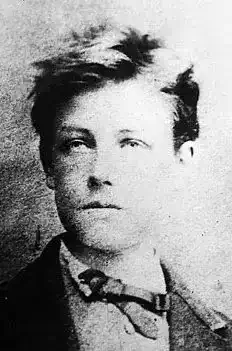
Arthur Rimbaud
Movement
A winding movement on the slope beside the rapids of the river.
The abyss at the stern,
The swiftness of the incline,
The overwhelming passage of the tide,
With extraordinary lights and chemical wonders
Lead on the travelers
Through the windspouts of the valley
And the whirlpool.
These are the conquerors of the world,
Seeking their personal chemical fortune;
Sport and comfort accompany them;
They bring education for races, for classes, for animals
Within this vessel, rest adn vertigo
In diluvian light,
In terrible evenings of study.
For in this conversation in the midst of machines,
Of blood, of flowers, of fire, of jewels,
In busy calculations on this fugitive deck,
Is their stock of studies visible
-Rolling like dike beyond
The hydraulic propulsive road,
Monstrous, endlessly lighting its way -
Themselves driven into harmonic ecstasy
And the heroism of discovery.
Amid the most amazing accidents,
Two youths stand out alone upon the ark
- Can one excuse past savagery? -
And sing, upon their watch.
652
Emily Dickinson
Faith is a fine invention
"Faith" is a fine invention
When Gentlemen can see-
But Microscopes are prudent
In an Emergency.
When Gentlemen can see-
But Microscopes are prudent
In an Emergency.
650
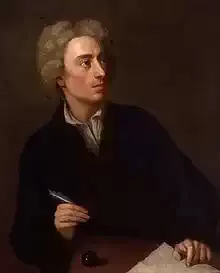
Alexander Pope
Essay on Man
The First Epistle
Awake, my ST. JOHN!(1) leave all meaner things
To low ambition, and the pride of Kings.
Let us (since Life can little more supply
Than just to look about us and to die)
Expatiate(2) free o'er all this scene of Man;
A mighty maze! but not without a plan;
A Wild, where weeds and flow'rs promiscuous shoot,
Or Garden, tempting with forbidden fruit.
Together let us beat this ample field,
Try what the open, what the covert yield;
The latent tracts(3), the giddy heights explore
Of all who blindly creep, or sightless soar;
Eye Nature's walks, shoot Folly as it flies,
And catch the Manners living as they rise;
Laugh where we must, be candid where we can;
But vindicate(4) the ways of God to Man.
1. Say first, of God above, or Man below,
What can we reason, but from what we know?
Of Man what see we, but his station here,
From which to reason, or to which refer?
Thro' worlds unnumber'd tho' the God be known,
'Tis ours to trace him only in our own.
He, who thro' vast immensity can pierce,
See worlds on worlds compose one universe,
Observe how system into system runs,
What other planets circle other suns,
What vary'd being peoples ev'ry star,
May tell why Heav'n has made us as we are.
But of this frame the bearings, and the ties,
The strong connections, nice dependencies,
Gradations just, has thy pervading soul
Look'd thro'? or can a part contain the whole?
Is the great chain, that draws all to agree,
And drawn supports, upheld by God, or thee?
II. Presumptuous Man! the reason wouldst thou find,
Why form'd so weak, so little, and so blind!
First, if thou canst, the harder reason guess,
Why form'd no weaker, blinder, and no less!
Ask of thy mother earth, why oaks are made
Taller or stronger than the weeds they shade?
Or ask of yonder argent fields(5) above,
Why JOVE'S Satellites are less than JOVE?(6)
Of Systems possible, if 'tis confest
That Wisdom infinite must form the best,
Where all must full or not coherent be,
And all that rises, rise in due degree;
Then, in the scale of reas'ning life, 'tis plain
There must be, somewhere, such rank as Man;
And all the question (wrangle e'er so long)
Is only this, if God has plac'd him wrong?
Respecting Man, whatever wrong we call,
Nay, must be right, as relative to all.
In human works, tho' labour'd on with pain,
A thousand movements scarce one purpose gain;
In God's, one single can its end produce;
Yet serves to second too some other use.
So Man, who here seems principal alone,
Perhaps acts second to some sphere unknown,
Touches some wheel, or verges to some goal;
'Tis but a part we see, and not a whole.
When the proud steed shall know why Man restrains
His fiery course, or drives him o'er the plains;
When the dull Ox, why now he breaks the clod,
Is now a victim, and now Egypt's God:(7)
Then shall Man's pride and dullness comprehend
His actions', passions', being's, use and end;
Why doing, suff'ring, check'd, impell'd; and why
This hour a slave, the next a deity.
Then say not Man's imperfect, Heav'n in fault;
Say rather, Man's as perfect as he ought;
His knowledge measur'd to his state and place,
His time a moment, and a point his space.
If to be perfect in a certain sphere,
What matter, soon or late, or here or there?
The blest today is as completely so,
As who began a thousand years ago.
III. Heav'n from all creatures hides the book of Fate,
All but the page prescrib'd, their present state;
From brutes what men, from men what spirits know:
Or who could suffer Being here below?
The lamb thy riot dooms to bleed to-day,
Had he thy Reason, would he skip and play?
Pleas'd to the last, he crops the flow'ry food,
And licks the hand just rais'd to shed his blood.
Oh blindness to the future! kindly giv'n,
That each may fill the circle mark'd by Heav'n;
Who sees with equal eye, as God of all,
A hero perish, or a sparrow fall,
Atoms or systems into ruin hurl'd,
And now a bubble burst, and now a world.
Hope humbly then; with trembling pinions soar;
Wait the great teacher Death, and God adore!
What future bliss, he gives not thee to know,
But gives that Hope to be thy blessing now.
Hope springs eternal in the human breast:
Man never Is, but always To be blest:
The soul, uneasy and confin'd from home,
Rests and expatiates in a life to come.
Lo! the poor Indian, whose untutor'd mind
Sees God in clouds, or hears him in the wind;
His soul proud Science never taught to stray
Far as the solar walk, or milky way;
Yet simple Nature to his hope has giv'n,
Behind the cloud-topt hill, an humbler heav'n;
Some safer world in depth of woods embrac'd,
Some happier island in the watry waste,
Where slaves once more their native land behold,
No fiends torment, no Christians thirst for gold!
To Be, contents his natural desire,
He asks no Angel's wing, no Seraph's(8) fire;
But thinks, admitted to that equal sky,
His faithful dog shall bear him company.
IV. Go, wiser thou! and in thy scale of sense
Weigh thy Opinion against Providence;
Call Imperfection what thou fancy'st such,
Say, here he gives too little, there too much;
Destroy all creatures for thy sport or gust,(9)
Yet cry, If Man's unhappy, God's unjust;
If Man alone ingross not Heav'n's high care,
Alone made perfect here, immortal there:
Snatch from his hand the balance(10) and the rod,
Re-judge his justice, be the GOD of GOD!
In Pride, in reas'ning Pride, our error lies;
All quit their sphere, and rush into the skies.
Pride still is aiming at the blest abodes,
Men would be Angels, Angels would be Gods.
Aspiring to be Gods, if Angels fell,
Aspiring to be Angels, Men rebel;
And who but wishes to invert the laws
Of ORDER, sins against th' Eternal Cause.
V. Ask for what end the heav'nly bodies shine,
Earth for whose use? Pride answers, "Tis for mine:
For me kind Nature wakes her genial pow'r,
Suckles each herb, and spreads out ev'ry flow'r;
Annual for me, the grape, the rose renew
The juice nectareous, and the balmy dew;
For me, the mine a thousand treasures brings;
For me, health gushes from a thousand springs;
Seas roll to waft me, suns to light me rise;
My foot-stool earth, my canopy the skies."
But errs not Nature from this gracious end,
From burning suns when livid deaths descend,
When earthquakes swallow, or when tempests sweep
Towns to one grave, whole nations to the deep?
"No ('tis reply'd) the first Almighty Cause
Acts not by partial, but by gen'ral laws;
Th' exceptions few; some change since all began,
And what created perfect?" -- Why then Man?
If the great end be human Happiness,
Then Nature deviates; and can Man do less?
As much that end a constant course requires
Of show'rs and sun-shine, as of Man's desires;
As much eternal springs and cloudless skies,
As Men for ever temp'rate, calm, and wise.
If plagues or earthquakes break not Heav'n's design,
Why then a Borgia,(11) or a Catiline?(12)
Who knows but he, whose hand the light'ning forms,
Who heaves old Ocean, and who wings the storms,
Pours fierce Ambition in a Caesar's(13) mind,
Or turns young Ammon(14) loose to scourge mankind?
From pride, from pride, our very reas'ning springs;
Account for moral as for nat'ral things:
Why charge we Heav'n in those, in these acquit?
In both, to reason right is to submit.
Better for Us, perhaps, it might appear,
Were there all harmony, all virtue here;
That never air or ocean felt the wind;
That never passion discompos'd the mind:
But ALL subsists by elemental strife;
and Passions are the elements of Life.
The gen'ral ORDER, since the whole began,
Is kept in Nature, and is kept in Man.
VI. What would this Man? Now upward will he soar,
And little less than Angel,(15) would be more;
Now looking downwards, just as griev'd appears
To want the strength of bulls, the fur of bears.
Made for his use all creatures if he call,
Say what their use, had he the pow'rs of all?
Nature to these, without profusion kind,
The proper organs, proper pow'rs assign'd;
Each seeming want compensated of course,
Here with degrees of swiftness, there of force;
All in exact proportion to the state;
Nothing to add, and nothing to abate.
Each beast, each insect, happy in its own;
Is Heav'n unkind to Man, and Man alone?
Shall he alone, whom rational we call,
Be pleas'd with nothing, if not bless'd with all?
The bliss of Man (could Pride that blessing find)
Is not to act or think beyond mankind;
No pow'rs of body or of soul to share,
But what his nature and his state can bear.
Why has not Man a microscopic eye?
For this plain reason, Man is not a Fly.
Say what the use, were finer optics giv'n,
T' inspect a mite,(16) not comprehend the heav'n?
Or touch, if tremblingly alive all o'er,
To smart and agonize at ev'ry pore?
Or quick effluvia(17) darting thro' the brain,
Die of a rose in aromatic pain?
If nature thunder'd in his op'ning ears,
And stunn'd him with the music of the spheres,
How would he wish that Heav'n had left him still
The whisp'ring Zephyr,(18) and the purling rill?(19)
Who finds not Providence all good and wise,
Alike in what it gives, and what denies?
VII. Far as Creation's ample range extends,
The scale of sensual, mental pow'rs ascends:
Mark how it mounts, to Man's imperial race,
From the green myriads in the people grass:
What modes of sight betwixt each wide extreme,
The mole's dim curtain, and the lynx's beam:
Of smell, the headlong lioness between,
And hound sagacious(20) on the tainted(21) green:
Of hearing, from the life that fills the flood,(22)
To that which warbles thro' the vernal(23) wood:
The spider's touch, how exquisitely fine!
Feels at each thread, and lives along the line:
In the nice bee, what sense so subtly true
From pois'nous herbs extracts the healing dew:(24)
How Instinct varies in the grov'ling swine,
Compar'd, half-reas'ning elephant, with thine:
'Twixt that, and Reason, what a nice barrier;
For ever sep'rate, yet for ever near!
Remembrance and Reflection how ally'd;
What thin partitions Sense from Thought divide:
And Middle natures,(25) how they long to join,
Yet never pass th' insuperable line!
Without this just gradation, could they be
Subjected these to those, or all to thee?
The pow'rs of all subdu'd by thee alone,
Is not thy Reason all these pow'rs in one?
VIII. See, thro' this air, this ocean, and this earth,
All matter quick, and bursting into birth.
Above, how high progressive life may go!
Around, how wide! how deep extend below!
Vast chain of being, which from God began,
Natures ethereal,(26) human, angel, man
Beast, bird, fish, insect! what no eye can see,
No glass can reach! from Infinite to thee,
From thee to Nothing! -- On superior pow'rs
Were we to press, inferior might on ours:
Or in the full creation leave a void,
Where, one step broken, the great scale's destoy'd:
From Nature's chain whatever link you strike,
Tenth or ten thousandth, breaks the chain alike.
And if each system in gradation roll,
Alike essential to th' amazing whole;
The least confusion but in one, not all
That system only, but the whole must fall.
Let Earth unbalanc'd from her orbit fly,
Planets and Suns run lawless thro' the sky,
Let ruling Angels from their spheres be hurl'd,
Being on being wreck'd, and world on world,
Heav'n's whole foundations to their centre nod,
And Nature tremble to the throne of God:
All this dread ORDER break -- for whom? for thee?
Vile worm! -- oh, Madness, Pride, Impiety!
IX. What if the foot, ordain'd the dust to tread,
Or hand to toil, aspir'd to be the head?
What if the head, the eye, or ear repin'd(27)
To serve mere engines to the ruling Mind?
Just as absurd, to mourn the tasks or pains
The great directing MIND of ALL ordains.
All are but parts of one stupendous whole,
Whose body, Nature is, and God the soul;
That, chang'd thro' all, and yet in all the same,
Great in the earth, as in th' ethereal frame,
Warms in the sun, refreshes in the breeze,
Glows in the stars, and blossoms in the trees,
Lives thro' all life, extends thro' all extent,
Spreads undivided, operates unspent,
Breathes in our soul, informs our mortal parts,
As full, as perfect, in a hair as heart;
As full, as perfect, in vile Man that mourns,
As the rapt Seraph that adores and burns;
To him no high, no low, no great, no small;
He fills, he bounds, connects, and equals all.
X. Cease then, nor ORDER Imperfection name:
Our proper bliss depends on what we blame.
Know thy own point: This kind, this due degree
Of blindness, weakness, Heav'n bestows on thee.
Submit -- In this, or any other sphere,
Secure to be as blest as thou canst bear:
Safe in the hand of one disposing Pow'r,
Or in the natal, or the mortal hour.
All Nature is but Art, unknown to thee;
All Chance, Direction, which thou canst not see;
All Discord, Harmony, not understood;
All partial Evil, universal Good:
And, spite of Pride, in erring Reason's spite,
One truth is clear, "Whatever IS, is RIGHT."
Argument of the Second Epistle:
Of the Nature and State of Man, with respect to Himself, as an Individual. The business
of Man not to pry into God, but
to study himself.
Know then thyself, presume not God to scan;
The proper study of Mankind is Man.
Plac'd on this isthmus of a middle state,(28)
A being darkly wise, and rudely great:
With too much knowledge for the Sceptic side,
With too much weakness for the Stoic's pride,
He hangs between; in doubt to act, or rest,
In doubt to deem himself a God, or Beast;
In doubt his Mind or Body to prefer,
Born but to die, and reas'ning but to err;
Alike in ignorance, his reason such,
Whether he thinks too little, or too much:
Chaos of Thought and Passion, all confus'd;
Still by himself abus'd, or disabus'd;
Created half to rise, and half to fall;
Great lord of all things, yet a prey to all;
Sole judge of Truth, in endless Error hurl'd:
The glory, jest, and riddle of the world!
ENDNOTES:
1[His friend, Henry St. John, Lord Bolingbroke]
2[to wander]
3[hidden areas]
4[explain or defend]
5[silvery fields, i.e., the heavens]
6[the planet Jupiter]
7[ancient Egyptians sometimes worshipped oxen]
8[the highest level of angels]
9[pleasure]
10[the balance used to weigh justice]
11[Caesar Borgia (1476-1507) who used any cruelty to achieve his ends]
12[Lucious Sergius Catilina (108-62 B.C.) who was a traitor to Rome]
13[Julius Caesar (100-44 B.C.) who was thought to be overly ambitious Roman]
14[Alexander the Great (356-323 B.C.)]
15[Psalm 8:5--"Thou hast made him [man] a little lower than the angels...."]
16[small insect]
17[vapors which were believed to pass odors to the brain]
18[the West Wind]
19[stream]
20[able to pick up a scent]
21[having the odor of an animal]
22[ocean]
23[green]
24[honey was thought to have medicinal properties]
25[Animals slightly below humans on the chain of being]
26[heavenly]
27[complained]
28[i.e., on the chain of being between angels and animals]
617
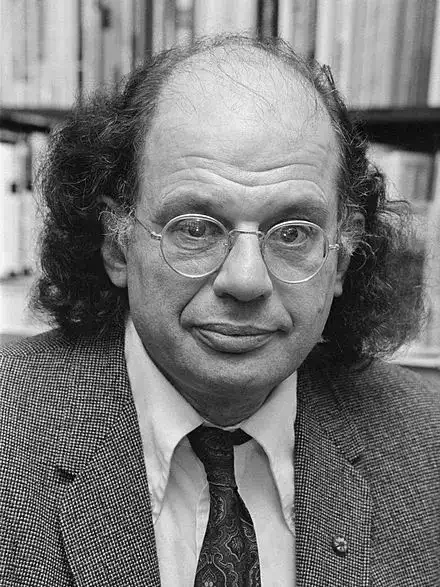
Allen Ginsberg
Cosmopolitan Greetings
Stand up against governments, against God.
Stay irresponsible.
Say only what we know & imagine.
Absolutes are Coercion.
Change is absolute.
Ordinary mind includes eternal perceptions.
Observe what’s vivid.
Notice what you notice.
Catch yourself thinking.
Vividness is self-selecting.
If we don’t show anyone, we’re free to write anything.
Remember the future.
Freedom costs little in the U.S.
Asvise only myself.
Don’t drink yourself to death.
Two molecules clanking us against each other require an observer to become
scientific data.
The measuring instrument determines the appearance of the phenomenal
world (after Einstein).
The universe is subjective..
Walt Whitman celebrated Person.
We are observer, measuring instrument, eye, subject, Person.
Universe is Person.
Inside skull is vast as outside skull.
What’s in between thoughts?
Mind is outer space.
What do we say to ourselves in bed at night, making no sound?
“First thought, best thought.”
Mind is shapely, Art is shapely.
Maximum information, minimum number of syllables.
Syntax condensed, sound is solid.
Intense fragments of spoken idiom, best.
Move with rhythm, roll with vowels.
Consonants around vowels make sense.
Savour vowels, appreciate consonants.
Subject is known by what she sees.
Others can measure their vision by what we see.
Candour ends paranoia.
605

Lord Byron
Don Juan: Canto the Eleventh
I
When Bishop Berkeley said "there was no matter,"
And proved it'
twas no matter what he sald:
They say his system 'tis in vain to batter,
Too subtle for the airiest human head;
And yet who can believe it! I would shatter
Gladly all matters down to stone or lead,
Or adamant, to find the World a spirit,
And wear my head, denying that I wear it.II
What a sublime discovery 'twas to make the
Universe universal egotism,
That all's idealall
ourselves: I'll stake the
World (be it what you will) that that's no schism.
Oh Doubt!if
thou be'st Doubt, for which some take thee,
But which I doubt extremelythou
sole prism
Of the Truth's rays, spoil not my draught of spirit!
Heaven's brandy, though our brain can hardly bear it.III
For ever and anon comes Indigestion
(Not the most "dainty Ariel") and perplexes
Our soarings with another sort of question:
And that which after all my spirit vexes,
Is, that I find no spot where Man can rest eye on,
Without confusion of the sorts and sexes,
Of beings, stars, and this unriddled wonder,
The World, which at the worst's a glorious blunderIV
If it be chanceor,
if it be according
To the Old Text, still better: lest it should
Turn out so, we'll say nothing 'gainst the wording,
As several people think such hazards rude.
They're right; our days are too brief for affording
Space to dispute what no one ever could
Decide, and everybody one day will
Know very clearlyor
at least lie still.V
And therefore will I leave off metaphysical
Discussion, which is neither here nor there:
If I agree that what is, is; then this I call
Being quite perspicuous and extremely fair.
The truth is, I've grown lately rather phthisical:
I don't know what the reason isthe
air
Perhaps; but as I suffer from the shocks
Of illness, I grow much more orthodox.VI
The first attack at once prov'd the Divinity
(But that I never doubted, nor the Devil);
The next, the Virgin's mystical virginity;
The third, the usual Origin of Evil;
The fourth at once establish'd the whole Trinity
On so uncontrovertible a level,
That I devoutly wish'd the three were four
On purpose to believe so much the more.VII
To our theme.
The
man who has stood on the Acropolis,
And look'd down over Attica; or he
Who has sail'd where picturesque Constantinople is,
Or seen Timbuctoo, or hath taken tea
In smalley'd
China's crockeryware
metropolis,
Or sat amidst the bricks of Nineveh,
May not think much of London's first appearance
But
ask him what he thinks of it a year hence!VIII
Don Juan had got out on Shooter's Hill;
Sunset the time, the place the same declivity
Which looks along that vale of good and ill
Where London streets ferment in full activity,
While everything around was calm and still,
Except the creak of wheels, which on their pivot he
Heard, and that beelike,
bubbling, busy hum
Of cities, that boil over with their scumIX
I say, Don Juan, wrapp'd in contemplation,
Walk'd on behind his carriage, o'er the summit,
And lost in wonder of so great a nation,
Gave way to't, since he could not overcome it.
"And here," he cried, "is Freedom's chosen station;
Here peals the People's voice nor can entomb it
Racks, prisons, inquisitions; resurrection
Awaits it, each new meeting or election.X
"Here are chaste wives, pure lives; her people pay
But what they please; and if that things be dear,
'Tis only that they love to throw away
Their cash, to show how much they have ayear.
Here laws are all inviolate; none lay
Traps for the traveller; every highway's clear;
Here"he
was interrupted by a knife,
With"
Damn your eyes! your money or your life!"XI
These freeborn
sounds proceeded from four pads
In ambush laid, who had perceiv'd him loiter
Behind his carriage; and, like handy lads,
Had seiz'd the lucky hour to reconnoitre,
In which the heedless gentleman who gads
Upon the road, unless he prove a fighter
May find himself within that isle of riches
Expos'd to lose his life as well as breeches.XII
Juan, who did not understand a word
Of English, save their shibboleth, "God damn!"
And even that he had so rarely heard,
He sometimes thought 'twas only their Salam,"
Or "God be with you!"and
'tis not absurd
To think so, for half English as I am
(To my misfortune) never can I say
I heard them wish "God with you," save that wayXIII
Juan yet quickly understood their gesture,
And being somewhat choleric and sudden,
Drew forth a pocket pistol from his vesture,
And fired it into one assailant's pudding,
Who fell, as rolls an ox o'er in his pasture,
And roar'd out, as he writh'd his native mud in,
Unto his nearest follower or henchman,
"Oh Jack! I'm floor'd by that ere bloody Frenchman!"XIV
On which Jack and his train set off at speed,
And Juan's suite, late scatter'd at a distance,
Came up, all marvelling at such a deed,
And offering, as usual, late assistance.
Juan, who saw the moon's late minion bleed
As if his veins would pour out his existence,
Stood calling out for bandages and lint,
And wish'd he had been less hasty with his flint.XV
"Perhaps,"thought he,"it is the country's wont
To welcome foreigners in this way: now
I recollect some innkeepers who don't
Differ, except in robbing with a bow,
In lieu of a bare blade and brazen front.
But what is to be done? I can't allow
The fellow to lie groaning on the road:
So take him up, I'll help you with the load."XVI
But ere they could perform this pious duty,
The dying man cried, "Hold! I've got my gruel!
Oh! for a glass of max ! We've miss'd our booty
Let
me die where I am!" And as the fuel
Of life shrunk in his heart, and thick and sooty
The drops fell from his deathwound,
and he drew ill
His breath, he from his swelling throat untied
A kerchief, crying "Give Sal that!"and
died.XVII
The cravat stain'd with bloody drops fell down
Before Don Juan's feet: he could not tell
Exactly why it was before him thrown,
Nor what the meaning of the man's farewell.
Poor Tom was once a kiddy upon town,
A thorough varmint, and a real swell,
Full flash, all fancy, until fairly diddled,
His pockets first and then his body riddled.XVIII
Don Juan, having done the best he could
In all the circumstances of the case,
As soon as "Crowner's 'quest" allow'd, pursu'd
His travels to the capital apace;
Esteeming it a little hard he should
In twelve hours' time, and very little space,
Have been oblig'd to slay a freeborn
native
In selfdefence:
this made him meditative.XIX
He from the world had cut off a great man,
Who in his time had made heroic bustle.
Who in a row like Tom could lead the van,
Booze in the ken, or at the spellken hustle?
Who queer a flat? Who (spite of Bowstreet's ban)
On the high tobyspice
so flash the muzzle?
Who on a lark, with blackeyed
Sal (his blowing),
So prime, so swell, so nutty, and so knowing?XX
But Tom's no moreand
so no more of Tom.
Heroes must die; and by God's blessing 'tis
Not long before the most of them go home.
Hail! Thamis, hail! Upon thy verge it is
That Juan's chariot, rolling like a drum
In thunder, holds the way it can't well miss,
Through Kennington and all the other "tons,"
Which make us wish ourselves in town at once;XXI
Through Groves, so called as being void of trees,
(Like lucus from no light); through prospects nam'd
Mount Pleasant, as containing nought to please,
Nor much to climb; through little boxes fram'd
Of bricks, to let the dust in at your ease,
With "To be let," upon their doors proclaim'd;
Through "Rows" most modestly call'd "Paradise,"
Which Eve might quit without much sacrifice;XXII
Through coaches, drays, chok'd turnpikes, and a whirl
Of wheels, and roar of voices, and confusion;
Here taverns wooing to a pint of "purl,"
There mails fast flying off like a delusion;
There barbers' blocks with periwigs in curl
In windows; here the lamplighter's infusion
Slowly distill'd into the glimmering glass
(For in those days we had not got to gas);XXIII
Through this, and much, and more, is the approach
Of travellers to mighty Babylon:
Whether they come by horse, or chaise, or coach,
With slight exceptions, all the ways seem one.
I could say more, but do not choose to encroach
Upon the guidebook's
privilege. The sun
Had set some time, and night was on the ridge
Of twilight, as the party cross'd the bridge.XXIV
That's rather fine, the gentle sound of ThamisWho
vindicates a moment, too, his stream
Though
hardly heard through multifarious "damme's":
The lamps of Westminster's more regular gleam,
The breadth of pavement, and yon shrine where Fame is
A spectral residentwhose
pallid beam
In shape of moonshine hovers o'er the pile
Make
this a sacred part of Albion's Isle.XXV
The Druid's groves are goneso
much the better:
Stonehenge is notbut
what the devil is it?
But
Bedlam still exists with its sage fetter,
That madmen may not bite you on a visit;
The Bench too seats or suits full many a debtor;
The Mansion House too (though some people quiz it)
To me appears a stiff yet grand erection;
But then the Abbey's worth the whole collection.XXVI
The line of lights too, up to Charing Cross,
Pall Mall, and so forth, have a coruscation
Like gold as in comparison to dross,
Match'd with the Continent's illumination,
Whose cities Night by no means deigns to gloss.
The French were not yet a lamplighting
nation,
And when they grew soon
their newfound
lantern,
Instead of wicks, they made a wicked man turn.XXVII
A row of Gentlemen along the streets
Suspended may illuminate mankind,
As also bonfires made of country seats;
But the old way is best for the purblind:
The other looks like phosphorus on sheets,
A sort of [lang l]ignis fatuus[lang e] to the mind,
Which, though 'tis certain to perplex and frighten,
Must burn more mildly ere it can enlighten.XXVIII
But London's so well lit, that if Diogenes
Could recommence to hunt his honest man
And found him not amidst the various progenies
Of this enormous city's spreading spawn,
'Twere not for want of lamps to aid his dodging his
Yet undiscover'd treasure. What I can,
I've done to find the same throughout life's journey,
But see the World is only one attorney.XXIX
Over the stones still rattling, up Pall Mall,
Through crowds and carriages, but waxing thinner
As thunder'd knockers broke the long seal'd spell
Of doors 'gainst duns, and to an early dinner
Admitted a small party as night fell,
Don Juan, our young diplomatic sinner,
Pursu'd his path, and drove past some hotels,
St. James's Palace, and St. James's "Hells."XXX
They reach'd the hotel: forth stream'd from the front door
A tide of wellclad
waiters, and around
The mob stood, and as usual several score
Of those pedestrian Paphians who abound
In decent London when the daylight's o'er;
Commodious but immoral, they are found
Useful, like Malthus, in promoting marriage:
But Juan now is stepping from his carriageXXXI
Into one of the sweetest of hotels,
Especially for foreignersand
mostly
For those whom favour or whom fortune swells,
And cannot find a bill's small items costly.
There many an envoy either dwelt or dwells
(The den of many a diplomatic lost lie),
Until to some conspicuous square they pass,
And blazon o'er the door their names in brass.XXXII
Juan, whose was a delicate commission,
Private, though publicly important, bore
No title to point out with due precision
The exact affair on which he was sent o'er.
'Twas merely known, that on a secret mission
A foreigner of rank had grac'd our shore,
Young, handsome and accomplish'd, who was said
(In whispers) to have turn'd his Sovereign's head.XXXIII
Some rumour also of some strange adventures
Had gone before him, and his wars and loves;
And as romantic heads are pretty painters,
And, above all, an Englishwoman's roves
Into the excursive, breaking the indentures
Of sober reason, wheresoe'er it moves,
He found himself extremely in the fashion,
Which serves our thinking people for a passion.XXXIV
I don't mean that they are passionless, but quite
The contrary; but then 'tis in the head;
Yet as the consequences are as bright
As if they acted with the heart instead,
What after all can signify the site
Of ladies' lucubrations? So they lead
In safety to the place for which you start,
What matters if the road be head or heart?XXXV
Juan presented in the proper place,
To proper placement, every Russ credential;
And was receiv'd with all the due grimace
By those who govern in the mood potential,
Who, seeing a handsome stripling with smooth face,
Thought (what in state affairs is most essential)
That they as easily might do the youngster,
As hawks may pounce upon a woodland songster.XXXVI
They err'd, as aged men will do; but by
And by we'll talk of that; and if we don't,
'T will be because our notion is not high
Of politicians and their double front,
Who live by lies, yet dare not boldly lie:
Now, what I love in women is, they won't
Or can't do otherwise than lie, but do it
So well, the very truth seems falsehood to it.XXXVII
And, after all, what is a lie? 'Tis but
The truth in masquerade; and I defy
Historians, heroes, lawyers, priests, to put
A fact without some leaven of a lie.
The very shadow of true Truth would shut
Up annals, revelations, poesy,
And prophecyexcept
it should be dated
Some years before the incidents related.XXXVIII
Prais'd be all liars and all lies! Who now
Can tax my mild Muse with misanthropy?
She rings the World's "Te Deum," and her brow
Blushes for those who will not: but to sigh
Is idle; let us like most others bow,
Kiss hands, feet, any part of Majesty,
After the good example of "Green Erin,"
Whose shamrock now seems rather worse for wearing.XXXIX
Don Juan was presented, and his dress
And mien excited general admiration;
I don't know which was more admir'd or less:
One monstrous diamond drew much observation,
Which Catherine in a moment of "ivresse"
(In love or brandy's fervent fermentation)
Bestow'd upon him, as the public learn'd;
And, to say truth, it had been fairly earn'd.XL
Besides the ministers and underlings,
Who must be courteous to the accredited
Diplomatists of rather wavering kings,
Until their royal riddle's fully read,
The very clerksthose
somewhat dirty springs
Of Office, or the House of Office, fed
By foul corruption into streamseven
they
Were hardly rude enough to earn their pay.XLI
And insolence no doubt is what they are
Employ'd for, since it is their daily labour,
In the dear offices of peace or war;
And should you doubt, pray ask of your next neighbour,
When for a passport, or some other bar
To freedom, he applied (a grief and a bore),
If he found not this spawn of taxborn
riches,
Like lapdogs,
the least civil sons of b{}{
}{
}{
}{
}
s.XLII
But Juan was receiv'd with much "empressement" These
phrases of refinement I must borrow
From our next neighbours' land, where, like a chessman,
There is a move set down for joy or sorrow,
Not only in mere talking, but the press. Man
In islands is, it seems, downright and thorough,
More than on continentsas
if the sea
(See Billingsgate) made even the tongue more free.XLIII
And yet the British "Damme" 's rather Attic,
Your continental oaths are but incontinent,
And turn on things which no aristocratic
Spirit would name, and therefore even I won't anent
This subject quote; as it would be schismatic
In politesse, and have a sound affronting in 't;
But "Damme" 's quite ethereal, though too daring
Platonic
blasphemy, the soul of swearing.XLIV
For downright rudeness, ye may stay at home;
For true or false politeness (and scarce that
Now) you may cross the blue deep and white foam:
The first the emblem (rarely though) of what
You leave behind, the next of much you come
To meet. However, 'tis no time to chat
On general topics: poems must confine
Themselves to Unity, like this of mine.XLV
In the great worldwhich,
being interpreted,
Meaneth the West or worst end of a city,
And about twice two thousand people bred
By no means to be very wise or witty,
But to sit up while others lie in bed,
And look down on the Universe with pity
Juan,
as an inveterate patrician,
Was well receiv'd by persons of condition.XLVI
He was a bachelor, which is a matter
Of import both to virgin and to bride,
The former's hymeneal hopes to flatter;
And (should she not hold fast by love or pride)
'Tis also of some momemt to the latter:
A rib's a thorn in a wed gallant's side,
Requires decorum, and is apt to double
The horrid sinand
what's still worse the trouble.XLVII
But Juan was a bachelorof
arts,
And parts, and hearts: he danc'd and sung, and had
An air as sentimental as Mozart's
Softest of melodies; and could be sad
Or cheerful, without any "flaws or starts,"
Just at the proper time; and though a lad,
Had seen the worldwhich
is a curious sight,
And very much unlike what people write.XLVIII
Fair virgins blush'd upon him; wedded dames
Bloom'd also in less transitory hues;
For both commodities dwell by the Thames
The painting and the painted; Youth, Ceruse,
Against his heart preferr'd their usual claims,
Such as no gentleman can quite refuse;
Daughters admir'd his dress, and pious mothers
Inquir'd his income, and if he had brothers.XLIX
The milliners who furnish "drapery Misses"
Throughout the season, upon speculation
Of payment ere the Honeymoon's last kisses
Have wan'd into a crescent's coruscation,
Thought such an opportunity as this is,
Of a rich foreigner's initiation,
Not to be overlook'dand
gave such credit,
That future bridegrooms swore, and sigh'd, and paid it.L
The Blues, that tender tribe, who sigh o'er sonnets,
And with the pages of the last Review
Line the interior of their heads or bonnets,
Advanc'd in all their azure's highest hue:
They talk'd bad French or Spanish, and upon its
Late authors ask'd him for a hint or two;
And which was softest, Russian or Castilian?
And whether in his travels he saw Ilion?LI
Juan, who was a little superficial,
And not in literature a great Drawcansir,
Examin'd by this learned and especial
Jury of matrons, scarce knew what to answer:
His duties warlike, loving or official,
His steady application as a dancer,
Had kept him from the brink of Hippocrene,
Which now he found was blue instead of green.LII
However, he replied at hazard, with
A modest confidence and calm assurance,
Which lent his learned lucubrations pith,
And pass'd for arguments of good endurance.
That prodigy, Miss Araminta Smith
(Who at sixteen translated "Hercules Furens"
Into as furious English), with her best look,
Set down his sayings in her commonplace
book.LIII
Juan knew several languagesas
well
He mightand
brought them up with skill, in time
To save his fame with each accomplish'd belle,
Who still regretted that he did not rhyme.
There wanted but this requisite to swell
His qualities (with them) into sublime:
Lady FitzFrisky,
and Miss M{ae}via Mannish,
Both long'd extremely to be sung in Spanish.LIV
However, he did pretty well, and was
Admitted as an aspirant to all
The coteries, and, as in Banquo's glass,
At great assemblies or in parties small,
He saw ten thousand living authors pass,
That being about their average numeral;
Also the eighty "greatest living poets,"
As every paltry magazine can show it's .LV
In twice five years the "greatest living poet,"
Like to the champion in the fisty ring,
Is call'd on to support his claim, or show it,
Although 'tis an imaginary thing,
Even Ialbeit
I'm sure I did not know it,
Nor sought of foolscap subjects to be king
Was
reckon'd, a considerable time,
The grand Napoleon of the realms of rhyme.LVI
But Juan was my Moscow, and Faliero
My Leipsic, and my Mont Saint Jean seem Cain:
"La Belle Alliance" of dunces down at zero,
Now that the Lion's fall'n, may rise again,
But I will fall at least as fell my hero;
Nor reign at all, or as a monarch reign;
Or to some lonely isle of jailors go,
With turncoat Southey for my turnkey Lowe.LVII
Sir Walter reign'd before me; Moore and Campbell
Before and after; but now grown more holy,
The Muses upon Sion's hill must ramble
With poets almost clergymen, or wholly;
And Pegasus has a psalmodic amble
Beneath the very Reverend Rowley Powley,
Who shoes the glorious animal with stilts,
A modern Ancient Pistol"
by the hilts!"LVIII
Still he excels that artificial hard
Labourer in the same vineyard, though the vine
Yields him but vinegar for his reward
That
neutralis'd dull Dorus of the Nine;
That swarthy Sporus, neither man nor bard;
That ox of verse, who ploughs for every line:
Cambyses' roaring Romans beat at least
The howling Hebrews of Cybele's priest.LIX
Then there's my gentle Euphues, who, they say,
Sets up for being a sort of moral me ;
He'll find it rather difficult some day
To turn out both, or either, it may be.
Some persons think that Coleridge hath the sway;
And Wordsworth has supporters, two or three;
And that deepmouth'd
Boeotian "Savage Landor"
Has taken for a swan rogue Southey's gander.LX
John Keats, who was kill'd off by one critique,
Just as he really promis'd something great,
If not intelligible, without Greek
Contriv'd to talk about the gods of late,
Much as they might have been suppos'd to speak.
Poor fellow! His was an untoward fate;
'Tis strange the mind, that very fiery particle,
Should let itself be snuff'd out by an article.LXI
The list grows long of live and dead pretenders
To that which none will gainor
none will know
The conqueror at least; who, ere Time renders
His last award, will have the long grass grow
Above his burntout
brain, and sapless cinders.
If I might augur, I should rate but low
Their chances; they're too numerous, like the thirty
Mock tyrants, when Rome's annals wax'd but dirty.LXII
This is the literary lower empire,
Where the pr{ae}torian bands take up the matter;
A "dreadful trade," like his who "gathers samphire,"
The insolent soldiery to soothe and flatter,
With the same feelings as you'd coax a vampire,
Now, were I once at home, and in good satire,
I'd try conclusions with those Janizaries,
And show them what an intellectual war is.LXIII
I think I know a trick or two, would turn
Their flanks; but it is hardly worth my while,
With such small gear to give myself concern:
Indeed I've not the necessary bile;
My natural temper's really aught but stern,
And even my Muse's worst reproof's a smile;
And then she drops a brief and modern curtsy,
And glides away, assur'd she never hurts ye.LXIV
My Juan, whom I left in deadly peril
Amongst live poets and blue ladies, pass'd
With some small profit through that field so sterile,
Being tir'd in time, and, neither least nor last,
Left it before he had been treated very ill;
And henceforth found himself more gaily class'd
Amongst the higher spirits of the day,
The sun's true son, no vapour, but a ray.LXV
His morns he pass'd in businesswhich
dissected,
Was, like all business, a laborious nothing
That leads to lassitude, the most infected
And CentaurNessus
garb of mortal clothing,
And on our sofas makes us lie dejected,
And talk in tender horrors of our loathing
All kinds of toil, save for our country's good
Which
grows no better, though 'tis time it should.LXVI
His afternoons he pass'd in visits, luncheons,
Lounging and boxing; and the twilight hour
In riding round those vegetable puncheons
Call'd "Parks," where there is neither fruit nor flower
Enough to gratify a bee's slight munchings;
But after all it is the only "bower"
(In Moore's phrase) where the fashionable fair
Can form a slight acquaintance with fresh air.LXVII
Then dress, then dinner, then awakes the world!
Then glare the lamps, then whirl the wheels, then roar
Through street and square fast flashing chariots hurl'd
Like harness'd meteors; then along the floor
Chalk mimics painting; then festoons are twirl'd;
Then roll the brazen thunders of the door,
Which opens to the thousand happy few
An earthly Paradise of "Or Molu."LXVIII
There stands the noble hostess, nor shall sink
With the threethousandth
curtsy; there the waltz,
The only dance which teaches girls to think,
Makes one in love even with its very faults.
Saloon, room, hall, o'erflow beyond their brink,
And long the latest of arrivals halts,
'Midst royal dukes and dames condemn'd to climb,
And gain an inch of staircase at a time.LXIX
Thrice happy he who, after a survey
Of the good company, can win a corner,
A door that's in or boudoir out of the way,
Where he may fix himself like small "Jack Horner,"
And let the Babel round run as it may,
And look on as a mourner, or a scorner,
Or an approver, or a mere spectator,
Yawning a little as the night grows later.LXX
But this won't do, save by and by; and he
Who, like Don Juan, takes an active share
Must steer with care through all that glittering sea
Of gems and plumes and pearls and silks, to where
He deems it is his proper place to be;
Dissolving in the waltz to some soft air,
Or proudlier prancing with mercurial skill,
Where Science marshals forth her own quadrille.LXXI
Or, if he dance not, but hath higher views
Upon an heiress or his neighbour's bride,
Let him take care that that which he pursues
Is not at once too palpably descried.
Full many an eager gentleman oft rues
His haste; impatience is a blundering guide
Amongst a people famous for reflection,
Who like to play the fool with circumspection.LXXII
But, if you can contrive, get next at supper;
Or, if forestalled, get opposite and ogle:
Oh, ye ambrosial moments! always upper
In mind, a sort of sentimental bogle,
Which sits for ever upon Memory's crupper,
The ghost of vanish'd pleasures once in vogue! Ill
Can tender souls relate the rise and fall
Of hopes and fears which shake a single ball.LXXIII
But these precautionary hints can touch
Only the common run, who must pursue,
And watch and ward; whose plans a word too much
Or little overturns; and not the few
Or many (for the number's sometimes such)
Whom a good mien, especially if new,
Or fame, or name, for wit, war, sense or nonsense,
Permits whate'er they please, or did not long since.LXXIV
Our hero, as a hero young and handsome,
Noble, rich, celebrated, and a stranger,
Like other slaves of course must pay his ransom
Before he can escape from so much danger
As will environ a conspicuous man. Some
Talk about poetry, and "rack and manger,"
And ugliness, disease, as toil and trouble
I
wish they knew the life of a young noble.LXXV
They are young, but know not youthit
is anticipated;
Handsome but wasted, rich without a sou;
Their vigour in a thousand arms is dissipated;
Their cash comes from , their wealth goes to a Jew;
Both senates see their nightly votes participated
Between the tyrant's and the tribunes' crew;
And having voted, din'd, drunk, gam'd and whor'd,
The family vault receives another lord.LXXVI
"Where is the World," cries Young, "at eighty ? Where
The World in which a man was born?" Alas!
Where is the world of eight years past? 'Twas there I
look for it'
tis gone, a Globe of Glass!
Crack'd, shiver'd, vanish'd, scarcely gaz'd on, ere
A silent change dissolves the glittering mass.
Statesmen, chiefs, orators, queens, patriots, kings,
And dandiesall
are gone on the wind's wings.LXXVII
Where is Napoleon the Grand? God knows:
Where little Castlereagh? The devil can tell:
Where Grattan, Curran, Sheridan, all those
Who bound the Bar or Senate in their spell?
Where is the unhappy Queen, with all her woes?
And where the Daughter, whom the Isles lov'd well?
Where are those martyr'd saints the Five per Cents?
And whereoh,
where the devil are the Rents?LXXVIII
Where's Brummell? Dish'd. Where's Long Pole Wellesley? Diddled.
Where's Whitbread? Romilly? Where's George the Third?
Where is his will? (That's not so soon unriddled.)
And where is "Fum" the Fourth, our "royal bird"?
Gone down, it seems, to Scotland to be fiddled
Unto by Sawney's violin, we have heard:
"Caw me, caw thee"for
six months hath been hatching
This scene of royal itch and loyal scratching.LXXIX
Where is Lord This? And where my Lady That?
The Honourable Mistresses and Misses?
Some laid aside like an old Opera hat,
Married, unmarried, and remarried (this is
An evolution oft perform'd of late).
Where are the Dublin shoutsand
London hisses?
Where are the Grenvilles? Turn'd as usual. Where
My friends the Whigs? Exactly where they were.LXXX
Where are the Lady Carolines and Franceses?
Divorc'd or doing thereanent. Ye annals
So brilliant, where the list of routs and dances is,
Thou Morning Post, sole record of the panels
Broken in carriages, and all the phantasies
Of fashion, say what streams now fill those channels?
Some die, some fly, some languish on the Continent,
Because the times have hardly left them one tenant.LXXXI
Some who once set their caps at cautious dukes,
Have taken up at length with younger brothers:
Some heiresses have bit at sharpers' hooks:
Some maids have been made wives, some merely mothers:
Others have lost their fresh and fairy looks:
In short, the list of alterations bothers.
There's little strange in this, but something strange is
The unusual quickness of these common changes.LXXXII
Talk not of seventy years as age! in seven
I have seen more changes, down from monarchs to
The humblest individuals under heaven,
Than might suffice a moderate century through.
I knew that nought was lasting, but now even
Change grows too changeable, without being new:
Nought's permanent among the human race,
Except the Whigs not getting into place.LXXXIII
I have seen Napoleon, who seem'd quite a Jupiter,
Shrink to a Saturn. I have seen a Duke
(No matter which) turn politician stupider,
If that can well be, than his wooden look.
But it is time that I should hoist my "blue Peter,"
And sail for a new theme: I have seenand
shook
To see itthe
King hiss'd, and then caress'd;
But don't pretend to settle which was best.LXXXIV
I have seen the Landholders without a rap
I
have seen Joanna SouthcoteI
have seen
The House of Commons turn'd to a taxtrap
I
have seen that sad affair of the late QueenI
have seen crowns worn instead of a fool's cap
I have seen a Congress doing all that's mean
I
have seen some nations, like o'erloaded asses,
Kick off their burthensmeaning
the high classes.LXXXV
I have seen small poets, and great prosers, and
Interminablenot
eternal speakers
I
have seen the funds at war with house and land
I
have seen the country gentlemen turn squeakers
I have seen the people ridden o'er like sand
By slaves on horseback
I
have seen malt liquors
Exchang'd for "thin potations" by John BullI
have seen John half detect himself a fool.LXXXVI
But "carpe diem," Juan, "carpe, carpe!"
Tomorrow
sees another race as gay
And transient, and devour'd by the same harpy.
"Life's a poor player"then
"play out the play,
Ye villains!" and above all keep a sharp eye
Much less on what you do than what you say:
Be hypocritical, be cautious, be
Not what you seem , but always what you see .LXXXVII
But how shall I relate in other cantos
Of what befell our hero in the land,
Which 'tis the common cry and lie to vaunt as
A moral country? But I hold my hand
For
I disdain to write an Atalantis;
But 'tis as well at once to understand,
You are not a moral people, and you know it,
Without the aid of too sincere a poet.LXXXVIII
What Juan saw and underwent shall be
My topic, with of course the due restriction
Which is requir'd by proper courtesy;
And recollect the work is only fiction,
And that I sing of neither mine nor me,
Though every scribe, in some slight turn of diction,
Will hint allusions never meant . Ne'er doubt
This when
I speak, I don't hint , but speak out .LXXXIX
Whether he married with the third or fourth
Offspring of some sage husbandhunting
countess,
Or whether with some virgin of more worth
(I mean in Fortune's matrimonial bounties),
He took to regularly peopling Earth,
Of which your lawful, awful wedlock fount is
Or
whether he was taken in for damages,
For being too excursive in his homagesXC
Is yet within the unread events of time.
Thus far, go forth, thou Lay, which I will back
Against the same given quantity of rhyme,
For being as much the subject of attack
As ever yet was any work sublime,
By those who love to say that white is black.
So much the better!
I
may stand alone,
But would not change my free thoughts for a throne.
602
Lord Byron
English Bards and Scotch Reviewers (excerpt)
Time was, ere yet in these degenerate days
Ignoble themes obtain'd mistaken praise,
When sense and wit with poesy allied,
No fabl'd graces, flourish'd side by side;
From the same fount their inspiration drew,
And, rear'd by taste, bloom'd fairer as they grew.
Then, in this happy isle, a Pope's pure strain
Sought the rapt soul to charm, nor sought in vain;
A polish'd nation's praise aspir'd to claim,
And rais'd the people's, as the poet's fame.
Like him great Dryden pour'd the tide of song,
In stream less smooth, indeed, yet doubly strong.
Then Congreve's scenes could cheer, or Otway's melt
For nature then an English audience felt.
But why these names, or greater still, retrace,
When all to feebler bards resign their place?
Yet to such times our lingering looks are cast,
When taste and reason with those times are past.
Now look around, and turn each trifling page,
Survey the precious works that please the age;
This truth at least let satire's self allow,
No dearth of bards can be complain'd of now.
The loaded press beneath her labour groans,
And printers' devils shake their weary bones;
While Southey's epics cram the creaking shelves,
And Little's lyrics shine in hotpress'd
twelves.
Thus saith the Preacher: "Nought beneath the sun
Is new"; yet still from change to change we run:
What varied wonders tempt us as they pass!
The cowpox,
tractors, galvanism and gas,
In turns appear, to make the vulgar stare,
Till the swoln bubble burstsand
all is air!
Nor less new schools of Poetry arise,
Where dull pretenders grapple for the prize:
O'er taste awhile these pseudobards
prevail;
Each country bookclub
bows the knee to Baal,
And, hurling lawful genius from the throne,
Erects a shrine and idol of its own;
Some leaden calfbut
whom it matters not,
From soaring Southey down to grovelling Stott.
Behold! in various throngs the scribbling crew,
For notice eager, pass in long review:
Each spurs his jaded Pegasus apace,
And rhyme and blank maintain an equal race;
Sonnets on sonnets crowd, and ode on ode;
And tales of terror jostle on the road;
Immeasurable measures move along;
For simpering folly loves a varied song,
To strange mysterious dulness still the friend,
Admires the strain she cannot comprehend.
Thus Lays of Minstrelsmay
they be the last!
On halfstrung
harps whine mournful to the blast.
While mountain spirits prate to river sprites,
That dames may listen to the sound at nights;
And goblin brats, of Gilpin Horner's brood,
Decoy young bordernobles
through the wood,
And skip at every step, Lord knows how high,
And frighten foolish babes, the Lord knows why;
While highborn
ladies in their magic cell,
Forbidding knights to read who cannot spell,
Despatch a courier to a wizard's grave,
And fight with honest men to shield a knave.
Next view in state, proud prancing on his roan,
The goldencrested
haughty Marmion,
Now forging scrolls, now foremost in the fight,
Not quite a felon, yet but half a knight,
The gibbet or the field prepar'd to grace;
A mighty mixture of the great and base.
And think'st thou, Scott! by vain conceit perchance,
On public taste to foist thy stale romance,
Though Murray with his Miller may combine
To yield thy muse just halfacrown
per line?
No! when the sons of song descend to trade,
Their bays are sear, their former laurels fade.
Let such forego the poet's sacred name,
Who rack their brains for lucre, not for fame:
Still for stern Mammon may they toil in vain!
And sadly gaze on gold they cannot gain!
Such be their meed, such still the just reward
Of prostituted muse and hireling bard!
For this we spurn Apollo's venal son,
And bid a long "good night to Marmion."
These are the themes that claim our plaudits now;
These are the bards to whom the muse must bow;
While Milton, Dryden, Pope, alike forgot,
Resign their hallow'd bays to Walter Scott.
The time has been, when yet the muse was young,
When Homer swept the lyre, and Maro sung,
An epic scarce ten centuries could claim,
While awestruck
nations hail'd the magic name;
The work of each immortal bard appears
The single wonder of a thousand years.
Empires have moulder'd from the face of earth,
Tongues have expir'd with those who gave them birth,
Without the glory such a strain can give,
As even in ruin bids the language live.
Not so with us, though minor bards, content
On one great work a life of labour spent:
With eagle pinion soaring to the skies,
Behold the balladmonger
Southey rise!
To him let Camoëns, Milton, Tasso yield,
Whose annual strains, like armies, take the field.
First in the ranks see Joan of Arc advance,
The scourge of England and the boast of France!
Though burnt by wicked Bedford for a witch,
Behold her statue plac'd in glory's niche;
Her fetters burst, and just releas'd from prison,
A virgin phoenix from her ashes risen.
Next see tremendous Thalaba come on,
Arabia's monstrous, wild and wondrous son:
Domdaniel's dread destroyer, who o'erthrew
More mad magicians than the world e'er knew.
Immortal hero! all thy foes o'ercome,
For ever reignthe
rival of Tom Thumb!
Since startled metre fled before thy face,
Well wert thou doom'd the last of all thy race!
Well might triumphant genii bear thee hence,
Illustrious conqueror of common sense!
Now, last and greatest, Madoc spreads his sails,
Cacique in Mexico, and prince in Wales;
Tells us strange tales, as other travellers do,
More old than Mandeville's, and not so true.
Oh Southey! Southey! cease thy varied song!
A bard may chant too often and too long:
As thou art strong in verse, in mercy, spare!
A fourth, alas! were more than we could bear.
But if, in spite of all the world can say,
Thou still wilt verseward plod thy weary way;
If still in Berkley ballads most uncivil,
Thou wilt devote old women to the devil,
The babe unborn thy dread intent may rue:
"God help thee," Southey, and thy readers too.
Next comes the dull disciple of thy school,
That mild apostate from poetic rule,
The simple Wordsworth, framer of a lay
As soft as evening in his favourite May,
Who warns his friend "to shake off toil and trouble,
And quit his books, for fear of growing double";
Who, both by precept and example, shows
That prose is verse, and verse is merely prose;
Convincing all, by demonstration plain,
Poetic souls delight in prose insane;
And Christmas stories tortur'd into rhyme
Contain the essence of the true sublime.
Thus, when he tells the tale of Betty Foy,
The idiot mother of "an idiot boy";
A moonstruck,
silly lad, who lost his way,
And, like his bard, confounded night with day;
So close on each pathetic part he dwells,
And each adventure so sublimely tells,
That all who view the "idiot in his glory"
Conceive the bard the hero of the story.
Shall gentle Coleridge pass unnotic'd here,
To turgid ode and tumid stanza dear?
Though themes of innocence amuse him best,
Yet still obscurity's a welcome guest.
If Inspiration should her aid refuse
To him who takes a pixy for a muse,
Yet none in lofty numbers can surpass
The bard who soars to elegize an ass.
So well the subject suits his noble mind,
He brays the laureat of the longear'd
kind.
578
Ezra Pound
Canto III
Another's a half-cracked fellow—John Heydon,
Worker of miracles, dealer in levitation,
In thoughts upon pure form, in alchemy,
Seer of pretty visions ('servant of God and secretary of nature');
Full of plaintive charm, like Botticelli's,
With half-transparent forms, lacking the vigor of gods.
Thus Heydon, in a trance, at Bulverton,
Had such a sight:
Decked all in green, with sleeves of yellow silk
Slit to the elbow, slashed with various purples.
Her eyes were green as glass, her foot was leaf-like.
She was adorned with choicest emeralds,
And promised him the way of holy wisdom.
'Pretty green bank,' began the half-lost poem.
Take the old way, say I met John Heydon,
Sought out the place,
Lay on the bank, was 'plungèd deep in swevyn;'
And saw the company—Layamon, Chaucer—
Pass each in his appropriate robes;
Conversed with each, observed the varying fashion.
And then comes Heydon.
'I have seen John Heydon.'
Let us hear John Heydon!
'Omniformis
Omnis intellectus est'—thus he begins, by spouting half of Psellus.
(Then comes a note, my assiduous commentator:
Not Psellus De Daemonibus, but Porphyry's Chances,
In the thirteenth chapter, that 'every intellect is omni-form.')
Magnifico Lorenzo used the dodge,
Says that he met Ficino
In some Wordsworthian, false-pastoral manner,
And that they walked along, stopped at a well-head,
And heard deep platitudes about contentment
From some old codger with an endless beard.
'A daemon is not a particular intellect,
But is a substance differed from intellect,'
Breaks in Ficino,
'Placed in the latitude or locus of souls'—
That's out of Proclus, take your pick of them.
Valla, more earth and sounder rhetoric—
Prefacing praise to his Pope Nicholas:
'A man of parts, skilled in the subtlest sciences;
A patron of the arts, of poetry; and of a fine discernment.'
Then comes a catalogue, his jewels of conversation.
No, you've not read your Elegantiae—
A dull book?—shook the church.
The prefaces, cut clear and hard:
'Know then the Roman speech, a sacrament,'
Spread for the nations, eucharist of wisdom,
Bread of the liberal arts.
Ha! Sir Blancatz,
Sordello would have your heart to give to all the princes;
Valla, the heart of Rome,
Sustaining speech, set out before the people.
'Nec bonus Christianus ac bonus
Tullianus.'
Marius, Du Bellay, wept for the buildings,
Baldassar Castiglione saw Raphael
'Lead back the soul into its dead, waste dwelling,'
Corpore laniato; and Lorenzo Valla,
'Broken in middle life? bent to submission?—
Took a fat living from the Papacy'
(That's in Villari, but Burckhardt's statement is different)—
'More than the Roman city, the Roman speech'
(Holds fast its part among the ever-living).
'Not by the eagles only was Rome measured.'
'Wherever the Roman speech was, there was Rome,'
Wherever the speech crept, there was mastery
Spoke with the law's voice while your Greek, logicians...
More Greeks than one! Doughty's 'divine Homeros'
Came before sophistry. Justinopolitan
Uncatalogued Andreas Divus,
Gave him in Latin, 1538 in my edition, the rest uncertain,
Caught up his cadence, word and syllable:
'Down to the ships we went, set mast and sail,
Black keel and beasts for bloody sacrifice,
Weeping we went.'
I've strained my ear for -ensa, -ombra, and -ensa
And cracked my wit on delicate canzoni—
Here's but rough meaning:
'And then went down to the ship, set keel to breakers,
Forth on the godly sea;
We set up mast and sail on the swarthy ship,
Sheep bore we aboard her, and our bodies also
Heavy with weeping. And winds from sternward
Bore us out onward with bellying canvas—
Circe's this craft, the trim-coifed goddess.
Then sat we amidships, wind jamming the tiller.
Thus with stretched sail
We went over sea till day's end:
Sun to his slumber, shadows o'er all the ocean.
Came we then to the bounds of deepest water,
To the Kimmerian lands and peopled cities
Covered with close-webbed mist, unpiercèd ever
With glitter of sun-rays,
Nor with stars stretched, nor looking back from heaven,
Swartest night stretched over wretched men there.
Thither we in that ship, unladed sheep there,
The ocean flowing backward, came we through to the place
Aforesaid by Circe.
Here did they rites, Perimedes and Eurylochus,
And drawing sword from my hip
I dug the ell-square pitkin, poured we libations unto each the dead,
First mead and then sweet wine,
Water mixed with white flour.
Then prayed I many a prayer to the sickly death's-heads
As set in Ithaca, sterile bulls of the best,
For sacrifice, heaping the pyre with goods.
Sheep, to Tiresias only,
Black, and a bell sheep;
Dark blood flowed in the fosse.
Souls out of Erebus, cadaverous dead
Of brides, of youths, and of many passing old,
Virgins tender, souls stained with recent tears,
Many men mauled with bronze lance-heads,
Battle spoil, bearing yet dreary arms:
These many crowded about me,
With shouting, pallor upon me, cried to my men for more beasts;
Slaughtered the herds—sheep slain of bronze,
Poured ointment, cried to the gods,
To Pluto the strong, and praised Proserpine.
Unsheathed the narrow steel,
I sat to keep off the impetuous, impotent dead
Till I should hear Tiresias.
But first Elpenor came, our friend Elpenor,
Unburied, cast on the wide earth—
Limbs that we left in the house of Circe,
Unwept, unwrapped in sepulchre, since toils urged other,
Pitiful spirit—and I cried in hurried speech:
'Elpenor, how art thou come to this dark coast?
Cam'st thou afoot, outstripping seamen?' And he in heavy speech:
'Ill fate and abundant wine! I slept in Circe's ingle,
Going down the long ladder unguarded, I fell against the buttress,
Shattered the nape-nerve, the soul sought Avernus.
But thou, O King, I bid remember me, unwept, unburied!
Heap up mine arms, be tomb by the sea-board, and inscribed,
A man of no fortune and with a name to come;
And set my oar up, that I swung 'mid fellows.'
Came then another ghost, whom I beat off, Anticlea,
And then Tiresias, Theban,
Holding his golden wand, knew me and spoke first:
'Man of ill hour, why come a second time,
Leaving the sunlight, facing the sunless dead and this joyless region?
Stand from the fosse, move back, leave me my bloody bever,
And I will speak you true speeches.'
'And I stepped back,
Sheathing the yellow sword. Dark blood he drank then
And spoke: 'Lustrous Odysseus, shalt
Return through spiteful Neptune, over dark seas,
Lose all companions.' Foretold me the ways and the signs.
Came then Anticlea, to whom I answered:
'Fate drives me on through these deeps; I sought Tiresias.'
I told her news of Troy, and thrice her shadow
Faded in my embrace.
Then had I news of many faded women—
Tyro, Alcmena, Chloris—
Heard out their tales by that dark fosse, and sailed
By sirens and thence outward and away,
And unto Circe buried Elpenor's corpse.'
Lie quiet, Divus.
In Officina Wechli, Paris,
M. D. three X's, Eight, with Aldus on the Frogs,
And a certain Cretan's
Hymni Deorum:
(The thin clear Tuscan stuff
Gives way before the florid mellow phrase.)
Take we the Goddess, Venus:
Venerandam,
Aurean coronam habentem, pulchram,
Cypri munimenta sortita est, maritime,
Light on the foam, breathed on by zephyrs,
And air-tending hours. Mirthful, orichalci
, with golden
Girdles and breast bands.
Thou with dark eye-lids,
Bearing the golden bough of Argicida.
562
Edgar Allan Poe
Sonnet- To Science
Science! true daughter of Old Time thou art!
Who alterest all things with thy peering eyes.
Why preyest thou thus upon the poet's heart,
Vulture, whose wings are dull realities?
How should he love thee? or how deem thee wise,
Who wouldst not leave him in his wandering
To seek for treasure in the jewelled skies,
Albeit he soared with an undaunted wing?
Hast thou not dragged Diana from her car?
And driven the Hamadryad from the wood
To seek a shelter in some happier star?
Hast thou not torn the Naiad from her flood,
The Elfin from the green grass, and from me
The summer dream beneath the tamarind tree?
548
Arthur Rimbaud
To A Reason
A rap of your finger on the drum
fires all the sounds
and starts a new harmony.
A step of yours: the levy of new men
and their marching on.
Your head turns away:
O the new love!
Your head turns back:
O the new love!
'Change our lots, confound the plagues,
beginning with time,'
to you these children sing.
'Raise no matter where the substance
of our fortune and our desires,'
they beg you.
Arrival of all time,
who will go everywhere.
551
Rudyard Kipling
The Gods Of The Copybook Headings
As I pass through my incarnations in every age and race,
I make my proper protestations to the Gods of the Market-Place.
Peering through reverent fingers I watch them flourish and fall.
And the Gods of the Copybook Headings, I notice, outlast them all.
We were living in trees when they met us. They showed us each in turn.
That water would certainly wet us, as Fire would certainly burn:
But we found them lacking in Uplift, Vision, and Breadth of Mind,
So we left them to teach the Gorilas while we followed the March of Mankind.
We moved as the Spirit listed. They never altered their pace,
Being neither clud nor wind-borne like the Gods of the Market-Place;
But they always caught up with our progress, and presently word would come
That a tribe had been wiped off its icefield, or the lights had gone out in Rome.
With the Hopes that our World is built on they were utterly out of touch.
They denied that the Moon was Stilton; they denied she was even Dutch.
They denied that Wishes were Horses; they denied that a Pig had Wings.
So we worshiped the Gods of the Market Who promiced these beautiful things.
When the Cambrian measures were forming, They promiced perpetual peace.
They swore, if we gave them our weapons, that the wars of the tribes would cease.
But when we disarmed They sold us and delivered us bound to our foe,
And the Gods of the Copybook Headings said: 'Stick to the Devil you know.'
On the first Feminian Sandstones we were promiced the Fuller Life
(Which started by loving our neighbor and ended by loving his wife)
Till our women had no more children and the men lost reason and faith,
And the Gods of the Copybook Headings said: 'The Wages of Sin is Death/'
In the Carboniferous Epoch we were promised abundance for all,
By robbing selective Peter to pay for collective Paul;
But, though we had plenty of money, there was nothing our money could buy,
And the Gods of the Copybook Headings said: 'If you don't work you die.'
The the Gods of the Market tumbled, and their smooth-tounged wizards withdrew,
And the hearts of the meanest were humbled and began to belive it was true
That All is not Gold that Glitters, and Two and Two make Four---
And the Gods of the Copybook Headings limped up to explain it once more
As it will be in the future, it was at the birth of Man---
There are only four things certain since Social Progress began:---
That the Dog returns to his Vomit and the Sow returns to her mire,
And the burnt Fool's bandaged finger goes wabbling back to the Fire;
And that after this is accomplished, and the brave new world begins
When all men are paid for existing and no man must pay for his sins,
As surely as Water will wet us, as surely as Fire will burn,
The Gods of the Copybook Headings with terror and slaughter return!
547
William Blake
The French Revolution (excerpt)
Thee the ancientest peer, Duke of Burgundy, rose from the monarch's right hand, red
as wines
From his mountains; an odor of war, like a ripe vineyard, rose from his garments,
And the chamber became as a clouded sky; o'er the council he stretch'd his red limbs,
Cloth'd in flames of crimson; as a ripe vineyard stretches over sheaves of corn,
The fierce Duke hung over the council; around him crowd, weeping in his burning robe,
A bright cloud of infant souls; his words fall like purple autumn on the sheaves:
'Shall this marble built heaven become a clay cottage, this earth an oak stool and
these mowers
From the Atlantic mountains mow down all this great starry harvest of six thousand
years?
And shall Necker, the hind of Geneva, stretch out his crook'd sickle o'er fertile
France
Till our purple and crimson is faded to russet, and the kingdoms of earth bound in
sheaves,
And the ancient forests of chivalry hewn, and the joys of the combat burnt for
fuel;
Till the power and dominion is rent from the pole, sword and sceptre from sun and
moon,
The law and gospel from fire and air, and eternal reason and science
From the deep and the solid, and man lay his faded head down on the rock
Of eternity, where the eternal lion and eagle remain to devour?
This to prevent--urg'd by cries in day, and prophetic dreams hovering in night,
To enrich the lean earth that craves, furrow'd with plows, whose seed is
departing from her--
Thy nobles have gather'd thy starry hosts round this rebellious city,
To rouze up the ancient forests of Europe, with clarions of cloud breathing war,
To hear the horse neigh to the drum and trumpet, and the trumpet and war
shout reply.
Stretch the hand that beckons the eagles of heaven; they cry over Paris, and
wait
Till Fayette point his finger to Versailles; the eagles of heaven must have their
prey!'
He ceas'd, and burn'd silent; red clouds roll round Necker; a weeping is heard
o'er the palace.
Like a dark cloud Necker paus'd, and like thunder on the just man's burial day he
paus'd;
Silent sit the winds, silent the meadows, while the husbandman and woman of
weakness
And bright children look after him into the grave, and water his clay with love,
Then turn towards pensive fields; so Necker paus'd, and his visage was covered
with clouds.
The King lean'd on his mountains, then lifted his head and look'd on his armies,
that shone
Through heaven, tinging morning with beams of blood; then turning to Burgundy,
troubled:
'Burgundy, thou wast born a lion! My soul is o'ergrown with distress.
For the nobles of France, and dark mists roll round me and blot the writing of
God
Written in my bosom. Necker rise! leave the kingdom, thy life is surrounded with
snares.
We have call'd an Assembly, but not to destroy; we have given gifts, not to the
weak;
I hear rushing of muskets, and bright'ning of swords, and visages redd'ning with
war,
Frowning and looking up from brooding villages and every dark'ning city.
Ancient wonders frown over the kingdom, and cries of women and babes are
heard,
And tempests of doubt roll around me, and fierce sorrows, because of the nobles
of France.
Depart! answer not! for the tempest must fall, as in years that are passed away.'
541

Rabindranath Tagore
Where The Mind Is Without Fear
Where the mind is without fear and the head is held high
Where knowledge is free
Where the world has not been broken up into fragments
By narrow domestic walls
Where words come out from the depth of truth
Where tireless striving stretches its arms towards perfection
Where the clear stream of reason has not lost its way
Into the dreary desert sand of dead habit
Where the mind is led forward by thee
Into ever-widening thought and action
Into that heaven of freedom, my Father, let my country awake
544
Lord Byron
Don Juan: Canto The Seventeenth
The world is full of orphans: firstly, those
Who are so in the strict sense of the phrase
(But many a lonely tree the loftier grows
Than others crowded in the forest's maze);
The next are such as are not doomed to lose
Their tender parents in their budding days,
But merely their parental tenderness,
Which leaves them orphans of the heart no less.
The next are 'only children', as they are styled,
Who grow up children only, since the old saw
Pronounces that an 'only' 's a spoilt child.
But not to go too far, I hold it law
That where their education, harsh or mild,
'Transgresses the great bounds of love or awe,
The sufferers, be't in heart or intellect,
Whate'er the cause are orphans in effect.
But to return unto the stricter rule
(As far as words make rules), our common notion
Of orphans paints at once a parish school,
A halfstarved
babe, a wreck upon life's ocean,
A human (what the Italians nickname) 'mule',
A theme for pity or some worse emotion;
Yet, if examined, it might be admitted
The wealthiest orphans are to be more pitied.
Too soon they are parents to themselves; for what
Are tutors, guardians, and so forth, compared
With Nature's genial genitors, so that
A child of Chancery, that Star Chamber ward
(I'll take the likeness I can first come at),
Is like a duckling by Dame Partlett reared
And frights, especially if 'tis a daughter,
The old hen by running headlong to the water.
There is a commonplace book argument,
Which glibly glides from every vulgar tongue
When any dare a new light to present:
'If you are right, then everybody's wrong.'
Suppose the converse of this precedent
So often urged, so loudly and so long:
'If you are wrong, then everybody's right.'
Was ever everybody yet so quite?
Therefore I would solicit free discussion
Upon all points, no matter what or whose,
Because as ages upon ages push on,
The last is apt the former to accuse
Of pillowing its head on a pincushion,
Heedless of pricks because it was obtuse.
What was a paradox becomes a truth or
A something like it, as bear witness Luther.
The sacraments have been reduced to two
And witches unto none, though somewhat late
Since burning aged women (save a few,
Not witches, only bitches, who create
Mischief in families, as some know or knew,
Should still be singed, but slightly let me state)
Has been declared an act of inurbanity,
Malgé Sir Matthew Hale's great humanity.
Great Galileo was debarred the sun,
Because he fixed it, and to stop his talking
How earth could round the solar orbit run,
Found his own legs embargoed from mere walking.
The man was well nigh dead, ere men begun
To think his skull had not some need of caulking,
But now it seems he's right, his notion just,
No doubt a consolation to his dust.
Pythagoras, Locke, Socrates but
pages
Might be filled up, as vainly as before,
With the sad usage of all sorts of sages,
Who in his lifetime each was deemed a bore.
The loftiest minds outrun their tardy ages;
This they must bear with and perhaps much more.
The wise man's sure when he no more can share it, he
Will have a firm post-obit on posterity.
If such doom waits each intellectual giant,
We little people in our lesser way
To life's small rubs should surely be more pliant,
And so for one will I, as well I may.
Would that I were less bilious but
oh fie on't!
Just as I make my mind up everyday
To be a totus teres stoic, sage,
The wind shifts and I fly into a rage.
Temperate I am, yet never had a temper;
Modest I am, yet with some slight assurance;
Changeable too, yet somehow idem semper;
Patient, but not enamoured of endurance;
Cheerful, but sometimes rather apt to whimper;
Mild, but at times a sort of Hercules furens;
So that I almost think that the same skin
For one without has two or three within.
Our hero was in canto the sixteenth
Left in a tender moonlight situation,
Such as enables man to show his strength
Moral or physical On this occasion
Whether his virtue triumphed, or at length
His vice for
he was of a kindling nation Is
more than I shall venture to describe,
Unless some beauty with a kiss should bribe.
I leave the thing a problem, like all things.
The morning came, and breakfast, tea and toast,
Of which most men partake, but no one sings.
The company, whose birth, wealth, worth have cost
My trembling lyre already several strings,
Assembled with our hostess and mine host.
The guests dropped in, the last but one, Her Grace,
The latest, Juan with his virgin face.
Which best is to encounter, ghost or none,
'Twere difficult to say, but Juan looked
As if he had combated with more than one,
Being wan and worn, with eyes that hardly brooked
The light that through the Gothic windows shone.
Her Grace too had a sort of air rebuked,
Seemed pale and shivered, as if she had kept
A vigil or dreamt rather more than slept.
537

Carl Sandburg
Baby Toes
There is a blue star, Janet,
Fifteen years’ ride from us,
If we ride a hundred miles an hour.
There is a white star, Janet,
Forty years’ ride from us,
If we ride a hundred miles an hour.
Shall we ride
To the blue star
Or the white star?
Fifteen years’ ride from us,
If we ride a hundred miles an hour.
There is a white star, Janet,
Forty years’ ride from us,
If we ride a hundred miles an hour.
Shall we ride
To the blue star
Or the white star?
527

Ella Wheeler Wilcox
The Muse And The Poet
The Muse said, Let us sing a little song
Wherein no hint of wrong,
No echo of the great world need, or pain,
Shall mar the strain.
Lock fast the swinging portal of thy heart;
Keep sympathy apart.
Sing of the sunset, of the dawn, the sea;
Of any thing or nothing, so there be
No purpose to thy art.
Yea, let us make, art for Art's sake.
And sing no more unto the hearts of men,
But for the critic's pen.
With songs that are but words, sweet sounding words,
Like joyous jargon of the birds.
Tune now thy lyre, O Poet, and sing on.
Sing of
THE DAWN
The Virgin Night, all languorous with dreams
Of her belovèd Darkness, rose in fear,
Feeling the presence of another near.
Outside her curtained casement shone the gleams
Of burning orbs; and modestly she hid
Her brow and bosom with her dusky hair.
When lo! the bold intruder lurking there
Leaped through the fragile lattice, all unbid,
And half unveiled her. Then the swooning Night
Fell pale and dead, while yet her soul was white
Before that lawless Ravisher, the Light.
The Muse said, Poet, nay; thou hast not caught
My meaning. For there lurks a thought
Back of thy song.
In art, all thought is wrong.
Re-string thy lyre; and let the echoes bound
To nothing but sweet sound.
Strike now the chords
And sing of
WORDS
One day sweet Ladye Language gave to me
A little golden key.
I sat me down beside her jewel box
And turned its locks.
And oh, the wealth that lay there in my sight.
Great solitaires of words, so bright, so bright;
Words that no use can commonize; like God,
And Truth, and Love; and words of sapphire blue;
And amber words; with sunshine dripping through;
And words of that strange hue
A pearl reveals upon a wanton's hand.
Again the Muse:
Thou dost not understand;
A thought within thy song is lingering yet.
Sing but of words; all else forget, forget.
Nor let thy words convey one thought to men.
Try once again.
Down through the dusk and dew there fell a word;
Down through the dew and dusk.
And all the garments of the air it stirred
Smelled sweet as musk;
And all the little waves of air it kissed
Turned gold and amethyst.
There in the dew and dusk a heart it found;
There in the dusk and dew
The sodden silence changed to fragrant sound;
And all the world seemed new.
Upon the path that little word had trod,
There shone the smile of God.
The Muse said, Drop thy lyre.
I tire, I tire.
529
Robert Frost
The Bear
The bear puts both arms around the tree above her
And draws it down as if it were a lover
And its chokecherries lips to kiss good-by,
Then lets it snap back upright in the sky.
Her next step rocks a boulder on the wall
(She's making her cross-country in the fall).
Her great weight creaks the barbed wire in its staples
As she flings over and off down through the maples,
Leaving on one wire tooth a lock of hair.
Such is the uncaged progress of the bear.
The world has room to make a bear feel free;
The universe seems cramped to you and me.
Man acts more like the poor bear in a cage,
That all day fights a nervous inward rage,
His mood rejecting all his mind suggests.
He paces back and forth and never rests
The me-nail click and shuffle of his feet,
The telescope at one end of his beat,
And at the other end the microscope,
Two instruments of nearly equal hope,
And in conjunction giving quite a spread.
Or if he rests from scientific tread,
'Tis only to sit back and sway his head
Through ninety-odd degrees of arc, it seems,
Between two metaphysical extremes.
He sits back on his fundamental butt
With lifted snout and eyes (if any) shut
(He almost looks religious but he's not),
And back and forth he sways from cheek to cheek,
At one extreme agreeing with one Greek
At the other agreeing with another Greek
Which may be thought, but only so to speak.
A baggy figure, equally pathetic
When sedentary and when peripatetic.
528
Page 1
Next