
Science and Reason
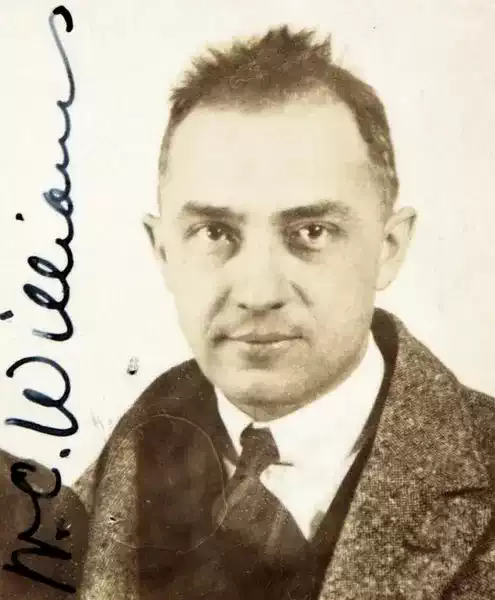
William Carlos Williams
A Sort of a Song
Let the snake wait under
his weed
and the writing
be of words, slow and quick, sharp
to strike, quiet to wait,
sleepless.
-- through metaphor to reconcile
the people and the stones.
Compose. (No ideas
but in things) Invent!
Saxifrage is my flower that splits
the rocks.
his weed
and the writing
be of words, slow and quick, sharp
to strike, quiet to wait,
sleepless.
-- through metaphor to reconcile
the people and the stones.
Compose. (No ideas
but in things) Invent!
Saxifrage is my flower that splits
the rocks.
527

Elizabeth Barrett Browning
Pain In Pleasure
A THOUGHT ay like a flower upon mine heart,
And drew around it other thoughts like bees
For multitude and thirst of sweetnesses;
Whereat rejoicing, I desired the art
Of the Greek whistler, who to wharf and mart
Could lure those insect swarms from orange-trees
That I might hive with me such thoughts and please
My soul so, always. foolish counterpart
Of a weak man's vain wishes ! While I spoke,
The thought I called a flower grew nettle-rough
The thoughts, called bees, stung me to festering:
Oh, entertain (cried Reason as she woke)
Your best and gladdest thoughts but long enough,
And they will all prove sad enough to sting !
523

Ezra Pound
Meditatio
When I carefully consider the curious habits of dogs
I am compelled to conclude
That man is the superior animal.
When I consider the curious habits of man
I confess, my friend, I am puzzled.
I am compelled to conclude
That man is the superior animal.
When I consider the curious habits of man
I confess, my friend, I am puzzled.
520

Lord Byron
The Adieu
Written Under The Impression That The Author Would Soon Die.
Adieu, thou Hill! where early joy
Spread roses o'er my brow;
Where Science seeks each loitering boy
With knowledge to endow.
Adieu, my youthful friends or foes,
Partners of former bliss or woes;
No more through Ida's paths we stray;
Soon must I share the gloomy cell,
Whose ever‑slumbering inmates dwell
Unconscious of the day.
Adieu, ye hoary Regal Fanes,
Ye spires of Granta's vale,
Where Learning robed in sable reigns,
And Melancholy pale.
Ye comrades of the jovial hour,
Ye tenants of the classic bower,
On Cama's verdant margin placed,
Adieu! while memory still is mine,
For, offerings on Oblivion's shrine,
These scenes must be effaced.
Adieu, ye mountains of the clime
Where grew my youthful years;
Where Loch na Garr in snows sublime
His giant summit rears.
Why did my childhood wander forth
From you, ye regions of the North,
With sons of pride to roam?
Why did I quit my Highland cave,
Mar's dusky heath, and Dee's clear wave,
To seek a Sotheron home!
Hall of my Sires! a long farewell
Yet
why to thee adieu?
Thy vaults will echo back my knell,
Thy towers my tomb will view:
The faltering tongue which sung thy fall,
And former glories of thy Hall,
Forgets its wonted simple note
But
yet the Lyre retains the strings,
And sometimes, on Æolian wings,
In dying strains may float.
Fields which surround yon rustic cot,
While yet I linger here,
Adieu! you are not now forgot,
To retrospection dear.
Streamlet! along whose rippling surge
My youthful limbs were wont to urge,
At noontide heat, their pliant course;
Plunging with ardour from the shore,
Thy springs will lave these limbs no more,
Deprived of active force.
And shall I here forget the scene,
Still nearest to my breast?
Rocks rise and rivers roll between
The spot which passion blest;
Yet, Mary, all thy beauties seem
Fresh as in Love's bewitching dream,
To me in smiles display'd;
Till slow disease resigns his prey
To Death, the parent of decay,
Thine image cannot fade.
And thou, my Friend! whose gentle love
Yet thrills my bosom's chords,
How much thy friendship was above
Description's power of words!
Still near my breast thy gift I wear
Which sparkled once with Feeling's tear,
Of Love the pure, the sacred gem;
Our souls were equal, and our lot
In that dear moment quite forgot;
Let Pride alone condemn!
All, all is dark and cheerless now!
No smile of Love's deceit
Can warm my veins with wonted glow,
Can bid Life's pulses beat:
Not e'en the hope of future fame
Can wake my faint, exhausted frame,
Or crown with fancied wreaths my head.
Mine is a short inglorious race,
To
humble in the dust my face,
And mingle with the dead.
Oh Fame! thou goddess of my heart;
On him who gains thy praise,
Pointless must fall the Spectre's dart,
Consumed in Glory's blaze;
But me she beckons from the earth,
My name obscure, unmark'd my birth,
My life a short and vulgar dream:
Lost in the dull, ignoble crowd,
My hopes recline within a shroud,
My fate is Lathe's stream.
When I repose beneath the sod,
Unheeded in the clay,
Where once my playful footsteps trod,
Where now my head must lay,
The weed of Pity will be shed
In dewdrops
o'er my narrow bed,
By nightly skies, and storms alone;
No mortal eye will deign to steep
With tears the dark sepulchral deep
Which hides a name unknown.
Forget this world, my restless sprite,
Turn, turn thy thoughts to Heaven:
There must thou soon direct thy flight,
If errors are forgiven.
To bigots and to sects unknown,
Bow down beneath the Almighty's Throne;
To Him address thy trembling prayer:
He, who is merciful and just,
Will not reject a child of dust,
Although his meanest care.
Father of Light! to Thee I call;
My soul is dark within:
Thou who canst mark the sparrow's fall,
Avert the death of sin.
Thou, who canst guide the wandering star,
Who calm'st the elemental war,
Whose mantle is yon boundless sky,
My thoughts, my words, my crimes forgive:
And, since I soon must cease to live,
Instruct me how to die.
514

Alfred Lord Tennyson
Lucretius
Lucilla, wedded to Lucretius, found
Her master cold; for when the morning flush
Of passion and the first embrace had died
Between them, tho' he loved her none the less,
Yet often when the woman heard his foot
Return from pacings in the field, and ran
To greet him with a kiss, the master took
Small notice, or austerely, for his mind
Half buried in some weightier argument,
Or fancy-borne perhaps upon the rise
And long roll of the hexameter -- he past
To turn and ponder those three hundred scrolls
Left by the Teacher, whom he held divine.
She brook'd it not, but wrathful, petulant
Dreaming some rival, sought and found a witch
Who brew'd the philtre which had power, they said
To lead an errant passion home again.
And this, at times, she mingled with his drink,
And this destroy'd him; for the wicked broth
Confused the chemic labor of the blood,
And tickling the brute brain within the man's
Made havoc among those tender cells, and check'd
His power to shape. He loathed himself, and once
After a tempest woke upon a morn
That mock'd him with returning calm, and cried:
"Storm in the night! for thrice I heard the rain
Rushing; and once the flash of a thunderbolt -Methought
I never saw so fierce a fork -Struck
out the streaming mountain-side, and show'd
A riotous confluence of watercourses
Blanching and billowing in a hollow of it,
Where all but yester-eve was dusty-dry.
"Storm, and what dreams, ye holy Gods, what dreams!
For thrice I waken'd after dreams. Perchance
We do but recollect the dreams that come
Just ere the waking. Terrible: for it seem'd
A void was made in Nature, all her bonds
Crack'd; and I saw the flaring atom-streams
And torrents of her myriad universe,
Ruining along the illimitable inane,
Fly on to clash together again, and make
Another and another frame of things
For ever. That was mine, my dream, I knew it -Of
and belonging to me, as the dog
With inward yelp and restless forefoot plies
His function of the woodland; but the next!
I thought that all the blood by Sylla shed
Came driving rainlike down again on earth,
And where it dash'd the reddening meadow, sprang
No dragon warriors from Cadmean teeth,
For these I thought my dream would show to me,
But girls, Hetairai, curious in their art,
Hired animalisms, vile as those that made
The mulberry-faced Dictator's orgies worse
Than aught they fable of the quiet Gods.
And hands they mixt, and yell'd and round me drove
In narrowing circles till I yell'd again
Half-suffocated, and sprang up, and saw -Was
it the first beam of my latest day?
"Then, then, from utter gloom stood out the
The breasts of Helen, and hoveringly a sword
Now over and now under, now direct,
Pointed itself to pierce, but sank down shamed
At all that beauty; and as I stared, a fire,
The fire that left a roofless Ilion,
Shot out of them, and scorch'd me that I woke.
"Is this thy vengeance, holy Venus, thine,
Because I would not one of thine own doves,
Not even a rose, were offered to thee? thine,
Forgetful how my rich proemion makes
Thy glory fly along the Italian field,
In lays that will outlast thy deity?
"Deity? nay, thy worshippers. My tongue
Trips, or I speak profanely. Which of these
Angers thee most, or angers thee at all?
Not if thou be'st of those who, far aloof
From envy, hate and pity, and spite and scorn,
Live the great life which all our greatest fain
Would follow, centred in eternal calm.
"Nay, if thou canst,
Goddess, like ourselves
Touch, and be touch'd, then would I cry to thee
To kiss thy Mavors, roll thy tender arms
Round him, and keep him from the lust of blood
That makes a steaming slaughter-house of Rome.
"Ay, but I meant not thee; I meant riot her
Whom all the pines of Ida shook to see
Slide from that quiet heaven of hers, and tempt
The Trojan, while his neatherds were abroad
Nor her that o'er her wounded hunter wept
Her deity false in human-amorous tears;
Nor whom her beardless apple-arbiter
Decided fairest. Rather, O ye Gods,
Poet-like, as the great Sicilian called
Calliope to grace his golden verse -Ay,
and this Kypris also -- did I take
That popular name of thine to shadow forth
The all-generating powers and genial heat
Of Nature, when she strikes thro' the thick blood
Of cattle, and light is large, and lambs are glad
Nosing the mother's udder, and the bird
Makes his heart voice amid the blaze of flowers;
Which things appear the work of mighty Gods.
"The Gods! and if I go my work is left
Unfinish'd -- if I go. The Gods, who haunt
The lucid interspace of world and world,
Where never creeps a cloud, or moves a wind,
Nor ever falls the least white star of mow
Nor ever lowest roll of thunder moans,
Nor sound of human sorrow mounts to mar
Their sacred everlasting calm! and such,
Not all so fine, nor so divine a calm
Not such, nor all unlike it, man may gain
Letting his own life go. The Gods, the Godsl
If all be atoms, how then should the Gods
Being atomic not be dissoluble,
Not follow the great law? My master held
That Gods there are, for all men so believe.
I prest my footsteps into his, and meant
Surely to lead my Memmius in a train
Of fiowery clauses onward to the proof
That Gods there are, and deathless. Meant? I meant?
I have forgotten what I meant, my mind
Stumbles, and all my faculties are lamed.
"Look where another of our Gods, the Sun
Apollo, Delius, or of older use
All-seeing Hyperion -- what you will -Has
mounted yonder; since he never sware,
Except his wrath were wreak'd on wretched man,
That he would only shine among the dead
Hereafter -- tales! for never yet on earth
Could dead flesh creep, or bits of roasting ox
Moan round the spit -- nor knows he what he sees;
King of the East altho' he seem, and girt
With song and flame and fragrance, slowly lifts
His golden feet on those empurpled stairs
That climb into the windy halls of heaven
And here he glances on an eye new-born,
And gets for greeting but a wail of pain;
And here he stays upon a freezing orb
That fain would gaze upon him to the last;
And here upon a yellow eyelid fallen
And closed by those who mourn a friend in vain,
Not thankful that his troubles are no more.
And me, altho' his fire is on my face
Blinding, he sees not, nor at all can tell
Whether I mean this day to end myself.
Or lend an ear to Plato where he says,
That men like soldiers may not quit the post
Allotted by the Gods. But he that holds
The Gods are careless, wherefore need he care
Greatly for them, nor rather plunge at once,
Being troubled, wholly out of sight, and sink
Past earthquake -- ay, and gout and stone, that break
Body toward death, and palsy, death-in-life,
And wretched age -- and worst disease of all,
These prodigies of myriad nakednesses,
And twisted shapes of lust, unspeakable,
Abominable, strangers at my hearth
Not welcome, harpies miring every dish,
The phantom husks of something foully done,
And fleeting thro' the boundless universe,
And blasting the long quiet of my breast
With animal heat and dire insanity?
"How should the mind, except it loved them, clasp
These idols to herself? or do they fly
Now thinner, and now thicker, like the flakes
In a fall of snow, and so press in, perforce
Of multitude, as crowds that in an hour
Of civic tumult jam the doors, and bear
The keepers down, and throng, their rags and the
The basest, far into that council-hall
Where sit the best and stateliest of the land?
³Can I not fling this horror off me again,
Seeing with how great ease Nature can smile
Balmier and nobler from her bath of storm,
At random ravage? and how easily
The mountain there has cast his cloudy slough,
Now towering o'er him in serenest air,
A mountain o'er a mountain, -- ay, and within
All hollow as the hopes and fears of men?
"But who was he that in the garden snared
Picus and Faunus, rustic Gods? a tale
To laugh at -- more to laugh at in myself -For
look! what is it? there? yon arbutus
Totters; a noiseless riot underneath
Strikes through the wood, sets all the tops quivering -- ;
The mountain quickens into Nymph and Faun,
And here an Oread -- how the sun delights
To glance and shift about her slippery sides,
And rosy knees and supple roundedness,
And budded bosom-peaks -- who this way runs
Before the rest! -- a satyr, a satyr, see,
Follows; but him I proved impossible
Twy-natured is no nature. Yet he draws
Nearer and nearer, and I scan him now
Beastlier than any phantom of his kind
That ever butted his rough brother-brute
For lust or lusty blood or provender.
I hate, abhor, spit, sicken at him; and she
Loathes him as well; such a precipitate heel,
Fledged as it were with Mercury's ankle-wing,
Whirls her to me -- ;but will she fling herself
Shameless upon me? Catch her, goatfoot! nay,
Hide, hide them, million-myrtled wilderness,
And cavern-shadowing laurels, hide! do I wish -What?
-- ;that the bush were leafless? or to whelm
All of them in one massacre? O ye Gods
I know you careless, yet, behold, to you
From childly wont and ancient use I call -I
thought I lived securely as yourselves -No
lewdness, narrowing envy, monkey-spite,
No madness of ambition, avarice, none;
No larger feast than under plane or pine
With neighbors laid along the grass, to take
Only such cups as left us friendly-warm,
Affirming each his own philosophy
Nothing to mar the sober majesties
Of settled, sweet, Epicurean life.
But now it seems some unseen monster lays
His vast and filthy hands upon my will,
Wrenching it backward into his, and spoils
My bliss in being; and it was not great,
For save when shutting reasons up in rhythm,
Or Heliconian honey in living words,
To make a truth less harsh, I often grew
Tired of so much within our little life
Or of so little in our little life -Poor
little life that toddles half an hour
Crown'd with a flower or two, and there an end -And
since the nobler pleasure seems to fade,
Why should I, beastlike as I find myself,
Not manlike end myself? -- our privilege -- ;
What beast has heart to do it? And what man
What Roman would be dragg'd in triumph thus?
Not I; not he, who bears one name with her
Whose death-blow struck the dateless doom of kings,
When, brooking not the Tarquin in her veins,
She made her blood in sight of Collatine
And all his peers, flushing the guiltless air,
Spout from the maiden fountain in her heart.
And from it sprang the Commonwealth, which breaks
As I am breaking now!
"And therefore now
Let her, that is the womb and tomb of all
Great Nature, take, and forcing far apart
Those blind beginnings that have made me man,
Dash them anew together at her will
Thro' all her cycles -- into man once more,
Or beast or bird or fish, or opulent flower.
But till this cosmic order everywhere
Shatter'd into one earthquake m one day
Cracks all to pieces, -- and that hour perhaps
Is not so far when momentary man
Shall seem no more a something to himself,
But he, his hopes and hates, his homes and fanes
And even his bones long laid within the grave,
The very sides of the grave itself shall pass,
Vanishing, atom and void, atom and void,
Into the unseen for ever, -- till that hour,
My golden work in which I told a truth
That stays the rolling Ixionian wheel,
And numbs the Fury's ringlet-snake, and plucks
The mortal soul from out immortal hell
Shall stand. Ay, surely; then it fails at last
And perishes as I must, for O Thou
Passionless bride, divine Tranquillity,
Yearn'd after by the wisest of the wise
Who fail to find thee, being as thou art
Without one pleasure and without one pain,
Howbeit I know thou surely must be mine
Or soon or late, yet out of season, thus
I woo thee roughly, for thou carest not
How roughly men may woo thee so they win -- ;
Thus -- thus -- the soul flies out and dies in the air
With that he drove the knife into his side.
She heard him raging, heard him fall, ran in,
Beat breast, tore hair, cried out upon herself
As having fail'd in duty to him, shriek'd
That she but meant to win him back, fell on him
Clasp'd, kiss'd him, wail'd. He answer'd, "Care not thou!
Thy duty? What is duty? Fare thee well!"
510

William Blake
Jerusalem: I see the Four-fold Man, The Humanity in deadly sleep
I see the Four-fold Man, The Humanity in deadly sleep
And its fallen Emanation, the Spectre and its cruel Shadow.
I see the Past, Present and Future existing all at once
Before me. O Divine Spirit, sustain me on thy wings,
That I may awake Albion from his long and cold repose;
For Bacon and Newton, sheath'd in dismal steel, their terrors hang
Like iron scourges over Albion: reasonings like vast serpents
Infold around my limbs, bruising my minute articulations.
I turn my eyes to the schools and universities of Europe
And there behold the Loom of Locke, whose Woof rages dire,
Wash'd by the Water-wheels of Newton: black the cloth
In heavy wreaths folds over every nation: cruel works
Of many Wheels I view, wheel without wheel, with cogs tyrannic
Moving by compulsion each other, not as those in Eden, which,
Wheel within wheel, in freedom revolve in harmony and peace.
505

Robert Frost
The Aim Was Song
Before man to blow to right
The wind once blew itself untaught,
And did its loudest day and night
In any rough place where it caught.
Man came to tell it what was wrong:
It hadn't found the place to blow;
It blew too hard - the aim was song.
And listen - how it ought to go!
He took a little in his mouth,
And held it long enough for north
To be converted into south,
And then by measure blew it forth.
By measure. It was word and note,
The wind the wind had meant to be -
A little through the lips and throat.
The aim was song - the wind could see.
510

Ella Wheeler Wilcox
The Boys' And Girls' Thanksgiving of 1892
Never since the race was started,
Had a boy in any clime,
Cause to be so thankful-hearted,
As the boys of present time.
Not a girl in old times living-
Let the world talk as it may-
Found such reasons for Thanksgiving,
As the girls who live to-day!
Grandmas, in their corners sitting,
Toiling till the day grew late,
What knew they with endless knitting,
Of the jolly roller-skate?
Grandpas sitting by the fender,
Reading by the faggots' blaze,
What knew they of modern splendor
Found in incandescent rays?
Where they toiled in bitter weather,
Braving rain and snow and sleet,
Gathering sticks of wood together,
We have radiators' heat.
But these fruits of modern science
They first planted seed by seed,
In their strength and self-reliance
We may find a noble creed.
With the dawn of great inventions,
Came the anti-warring days.
Men are sick of armed contentions,
God be thanked with heart-felt praise.
Once a boy was trained for fighting,
Now the world is better taught,
'Tis an age when wrongs are righting
By the force of common thought.
Once a girl was trained for sewing,
Spinning, knitting, nothing more.
She must never think of knowing
Aught of things outside her door.
If she soared above her spinning,
If she sought a life more broad,
She was looked upon as sinning
'Gainst the laws of man and God.
Now a girl is taught she's human,
Brain and body, soul and heart
All are needed by the woman
Who to-day would play her part.
Swift and sure the world advances,
Let the critic carp who may.
God be praised for all the chances
Boys and girls enjoy to-day.
502
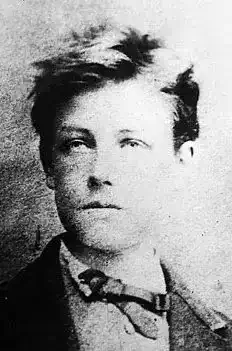
Arthur Rimbaud
Clearance Sale
For what the Jews have not sold,
what neither nobility nor crime have tasted,
what is unknown to monstrous love
and to the infernal probity of the masses!
what neither time nor science need recognize: The Voices restored;
fraternal awakening of all choral and orchestral energies
and their instantaneous application; the opportunity, the only one,
for the release of our senses! For sale Bodies without price,
outside any race, any world, any sex, any lineage! Riches gushing at every step!
Uncontrolled sale of diamonds!
For sale anarchy for the masses;
irrepressible satisfaction for rare connoisseurs;
agonizing death for the faithful and for lovers!
For sale colonization and migrations, sports,
fairylands and incomparable comforts,
and the noise and the movement
and the future they make!
For sale the application of calculations
and the incredible leaps of harmony.
Discoveries and terms never dreamed of,
-- immediate possession.
Wild and infinite flight toward invisible splendors,
toward intangible delights-and
its maddening secrets for every vice
-- and its terrifying gaiety for the mob.
For sale, the bodies, the voices,
the enormous and unquestionable wealth,
that which will never be sold.
Salesmen are not at the end of their stock!
It will be some time before travelers have to turn in their accounts.
498
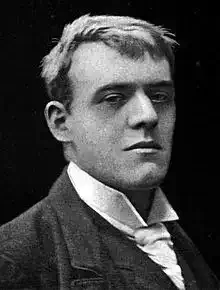
Hilaire Belloc
The Microbe
The Microbe is so very small
You cannot make him out at all,
But many sanguine people hope
To see him through a microscope.
His jointed tongue that lies beneath
A hundred curious rows of teeth;
His seven tufted tails with lots
Of lovely pink and purple spots,
On each of which a pattern stands,
Composed of forty separate bands;
His eyebrows of a tender green;
All these have never yet been seen--
But Scientists, who ought to know,
Assure us that they must be so....
Oh! let us never, never doubt
What nobody is sure about!
491

Johann Wolfgang von Goethe
A Legacy
No living atom comes at last to naught!
Active in each is still the eternal Thought:
Hold fast to Being if thou wouldst be blest.
Being is without end; for changeless laws
Bind that from which the All its glory draws
Of living treasures endlessly possessed.
Unto the wise of old this truth was known,
Such wisdom knit their noble souls in one;
Then hold thou still the lore of ancient days!
To that high power thou ow'st it, son of man,
By whose decree the earth its circuit ran
And all the planets went their various ways.
Then inward turn at once thy searching eyes;
Thence shalt thou see the central truth arise
From which no lofty soul goes e'er astray;
There shalt thou miss no needful guiding sign-
For conscience lives, and still its light divine
Shall be the sun of all thy moral day.
Next shalt thou trust thy senses' evidence,
And fear from them no treacherous offence
While the mind's watchful eye thy road commands:
With lively pleasure contemplate the scene
And roam securely, teachable, serene,
At will throughout a world of fruitful lands.
Enjoy in moderation all life gives:
Where it rejoices in each thing that lives
Let reason be thy guide and make thee see.
Then shall the distant past be present still,
The future, ere it comes, thy vision fill-
Each single moment touch eternity.
Then at the last shalt thou achieve thy quest,
And in one final, firm conviction rest:
What bears for thee true fruit alone is true.
Prove all things, watch the movement of the world
As down the various ways its tribes are whirled;
Take thou thy stand among the chosen few.
Thus hath it been of old; in solitude
The artist shaped what thing to him seemed good,
The wise man hearkened to his own soul's voice.
Thus also shalt thou find thy greatest bliss;
To lead where the elect shall follow-this
And this alone is worth a hero's choice.
494
William Blake
An Imitation of Spenser
Golden Apollo, that thro' heaven wide
Scatter'st the rays of light, and truth's beams,
In lucent words my darkling verses dight,
And wash my earthy mind in thy clear streams,
That wisdom may descend in fairy dreams,
All while the jocund hours in thy train
Scatter their fancies at thy poet's feet;
And when thou yields to night thy wide domain,
Let rays of truth enlight his sleeping brain.
For brutish Pan in vain might thee assay
With tinkling sounds to dash thy nervous verse,
Sound without sense; yet in his rude affray,
(For ignorance is Folly's leasing nurse
And love of Folly needs none other's curse)
Midas the praise hath gain'd of lengthen'd ears,
For which himself might deem him ne'er the worse
To sit in council with his modern peers,
And judge of tinkling rimes and elegances terse.
And thou, Mercurius, that with wingèd brow
Dost mount aloft into the yielding sky,
And thro' Heav'n's halls thy airy flight dost throw,
Entering with holy feet to where on high
Jove weighs the counsel of futurity;
Then, laden with eternal fate, dost go
Down, like a falling star, from autumn sky,
And o'er the surface of the silent deep dost fly:
If thou arrivest at the sandy shore
Where nought but envious hissing adders dwell,
Thy golden rod, thrown on t he dusty floor,
Can charm to harmony with potent spell.
Such is sweet Eloquence, that does dispel
Envy and Hate that thirst for human gore;
And cause in sweet society to dwell
Vile savage minds that lurk in lonely cell
O Mercury, assist my lab'ring sense
That round the circle of the world would fly,
As the wing'd eagle scorns the tow'ry fence
Of Alpine hills round his high aëry,
And searches thro' the corners of the sky,
Sports in the clouds to hear the thunder's sound,
And see the wingèd lightnings as they fly;
Then, bosom'd in an amber cloud, around
Plumes his wide wings, and seeks Sol's palace high.
And thou, O warrior maid invincible,
Arm'd with the terrors of Almighty Jove,
Pallas, Minerva, maiden terrible,
Lov'st thou to walk the peaceful solemn grove,
In solemn gloom of branches interwove?
Or bear'st thy AEgis o'er the burning field,
Where, like the sea, the waves of battle move?
Or have thy soft piteous eyes beheld
The weary wanderer thro' the desert rove?
Or does th' afflicted man thy heav'nly bosom move?
490
Ezra Pound
The Logical Conclusion
When earth's last thesis is copied
From the theses that went before,
When idea from fact has departed
And bare-boned factlets shall bore,
When all joy shall have fled from study
And scholarship reign supreme;
When truth shall 'baaa' on the hill crests
And no one shall dare to dream;
When all the good poems have been buried
With comment annoted in full
And art shall bow down in homage
To scholarship's zinc-plated bull,
When there shall be nothing to research
But the notes of annoted notes,
And Baalam's ass shall inquire
The price of imported oats;
Then no one shall tell him the answer
For each shall know the one fact
That lies in the special ass-ignment
From which he is making his tract.
So the ass shall sigh uninstructed
While each in his separate book
Shall grind for the love of grinding
And only the devil shall look.
Against the 'germanic' system of graduate study and insane specialization in the
Inanities.
488

Rudyard Kipling
The Threshold
In their deepest caverns of limestone
They pictured the Gods of Food--
The Horse, the Elk, and the Bison
That the hunting might be good;
With the Gods of Death and Terror--
The Mammoth, Tiger, and Bear.
And the pictures moved in the torchlight
To show that the Gods were there!
But that was before Ionia--
(Or the Seven Holy Islands of Ionia)
Any of the Mountains of Ionia,
Had bared their peaks to the air.
The close years packed behind them,
As the glaciers bite and grind,
Filling the new-gouged valleys
With Gods of every kind.
Gods of all-reaching power--
Gods of all-searching eyes--
But each to be wooed by worship
And won by sacrifice.
Till, after many winters, rose Ionia--
(Strange men brooding in Ionia)
Crystal-eyed Sages of Ionia
Who said, "These tales are lies.
"We dream one Breath in all things,
"That blows all things between.
"We dream one Matter in all things--
"Eternal, changeless, unseen.
"'That the heart of the Matter is single
"Till the Breath shall bid it bring forth--
"By choosing or losing its neighbour--
"All things made upon Earth."
But Earth was wiser than Ionia
(Babylon and Egypt than Ionia)
And they overlaid the teaching of Ionia
And the Truth was choked at birth.
It died at the Gate of Knowledge--
The Key to the Gate in its hand--
And the anxious priests and wizards
Re-blinded the wakening land;
For they showed, by answering echoes,
And chasing clouds as they rose,
How shadows should stand for bulwarks
Between mankind and its woes.
It was then that men bethought them of Ionia
(The few that had not allforgot Ionia)
Or the Word that was whispered in Ionia;
And they turned from the shadows and the shows.
They found one Breath in all things,
That moves all things between.
They proved one Matter in all things--
Eternal, changeless, unseen;
That the heart of the Matter was single
Till the Breath should bid it bring forth--
Even as men whispered in Ionia,
(Resolute, unsatisfied Ionia)
Ere the Word was stifled in Ionia--
All things known upon earth!
482
Lord Byron
Don Juan: Canto The Tenth
When Newton saw an apple fall, he found
In that slight startle from his contemplation'
Tis said (for I 'll not answer above ground
For any sage's creed or calculation)A
mode of proving that the earth turn'd round
In a most natural whirl, called 'gravitation;'
And this is the sole mortal who could grapple,
Since Adam, with a fall or with an apple.
Man fell with apples, and with apples rose,
If this be true; for we must deem the mode
In which Sir Isaac Newton could disclose
Through the then unpaved stars the turnpike road,
A thing to counterbalance human woes:
For ever since immortal man hath glow'd
With all kinds of mechanics, and full soon
Steamengines
will conduct him to the moon.
And wherefore this exordium?
Why,
just now,
In taking up this paltry sheet of paper,
My bosom underwent a glorious glow,
And my internal spirit cut a caper:
And though so much inferior, as I know,
To those who, by the dint of glass and vapour,
Discover stars and sail in the wind's eye,
I wish to do as much by poesy.
In the wind's eye I have sail'd, and sail; but for
The stars, I own my telescope is dim:
But at least I have shunn'd the common shore,
And leaving land far out of sight, would skim
The ocean of eternity: the roar
Of breakers has not daunted my slight, trim,
But still seaworthy
skiff; and she may float
Where ships have founder'd, as doth many a boat.
We left our hero, Juan, in the bloom
Of favouritism, but not yet in the blush;
And far be it from my Muses to presume
(For I have more than one Muse at a push)
To follow him beyond the drawingroom:
It is enough that Fortune found him flush
Of youth, and vigour, beauty, and those things
Which for an instant clip enjoyment's wings.
But soon they grow again and leave their nest.
'Oh!' saith the Psalmist, 'that I had a dove's
Pinions to flee away, and be at rest!'
And who that recollects young years and loves,
Though
hoary now, and with a withering breast,
And palsied fancy, which no longer roves
Beyond its dimm'd eye's sphere,but
would much rather
Sigh like his son, than cough like his grandfather?
But sighs subside, and tears (even widows') shrink,
Like Arno in the summer, to a shallow,
So narrow as to shame their wintry brink,
Which threatens inundations deep and yellow!
Such difference doth a few months make. You 'd think
Grief a rich field which never would lie fallow;
No more it doth, its ploughs but change their boys,
Who furrow some new soil to sow for joys.
But coughs will come when sighs departand
now
And then before sighs cease; for oft the one
Will bring the other, ere the lakelike
brow
Is ruffled by a wrinkle, or the sun
Of life reach'd ten o'clock: and while a glow,
Hectic and brief as summer's day nigh done,
O'erspreads the cheek which seems too pure for clay,
Thousands blaze, love, hope, die,how
happy they!
But Juan was not meant to die so soon.
We left him in the focus of such glory
As may be won by favour of the moon
Or ladies' fanciesrather
transitory
Perhaps; but who would scorn the month of June,
Because December, with his breath so hoary,
Must come? Much rather should he court the ray,
To hoard up warmth against a wintry day.
Besides, he had some qualities which fix
Middleaged
ladies even more than young:
The former know what's what; while newfledged
chicks
Know little more of love than what is sung
In rhymes, or dreamt (for fancy will play tricks)
In visions of those skies from whence Love sprung.
Some reckon women by their suns or years,
I rather think the moon should date the dears.
And why? because she's changeable and chaste.
I know no other reason, whatsoe'er
Suspicious people, who find fault in haste,
May choose to tax me with; which is not fair,
Nor flattering to 'their temper or their taste,'
As my friend Jeffrey writes with such an air:
However, I forgive him, and I trust
He will forgive himself;if
not, I must.
Old enemies who have become new friends
Should so continue'
tis a point of honour;
And I know nothing which could make amends
For a return to hatred: I would shun her
Like garlic, howsoever she extends
Her hundred arms and legs, and fain outrun her.
Old flames, new wives, become our bitterest foes
Converted
foes should scorn to join with those.
This were the worst desertion:renegadoes,
Even shuffling Southey, that incarnate lie,
Would scarcely join again the 'reformadoes,'
Whom he forsook to fill the laureate's sty:
And honest men from Iceland to Barbadoes,
Whether in Caledon or Italy,
Should not veer round with every breath, nor seize
To pain, the moment when you cease to please.
The lawyer and the critic but behold
The baser sides of literature and life,
And nought remains unseen, but much untold,
By those who scour those double vales of strife.
While common men grow ignorantly old,
The lawyer's brief is like the surgeon's knife,
Dissecting the whole inside of a question,
And with it all the process of digestion.
A legal broom's a moral chimneysweeper,
And that's the reason he himself's so dirty;
The endless soot bestows a tint far deeper
Than can be hid by altering his shirt; he
Retains the sable stains of the dark creeper,
At least some twentynine
do out of thirty,
In all their habits;not
so you, I own;
As Caesar wore his robe you wear your gown.
And all our little feuds, at least all mine,
Dear Jefferson, once my most redoubted foe
(As far as rhyme and criticism combine
To make such puppets of us things below),
Are over: Here's a health to 'Auld Lang Syne!'
I do not know you, and may never know
Your facebut
you have acted on the whole
Most nobly, and I own it from my soul.
And when I use the phrase of 'Auld Lang Syne!'
'Tis not address'd to youthe
more 's the pity
For me, for I would rather take my wine
With you, than aught (save Scott) in your proud city.
But somehow,it
may seem a schoolboy's whine,
And yet I seek not to be grand nor witty,
But I am half a Scot by birth, and bred
A whole one, and my heart flies to my head,
As 'Auld Lang Syne' brings Scotland, one and all,
Scotch plaids, Scotch snoods, the blue hills, and clear streams,
The Dee, the Don, Balgounie's brig's black wall,
All my boy feelings, all my gentler dreams
Of what I then dreamt, clothed in their own pall,
Like Banquo's offspring;floating
past me seems
My childhood in this childishness of mine:
I care not'
tis a glimpse of 'Auld Lang Syne.'
And though, as you remember, in a fit
Of wrath and rhyme, when juvenile and curly,
I rail'd at Scots to show my wrath and wit,
Which must be own'd was sensitive and surly,
Yet 't is in vain such sallies to permit,
They cannot quench young feelings fresh and early:
I 'scotch'd not kill'd' the Scotchman in my blood,
And love the land of 'mountain and of flood.'
Don Juan, who was real, or ideal,
For
both are much the same, since what men think
Exists when the once thinkers are less real
Than what they thought, for mind can never sink,
And 'gainst the body makes a strong appeal;
And yet 'tis very puzzling on the brink
Of what is call'd eternity, to stare,
And know no more of what is here, than there;
Don Juan grew a very polish'd RussianHow
we won't mention, why we need not say:
Few youthful minds can stand the strong concussion
Of any slight temptation in their way;
But his just now were spread as is a cushion
Smooth'd for a monarch's seat of honour; gay
Damsels, and dances, revels, ready money,
Made ice seem paradise, and winter sunny.
The favour of the empress was agreeable;
And though the duty wax'd a little hard,
Young people at his time of life should be able
To come off handsomely in that regard.
He was now growing up like a green tree, able
For love, war, or ambition, which reward
Their luckier votaries, till old age's tedium
Make some prefer the circulating medium.
About this time, as might have been anticipated,
Seduced by youth and dangerous examples,
Don Juan grew, I fear, a little dissipated;
Which is a sad thing, and not only tramples
On our fresh feelings, butas
being participated
With all kinds of incorrigible samples
Of frail humanitymust
make us selfish,
And shut our souls up in us like a shellfish.
This we pass over. We will also pass
The usual progress of intrigues between
Unequal matches, such as are, alas!
A young lieutenant's with a not old queen,
But one who is not so youthful as she was
In all the royalty of sweet seventeen.
Sovereigns may sway materials, but not matter,
And Death, the sovereign's sovereign, though the great
Gracchus of all mortality, who levels
With his Agrarian laws the high estate
Of him who feasts, and fights, and roars, and revels,
To one small grassgrown
patch (which must await
Corruption for its crop) with the poor devils
Who never had a foot of land till now,
Death's
a reformer, all men must allow.
He lived (not Death, but Juan) in a hurry
Of waste, and haste, and glare, and gloss, and glitter,
In this gay clime of bearskins
black and furry
Which
(though I hate to say a thing that 's bitter)
Peep out sometimes, when things are in a flurry,
Through all the 'purple and fine linen,' fitter
For Babylon's than Russia's royal harlot
And
neutralize her outward show of scarlet.
And this same state we won't describe: we would
Perhaps from hearsay, or from recollection;
But getting nigh grim Dante's 'obscure wood,'
That horrid equinox, that hateful section
Of human years, that halfway
house, that rude
Hut, whence wise travellers drive with circumspection
Life's sad posthorses
o'er the dreary frontier
Of age, and looking back to youth, give one tear;
I won't describe,that
is, if I can help
Description; and I won't reflect,that
is,
If I can stave off thought, whichas
a whelp
Clings to its teatsticks
to me through the abyss
Of this odd labyrinth; or as the kelp
Holds by the rock; or as a lover's kiss
Drains its first draught of lips:but,
as I said,
I won't philosophise, and will be read.
Juan, instead of courting courts, was courted,
A
thing which happens rarely: this he owed
Much to his youth, and much to his reported
Valour; much also to the blood he show'd,
Like a racehorse;
much to each dress he sported,
Which set the beauty off in which he glow'd,
As purple clouds befringe the sun; but most
He owed to an old woman and his post.
He wrote to Spain:and
all his near relations,
Perceiving fie was in a handsome way
Of getting on himself, and finding stations
For cousins also, answer'd the same day.
Several prepared themselves for emigrations;
And eating ices, were o'erheard to say,
That with the addition of a slight pelisse,
Madrid's and Moscow's climes were of a piece.
His mother, Donna Inez, finding, too,
That in the lieu of drawing on his banker,
Where his assets were waxing rather few,
He had brought his spending to a handsome anchor,
Replied,
'that she was glad to see him through
Those pleasures after which wild youth will hanker;
As the sole sign of man's being in his senses
Is, learning to reduce his past expenses.
'She also recommended him to God,
And no less to God's Son, as well as Mother,
Warn'd him against Greek worship, which looks odd
In Catholic eyes; but told him, too, to smother
Outward dislike, which don't look well abroad;
Inform'd him that he had a little brother
Born in a second wedlock; and above
All, praised the empress's maternal love.
'She could not too much give her approbation
Unto an empress, who preferr'd young men
Whose age, and what was better still, whose nation
And climate, stopp'd all scandal (now and then):At
home it might have given her some vexation;
But where thermometers sunk down to ten,
Or five, or one, or zero, she could never
Believe that virtue thaw'd before the river.'
Oh for a fortyparson
power to chant
Thy praise, Hypocrisy! Oh for a hymn
Loud as the virtues thou dost loudly vaunt,
Not practise! Oh for trumps of cherubim!
Or the eartrumpet
of my good old aunt,
Who, though her spectacles at last grew dim,
Drew quiet consolation through its hint,
When she no more could read the pious print.
She was no hypocrite at least, poor soul,
But went to heaven in as sincere a way
As any body on the elected roll,
Which portions out upon the judgment day
Heaven's freeholds, in a sort of doomsday scroll,
Such as the conqueror William did repay
His knights with, lotting others' properties
Into some sixty thousand new knights' fees.
I can't complain, whose ancestors are there,
Erneis, Radulphuseightandforty
manors
(If that my memory doth not greatly err)
Were their reward for following Billy's banners:
And though I can't help thinking 'twas scarce fair
To strip the Saxons of their hydes, like tanners;
Yet as they founded churches with the produce,
You'll deem, no doubt, they put it to a good use.
The gentle Juan flourish'd, though at times
He felt like other plants called sensitive,
Which shrink from touch, as monarchs do from rhymes,
Save such as Southey can afford to give.
Perhaps he long'd in bitter frosts for climes
In which the Neva's ice would cease to live
Before Mayday:
perhaps, despite his duty,
In royalty's vast arms he sigh d for beauty:
Perhapsbut,
sans perhaps, we need not seek
For causes young or old: the cankerworm
Will feed upon the fairest, freshest cheek,
As well as further drain the wither'd form:
Care, like a housekeeper, brings every week
His bills in, and however we may storm,
They must be paid: though six days smoothly run,
The seventh will bring blue devils or a dun.
I don't know how it was, but he grew sick:
The empress was alarm'd, and her physician
(The same who physick'd Peter) found the tick
Of his fierce pulse betoken a condition
Which augur'd of the dead, however quick
Itself, and show'd a feverish disposition;
At which the whole court was extremely troubled,
The sovereign shock'd, and all his medicines doubled.
Low were the whispers, manifold the rumours:
Some said he had been poison'd by Potemkin;
Others talk'd learnedly of certain tumours,
Exhaustion, or disorders of the same kin;
Some said 'twas a concoction of the humours,
Which with the blood too readily will claim kin;
Others again were ready to maintain,
''Twas only the fatigue of last campaign.'
But here is one prescription out of many:
'Sodae sulphat. 3vj. 3fs. Mannae optim.
Aq. fervent. f. 3ifs. 3ij. tinct. Sennae
Haustus' (And here the surgeon came and cupp'd him)
'Rx Pulv Com gr. iij. Ipecacuanhae'
(With more beside if Juan had not stopp'd 'em).
'Bolus Potassae Sulphuret. sumendus,
Et haustus ter in die capiendus.'
This is the way physicians mend or end us,
Secundum artem: but although we sneer
In healthwhen
ill, we call them to attend us,
Without the least propensity to jeer:
While that 'hiatus maxime deflendus'
To be fill'd up by spade or mattock's near,
Instead of gliding graciously down Lethe,
We tease mild Baillie, or soft Abernethy.
Juan demurr'd at this first notice to
Quit; and though death had threaten'd an ejection,
His youth and constitution bore him through,
And sent the doctors in a new direction.
But still his state was delicate: the hue
Of health but flicker'd with a faint reflection
Along his wasted cheek, and seem'd to gravel
The facultywho
said that he must travel.
The climate was too cold, they said, for him,
Meridianborn,
to bloom in. This opinion
Made the chaste Catherine look a little grim,
Who did not like at first to lose her minion:
But when she saw his dazzling eye wax dim,
And drooping like an eagle's with clipt pinion,
She then resolved to send him on a mission,
But in a style becoming his condition.
There was just then a kind of a discussion,
A sort of treaty or negotiation
Between the British cabinet and Russian,
Maintain'd with all the due prevarication
With which great states such things are apt to push on;
Something about the Baltic's navigation,
Hides, trainoil,
tallow, and the rights of Thetis,
Which Britons deem their 'uti possidetis.'
So Catherine, who had a handsome way
Of fitting out her favourites, conferr'd
This secret charge on Juan, to display
At once her royal splendour, and reward
His services. He kiss'd hands the next day,
Received instructions how to play his card,
Was laden with all kinds of gifts and honours,
Which show'd what great discernment was the donor's.
But she was lucky, and luck 's all. Your queens
Are generally prosperous in reigning;
Which puzzles us to know what Fortune means.
But to continue: though her years were waning
Her climacteric teased her like her teens;
And though her dignity brook'd no complaining,
So much did Juan's setting off distress her,
She could not find at first a fit successor.
But time, the comforter, will come at last;
And fourandtwenty
hours, and twice that number
Of candidates requesting to be placed,
Made Catherine taste next night a quiet slumber:
Not
that she meant to fix again in haste,
Nor did she find the quantity encumber,
But always choosing with deliberation,
Kept the place open for their emulation.
While this high post of honour's in abeyance,
For one or two days, reader, we request
You'll mount with our young hero the conveyance
Which wafted him from Petersburgh: the best
Barouche, which had the glory to display once
The fair czarina's autocratic crest,
When, a new lphigene, she went to Tauris,
Was given to her favourite, and now bore his.
A bulldog,
and a bullfinch, and an ermine,
All private favourites of Don Juan;for
(Let deeper sages the true cause determine)
He had a kind of inclination, or
Weakness, for what most people deem mere vermin,
Live animals: an old maid of threescore
For cats and birds more penchant ne'er display'd,
Although he was not old, nor even a maid;
The animals aforesaid occupied
Their station: there were valets, secretaries,
In other vehicles; but at his side
Sat little Leila, who survived the parries
He made 'gainst Cossacque sabres, in the wide
Slaughter of Ismail. Though my wild Muse varies
Her note, she don't forget the infant girl
Whom he preserved, a pure and living pearl
Poor little thing! She was as fair as docile,
And with that gentle, serious character,
As rare in living beings as a fossile
Man, 'midst thy mouldy mammoths, 'grand Cuvier!'
Ill fitted was her ignorance to jostle
With this o'erwhelming world, where all must err:
But she was yet but ten years old, and therefore
Was tranquil, though she knew not why or wherefore.
Don Juan loved her, and she loved him, as
Nor brother, father, sister, daughter love.
I cannot tell exactly what it was;
He was not yet quite old enough to prove
Parental feelings, and the other class,
Call'd brotherly affection, could not move
His bosom,for
he never had a sister:
Ah! if he had, how much he would have miss'd her!
And still less was it sensual; for besides
That he was not an ancient debauchee
(Who like sour fruit, to stir their veins' salt tides,
As acids rouse a dormant alkali),
Although ('twill happen as our planet guides)
His youth was not the chastest that might be,
There was the purest Platonism at bottom
Of all his feelingsonly
he forgot 'em.
Just now there was no peril of temptation;
He loved the infant orphan he had saved,
As patriots (now and then) may love a nation;
His pride, too, felt that she was not enslaved
Owing to him;as
also her salvation
Through his means and the church's might be paved.
But one thing's odd, which here must be inserted,
The little Turk refused to be converted.
'Twas strange enough she should retain the impression
Through such a scene of change, and dread, and slaughter;
But though three bishops told her the transgression,
She show'd a great dislike to holy water:
She also had no passion for confession;
Perhaps she had nothing to confess:no
matter,
Whate'er the cause, the church made little of it
She
still held out that Mahomet was a prophet.
In fact, the only Christian she could bear
Was Juan; whom she seem'd to have selected
In place of what her home and friends once were.
He naturally loved what he protected:
And thus they form'd a rather curious pair,
A guardian green in years, a ward connected
In neither clime, time, blood, with her defender;
And yet this want of ties made theirs more tender.
They journey'd on through Poland and through Warsaw,
Famous for mines of salt and yokes of iron:
Through Courland also, which that famous farce saw
Which gave her dukes the graceless name of 'Biron.'
'Tis the same landscape which the modern Mars saw,
Who march'd to Moscow, led by Fame, the siren!
To lose by one month's frost some twenty years
Of conquest, and his guard of grenadiers.
Let this not seem an anticlimax:
'
Oh!
My guard! my old guard exclaim'd!' exclaim'd that god of day.
Think of the Thunderer's falling down below
Carotidarterycutting
Castlereagh!
Alas, that glory should be chill'd by snow!
But should we wish to warm us on our way
Through Poland, there is Kosciusko's name
Might scatter fire through ice, like Hecla's flame.
From Poland they came on through Prussia Proper,
And Konigsberg the capital, whose vaunt,
Besides some veins of iron, lead, or copper,
Has lately been the great Professor Kant.
Juan, who cared not a tobaccostopper
About philosophy, pursued his jaunt
To Germany, whose somewhat tardy millions
Have princes who spur more than their postilions.
And thence through Berlin, Dresden, and the like,
Until he reach'd the castellated Rhine:Ye
glorious Gothic scenes! how much ye strike
All phantasies, not even excepting mine;
A grey wall, a green ruin, rusty pike,
Make my soul pass the equinoctial line
Between the present and past worlds, and hover
Upon their airy confine, halfseasover.
But Juan posted on through Manheim, Bonn,
Which Drachenfels frowns over like a spectre
Of the good feudal times forever gone,
On which I have not time just now to lecture.
From thence he was drawn onwards to Cologne,
A city which presents to the inspector
Eleven thousand maidenheads of bone,
The greatest number flesh hath ever known.
From thence to Holland's Hague and Helvoetsluys,
That waterland
of Dutchmen and of ditches,
Where juniper expresses its best juice,
The poor man's sparkling substitute for riches.
Senates and sages have condemn'd its use
But
to deny the mob a cordial, which is
Too often all the clothing, meat, or fuel,
Good government has left them, seems but cruel.
Here he embark'd, and with a flowing sail
Went bounding for the island of the free,
Towards which the impatient wind blew half a gale;
High dash'd the spray, the bows dipp'd in the sea,
And seasick
passengers turn'd somewhat pale;
But Juan, season'd, as he well might be,
By former voyages, stood to watch the skiffs
Which pass'd, or catch the first glimpse of the cliffs.
At length they rose, like a white wall along
The blue sea's border; and I Don Juan felt
What
even young strangers feel a little strong
At the first sight of Albion's chalky belt
A
kind of pride that he should be among
Those haughty shopkeepers, who sternly dealt
Their goods and edicts out from pole to pole,
And made the very billows pay them toll.
I've no great cause to love that spot of earth,
Which holds what might have been the noblest nation;
But though I owe it little but my birth,
I feel a mix'd regret and veneration
For its decaying fame and former worth.
Seven years (the usual term of transportation)
Of absence lay one's old resentments level,
When a man's country 's going to the devil.
Alas! could she but fully, truly, know
How her great name is now throughout abhorr'd:
How eager all the earth is for the blow
Which shall lay bare her bosom to the sword;
How all the nations deem her their worst foe,
That worse than worst of foes, the once adored
False friend, who held out freedom to mankind,
And now would chain them, to the very mind:
Would she be proud, or boast herself the free,
Who is but first of slaves? The nations are
In prison,but
the gaoler, what is he?
No less a victim to the bolt and bar.
Is the poor privilege to turn the key
Upon the captive, freedom? He's as far
From the enjoyment of the earth and air
Who watches o'er the chain, as they who wear.
Don Juan now saw Albion's earliest beauties,
Thy cliffs, dear Dover! harbour, and hotel;
Thy customhouse,
with all its delicate duties;
Thy waiters running mucks at every bell;
Thy packets, all whose passengers are booties
To those who upon land or water dwell;
And last, not least, to strangers uninstructed,
Thy long, long bills, whence nothing is deducted.
Juan, though careless, young, and magnifique,
And rich in rubles, diamonds, cash, and credit,
Who did not limit much his bills per week,
Yet stared at this a little, though he paid it
(His Maggior Duomo, a smart, subtle Greek,
Before him summ'd the awful scroll and read it);
But doubtless as the air, though seldom sunny,
Is free, the respiration's worth the money.
On with the horses! Off to Canterbury!
Tramp, tramp o'er pebble, and splash, splash through puddle;
Hurrah! how swiftly speeds the post so merry!
Not like slow Germany, wherein they muddle
Along the road, as if they went to bury
Their fare; and also pause besides, to fuddle
With 'schnapps'sad
dogs! whom 'Hundsfot,' or 'Verflucter,'
Affect no more than lightning a conductor.
Now there is nothing gives a man such spirits,
Leavening his blood as cayenne doth a curry,
As going at full speedno
matter where its
Direction be, so 'tis but in a hurry,
And merely for the sake of its own merits;
For the less cause there is for all this flurry,
The greater is the pleasure in arriving
At the great end of travelwhich
is driving.
They saw at Canterbury the cathedral;
Black Edward's helm, and Becket's bloody stone,
Were pointed out as usual by the bedral,
In the same quaint, uninterested tone:
There's
glory again for you, gentle reader! All
Ends in a rusty casque and dubious bone,
Halfsolved
into these sodas or magnesias;
Which form that bitter draught, the human species.
The effect on Juan was of course sublime:
He breathed a thousand Cressys, as he saw
That casque, which never stoop'd except to Time.
Even the bold Churchman's tomb excited awe,
Who died in the then great attempt to climb
O'er kings, who now at least must talk of law
Before they butcher. Little Leila gazed,
And ask'd why such a structure had been raised:
And being told it was 'God's house,' she said
He was well lodged, but only wonder'd how
He suffer'd Infidels in his homestead,
The cruel Nazarenes, who had laid low
His holy temples in the lands which bred
The True Believers:and
her infant brow
Was bent with grief that Mahomet should resign
A mosque so noble, flung like pearls to swine.
Oh! oh! through meadows managed like a garden,
A paradise of hops and high production;
For after years of travel by a bard in
Countries of greater heat, but lesser suction,
A green field is a sight which makes him pardon
The absence of that more sublime construction,
Which mixes up vines, olives, precipices,
Glaciers, volcanos, oranges, and ices.
And when I think upon a pot of beer
But
I won't weep!and
so drive on, postilions!
As the smart boys spurr'd fast in their career,
Juan admired these highways of free millions;
A country in all senses the most dear
To foreigner or native, save some silly ones,
Who 'kick against the pricks' just at this juncture,
And for their pains get only a fresh puncture.
What a delightful thing's a turnpike road!
So smooth, so level, such a mode of shaving
The earth, as scarce the eagle in the broad
Air can accomplish, with his wide wings waving.
Had such been cut in Phaeton's time, the god
Had told his son to satisfy his craving
With the York mail;but
onward as we roll,
'Surgit amari aliquid'the
toll
Alas, how deeply painful is all payment!
Take lives, take wives, take aught except men's purses:
As Machiavel shows those in purple raiment,
Such is the shortest way to general curses.
They hate a murderer much less than a claimant
On that sweet ore which every body nurses;
Kill
a man's family, and he may brook it,
But keep your hands out of his breeches' pocket.
So said the Florentine: ye monarchs, hearken
To your instructor. Juan now was borne,
Just as the day began to wane and darken,
O'er the high hill, which looks with pride or scorn
Toward the great city.
Ye
who have a spark in
Your veins of Cockney spirit, smile or mourn
According as you take things well or ill;
Bold
Britons, we are now on Shooter's Hill!
The sun went down, the smoke rose up, as from
A halfunquench'd
volcano, o'er a space
Which well beseem'd the 'Devil's drawingroom,'
As some have qualified that wondrous place:
But Juan felt, though not approaching home,
As one who, though he were not of the race,
Revered the soil, of those true sons the mother,
Who butcher'd half the earth, and bullied t'other.
A mighty mass of brick, and smoke, and shipping,
Dirty and dusky, but as wide as eye
Could reach, with here and there a sail just skipping
In sight, then lost amidst the forestry
Of masts; a wilderness of steeples peeping
On tiptoe through their seacoal
canopy;
A huge, dun cupola, like a foolscap crown
On a fool's headand
there is London Town!
But Juan saw not this: each wreath of smoke
Appear'd to him but as the magic vapour
Of some alchymic furnace, from whence broke
The wealth of worlds (a wealth of tax and paper):
The gloomy clouds, which o'er it as a yoke
Are bow'd, and put the sun out like a taper,
Were nothing but the natural atmosphere,
Extremely wholesome, though but rarely clear.
He pausedand
so will I; as doth a crew
Before they give their broadside. By and by,
My gentle countrymen, we will renew
Our old acquaintance; and at least I 'll try
To tell you truths you will not take as true,
Because they are so;a
male Mrs. Fry,
With a soft besom will I sweep your halls,
And brush a web or two from off the walls.
Oh Mrs. Fry! Why go to Newgate? Why
Preach to poor rogues? And wherefore not begin
With Carlton, or with other houses? Try
Your head at harden'd and imperial sin.
To mend the people 's an absurdity,
A jargon, a mere philanthropic din,
Unless you make their betters better:
Fy!
I thought you had more religion, Mrs. Fry.
Teach them the decencies of good threescore;
Cure them of tours, hussar and highland dresses;
Tell them that youth once gone returns no more,
That hired huzzas redeem no land's distresses;
Tell them Sir William Curtis is a bore,
Too dull even for the dullest of excesses,
The witless Falstaff of a hoary Hal,
A fool whose bells have ceased to ring at all.
Tell them, though it may be perhaps too late,
On life's worn confine, jaded, bloated, sated,
To set up vain pretence of being great,
'T is not so to be good; and be it stated,
The worthiest kings have ever loved least state;
And tell them
But
you won't, and I have prated
Just now enough; but by and by I'll prattle
Like Roland's horn in Roncesvalles' battle.
480

Emily Dickinson
The Brain—is wider than the Sky
The Brain—is wider than the Sky—
For—put them side by side—
The one the other will contain
With ease—and You—beside—
The Brain is deeper than the sea—
For—hold them—Blue to Blue—
The one the other will absorb—
As Sponges—Buckets—do—
The Brain is just the weight of God—
For—Heft them—Pound for Pound—
And they will differ—if they do—
As Syllable from Sound—
471
Robert Frost
On Looking Up by Chance at the Constellations
You'll wait a long, long time for anything much
To happen in heaven beyond the floats of cloud
And the Northern Lights that run like tingling nerves.
The sun and moon get crossed, but they never touch,
Nor strike out fire from each other nor crash out loud.
The planets seem to interfere in their curves -
But nothing ever happens, no harm is done.
We may as well go patiently on with our life,
And look elsewhere than to stars and moon and sun
For the shocks and changes we need to keep us sane.
It is true the longest drout will end in rain,
The longest peace in China will end in strife.
Still it wouldn't reward the watcher to stay awake
In hopes of seeing the calm of heaven break
On his particular time and personal sight.
That calm seems certainly safe to last to-night.
471
Emily Dickinson
Banish Air from Air
Banish Air from Air-
Divide Light if you dare
They'll
meet
While Cubes in a Drop
Or Pellets of Shape
Fit
Films cannot annul
Odors return whole
Force Flame
And with a Blonde push
Over your impotence
Flits Steam.
Divide Light if you dare
They'll
meet
While Cubes in a Drop
Or Pellets of Shape
Fit
Films cannot annul
Odors return whole
Force Flame
And with a Blonde push
Over your impotence
Flits Steam.
466
Johann Wolfgang von Goethe
The Metamorphosis Of Plants
THOU art confused, my beloved, at, seeing the thousandfold union
Shown in this flowery troop, over the garden dispers'd;
any a name dost thou hear assign'd; one after another
Falls on thy list'ning ear, with a barbarian sound.
None resembleth another, yet all their forms have a likeness;
Therefore, a mystical law is by the chorus proclaim'd;
Yes, a sacred enigma! Oh, dearest friend, could I only
Happily teach thee the word, which may the mystery solve!
Closely observe how the plant, by little and little progressing,
Step by step guided on, changeth to blossom and fruit!
First from the seed it unravels itself, as soon as the silent
Fruit-bearing womb of the earth kindly allows Its escape,
And to the charms of the light, the holy, the ever-in-motion,
Trusteth the delicate leaves, feebly beginning to shoot.
Simply slumber'd the force in the seed; a germ of the future,
Peacefully lock'd in itself, 'neath the integument lay,
Leaf and root, and bud, still void of colour, and shapeless;
Thus doth the kernel, while dry, cover that motionless life.
Upward then strives it to swell, in gentle moisture confiding,
And, from the night where it dwelt, straightway ascendeth to light.
Yet still simple remaineth its figure, when first it appeareth;
And 'tis a token like this, points out the child 'mid the plants.
Soon a shoot, succeeding it, riseth on high, and reneweth,
Piling-up node upon node, ever the primitive form;
Yet not ever alike: for the following leaf, as thou seest,
Ever produceth itself, fashioned in manifold ways.
Longer, more indented, in points and in parts more divided,
Which. all-deform'd until now, slept in the organ below,
So at length it attaineth the noble and destined perfection,
Which, in full many a tribe, fills thee with wondering awe.
Many ribb'd and tooth'd, on a surface juicy and swelling,
Free and unending the shoot seemeth in fullness to be;
Yet here Nature restraineth, with powerful hands, the formation,
And to a perfecter end, guideth with softness its growth,
Less abundantly yielding the sap, contracting the vessels,
So that the figure ere long gentler effects doth disclose.
Soon and in silence is check'd the growth of the vigorous branches,
And the rib of the stalk fuller becometh in form.
Leafless, however, and quick the tenderer stem then up-springeth,
And a miraculous sight doth the observer enchant.
Ranged in a circle, in numbers that now are small, and now countless,
Gather the smaller-sized leaves, close by the side of their like.
Round the axis compress'd the sheltering calyx unfoldeth,
And, as the perfectest type, brilliant-hued coronals forms.
Thus doth Nature bloom, in glory still nobler and fuller,
Showing, in order arranged, member on member uprear'd.
Wonderment fresh dost thou feel, as soon as the stem rears the flower
Over the scaffolding frail of the alternating leaves.
But this glory is only the new creation's foreteller,
Yes, the leaf with its hues feeleth the hand all divine,
And on a sudden contracteth itself; the tenderest figures
Twofold as yet, hasten on, destined to blend into one.
Lovingly now the beauteous pairs are standing together,
Gather'd in countless array, there where the altar is raised.
Hymen hovereth o'er them, and scents delicious and mighty
Stream forth their fragrance so sweet, all things enliv'ning around.
Presently, parcell'd out, unnumber'd germs are seen swelling,
Sweetly conceald in the womb, where is made perfect the fruit.
Here doth Nature close the ring of her forces eternal;
Yet doth a new one, at once, cling to the one gone before,
So that the chain be prolonged for ever through all generations,
And that the whole may have life, e'en as enjoy'd by each part.
Now, my beloved one, turn thy gaze on the many-hued thousands
Which, confusing no more, gladden the mind as they wave.
Every plant unto thee proclaimeth the laws everlasting,
Every flowered speaks louder and louder to thee;
But if thou here canst decipher the mystic words of the goddess,
Everywhere will they be seen, e'en though the features are changed.
Creeping insects may linger, the eager butterfly hasten,-
Plastic and forming, may man change e'en the figure decreed!
Oh, then, bethink thee, as well, how out of the germ of acquaintance,
Kindly intercourse sprang, slowly unfolding its leaves;
Soon how friendship with might unveil'd itself in our bosoms,
And how Amor, at length, brought forth blossom and fruit
Think of the manifold ways wherein Nature hath lent to our feelings,
Silently giving them birth, either the first or the last!
Yes, and rejoice in the present day! For love that is holy
Seeketh the noblest of fruits,--that where the thoughts are the same,
Where the opinions agree,--that the pair may, in rapt contemplation,
Lovingly blend into one,--find the more excellent world.
457
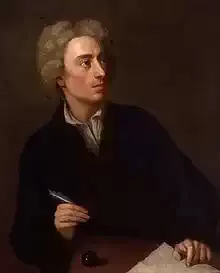
Alexander Pope
An Essay on Man in Four Epistles: Epistle 1
To Henry St. John, Lord Bolingbroke
Awake, my St. John! leave all meaner things
To low ambition, and the pride of kings.
Let us (since life can little more supply
Than just to look about us and to die)
Expatiate free o'er all this scene of man;
A mighty maze! but not without a plan;
A wild, where weeds and flow'rs promiscuous shoot;
Or garden, tempting with forbidden fruit.
Together let us beat this ample field,
Try what the open, what the covert yield;
The latent tracts, the giddy heights explore
Of all who blindly creep, or sightless soar;
Eye Nature's walks, shoot folly as it flies,
And catch the manners living as they rise;
Laugh where we must, be candid where we can;
But vindicate the ways of God to man.I.
Say first, of God above, or man below,
What can we reason, but from what we know?
Of man what see we, but his station here,
From which to reason, or to which refer?
Through worlds unnumber'd though the God be known,
'Tis ours to trace him only in our own.
He, who through vast immensity can pierce,
See worlds on worlds compose one universe,
Observe how system into system runs,
What other planets circle other suns,
What varied being peoples ev'ry star,
May tell why Heav'n has made us as we are.
But of this frame the bearings, and the ties,
The strong connections, nice dependencies,
Gradations just, has thy pervading soul
Look'd through? or can a part contain the whole?
Is the great chain, that draws all to agree,
And drawn supports, upheld by God, or thee?II.
Presumptuous man! the reason wouldst thou find,
Why form'd so weak, so little, and so blind?
First, if thou canst, the harder reason guess,
Why form'd no weaker, blinder, and no less?
Ask of thy mother earth, why oaks are made
Taller or stronger than the weeds they shade?
Or ask of yonder argent fields above,
Why Jove's satellites are less than Jove?
Of systems possible, if 'tis confest
That Wisdom infinite must form the best,
Where all must full or not coherent be,
And all that rises, rise in due degree;
Then, in the scale of reas'ning life, 'tis plain
There must be somewhere, such a rank as man:
And all the question (wrangle e'er so long)
Is only this, if God has plac'd him wrong?
Respecting man, whatever wrong we call,
May, must be right, as relative to all.
In human works, though labour'd on with pain,
A thousand movements scarce one purpose gain;
In God's, one single can its end produce;
Yet serves to second too some other use.
So man, who here seems principal alone,
Perhaps acts second to some sphere unknown,
Touches some wheel, or verges to some goal;
'Tis but a part we see, and not a whole.
When the proud steed shall know why man restrains
His fiery course, or drives him o'er the plains:
When the dull ox, why now he breaks the clod,
Is now a victim, and now Egypt's God:
Then shall man's pride and dulness comprehend
His actions', passions', being's, use and end;
Why doing, suff'ring, check'd, impell'd; and why
This hour a slave, the next a deity.
Then say not man's imperfect, Heav'n in fault;
Say rather, man's as perfect as he ought:
His knowledge measur'd to his state and place;
His time a moment, and a point his space.
If to be perfect in a certain sphere,
What matter, soon or late, or here or there?
The blest today is as completely so,
As who began a thousand years ago.III.
Heav'n from all creatures hides the book of fate,
All but the page prescrib'd, their present state:
From brutes what men, from men what spirits know:
Or who could suffer being here below?
The lamb thy riot dooms to bleed today,
Had he thy reason, would he skip and play?
Pleas'd to the last, he crops the flow'ry food,
And licks the hand just rais'd to shed his blood.
Oh blindness to the future! kindly giv'n,
That each may fill the circle mark'd by Heav'n:
Who sees with equal eye, as God of all,
A hero perish, or a sparrow fall,
Atoms or systems into ruin hurl'd,
And now a bubble burst, and now a world.
Hope humbly then; with trembling pinions soar;
Wait the great teacher Death; and God adore.
What future bliss, he gives not thee to know,
But gives that hope to be thy blessing now.
Hope springs eternal in the human breast:
Man never is, but always to be blest:
The soul, uneasy and confin'd from home,
Rests and expatiates in a life to come.
Lo! the poor Indian, whose untutor'd mind
Sees God in clouds, or hears him in the wind;
His soul, proud science never taught to stray
Far as the solar walk, or milky way;
Yet simple nature to his hope has giv'n,
Behind the cloud topp'd hill, an humbler heav'n;
Some safer world in depth of woods embrac'd,
Some happier island in the wat'ry waste,
Where slaves once more their native land behold,
No fiends torment, no Christians thirst for gold.
To be, contents his natural desire,
He asks no angel's wing, no seraph's fire;
But thinks, admitted to that equal sky,
His faithful dog shall bear him company.IV.
Go, wiser thou! and, in thy scale of sense
Weigh thy opinion against Providence;
Call imperfection what thou fanciest such,
Say, here he gives too little, there too much:
Destroy all creatures for thy sport or gust,
Yet cry, if man's unhappy, God's unjust;
If man alone engross not Heav'n's high care,
Alone made perfect here, immortal there:
Snatch from his hand the balance and the rod,
Rejudge his justice, be the God of God.
In pride, in reas'ning pride, our error lies;
All quit their sphere, and rush into the skies.
Pride still is aiming at the blest abodes,
Men would be angels, angels would be gods.
Aspiring to be gods, if angels fell,
Aspiring to be angels, men rebel:
And who but wishes to invert the laws
Of order, sins against th' Eternal Cause.V.
Ask for what end the heav'nly bodies shine,
Earth for whose use? Pride answers, " 'Tis for mine:
For me kind Nature wakes her genial pow'r,
Suckles each herb, and spreads out ev'ry flow'r;
Annual for me, the grape, the rose renew,
The juice nectareous, and the balmy dew;
For me, the mine a thousand treasures brings;
For me, health gushes from a thousand springs;
Seas roll to waft me, suns to light me rise;
My foot-stool earth, my canopy the skies."
But errs not Nature from this gracious end,
From burning suns when livid deaths descend,
When earthquakes swallow, or when tempests sweep
Towns to one grave, whole nations to the deep?
"No, ('tis replied) the first Almighty Cause
Acts not by partial, but by gen'ral laws;
Th' exceptions few; some change since all began:
And what created perfect?"--Why then man?
If the great end be human happiness,
Then Nature deviates; and can man do less?
As much that end a constant course requires
Of show'rs and sunshine, as of man's desires;
As much eternal springs and cloudless skies,
As men for ever temp'rate, calm, and wise.
If plagues or earthquakes break not Heav'n's design,
Why then a Borgia, or a Catiline?
Who knows but he, whose hand the lightning forms,
Who heaves old ocean, and who wings the storms;
Pours fierce ambition in a Cæsar's mind,
Or turns young Ammon loose to scourge mankind?
From pride, from pride, our very reas'ning springs;
Account for moral, as for nat'ral things:
Why charge we Heav'n in those, in these acquit?
In both, to reason right is to submit.
Better for us, perhaps, it might appear,
Were there all harmony, all virtue here;
That never air or ocean felt the wind;
That never passion discompos'd the mind.
But ALL subsists by elemental strife;
And passions are the elements of life.
The gen'ral order, since the whole began,
Is kept in nature, and is kept in man.VI.
What would this man? Now upward will he soar,
And little less than angel, would be more;
Now looking downwards, just as griev'd appears
To want the strength of bulls, the fur of bears.
Made for his use all creatures if he call,
Say what their use, had he the pow'rs of all?
Nature to these, without profusion, kind,
The proper organs, proper pow'rs assign'd;
Each seeming want compensated of course,
Here with degrees of swiftness, there of force;
All in exact proportion to the state;
Nothing to add, and nothing to abate.
Each beast, each insect, happy in its own:
Is Heav'n unkind to man, and man alone?
Shall he alone, whom rational we call,
Be pleas'd with nothing, if not bless'd with all?
The bliss of man (could pride that blessing find)
Is not to act or think beyond mankind;
No pow'rs of body or of soul to share,
But what his nature and his state can bear.
Why has not man a microscopic eye?
For this plain reason, man is not a fly.
Say what the use, were finer optics giv'n,
T' inspect a mite, not comprehend the heav'n?
Or touch, if tremblingly alive all o'er,
To smart and agonize at ev'ry pore?
Or quick effluvia darting through the brain,
Die of a rose in aromatic pain?
If nature thunder'd in his op'ning ears,
And stunn'd him with the music of the spheres,
How would he wish that Heav'n had left him still
The whisp'ring zephyr, and the purling rill?
Who finds not Providence all good and wise,
Alike in what it gives, and what denies?VII.
Far as creation's ample range extends,
The scale of sensual, mental pow'rs ascends:
Mark how it mounts, to man's imperial race,
From the green myriads in the peopled grass:
What modes of sight betwixt each wide extreme,
The mole's dim curtain, and the lynx's beam:
Of smell, the headlong lioness between,
And hound sagacious on the tainted green:
Of hearing, from the life that fills the flood,
To that which warbles through the vernal wood:
The spider's touch, how exquisitely fine!
Feels at each thread, and lives along the line:
In the nice bee, what sense so subtly true
From pois'nous herbs extracts the healing dew?
How instinct varies in the grov'lling swine,
Compar'd, half-reas'ning elephant, with thine!
'Twixt that, and reason, what a nice barrier;
For ever sep'rate, yet for ever near!
Remembrance and reflection how allied;
What thin partitions sense from thought divide:
And middle natures, how they long to join,
Yet never pass th' insuperable line!
Without this just gradation, could they be
Subjected, these to those, or all to thee?
The pow'rs of all subdu'd by thee alone,
Is not thy reason all these pow'rs in one?VIII.
See, through this air, this ocean, and this earth,
All matter quick, and bursting into birth.
Above, how high, progressive life may go!
Around, how wide! how deep extend below!
Vast chain of being, which from God began,
Natures ethereal, human, angel, man,
Beast, bird, fish, insect! what no eye can see,
No glass can reach! from infinite to thee,
From thee to nothing!--On superior pow'rs
Were we to press, inferior might on ours:
Or in the full creation leave a void,
Where, one step broken, the great scale's destroy'd:
From nature's chain whatever link you strike,
Tenth or ten thousandth, breaks the chain alike.
And, if each system in gradation roll
Alike essential to th' amazing whole,
The least confusion but in one, not all
That system only, but the whole must fall.
Let earth unbalanc'd from her orbit fly,
Planets and suns run lawless through the sky;
Let ruling angels from their spheres be hurl'd,
Being on being wreck'd, and world on world;
Heav'n's whole foundations to their centre nod,
And nature trembles to the throne of God.
All this dread order break--for whom? for thee?
Vile worm!--Oh madness, pride, impiety!IX.
What if the foot ordain'd the dust to tread,
Or hand, to toil, aspir'd to be the head?
What if the head, the eye, or ear repin'd
To serve mere engines to the ruling mind?
Just as absurd for any part to claim
To be another, in this gen'ral frame:
Just as absurd, to mourn the tasks or pains,
The great directing Mind of All ordains.
All are but parts of one stupendous whole,
Whose body Nature is, and God the soul;
That, chang'd through all, and yet in all the same,
Great in the earth, as in th' ethereal frame,
Warms in the sun, refreshes in the breeze,
Glows in the stars, and blossoms in the trees,
Lives through all life, extends through all extent,
Spreads undivided, operates unspent,
Breathes in our soul, informs our mortal part,
As full, as perfect, in a hair as heart;
As full, as perfect, in vile man that mourns,
As the rapt seraph that adores and burns;
To him no high, no low, no great, no small;
He fills, he bounds, connects, and equals all.X.
Cease then, nor order imperfection name:
Our proper bliss depends on what we blame.
Know thy own point: This kind, this due degree
Of blindness, weakness, Heav'n bestows on thee.
Submit.--In this, or any other sphere,
Secure to be as blest as thou canst bear:
Safe in the hand of one disposing pow'r,
Or in the natal, or the mortal hour.
All nature is but art, unknown to thee;
All chance, direction, which thou canst not see;
All discord, harmony, not understood;
All partial evil, universal good:
And, spite of pride, in erring reason's spite,
One truth is clear, Whatever is, is right.
454

Walt Whitman
As I Walk These Broad, Majestic Days
AS I walk these broad, majestic days of peace,
(For the war, the struggle of blood finish'd, wherein, O terrific
Ideal!
Against vast odds, having gloriously won,
Now thou stridest on--yet perhaps in time toward denser wars,
Perhaps to engage in time in still more dreadful contests, dangers,
Longer campaigns and crises, labors beyond all others;
--As I walk solitary, unattended,
Around me I hear that eclat of the world--politics, produce,
The announcements of recognized things--science,
The approved growth of cities, and the spread of inventions.
I see the ships, (they will last a few years,)
The vast factories, with their foremen and workmen,
And here the indorsement of all, and do not object to it.
But I too announce solid things;
Science, ships, politics, cities, factories, are not nothing--I watch
them,
Like a grand procession, to music of distant bugles, pouring,
triumphantly moving--and grander heaving in sight;
They stand for realities--all is as it should be.
Then my realities;
What else is so real as mine?
Libertad, and the divine average--Freedom to every slave on the face
of the earth,
The rapt promises and luminé of seers--the spiritual world--these
centuries lasting songs,
And our visions, the visions of poets, the most solid announcements
of any.
For we support all, fuse all,
After the rest is done and gone, we remain;
There is no final reliance but upon us;
Democracy rests finally upon us (I, my brethren, begin it,)
And our visions sweep through eternity.
457

William Butler Yeats
Tom O'Roughley
'THOUGH logic-choppers rule the town,
And every man and maid and boy
Has marked a distant object down,
An aimless joy is a pure joy,'
Or so did Tom O'Roughley say
That saw the surges running by.
'And wisdom is a butterfly
And not a gloomy bird of prey.
'If little planned is little sinned
But little need the grave distress.
What's dying but a second wind?
How but in zig-zag wantonness
Could trumpeter Michael be so brave?'
Or something of that sort he said,
'And if my dearest friend were dead
I'd dance a measure on his grave.'
454
Rudyard Kipling
The Inventor
R. W. Emerson
Time and Space decreed his lot,
But little Man was quick to note:
When Time and Space said Man might not,
Bravely he answered, "Nay! I mote."
I looked on old New England.
Time and Space stood fast.
Men built altars to Distance
At every mile they passed.
Yet sleek with oil, a Force was hid
Making mock of all they did,
Ready at the appointed hour
To yield up to Prometheus
The secular and well-drilled Power
The Gods secreted thus.
And over high Wantastiquer
Emulous my lightnings ran,
Unregarded but after,
To fall in with my plan.
I beheld two ministries,
One of air and one of earth--
At a thought I married these,
And my New Age came to birth!
For rarely my purpose errs
Though oft it seems to pause,
And rods and cylinders
Obey my planets' laws.
Oil I drew from the well,
And Franklin's spark from its blue;
Time and Distance fell,
And Man went forth anew.
On the prairie and in the street
So long as my chariots roll
I bind wings to Adam's feet,
And, presently, to his soul!
451
William Blake
Milton: The Sky is an Immortal Tent Built by the Sons of Los
The sky is an immortal tent built by the Sons of Los:
And every space that a man views around his dwelling-place
Standing on his own roof or in his garden on a mount
Of twenty-five cubits in height, such space is his universe:
And on its verge the sun rises and sets, the clouds bow
To meet the flat earth and the sea in such an order'd space:
The starry heavens reach no further, but here bend and set
On all sides, and the two Poles turn on their valves of gold:
And if he moves his dwelling-place, his heavens also move
Where'er he goes, and all his neighbourhood bewail his loss.
Such are the spaces called Earth and such its dimension.
As to that false appearance which appears to the reasoner
As of a globe rolling through voidness, it is a delusion of Ulro.
The microscope knows not of this nor the telescope: they alter
The ratio of the spectator's organs, but leave objects untouch'd.
For every space larger than a red globule of Man's blood
Is visionary, and is created by the Hammer of Los;
And every space smaller than a globule of Man's blood opens
Into Eternity of which this vegetable Earth is but a shadow.
The red globule is the unwearied sun by Los created
To measure time and space to mortal men every morning
445