
Humor e Ironia

Rudyard Kipling
The Mare's Nest
Jane Austen Beecher Stowe de Rouse
Was good beyond all earthly need;
But, on the other hand, her spouse
Was very, very bad indeed.
He smoked cigars, called churches slow,
And raced -- but this she did not know.
For Belial Machiavelli kept
The little fact a secret, and,
Though o'er his minor sins she wept,
Jane Austen did not understand
That Lilly -- thirteen-two and bay
Absorbed one-half her husband's pay.
She was so good, she made hime worse;
(Some women are like this, I think;)
He taught her parrot how to curse,
Her Assam monkey how to drink.
He vexed her righteous soul until
She went up, and he went down hill.
Then came the crisis, strange to say,
Which turned a good wife to a better.
A telegraphic peon, one day,
Brought her -- now, had it been a letter
For Belial Machiavelli, I
Know Jane would just have let it lie.
But 'twas a telegram instead,
Marked "urgent," and her duty plain
To open it. Jane Austen read:
"Your Lilly's got a cough again.
Can't understand why she is kept
At your expense." Jane Austen wept.
It was a misdirected wire.
Her husband was at Shaitanpore.
She spread her anger, hot as fire,
Through six thin foreign sheets or more.
Sent off that letter, wrote another
To her solicitor -- and mother.
Then Belial Machiavelli saw
Her error and, I trust, his own,
Wired to the minion of the Law,
And traveled wifeward -- not alone.
For Lilly -- thirteen-two and bay --
Came in a horse-box all the way.
There was a scene -- a weep or two --
With many kisses. Austen Jane
Rode Lilly all the season through,
And never opened wires again.
She races now with Belial. This
Is very sad, but so it is.
478
Rudyard Kipling
To the Companions
How comes it that, at even-tide,
When level beams should show most truth,
Man, failing, takes unfailing pride
In memories of his frolic youth?
Venus and Liber fill their hour;
The games engage, the law-courts prove;
Till hardened life breeds love of power
Or Avarice, Age's final love.
Yet at the end, these comfort not--
Nor any triumph Fate decrees--
Compared with glorious, unforgot--
Ten innocent enormities
Of frontless days before the beard,
When, instant on the casual jest,
The God Himself of Mirth appeared
And snatched us to His heaving breast
And we--not caring who He was
But certain He would come again--
Accepted all He brought to pass
As Gods accept the lives of men...
Then He withdrew from sight and speech,
Nor left a shrine. How comes it now,
While Charon's keel grates on the beach,
He calls so clear: "Rememberest thou?"
474
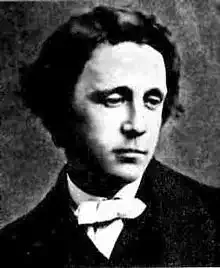
Lewis Carroll
Another Acrostic ( In the style of Father William )
"Are you deaf, Father William!" the young man said,
"Did you hear what I told you just now?
"Excuse me for shouting! Don't waggle your head
"Like a blundering, sleepy old cow!
"A little maid dwelling in Wallington Town,
"Is my friend, so I beg to remark:
"Do you think she'd be pleased if a book were sent down
"Entitled 'The Hunt of the Snark?'"
"Pack it up in brown paper!" the old man cried,
"And seal it with oliveanddove.
"I command you to do it!" he added with pride,
"Nor forget, my good fellow to send her beside
"Easter Greetings, and give her my love."
468

Edward Lear
The Duck and the Kangaroo
Said the Duck to the Kangaroo,
'Good gracious! how you hop!
Over the fields and the water too,
As if you never would stop!
My life is a bore in this nasty pond,
And I long to go out in the world beyond!
I wish I could hop like you!'
Said the Duck to the Kangaroo.
'Please give me a ride on your back!'
Said the Duck to the Kangaroo.
'I would sit quite still, and say nothing but 'Quack',
The whole of the long day through!
And we'd go to the Dee, and the Jelly Bo Lee,
Over the land, and over the sea;
Please take me a ride! O do!'
Said the Duck to the Kangaroo.
Said the Kangaroo to the Duck,
'This requires some little reflection;
Perhaps on the whole it might bring me luck,
And there seems but one objection,
Which is, if you'll let me speak so bold,
Your feet are unpleasantly wet and cold,
And would probably give me the roo-
Matiz!' said the Kangaroo.
Said the Duck, 'As I sat on the rocks,
I have thought over that completely,
And I bought four pairs of worsted socks
Which fit my web-feet neatly.
And to keep out the cold I've bought a cloak,
And every day a cigar I'll smoke,
All to follow my own dear true
Love of a Kangaroo!'
Said the Kangaroo, 'I'm ready!
'All in the moonlight pale;
'But to balance me well, dear Duck, sit steady!
'And quite at the end of my tail!'
So away they went with a hop and a bound,
And they hopped the whole world three times round;
And who so happy - O who,
As the Duck and the Kangaroo?
469

William Blake
Why Was Cupid a Boy
Why was Cupid a boy,
And why a boy was he?
He should have been a girl,
For aught that I can see.
For he shoots with his bow,
And the girl shoots with her eye,
And they both are merry and glad,
And laugh when we do cry.
And to make Cupid a boy
Was the Cupid girl's mocking plan;
For a boy can't interpret the thing
Till he is become a man.
And then he's so pierc'd with cares,
And wounded with arrowy smarts,
That the whole business of his life
Is to pick out the heads of the darts.
'Twas the Greeks' love of war
Turn'd Love into a boy,
And woman into a statue of stone--
And away fled every joy.
465

Lord Byron
Epigram, On The Braziers' Company Having Resolved To Present An Address To Queen Caroline
The braziers, it seems, are preparing to pass
An address, and present it themselves all in brass,
A
superfluous pageantfor,
by the Lord Harry!
They'll find where they're going much more than they carry.
An address, and present it themselves all in brass,
A
superfluous pageantfor,
by the Lord Harry!
They'll find where they're going much more than they carry.
454

Walt Whitman
Solid, Ironical, Rolling Orb
SOLID, ironical, rolling orb!
Master of all, and matter of fact!--at last I accept your terms;
Bringing to practical, vulgar tests, of all my ideal dreams,
And of me, as lover and hero.
Master of all, and matter of fact!--at last I accept your terms;
Bringing to practical, vulgar tests, of all my ideal dreams,
And of me, as lover and hero.
435

Kabir
How do you
How do you,
Asks the chief of police,
Patrol a city
Where the butcher shops
Are guarded by vultures;
Where bulls get pregnant,
Cows are barren,
And calves give milk
Three times a day;
Where mice are boatmen
And tomcats the boats
They row;
Where frogs keep snakes
As watchdogs,
And jackals
Go after lions?
Does anyone know
What I’m talking about?
Says Kabir.
426
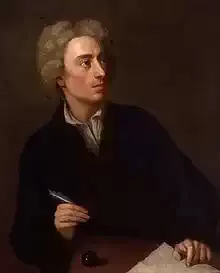
Alexander Pope
The Dunciad: Book II.
High on a gorgeous seat, that far out-shone
Henley's gilt tub, or Flecknoe's Irish throne,
Or that where on her Curlls the public pours,
All-bounteous, fragrant grains and golden showers,
Great Cibber sate: the proud Parnassian sneer,
The conscious simper, and the jealous leer,
Mix on his look: all eyes direct their rays
On him, and crowds turn coxcombs as they gaze.
His peers shine round him with reflected grace,
New edge their dulness, and new bronze their face.
So from the sun's broad beam, in shallow urns
Heaven's twinkling sparks draw light, and point their horns.
Not with more glee, by hands Pontific crown'd,
With scarlet hats wide-waving circled round,
Rome in her Capitol saw Querno sit,
Throned on seven hills, the Antichrist of wit.
And now the queen, to glad her sons, proclaims
By herald hawkers, high heroic games.
They summon all her race: an endless band
Pours forth, and leaves unpeopled half the land.
A motley mixture! in long wigs, in bags,
In silks, in crapes, in garters, and in rags,
From drawing-rooms, from colleges, from garrets,
On horse, on foot, in hacks, and gilded chariots:
All who true dunces in her cause appear'd,
And all who knew those dunces to reward.
Amid that area wide they took their stand,
Where the tall maypole once o'er-looked the Strand,
But now (so Anne and piety ordain)
A church collects the saints of Drury Lane.
With authors, stationers obey'd the call,
(The field of glory is a field for all).
Glory and gain the industrious tribe provoke;
And gentle Dulness ever loves a joke.
A poet's form she placed before their eyes,
And bade the nimblest racer seize the prize;
No meagre, muse-rid mope, adust and thin,
In a dun night-gown of his own loose skin;
But such a bulk as no twelve bards could raise,
Twelve starveling bards of these degenerate days.
All as a partridge plump, full-fed, and fair,
She form'd this image of well-bodied air;
With pert flat eyes she window'd well its head;
A brain of feathers, and a heart of lead;
And empty words she gave, and sounding strain,
But senseless, lifeless! idol void and vain!
Never was dash'd out, at one lucky hit,
A fool, so just a copy of a wit;
So like, that critics said, and courtiers swore,
A wit it was, and call'd the phantom More.
All gaze with ardour: some a poet's name,
Others a sword-knot and laced suit inflame.
But lofty Lintot in the circle rose:
'This prize is mine; who tempt it are my foes;
With me began this genius, and shall end.'
He spoke: and who with Lintot shall contend?
Fear held them mute. Alone, untaught to fear,
Stood dauntless Curll: 'Behold that rival here!
The race by vigour, not by vaunts is won;
So take the hindmost Hell.' He said, and run.
Swift as a bard the bailiff leaves behind,
He left huge Lintot, and out-stripp'd the wind.
As when a dab-chick waddles through the copse
On feet and wings, and flies, and wades, and hops:
So labouring on, with shoulders, hands, and head,
Wide as a wind-mill all his figure spread,
With arms expanded Bernard rows his state,
And left-legg'd Jacob seems to emulate.
Full in the middle way there stood a lake,
Which Curll's Corinna chanced that morn to make:
(Such was her wont, at early dawn to drop
Her evening cates before his neighbour's shop,)
Here fortuned Curll to slide; loud shout the band,
And Bernard! Bernard! rings through all the Strand.
Obscene with filth the miscreant lies bewray'd,
Fallen in the plash his wickedness had laid:
Then first (if poets aught of truth declare)
The caitiff vaticide conceived a prayer:
'Hear, Jove! whose name my bards and I adore,
As much at least as any god's, or more;
And him and his if more devotion warms,
Down with the Bible, up with the Pope's arms.'
A place there is, betwixt earth, air, and seas,
Where, from Ambrosia, Jove retires for ease.
There in his seat two spacious vents appear,
On this he sits, to that he leans his ear,
And hears the various vows of fond mankind;
Some beg an eastern, some a western wind:
All vain petitions, mounting to the sky,
With reams abundant this abode supply;
Amused he reads, and then returns the bills
Sign'd with that ichor which from gods distils.
In office here fair Cloacina stands,
And ministers to Jove with purest hands.
Forth from the heap she pick'd her votary's prayer,
And placed it next him, a distinction rare!
Oft had the goddess heard her servant's call,
From her black grottos near the Temple-wall,
Listening delighted to the jest unclean
Of link-boys vile, and watermen obscene;
Where as he fish'd her nether realms for wit,
She oft had favour'd him, and favours yet.
Renew'd by ordure's sympathetic force,
As oil'd with magic juices for the course,
Vigorous he rises; from the effluvia strong
Imbibes new life, and scours and stinks along;
Repasses Lintot, vindicates the race,
Nor heeds the brown dishonours of his face.
And now the victor stretch'd his eager hand
Where the tall Nothing stood, or seem'd to stand;
A shapeless shade, it melted from his sight,
Like forms in clouds, or visions of the night.
To seize his papers, Curll, was next thy care;
His papers light, fly diverse, toss'd in air;
Songs, sonnets, epigrams the winds uplift,
And whisk them back to Evans, Young, and Swift.
The embroider'd suit at least he deem'd his prey,
That suit an unpaid tailor snatch'd away.
No rag, no scrap, of all the beau, or wit,
That once so flutter'd, and that once so writ.
Heaven rings with laughter: of the laughter vain,
Dulness, good queen, repeats the jest again.
Three wicked imps, of her own Grub Street choir,
She deck'd like Congreve, Addison, and Prior;
Mears, Warner, Wilkins run: delusive thought!
Breval, Bond, Bezaleel, the varlets caught.
Curll stretches after Gay, but Gay is gone,
He grasps an empty Joseph for a John:
So Proteus, hunted in a nobler shape,
Became, when seized, a puppy, or an ape.
To him the goddess: 'Son! thy grief lay down,
And turn this whole illusion on the town:
As the sage dame, experienced in her trade,
By names of toasts retails each batter'd jade;
(Whence hapless Monsieur much complains at Paris
Of wrongs from duchesses and Lady Maries
Be thine, my stationer! this magic gift;
Cook shall be Prior, and Concanen, Swift:
So shall each hostile name become our own,
And we too boast our Garth and Addison.'
With that she gave him (piteous of his case,
Yet smiling at his rueful length of face)
A shaggy tapestry, worthy to be spread
On Codrus' old, or Dunton's modern bed;
Instructive work! whose wry-mouth'd portraiture
Display'd the fates her confessors endure.
Earless on high, stood unabash'd Defoe,
And Tutchin flagrant from the scourge below.
There Ridpath, Roper, cudgell'd might ye view,
The very worsted still look'd black and blue.
Himself among the storied chiefs he spies,
As, from the blanket, high in air he flies,
And oh! (he cried) what street, what lane but knows
Our purgings, pumpings, blanketings, and blows?
In every loom our labours shall be seen,
And the fresh vomit run for ever green!
See in the circle next, Eliza placed,
Two babes of love close clinging to her waist;
Fair as before her works she stands confess'd,
In flowers and pearls by bounteous Kirkall dress'd.
The goddess then: 'Who best can send on high
The salient spout, far-streaming to the sky;
His be yon Juno of majestic size,
With cow-like udders, and with ox-like eyes.
This China Jordan let the chief o'ercome
Replenish, not ingloriously, at home.'
Osborne and Curll accept the glorious strife,
(Though this his son dissuades, and that his wife
One on his manly confidence relies,
One on his vigour and superior size.
First Osborne lean'd against his letter'd post;
It rose, and labour'd to a curve at most.
So Jove's bright bow displays its watery round
(Sure sign, that no spectator shall be drown'd),
A second effort brought but new disgrace,
The wild meander wash'd the artist's face:
Thus the small jet, which hasty hands unlock,
Spurts in the gardener's eyes who turns the cock.
Not so from shameless Curll; impetuous spread
The stream, and smoking flourish'd o'er his head.
So (famed like thee for turbulence and horns)
Eridanus his humble fountain scorns;
Through half the heavens he pours the exalted urn;
His rapid waters in their passage burn.
Swift as it mounts, all follow with their eyes:
Still happy impudence obtains the prize.
Thou triumph'st, victor of the high-wrought day,
And the pleased dame, soft-smiling, lead'st away.
Osborne, through perfect modesty o'ercome,
Crown'd with the Jordan, walks contented home.
But now for authors nobler palms remain;
Room for my lord! three jockeys in his train;
Six huntsmen with a shout precede his chair:
He grins, and looks broad nonsense with a stare.
His honour's meaning Dulness thus express'd,
'He wins this patron, who can tickle best.'
He chinks his purse, and takes his seat of state:
With ready quills the dedicators wait;
Now at his head the dext'rous task commence,
And, instant, fancy feels the imputed sense;
Now gentle touches wanton o'er his face,
He struts Adonis, and affects grimace:
Rolli the feather to his ear conveys,
Then his nice taste directs our operas:
Bentley his mouth with classic flattery opes,
And the puff'd orator bursts out in tropes.
But Welsted most the poet's healing balm
Strives to extract from his soft, giving palm;
Unlucky Welsted! thy unfeeling master,
The more thou ticklest, gripes his fist the faster.
While thus each hand promotes the pleasing pain,
And quick sensations skip from vein to vein;
A youth unknown to Phoebus, in despair,
Puts his last refuge all in Heaven and prayer.
What force have pious vows! The Queen of Love
Her sister sends, her votaress, from above.
As taught by Venus, Paris learn'd the art
To touch Achilles' only tender part;
Secure, through her, the noble prize to carry,
He marches off, his Grace's secretary.
'Now turn to different sports (the goddess cries),
And learn, my sons, the wondrous power of noise.
To move, to raise, to ravish every heart,
With Shakspeare's nature, or with Jonson's art,
Let others aim: 'tis yours to shake the soul
With thunder rumbling from the mustard bowl,
With horns and trumpets now to madness swell,
Now sink in sorrows with a tolling bell;
Such happy arts attention can command,
When fancy flags, and sense is at a stand.
Improve we these. Three cat-calls be the bribe
Of him whose chattering shames the monkey tribe:
And his this drum whose hoarse heroic bass
Drowns the loud clarion of the braying ass.'
Now thousand tongues are heard in one loud din:
The monkey-mimics rush discordant in;
'Twas chattering, grinning, mouthing, jabbering all,
And noise and Norton, brangling and Breval,
Dennis and dissonance, and captious art,
And snip-snap short, and interruption smart,
And demonstration thin, and theses thick,
And major, minor, and conclusion quick.
'Hold' (cried the queen) 'a cat-call each shall win;
Equal your merits! equal is your din!
But that this well-disputed game may end,
Sound forth, nay brayers, and the welkin rend.'
As when the long-ear'd milky mothers wait
At some sick miser's triple-bolted gate,
For their defrauded, absent foals they make
A moan so loud, that all the guild awake;
Sore sighs Sir Gilbert, starting at the bray,
From dreams of millions, and three groats to pay.
So swells each windpipe; ass intones to ass,
Harmonic twang! of leather, horn, and brass;
Such as from labouring lungs the enthusiast blows,
High sound, attemper'd to the vocal nose,
Or such as bellow from the deep divine;
There, Webster! peal'd thy voice, and, Whitfield! thine.
But far o'er all, sonorous Blackmore's strain;
Walls, steeples, skies, bray back to him again.
In Tottenham fields, the brethren, with amaze,
Prick all their ears up, and forget to graze;
'Long Chancery Lane retentive rolls the sound,
And courts to courts return it round and round;
Thames wafts it thence to Rufus' roaring hall,
And Hungerford re-echoes bawl for bawl.
All hail him victor in both gifts of song,
Who sings so loudly, and who sings so long.
This labour past, by Bridewell all descend,
(As morning prayer, and flagellation end)
To where Fleet-ditch with disemboguing streams
Rolls the large tribute of dead dogs to Thames,
The king of dikes! than whom no sluice of mud
With deeper sable blots the silver flood.
'Here strip, my children! here at once leap in,
Here prove who best can dash through thick and thin,
And who the most in love of dirt excel,
Or dark dexterity of groping well.
Who flings most filth, and wide pollutes around
The stream, be his the weekly journals bound;
A pig of lead to him who dives the best;
A peck of coals a-piece shall glad the rest.'
In naked majesty Oldmixon stands,
And, Milo-like, surveys his arms and hands;
Then sighing, thus, 'And am I now threescore?
Ah why, ye gods! should two and two make four?'
He said, and climb'd a stranded lighter's height,
Shot to the black abyss, and plunged downright.
The senior's judgment all the crowd admire,
Who but to sink the deeper, rose the higher.
Next Smedley dived; slow circles dimpled o'er
The quaking mud, that closed, and oped no more.
All look, all sigh, and call on Smedley lost;
'Smedley!' in vain, resounds through all the coast.
Then Hill essay'd; scarce vanish'd out of sight,
He buoys up instant, and returns to light:
He bears no token of the sable streams,
And mounts far off among the swans of Thames.
True to the bottom, see Concanen creep,
A cold, long-winded, native of the deep:
If perseverance gain the diver's prize,
Not everlasting Blackmore this denies:
No noise, no stir, no motion can'st thou make,
The unconscious stream sleeps o'er thee like a lake.
Next plunged a feeble, but a desperate pack,
With each a sickly brother at his back:
Sons of a day! just buoyant on the flood,
Then number'd with the puppies in the mud.
Ask ye their names? I could as soon disclose
The names of these blind puppies as of those.
Fast by, like Niobe (her children gone)
Sits Mother Osborne, stupified to stone!
And monumental brass this record bears,
'These are,-ah no! these were, the gazetteers!'
Not so bold Arnall; with a weight of skull,
Furious he dives, precipitately dull.
Whirlpools and storms his circling arm invest,
With all the might of gravitation bless'd.
No crab more active in the dirty dance,
Downward to climb, and backward to advance.
He brings up half the bottom on his head,
And loudly claims the journals and the lead.
The plunging Prelate, and his ponderous Grace,
With holy envy gave one layman place.
When, lo! a burst of thunder shook the flood,
Slow rose a form, in majesty of mud:
Shaking the horrors of his sable brows,
And each ferocious feature grim with ooze.
Greater he looks, and more than mortal stares:
Then thus the wonders of the deep declares.
First he relates, how sinking to the chin,
Smit with his mien, the mud-nymphs suck'd him in:
How young Lutetia, softer than the down,
Nigrina black, and Merdamante brown,
Vied for his love in jetty bowers below,
As Hylas fair was ravish'd long ago.
Then sung, how, shown him by the nut-brown maids;
A branch of Styx here rises from the shades,
That, tinctured as it runs with Lethe's streams,
And wafting vapours from the land of dreams,
(As under seas Alpheus' secret sluice
Bears Pisa's offerings to his Arethuse,)
Pours into Thames: and hence the mingled wave
Intoxicates the pert, and lulls the grave:
Here brisker vapours o'er the Temple creep,
There, all from Paul's to Aldgate drink and sleep.
Thence to the banks where reverend bards repose,
They led him soft; each reverend bard arose;
And Milbourn chief, deputed by the rest,
Gave him the cassock, surcingle, and vest.
'Receive (he said) these robes which once were mine,
Dulness is sacred in a sound divine.'
He ceased, and spread the robe; the crowd confess
The reverend Flamen in his lengthen'd dress.
Around him wide a sable army stand,
A low-born, cell-bred, selfish, servile band,
Prompt or to guard or stab, to saint or damn,
Heaven's Swiss, who fight for any god, or man.
Through Lud's famed gates, along the well-known Fleet
Rolls the black troop, and overshades the street,
Till showers of sermons, characters, essays,
In circling fleeces whiten all the ways:
So clouds replenish'd from some bog below,
Mount in dark volumes, and descend in snow.
Here stopp'd the goddess; and in pomp proclaims
A gentler exercise to close the games.
'Ye critics! in whose heads, as equal scales,
I weigh what author's heaviness prevails,
Which most conduce to soothe the soul in slumbers,
My Henley's periods, or my Blackmore's numbers,
Attend the trial we propose to make:
If there be man, who o'er such works can wake,
Sleep's all-subduing charms who dares defy,
And boasts Ulysses' ear with Argus' eye;
To him we grant our amplest powers to sit
Judge of all present, past, and future wit;
To cavil, censure, dictate, right or wrong,
Full and eternal privilege of tongue.'
Three college Sophs, and three pert Templars came,
The same their talents, and their tastes the same;
Each prompt to query, answer, and debate,
And smit with love of poesy and prate.
The ponderous books two gentle readers bring;
The heroes sit, the vulgar form a ring.
The clamorous crowd is hush'd with mugs of mum,
Till all, tuned equal, send a general hum.
Then mount the clerks, and in one lazy tone
Through the long, heavy, painful page drawl on;
Soft creeping, words on words, the sense compose,
At every line they stretch, they yawn, they doze.
As to soft gales top-heavy pines bow low
Their heads, and lift them as they cease to blow,
Thus oft they rear, and oft the head decline,
As breathe, or pause, by fits, the airs divine;
And now to this side, now to that they nod,
As verse or prose infuse the drowsy god.
Thrice Budgell aim'd to speak, but thrice suppress'd
By potent Arthur, knock'd his chin and breast.
Toland and Tindal, prompt at priests to jeer,
Yet silent bow'd to Christ's no kingdom here.
Who sate the nearest, by the words o'ercome,
Slept first; the distant nodded to the hum.
Then down are roll'd the books; stretch'd o'er 'em lies
Each gentle clerk, and, muttering, seals his eyes,
As what a Dutchman plumps into the lakes,
One circle first, and then a second makes;
What Dulness dropp'd among her sons impress'd
Like motion from one circle to the rest;
So from the midmost the nutation spreads
Round and more round, o'er all the sea of heads.
At last Centlivre felt her voice to fail,
Motteux himself unfinished left his tale,
Boyer the state, and Law the stage gave o'er,
Morgan and Mandeville could prate no more;
Norton, from Daniel and Ostroea sprung,
Bless'd with his father's front and mother's tongue,
Hung silent down his never-blushing head;
And all was hush'd, as Polly's self lay dead.
Thus the soft gifts of sleep conclude the day,
And stretch'd on bulks, as usual, poets lay.
Why should I sing what bards the nightly Muse
Did slumbering visit, and convey to stews;
Who prouder march'd, with magistrates in state,
To some famed round-house, ever open gate!
How Henley lay inspired beside a sink,
And to mere mortals seem'd a priest in drink;
While others, timely, to the neighbouring Fleet
(Haunt of the Muses!) made their safe retreat?
425

Ella Wheeler Wilcox
Shovel And Tongs
The Poker proposed to the shovel
That they should be man and wife,
'I think,' said he, 'that we could agree
As we journey along through life.'
The Shovel blushed as she answered,
'I thank you kindly, Mister,
But my promise belongs to the faithful Tongs,
So I only can be your sister.'
And when the couple were married
The Stove gave the Shovel away;
And it seemed too bad that the Poker, poor lad,
Was the Tongs' best man on that day.
But the Poker soon after was wedded
To the hearth broom, slender and slick;
And 'twas whispered about Mrs. Tongs was put out
Because he found comfort so quick.
423

Johann Wolfgang von Goethe
Coptic Song
LEAVE we the pedants to quarrel and strive,
Rigid and cautious the teachers to be!
All of the wisest men e'er seen alive
Smile, nod, and join in the chorus with me:
"Vain 'tis to wait till the dolt grows less silly!
Play then the fool with the fool, willy-nilly,--
Children of wisdom,--remember the word!"
Merlin the old, from his glittering grave,
When I, a stripling, once spoke to him,--gave
Just the same answer as that I've preferr'd;
"Vain 'tis to wait till the dolt grows less silly!
Play then the fool with the fool, willy-nilly,--
Children of wisdom,--remember the word!"
And on the Indian breeze as it booms,
And in the depths of Egyptian tombs,
Only the same holy saying I've heard:
"Vain 'tis to wait till the dolt grows less silly!
Play then the fool with the fool, willy-nilly,--
Children of wisdom,--remember the word!"
419
Johann Wolfgang von Goethe
The Maid Of The Mill's Treachery
WHENCE comes our friend so hastily,
When scarce the Eastern sky is grey?
Hath he just ceased, though cold it be,
In yonder holy spot to pray?
The brook appears to hem his path,
Would he barefooted o'er it go?
Why curse his orisons in wrath,
Across those heights beclad with snow?
Alas! his warm bed he bath left,
Where he had look'd for bliss, I ween;
And if his cloak too, had been reft,
How fearful his disgrace had been!
By yonder villain sorely press'd,
His wallet from him has been torn;
Our hapless friend has been undress'd,
Left well nigh naked as when born.
The reason why he came this road,
Is that he sought a pair of eyes,
Which, at the mill, as brightly glow'd
As those that are in Paradise.
He will not soon again be there;
From out the house he quickly hied,
And when he gain'd the open air,
Thus bitterly and loudly cried
'Within her gaze, so dazzling bright,
No word of treachery I could read;
She seem'd to see me with delight,
Yet plann'd e'en then this cruel deed!
Could I, when basking in her smile,
Dream of the treason in her breast?
She bade kind Cupid stay awhile,
And he was there, to make us blest.
'To taste of love's sweet ecstasy
Throughout the night, that endless seem'd,
And for her mother's help to cry
Only when morning sunlight beam'd!
A dozen of her kith and kin,
A very human flood, in-press'd
Her cousins came, her aunts peer'd in,
And uncles, brothers, and the rest.
'Then what a tumult, fierce and loud!
Each seem'd a beast of prey to be;
The maiden's honour all the crowd,
With fearful shout, demand of me.
Why should they, madmen-like, begin
To fall upon a guiltless youth?
For he who such a prize would win,
Far nimbler needs must be, in truth.
'The way to follow up with skill
His freaks, by love betimes is known:
He ne'er will leave, within a mill,
Sweet flowers for sixteen years alone.-
They stole my clothes away,-yes, all!
And tried my cloak besides to steal.
How strange that any house so small
So many rascals could conceal!
'Then I sprang up, and raved, and swore,
To force a passage through them there.
I saw the treacherous maid once more,
And she was still, alas, so fair
They all gave way before my wrath,
Wild outcries flew about pell-mell;
At length I managed to rush forth,
With voice of thunder, from that hell.
'As maidens of the town we fly,
We'll shun you maidens of the village;
Leave it to those of quality
Their humble worshippers to pillage.
Yet if ye are of practised skill,
And of all tender ties afraid,
Exchange your lovers, if ye will,
But never let them be betray'd.'
Thus sings he in the winter-night,
While not a blade of grass was green.
I laugh'd to see his piteous plight,
For it was well-deserved, I ween.
And may this be the fate of all,
Who treat by day their true loves ill,
And, with foolhardy daring, crawl
By night to Cupid's treacherous mill!
417
Rudyard Kipling
Bill 'Awkins
"'As anybody seen Bill 'Awkins?"
"Now 'ow in the devil would I know?"
"'E's taken my girl out walkin',
An' I've got to tell 'im so --
Gawd -- bless -- 'im!
I've got to tell 'im so."
"D'yer know what 'e's like, Bill 'Awkins?"
"Now what in the devil would I care?"
"'E's the livin', breathin' image of an organ-grinder's monkey,
With a pound of grease in 'is 'air --
Gawd -- bless -- 'im!
An' a pound o' grease in 'is 'air."
"An' s'pose you met Bill 'Awkins,
Now what in the devil 'ud ye do?"
"I'd open 'is cheek to 'is chin-strap buckle,
An' bung up 'is both eyes, too --
Gawd -- bless -- 'im!
An' bung up 'is both eyes, too!"
"Look 'ere, where 'e comes, Bill 'Awkins!
Now what in the devil will you say?"
"It isn't fit an' proper to be fightin' on a Sunday,
So I'll pass 'im the time o' day --
Gawd -- bless -- 'im!
I'll pass 'im the time o' day!"
417
Ella Wheeler Wilcox
Theory And Practice
The man of God stands, on the Sabbath-day,
Warning the sinners from the broad highway
That leads to death. He rolls his pious eye,
And tells how wily demons hidden lie
To spring upon the thoughtless souls who pass
Along. He lifts his hands, and cries, 'Alas!
That such things be! O sinners! pause;
Gird on God's armor; let the devil see
Thou hast espoused a high and holy cause,
And all his arts are powerless on thee.'
'Tis thus the man of God in warning cries,
And tears of heart-felt sorrow fill his eyes;
And then he doffs his surplice and his gown,
And calls for wine to wash his sorrow down.
Ah! follower of the meek and lowly One,
And is it thus that thou wouldst have men shun
The road to death? Is this the better way,
Of which thou tellest on the Sabbath-day?
This wine you sip to quench your pious thirst,
Of all the devil's arts, he reckons first.
And countless legions go down to the dead,
Slain soul and body by the demon red.
Is this the holy principle you teach?
Or shall men practise, while you only preach?
The righteous churchman reads a tale of strife,
One of those countless tragedies of city life;
He sighs, and shakes his head, and sighs again,
And thanks his God he's not as other men.
And then he sips his glass of ale or rum,
And wonders if the time shall ever come
When such things cease to be. I answer, 'When
You who bear the names of Christian men
Shall with your wines, and ales, and beers dispense,
And choose the motto, 'Total Abstinence.''
The politician sighs at the nation's debt,
And groans at his heavy tax. And yet
He calls his jolly friends from near and far,
And does not sigh or groan before the bar,
But 'treats' them with a free and lavish hand,
Thus swelling the liquor tax upon the land.
And so the world goes; and will always go
As long as fools live. And their lives are long,
As all may see who look around, and so
I'll let it waggle on, and cease my song,
Hoping 'gainst hope, that some poor struggling ray
Of common sense may find its weary way
Into the stupid hearts and brains of those
Who prate of any evil this world knows,
And sip their wines and beer, and say to men,
'We only drink a little-now and then.'
413
Lord Byron
Epistle From Mr. Murray To Dr. Polidori
Dear Doctor, I have read your play,
Which is a good one in its way,
Purges
the eyes and moves the bowels,
And drenches handkerchiefs like towels
With tears, that, in a flux of grief,
Afford hysterical relief
To shatter'd nerves and quicken'd pulses,
Which your catastrophe convulses.
I like your moral and machinery;
Your plot, too, has such scope for scenery:
Your dialogue is apt and smart:
The play's concoction full of art;
Your hero raves, your heroine cries,
All stab, and everybody dies.
In short, your tragedy would be
The very thing to hear and see:
And for a piece of publication,
If I decline on this occasion,
It is not that I am not sensible
To merits in themselves ostensible,
But and
I grieve to speak itplays
Are drugs mere
drugs, sirnowadays.
I had a heavy loss by 'Manual'Too
lucky if it prove not annual,
And
Sotheby, with his 'Orestes,'
(Which, by the by, the author's best is),
Has lain so very long on hand,
That I despair of all demand.
I've advertised, but see my books,
Or only watch my shopman's looks;
Still
Ivan, Ina, and such lumber,
My backshop
glut, my shelves encumber.
There's Byron too, who once did better,
Has sent me, folded in a letter,
A sort ofit's
no more a drama
Than Darnley, Ivan, or Kehama:
So alter'd since last year his pen is,
I think he's lost his wits at Venice.
In short, sir, what with one and t'other,
I dare not venture on another.
I write in haste; excuse each blunder;
The coaches through the street so thunder!
My room's so fullwe've
Gifford here
Reading MS., with Hookham Frere
Pronouncing on the nouns and particles
Of some of our forthcoming Articles.
The QuarterlyAh,
sir, if you
Had but the genius to review!
A
smart critique upon St. Helena,
Or if you only would but tell in a
Short compass whatbut
to resume:
As I was saying, sir, the room
The
room's so full of wits and bards,
Crabbes, Campbells, Crokers, Freres, and Wards,
And others, neither bards nor wits:
My humble tenement admits
All persons in the dress of gent,
From Mr. Hammond to Dog Dent.
A party dines with me today,
All clever men, who make their way;
Crabbe, Malcolm, Hamilton, and Chantrey
Are all partakers of my pantry.
They're at this moment in discussion
On poor De Staël's late dissolution.
Her book, they say, was in advance
Pray
Heaven, she tell the truth of France!
Thus run our time and tongues away;
But, to return, sir, to your play:
Sorry, sir, but I cannot deal,
Unless 'twere acted by O'Neill;
My hands so full, my head so busy,
I'm almost dead, and always dizzy;
And so, with endless truth and hurry,
Dear Doctor, I am yours
JOHN MURRAY.
410

Robert Louis Stevenson
In Lupum
BEYOND the gates thou gav'st a field to till;
I have a larger on my window-sill.
A farm, d'ye say? Is this a farm to you,
Where for all woods I spay one tuft of rue,
And that so rusty, and so small a thing,
One shrill cicada hides it with a wing;
Where one cucumber covers all the plain;
And where one serpent rings himself in vain
To enter wholly; and a single snail
Eats all and exit fasting to the pool?
Here shall my gardener be the dusty mole.
My only ploughman the . . . mole.
Here shall I wait in vain till figs be set,
And till the spring disclose the violet.
Through all my wilds a tameless mouse careers,
And in that narrow boundary appears,
Huge as the stalking lion of Algiers,
Huge as the fabled boar of Calydon.
And all my hay is at one swoop impresst
By one low-flying swallow for her nest,
Strip god Priapus of each attribute
Here finds he scarce a pedestal to foot.
The gathered harvest scarcely brims a spoon;
And all my vintage drips in a cocoon.
Generous are you, but I more generous still:
Take back your farm and stand me half a gill!
408

William Butler Yeats
A Man Young And Old: VII. The Friends Of His Youth
Laughter not time destroyed my voice
And put that crack in it,
And when the moon's pot-bellied
I get a laughing fit,
For that old Madge comes down the lane,
A stone upon her breast,
And a cloak wrapped about the stone,
And she can get no rest
With singing hush and hush-a-bye;
She that has been wild
And barren as a breaking wave
Thinks that the stone's a child.
And Peter that had great affairs
And was a pushing man
Shrieks, 'I am King of the Peacocks,'
And perches on a stone;
And then I laugh till tears run down
And the heart thumps at my side,
Remembering that her shriek was love
And that he shrieks from pride.
405
Lord Byron
Lines In The Travellers' Book At Orchomenus
In this book a traveller had written:'
Fair Albion, smiling, sees her son depart
To trace the birth and nursery of art:
Noble his object, glorious is his aim;
He comes to Athens, and he writes his name.'
BENEATH WHICH LORD BYRON INSERTED THE FOLLOWING.
The modest bard, like many a bard unknown,
Rhymes on our names, but wisely hides his own;
But yet, whoe'er he be, to say no worse,
His name would bring more credit than his verse.
396
Edward Lear
There was an Old Man of Calcutta
There was an old man of Calcutta,
Who perpetually ate bread & butter;
Till a great bit of muffin on which he was stuffing,
Choked that horrid old man of Calcutta.
Who perpetually ate bread & butter;
Till a great bit of muffin on which he was stuffing,
Choked that horrid old man of Calcutta.
394
Ella Wheeler Wilcox
The Needle and Thread
The Needle and Thread one day were wed,
The Thimble acted as priest,
A paper of Pins, and the Scissors twins
Were among the guests at the feast.
That dandy trim the Bodkin slim
Danced with Miss Tape-measure,
But he stepped on her trail, and she called him 'a whale,'
And that put an end to their pleasure.
Wrinkled and fat the Beeswax sat
And talked with the Needle-case.
'I am glad,' she said, 'that my niece, the Thread,
Has married into this race.
'Her mother, the Spool, was a dull old fool,
And the Needle and Thread were shy;
The result you see came all through me,
I taught her to catch his eye.'
The Emery-ball just there had a fall-
She had danced too long at one time,
And that put a stop to the merry hop,
And that brings an end to my rhyme.
The groom and the bride took their wedding ride
Down a long white-seam to the shore,
And the guests all said there never was wed
So fair a couple before.
390
Robert Louis Stevenson
Happy Thought
The world is so full of a number of things,
I'm sure we should all be as happy as kings.
I'm sure we should all be as happy as kings.
385
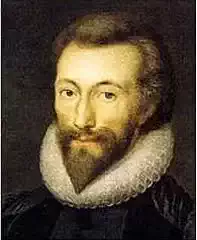
John Donne
Satire IV
Well; I may now receive, and die. My sin
Indeed is great, but yet I have been in
A purgatory, such as fear'd hell is
A recreation and scant map of this.
My mind, neither with pride's itch, nor yet hath been
Poison'd with love to see, or to be seen.
I had no suit there, nor new suit to show,
Yet went to court; but as Glaze which did go
To'a mass in jest, catch'd, was fain to disburse
The hundred marks, which is the statute's curse,
Before he 'scap'd; so'it pleas'd my destiny
(Guilty of my sin of going) to think me
As prone to all ill, and of good as forget{-}
Full, as proud, as lustful, and as much in debt,
As vain, as witless, and as false as they
Which dwell in court, for once going that way.
Therefore I suffered this; towards me did run
A thing more strange, than on Nile's slime the sun
E'er bred, or all which into Noah's ark came;
A thing which would have pos'd Adam to name;
Stranger than seven antiquaries' studies,
Than Afric's monsters, Guiana's rarities;
Stranger than strangers; one, who for a Dane,
In the Danes' massacre had sure been slain,
If he had liv'd then; and without help dies,
When next the 'prentices 'gainst strangers rise;
One, whom the watch, at noon, lets scarce go by;
One, to whom the examining justice sure would cry,
"Sir, by your priesthood, tell me what you are."
His clothes were strange, though coarse; and black, though bare;
Sleeveless his jerkin was, and it had been
Velvet, but 'twas now (so much ground was seen)
Become tufftaffaty; and our children shall
See it plain rash awhile, then nought at all.
This thing hath travell'd, and, saith, speaks all tongues,
And only knoweth what to all states belongs.
Made of th' accents and best phrase of all these,
He speaks one language. If strange meats displease,
Art can deceive, or hunger force my taste,
But pedants' motley tongue, soldiers' bombast,
Mountebanks' drug-tongue, nor the terms of law
Are strong enough preparatives, to draw
Me to bear this; yet I must be content
With his tongue, in his tongue, call'd compliment;
In which he can win widows, and pay scores,
Make men speak treason, cozen subtlest whores,
Out-flatter favourites, or outlie either
Jovius, or Surius, or both together.
He names me, and comes to me; I whisper, "God!
How have I sinn'd, that Thy wrath's furious rod,
This fellow, chooseth me?" He saith, "Sir,
I love your judgment; whom do you prefer,
For the best linguist?" And I seelily
Said, that I thought Calepine's dictionary.
"Nay, but of men, most sweet Sir?" Beza then,
Some Jesuits, and two reverend men
Of our two Academies, I named. There
He stopp'd me, and said; "Nay, your apostles were
Good pretty linguists, and so Panurge was;
Yet a poor gentleman all these may pass
By travel." Then, as if he would have sold
His tongue, he prais'd it, and such wonders told,
That I was fain to say, "If you'had liv'd, sir,
Time enough to have been interpreter
To Babel's bricklayers, sure the tower had stood."
He adds, "If of court life you knew the good,
You would leave loneness." I said, "Not alone
My loneness is; but Spartan's fashion,
To teach by painting drunkards, doth not last
Now; Aretine's pictures have made few chaste;
No more can princes' courts, though there be few
Better pictures of vice, teach me virtue."
He, like to a high-stretch'd lute-string, squeak'd, "O sir,
'Tis sweet to talk of kings." "At Westminster,"
Said I, "the man that keeps the abbey tombs,
And for his price doth with whoever comes
Of all our Harrys and our Edwards talk,
From king to king, and all their kin can walk.
Your ears shall hear nought, but kings; your eyes meet
Kings only; the way to it is King street."
He smack'd and cried, "He's base, mechanic, coarse,
So are all your Englishmen in their discourse.
Are not your Frenchmen neat?" "Mine? As you see,
I have but one Frenchman, look--he follows me."
"Certes they are neatly cloth'd. I of this mind am,
Your only wearing is your grogaram."
"Not so, sir, I have more." Under this pitch
He would not fly; I chaff'd him; but as itch
Scratch'd into smart, and as blunt iron ground
Into an edge, hurts worse; so I (fool) found
Crossing hurt me. To fit my sullenness,
He to another key his style doth dress,
And asks, "What news?" I tell him of new plays.
He takes my hand, and as a still which stays
A sembrief, 'twixt each drop, he niggardly,
As loth to enrich me, so tells many a lie,
More than ten Holinsheds, or Halls, or Stows,
Of trivial household trash, he knows. He knows
When the Queen frown'd, or smil'd, and he knows what
A subtle statesman may gather of that;
He knows who loves; whom; and who by poison
Hastes to an office's reversion;
He knows who'hath sold his land, and now doth beg
A licence, old iron, boots, shoes, and egg{-}
Shells to transport; shortly boys shall not play
At span-counter, or blow-point, but shall pay
Toll to some courtier; and wiser than all us,
He knows what lady is not painted. Thus
He with home meats tries me. I belch, spew, spit,
Look pale and sickly, like a patient, yet
He thrusts on more; and as if he'd undertook
To say Gallo-Belgicus without book,
Speaks of all states, and deeds, that have been since
The Spaniards came, to the loss of Amiens.
Like a big wife, at sight of loathed meat,
Ready to travail, so I sigh and sweat
To hear this Macaron talk. In vain; for yet,
Either my humour, or his own to fit,
He, like a privileg'd spy, whom nothing can
Discredit, libels now 'gainst each great man.
He names a price for every office paid;
He saith, our wars thrive ill, because delay'd;
That offices are entail'd, and that there are
Perpetuities of them, lasting as far
As the last day; and that great officers
Do with the pirates share, and Dunkirkers.
...
Toughly and stubbornly I bear this cross; but the' hour
Of mercy now was come; he tries to bring
Me to pay a fine to 'scape his torturing,
And says, "Sir, can you spare me"--I said, "Willingly";
"Nay, sir, can you spare me a crown"? Thankfully I
Gave it, as ransom; but as fiddlers, still,
Though they be paid to be gone, yet needs will
Thrust one more jig upon you; so did he
With his long complimental thanks vex me.
But he is gone, thanks to his needy want,
And the prerogative of my crown; scant
His thanks were ended, when I (which did see
All the court fill'd with more strange things than he)
Ran from thence with such, or more haste than one
Who fears more actions doth make from prison.
383
Johann Wolfgang von Goethe
Phoebus And Hermes
DELOS' stately ruler, and Maia's son, the adroit one,
Warmly were striving, for both sought the great prize to obtain.
Hermes the lyre demanded, the lyre was claim'd by Apollo,
Yet were the hearts of the foes fruitlessly nourish'd by hope.
For on a sudden Ares burst in, with fury decisive,
Dashing in twain the gold toy, brandishing wildly his sword.
Hermes, malicious one, laughed beyond measure; yet deep-seated sorrow
Seized upon Phoebus's heart, seized on the heart of each Muse.
383