
Humor e Ironia

Ogden Nash
Family Court
One would be in less danger
From the wiles of a stranger
If one's own kin and kith
Were more fun to be with.
From the wiles of a stranger
If one's own kin and kith
Were more fun to be with.
374

Emily Dickinson
My friend attacks my friend!
My friend attacks my friend!
Oh Battle picturesque!
Then I turn Soldier too,
And he turns Satirist!
How martial is this place!
Had I a mighty gun
I think I'd shoot the human race
And then to glory run!
Oh Battle picturesque!
Then I turn Soldier too,
And he turns Satirist!
How martial is this place!
Had I a mighty gun
I think I'd shoot the human race
And then to glory run!
370

Robert Louis Stevenson
To Charles Baxter
OUR Johnie's deid. The mair's the pity!
He's deid, an' deid o' Aqua-vitae.
O Embro', you're a shrunken city,
Noo Johnie's deid!
Tak hands, an' sing a burial ditty
Ower Johnie's heid.
To see him was baith drink an' meat,
Gaun linkin' glegly up the street.
He but to rin or tak a seat,
The wee bit body!
Bein' aye unsicken on his feet
Wi' whusky toddy.
To be aye tosh was Johnie's whim,
There's nane was better teut than him,
Though whiles his gravit-knot wad clim'
Ahint his ear,
An' whiles he'd buttons oot or in
The less ae mair.
His hair a' lang about his bree,
His tap-lip lang by inches three -
A slockened sort 'mon,' to pree
A' sensuality -
A droutly glint was in his e'e
An' personality.
An' day an' nicht, frae daw to daw,
Dink an' perjink an' doucely braw,
Wi' a kind o' Gospel ower a',
May or October,
Like Peden, followin' the Law
An' no that sober.
Whusky an' he were pack thegether.
Whate'er the hour, whate'er the weather,
John kept himsel' wi' mistened leather
An' kindled spunk.
Wi' him, there was nae askin' whether -
John was aye drunk.
The auncient heroes gash an' bauld
In the uncanny days of auld,
The task ance fo(u)nd to which th'were called,
Stack stenchly to it.
His life sic noble lives recalled,
Little's he knew it.
Single an' straucht, he went his way.
He kept the faith an' played the play.
Whusky an' he were man an' may
Whate'er betided.
Bonny in life - in death - this twae
Were no' divided.
An' wow! but John was unco sport.
Whiles he wad smile about the Court
Malvolio-like - whiles snore an' snort
Was heard afar.
The idle winter lads' resort
Was aye John's bar.
What's merely humorous or bonny
The Worl' regairds wi' cauld astony.
Drunk men tak' aye mair place than ony;
An' sae, ye see,
The gate was aye ower thrang for Johnie -
Or you an' me.
John micht hae jingled cap an' bells,
Been a braw fule in silks an' pells,
In ane o' the auld worl's canty hells
Paris or Sodom.
I wadnae had him naething else
But Johnie Adam.
He suffered - as have a' that wan
Eternal memory frae man,
Since e'er the weary worl' began -
Mister or Madam,
Keats or Scots Burns, the Spanish Don
Or Johnie Adam.
We leuch, an' Johnie deid. An' fegs!
Hoo he had keept his stoiterin' legs
Sae lang's he did's a fact that begs
An explanation.
He stachers fifty years - syne plegs
To's destination.
369

John Clare
From The Parish: A Satire
I
In politics and politicians' lies
The modern farmer waxes wondrous wise;
Opinionates with wisdom all compact,
And een could tell a nation how to act;
Throws light on darkness with excessive skill,
Knows who acts well and whose designs are ill,
Proves half the members nought but bribery's tools,
And calls the past a dull dark age of fools.
As wise as Solomon they read the news,
Not with their blind forefathers' simple views,
Who read of wars, and wished that wars would cease,
And blessed the King, and wished his country peace;
Who marked the weight of each fat sheep and ox,
The price of grain and rise and fall of stocks;
Who thought it learning how to buy and sell,
And him a wise man who could manage well.
No, not with such old-fashioned, idle views
Do these newsmongers traffic with the news.
They read of politics and not of grain,
And speechify and comment and explain,
And know so much of Parliament and state
You'd think they're members when you heard them prate;
And know so little of their farms the while
They can but urge a wiser man to smile.
II
A thing all consequence here takes the lead,
Reigning knight-errant oer this dirty breed--
A bailiff he, and who so great to brag
Of law and all its terrors as Bumtagg;
Fawning a puppy at his master's side
And frowning like a wolf on all beside;
Who fattens best where sorrow worst appears
And feeds on sad misfortune's bitterest tears?
Such is Bumtagg the bailiff to a hair,
The worshipper and demon of despair,
Who waits and hopes and wishes for success
At every nod and signal of distress,
Happy at heart, when storms begin to boil,
To seek the shipwreck and to share the spoil.
Brave is this Bumtagg, match him if you can;
For there's none like him living--save his man.
As every animal assists his kind
Just so are these in blood and business joined;
Yet both in different colours hide their art,
And each as suits his ends transacts his part.
One keeps the heart-bred villain full in sight,
The other cants and acts the hypocrite,
Smoothing the deed where law sharks set their gin
Like a coy dog to draw misfortune in.
But both will chuckle oer their prisoners' sighs
And are as blest as spiders over flies.
Such is Bumtagg, whose history I resign,
As other knaves wait room to stink and shine;
And, as the meanest knave a dog can brag,
Such is the lurcher that assists Bumtagg.
366

James Whitcomb Riley
A Home-Made Fairy Tale
Bud, come here to your uncle a spell,
And I'll tell you something you mustn't tell--
For it's a secret and shore-'nuf true,
And maybe I oughtn't to tell it to you--!
But out in the garden, under the shade
Of the apple-trees, where we romped and played
Till the moon was up, and you thought I'd gone
Fast asleep--, That was all put on!
For I was a-watchin' something queer
Goin' on there in the grass, my dear--!
'Way down deep in it, there I see
A little dude-Fairy who winked at me,
And snapped his fingers, and laughed as low
And fine as the whine of a mus-kee-to!
I kept still-- watchin' him closer-- and
I noticed a little guitar in his hand,
Which he leant 'ginst a little dead bee-- and laid
His cigarette down on a clean grass-blade,
And then climbed up on the shell of a snail--
Carefully dusting his swallowtail--
And pulling up, by a waxed web-thread,
This little guitar, you remember. I said!
And there he trinkled and trilled a tune--,
'My Love, so Fair, Tans in the Moon!'
Till presently, out of the clover-top
He seemed to be singing to, came k'pop!
The purtiest, daintiest Fairy face
In all this world, or any place!
Then the little ser'nader waved his hand,
As much as to say, 'We'll excuse you!' and
I heard, as I squinted my eyelids to,
A kiss like the drip of a drop of dew!
359

Henry Wadsworth Longfellow
Friar Lubin. (From The French)
To gallop off to town post-haste,
So oft, the times I cannot tell;
To do vile deed, nor feel disgraced,--
Friar Lubin will do it well.
But a sober life to lead,
To honor virtue, and pursue it,
That's a pious, Christian deed,--
Friar Lubin can not do it.
To mingle, with a knowing smile,
The goods of others with his own,
And leave you without cross or pile,
Friar Lubin stands alone.
To say 't is yours is all in vain,
If once he lays his finger to it;
For as to giving back again,
Friar Lubin cannot do it.
With flattering words and gentle tone,
To woo and win some guileless maid,
Cunning pander need you none,--
Friar Lubin knows the trade.
Loud preacheth he sobriety,
But as for water, doth eschew it;
Your dog may drink it,--but not he;
Friar Lubin cannot do it.
ENVOY
When an evil deed 's to do
Friar Lubin is stout and true;
Glimmers a ray of goodness through it,
Friar Lubin cannot do it.
359

Edward Lear
The Two Old Bachelors
Two old Bachelors were living in one house;
One caught a Muffin, the other caught a Mouse.
Said he who caught the Muffin to him who caught the Mouse,-'
This happens just in time! For we've nothing in the house,
'Save a tiny slice of lemon nd a teaspoonful of honey,
'And what to do for dinner -- since we haven't any money?
'And what can we expect if we haven't any dinner,
'But to loose our teeth and eyelashes and keep on growing thinner?'
Said he who caught the Mouse to him who caught the Muffin,-'
We might cook this little Mouse, if we had only some Stuffin'!
'If we had but Sage and
Onion we could do extremely well,
'But how to get that Stuffin' it is difficult to tell'--
Those two old Bachelors ran quickly to the town
And asked for Sage and Onions as they wandered up and down;
They borrowed two large Onions, but no Sage was to be found
In the Shops, or in the Market, or in all the Gardens round.
But some one said, -- 'A hill there is, a little to the north,
'And to its purpledicular top a narrow way leads forth;-'
And there among the rugged rocks abides an ancient Sage,-'
An earnest Man, who reads all day a most perplexing page.
'Climb up, and seize him by the toes! -- all studious as he sits,-'
And pull him down, -- and chop him into endless little bits!
'Then mix him with your Onion, (cut up likewise into Scraps,)-'
When your Stuffin' will be ready -- and very good: perhaps.'
Those two old Bachelors without loss of time
The nearly purpledicular crags at once began to climb;
And at the top, among the rocks, all seated in a nook,
They saw that Sage, a reading of a most enormous book.
'You earnest Sage!' aloud they cried, 'your book you've read enough in!-'
We wish to chop you into bits to mix you into Stuffin'!'--
But that old Sage looked calmly up, and with his awful book,
At those two Bachelors' bald heads a certain aim he took;-and
over crag and precipice they rolled promiscuous down,--
At once they rolled, and never stopped in lane or field or town,--
And when they reached their house, they found (besides their want
of Stuffin',)
The Mouse had fled; -- and, previously, had eaten up the Muffin.
They left their home in silence by the once convivial door.
And from that hour those Bachelors were never heard of more.
353

Alexander Pope
The Challenge: A Court Ballad
I.
To one fair lady out of Court,
And two fair ladies in,
Who think the Turk and Pope a sport,
And wit and love no sin!
Come, these soft lines, with nothing stiff in,
To Bellenden, Lepell, and Griffin.
With a fa, la, la.
II.
What passes in the dark third row,
And what behind the scene,
Couches and crippled chairs I know,
And garrets hung with green;
I know the swing of sinful hack,
Where many damsels cry alack.
With a fa, la, la.
III.
Then why to Courts should I repair,
Where's such ado with Townsend?
To hear each mortal stamp and swear,
And every speech with 'Zounds' end;
To hear them rail at honest Sunderland,
And rashly blame the realm of Blunderland.
With a fa, la, la.
IV.
Alas! like Schutz I cannot pun,
Like Grafton court the Germans;
Tell Pickenbourg how slim she's grown,
Like Meadows run to sermons;
To court ambitious men may roam,
But I and Marlbro' stay at home.
With a fa, la, la.
V.
In truth, by what I can discern,
Of courtiers, 'twixt you three,
Some wit you have, and more may learn
From Court, than Gay or Me:
Perhaps, in time, you'll leave high diet,
To sup with us on milk and quiet.
With a fa, la, la.
VI.
At Leicester Fields, a house full nigh,
With door all painted green,
(A Milliner, I mean);
There may you meet us three to three,
For Gay can well make two of Me.
With a fa, la, la.
VII.
But should you catch the prudish itch,
And each become a coward,
Bring sometimes with you lady Rich,
And sometimes mistress Howard;
For virgins, to keep chaste, must go
Abroad with such as are not so.
With a fa, la, la.
VIII.
And thus, fair maids, my ballad ends;
God send the king safe landing;
And make all honest ladies friends
To armies that are standing;
Preserve the limits of those nations,
And take off ladies' limitations.
With a fa, la, la.
351
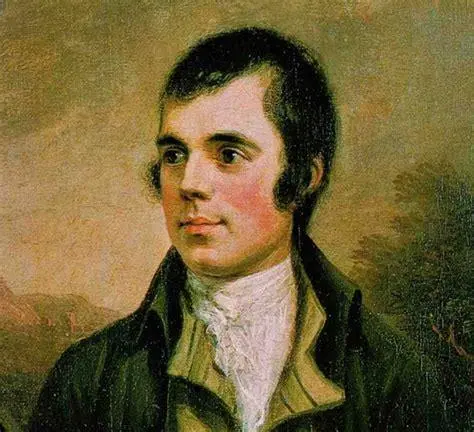
Robert Burns
To A Louse
On Seeing One on a Lady's Bonnet at Church
Ha! whare ye gaun' ye crowlin ferlie?
Your impudence protects you sairly;
I canna say but ye strunt rarely
Owre gauze and lace,
Tho faith! I fear ye dine but sparely
On sic a place.
Ye ugly, creepin, blastit wonner,
Detested, shunn'd by saunt an sinner,
How daur ye set your fit upon her---
Sae fine a lady!
Gae somewhere else and seek your dinner
On some poor body.
Swith! in some beggar's hauffet squattle;
There ye may creep, and sprawl, and sprattle;
Wi' ither kindred, jumping cattle;
In shoals and nations;
Whare horn nor bane ne'er daur unsettle
Your thick plantations.
Now haud you there! ye're out o' sight,
Below the fatt'rils, snug an tight,
Na, faith ye yet! ye'll no be right,
Till ye've got on it---
The vera tapmost, tow'rin height
O' Miss's bonnet.
My sooth! right bauld ye set your nose out,
As plump an grey as onie grozet:
O for some rank, mercurial rozet,
Or fell, red smeddum,
I'd gie you sic a hearty dose o't,
Wad dress your droddum!
I wad na been surpris'd to spy
You on an auld wife's flainen toy
Or aiblins some bit duddie boy,
On's wyliecoat;
But Miss's fine Lunardi! fye!
How daur ye do't?
O Jeany, dinna toss your head,
An set your beauties a' abread!
Ye little ken what cursed speed
The blastie's makin!
Thae winks an finger-ends, I dread,
Are notice takin!
O wad some Power the giftie gie us
To see oursels as ithers see us!
It wad frae monie a blunder free us
An foolish notion:
What airs in dress an gait wad lea'es us,
An ev'n devotion!
352

Jonathan Swift
The Author Upon Himself
By an old ——pursued,
A crazy prelate, and a royal prude;
By dull divines, who look with envious eyes
On ev'ry genius that attempts to rise;
And pausing o'er a pipe, with doubtful nod,
Give hints, that poets ne'er believe in God.
So clowns on scholars as on wizards look,
And take a folio for a conj'ring book.
Swift had the sin of wit, no venial crime:
Nay, 'twas affirm'd, he sometimes dealt in rhyme;
Humour and mirth had place in all he writ;
He reconcil'd divinity and wit:
He moved and bow'd, and talk'd with too much grace;
Nor show'd the parson in his gait or face;
Despised luxurious wines and costly meat;
Yet still was at the tables of the great;
Frequented lords; saw those that saw the queen;
At Child's or Truby's, never once had been;
Where town and country vicars flock in tribes,
Secured by numbers from the laymen's gibes;
And deal in vices of the graver sort,
Tobacco, censure, coffee, pride, and port.
But, after sage monitions from his friends,
His talents to employ for nobler ends;
To better judgments willing to submit,
He turns to politics his dang'rous wit.
And now, the public Int'rest to support,
By Harley Swift invited, comes to court;
In favour grows with ministers of state;
Admitted private, when superiors wait:
And Harley, not ashamed his choice to own,
Takes him to Windsor in his coach alone.
At Windsor Swift no sooner can appear,
But St. John comes, and whispers in his ear:
The waiters stand in ranks: the yeomen cry,
Make room, as if a duke were passing by.
Now Finch alarms the lords: he hears for certain
This dang'rous priest is got behind the curtain.
Finch, famed for tedious elocution, proves
That Swift oils many a spring which Harley moves.
Walpole and Aislaby, to clear the doubt,
Inform the Commons, that the secret's out:
'A certain doctor is observed of late
To haunt a certain minister of state:
From whence with half an eye we may discover
The peace is made, and Perkin must come over.'
York is from Lambeth sent, to show the queen
A dang'rous treatise writ against the spleen;
Which, by the style, the matter, and the drift,
'Tis thought could be the work of none but Swift.
Poor York! the harmless tool of others' hate;
He sues for pardon, and repents too late.
Now angry Somerset her vengeance vows
On Swift's reproaches for her ******* spouse:
From her red locks her mouth with venom fills,
And thence into the royal ear instils.
The queen incensed, his services forgot,
Leaves him a victim to the vengeful Scot.
Now through the realm a proclamation spread,
To fix a price on his devoted head.
While innocent, he scorns ignoble flight;
His watchful friends preserve him by a sleight.
By Harley's favour once again he shines;
Is now caress'd by candidate divines,
Who change opinions with the changing scene:
Lord! how were they mistaken in the dean!
Now Delawar again familiar grows;
And in Swift's ear thrusts half his powder'd nose.
The Scottish nation, whom he durst offend,
Again apply that Swift would be their friend.
By faction tired, with grief he waits awhile,
His great contending friends to reconcile;
Performs what friendship, justice, truth require:
What could he more, but decently retire?
351

Lord Byron
Epigram: The World Is A Bundle Of Hay
The world is a bundle of hay,
Mankind are the asses who pull;
Each tugs it a different way,
And the greatest of all is John Bull.
Mankind are the asses who pull;
Each tugs it a different way,
And the greatest of all is John Bull.
351
James Whitcomb Riley
The Old Tramp
A Old Tramp slep' in our stable wunst,
An' The Raggedy Man he caught
An' roust him up, an' chased him off
Clean out through our back lot!
An' th' Old Tramp hollered back an' said,-'
You're a _purty_ man!--_You_ air!--
With a pair o' eyes like two fried eggs,
An' a nose like a Bartlutt pear!'
An' The Raggedy Man he caught
An' roust him up, an' chased him off
Clean out through our back lot!
An' th' Old Tramp hollered back an' said,-'
You're a _purty_ man!--_You_ air!--
With a pair o' eyes like two fried eggs,
An' a nose like a Bartlutt pear!'
349

William Butler Yeats
The Three Monuments
THEY hold their public meetings where
Our most renowned patriots stand,
One among the birds of the air,
A stumpier on either hand;
And all the popular statesmen say
That purity built up the State
And after kept it from decay;
And let all base ambition be,
For intellect would make us proud
And pride bring in impurity:
The three old rascals laugh aloud.
342
Alexander Pope
On the Countess of Burlington Cutting Paper
Pallas grew vapourish once, and odd,
She would not do the least right thing,
Either for goddess, or for god,
Nor work, nor play, nor paint, nor sing.
Jove frown'd, and, 'Use,' he cried, 'those eyes
So skilful, and those hands so taper;
Do something exquisite and wise -'
She bow'd, obey'd him, - and cut paper.
This vexing him who gave her birth,
Thought by all heaven a burning shame;
What does she next, but bids, on earth,
Her Burlington do just the same.
Pallas, you give yourself strange airs;
But sure you'll find it hard to spoil
The sense and taste of one that bears
The name of Saville and of Boyle.
Alas! one bad example shown;
How quickly all the sex pursue!
See, madam, see the arts o'erthrown,
Between John Overton and you!
342
John Donne
Satire II
Sir; though (I thanke God for it) I do hate
Perfectly all this towne, yet there's one state
In all ill things so excellently best,
That hate, towards them, breeds pitty towards the rest.
Though Poetry indeed be such a sinne
As I thinke that brings dearths, and Spaniards in,
Though like the Pestilence and old fashion'd love,
Ridlingly it catch men; and doth remove
Never, till it be sterv'd out; yet their state
Is poore, disarm'd, like Papists, not worth hate.
One,(like a wretch, which at Barre judg'd as dead,
Yet prompts him which stands next, and cannot reade,
And saves his life)gives ideot actors meanes
(Starving himselfe)to live by'his labor'd sceanes;
As in some Organ, Puppits dance above
And bellows pant below, which them do move.
One would move Love by rimes; but witchcrafts charms
Bring not now their old feares, nor their old harmes:
Rammes, and slings now are seely battery,
Pistolets are the best Artillerie.
And they who write to Lords, rewards to get,
Are they not like singers at doores for meat?
And they who write, because all write, have still
That excuse for writing, and for writing ill.
But hee is worst, who (beggarly) doth chaw
Others wits fruits, and in his ravenous maw
Rankly digested, doth those things out-spue,
As his owne things; 'and they are his owne, 'tis true,
For if one eate my meate, though it be knowne
The meate was mine, th'excrement is his owne.
But these do mee no harme, nor they which use
To out-doe Dildoes, and out-usure Jewes;
To'out-drinke the sea, to'out-sweare the Letanie;
Who with sinnes all kindes as familiar bee
As Confessors; and for whose sinfull sake
Schoolemen new tenements in hell must make:
Whose strange sinnes, Canonists could hardly tell
In which Commandements large receit they dwell.
But these punish themselves; the insolence
Of Coscus onely breeds my just offence,
Whom time (which rots all, and makes botches poxe,
And plodding on, must make a calfe an oxe)
Hath made a Lawyer, which was (alas) of late
But a scarce Poet; jollier of this state,
Then are new benefic'd ministers, he throwes
Like nets, or lime-twigs, wheresoere he goes,
His title'of Barrister, on every wench,
And wooes in language of the Pleas, and Bench:
'A motion, Lady.' 'Speake Coscus.' 'I'have beene
In love, ever since tricesimo' of the Queene,
Continuall claimes I'have made, injunctions got
To stay my rivals suit, that hee should not
Proceed.' 'Spare mee.' 'In Hillary terme I went,
You said, If I returne next size in Lent,
I should be in remitter of your grace;
In th'interim my letters should take place
Of affidavits--': words, words, which would teare
The tender labyrinth of a soft maids eare,
More, more, then ten Sclavonians scolding, more
Then when winds in our ruin'd Abbeyes rore.
When sicke with Poetrie,'and possest with muse
Thou wast, and mad, I hop'd; but men which chuse
Law practise for meere gaine, bold soule, repute
Worse then imbrothel'd strumpets prostitute.
Now like an owlelike watchman, hee must walke
His hand still at a bill, now he must talke
Idly, like prisoners, which whole months will sweare
That onely suretiship hath brought them there,
And to'every suitor lye in every thing,
Like a Kings favorite, yea like a King;
Like a wedge in a blocke, wring to the barre,
Bearing like Asses, and more shameless farre
Then carted whores, lye, to the grave Judge; for
Bastardy'abounds not in Kings titles, nor
Symonie'and Sodomy in Churchmens lives,
As these things do in him; by these he thrives.
Shortly ('as the sea) hee'will compasse all our land;
From Scots, to Wight; from Mount, to Dover strand.
And spying heires melting with luxurie,
Satan will not joy at their sinnes, as hee.
For as a thrifty wench scrapes kitching-stuffe,
And barrelling the droppings, and the snuffe,
Of wasting candles, which in thirty yeare
(Relique-like kept) perchance buyes wedding geare;
Peecemeale he gets lands, and spends as much time
Wringing each Acre, as men pulling prime.
In parchments then, large as his fields, hee drawes
Assurances, bigge, as gloss'd civill lawes,
So huge, that men (in our times forwardnesse)
Are Fathers of the Church for writing lesse.
These hee writes not; nor for these written payes,
Therefore spares no length; as in those first dayes
When Luther was profest, he did desire
Short Pater nosters, saying as a Fryer
Each day his beads, but having left those lawes,
Addes to Christs prayer, the Power and glory clause.
But when he sells or changes land, he'impaires
His writings, and (unwatch'd) leaves out, ses heires,
As slily'as any Commenter goes by
Hard words, or sense; or in Divinity
As controverters, in vouch'd texts, leave out
Shrewd words, which might against them cleare the doubt.
Where are those spred woods which cloth'd heretofore
Those bought lands? not built, not burnt within dore.
Where's th'old landlords troops, and almes? In great hals
Carthusian fasts, and fulsome Bachanalls
Equally'I hate; meanes blesse; in rich mens homes
I bid kill some beasts, but no Hecatombs,
None starve, none surfet so; But (Oh) we'allow
Good workes as good, but out of fashion now,
Like old rich wardrops; but my words none drawes
Within the vast reach of th'huge statute lawes.
338
James Whitcomb Riley
Fool-Youngens
Me an' Bert an' Minnie-Belle
Knows a joke, an' we won't tell!
No, we don't--'cause we don't know
_Why_ we got to laughin' so;
But we got to laughin' so,
'We ist kep' a-laughin'.
Wind wuz blowin' in the tree--
An' wuz only ist us three
Playin' there; an' ever' one
Ketched each other, like we done,
Squintin' up there at the sun
Like we wuz a-laughin'.
Nothin' funny anyway;
But I laughed, an' so did they--
An' we all three laughed, an' nen
Squint' our eyes an' laugh' again:
Ner we didn't ist _p'ten'_--
We wuz _shore-'nough_ laughin'.
'We ist laugh' an' laugh', tel Bert
Say he _can't_ quit an' it hurt.
Nen I _howl_, an' Minnie-Belle
She tear up the grass a spell
An' ist stop her yeers an' _yell_
Like she'd _die_ a-laughin'.
Never sich fool-youngens yit!
Nothin' funny,--not a bit!--
But we laugh' so; tel we whoop'
Purt'-nigh like we have the croup--
All so hoarse we'd wheeze an' whoop
An' ist _choke_ a-laughin'.
330
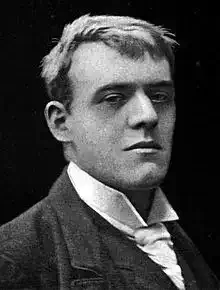
Hilaire Belloc
Cautionary Tales for Children: Introduction
And is it True? It is not True.
And if it were it wouldn’t do,
For people such as me and you
Who pretty nearly all day long
Are doing something rather wrong.
Because if things were really so,
You would have perished long ago,
And I would not have lived to write
The noble lines that meet your sight,
Nor B.T.B survived to draw
The nicest things you ever saw.
328
James Whitcomb Riley
Elmer Brown
Awf'lest boy in this-here town
Er anywheres is Elmer Brown!
He'll mock you--yes, an' strangers, too,
An' make a face an' yell at you,-'_
Here's_ the way _you_ look!'
Yes, an' wunst in School one day,
An' Teacher's lookin' wite that way,
He helt his slate, an' hide his head,
An' maked a face at _her_, an' said,-'_
Here's_ the way _you_ look!'
An' sir! when Rosie Wheeler smile
One morning at him 'crosst the aisle,
He twist his face all up, an' black
His nose wiv ink, an' whisper back,-'_
Here's_ the way _you_ look!'
Wunst when his Aunt's all dressed to call,
An' kiss him good-bye in the hall,
An' latch the gate an' start away,
He holler out to her an' say,-'_
Here's_ the way _you_ look!'
An' when his Pa he read out loud
The speech he maked, an' feel so proud
It's in the paper--Elmer's Ma
She ketched him--wite behind his Pa,-'_
Here's_ the way _you_ look!'
Nen when his Ma she slip an' take
Him in the other room an' shake
Him good! w'y, he don't care--no-_sir_!--
He ist look up an' laugh at her,-'_
Here's_ the way _you_ look!'
328
Jonathan Swift
Verses on the Death of Dr. Swift, D.S.P.D.
As Rochefoucauld his maxims drew
From Nature, I believe 'em true:
They argue no corrupted mind
In him; the fault is in mankind.
This maxim more than all the rest
Is thought too base for human breast:
'In all distresses of our friends,
We first consult our private ends;
While Nature, kindly bent to ease us,
Points out some circumstance to please us.'
If this perhaps your patience move,
Let reason and experience prove.
We all behold with envious eyes
Our equal rais'd above our size.
Who would not at a crowded show
Stand high himself, keep others low?
I love my friend as well as you
But would not have him stop my view.
Then let him have the higher post:
I ask but for an inch at most.
If in a battle you should find
One, whom you love of all mankind,
Had some heroic action done,
A champion kill'd, or trophy won;
Rather than thus be overtopt,
Would you not wish his laurels cropt?
Dear honest Ned is in the gout,
Lies rack'd with pain, and you without:
How patiently you hear him groan!
How glad the case is not your own!
What poet would not grieve to see
His brethren write as well as he?
But rather than they should excel,
He'd wish his rivals all in hell.
Her end when emulation misses,
She turns to envy, stings and hisses:
The strongest friendship yields to pride,
Unless the odds be on our side.
Vain human kind! fantastic race!
Thy various follies who can trace?
Self-love, ambition, envy, pride,
Their empire in our hearts divide.
Give others riches, power, and station,
'Tis all on me a usurpation.
I have no title to aspire;
Yet, when you sink, I seem the higher.
In Pope I cannot read a line,
But with a sigh I wish it mine;
When he can in one couplet fix
More sense than I can do in six;
It gives me such a jealous fit,
I cry, 'Pox take him and his wit!'
Why must I be outdone by Gay
In my own hum'rous biting way?
Arbuthnot is no more my friend,
Who dares to irony pretend,
Which I was born to introduce,
Refin'd it first, and show'd its use.
St. John, as well as Pultney, knows
That I had some repute for prose;
And, till they drove me out of date,
Could maul a minister of state.
If they have mortify'd my pride,
And made me throw my pen aside;
If with such talents Heav'n has blest 'em,
Have I not reason to detest 'em?
To all my foes, dear Fortune, send
Thy gifts; but never to my friend:
I tamely can endure the first,
But this with envy makes me burst.
Thus much may serve by way of proem:
Proceed we therefore to our poem.
The time is not remote, when I
Must by the course of nature die;
When I foresee my special friends
Will try to find their private ends:
Tho' it is hardly understood
Which way my death can do them good,
Yet thus, methinks, I hear 'em speak:
'See, how the Dean begins to break!
Poor gentleman, he droops apace!
You plainly find it in his face.
That old vertigo in his head
Will never leave him till he's dead.
Besides, his memory decays:
He recollects not what he says;
He cannot call his friends to mind:
Forgets the place where last he din'd;
Plies you with stories o'er and o'er;
He told them fifty times before.
How does he fancy we can sit
To hear his out-of-fashion'd wit?
But he takes up with younger folks,
Who for his wine will bear his jokes.
Faith, he must make his stories shorter,
Or change his comrades once a quarter:
In half the time he talks them round,
There must another set be found.
'For poetry he's past his prime:
He takes an hour to find a rhyme;
His fire is out, his wit decay'd,
His fancy sunk, his Muse a jade.
I'd have him throw away his pen;-
But there's no talking to some men!'
And then their tenderness appears,
By adding largely to my years:
'He's older than he would be reckon'd
And well remembers Charles the Second.
'He hardly drinks a pint of wine;
And that, I doubt, is no good sign.
His stomach too begins to fail:
Last year we thought him strong and hale;
But now he's quite another thing:
I wish he may hold out till spring.'
Then hug themselves, and reason thus:
'It is not yet so bad with us.'
In such a case, they talk in tropes,
And by their fears express their hopes:
Some great misfortune to portend,
No enemy can match a friend.
With all the kindness they profess,
The merit of a lucky guess
(When daily 'How d'ye's' come of course,
And servants answer, 'Worse and worse!')
Would please 'em better, than to tell,
That, 'God be prais'd, the Dean is well.'
Then he who prophecy'd the best
Approves his foresight to the rest:
'You know I always fear'd the worst,
And often told you so at first.'
He'd rather choose that I should die,
Than his prediction prove a lie.
Not one foretells I shall recover;
But all agree to give me over.
Yet, should some neighbour feel a pain
Just in the parts where I complain,
How many a message would he send?
What hearty prayers that I should mend?
Inquire what regimen I kept,
What gave me ease, and how I slept?
And more lament when I was dead,
Than all the sniv'llers round my bed.
My good companions, never fear;
For though you may mistake a year,
Though your prognostics run too fast,
They must be verify'd at last.
Behold the fatal day arrive!
'How is the Dean?'-'He's just alive.'
Now the departing prayer is read;
'He hardly breathes.'-'The Dean is dead.'
Before the passing-bell begun,
The news thro' half the town has run.
'O, may we all for death prepare!
What has he left? and who's his heir?''
I know no more than what the news is;
'Tis all bequeath'd to public uses.''
To public use! a perfect whim!
What had the public done for him?
Mere envy, avarice, and pride:
He gave it all-but first he died.
And had the Dean, in all the nation,
No worthy friend, no poor relation?
So ready to do strangers good,
Forgetting his own flesh and blood?'
Now Grub-Street wits are all employ'd;
With elegies the town is cloy'd:
Some paragraph in ev'ry paper
To curse the Dean or bless the Drapier.
The doctors, tender of their fame,
Wisely on me lay all the blame:
'We must confess his case was nice;
But he would never take advice.
Had he been rul'd, for aught appears,
He might have liv'd these twenty years;
For, when we open'd him, we found
That all his vital parts were sound.'
From Dublin soon to London spread,
'Tis told at Court, the Dean is dead.
Kind Lady Suffolk in the spleen
Runs laughing up to tell the Queen.
The Queen, so gracious, mild, and good,
Cries, 'Is he gone! 'tis time he should.
He's dead, you say; why, let him rot:
I'm glad the medals were forgot.
I promis'd them, I own; but when?
I only was the Princess then;
But now, as consort of a king,
You know, 'tis quite a different thing.'
Now Chartres, at Sir Robert's levee,
Tells with a sneer the tidings heavy:
'Why, is he dead without his shoes?'
Cries Bob, 'I'm sorry for the news:
O, were the wretch but living still,
And in his place my good friend Will!
Or had a mitre on his head,
Provided Bolingbroke were dead!'
Now Curll his shop from rubbish drains:
Three genuine tomes of Swift's remains!
And then, to make them pass the glibber,
Revis'd by Tibbalds, Moore, and Cibber.
He'll treat me as he does my betters,
Publish my will, my life, my letters:
Revive the libels born to die;
Which Pope must bear, as well as I.
Here shift the scene, to represent
How those I love my death lament.
Poor Pope will grieve a month, and Gay
A week, and Arbuthnot a day.
St. John himself will scarce forbear
To bite his pen, and drop a tear.
The rest will give a shrug, and cry,
'I'm sorry-but we all must die!'
Indifference, clad in Wisdom's guise,
All fortitude of mind supplies:
For how can stony bowels melt
In those who never pity felt?
When we are lash'd, they kiss the rod,
Resigning to the will of God.
The fools, my juniors by a year,
Are tortur'd with suspense and fear;
Who wisely thought my age a screen,
When death approach'd, to stand between:
The screen remov'd, their hearts are trembling;
They mourn for me without dissembling.
My female friends, whose tender hearts
Have better learn'd to act their parts,
Receive the news in doleful dumps:
'The Dean is dead: (and what is trumps?)
Then, Lord have mercy on his soul!
(Ladies, I'll venture for the vole.)
Six deans, they say, must bear the pall:
(I wish I knew what king to call.)
Madam, your husband will attend
The funeral of so good a friend.
No, madam, 'tis a shocking sight:
And he's engag'd to-morrow night:
My Lady Club would take it ill,
If he should fail her at quadrille.
He lov'd the Dean-(I lead a heart)
But dearest friends, they say, must part.
His time was come: he ran his race;
We hope he's in a better place.'
Why do we grieve that friends should die?
No loss more easy to supply.
One year is past; a different scene!
No further mention of the Dean;
Who now, alas! no more is miss'd,
Than if he never did exist.
Where's now this fav'rite of Apollo!
Departed:-and his works must follow;
Must undergo the common fate;
His kind of wit is out of date.
Some country squire to Lintot goes,
Inquires for 'Swift in Verse and Prose.'
Says Lintot, 'I have heard the name;
He died a year ago.'-'The same.'
He searcheth all his shop in vain.
'Sir, you may find them in Duck-lane;
I sent them with a load of books,
Last Monday to the pastry-cook's.
To fancy they could live a year!
I find you're but a stranger here.
The Dean was famous in his time,
And had a kind of knack at rhyme.
His way of writing now is past;
The town hath got a better taste;
I keep no antiquated stuff,
But spick and span I have enough.
Pray do but give me leave to show 'em;
Here's Colley Cibber's birth-day poem.
This ode you never yet have seen,
By Stephen Duck, upon the Queen.
Then here's a letter finely penn'd
Against the Craftsman and his friend:
It clearly shows that all reflection
On ministers is disaffection.
Next, here's Sir Robert's vindication,
And Mr. Henley's last oration.
The hawkers have not got 'em yet:
Your honour please to buy a set?
'Here's Woolston's tracts, the twelfth edition;
'Tis read by every politician:
The country members, when in town,
To all their boroughs send them down;
You never met a thing so smart;
The courtiers have them all by heart:
Those maids of honour who can read
Are taught to use them for their creed.
The rev'rend author's good intention
Hath been rewarded with a pension.
He doth an honour to his gown,
By bravely running priestcraft down:
He shows, as sure as God's in Gloucester,
That Jesus was a grand imposter;
That all his miracles were cheats,
Perform'd as jugglers do their feats:
The church had never such a writer;
A shame he hath not got a mitre!'
Suppose me dead; and then suppose
A club assembled at the Rose ;
Where, from discourse of this and that,
I grow the subject of their chat.
And while they toss my name about,
With favour some, and some without,
One, quite indiff'rent in the cause,
My character impartial draws:
'The Dean, if we believe report,
Was never ill receiv'd at Court.
As for his works in verse and prose
I own myself no judge of those;
Nor can I tell what critics thought 'em:
But this I know, all people bought 'em.
As with a moral view design'd
To cure the vices of mankind:
His vein, ironically grave,
Expos'd the fool, and lash'd the knave.
To steal a hint was never known,
But what he writ was all his own.
'He never thought an honour done him,
Because a duke was proud to own him,
Would rather slip aside and choose
To talk with wits in dirty shoes;
Despis'd the fools with stars and garters,
So often seen caressing Chartres.
He never courted men in station,
Nor persons held in admiration;
Of no man's greatness was afraid,
Because he sought for no man's aid.
Though trusted long in great affairs
He gave himself no haughty airs:
Without regarding private ends,
Spent all his credit for his friends;
And only chose the wise and good;
No flatt'rers; no allies in blood:
But succour'd virtue in distress,
And seldom fail'd of good success;
As numbers in their hearts must own,
Who, but for him, had been unknown.
'With princes kept a due decorum,
But never stood in awe before 'em.
He follow'd David's lesson just:
'In princes never put thy trust';
And, would you make him truly sour,
Provoke him with a slave in pow'r.
The Irish senate if you nam'd,
With what impatience he declaim'd!
Fair Liberty was all his cry,
For her he stood prepar'd to die;
For her he boldly stood alone;
For her he oft expos'd his own.
Two kingdoms, just as faction led,
Had set a price upon his head;
But not a traitor could be found
To sell him for six hundred pound.
'Had he but spar'd his tongue and pen
He might have rose like other men:
But pow'r was never in his thought,
And wealth he valu'd not a groat:
Ingratitude he often found,
And pity'd those who meant the wound:
But kept the tenor of his mind,
To merit well of human kind:
Nor made a sacrifice of those
Who still were true, to please his foes.
He labour'd many a fruitless hour
To reconcile his friends in pow'r;
Saw mischief by a faction brewing,
While they pursu'd each other's ruin.
But, finding vain was all his care,
He left the Court in mere despair.
'And, oh! how short are human schemes!
Here ended all our golden dreams.
What St. John's skill in state affairs,
What Ormond's valour, Oxford's cares,
To save their sinking country lent,
Was all destroy'd by one event.
Too soon that precious life was ended,
On which alone our weal depended.
When up a dangerous faction starts,
With wrath and vengeance in their hearts;
By solemn League and Cov'nant bound,
To ruin, slaughter, and confound;
To turn religion to a fable,
And make the government a Babel;
Pervert the law, disgrace the gown,
Corrupt the senate, rob the crown;
To sacrifice old England's glory,
And make her infamous in story:
When such a tempest shook the land,
How could unguarded Virtue stand?
'With horror, grief, despair, the Dean
Beheld the dire destructive scene:
His friends in exile, or the tower,
Himself within the frown of power,
Pursu'd by base envenom'd pens,
Far to the land of slaves and fens;
A servile race in folly nurs'd,
Who truckle most when treated worst.
'By innocence and resolution,
He bore continual persecution,
While numbers to preferment rose,
Whose merits were, to be his foes;
When ev'n his own familiar friends,
Intent upon their private ends,
Like renegadoes now he feels,
Against him lifting up their heels.
'The Dean did by his pen defeat
An infamous destructive cheat;
Taught fools their int'rest how to know,
And gave them arms to ward the blow.
Envy hath own'd it was his doing,
To save that helpless land from ruin;
While they who at the steerage stood,
And reap'd the profit, sought his blood.
'To save them from their evil fate,
In him was held a crime of state.
A wicked monster on the bench,
Whose fury blood could never quench,
As vile and profligate a villain,
As modern Scroggs, or old Tresilian,
Who long all justice had discarded,
Nor fear'd he God, nor man regarded,
Vow'd on the Dean his rage to vent,
And make him of his zeal repent;
But Heav'n his innocence defends,
The grateful people stand his friends.
Not strains of law, nor judge's frown,
Nor topics brought to please the crown,
Nor witness hir'd, nor jury pick'd,
Prevail to bring him in convict.
'In exile, with a steady heart,
He spent his life's declining part;
Where folly, pride, and faction sway,
Remote from St. John, Pope, and Gay.
'His friendships there, to few confin'd,
Were always of the middling kind;
No fools of rank, a mongrel breed,
Who fain would pass for lords indeed:
Where titles gave no right or power
And peerage is a wither'd flower;
He would have held it a disgrace,
If such a wretch had known his face.
On rural squires, that kingdom's bane,
He vented oft his wrath in vain;
Biennial squires to market brought;
Who sell their souls and votes for nought;
The nation stripp'd, go joyful back,
To rob the church, their tenants rack,
Go snacks with thieves and rapparees,
And keep the peace to pick up fees;
In ev'ry job to have a share,
A jail or barrack to repair;
And turn the tax for public roads,
Commodious to their own abodes.
'Perhaps I may allow, the Dean
Had too much satire in his vein;
And seem'd determin'd not to starve it,
Because no age could more deserve it.
Yet malice never was his aim;
He lash'd the vice, but spar'd the name;
No individual could resent,
Where thousands equally were meant.
His satire points at no defect,
But what all mortals may correct;
For he abhorr'd that senseless tribe
Who call it humour when they gibe.
He spar'd a hump, or crooked nose,
Whose owners set not up for beaux.
True genuine dulness mov'd his pity,
Unless it offer'd to be witty.
Those who their ignorance confess'd
He ne'er offended with a jest;
But laugh'd to hear an idiot quote
A verse from Horace, learn'd by rote.
'He knew a hundred pleasant stories
With all the turns of Whigs and Tories:
Was cheerful to his dying day;
And friends would let him have his way.
'He gave the little wealth he had
To build a house for fools and mad;
And show'd by one satiric touch,
No nation wanted it so much.
That kingdom he hath left his debtor,
I wish it soon may have a better.'
327
Edward Lear
The Pelican Chorus
King and Queen of the Pelicans we;
No other Birds so grand we see!
None but we have feet like fins!
With lovely leathery throats and chins!
Ploffskin, Pluffskin, Pelican jee!
We think no birds so happy as we!
Plumpskin, Ploshkin, Pelican jill!
We think so then, and we thought so still!
We live on the Nile. The Nile we love.
By night we sleep on the cliffs above.
By day we fish, and at eve we stand
On long bare islands of yellow sand.
And when the sun sinks slowly down
And the great rock walls grow dark and brown,
Where the purple river rolls fast and dim
And the ivory Ibis starlike skim,
Wing to wing we dance around, -
Stamping our feet with a flumpy sound, -
Opening our mouths as Pelicans ought,
And this is the song we nightly snort:
Ploffskin, Pluffskin, Pelican jee!
We think no Birds so happy as we!
Plumpskin, Ploshkin, Pelican jill!
We think so then, and we thought so still.
Last year came out our Daughter, Dell;
And all the Birds received her well.
To do her honour, a feast we made
For every bird that can swim or wade.
Herons and Gulls, and Cormorants black,
Cranes, and Flamingoes with scarlet back,
Plovers and Storks, and Geese in clouds,
Swans and Dilberry Ducks in crowds.
Thousands of Birds in wondrous flight!
They ate and drank and danced all night,
And echoing back from the rocks you heard
Multitude-echoes from Bird and Bird, -
Ploffskin, Pluffskin, Pelican jee!
We think no Birds so happy as we!
Plumpskin, Ploshkin, Pelican jill!
We think so then, and we thought so still!
Yes, they came; and among the rest,
The king of the Cranes all grandly dressed.
Such a lovely tail! Its feathers float
Between the ends of his blue dress-coat;
With pea-green trowsers all so neat,
And a delicate frill to hide his feet, (
For though no one speaks of it, everyone knows,
He has got no webs between his toes!)
As soon as he saw our Daughter Dell,
In violent love that Crane King fell,
On seeing her waddling form so fair,
With a wreath of shrimps in her short white hair,
And before the end of the next long day,
Our Dell had given her heart away;
For the King of the Cranes had won that heart,
With a Crocodile's egg and a large fish-tart.
She vowed to marry the King of the Cranes,
Leaving the Nile for stranger plains;
And away they flew in a gathering crowd
Of endless birds in a lengthening cloud.
Ploffskin, Pluffskin, Pelican jee!
We think no Birds so happy as we!
Plumpskin, Ploshkin, Pelican jill!
We think so then, and we thought so still!
And far away in the twilight sky,
We heard them singing in a lessening cry, -
Farther and farther till out of sight,
And we stood alone in the silent night!
Often since, in the nights of June,
We sit on the sand and watch the moon;
-She dwells by the streams of the Chankly Bore,
And we probably never shall see her more.
Ploffskin, Pluffskin, Pelican jee!
We think no Birds so happy as we!
Plumpskin, Ploshkin, Pelican jill!
We think so then, and we thought so still!
325

Spike Milligan
On the Ning Nang Nong
On the Ning Nang Nong
Where the Cows go Bong!
and the monkeys all say BOO!
There's a Nong Nang Ning
Where the trees go Ping!
And the tea pots jibber jabber joo.
On the Nong Ning Nang
All the mice go Clang
And you just can't catch 'em when they do!
So its Ning Nang Nong
Cows go Bong!
Nong Nang Ning
Trees go ping
Nong Ning Nang
The mice go Clang
What a noisy place to belong
is the Ning Nang Ning Nang Nong!!
326
Spike Milligan
Contagion
Elephants are contagious!
Be careful how you tread.
An Elephant that's been trodden on
Should be confined to bed!
Leopards are contagious too.
Be careful tiny tots.
They don't give you a temperature
But lots and lots - of spots.
The Herring is a lucky fish
From all disease inured.
Should he be ill when caught at sea;
Immediately - he's cured!
319
John Donne
Mercurius Gallo-Belgicus
Like Esop's fellow-slaves, O Mercury,
Which could do all things, thy faith is ; and I
Like Esop's self, which nothing. I confess
I should have had more faith, if thou hadst less.
Thy credit lost thy credit. 'Tis sin to do,
In this case, as thou wouldst be done unto,
To believe all. Change thy name ; thou art like
Mercury in stealing, but liest like a Greek.
316