
Humor e Ironia

James Whitcomb Riley
Iry And Billy Jo
Iry an' Billy an' Jo!--
Iry an' Billy's _the boys_,
An' _Jo's_ their _dog_, you know,--
Their pictures took all in a row.
Bet they kin kick up a noise--
Iry and Billy, the boys,
And that-air little dog Jo!
_Iry's_ the one 'at stands
Up there a-lookin' so mild
An' meek--with his hat in his hands,
Like such a 'bediant child-(_
Sakes-alive_!)--An' _Billy_ he sets
In the cheer an' holds onto Jo an' _sweats_
Hisse'f, a-lookin' so good! Ho-ho!
Iry an' Billy an' Jo!
Yit the way them boys, you know,
Usen to jes turn in
An' fight over that dog Jo
Wuz a burnin'-shame-an'-a-sin !--
Iry _he'd_ argy 'at, by gee-whizz!
That-air little Jo-dog wuz _his_!--
An' Billy _he'd_ claim it wuzn't so-'
Cause the dog wuz _his'n_!--An' at it they'd go,
Nip-an'-tugg, tooth-an'-toenail, you know--
Iry an' Billy an' Jo!
But their Pa--(He wuz the marshal then)
He 'tended-like 'at he _jerked 'em up_;
An' got a jury o' Brickyard men
An' helt a _trial_ about the pup:
An' _he_ says _he_ jes like to a-died
When the rest o' us town-boys _testified_--
Regardin', you know,
Iry an' Billy an' Jo.-
'Cause we all knowed, when _the Gypsies_ they
Camped down here by the crick last Fall,
They brung Jo with 'em, an' give him away
To Iry an' Billy fer nothin' at all!--
So the jury fetched in the _verdick_ so
Jo he ain't _neether_ o' theirn fer _shore_-He's
_both_ their dog, an' jes no more!
An' so
They've quit quarrelin' long ago,
Iry an' Billy an' Jo.
314

Ogden Nash
Winter Complaint
Now when I have a cold
I am careful with my cold,
I consult a physician
And I do as I am told.
I muffle up my torso
In woolly woolly garb,
And I quaff great flagons
Of sodium bicarb.
I munch on aspirin,
I lunch on water,
And I wouldn’t dream of osculating
Anybody’s daughter,
And to anybody’s son
I wouldn’t say howdy,
For I am a sufferer
Magna cum laude.
I don’t like germs,
But I’ll keep the germs I’ve got.
Will I take a chance of spreading them?
Definitely not.
I sneeze out the window
And I cough up the flue,
And I live like a hermit
Till the germs get through.
And because I’m considerate,
Because I’m wary,
I am treated by my friends
Like Typhoid Mary.
Now when you have a cold
You are careless with your cold,
You are cocky as a gangster
Who has just been paroled.
You ignore your physician,
You eat steaks and oxtails,
You stuff yourself with starches,
You drink lots of cocktails,
And you claim that gargling
Is a time of waste,
And you won’t take soda
For you don’t like the taste,
And you prowl around parties
Full of selfish bliss,
And greet your hostess
With a genial kiss.
You convert yourself
Into a deadly missle,
You exhale Hello’s
Like a steamboat wistle.
You sneeze in the subway
And you cough at dances,
And let everybody else
Take their own good chances.
You’re a bronchial boor,
A bacterial blighter,
And you get more invitations
Than a gossip writer.
Yes, your throat is froggy,
And your eyes are swimmy,
And you hand is clammy,
And you nose is brimmy,
But you woo my girls
And their hearts you jimmy
While I sit here
With the cold you gimmy.
314
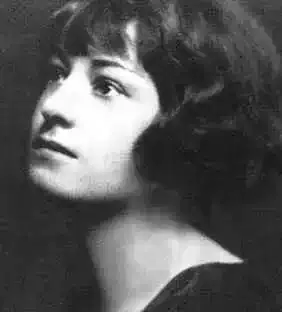
Dorothy Parker
One Perfect Rose
A single flow'r he sent me, since we met.
All tenderly his messenger he chose;
Deep-hearted, pure, with scented dew still wet -
One perfect rose.
I knew the language of the floweret;
'My fragile leaves,' it said, 'his heart enclose.'
Love long has taken for his amulet
One perfect rose.
Why is it no one ever sent me yet
One perfect limousine, do you suppose?
Ah no, it's always just my luck to get
One perfect rose.
312
Ogden Nash
The Termite
Some primal termite knocked on wood
And tasted it, and found it good!
And that is why your Cousin May
Fell through the parlor floor today.
And tasted it, and found it good!
And that is why your Cousin May
Fell through the parlor floor today.
312
James Whitcomb Riley
A New Year's Time At Willards's
The Hired Man Talks
There's old man Willards; an' his wife;
An' Marg'et-- S'repty's sister--; an'
There's me-- an' I'm the hired man;
An' Tomps McClure, you better yer life!
Well now, old Willards hain't so bad,
Considerin' the chance he's had.
Of course, he's rich, an' sleeps an' eats
Whenever he's a mind to: Takes
An' leans back in the Amen-seats
An' thanks the Lord fer all he makes--.
That's purty much all folks has got
Ag'inst the old man, like as not!
But there's his woman-- jes the turn
Of them-air two wild girls o' hern-Marg'et
an' S'repty-- allus in
Fer any cuttin'-up concern--
Church festibals, and foolishin'
Round Christmas-trees, an' New Year's sprees--
Set up to watch the Old Year go
An' New Year come-- sich things as these;
An' turkey-dinners, don't you know!
S'repty's younger, an' more gay,
An' purtier, an' finer dressed
Than Marg'et is-- but, lawzy-day!
She hain't the independentest!
'Take care!' old Willards used to say,
'Take care--! Let Marg'et have her way,
An' S'repty, you go off an' play
On your melodeum--!' But, best
Of all, comes Tomps! An' I'll be bound,
Ef he hain't jes the beatin'est
Young chap in all the country round!
Ef you knowed Tomps you'd like him, shore!
They hain't no man on top o' ground
Walks into my affections more--!
An' all the Settlement'll say
That Tomps was liked jes thataway
By ever'body, till he tuk
A shine to S'repty Willards--. Then
You'd ort'o see the old man buck
An' h'ist hisse'f, an' paw the dirt,
An' hint that 'common workin'-men
That didn't want their feelin's hurt
'Ud better hunt fer 'comp'ny' where
The folks was pore an' didn't care--!'
The pine-blank facts is--, the old man,
Last Christmas was a year ago,
Found out some presents Tomps had got
Fer S'repty, an' hit made him hot--
Set down an' tuk his pen in hand
An' writ to Tomps an' told him so
On legal cap, in white an' black,
An' give him jes to understand
'No Christmas-gifts o' 'lily-white'
An' bear's-ile could fix matters right,'
An' wropped 'em up an' sent 'em back!
Well, S'repty cried an' snuffled round
Consid'able. But Marg'et she
Toed out another sock, an' wound
Her knittin' up, an' drawed the tea,
An' then set on the supper-things,
An' went up in the loft an' dressed--
An' through it all you'd never guessed
What she was up to! An' she brings
Her best hat with her an her shawl,
An' gloves, an' redicule, an' all,
An' injirubbers, an' comes down
An' tells 'em she's a-goin' to town
To he'p the Christmas goin's-on
Her Church got up. An' go she does--
The best hosswoman ever was!
'An' what'll We do while you're gone?'
The old man says, a-tryin' to be
Agreeable. 'Oh! You?' says she--,
'You kin jaw S'repty, like you did,
An' slander Tomps!' An' off she rid!
Now, this is all I'm goin' to tell
Of this-here story-- that is, I
Have done my very level best
As fur as this, an' here I 'dwell,'
As auctioneers says, winkin' sly:
Hit's old man Willards tells the rest.
2
The Old Man Talks
Adzackly jes one year ago,
This New Year's day, Tomps comes to me--
In my own house, an' whilse the folks
Was gittin' dinner--, an' he pokes
His nose right in, an' says, says he:
'I got yer note-- an' read it slow!
You don't like me, ner I don't you,'
He says--, 'we're even there, you know!
But you've said, furder that no gal
Of yourn kin marry me, er shall,
An' I'd best shet off comin', too!'
An' then he says--, 'Well, them's Your views--;
But havin' talked with S'repty, we
Have both agreed to disagree
With your peculiar notions-- some;
An', that s the reason, I refuse
To quit a-comin' here, but come--
Not fer to threat, ner raise no skeer
An' spile yer turkey-dinner here--,
But jes fer S'repty's sake, to sheer
Yer New Year's. Shall I take a cheer?'
Well, blame-don! Ef I ever see
Sich impidence! I couldn't say
Not nary word! But Mother she
Sot out a cheer fer Tomps, an' they
Shuk hands an' turnt their back on me.
Then I riz-- mad as mad could be--!
But Marg'et says--, 'Now, Pap! You set
Right where you're settin'--! Don't you fret!
An' Tomps-- you warm yer feet!' says she,
'An throw yer mitts an' comfert on
The bed there! Where is S'repty gone!
The cabbage is a-scortchin'! Ma,
Stop cryin' there an' stir the slaw!'
Well--! What was Mother cryin' fer--?
I half riz up-- but Marg'et's chin
Hit squared-- an' I set down ag'in--
I allus was afeard o' her,
I was, by jucks! So there I set,
Betwixt a sinkin'-chill an' sweat,
An' scuffled with my wrath, an' shet
My teeth to mighty tight, you bet!
An' yit, fer all that I could do,
I eeched to jes git up an' whet
The carvin'-knife a rasp er two
On Tomps's ribs-- an' so would you--!
Fer he had riz an' faced around,
An' stood there, smilin', as they brung
The turkey in, all stuffed an' browned--
Too sweet fer nose, er tooth, er tongue!
With sniffs o' sage, an' p'r'aps a dash
Of old burnt brandy, steamin'-hot
Mixed kindo' in with apple-mash
An' mince-meat, an' the Lord knows what!
Nobody was a-talkin' then,
To 'filiate any awk'ardness--
No noise o' any kind but jes
The rattle o' the dishes when
They'd fetch 'em in an' set 'em down,
An' fix an' change 'em round an' round,
Like women does-- till Mother says--,
'Vittels is ready; Abner, call
Down S'repty-- she's up-stairs, I guess--.'
And Marg'et she says, 'Ef you bawl
Like that, she'll not come down at all!
Besides, we needn't wait till she
Gits down! Here Temps, set down by me,
An' Pap: say grace...!' Well, there I was--!
What could I do! I drapped my head
Behind my fists an' groaned; an' said--:
'Indulgent Parent! In Thy cause
We bow the head an' bend the knee
An' break the bread, an' pour the wine,
Feelin'--' (The stair-door suddently
Went bang! An' S'repty flounced by me--)
'Feelin',' I says, 'this feast is Thine--
This New Year's feast--' an' rap-rap-rap!
Went Marg'ets case-knife on her plate--
An' next, I heerd a sasser drap--,
Then I looked up, an' strange to state,
There S'repty set in Tomps lap--
An' huggin' him, as shore as fate!
An' Mother kissin' him k-slap!
An' Marg'et-- she chips in to drap
The ruther peert remark to me--:
'That 'grace' o' yourn,' she says, 'won't 'gee'--
This hain't no 'New Year's feast,'' says she--,
'This is a' Infair-Dinner, Pap!'
An' so it was--! Be'n married fer
Purt' nigh a week--! 'Twas Marg'et planned
The whole thing fer 'em, through an' through.
I'm rickonciled; an' understand,
I take things jes as they occur--,
Ef Marg'et liked Tomps, Tomps 'ud do--!
But I-says-I, a-holt his hand--,
'I'm glad you didn't marry Her-'
Cause Marg'et's my guardeen-- yes-sir--!
An' S'repty's good enough fer you!'
311

Emily Dickinson
A happy lip-breaks sudden
A happy lip-breaks sudden-
It doesn't state you how
It contemplated-smiling-
Just consummated-now-
But this one, wears its merriment
So patient-like a pain-
Fresh gilded-to elude the eyes
Unqualified, to scan-
It doesn't state you how
It contemplated-smiling-
Just consummated-now-
But this one, wears its merriment
So patient-like a pain-
Fresh gilded-to elude the eyes
Unqualified, to scan-
308
James Whitcomb Riley
Johnson's Boy
The world is turned ag'in' me,
And people says, 'They guess
That nothin' else is in me
But pure maliciousness!'
I git the blame for doin'
What other chaps destroy,
And I'm a-goin' to ruin
Because I'm 'Johnson's boy.'
THAT ain't my name--I'd ruther
They'd call me IKE or PAT--
But they've forgot the other--
And so have _I_, for that!
I reckon it's as handy,
When Nibsy breaks his toy,
Or some one steals his candy,
To say 'twas 'JOHNSON'S BOY!'
You can't git any water
At the pump, and find the spout
So durn chuck-full o' mortar
That you have to bore it out;
You tackle any scholar
In Wisdom's wise employ,
And I'll bet you half a dollar
He'll say it's 'Johnson's boy!'
Folks don't know how I suffer
In my uncomplainin' way--
They think I'm gittin' tougher
And tougher every day.
Last Sunday night, when Flinder
Was a-shoutin' out for joy,
And some one shook the winder,
He prayed for 'Johnson's boy.'
I'm tired of bein' follered
By farmers every day,
And then o' bein' collared
For coaxin' hounds away;
Hounds always plays me double-It's
a trick they all enjoy--
To git me into trouble,
Because I'm 'Johnson's boy.'
But if I git to Heaven,
I hope the Lord'll see
SOME boy has been perfect,
And lay it on to me;
I'll swell the song sonorous,
And clap my wings for joy,
And sail off on the chorus-
'Hurrah for 'Johnson's boy!''
308

Jonathan Swift
The Virtues Of Sid Hamet The Magician’s Rod
The rod was but a harmless wand,
While Moses held it in his hand;
But, soon as e'er he laid it down,
Twas a devouring serpent grown.
Our great magician, Hamet Sid,
Reverses what the prophet did:
His rod was honest English wood,
That senseless in a corner stood,
Till metamorphos'd by his grasp,
It grew an all-devouring asp;
Would hiss, and sting, and roll, and twist.
By the mere virtue of his fist:
But, when he laid it down, as quick
Resum'd the figure of a stick.
So, to her midnight feasts, the hag
Rides on a broomstick for a nag,
That, rais'd by magic of her breech,
O'er sea and land conveys the witch;
But with the morning dawn resumes
The peaceful state of common brooms.
They tell us something strange and odd,
About a certain magic rod,
That, bending down its top, divines
Whene'er the soil has golden mines;
Where there are none, it stands erect,
Scorning to show the least respect:
As ready was the wand of Sid
To bend where golden mines were hid:
In Scottish hills found precious ore,
Where none e'er look'd for it before;
And by a gentle bow divine
How well a cully's purse was lined;
To a forlorn and broken rake,
Stood without motion like a stake.
The rod of Hermes was renown'd
For charms above and under ground;
To sleep could mortal eyelids fix,
And drive departed souls to Styx.
That rod was a just type of Sid's,
Which o'er a British senate's lids
Could scatter opium full as well,
And drive as many souls to hell.
Sid's rod was slender, white, and tall,
Which oft he used to fish withal;
A PLACE was fasten'd to the hook,
And many score of gudgeons took;
Yet still so happy was his fate,
He caught his fish and sav'd his bait.
Sid's brethren of the conj'ring tribe,
A circle with their rod describe,
Which proves a magical redoubt,
To keep mischievous spirits out.
Sid's rod was of a larger stride,
And made a circle thrice as wide,
Where spirits throng'd with hideous din,
And he stood there to take them in;
But when th'enchanted rod was broke,
They vanish'd in a stinking smoke.
Achilles' sceptre was of wood,
Like Sid's, but nothing near so good;
Though down from ancestors divine
Transmitted to the heroes line;
Thence, thro' a long descent of kings,
Came an HEIRLOOM, as Homer sings.
Though this description looks so big,
That sceptre was a sapless twig,
Which, from the fatal day, when first
It left the forest where 'twas nurs'd,
As Homer tells us o'er and o'er,
Nor leaf, nor fruit, nor blossom bore.
Sid's sceptre, full of juice, did shoot
In golden boughs, and golden fruit;
And he, the dragon never sleeping,
Guarded each fair Hesperian Pippin.
No hobby-horse, with gorgeous top,
The dearest in Charles Mather's shop,
Or glittering tinsel of May Fair,
Could with this rod of Sid compare.
Dear Sid, then why wert thou so mad
To break thy rod like naughty lad?
You should have kiss'd it in your distress,
And then return'd it to your mistress;
Or made it a Newmarket switch,
And not a rod for thine own breech.
But since old Sid has broken this,
His next may be a rod in piss.
310

William Butler Yeats
The Great Day
HURRAH for revolution and more cannon-shot!
A beggar upon horseback lashes a beggar on foot.
Hurrah for revolution and cannon come again!
The beggars have changed places, but the lash goes on.
A beggar upon horseback lashes a beggar on foot.
Hurrah for revolution and cannon come again!
The beggars have changed places, but the lash goes on.
310

Henry Wadsworth Longfellow
In The Churchyard At Tarrytown
Here lies the gentle humorist, who died
In the bright Indian Summer of his fame!
A simple stone, with but a date and name,
Marks his secluded resting-place beside
The river that he loved and glorified.
Here in the autumn of his days he came,
But the dry leaves of life were all aflame
With tints that brightened and were multiplied.
How sweet a life was his; how sweet a death!
Living, to wing with mirth the weary hours,
Or with romantic tales the heart to cheer;
Dying, to leave a memory like the breath
Of summers full of sunshine and of showers,
A grief and gladness in the atmosphere.
306
James Whitcomb Riley
Little Dick And The Clock
When Dicky was sick
In the night, and the clock,
As he listened, said 'TickAtty--
tick-atty--tock!'
He said that _it_ said,
Every time it said 'Tick,'
It said 'Sick,' instead,
And he _heard_ it say 'Sick!'
And when it said 'TickAtty--
tick-atty--tock,'
He said it said 'SickAtty--
sick-atty--sock!'
And he tried to _see_ then,
But the light was too dim,
Yet he _heard_ it again-And't
was _talking_ to him!
And then it said 'SickAtty--
sick-atty--sick
You poor little DickAtty--
Dick-atty--dock!
Have you got the hick-
Atties? Hi! send for Doc
To hurry up quick
Atty--quick-atty--quock,
And heat a hot brick
Atty--
brick-atty--brock,
And rikle-ty wrap it
And clickle-ty clap it
Against his cold feet
Al-
ty--weep-aty--eepaty-_
There_ he goes, slapit
Ty--
slippaty--sleepaty!'
305
Dorothy Parker
Oscar Wilde
If, with the literate, I am
Impelled to try an epigram,
I never seek to take the credit;
We all assume that Oscar said it.
Impelled to try an epigram,
I never seek to take the credit;
We all assume that Oscar said it.
304
James Whitcomb Riley
A Liz Town Humorist
Settin' round the stove, last night,
Down at Wess's store, was me
And Mart Strimples, Tunk, and White,
And Doc Bills, and two er three
Fellers o' the Mudsock tribe
No use tryin' to describe!
And says Doc, he says, says he--,
'Talkin' 'bout good things to eat,
Ripe mushmillon's hard to beat!'
I chawed on. And Mart he 'lowed
Wortermillon beat the mush--.
'Red,' he says, 'and juicy-- Hush--!
I'll jes' leave it to the crowd!'
Then a Mudsock chap, says he--,
'Punkin's good enough fer me--
Punkin pies, I mean,' he says--,
Them beats millons--! What say, Wess?
I chawed on. And Wess says--, 'Well,
You jes' fetch that wife of mine
All yer wortermillon-rine--,
And she'll bile it down a spell--
In with sorghum, I suppose,
And what else, Lord only knows--!
But I'm here to tell all hands
Them p'serves meets my demands!'
I chawed on. And White he says--,
'Well, I'll jes' stand, in with Wess-I'm
no hog!' And Tunk says--, 'I
Guess I'll pastur' out on pie
With the Mudsock boys!' says he;
'Now what's yourn?' he says to me:
I chawed on-- fer-- quite a spell
Then I speaks up, slow and dry--,
Jes' tobacker!' I-says-I--.
And you'd ort o' heerd 'em yell!
301

Walter de la Mare
The Mocking Fairy
'Won't you look out of your window, Mrs. Gill?'
Quoth the Fairy, nidding, nodding in the garden;
'Can't you look out of your window, Mrs. Gill?'
Quoth the Fairy, laughing softly in the garden;
But the air was still, the cherry boughs were still,
And the ivy-tod neath the empty sill,
And never from her window looked out Mrs. Gill
On the Fairy shrilly mocking in the garden.
'What have they done with you, you poor Mrs. Gill?'
Quoth the Fairy brightly glancing in the garden;
'Where have they hidden you, you poor old Mrs. Gill?'
Quoth the Fairy dancing lightly in the garden;
But night's faint veil now wrapped the hill,
Stark 'neath the stars stood the dead-still Mill,
And out of her cold cottage never answered Mrs. Gill
The Fairy mimbling, mambling in the garden.
301
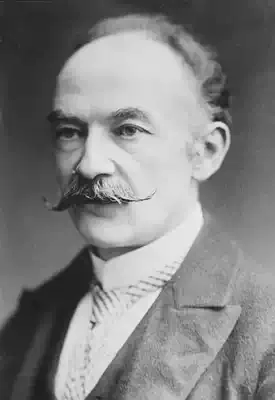
Thomas Hardy
A Wife in London (December, )
I--The Tragedy
She sits in the tawny vapour
That the City lanes have uprolled,
Behind whose webby fold on fold
Like a waning taper
The street-lamp glimmers cold.
A messenger's knock cracks smartly,
Flashed news is in her hand
Of meaning it dazes to understand
Though shaped so shortly:
He--has fallen--in the far South Land . . .
II--The Irony
'Tis the morrow; the fog hangs thicker,
The postman nears and goes:
A letter is brought whose lines disclose
By the firelight flicker
His hand, whom the worm now knows:
Fresh--firm--penned in highest feather -
Page-full of his hoped return,
And of home-planned jaunts by brake and burn
In the summer weather,
And of new love that they would learn.
301
Jonathan Swift
Corinna
This day (the year I dare not tell)
Apollo play'd the midwife's part;
Into the world Corinna fell,
And he endued her with his art.
But Cupid with a Satyr comes;
Both softly to the cradle creep;
Both stroke her hands, and rub her gums,
While the poor child lay fast asleep.
Then Cupid thus: 'This little maid
Of love shall always speak and write;'
'And I pronounce,' the Satyr said,
'The world shall feel her scratch and bite.'
Her talent she display'd betimes;
For in a few revolving moons,
She seem'd to laugh and squall in rhymes,
And all her gestures were lampoons.
At six years old, the subtle jade
Stole to the pantry-door, and found
The butler with my lady's maid:
And you may swear the tale went round.
She made a song, how little miss
Was kiss'd and slobber'd by a lad:
And how, when master went to p—,
Miss came, and peep'd at all he had.
At twelve, a wit and a coquette;
Marries for love, half whore, half wife;
Cuckolds, elopes, and runs in debt;
Turns authoress, and is Curll's for life.
Her common-place book all gallant is,
Of scandal now a cornucopia;
She pours it out in Atalantis
Or memoirs of the New Utopia.
298
Ogden Nash
Very Like a Whale
One thing that literature would be greatly the better for
Would be a more restricted employment by the authors of simile and
metaphor.
Authors of all races, be they Greeks, Romans, Teutons or Celts,
Can't seem just to say that anything is the thing it is but have to
go out of their way to say that it is like something else.
What does it mean when we are told
That that Assyrian came down like a wolf on the fold?
In the first place, George Gordon Byron had enough experience
To know that it probably wasn't just one Assyrian, it was a lot of
Assyrians.
However, as too many arguments are apt to induce apoplexy and
thus hinder longevity.
We'll let it pass as one Assyrian for the sake of brevity.
Now then, this particular Assyrian, the one whose cohorts were
gleaming in purple and gold,
Just what does the poet mean when he says he came down like a
wold on the fold?
In heaven and earth more than is dreamed of in our philosophy
there are great many things.
But I don't imagine that among them there is a wolf with purple
and gold cohorts or purple and gold anythings.
No, no, Lord Byron, before I'll believe that this Assyrian was
actually like a wolf I must have some kind of proof;
Did he run on all fours and did he have a hairy tail and a big red
mouth and big white teeth and did he say Woof Woof?
Frankly I think it is very unlikely, and all you were entitled to say,
at the very most,
Was that the Assyrian cohorts came down like a lot of Assyrian
cohorts about to destroy the Hebrew host.
But that wasn't fancy enough for Lord Byron, oh dear me no, he
had to invent a lot of figures of speech and then interpolate them,
With the result that whenever you mention Old Testament soldiers
to people they say Oh yes, they're the ones that a lot of
wolves dressed up in gold and purple ate them.
That's the kind of thing that's being done all the time by poets,
from Homer to Tennyson;
They're always comparing ladies to lilies and veal to venison,
And they always say things like that the snow is a white blanket
after a winter storm.
Oh it is, is it, all right then, you sleep under a six-inch blanket of
snow and I'll sleep under a half-inch blanket of unpoetical
blanket material and we'll see which one keeps warm,
And after that maybe you'll begin to comprehend dimly
What I mean by too much metaphor and simile.
294
Jonathan Swift
A Satirical Elegy on the Death of a Late Famous General
"His Grace! impossible! what, dead!
Of old age too, and in his bed!
And could that mighty warrior fall,
And so inglorious, after all?
Well, since he's gone, no matter how,
The last loud trump must wake him now;
And, trust me, as the noise grows stronger,
He'd wish to sleep a little longer.
And could he be indeed so old
As by the newspapers we're told?
Threescore, I think, is pretty high;
'Twas time in conscience he should die!
This world he cumber'd long enough;
He burnt his candle to the snuff;
And that's the reason, some folks think,
He left behind so great a stink.
Behold his funeral appears,
Nor widows' sighs, nor orphans' tears,
Wont at such times each heart to pierce,
Attend the progress of his hearse.
But what of that? his friends may say,
He had those honours in his day.
True to his profit and his pride,
He made them weep before he died
Come hither, all ye empty things!
Ye bubbles rais'd by breath of kings!
Who float upon the tide of state;
Come hither, and behold your fate!
Let pride be taught by this rebuke,
How very mean a thing's a duke;
From all his ill-got honours flung,
Turn'd to that dirt from whence he sprung"
295
Jonathan Swift
The Fable Of Midas
Midas, we are in story told,
Turn'd every thing he touch'd to gold:
He chipp'd his bread; the pieces round
Glitter'd like spangles on the ground:
A codling, ere it went his lip in,
Would straight become a golden pippin.
He call'd for drink; you saw him sup
Potable gold in golden cup:
His empty paunch that he might fill,
He suck'd his victuals thro' a quill.
Untouch'd it pass'd between his grinders,
Or't had been happy for gold-finders:
He cock'd his hat, you would have said
Mambrino's helm adorn'd his head;
Whene'er he chanced his hands to lay
On magazines of corn or hay,
Gold ready coin'd appear'd instead
Of paltry provender and bread;
Hence, we are by wise farmers told
Old hay is equal to old gold:
And hence a critic deep maintains
We learn'd to weigh our gold by grains.
This fool had got a lucky hit;
And people fancied he had wit,
Two gods their skill in music tried
And both chose Midas to decide:
He against Ph[oelig]bus' harp decreed,
And gave it for Pan's oaten reed:
The god of wit, to show his grudge,
Clapt asses' ears upon the judge,
A goodly pair, erect and wide,
Which he could neither gild nor hide.
And now the virtue of his hands
Was lost among Pactolus' sands,
Against whose torrent while he swims
The golden scurf peels off his limbs:
Fame spreads the news, and people travel
From far, to gather golden gravel;
Midas, exposed to all their jeers,
Had lost his art, and kept his ears.
This tale inclines the gentle reader
To think upon a certain leader;
To whom, from Midas down, descends
That virtue in the fingers' ends.
What else by perquisites are meant,
By pensions, bribes, and three per cent.?
By places and commissions sold,
And turning dung itself to gold?
By starving in the midst of store,
As t'other Midas did before?
None e'er did modern Midas chuse
Subject or patron of his muse,
But found him thus their merit scan,
That Phoebus must give place to Pan:
He values not the poet's praise,
Nor will exchange his plums for bays.
To Pan alone rich misers call;
And there's the jest, for Pan is ALL.
Here English wits will be to seek,
Howe'er, 'tis all one in the Greek.
Besides, it plainly now appears
Our Midas, too, has ass's ears:
Where every fool his mouth applies,
And whispers in a thousand lies;
Such gross delusions could not pass
Thro' any ears but of an ass.
But gold defiles with frequent touch,
There's nothing fouls the hand so much;
And scholars give it for the cause
Of British Midas' dirty paws;
Which, while the senate strove to scour,
They wash'd away the chemic power.
While he his utmost strength applied,
To swim against this popular tide,
The golden spoils flew off apace,
Here fell a pension, there a place:
The torrent merciless imbibes
Commissions, perquisites, and bribes,
By their own weight sunk to the bottom;
Much good may't do 'em that have caught 'em!
And Midas now neglected stands,
With ass's ears, and dirty hands.
293

Robert Louis Stevenson
Apologetic Postscript Of A Year Later
IF you see this song, my dear,
And last year's toast,
I'm confoundedly in fear
You'll be serious and severe
About the boast.
Blame not that I sought such aid
To cure regret.
I was then so lowly laid
I used all the Gasconnade
That I could get.
Being snubbed is somewhat smart,
Believe, my sweet;
And I needed all my art
To restore my broken heart
To its conceit.
Come and smile, dear, and forget
I boasted so,
I apologise - regret -
It was all a jest; - and - yet -
I do not know.
293

Henry Lawson
Here's Luck
Old Time is tramping close to-day—you hear his bluchers fall,
A mighty change is on the way, an’ God protect us all;
Some dust’ll fly from beery coats—at least it’s been declared.
I’m glad that wimin has the votes—but just a trifle scared.
I’m just a trifle scared—For why? The wimin mean to rule;
It makes me feel like days gone by when I was caned at school.
The days of men is nearly dead—of double moons and stars—
They’ll soon put out our pipes, ’tis said, an’ close the public bars.
No more we’ll take a glass of ale when pushed with care an’ strife,
An’chuckle home with that old tale we used to tell the wife.
We’ll laugh an’joke an’ sing no more with jolly beery chums,
An’ shout ‘Here’s luck!’ while waitin’ for the luck that never comes.
Did we prohibit swillin’ tea clean out of common-sense
Or legislate on gossipin’ across a backyard fence?
Did we prohibit bustles—or the hoops when they was here?
The wimin never think of this—they want to stop our beer.
The track o’ life is dry enough, an’ crossed with many a rut,
But, oh! we’ll find it long an’ rough when all the pubs is shut,
When all the pubs is shut, an’ gone the doors we used to seek,
An’ we go toilin’, thirstin’ on through Sundays all the week.
For since the days when pubs was ‘inns’—in years gone past’n’ far—
Poor sinful souls have drowned their sins an’ sorrers at the bar;
An’ though at times it led to crimes, an’ debt, and such complaints—
I scarce dare think about the time when all mankind is saints.
’Twould make the bones of Bacchus leap an’ break his coffin lid;
And Burns’s ghost would wail an’ weep as Bobby never did.
But let the preachers preach in style, an’ rave and rant—’n’ buck,
I rather guess they’ll hear awhile the old war-cry: ‘Here’s Luck!’
The world might wobble round the sun, an’ all the banks go bung,
But pipes’ll smoke an’ liquor run while Auld Lang Syne is sung.
While men are driven through the mill, an’ flinty times is struck,
They’ll find a private entrance still! Here’s Luck, old man—Here’s Luck!
289