
Art

John Keats
Ode On A Grecian Urn
Thou still unravish'd bride of quietness,
Thou foster-child of silence and slow time,
Sylvan historian, who canst thus express
A flowery tale more sweetly than our rhyme:
What leaf-fring'd legend haunts about thy shape
Of deities or mortals, or of both,
In Tempe or the dales of Arcady?
What men or gods are these? What maidens loth?
What mad pursuit? What struggle to escape?
What pipes and timbrels? What wild ecstasy?
Heard melodies are sweet, but those unheard
Are sweeter; therefore, ye soft pipes, play on;
Not to the sensual ear, but, more endear'd,
Pipe to the spirit ditties of no tone:
Fair youth, beneath the trees, thou canst not leave
Thy song, nor ever can those trees be bare;
Bold Lover, never, never canst thou kiss,
Though winning near the goal yet, do not grieve;
She cannot fade, though thou hast not thy bliss,
For ever wilt thou love, and she be fair!
Ah, happy, happy boughs! that cannot shed
Your leaves, nor ever bid the Spring adieu;
And, happy melodist, unwearied,
For ever piping songs for ever new;
More happy love! more happy, happy love!
For ever warm and still to be enjoy'd,
For ever panting, and for ever young;
All breathing human passion far above,
That leaves a heart high-sorrowful and cloy'd,
A burning forehead, and a parching tongue.
Who are these coming to the sacrifice?
To what green altar, O mysterious priest,
Lead'st thou that heifer lowing at the skies,
And all her silken flanks with garlands drest?
What little town by river or sea shore,
Or mountain-built with peaceful citadel,
Is emptied of this folk, this pious morn?
And, little town, thy streets for evermore
Will silent be; and not a soul to tell
Why thou art desolate, can e'er return.
O Attic shape! Fair attitude! with brede
Of marble men and maidens overwrought,
With forest branches and the trodden weed;
Thou, silent form, dost tease us out of thought
As doth eternity: Cold Pastoral!
When old age shall this generation waste,
Thou shalt remain, in midst of other woe
Than ours, a friend to man, to whom thou say'st,
"Beauty is truth, truth beauty,--that is all
Ye know on earth, and all ye need to know."
793

Antonio Roberval Miketen
Opportunioty of the Rose
I
The Song of João Moura
The bullfighter shouted in the center of the arena
and the horse danced in the depth of fear.
II
Picasso wanted to paint an arena,
full-sized, accurate,
with miuras with needle-sharp horns, carved
under the sleek black mountains.
On the canvas of the painter bad omens show:
in Guernica, did he paint the victory of the bull?
Consider that the arenas are human roses
ready to burst with the rage of the blood.
If Picassos dream were not so absurd,
Manolete, for sure, in his gala outfit
remembering Linares, would give himself to the bull:
would he repeat, once again, the faena of the rose?
III
Why do we trust the bull with the evidence of the wait,
on this chancy dove, innocent yet a beast?
IV
At the very moment when the body is dressed in gala
the heat of the shroud increases its nakednes.
V
Tragedy of "YIYO"
The mortal spike ripping the flesh
of the bullfighter makes sprout a brutal beauty.
VI
Will I see the day when the bull will find its luck
in the prime of the fake womb of the reckless veronica?
766
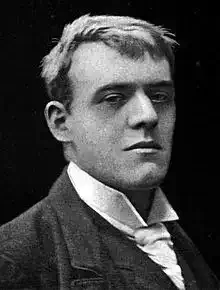
Hilaire Belloc
Heroic Poem in Praise of Wine
To exalt, enthrone, establish and defend,
To welcome home mankind's mysterious friend
Wine, true begetter of all arts that be;
Wine, privilege of the completely free;
Wine the recorder; wine the sagely strong;
Wine, bright avenger of sly-dealing wrong,
Awake, Ausonian Muse, and sing the vineyard song!
Sing how the Charioteer from Asia came,
And on his front the little dancing flame
Which marked the God-head. Sing the Panther-team,
The gilded Thrysus twirling, and the gleam
Of cymbals through the darkness. Sing the drums.
He comes; the young renewer of Hellas comes!
The Seas await him. Those Aegean Seas
Roll from the dawning, ponderous, ill at ease,
In lifts of lead, whose cresting hardly breaks
To ghostly foam, when suddenly there awakes
A mountain glory inland. All the skies
Are luminous; and amid the sea bird cries
The mariner hears a morning breeze arise.
Then goes the Pageant forward. The sea-way
Silvers the feet of that august array
Trailing above the waters, through the airs;
And as they pass a wind before them bears
The quickening word, the influence magical.
The Islands have received it, marble-tall;
The long shores of the mainland. Something fills
The warm Euboean combes, the sacred hills
Of Aulis and of Argos. Still they move
Touching the City walls, the Temple grove,
Till, far upon the horizon-glint, a gleam
Of light, of trembling light, revealed they seem
Turned to a cloud, but to a cloud that shines,
And everywhere as they pass, the Vines! The Vines!
The Vines, the conquering Vines! And the Vine
breaths
Her savour through the upland, empty heaths
Of treeless wastes; the Vines have come to where
The dark Pelasgian steep defends the lair
Of the wolf's hiding; to the empty fields
By Aufidus, the dry campaign that yields
No harvest for the husbandman, but now
Shall bear a nobler foison than the plough;
To where, festooned along the tall elm trees,
Tendrils are mirrored in Tyrrhenian seas;
To where the South awaits them; even to where
Stark, African informed of burning air,
Upturned to Heaven the broad Hipponian plain
Extends luxurious and invites the main.
Guelma's a mother: barren Thaspsa breeds;
And northward in the valleys, next the meads
That sleep by misty river banks, the Vines
Have struck to spread below the solemn pines.
The Vines are on the roof-trees. All the Shrines
And Homes of men are consecrate with Vines.
And now the task of that triumphant day
Has reached to victory. In the reddening ray
With all his train, from hard Iberian lands
Fulfilled, apparent, that Creator stands
Halted on Atlas. Far Beneath him, far,
The strength of Ocean darkening and the star
Beyond all shores. There is a silence made.
It glorifies: and the gigantic shade
Of Hercules adores him from the West.
Dead Lucre: burnt Ambition: Wine is best.
But what are these that from the outer murk
Of dense mephitic vapours creeping lurk
To breathe foul airs from that corrupted well
Which oozes slime along the floor of Hell?
These are the stricken palsied brood of sin
In whose vile veins, poor, poisonous and thin,
Decoctions of embittered hatreds crawl:
These are the Water-Drinkers, cursed all!
On what gin-sodden Hags, what flaccid sires
Bred these White Slugs from what exhaust desires?
In what close prison's horror were their wiles
Watched by what tyrant power with evil smiles;
Or in what caverns, blocked from grace and air
Received they, then, the mandates of despair?
What! Must our race, our tragic race, that roam
All exiled from our first, and final, home:
That in one moment of temptation lost
Our heritage, and now wander, hunger-tost
Beyond the Gates (still speaking with our eyes
For ever of remembered Paradise),
Must we with every gift accepted, still,
With every joy, receive attendant ill?
Must some lewd evil follow all our good
And muttering dog our brief beatitude?
A primal doom, inexorable, wise,
Permitted, ordered, even these to rise.
Even in the shadow of so bright a Lord
Must swarm and propagate the filthy horde
Debased, accursed I say, abhorrent and abhorred.
Accursed and curse-bestowing. For whosoe'er
Shall suffer their contagion, everywhere
Falls from the estate of man and finds his end
To the mere beverage of the beast condemned.
For such as these in vain the Rhine has rolled
Imperial centuries by hills of gold;
For such as these the flashing Rhone shall rage
In vain its lightning through the Hermitage
Or level-browed divine Touraine receive
The tribute of her vintages at eve.
For such as these Burgundian heats in vain
Swell the rich slope or load the empurpled plain.
Bootless for such as these the mighty task
Of bottling God the Father in a flask
And leading all Creation down distilled
To one small ardent sphere immensely filled.
With memories empty, with experience null,
With vapid eye-balls meaningless and dull
They pass unblest through the unfruitful light;
And when we open the bronze doors of Night,
When we in high carousal, we reclined,
Spur up to Heaven the still ascending mind,
Pass with the all inspiring, to and fro,
The torch of genius and the Muse's glow,
They, lifeless, stare at vacancy alone
Or plan mean traffic, or repeat their moan.
We, when repose demands us, welcomed are
In young white arms, like our great Exemplar
Who, wearied with creation, takes his rest
And sinks to sleep on Ariadne's breast.
They through the darkness into darkness press
Despised, abandoned and companionless.
And when the course of either's sleep has run
We leap to life like heralds of the sun;
We from the couch in roseate mornings gay
Salute as equals the exultant day
While they, the unworthy, unrewarded, they
The dank despisers of the Vine, arise
To watch grey dawns and mourn indifferent skies.
Forget them! Form the Dionysian ring
And pulse the ground, and Io, Io, sing.
Father Lenaean, to whom our strength belongs,
Our loves, our wars, our laughter and our songs,
Remember our inheritance, who praise
Your glory in these last unhappy days
When beauty sickens and a muddied robe
Of baseness fouls the universal globe.
Though all the Gods indignant and their train
Abandon ruined man, do thou remain!
By thee the vesture of our life was made,
The Embattled Gate, the lordly Colonnade,
The woven fabric's gracious hues, the sound
Of trumpets, and the quivering fountain-round,
And, indestructible, the Arch, and, high,
The Shaft of Stone that stands against the sky,
And, last, the guardian-genius of them, Rhyme,
Come from beyond the world to conquer time:
All these are thine, Lenaean.
By thee do seers the inward light discern;
By thee the statue lives, the Gods return;
By thee the thunder and the falling foam
Of loud Acquoria's torrent call to Rome;
Alba rejoices in a thousand springs,
Gensano laughs, and Orvieto sings...
But, Ah! With Orvieto, with that name
Of dark, Eturian, subterranean flame
The years dissolve. I am standing in that hour
Of majesty Septembral, and the power
Which swells the clusters when the nights are still
With autumn stars on Orvieto hill.
Had these been mine, Ausonian Muse, to know
The large contented oxen heaving slow;
To count my sheaves at harvest; so to spend
Perfected days in peace until the end;
With every evening's dust of gold to hear
The bells upon the pasture height, the clear
Full horn of herdsmen gathering in the kine
To ancient byres in hamlets Appenine,
And crown abundant age with generous ease:
Had these, Ausonian Muse, had these, had these.....
But since I would not, since I could not stay,
Let me remember even in this my day
How, when the ephemeral vision's lure is past
All, all, must face their Passion at the last
Was there not one that did to Heaven complain
How, driving through the midnight and the rain,
He struck, the Atlantic seethe and surge before,
Wrecked in the North along a lonely shore
To make the lights of home and hear his name no
more.
Was there not one that from a desperate field
Rode with no guerdon but a rifted shield;
A name disherited; a broken sword;
Wounds unrenowned; battle beneath no Lord;
Strong blows, but on the void, and toil without
reward.
When from the waste of such long labour done
I too must leave the grape-ennobling sun
And like the vineyard worker take my way
Down the long shadows of declining day,
Bend on the sombre plain my clouded sight
And leave the mountain to the advancing night,
Come to the term of all that was mine own
With nothingness before me, and alone;
Then to what hope of answer shall I turn?
Comrade-Commander whom I dared not earn,
What said You then to trembling friends and
few?
"A moment, and I drink it with you new:
But in my Father's Kingdom." So, my Friend,
Let not Your cup desert me in the end.
But when the hour of mine adventure's near
Just and benignant, let my youth appear
Bearing a Chalice, open, golden, wide,
With benediction graven on its side.
So touch my dying lip: so bridge that deep:
So pledge my waking from the gift of sleep,
And, sacramental, raise me the Divine:
Strong brother in God and last companion, Wine.
739
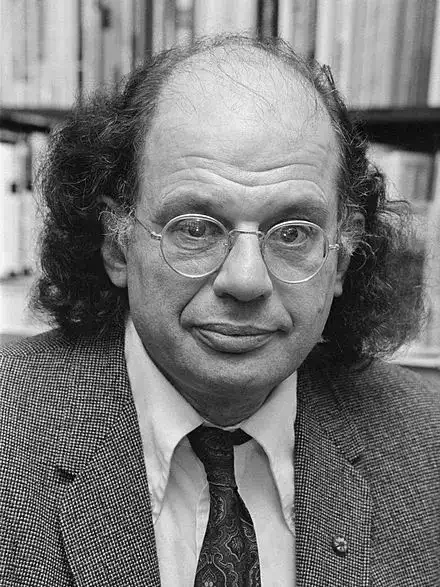
Allen Ginsberg
Feb. 29, 1958
Last nite I dreamed of T.S. Eliot
welcoming me to the land of dream
Sofas couches fog in England
Tea in his digs Chelsea rainbows
curtains on his windows, fog seeping in
the chimney but a nice warm house
and an incredibly sweet hooknosed
Eliot he loved me, put me up,
gave me a couch to sleep on,
conversed kindly, took me serious
asked my opinion on Mayakovsky
I read him Corso Creeley Kerouac
advised Burroughs Olson Huncke
the bearded lady in the Zoo, the
intelligent puma in Mexico City
6 chorus boys from Zanzibar
who chanted in wornout polygot
Swahili, and the rippling rythyms
of Ma Rainey and Vachel Lindsay.
On the Isle of the Queen
we had a long evening's conversation
Then he tucked me in my long
red underwear under a silken
blanket by the fire on the sofa
gave me English Hottie
and went off sadly to his bed,
Saying ah Ginsberg I am glad
to have met a fine young man like you.
At last, I woke ashamed of myself.
Is he that good and kind? Am I that great?
What's my motive dreaming his
manna? What English Department
would that impress? What failure
to be perfect prophet's made up here?
I dream of my kindness to T.S. Eliot
wanting to be a historical poet
and share in his finance of Imageryoverambitious
dream of eccentric boy.
God forbid my evil dreams come true.
Last nite I dreamed of Allen Ginsberg.
T.S. Eliot would've been ashamed of me.
758

Ezra Pound
Poetic Eggs
I am a grave poetic hen
That lays poetic eggs
And to enhance my temperament
A little quiet begs.
We make the yolk philosophy,
True beauty the albumen.
And then gum on a shell of form
To make the screed sound human.
That lays poetic eggs
And to enhance my temperament
A little quiet begs.
We make the yolk philosophy,
True beauty the albumen.
And then gum on a shell of form
To make the screed sound human.
751

William Shakespeare
Sonnet 83: I never saw that you did painting need
I never saw that you did painting need,
And therefore to your fair no painting set;
I found, or thought I found, you did exceed
That barren tender of a poet's debt;
And therefore have I slept in your report,
That you yourself being extant well might show
How far a modern quill doth come too short,
Speaking of worth, what worth in you doth grow.
This silence for my sin you did impute,
Which shall be most my glory, being dumb,
For I impair not beauty, being mute,
When others would give life and bring a tomb.
There lives more life in one of your fair eyes,
Than both your poets can in praise devise.
742

Robert Browning
Abt Vogler
Would that the structure brave, the manifold music I build,
Bidding my organ obey, calling its keys to their work,
Claiming each slave of the sound, at a touch, as when Solomon willed
Armies of angels that soar, legions of demons that lurk,
Man, brute, reptile, fly,--alien of end and of aim,
Adverse, each from the other heaven-high, hell-deep removed,--
Should rush into sight at once as he named the ineffable Name,
And pile him a palace straight, to pleasure the princess he loved!
Would it might tarry like his, the beautiful building of mine,
This which my keys in a crowd pressed and importuned to raise!
Ah, one and all, how they helped, would dispart now and now combine,
Zealous to hasten the work, heighten their master his praise!
And one would bury his brow with a blind plunge down to hell,
Burrow awhile and build, broad on the roots of things,
Then up again swim into sight, having based me my palace well,
Founded it, fearless of flame, flat on the nether springs.
And another would mount and march, like the excellent minion he was,
Ay, another and yet another, one crowd but with many a crest,
Raising my rampired walls of gold as transparent as glass,
Eager to do and die, yield each his place to the rest:
For higher still and higher (as a runner tips with fire,
When a great illumination surprises a festal night--
Outlining round and round Rome's dome from space to spire)
Up, the pinnacled glory reached, and the pride of my soul was in sight.
In sight? Not half! for it seemed, it was certain, to match man's birth,
Nature in turn conceived, obeying an impulse as I;
And the emulous heaven yearned down, made effort to reach the earth,
As the earth had done her best, in my passion, to scale the sky:
Novel splendours burst forth, grew familiar and dwelt with mine,
Not a point nor peak but found and fixed its wandering star;
Meteor-moons, balls of blaze: and they did not pale nor pine,
For earth had attained to heaven, there was no more near nor far.
Nay more; for there wanted not who walked in the glare and glow,
Presences plain in the place; or, fresh from the Protoplast,
Furnished for ages to come, when a kindlier wind should blow,
Lured now to begin and live, in a house to their liking at last;
Or else the wonderful Dead who have passed through the body and gone,
But were back once more to breathe in an old world worth their new:
What never had been, was now; what was, as it shall be anon;
And what is,--shall I say, matched both? for I was made perfect too.
All through my keys that gave their sounds to a wish of my soul,
All through my soul that praised as its wish flowed visibly forth,
All through music and me! For think, had I painted the whole,
Why, there it had stood, to see, nor the process so wonder-worth:
Had I written the same, made verse--still, effect proceeds from cause,
Ye know why the forms are fair, ye hear how the tale is told;
It is all triumphant art, but art in obedience to laws,
Painter and poet are proud in the artist-list enrolled:--
But here is the finger of God, a flash of the will that can,
Existent behind all laws, that made them and, lo, they are!
And I know not if, save in this, such gift be allowed to man,
That out of three sounds he frame, not a fourth sound, but a star.
Consider it well: each tone of our scale in itself is nought;
It is everywhere in the world--loud, soft, and all is said:
Give it to me to use! I mix it with two in my thought:
And, there! Ye have heard and seen: consider and bow the head!
Well, it is gone at last, the palace of music I reared;
Gone! and the good tears start, the praises that come too slow;
For one is assured at first, one scarce can say that he feared,
That he even gave it a thought, the gone thing was to go.
Never to be again! But many more of the kind
As good, nay, better, perchance: is this your comfort to me?
To me, who must be saved because I cling with my mind
To the same, same self, same love, same God: ay, what was, shall be.
Therefore to whom turn I but to thee, the ineffable Name?
Builder and maker, thou, of houses not made with hands!
What, have fear of change from thee who art ever the same?
Doubt that thy power can fill the heart that thy power expands?
There shall never be one lost good! What was, shall live as before;
The evil is null, is nought, is silence implying sound;
What was good shall be good, with, for evil, so much good more;
On the earth the broken arcs; in the heaven, a perfect round.
All we have willed or hoped or dreamed of good shall exist;
Not its semblance, but itself; no beauty, nor good, nor power
Whose voice has gone forth, but each survives for the melodist
When eternity affirms the conception of an hour.
The high that proved too high, the heroic for earth too hard,
The passion that left the ground to lose itself in the sky,
Are music sent up to God by the lover and the bard;
Enough that he heard it once: we shall hear it by and by.
And what is our failure here but a triumph's evidence
For the fulness of the days? Have we withered or agonized?
Why else was the pause prolonged but that singing might issue thence?
Why rushed the discords in, but that harmony should be prized?
Sorrow is hard to bear, and doubt is slow to clear,
Each sufferer says his say, his scheme of the weal and woe:
But God has a few of us whom he whispers in the ear;
The rest may reason and welcome; 'tis we musicians know.
Well, it is earth with me; silence resumes her reign:
I will be patient and proud, and soberly acquiesce.
Give me the keys. I feel for the common chord again,
Sliding by semitones till I sink to the minor,--yes,
And I blunt it into a ninth, and I stand on alien ground,
Surveying awhile the heights I rolled from into the deep;
Which, hark, I have dared and done, for my resting-place is found,
The C Major of this life: so, now I will try to sleep.
728
William Shakespeare
Sonnet 86: Was it the proud full sail of his great verse
Was it the proud full sail of his great verse,
Bound for the prize of all-too-precious you,
That did my ripe thoughts in my brain inhearse,
Making their tomb the womb wherein they grew?
Was it his spirit, by spirits taught to write
Above a mortal pitch, that struck me dead?
No, neither he, nor his compeers by night
Giving him aid, my verse astonishèd.
He nor that affable familiar ghost
Which nightly gulls him with intelligence,
As victors of my silence cannot boast;
I was not sick of any fear from thence.
But when your countenance filled up his line,
Then lacked I matter, that enfeebled mine.
724
Ezra Pound
Homage To Sextus Propertius - XII
Who, who will be the next man to entrust his girl to a friend?
Love interferes with fidelities;
The gods have brought shame on their relatives;
Each man wants the pomegranate for himself;
Amiable and harmonious people are pushed incontinent into duels,
A Trojan and adulterous person came to Menelaus under the rites of hospitium,
And there was a case in Colchis, Jason and that woman in Colchis;
And besides, Lynceus,
you were drunk.
Could you endure such promiscuity?
She was not renowned for fidelity;
But to jab a knife in my vitals, to have passed on a swig of poison,
Preferable, my dear boy, my dear Lynceus,
Comrade, comrade of my life, of my purse, of my person;
But in one bed, in one bed alone, my dear Lynceus
I deprecate your attendance;
I would ask a like boon of Jove.
And you write of Achelous, who contended with Hercules,
You write of Adrastus' horses and the funeral rites of Achenor,
And you will not leave off imitating Aeschylus.
Though you make a hash of Antimachus,
You think you are going to do Homer.
And still a girl scorns the gods,
Of all these young women
not one has enquired the cause of the world,
Nor the modus of lunar eclipses
Nor whether there be any patch left of us
After we cross the infernal ripples,
nor if the thunder fall from predestination;
Nor anything else of importance.
Upon the Actian marshes Virgil is Phoebus' chief of police,
He can tabulate Caesar's great ships.
He thrills to Ilian arms,
He shakes the Trojan weapons of Aeneas,
And casts stores on Lavinian beaches.
Make way, ye Roman authors,
clear the street, ye Greeks,
For a much larger Iliad is on the course of construction
(and to Imperial order)
Clear the streets, O ye Greeks!
And you also follow him 'neath Phrygian pine shade:
Thyrsis and Daphnis upon whittled reeds,
And how ten sins can corrupt young maidens;
Kids for a bribe and pressed udders,
Happy selling poor loves for cheap apples.
Tityrus might have sung the same vixen;
Corydon tempted Alexis,
Head farmers do likewise, and lying weary amid their oats
They get praise from tolerant Hamadryads.'
Go on, to Ascraeus' prescription, the ancient, respected, Wordsworthian:
‘A flat field for rushes, grapes grow on the slope.'
And behold me, small fortune left in my house.
Me, who had no general for a grandfather!
I shall triumph among young ladies of indeterminate character,
My talent acclaimed in their banquets,
I shall be honoured with yesterday's wreaths.
And the god strikes to the marrow.
Like a trained and performing tortoise,
I would make verse in your fashion, if she should command it,
With her husband asking a remission of sentence,
And even this infamy would not attract numerous readers
Were there an erudite or violent passion,
For the nobleness of the populace brooks nothing below its own altitude.
One must have resonance, resonance and sonority . . .
like a goose.
Varro sang Jason's expedition,
Varro, of his great passion Leucadia,
There is song in the parchment; Catullus the highly indecorous,
Of Lesbia, known above Helen;
And in the dyed pages of Calvus,
Calvus mourning Quintilia,
And but now Gallus had sung of Lycoris.
Fair, fairest Lycoris
The waters of Styx poured over the wound:
And now Propertius of Cynthia, taking his stand among these.
715
Arthur Rimbaud
What One Says To The Poet On The Subject Of Flowers
I
Thus, ever, towards the azure night
Where there quivers a topaz sea,
Will function in your evening light
The Lilies, those clysters of ecstasy!
In our own age of sago, as they must,
Since all the Plants are workers first,
The Lilies will drink a blue disgust,
From your religious Prose, not verse!
– The Lily of Monsieur de Kerdrel
The sonnet of eighteen thirty, the plant,
That Lily, they bestow on ‘The Minstrel’
With the carnation and the amaranth!
Lilies! Lilies! You see never a one!
Yet in your Verses, like the Sinners’
Sleeves, those of soft-footed women,
Always those white flowers shiver!
Always, Dear, when you take a bathe,
Your Shirt with yellow armpits rots
Swells to the breeze of rising day,
Above the soiled forget-me-nots!
Love, only, through your nets
Smuggles Lilies – O unequal!
And the Woodland Violets,
The dark Nymphs’ sugary spittle!...
II
O Poets, if you could but own
To the red on the laurel’s firm stem
To the Roses, the Roses, blown,
With a thousand octaves swollen!
If BANVILLE could make them snow,
Blood-stained, whirling in gyrations,
Blacking the eye of that stranger so,
Who sees wicked interpretations!
In your forests, by your paths,
O so placid photographers!
Like the stoppers on carafes,
The Flora’s more or less diverse!
Always the vegetables, French,
Absurd, consumptive, up for a fight,
Bellies of basset hounds they drench,
Peacefully passed in evening light;
Always, after fearful drawings
Of blue Lotus or that Sunflower,
Pink prints, subjects befitting
Girls in communion’s sweet hour!
The Asoka Ode agrees with the
Loretto window stanza; showers
Of bright butterflies, heavy, flutter,
Dunging on the daisy flowers.
Old verdures, old braided ribbons!
O vegetable biscuit bakes!
Fantastic flowers of old Salons!
– For cockchafers, not rattlesnakes,
Those vegetable dolls in tears
Grandville would have mislaid
In the margin, sucking colours
From spiteful stars with eye-shades!
Yes, the drooling of your flutes
Produces precious sugar!
– Heaps of fried eggs in old boots,
Lily, Lilac, Rose, Asoka!...
III
O white Hunter, running through,
Stocking-less, the Panic field,
Shouldn’t you, couldn’t you
Acquire a little botany?
You’d have succeed, I’m afraid,
To russet Crickets, Spanish Fly,
Rio golds to Rhine blue, Norway
To Florida, in the blink of an eye:
But, Dear, art cannot, for us,
– It’s true – permit, it’s wrong,
To the astounding Eucalyptus,
Boa-Constrictors, hexameter-long;
There…! As if Mahogany
Served, even in our Guiana,
Only the Capuchin monkey
To ride the mad weight of liana!
– In short, a single Flower: is it,
Lily or Rosemary, live or dead,
Worth a spot of sea-gull’s shit,
Worth a candle drip, I said?
– And I mean what I say, mind!
Even you, squatting there, in one
Of those bamboo-huts – blind
Shut, behind brown Persian curtain –
You’d scrawl about things floral
Worthy of some wild Oise department!...
– Poet, yet that’s a rationale
No less laughable than it’s arrogant!
IV
Speak, not of pampas in the spring,
Black with terrible rebellions,
But of tobacco, cotton growing!
Speak of exotic harvest seasons!
Speak, white brow that Phoebus tanned,
Of how many dollars Pedro
Velasquez of Havana earned;
En-shit the Bay of Sorrento
Where in thousands rest the Swans;
Let your stanzas undertake
The draining of the mangrove swamps,
Filled with hydras, water-snakes!
Your quatrains plunge in blood-wet groves
Return, bringing Humanity
Diverse offerings, sugars, cloves,
Lozenges and rubber-trees!
Let us know if the yellowness
Of snowy Peaks, near the Tropic,
Is prolific insect’s nests
Or lichens microscopic!
Seek, O Hunter, our wish what’s more,
Diverse fragrant madders,
That, for our Army, Nature
Might cause to bloom in trousers!
Seek, beside the slumbering Glades,
Flowers that look like muzzles, oh,
Out of which drip gold pomades,
On the dark hide of the buffalo!
Seek wild fields, where in the Blue
Trembles the silver of pubescence,
Calyxes of fiery eggs that brew
Steeped in burning oily essence!
Seek the Thistle’s cotton-bin,
Whose downy wool ten asses
With ember eyes toil to spin!
Seek flowers which are chassis!
Yes, seek at the heart of black seams
Nigh-on stone-like flowers – marvels! –
That near their hard pale ovaries
Bear soft gemmiferous tonsils!
Serve us, O Crammer, as you can,
On a fine vermilion platter
Stews of syrupy Lilies, plan
To corrode our German silver!
V
Many will sing of Love sublime,
The thief of sombre Indulgence:
Not Renan, nor Murr the cat, I’m
Sure, know Thyrsi, blue, immense!
You’ll quicken, in our torpors,
Hysterias, through your fragrances;
Exalt us towards candours
Purer than Marys’ whitenesses…
Colonist! Trader! Medium!
Your Rhyme, pink, white, will be
A welling ray of sodium,
A well-tapped dripping rubber-tree!
From your dark Poems – Juggler!
Let dioptric white, green, red,
Burst out like strange flowers,
Electric butterflies instead!
See! It’s the Century of hell!
Telegraph poles will honour
– A lyre, where steel songs swell,
Your magnificent shoulder!
Rhyme us above all a version
On the ills of potato blight!
– And to aid the composition
Of Poems of mysterious light
To be read from Tréguier
To Paramaribo, don’t forget
To buy Tomes by Monsieur Figuier,
– Illustrated – from Monsieur Hachette!
693
Arthur Rimbaud
Stages (Scenes)
Ancient Comedy pursues its harmonies and divides its Idylls:
Raised platforms along the boulevards.
A long wooden pier the length of a rocky field in which
the barbarous crowd moves about under the denuded trees.
In corridors of black gauze, following the promenades
with their lanterns and their leaves.
Birds of the mysteries swoop down onto a masonry pontoon,
swayed by the sheltered archipelago of spectators' boats.
Operatic scenes with accompaniment of flute and drum
look down from slanting recesses contrived below
the ceilings around modern club rooms and halls of ancient Orient.
The fairy spectacle maneuvers at the top of an amphitheater
crowned with thickets,-- or moves and modulates for the Boeotians
in the shade of waving forest trees, on the edge of the cultivated fields.
The opera-comique is divided on a stage at the line of intersection
of ten partitions set up between the gallery and the footlights.
677
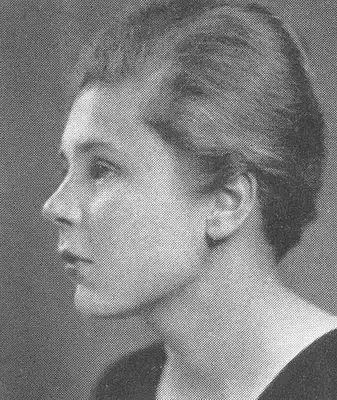
Elizabeth Bishop
The Monument
Now can you see the monument? It is of wood
built somewhat like a box. No. Built
like several boxes in descending sizes
one above the other.
Each is turned half-way round so that
its corners point toward the sides
of the one below and the angles alternate.
Then on the topmost cube is set
a sort of fleur-de-lys of weathered wood,
long petals of board, pierced with odd holes,
four-sided, stiff, ecclesiastical.
From it four thin, warped poles spring out,
(slanted like fishing-poles or flag-poles)
and from them jig-saw work hangs down,
four lines of vaguely whittled ornament
over the edges of the boxes
to the ground.
The monument is one-third set against
a sea; two-thirds against a sky.
The view is geared
(that is, the view's perspective)
so low there is no "far away,"
and we are far away within the view.
A sea of narrow, horizontal boards
lies out behind our lonely monument,
its long grains alternating right and left
like floor-boards--spotted, swarming-still,
and motionless. A sky runs parallel,
and it is palings, coarser than the sea's:
splintery sunlight and long-fibred clouds.
"Why does the strange sea make no sound?
Is it because we're far away?
Where are we? Are we in Asia Minor,
or in Mongolia?"
An ancient promontory,
an ancient principality whose artist-prince
might have wanted to build a monument
to mark a tomb or boundary, or make
a melancholy or romantic scene of it...
"But that queer sea looks made of wood,
half-shining, like a driftwood, sea.
And the sky looks wooden, grained with cloud.
It's like a stage-set; it is all so flat!
Those clouds are full of glistening splinters!
What is that?"
It is the monument.
"It's piled-up boxes,
outlined with shoddy fret-work, half-fallen off,
cracked and unpainted. It looks old."
--The strong sunlight, the wind from the sea,
all the conditions of its existence,
may have flaked off the paint, if ever it was painted,
and made it homelier than it was.
"Why did you bring me here to see it?
A temple of crates in cramped and crated scenery,
what can it prove?
I am tired of breathing this eroded air,
this dryness in which the monument is cracking."
It is an artifact
of wood. Wood holds together better
than sea or cloud or and could by itself,
much better than real sea or sand or cloud.
It chose that way to grow and not to move.
The monument's an object, yet those decorations,
carelessly nailed, looking like nothing at all,
give it away as having life, and wishing;
wanting to be a monument, to cherish something.
The crudest scroll-work says "commemorate,"
while once each day the light goes around it
like a prowling animal,
or the rain falls on it, or the wind blows into it.
It may be solid, may be hollow.
The bones of the artist-prince may be inside
or far away on even drier soil.
But roughly but adequately it can shelter
what is within (which after all
cannot have been intended to be seen).
It is the beginning of a painting,
a piece of sculpture, or poem, or monument,
and all of wood. Watch it closely.
668
Ezra Pound
The River Song
This boat is of shato-wood, and its gunwales are cut
magnolia,
Musicians with jewelled flutes and with pipes of gold
Fill full the sides in rows, and our wine
Is rich for a thousand cups.
We carry singing girls, drift with the drifting water,
Yet Sennin needs
A yellow stork for a charger, and all our seamen
Would follow the white gulls or ride them.
Kutsu's prose song
Hangs with the sun and moon.
King So's terraced palace
is now but barren hill,
But I draw pen on this barge
Causing the five peaks to tremble,
And I have joy in these words
like the joy of blue islands.
(If glory could last forever
Then the waters of Han would flow northward.)
And I have moped in the Emperor's garden, awaiting an
order-to-write !
I looked at the dragon-pond, with its willow-coloured
water
Just reflecting the sky's tinge,
And heard the five-score nightingales aimlessly singing.
The eastern wind brings the green colour into the island
grasses at Yei-shu,
The purple house and the crimson are full of Spring
softness.
South of the pond the willow-tips are half-blue and
bluer,
Their cords tangle in mist, against the brocade-like
palace.
Vine-strings a hundred feet long hang down from
carved railings,
And high over the willows, the fine birds sing to each
other, and listen,
Crying—‘Kwan, Kuan,' for the early wind, and the feel
of it.
The wind bundles itself into a bluish cloud and wanders
off.
Over a thousand gates, over a thousand doors are the
sounds of spring singing,
And the Emperor is at Ko.
Five clouds hang aloft, bright on the purple sky,
The imperial guards come forth from the golden house
with their armour a-gleaming.
The Emperor in his jewelled car goes out to inspect his
flowers,
He goes out to Hori, to look at the wing-flapping storks,
He returns by way of Sei rock, to hear the new
nightingales,
For the gardens at Jo-run are full of new nightingales,
Their sound is mixed in this flute,
Their voice is in the twelve pipes here.
670
Elizabeth Bishop
Large Bad Picture
Remembering the Strait of Belle Isle or
some northerly harbor of Labrador,
before he became a schoolteacher
a great-uncle painted a big picture.
Receding for miles on either side
into a flushed, still sky
are overhanging pale blue cliffs
hundreds of feet high,
their bases fretted by little arches,
the entrances to caves
running in along the level of a bay
masked by perfect waves.
On the middle of that quiet floor
sits a fleet of small black ships,
square-rigged, sails furled, motionless,
their spars like burnt match-sticks.
And high above them, over the tall cliffs'
semi-translucent ranks,
are scribbled hundreds of fine black birds
hanging in n's in banks.
One can hear their crying, crying,
the only sound there is
except for occasional sizhine
as a large aquatic animal breathes.
In the pink light
the small red sun goes rolling, rolling,
round and round and round at the same height
in perpetual sunset, comprehensive, consoling,
while the ships consider it.
Apparently they have reached their destination.
It would be hard to say what brought them there,
commerce or contemplation.
675
Ezra Pound
Salutation The Second
You were praised, my books,
because I had just come from the country;
I was twenty years behind the times
so you found an audience ready.
I do not disown you,
do not you disown your progeny.
Here they stand without quaint devices,
Here they are with nothing archaic about them.
Observe the irritation in general:
‘Is this’ they say, 'the nonsense
that we expect of poets?’
'Where is the Picturesque ?'
‘Where is the vertigo of emotion?'
‘No! his first work was the best.’
'Poor Dear! he has lost his illusions.’
Go, little naked and impudent songs,
Go with a light foot!
(Or with two light feet, if it please you!)
Go and dance shamelessly!
Go with an impertinent frolic!
Greet the grave and the stodgy,
Salute them with your thumbs at your noses.
Here are your bells and confetti.
Go! rejuvenate things!
Rejuvenate even 'The Spectator.’
Go! and make cat calls!
Dance and make people blush,
Dance the dance of the phallus
and tell anecdotes of Cybele!
Speak of the indecorous conduct of the Gods!
(Tell it to Mr. Strachey)
Ruffle the skirts of prudes,
speak of their knees and ankles.
But, above all, go to practical people
go! jangle their door-bells!
Say that you do no work
and that you will live forever.
659
William Shakespeare
Sonnet 53: What is your substance, whereof are you made
What is your substance, whereof are you made,
That millions of strange shadows on you tend?
Since everyone hath, every one, one shade,
And you, but one, can every shadow lend.
Describe Adonis, and the counterfeit
Is poorly imitated after you;
On Helen's cheek all art of beauty set,
And you in Grecian tires are painted new.
Speak of the spring, and foison of the year;
The one doth shadow of your beauty show,
The other as your bounty doth appear,
And you in every blessèd shape we know.
In all external grace you have some part,
But you like none, none you, for constant heart.
667
John Keats
Epistle To My Brother George
Full many a dreary hour have I past,
My brain bewildered, and my mind o'ercast
With heaviness; in seasons when I've thought
No spherey strains by me could e'er be caught
From the blue dome, though I to dimness gaze
On the far depth where sheeted lightning plays;
Or, on the wavy grass outstretched supinely,
Pry 'mong the stars, to strive to think divinely:
That I should never hear Apollo's song,
Though feathery clouds were floating all along
The purple west, and, two bright streaks between,
The golden lyre itself were dimly seen:
That the still murmur of the honey bee
Would never teach a rural song to me:
That the bright glance from beauty's eyelids slanting
Would never make a lay of mine enchanting,
Or warm my breast with ardour to unfold
Some tale of love and arms in time of old.
But there are times, when those that love the bay,
Fly from all sorrowing far, far away;
A sudden glow comes on them, nought they see
In water, earth, or air, but poesy.
It has been said, dear George, and true I hold it,
(For knightly Spenser to Libertas told it,)
That when a Poet is in such a trance,
In air her sees white coursers paw, and prance,
Bestridden of gay knights, in gay apparel,
Who at each other tilt in playful quarrel,
And what we, ignorantly, sheet-lightning call,
Is the swift opening of their wide portal,
When the bright warder blows his trumpet clear,
Whose tones reach nought on earth but Poet's ear.
When these enchanted portals open wide,
And through the light the horsemen swiftly glide,
The Poet's eye can reach those golden halls,
And view the glory of their festivals:
Their ladies fair, that in the distance seem
Fit for the silv'ring of a seraph's dream;
Their rich brimmed goblets, that incessant run
Like the bright spots that move about the sun;
And, when upheld, the wine from each bright jar
Pours with the lustre of a falling star.
Yet further off, are dimly seen their bowers,
Of which, no mortal eye can reach the flowers;
And 'tis right just, for well Apollo knows
'Twould make the Poet quarrel with the rose.
All that's revealed from that far seat of blisses
Is the clear fountains' interchanging kisses,
As gracefully descending, light and thin,
Like silver streaks across a dolphin's fin,
When he upswimmeth from the coral caves,
And sports with half his tail above the waves.
These wonders strange he sees, and many more,
Whose head is pregnant with poetic lore.
Should he upon an evening ramble fare
With forehead to the soothing breezes bare,
Would he nought see but the dark, silent blue
With all its diamonds trembling through and through?
Or the coy moon, when in the waviness
Of whitest clouds she does her beauty dress,
And staidly paces higher up, and higher,
Like a sweet nun in holy-day attire?
Ah, yes! much more would start into his sight-
The revelries and mysteries of night:
And should I ever see them, I will tell you
Such tales as needs must with amazement spell you.
These are the living pleasures of the bard:
But richer far posterity's reward.
What does he murmur with his latest breath,
While his proud eye looks though the film of death?
"What though I leave this dull and earthly mould,
Yet shall my spirit lofty converse hold
With after times.-The patriot shall feel
My stern alarum, and unsheath his steel;
Or, in the senate thunder out my numbers
To startle princes from their easy slumbers.
The sage will mingle with each moral theme
My happy thoughts sententious; he will teem
With lofty periods when my verses fire him,
And then I'll stoop from heaven to inspire him.
Lays have I left of such a dear delight
That maids will sing them on their bridal night.
Gay villagers, upon a morn of May,
When they have tired their gentle limbs with play
And formed a snowy circle on the grass,
And placed in midst of all that lovely lass
Who chosen is their queen,-with her fine head
Crowned with flowers purple, white, and red:
For there the lily, and the musk-rose, sighing,
Are emblems true of hapless lovers dying:
Between her breasts, that never yet felt trouble,
A bunch of violets full blown, and double,
Serenely sleep:-she from a casket takes
A little book,-and then a joy awakes
About each youthful heart,-with stifled cries,
And rubbing of white hands, and sparkling eyes:
For she's to read a tale of hopes, and fears;
One that I fostered in my youthful years:
The pearls, that on each glist'ning circlet sleep,
Must ever and anon with silent creep,
Lured by the innocent dimples. To sweet rest
Shall the dear babe, upon its mother's breast,
Be lulled with songs of mine. Fair world, adieu!
Thy dales, and hills, are fading from my view:
Swiftly I mount, upon wide spreading pinions,
Far from the narrow bound of thy dominions.
Full joy I feel, while thus I cleave the air,
That my soft verse will charm thy daughters fair,
And warm thy sons!" Ah, my dear friend and brother,
Could I, at once, my mad ambition smother,
For tasting joys like these, sure I should be
Happier, and dearer to society.
At times, 'tis true, I've felt relief from pain
When some bright thought has darted through my brain:
Through all that day I've felt a greater pleasure
Than if I'd brought to light a hidden treasure.
As to my sonnets, though none else should heed them,
I feel delighted, still, that you should read them.
Of late, too, I have had much calm enjoyment,
Stretched on the grass at my best loved employment
Of scribbling lines for you. These things I thought
While, in my face, the freshest breeze I caught.
E'en now I'm pillowed on a bed of flowers
That crowns a lofty clift, which proudly towers
Above the ocean-waves, The stalks, and blades,
Chequer my tablet with their quivering shades.
On one side is a field of drooping oats,
Through which the poppies show their scarlet coats;
So pert and useless, that they bring to mind
The scarlet coats that pester human-kind.
And on the other side, outspread, is seen
Ocean's blue mantle streaked with purple, and green.
Now 'tis I see a canvassed ship, and now
Mark the bright silver curling round her prow.
I see the lark dowm-dropping to his nest,
And the broad winged sea-gull never at rest;
For when no more he spreads his feathers free,
His breast is dancing on the restless sea.
Now I direct my eyes into the west,
Which at this moment is in sunbeams drest:
Why westward turn? 'Twas but to say adieu!
'Twas but to kiss my hand, dear George, to you!
645
William Shakespeare
Sonnet 16: But wherefore do not you a mightier way
But wherefore do not you a mightier way
Make war upon this bloody tyrant, Time,
And fortify your self in your decay
With means more blessèd than my barren rhyme?
Now stand you on the top of happy hours,
And many maiden gardens yet unset,
With virtuous wish would bear you living flowers,
Much liker than your painted counterfeit:
So should the lines of life that life repair
Which this, Time's pencil, or my pupil pen
Neither in inward worth nor outward fair
Can make you live your self in eyes of men.
To give away your self keeps your self still,
And you must live drawn by your own sweet skill.
632
Ezra Pound
Homage To Sextus Propertius - V
Now if ever it is time to cleanse Helicon;
to lead Emathian horses afield,
And to name over the census of my chiefs in the Roman camp.
If I have not the faculty, 'The bare attempt would be praise-worthy.'
'In the things of similar magnitude
the mere will to act is sufficient.'
The primitive ages sang Venus,
the last sings of a tumult,
And I also will sing war when this matter of a girl is exhausted.
I with my beak hauled ashore would proceed in a more stately manner,
My Muse is eager to instruct me in a new gamut, or gambetto,
Up, up my soul, from your lowly cantilation,
put on a timely vigour.
Oh august Pierides! Now for a large-mouthed product.
Thus:
'The Euphrates denies its protection to the Parthian and
apologizes for Crassus,'
And 'It is, I think, India which now gives necks to your triumph,'
And so forth, Augustus. 'Virgin Arabia shakes in her inmost dwelling.'
If any land shrink into a distant seacoast,
it is a mere postponement of your domination.
And I shall follow the camp, I shall be duly celebrated
for singing the affairs of your cavalry.
May the fates watch over my day.
2
Yet you ask on what account I write so many love-lyrics
And whence this soft book comes into my mouth.
Neither Calliope nor Apollo sung these things into my ear,
My genius is no more than a girl.
If she with ivory fingers drive a tune through the lyre,
We look at the process.
How easy the moving fingers; if hair is mussed on her forehead,
If she goes in a gleam of Cos, in a slither of dyed stuff,
There is a volume in the matter; if her eyelids sink into sleep,
There are new jobs for the author;
And if she plays with me with her shirt off,
We shall construct many Iliads.
And whatever she does or says
We shall spin long yarns out of nothing.
Thus much the fates have allotted me, and if, Maecenas,
I were able to lead heroes into armour, I would not,
Neither would I warble of Titans, nor of Ossa
spiked onto Olympus,
Nor of causeways over Pelion,
Nor of Thebes in its ancient respectability,
nor of Homer's reputation in Pergamus,
Nor of Xerxes' two-barreled kingdom, nor of Remus and his royal family,
Nor of dignified Carthaginian characters,
Nor of Welsh mines and the profit Marus had out of them,
I should remember Caesar's affairs . . .
for a background,
Although Callimachus did without them,
and without Theseus,
Without an inferno, without Achilles attended of gods,
Without Ixion, and without the sons of Menoetius and
the Argo and without Jove's grave and the Titans.
And my ventricles do not palpitate to Caesarial ore rotundas,
Nor to the tune of the Phrygian fathers.
Sailor, of winds; a plowman, concerning his oxen;
Soldier, the enumeration of wounds; the sheep-feeder, of ewes;
We, in our narrow bed, turning aside from battles:
Each man where he can, wearing out the day in his manner.
3
It is noble to die of love, and honourable to remain
uncuckolded for a season.
And she speaks ill of light women,
and will not praise Homer
Because Helen's conduct is 'unsuitable'.
615

John Milton
When the Assault Was Intended to the City
Captain, or colonel, or knight in arms,
Whose chance on these defenceless doors may seize,
If deed of honour did thee ever please,
Guard them, and him within protect from harms.
He can requite thee, for he knows the charms
That call fame on such gentle acts as these,
And he can spread thy name o’er lands and seas,
Whatever clime the sun’s bright circle warms.
Lift not thy spear against the Muse’s bower;
The great Emathian conqueror bid spare
The house of Pindarus, when temple and tower
Went to the ground; and the repeated air
Of sad Electra’s Poet had the power
To save the Athenian walls from ruin bare.
618
Allen Ginsberg
Cosmopolitan Greetings
Stand up against governments, against God.
Stay irresponsible.
Say only what we know & imagine.
Absolutes are Coercion.
Change is absolute.
Ordinary mind includes eternal perceptions.
Observe what’s vivid.
Notice what you notice.
Catch yourself thinking.
Vividness is self-selecting.
If we don’t show anyone, we’re free to write anything.
Remember the future.
Freedom costs little in the U.S.
Asvise only myself.
Don’t drink yourself to death.
Two molecules clanking us against each other require an observer to become
scientific data.
The measuring instrument determines the appearance of the phenomenal
world (after Einstein).
The universe is subjective..
Walt Whitman celebrated Person.
We are observer, measuring instrument, eye, subject, Person.
Universe is Person.
Inside skull is vast as outside skull.
What’s in between thoughts?
Mind is outer space.
What do we say to ourselves in bed at night, making no sound?
“First thought, best thought.”
Mind is shapely, Art is shapely.
Maximum information, minimum number of syllables.
Syntax condensed, sound is solid.
Intense fragments of spoken idiom, best.
Move with rhythm, roll with vowels.
Consonants around vowels make sense.
Savour vowels, appreciate consonants.
Subject is known by what she sees.
Others can measure their vision by what we see.
Candour ends paranoia.
605
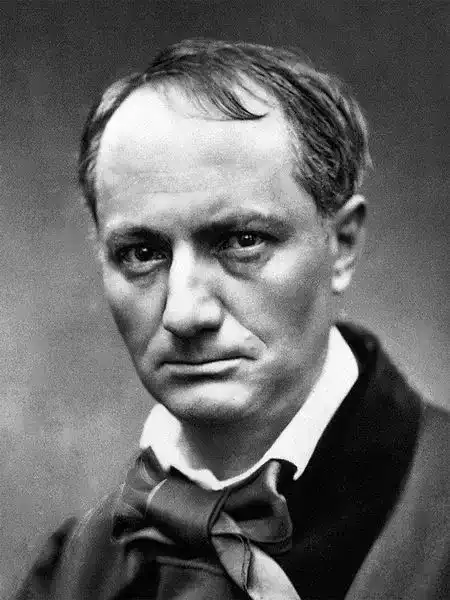
Charles Baudelaire
The Albatross
Often to pass the time on board, the crew
will catch an albatross, one of those big birds
which nonchalently chaperone a ship
across the bitter fathoms of the sea.
Tied to the deck, this sovereign of space,
as if embarrassed by its clumsiness,
pitiably lets its great white wings
drag at its sides like a pair of unshipped oars.
How weak and awkward, even comical
this traveller but lately so adoit -
one deckhand sticks a pipestem in its beak,
another mocks the cripple that once flew!
The Poet is like this monarch of the clouds
riding the storm above the marksman's range;
exiled on the ground, hooted and jeered,
he cannot walk because of his great wings.
601
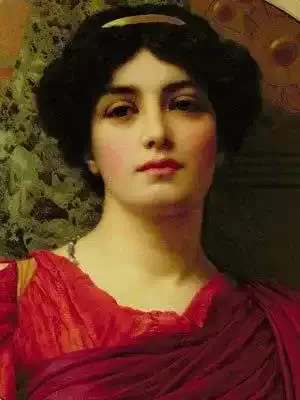
Charles Baudelaire
Beauty
I am as lovely as a dream in stone;
My breast on which each finds his death in turn
Inspires the poet with a love as lone
As everlasting clay, and as taciturn.
Swan-white of heart, as sphinx no mortal knows,
My throne is in the heaven's azure deep;
I hate all movement that disturbs my pose;
I smile not ever, neither do I weep.
Before my monumental attitudes,
Taken from the proudest plastic arts,
My poets pray in austere studious moods,
For I, to fold enchantment round their hearts,
Have pools of light where beauty flames and dies,
The placid mirrors of my luminous eyes.
605