
Home and Household

James Whitcomb Riley
Dead Leaves
DAWN
As though a gipsy maiden with dim look,
Sat crooning by the roadside of the year,
So, Autumn, in thy strangeness, thou art here
To read dark fortunes for us from the book
Of fate; thou flingest in the crinkled brook
The trembling maple's gold, and frosty-clear
Thy mocking laughter thrills the atmosphere,
And drifting on its current calls the rook
To other lands. As one who wades, alone,
Deep in the dusk, and hears the minor talk
Of distant melody, and finds the tone,
In some wierd way compelling him to stalk
The paths of childhood over,--so I moan,
And like a troubled sleeper, groping, walk.
DUSK
The frightened herds of clouds across the sky
Trample the sunshine down, and chase the day
Into the dusky forest-lands of gray
And somber twilight. Far, and faint, and high
The wild goose trails his harrow, with a cry
Sad as the wail of some poor castaway
Who sees a vessel drifting far astray
Of his last hope, and lays him down to die.
The children, riotous from school, grow bold
And quarrel with the wind, whose angry gust
Plucks off the summer hat, and flaps the fold
Of many a crimson cloak, and twirls the dust
In spiral shapes grotesque, and dims the gold
Of gleaming tresses with the blur of rust.
NIGHT
Funereal Darkness, drear and desolate,
Muffles the world. The moaning of the wind
Is piteous with sobs of saddest kind;
And laughter is a phantom at the gate
Of memory. The long-neglected grate
Within sprouts into flame and lights the mind
With hopes and wishes long ago refined
To ashes,--long departed friends await
Our words of welcome: and our lips are dumb
And powerless to greet the ones that press
Old kisses there. The baby beats its drum,
And fancy marches to the dear caress
Of mother-arms, and all the gleeful hum
Of home intrudes upon our loneliness.
304

Emily Dickinson
I never felt at Home—Below
I never felt at Home—Below—-
And in the Handsome Skies
I shall not feel at Home—I know—
I don't like Paradise—
Because it's Sunday—all the time—
And Recess—never comes—
And Eden'll be so lonesome
Bright Wednesday Afternoons—
If God could make a visit—
Or ever took a Nap—
So not to see us—but they say
Himself—a Telescope
Perennial beholds us—
Myself would run away
From Him—and Holy Ghost—and All—
But there's the "Judgement Day"!
304
James Whitcomb Riley
Old Fashioned Roses
They ain't no style about 'em,
And they're sorto' pale and faded,
Yit the doorway here, without 'em,
Would be lonesomer, and shaded
With a good 'eal blacker shudder
Than the morning-glories makes,
And the sunshine would look sadder
Fer their good old-fashion' sakes.
I like 'em 'cause they kindo'--
Sorto' make a feller like 'em!
And I tell you, when I find a
Bunch out whur the sun kin strike 'em,
It allus sets me thinkin'
O' the ones 'at used to grow
And peek in thro' the chinkin'
O' the cabin, don't you know!
And then I think o' mother,
And how she ust to love 'em--
When they wuzn't any other,
'Less she found 'em up above 'em!
And her eyes, afore she shut 'em,
Whispered with a smile and said
We must pick a bunch and putt 'em
In her hand when she wuz dead.
But as I wuz a-sayin',
They ain't no style about 'em
Very gaudy er displayin',
But I wouldn't be without 'em--,
'Cause I'm happier in these posies,
And the hollyhawks and sich,
Than the hummin'-bird 'at noses
In the roses of the rich.
302
James Whitcomb Riley
The Old Home By The Mill
This is 'The old Home by the Mill'--far we still call it so,
Although the old mill, roof and sill, is all gone long ago.
The old home, though, and old folks, and the old spring, and a few
Old cat-tails, weeds and hartychokes, is left to welcome you!
Here, Marg'et, fetch the man a tin to drink out of' Our spring
Keeps kindo-sorto cavin' in, but don't 'taste' anything!
She's kindo agein', Marg'et is--'the old process,' like me,
All ham-stringed up with rheumatiz, and on in seventy-three.
Jes' me and Marg'et lives alone here--like in long ago;
The childern all put off and gone, and married, don't you know?
One's millin' way out West somewhere; two other miller-boys
In Minnyopolis they air; and one's in Illinoise.
The oldest gyrl--the first that went--married and died right here;
The next lives in Winn's Settlement--for purt' nigh thirty year!
And youngest one--was allus far the old home here--but no!--
Her man turns in and he packs her 'way off to Idyho!
I don't miss them like _Marg'et_ does--'cause I got _her_, you see;
And when she pines for them--that's 'cause _she's_ only jes' got
_me_!
I laugh, and joke her 'bout it all.--But talkin' sense, I'll say,
When she was tuk so bad last Fall, I laughed the t'other way!
I haint so favorble impressed 'bout dyin'; but ef I
Found I was only second-best when _us two_ come to die,
I'd 'dopt the 'new process' in full, ef _Marg'et_ died, you see,-I'd
jes' crawl in my grave and pull the green grass over me!
302

Robert Louis Stevenson
To Mesdames Zassetsky And Garschine
THE wind may blaw the lee-gang way
And aye the lift be mirk an' gray,
An deep the moss and steigh the brae
Where a' maun gang -
There's still an hoor in ilka day
For luve and sang.
And canty hearts are strangely steeled.
By some dikeside they'll find a bield,
Some couthy neuk by muir or field
They're sure to hit,
Where, frae the blatherin' wind concealed,
They'll rest a bit.
An' weel for them if kindly fate
Send ower the hills to them a mate;
They'll crack a while o' kirk an' State,
O' yowes an' rain:
An' when it's time to take the gate,
Tak' ilk his ain.
- Sic neuk beside the southern sea
I soucht - sic place o' quiet lee
Frae a' the winds o' life. To me,
Fate, rarely fair,
Had set a freendly company
To meet me there.
Kindly by them they gart me sit,
An' blythe was I to bide a bit.
Licht as o' some hame fireside lit
My life for me.
- Ower early maun I rise an' quit
This happy lee.
301

Robert W. Service
Home And Love
Just Home and Love! the words are small
Four little letters unto each;
And yet you will not find in all
The wide and gracious range of speech
Two more so tenderly complete:
When angels talk in Heaven above,
I'm sure they have no words more sweet
Than Home and Love.
Just Home and Love! it's hard to guess
Which of the two were best to gain;
Home without Love is bitterness;
Love without Home is often pain.
No! each alone will seldom do;
Somehow they travel hand and glove:
If you win one you must have two,
Both Home and Love.
And if you've both, well then I'm sure
You ought to sing the whole day long;
It doesn't matter if you're poor
With these to make divine your song.
And so I praisefully repeat,
When angels talk in Heaven above,
There are no words more simply sweet
Than Home and Love.
298
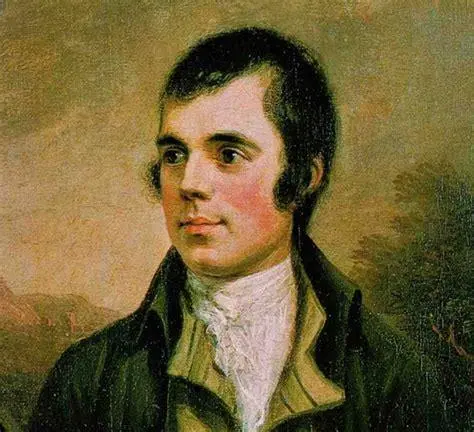
Robert Burns
My Heart's In The Highlands
Farewell to the Highlands, farewell to the North,
The birth-place of Valour, the country of Worth;
Wherever I wander, wherever I rove,
The hills of the Highlands for ever I love.
My heart's in the Highlands, my heart is not here;
My heart's in the Highlands a-chasing the deer;
A-chasing the wild-deer, and following the roe,
My heart's in the Highlands wherever I go.
Farewell to the mountains high covered with snow;
Farewell to the straths and green valleys below;
Farewell to the forests and wild-hanging woods;
Farewell to the torrents and loud-pouring floods.
My heart's in the Highlands, my heart is not here;
My heart's in the Highlands a-chasing the deer;
A-chasing the wild-deer, and following the roe,
My heart's in the Highlands wherever I go.
294
Robert W. Service
A Snifter
After working hard all day
In the office,
How much worse on homeward way
My old cough is!
Barney's Bar is gaily lit,
Let me stop there;
Just to buck me up a bit
Have a drop there.
As I stand beside the screen
Hesitating,
I have thought of how Noreen
Will be waiting;
Baby Patsy in her lap
Gay and laughing,
While at Barney's foaming tap
I am quaffing.
Barney's Bar is mighty bright,
Looks so cheery.
Wonder what I'll drink tonight?
Gee! I'm weary.
Will I have Scotch or Rye?
Bourbon maybe . . .
Then I see with mental eye
Wife and baby.
So I say 'tis malted milk
I'll be skoffin';
Sooth my throttle sleek as silk,
Ease my coughin' . . .
Say, I love them two to death,
Sure they miss me:
With no whisky on my breath
How they'll kiss me!
293

Gwendolyn Brooks
The Ballad of Rudolph Reed
Rudolph Reed was oaken.
His wife was oaken too.
And his two good girls and his good little man
Oakened as they grew.
"I am not hungry for berries.
I am not hungry for bread.
But hungry hungry for a house
Where at night a man in bed
"May never hear the plaster
Stir as if in pain.
May never hear the roaches
Falling like fat rain.
"Where never wife and children need
Go blinking through the gloom.
Where every room of many rooms
Will be full of room.
"Oh my home may have its east or west
Or north or south behind it.
All I know is I shall know it,
And fight for it when I find it."
The agent's steep and steady stare
Corroded to a grin.
Why you black old, tough old hell of a man,
Move your family in!
Nary a grin grinned Rudolph Reed,
Nary a curse cursed he,
But moved in his House. With his dark little wife,
And his dark little children three.
A neighbor would look, with a yawning eye
That squeezed into a slit.
But the Rudolph Reeds and children three
Were too joyous to notice it.
For were they not firm in a home of their own
With windows everywhere
And a beautiful banistered stair
And a front yard for flowers and a back for grass?
The first night, a rock, big as two fists.
The second, a rock big as three.
But nary a curse cursed Rudolph Reed.
(Though oaken as man could be.)
The third night, a silvery ring of glass.
Patience arched to endure,
But he looked, and lo! small Mabel's blood
Was staining her gaze so pure.
Then up did rise our Roodoplh Reed
And pressed the hand of his wife,
And went to the door with a thirty-four
And a beastly butcher knife.
He ran like a mad thing into the night
And the words in his mouth were stinking.
By the time he had hurt his first white man
He was no longer thinking.
By the time he had hurt his fourth white man
Rudolph Reed was dead.
His neighbors gathered and kicked his corpse.
"Nigger--" his neighbors said.
Small Mabel whimpered all night long,
For calling herself the cause.
Her oak-eyed mother did no thing
But change the bloody gauze.
292
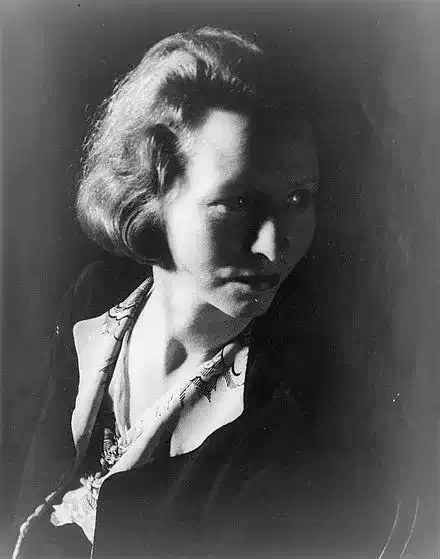
Edna St. Vincent Millay
Inland
People that build their houses inland,
People that buy a plot of ground
Shaped like a house, and build a house there,
Far from the sea-board, far from the sound
Of water sucking the hollow ledges,
Tons of water striking the shore,—
What do they long for, as I long for
One salt smell of the sea once more?
People the waves have not awakened,
Spanking the boats at the harbour's head,
What do they long for, as I long for,—
Starting up in my inland bed,
Beating the narrow walls, and finding
Neither a window nor a door,
Screaming to God for death by drowning,—
One salt taste of the sea once more?
293

John Greenleaf Whittier
The Pumpkin
Oh, greenly and fair in the lands of the sun,
The vines of the gourd and the rich melon run,
And the rock and the tree and the cottage enfold,
With broad leaves all greenness and blossoms all gold,
Like that which o'er Nineveh's prophet once grew,
While he waited to know that his warning was true,
And longed for the storm-cloud, and listened in vain
For the rush of the whirlwind and red fire-rain.
On the banks of the Xenil the dark Spanish maiden
Comes up with the fruit of the tangled vine laden;
And the Creole of Cuba laughs out to behold
Through orange-leaves shining the broad spheres of gold;
Yet with dearer delight from his home in the North,
On the fields of his harvest the Yankee looks forth,
Where crook-necks are coiling and yellow fruit shines,
And the sun of September melts down on his vines.
Ah! on Thanksgiving day, when from East and from West,
From North and from South comes the pilgrim and guest;
When the gray-haired New Englander sees round his board
The old broken links of affection restored;
When the care-wearied man seeks his mother once more,
And the worn matron smiles where the girl smiled before;
What moistens the lip and what brightens the eye,
What calls back the past, like the rich Pumpkin pie?
Oh, fruit loved of boyhood! the old days recalling,
When wood-grapes were purpling and brown nuts were falling!
When wild, ugly faces we carved in its skin,
Glaring out through the dark with a candle within!
When we laughed round the corn-heap, with hearts all in tune,
Our chair a broad pumpkin, -- our lantern the moon,
Telling tales of the fairy who travelled like steam
In a pumpkin-shell coach, with two rats for her team!
Then thanks for thy present! none sweeter or better
E'er smoked from an oven or circled a platter!
Fairer hands never wrought at a pastry more fine,
Brighter eyes never watched o'er its baking, than thine!
And the prayer, which my mouth is too full to express,
Swells my heart that thy shadow may never be less,
That the days of thy lot may be lengthened below,
And the fame of thy worth like a pumpkin-vine grow,
And thy life be as sweet, and its last sunset sky
Golden-tinted and fair as thy own Pumpkin pie!
291
James Whitcomb Riley
Home At Night
When chirping crickets fainter cry,
And pale stars blossom in the sky,
And twilight's gloom has dimmed the bloom
And blurred the butterfly:
When locust-blossoms fleck the walk,
And up the tiger-lily stalk
The glow-worm crawls and clings and falls
And glimmers down the garden-walls:
When buzzing things, with double wings
Of crisp and raspish flutterings,
Go whizzing by so very nigh
One thinks of fangs and stings:--
O then, within, is stilled the din
Of crib she rocks the baby in,
And heart and gate and latch's weight
Are lifted--and the lips of Kate.
291
Robert W. Service
An Olive Fire
An olive fire's a lovely thing;
Somehow it makes me think of Spring
As in my grate it over-spills
With dancing flames like daffodils.
They flirt and frolic, twist and twine,
The brassy fire-irons wink and shine. . . .
Leap gold, you flamelets! Laugh and sing:
An olive fire's a lovely thing.
An olive fire's a household shrine:
A crusty loaf, a jug of wine,
An apple and a chunk of cheese -
Oh I could be content with these.
But if my curse of oil is there,
To fry a fresh-caught fish, I swear
I do not envy any king,
As sitting by my hearth I sing:
An olive fire's a lovely thing.
When old and worn, of life I tire,
I'll sit before an olive fire,
And watch the feather ash like snow
As softly as a rose heart glow;
The tawny roots will loose their hoard
Of sunbeams centuries have stored,
And flames like yellow chicken's cheep,
Till in my heart Peace is so deep:
With hands prayer-clasped I sleep . . . and sleep.
289
Robert W. Service
Bird Sanctuary
Between the cliff-rise and the beach
A slip of emerald I own;
With fig and olive, almond, peach,
cherry and plum-tree overgrown;
Glad-watered by a crystal spring
That carols through the silver night,
And populous with birds who sing
Gay madrigals for my delight.
Some merchants fain would buy my land
To build a stately pleasure dome.
Poor fools! they cannot understand
how pricelessly it is my home!
So luminous with living wings,
So musical with feathered joy . . .
Not for all pleasure fortune brings,
Would I such ecstasy destroy.
A thousand birds are in my grove,
Melodious from morn to night;
My fruit trees are their treasure trove,
Their happiness is my delight.
And through the sweet and shining days
They know their lover and their friend;
So I will shield in peace and praise
My innocents unto the end.
287
James Whitcomb Riley
A Voice From The Farm
It is my dream to have you here with me,
Out of the heated city's dust and din--
Here where the colts have room to gambol in,
And kine to graze, in clover to the knee.
I want to see your wan face happily
Lit with the wholesome smiles that have not been
In use since the old games you used to win
When we pitched horseshoes: And I want to be
At utter loaf with you in this dim land
Of grove and meadow, while the crickets make
Our own talk tedious, and the bat wields
His bulky flight, as we cease converse and
In a dusk like velvet smoothly take
Our way toward home across the dewy fields.
287
James Whitcomb Riley
The Little Town O' Tailholt
You kin boast about yer cities, and their stiddy growth and size,
And brag about yer County-seats, and business enterprise,
And railroads, and factories, and all sich foolery--
But the little Town o' Tailholt is big enough fer me!
You kin harp about yer churches, with their steeples in the clouds,
And gas about yer graded streets, and blow about yer crowds;
You kin talk about yer 'theaters,' and all you've got to see--
But the little Town o' Tailholt is show enough fer me!
They hain't no style in our town-- hit's little-like and small--
They hain't no 'churches,' nuther--, jes' the meetin' house is all;
They's no sidewalks, to speak of-- but the highway's allus free,
And the little Town o' Tailholt is wide enough fer me!
Some find it discommodin'-like, I'm willin' to admit,
To hev but one post-office, and a womern keepin' hit,
And the drug-store, and shoe-shop, and grocery, all three--
But the little Town o' Tailholt is handy 'nough fer me!
You kin smile and turn yer nose up, and joke and hev yer fun,
And laugh and holler 'Tail-holts is better holts'n none!
Ef the city suits you better w'y, hit's where you'd ort'o be--
But the little Town o' Tailholt's good enough fer me!
286

Henry Lawson
The Stringy-Bark Tree
There's the whitebox and pine on the ridges afar,
Where the iron-bark, blue-gum, and peppermint are;
There is many another, but dearest to me,
And the king of them all was the stringy-bark tree.
Then of stringy-bark slabs were the walls of the hut,
And from stringy-bark saplings the rafters were cut;
And the roof that long sheltered my brothers and me
Was of broad sheets of bark from the stringy-bark tree.
And when sawn-timber homes were built out in the West,
Then for walls and for ceilings its wood was the best;
And for shingles and palings to last while men be,
There was nothing on earth like the stringy-bark tree.
Far up the long gullies the timber-trucks went,
Over tracks that seemed hopeless, by bark hut and tent;
And the gaunt timber-finder, who rode at his ease,
Led them on to a gully of stringy-bark trees.
Now still from the ridges, by ways that are dark,
Come the shingles and palings they call stringy-bark;
Though you ride through long gullies a twelve months you’ll see
But the old whitened stumps of the stringy-bark tree.
286
Emily Dickinson
To my small Hearth His fire came
To my small Hearth His fire came-
And all my House aglow
Did fan and rock, with sudden light'
Twas Sunrise-'twas the Sky-
Impanelled from no Summer brief-
With limit of Decay'
Twas Noon-without the News of Night-
Nay, Nature, it was Day-
And all my House aglow
Did fan and rock, with sudden light'
Twas Sunrise-'twas the Sky-
Impanelled from no Summer brief-
With limit of Decay'
Twas Noon-without the News of Night-
Nay, Nature, it was Day-
280
Robert W. Service
A Domestic Tragedy
Clorinda met me on the way
As I came from the train;
Her face was anything but gay,
In fact, suggested pain.
"Oh hubby, hubby dear!" she cried,
"I've awful news to tell. . . ."
"What is it, darling?" I replied;
"Your mother -- is she well?"
"Oh no! oh no! it is not that,
It's something else," she wailed,
My heart was beating pit-a-pat,
My ruddy visage paled.
Like lightning flash in heaven's dome
The fear within me woke:
"Don't say," I cried, "our little home
Has all gone up in smoke!"
She shook her head. Oh, swift I clasped
And held her to my breast;
"The children! Tell me quick," I gasped,
"Believe me, it is best."
Then, then she spoke; 'mid sobs I caught
These words of woe divine:
"It's coo-coo-cook has gone and bought
A new hat just like mine."
281
James Whitcomb Riley
Kingry's Mill
On old Brandywine-- about
Where White's Lots is now laid out,
And the old crick narries down
To the ditch that splits the town--,
Kingry's Mill stood. Hardly see
Where the old dam ust to be;
Shallor, long, dry trought o' grass
Where the old race ust to pass!
That's be'n forty years ago--
Forty years o' frost and snow--
Forty years o' shade and shine
Sence them boyhood-days o' mine--!
All the old landmarks o' town.
Changed about, er rotted down!
Where's the Tanyard? Where's the Still?
Tell me where's old Kingry's Mill?
Don't seem furder back, to me,
I'll be dogg'd! Than yisterd'y,
Since us fellers, in bare feet
And straw hats, went through the wheat,
Cuttin' 'crost the shortest shoot
Fer that-air old ellum root
Jest above the mill-dam-- where
The blame' cars now crosses there!
Through the willers down the crick
We could see the old mill stick
Its red gable up, as if
It jest knowed we'd stol'd the skiff!
See the winders in the sun
Blink like they wuz wonderun'
What the miller ort to do
With sich boys as me and you!
But old Kingry--! Who could fear
That old chap, with all his cheer--?
Leanin' at the window-sill,
Er the half-door o' the mill,
Swoppin' lies, and pokin' fun,
'N jigglin' like his hoppers done--
Laughin' grists o' gold and red
Right out o' the wagon-bed!
What did he keer where we went--?
'Jest keep out o' devilment,
And don't fool around the belts,
Bolts, ner burrs, ner nothin' else
'Bout the blame machinery,
And that's all I ast!' says-ee.
Then we'd climb the stairs, and play
In the bran-bins half the day!
Rickollect the dusty wall,
And the spider-webs, and all!
Rickollect the trimblin' spout
Where the meal come josslln' out--
Stand and comb yer fingers through
The fool-truck an hour er two--
Felt so sorto' warm-like and
Soothin' to a feller's hand!
Climb, high up above the stream,
And 'coon' out the wobbly beam
And peek down from out the lof'
Where the weather-boards was off-Gee-
mun-nee! w'y, it takes grit
Even jest to think of it--!
Lookin' 'way down there below
On the worter roarin' so!
Rickollect the flume, and wheel,
And the worter slosh and reel
And jest ravel out in froth
Flossier'n satin cloth!
Rickollect them paddles jest
Knock the bubbles galley-west,
And plunge under, and come up
Drippin' like a worter-pup!
And to see them old things gone
That I onc't was bettin' on,
In rale p'int o' fact, I feel
kindo' like that worter-wheel--,
Sorto' drippy-like and wet
Round the eyes-- but paddlin' yet,
And in mem'ry, loafin' still
Down around old Kingry's Mill!
282
John Greenleaf Whittier
Haverhill
1640-1890.
O river winding to the sea!
We call the old time back to thee;
From forest paths and water-ways
The century-woven veil we raise.
The voices of to-day are dumb,
Unheard its sounds that go and come;
We listen, through long-lapsing years,
To footsteps of the pioneers.
Gone steepled town and cultured plain,
The wilderness returns again,
The drear, untrodden solitude,
The gloom and mystery of the wood!
Once more the bear and panther prowl,
The wolf repeats his hungry howl,
And, peering through his leafy screen,
The Indian's copper face is seen.
We see, their rude-built huts beside,
Grave men and women anxious-eyed,
And wistful youth remembering still
Dear homes in England's Haverhill.
We summon forth to mortal view
Dark Passaquo and Saggahew,-Wild
chiefs, who owned the mighty sway
Of wizard Passaconaway.
Weird memories of the border town,
By old tradition handed down,
In chance and change before us pass
Like pictures in a magic glass,-
The terrors of the midnight raid,
The-death-concealing ambuscade,
The winter march, through deserts wild,
Of captive mother, wife, and child.
Ah! bleeding hands alone subdued
And tamed the savage habitude
Of forests hiding beasts of prey,
And human shapes as fierce as they.
Slow from the plough the woods withdrew,
Slowly each year the corn-lands grew;
Nor fire, nor frost, nor foe could kill
The Saxon energy of will.
And never in the hamlet's bound
Was lack of sturdy manhood found,
And never failed the kindred good
Of brave and helpful womanhood.
That hamlet now a city is,
Its log-built huts are palaces;
The wood-path of the settler's cow
Is Traffic's crowded highway now.
And far and wide it stretches still,
Along its southward sloping hill,
And overlooks on either hand
A rich and many-watered land.
And, gladdening all the landscape, fair
As Pison was to Eden's pair,
Our river to its valley brings
The blessing of its mountain springs.
And Nature holds with narrowing space,
From mart and crowd, her old-time grace,
And guards with fondly jealous arms
The wild growths of outlying farms.
Her sunsets on Kenoza fall,
Her autumn leaves by Saltonstall;
No lavished gold can richer make
Her opulence of hill and lake.
Wise was the choice which led out sires
To kindle here their household fires,
And share the large content of all
Whose lines in pleasant places fall.
More dear, as years on years advance,
We prize the old inheritance,
And feel, as far and wide we roam,
That all we seek we leave at home.
Our palms are pines, our oranges
Are apples on our orchard trees;
Our thrushes are our nightingales,
Our larks the blackbirds of our vales.
No incense which the Orient burns
Is sweeter than our hillside ferns;
What tropic splendor can outvie
Our autumn woods, our sunset sky?
If, where the slow years came and went,
And left not affluence, but content,
Now flashes in our dazzled eyes
The electric light of enterprise;
And if the old idyllic ease
Seems lost in keen activities,
And crowded workshops now replace
The hearth's and farm-field's rustic grace;
No dull, mechanic round of toil
Life's morning charm can quite despoil;
And youth and beauty, hand in hand,
Will always find enchanted land.
No task is ill where hand and brain
And skill and strength have equal gain,
And each shall each in honor hold,
And simple manhood outweigh gold.
Earth shall be near to Heaven when all
That severs man from man shall fall,
For, here or there, salvation's plan
Alone is love of God and man.
O dwellers by the Merrimac,
The heirs of centuries at your back,
Still reaping where you have not sown,
A broader field is now your own.
Hold fast your Puritan heritage,
But let the free thought of the age
Its light and hope and sweetness add
To the stern faith the fathers had.
Adrift on Time's returnless tide,
As waves that follow waves, we glide.
God grant we leave upon the shore
Some waif of good it lacked before;
Some seed, or flower, or plant of worth,
Some added beauty to the earth;
Some larger hope, some thought to make
The sad world happier for its sake.
As tenants of uncertain stay,
So may we live our little day
That only grateful hearts shall fill
The homes we leave in Haverhill.
The singer of a farewell rhyme,
Upon whose outmost verge of time
The shades of night are falling down,
I pray, God bless the good old town!
280

Christina Rossetti
Shut Out
The door was shut. I looked between
Its iron bars; and saw it lie,
My garden, mine, beneath the sky,
Pied with all flowers bedewed and green:
From bough to bough the song-birds crossed,
From flower to flower the moths and bees;
With all its nests and stately trees
It had been mine, and it was lost.
A shadowless spirit kept the gate,
Blank and unchanging like the grave.
I peering through said: 'Let me have
Some buds to cheer my outcast state.'
He answered not. 'Or give me, then,
But one small twig from shrub or tree;
And bid my home remember me
Until I come to it again.'
The spirit was silent; but he took
Mortar and stone to build a wall;
He left no loophole great or small
Through which my straining eyes might look:
So now I sit here quite alone
Blinded with tears; nor grieve for that,
For nought is left worth looking at
Since my delightful land is gone.
A violet bed is budding near,
Wherein a lark has made her nest:
And good they are, but not the best;
And dear they are, but not so dear.
279

William Butler Yeats
To be Carved On A Stone At Thoor Ballylee
I, THE poet William Yeats,
With old mill boards and sea-green slates,
And smithy work from the Gort forge,
Restored this tower for my wife George;
And may these characters remain
When all is ruin once again.
With old mill boards and sea-green slates,
And smithy work from the Gort forge,
Restored this tower for my wife George;
And may these characters remain
When all is ruin once again.
278
Robert W. Service
Property
The red-roofed house of dream design
Looks three ways on the sea;
For fifty years I've made it mine,
And held it part of me.
The pines I planted in my youth
Triumpantly are tall . . .
Yet now I know with sorry sooth
I have to leave it all.
Hard-hewn from out the living rock
And salty from the tide,
My house has braved the tempest shock
With hardihood and pride.
Each nook is memoried to me;
I've loved its every stone,
And cried to it exultantly:
"My own, my very own!"
Poor fool! To think that I possess.
I have but cannot hold;
And all that's mine is less and less
My own as I grow old.
My home shall ring with childish cheers
When I shall leave it lone;
My house will bide a hundred years
When I am in the bone.
Alas! No thing can be my own:
At most a life-long lease
Is all I hold, a little loan
From Time, that soon will cease.
For now by faint and failing breath
I feel that I must go . . .
Old House! You've never known a death,-Well,
now's your hour to know.
278