
Marriage

Henry Wadsworth Longfellow
Hiawatha's Wedding-Feast
You shall hear how Pau-Puk-Keewis,
How the handsome Yenadizze
Danced at Hiawatha's wedding;
How the gentle Chibiabos,
He the sweetest of musicians,
Sang his songs of love and longing;
How Iagoo, the great boaster,
He the marvellous story-teller,
Told his tales of strange adventure,
That the feast might be more joyous,
That the time might pass more gayly,
And the guests be more contented.
Sumptuous was the feast Nokomis
Made at Hiawatha's wedding;
All the bowls were made of bass-wood,
White and polished very smoothly,
All the spoons of horn of bison,
Black and polished very smoothly.
She had sent through all the village
Messengers with wands of willow,
As a sign of invitation,
As a token of the feasting;
And the wedding guests assembled,
Clad in all their richest raiment,
Robes of fur and belts of wampum,
Splendid with their paint and plumage,
Beautiful with beads and tassels.
First they ate the sturgeon, Nahma,
And the pike, the Maskenozha,
Caught and cooked by old Nokomis;
Then on pemican they feasted,
Pemican and buffalo marrow,
Haunch of deer and hump of bison,
Yellow cakes of the Mondamin,
And the wild rice of the river.
But the gracious Hiawatha,
And the lovely Laughing Water,
And the careful old Nokomis,
Tasted not the food before them,
Only waited on the others
Only served their guests in silence.
And when all the guests had finished,
Old Nokomis, brisk and busy,
From an ample pouch of otter,
Filled the red-stone pipes for smoking
With tobacco from the South-land,
Mixed with bark of the red willow,
And with herbs and leaves of fragrance.
Then she said, "O Pau-Puk-Keewis,
Dance for us your merry dances,
Dance the Beggar's Dance to please us,
That the feast may be more joyous,
That the time may pass more gayly,
And our guests be more contented!"
Then the handsome Pau-Puk-Keewis,
He the idle Yenadizze,
He the merry mischief-maker,
Whom the people called the Storm-Fool,
Rose among the guests assembled.
Skilled was he in sports and pastimes,
In the merry dance of snow-shoes,
In the play of quoits and ball-play;
Skilled was he in games of hazard,
In all games of skill and hazard,
Pugasaing, the Bowl and Counters,
Kuntassoo, the Game of Plum-stones.
Though the warriors called him Faint-Heart,
Called him coward, Shaugodaya,
Idler, gambler, Yenadizze,
Little heeded he their jesting,
Little cared he for their insults,
For the women and the maidens
Loved the handsome Pau-Puk-Keewis.
He was dressed in shirt of doeskin,
White and soft, and fringed with ermine,
All inwrought with beads of wampum;
He was dressed in deer-skin leggings,
Fringed with hedgehog quills and ermine,
And in moccasins of buck-skin,
Thick with quills and beads embroidered.
On his head were plumes of swan's down,
On his heels were tails of foxes,
In one hand a fan of feathers,
And a pipe was in the other.
Barred with streaks of red and yellow,
Streaks of blue and bright vermilion,
Shone the face of Pau-Puk-Keewis.
From his forehead fell his tresses,
Smooth, and parted like a woman's,
Shining bright with oil, and plaited,
Hung with braids of scented grasses,
As among the guests assembled,
To the sound of flutes and singing,
To the sound of drums and voices,
Rose the handsome Pau-Puk-Keewis,
And began his mystic dances.
First he danced a solemn measure,
Very slow in step and gesture,
In and out among the pine-trees,
Through the shadows and the sunshine,
Treading softly like a panther.
Then more swiftly and still swifter,
Whirling, spinning round in circles,
Leaping o'er the guests assembled,
Eddying round and round the wigwam,
Till the leaves went whirling with him,
Till the dust and wind together
Swept in eddies round about him.
Then along the sandy margin
Of the lake, the Big-Sea-Water,
On he sped with frenzied gestures,
Stamped upon the sand, and tossed it
Wildly in the air around him;
Till the wind became a whirlwind,
Till the sand was blown and sifted
Like great snowdrifts o'er the landscape,
Heaping all the shores with Sand Dunes,
Sand Hills of the Nagow Wudjoo!
Thus the merry Pau-Puk-Keewis
Danced his Beggar's Dance to please them,
And, returning, sat down laughing
There among the guests assembled,
Sat and fanned himself serenely
With his fan of turkey-feathers.
Then they said to Chibiabos,
To the friend of Hiawatha,
To the sweetest of all singers,
To the best of all musicians,
"Sing to us, O Chibiabos!
Songs of love and songs of longing,
That the feast may be more joyous,
That the time may pass more gayly,
And our guests be more contented!"
And the gentle Chibiabos
Sang in accents sweet and tender,
Sang in tones of deep emotion,
Songs of love and songs of longing;
Looking still at Hiawatha,
Looking at fair Laughing Water,
Sang he softly, sang in this wise:
"Onaway! Awake, beloved!
Thou the wild-flower of the forest!
Thou the wild-bird of the prairie!
Thou with eyes so soft and fawn-like!
"If thou only lookest at me,
I am happy, I am happy,
As the lilies of the prairie,
When they feel the dew upon them!
"Sweet thy breath is as the fragrance
Of the wild-flowers in the morning,
As their fragrance is at evening,
In the Moon when leaves are falling.
"Does not all the blood within me
Leap to meet thee, leap to meet thee,
As the springs to meet the sunshine,
In the Moon when nights are brightest?
"Onaway! my heart sings to thee,
Sings with joy when thou art near me,
As the sighing, singing branches
In the pleasant Moon of Strawberries!
"When thou art not pleased, beloved,
Then my heart is sad and darkened,
As the shining river darkens
When the clouds drop shadows on it!
"When thou smilest, my beloved,
Then my troubled heart is brightened,
As in sunshine gleam the ripples
That the cold wind makes in rivers.
"Smiles the earth, and smile the waters,
Smile the cloudless skies above us,
But I lose the way of smiling
When thou art no longer near me!
"I myself, myself! behold me!
Blood of my beating heart, behold me!
Oh awake, awake, beloved!
Onaway! awake, beloved!"
Thus the gentle Chibiabos
Sang his song of love and longing;
And Iagoo, the great boaster,
He the marvellous story-teller,
He the friend of old Nokomis,
Jealous of the sweet musician,
Jealous of the applause they gave him,
Saw in all the eyes around him,
Saw in all their looks and gestures,
That the wedding guests assembled
Longed to hear his pleasant stories,
His immeasurable falsehoods.
Very boastful was Iagoo;
Never heard he an adventure
But himself had met a greater;
Never any deed of daring
But himself had done a bolder;
Never any marvellous story
But himself could tell a stranger.
Would you listen to his boasting,
Would you only give him credence,
No one ever shot an arrow
Half so far and high as he had;
Ever caught so many fishes,
Ever killed so many reindeer,
Ever trapped so many beaver!
None could run so fast as he could,
None could dive so deep as he could,
None could swim so far as he could;
None had made so many journeys,
None had seen so many wonders,
As this wonderful Iagoo,
As this marvellous story-teller!
Thus his name became a by-word
And a jest among the people;
And whene'er a boastful hunter
Praised his own address too highly,
Or a warrior, home returning,
Talked too much of his achievements,
All his hearers cried, "Iagoo!
Here's Iagoo come among us!"
He it was who carved the cradle
Of the little Hiawatha,
Carved its framework out of linden,
Bound it strong with reindeer sinews;
He it was who taught him later
How to make his bows and arrows,
How to make the bows of ash-tree,
And the arrows of the oak-tree.
So among the guests assembled
At my Hiawatha's wedding
Sat Iagoo, old and ugly,
Sat the marvellous story-teller.
And they said, "O good Iagoo,
Tell us now a tale of wonder,
Tell us of some strange adventure,
That the feast may be more joyous,
That the time may pass more gayly,
And our guests be more contented!"
And Iagoo answered straightway,
"You shall hear a tale of wonder,
You shall hear the strange adventures
Of Osseo, the Magician,
From the Evening Star descending."
372
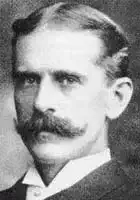
Henry Van Dyke
A Scrap of Paper
"Will you go to war just for a scrap of paper?" -- Question
of the German Chancellor to the British Ambassador,
August 5, 1914.
A mocking question! Britain's answer came
Swift as the light and searching as the flame.
"Yes, for a scrap of paper we will fight
Till our last breath, and God defend the right!
"A scrap of paper where a name is set
Is strong as duty's pledge and honor's debt.
"A scrap of paper holds for man and wife
The sacrament of love, the bond of life.
"A scrap of paper may be Holy Writ
With God's eternal word to hallow it.
"A scrap of paper binds us both to stand
Defenders of a neutral neighbor land.
"By God, by faith, by honor, yes! We fight
To keep our name upon that paper white."
371
Henry Wadsworth Longfellow
The Hanging Of The Crane
The lights are out, and gone are all the guests
That thronging came with merriment and jests
To celebrate the Hanging of the Crane
In the new house,--into the night are gone;
But still the fire upon the hearth burns on,
And I alone remain.
O fortunate, O happy day,
When a new household finds its place
Among the myriad homes of earth,
Like a new star just sprung to birth,
And rolled on its harmonious way
Into the boundless realms of space!
So said the guests in speech and song,
As in the chimney, burning bright,
We hung the iron crane to-night,
And merry was the feast and long.
II.
And now I sit and muse on what may be,
And in my vision see, or seem to see,
Through floating vapors interfused with light,
Shapes indeterminate, that gleam and fade,
As shadows passing into deeper shade
Sink and elude the sight.
For two alone, there in the hall,
As spread the table round and small;
Upon the polished silver shine
The evening lamps, but, more divine,
The light of love shines over all;
Of love, that says not mine and thine,
But ours, for ours is thine and mine.
They want no guests, to come between
Their tender glances like a screen,
And tell them tales of land and sea,
And whatsoever may betide
The great, forgotten world outside;
They want no guests; they needs must be
Each other's own best company.
III.
The picture fades; as at a village fair
A showman's views, dissolving into air,
Again appear transfigured on the screen,
So in my fancy this; and now once more,
In part transfigured, through the open door
Appears the selfsame scene.
Seated, I see the two again,
But not alone; they entertain
A little angel unaware,
With face as round as is the moon;
A royal guest with flaxen hair,
Who, throned upon his lofty chair,
Drums on the table with his spoon,
Then drops it careless on the floor,
To grasp at things unseen before.
Are these celestial manners? these
The ways that win, the arts that please?
Ah yes; consider well the guest,
And whatsoe'er he does seems best;
He ruleth by the right divine
Of helplessness, so lately born
In purple chambers of the morn,
As sovereign over thee and thine.
He speaketh not; and yet there lies
A conversation in his eyes;
The golden silence of the Greek,
The gravest wisdom of the wise,
Not spoken in language, but in looks
More legible than printed books,
As if he could but would not speak.
And now, O monarch absolute,
Thy power is put to proof; for, lo!
Resistless, fathomless, and slow,
The nurse comes rustling like the sea,
And pushes back thy chair and thee,
And so good night to King Canute.
IV.
As one who walking in a forest sees
A lovely landscape through the parted frees,
Then sees it not, for boughs that intervene
Or as we see the moon sometimes revealed
Through drifting clouds, and then again concealed,
So I behold the scene.
There are two guests at table now;
The king, deposed and older grown,
No longer occupies the throne,--
The crown is on his sister's brow;
A Princess from the Fairy Isles,
The very pattern girl of girls.
All covered and embowered in curls,
Rose-tinted from the Isle of Flowers,
And sailing with soft, silken sails
From far-off Dreamland into ours.
Above their bowls with rims of blue
Four azure eyes of deeper hue
Are looking, dreamy with delight;
Limpid as planets that emerge
Above the ocean's rounded verge,
Soft-shining through the summer night.
Steadfast they gaze, yet nothing see
Beyond the horizon of their bowls;
Nor care they for the world that rolls
With all its freight of troubled souls
Into the days that are to be.
V.
Again the tossing boughs shut out the scene,
Again the drifting vapors intervene,
And the moon's pallid disk is hidden quite;
And now I see the table wider grown,
As round a pebble into water thrown
Dilates a ring of light.
I see the table wider grown,
I see it garlanded with guests,
As if fair Ariadne's Crown
Out of the sky had fallen down;
Maidens within whose tender breasts
A thousand restless hopes and fears,
Forth reaching to the coming years,
Flutter awhile, then quiet lie
Like timid birds that fain would fly,
But do not dare to leave their nests;--
And youths, who in their strength elate
Challenge the van and front of fate,
Eager as champions to be
In the divine knight-errantry
Of youth, that travels sea and land
Seeking adventures, or pursues,
Through cities, and through solitudes
Frequented by the lyric Muse,
The phantom with the beckoning hand,
That still allures and still eludes.
O sweet illusions of the brain!
O sudden thrills of fire and frost!
The world is bright while ye remain,
And dark and dead when ye are lost!
VI.
The meadow-brook, that seemeth to stand still,
Quickens its current as it nears the mill;
And so the stream of Time that lingereth
In level places, and so dull appears,
Runs with a swifter current as it nears
The gloomy mills of Death.
And now, like the magician's scroll,
That in the owner's keeping shrinks
With every wish he speaks or thinks,
Till the last wish consumes the whole,
The table dwindles, and again
I see the two alone remain.
The crown of stars is broken in parts;
Its jewels, brighter than the day,
Have one by one been stolen away
To shine in other homes and hearts.
One is a wanderer now afar
In Ceylon or in Zanzibar,
Or sunny regions of Cathay;
And one is in the boisterous camp
Mid clink of arms and horses' tramp,
And battle's terrible array.
I see the patient mother read,
With aching heart, of wrecks that float
Disabled on those seas remote,
Or of some great heroic deed
On battle-fie1ds where thousands bleed
To lift one hero into fame.
Anxious she bends her graceful head
Above these chronicles of pain,
And trembles with a secret dread
Lest there among the drowned or slain
She find the one beloved name.
VII.
After a day of cloud and wind and rain
Sometimes the setting sun breaks out again,
And touching all the darksome woods with light,
Smiles on the fields, until they laugh and sing,
Then like a ruby from the horizon's ring
Drops down into the night.
What see I now? The night is fair,
The storm of grief, the clouds of care,
The wind, the rain, have passed away;
The lamps are lit, the fires burn bright,
The house is full of life and light:
It is the Golden Wedding day.
The guests come thronging in once more,
Quick footsteps sound along the floor,
The trooping children crowd the stair,
And in and out and everywhere
Flashes along the corridor
The sunshine of their golden hair.
On the round table in the hall
Another Ariadne's Crown
Out of the sky hath fallen down;
More than one Monarch of the Moon
Is drumming with his silver spoon;
The light of love shines over all.
O fortunate, O happy day!
The people sing, the people say.
The ancient bridegroom and the bride,
Smiling contented and serene
Upon the blithe, bewildering scene,
Behold, well pleased, on every side
Their forms and features multiplied,
As the reflection of a light
Between two burnished mirrors gleams,
Or lamps upon a bridge at night
Stretch on and on before the sight,
Till the long vista endless seems.
364

William Shakespeare
Spring
When daisies pied, and violets blue,
And lady-smocks all silver-white,
And cuckoo-buds of yellow hue
Do paint the meadows with delight,
The cuckoo then, on every tree,
Mocks married men, for thus sings he:
'Cuckoo!
Cuckoo, cuckoo!' O word of fear,
Unpleasing to a married ear.
When shepherds pipe on oaten straws,
And merry larks are ploughmen's clocks,
When turtles tread, and rooks, and daws,
And maidens bleach their summer smocks,
The cuckoo then, on every tree,
Mocks married men, for thus sings he:
'Cuckoo!
Cuckoo, cuckoo!' O word of fear,
Unpleasing to a married ear.
360
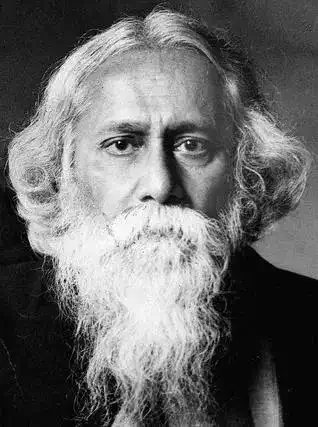
Rabindranath Tagore
Lover's Gifts XLIII: Dying, You Have Left Behind
Dying, you have left behind you the great sadness of the Eternal
in my life. You have painted my thought's horizon with the sunset
colours of your departure, leaving a track of tears across the
earth to love's heaven. Clasped in your dear arms, life and death
united in me in a marriage bond.
I think I can see you watching there in the balcony with your
lamp lighted, where the end and the beginning of all things meet.
My world went hence through the doors that you opened-you holding
the cup of death to my lips, filling it with life from your own.
361
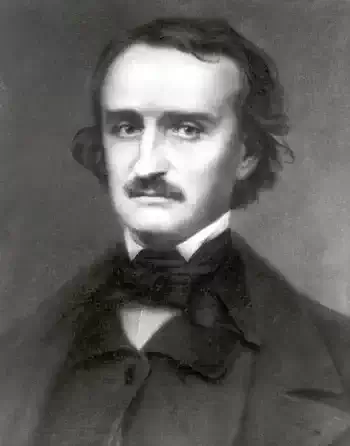
Edgar Allan Poe
Bridal Ballad
The ring is on my hand,
And the wreath is on my brow;
Satin and jewels grand
Are all at my command,
And I am happy now.
And my lord he loves me well;
But, when first he breathed his vow,
I felt my bosom swell
For
the words rang as a knell,
And the voice seemed his who fell
In the battle down the dell,
And who is happy now.
But he spoke to re-assure me,
And he kissed my pallid brow,
While a reverie came o'er me,
And to the church-yard bore me,
And I sighed to him before me,
Thinking him dead D'Elormie,
"Oh, I am happy now!"
And thus the words were spoken,
And this the plighted vow,
And, though my faith be broken,
And, though my heart be broken,
Here is a ring, as token
That I am happy now!
Would God I could awaken!
For I dream I know not how!
And my soul is sorely shaken
Lest an evil step be taken,
Lest the dead who is forsaken
May not be happy now.
356
William Shakespeare
Sonnet 20: A woman's face with Nature's own hand painted
A woman's face with Nature's own hand painted
Hast thou, the master-mistress of my passion;
A woman's gentle heart, but not acquainted
With shifting change, as is false women's fashion;
An eye more bright than theirs, less false in rolling,
Gilding the object whereupon it gazeth;
A man in hue, all hues in his controlling,
Which steals men's eyes and women's souls amazeth.
And for a woman wert thou first created,
Till Nature, as she wrought thee, fell a-doting,
And by addition me of thee defeated,
By adding one thing to my purpose nothing.
But since she pricked thee out for women's pleasure,
Mine be thy love and thy love's use their treasure.
349

Johann Wolfgang von Goethe
Maiden Wishes
WHAT pleasure to me
A bridegroom would be!
When married we are,
They call us mamma.
No need then to sew,
To school we ne'er go;
Command uncontroll'd,
Have maids, whom to scold;
Choose clothes at our ease,
Of what tradesmen we please;
Walk freely about,
And go to each rout,
And unrestrained are
By papa or mamma.
A bridegroom would be!
When married we are,
They call us mamma.
No need then to sew,
To school we ne'er go;
Command uncontroll'd,
Have maids, whom to scold;
Choose clothes at our ease,
Of what tradesmen we please;
Walk freely about,
And go to each rout,
And unrestrained are
By papa or mamma.
348
William Shakespeare
Sonnet 9: Is it for fear to wet a widow's eye
Is it for fear to wet a widow's eye,
That thou consum'st thy self in single life?
Ah, if thou issueless shalt hap to die,
The world will wail thee like a makeless wife.
The world will be thy widow and still weep,
That thou no form of thee hast left behind,
When every private widow well may keep,
By children's eyes, her husband's shape in mind.
Look what an unthrift in the world doth spend
Shifts but his place, for still the world enjoys it;
But beauty's waste hath in the world an end,
And kept unused the user so destroys it.
No love toward others in that bosom sits
That on himself such murd'rous shame commits.
346
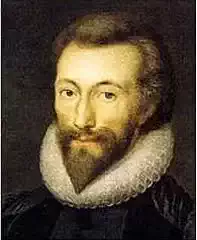
John Donne
A Jet Ring Sent
Thou art not so black as my heart,
Nor half so brittle as her heart, thou art ;
What would'st thou say ? shall both our properties by thee be spoke,
—Nothing more endless, nothing sooner broke?
Marriage rings are not of this stuff ;
Oh, why should ought less precious, or less tough
Figure our loves ? except in thy name thou have bid it say,
'—I'm cheap, and nought but fashion ; fling me away.'
Yet stay with me since thou art come,
Circle this finger's top, which didst her thumb ;
Be justly proud, and gladly safe, that thou dost dwell with me ;
She that, O ! broke her faith, would soon break thee.
343

Emily Dickinson
Her Sweet turn to leave the Homestead
Her Sweet turn to leave the Homestead
Came the Darker WayCarriages-
Be Sure-and Guests-too-
But for Holiday
'Tis more pitiful Endeavor
Than did Loaded Sea
O'er the Curls attempt to caper
It had cast away-
Never Bride had such Assembling-
Never kinsmen kneeled
To salute so fair a Forehead-
Garland be indeed-
Fitter Feet-of Her before us-
Than whatever Brow
Art of Snow-or Trick of Lily
Possibly bestow
Of Her Father-Whoso ask Her-
He shall seek as high
As the Palm-that serve the Desert-
To obtain the Sky
Distance-be Her only Motion-
If 'tis Nay-or YesAcquiescence-
or Demurral-
Whosoever guess
He-must pass the Crystal Angle
That obscure Her face
He-
must have achieved in person
Equal Paradise-
327

Edward Lear
The Pelican Chorus
King and Queen of the Pelicans we;
No other Birds so grand we see!
None but we have feet like fins!
With lovely leathery throats and chins!
Ploffskin, Pluffskin, Pelican jee!
We think no birds so happy as we!
Plumpskin, Ploshkin, Pelican jill!
We think so then, and we thought so still!
We live on the Nile. The Nile we love.
By night we sleep on the cliffs above.
By day we fish, and at eve we stand
On long bare islands of yellow sand.
And when the sun sinks slowly down
And the great rock walls grow dark and brown,
Where the purple river rolls fast and dim
And the ivory Ibis starlike skim,
Wing to wing we dance around, -
Stamping our feet with a flumpy sound, -
Opening our mouths as Pelicans ought,
And this is the song we nightly snort:
Ploffskin, Pluffskin, Pelican jee!
We think no Birds so happy as we!
Plumpskin, Ploshkin, Pelican jill!
We think so then, and we thought so still.
Last year came out our Daughter, Dell;
And all the Birds received her well.
To do her honour, a feast we made
For every bird that can swim or wade.
Herons and Gulls, and Cormorants black,
Cranes, and Flamingoes with scarlet back,
Plovers and Storks, and Geese in clouds,
Swans and Dilberry Ducks in crowds.
Thousands of Birds in wondrous flight!
They ate and drank and danced all night,
And echoing back from the rocks you heard
Multitude-echoes from Bird and Bird, -
Ploffskin, Pluffskin, Pelican jee!
We think no Birds so happy as we!
Plumpskin, Ploshkin, Pelican jill!
We think so then, and we thought so still!
Yes, they came; and among the rest,
The king of the Cranes all grandly dressed.
Such a lovely tail! Its feathers float
Between the ends of his blue dress-coat;
With pea-green trowsers all so neat,
And a delicate frill to hide his feet, (
For though no one speaks of it, everyone knows,
He has got no webs between his toes!)
As soon as he saw our Daughter Dell,
In violent love that Crane King fell,
On seeing her waddling form so fair,
With a wreath of shrimps in her short white hair,
And before the end of the next long day,
Our Dell had given her heart away;
For the King of the Cranes had won that heart,
With a Crocodile's egg and a large fish-tart.
She vowed to marry the King of the Cranes,
Leaving the Nile for stranger plains;
And away they flew in a gathering crowd
Of endless birds in a lengthening cloud.
Ploffskin, Pluffskin, Pelican jee!
We think no Birds so happy as we!
Plumpskin, Ploshkin, Pelican jill!
We think so then, and we thought so still!
And far away in the twilight sky,
We heard them singing in a lessening cry, -
Farther and farther till out of sight,
And we stood alone in the silent night!
Often since, in the nights of June,
We sit on the sand and watch the moon;
-She dwells by the streams of the Chankly Bore,
And we probably never shall see her more.
Ploffskin, Pluffskin, Pelican jee!
We think no Birds so happy as we!
Plumpskin, Ploshkin, Pelican jill!
We think so then, and we thought so still!
325
Johann Wolfgang von Goethe
The Unequal Marriage
EVEN this heavenly pair were unequally match'd when united:
Psyche grew older and wise, Amor remain'd still a child,
Psyche grew older and wise, Amor remain'd still a child,
311
Edward Lear
Mr and Mrs Discobbolos
First Part
Mr and Mrs Discobbolos
Climbed to the top of a wall,
And they sat to watch the sunset sky
And to hear the Nupiter Piffkin cry
And the Biscuit Buffalo call.
They took up a roll and some Chamomile tea,
And both were as happy as happy could be -
Till Mrs Discobbolos said, '
Oh! W! X! Y! Z!
It has just come into my head -
Suppose we should happen to fall!!!!!
Darling Mr Discobbolos?
'Suppose we should fall down flumpetty
Just like two pieces of stone!
On to the thorns, - or into the moat!
What would become of your new green coat?
And might you not break a bone?
It never occurred to me before -
That perhaps we shall never go down any more!'
And Mrs Discobbolos said '
Oh! W! X! Y! Z!
What put it into your head
To climb up this wall? - my own
Darling Mr Discobbolos?'
Mr Discobbolos answered, '
At first it gave me pain, -
And I felt my ears turn perfectly pink
When your exclamation made me think
We might never get down again!
But now I believe it is wiser far
To remain for ever just where we are.' -
And Mr Discobbolos said,
'Oh! W! X! Y! Z!
It has just come into my head '-
We shall never go down again -
Dearest Mrs Discobbolos.!'
So Mr and Mrs Discobbolos
Stood up, and began to sing,
'Far away from hurry and strife
Here we will pass the rest of life,
Ding a dong, ding dong, ding!
We want no knives nor forks nor chairs,
No tables nor carpets nor household cares,
From worry of life we've fled '
Oh! W! X! Y! Z!
There is no more trouble ahead
Sorrow or any such thing -
For Mr and Mrs Discobbolos!'
Second Part.
Mr and Mrs Discobbolos
Lived on the top of the wall
For twenty years, a month and a day,
Till their hair had grown all pearly gray,
And their teeth began to fall.
They never were ill, or at all dejected,
By all admired, and by some respected,
Till Mrs Discobbolos said,
'Oh! W! X! Y! Z!
It has just come into my head,
We have no more room at all -
Darling Mr Discobbolos!
Look at our six fine boys!
And our six sweet girls so fair!
Upon this wall they have all been born,
And not one of the twelve has happened to fall
Through my maternal care!
Surely they should not pass their lives
Without any chance of husbands or wives!'
And Mrs Discobbolos said,
'Oh! W! X! Y! Z!
Did it never come into your head
That our lives must be lived elsewhere,
Dearest Mr Discobbolos?
'They have never been at a ball,
Nor have even seen a bazaar!
Nor have heard folks say in a tone all hearty,
'What loves of girls (at a garden party)
Those Misses Discobbolos are!'
Morning and night it drives me wild
To think of the fate of each darling child!'
But Mr Discobbolos said,
'Oh! W! X! Y! Z!
What has come to your fiddledum head!
What a runcible goose you are!
Octopod Mrs Discobbolos!'
Suddenly Mr Discobbolos
Slid from the top of the wall;
And beneath it he dug a dreadful trench,
And filled it with dynamite, gunpowder gench,
And aloud he began to call '
Let the wild bee sing,
And the blue bird hum!
For the end of your lives has certainly come!'
And Mrs Discobbolos said,
'Oh! W! X! Y! Z!
We shall presently all be dead,
On this ancient runcible wall,
Terrible Mr Discobbolos!'
Pensively, Mr Discobbolos
Sat with his back to the wall;
He lighted a match, and fired the train,
And the mortified mountain echoed again
To the sound of an awful fall!
And all the Discobbolos family flew
In thousands of bits to the sky so blue,
And no one was left to have said,
'Oh! W! X! Y! Z!
Has it come into anyone's head
That the end has happened to all
Of the whole of the Clan Discobbolos?'
Mr and Mrs Discobbolos
Climbed to the top of a wall,
And they sat to watch the sunset sky
And to hear the Nupiter Piffkin cry
And the Biscuit Buffalo call.
They took up a roll and some Chamomile tea,
And both were as happy as happy could be -
Till Mrs Discobbolos said, '
Oh! W! X! Y! Z!
It has just come into my head -
Suppose we should happen to fall!!!!!
Darling Mr Discobbolos?
'Suppose we should fall down flumpetty
Just like two pieces of stone!
On to the thorns, - or into the moat!
What would become of your new green coat?
And might you not break a bone?
It never occurred to me before -
That perhaps we shall never go down any more!'
And Mrs Discobbolos said '
Oh! W! X! Y! Z!
What put it into your head
To climb up this wall? - my own
Darling Mr Discobbolos?'
Mr Discobbolos answered, '
At first it gave me pain, -
And I felt my ears turn perfectly pink
When your exclamation made me think
We might never get down again!
But now I believe it is wiser far
To remain for ever just where we are.' -
And Mr Discobbolos said,
'Oh! W! X! Y! Z!
It has just come into my head '-
We shall never go down again -
Dearest Mrs Discobbolos.!'
So Mr and Mrs Discobbolos
Stood up, and began to sing,
'Far away from hurry and strife
Here we will pass the rest of life,
Ding a dong, ding dong, ding!
We want no knives nor forks nor chairs,
No tables nor carpets nor household cares,
From worry of life we've fled '
Oh! W! X! Y! Z!
There is no more trouble ahead
Sorrow or any such thing -
For Mr and Mrs Discobbolos!'
Second Part.
Mr and Mrs Discobbolos
Lived on the top of the wall
For twenty years, a month and a day,
Till their hair had grown all pearly gray,
And their teeth began to fall.
They never were ill, or at all dejected,
By all admired, and by some respected,
Till Mrs Discobbolos said,
'Oh! W! X! Y! Z!
It has just come into my head,
We have no more room at all -
Darling Mr Discobbolos!
Look at our six fine boys!
And our six sweet girls so fair!
Upon this wall they have all been born,
And not one of the twelve has happened to fall
Through my maternal care!
Surely they should not pass their lives
Without any chance of husbands or wives!'
And Mrs Discobbolos said,
'Oh! W! X! Y! Z!
Did it never come into your head
That our lives must be lived elsewhere,
Dearest Mr Discobbolos?
'They have never been at a ball,
Nor have even seen a bazaar!
Nor have heard folks say in a tone all hearty,
'What loves of girls (at a garden party)
Those Misses Discobbolos are!'
Morning and night it drives me wild
To think of the fate of each darling child!'
But Mr Discobbolos said,
'Oh! W! X! Y! Z!
What has come to your fiddledum head!
What a runcible goose you are!
Octopod Mrs Discobbolos!'
Suddenly Mr Discobbolos
Slid from the top of the wall;
And beneath it he dug a dreadful trench,
And filled it with dynamite, gunpowder gench,
And aloud he began to call '
Let the wild bee sing,
And the blue bird hum!
For the end of your lives has certainly come!'
And Mrs Discobbolos said,
'Oh! W! X! Y! Z!
We shall presently all be dead,
On this ancient runcible wall,
Terrible Mr Discobbolos!'
Pensively, Mr Discobbolos
Sat with his back to the wall;
He lighted a match, and fired the train,
And the mortified mountain echoed again
To the sound of an awful fall!
And all the Discobbolos family flew
In thousands of bits to the sky so blue,
And no one was left to have said,
'Oh! W! X! Y! Z!
Has it come into anyone's head
That the end has happened to all
Of the whole of the Clan Discobbolos?'
306

John Greenleaf Whittier
The Golden Wedding Of Longwood
With fifty years between you and your well-kept wedding vow,
The Golden Age, old friends of mine, is not a fable now.
And, sweet as has life's vintage been through all your pleasant past,
Still, as at Cana's marriage-feast, the best wine is the last!
Again before me, with your names, fair Chester's landscape comes,
Its meadows, woods, and ample barns, and quaint, stone-builded homes.
The smooth-shorn vales, the wheaten slopes, the boscage green and soft,
Of which their poet sings so well from towered Cedarcroft.
And lo! from all the country-side come neighbors, kith and kin;
From city, hamlet, farm-house old, the wedding guests come in.
And they who, without scrip or purse, mob-hunted, travel-worn,
In Freedom's age of martyrs came, as victors now return.
Older and slower, yet the same, files in the long array,
And hearts are light and eyes are glad, though heads are badger-gray.
The fire-tried men of Thirty-eight who saw with me the fall,
Midst roaring flames and shouting mob, of Pennsylvania Hall;
And they of Lancaster who turned the cheeks of tyrants pale,
Singing of freedom through the grates of Moyamensing jail!
And haply with them, all unseen, old comrades, gone before,
Pass, silently as shadows pass, within your open door,-
The eagle face of Lindley Coates, brave Garrett's daring zeal,
Christian grace of Pennock, the steadfast heart of Neal.
Ah me! beyond all power to name, the worthies tried and true,
Grave men, fair women, youth and maid, pass by in hushed review.
Of varying faiths, a common cause fused all their hearts in one.
God give them now, whate'er their names, the peace of duty done!
How gladly would I tread again the old-remembered places,
Sit down beside your hearth once more and look in the dear old faces!
And thank you for the lessons your fifty years are teaching,
For honest lives that louder speak than half our noisy preaching;
For your steady faith and courage in that dark and evil time,
When the Golden Rule was treason, and to feed the hungry, crime;
For the poor slave's house of refuge when the hounds were on his track,
And saint and sinner, church and state, joined hands to send him back.
Blessings upon you!--What you did for each sad, suffering one,
So homeless, faint, and naked, unto our Lord was done!
Fair fall on Kennett's pleasant vales and Longwood's bowery ways
The mellow sunset of your lives, friends of my early days.
May many more of quiet years be added to your sum,
And, late at last, in tenderest love, the beckoning angel come.
Dear hearts are here, dear hearts are there, alike below, above;
Our friends are now in either world, and love is sure of love.
296
Emily Dickinson
Given in Marriage unto Thee
Given in Marriage unto Thee
Oh thou Celestial Host-
Bride of the Father and the Son
Bride of the Holy Ghost.
Other Betrothal shall dissolve-
Wedlock of Will, decay-
Only the Keeper of this Ring
Conquer Mortality-
Oh thou Celestial Host-
Bride of the Father and the Son
Bride of the Holy Ghost.
Other Betrothal shall dissolve-
Wedlock of Will, decay-
Only the Keeper of this Ring
Conquer Mortality-
292

Robert W. Service
Two Husbands
Unpenitent, I grieve to state,
Two good men stood by heaven's gate,
Saint Peter coming to await.
The stopped the Keeper of the Keys,
Saying: "What suppliants are these,
Who wait me not on bended knees?
"To get my heavenly Okay
A man should have been used to pray,
Or suffered in some grievous way."
"Oh I have suffered," cried the first.
"Of wives I had the wicked worst,
Who made my life a plague accurst.
"Such martyrdom no tongue can tell;
In mercy's name it is not well
To doom me to another hell."
Saint Peter said: "I comprehend;
But tribulations have their end.
The gate is open, - go my friend."
Then said the second: "What of me?
More I deserve to pass than he,
For I've been wedded twice, you see."
Saint Peter looked at him a while,
And then he answered with a smile:
"Your application I will file.
"Yet twice in double yoke you've driven . . .
Though sinners with our Saints we leaven,
We don't take IMBECILES in heaven."
290

Jonathan Swift
Robin And Harry
Robin to beggars with a curse,
Throws the last shilling in his purse;
And when the coachman comes for pay,
The rogue must call another day.
Grave Harry, when the poor are pressing
Gives them a penny and God's blessing;
But always careful of the main,
With twopence left, walks home in rain.
Robin from noon to night will prate,
Run out in tongue, as in estate;
And, ere a twelvemonth and a day,
Will not have one new thing to say.
Much talking is not Harry's vice;
He need not tell a story twice:
And, if he always be so thrifty,
His fund may last to five-and-fifty.
It so fell out that cautious Harry,
As soldiers use, for love must marry,
And, with his dame, the ocean cross'd;
(All for Love, or the World well Lost!)
Repairs a cabin gone to ruin,
Just big enough to shelter two in;
And in his house, if anybody come,
Will make them welcome to his modicum
Where Goody Julia milks the cows,
And boils potatoes for her spouse;
Or darns his hose, or mends his breeches,
While Harry's fencing up his ditches.
Robin, who ne'er his mind could fix,
To live without a coach-and-six,
To patch his broken fortunes, found
A mistress worth five thousand pound;
Swears he could get her in an hour,
If gaffer Harry would endow her;
And sell, to pacify his wrath,
A birth-right for a mess of broth.
Young Harry, as all Europe knows,
Was long the quintessence of beaux;
But, when espoused, he ran the fate
That must attend the married state;
From gold brocade and shining armour,
Was metamorphosed to a farmer;
His grazier's coat with dirt besmear'd;
Nor twice a-week will shave his beard.
Old Robin, all his youth a sloven,
At fifty-two, when he grew loving,
Clad in a coat of paduasoy,
A flaxen wig, and waistcoat gay,
Powder'd from shoulder down to flank,
In courtly style addresses Frank;
Twice ten years older than his wife,
Is doom'd to be a beau for life;
Supplying those defects by dress,
Which I must leave the world to guess.
285
Robert W. Service
The Wedding Ring
I pawned my sick wife's wedding ring,
To drink and make myself a beast.
I got the most that it would bring,
Of golden coins the very least.
With stealth into her room I crept
And stole it from her as she slept.
I do not think that she will know,
As in its place I left a band
Of brass that has a brighter glow
And gleamed upon her withered hand.
I do not think that she can tell
The change - she does not see too well.
Pray God, she doesn't find me out.
I'd rather far I would be dead.
Yet yesterday she seemed to doubt,
And looking at me long she said:
"My finger must have shrunk, because
My ring seems bigger than it was."
She gazed at it so wistfully,
And one big tear rolled down her cheek.
Said she: "You'll bury it with me . . ."
I was so moved I could not speak.
Oh wretched me! How whisky can
Bring out the devil in a man!"
And yet I know she loves me still,
As on the morn that we were wed;
And darkly guess I also will
Be doomed the day that she is dead.
And yet I swear, before she's gone,
I will retrieve her ring from pawn.
I'll get it though I have to steal,
Then when to ease her bitter pain
They give her sleep oh I will feel
Her hand and slip it on again;
Through tears her wasted face I'll see,
And pray to God: "Oh pity me!"
285
Emily Dickinson
I'm wife-I've finished that
I'm "wife"-I've finished that-
That other state
I'm
Czar-I'm "Woman" now
It's
safer so-
How odd the Girl's life looks
Behind this soft Eclipse-
I think that Earth feels so
To folks in Heaven-now-
This being comfort-then
That other kind-was pain-
But why compare?
I'm "Wife"! Stop there!
That other state
I'm
Czar-I'm "Woman" now
It's
safer so-
How odd the Girl's life looks
Behind this soft Eclipse-
I think that Earth feels so
To folks in Heaven-now-
This being comfort-then
That other kind-was pain-
But why compare?
I'm "Wife"! Stop there!
281

William Butler Yeats
To be Carved On A Stone At Thoor Ballylee
I, THE poet William Yeats,
With old mill boards and sea-green slates,
And smithy work from the Gort forge,
Restored this tower for my wife George;
And may these characters remain
When all is ruin once again.
With old mill boards and sea-green slates,
And smithy work from the Gort forge,
Restored this tower for my wife George;
And may these characters remain
When all is ruin once again.
278
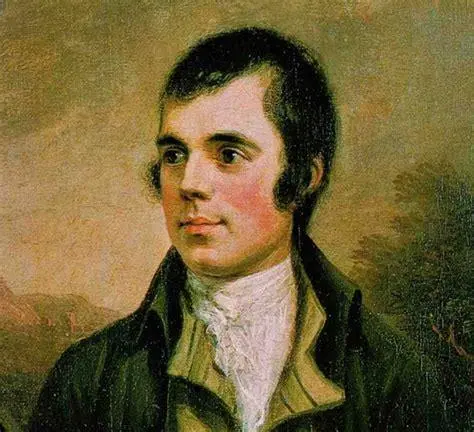
Robert Burns
John Anderson My Jo
John Anderson my jo, John,
When we were first acquent,
Your locks were like the raven,
Your bonny brow was brent;
But now your brow is bled, John,
Your locks are like the straw,
But blessings on your frosty pow,
John Anderson my jo!
John Anderson my jo, John,
We clamb the hill thegither
And monie a cantie day, John,
We've had wi' ane anither;
Now we maun totter down, John,
And hand in hand we'll go,
And sleep thegither at the foot,
John Anderson my jo!
275
Robert W. Service
Fidelity
Being a shorty, as you see,
A bare five footer,
The why my wife is true to me
Is my six-shooter.
For every time a guy goes by
Who looks like a lover,
I polish it to catch his eye,
And spin it over.
He notes its notches as I say:
'Believe me, Brother,
If Junie ever goes astray,
They'll be another.'
A husband has to have a gun
And guts to pull it:
Few fellows think a bit of fun
Is worth a bullet.
For June would sit on any knee
If it wore pants,
Yet she is faithful unto me,
As gossip grants.
And though I know some six-foot guy
Would better suit her,
Her virtue triumphs, thanks to my
Six shooter.
273
Robert W. Service
The Boola-Boola Maid
In the wilds of Madagascar, Dwelt a Boola-boola maid;
For her hand young men would ask her, But she always was afraid.
Oh that Boola-boola maid She was living in the shade Of a spreading Yum-yum tree;
And - when the day was done At the setting of the sun, She would make this melodee:
As this ditty she was cooing, Came a Boola-boola man;
And he lost no time in wooing; For he punched her on the pan.
Oh that Boola-boola maid She was terribly afraid So he punched her on the eye;
And - then he laugh'd with glee As beneath the Yum-yum tree He - heard that maiden
cry:
Then with shrieks of ribald laughter, Said the Boola-boola man;
"If it's only socks you're after, I will do the best I can.
I have handed you a pair, And I've plenty more to spare," So he socked her on the
nose;
And a woeful maid was she, As beneath the Yum-yum tree, This - lamentation 'rose:
Now the wedding tom-tom's over, for this Boola-boola maid;
And when ev'ning shadows hover, She no longer is afraid.
For she weasrs a palm-leaf pinny And she rocks a pickaninny In the shade of the
Yum-yum tree,
And she's happy with her he-man, Though she still dreams of a She-man, As she sings
this song with glee:
Chorus:
Oh - I don't want my cave-man to caress me,
Oh I don't want no coal-black heads to press me.
All I want is a fellow who wears suspenders,
That'll be the coon to whom this babe surenders.
For the man I wed must have a proper trouseau.
On none of your fig-leaf dudes will make me do so.
For it's funny how I feel, But I'm crazy for socks appeal
And my dream is to marry a man with a pair of socks.
266