
City and Everyday Life

Robert W. Service
Noctambule
Zut! it's two o'clock.
See! the lights are jumping.
Finish up your bock,
Time we all were humping.
Waiters stack the chairs,
Pile them on the tables;
Let us to our lairs
Underneath the gables.
Up the old Boul' Mich'
Climb with steps erratic.
Steady . . . how I wish
I was in my attic!
Full am I with cheer;
In my heart the joy stirs;
Couldn't be the beer,
Must have been the oysters.
In obscene array
Garbage cans spill over;
How I wish that they
Smelled as sweet as clover!
Charing women wait;
Cafes drop their shutters;
Rats perambulate
Up and down the gutters.
Down the darkened street
Market carts are creeping;
Horse with wary feet,
Red-faced driver sleeping.
Loads of vivid greens,
Carrots, leeks, potatoes,
Cabbages and beans,
Turnips and tomatoes.
Pair of dapper chaps,
Cigarettes and sashes,
Stare at me, perhaps
Desperate Apachès.
"Needn't bother me,
Jolly well you know it;
Parceque je suis
Quartier Latin poet.
"Give you villanelles,
Madrigals and lyrics;
Ballades and rondels,
Odes and panegyrics.
Poet pinched and poor,
Pricked by cold and hunger;
Trouble's troubadour,
Misery's balladmonger."
Think how queer it is!
Every move I'm making,
Cosmic gravity's
Center I am shaking;
Oh, how droll to feel
(As I now am feeling),
Even as I reel,
All the world is reeling.
Reeling too the stars,
Neptune and Uranus,
Jupiter and Mars,
Mercury and Venus;
Suns and moons with me,
As I'm homeward straying,
All in sympathy
Swaying, swaying, swaying.
Lord! I've got a head.
Well, it's not surprising.
I must gain my bed
Ere the sun be rising;
When the merry lark
In the sky is soaring,
I'll refuse to hark,
I'll be snoring, snoring.
Strike a sulphur match . . .
Ha! at last my garret.
Fumble at the latch,
Close the door and bar it.
Bed, you graciously
Wait, despite my scorning . . .
So, bibaciously
Mad old world, good morning.
211

D.H. Lawrence
Submergence
When along the pavement,
Palpitating flames of life,
People flicker round me,
I forget my bereavement,
The gap in the great constellation,
The place where a star used to be.
Nay, though the pole-star
Is blown out like a candle,
And all the heavens are wandering in disarray,
Yet when pleiads of people are
Deployed around me, and I see
The street’s long outstretched Milky Way,
When people flicker down the pavement,
I forget my bereavement.
208

Anonymous
A Sonnet Upon The Pitiful Burning Of The Globe Playhouse In
Now sit thee down, Melpomene,
Wrapp'd in a sea-coal robe,
And tell the doleful tragedy
That late was play'd at Globe;
For no man that can sing and say
But was scar'd on St. Peter's Day.
Oh sorrow, pitiful sorrow, and yet all this is true.
All you that please to understand,
Come listen to my story,
To see Death with his raking brand
'Mongst such an auditory;
Regarding neither Cardinal's might,
Nor yet the rugged face of Henry the Eight.
Oh sorrow, pitiful sorrow, and yet all this is true.
This fearful fire began above,
A wonder strange and true,
And to the stage-house did remove,
As round as tailor's clew;
And burnt down both beam and snag,
And did not spare the silken flag.
Oh sorrow, pitiful sorrow, and yet all this is true.
Out run the knights, out run the lords,
And there was great ado;
Some lost their hats and some their swords,
Then out run Burbage too;
The reprobates, though drunk on Monday,
Prayed for the fool and Henry Condye.
Oh sorrow, pitiful sorrow, and yet all this is true.
The periwigs and drum-heads fry,
Like to a butter firkin;
A woeful burning did betide
To many a good buff jerkin.
Then with swoll'n eyes, like drunken Flemings,
Distressed stood old stuttering Hemings.
Oh sorrow, pitiful sorrow, and yet all this is true.
...
Be warned, you stage strutters all,
Lest you again be catched,
And such a burning do befall
As to them whose house was thatched;
Forbear your whoring, breeding biles,
And lay up that expense for tiles.
Oh sorrow, pitiful sorrow, and yet all this is true.
Go draw you a petition,
And do you not abhor it,
And get, with low submission,
A license to beg for it
In churches, sans churchwardens' checks,
In Surrey and in Middlesex.
Oh sorrow, pitiful sorrow, and yet all this is true.
206

Henry Lawson
Macleay Street and Red Rock Lane
Macleay Street looks to Mosman,
Across the other side,
With brave asphalted pavements
And roadway clean and wide.
Macleay Street hath its mansions,
Its grounds and greenery;
Macleay Street hath its terraces
As terraces should be.
Red Rock Lane looks to nowhere,
With pockets into hell;
Red Rock Lane is a horror
Of heat and dirt and smell.
Red Rock Lane hath its brothels,
Of houses one in three;
Red Rock Lane hath its corner pubs
As fourth-rate pubs should be.
Macleay Street, cool and quiet,
Is marked off from the town,
And standing in the centre
The tall arc lamps look down.
The jealous closed cabs vanish
That stole from out the row,
Fair women stroll bareheaded,
And theatre parties go.
Red Rock Lane, hot with riot,
Hides things that none should know;
The furtive couples vanish
Through doorways dark and low.
Lust, thievery, drink and madness
In one infernal stew—
And Mrs Johnson, raving,
Walks out—bareheaded too.
Macleay Street hath its swindles,
But on a public scale;
Macleay Street hath its razzles
Until the night grows pale.
Macleay Street hath its scandals,
But—only this is plain,
That nothing is a scandal
Down there in Red Rock Lane.
Macleay Street looks to Mosman
In morning’s rosy glow,
And freshly to the city
The summer-suited go
While wild-eyed, foul and shaking,
Red Rock Lane wakes again.
This morning at the Central
They’re fining Red Rock Lane.
The Central says “the risin’”,
“Seven days”, or what you will;
Macleay Street says, “Drive slowly”
When any one is ill.
The law sends Black Maria
When Red Rock Lane is dead.
But doctors come in motor cars
When Macleay Street’s got a head.
The grey-faced, weedy parents
Sunk in Red Rock Lane holes—
They worry, pinch, and perish
To save their children’s souls.
The fairy of Macleay Street
Shall never soil her hands—
Her Pa is independent,
Or high up in “the Lands”.
And—well, there seems no moral,
And nothing more to tell,
But because of that fierce sympathy
Of souls to souls in hell;
And because of that wild kindness
To souls in sordid pain,
My soul I’d rather venture
With some in Red Rock Lane.
206

Thomas Hardy
Weathers
This is the weather the cuckoo likes,
And so do I;
When showers betumble the chestnut spikes,
And nestlings fly;
And the little brown nightingale bills his best,
And they sit outside at 'The Traveller's Rest,'
And maids come forth sprig-muslin drest,
And citizens dream of the south and west,
And so do I.
This is the weather the shepherd shuns,
And so do I;
When beeches drip in browns and duns,
And thresh and ply;
And hill-hid tides throb, throe on throe,
And meadow rivulets overflow,
And drops on gate bars hang in a row,
And rooks in families homeward go,
And so do I.
And so do I;
When showers betumble the chestnut spikes,
And nestlings fly;
And the little brown nightingale bills his best,
And they sit outside at 'The Traveller's Rest,'
And maids come forth sprig-muslin drest,
And citizens dream of the south and west,
And so do I.
This is the weather the shepherd shuns,
And so do I;
When beeches drip in browns and duns,
And thresh and ply;
And hill-hid tides throb, throe on throe,
And meadow rivulets overflow,
And drops on gate bars hang in a row,
And rooks in families homeward go,
And so do I.
197

Joyce Kilmer
Alarm Clocks
When Dawn strides out to wake a dewy farm
Across green fields and yellow hills of hay
The little twittering birds laugh in his way
And poise triumphant on his shining arm.
He bears a sword of flame but not to harm
The wakened life that feels his quickening sway
And barnyard voices shrilling "It is day!"
Take by his grace a new and alien charm.
But in the city, like a wounded thing
That limps to cover from the angry chase,
He steals down streets where sickly arc-lights sing,
And wanly mock his young and shameful face;
And tiny gongs with cruel fervor ring
In many a high and dreary sleeping place.
183

William Ernest Henley
Barmaid
Though, if you ask her name, she says Elise,
Being plain Elizabeth, e'en let it pass,
And own that, if her aspirates take their ease,
She ever makes a point, in washing glass,
Handling the engine, turning taps for tots,
And countering change, and scorning what men say,
Of posing as a dove among the pots,
Nor often gives her dignity away.
Her head's a work of art, and, if her eyes
Be tired and ignorant, she has a waist;
Cheaply the Mode she shadows; and she tries
From penny novels to amend her taste;
And, having mopped the zinc for certain years,
And faced the gas, she fades and disappears.
174
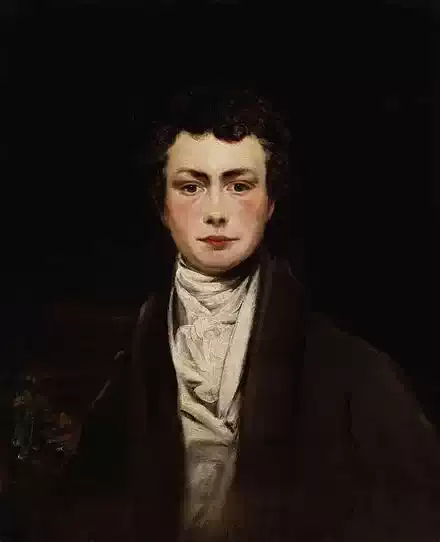
Thomas Moore
Memorabilia of Last Week
Monday, March ,
The Budget - quite charming and witty - no hearing,
For plaudits and laughs, the good things that were in it; --
Great comfort to find, though the Speech isn't cheering,
That all its gay auditors were, every minute.
What, still more prosperity! - mercy upon us,
"This boy'll be the death of me" - oft as, already,
Such smooth Budgeteers have genteelly undone us,
For Ruin made easy there's no one like Freddy.
Tuesday
Much grave apprehension express'd by the Peers,
Lest -- calling to life the old Peachums and Lockitts --
The large stock of gold we're to have in three years,
Should all find its way into highwayman's pockets![]
Wednesday
Little doing - for sacred, oh Wednesday, thou art
To the seven-o'-clock joys of full many a table --
When the Members all meet, to make much of that part
With which they so rashly fell out in the Fable.
It appear'd, though, to-night, that - as churchwardens, yearly,
Eat up a small baby - those cormorant sinners,
The Bankrupt-Commissioners bolt very nearly
A moderate-siz'd bankrupt, tout chaud, for their dinners![]
Nota bene - a rumour to-day, in the City,
"Mr. R-b-ns-n just has resign'd" - what a pity!
The Bulls and the Bears all fell a sobbing,
When they heard of the fate of poor Cock Robin;
While thus, to the nursery tune, so pretty,
A murmuring Stock-dove breath'd her ditty: --
"Alas, poor Robin, he crow'd as long
And as sweet as a prosperous Cock could crow;
Was a pitch too high for Robin to go.
Who'll make his shroud?"
"I," said the Bank, "though he play'd me a prank,
When I have a rag, poor Rob shall be roll'd in 't,
With many a pound I'll paper him round,
Like a plump rouleau - without the gold in 't."
170

Siegfried Sassoon
The Goldsmith
This job’s the best I’ve done.’ He bent his head
Over the golden vessel that he’d wrought.
A bird was singing. But the craftsman’s thought
Is a forgotten language, lost and dead.
He sighed and stretch’d brown arms. His friend came in
And stood beside him in the morning sun.
The goldwork glitter’d.... ‘That’s the best I’ve done.
‘And now I’ve got a necklace to begin.’
This was at Gnossos, in the isle of Crete...
A girl was selling flowers along the street.
128
Joyce Kilmer
Main Street
(For S.M.L.)
I like to look at the blossomy track of the moon upon the sea,
But it isn't half so fine a sight as Main Street used to be
When it all was covered over with a couple of feet of snow,
And over the crisp and radiant road the ringing sleighs would go.
Now, Main Street bordered with autumn leaves, it was a pleasant thing,
And its gutters were gay with dandelions early in the Spring;
I like to think of it white with frost or dusty in the heat,
Because I think it is humaner than any other street.
A city street that is busy and wide is ground by a thousand wheels,
And a burden of traffic on its breast is all it ever feels:
It is dully conscious of weight and speed and of work that never ends,
But it cannot be human like Main Street, and recognise its friends.
There were only about a hundred teams on Main Street in a day,
And twenty or thirty people, I guess, and some children out to play.
And there wasn't a wagon or buggy, or a man or a girl or a boy
That Main Street didn't remember, and somehow seem to enjoy.
The truck and the motor and trolley car and the elevated train
They make the weary city street reverberate with pain:
But there is yet an echo left deep down within my heart
Of the music the Main Street cobblestones made beneath a butcher's cart.
God be thanked for the Milky Way that runs across the sky,
That's the path that my feet would tread whenever I have to die.
Some folks call it a Silver Sword, and some a Pearly Crown,
But the only thing I think it is, is Main Street, Heaventown.
136
Joyce Kilmer
The Apartment House
Severe against the pleasant arc of sky
The great stone box is cruelly displayed.
The street becomes more dreary from its shade,
And vagrant breezes touch its walls and die.
Here sullen convicts in their chains might lie,
Or slaves toil dumbly at some dreary trade.
How worse than folly is their labor made
Who cleft the rocks that this might rise on high!
Yet, as I look, I see a woman's face
Gleam from a window far above the street.
This is a house of homes, a sacred place,
By human passion made divinely sweet.
How all the building thrills with sudden grace
Beneath the magic of Love's golden feet!
135
Siegfried Sassoon
Morning Express
Along the wind-swept platform, pinched and white,
The travellers stand in pools of wintry light,
Offering themselves to morn’s long, slanting arrows.
The train’s due; porters trundle laden barrows.
The train steams in, volleying resplendent clouds
Of sun-blown vapour. Hither and about,
Scared people hurry, storming the doors in crowds.
The officials seem to waken with a shout,
Resolved to hoist and plunder; some to the vans
Leap; others rumble the milk in gleaming cans.
Boys, indolent-eyed, from baskets leaning back,
Question each face; a man with a hammer steals
Stooping from coach to coach; with clang and clack
Touches and tests, and listens to the wheels.
Guard sounds a warning whistle, points to the clock
With brandished flag, and on his folded flock
Claps the last door: the monster grunts: ‘Enough!’
Tightening his load of links with pant and puff.
Under the arch, then forth into blue day,
Glide the processional windows on their way,
And glimpse the stately folk who sit at ease
To view the world like kings taking the seas
in prosperous weather: drifting banners tell
Their progress to the counties; with them goes
The clamour of their journeying; while those
Who sped them stand to wave a last farewell.
100
Siegfried Sassoon
Parted
Sleepless I listen to the surge and drone
And drifting roar of the town’s undertone;
Till through quiet falling rain I hear the bells
Tolling and chiming their brief tune that tells
Day’s midnight end. And from the day that’s over
No flashes of delight I can recover;
But only dreary winter streets, and faces
Of people moving in loud clanging places:
And I in my loneliness, longing for you...
For all I did to-day, and all I’ll do
To-morrow, in this city of intense
Arteried activities that throb and strive,
Is but a beating down of that suspense
Which holds me from your arms.
I am alive
Only that I may find you at the end
Of these slow-striking hours I toil to spend,
Putting each one behind me, knowing but this—
That all my days are turning toward your kiss;
That all expectancy awaits the deep
Consoling passion of your eyes, that keep
Their radiance for my coming, and their peace
For when I find in you my love’s release.
105
Siegfried Sassoon
Morning-Land
Old English songs, you bring to me
A simple sweetness somewhat kin
To birds that through the mystery
Of earliest morn make tuneful din,
While hamlet steeples sleepily
At cock-crow chime out three and four,
Till maids get up betime and go
With faces like the red sun low
Clattering about the dairy floor.
A simple sweetness somewhat kin
To birds that through the mystery
Of earliest morn make tuneful din,
While hamlet steeples sleepily
At cock-crow chime out three and four,
Till maids get up betime and go
With faces like the red sun low
Clattering about the dairy floor.
111
Previous
Page 8