
Courage and Strength
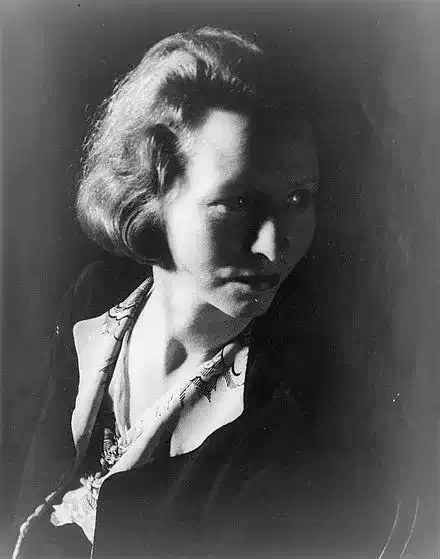
Edna St. Vincent Millay
The True Encounter
"Wolf!" cried my cunning heart
At every sheep it spied,
And roused the countryside.
"Wolf! Wolf!"—and up would start
Good neighbours, bringing spade
And pitchfork to my aid.
At length my cry was known:
Therein lay my release.
I met the wolf alone
And was devoured in peace.
At every sheep it spied,
And roused the countryside.
"Wolf! Wolf!"—and up would start
Good neighbours, bringing spade
And pitchfork to my aid.
At length my cry was known:
Therein lay my release.
I met the wolf alone
And was devoured in peace.
482

Rudyard Kipling
For All We Have and Are
For all we have and are,
For all our children's fate,
Stand up and meet the war.
The Hun is at the gate!
Our world has passed away
In wantonness o'erthrown.
There is nothing left to-day
But steel and fire and stone.
Though all we knew depart,
The old commandments stand:
"In courage keep your heart,
In strength lift up your hand."
Once more we hear the word
That sickened earth of old:
"No law except the sword
Unsheathed and uncontrolled,"
Once more it knits mankind,
Once more the nations go
To meet and break and bind
A crazed and driven foe.
Comfort, content, delight --
The ages' slow-bought gain --
They shrivelled in a night,
Only ourselves remain
To face the naked days
In silent fortitude,
Through perils and dismays
Renewd and re-renewed.
Though all we made depart,
The old commandments stand:
"In patience keep your heart,
In strength lift up your hand."
No easy hopes or lies
Shall bring us to our goal,
But iron sacrifice
Of body, will, and soul.
There is but one task for all --
For each one life to give.
Who stands if freedom fall?
Who dies if England live?
480

Alfred Lord Tennyson
Idylls of the King: The Marriage of Geraint (Fortune, Turn
Turn, Fortune, turn thy wheel, and lower the proud;
Turn thy wild wheel thro' sunshine, storm, and cloud;
Thy wheel and thee we neither love nor hate.
Turn, Fortune, turn thy wheel with smile or frown;
With that wild wheel we go not up or down;
Our hoard is little, but our hearts are great.
Smile and we smile, the lords of many lands;
Frown and we smile, the lords of our own hands;
For man is man and master of his fate.
Turn, turn thy wheel above the staring crowd;
Thy wheel and thou are shadows in the cloud;
Thy wheel and thee we neither love nor hate.
473

Ella Wheeler Wilcox
The Stevedores
We are the army stevedores, lusty and virile and strong,
We are given the hardest work of the war, and the hours are long.
We handle the heavy boxes, and shovel the dirty coal;
While soldiers and sailors work in the light, we burrow below like a mole.
But somebody has to do this work, or the soldiers could not fight!
And whatever work is given a man, is good if he does it right.
We are the army stevedores, and we are volunteers.
We did not wait for the draft to come, to put aside our fears;
We flung them away on the winds of fate, at the very first call of our land,
And each of us offered a willing heart and the strength of a brawny hand.
We are the army stevedores, and work as we must and may,
The cross of honour will never be ours to proudly wear away.
But the men at the Front could never be there,
And the battles could not be won,
If the stevedores stopped in their dull routine
And left their work undone.
Somebody has to do this work, be glad that it isn't you!
We are the army stevedores-give us our due!
474
Ella Wheeler Wilcox
Ten Thousand Men A Day
All the world was wearying,
All the world was sad;
Everything was shadow-filled;
Things were going bad.
Then a rumour stirred all hearts
As a wind stirs trees-
Ten thousand men a day
Coming over seas!
Soon we saw them marching by-
God! what a sight!-
Shoulders back, and heads erect,
Faces full of light.
Smiling like a morn in May,
Moving like a breeze,
Ten thousand men a day
Coming over seas.
Weary soldiers worn with war
Lifted up their eyes,
Shadows seemed to lift a bit,
Dawn was in the skies.
Hope sprang to troubled hearts,
Strength to tired knees:
Ten thousand men a day
Were coming over seas.
France and England swarmed with them,
Khaki-clad and young,
Filled with all the joy of life-
Into line they swung.
Waning valour rose anew
At the sight of these
Ten thousand men a day
Coming over seas.
Still they come-and still they come
In their strength and pride.
Victory with radiant mien
Marches on beside.
Victory is here to stay,
Every heart agrees,
With ten thousand men a day
Coming over seas.
473
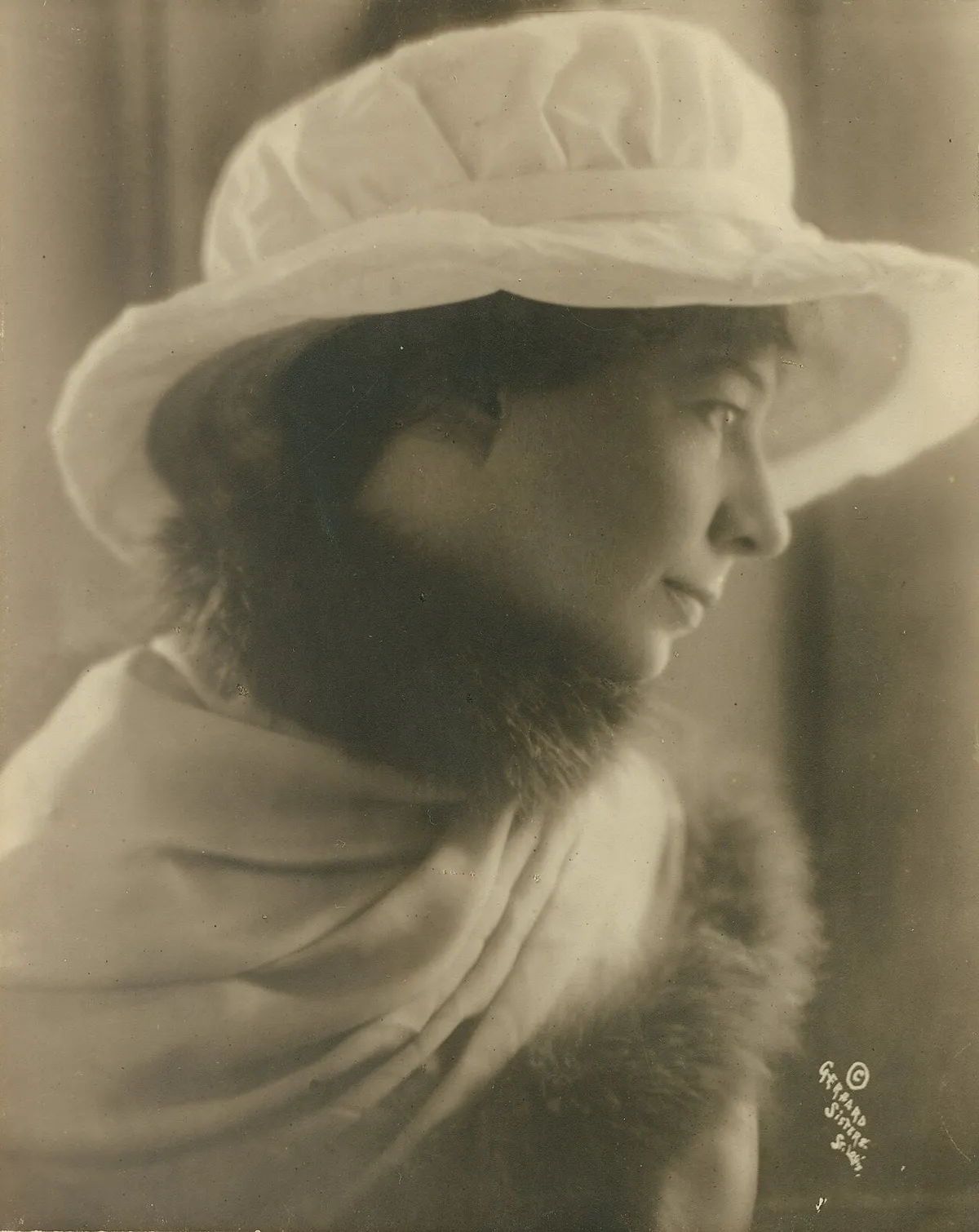
Sara Teasdale
The Answer
When I go back to earth
And all my joyous body
Puts off the red and white
That once had been so proud,
If men should pass above
With false and feeble pity,
My dust will find a voice
To answer them aloud:
"Be still, I am content,
Take back your poor compassion --
Joy was a flame in me
Too steady to destroy.
Lithe as a bending reed
Loving the storm that sways her --
I found more joy in sorrow
Than you could find in joy."
474
Rudyard Kipling
The Portent
Horace, BK. V. Ode .
Oh, late withdrawn from human-kind
And following dreams we never knew!
Varus, what dream has Fate assigned
To trouble you?
Such virtue as commends of law
Of Virtue to the vulgar horde
Suffices not. You needs must draw
A righteous sword;
And, flagrant in well-doing, smite
The priests of Bacchus at their fane,
Lest any worshipper invite
The God again.
Whence public strife and naked crime
And-deadlier than the cup you shun--
A people schooled to mock, in time,
All law--not one.
Cease, then, to fashion State-made sin,
Nor give thy children cause to doubt
That Virtue springs from Iron within--
Not lead without.
474

Walt Whitman
Me Imperturbe
ME imperturbe, standing at ease in Nature,
Master of all, or mistress of all--aplomb in the midst of irrational
things,
Imbued as they--passive, receptive, silent as they,
Finding my occupation, poverty, notoriety, foibles, crimes, less
important than I thought;
Me private, or public, or menial, or solitary--all these subordinate,
(I am eternally equal with the best--I am not subordinate;)
Me toward the Mexican Sea, or in the Mannahatta, or the Tennessee, or
far north, or inland,
A river man, or a man of the woods, or of any farm-life in These
States, or of the coast, or the lakes, or Kanada,
Me, wherever my life is lived, O to be
self-balanced for
contingencies!
O to confront night, storms, hunger, ridicule, accidents, rebuffs, as
the trees and animals do.
475
Rudyard Kipling
The Ballad Of The King's Mercy
Abdhur Rahman, the Durani Chief, of him is the story told.
His mercy fills the Khyber hills -- his grace is manifold;
He has taken toll of the North and the South --
his glory reacheth far,
And they tell the tale of his charity from Balkh to Kandahar.
Before the old Peshawur Gate, where Kurd and Kaffir meet,
The Governor of Kabul dealt the Justice of the Street,
And that was strait as running noose and swift as plunging knife,
Tho' he who held the longer purse might hold the longer life.
There was a hound of Hindustan had struck a Euzufzai,
Wherefore they spat upon his face and led him out to die.
It chanced the King went forth that hour when throat was bared to knife;
The Kaffir grovelled under-hoof and clamoured for his life.
Then said the King: "Have hope, O friend! Yea, Death disgraced is hard;
Much honour shall be thine"; and called the Captain of the Guard,
Yar Khan, a bastard of the Blood, so city-babble saith,
And he was honoured of the King -- the which is salt to Death;
And he was son of Daoud Shah, the Reiver of the Plains,
And blood of old Durani Lords ran fire in his veins;
And 'twas to tame an Afghan pride nor Hell nor Heaven could bind,
The King would make him butcher to a yelping cur of Hind.
"Strike!" said the King. "King's blood art thou --
his death shall be his pride!"
Then louder, that the crowd might catch: "Fear not -- his arms are tied!"
Yar Khan drew clear the Khyber knife, and struck, and sheathed again.
"O man, thy will is done," quoth he; "a King this dog hath slain."
Abdhur Rahman, the Durani Chief, to the North and the South is sold.
The North and the South shall open their mouth
to a Ghilzai flag unrolled,
When the big guns speak to the Khyber peak, and his dog-Heratis fly:
Ye have heard the song -- How long? How long?
Wolves of the Abazai!
That night before the watch was set, when all the streets were clear,
The Governor of Kabul spoke: "My King, hast thou no fear?
Thou knowest -- thou hast heard," -- his speech died at his master's face.
And grimly said the Afghan King: "I rule the Afghan race.
My path is mine -- see thou to thine -- to-night upon thy bed
Think who there be in Kabul now that clamour for thy head."
That night when all the gates were shut to City and to throne,
Within a little garden-house the King lay down alone.
Before the sinking of the moon, which is the Night of Night,
Yar Khan came softly to the King to make his honour white.
The children of the town had mocked beneath his horse's hoofs,
The harlots of the town had hailed him "butcher!" from their roofs.
But as he groped against the wall, two hands upon him fell,
The King behind his shoulder spake: "Dead man, thou dost not well!
'Tis ill to jest with Kings by day and seek a boon by night;
And that thou bearest in thy hand is all too sharp to write.
But three days hence, if God be good, and if thy strength remain,
Thou shalt demand one boon of me and bless me in thy pain.
For I am merciful to all, and most of all to thee.
My butcher of the shambles, rest -- no knife hast thou for me!"
Abdhur Rahman, the Durani Chief,
holds hard by the South and the North;
But the Ghilzai knows, ere the melting snows,
when the swollen banks break forth,
When the red-coats crawl to the sungar wall,
and his Usbeg lances fail:
Ye have heard the song -- How long? How long?
Wolves of the Zuka Kheyl!
They stoned him in the rubbish-field when dawn was in the sky,
According to the written word, "See that he do not die."
They stoned him till the stones were piled above him on the plain,
And those the labouring limbs displaced they tumbled back again.
One watched beside the dreary mound that veiled the battered thing,
And him the King with laughter called the Herald of the King.
It was upon the second night, the night of Ramazan,
The watcher leaning earthward heard the message of Yar Khan.
From shattered breast through shrivelled lips broke forth the rattling breath,
"Creature of God, deliver me from agony of Death."
They sought the King among his girls, and risked their lives thereby:
"Protector of the Pitiful, give orders that he die!"
"Bid him endure until the day," a lagging answer came;
"The night is short, and he can pray and learn to bless my name."
Before the dawn three times he spoke, and on the day once more:
"Creature of God, deliver me, and bless the King therefor!"
They shot him at the morning prayer, to ease him of his pain,
And when he heard the matchlocks clink, he blessed the King again.
Which thing the singers made a song for all the world to sing,
So that the Outer Seas may know the mercy of the King.
Abdhur Rahman, the Durani Chief, of him is the story told,
He has opened his mouth to the North and the South,
they have stuffed his mouth with gold.
Ye know the truth of his tender ruth -- and sweet his favours are:
Ye have heard the song -- How long? How long?
from Balkh to Kandahar.
476
Rudyard Kipling
The Last Lap
How do we know, by the bank-high river,
Where the mired and sulky oxen wait,
And it looks as though we might wait for ever,
How do we know that the floods abate?
There is no change in the current's brawling--
Louder and harsher the freshet scolds;
Yet we can feel she is falling, falling
And the more she threatens the less she holds,
Down to the drift, with no word spoken,
The wheel-chained wagons slither and slue....
Achtung! The back of the worst is broken!
And--lash your leaders!--we're through--we're through!
How do we know, when the port-fog holds us
Moored and helpless, a mile from the pier,
And the week-long summer smother enfolds us--
How do we know it is going to clear?
There is no break in the blindfold weather,
But, one and another, about the bay,
The unseen capstans clink together,
Getting ready to up and away.
A pennon whimpers--the breeze has found us--
A headsail jumps through the thinning haze.
The whole hull follows, till--broad around us--
The clean-swept ocean says: "Go your ways!"
How do we know, when the long fight rages,
On the old, stale front that we cannot shake,
And it looks as though we were locked for ages,
How do we know they are going to break?
There is no lull in the level firing,
Nothing has shifted except the sun.
Yet we can feel they are tiring, tiring--
Yet we can tell they are ripe to run.
Something wavers, and, while we wonder,
Their centre-trenches are emptying out,
And, before their useless flanks go under,
Our guns have pounded retreat to rout!
472
Ella Wheeler Wilcox
Our Atlas
Not Atlas, with his shoulders bent beneath the weighty world,
Bore such a burden as this man, on whom the Gods have hurled
The evils of old festering lands-yea, hurled them in their might
And left him standing all alone, to set the wrong things right.
It is the way the Fates have done since first Time's race began!
They open up Pandora's box before some chosen man;
And then, aloof, they wait and watch, to see if he will find
And wake the slumbering God that dwells in every mortal's mind.
Erect, our modern Atlas stands, with brave uplifted head,
And there is courage in his eyes, if in his heart be dread.
Not dread of foes, but dread of friends, who may not pull together,
To bring the lurching ship of State safe through the stormy weather.
Oh, never were there wilder waves or more stupendous seas,
Or rougher rocks or bleaker winds, or darker days than these.
Not Washington, not Lincoln knew so grave an hour of Time
As he who now stands face to face with War's world-shaking crime.
His brain is clear, his soul is brave, his heart is just and right,
He asks no honours of the earth, but favour in God's sight;
His aim is not to wear a crown or win imperial power,
But to use wisely for the race life's terrible great hour.
O Liberty, who lights the world with rays that come from God,
Shine on Columbia's troubled track, and make it bright and broad;
Shine on each heart, and give it strength to meet its pains and losses,
And give supernal strength to one who bears the whole world's crosses;
Take from his thought the fear of friends who may not pull together,
And bring the glorious ship of State safe through wild waves and weather.
472
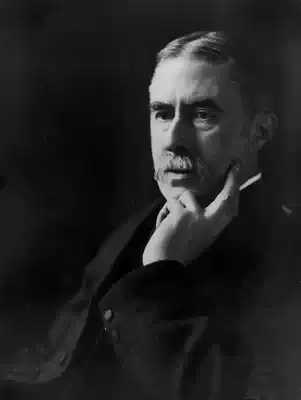
Alfred Edward Housman
Loitering with a Vacant Eye
Loitering with a vacant eye
Along the Grecian gallery,
And brooding on my heavy ill,
I met a statue standing still.
Still in marble stone stood he,
And stedfastly he looked at me.
"Well met," I thought the look would say,
"We both were fashioned far away;
We neither knew, when we were young,
These Londoners we live among."
Still he stood and eyed me hard,
An earnest and a grave regard:
"What, lad, drooping with your lot?
I too would be where I am not.
I too survey that endless line
Of men whose thoughts are not as mine.
Years, ere you stood up from rest,
On my neck the collar prest;
Years, when you lay down your ill,
I shall stand and bear it still.
Courage, lad, 'tis not for long:
Stand, quit you like stone, be strong."
So I thought his look would say;
And light on me my trouble lay,
And I stept out in flesh and bone
Manful like the man of stone.
472
Ella Wheeler Wilcox
Ernestness
The hurry of the times affects us so
In this swift rushing hour, we crowd and press
And thrust each other backward as we go,
And do not pause to lay sufficient stress
Upon that good, strong, true word, Earnestness.
In our impetuous haste, could we but know
Its full, deep meaning, its vast import, oh,
Then might we grasp the secret of success!
In that receding age when men were great,
The bone and sinew of their purpose lay
In this one word. God likes an earnest soul—
Too earnest to be eager. Soon or late
It leaves the spent horde breathless by the way,
And stands serene, triumphant at the goal.
469
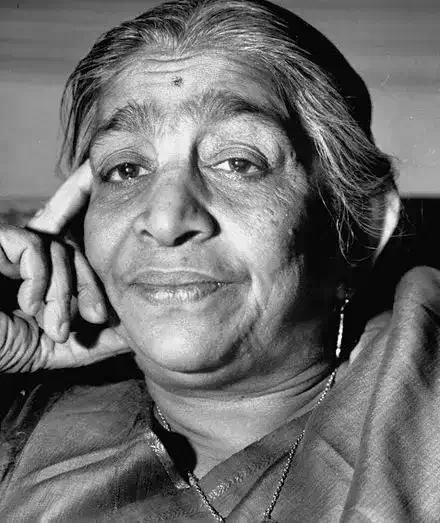
Sarojini Naidu
To My Children
Jaya Surya
GOLDEN sun of victory, born
In my life's unclouded morn,
In my lambent sky of love,
May your growing glory prove
Sacred to your consecration,
To my heart and to my nation.
Sun of victory, may you be
Sun of song and liberty.
Padmaja
Lotus-maiden, you who claim
All the sweetness of your name,
Lakshmi, fortune's queen, defend you,
Lotus-born like you, and send you
Balmy moons of love to bless you,
Gentle joy-winds to caress you.
Lotus-maiden, may you be
Fragrant of all ecstasy.
Ranadheera
Little lord of battle, hail
In your newly-tempered mail!
Learn to conquer, learn to fight
In the foremost flanks of right,
Like Valmiki's heroes bold,
Rubies girt in epic gold.
Lord of battle, may you be,
Lord of love and chivalry.
Lilamani
Limpid jewel of delight
Severed from the tender night
Of your sheltering mother-mine,
Leap and sparkle, dance and shine,
Blithely and securely set
In love's magic coronet.
Living jewel, may you be
Laughter-bound and sorrow-free.
463
Ella Wheeler Wilcox
How Salvator Won
The gate was thrown open, I rode out alone,
More proud than a monarch who sits on a throne.
I am but a jockey, yet shout upon shout
Went up from the people who watched me ride out;
And the cheers that rang forth from that warm-hearted crowd,
Were as earnest as those to which monarch e'er bowed.
My heart thrilled with pleasure so keen it was pain
As I patted my Salvator's soft silken mane;
And a sweet shiver shot from his hide to my hand
As we passed by the multitude down to the stand.
The great waves of cheering came billowing back,
As the hoofs of brave Tenny rang swift down the track;
And he stood there beside us, all bone and all muscle,
Our noble opponent, well trained for the tussle
That waited us there on the smooth, shining course.
My Salvator, fair to the lovers of horse,
As a beautiful woman is fair to man's sight-
Pure type of the thoroughbred, clean-limbed and bright,-
Stood taking the plaudits as only his due,
And nothing at all unexpected or new.
And then, there before us the bright flag is spread,
There's a roar from the grand stand, and Tenny's ahead;
At the sound of the voices that shouted 'a go!'
He sprang like an arrow shot straight from the bow.
I tighten the reins on Prince Charlie's great son-
He is off like a rocket, the race is begun.
Half-way down the furlong, their heads are together,
Scarce room 'twixt their noses to wedge in a feather;
Past grand stand, and judges, in neck-to-neck strife,
Ah, Salvator, boy! 'tis the race of your life.
I press my knees closer, I coax him, I urge,
I feel him go out with a leap and a surge;
I see him creep on, inch by inch, stride by stride,
While backward, still backward, falls Tenny beside.
We are nearing the turn, the first quarter is past'
Twixt leader and chaser the daylight is cast.
The distance elongates, still Tenny sweeps on,
As graceful and free-limbed and swift as a fawn;
His awkwardness vanished, his muscles all strained-
A noble opponent, well born and well trained.
I glanced o'er my shoulder, ha! Tenny, the cost
Of that one second's flagging, will be-the race lost.
One second's weak yielding of courage and strength,
And the daylight between us has doubled its length.
The first mile is covered, the race is mine-no!
For the blue blood of Tenny responds to a blow.
He shoots through the air like a ball from a gun,
And the two lengths between us are shortened to one.
My heart is contracted, my throat feels a lump,
For Tenny's long neck is at Salvator's rump;
And now with new courage, grown bolder and bolder,
I see him once more running shoulder to shoulder.
With knees, hands and body I press my grand steed;
I urge him, I coax him, I pray him to heed!
Oh, Salvator! Salvator! list to my calls,
For the blow of my whip will hurt both if it falls.
There's a roar from the crowd like the ocean in storm,
As close to my saddle leaps Tenny's great form,
One more mighty plunge, and with knee, limb and hand,
I lift my horse first by a nose past the stand.
We are under the string now-the great race is done,
And Salvator, Salvator, Salvator won!
Cheer, hoar-headed patriarchs; cheer loud, I say
'Tis the race of a century witnessed to-day!
Though ye live twice the space that's allotted to men
Ye never will see such a grand race again.
Let the shouts of the populace roar like the surf
For Salvator, Salvator, king of the turf!
He has broken the record of thirteen long years;
He has won the first place in a vast line of peers.
'Twas a neck-to-neck contest, a grand, honest race,
And even his enemies grant him his place.
Down into the dust let old records be hurled,
And hang out 2.05 in the gaze of the world.
464
Ella Wheeler Wilcox
Foes
Thank Fate for foes! I hold mine dear
As valued friends. He cannot know
The zest of life who runneth here
His earthly race without a foe.
I saw a prize, "Run," cried my friend;
"'T is thine to claim without a doubt."
But ere I half-way reached the end,
I felt my strength was giving out.
My foe looked on the while I ran;
A scornful triumph lit his eyes.
With that perverseness born in man
I nerved myself, and won the prize.
All blinded by the crimson glow
Of sin's disguise I tempted Fate.
"I knew thy weakness!" sneered my foe,
I saved myself, and balked his hate.
For half my blessings, half my gain,
I needs must thank my trusty foe;
Despite his envy and disdain,
He serves me well wher'er I go.
So may I keep him to the end,
Nor may his enmity abate;
More faithful that the fondest friend,
He guards me with his hate.
464
Rudyard Kipling
The Return
Peace is declared, and I return
To 'Ackneystadt, but not the same;
Things 'ave transpired which made me learn
The size and meanin' of the game.
I did no more than others did,
I don't know where the change began;
I started as a average kid,
I finished as a thinkin' man.
If England was what England seems
An' not the England of our dreams,
But only putty, brass, an' paint,
'Ow quick we'd drop 'er! But she ain't!
Before my gappin' mouth could speak
I 'eard it in my comrade's tone;
I saw it on my neighbour's cheek
Before I felt it flush my own.
An' last it come to me--not pride,
Nor yet conceit, but on the 'ole
(If such a term may be applied),
The makin's of a bloomin' soul.
Rivers at night that cluck an' jeer,
Plains which the moonshine turns to sea,
Mountains that never let you near,
An' stars to all eternity;
An' the quick-breathin' dark that fills
The 'ollows of the wilderness,
When the wind worries through the 'ills--
These may 'ave taught me more or less.
Towns without people, ten times took,
An' ten times left an' burned at last;
An' starvin' dogs that come to look
For owners when a column passed;
An' quiet, 'omesick talks between
Men, met by night, you never knew
Until--'is face--by shellfire seen--
Once--an' struck off. They taught me, too.
The day's lay-out--the mornin' sun
Beneath your 'at-brim as you sight;
The dinner-'ush from noon till one,
An' the full roar that lasts till night;
An' the pore dead that look so old
An' was so young an hour ago,
An' legs tied down before they're cold--
These are the things which make you know.
Also Time runnin' into years--
A thousand Places left be'ind--
An' Men from both two 'emispheres
Discussin' things of every kind;
So much more near than I 'ad known,
So much more great than I 'ad guessed--
An' me, like all the rest, alone--
But reachin' out to all the rest!
So 'ath it come to me--not pride,
Nor yet conceit, but on the 'ole
(If such a term may be applied),
The makin's of a bloomin' soul.
But now, discharged, I fall away
To do with little things again....
Gawd, 'oo knows all I cannot say,
Look after me in Thamesfontein!
If England was what England seems
An' not the England of our dreams,
But only putty, brass, an' paint,
'Ow quick we'd chuck 'er! But she ain't!
462
Ella Wheeler Wilcox
Worthy The Name of Sir Knight
I
Sir Knight of the world's oldest order,
Sir Knight of the Army of God,
You have crossed the strange mystical border,
The ground floor of truth you have trod;
You have entered the sanctum sanctorum,
Which leads to the temple above,
Where you come as a stone, and a Christ-chosen one,
In the kingdom of Friendship and Love.
II
As you stand in this new realm of beauty,
Where each man you meet is your friend,
Think not that your promise of duty
In hall, or asylum, shall end;
Outside, in the great world of pleasure,
Beyond, in the clamor of trade,
In the battle of life and its coarse daily strife
Remember the vows you have made.
III
Your service, majestic and solemn,
Your symbols, suggestive and sweet,
Your uniformed phalanx in column
On gala days marching the street;
Your sword and your plume and your helmet,
Your 'secrets' hid from the world's sight;
These things are the small, lesser parts of the all
Which are needed to form the true Knight.
IV
The martyrs who perished rejoicing
In Templary's glorious laws,
Who died 'midst the fagots while voicing
The glory and worth of their cause-
They honored the title of 'Templar'
No more than the Knight of to-day
Who mars not the name with one blemish of shame,
But carries it clean through life's fray.
V
To live for a cause, to endeavor
To make your deeds grace it, to try
And uphold its precepts forever,
Is harder by far than to die.
For the battle of life is unending,
The enemy, Self, never tires,
And the true Knight must slay that sly foe every day
Ere he reaches the heights he desires.
VI
Sir Knight, have you pondered the meaning
Of all you have heard and been told?
Have you strengthened your heart for its weaning
From vices and faults loved of old?
Will you honor, in hours of temptation,
Your promises noble and grand?
Will your spirit be strong to do battle with wrong,
'And having done all, to stand?'
VII
Will you ever be true to a brother
In actions as well as in creed?
Will you stand by his side as no other
Could stand in the hour of his need?
Will you boldly defend him from peril,
And lift him from poverty's curse-
Will the promise of aid which you willingly made,
Reach down from your lips to your purse?
VIII
The world's battle field is before you!
Let Wisdom walk close by your side,
Let Faith spread her snowy wings o'er you,
Let Truth be your comrade and guide;
Let Fortitude, Justice and Mercy
Direct all your conduct aright,
And let each word and act tell to men the proud fact,
You are worthy the name of 'Sir Knight'.
463
Alfred Lord Tennyson
Balin and Balan
Pellam the King, who held and lost with Lot
In that first war, and had his realm restored
But rendered tributary, failed of late
To send his tribute; wherefore Arthur called
His treasurer, one of many years, and spake,
'Go thou with him and him and bring it to us,
Lest we should set one truer on his throne.
Man's word is God in man.'
His Baron said
'We go but harken: there be two strange knights
Who sit near Camelot at a fountain-side,
A mile beneath the forest, challenging
And overthrowing every knight who comes.
Wilt thou I undertake them as we pass,
And send them to thee?'
Arthur laughed upon him.
'Old friend, too old to be so young, depart,
Delay not thou for aught, but let them sit,
Until they find a lustier than themselves.'
So these departed. Early, one fair dawn,
The light-winged spirit of his youth returned
On Arthur's heart; he armed himself and went,
So coming to the fountain-side beheld
Balin and Balan sitting statuelike,
Brethren, to right and left the spring, that down,
From underneath a plume of lady-fern,
Sang, and the sand danced at the bottom of it.
And on the right of Balin Balin's horse
Was fast beside an alder, on the left
Of Balan Balan's near a poplartree.
'Fair Sirs,' said Arthur, 'wherefore sit ye here?'
Balin and Balan answered 'For the sake
Of glory; we be mightier men than all
In Arthur's court; that also have we proved;
For whatsoever knight against us came
Or I or he have easily overthrown.'
'I too,' said Arthur, 'am of Arthur's hall,
But rather proven in his Paynim wars
Than famous jousts; but see, or proven or not,
Whether me likewise ye can overthrow.'
And Arthur lightly smote the brethren down,
And lightly so returned, and no man knew.
Then Balin rose, and Balan, and beside
The carolling water set themselves again,
And spake no word until the shadow turned;
When from the fringe of coppice round them burst
A spangled pursuivant, and crying 'Sirs,
Rise, follow! ye be sent for by the King,'
They followed; whom when Arthur seeing asked
'Tell me your names; why sat ye by the well?'
Balin the stillness of a minute broke
Saying 'An unmelodious name to thee,
Balin, "the Savage"--that addition thine--
My brother and my better, this man here,
Balan. I smote upon the naked skull
A thrall of thine in open hall, my hand
Was gauntleted, half slew him; for I heard
He had spoken evil of me; thy just wrath
Sent me a three-years' exile from thine eyes.
I have not lived my life delightsomely:
For I that did that violence to thy thrall,
Had often wrought some fury on myself,
Saving for Balan: those three kingless years
Have past--were wormwood-bitter to me. King,
Methought that if we sat beside the well,
And hurled to ground what knight soever spurred
Against us, thou would'st take me gladlier back,
And make, as ten-times worthier to be thine
Than twenty Balins, Balan knight. I have said.
Not so--not all. A man of thine today
Abashed us both, and brake my boast. Thy will?'
Said Arthur 'Thou hast ever spoken truth;
Thy too fierce manhood would not let thee lie.
Rise, my true knight. As children learn, be thou
Wiser for falling! walk with me, and move
To music with thine Order and the King.
Thy chair, a grief to all the brethren, stands
Vacant, but thou retake it, mine again!'
Thereafter, when Sir Balin entered hall,
The Lost one Found was greeted as in Heaven
With joy that blazed itself in woodland wealth
Of leaf, and gayest garlandage of flowers,
Along the walls and down the board; they sat,
And cup clashed cup; they drank and some one sang,
Sweet-voiced, a song of welcome, whereupon
Their common shout in chorus, mounting, made
Those banners of twelve battles overhead
Stir, as they stirred of old, when Arthur's host
Proclaimed him Victor, and the day was won.
Then Balan added to their Order lived
A wealthier life than heretofore with these
And Balin, till their embassage returned.
'Sir King' they brought report 'we hardly found,
So bushed about it is with gloom, the hall
Of him to whom ye sent us, Pellam, once
A Christless foe of thine as ever dashed
Horse against horse; but seeing that thy realm
Hath prospered in the name of Christ, the King
Took, as in rival heat, to holy things;
And finds himself descended from the Saint
Arimathan Joseph; him who first
Brought the great faith to Britain over seas;
He boasts his life as purer than thine own;
Eats scarce enow to keep his pulse abeat;
Hath pushed aside his faithful wife, nor lets
Or dame or damsel enter at his gates
Lest he should be polluted. This gray King
Showed us a shrine wherein were wonders--yea--
Rich arks with priceless bones of martyrdom,
Thorns of the crown and shivers of the cross,
And therewithal (for thus he told us) brought
By holy Joseph thither, that same spear
Wherewith the Roman pierced the side of Christ.
He much amazed us; after, when we sought
The tribute, answered "I have quite foregone
All matters of this world: Garlon, mine heir,
Of him demand it," which this Garlon gave
With much ado, railing at thine and thee.
'But when we left, in those deep woods we found
A knight of thine spear-stricken from behind,
Dead, whom we buried; more than one of us
Cried out on Garlon, but a woodman there
Reported of some demon in the woods
Was once a man, who driven by evil tongues
From all his fellows, lived alone, and came
To learn black magic, and to hate his kind
With such a hate, that when he died, his soul
Became a Fiend, which, as the man in life
Was wounded by blind tongues he saw not whence,
Strikes from behind. This woodman showed the cave
From which he sallies, and wherein he dwelt.
We saw the hoof-print of a horse, no more.'
Then Arthur, 'Let who goes before me, see
He do not fall behind me: foully slain
And villainously! who will hunt for me
This demon of the woods?' Said Balan, 'I'!
So claimed the quest and rode away, but first,
Embracing Balin, 'Good my brother, hear!
Let not thy moods prevail, when I am gone
Who used to lay them! hold them outer fiends,
Who leap at thee to tear thee; shake them aside,
Dreams ruling when wit sleeps! yea, but to dream
That any of these would wrong thee, wrongs thyself.
Witness their flowery welcome. Bound are they
To speak no evil. Truly save for fears,
My fears for thee, so rich a fellowship
Would make me wholly blest: thou one of them,
Be one indeed: consider them, and all
Their bearing in their common bond of love,
No more of hatred than in Heaven itself,
No more of jealousy than in Paradise.'
So Balan warned, and went; Balin remained:
Who--for but three brief moons had glanced away
From being knighted till he smote the thrall,
And faded from the presence into years
Of exile--now would strictlier set himself
To learn what Arthur meant by courtesy,
Manhood, and knighthood; wherefore hovered round
Lancelot, but when he marked his high sweet smile
In passing, and a transitory word
Make knight or churl or child or damsel seem
From being smiled at happier in themselves--
Sighed, as a boy lame-born beneath a height,
That glooms his valley, sighs to see the peak
Sun-flushed, or touch at night the northern star;
For one from out his village lately climed
And brought report of azure lands and fair,
Far seen to left and right; and he himself
Hath hardly scaled with help a hundred feet
Up from the base: so Balin marvelling oft
How far beyond him Lancelot seemed to move,
Groaned, and at times would mutter, 'These be gifts,
Born with the blood, not learnable, divine,
Beyond MY reach. Well had I foughten--well--
In those fierce wars, struck hard--and had I crowned
With my slain self the heaps of whom I slew-So--
better!--But this worship of the Queen,
That honour too wherein she holds him--this,
This was the sunshine that hath given the man
A growth, a name that branches o'er the rest,
And strength against all odds, and what the King
So prizes--overprizes--gentleness.
Her likewise would I worship an I might.
I never can be close with her, as he
That brought her hither. Shall I pray the King
To let me bear some token of his Queen
Whereon to gaze, remembering her--forget
My heats and violences? live afresh?
What, if the Queen disdained to grant it! nay
Being so stately-gentle, would she make
My darkness blackness? and with how sweet grace
She greeted my return! Bold will I be--
Some goodly cognizance of Guinevere,
In lieu of this rough beast upon my shield,
Langued gules, and toothed with grinning savagery.'
And Arthur, when Sir Balin sought him, said
'What wilt thou bear?' Balin was bold, and asked
To bear her own crown-royal upon shield,
Whereat she smiled and turned her to the King,
Who answered 'Thou shalt put the crown to use.
The crown is but the shadow of the King,
And this a shadow's shadow, let him have it,
So this will help him of his violences!'
'No shadow' said Sir Balin 'O my Queen,
But light to me! no shadow, O my King,
But golden earnest of a gentler life!'
So Balin bare the crown, and all the knights
Approved him, and the Queen, and all the world
Made music, and he felt his being move
In music with his Order, and the King.
The nightingale, full-toned in middle May,
Hath ever and anon a note so thin
It seems another voice in other groves;
Thus, after some quick burst of sudden wrath,
The music in him seemed to change, and grow
Faint and far-off.
And once he saw the thrall
His passion half had gauntleted to death,
That causer of his banishment and shame,
Smile at him, as he deemed, presumptuously:
His arm half rose to strike again, but fell:
The memory of that cognizance on shield
Weighted it down, but in himself he moaned:
'Too high this mount of Camelot for me:
These high-set courtesies are not for me.
Shall I not rather prove the worse for these?
Fierier and stormier from restraining, break
Into some madness even before the Queen?'
Thus, as a hearth lit in a mountain home,
And glancing on the window, when the gloom
Of twilight deepens round it, seems a flame
That rages in the woodland far below,
So when his moods were darkened, court and King
And all the kindly warmth of Arthur's hall
Shadowed an angry distance: yet he strove
To learn the graces of their Table, fought
Hard with himself, and seemed at length in peace.
Then chanced, one morning, that Sir Balin sat
Close-bowered in that garden nigh the hall.
A walk of roses ran from door to door;
A walk of lilies crost it to the bower:
And down that range of roses the great Queen
Came with slow steps, the morning on her face;
And all in shadow from the counter door
Sir Lancelot as to meet her, then at once,
As if he saw not, glanced aside, and paced
The long white walk of lilies toward the bower.
Followed the Queen; Sir Balin heard her 'Prince,
Art thou so little loyal to thy Queen,
As pass without good morrow to thy Queen?'
To whom Sir Lancelot with his eyes on earth,
'Fain would I still be loyal to the Queen.'
'Yea so' she said 'but so to pass me by--
So loyal scarce is loyal to thyself,
Whom all men rate the king of courtesy.
Let be: ye stand, fair lord, as in a dream.'
Then Lancelot with his hand among the flowers
'Yea--for a dream. Last night methought I saw
That maiden Saint who stands with lily in hand
In yonder shrine. All round her prest the dark,
And all the light upon her silver face
Flowed from the spiritual lily that she held.
Lo! these her emblems drew mine eyes--away:
For see, how perfect-pure! As light a flush
As hardly tints the blossom of the quince
Would mar their charm of stainless maidenhood.'
'Sweeter to me' she said 'this garden rose
Deep-hued and many-folded! sweeter still
The wild-wood hyacinth and the bloom of May.
Prince, we have ridden before among the flowers
In those fair days--not all as cool as these,
Though season-earlier. Art thou sad? or sick?
Our noble King will send thee his own leech--
Sick? or for any matter angered at me?'
Then Lancelot lifted his large eyes; they dwelt
Deep-tranced on hers, and could not fall: her hue
Changed at his gaze: so turning side by side
They past, and Balin started from his bower.
'Queen? subject? but I see not what I see.
Damsel and lover? hear not what I hear.
My father hath begotten me in his wrath.
I suffer from the things before me, know,
Learn nothing; am not worthy to be knight;
A churl, a clown!' and in him gloom on gloom
Deepened: he sharply caught his lance and shield,
Nor stayed to crave permission of the King,
But, mad for strange adventure, dashed away.
He took the selfsame track as Balan, saw
The fountain where they sat together, sighed
'Was I not better there with him?' and rode
The skyless woods, but under open blue
Came on the hoarhead woodman at a bough
Wearily hewing. 'Churl, thine axe!' he cried,
Descended, and disjointed it at a blow:
To whom the woodman uttered wonderingly
'Lord, thou couldst lay the Devil of these woods
If arm of flesh could lay him.' Balin cried
'Him, or the viler devil who plays his part,
To lay that devil would lay the Devil in me.'
'Nay' said the churl, 'our devil is a truth,
I saw the flash of him but yestereven.
And some DO say that our Sir Garlon too
Hath learned black magic, and to ride unseen.
Look to the cave.' But Balin answered him
'Old fabler, these be fancies of the churl,
Look to thy woodcraft,' and so leaving him,
Now with slack rein and careless of himself,
Now with dug spur and raving at himself,
Now with droopt brow down the long glades he rode;
So marked not on his right a cavern-chasm
Yawn over darkness, where, nor far within,
The whole day died, but, dying, gleamed on rocks
Roof-pendent, sharp; and others from the floor,
Tusklike, arising, made that mouth of night
Whereout the Demon issued up from Hell.
He marked not this, but blind and deaf to all
Save that chained rage, which ever yelpt within,
Past eastward from the falling sun. At once
He felt the hollow-beaten mosses thud
And tremble, and then the shadow of a spear,
Shot from behind him, ran along the ground.
Sideways he started from the path, and saw,
With pointed lance as if to pierce, a shape,
A light of armour by him flash, and pass
And vanish in the woods; and followed this,
But all so blind in rage that unawares
He burst his lance against a forest bough,
Dishorsed himself, and rose again, and fled
Far, till the castle of a King, the hall
Of Pellam, lichen-bearded, grayly draped
With streaming grass, appeared, low-built but strong;
The ruinous donjon as a knoll of moss,
The battlement overtopt with ivytods,
A home of bats, in every tower an owl.
Then spake the men of Pellam crying 'Lord,
Why wear ye this crown-royal upon shield?'
Said Balin 'For the fairest and the best
Of ladies living gave me this to bear.'
So stalled his horse, and strode across the court,
But found the greetings both of knight and King
Faint in the low dark hall of banquet: leaves
Laid their green faces flat against the panes,
Sprays grated, and the cankered boughs without
Whined in the wood; for all was hushed within,
Till when at feast Sir Garlon likewise asked
'Why wear ye that crown-royal?' Balin said
'The Queen we worship, Lancelot, I, and all,
As fairest, best and purest, granted me
To bear it!' Such a sound (for Arthur's knights
Were hated strangers in the hall) as makes
The white swan-mother, sitting, when she hears
A strange knee rustle through her secret reeds,
Made Garlon, hissing; then he sourly smiled.
'Fairest I grant her: I have seen; but best,
Best, purest? THOU from Arthur's hall, and yet
So simple! hast thou eyes, or if, are these
So far besotted that they fail to see
This fair wife-worship cloaks a secret shame?
Truly, ye men of Arthur be but babes.'
A goblet on the board by Balin, bossed
With holy Joseph's legend, on his right
Stood, all of massiest bronze: one side had sea
And ship and sail and angels blowing on it:
And one was rough with wattling, and the walls
Of that low church he built at Glastonbury.
This Balin graspt, but while in act to hurl,
Through memory of that token on the shield
Relaxed his hold: 'I will be gentle' he thought
'And passing gentle' caught his hand away,
Then fiercely to Sir Garlon 'Eyes have I
That saw today the shadow of a spear,
Shot from behind me, run along the ground;
Eyes too that long have watched how Lancelot draws
From homage to the best and purest, might,
Name, manhood, and a grace, but scantly thine,
Who, sitting in thine own hall, canst endure
To mouth so huge a foulness--to thy guest,
Me, me of Arthur's Table. Felon talk!
Let be! no more!'
But not the less by night
The scorn of Garlon, poisoning all his rest,
Stung him in dreams. At length, and dim through leaves
Blinkt the white morn, sprays grated, and old boughs
Whined in the wood. He rose, descended, met
The scorner in the castle court, and fain,
For hate and loathing, would have past him by;
But when Sir Garlon uttered mocking-wise;
'What, wear ye still that same crown-scandalous?'
His countenance blackened, and his forehead veins
Bloated, and branched; and tearing out of sheath
The brand, Sir Balin with a fiery 'Ha!
So thou be shadow, here I make thee ghost,'
Hard upon helm smote him, and the blade flew
Splintering in six, and clinkt upon the stones.
Then Garlon, reeling slowly backward, fell,
And Balin by the banneret of his helm
Dragged him, and struck, but from the castle a cry
Sounded across the court, and--men-at-arms,
A score with pointed lances, making at him--
He dashed the pummel at the foremost face,
Beneath a low door dipt, and made his feet
Wings through a glimmering gallery, till he marked
The portal of King Pellam's chapel wide
And inward to the wall; he stept behind;
Thence in a moment heard them pass like wolves
Howling; but while he stared about the shrine,
In which he scarce could spy the Christ for Saints,
Beheld before a golden altar lie
The longest lance his eyes had ever seen,
Point-painted red; and seizing thereupon
Pushed through an open casement down, leaned on it,
Leapt in a semicircle, and lit on earth;
Then hand at ear, and harkening from what side
The blindfold rummage buried in the walls
Might echo, ran the counter path, and found
His charger, mounted on him and away.
An arrow whizzed to the right, one to the left,
One overhead; and Pellam's feeble cry
'Stay, stay him! he defileth heavenly things
With earthly uses'--made him quickly dive
Beneath the boughs, and race through many a mile
Of dense and open, till his goodly horse,
Arising wearily at a fallen oak,
Stumbled headlong, and cast him face to ground.
Half-wroth he had not ended, but all glad,
Knightlike, to find his charger yet unlamed,
Sir Balin drew the shield from off his neck,
Stared at the priceless cognizance, and thought
'I have shamed thee so that now thou shamest me,
Thee will I bear no more,' high on a branch
Hung it, and turned aside into the woods,
And there in gloom cast himself all along,
Moaning 'My violences, my violences!'
But now the wholesome music of the wood
Was dumbed by one from out the hall of Mark,
A damsel-errant, warbling, as she rode
The woodland alleys, Vivien, with her Squire.
'The fire of Heaven has killed the barren cold,
And kindled all the plain and all the wold.
The new leaf ever pushes off the old.
The fire of Heaven is not the flame of Hell.
'Old priest, who mumble worship in your quire--
Old monk and nun, ye scorn the world's desire,
Yet in your frosty cells ye feel the fire!
The fire of Heaven is not the flame of Hell.
'The fire of Heaven is on the dusty ways.
The wayside blossoms open to the blaze.
The whole wood-world is one full peal of praise.
The fire of Heaven is not the flame of Hell.
'The fire of Heaven is lord of all things good,
And starve not thou this fire within thy blood,
But follow Vivien through the fiery flood!
The fire of Heaven is not the flame of Hell!'
Then turning to her Squire 'This fire of Heaven,
This old sun-worship, boy, will rise again,
And beat the cross to earth, and break the King
And all his Table.'
Then they reached a glade,
Where under one long lane of cloudless air
Before another wood, the royal crown
Sparkled, and swaying upon a restless elm
Drew the vague glance of Vivien, and her Squire;
Amazed were these; 'Lo there' she cried--'a crown--
Borne by some high lord-prince of Arthur's hall,
And there a horse! the rider? where is he?
See, yonder lies one dead within the wood.
Not dead; he stirs!--but sleeping. I will speak.
Hail, royal knight, we break on thy sweet rest,
Not, doubtless, all unearned by noble deeds.
But bounden art thou, if from Arthur's hall,
To help the weak. Behold, I fly from shame,
A lustful King, who sought to win my love
Through evil ways: the knight, with whom I rode,
Hath suffered misadventure, and my squire
Hath in him small defence; but thou, Sir Prince,
Wilt surely guide me to the warrior King,
Arthur the blameless, pure as any maid,
To get me shelter for my maidenhood.
I charge thee by that crown upon thy shield,
And by the great Queen's name, arise and hence.'
And Balin rose, 'Thither no more! nor Prince
Nor knight am I, but one that hath defamed
The cognizance she gave me: here I dwell
Savage among the savage woods, here die--
Die: let the wolves' black maws ensepulchre
Their brother beast, whose anger was his lord.
O me, that such a name as Guinevere's,
Which our high Lancelot hath so lifted up,
And been thereby uplifted, should through me,
My violence, and my villainy, come to shame.'
Thereat she suddenly laughed and shrill, anon
Sighed all as suddenly. Said Balin to her
'Is this thy courtesy--to mock me, ha?
Hence, for I will not with thee.' Again she sighed
'Pardon, sweet lord! we maidens often laugh
When sick at heart, when rather we should weep.
I knew thee wronged. I brake upon thy rest,
And now full loth am I to break thy dream,
But thou art man, and canst abide a truth,
Though bitter. Hither, boy--and mark me well.
Dost thou remember at Caerleon once--
A year ago--nay, then I love thee not--
Ay, thou rememberest well--one summer dawn--
By the great tower--Caerleon upon Usk--
Nay, truly we were hidden: this fair lord,
The flower of all their vestal knighthood, knelt
In amorous homage--knelt--what else?--O ay
Knelt, and drew down from out his night-black hair
And mumbled that white hand whose ringed caress
Had wandered from her own King's golden head,
And lost itself in darkness, till she cried--
I thought the great tower would crash down on both-"
Rise, my sweet King, and kiss me on the lips,
Thou art my King." This lad, whose lightest word
Is mere white truth in simple nakedness,
Saw them embrace: he reddens, cannot speak,
So bashful, he! but all the maiden Saints,
The deathless mother-maidenhood of Heaven,
Cry out upon her. Up then, ride with me!
Talk not of shame! thou canst not, an thou would'st,
Do these more shame than these have done themselves.'
She lied with ease; but horror-stricken he,
Remembering that dark bower at Camelot,
Breathed in a dismal whisper 'It is truth.'
Sunnily she smiled 'And even in this lone wood,
Sweet lord, ye do right well to whisper this.
Fools prate, and perish traitors. Woods have tongues,
As walls have ears: but thou shalt go with me,
And we will speak at first exceeding low.
Meet is it the good King be not deceived.
See now, I set thee high on vantage ground,
From whence to watch the time, and eagle-like
Stoop at thy will on Lancelot and the Queen.'
She ceased; his evil spirit upon him leapt,
He ground his teeth together, sprang with a yell,
Tore from the branch, and cast on earth, the shield,
Drove his mailed heel athwart the royal crown,
Stampt all into defacement, hurled it from him
Among the forest weeds, and cursed the tale,
The told-of, and the teller.
That weird yell,
Unearthlier than all shriek of bird or beast,
Thrilled through the woods; and Balan lurking there
(His quest was unaccomplished) heard and thought
'The scream of that Wood-devil I came to quell!'
Then nearing 'Lo! he hath slain some brother-knight,
And tramples on the goodly shield to show
His loathing of our Order and the Queen.
My quest, meseems, is here. Or devil or man
Guard thou thine head.' Sir Balin spake not word,
But snatched a sudden buckler from the Squire,
And vaulted on his horse, and so they crashed
In onset, and King Pellam's holy spear,
Reputed to be red with sinless blood,
Redded at once with sinful, for the point
Across the maiden shield of Balan pricked
The hauberk to the flesh; and Balin's horse
Was wearied to the death, and, when they clashed,
Rolling back upon Balin, crushed the man
Inward, and either fell, and swooned away.
Then to her Squire muttered the damsel 'Fools!
This fellow hath wrought some foulness with his Queen:
Else never had he borne her crown, nor raved
And thus foamed over at a rival name:
But thou, Sir Chick, that scarce hast broken shell,
Art yet half-yolk, not even come to down--
Who never sawest Caerleon upon Usk--
And yet hast often pleaded for my love--
See what I see, be thou where I have been,
Or else Sir Chick--dismount and loose their casques
I fain would know what manner of men they be.'
And when the Squire had loosed them, 'Goodly!--look!
They might have cropt the myriad flower of May,
And butt each other here, like brainless bulls,
Dead for one heifer!
Then the gentle Squire
'I hold them happy, so they died for love:
And, Vivien, though ye beat me like your dog,
I too could die, as now I live, for thee.'
'Live on, Sir Boy,' she cried. 'I better prize
The living dog than the dead lion: away!
I cannot brook to gaze upon the dead.'
Then leapt her palfrey o'er the fallen oak,
And bounding forward 'Leave them to the wolves.'
But when their foreheads felt the cooling air,
Balin first woke, and seeing that true face,
Familiar up from cradle-time, so wan,
Crawled slowly with low moans to where he lay,
And on his dying brother cast himself
Dying; and HE lifted faint eyes; he felt
One near him; all at once they found the world,
Staring wild-wide; then with a childlike wail
And drawing down the dim disastrous brow
That o'er him hung, he kissed it, moaned and spake;
'O Balin, Balin, I that fain had died
To save thy life, have brought thee to thy death.
Why had ye not the shield I knew? and why
Trampled ye thus on that which bare the Crown?'
Then Balin told him brokenly, and in gasps,
All that had chanced, and Balan moaned again.
'Brother, I dwelt a day in Pellam's hall:
This Garlon mocked me, but I heeded not.
And one said "Eat in peace! a liar is he,
And hates thee for the tribute!" this good knight
Told me, that twice a wanton damsel came,
And sought for Garlon at the castle-gates,
Whom Pellam drove away with holy heat.
I well believe this damsel, and the one
Who stood beside thee even now, the same.
"She dwells among the woods" he said "and meets
And dallies with him in the Mouth of Hell."
Foul are their lives; foul are their lips; they lied.
Pure as our own true Mother is our Queen."
'O brother' answered Balin 'woe is me!
My madness all thy life has been thy doom,
Thy curse, and darkened all thy day; and now
The night has come. I scarce can see thee now.
Goodnight! for we shall never bid again
Goodmorrow--Dark my doom was here, and dark
It will be there. I see thee now no more.
I would not mine again should darken thine,
Goodnight, true brother.
Balan answered low
'Goodnight, true brother here! goodmorrow there!
We two were born together, and we die
Together by one doom:' and while he spoke
Closed his death-drowsing eyes, and slept the sleep
With Balin, either locked in either's arm.
458
Alfred Lord Tennyson
The Princess: A Medley: Thy Voice is Heard
Thy voice is heard thro' rolling drums,
That beat to battle where he stands;
Thy face across his fancy comes,
And gives the battle to his hands:
A moment, while the trumpets blow,
He sees his brood about thy knee;
The next, like fire he meets the foe,
And strikes him dead for thine and thee.
That beat to battle where he stands;
Thy face across his fancy comes,
And gives the battle to his hands:
A moment, while the trumpets blow,
He sees his brood about thy knee;
The next, like fire he meets the foe,
And strikes him dead for thine and thee.
460
Alfred Edward Housman
The Day of Battle
"Far I hear the bugle blow
To call me where I would not go,
And the guns begin the song,
'Soldier, fly or stay for long.'
"Comrade, if to turn and fly
Made a soldier never die,
Fly I would, for who would not?
'Tis sure no pleasure to be shot.
"But since the man that runs away
Lives to die another day,
And cowards' funerals, when they come,
Are not wept so well at home,
"Therefore, though the best is bad,
Stand and do the best, my lad;
Stand and fight and see your slain,
And take the bullet in your brain."
461
Walt Whitman
ARM’D year! year of the struggle!
No dainty rhymes or sentimental love verses for you, terrible year!
Not you as some pale poetling, seated at a desk, lisping cadenzas
piano;
But as a strong man, erect, clothed in blue clothes, advancing,
carrying a rifle on your shoulder,
With well-gristled body and sunburnt face and hands–with a knife in
the belt at your side,
As I heard you shouting loud–your sonorous voice ringing across the
continent;
Your masculine voice, O year, as rising amid the great cities,
Amid the men of Manhattan I saw you, as one of the workmen, the
dwellers in Manhattan;
Or with large steps crossing the prairies out of Illinois and
Indiana,
Rapidly crossing the West with springy gait, and descending the
Alleghanies;
Or down from the great lakes, or in Pennsylvania, or on deck along
the Ohio river;
Or southward along the Tennessee or Cumberland rivers, or at
Chattanooga on the mountain top,
Saw I your gait and saw I your sinewy limbs, clothed in blue, bearing
weapons, robust year;
Heard your determin’d voice, launch’d forth again and again;
Year that suddenly sang by the mouths of the round-lipp’d cannon,
I repeat you, hurrying, crashing, sad, distracted year.
461

William Wordsworth
It is not to be Thought of
. It is not to be thought of that the Flood
Of British freedom, which, to the open sea
Of the world's praise, from dark antiquity
Hath flowed, "with pomp of waters, unwithstood,"
Roused though it be full often to a mood
Which spurns the check of salutary bands,
That this most famous Stream in bogs and sands
Should perish; and to evil and to good
Be lost for ever. In our halls is hung
Armoury of the invincible Knights of old:
We must be free or die, who speak the tongue
That Shakespeare spake; the faith and morals hold
Which Milton held.--In every thing we are sprung
Of Earth's first blood, have titles manifold.
457

Claude Mckay
Baptism
Into the furnace let me go alone;
Stay you without in terror of the heat.
I will go naked in--for thus ''tis sweet--
Into the weird depths of the hottest zone.
I will not quiver in the frailest bone,
You will not note a flicker of defeat;
My heart shall tremble not its fate to meet,
My mouth give utterance to any moan.
The yawning oven spits forth fiery spears;
Red aspish tongues shout wordlessly my name.
Desire destroys, consumes my mortal fears,
Transforming me into a shape of flame.
I will come out, back to your world of tears,
A stronger soul within a finer frame.
455