
Courage and Strength
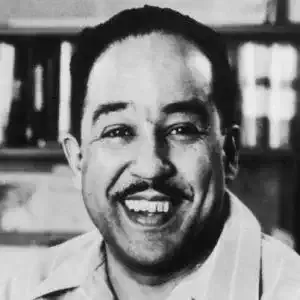
Langston Hughes
Mother to Son
Well, son, I'll tell you:
Life for me ain't been no crystal stair.
It's had tacks in it,
And splinters,
And boards torn up,
And places with no carpet on the floor—
Bare.
But all the time
I'se been a-climbin' on,
And reachin' landin's,
And turnin' corners,
And sometimes goin' in the dark
Where there ain't been no light.
So, boy, don't you turn back.
Don't you set down on the steps.
'Cause you finds it's kinder hard.
Don't you fall now—
For I'se still goin', honey,
I'se still climbin',
And life for me ain't been no crystal stair.
513
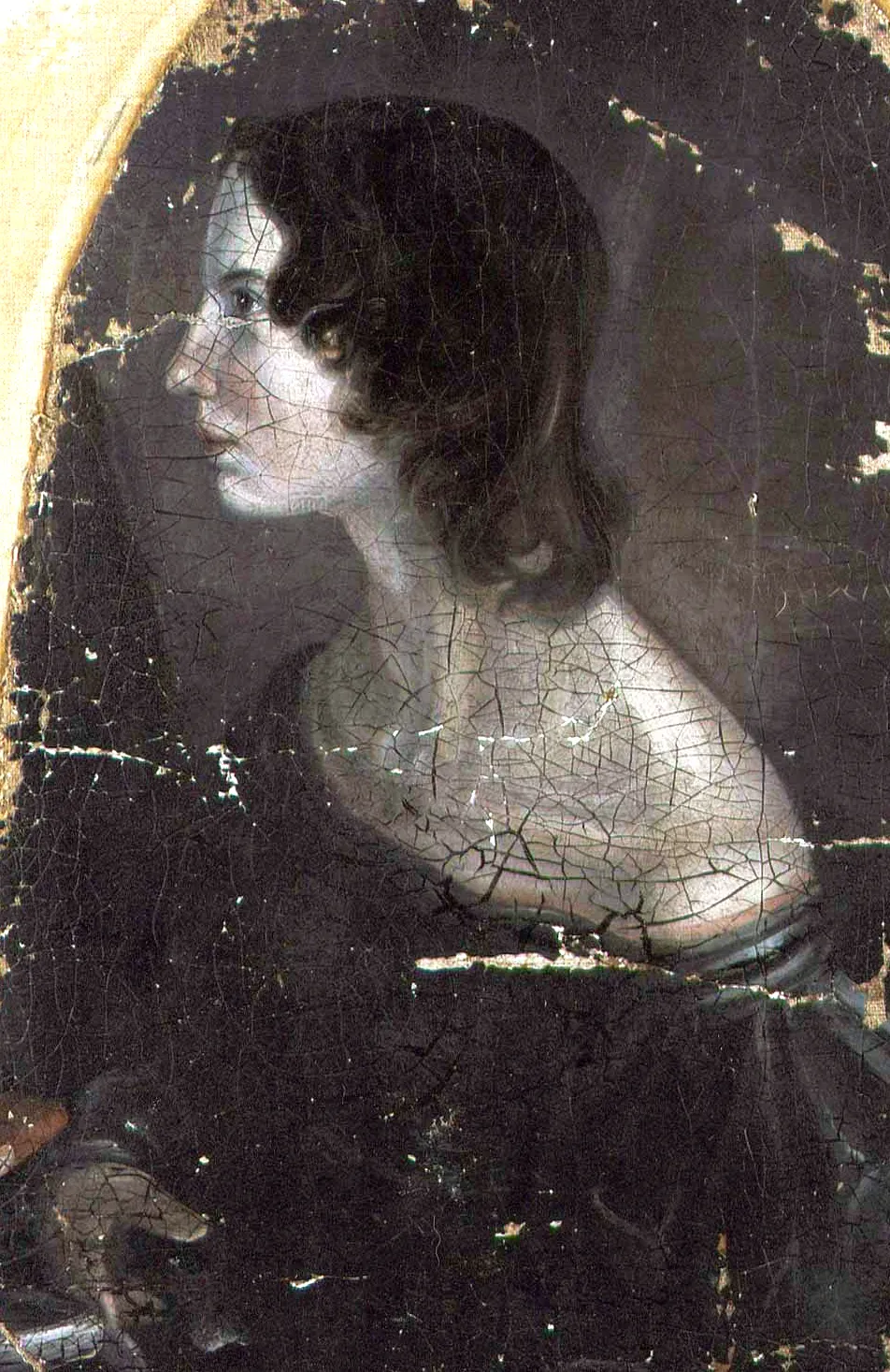
Emily Jane Brontë
No Coward Soul Is Mine
No coward soul is mine,
No trembler in the world,s storm-troubled sphere:
I see Heaven's glories shine,
And Faith shines equal arming me from Fear.
O God within my breast.
Almighty ever-present Deity!
Life , that in me has rest,
As I Undying Life, have power in thee!
Vain are the thousand creeds
That move men's hearts, unutterably vain;
Worthless as withered weeds,
Or idlest froth amid the boundless main,
To waken doubt in one
Holding so fast by Thy infinity;
So surely anchored on
The steadfast rock of Immortality.
With wide-embracing love
Thy Spirit animates eternal years,
Pervades and broods above,
Changes, sustains, dissolves, creates, and rears.
Though Earth and moon were gone,
And suns and universes ceased to be,
And Thou wert left alone,
Every Existence would exist in thee.
There is not room for Death,
Nor atom that his might could render void:
Since thou art Being and Breath,
And what thou art may never be destroyed.
514

Rudyard Kipling
The Benefactors
Ah! What avails the classic bent
And what the cultured word,
Against the undoctored incident
That actually occurred?
And what is Art whereto we press
Through paint and prose and rhyme--
When Nature in her nakedness
Defeats us every time?
It is not learning, grace nor gear,
Nor easy meat and drink,
But bitter pinch of pain and fear
That makes creation think.
When in this world's unpleasing youth
Our godlike race began,
The longest arm, the sharpest tooth,
Gave man control of man;
Till, bruised and bitten to the bone
And taught by pain and fear,
He learned to deal the far-off stone,
And poke the long, safe spear.
So tooth and nail were obsolete
As means against a foe,
Till, bored by uniform defeat,
Some genius built the bow.
Then stone and javelin proved as vain
As old-time tooth and nail;
Till, spurred anew by fear and pain,
Man fashioned coats of mail.
Then was there safety for the rich
And danger for the poor,
Till someone mixed a powder which
Redressed the scale once more.
Helmet and armour disappeared
With sword and bow and pike,
And, when the smoke of battle cleared,
All men were armed alike. . . .
And when ten million such were slain
To please one crazy king,
Man, schooled in bulk by fear and pain,
Grew weary of the thing;
And, at the very hour designed,
To enslave him past recall,
His tooth-stone-arrow-gun-shy mind
Turned and abolished all.
All Power, each Tyrant, every Mob
Whose head has grown too large,
Ends by destroying its own job
And works its own discharge;
And Man, whose mere necessities
Move all things from his path,
Trembles meanwhile at their decrees,
And deprecates their wrath!
512

Sara Teasdale
At Sea
In the pull of the wind I stand, lonely,
On the deck of a ship, rising, falling,
Wild night around me, wild water under me,
Whipped by the storm, screaming and calling.
Earth is hostile and the sea hostile,
Why do I look for a place to rest?
I must fight always and die fighting
With fear an unhealing wound in my breast.
On the deck of a ship, rising, falling,
Wild night around me, wild water under me,
Whipped by the storm, screaming and calling.
Earth is hostile and the sea hostile,
Why do I look for a place to rest?
I must fight always and die fighting
With fear an unhealing wound in my breast.
514
Rudyard Kipling
Hunting Song of the Seeonee Pack
As the dawn was breaking the Sambhur belled
Once, twice, and again!
And a doe leaped up -- and a doe leaped up
From the pond in the wood where the wild deer sup.
This I, scouting alone, beheld,
Once, twice, and again!
As the dawn was breaking the Sambhur belled
Once, twice, and again!
And a wolf stole back -- and a wolf stole back
To carry the word to the waiting Pack;
And we sought and we found and we bayed on his track
Once, twice, and again!
As the dawn was breaking the Wolf-pack yelled
Once, twice, and again!
Feet in the jungle that leave no mark!
Eyes that can see in the dark -- the dark!
Tongue -- give tongue to it! Hark! O Hark!
Once, twice, and again!
His spots are the joy of the Leopard: his horns are the Buffalo's pride --
Be clean, for the strength of the hunter is known by the gloss of his hide.
If ye find that the Bullock can toss you, or the heavy-browed Sambhur can gore;
Ye need not stop work to inform us; we knew it ten seasons before.
Oppress not the cubs of the stranger, but hail them as Sister and Brother,
For though they are little and fubsy, it may be the Bear is their mother.
"There is none like to me!" says the Cub in the pride of his earliest kill;
But the Jungle is large and the Cub he is small. Let him think and be still.
Once, twice, and again!
And a doe leaped up -- and a doe leaped up
From the pond in the wood where the wild deer sup.
This I, scouting alone, beheld,
Once, twice, and again!
As the dawn was breaking the Sambhur belled
Once, twice, and again!
And a wolf stole back -- and a wolf stole back
To carry the word to the waiting Pack;
And we sought and we found and we bayed on his track
Once, twice, and again!
As the dawn was breaking the Wolf-pack yelled
Once, twice, and again!
Feet in the jungle that leave no mark!
Eyes that can see in the dark -- the dark!
Tongue -- give tongue to it! Hark! O Hark!
Once, twice, and again!
His spots are the joy of the Leopard: his horns are the Buffalo's pride --
Be clean, for the strength of the hunter is known by the gloss of his hide.
If ye find that the Bullock can toss you, or the heavy-browed Sambhur can gore;
Ye need not stop work to inform us; we knew it ten seasons before.
Oppress not the cubs of the stranger, but hail them as Sister and Brother,
For though they are little and fubsy, it may be the Bear is their mother.
"There is none like to me!" says the Cub in the pride of his earliest kill;
But the Jungle is large and the Cub he is small. Let him think and be still.
513

Ezra Pound
Sestina: Altaforte
Loquitur: En Bertrans de Born.
Dante Alighieri put this man in hell for that he was a
stirrer-up of strife.
Eccovi!
Judge ye!
Have I dug him up again?
The scene in at his castle, Altaforte. "Papiols" is his jongleur.
"The Leopard," the device of Richard (Cúur de Lion).
I
Damn it all! all this our South stinks peace.
You whoreson dog, Papiols, come! Let's to music!
I have no life save when the swords clash.
But ah! when I see the standards gold, vair, purple, opposing
And the broad fields beneath them turn crimson,
Then howl I my heart nigh mad with rejoicing.
II
In hot summer have I great rejoicing
When the tempests kill the earth's foul peace,
And the lightnings from black heav'n flash crimson,
And the fierce thunders roar me their music
And the winds shriek through the clouds mad, opposing,
And through all the riven skies God's swords clash.
III
Hell grant soon we hear again the swords clash!
And the shrill neighs of destriers in battle rejoicing,
Spiked breast to spiked breast opposing!
Better one hour's stour than a year's peace
With fat boards, bawds, wine and frail music!
Bah! there's no wine like the blood's crimson!
IV
And I love to see the sun rise blood-crimson.
And I watch his spears through the dark clash
And it fills all my heart with rejoicing
And pries wide my mouth with fast music
When I see him so scorn and defy peace,
His lone might 'gainst all darkness opposing.
V
The man who fears war and squats opposing
My words for stour, hath no blood of crimson
But is fit only to rot in womanish peace
Far from where worth's won and the swords clash
For the death of such sluts I go rejoicing;
Yea, I fill all the air with my music.
VI
Papiols, Papiols, to the music!
There's no sound like to swords swords opposing,
No cry like the battle's rejoicing
When our elbows and swords drip the crimson
And our charges 'gainst "The Leopard's" rush clash.
May God damn for ever all who cry "Peace!"
VII
And let the music of the swords make them crimson!
Hell grant soon we hear again the swords clash!
Hell blot black for always the thought "Peace!"
508
Rudyard Kipling
The Queen's Men
Valour and Innocence
Have latterly gone hence
To certain death by certain shame attended.
Envy--ah! even to tears! --
The fortune of their years
Which, though so few, yet so divinely ended.
Scarce had they lifted up
Life's full and fiery cup,
Than they had set it down untouched before them.
Before their day arose
They beckoned it to close--
Close in confusion and destruction o'er them.
They did not stay to ask
What prize should crown their task--
Well sure that prize was such as no man strives for;
But passed into eclipse,
Her kiss upon their lips--
Even Belphoebe's, whom they gave their lives for!
501

William Butler Yeats
To A Friend Whose Work Has Come To Nothing
NOW all the truth is out,
Be secret and take defeat
From any brazen throat,
For how can you compete,
Being honour bred, with one
Who, were it proved he lies,
Were neither shamed in his own
Nor in his neighbours' eyes?
Bred to a harder thing
Than Triumph, turn away
And like a laughing string
Whereon mad fingers play
Amid a place of stone,
Be secret and exult,
Because of all things known
That is most difficult.
502

John Keats
King Stephen
A FRAGMENT OF A TRAGEDY
ACT I.
SCENE I. Field of Battle.
Alarum. Enter King STEPHEN, Knights, and Soldiers.
Stephen. If shame can on a soldier's vein-swoll’n front
Spread deeper crimson than the battle's toil,
Blush in your casing helmets! for see, see!
Yonder my chivalry, my pride of war,
Wrench'd with an iron hand from firm array,
Are routed loose about the plashy meads,
Of honour forfeit. O that my known voice
Could reach your dastard ears, and fright you more!
Fly, cowards, fly! Glocester is at your backs!
Throw your slack bridles o'er the flurried manes,
Ply well the rowel with faint trembling heels,
Scampering to death at last!
First Knight. The enemy
Bears his flaunt standard close upon their rear.
Second Knight. Sure of a bloody prey, seeing the fens
Will swamp them girth-deep.
Stephen. Over head and ears,
No matter! 'Tis a gallant enemy;
How like a comet he goes streaming on.
But we must plague him in the flank, hey, friends?
We are well breathed, follow!
Enter Earl BALDWIN and Soldiers, as defeated.
Stephen. De Redvers!
What is the monstrous bugbear that can fright
Baldwin?
Baldwin. No scare-crow, but the fortunate star
Of boisterous Chester, whose fell truncheon now
Points level to the goal of victory.
This way he comes, and if you would maintain
Your person unaffronted by vile odds,
Take horse, my Lord.
Stephen. And which way spur for life?
Now I thank Heaven I am in the toils,
That soldiers may bear witness how my arm
Can burst the meshes. Not the eagle more
Loves to beat up against a tyrannous blast,
Than I to meet the torrent of my foes.
This is a brag, be 't so, but if I fall,
Carve it upon my 'scutcheon'd sepulchre.
On, fellow soldiers! Earl of Redvers, back!
Not twenty Earls of Chester shall brow-beat
The diadem. [Exeunt. Alarum.
SCENE II. Another part of the Field.
Trumpets sounding a Victory. Enter GLOCESTER. Knights, and Forces.
Glocester. Now may we lift our bruised vizors up,
And take the flattering freshness of the air,
While the wide din of battle dies away
Into times past, yet to be echoed sure
In the silent pages of our chroniclers.
First Knight. Will Stephen's death be marked there, my good
Lord,
Or that we gave him lodging in yon towers?
Glocester. Fain would I know the great usurper's fate.
Enter two Captains severally.
First Captain. My Lord!
Second Captain. Most noble Earl!
First Captain. The King
Second Captain. The Empress greets
Glocester. What of the King?
First Captain. He sole and lone maintains
A hopeless bustle mid our swarming arms,
And with a nimble savageness attacks,
Escapes, makes fiercer onset, then anew
Eludes death, giving death to most that dare
Trespass within the circuit of his sword!
He must by this have fallen. Baldwin is taken;
And for the Duke of Bretagne, like a stag
He flies, for the Welsh beagles to hunt down.
God save the Empress!
Glocester. Now our dreaded Queen:
What message from her Highness?
Second Captain. Royal Maud
From the throng'd towers of Lincoln hath look'd down,
Like Pallas from the walls of Ilion,
And seen her enemies havock'd at her feet.
She greets most noble Glocester from her heart,
Intreating him, his captains, and brave knights,
To grace a banquet. The high city gates
Are envious which shall see your triumph pass;
The streets are full of music.
Enter Second Knight.
Glocester. Whence come you?
Second Knight. From Stephen, my good Prince, Stephen!
Stephen!
Glocester. Why do you make such echoing of his name?
Second Knight. Because I think, my lord, he is no man,
But a fierce demon, Anointed safe from wounds,
And misbaptized with a Christian name.
Glocester. A mighty soldier! Does he still hold out?
Second Knight. He shames our victory. His valour still
Keeps elbow-room amid our eager swords,
And holds our bladed falchions all aloof
His gleaming battle-axe being slaughter-sick,
Smote on the morion of a Flemish knight,
Broke short in his hand; upon the which he flung
The heft away with such a vengeful force,
It paunch'd the Earl of Chester's horse, who then
Spleen-hearted came in full career at him.
Glocester. Did no one take him at a vantage then?
Second Knight. Three then with tiger leap upon him flew,
Whom, with his sword swift-drawn and nimbly held,
He stung away again, and stood to breathe,
Smiling. Anon upon him rush'd once more
A throng of foes, and in this renew'd strife,
My sword met his and snapp'd off at the hilts.
Glocester. Come, lead me to this Mars and let us move
In silence, not insulting his sad doom
With clamorous trumpets. To the Empress bear
My salutation as befits the time.
[Exeunt GLOCESTER and Forces.
SCENE III. The Field of Battle. Enter STEPHEN unarmed.
Stephen. Another sword! And what if I could seize
One from Bellona's gleaming armoury,
Or choose the fairest of her sheaved spears!
Where are my enemies? Here, close at hand,
Here come the testy brood. O for a sword!
I'm faint a biting sword! A noble sword!
A hedge-stake or a ponderous stone to hurl
With brawny vengeance, like the labourer Cain.
Come on! Farewell my kingdom, and all hail
Thou superb, plum'd, and helmeted renown,
All hail I would not truck this brilliant day
To rule in Pylos with a Nestor's beard
Come on!
Enter DE KAIMS and Knights, &c.
De Kaims. Is 't madness, or a hunger after death,
That makes thee thus unarm'd throw taunts at us?
Yield, Stephen, or my sword's point dip in
'he gloomy current of a traitor's heart.
Stephen. Do it, De Kaims, I will not budge an inch.
De Kaims. Yes, of thy madness thou shalt take the meed.
Stephen. Darest thou?
De Kaims. How dare, against a man disarmed?
Stephen. What weapons has the lion but himself?
Come not near me, De Kaims, for by the price
Of all the glory I have won this day,
Being a king, I will not yield alive
To any but the second man of the realm,
Robert of Glocester.
De Kaims. Thou shalt vail to me.
Stephen. Shall I, when I have sworn against it, sir?
Thou think'st it brave to take a breathing king,
That, on a court-day bow'd to haughty Maud,
The awed presence-chamber may be bold
To whisper, there's the man who took alive
Stephen me prisoner. Certes, De Kaims,
The ambition is a noble one.
De Kaims. 'Tis true,
And, Stephen, I must compass it.
Stephen. No, no,
Do not tempt me to throttle you on the gorge,
Or with my gauntlet crush your hollow breast,
Just when your knighthood is grown ripe and full
For lordship.
A Soldier. Is an honest yeoman's spear
Of no use at a need? Take that.
Stephen. Ah, dastard!
De Kaims. What, you are vulnerable! my prisoner I
Stephen. No, not yet. I disclaim it, and demand
Death as a sovereign right unto a king
Who 'sdains to yield to any but his peer,
If not in title, yet in noble deeds,
The Earl of Glocester. Stab to the hilts, De Kaims,
For I will never by mean hands be led
From this so famous field. Do ye hear! Be quick!
[Trumpets. Enter the Earl of CHESTER and Knights.
SCENE IV. A Presence Chamber. Queen MAUD in a Chair of State, the
Earls of GLOCESTER and CHESTER, Lords, Attendants.
Maud. Glocester, no more: I will behold that Boulogne:
Set him before me. Not for the poor sake
Of regal pomp and a vain-glorious hour,
As thou with wary speech, yet near enough,
Hast hinted.
Glocester. Faithful counsel have I given ;
If wary, for your Highness' benefit.
Maud. The Heavens forbid that I should not think so,
For by thy valour have I won this realm,
Which by thy wisdom I will ever keep.
To sage advisers let me ever bend
'A meek attentive ear, so that they treat
Of the wide kingdom's rule and government,
Not trenching on our actions personal.
Advis'd, not school'd, I would be; and henceforth
Spoken to in clear, plain, and open terms,
Not side-ways sermon'd at.
Glocester. Then, in plain terms,
Once more for the fallen king
Maud. Your pardon, Brother,
I would no more of that; for, as I said,
‘Tis not for worldly pomp I wish to see
The rebel, but as dooming judge to give
A sentence something worthy of his guilt.
Glocester. If 't must be so, I'll bring him to your presence.
[Exit GLOCESTER,
Maud. A meaner summoner might do as well
My Lord of Chester, is 't true what I hear
Of Stephen of Boulogne, our prisoner,
That he, as a fit penance for his crimes,
Eats wholesome, sweet, and palatable food
Off Glocester's golden dishes drinks pure wine,
Lodgest soft?
Chester. More than that, my gracious Queen,
Has anger'd me. The noble Earl, methinks,
Full soldier as he is, and without peer
In counsel, dreams too much among his books.
It may read well, but sure 'tis out of date
To play the Alexander with Darius.
Maud. Truth! I think so. By Heavens it shall not last!
Chester. It would amaze your Highness now to mark
How Glocester overstrains his courtesy
To that crime-loving rebel, that Boulogne
Maud. That ingrate!
Chester. For whose vast ingratitude
To our late sovereign lord, your noble sire,
The generous Earl condoles in his mishaps,
And with a sort of lackeying friendliness,
Talks off the mighty frowning from his brow,
Woos him to hold a duet in a smile,
Or, if it please him, play an hour at chess
Maud. A perjured slave!
Chester. And for his perjury,
Glocester has fit rewards nay, I believe,
He sets his bustling household's wits at work
For flatteries to ease this Stephen's hours,
And make a heaven of his purgatory ;
Adorning bondage with the pleasant gloss
Of feasts and music, and all idle shows
Of indoor pageantry; while syren whispers,
Predestined for his ear, 'scape as half-check'd
From lips the courtliest and the rubiest
Of all the realm, admiring of his deeds.
Maud. A frost upon his summer!
Chester. A queen's nod
Can make his June December. Here he comes
503

Ella Wheeler Wilcox
An Inspiration
However the battle is ended,
Though proudly the victor comes
With fluttering flags and prancing nags
And echoing roll of drums.
Still truth proclaims this motto,
In letters of living light, -
No Question is ever settled,
Until it is settled right.
Though the heel of the strong oppressor
May grind the weak to dust,
And the voices of fame with one acclaim
May call him great and just,
Let those who applaud take warning,
And keep this motto in sight, -
No question is ever settled
Until it is settled right.
Let those who have failed take courage;
Tho' the enemy seems to have won,
Tho' his ranks are strong, if he be in the wrong
The battle is not yet done;
For, as sure as the morning follows
The darkest hour of the night,
No question is ever settled
Until it is settled right.
O man bowed down with labor!
O woman, young, yet old!
O heart oppressed in the toiler's breast
And crushed by the power of gold!
Keep on with your weary battle
Against triumphant might;
No question is ever settled
Until it is settled right.
498
Rudyard Kipling
Poor Honest Men
Your jar of Virginny
Will cost you a guinea,
Which you reckon too much by five shillings or ten;
But light your churchwarden
And judge it according,
When I've told you the troubles of poor honest men.
From the Capes of the Delaware,
As you are well aware,
We sail which tobacco for England-but then,
Our own British cruisers,
They watch us come through, sirs,
And they press half a score of us poor honest men!
Or if by quick sailing
(Thick weather prevailing )
We leave them behind ( as we do now and then)
We are sure of a gun from
Each frigate we run from,
Which is often destruction to poor honest men!
Broadsides the Atlantic
We tumble short-handed,
With shot-holes to plug and new canvas to bend;
And off the Azores,
Dutch, Dons and Monsieurs
Are waiting to terrify poor honest men.
Napoleon's embargo
Is laid on all cargo
Which comfort or aid to King George may intend;
And since roll, twist and leaf,
Of all comforts is chief,
They try for to steal it from poor honest men!
With no heart for fight,
We take refuge in flight,
But fire as we run, our retreat to defend;
Until our stern-chasers
Cut up her fore-braces,
And she flies off the wind from us poor honest men!
'Twix' the Forties and Fifties,
South-eastward the drift is,
And so, when we think we are making Land's End
Alas, it is Ushant
With half the King's Navy
Blockading French ports against poor honest men!
But they may not quit station
(Which is our salvation )
So swiftly we stand to the Nor'ard again;
And finding the tail of
A homeward-bound convoy,
We slip past the Scillies like poor honest men.
'Twix' the Lizard and Dover,
We hand our stuff over,
Though I may not inform how we do it, nor when.
But a light on each quarter,
Low down on the water,
Is well understanded by poor honest men.
Even then we have dangers,
From meddlesome strangers,
Who spy on our business and are not content
To take a smooth answer,
Except with a handspike . . .
And they say they are murdered by poor honest men!
To be drowned or be shot
Is our natural lot,
Why should we, moreover, be hanged in the end---
After all our great pains
For to dangle in chains
As though we were smugglers, not poor honest men?
496
Ezra Pound
For E. McC
Gone while your tastes were keen to you,
Gone where the grey winds call to you,
By that high fencer, even Death,
Struck of the blade that no man parrieth;
Such is your fence, one saith,
One that hath known you.
Drew you your sword most gallantly
Made you your pass most valiantly
'Gainst that grey fencer, even Death.
Gone as a gust of breath
Faith! no man tarrieth,
‘Se il cor ti manca,’ but it failed thee not!
'Non ti fidar,’ it is the sword that speaks
‘In me.’
Thou trusted'st in thyself and met the blade
'Thout mask or gauntlet, and art laid
As memorable broken blades that be
Kept as bold trophies of old pageantry.
As old Toledos past their days of war
Are kept mnemonic of the strokes they bore,
So art thou with us, being good to keep
In our heart's sword-rack, though thy sword-arm sleep.
ENVOI
Struck of the blade that no man parrieth
Pierced of the point that toucheth lastly all,
'Gainst that grey fencer, even Death,
Behold the shield! He shall not take thee all.
492
Rudyard Kipling
Mulholland's Contract
The fear was on the cattle, for the gale was on the sea,
An' the pens broke up on the lower deck an' let the creatures free --
An' the lights went out on the lower deck, an' no one near but me.
I had been singin' to them to keep 'em quiet there,
For the lower deck is the dangerousest, requirin' constant care,
An' give to me as the strongest man, though used to drink and swear.
I see my chance was certain of bein' horned or trod,
For the lower deck was packed with steers thicker'n peas in a pod,
An' more pens broke at every roll -- so I made a Contract with God.
An' by the terms of the Contract, as I have read the same,
If He got me to port alive I would exalt His Name,
An' praise His Holy Majesty till further orders came.
He saved me from the cattle an' He saved me from the sea,
For they found me 'tween two drownded ones where the roll had landed me --
An' a four-inch crack on top of my head, as crazy as could be.
But that were done by a stanchion, an' not by a bullock at all,
An' I lay still for seven weeks convalessing of the fall,
An' readin' the shiny Scripture texts in the Seaman's Hospital.
An' I spoke to God of our Contract, an' He says to my prayer:
"I never puts on My ministers no more than they can bear.
So back you go to the cattle-boats an' preach My Gospel there.
"For human life is chancy at any kind of trade,
But most of all, as well you know, when the steers are mad-afraid;
So you go back to the cattle-boats an' preach 'em as I've said.
"They must quit drinkin' an' swearin', they mustn't knife on a blow,
They must quit gamblin' their wages, and you must preach it so;
For now those boats are more like Hell than anything else I know."
I didn't want to do it, for I knew what I should get,
An' I wanted to preach Religion, handsome an' out of the wet,
But the Word of the Lord were lain on me, an' I done what I was set.
I have been smit an' bruis]\ed, as warned would be the case,
An' turned my cheek to the smiter exactly as Scripture says;
But following that, I knocked him down an' led him up to Grace.
An' we have preaching on Sundays whenever the sea is calm,
An' I use no knife or pistol an' I never take no harm,
For the Lord abideth back of me to guide my fighting arm.
An' I sign for four-pound-ten a month and save the money clear,
An' I am in charge of the lower deck, an' I never lose a steer;
An' I believe in Almighty God an' preach His Gospel here.
The skippers say I'm crazy, but I can prove 'em wrong,
For I am in charge of the lower deck with all that doth belong --
Which they would not give to a lunatic, and the competition so strong!
492

Kazi Nazrul Islam
Struggle
You lived for so long,
Now once put your life on the line;
The same hands you use for only prayers,
With weapons let once those shine.
Tearing off the crescent from sky,
Decorate your flag that is crimson red;
Let the seniles live longer
You offer your precious life, go ahead.
[Original: Shadhona (Bengali) ,
Translation: Mohammad Omar Farooq]
495

Johann Wolfgang von Goethe
A Symbol
THE mason's trade Observe them well,
Resembles life, And watch them revealing
With all its strife,--How solemn feeling
Is like the stir made And wonderment swell
By man on earth's face. The hearts of the brave.
Though weal and woe The voice of the blest,
The future may hide, And of spirits on high
Unterrified Seems loudly to cry:
We onward go "To do what is best,
In ne'er changing race. Unceasing endeavour!
A veil of dread "In silence eterne
Hangs heavier still. Here chaplets are twin'd,
Deep slumbers fill That each noble mind
The stars over-head, Its guerdon may earn.--
And the foot-trodden grave. Then hope ye for ever!"
493

Alfred Lord Tennyson
To The Queen
O loyal to the royal in thyself,
And loyal to thy land, as this to thee--
Bear witness, that rememberable day,
When, pale as yet, and fever-worn, the Prince
Who scarce had plucked his flickering life again
From halfway down the shadow of the grave,
Past with thee through thy people and their love,
And London rolled one tide of joy through all
Her trebled millions, and loud leagues of man
And welcome! witness, too, the silent cry,
The prayer of many a race and creed, and clime--
Thunderless lightnings striking under sea
From sunset and sunrise of all thy realm,
And that true North, whereof we lately heard
A strain to shame us 'keep you to yourselves;
So loyal is too costly! friends--your love
Is but a burthen: loose the bond, and go.'
Is this the tone of empire? here the faith
That made us rulers? this, indeed, her voice
And meaning, whom the roar of Hougoumont
Left mightiest of all peoples under heaven?
What shock has fooled her since, that she should speak
So feebly? wealthier--wealthier--hour by hour!
The voice of Britain, or a sinking land,
Some third-rate isle half-lost among her seas?
THERE rang her voice, when the full city pealed
Thee and thy Prince! The loyal to their crown
Are loyal to their own far sons, who love
Our ocean-empire with her boundless homes
For ever-broadening England, and her throne
In our vast Orient, and one isle, one isle,
That knows not her own greatness: if she knows
And dreads it we are fallen. --But thou, my Queen,
Not for itself, but through thy living love
For one to whom I made it o'er his grave
Sacred, accept this old imperfect tale,
New-old, and shadowing Sense at war with Soul,
Ideal manhood closed in real man,
Rather than that gray king, whose name, a ghost,
Streams like a cloud, man-shaped, from mountain peak,
And cleaves to cairn and cromlech still; or him
Of Geoffrey's book, or him of Malleor's, one
Touched by the adulterous finger of a time
That hovered between war and wantonness,
And crownings and dethronements: take withal
Thy poet's blessing, and his trust that Heaven
Will blow the tempest in the distance back
From thine and ours: for some are sacred, who mark,
Or wisely or unwisely, signs of storm,
Waverings of every vane with every wind,
And wordy trucklings to the transient hour,
And fierce or careless looseners of the faith,
And Softness breeding scorn of simple life,
Or Cowardice, the child of lust for gold,
Or Labour, with a groan and not a voice,
Or Art with poisonous honey stolen from France,
And that which knows, but careful for itself,
And that which knows not, ruling that which knows
To its own harm: the goal of this great world
Lies beyond sight: yet--if our slowly-grown
And crowned Republic's crowning common-sense,
That saved her many times, not fail--their fears
Are morning shadows huger than the shapes
That cast them, not those gloomier which forego
The darkness of that battle in the West,
Where all of high and holy dies away.
494

Walt Whitman
Pioneers! O Pioneers!
COME, my tan-faced children,
Follow well in order, get your weapons ready;
Have you your pistols? have you your sharp edged axes?
Pioneers! O pioneers!
For we cannot tarry here,
We must march my darlings, we must bear the brunt of danger,
We, the youthful sinewy races, all the rest on us depend,
Pioneers! O pioneers!
O you youths, western youths,
So impatient, full of action, full of manly pride and friendship,
Plain I see you, western youths, see you tramping with the foremost,
Pioneers! O pioneers!
Have the elder races halted?
Do they droop and end their lesson, wearied, over there beyond the
seas?
We take up the task eternal, and the burden, and the lesson,
Pioneers! O pioneers!
All the past we leave behind;
We debouch upon a newer, mightier world, varied world,
Fresh and strong the world we seize, world of labor and the march,
Pioneers! O pioneers!
We detachments steady throwing,
Down the edges, through the passes, up the mountains steep,
Conquering, holding, daring, venturing, as we go, the unknown ways,
Pioneers! O pioneers!
We primeval forests felling,
We the rivers stemming, vexing we, and piercing deep the mines
within;
We the surface broad surveying, we the virgin soil upheaving,
Pioneers! O pioneers!
Colorado men are we,
From the peaks gigantic, from the great sierras and the high
plateaus,
From the mine and from the gully, from the hunting trail we come,
Pioneers! O pioneers!
From Nebraska, from Arkansas,
Central inland race are we, from Missouri, with the continental blood
intervein'd;
All the hands of comrades clasping, all the Southern, all the
Northern,
Pioneers! O pioneers!
O resistless, restless race!
O beloved race in all! O my breast aches with tender love for all!
O I mourn and yet exult--I am rapt with love for all,
Pioneers! O pioneers!
Raise the mighty mother mistress,
Waving high the delicate mistress, over all the starry mistress,
(bend your heads all,)
Raise the fang'd and warlike mistress, stern, impassive, weapon'd
mistress,
Pioneers! O pioneers!
See, my children, resolute children,
By those swarms upon our rear, we must never yield or falter,
Ages back in ghostly millions, frowning there behind us urging,
Pioneers! O pioneers!
On and on, the compact ranks,
With accessions ever waiting, with the places of the dead quickly
fill'd,
Through the battle, through defeat, moving yet and never stopping,
Pioneers! O pioneers!
O to die advancing on!
Are there some of us to droop and die? has the hour come?
Then upon the march we fittest die, soon and sure the gap is fill'd,
Pioneers! O pioneers!
All the pulses of the world,
Falling in, they beat for us, with the western movement beat;
Holding single or together, steady moving, to the front, all for us,
Pioneers! O pioneers!
Life's involv'd and varied pageants,
All the forms and shows, all the workmen at their work,
All the seamen and the landsmen, all the masters with their slaves,
Pioneers! O pioneers!
All the hapless silent lovers,
All the prisoners in the prisons, all the righteous and the wicked,
All the joyous, all the sorrowing, all the living, all the dying,
Pioneers! O pioneers!
I too with my soul and body,
We, a curious trio, picking, wandering on our way,
Through these shores, amid the shadows, with the apparitions
pressing,
Pioneers! O pioneers!
Lo! the darting bowling orb!
Lo! the brother orbs around! all the clustering suns and planets,
All the dazzling days, all the mystic nights with dreams,
Pioneers! O pioneers!
These are of us, they are with us,
All for primal needed work, while the followers there in embryo wait
behind,
We to-day's procession heading, we the route for travel clearing,
Pioneers! O pioneers!
O you daughters of the west!
O you young and elder daughters! O you mothers and you wives!
Never must you be divided, in our ranks you move united,
Pioneers! O pioneers!
Minstrels latent on the prairies!
(Shrouded bards of other lands! you may sleep--you have done your
work;)
Soon I hear you coming warbling, soon you rise and tramp amid us,
Pioneers! O pioneers!
Not for delectations sweet;
Not the cushion and the slipper, not the peaceful and the
studious;
Not the riches safe and palling, not for us the tame enjoyment,
Pioneers! O pioneers!
Do the feasters gluttonous feast?
Do the corpulent sleepers sleep? have they lock'd and bolted doors?
Still be ours the diet hard, and the blanket on the ground,
Pioneers! O pioneers!
Has the night descended?
Was the road of late so toilsome? did we stop discouraged, nodding on
our way?
Yet a passing hour I yield you, in your tracks to pause oblivious,
Pioneers! O pioneers!
Till with sound of trumpet,
Far, far off the day-break call--hark! how loud and clear I hear it
wind;
Swift! to the head of the army!--swift! spring to your places, Pioneers! O
pioneers.
493
Rudyard Kipling
The American Rebellion
Before
Twas not while England's sword unsheathed
Put half a world to flight,
Nor while their new-built cities breathed
Secure behind her might;
Not while she poured from Pole to Line
Treasure and ships and men--
These worshippers at Freedoms shrine
They did not quit her then!
Not till their toes were driven forth
By England o'er the main--
Not till the Frenchman from the North
Had gone with shattered Spain;
Not till the clean-swept oceans showed
No hostile flag unrolled,
Did they remember that they owed
To Freedom--and were bold!
After
The snow lies thick on Valley Forge,
The ice on the Delaware,
But the poor dead soldiers of King George
They neither know nor care.
Not though the earliest primrose break
On the sunny side of the lane,
And scuffling rookeries awake
Their England' s spring again.
They will not stir when the drifts are gone,
Or the ice melts out of the bay:
And the men that served with Washington
Lie all as still as they.
They will not stir though the mayflower blows
In the moist dark woods of pine,
And every rock-strewn pasture shows
Mullein and columbine.
Each for his land, in a fair fight,
Encountered strove, and died,
And the kindly earth that knows no spite
Covers them side by side.
She is too busy to think of war;
She has all the world to make gay;
And, behold, the yearly flowers are
Where they were in our fathers' day!
Golden-rod by the pasture-wall
When the columbine is dead,
And sumach leaves that turn, in fall,
Bright as the blood they shed.
491
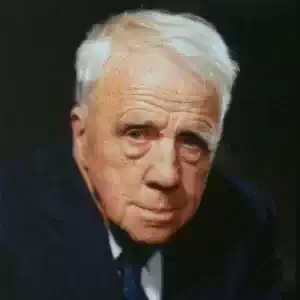
Robert Frost
The Exposed Nest
You were forever finding some new play.
So when I saw you down on hands and knees
I the meadow, busy with the new-cut hay,
Trying, I thought, to set it up on end,
I went to show you how to make it stay,
If that was your idea, against the breeze,
And, if you asked me, even help pretend
To make it root again and grow afresh.
But 'twas no make-believe with you today,
Nor was the grass itself your real concern,
Though I found your hand full of wilted fern,
Steel-bright June-grass, and blackening heads of clovers.
'Twas a nest full of young birds on the ground
The cutter-bar had just gone champing over
(Miraculously without tasking flesh)
And left defenseless to the heat and light.
You wanted to restore them to their right
Of something interposed between their sight
And too much world at once--could means be found.
The way the nest-full every time we stirred
Stood up to us as to a mother-bird
Whose coming home has been too long deferred,
Made me ask would the mother-bird return
And care for them in such a change of scene
And might out meddling make her more afraid.
That was a thing we could not wait to learn.
We saw the risk we took in doing good,
But dared not spare to do the best we could
Though harm should come of it; so built the screen
You had begun, and gave them back their shade.
All this to prove we cared. Why is there then
No more to tell? We turned to other things.
I haven't any memory--have you?--
Of ever coming to the place again
To see if the birds lived the first night through,
And so at last to learn to use their wings.
487
Walt Whitman
Excelsior
WHO has gone farthest? For lo! have not I gone farther?
And who has been just? For I would be the most just person of the
earth;
And who most cautious? For I would be more cautious;
And who has been happiest? O I think it is I! I think no one was ever
happier than I;
And who has lavish'd all? For I lavish constantly the best I have;
And who has been firmest? For I would be firmer;
And who proudest? For I think I have reason to be the proudest son
alive--for I am the son of the brawny and tall-topt city;
And who has been bold and true? For I would be the boldest and truest
being of the universe;
And who benevolent? For I would show more benevolence than all the
rest;
And who has projected beautiful words through the longest time? Have
I not outvied him? have I not said the words that shall stretch
through longer time?
And who has receiv'd the love of the most friends? For I know what it
is to receive the passionate love of many friends;
And who possesses a perfect and enamour'd body? For I do not believe
any one possesses a more perfect or enamour'd body than mine;
And who thinks the amplest thoughts? For I will surround those
thoughts;
And who has made hymns fit for the earth? For I am mad with devouring
extasy to make joyous hymns for the whole earth!
489
Rudyard Kipling
The Bell Buoy
They christened my brother of old--
And a saintly name he bears--
They gave him his place to hold
At the head of the belfry-stairs,
Where the minister-towers stand
And the breeding kestrels cry.
Would I change with my brother a league inland?
(Shoal! 'Ware shoal!) Not I!
In the flush of the hot June prime,
O'er sleek flood-tides afire,
I hear him hurry the chime
To the bidding of checked Desire;
Till the sweated ringers tire
And the wild bob-majors die.
Could I wait for my turn in the godly choir?
(Shoal! 'Ware shoal!) Not I!
When the smoking scud is blown--
When the greasy wind-rack lowers--
Apart and at peace and alone,
He counts the changeless hours.
He wars with darkling Powers
(I war with a darkling sea);
Would he stoop to my work in the gusty mirk?
(Shoal! 'Ware shoal!) Not he!
There was never a priest to pray
There was never a hand to toll,
When they made me guard of the bay,
And moored me over the shoal.
I rock, I reel, and I roll--
My four great hammers ply--
Could I speak or be still at the Church's will?
(Shoal! 'Ware shoal!) Not I!
The landward marks have failed,
The fog-bank glides unguessed,
The seaward lights are veiled,
The spent deep feigns her rest:
But my ear is laid to her breast,
I lift to the swell--I cry!
Could I wait in sloth on the Church's oath?
(Shoal! 'Ware shoal!) Not I!
At the careless end of night
I thrill to the nearing screw;
I turn in the clearing light
And I call to the drowsy crew;
And the mud boils foul and blue
As the blind bow backs away.
Will they give me their thanks if they clear the banks?
(Shoal! 'Ware shoal!) Not they!
The beach-pools cake and skim,
The bursting spray-heads freeze,
I gather on crown and rim
The grey, grained ice of the seas,
Where, sheathed from bitt to trees,
The plunging colliers lie.
Would I barter my place for the Church's grace?
(Shoal! 'Ware shoal!) Not I!
Through the blur of the whirling snow,
Or the black of the inky sleet,
The lanterns gather and grow,
And I look for the homeward fleet.
Rattle of block and sheet--
"Ready about-stand by!"
Shall I ask them a fee ere they fetch the quay?
(Shoal! 'Ware shoal!) Not I!
I dip and I surge and I swing
In the rip of the racing tide,
By the gates of doom I sing,
On the horns of death I ride.
A ship-length overside,
Between the course and the sand,
Fretted and bound I bide
Peril whereof I cry.
Would I change with my brother a league inland?
(Shoal! 'Ware shoal!) Not I!
487
Rudyard Kipling
The Dead King
EDWARD VII.
Who in the Realm to-day lays down dear life for the sake of a land more dear?
And, unconcerned for his own estate, toils till the last grudged sands have run?
Let him approach. It is proven here
Our King asks nothing of any man more than Our King himself, has done.
For to him above all was Life good, above all he commanded
Her abundance full-handed.
The peculiar treasure of Kings was his for the taking:
All that men come to in dreams he inherited waking: --
His marvel of world-gathered armies -- one heart and all races;
His seas 'neath his keels when his war-castles foamed to their places;
The thundering foreshores that answered his heralded landing;
The huge lighted cities adoring, the assemblies upstanding;
The Councils of Kings called in haste to learn how he was minded --
The kingdoms, the Powers, and the Glories he dealt with unblinded.
To him came all captains of men, all achievers of glory
Hot from the press of their battles they told him their story.
They revealed him their lives in an hour and, saluting departed,
Joyful to labour afresh -- he had made them new-hearted.
And, since he weighed men from his youth, and no lie long deceived him,
He spoke and exacted the truth, and the basest believed him.
And God poured him an exquisite wine, that was daily renewed to him,
In the clear-welling love of his peoples that daily accrued to him.
Honour and service we gave him, rejoicingly fearless;
Faith absolute, trust beyond speech and a friendship as peerless.
And since he was Master and Servant in all that we asked him,
We leaned hard on his wisdom in all things, knowing not how we tasked him.
For on him each new day laid command, every tyrannous hour,
To confront, or confirm, or make smooth some dread issue of power;
To deliver true, judgment aright at the instant, unaided,
In the strict, level, ultimate phrase that allowed or dissuaded;
To foresee, to allay, to avert from us perils unnumbered,
To stand guard on our gates when he guessed that the watchmen had slumbered;
To win time, to turn hate, to woo folly to service and, mightily schooling
His strength to the use of his Nations, to rule as not ruling.
These were the works of our King; Earth's peace was the proof of them.
God gave him great works to fulfil, and to us the behoof of them.
We accepted his toil as our right -- none spared, none excused him.
When he was bowed by his burden his rest was refused him.
We troubled his age with our weakness -- the blacker our shame to us!
Hearing his People had need of him, straightway he came to us.
As he received so he gave -- nothing grudged, naught denying,
Not even the last gasp of his breath when he strove for us, dying.
For our sakes, without question, he put from him all that he cherished.
Simply as any that serve him he served and he perished.
All that Kings covet was his, and he flung it aside for us.
Simply as any that die in his service he died for us!
Who in the Realm to-day has choice of the easy road or the hard to tread?
And, much concerned for his own estate, would sell his soul to remain in the
sun?
Let him depart nor look on Our dead.
Our King asks nothing of any man more than Our King himself has done.
487
Walt Whitman
A March In The Ranks, Hard-prest
A MARCH in the ranks hard-prest, and the road unknown;
A route through a heavy wood, with muffled steps in the darkness;
Our army foil'd with loss severe, and the sullen remnant retreating;
Till after midnight glimmer upon us, the lights of a dim-lighted
building;
We come to an open space in the woods, and halt by the dim-lighted
building;
'Tis a large old church at the crossing roads--'tis now an impromptu
hospital;
--Entering but for a minute, I see a sight beyond all the pictures
and poems ever made:
Shadows of deepest, deepest black, just lit by moving candles and
lamps,
And by one great pitchy torch, stationary, with wild red flame, and
clouds of smoke;
By these, crowds, groups of forms, vaguely I see, on the floor, some
in the pews laid down;
At my feet more distinctly, a soldier, a mere lad, in danger of
bleeding to death, (he is shot in the abdomen;)
I staunch the blood temporarily, (the youngster's face is white as a
lily;)
Then before I depart I sweep my eyes o'er the scene, fain to absorb
it all;
Faces, varieties, postures beyond description, most in obscurity,
some of them dead;
Surgeons operating, attendants holding lights, the smell of ether,
the odor of blood;
The crowd, O the crowd of the bloody forms of soldiers--the yard
outside also fill'd;
Some on the bare ground, some on planks or stretchers, some in the
death-spasm sweating;
An occasional scream or cry, the doctor's shouted orders or calls;
The glisten of the little steel instruments catching the glint of the
torches;
These I resume as I chant--I see again the forms, I smell the
odor;
Then hear outside the orders given, Fall in, my men, Fall in;
But first I bend to the dying lad--his eyes open--a half-smile gives
he me;
Then the eyes close, calmly close, and I speed forth to the darkness,
Resuming, marching, ever in darkness marching, on in the ranks,
The unknown road still marching.
483
Alfred Lord Tennyson
In Memoriam A. H. H.: 15. To-night the winds begin to rise
To-night the winds begin to rise
And roar from yonder dropping day:
The last red leaf is whirl'd away,
The rooks are blown about the skies;
The forest crack'd, the waters curl'd,
The cattle huddled on the lea;
And wildly dash'd on tower and tree
The sunbeam strikes along the world:
And but for fancies, which aver
That all thy motions gently pass
Athwart a plane of molten glass,
I scarce could brook the strain and stir
That makes the barren branches loud;
And but for fear it is not so,
The wild unrest that lives in woe
Would dote and pore on yonder cloud
That rises upward always higher,
And onward drags a labouring breast,
And topples round the dreary west,
A looming bastion fringed with fire.
481