
Courage and Strength

Ezra Pound
Ballad for Gloom
For God, our God is a gallant foe
That playeth behind the veil.
I have loved my God as a child at heart
That seeketh deep bosoms for rest,
I have loved my God as a maid to man—
But lo, this thing is best:
To love your God as a gallant foe that plays behind the veil;
To meet your God as the night winds meet beyond Arcturus' pale.
I have played with God for a woman,
I have staked with my God for truth,
I have lost to my God as a man, clear-eyed—
His dice be not of ruth.
For I am made as a naked blade,
But hear ye this thing in sooth:
Who loseth to God as man to man
Shall win at the turn of the game.
I have drawn my blade where the lightnings meet
But the ending is the same:
Who loseth to God as the sword blades lose
Shall win at the end of the game.
For God, our God is a gallant foe that playeth behind the veil.
Whom God deigns not to overthrow hath need of triple mail.
566

Lord Byron
The Island: Canto III.
I.
The fight was o'er; the flashing through the gloom,
Which robes the cannon as he wings a tomb,
Had ceased; and sulphury vapours upward driven
Had left the Earth, and but polluted Heaven:
The rattling roar which rung in every volley
Had left the echoes to their melancholy;
No more they shrieked their horror, boom for boom;
The strife was done, the vanquished had their doom;
The mutineers were crushed, dispersed, or ta'en,
Or lived to deem the happiest were the slain.
Few, few escaped, and these were hunted o'er
The isle they loved beyond their native shore.
No further home was theirs, it seemed, on earth,
Once renegades to that which gave them birth;
Tracked like wild beasts, like them they sought the wild,
As to a Mother's bosom flies the child;
But vainly wolves and lions seek their den,
And still more vainly men escape from men,
II.
Beneath a rock whose jutting base protrudes
Far over Ocean in its fiercest moods,
When scaling his enormous crag the wave
Is hurled down headlong, like the foremost brave,
And falls back on the foaming crowd behind,
Which fight beneath the banners of the wind,
But now at rest, a little remnant drew
Together, bleeding, thirsty, faint, and few;
But still their weapons in their hands, and still
With something of the pride of former will,
As men not all unused to meditate,
And strive much more than wonder at their fate.
Their present lot was what they had foreseen,
And dared as what was likely to have been;
Yet still the lingering hope, which deemed their lot
Not pardoned, but unsought for or forgot,
Or trusted that, if sought, their distant caves
Might still be missed amidst the world of waves,
Had weaned their thoughts in part from what they saw
And felt, the vengeance of their country's law.
Their seagreen
isle, their guiltwon
Paradise,
No more could shield their Virtue or their Vice:
Their better feelings, if such were, were thrown
Back on themselves,their
sins remained alone.
Proscribed even in their second country, they
Were lost; in vain the World before them lay;
All outlets seemed secured. Their new allies
Had fought and bled in mutual sacrifice;
But what availed the club and spear, and arm
Of Hercules, against the sulphury charm,
The magic of the thunder, which destroyed
The warrior ere his strength could be employed?
Dug, like a spreading pestilence, the grave
No less of human bravery than the brave!
Their own scant numbers acted all the few
Against the many oft will dare and do;
But though the choice seems native to die free,
Even Greece can boast but one Thermopylae,
Till now, when she has forged her broken chain
Back to a sword, and dies and lives again!
III.
Beside the jutting rock the few appeared,
Like the last remnant of the reddeer's
herd;
Their eyes were feverish, and their aspect worn,
But still the hunter's blood was on their horn.
A little stream came tumbling from the height,
And straggling into ocean as it might,
Its bounding crystal frolicked in the ray,
And gushed from cliff to crag with saltless spray;
Close on the wild, wide ocean, yet as pure
And fresh as Innocettce, and more secure,
Its silver torrent glittered o'er the deep,
As the shy chamois' eye o'erlooks the steep,
While far below the vast and sullen swell
Of Ocean's alpine azure rose and fell.
To this young spring they rushed,all
feelings first
Absorbed in Passion's and in Nature's thirst,
Drank
as they do who drink their last, and threw
Their arms aside to revel in its dew;
Cooled their scorched throats, and washed the gory stains
From wounds whose only bandage might be chains;
Then,when their drought was quenched, looked sadly round,
As wondering how so many still were found
Alive and fetterless:but
silent all,
Each sought his fellow's eyes, as if to call
On him for language which his lips denied,
As though their voices with their cause had died.
IV.
Stern, and aloof a little from the rest,
Stood Christian, with his arms across his chest.
The ruddy, reckless, dauntless hue once spread
Along his cheek was livid now as lead;
His lightbrown
locks, so graceful in their flow,
Now rose like startled vipers o'er his brow.
Still as a statue, with his lips coinprest
To stifle even the breath within his breast,
Fast by the rock, all menacing, but mute,
He stood; and, save a slight beat of his foot,
Which deepened now and then the sandy dint
Beneath his heel, his form seemed turned to flint.
Some paces further Torquil leaned his head
Against a bank, and spoke not, but he bled,
Not
mortally:his
worst wound was within;
His brow was pale, his blue eyes sunken in,too
And blooddrops,
sprinkled o'er his yellow hair,
Showed that his faintness came not from despair,
But Nature's ebb. Beside him was another,
Rough as a bear, but willing as a brother,
Ben
Bunting, who essayed to wash, and wipe,
And bind his woundthen
calmly lit his pipe,
A trophy which survived a hundred fights,
A beacon which had cheered ten thousand nights.
The fourth and last of this deserted group
Walked up and downat
times would stand, then stoop
To pick a pebble upthen
let it drop
Then
hurry as in hastethen
quickly stop
Then
cast his eyes on his companionsthen
Half whistle half a tune, and pause again
And
then his former movements would redouble,
With something between carelessness and trouble.
This is a long description, but applies
To scarce five minutes passed before the eyes;
But yet what minutes! Moments like to these
Rend men's lives into immortalities.
V.
At length Jack Skyscrape, a mercurial man,
Who fluttered over all things like a fan,
More brave than firm, and more disposed to dare
And die at once than wrestle with despair,
Exclaimed, 'Gd
damn I'those
syllables intense,
Nucleus
of England's native eloquence,
As the Turk's 'Allah!' or the Roman's more
Pagan 'Proh Jupiter!' was wont of yore
To give their first impressions such a vent,
By way of echo to embarrassment.
Jack was embarrassed,never
hero more,
Till on the surf their skimming paddles play,
Buoyant as wings, and flitting through the spray;
Now
perching on the wave's high curl, and now
Dashed downward in the thundering foam below,
Which flings it broad and boiling sheet on sheet,
And slings its high flakes, shivered into sleet:
But floating still through surf and swell, drew nigh
The barks, like small birds through a lowering sky.
Their art seemed naturesuch
the skill to sweep
The wave of these born playmates of the deep.
VIII.
And who the first that, springing on the strand,
Leaped like a Nereid from her shell to land,
With dark but brilliant skin, and dewy eye
Shining with love, and, hope, and constancy?
Neuhathe
fond, the faithful, the adored
Her
heart on Torquil's like a torrent poured;
And smiled, and wept, and near, and nearer clasped,
As if to be assured 'twas him she grasped;
Shuddered to see his yet warm wound, and then,
To find it trivial, smiled and wept again.
She was a warrior's daughter, and could bear
Such sights, and feel, and mourn, but not despair.
Her lover lived,nor
foes nor fears could blight
That fullblown
moment in its all delight:
Joy trickled in her tears, joy filled the sob
That rocked her heart till almost HEARD to throb;
And Paradise was breathing in the sigh
Of Nature's child in Nature's ecstasy.
IX.
The sterner spirits who beheld that meeting
Were not unmoved; who are, when hearts are greeting?
Even Christian gazed upon the maid and boy
With tearless eye, but yet a gloomy joy
Mixed with those bitter thoughts the soul arrays
In hopeless visions of our better days,
When all 's goneto
the rainbow's latest ray.
'And but for me!' he said, and turned away;
Then gazed upon the pair, as in his den
A lion looks upon his cubs again;
And then relapsed into his sullen guise,
As heedless of his further destinies.
X.
But brief their time for good or evil thought;
The billows round the promontory brought
The plash of hostile oars.
Alas!
who made
That sound a dread? All around them seemed arrayed
Against them, save the bride of Toobonai
She, as she caught the first glimpse o'er the bay
Of the armed boats, which hurried to complete
The remnant's ruin with their flying feet,
Beckoned the natives round her to their prows,
Embarked their guests and launched their light canoes;
In one placed Christian and his comrades twain
But
she and Torquil must not part again.
She fixed him in her own.
Away!
away!
They cleared the breakers, dart along the bay,
And towards a group of islets, such as bear
The seabird's
nest and seal's surfhollowed
lair,
They skim the blue tops of the billows; fast
They flew, and fast their fierce pursuers chased.
They gain upon themnow
they lose again,
Again
make way and menace o'er the main;
And now the two canoes in chase divide,
Arid follow different courses o'er the tide,
To baffle the pursuit.
Away!
away!
As Life is on each paddle's flight today,
And more than Life or lives to Neuha: Love
Freights the frail bark and urges to the cove;
And now the refuge and the foe are nigh
Yet,
yet a moment! Fly, thou light ark, fly!
558

Kazi Nazrul Islam
Faith and Hope
Don't look up to them-those
who have lost faith and hope.
They move-yet they're dead-the living dead,
the devil has finished them, robbed them
of their integrity.
Out of fear, their souls have escaped
to the land of Death.
If there are wants, poverty, debt, disease,
suffering, humiliation-don't just succumb
to hopelessness-fight them!
The real enemy is within-fear; and
only the ones who will accept defeat out of confusion,
lies and unnecessary fear will go on suffering every day.
'Oh, what is going to happen? '-those who just sit at home
trembling in fear, are the ones already defeated
in the battle of life.
They are the captives in the prison
of humiliation and subjugation.
They are repu
Isive-allowing the help
Iess
to be treated with injustice.
They are afraid for no reason, weak and ignorant.
More than pity, I feel infuriated by them.
They lie dead with their tongues stuck out.
Flowers blossom in burial grounds, but
in these dead trees, blossoms nothing.
They are fatalists-sitting alone they think,
'This is my fate, you can't change that! '
They deny their own power,
accepting defeat without a fight.
They are senile, morbid-.don't mix with them.
They are the death's leftover garbage in this world.
They are diseased from the inside,
they see only darkness around them.
With eyes closed, even when they see light,
they say, 'This is not light.'
For those with intense, unshakeable confidence,
waves of youth and life flow melodiously.
They enliven the dead earth-bountiful
with crops, flowers and fruits.
Nothing can block their way.
Fearless-any defeat is their ladder to heaven.
The darker the days, the more they see the light of hope.
Go to them-they wear the amulets
of fearlessness and victory over death.
Those who can imagine loftily, dream nobly,
they are the ones who bring welfare to the earth.
They show the paths of exploring the impossible,
even angels abide by them.
Possessing soul, yet allowing themselves
to suffer bodily pain,
not vowing their lives against the oppressorthey
are like caged animals, not human beings,
their hopelessness leads all human hopes and faith
to dissolution.
Possessing hands and feet, yet sitting inert
hiding faces in a dark muddy hole out of fearthey
have disavowed their humanity.
They belong to burial and cremation groundsnot
amongst us.
I say, listen people, lead a life of fulfillment.
You'll see, the earth is shaken by its power!
This is the message of God: 'Human beings get
what they wish for.'
Their hands, feet, eyes become God's own.
If hopes are lofty, and so are the efforts to achieve them,
then victory awaits at the door.
Impatience never overtakes that soldier
even at times of great difficulties.
Determined, calm, engrossed is the pioneer hero.
He replaces gloom with divine joy.
Like the moon, his love moves the sea of humanity.
His heart is filled with courage.
March along with him on that path of victory!
Have faith- you will get what you hope for!
And don't touch him-he's dead-one
who has lost faith.
[Original: Bishshash o Asha; Translation: Sajed Kamal]
561

Claude Mckay
A Prayer
'Mid the discordant noises of the day I hear thee calling;
I stumble as I fare along Earth's way; keep me from falling.
Mine eyes are open but they cannot see for gloom of night:
I can no more than lift my heart to thee for inward light.
The wild and fiery passion of my youth consumes my soul;
In agony I turn to thee for truth and self-control.
For Passion and all the pleasures it can give will die the death;
But this of me eternally must live, thy borrowed breath.
'Mid the discordant noises of the day I hear thee calling;
I stumble as I fare along Earth's way; keep me from falling.
I stumble as I fare along Earth's way; keep me from falling.
Mine eyes are open but they cannot see for gloom of night:
I can no more than lift my heart to thee for inward light.
The wild and fiery passion of my youth consumes my soul;
In agony I turn to thee for truth and self-control.
For Passion and all the pleasures it can give will die the death;
But this of me eternally must live, thy borrowed breath.
'Mid the discordant noises of the day I hear thee calling;
I stumble as I fare along Earth's way; keep me from falling.
559
Lord Byron
Prometheus
Titan! to whose immortal eyes
The sufferings of mortality,
Seen in their sad reality,
Were not as things that gods despise;
What was thy pity's recompense?
A silent suffering, and intense;
The rock, the vulture, and the chain,
All that the proud can feel of pain,
The agony they do not show,
The suffocating sense of woe,
Which speaks but in its loneliness,
And then is jealous lest the sky
Should have a listener, nor will sigh
Until its voice is echoless.
Titan! to thee the strife was given
Between the suffering and the will,
Which torture where they cannot kill;
And the inexorable Heaven,
And the deaf tyranny of Fate,
The ruling principle of Hate,
Which for its pleasure doth create
The things it may annihilate,
Refus'd thee even the boon to die:
The wretched gift Eternity
Was thineand
thou hast borne it well.
All that the Thunderer wrung from thee
Was but the menace which flung back
On him the torments of thy rack;
The fate thou didst so well foresee,
But would not to appease him tell;
And in thy Silence was his Sentence,
And in his Soul a vain repentance,
And evil dread so ill dissembled,
That in his hand the lightnings trembled.
Thy Godlike crime was to be kind,
To render with thy precepts less
The sum of human wretchedness,
And strengthen Man with his own mind;
But baffled as thou wert from high,
Still in thy patient energy,
In the endurance, and repulse
Of thine impenetrable Spirit,
Which Earth and Heaven could not convulse,
A mighty lesson we inherit:
Thou art a symbol and a sign
To Mortals of their fate and force;
Like thee, Man is in part divine,
A troubled stream from a pure source;
And Man in portions can foresee
His own funereal destiny;
His wretchedness, and his resistance,
And his sad unallied existence:
To which his Spirit may oppose
Itselfand
equal to all woes,
And a firm will, and a deep sense,
Which even in torture can descry
Its own concenter'd recompense,
Triumphant where it dares defy,
And making Death a Victory.
552

William Blake
The Little Girl Found
All the night in woe,
Lyca's parents go:
Over vallies deep.
While the desarts weep.
Tired and woe-begone.
Hoarse with making moan:
Arm in arm seven days.
They trac'd the desert ways.
Seven nights they sleep.
Among shadows deep:
And dream they see their child
Starvdd in desart wild.
Pale thro' pathless ways
The fancied image strays.
Famish'd, weeping, weak
With hollow piteous shriek
Rising from unrest,
The trembling woman prest,
With feet of weary woe;
She could no further go.
In his arms he bore.
Her arm'd with sorrow sore:
Till before their way
A couching lion lay.
Turning back was vain,
Soon his heavy mane.
Bore them to the ground;
Then he stalk'd around.
Smelling to his prey,
But their fears allay,
When he licks their hands:
And silent by them stands.
They look upon his eyes
Fill'd with deep surprise:
And wondering behold.
A spirit arm'd in gold.
On his head a crown
On his shoulders down,
Flow'd his golden hair.
Gone was all their care.
Follow me he said,
Weep not for the maid;
In my palace deep.
Lyca lies asleep.
Then they followed,
Where the vision led;
And saw their sleeping child,
Among tygers wild.
To this day they dwell
In a lonely dell
Nor fear the wolvish howl,
Nor the lion's growl.
550
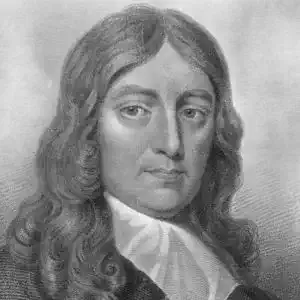
John Milton
Sonnet XVI: Cromwell, our chief of men
To the Lord General Cromwell
On the Proposals of Certain Ministers of the Committee
for the Propagation of the Gospel
Cromwell, our chief of men, who through a cloud
Not of war only, but detractions rude,
Guided by faith and matchless fortitude,
To peace and truth thy glorious way hast ploughed,
And on the neck of crowned Fortune proud
Hast reared God's trophies, and his work pursued,
While Darwen stream with blood of Scots imbrued,
And Dunbar field resounds thy praises loud,
And Worcester's laureate wreath. Yet much remains
To conquer still; peace hath her victories
No less renowned than war: new foes arise,
Threat'ning to bind our souls with secular chains:
Help us to save free conscience from the paw
Of hireling wolves, whose gospel is their maw.
551

Rudyard Kipling
Birds Of Prey March
March! The mud is cakin' good about our trousies.
Front! -- eyes front, an' watch the Colour-casin's drip.
Front! The faces of the women in the 'ouses
Ain't the kind o' things to take aboard the ship.
Cheer! An' we'll never march to victory.
Cheer! An' we'll never live to 'ear the cannon roar!
The Large Birds o' Prey
They will carry us away,
An' you'll never see your soldiers any more!
Wheel! Oh, keep your touch; we're goin' round a corner.
Time! -- mark time, an' let the men be'ind us close.
Lord! the transport's full, an' 'alf our lot not on 'er --
Cheer, O cheer! We're going off where no one knows.
March! The Devil's none so black as 'e is painted!
Cheer! We'll 'ave some fun before we're put away.
'Alt, an' 'and 'er out -- a woman's gone and fainted!
Cheer! Get on -- Gawd 'elp the married men to-day!
Hoi! Come up, you 'ungry beggars, to yer sorrow.
('Ear them say they want their tea, an' want it quick!)
You won't have no mind for slingers, not to-morrow --
No; you'll put the 'tween-decks stove out, bein' sick!
'Alt! The married kit 'as all to go before us!
'Course it's blocked the bloomin' gangway up again!
Cheer, O cheer the 'Orse Guards watchin' tender o'er us,
Keepin' us since eight this mornin' in the rain!
Stuck in 'eavy marchin'-order, sopped and wringin' --
Sick, before our time to watch 'er 'eave an' fall,
'Ere's your 'appy 'ome at last, an' stop your singin'.
'Alt! Fall in along the troop-deck! Silence all!
Cheer! For we'll never live to see no bloomin' victory!
Cheer! An' we'll never live to 'ear the cannon roar! (One cheer more!)
The jackal an' the kite
'Ave an 'ealthy appetite,
An' you'll never see your soldiers any more! ('Ip! Urroar!)
The eagle an' the crow
They are waitin' ever so,
An' you'll never see your soldiers any more! ('Ip! Urroar!)
Yes, the Large Birds o' Prey
They will carry us away,
An' you'll never see your soldiers any more!
548
John Milton
Sonnet 22
XXII
Cyriac, this three years' day these eyes, though clear,
To outward view, of blemish or of spot,
Bereft of light, their seeing have forgot;
Nor to their idle orbs doth sight appear
Of sun, or moon, or star, throughout the year,
Or man, or woman. Yet I argue not
Against Heav'n's hand or will, nor bate a jot
Of heart or hope; but still bear up and steer
Right onward. What supports me, dost thou ask?
The conscience, Friend, t' have lost them overplied
In liberty's defence, my noble task,
Of which all Europe rings from side to side.
This thought might lead me through the world's vain mask
Content, though blind, had I no better guide.
548
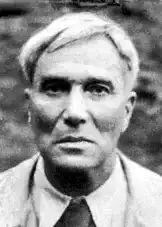
Boris Pasternak
Do not fret, do not cry, do not tax...
Do not fret, do not cry, do not tax
Your last strength, and your heart do not torture.
You're alive, you're inside me, intact,
As a buttress, a friend, an adventure.
I've no fear of standing exposed
As a fraud in my faith in the future.
It's not life, not a union of souls
We are breaking off, but a hoax mutual.
From straw mattresses' sick wretchedness
To the fresh air of wide open spaces!
It's my brother and hand. It's addressed
Like a letter, to you, crisp and bracing.
Like an envelope, tear it across,
With Horizon begin correspondence,
Give your speech the sheer Alpian force,
Overcome the sick sense of forlornness.
O'er the bowl of Bavarian lakes
With the marrow of osseous mountains
You will know I was not a glib fake
And of sugared assurances spouter.
Fare ye well and God bless you! Our bond
And our honour aren't tamely domestic.
Like a sprout in the sunlight, unbend,
And then things will assume a new aspect.
545
Lord Byron
On this Day I Complete my Thirty-Sixth Year
'Tis time the heart should be unmoved,
Since others it hath ceased to move:
Yet, though I cannot be beloved,
Still let me love!
My days are in the yellow leaf;
The flowers and fruits of love are gone;
The worm, the canker, and the grief
Are mine alone!
The fire that on my bosom preys
Is lone as some volcanic isle;
No torch is kindled at its blaze
A
funeral pile.
The hope, the fear, the jealous care,
The exalted portion of the pain
And power of love, I cannot share,
But wear the chain.
But 'tis not thusand
'tis not here
Such
thoughts should shake my soul nor now,
Where glory decks the hero's bier,
Or binds his brow.
The sword, the banner, and the field,
Glory and Greece, around me see!
The Spartan, borne upon his shield,
Was not more free.
Awake! (not Greeceshe
is awake!)
Awake, my spirit! Think through whom
Thy lifeblood
tracks its parent lake,
And then strike home!
Tread those reviving passions down,
Unworthy manhood!unto
thee
Indifferent should the smile or frown
Of beauty be.
If thou regrett'st thy youth, why live?
The land of honourable death
Is here:up
to the field, and give
Away thy breath!
Seek outless
often sought than found
A
soldier's grave, for thee the best;
Then look around, and choose thy ground,
And take thy rest.
546
John Milton
Sonnet 08
VIII
Captain or Colonel, or Knight in Arms,
Whose chance on these defenceless dores may sease,
If ever deed of honour did thee please,
Guard them, and him within protect from harms,
He can requite thee, for he knows the charms
That call Fame on such gentle acts as these,
And he can spred thy Name o're Lands and Seas,
What ever clime the Suns bright circle warms.
Lift not thy spear against the Muses Bowre,
The great Emathian Conqueror bid spare
The house of Pindarus, when Temple and Towre
Went to the ground: And the repeated air
Of sad Electra's Poet had the power
To save th' Athenian Walls from ruine bare.
Notes:
Camb. autograph supplies title, When the assault was intended
to the city.
3 If deed of honour did thee ever please, 1673.
547

Alfred Lord Tennyson
The Defence of Lucknow
I
BANNER of England, not for a season, O banner of Britain, hast thou
Floated in conquering battle or flapt to the battle-cry!
Never with mightier glory than when we had rear’d thee on high
Flying at top of the roofs in the ghastly siege of Lucknow—
Shot thro’ the staff or the halyard, but ever we raised thee anew,
And ever upon the topmost roof our banner of England blew.
II.
Frail were the works that defended the hold that we held with our lives—
Women and children among us, God help them, our children and wives!
Hold it we might—and for fifteen days or for twenty at most.
‘Never surrender, I charge you, but every man die at his post!’
Voice of the dead whom we loved, our Lawrence the best of the brave:
Cold were his brows when we kiss’d him—we laid him that night in his grave.
‘Every man die at his post!’ and there hail’d on our houses and halls
Death from their rifle-bullets, and death from their cannon-balls,
Death in our innermost chamber, and death at our slight barricade,
Death while we stood with the musket, and death while we stoopt to the spade,
Death to the dying, and wounds to the wounded, for often there fell,
Striking the hospital wall, crashing thro’ it, their shot and their shell,
Death—for their spies were among us, their marksmen were told of our best,
So that the brute bullet broke thro’ the brain that could think for the rest;
Bullets would sing by our foreheads, and bullets would rain at our feet—
Fire from ten thousand at once of the rebels that girdled us round—
Death at the glimpse of a finger from over the breadth of a street,
Death from the heights of the mosque and the palace, and death in the ground!
Mine? yes, a mine! Countermine! down, down! and creep thro’ the hole!
Keep the revolver in hand! you can hear him—the murderous mole!
Quiet, ah! quiet—wait till the point of the pickaxe be thro’!
Click with the pick, coming nearer and nearer again than before—
Now let it speak, and you fire, and the dark pioneer is no more;
And ever upon the topmost roof our banner of England blew!
III.
Ay, but the foe sprung his mine many times, and it chanced on a day
Soon as the blast of that underground thunderclap echo ‘d away,
Dark thro’ the smoke and the sulphur like so many fiends in their hell—
Cannon-shot, musket-shot, volley on volley, and yell upon yell—
Fiercely on all the defences our myriad enemy fell.
What have they done? where is it? Out yonder. Guard the Redan!
Storm at the Water-gate! storm at the Bailey-gate! storm, and it ran
Surging and swaying all round us, as ocean on every side
Plunges and heaves at a bank that is daily devour’d by the tide—
So many thousands that if they be bold enough, who shall escape?
Kill or be kill’d, live or die, they shall know we are soldiers and men
Ready! take aim at their leaders—their masses are gapp’d with our grape—
Backward they reel like the wave, like the wave flinging forward again,
Flying and foil’d at the last by the handful they could not subdue;
And ever upon the topmost roof our banner of England blew.
IV.
Handful of men as we were, we were English in heart and in limb,
Strong with the strength of the race to command, to obey, to endure,
Each of us fought as if hope for the garrison hung but on him;
Still—could we watch at all points? we were every day fewer and fewer.
There was a whisper among us, but only a whisper that past
‘Children and wives—if the tigers leap into the fold unawares—
Every man die at his post—and the foe may outlive us at last—
Better to fall by the hands that they love, than to fall into theirs!’
Roar upon roar in a moment two mines by the enemy sprung
Clove into perilous chasms our walls and our poor palisades.
Rifleman, true is your heart, but be sure that your hand be as true!
Sharp is the fire of assault, better aimed are your flank fusillades—
Twice do we hurl them to earth from the ladders to which they had clung,
Twice from the ditch where they shelter we drive them with hand-grenades;
And ever upon the topmost roof our banner of England blew.
V.
Then on another wild morning another wild earthquake out-tore
Clean from our lines of defence ten or twelve good paces or more.
Rifleman, high on the roof, hidden there from the light of the sun—
One has leapt up on the breach, crying out: ‘Follow me, follow me!’—
Mark him—he falls! then another, and him too, and down goes he.
Had they been bold enough then, who can tell but the traitors had won?
Boardings and rafters and doors—an embrasure I make way for the gun!
Now double-charge it with grape! It is charged and we fire, and they run.
Praise to our Indian brothers, and let the dark face have his due!
Thanks to the kindly dark faces who fought with us, faithful and few,
Fought with the bravest among us, and drove them, and smote them, and slew,
That ever upon the topmost roof our banner in India blew.
VI.
Men will forget what we suffer and not what we do. We can fight!
But to be soldier all day and be sentinel all thro’ the night—
Ever the mine and assault, our sallies, their lying alarms,
Bugles and drums in the darkness, and shoutings and soundings to arms,
Ever the labour of fifty that had to be done by five,
Ever the marvel among us that one should be left alive,
Ever the day with its traitorous death from the loopholes around,
Ever the night with its coffinless corpse to be laid in the ground,
Heat like the mouth of a hell, or a deluge of cataract skies,
Stench of old offal decaying, and infinite torment of flies.
Thoughts of the breezes of May blowing over an English field,
Cholera, scurvy, and fever, the wound that would not be heal’d,
Lopping away of the limb by the pitiful-pitiless knife,—
Torture and trouble in vain,—for it never could save us a life.
Valour of delicate women who tended the hospital bed,
Horror of women in travail among the dying and dead,
Grief for our perishing children, and never a moment for grief,
Toil and ineffable weariness, faltering hopes of relief,
Havelock baffled, or beaten, or butcher’d for all that we knew—
Then day and night, day and night, coming down on the still-shatter’d walls
Millions of musket-bullets, and thousands of cannon-balls—
But ever upon the topmost roof our banner of England blew.
VII.
Hark cannonade, fusillade! is it true what was told by the scout,
Outram and Havelock breaking their way through the fell mutineers?
Surely the pibroch of Europe is ringing again in our ears!
All on a sudden the garrison utter a jubilant shout,
Havelock’s glorious Highlanders answer with conquering cheers,
Sick from the hospital echo them, women and children come out,
Blessing the wholesome white faces of Havelock’s good fusileers,
Kissing the war-harden’d hand of the Highlander wet with their tears!
Dance to the pibroch!—saved! we are saved!—is it you? is it you?
Saved by the valour of Havelock, saved by the blessing of Heaven!
‘Hold it for fifteen days!’ we have held it for eighty-seven!
And ever aloft on the palace roof the old banner of England blew.
543

Rabindranath Tagore
The Hero
Mother, let us imagine we are travelling, and passing through a
strange and dangerous country.
You are riding in a palanquin and I am trotting by you on a
red horse.
It is evening and the sun goes down. The waste of Joradighi
lies wan and grey before us. The land is desolate and barren.
You are frightened and thinking-"I know not where we have come
to."
I say to you, "Mother, do not be afraid."
The meadow is prickly with spiky grass, and through it runs
a narrow broken path.
There are no cattle to be seen in the wide field; they have
gone to their village stalls.
It grows dark and dim on the land and sky, and we cannot tell
where we are going.
Suddenly you call me and ask me in a whisper, "What light is
that near the bank?"
Just then there bursts out a fearful yell, and figures come
running towards us.
You sit crouched in your palanquin and repeat the names of the
gods in prayer.
The bearers, shaking in terror, hide themselves in the thorny
bush.
I shout to you, "Don't be afraid, mother. I am here."
With long sticks in their hands and hair all wild about their
heads, they come nearer and nearer.
I shout, "Have a care, you villains! One step more and you are
dead men."
They give another terrible yell and rush forward.
You clutch my hand and say, "Dear boy, for heaven's sake, keep
away from them."
I say, "Mother, just you watch me."
Then I spur my horse for a wild gallop, and my sword and
buckler clash against each other.
The fight becomes so fearful, mother, that it would give you
a cold shudder could you see it from your palanquin.
Many of them fly, and a great number are cut to pieces.
I know you are thinking, sitting all by yourself, that your
boy must be dead by this time.
But I come to you all stained with blood, and say,"Mother, the
fight is over now."
You come out and kiss me, pressing me to your heart, and you
say to yourself,
"I don't know what I should do if I hadn't my boy to escort
me."
A thousand useless things happen day after day, and why
couldn't such a thing come true by chance?
It would be like a story in a book.
My brother would say, "Is it possible? I always thought he was
so delicate!"
Our village people would all say in amazement, "Was it not
lucky that the boy was with his mother?"
547

William Wordsworth
Character of the Happy Warrior
. Who is the happy Warrior? Who is he
That every man in arms should wish to be?
--It is the generous Spirit, who, when brought
Among the tasks of real life, hath wrought
Upon the plan that pleased his boyish thought:
Whose high endeavours are an inward light
That makes the path before him always bright;
Who, with a natural instinct to discern
What knowledge can perform, is diligent to learn;
Abides by this resolve, and stops not there,
But makes his moral being his prime care;
Who, doomed to go in company with Pain,
And Fear, and Bloodshed, miserable train!
Turns his necessity to glorious gain;
In face of these doth exercise a power
Which is our human nature's highest dower:
Controls them and subdues, transmutes, bereaves
Of their bad influence, and their good receives:
By objects, which might force the soul to abate
Her feeling, rendered more compassionate;
Is placable--because occasions rise
So often that demand such sacrifice;
More skilful in self-knowledge, even more pure,
As tempted more; more able to endure,
As more exposed to suffering and distress;
Thence, also, more alive to tenderness.
--'Tis he whose law is reason; who depends
Upon that law as on the best of friends;
Whence, in a state where men are tempted still
To evil for a guard against worse ill,
And what in quality or act is best
Doth seldom on a right foundation rest,
He labours good on good to fix, and owes
To virtue every triumph that he knows:
--Who, if he rise to station of command,
Rises by open means; and there will stand
On honourable terms, or else retire,
And in himself possess his own desire;
Who comprehends his trust, and to the same
Keeps faithful with a singleness of aim;
And therefore does not stoop, nor lie in wait
For wealth, or honours, or for worldly state;
Whom they must follow; on whose head must fall,
Like showers of manna, if they come at all:
Whose powers shed round him in the common strife,
Or mild concerns of ordinary life,
A constant influence, a peculiar grace;
But who, if he be called upon to face
Some awful moment to which Heaven has joined
Great issues, good or bad for human kind,
Is happy as a Lover; and attired
With sudden brightness, like a Man inspired;
And, through the heat of conflict, keeps the law
In calmness made, and sees what he foresaw;
Or if an unexpected call succeed,
Come when it will, is equal to the need:
--He who, though thus endued as with a sense
And faculty for storm and turbulence,
Is yet a Soul whose master-bias leans
To homefelt pleasures and to gentle scenes;
Sweet images! which, wheresoe'er he be,
Are at his heart; and such fidelity
It is his darling passion to approve;
More brave for this, that he hath much to love:--
'Tis, finally, the Man, who, lifted high,
Conspicuous object in a Nation's eye,
Or left unthought-of in obscurity,--
Who, with a toward or untoward lot,
Prosperous or adverse, to his wish or not--
Plays, in the many games of life, that one
Where what he most doth value must be won:
Whom neither shape or danger can dismay,
Nor thought of tender happiness betray;
Who, not content that former worth stand fast,
Looks forward, persevering to the last,
From well to better, daily self-surpast:
Who, whether praise of him must walk the earth
For ever, and to noble deeds give birth,
Or he must fall, to sleep without his fame,
And leave a dead unprofitable name--
Finds comfort in himself and in his cause;
And, while the mortal mist is gathering, draws
His breath in confidence of Heaven's applause:
This is the happy Warrior; this is he
That every man in arms should wish to be.
534

John Greenleaf Whittier
Lexington
1775.
No Berserk thirst of blood had they,
No battle-joy was theirs, who set
Against the alien bayonet
Their homespun breasts in that old day.
Their feet had trodden peaceful, ways;
They loved not strife, they dreaded pain;
They saw not, what to us is plain,
That God would make man's wrath his praise.
No seers were they, but simple men;
Its vast results the future hid
The meaning of the work they did
Was strange and dark and doubtful then.
Swift as their summons came they left
The plough mid-furrow standing still,
The half-ground corn grist in the mill,
The spade in earth, the axe in cleft.
They went where duty seemed to call,
They scarcely asked the reason why;
They only knew they could but die,
And death was not the worst of all!
Of man for man the sacrifice,
All that was theirs to give, they gave.
The flowers that blossomed from their grave
Have sown themselves beneath all skies.
Their death-shot shook the feudal tower,
And shattered slavery's chain as well;
On the sky's dome, as on a bell,
Its echo struck the world's great hour.
That fateful echo is not dumb
The nations listening to its sound
Wait, from a century's vantage-ground,
The holier triumphs yet to come,-
The bridal time of Law and Love,
The gladness of the world's release,
When, war-sick, at the feet of Peace
The hawk shall nestle with the dove!-
The golden age of brotherhood
Unknown to other rivalries
Than of the mild humanities,
And gracious interchange of good,
When closer strand shall lean to strand,
Till meet, beneath saluting flags,
The eagle of our mountain-crags,
The lion of our Motherland!
540
Rudyard Kipling
Helen All Alone
There was darkness under Heaven
For an hour's space--
Darkness that we knew was given
Us for special grace.
Sun and noon and stars were hid,
God had left His Throne,
When Helen came to me, she did,
Helen all alone!
Side by side (because our fate
Damned us ere our birth)
We stole out of Limbo Gate
Looking for the Earth.
Hand in pulling hand amid
Fear no dreams have known,
Helen ran with me, she did,
Helen all alone!
When the Horror passing speech
Hunted us along,
Each laid hold on each, and each
Found the other strong.
In the teeth of Things forbid
And Reason overthrown,
Helen stood by me, she did,
Helen all alone!
When, at last, we heard those Fires
Dull and die away,
When, at last, our linked desires
Dragged us up to day;
When, at last, our souls were rid
Of what that Night had shown,
Helen passed from me, she did,
Helen all alone!
Let her go and find a mate,
As I will find a bride,
Knowing naught of Limbo Gate
Or Who are penned inside.
There is knowledge God forbid
More than one should own.
So Helen went from me, she did,
Oh, my soul, be glad she did!
Helen all alone!
528
Rudyard Kipling
Fuzzy-Wuzzy
(Soudan Expeditionary Force)
We've fought with many men acrost the seas,
An' some of 'em was brave an' some was not:
The Paythan an' the Zulu an' Burmese;
But the Fuzzy was the finest o' the lot.
We never got a ha'porth's change of 'im:
'E squatted in the scrub an' 'ocked our 'orses,
'E cut our sentries up at Suakim,
An' 'e played the cat an' banjo with our forces.
So 'ere's to you, Fuzzy-Wuzzy, at your 'ome in the Soudan;
You're a pore benighted 'eathen but a first-class fightin' man;
We gives you your certificate, an' if you want it signed
We'll come an' 'ave a romp with you whenever you're inclined.
We took our chanst among the Khyber 'ills,
The Boers knocked us silly at a mile,
The Burman give us Irriwaddy chills,
An' a Zulu impi dished us up in style:
But all we ever got from such as they
Was pop to what the Fuzzy made us swaller;
We 'eld our bloomin' own, the papers say,
But man for man the Fuzzy knocked us 'oller.
Then 'ere's to you, Fuzzy-Wuzzy, an' the missis and the kid;
Our orders was to break you, an' of course we went an' did.
We sloshed you with Martinis, an' it wasn't 'ardly fair;
But for all the odds agin' you, Fuzzy-Wuz, you broke the square.
'E 'asn't got no papers of 'is own,
'E 'asn't got no medals nor rewards,
So we must certify the skill 'e's shown
In usin' of 'is long two-'anded swords:
When 'e's 'oppin' in an' out among the bush
With 'is coffin-'eaded shield an' shovel-spear,
An 'appy day with Fuzzy on the rush
Will last an 'ealthy Tommy for a year.
So 'ere's to you, Fuzzy-Wuzzy, an' your friends which are no more,
If we 'adn't lost some messmates we would 'elp you to deplore;
But give an' take's the gospel, an' we'll call the bargain fair,
For if you 'ave lost more than us, you crumpled up the square!
'E rushes at the smoke when we let drive,
An', before we know, 'e's 'ackin' at our 'ead;
'E's all 'ot sand an' ginger when alive,
An' 'e's generally shammin' when 'e's dead.
'E's a daisy, 'e's a ducky, 'e's a lamb!
'E's a injia-rubber idiot on the spree,
'E's the on'y thing that doesn't give a damn
For a Regiment o' British Infantree!
So 'ere's to you, Fuzzy-Wuzzy, at your 'ome in the Soudan;
You're a pore benighted 'eathen but a first-class fightin' man;
An' 'ere's to you, Fuzzy-Wuzzy, with your 'ayrick 'ead of 'air --
You big black boundin' beggar -- for you broke a British square!
531
Lord Byron
To-- : From The French
Must thou go, my glorious Chief,
Sever'd from thy faithful few?
Who can tell thy warrior's grief,
Maddening o'er that long adieu?
Woman's love, and friendship's zeal,
Dear as both have been to me
What
are they to all I feel,
With a soldier's faith for thee?
Idol of the soldier's soul!
First in fight, but mightiest now;
Many could a world control;
Thee alone no doom can bow.
By thy side for years I dared
Death; and envied those who fell,
When their dying shout was heard,
Blessing him they served so well.
Would that I were cold with those,
Since this hour I live to see;
When the doubts of coward foes
Scarce dare trust a man with thee,
Dreading each should set thee free!
Oh! although in dungeons pent,
All their chains were light to me,
Gazing on thy soul unbent.
Would the sycophants of him
Now so deaf to duty's prayer,
Were his borrow'd glories dim,
In his native darkness share?
Were that world this hour his own,
All thou calmly dost resign,
Could he purchase with that throne
Hearts like those which still are thine?
My chief, my king, my friend, adieu!
Never did I droop before;
Never to my sovereign sue,
As his foes I now implore:
All I ask is to divide
Every peril he must brave;
Sharing by the hero's side
His fall, his exile, and his grave.
527
Rudyard Kipling
The Men That Fought At Minden
A Song of Instruction
The men that fought at Minden, they was rookies in their time --
So was them that fought at Waterloo!
All the 'ole command, yuss, from Minden to Maiwand,
They was once dam' sweeps like you!
Then do not be discouraged, 'Eaven is your 'elper,
We'll learn you not to forget;
An' you mustn't swear an' curse, or you'll only catch it worse,
For we'll make you soldiers yet!
The men that fought at Minden, they 'ad stocks beneath their chins,
Six inch 'igh an' more;
But fatigue it was their pride, and they would not be denied
To clean the cook-'ouse floor.
The men that fought at Minden, they had anarchistic bombs
Served to 'em by name of 'and-grenades;
But they got it in the eye (same as you will by-an'-by)
When they clubbed their field-parades.
The men that fought at Minden, they 'ad buttons up an' down,
Two-an'-twenty dozen of 'em told;
But they didn't grouse an' shirk at an hour's extry work,
They kept 'em bright as gold.
The men that fought at Minden, they was armed with musketoons,
Also, they was drilled by 'alberdiers;
I don't know what they were, but the sergeants took good care
They washed be'ind their ears.
The men that fought at Minden, they 'ad ever cash in 'and
Which they did not bank nor save,
But spent it gay an' free on their betters -- such as me --
For the good advice I gave.
The men that fought at Minden, they was civil -- yuss, they was --
Never didn't talk o' rights an' wrongs,
But they got it with the toe (same as you will get it -- so!) --
For interrupting songs.
The men that fought at Minden, they was several other things
Which I don't remember clear;
But that's the reason why, now the six-year men are dry,
The rooks will stand the beer!
Then do not be discouraged, 'Eaven is your 'elper,
We'll learn you not to forget;
An' you mustn't swear an' curse, or you'll only catch it worse,
For we'll make you soldiers yet!
Soldiers yet, if you've got it in you --
All for the sake of the Core;
Soldiers yet, if we 'ave to skin you --
Run an' get the beer, Johnny Raw -- Johnny Raw!
Ho! run an' get the beer, Johnny Raw!
523

Henry Wadsworth Longfellow
The Leap Of Roushan Beg. (Birds Of Passage. Flight The Fifth)
Mounted on Kyrat strong and fleet,
His chestnut steed with four white feet,
Roushan Beg, called Kurroglou,
Son of the road and bandit chief,
Seeking refuge and relief,
Up the mountain pathway flew.
Such was Kyrat's wondrous speed,
Never yet could any steed
Reach the dust-cloud in his course.
More than maiden, more than wife,
More than gold and next to life
Roushan the Robber loved his horse.
In the land that lies beyond
Erzeroum and Trebizond,
Garden-girt his fortress stood;
Plundered khan, or caravan
Journeying north from Koordistan,
Gave him wealth and wine and food.
Seven hundred and fourscore
Men at arms his livery wore,
Did his bidding night and day;
Now, through regions all unknown,
He was wandering, lost, alone,
Seeking without guide his way.
Suddenly the pathway ends,
Sheer the precipice descends,
Loud the torrent roars unseen;
Thirty feet from side to side
Yawns the chasm; on air must ride
He who crosses this ravine.
Following close in his pursuit,
At the precipice's foot,
Reyhan the Arab of Orfah
Halted with his hundred men,
Shouting upward from the glen,
'La Illáh illa Alláh!'
Gently Roushan Beg caressed
Kyrat's forehead, neck, and breast;
Kissed him upon both his eyes,
Sang to him in his wild way,
As upon the topmost spray
Sings a bird before it flies.
'O my Kyrat, O my steed,
Round and slender as a reed,
Carry me this peril through!
Satin housings shall be thine,
Shoes of gold, O Kyrat mine,
O thou soul of Kurroglou!
'Soft thy skin as silken skein,
Soft as woman's hair thy mane,
Tender are thine eyes and true;
All thy hoofs like ivory shine,
Polished bright; O, life of mine,
Leap, and rescue Kurroglou!'
Kyrat, then, the strong and fleet,
Drew together his four white feet,
Paused a moment on the verge,
Measured with his eye the space,
And into the air's embrace
Leaped as leaps the ocean surge.
As the ocean surge o'er sand
Bears a swimmer safe to land,
Kyrat safe his rider bore;
Rattling down the deep abyss
Fragments of the precipice
Rolled like pebbles on a shore.
Roushan's tasselled cap of red
Trembled not upon his head,
Careless sat he and upright;
Neither hand nor bridle shook,
Nor his head he turned to look,
As he galloped out of sight.
Flash of harness in the air,
Seen a moment like the glare
Of a sword drawn from its sheath;
Thus the phantom horseman passed,
And the shadow that he cast
Leaped the cataract underneath.
Reyhan the Arab held his breath
While this vision of life and death
Passed above him. 'Allahu!'
Cried he. 'In all Koordistan
Lives there not so brave a man
As this Robber Kurroglou!'
525

Ella Wheeler Wilcox
Will
There is no chance, no destiny, no fate,
Can circumvent or hinder or control
The firm resolve of a determined soul.
Gifts count for nothing; will alone is great;
All things give way before it, soon or late.
What obstacle can stay the mighty force
Of the sea-seeking river in its course,
Or cause the ascending orb of day to wait?
Each well-born soul must win what it deserves.
Let the fool prate of luck. The fortunate
Is he whose earnest purpose never swerves,
Whose slightest action or inaction serves
The one great aim. Why, even Death stands still,
And waits an hour sometimes for such a will.
525
Kazi Nazrul Islam
Pioneers, O Pioneers
O you who look so soiled and weary,
Collect your armour for the struggle,
Your rusty shovels, heavy hammers,
To save the earth from dire disaster.
We have no time for sport or revels,
No leisure for procrastinating.
The war's begun in deadly earnest;
We've deeds to plant and crops to harvest.
I see the young on fire and marching
Onward past mountains, vales and rivers,
Unbent and proud man's heritage,
Freedom and honour, in their keeping.
The ancient East, inert, feeble,
A waits a voice to end its slumber.
We will once more awaken, rouse it,
And set it stirring, breathing, moving.
The murky past is dead and buried.
We must emerge from sunless caverns
Into broad uplands bright and shining,
Create a world of newer splendour.
We'll scale the peaks and cross the gorges,
And overcome what risks lie hidden.
We'll fell old trees to build our bridges
And go down in the mines for treasure.
We are awake, no longer sleeping;
We have descended from the plateaus,
Reckless of hungry wounded tigers
And we must move and look not backwards.
We are beholden to those countries,
Egypt and China, Spain and Norway,
Russia, Korea, who have broken
Their age-old chains and savoured freedom.
O Fortune's darlings, I, the poet,
Have nought to offer but my anguish,
My hopes, My dreams, the red blood dripping
From Within my heart beating wildly.
Invoke the gods of ruthless terror,
Shrink not from blood, as green and daring
You must unfurl your country's banner
Armed to the teeth and marching forward.
Listen! beloved fearless children;
Wild beasts and vultures squeak behind you,
And rotting corpses leer, or, frowning,
Earn praise from those who're scared of movement.
Let not these horrors daunt Or frighten;
But torch in hand advance, resistless;
The battlefield is strewn with martyrs
Who died in hundreds faces shining.
The earth is pulsing with a new life,
A tremor coursing through its arteries.
Ours is the strength of many armies;
Our comrades wait in every hamlet.
Sailors and ploughmen, slaves and masters,
Workers and lovers, waifs and prisoners,
Unhappy men who know no laughter-
They too are actors in Our drama.
The day that wanes, the night that follows,
The planets which you see revolving,
Children not born yet, our future soldiers,
They too are bound on this quest endless.
Sisters, awake, your brothers need you
They'll lag behind if you are missing;
Arise and join them, Jet the vanguard
Move forward, rank on rank in order.
I hear the sound of bells announcing
The coming age, when dreams and reveries
Will be fulfilled, and hopes turn rosy,
And we will reach our destination.
We have no use for lifeless knowledge
Stored in thick tomes; We want no false dreams
Or short-lived joys, bejewelled footwear,
Or cushioned thrones, no wealth that's rotten.
We shall survive on bread and water.
And sleep on hard floors, learn to hate those
Who are enslaved by greed, those gluttons;
We will go forward, we the fighters.
Do wipe away your tears, my comrades,
And rest a while if are weary,
Do not lose heart if night is falling,
Our will is firm, our aim is steady.
[Translation: Syed Sajjad Husain]
524

Walt Whitman
Over The Carnage
OVER the carnage rose prophetic a voice,
Be not dishearten'd--Affection shall solve the problems of Freedom
yet;
Those who love each other shall become invincible--they shall yet
make Columbia victorious.
Sons of the Mother of All! you shall yet be victorious!
You shall yet laugh to scorn the attacks of all the remainder of the
earth.
No danger shall balk Columbia's lovers;
If need be, a thousand shall sternly immolate themselves for one.
One from Massachusetts shall be a Missourian's comrade;
From Maine and from hot Carolina, and another, an Oregonese, shall be
friends triune,
More precious to each other than all the riches of the earth.
To Michigan, Florida perfumes shall tenderly come;
Not the perfumes of flowers, but sweeter, and wafted beyond death.
It shall be customary in the houses and streets to see manly
affection;
The most dauntless and rude shall touch face to face lightly;
The dependence of Liberty shall be lovers,
The continuance of Equality shall be comrades.
These shall tie you and band you stronger than hoops of iron;
I, extatic, O partners! O lands! with the love of lovers tie you.
(Were you looking to be held together by the lawyers?
Or by an agreement on a paper? or by arms?
--Nay--nor the world, nor any living thing, will so cohere.)
514