
Body
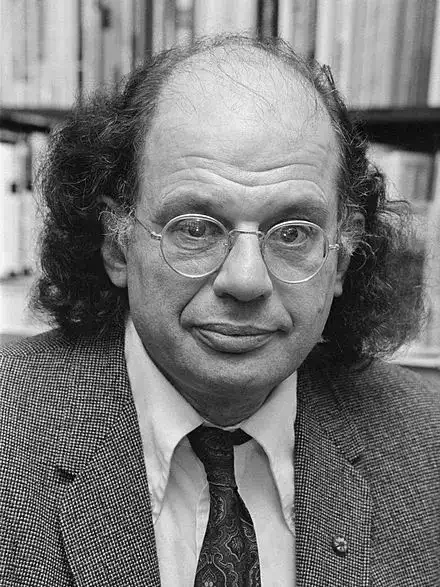
Allen Ginsberg
An Asphodel
O dear sweet rosy
unattainable desire
...how sad, no way
to change the mad
cultivated asphodel, the
visible reality...
and skin's appalling
petals--how inspired
to be so Iying in the living
room drunk naked
and dreaming, in the absence
of electricity...
over and over eating the low root
of the asphodel,
gray fate...
rolling in generation
on the flowery couch
as on a bank in Arden-my
only rose tonite's the treat
of my own nudity.
544

William Butler Yeats
Leda And The Swan
A SUDDEN blow: the great wings beating still
Above the staggering girl, her thighs caressed
By the dark webs, her nape caught in his bill,
He holds her helpless breast upon his breast.
How can those terrified vague fingers push
The feathered glory from her loosening thighs?
And how can body, laid in that white rush,
But feel the strange heart beating where it lies?
A shudder in the loins engenders there
The broken wall, the burning roof and tower
And Agamemnon dead.
Being so caught up,
So mastered by the brute blood of the air,
Did she put on his knowledge with his power
Before the indifferent beak could let her drop?
531

Claude Mckay
Tormented
I will not reason, wrestle here with you,
Though you pursue and worry me about;
As well put forth my swarthy arm to stop
The wild wind howling, darkly mad without.
The night is yours for revels; day will light.
I will not fight you, bold and tigerish,
For I am weak, while you are gaining strength;
Peace! cease tormenting me to have your wish.
But when you're filled and sated with the flesh,
I shall go swiftly to the silver stream,
To cleanse my body for the spirit's sake,
And sun my limbs, and close my eyes to dream.
521
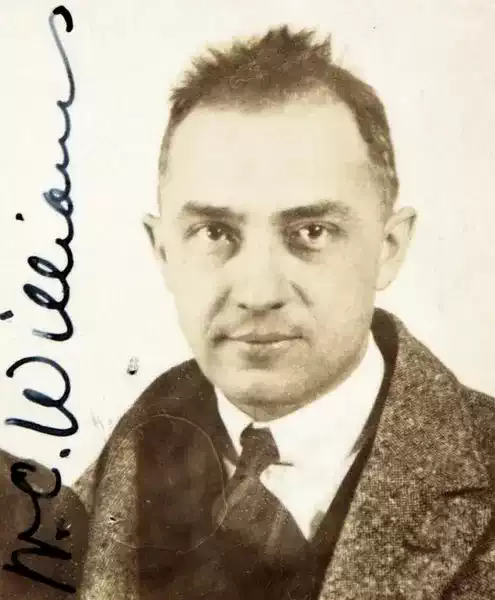
William Carlos Williams
Queen Anne's Lace
Her body is not so white as
anemone petals nor so smooth--nor
so remote a thing. It is a field
of the wild carrot taking
thefield by force; the grass
does not raise above it.
Here is no question of whiteness,
white as can be, with a purple mole
at the center of each flower.
Each flower is a hand's span
of her whiteness. Wherever
his hand has lain there is
a tiny purple blossom under his touch
to which the fibres of her being
stem one by one, each to its end,
until the whole field is a
white desire, empty, a single stem,
a cluster, flower by flower,
a pious wish to whiteness gone over--
or nothing.
499

Walt Whitman
I Am He That Aches With Love
I AM he that aches with amorous love;
Does the earth gravitate? Does not all matter, aching, attract all
matter?
So the Body of me, to all I meet, or know.
Does the earth gravitate? Does not all matter, aching, attract all
matter?
So the Body of me, to all I meet, or know.
493
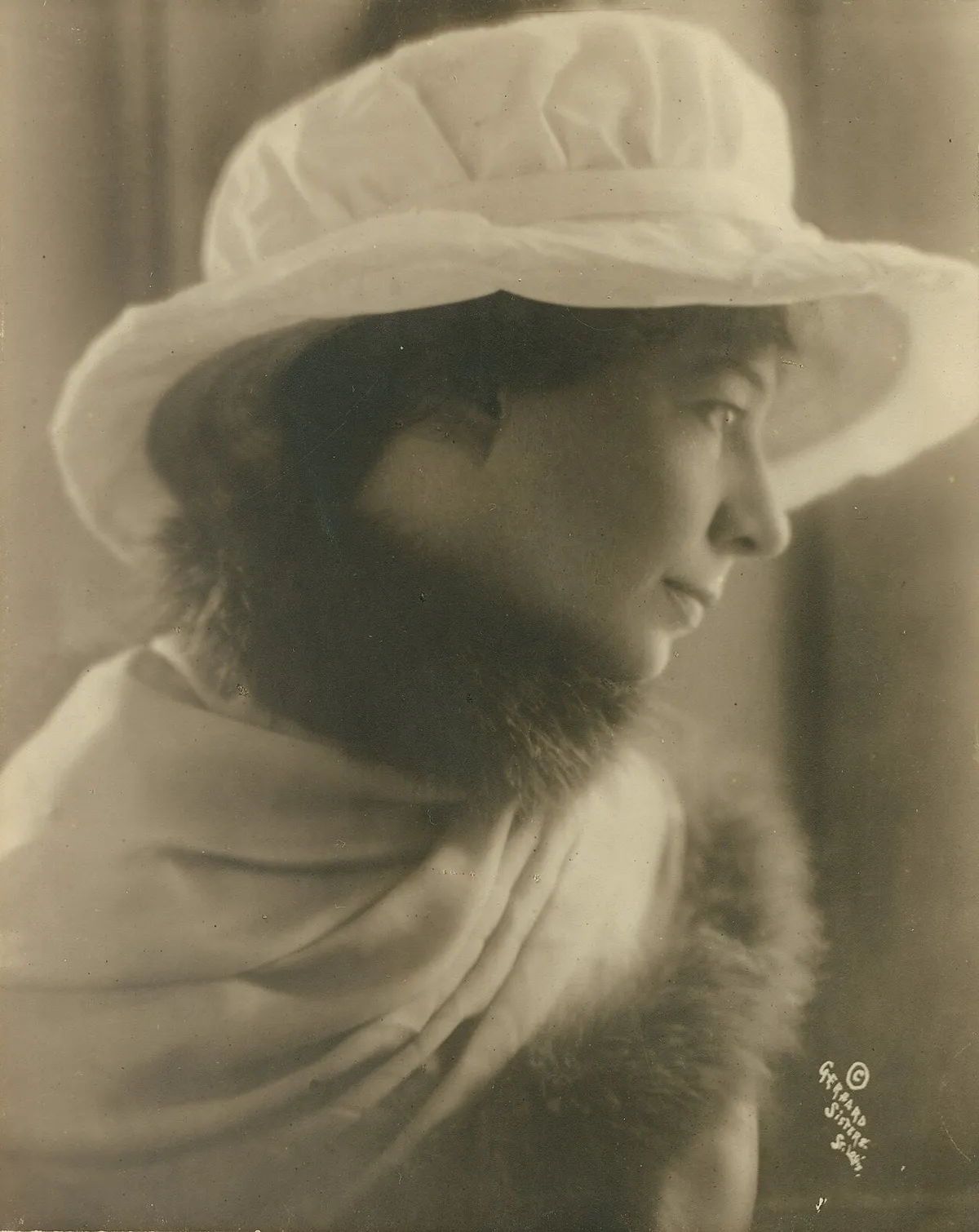
Sara Teasdale
June Night
Oh Earth, you are too dear to-night,
How can I sleep while all around
Floats rainy fragrance and the far
Deep voice of the ocean that talks to the ground?
Oh Earth, you gave me all I have,
I love you, I love you, -- oh what have I
That I can give you in return --
Except my body after I die?
How can I sleep while all around
Floats rainy fragrance and the far
Deep voice of the ocean that talks to the ground?
Oh Earth, you gave me all I have,
I love you, I love you, -- oh what have I
That I can give you in return --
Except my body after I die?
490
William Butler Yeats
A Last Confession
What lively lad most pleasured me
Of all that with me lay?
I answer that I gave my soul
And loved in misery,
But had great pleasure with a lad
That I loved bodily.
Flinging from his arms I laughed
To think his passion such
He fancied that I gave a soul
Did but our bodies touch,
And laughed upon his breast to think
Beast gave beast as much.
I gave what other women gave
That stepped out of their clothes.
But when this soul, its body off,
Naked to naked goes,
He it has found shall find therein
What none other knows,
And give his own and take his own
And rule in his own right;
And though it loved in misery
Close and cling so tight,
There's not a bird of day that dare
Extinguish that delight.
490
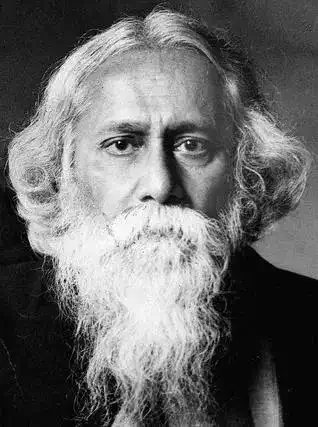
Rabindranath Tagore
Senses
Deliverance is not for me in renunciation.
I feel the embrace of freedom in a thousand bonds of delight.
Thou ever pourest for me the fresh draught of thy wine of various
colours and fragrance, filling this earthen vessel to the brim.
My world will light its hundred different lamps with thy flame
and place them before the altar of thy temple.
No, I will never shut the doors of my senses.
The delights of sight and hearing and touch will bear thy delight.
Yes, all my illusions will burn into illumination of joy,
and all my desires ripen into fruits of love.
486
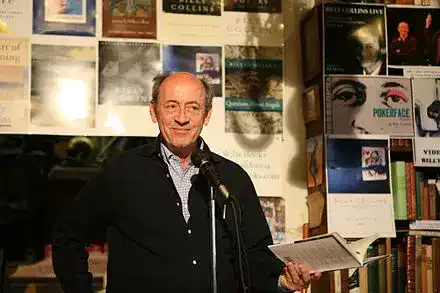
Billy Collins
Taking Off Emily Dickinson's Clothes
First, her tippet made of tulle,
easily lifted off her shoulders and laid
on the back of a wooden chair.
And her bonnet,
the bow undone with a light forward pull.
Then the long white dress, a more
complicated matter with mother-of-pearl
buttons down the back,
so tiny and numerous that it takes forever
before my hands can part the fabric,
like a swimmer's dividing water,
and slip inside.
You will want to know
that she was standing
by an open window in an upstairs bedroom,
motionless, a little wide-eyed,
looking out at the orchard below,
the white dress puddled at her feet
on the wide-board, hardwood floor.
The complexity of women's undergarments
in nineteenth-century America
is not to be waved off,
and I proceeded like a polar explorer
through clips, clasps, and moorings,
catches, straps, and whalebone stays,
sailing toward the iceberg of her nakedness.
Later, I wrote in a notebook
it was like riding a swan into the night,
but, of course, I cannot tell you everything the
way she closed her eyes to the orchard,
how her hair tumbled free of its pins,
how there were sudden dashes
whenever we spoke.
What I can tell you is
it was terribly quiet in Amherst
that Sabbath afternoon,
nothing but a carriage passing the house,
a fly buzzing in a windowpane.
So I could plainly hear her inhale
when I undid the very top
hook-and-eye fastener of her corset
and I could hear her sigh when finally it was unloosed,
the way some readers sigh when they realize
that Hope has feathers,
that reason is a plank,
that life is a loaded gun
that looks right at you with a yellow eye.
476
Walt Whitman
Behold This Swarthy Face
BEHOLD this swarthy face--these gray eyes,
This beard--the white wool, unclipt upon my neck,
My brown hands, and the silent manner of me, without charm;
Yet comes one, a Manhattanese, and ever at parting, kisses me lightly
on the lips with robust love,
And I, on the crossing of the street, or on the ship's deck, give a
kiss in return;
We observe that salute of American comrades, land and sea,
We are those two natural and nonchalant persons.
480

Ella Wheeler Wilcox
Mesalliance
I am troubled to-night with a curious pain;
It is not of the flesh, it is not of the brain,
Nor yet of a heart that is breaking:
But down still deeper, and out of sight—
In the place where the soul and the body unite—
There lies the scat of the aching.
They have been lovers in days gone by;
But the soul is fickle, and longs to fly
From the fettering mesalliance:
And she tears at the bonds which are binding her so,
And pleads with the body to let her go,
But he will not yield compliance.
For the body loves, as he loved in the past,
When he wedded the soul; and he holds her fast,
And swears that he will not loose her;
That he will keep her and hide her away
For ever and ever and for a day
From the arms of Death, the seducer.
Ah! this is the strife that is wearying me—
The strife 'twixt a soul that would be free
And a body that will not let her.
And I say to my soul, 'Be calm, and wait;
For I tell ye truly that soon or late
Ye surely shall drop each fetter.'
And I say to the body, 'Be kind, I pray;
For the soul is not of thy mortal clay,
But is formed in spirit fashion.'
And still through the hours of the solemn night
I can hear my sad soul's plea for flight,
And my body's reply of passion.
448

Ezra Pound
Speech For Psyche In The Golden Book Of Apuleius
All night, and as the wind lieth among
The cypress trees, he lay,
Nor held me save as air that brusheth by one
Close, and as the petals of flowers in falling
Waver and seem not drawn to earth, so he
Seemed over me to hover light as leaves
And closer me than air,
And music flowing through me seemed to open
Mine eyes upon new colours.
O winds, what wind can match the weight of him!
425
William Butler Yeats
The Double Vision Of Michael Robartes
I
ON the grey rock of Cashel the mind's eye
Has called up the cold spirits that are born
When the old moon is vanished from the sky
And the new still hides her horn.
Under blank eyes and fingers never still
The particular is pounded till it is man.
When had I my own will?
O not since life began.
Constrained, arraigned, baffled, bent and unbent
By these wire-jointed jaws and limbs of wood,
Themselves obedient,
Knowing not evil and good;
Obedient to some hidden magical breath.
They do not even feel, so abstract are they.
So dead beyond our death,
Triumph that we obey.
On the grey rock of Cashel I suddenly saw
A Sphinx with woman breast and lion paw.
A Buddha, hand at rest,
Hand lifted up that blest;
And right between these two a girl at play
That, it may be, had danced her life away,
For now being dead it seemed
That she of dancing dreamed.
Although I saw it all in the mind's eye
There can be nothing solider till I die;
I saw by the moon's light
Now at its fifteenth night.
One lashed her tail; her eyes lit by the moon
Gazed upon all things known, all things unknown,
In triumph of intellect
With motionless head erect.
That other's moonlit eyeballs never moved,
Being fixed on all things loved, all things unloved.
Yet little peace he had,
For those that love are sad.
Little did they care who danced between,
And little she by whom her dance was seen
So she had outdanced thought.
Body perfection brought,
For what but eye and ear silence the mind
With the minute particulars of mankind?
Mind moved yet seemed to stop
As 'twere a spinning-top.
In contemplation had those three so wrought
Upon a moment, and so stretched it out
That they, time overthrown,
Were dead yet flesh and bone.
I knew that I had seen, had seen at last
That girl my unremembering nights hold fast
Or else my dreams that fly
If I should rub an eye,
And yet in flying fling into my meat
A crazy juice that makes the pulses beat
As though I had been undone
By Homer's Paragon
Who never gave the burning town a thought;
To such a pitch of folly I am brought,
Being caught between the pull
Of the dark moon and the full,
The commonness of thought and images
That have the frenzy of our western seas.
Thereon I made my moan,
And after kissed a stone,
And after that arranged it in a song
Seeing that I, ignorant for So long,
Had been rewarded thus
In Cormac's ruined house.
MICHAEL ROBARTES AND THE DANCER
He. Opinion is not worth a rush;
In this altar-piece the knight,
Who grips his long spear so to push
That dragon through the fading light,
Loved the lady; and it's plain
The half-dead dragon was her thought,
That every morning rose again
And dug its claws and shrieked and fought.
Could the impossible come to pass
She would have time to turn her eyes,
Her lover thought, upon the glass
And on the instant would grow wise.
She. You mean they argued.
He. Put it so;
But bear in mind your lover's wage
Is what your looking-glass can show,
And that he will turn green with rage
At all that is not pictured there.
She. May I not put myself to college?
He. Go pluck Athene by the hair;
For what mere book can grant a knowledge
With an impassioned gravity
Appropriate to that beating breast,
That vigorous thigh, that dreaming eye?
And may the Devil take the rest.
She. And must no beautiful woman be
Learned like a man?
He. Paul Veronese
And all his sacred company
Imagined bodies all their days
By the lagoon you love so much,
For proud, soft, ceremonious proof
That all must come to sight and touch;
While Michael Angelo's Sistine roof,
His 'Morning' and his 'Night' disclose
How sinew that has been pulled tight,
Or it may be loosened in repose,
Can rule by supernatural right
Yet be but sinew.
She. I have heard said
There is great danger in the body.
He. Did God in portioning wine and bread
Give man His thought or His mere body?
She. My wretched dragon is perplexed.
Hec. I have principles to prove me right.
It follows from this Latin text
That blest souls are not composite,
And that all beautiful women may
Live in uncomposite blessedness,
And lead us to the like -- if they
Will banish every thought, unless
The lineaments that please their view
When the long looking-glass is full,
Even from the foot-sole think it too.
She. They say such different things at school.
417
William Carlos Williams
Arrival
And yet one arrives somehow,
finds himself loosening the hooks of
her dress
in a strange bedroom--
feels the autumn
dropping its silk and linen leaves
about her ankles.
The tawdry veined body emerges
twisted upon itself
like a winter wind . . . !
finds himself loosening the hooks of
her dress
in a strange bedroom--
feels the autumn
dropping its silk and linen leaves
about her ankles.
The tawdry veined body emerges
twisted upon itself
like a winter wind . . . !
403
Ella Wheeler Wilcox
The Poor Little Toe
I am all tired out, said the mouth, with a pout,
I am all tired out with talk.
Just wait, said the knee, till you're lame as you can be-
And then have to walk-walk-walk.
My work, said the hand, is the hardest in the land.
Nay, mine is harder yet, said the brain;
When you toil, said the eye, as steadily as I,
O then you'll have reason to complain.
Then a voice, faint and low, of the poor little toe
Spoke out in the dark with a wail:
It is seldom I complain, but you all will bear your pain
With more patience if you hearken to my tale.
I'm the youngest of five, and the others live and thrive,
They are cared for, and considered and admired.
I am overlooked and snubbed, I am pushed upon and rubbed,
I am always sick and ailing, sore and tired.
But I carry all the weight of the body, small or great,
Yet no one ever praises what I do;
I am always in the way, and 'tis I who have to pay
For the folly and the pride of all of you.
Then the mouth and the brain and the hand said, 'tis plain
Though troubled be our lives with woe,
The hardest lot of all, does certainly befall
The poor little, humble little toe,
The snubbed little, rubbed little toe.
399
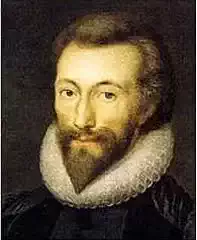
John Donne
The Ecstasy
Where, like a pillow on a bed
A pregnant bank swell'd up to rest
The violet's reclining head,
Sat we two, one another's best.
Our hands were firmly cemented
With a fast balm, which thence did spring;
Our eye-beams twisted, and did thread
Our eyes upon one double string;
So to'intergraft our hands, as yet
Was all the means to make us one,
And pictures in our eyes to get
Was all our propagation.
As 'twixt two equal armies fate
Suspends uncertain victory,
Our souls (which to advance their state
Were gone out) hung 'twixt her and me.
And whilst our souls negotiate there,
We like sepulchral statues lay;
All day, the same our postures were,
And we said nothing, all the day.
If any, so by love refin'd
That he soul's language understood,
And by good love were grown all mind,
Within convenient distance stood,
He (though he knew not which soul spake,
Because both meant, both spake the same)
Might thence a new concoction take
And part far purer than he came.
This ecstasy doth unperplex,
We said, and tell us what we love;
We see by this it was not sex,
We see we saw not what did move;
But as all several souls contain
Mixture of things, they know not what,
Love these mix'd souls doth mix again
And makes both one, each this and that.
A single violet transplant,
The strength, the colour, and the size,
(All which before was poor and scant)
Redoubles still, and multiplies.
When love with one another so
Interinanimates two souls,
That abler soul, which thence doth flow,
Defects of loneliness controls.
We then, who are this new soul, know
Of what we are compos'd and made,
For th' atomies of which we grow
Are souls. whom no change can invade.
But oh alas, so long, so far,
Our bodies why do we forbear?
They'are ours, though they'are not we; we are
The intelligences, they the spheres.
We owe them thanks, because they thus
Did us, to us, at first convey,
Yielded their senses' force to us,
Nor are dross to us, but allay.
On man heaven's influence works not so,
But that it first imprints the air;
So soul into the soul may flow,
Though it to body first repair.
As our blood labors to beget
Spirits, as like souls as it can,
Because such fingers need to knit
That subtle knot which makes us man,
So must pure lovers' souls descend
T' affections, and to faculties,
Which sense may reach and apprehend,
Else a great prince in prison lies.
To'our bodies turn we then, that so
Weak men on love reveal'd may look;
Love's mysteries in souls do grow,
But yet the body is his book.
And if some lover, such as we,
Have heard this dialogue of one,
Let him still mark us, he shall see
Small change, when we'are to bodies gone.
395
Claude Mckay
Memorial
Your body was a sacred cell always,
A jewel that grew dull in garish light,
An opal which beneath my wondering gaze
Gleamed rarely, softly throbbing in the night.
I touched your flesh with reverential hands,
For you were sweet and timid like a flower
That blossoms out of barren tropic sands,
Shedding its perfume in one golden hour.
You yielded to my touch with gentle grace,
And though my passion was a mighty wave
That buried you beneath its strong embrace,
You were yet happy in the moment's grave.
Still more than passion consummate to me,
More than the nuptials immemorial sung,
Was the warm thrill that melted me to see
Your clean brown body, beautiful and young;
The joy in your maturity at length,
The peace that filled my soul like cooling wine,
When you responded to my tender strength,
And pressed your heart exulting into mine.
How shall I with such memories of you
In coarser forms of love fruition find?
No, I would rather like a ghost pursue
The fairy phantoms of my lonely mind.
391
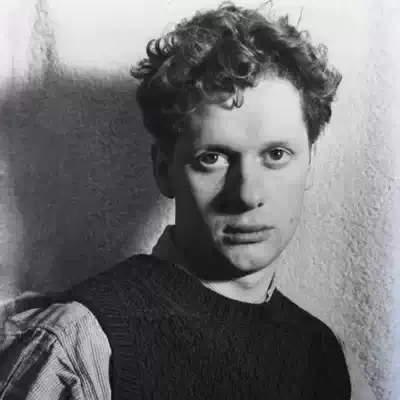
Dylan Thomas
This Bread I Break
This bread I break was once the oat,
This wine upon a foreign tree
Plunged in its fruit;
Man in the day or wine at night
Laid the crops low, broke the grape's joy.
Once in this time wine the summer blood
Knocked in the flesh that decked the vine,
Once in this bread
The oat was merry in the wind;
Man broke the sun, pulled the wind down.
This flesh you break, this blood you let
Make desolation in the vein,
Were oat and grape
Born of the sensual root and sap;
My wine you drink, my bread you snap.
389
William Butler Yeats
Michael Robartes and the Dancer
He. Opinion is not worth a rush;
In this altar-piece the knight,
Who grips his long spear so to push
That dragon through the fading light,
Loved the lady; and it's plain
The half-dead dragon was her thought,
That every morning rose again
And dug its claws and shrieked and fought.
Could the impossible come to pass
She would have time to turn her eyes,
Her lover thought, upon the glass
And on the instant would grow wise.
She. You mean they argued.
He. Put it so;
But bear in mind your lover's wage
Is what your looking-glass can show,
And that he will turn green with rage
At all that is not pictured there.
She. May I not put myself to college?
He. Go pluck Athena by the hair;
For what mere book can grant a knowledge
With an impassioned gravity
Appropriate to that beating breast,
That vigorous thigh, that dreaming eye?
And may the devil take the rest.
She. And must no beautiful woman be
Learned like a man?
He. Paul Veronese
And all his sacred company
Imagined bodies all their days
By the lagoon you love so much,
For proud, soft, ceremonious proof
That all must come to sight and touch;
While Michael Angelo's Sistine roof
His 'Morning' and his 'Night' disclose
How sinew that has been pulled tight,
Or it may be loosened in repose,
Can rule by supernatural right
Yet be but sinew.
She. I have heard said
There is great danger in the body.
He. Did God in portioning wine and bread
Give man His thought or His mere body?
She. My wretched dragon is perplexed.
He. I have principles to prove me right.
It follows from this Latin text
That blest souls are not composite,
And that all beautiful women may
Live in uncomposite blessedness,
And lead us to the like -- if they
Will banish every thought, unless
The lineaments that please their view
When the long looking-glass is full,
Even from the foot-sole think it too.
She. They say such different things at school.
390

Nazim Hikmet
Hymn To Life
The hair falling on your forehead
suddenly lifted.
Suddenly something stirred on the ground.
The trees are whispering
in the dark.
Your bare arms will be cold.
Far off
where we can't see,
the moon must be rising.
It hasn't reached us yet,
slipping through the leaves
to light up your shoulder.
But I know
a wind comes up with the moon.
The trees are whispering.
Your bare arms will be cold.
From above,
from the branches lost in the dark,
something dropped at your feet.
You moved closer to me.
Under my hand your bare flesh is like the fuzzy skin of a fruit.
Neither a song of the heart nor "common sense"--
before the trees, birds, and insects,
my hand on my wife's flesh
is thinking.
Tonight my hand
can't read or write.
Neither loving nor unloving...
It's the tongue of a leopard at a spring,
a grape leaf,
a wolf's paw.
To move, breathe, eat, drink.
My hand is like a seed
splitting open underground.
Neither a song of the heart nor "common sense,"
neither loving nor unloving.
My hand thinking on my wife's flesh
is the hand of the first man.
Like a root that finds water underground,
it says to me:
"To eat, drink, cold, hot, struggle, smell, color--
not to live in order to die
but to die to live..."
And now
as red female hair blows across my face,
as something stirs on the ground,
as the trees whisper in the dark,
and as the moon rises far off
where we can't see,
my hand on my wife's flesh
before the trees, birds, and insects,
I want the right of life,
of the leopard at the spring, of the seed splitting open--
I want the right of the first man.
Trans. by Randy Blasing and Mutlu Konuk ()
384

Robert W. Service
Obesity
With belly like a poisoned pup
Said I: 'I must give bacon up:
And also, I profanely fear,
I must abandon bread and beer
That make for portliness they say;
Yet of them copiously today
I ate with an increasingly sense
Of grievous corpulence.
I like a lot of thinks I like.
Too bad that I must go on strike
Against pork sausages and mash,
Spaghetti and fried corn-beef hash.
I deem he is a lucky soul
Who has no need of girth control;
For in the old of age: 'Il faut
Souffrir pour etre bean.'
Yet let me not be unconsoled:
So many greybeards I behold,
Distinguished in affairs of state,
In culture counted with the Great,
Have tummies with a shameless bulge,
And so I think I'll still indulge
In eats I like without a qualm,
And damn my diaphragm!'
380

Carl Sandburg
Personality
Musings of a Police Reporter in the Identification Bureau
You have loved forty women, but you have only one thumb.
You have led a hundred secret lives, but you mark only
one thumb.
You go round the world and fight in a thousand wars and
win all the world's honors, but when you come back
home the print of the one thumb your mother gave
you is the same print of thumb you had in the old
home when your mother kissed you and said good-by.
Out of the whirling womb of time come millions of men
and their feet crowd the earth and they cut one anothers'
throats for room to stand and among them all
are not two thumbs alike.
Somewhere is a Great God of Thumbs who can tell the
inside story of this.
376

William Shakespeare
Sonnet 128: How oft, when thou, my music, music play'st
How oft, when thou, my music, music play'st,
Upon that blessèd wood whose motion sounds
With thy sweet fingers when thou gently sway'st
The wiry concord that mine ear confounds,
Do I envy those jacks that nimble leap
To kiss the tender inward of thy hand,
Whilst my poor lips, which should that harvest reap,
At the wood's boldness by thee blushing stand!
To be so tickled, they would change their state
And situation with those dancing chips
O'er whom thy fingers walk with gentle gait,
Making dead wood more blest than living lips.
Since saucy jacks so happy are in this,
Give them thy fingers, me thy lips to kiss.
370
Claude Mckay
Alfonso, Dressing to Wait at Table
Alfonso is a handsome bronze-hued lad
Of subtly-changing and surprising parts;
His moods are storms that frighten and make glad,
His eyes were made to capture women's hearts.
Down in the glory-hole Alfonso sings
An olden song of wine and clinking glasses
And riotous rakes; magnificently flings
Gay kisses to imaginary lasses.
Alfonso's voice of mellow music thrills
Our swaying forms and steals our hearts with joy;
And when he soars, his fine falsetto trills
Are rarest notes of gold without alloy.
But, O Alfonso! wherefore do you sing
Dream-songs of carefree men and ancient places?
Soon we shall be beset by clamouring
Of hungry and importunate palefaces.
366