
Body
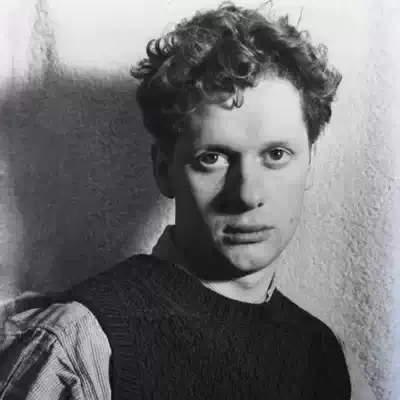
Dylan Thomas
How Soon The Servant Sun
How soon the servant sun,
(Sir morrow mark),
Can time unriddle, and the cupboard stone,
(Fog has a bone
He'll trumpet into meat),
Unshelve that all my gristles have a gown
And the naked egg stand straight,
Sir morrow at his sponge,
(The wound records),
The nurse of giants by the cut sea basin,
(Fog by his spring
Soaks up the sewing tides),
Tells you and you, my masters, as his strange
Man morrow blows through food.
All nerves to serve the sun,
The rite of light,
A claw I question from the mouse's bone,
The long-tailed stone
Trap I with coil and sheet,
Let the soil squeal I am the biting man
And the velvet dead inch out.
How soon my level, lord,
(Sir morrow stamps
Two heels of water on the floor of seed),
Shall raise a lamp
Or spirit up a cloud,
Erect a walking centre in the shroud,
Invisible on the stump
A leg as long as trees,
This inward sir,
Mister and master, darkness for his eyes,
The womb-eyed, cries,
And all sweet hell, deaf as an hour's ear,
Blasts back the trumpet voice.
360

Elizabeth Barrett Browning
The Soul's Expression
WITH stammering lips and insufficient sound
I strive and struggle to deliver right
That music of my nature, day and night
With dream and thought and feeling interwound
And inly answering all the senses round
With octaves of a mystic depth and height
Which step out grandly to the infinite
From the dark edges of the sensual ground.
This song of soul I struggle to outbear
Through portals of the sense, sublime and whole,
And utter all myself into the air:
But if I did it,--as the thunder-roll
Breaks its own cloud, my flesh would perish there,
Before that dread apocalypse of soul.
357
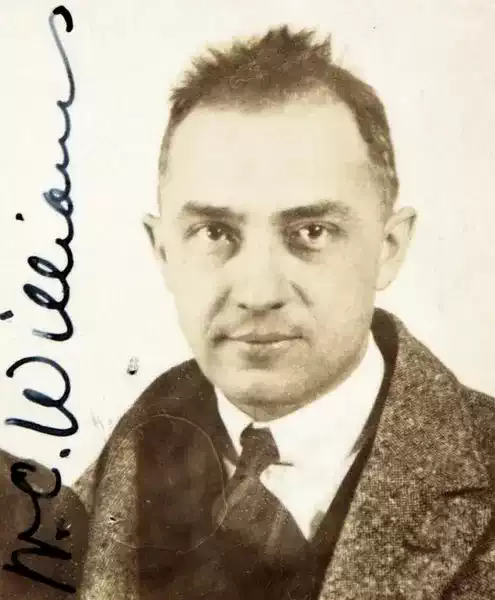
William Carlos Williams
Portrait of a Lady
Your thighs are appletrees
whose blossoms touch the sky.
Which sky? The sky
where Watteau hung a lady's
slipper. Your knees
are a southern breeze -- or
a gust of snow. Agh! what
sort of man was Fragonard?
-- As if that answered
anything. -- Ah, yes. Below
the knees, since the tune
drops that way, it is
one of those white summer days,
the tall grass of your ankles
flickers upon the shore --
Which shore? --
the sand clings to my lips --
Which shore?
Agh, petals maybe. How
should I know?
Which shore? Which shore?
-- the petals from some hidden
appletree -- Which shore?
I said petals from an appletree.
347
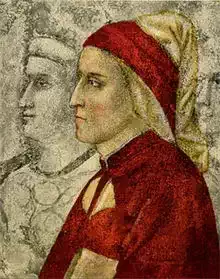
Dante Alighieri
Sonnet: Love and the Gentle
Love and the gentle heart are one same thing,
Even as the wise man in his ditty saith.
Each, of itself, would be such life in death
As rational soul bereft of reasoning.
'Tis Nature makes them when she loves: a king
Love is, whose palace where he sojourneth
Is call'd the Heart; there draws he quiet breath
At first, with brief or longer slumbering.
Then beauty seen in virtuous womankind
Will make the eyes desire, and through the heart
Send the desiring of the eyes again;
Where often it abides so long enshrined
That Love at length out of his sleep will start.
And women feel the same for worthy men.
345
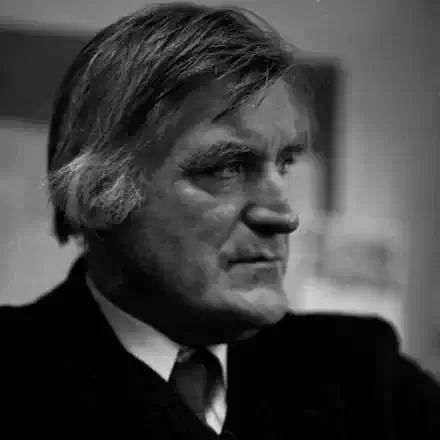
Ted Hughes
Bride and Groom Lie Hidden for Three Days
She gives him his eyes, she found them
Among some rubble, among some beetles
He gives her her skin
He just seemed to pull it down out of the air and lay it over her
She weeps with fearfulness and astonishment
She has found his hands for him, and fitted them freshly at the wrists
They are amazed at themselves, they go feeling all over her
He has assembled her spine, he cleaned each piece carefully
And sets them in perfect order
A superhuman puzzle but he is inspired
She leans back twisting this way and that, using it and laughing
Incredulous
Now she has brought his feet, she is connecting them
So that his whole body lights up
And he has fashioned her new hips
With all fittings complete and with newly wound coils, all shiningly oiled
He is polishing every part, he himself can hardly believe it
They keep taking each other to the sun, they find they can easily
To test each new thing at each new step
And now she smoothes over him the plates of his skull
So that the joints are invisible
And now he connects her throat, her breasts and the pit of her stomach
With a single wire
She gives him his teeth, tying the the roots to the centrepin of his body
He sets the little circlets on her fingertips
She stiches his body here and there with steely purple silk
He oils the delicate cogs of her mouth
She inlays with deep cut scrolls the nape of his neck
He sinks into place the inside of her thighs
So, gasping with joy, with cries of wonderment
Like two gods of mud
Sprawling in the dirt, but with infinite care
They bring each other to perfection.
346

William Butler Yeats
A Woman homer Sung
IF any man drew near
When I was young,
I thought, 'He holds her dear,'
And shook with hate and fear.
But O! 'twas bitter wrong
If he could pass her by
With an indifferent eye.
Whereon I wrote and wrought,
And now, being grey,
I dream that I have brought
To such a pitch my thought
That coming time can say,
'He shadowed in a glass
What thing her body was.'
For she had fiery blood
When I was young,
And trod so sweetly proud
As 'twere upon a cloud,
A woman Homer sung,
That life and letters seem
But an heroic dream.
When I was young,
I thought, 'He holds her dear,'
And shook with hate and fear.
But O! 'twas bitter wrong
If he could pass her by
With an indifferent eye.
Whereon I wrote and wrought,
And now, being grey,
I dream that I have brought
To such a pitch my thought
That coming time can say,
'He shadowed in a glass
What thing her body was.'
For she had fiery blood
When I was young,
And trod so sweetly proud
As 'twere upon a cloud,
A woman Homer sung,
That life and letters seem
But an heroic dream.
342

Ella Wheeler Wilcox
The Wheel of the Breast
Through rivers of veins on the nameless quest
The tide of my life goes hurriedly sweeping,
Till it reaches that curious wheel o' the breast,
The human heart, which is never at rest.
Faster, faster, it cries, and leaping,
Plunging, dashing, speeding away,
The wheel and the river work night and day.
I know not wherefore, I know not whither,
This strange tide rushes with such mad force:
It glides on hither, it slides on thither,
Over and over the selfsame course,
With never an outlet and never a source;
And it lashes itself to the heat of passion
And whirls the heart in a mill-wheel fashion.
I can hear in the hush of the still, still night,
The ceaseless sound of that mighty river;
I can hear it gushing, gurgling, rushing,
With a wild, delirious, strange delight,
And a conscious pride in its sense of might,
As it hurries and worries my heart forever.
And I wonder oft as I lie awake,
And list to the river that seethes and surges
Over the wheel that it chides and urges—
I wonder oft if that wheel will break
With the mighty pressure it bears, some day,
Or slowly and wearily wear away.
For little by little the heart is wearing,
Like the wheel of the mill, as the tide goes tearing
And plunging hurriedly through my breast,
In a network of veins on a nameless quet,
From and forth, unto unknown oceans,
Bringing its cargoes of fierce emotions,
With never a pause or an hour for rest.
339

Walt Whitman
One's Self I Sing
ONE'S-SELF I sing--a simple, separate Person;
Yet utter the word Democratic, the word En-masse.
Of Physiology from top to toe I sing;
Not physiognomy alone, nor brain alone, is worthy for the muse--I say
the Form complete is worthier far;
The Female equally with the male I sing.
Of Life immense in passion, pulse, and power,
Cheerful--for freest action form'd, under the laws divine,
The Modern Man I sing.
339

James Whitcomb Riley
Dear Hands
The touches of her hands are like the fall
Of velvet snowflakes; like the touch of down
The peach just brushes 'gainst the garden wall;
The flossy fondlings of the thistle-wisp
Caught in the crinkle of a leaf of brown
The blighting frost hath turned from green to crisp.
Soft as the falling of the dusk at night,
The touches of her hands, and the delight--
The touches of her hands!
The touches of her hands are like the dew
That falls so softly down no one e'er knew
The touch thereof save lovers like to one
Astray in lights where ranged Endymion.
O rarely soft, the touches of her hands,
As drowsy zephyrs in enchanted lands;
Or pulse of dying fay; or fairy sighs,
Or--in between the midnight and the dawn,
When long unrest and tears and fears are gone--
Sleep, smoothing down the lids of weary eyes.
337

Emily Dickinson
A single Screw of Flesh
Is all that pins the Soul
That stands for Deity, to Mine,
Upon my side the Veil-
Once witnessed of the Gauze-
Its name is put away
As far from mine, as if no plight
Had printed yesterday,
In tender-solemn Alphabet,
My eyes just turned to see,
When it was smuggled by my sight
Into Eternity-
More Hands-to hold-These are but Two-
One more new-mailed Nerve
Just granted, for the Peril's sake-
Some striding-Giant-Love-
So greater than the Gods can show,
They slink before the Clay,
That not for all their Heaven can boast
Will let its Keepsake-go
329

Carl Sandburg
White Shoulders
Your white shoulders
I remember
And your shrug of laughter.
Low laughter
Shaken slow
From your white shoulders.
I remember
And your shrug of laughter.
Low laughter
Shaken slow
From your white shoulders.
328

Robert Louis Stevenson
Ne Sit Ancillae Tibi Amor Pudor
THERE'S just a twinkle in your eye
That seems to say I MIGHT, if I
Were only bold enough to try
An arm about your waist.
I hear, too, as you come and go,
That pretty nervous laugh, you know;
And then your cap is always so
Coquettishly displaced.
Your cap! the word's profanely said.
That little top-knot, white and red,
That quaintly crowns your graceful head,
No bigger than a flower,
Is set with such a witching art,
Is so provocatively smart,
I'd like to wear it on my heart,
An order for an hour!
O graceful housemaid, tall and fair,
I love your shy imperial air,
And always loiter on the stair
When you are going by.
A strict reserve the fates demand;
But, when to let you pass I stand,
Sometimes by chance I touch your hand
And sometimes catch your eye.
327

John Donne
Elegy VIII: The Comparison
As the sweet sweat of roses in a still,
As that which from chafed musk-cats' pores doth trill,
As the almighty balm of th' early East,
Such are the sweat drops of my mistress' breast,
And on her brow her skin such lustre sets,
They seem no sweat drops, but pearl coronets.
Rank sweaty froth thy Mistress's brow defiles,
Like spermatic issue of ripe menstruous boils,
Or like the scum, which, by need's lawless law
Enforced, Sanserra's starved men did draw
From parboiled shoes and boots, and all the rest
Which were with any sovereigne fatness blest,
And like vile lying stones in saffroned tin,
Or warts, or weals, they hang upon her skin.
Round as the world's her head, on every side,
Like to the fatal ball which fell on Ide,
Or that whereof God had such jealousy,
As, for the ravishing thereof we die.
Thy head is like a rough-hewn statue of jet,
Where marks for eyes, nose, mouth, are yet scarce set;
Like the first Chaos, or flat-seeming face
Of Cynthia, when th' earth's shadows her embrace.
Like Proserpine's white beauty-keeping chest,
Or Jove's best fortunes urn, is her fair breast.
Thine's like worm-eaten trunks, clothed in seals' skin,
Or grave, that's dust without, and stink within.
And like that slender stalk, at whose end stands
The woodbine quivering, are her arms and hands.
Like rough barked elm-boughs, or the russet skin
Of men late scourged for madness, or for sin,
Like sun-parched quarters on the city gate,
Such is thy tanned skin's lamentable state.
And like a bunch of ragged carrots stand
The short swol'n fingers of thy gouty hand.
Then like the Chimic's masculine equal fire,
Which in the Lymbecks warm womb doth inspire
Into th' earth's worthless dirt a soul of gold,
Such cherishing heat her best loved part doth hold.
Thine's like the dread mouth of a fired gun,
Or like hot liquid metals newly run
Into clay moulds, or like to that Etna
Where round about the grass is burnt away.
Are not your kisses then as filthy, and more,
As a worm sucking an envenomed sore?
Doth not thy feareful hand in feeling quake,
As one which gath'ring flowers still fears a snake?
Is not your last act harsh, and violent,
As when a plough a stony ground doth rent?
So kiss good turtles, so devoutly nice
Are priests in handling reverent sacrifice,
And such in searching wounds the surgeon is
As we, when we embrace, or touch, or kiss.
Leave her, and I will leave comparing thus,
She, and comparisons are odious.
317
John Donne
To His Mistress Going to Bed
Come, Madam, come, all rest my powers defy,
Until I labour, I in labour lie.
The foe oft-times having the foe in sight,
Is tired with standing though they never fight.
Off with that girdle, like heaven's zone glistering,
But a far fairer world encompassing.
Unpin that spangled breastplate which you wear,
That th' eyes of busy fools may be stopped there.
Unlace yourself, for that harmonious chime
Tells me from you, that now 'tis your bed time.
Off with that happy busk, which I envy,
That still can be, and still can stand so nigh.
Your gown going off, such beauteous state reveals,
As when from flowery meads th' hill's shadow steals.
Off with that wiry coronet and show
The hairy diadem which on you doth grow;
Now off with those shoes, and then safely tread
In this love's hallowed temple, this soft bed.
In such white robes heaven's angels used to be
Received by men; thou angel bring'st with thee
A heaven like Mahomet's paradise; and though
Ill spirits walk in white, we easily know
By this these angels from an evil sprite,
Those set our hairs, but these our flesh upright.
License my roving hands, and let them go
Before, behind, between, above, below.
O my America, my new found land,
My kingdom, safeliest when with one man manned,
My mine of precious stones, my empery,
How blessed am I in this discovering thee!
To enter in these bonds, is to be free;
Then where my hand is set, my seal shall be.
Full nakedness, all joys are due to thee
As souls unbodied, bodies unclothed must be,
To taste whole joys. Gems which you women use
Are like Atlanta's balls, cast in men's views,
That when a fool's eye lighteth on a gem,
His earthly soul may covet theirs, not them.
Like pictures, or like books' gay coverings made
For laymen, are all women thus arrayed;
Themselves are mystic books, which only we
Whom their imputed grace will dignify
Must see revealed. Then since I may know,
As liberally, as to a midwife, show
Thyself: cast all, yea, this white linen hence,
Here is no penance, much less innocence.
To teach thee, I am naked first, why then
What needst thou have more covering than a man.
315
William Carlos Williams
The Spouts
In this world of
as fine a pair of breasts
as ever I saw
the fountain in
Madison Square
spouts up of water
a white tree
that dies and lives
as the rocking water
in the basin
turns from the stonerim
back upon the jet
and rising there
reflectively drops down again.
as fine a pair of breasts
as ever I saw
the fountain in
Madison Square
spouts up of water
a white tree
that dies and lives
as the rocking water
in the basin
turns from the stonerim
back upon the jet
and rising there
reflectively drops down again.
309
Dylan Thomas
My Hero Bares His Nerves
My hero bares his nerves along my wrist
That rules from wrist to shoulder,
Unpacks the head that, like a sleepy ghost,
Leans on my mortal ruler,
The proud spine spurning turn and twist.
And these poor nerves so wired to the skull
Ache on the lovelorn paper
I hug to love with my unruly scrawl
That utters all love hunger
And tells the page the empty ill.
My hero bares my side and sees his heart
Tread; like a naked Venus,
The beach of flesh, and wind her bloodred plait;
Stripping my loin of promise,
He promises a secret heat.
He holds the wire from this box of nerves
Praising the mortal error
Of birth and death, the two sad knaves of thieves,
And the hunger's emperor;
He pulls that chain, the cistern moves.
290

Jonathan Swift
The Lady's Dressing Room
By haughty Celia spent in dressing;
The goddess from her chamber issues,
Arrayed in lace, brocades, and tissues.
Strephon, who found the room was void
And Betty otherwise employed,
Stole in and took a strict survey
Of all the litter as it lay;
Whereof, to make the matter clear,
An inventory follows here.
And first a dirty smock appeared,
Beneath the arm-pits well besmeared.
Strephon, the rogue, displayed it wide
And turned it round on every side.
On such a point few words are best,
And Strephon bids us guess the rest;
And swears how damnably the men lie
In calling Celia sweet and cleanly.
Now listen while he next produces
The various combs for various uses,
Filled up with dirt so closely fixt,
No brush could force a way betwixt.
A paste of composition rare,
Sweat, dandruff, powder, lead and hair;
A forehead cloth with oil upon't
To smooth the wrinkles on her front.
Here alum flower to stop the steams
Exhaled from sour unsavory streams;
There night-gloves made of Tripsy's hide,
Bequeath'd by Tripsy when she died,
With puppy water, beauty's help,
Distilled from Tripsy's darling whelp;
Here gallypots and vials placed,
Some filled with washes, some with paste,
Some with pomatum, paints and slops,
And ointments good for scabby chops.
Hard by a filthy basin stands,
Fouled with the scouring of her hands;
The basin takes whatever comes,
The scrapings of her teeth and gums,
A nasty compound of all hues,
For here she spits, and here she spews.
But oh! it turned poor Strephon's bowels,
When he beheld and smelt the towels,
Begummed, besmattered, and beslimed
With dirt, and sweat, and ear-wax grimed.
No object Strephon's eye escapes:
Here petticoats in frowzy heaps;
Nor be the handkerchiefs forgot
All varnished o'er with snuff and snot.
The stockings, why should I expose,
Stained with the marks of stinking toes;
Or greasy coifs and pinners reeking,
Which Celia slept at least a week in?
A pair of tweezers next he found
To pluck her brows in arches round,
Or hairs that sink the forehead low,
Or on her chin like bristles grow.
The virtues we must not let pass,
Of Celia's magnifying glass.
When frighted Strephon cast his eye on't
It shewed the visage of a giant.
A glass that can to sight disclose
The smallest worm in Celia's nose,
And faithfully direct her nail
To squeeze it out from head to tail;
(For catch it nicely by the head,
It must come out alive or dead.)
Why Strephon will you tell the rest?
And must you needs describe the chest?
That careless wench! no creature warn her
To move it out from yonder corner;
But leave it standing full in sight
For you to exercise your spite.
In vain, the workman shewed his wit
With rings and hinges counterfeit
To make it seem in this disguise
A cabinet to vulgar eyes;
For Strephon ventured to look in,
Resolved to go through thick and thin;
He lifts the lid, there needs no more:
He smelt it all the time before.
As from within Pandora's box,
When Epimetheus oped the locks,
A sudden universal crew
Of humane evils upwards flew,
He still was comforted to find
That Hope at last remained behind;
So Strephon lifting up the lid
To view what in the chest was hid,
The vapours flew from out the vent.
But Strephon cautious never meant
The bottom of the pan to grope
And foul his hands in search of Hope.
O never may such vile machine
Be once in Celia's chamber seen!
O may she better learn to keep
'Those secrets of the hoary deep'!
As mutton cutlets, prime of meat,
Which, though with art you salt and beat
As laws of cookery require
And toast them at the clearest fire,
If from adown the hopeful chops
The fat upon the cinder drops,
To stinking smoke it turns the flame
Poisoning the flesh from whence it came;
And up exhales a greasy stench
For which you curse the careless wench;
So things which must not be exprest,
When plumpt into the reeking chest,
Send up an excremental smell
To taint the parts from whence they fell,
The petticoats and gown perfume,
Which waft a stink round every room.
Thus finishing his grand survey,
Disgusted Strephon stole away
Repeating in his amorous fits,
Oh! Celia, Celia, Celia shits!
But vengeance, Goddess never sleeping,
Soon punished Strephon for his peeping:
His foul Imagination links
Each dame he see with all her stinks;
And, if unsavory odors fly,
Conceives a lady standing by.
All women his description fits,
And both ideas jump like wits
By vicious fancy coupled fast,
And still appearing in contrast.
I pity wretched Strephon blind
To all the charms of female kind.
Should I the Queen of Love refuse
Because she rose from stinking ooze?
To him that looks behind the scene
Satira's but some pocky queen.
When Celia in her glory shows,
If Strephon would but stop his nose
(Who now so impiously blasphemes
Her ointments, daubs, and paints and creams,
Her washes, slops, and every clout
With which he makes so foul a rout),
He soon would learn to think like me
And bless his ravished sight to see
Such order from confusion sprung,
Such gaudy tulips raised from dung.
284
Jonathan Swift
On The Five Senses
All of us in one you'll find, Brethren of a wondrous kind;
Yet among us all no brother
Knows one tittle of the other;
We in frequent councils are,
And our marks of things declare,
Where, to us unknown, a clerk
Sits, and takes them in the dark.
He's the register of all
In our ken, both great and small;
By us forms his laws and rules,
He's our master, we his tools;
Yet we can with greatest ease
Turn and wind him where we please.
One of us alone can sleep,
Yet no watch the rest will keep,
But the moment that he closes,
Every brother else reposes.
If wine's brought or victuals drest,
One enjoys them for the rest.
Pierce us all with wounding steel,
One for all of us will feel.
Though ten thousand cannons roar,
Add to them ten thousand more,
Yet but one of us is found
Who regards the dreadful sound.
Do what is not fit to tell,
There's but one of us can smell.
276
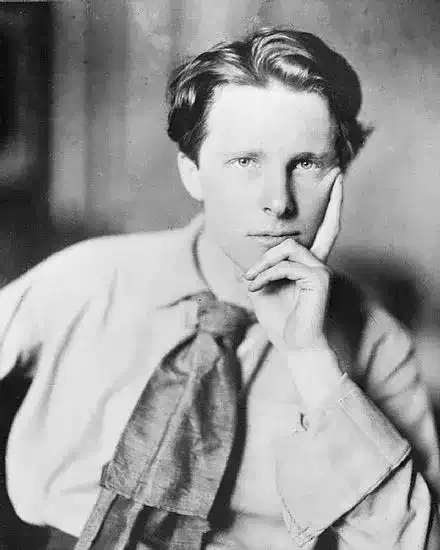
Rupert Brooke
Mary and Gabriel
Young Mary, loitering once her garden way,
Felt a warm splendour grow in the April day,
As wine that blushes water through. And soon,
Out of the gold air of the afternoon,
One knelt before her: hair he had, or fire,
Bound back above his ears with golden wire,
Baring the eager marble of his face.
Not man's nor woman's was the immortal grace
Rounding the limbs beneath that robe of white,
And lighting the proud eyes with changeless light,
Incurious. Calm as his wings, and fair,
That presence filled the garden.
She stood there,
Saying, "What would you, Sir?"
He told his word,
"Blessed art thou of women!" Half she heard,
Hands folded and face bowed, half long had known,
The message of that clear and holy tone,
That fluttered hot sweet sobs about her heart;
Such serene tidings moved such human smart.
Her breath came quick as little flakes of snow.
Her hands crept up her breast. She did but know
It was not hers. She felt a trembling stir
Within her body, a will too strong for her
That held and filled and mastered all. With eyes
Closed, and a thousand soft short broken sighs,
She gave submission; fearful, meek, and glad. . . .
She wished to speak. Under her breasts she had
Such multitudinous burnings, to and fro,
And throbs not understood; she did not know
If they were hurt or joy for her; but only
That she was grown strange to herself, half lonely,
All wonderful, filled full of pains to come
And thoughts she dare not think, swift thoughts and dumb,
Human, and quaint, her own, yet very far,
Divine, dear, terrible, familiar . . .
Her heart was faint for telling; to relate
Her limbs' sweet treachery, her strange high estate,
Over and over, whispering, half revealing,
Weeping; and so find kindness to her healing.
'Twixt tears and laughter, panic hurrying her,
She raised her eyes to that fair messenger.
He knelt unmoved, immortal; with his eyes
Gazing beyond her, calm to the calm skies;
Radiant, untroubled in his wisdom, kind.
His sheaf of lilies stirred not in the wind.
How should she, pitiful with mortality,
Try the wide peace of that felicity
With ripples of her perplexed shaken heart,
And hints of human ecstasy, human smart,
And whispers of the lonely weight she bore,
And how her womb within was hers no more
And at length hers?
Being tired, she bowed her head;
And said, "So be it!"
The great wings were spread
Showering glory on the fields, and fire.
The whole air, singing, bore him up, and higher,
Unswerving, unreluctant. Soon he shone
A gold speck in the gold skies; then was gone.
The air was colder, and grey. She stood alone.
268
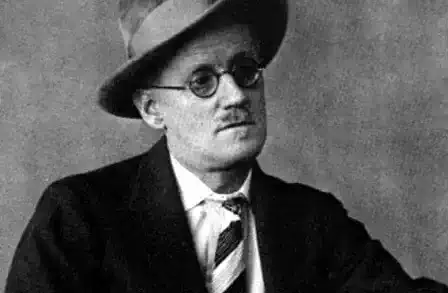
James Joyce
A Memory of the Players in a Mirror at Midnight
They mouth love's language. Gnash
The thirteen teeth
Your lean jaws grin with. Lash
Your itch and quailing, nude greed of the flesh.
Love's breath in you is stale, worded or sung,
As sour as cat's breath,
Harsh of tongue.
This grey that stares
Lies not, stark skin and bone.
Leave greasy lips their kissing. None
Will choose her what you see to mouth upon.
Dire hunger holds his hour.
Pluck forth your heart, saltblood, a fruit of tears.
Pluck and devour!
267
Dylan Thomas
From Love's First Fever to Her Plague
From love's first fever to her plague, from the soft second
And to the hollow minute of the womb,
From the unfolding to the scissored caul,
The time for breast and the green apron age
When no mouth stirred about the hanging famine,
All world was one, one windy nothing,
My world was christened in a stream of milk.
And earth and sky were as one airy hill.
The sun and mood shed one white light.
From the first print of the unshodden foot, the lifting
Hand, the breaking of the hair,
From the first scent of the heart, the warning ghost,
And to the first dumb wonder at the flesh,
The sun was red, the moon was grey,
The earth and sky were as two mountains meeting.
The body prospered, teeth in the marrowed gums,
The growing bones, the rumour of the manseed
Within the hallowed gland, blood blessed the heart,
And the four winds, that had long blown as one,
Shone in my ears the light of sound,
Called in my eyes the sound of light.
And yellow was the multiplying sand,
Each golden grain spat life into its fellow,
Green was the singing house.
The plum my mother picked matured slowly,
The boy she dropped from darkness at her side
Into the sided lap of light grew strong,
Was muscled, matted, wise to the crying thigh,
And to the voice that, like a voice of hunger,
Itched in the noise of wind and sun.
And from the first declension of the flesh
I learnt man's tongue, to twist the shapes of thoughts
Into the stony idiom of the brain,
To shade and knit anew the patch of words
Left by the dead who, in their moonless acre,
Need no word's warmth.
The root of tongues ends in a spentout cancer,
That but a name, where maggots have their X.
I learnt the verbs of will, and had my secret;
The code of night tapped on my tongue;
What had been one was many sounding minded.
One wound, one mind, spewed out the matter,
One breast gave suck the fever's issue;
From the divorcing sky I learnt the double,
The two-framed globe that spun into a score;
A million minds gave suck to such a bud
As forks my eye;
Youth did condense; the tears of spring
Dissolved in summer and the hundred seasons;
One sun, one manna, warmed and fed.
256
Dylan Thomas
On The Marriage Of A Virgin
Waking alone in a multitude of loves when morning's light
Surprised in the opening of her nightlong eyes
His golden yesterday asleep upon the iris
And this day's sun leapt up the sky out of her thighs
Was miraculous virginity old as loaves and fishes,
Though the moment of a miracle is unending lightning
And the shipyards of Galilee's footprints hide a navy of doves.
No longer will the vibrations of the sun desire on
Her deepsea pillow where once she married alone,
Her heart all ears and eyes, lips catching the avalanche
Of the golden ghost who ringed with his streams her mercury bone,
Who under the lids of her windows hoisted his golden luggage,
For a man sleeps where fire leapt down and she learns through his arm
That other sun, the jealous coursing of the unrivalled blood.
250

D.H. Lawrence
Virgin Youth
Now and again
All my body springs alive,
And the life that is polarised in my eyes,
That quivers between my eyes and mouth,
Flies like a wild thing across my body,
Leaving my eyes half-empty, and clamorous,
Filling my still breasts with a flush and a flame,
Gathering the soft ripples below my breast
Into urgent, passionate waves,
And my soft, slumbering belly
Quivering awake with one impulse of desire,
Gathers itself fiercely together;
And my docile, fluent arms
Knotting themselves with wild strength
To clasp—what they have never clasped.
Then I tremble, and go trembling
Under the wild, strange tyranny of my body,
Till it has spent itself,
And the relentless nodality of my eyes reasserts itself,
Till the bursten flood of life ebbs back to my eyes,
Back from my beautiful, lonely body
Tired and unsatisfied.
245
Rupert Brooke
Wagner
Creeps in half wanton, half asleep,
One with a fat wide hairless face.
He likes love-music that is cheap;
Likes women in a crowded place;
And wants to hear the noise they're making.
His heavy eyelids droop half-over,
Great pouches swing beneath his eyes.
He listens, thinks himself the lover,
Heaves from his stomach wheezy sighs;
He likes to feel his heart's a-breaking.
The music swells. His gross legs quiver.
His little lips are bright with slime.
The music swells. The women shiver.
And all the while, in perfect time,
His pendulous stomach hangs a-shaking.
238