
Desire

Dorothy Parker
For An Unknown Lady
Lady, if you'd slumber sound,
Keep your eyes upon the ground.
If you'd toss and turn at night,
Slip your glances left and right.
Would the mornings find you gay,
Never give your heart away.
Would they find you pale and sad,
Fling it to a whistling lad.
Ah, but when his pleadings burn,
Will you let my words return?
Will you lock your pretty lips,
And deny your finger-tips,
Veil away your tender eyes,
Just because some words were wise?
If he whistles low and clear
When the insistent moon is near
And the secret stars are known-
Will your heart be still your own
Just because some words were true? ...
Lady, I was told them, too!
376

Henry Wadsworth Longfellow
Hiawatha's Wedding-Feast
You shall hear how Pau-Puk-Keewis,
How the handsome Yenadizze
Danced at Hiawatha's wedding;
How the gentle Chibiabos,
He the sweetest of musicians,
Sang his songs of love and longing;
How Iagoo, the great boaster,
He the marvellous story-teller,
Told his tales of strange adventure,
That the feast might be more joyous,
That the time might pass more gayly,
And the guests be more contented.
Sumptuous was the feast Nokomis
Made at Hiawatha's wedding;
All the bowls were made of bass-wood,
White and polished very smoothly,
All the spoons of horn of bison,
Black and polished very smoothly.
She had sent through all the village
Messengers with wands of willow,
As a sign of invitation,
As a token of the feasting;
And the wedding guests assembled,
Clad in all their richest raiment,
Robes of fur and belts of wampum,
Splendid with their paint and plumage,
Beautiful with beads and tassels.
First they ate the sturgeon, Nahma,
And the pike, the Maskenozha,
Caught and cooked by old Nokomis;
Then on pemican they feasted,
Pemican and buffalo marrow,
Haunch of deer and hump of bison,
Yellow cakes of the Mondamin,
And the wild rice of the river.
But the gracious Hiawatha,
And the lovely Laughing Water,
And the careful old Nokomis,
Tasted not the food before them,
Only waited on the others
Only served their guests in silence.
And when all the guests had finished,
Old Nokomis, brisk and busy,
From an ample pouch of otter,
Filled the red-stone pipes for smoking
With tobacco from the South-land,
Mixed with bark of the red willow,
And with herbs and leaves of fragrance.
Then she said, "O Pau-Puk-Keewis,
Dance for us your merry dances,
Dance the Beggar's Dance to please us,
That the feast may be more joyous,
That the time may pass more gayly,
And our guests be more contented!"
Then the handsome Pau-Puk-Keewis,
He the idle Yenadizze,
He the merry mischief-maker,
Whom the people called the Storm-Fool,
Rose among the guests assembled.
Skilled was he in sports and pastimes,
In the merry dance of snow-shoes,
In the play of quoits and ball-play;
Skilled was he in games of hazard,
In all games of skill and hazard,
Pugasaing, the Bowl and Counters,
Kuntassoo, the Game of Plum-stones.
Though the warriors called him Faint-Heart,
Called him coward, Shaugodaya,
Idler, gambler, Yenadizze,
Little heeded he their jesting,
Little cared he for their insults,
For the women and the maidens
Loved the handsome Pau-Puk-Keewis.
He was dressed in shirt of doeskin,
White and soft, and fringed with ermine,
All inwrought with beads of wampum;
He was dressed in deer-skin leggings,
Fringed with hedgehog quills and ermine,
And in moccasins of buck-skin,
Thick with quills and beads embroidered.
On his head were plumes of swan's down,
On his heels were tails of foxes,
In one hand a fan of feathers,
And a pipe was in the other.
Barred with streaks of red and yellow,
Streaks of blue and bright vermilion,
Shone the face of Pau-Puk-Keewis.
From his forehead fell his tresses,
Smooth, and parted like a woman's,
Shining bright with oil, and plaited,
Hung with braids of scented grasses,
As among the guests assembled,
To the sound of flutes and singing,
To the sound of drums and voices,
Rose the handsome Pau-Puk-Keewis,
And began his mystic dances.
First he danced a solemn measure,
Very slow in step and gesture,
In and out among the pine-trees,
Through the shadows and the sunshine,
Treading softly like a panther.
Then more swiftly and still swifter,
Whirling, spinning round in circles,
Leaping o'er the guests assembled,
Eddying round and round the wigwam,
Till the leaves went whirling with him,
Till the dust and wind together
Swept in eddies round about him.
Then along the sandy margin
Of the lake, the Big-Sea-Water,
On he sped with frenzied gestures,
Stamped upon the sand, and tossed it
Wildly in the air around him;
Till the wind became a whirlwind,
Till the sand was blown and sifted
Like great snowdrifts o'er the landscape,
Heaping all the shores with Sand Dunes,
Sand Hills of the Nagow Wudjoo!
Thus the merry Pau-Puk-Keewis
Danced his Beggar's Dance to please them,
And, returning, sat down laughing
There among the guests assembled,
Sat and fanned himself serenely
With his fan of turkey-feathers.
Then they said to Chibiabos,
To the friend of Hiawatha,
To the sweetest of all singers,
To the best of all musicians,
"Sing to us, O Chibiabos!
Songs of love and songs of longing,
That the feast may be more joyous,
That the time may pass more gayly,
And our guests be more contented!"
And the gentle Chibiabos
Sang in accents sweet and tender,
Sang in tones of deep emotion,
Songs of love and songs of longing;
Looking still at Hiawatha,
Looking at fair Laughing Water,
Sang he softly, sang in this wise:
"Onaway! Awake, beloved!
Thou the wild-flower of the forest!
Thou the wild-bird of the prairie!
Thou with eyes so soft and fawn-like!
"If thou only lookest at me,
I am happy, I am happy,
As the lilies of the prairie,
When they feel the dew upon them!
"Sweet thy breath is as the fragrance
Of the wild-flowers in the morning,
As their fragrance is at evening,
In the Moon when leaves are falling.
"Does not all the blood within me
Leap to meet thee, leap to meet thee,
As the springs to meet the sunshine,
In the Moon when nights are brightest?
"Onaway! my heart sings to thee,
Sings with joy when thou art near me,
As the sighing, singing branches
In the pleasant Moon of Strawberries!
"When thou art not pleased, beloved,
Then my heart is sad and darkened,
As the shining river darkens
When the clouds drop shadows on it!
"When thou smilest, my beloved,
Then my troubled heart is brightened,
As in sunshine gleam the ripples
That the cold wind makes in rivers.
"Smiles the earth, and smile the waters,
Smile the cloudless skies above us,
But I lose the way of smiling
When thou art no longer near me!
"I myself, myself! behold me!
Blood of my beating heart, behold me!
Oh awake, awake, beloved!
Onaway! awake, beloved!"
Thus the gentle Chibiabos
Sang his song of love and longing;
And Iagoo, the great boaster,
He the marvellous story-teller,
He the friend of old Nokomis,
Jealous of the sweet musician,
Jealous of the applause they gave him,
Saw in all the eyes around him,
Saw in all their looks and gestures,
That the wedding guests assembled
Longed to hear his pleasant stories,
His immeasurable falsehoods.
Very boastful was Iagoo;
Never heard he an adventure
But himself had met a greater;
Never any deed of daring
But himself had done a bolder;
Never any marvellous story
But himself could tell a stranger.
Would you listen to his boasting,
Would you only give him credence,
No one ever shot an arrow
Half so far and high as he had;
Ever caught so many fishes,
Ever killed so many reindeer,
Ever trapped so many beaver!
None could run so fast as he could,
None could dive so deep as he could,
None could swim so far as he could;
None had made so many journeys,
None had seen so many wonders,
As this wonderful Iagoo,
As this marvellous story-teller!
Thus his name became a by-word
And a jest among the people;
And whene'er a boastful hunter
Praised his own address too highly,
Or a warrior, home returning,
Talked too much of his achievements,
All his hearers cried, "Iagoo!
Here's Iagoo come among us!"
He it was who carved the cradle
Of the little Hiawatha,
Carved its framework out of linden,
Bound it strong with reindeer sinews;
He it was who taught him later
How to make his bows and arrows,
How to make the bows of ash-tree,
And the arrows of the oak-tree.
So among the guests assembled
At my Hiawatha's wedding
Sat Iagoo, old and ugly,
Sat the marvellous story-teller.
And they said, "O good Iagoo,
Tell us now a tale of wonder,
Tell us of some strange adventure,
That the feast may be more joyous,
That the time may pass more gayly,
And our guests be more contented!"
And Iagoo answered straightway,
"You shall hear a tale of wonder,
You shall hear the strange adventures
Of Osseo, the Magician,
From the Evening Star descending."
372
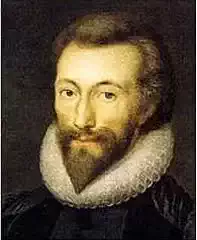
John Donne
Love's Exchange
LOVE, any devil else but you
Would for a given soul give something too.
At court your fellows every day
Give th' art of rhyming, huntsmanship, or play,
For them which were their own before ;
Only I have nothing, which gave more,
But am, alas ! by being lowly, lower.
I ask no dispensation now,
To falsify a tear, or sigh, or vow ;
I do not sue from thee to draw
A non obstante on nature's law ;
These are prerogatives, they inhere
In thee and thine ; none should forswear
Except that he Love's minion were.
Give me thy weakness, make me blind,
Both ways, as thou and thine, in eyes and mind ;
Love, let me never know that this
Is love, or, that love childish is ;
Let me not know that others know
That she knows my paines, lest that so
A tender shame make me mine own new woe.
If thou give nothing, yet thou 'rt just,
Because I would not thy first motions trust ;
Small towns which stand stiff, till great shot
Enforce them, by war's law condition not ;
Such in Love's warfare is my case ;
I may not article for grace,
Having put Love at last to show this face.
This face, by which he could command
And change th' idolatry of any land,
This face, which, wheresoe'er it comes,
Can call vow'd men from cloisters, dead from tombs,
And melt both poles at once, and store
Deserts with cities, and make more
Mines in the earth, than quarries were before.
For this Love is enraged with me,
Yet kills not ; if I must example be
To future rebels, if th' unborn
Must learn by my being cut up and torn,
Kill, and dissect me, Love ; for this
Torture against thine own end is ;
Rack'd carcasses make ill anatomies.
372

John Keats
To-
Had I a man's fair form, then might my sighs
Be echoed swiftly through that ivory shell,
Thine ear, and find thy gentle heart; so well
Would passion arm me for the enterprise:
But ah! I am no knight whose foeman dies;
No cuirass glistens on my bosom's swell;
I am no happy shepherd of the dell
Whose lips have trembled with a maiden's eyes.
Yet must I dote upon thee,-call thee sweet,
Sweeter by far than Hybla's honied roses
When steeped in dew rich to intoxication.
Ah! I will taste that dew, for me 'tis meet,
And when the moon her pallid face discloses,
I'll gather some by spells, and incantation.
373
John Donne
Negative Love
I never stoop'd so low, as they
Which on an eye, cheeke, lip, can prey,
Seldom to them, which soare no higher
Than vertue or the minde to'admire,
For sense, and understanding may
Know, what gives fuell to their fire:
My love, though silly, is more brave,
For may I misse, when ere I crave,
If I know yet, what I would have.
If that be simply perfectest
Which can by no way be exprest
But Negatives, my love is so.
To All, which all love, I say no.
If any who deciphers best,
What we know not, our selves, can know,
Let him teach mee that nothing; This
As yet my ease, and comfort is,
Though I speed not, I cannot misse.
373

William Shakespeare
Sonnet 128: How oft, when thou, my music, music play'st
How oft, when thou, my music, music play'st,
Upon that blessèd wood whose motion sounds
With thy sweet fingers when thou gently sway'st
The wiry concord that mine ear confounds,
Do I envy those jacks that nimble leap
To kiss the tender inward of thy hand,
Whilst my poor lips, which should that harvest reap,
At the wood's boldness by thee blushing stand!
To be so tickled, they would change their state
And situation with those dancing chips
O'er whom thy fingers walk with gentle gait,
Making dead wood more blest than living lips.
Since saucy jacks so happy are in this,
Give them thy fingers, me thy lips to kiss.
370
Dorothy Parker
On Being A Woman
Why is it, when I am in Rome,
I'd give an eye to be at home,
But when on native earth I be,
My soul is sick for Italy?
And why with you, my love, my lord,
Am I spectacularly bored,
Yet do you up and leave me- then
I scream to have you back again?
I'd give an eye to be at home,
But when on native earth I be,
My soul is sick for Italy?
And why with you, my love, my lord,
Am I spectacularly bored,
Yet do you up and leave me- then
I scream to have you back again?
371

William Butler Yeats
The Travail Of Passion
WHEN the flaming lute-thronged angelic door is wide;
When an immortal passion breathes in mortal clay;
Our hearts endure the scourge, the plaited thorns, the way
Crowded with bitter faces, the wounds in palm and side,
The vinegar-heavy sponge, the flowers by Kedron stream;
We will bend down and loosen our hair over you,
That it may drop faint perfume, and be heavy with dew,
Lilies of death-pale hope, roses of passionate dream.
370

Johann Wolfgang von Goethe
Book Of Suleika - Love For Love
LOVE for love, and moments sweet,
Lips returning kiss for kiss,
Word for word, and eyes that meet;
Breath for breath, and bliss for bliss.
Thus at eve, and thus the morrow!
Yet thou feeblest, at my lay,
Ever some half-hidden sorrow;
Could I Joseph's graces borrow,
All thy beauty I'd repay!
Lips returning kiss for kiss,
Word for word, and eyes that meet;
Breath for breath, and bliss for bliss.
Thus at eve, and thus the morrow!
Yet thou feeblest, at my lay,
Ever some half-hidden sorrow;
Could I Joseph's graces borrow,
All thy beauty I'd repay!
371
William Butler Yeats
A First Confession
I admit the briar
Entangled in my hair
Did not injure me;
My blenching and trembling,
Nothing but dissembling,
Nothing but coquetry.
I long for truth, and yet
I cannot stay from that
My better self disowns,
For a man's attention
Brings such satisfaction
To the craving in my bones.
Brightness that I pull back
From the Zodiac,
Why those questioning eyes
That are fixed upon me?
What can they do but shun me
If empty night replies?
369
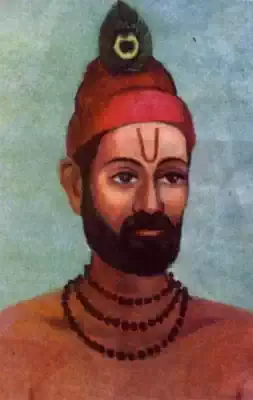
Kabir
Oh friend, I love you, think this over
Oh friend, I love you, think this over
carefully! If you are in love,
then why are you asleep?
If you have found him,
give yourself to him, take him.
Why do you lose track of him again and again?
If you are about to fall into heavy sleep anyway,
why waste time smoothing the bed
and arranging the pillows?
Kabir will tell you the truth: this is what love is like:
suppose you had to cut your head off
and give it to someone else,
what difference would that make?
369
William Shakespeare
Sonnet 150: O, from what power hast thou this powerful might
O, from what power hast thou this powerful might
With insufficiency my heart to sway?
To make me give the lie to my true sight,
And swear that brightness doth not grace the day?
Whence hast thou this becoming of things ill,
That in the very refuse of thy deeds
There is such strength and warrantize of skill
That, in my mind, thy worst all best exceeds?
Who taught thee how to make me love thee more
The more I hear and see just cause of hate?
O, though I love what others do abhor,
With others thou shouldst not abhor my state:
If thy unworthiness raised love in me,
More worthy I to be beloved of thee.
367
John Donne
Holy Sonnet V: I Am a Little World
I am a little world made cunningly
Of Elements, and an Angelike spright,
But black sinne hath betraid to endlesse night
My worlds both parts, and (oh) both parts must die.
You which beyond that heaven which was most high
Have found new sphears, and of new lands can write,
Powre new seas in mine eyes, that so I might
Drowne my world with my weeping earnestly,
Or wash it if it must be drown'd no more;
But oh it must be burnt! alas the fire
Of lust and envie have burnt it heretofore,
And made it fouler; Let their flames retire,
And burne me o Lord, with a fiery zeale
Of thee and thy house, which doth in eating heale.
365

Claude Mckay
Alfonso, Dressing to Wait at Table
Alfonso is a handsome bronze-hued lad
Of subtly-changing and surprising parts;
His moods are storms that frighten and make glad,
His eyes were made to capture women's hearts.
Down in the glory-hole Alfonso sings
An olden song of wine and clinking glasses
And riotous rakes; magnificently flings
Gay kisses to imaginary lasses.
Alfonso's voice of mellow music thrills
Our swaying forms and steals our hearts with joy;
And when he soars, his fine falsetto trills
Are rarest notes of gold without alloy.
But, O Alfonso! wherefore do you sing
Dream-songs of carefree men and ancient places?
Soon we shall be beset by clamouring
Of hungry and importunate palefaces.
366
Kabir
The Bride-Soul
When will that day dawn, Mother;
When the One I took birth for
Holds me to His heart with deathless love?
I long for the bliss of divine union.
I long to lose my body, mind, and soul
And become one with my husband.
When will that day dawn, Mother?
Husband, fulfil now the longing I have had
Since before the universe was made.
Enter me completely and release me.
In terrible lonely years without You
I yearn and yearn for You.
I spend sleepless nights hunting for You,
Gazing into darkness after You,
With unblinking hopeless eyes.
When will that day dawn, Mother?
When will my Lord hold me to His heart?
My empty bed, like a hungry tigress,
Devours me whenever I try to sleep.
Listen to your slave's prayer -
Come and put out this blaze of agony
That consumes my soul and body.
When will He hold me to His heart?
When will that day dawn, Mother?
Kabir sings, "If I ever meet You, my Beloved,
I'll cling to you so fiercely You melt into me;
I'll sing from inside You songs of union,
World-dissolving songs of Eternal Bliss."
365
Henry Wadsworth Longfellow
The Dwarves
Loke sat and thought, till his dark eyes gleam
With joy at the deed he'd done;
When Sif looked into the crystal stream,
Her courage was wellnigh gone.
For never again her soft amber hair
Shall she braid with her hands of snow;
From the hateful image she turned in despair,
And hot tears began to flow.
In a cavern's mouth, like a crafty fox,
Loke sat 'neath the tall pine's shade,
When sudden a thundering was heard in the rocks,
And fearfully trembled the glade.
Then he knew that the noise good boded him naught,
He knew that 't was Thor who was coming;
He changed himself straight to a salmon trout,
And leaped in a fright in the Glommen.
But Thor changed too, to a huge seagull,
And the salmon trout seized in his beak;
He cried: Thou, traitor, I know thee well,
And dear shalt thou pay thy freak!
Thy caitiff's bones to a meal I'll pound,
As a millstone crusheth the grain.
When Loke that naught booted his magic found,
He took straight his own form again.
And what if thou scatter'st my limbs in air?
He spake, will it mend thy case?
Will it gain back for Sif a single hair?
Thou 'lt still a bald spouse embrace.
But if now thou 'lt pardon my heedless joke,--
For malice sure meant I none,--
I swear to thee here, by root, billow and rock,
By the moss on the Beata-stone,
By Mimer's well, and by Odin's eye,
And by Mjolmer, greatest of all,
That straight to the secret caves I'll hie,
To the dwarfs, my kinsmen small;
And thence for Sif new tresses I'll bring
Of gold ere the daylight's gone,
So that she will liken a field in spring,
With its yellow-flowered garment on.
* * * * * * * * * * *
Loke promised so well with his glozing tongue
That the Asas at length let him go,
And he sank in the earth, the dark rocks among,
Near the cold-fountain, far below.
He crept on his belly, as supple as eel,
The cracks in the hard granite through,
Till he came where the dwarfs stood hammering steel,
By the light of a furnace blue.
I trow 't was a goodly sight to see
The dwarfs, with their aprons on,
A-hammering and smelting so busily
Pure gold from the rough brown stone.
Rock crystals from sand and hard flint they made,
Which, tinged with the rosebud's dye,
They cast into rubies and carbuncles red,
And hid them in cracks hard by.
They took them fresh violets all dripping with dew,
Dwarf women had plucked them, the morn,--
And stained with their juice the clear sapphires blue,
King Dan in his crown since hath worn.
Then for emeralds they searched out the brightest green
Which the young spring meadow wears,
And dropped round pearls, without flaw or stain,
From widows' and maidens' tears.
* * * * * * * * * * *
When Loke to the dwarfs had his errand made known,
In a trice for the work they were ready;
Quoth Dvalin: O Lopter, it now shall be shown
That dwarfs in their friendship are steady.
We both trace our line from the selfsame stock;
What you ask shall be furnished with speed,
For it ne'er shall be said that the sons of the rock
Turned their backs on a kinsman in need.
They took them the skin of a large wild-boar,
The largest that they could find,
And the bellows they blew till the furnace 'gan roar,
And the fire flamed on high for the wind.
And they struck with their sledge-hammers stroke on stroke,
That the sparks from the skin flew on high,
But never a word good or bad spoke Loke,
Though foul malice lurked in his eye.
The thunderer far distant, with sorrow he thought
On all he'd engaged to obtain,
And, as summer-breeze fickle, now anxiously sought
To render the dwarf's labour vain.
Whilst the bellows plied Brok, and Sindre the hammer,
And Thor, that the sparks flew on high,
And the slides of the vaulted cave rang with the clamour,
Loke changed to a huge forest-fly.
And he sat him all swelling with venom and spite,
On Brok, the wrist just below;
But the dwarf's skin was thick, and he recked not the bite,
Nor once ceased the bellows to blow.
And now, strange to say, from the roaring fire
Came the golden-haired Gullinburste,
To serve as a charger the sun-god Frey,
Sure, of all wild-boars this the first.
They took them pure gold from their secret store.
The piece 't was but small in size,
But ere 't had been long n the furnace roar,
'T was a jewel beyond all prize.
A broad red ring all of wroughten gold,
As a snake with its tail in its head,
And a garland of gems did the rim enfold,
Together with rare art laid.
'T was solid and heavy, and wrought with care,
Thrice it passed through the white flames' glow;
A ring to produce, fit for Odin to wear,
No labour they spared, I trow.
They worked it and turned it with wondrous skill,
Till they gave it the virtue rare,
That each thrice third night from its rim there fell
Eight rings, as their parent fair.
* * * * * * * * * * *
Next they laid on the anvil a steel-bar cold,
They needed nor fire nor file;
But their sledge-hammers, following, like thunder rolled,
And Sindre sang runes the while.
When Loke now marked how the steel gat power,
And how warily out 't was beat
--'T was to make a new hammer for Ake-Thor,-He'd
recourse once more to deceit.
In a trice, of a hornet the semblance he took,
Whilst in cadence fell blow on blow,
In the leading dwarf's forehead his barbed sting he stuck,
That the blood in a stream down did flow.
Then the dwarf raised his hand to his brow for the smart,
Ere the iron well out was beat,
And they found that the haft by an inch was too short,
But to alter it then 't was too late.
* * * * * * * * * * *
His object attained, Loke no longer remained
'Neath the earth, but straight hied him to Thor,
Who owned than the hair ne'er, sure, aught more fair
His eyes had e'er looked on before.
The boar Frey bestrode, and away proudly rode,
And Thor took the ringlets and hammer;
To Valhal they hied, where the Asas reside,
'Mid of tilting and wassail the clamour.
At a full solemn ting, Thor gave Odin the ring,
And Loke his foul treachery pardoned;
But the pardon was vain, for his crimes soon again
Must do penance the arch-sinner hardened.
365
John Donne
A Lecture Upon The Shadow
Stand still, and I will read to thee
A lecture, love, in love's philosophy.
These three hours that we have spent,
Walking here, two shadows went
Along with us, which we ourselves produc'd.
But, now the sun is just above our head,
We do those shadows tread,
And to brave clearness all things are reduc'd.
So whilst our infant loves did grow,
Disguises did, and shadows, flow
From us, and our cares; but now 'tis not so.
That love has not attain'd the high'st degree,
Which is still diligent lest others see.
Except our loves at this noon stay,
We shall new shadows make the other way.
As the first were made to blind
Others, these which come behind
Will work upon ourselves, and blind our eyes.
If our loves faint, and westwardly decline,
To me thou, falsely, thine,
And I to thee mine actions shall disguise.
The morning shadows wear away,
But these grow longer all the day;
But oh, love's day is short, if love decay.
Love is a growing, or full constant light,
And his first minute, after noon, is night.
364

Emily Dickinson
Doubt Me! My Dim Companion!
Doubt Me! My Dim Companion!
Why, God, would be content
With but a fraction of the Life-
Poured thee, without a stint-
The whole of me-forever-
What more the Woman can,
Say quick, that I may dower thee
With last Delight I own!
It cannot be my Spirit-
For that was thine, before-
I ceded all of Dust I knew-
What Opulence the more
Had I-a freckled Maiden,
Whose farthest of Degree,
Was-that she might-
Some distant Heaven,
Dwell timidly, with thee!
Sift her, from Brow to Barefoot!
Strain till your last Surmise-
Drop, like a Tapestry, away,
Before the Fire's Eyes-
Winnow her finest fondness-
But hallow just the snow
Intact, in Everlasting flake-
Oh, Caviler, for you!
363
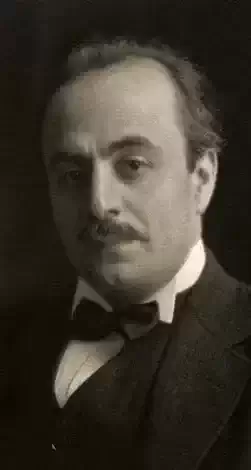
Khalil Gibran
Beauty XXV
And a poet said, "Speak to us of Beauty."
Where shall you seek beauty, and how shall you find her unless she herself be your
way and your guide?
And how shall you speak of her except she be the weaver of your speech?
The aggrieved and the injured say, "Beauty is kind and gentle.
Like a young mother half-shy of her own glory she walks among us."
And the passionate say, "Nay, beauty is a thing of might and dread.
Like the tempest she shakes the earth beneath us and the sky above us."
The tired and the weary say, "beauty is of soft whisperings. She speaks in our spirit.
Her voice yields to our silences like a faint light that quivers in fear of the shadow."
But the restless say, "We have heard her shouting among the mountains,
And with her cries came the sound of hoofs, and the beating of wings and the roaring
of lions."
At night the watchmen of the city say, "Beauty shall rise with the dawn from the east."
And at noontide the toilers and the wayfarers say, "we have seen her leaning over the
earth from the windows of the sunset."
In winter say the snow-bound, "She shall come with the spring leaping upon the hills."
And in the summer heat the reapers say, "We have seen her dancing with the autumn
leaves, and we saw a drift of snow in her hair."
All these things have you said of beauty.
Yet in truth you spoke not of her but of needs unsatisfied,
And beauty is not a need but an ecstasy.
It is not a mouth thirsting nor an empty hand stretched forth,
But rather a heart enflamed and a soul enchanted.
It is not the image you would see nor the song you would hear,
But rather an image you see though you close your eyes and a song you hear though
you shut your ears.
It is not the sap within the furrowed bark, nor a wing attached to a claw,
But rather a garden forever in bloom and a flock of angels for ever in flight.
People of Orphalese, beauty is life when life unveils her holy face.
But you are life and you are the veil.
Beauty is eternity gazing at itself in a mirror.
But you are eternity and you are the mirror.
364
Dorothy Parker
The Trifler
Death's the lover that I'd be taking;
Wild and fickle and fierce is he.
Small's his care if my heart be breaking-
Gay young Death would have none of me.
Hear them clack of my haste to greet him!
No one other my mouth had kissed.
I had dressed me in silk to meet him-
False young Death would not hold the tryst.
Slow's the blood that was quick and stormy,
Smooth and cold is the bridal bed;
I must wait till he whistles for me-
Proud young Death would not turn his head.
I must wait till my breast is wilted.
I must wait till my back is bowed,
I must rock in the corner, jilted-
Death went galloping down the road.
Gone's my heart with a trifling rover.
Fine he was in the game he played-
Kissed, and promised, and threw me over,
And rode away with a prettier maid.
360
William Butler Yeats
Words For Music Perhaps
I - CRAZY JANE AND THE BISHOP
BRING me to the blasted oak
That I, midnight upon the stroke,
(All find safety in the tomb.)
May call down curses on his head
Because of my dear Jack that's dead.
Coxcomb was the least he said:
The solid man and the coxcomb.
Nor was he Bishop when his ban
Banished Jack the Journeyman,
(All find safety in the tomb.)
Nor so much as parish priest,
Yet he, an old book in his fist,
Cried that we lived like beast and beast:
The solid man and the coxcomb.
The Bishop has a skin, God knows,
Wrinkled like the foot of a goose,
(All find safety in the tomb.)
Nor can he hide in holy black
The heron's hunch upon his back,
But a birch-tree stood my Jack:
The solid man and the coxcomb.
Jack had my virginity,
And bids me to the oak, for he
(all find safety in the tomb.)
Wanders out into the night
And there is shelter under it,
But should that other come, I spit:
The solid man and the coxcomb.
II - CRAZY JANE REPROVED
I CARE not what the sailors say:
All those dreadful thunder-stones,
All that storm that blots the day
Can but show that Heaven yawns;
Great Europa played the fool
That changed a lover for a bull.
Fol de rol, fol de rol.
To round that shell's elaborate whorl,
Adorning every secret track
With the delicate mother-of-pearl,
Made the joints of Heaven crack:
So never hang your heart upon
A roaring, ranting journeyman.
Fol de rol, fol de rol.
III - CRAZY JANE ON THE DAY OF JUDGMENT
'LOVE is all
Unsatisfied
That cannot take the whole
Body and soul';
And that is what Jane said.
'Take the sour
If you take me
I can scoff and lour
And scold for an hour.'
'That's certainly the case,' said he.
'Naked I lay,
The grass my bed;
Naked and hidden away,
That black day';
And that is what Jane said.
'What can be shown?
What true love be?
All could be known or shown
If Time were but gone.'
'That's certainly the case,' said he.
IV - CRAZY JANE AND JACK THE JOURNEYMAN
I KNOW, although when looks meet
I tremble to the bone,
The more I leave the door unlatched
The sooner love is gone,
For love is but a skein unwound
Between the dark and dawn.
A lonely ghost the ghost is
That to God shall come;
I -- love's skein upon the ground,
My body in the tomb --
Shall leap into the light lost
In my mother's womb.
But were I left to lie alone
In an empty bed,
The skein so bound us ghost to ghost
When he turned his head
passing on the road that night,
Mine must walk when dead.
V - CRAZY JANE ON GOD
THAT lover of a night
Came when he would,
Went in the dawning light
Whether I would or no;
Men come, men go;
All things remain in God.
Banners choke the sky;
Men-at-arms tread;
Armoured horses neigh
In the narrow pass:
All things remain in God.
Before their eyes a house
That from childhood stood
Uninhabited, ruinous,
Suddenly lit up
From door to top:
All things remain in God.
I had wild Jack for a lover;
Though like a road
That men pass over
My body makes no moan
But sings on:
All things remain in God.
VI - CRAZY JANE TALKS WITH THE BISHOP
I MET the Bishop on the road
And much said he and I.
'Those breasts are flat and fallen now,
Those veins must soon be dry;
Live in a heavenly mansion,
Not in some foul sty.'
'Fair and foul are near of kin,
And fair needs foul,' I cried.
'My friends are gone, but that's a truth
Nor grave nor bed denied,
Learned in bodily lowliness
And in the heart's pride.
'A woman can be proud and stiff
When on love intent;
But Love has pitched his mansion in
The place of excrement;
For nothing can be sole or whole
That has not been rent.'
VII - CRAZY JANE GROWN OLD LOOKS AT THE DANCERS
I FOUND that ivory image there
Dancing with her chosen youth,
But when he wound her coal-black hair
As though to strangle her, no scream
Or bodily movement did I dare,
Eyes under eyelids did so gleam;
Love is like the lion's tooth.
When She, and though some said she played
I said that she had danced heart's truth,
Drew a knife to strike him dead,
I could but leave him to his fate;
For no matter what is said
They had all that had their hate;
Love is like the lion's tooth.
Did he die or did she die?
Seemed to die or died they both?
God be with the times when I
Cared not a thraneen for what chanced
So that I had the limbs to try
Such a dance as there was danced --
Love is like the lion's tooth.
VIII - GIRL'S SONG
I WENT out alone
To sing a song or two,
My fancy on a man,
And you know who.
Another came in sight
That on a stick relied
To hold himself upright;
I sat and cried.
And that was all my song --
When everything is told,
Saw I an old man young
Or young man old?
IX - YOUNG MAN'S SONG
'SHE will change,' I cried.
'Into a withered crone.'
The heart in my side,
That so still had lain,
In noble rage replied
And beat upon the bone:
'Uplift those eyes and throw
Those glances unafraid:
She would as bravely show
Did all the fabric fade;
No withered crone I saw
Before the world was made.'
Abashed by that report,
For the heart cannot lie,
I knelt in the dirt.
And all shall bend the knee
To my offended heart
Until it pardon me.
X - HER ANXIETY
EARTH in beauty dressed
Awaits returning spring.
All true love must die,
Alter at the best
Into some lesser thing.
Prove that I lie.
Such body lovers have,
Such exacting breath,
That they touch or sigh.
Every touch they give,
Love is nearer death.
Prove that I lie.
XI - HIS CONFIDENCE
UNDYING love to buy
I wrote upon
The corners of this eye
All wrongs done.
What payment were enough
For undying love?
I broke my heart in two
So hard I struck.
What matter? for I know
That out of rock,
Out of a desolate source,
Love leaps upon its course.
XII - LOVE'S LONELINESS
OLD fathers, great-grandfathers,
Rise as kindred should.
If ever lover's loneliness
Came where you stood,
Pray that Heaven protect us
That protect your blood.
The mountain throws a shadow,
Thin is the moon's horn;
What did we remember
Under the ragged thorn?
Dread has followed longing,
And our hearts are torn.
XIII - HER DREAM
I DREAMED as in my bed I lay,
All night's fathomless wisdom come,
That I had shorn my locks away
And laid them on Love's lettered tomb:
But something bore them out of sight
In a great tumult of the air,
And after nailed upon the night
Berenice's burning hair.
XIV - HIS BARGAIN
WHO talks of Plato's spindle;
What set it whirling round?
Eternity may dwindle,
Time is unwound,
Dan and Jerry Lout
Change their loves about.
However they may take it,
Before the thread began
I made, and may not break it
When the last thread has run,
A bargain with that hair
And all the windings there.
XV - THREE THINGS
'O CRUEL Death, give three things back,'
Sang a bone upon the shore;
'A child found all a child can lack,
Whether of pleasure or of rest,
Upon the abundance of my breast':
A bone wave-whitened and dried in the wind.
'Three dear things that women know,'
Sang a bhone upon the shore;
'A man if I but held him so
When my body was alive
Found all the pleasure that life gave':
A bone wave-whitened and dried in the wind.
'The third thing that I think of yet,'
Sang a bone upon the shore,
'Is that morning when I met
Face to face my rightful man
And did after stretch and yawn':
A bone wave-whitened and dried in the wind.
XVI - LULLABY
BELOVED, may your sleep be sound
That have found it where you fed.
What were all the world's alarms
To mighty paris when he found
Sleep upon a golden bed
That first dawn in Helen's arms?
Sleep, beloved, such a sleep
As did that wild Tristram know
When, the potion's work being done,
Roe could run or doe could leap
Under oak and beechen bough,
Roe could leap or doe could run;
Such a sleep and sound as fell
Upon Eurotas' grassy bank
When the holy bird, that there
Accomplished his predestined will,
From the limbs of Leda sank
But not from her protecting care.
XVII - AFTER LONG SILENCE
SPEECH after long silence; it is right,
All other lovers being estranged or dead,
Unfriendly lamplight hid under its shade,
The curtains drawn upon unfriendly night,
That we descant and yet again descant
Upon the supreme theme of Art and Song:
Bodily decrepitude is wisdom; young
We loved each other and were ignorant.
XVIII - MAD AS THE MIST AND SNOW
BOLT and bar the shutter,
For the foul winds blow:
Our minds are at their best this night,
And I seem to know
That everything outside us is
Mad as the mist and snow.
Horace there by Homer stands,
Plato stands below,
And here is Tully's open page.
How many years ago
Were you and I unlettered lads
Mad as the mist and snow?
You ask what makes me sigh, old friend,
What makes me shudder so?
I shudder and I sigh to think
That even Cicero
And many-minded Homer were
Mad as the mist and snow.
XIX - THOSE DANCING DAYS ARE GONE
COME, let me sing into your ear;
Those dancing days are gone,
All that silk and satin gear;
Crouch upon a stone,
Wrapping that foul body up
In as foul a rag:
I carry the sun in a golden cup.
The moon in a silver bag.
Curse as you may I sing it through;
What matter if the knave
That the most could pleasure you,
The children that he gave,
Are somewhere sleeping like a top
Under a marble flag?
I carry the sun in a golden cup.
The moon in a silver bag.
I thought it out this very day.
Noon upon the clock,
A man may put pretence away
Who leans upon a stick,
May sing, and sing until he drop,
Whether to maid or hag:
I carry the sun in a golden cup,
The moon in a silver bag.
XX - 'I AM OF IRELAND'
AM of Ireland,
And the Holy Land of Ireland,
And time runs on,' cried she.
'Come out of charity,
Come dance with me in Ireland.'
One man, one man alone
In that outlandish gear,
One solitary man
Of all that rambled there
Had turned his stately head.
That is a long way off,
And time runs on,' he said,
'And the night grows rough.'
I am of Ireland,
And the Holy Land of Ireland,
And time runs on,' cried she.
'Come out of charity
And dance with me in Ireland.'
The fiddlers are all thumbs,
Or the fiddle-string accursed,
The drums and the kettledrums
And the trumpets all are burst,
And the trombone,' cried he,
'The trumpet and trombone,'
And cocked a malicious eye,
'But time runs on, runs on.'
I am of Ireland,
And the Holy Land of Ireland,
And time runs on,' cried she.
'Come out of charity
And dance with me in Ireland.'
XXI - THE DANCER AT CRUACHAN AND CRO-PATRICK
I, PROCLAIMING that there is
Among birds or beasts or men
One that is perfect or at peace.
Danced on Cruachan's windy plain,
Upon Cro-patrick sang aloud;
All that could run or leap or swim
Whether in wood, water or cloud,
Acclaiming, proclaiming, declaiming Him.
XXII - TOM THE LUNATIC
SANG old Tom the lunatic
That sleeps under the canopy:
'What change has put my thoughts astray
And eyes that had s-o keen a sight?
What has turned to smoking wick
Nature's pure unchanging light?
'Huddon and Duddon and Daniel O'Leary.
Holy Joe, the beggar-man,
Wenching, drinking, still remain
Or sing a penance on the road;
Something made these eyeballs weary
That blinked and saw them in a shroud.
'Whatever stands in field or flood,
Bird, beast, fish or man,
Mare or stallion, cock or hen,
Stands in God's unchanging eye
In all the vigour of its blood;
In that faith I live or die.'
XXIII - TOM AT CRUACHAN
ON Cruachan's plain slept he
That must sing in a rhyme
What most could shake his soul:
'The stallion Eternit
Mounted the mare of Time,
'Gat the foal of the world.'
XXIV - OLD TOM AGAIN
THINGS out of perfection sail,
And all their swelling canvas wear,
Nor shall the self-begotten fail
Though fantastic men suppose
Building-yard and stormy shore,
Winding-sheet and swaddling -- clothes.
XXV - THE DELPHIC ORACLE UPON PLOTINUS
BEHOLD that great Plotinus swim,
Buffeted by such seas;
Bland Rhadamanthus beckons him,
But the Golden Race looks dim,
Salt blood blocks his eyes.
Scattered on the level grass
Or winding through the grove
plato there and Minos pass,
There stately Pythagoras
And all the choir of Love.
361
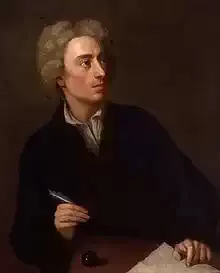
Alexander Pope
On a Fan of the Author's Design
Come gentle Air! th' AEolian shepherd said,
While Procris panted in the secret shade:
Come, gentle Air, the fairer Delia cries,
While at her feet her swain expiring lies.
Lo the glad gales o'er all her beauties stray,
Breathe on her lips, and in her bosom play!
In Delia's hand this toy is fatal found,
Nor could that fabled dart more surely wound:
Both gifts destructive to the givers prove;
Alike both lovers fall by those they love.
Yet guiltless too this bright destroyer lives,
At random wounds, nor knows the wound she gives:
She views the story with attentive eyes,
And pities Procris, while her lover dies.
356
Henry Wadsworth Longfellow
Drinking Song
INSCRIPTION FOR AN ANTIQUE PITCHER,
Come, old friend! sit down and listen!
From the pitcher, placed between us,
How the waters laugh and glisten
In the head of old Silenus!
Old Silenus, bloated, drunken,
Led by his inebriate Satyrs;
On his breast his head is sunken,
Vacantly he leers and chatters.
Fauns with youthful Bacchus follow;
Ivy crowns that brow supernal
As the forehead of Apollo,
And possessing youth eternal.
Round about him, fair Bacchantes,
Bearing cymbals, flutes, and thyrses,
Wild from Naxian groves, or Zante's
Vineyards, sing delirious verses.
Thus he won, through all the nations,
Bloodless victories, and the farmer
Bore, as trophies and oblations,
Vines for banners, ploughs for armor.
Judged by no o'erzealous rigor,
Much this mystic throng expresses:
Bacchus was the type of vigor,
And Silenus of excesses.
These are ancient ethnic revels,
Of a faith long since forsaken;
Now the Satyrs, changed to devils,
Frighten mortals wine-o'ertaken.
Now to rivulets from the mountains
Point the rods of fortune-tellers;
Youth perpetual dwells in fountains;
Not in flasks, and casks, and cellars.
Claudius, though he sang of flagons
And huge tankards filled with Rhenish,
From that fiery blood of dragons
Never would his own replenish.
Even Redi, though he chaunted
Bacchus in the Tuscan valleys,
Never drank the wine he vaunted
In his dithyrambic sallies.
Then with water fill the pitcher
Wreathed about with classic fables,
Ne'er Falernian threw a richer
Light upon Lucullus' tables.
Come, old friend, sit down and listen!
As it passes thus between us,
How its wavelets laugh and glisten
In the head of old Silenus!
357
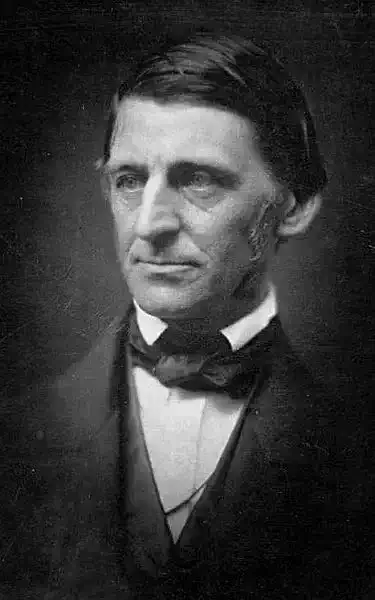
Ralph Waldo Emerson
Rubies
They brought me rubies from the mine,
And held them to the sun;
I said, they are drops of frozen wine
From Eden's vats that run.
I looked again,--I thought them hearts
Of friends to friends unknown;
Tides that should warm each neighboring life
Are locked in sparkling stone.
But fire to thaw that ruddy snow,
To break enchanted ice,
And give love's scarlet tides to flow,--
When shall that sun arise?
359