
Disillusionment and Lost Love

Emily Dickinson
I many times thought Peace had come
I many times thought Peace had come
When Peace was far away-
As Wrecked Men-deem they sight the Land-
At Centre of the Sea-
And struggle slacker-but to prove
As hopelessly as I-
How many the fictitious Shores-
Before the Harbor be-
When Peace was far away-
As Wrecked Men-deem they sight the Land-
At Centre of the Sea-
And struggle slacker-but to prove
As hopelessly as I-
How many the fictitious Shores-
Before the Harbor be-
293

Anonymous
The Time When I First Fell In Love
The time when first I fell in love,
Which now I must lament;
The year wherein I lost such time
To compass my content.
The day wherein I saw too late
The follies of a lover;
The hour wherein I found such loss
As care cannot recover.
And last, the minute of mishap,
Which makes me thus to plain
The doleful fruits of lover's suits,
Which labour lose in vain:
Doth make me solemnly protest,
As I with pain do prove,
There is no time, year, day, nor hour,
Nor minute, good to love.
293
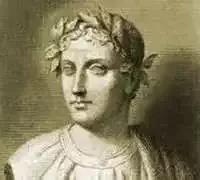
Horácio
BkI:V Treacherous Girl
What slender boy, Pyrrha, drowned in liquid perfume,
urges you on, there, among showers of roses,
deep down in some pleasant cave?
For whom did you tie up your hair,
with simple elegance? How often he’ll cry at
the changes of faith and of gods, ah, he’ll wonder,
surprised by roughening water,
surprised by the darkening storms,
who enjoys you now and believes you’re golden,
who thinks you’ll always be single and lovely,
ignoring the treacherous
breeze. Wretched are those you dazzle
while still untried. As for me the votive tablet
that hangs on the temple wall reveals, suspended,
my dripping clothes, for the god,
who holds power over the sea.
290
Anonymous
Barbara Allen's Cruelty
IN Scarlet town, where I was born,
There was a fair maid dwellin',
Made every youth cry Well-a-way!
Her name was Barbara Allen.
All in the merry month of May,
When green buds they were swellin',
Young Jemmy Grove on his death-bed lay,
For love of Barbara Allen.
He sent his man in to her then,
To the town where she was dwellin',
'O haste and come to my master dear,
If your name be Barbara Allen.'
So slowly, slowly rase she up,
And slowly she came nigh him,
And when she drew the curtain by--
'Young man, I think you're dyin'.'
'O it 's I am sick and very very sick,
And it 's all for Barbara Allen.'
'O the better for me ye'se never be,
Tho' your heart's blood were a-spillin'!
'O dinna ye mind, young man,' says she,
'When the red wine ye were fillin',
That ye made the healths go round and round,
And slighted Barbara Allen?'
He turn'd his face unto the wall,
And death was with him dealin':
'Adieu, adieu, my dear friends all,
And be kind to Barbara Allen!'
As she was walking o'er the fields,
She heard the dead-bell knellin';
And every jow the dead-bell gave
Cried 'Woe to Barbara Allen.'
'O mother, mother, make my bed,
O make it saft and narrow:
My love has died for me to-day,
I'll die for him to-morrow.
'Farewell,' she said, 'ye virgins all,
And shun the fault I fell in:
Henceforth take warning by the fall
Of cruel Barbara Allen.'
290

Wilfred Owen
Disabled
He sat in a wheeled chair, waiting for dark,
And shivered in his ghastly suit of grey,
Legless, sewn short at elbow. Through the park
Voices of boys rang saddening like a hymn,
Voices of play and pleasure after day,
Till gathering sleep had mothered them from him.
About this time Town used to swing so gay
When glow-lamps budded in the light blue trees,
And girls glanced lovelier as the air grew dim,-
In the old times, before he threw away his knees.
Now he will never feel again how slim
Girls' waists are, or how warm their subtle hands.
All of them touch him like some queer disease.
There was an artist silly for his face,
For it was younger than his youth, last year.
Now, he is old; his back will never brace;
He's lost his colour very far from here,
Poured it down shell-holes till the veins ran dry,
And half his lifetime lapsed in the hot race
And leap of purple spurted from his thigh.
One time he liked a blood-smear down his leg,
After the matches, carried shoulder-high.
It was after football, when he'd drunk a peg,
He thought he'd better join. - He wonders why.
Someone had said he'd look a god in kilts,
That's why; and maybe, too, to please his Meg,
Aye, that was it, to please the giddy jilts
He asked to join. He didn't have to beg;
Smiling they wrote his lie: aged nineteen years.
Germans he scarcely thought of; all their guilt,
And Austria's, did not move him. And no fears
Of Fear came yet. He drought of jewelled hills
For daggers in plaid socks; of smart salutes;
And care of arms; and leave; and pay arrears;
Esprit de corps; and hints for young recruits.
And soon, he was drafted out with drums and cheers.
Some cheered him home, but not as crowds cheer Goal.
Only a solemn man who brought him fruits
Thanked him; and then enquired about his soul.
Now, he will spend a few sick years in institutes,
And do what things the rules consider wise,
And take whatever pity they may dole.
Tonight he noticed how the women's eyes
Passed from him to the strong men that were whole.
How cold and late it is! Why don't they come
And put him into bed? Why don't they come?
292

Thomas Hardy
Beeny Cliff
I
O the opal and the sapphire of that wandering western sea,
And the woman riding high above with bright hair flapping free-
The woman whom I loved so, and who loyally loved me.
I I
The pale mews plained below us, and the waves seemed far away
In a nether sky, engrossed in saying their ceaseless babbling say,
As we laughed light-heartedly aloft on that clear-sunned March day.
III
A little cloud then cloaked us, and there flew an irised rain,
And the Atlantic dyed its levels with a dull misfeatured stain,
And then the sun burst out again, and purples prinked the main.
IV
-Still in all its chasmal beauty bulks old Beeny to the sky,
And shall she and I not go there once again now March is nigh,
And the sweet things said in that March say anew there by and by?
V
What if still in chasmal beauty looms that wild weird western shore,
The woman now is-elsewhere-whom the ambling pony bore,
And nor knows nor cares for Beeny, and will laugh there nevermore.
289

Gwendolyn Brooks
the sonnet-ballad
Oh mother, mother, where is happiness?
They took my lover's tallness off to war,
Left me lamenting. Now I cannot guess
What I can use an empty heart-cup for.
He won't be coming back here any more.
Some day the war will end, but, oh, I knew
When he went walking grandly out that door
That my sweet love would have to be untrue.
Would have to be untrue. Would have to court
Coquettish death, whose impudent and strange
Possessive arms and beauty (of a sort)
Can make a hard man hesitate--and change.
And he will be the one to stammer, "Yes."
Oh mother, mother, where is happiness?
289

Robert W. Service
Visibility
Because my eyes were none to bright
Strong spectacles I bought,
And lo! there sprang into my sight
A life beyond my thought:
A world of wonder and delight
My magic lenses brought.
Aye, sudden leaping in my sight
The far became the near;
Life unbelievably was bright,
And vividly was clear.
My heart was lifted with delight,
Then--then I shrank in fear.
For faces I had thought were gay
I saw were lined with care,
While strange corruption and decay
Surprised me everywhere:
Dismayed I put my specs away,-Such
truth I could not bear.
And now I do not want to see
With clarity of view;
For while there's heaven hell may be
More tragically true:
Though dim may be Reality,
Sheer love shines through.
284
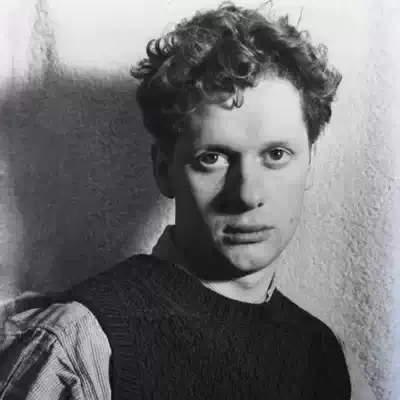
Dylan Thomas
Out Of The Sighs
Out of the sighs a little comes,
But not of grief, for I have knocked down that
Before the agony; the spirit grows,
Forgets, and cries;
A little comes, is tasted and found good;
All could not disappoint;
There must, be praised, some certainty,
If not of loving well, then not,
And that is true after perpetual defeat.
After such fighting as the weakest know,
There's more than dying;
Lose the great pains or stuff the wound,
He'll ache too long
Through no regret of leaving woman waiting
For her soldier stained with spilt words
That spill such acrid blood.
Were that enough, enough to ease the pain,
Feeling regret when this is wasted
That made me happy in the sun,
How much was happy while it lasted,
Were vagueness enough and the sweet lies plenty,
The hollow words could bear all suffering
And cure me of ills.
Were that enough, bone, blood, and sinew,
The twisted brain, the fair-formed loin,
Groping for matter under the dog's plate,
Man should be cured of distemper.
For all there is to give I offer:
Crumbs, barn, and halter.
281

Henry Lawson
Mary Called Him 'Mister'
They'd parted but a year before—she never thought he’d come,
She stammer’d, blushed, held out her hand, and called him ‘Mister Gum.’
How could he know that all the while she longed to murmur ‘John.’
He called her ‘Miss le Brook,’ and asked how she was getting on.
They’d parted but a year before; they’d loved each other well,
But he’d been to the city, and he came back such a swell.
They longed to meet in fond embrace, they hungered for a kiss—
But Mary called him ‘Mister,’ and the idiot called her ‘Miss.’
He stood and lean’d against the door—a stupid chap was he—
And, when she asked if he’d come in and have a cup of tea,
He looked to left, he looked to right, and then he glanced behind,
And slowly doffed his cabbage-tree, and said he ‘didn’t mind.’
She made a shy apology because the meat was tough,
And then she asked if he was sure his tea was sweet enough;
He stirred the tea and sipped it twice, and answer’d ‘plenty, quite;’
And cut the smallest piece of beef and said that it was ‘right.’
She glanced at him at times and cough’d an awkward little cough;
He stared at anything but her and said, ‘I must be off.’
That evening he went riding north—a sad and lonely ride—
She locked herself inside her room, and there sat down and cried.
They’d parted but a year before, they loved each other well—
But she was such a country girl and he was such a swell ;
They longed to meet in fond embrace, they hungered for a kiss—
But Mary called him ‘Mister’ and the idiot called her ‘Miss.
280
Robert W. Service
Amateur Poet
You see that sheaf of slender books
Upon the topmost shelf,
At which no browser ever looks,
Because they're by . . . myself;
They're neatly bound in navy blue,
But no one ever heeds;
Their print is clear and candid too,
Yet no one ever reads.
Poor wistful books! How much they cost
To me in time and gold!
I count them now as labour lost,
For none I ever sold;
No copy could I give away,
For all my friends would shrink,
And look at me as if to say:
"What waste of printer's ink!"
And as I gaze at them on high,
Although my eyes are sad,
I cannot help but breathe a sigh
To think what joy I had -
What ecstasy as I would seek
To make my rhyme come right,
And find at last the phrase unique
Flash fulgent in my sight.
Maybe that rapture was my gain
Far more than cheap success;
So I'll forget my striving vain,
And blot out bitterness.
Oh records of my radiant youth,
No broken heart I'll rue,
For all my best of love and truth
Is there, alive in you.
281
Robert W. Service
Breton Wife
A Wintertide we had been wed
When Jan went off to sea;
And now the laurel rose is red
And I wait on the quay.
His berthing boat I watch with dread,
For where, oh where is he?
"Weep not, brave lass," the Skipper said;
"Return to you he will;
In hospital he lies abed
In Rio in Brazil;
But though I know he is not dead,
I do not know his ill."
The Seaman's Hospital I wrote,
And soon there came reply.
The nurse's very words I quote:
"Your husband will not die;
But you must wait a weary boat -
I cannot tell you why."
The months of sun went snailing by.
I wrote by every mail,
Yet ever came the same reply:
"Your patience must not fail.
But though your good lad will not die,
We cannot tell his ail."
* * * * * * * * *
Ten months have gone - he's back again,
But aged by years a score,
And tells me with a look of pain
He'll never voyage more;
And at the tide, with longing vain,
He stares from out the door.
And in his sleep he turns from me
And moans with bitter blame
Of Spanish jades beyond the sea
Who wrought him evil shame,
So ever in him bleak will be
The Ill That Has No Name.
280
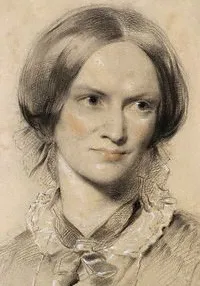
Charlotte Brontë
Gilbert
I. THE GARDEN.
ABOVE the city hung the moon,
Right o'er a plot of ground
Where flowers and orchardtrees
were fenced
With lofty walls around:
'Twas Gilbert's gardenthere,
tonight
Awhile he walked alone;
And, tired with sedentary toil,
Mused where the moonlight shone.
This garden, in a cityheart,
Lay still as houseless wild,
Though manywindowed
mansion fronts
Were round it closely piled;
But thick their walls, and those within
Lived lives by noise unstirred;
Like wafting of an angel's wing,
Time's flight by them was heard.
Some soft pianonotes
alone
Were sweet as faintly given,
Where ladies, doubtless, cheered the hearth
With song, that wintereven.
The city's manymingled
sounds
Rose like the hum of ocean;
They rather lulled the heart than roused
Its pulse to faster motion.
Gilbert has paced the single walk
An hour, yet is not weary;
And, though it be a winter night,
He feels nor cold nor dreary.
The prime of life is in his veins,
And sends his blood fast flowing,
And Fancy's fervour warms the thoughts
Now in his bosom glowing.
Those thoughts recur to early love,
Or what he love would name,
Though haply Gilbert's secret deeds
Might other title claim.
Such theme not oft his mind absorbs,
He to the world clings fast,
And too much for the present lives,
To linger o'er the past.
But now the evening's deep repose
Has glided to his soul;
That moonlight falls on Memory,
And shows her fading scroll.
One name appears in every line
The gentle rays shine o'er,
And still he smiles and still repeats
That one name
Elinor.
There is no sorrow in his smile,
No kindness in his tone;
The triumph of a selfish heart
Speaks coldly there alone;
He says: ' She loved me more than life;
And truly it was sweet
To see so fair a woman kneel,
In bondage, at my feet.
There was a sort of quiet bliss
To be so deeply loved,
To gaze on trembling eagerness
And sit myself unmoved.
And when it pleased my pride to grant,
At last some rare caress,
To feel the fever of that hand
My fingers deigned to press.
'Twas sweet to see her strive to hide
What every glance revealed;
Endowed, the while, with despotmight
Her destiny to wield.
I knew myself no perfect man,
Nor, as she deemed, divine;
I knew that I was gloriousbut
By her reflected shine;
Her youth, her native energy,
Her powers newborn
and fresh,
'Twas these with Godhead sanctified
My sensual frame of flesh.
Yet, like a god did I descend
At last, to meet her love;
And, like a god, I then withdrew
To my own heaven above.
And never more could she invoke
My presence to her sphere;
No prayer, no plaint, no cry of hers
Could win my awful ear.
I knew her blinded constancy
Would ne'er my deeds betray,
And, calm in conscience, whole in heart,
I went my tranquil way.
Yet, sometimes, I still feel a wish,
The fond and flattering pain
Of passion's anguish to create,
In her young breast again.
Bright was the lustre of her eyes,
When they caught fire from mine;
If I had powerthis
very hour,
Again I 'd light their shine.
But where she is, or how she lives,
I have no clue to know;
I 've heard she long my absence pined,
And left her home in woe.
But busied, then, in gathering gold,
As I am busied now,
I could not turn from such pursuit,
To weep a broken vow.
Nor could I give to fatal risk
The fame I ever prized;
Even now, I fear, that precious fame
Is too much compromised.'
An inward trouble dims his eye,
Some riddle he would solve;
Some method to unloose a knot,
His anxious thoughts revolve.
He, pensive, leans against a tree,
A leafy evergreen,
The boughs, the moonlight, intercept,
And hide him like a screen;
He startsthe
tree shakes with his tremor,
Yet nothing near him pass'd,
He hurries up the garden alley,
In strangely sudden haste.
With shaking hand, he lifts the latchet,
Steps o'er the threshold stone;
The heavy door slips from his fingers,
It shuts, and he is gone.
What touched, transfixed, appalled, his soul ?
A nervous thought, no more;
'Twill sink like stone in placid pool,
And calm close smoothly o'er.
II. THE PARLOUR.
WARM is the parlour atmosphere,
Serene the lamp's soft light;
The vivid embers, red and clear,
Proclaim a frosty night.
Books, varied, on the table lie,
Three children o'er them bend,
And all, with curious, eager eye,
The turning leaf attend.
Picture and tale alternately
Their simple hearts delight,
And interest deep, and tempered glee,
Illume their aspects bright;
The parents, from their fireside place,
Behold that pleasant scene,
And joy is on the mother's face,
Pride, in the father's mien.
As Gilbert sees his blooming wife,
Beholds his children fair,
No thought has he of transient strife,
Or past, though piercing fear.
The voice of happy infancy
Lisps sweetly in his ear,
His wife, with pleased and peaceful eye,
Sits, kindly smiling, near.
The fire glows on her silken dress,
And shows its ample grace,
And warmly tints each hazel tress,
Curled soft around her face.
The beauty that in youth he wooed,
Is beauty still, unfaded,
The brow of ever placid mood
No churlish grief has shaded.
Prosperity, in Gilbert's home,
Abides, the guest of years;
There Want or Discord never come,
And seldom Toil or Tears.
The carpets bear the peaceful print
Of comfort's velvet tread,
And golden gleams from plenty sent,
In every nook are shed.
The very silken spaniel seems
Of quiet ease to tell,
As near its mistress' feet it dreams,
Sunk in a cushion's swell;
And smiles seem native to the eyes
Of those sweet children, three;
They have but looked on tranquil skies,
And know not misery.
Alas ! that misery should come
In such an hour as this;
Why could she not so calm a home
A little longer miss ?
But she is now within the door,
Her steps advancing glide;
Her sullen shade has crossed the floor,
She stands at Gilbert's side.
She lays her hand upon his heart,
It bounds with agony;
His fireside chair shakes with the start
That shook the garden tree.
His wife towards the children looks,
She does not mark his mien;
The children, bending o'er their books,
His terror have not seen.
In his own home, by his own hearth,
He sits in solitude,
And circled round with light and mirth,
Cold horror chills his blood.
His mind would hold with desperate clutch
The scene that round him lies;
Nochanged,
as by some wizard's touch,
The present prospect flies.
A tumult vaguea
viewless strife
His futile struggles crush;
'Twixt him and his, an unknown life
And unknown feelings rush.
He seesbut
scarce can language paint
The tissue Fancy weaves;
For words oft give but echo faint
Of thoughts the mind conceives.
Noise, tumult strange, and darkness dim,
Efface both light and quiet;
No shape is in those shadows grim,
No voice in that wild riot.
Sustained and strong, a wondrous blast
Above and round him blows;
A greenish gloom, dense overcast,
Each moment denser grows.
He nothing knowsnor
clearly sees,
Resistance checks his breath,
The high, impetuous, ceaseless breeze
Blows on him. cold as death.
And still the undulating gloom
Mocks sight with formless motion;
Was such sensation Jonah's doom,
Gulphed in the depths of ocean ?
Streaking the air, the nameless vision,
Fastdriven,
deepsounding,
flows;
Oh ! whence its source, and what its mission ?
How will its terrors close ?
Longsweeping,
rushing, vast and void,
The Universe it swallows;
And still the dark, devouring tide,
A Typhoon tempest follows.
More slow it rolls; its furious race
Sinks to a solemn gliding;
The stunning roar, the wind's wild chase,
To stillness are subsiding.
And, slowly borne along, a form
The shapeless chaos varies;
Poised in the eddy to the storm,
Before the eye it tarries.
A woman drownedsunk
in the deep,
On a long wave reclining;
The circling waters' crystal sweep,
Like glass, her shape enshrining;
Her pale dead face, to Gilbert turned,
Seems as in sleep reposing;
A feeble light, now first discerned,
The features well disclosing.
No effort from the haunted air
The ghastly scene could banish;
That hovering wave, arrested there,
Rolledthrobbedbut
did not vanish.
If Gilbert upward turned his gaze,
He saw the oceanshadow;
If he looked down, the endless seas
Lay green as summer meadow.
And straight before, the pale corpse lay,
Upborne by air or billow,
So near, he could have touched the spray
That churned around its pillow.
The hollow anguish of the face
Had moved a fiend to sorrow;
Not Death's fixed calm could rase the trace
Of suffering's deepworn
furrow.
All moved; a strong returning blast,
The mass of waters raising,
Bore wave and passive carcase past,
While Gilbert yet was gazing.
Deep in her isleconceiving
womb,
It seemed the Ocean thundered,
And soon, by realms of rushing gloom,
Were seer and phantom sundered.
Then swept some timbers from a wreck,
On following surges riding;
Then seaweed,
in the turbid rack
Uptorn, went slowly gliding.
The horrid shade, by slow degrees,
A beam of light defeated,
And then the roar of raving seas,
Fast, far, and faint, retreated.
And all was gonegone
like a mist,
Corse, billows, tempest, wreck;
Three children close to Gilbert prest
And clung around his neck.
Good night ! good night ! the prattlers said
And kissed their father's cheek;
'Twas now the hour their quiet bed
And placid rest to seek.
The mother with her offspring goes
To hear their evening prayer;
She nought of Gilbert's vision knows,
And nought of his despair.
Yet, pitying God, abridge the time
Of anguish, now his fate !
Though, haply, great has been his crime,
Thy mercy, too, is great.
Gilbert, at length, uplifts his head,
Bent for some moments low,
And there is neither grief nor dread
Upon his subtle brow.
For well can he his feelings task,
And well his looks command;
His features well his heart can mask,
With smiles and smoothness bland.
Gilbert has reasoned with his mind
He
says 'twas all a dream;
He strives his inward sight to blind
Against truth's inward beam.
He pitied not that shadowy thing,
When it was flesh and blood;
Nor now can pity's balmy spring
Refresh his arid mood.
' And if that dream has spoken truth,'
Thus musingly he says;
' If Elinor be dead, in sooth,
Such chance the shock repays:
A net was woven round my feet,
I scarce could further go,
Are Shame had forced a fast retreat,
Dishonour brought me low. '
' Conceal her, then, deep, silent Sea,
Give her a secret grave !
She sleeps in peace, and I am free,
No longer Terror's slave:
And homage still, from all the world,
Shall greet my spotless name,
Since surges break and waves are curled
Above its threatened shame.'
III. THE WELCOME HOME
ABOVE the city hangs the moon,
Some clouds are boding rain,
Gilbert, erewhile on journey gone,
Tonight
comes home again.
Ten years have passed above his head,
Each year has brought him gain;
His prosperous life has smoothly sped,
Without or tear or stain.
'Tis somewhat latethe
city clocks
Twelve deep vibrations toll,
As Gilbert at the portal knocks,
Which is his journey's goal.
The street is still and desolate,
The moon hid by a cloud;
Gilbert, impatient, will not wait,
His
second knock peals loud.
The clocks are hushed; there's not a light
In any window nigh,
And not a single planet bright
Looks from the clouded sky;
The air is raw, the rain descends,
A bitter northwind
blows;
His cloak the traveller scarce defends
Will
not the door unclose ?
He knocks the third time, and the last;
His summons now they hear,
Within, a footstep, hurrying fast,
Is heard approaching near.
The bolt is drawn, the clanking chain
Falls to the floor of stone;
And Gilbert to his heart will strain
His wife and children soon.
The hand that lifts the latchet, holds
A candle to his sight,
And Gilbert, on the step, beholds
A woman, clad in white.
Lo ! water from her dripping dress
Runs on the streaming floor;
From every dark and clinging tress,
The drops incessant pour.
There's none but her to welcome him;
She holds the candle high,
And, motionless in form and limb,
Stands cold and silent nigh;
There's sand and seaweed
on her robe,
Her hollow eyes are blind;
No pulse in such a frame can throb,
No life is there defined.
Gilbert turned ashywhite,
but still
His lips vouchsafed no cry;
He spurred his strength and masterwill
To pass the figure by,
But, moving slow, it faced him straight,
It would not flinch nor quail:
Then first did Gilbert's strength abate,
His stony firmness quail.
He sank upon his knees and prayed;
The shape stood rigid there;
He called aloud for human aid,
No human aid was near.
An accent strange did thus repeat
Heaven's stern but just decree:
' The measure thou to her didst mete,
To thee shall measured be !'
Gilbert sprang from his bended knees,
By the pale spectre pushed,
And, wild as one whom demons seize,
Up the hallstaircase
rushed;
Entered his chambernear
the bed
Sheathed steel and firearms
hung
Impelled by maniac purpose dread,
He chose those stores among.
Across his throat, a keenedged
knife
With vigorous hand he drew;
The wound was widehis
outraged life
Rushed rash and redly through.
And thus died, by a shameful death,
A wise and worldly man,
Who never drew but selfish breath
Since first his life began.
278
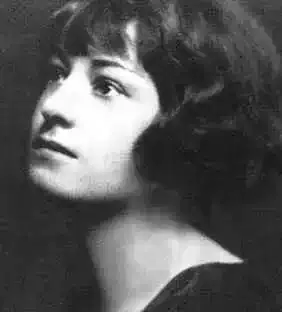
Dorothy Parker
The Last Question
New love, new love, where are you to lead me?
All along a narrow way that marks a crooked line.
How are you to slake me, and how are you to feed me?
With bitter yellow berries, and a sharp new wine.
New love, new love, shall I be forsaken?
One shall go a-wandering, and one of us must sigh.
Sweet it is to slumber, but how shall we awaken
Whose
will be the broken heart, when dawn comes by?
278

Christina Rossetti
An Echo from Willowood
“Oh Ye, All Ye That Walk in Willowwood”
Two gaz’d into a pool, he gaz’d and she,
Not hand in hand, yet heart in heart, I think,
Pale and reluctant on the water’s brink
AS on the brink of parting which must be.
Each eyed the other’s aspect, she and he,
Each felt one hungering heart leap up and sink,
Each tasted bitterness which both must drink,
There on the brink of life’s dividing sea.
Lilies upon the surface, deep below
Two wistful faces craving each for each,
Resolute and reluctant without speech:—
A sudden ripple made the faces flow
One moment join’d, to vanish out of reach:
So these hearts join’d, and ah! were parted so.
277

William Wordsworth
A Complaint
There is a change--and I am poor;
Your love hath been, nor long ago,
A fountain at my fond heart's door,
Whose only business was to flow;
And flow it did; not taking heed
Of its own bounty, or my need.
What happy moments did I count!
Blest was I then all bliss above!
Now, for that consecrated fount
Of murmuring, sparkling, living love,
What have I? Shall I dare to tell?
A comfortless and hidden well.
A well of love--it may be deep--
I trust it is,--and never dry:
What matter? If the waters sleep
In silence and obscurity.
--Such change, and at the very door
Of my fond heart, hath made me poor.
277
Robert W. Service
New Year's Eve
It's cruel cold on the water-front, silent and dark and drear;
Only the black tide weltering, only the hissing snow;
And I, alone, like a storm-tossed wreck, on this night of the glad New Year,
Shuffling along in the icy wind, ghastly and gaunt and slow.
They're playing a tune in McGuffy's saloon, and it's cheery and bright in there
(God! but I'm weak -- since the bitter dawn, and never a bite of food);
I'll just go over and slip inside -- I mustn't give way to despair -Perhaps
I can bum a little booze if the boys are feeling good.
They'll jeer at me, and they'll sneer at me, and they'll call me a whiskey soak;
("Have a drink? Well, thankee kindly, sir, I don't mind if I do.")
A drivelling, dirty, gin-joint fiend, the butt of the bar-room joke;
Sunk and sodden and hopeless -- "Another? Well, here's to you!"
McGuffy is showing a bunch of the boys how Bob Fitzsimmons hit;
The barman is talking of Tammany Hall, and why the ward boss got fired.
I'll just sneak into a corner and they'll let me alone a bit;
The room is reeling round and round . . .O God! but I'm tired, I'm tired. . . .
* * * * *
Roses she wore on her breast that night. Oh, but their scent was sweet!
Alone we sat on the balcony, and the fan-palms arched above;
The witching strain of a waltz by Strauss came up to our cool retreat,
And I prisoned her little hand in mine, and I whispered my plea of love.
Then sudden the laughter died on her lips, and lowly she bent her head;
And oh, there came in the deep, dark eyes a look that was heaven to see;
And the moments went, and I waited there, and never a word was said,
And she plucked from her bosom a rose of red and shyly gave it to me.
Then the music swelled to a crash of joy, and the lights blazed up like day,
And I held her fast to my throbbing heart, and I kissed her bonny brow.
"She is mine, she is mine for evermore!" the violins seemed to say,
And the bells were ringing the New Year in -- O God! I can hear them now.
Don't you remember that long, last waltz, with its sobbing, sad refrain?
Don't you remember that last good-by, and the dear eyes dim with tears?
Don't you remember that golden dream, with never a hint of pain,
Of lives that would blend like an angel-song in the bliss of the coming years?
Oh, what have I lost! What have I lost! Ethel, forgive, forgive!
The red, red rose is faded now, and it's fifty years ago.
'Twere better to die a thousand deaths than live each day as I live!
I have sinned, I have sunk to the lowest depths -- but oh, I have suffered so!
Hark! Oh, hark! I can hear the bells! . . . Look! I can see her there,
Fair as a dream . . . but it fades . . . And now -- I can hear the dreadful hum
Of the crowded court . . . See! the Judge looks down . . .
NOT GUILTY, my Lord, I swear . . .
The bells -- I can hear the bells again! . . . Ethel, I come, I come! . . .
* * * * *
"Rouse up, old man, it's twelve o'clock. You can't sleep here, you know.
Say! ain't you got no sentiment? Lift up your muddled head;
Have a drink to the glad New Year, a drop before you go -You
darned old dirty hobo . . . My God! Here, boys! He's DEAD!"
276
Emily Dickinson
I've none to tell me to but Thee
I've none to tell me to but Thee
So when Thou failest, nobody.
It was a little tie-
It just held Two, nor those it held
Since Somewhere thy sweet Face has spilled
Beyond my Boundary-
If things were opposite-and Me
And Me it were-that ebbed from Thee
On some unanswering ShoreWould'st
Thou seek so-just say
That I the Answer may pursue
Unto the lips it eddied through
So-
overtaking Thee-
273
Thomas Hardy
The Seasons of Her Year
I
Winter is white on turf and tree,
And birds are fled;
But summer songsters pipe to me,
And petals spread,
For what I dreamt of secretly
His lips have said!
II
O 'tis a fine May morn, they say,
And blooms have blown;
But wild and wintry is my day,
My birds make moan;
For he who vowed leaves me to pay
Alone--alone!
273

Spike Milligan
Welcome Home
Unaware of my crime
they stood me in the dock.
I was sentenced to life....
without her.
Strange trial.
No judge.
No jury.
I wonder who my visitors will be.
they stood me in the dock.
I was sentenced to life....
without her.
Strange trial.
No judge.
No jury.
I wonder who my visitors will be.
272
Thomas Hardy
The Widow
By Mellstock Lodge and Avenue
Towards her door I went,
And sunset on her window-panes
Reflected our intent.
The creeper on the gable nigh
Was fired to more than red
And when I came to halt thereby
"Bright as my joy!" I said.
Of late days it had been her aim
To meet me in the hall;
Now at my footsteps no one came;
And no one to my call.
Again I knocked; and tardily
An inner step was heard,
And I was shown her presence then
With scarce an answering word.
She met me, and but barely took
My proffered warm embrace;
Preoccupation weighed her look,
And hardened her sweet face.
"To-morrow--could you--would you call?
Make brief your present stay?
My child is ill--my one, my all! -
And can't be left to-day."
And then she turns, and gives commands
As I were out of sound,
Or were no more to her and hers
Than any neighbour round . . .
- As maid I wooed her; but one came
And coaxed her heart away,
And when in time he wedded her
I deemed her gone for aye.
He won, I lost her; and my loss
I bore I know not how;
But I do think I suffered then
Less wretchedness than now.
For Time, in taking him, had oped
An unexpected door
Of bliss for me, which grew to seem
Far surer than before . . .
Her word is steadfast, and I know
That plighted firm are we:
But she has caught new love-calls since
She smiled as maid on me!
272
Emily Dickinson
Except the Heaven had come so near
Except the Heaven had come so near-
So seemed to choose My Door-
The Distance would not haunt me so-
I had not hoped-before-
But just to hear the Grace depart-
I never thought to see-
Afflicts me with a Double loss'
Tis lost-and lost to me-
So seemed to choose My Door-
The Distance would not haunt me so-
I had not hoped-before-
But just to hear the Grace depart-
I never thought to see-
Afflicts me with a Double loss'
Tis lost-and lost to me-
270
Emily Dickinson
Taking up the fair Ideal
Taking up the fair Ideal,
Just to cast her down
When a fracture-we discover-
Or a splintered Crown-
Makes the Heavens portable-
And the Gods-a lie
Doubtless-"
Adam"-scowled at Eden-
For his perjury!
Cherishing-our pool Ideal-
Till in purer dress-
We behold her-glorified
Comforts-
search-like this-
Till the broken creatures-
We adored-for whole
Stains-
all washed
Transfigured-
mended-
Meet us-with a smile-
269

Johann Wolfgang von Goethe
To The Golden Heart That He Wore Around His Neck
OH thou token loved of joys now perish'd
That I still wear from my neck suspended,
Art thou stronger than our spirit-bond so cherish'd?
Or canst thou prolong love's days untimely ended?
Lily, I fly from thee! I still am doom'd to range
Thro' countries strange,
Thro' distant vales and woods, link'd on to thee!
Ah, Lily's heart could surely never fall
So soon away from me!
As when a bird bath broken from his thrall,
And seeks the forest green,
Proof of imprisonment he bears behind him,
A morsel of the thread once used to bind him;
The free-born bird of old no more is seen,
For he another's prey bath been.
267