
Disillusionment and Lost Love

Henry Lawson
The Separation
We knew too little of the world,
And you and I were good—
’Twas paltry things that wrecked our lives
As well I knew they would.
The people said our love was dead,
But how were they to know?
Ah! had we loved each other less
We’d not have quarrelled so.
We knew too little of the world,
And you and I were kind,
We listened to what others said
And both of us were blind.
The people said ’twas selfishness,
But how were they to know?
Ah! had we both more selfish been
We’d not have parted so.
But still when all seems lost on earth
Then heaven sets a sign—
Kneel down beside your lonely bed,
And I will kneel by mine,
And let us pray for happy days—
Like those of long ago.
Ah! had we knelt together then
We’d not have parted so.
268

Christina Rossetti
Echo
Come to me in the silence of the night;
Come in the speaking silence of a dream;
Come with soft rounded cheeks and eyes as bright
As sunlight on a stream;
Come back in tears,
O memory, hope, love of finished years.
O dream how sweet, too sweet, too bitter sweet,
Whose wakening should have been in Paradise,
Where souls brimfull of love abide and meet;
Where thirsting longing eyes
Watch the slow door
That opening, letting in, lets out no more.
Yet come to me in dreams, that I may live
My very life again though cold in death:
Come back to me in dreams, that I may give
Pulse for pulse, breath for breath:
Speak low, lean low
As long ago, my love, how long ago.
262

Thomas Hardy
The Dame of Athelhall
I
"Soul! Shall I see thy face," she said,
"In one brief hour?
And away with thee from a loveless bed
To a far-off sun, to a vine-wrapt bower,
And be thine own unseparated,
And challenge the world's white glower?
II
She quickened her feet, and met him where
They had predesigned:
And they clasped, and mounted, and cleft the air
Upon whirling wheels; till the will to bind
Her life with his made the moments there
Efface the years behind.
III
Miles slid, and the sight of the port upgrew
As they sped on;
When slipping its bond the bracelet flew
From her fondled arm. Replaced anon,
Its cameo of the abjured one drew
Her musings thereupon.
IV
The gaud with his image once had been
A gift from him:
And so it was that its carving keen
Refurbished memories wearing dim,
Which set in her soul a throe of teen,
And a tear on her lashes' brim.
V
"I may not go!" she at length upspake,
"Thoughts call me back -
I would still lose all for your dear, dear sake;
My heart is thine, friend! But my track
I home to Athelhall must take
To hinder household wrack!"
VI
He appealed. But they parted, weak and wan:
And he left the shore;
His ship diminished, was low, was gone;
And she heard in the waves as the daytide wore,
And read in the leer of the sun that shone,
That they parted for evermore.
VII
She homed as she came, at the dip of eve
On Athel Coomb
Regaining the Hall she had sworn to leave . . .
The house was soundless as a tomb,
And she entered her chamber, there to grieve
Lone, kneeling, in the gloom.
VIII
From the lawn without rose her husband's voice
To one his friend:
"Another her Love, another my choice,
Her going is good. Our conditions mend;
In a change of mates we shall both rejoice;
I hoped that it thus might end!
IX
"A quick divorce; she will make him hers,
And I wed mine.
So Time rights all things in long, long years -
Or rather she, by her bold design!
I admire a woman no balk deters:
She has blessed my life, in fine.
X
"I shall build new rooms for my new true bride,
Let the bygone be:
By now, no doubt, she has crossed the tide
With the man to her mind. Far happier she
In some warm vineland by his side
Than ever she was with me."
264

Robert W. Service
No More Music
The Porch was blazoned with geranium bloom;
Myrtle and jasmine meadows lit the lea;
With rose and violet the vale's perfume
Languished to where the hyacinthine sea
Dreamed tenderly . . . "And I must go," said he.
He spoke in that dim, ghostly voice of his:
"I was a singer; then the Was . . . and GAS."
(I had to lean to him, no word to miss.)
"We bought this little café nigh to Grasse;
With sun and flowers my last few days will pass.
"And music too. I have my mandolin:
Say! Maybe you can strum on your guitar . . .
Come on - we two will make melodious din,
While Madame sings to us behind the bar:
You'll see how sweet Italian folk-songs are."
So he would play and I would thrum the while;
I used to there every lovely day;
His wife would listen with a sunny smile,
And when I left: "Please come again," she'd say.
"He seems quite sad when you have one away."
Alas! I had to leave without good-bye,
And lived in sooty cities for ayear.
Oh, how my heart ached for that happy sky!
Then, then one day my café I drew near -
God! it was strange how I was gripped with fear.
So still it was; I saw no mandolin,
No gay guitar with ribbons blue and red;
Then all in black, stone-faced the wife came in . . .
I did not ask; I looked, she shook her head:
"La musique est fini," was all she said.
263

Edna St. Vincent Millay
Sonnets 04: Only Until This Cigarette Is Ended
Only until this cigarette is ended,
A little moment at the end of all,
While on the floor the quiet ashes fall,
And in the firelight to a lance extended,
Bizarrely with the jazzing music blended,
The broken shadow dances on the wall,
I will permit my memory to recall
The vision of you, by all my dreams attended.
And then adieu,—farewell!—the dream is done.
Yours is a face of which I can forget
The color and the features, every one,
The words not ever, and the smiles not yet;
But in your day this moment is the sun
Upon a hill, after the sun has set.
261
Thomas Hardy
To Lizbie Browne
I
Dear Lizbie Browne,
Where are you now?
In sun, in rain? -
Or is your brow
Past joy, past pain,
Dear Lizbie Browne?
II
Sweet Lizbie Browne
How you could smile,
How you could sing! -
How archly wile
In glance-giving,
Sweet Lizbie Browne!
III
And, Lizbie Browne,
Who else had hair
Bay-red as yours,
Or flesh so fair
Bred out of doors,
Sweet Lizbie Browne?
IV
When, Lizbie Browne,
You had just begun
To be endeared
By stealth to one,
You disappeared
My Lizbie Browne!
V
Ay, Lizbie Browne,
So swift your life,
And mine so slow,
You were a wife
Ere I could show
Love, Lizbie Browne.
VI
Still, Lizbie Browne,
You won, they said,
The best of men
When you were wed . . .
Where went you then,
O Lizbie Browne?
VII
Dear Lizbie Browne,
I should have thought,
"Girls ripen fast,"
And coaxed and caught
You ere you passed,
Dear Lizbie Browne!
VIII
But, Lizbie Browne,
I let you slip;
Shaped not a sign;
Touched never your lip
With lip of mine,
Lost Lizbie Browne!
IX
So, Lizbie Browne,
When on a day
Men speak of me
As not, you'll say,
"And who was he?" -
Yes, Lizbie Browne!
Dear Lizbie Browne,
Where are you now?
In sun, in rain? -
Or is your brow
Past joy, past pain,
Dear Lizbie Browne?
II
Sweet Lizbie Browne
How you could smile,
How you could sing! -
How archly wile
In glance-giving,
Sweet Lizbie Browne!
III
And, Lizbie Browne,
Who else had hair
Bay-red as yours,
Or flesh so fair
Bred out of doors,
Sweet Lizbie Browne?
IV
When, Lizbie Browne,
You had just begun
To be endeared
By stealth to one,
You disappeared
My Lizbie Browne!
V
Ay, Lizbie Browne,
So swift your life,
And mine so slow,
You were a wife
Ere I could show
Love, Lizbie Browne.
VI
Still, Lizbie Browne,
You won, they said,
The best of men
When you were wed . . .
Where went you then,
O Lizbie Browne?
VII
Dear Lizbie Browne,
I should have thought,
"Girls ripen fast,"
And coaxed and caught
You ere you passed,
Dear Lizbie Browne!
VIII
But, Lizbie Browne,
I let you slip;
Shaped not a sign;
Touched never your lip
With lip of mine,
Lost Lizbie Browne!
IX
So, Lizbie Browne,
When on a day
Men speak of me
As not, you'll say,
"And who was he?" -
Yes, Lizbie Browne!
262
Henry Lawson
To-Morrow
When you’re suffering hard for your sins, old man,
When you wake to trouble and sleep ill—
Oh, this is the clack of the middle class,
‘Win back the respect of the people!’
You are weak, you’re a fool, or a drunken brute
When you’re deep in trouble and sorrow;
But walk down the street in a decent suit,
And their hats will be off to-morrow! Old Chap—
And their hats will be off to-morrow!
They cant and they cackle—‘Redeem the Past!’
Who never had past worth redeeming:
Your soul seems dead, but you’ll find at last
That somewhere your soul lay dreaming.
You may stagger down-hill in a beer-stained coat,
You may loaf, you may cadge and borrow—
But walk down the street with a ten-pound note
And their hats will be off to-morrow! Old Man—
Yes, their hats will be off to-morrow!
But stick to it, man! for your old self’s sake,
Though to brood on the past is human;
Hold up for the sake of the mate who was true,
And the sake of the Other Woman.
And as for the rest, you may take off your hat
And banish all signs of sorrow;
You may take their hands, but in spite of that,
Can they win your respect to-morrow? Old Man—
Can they win your respect to-morrow?
259
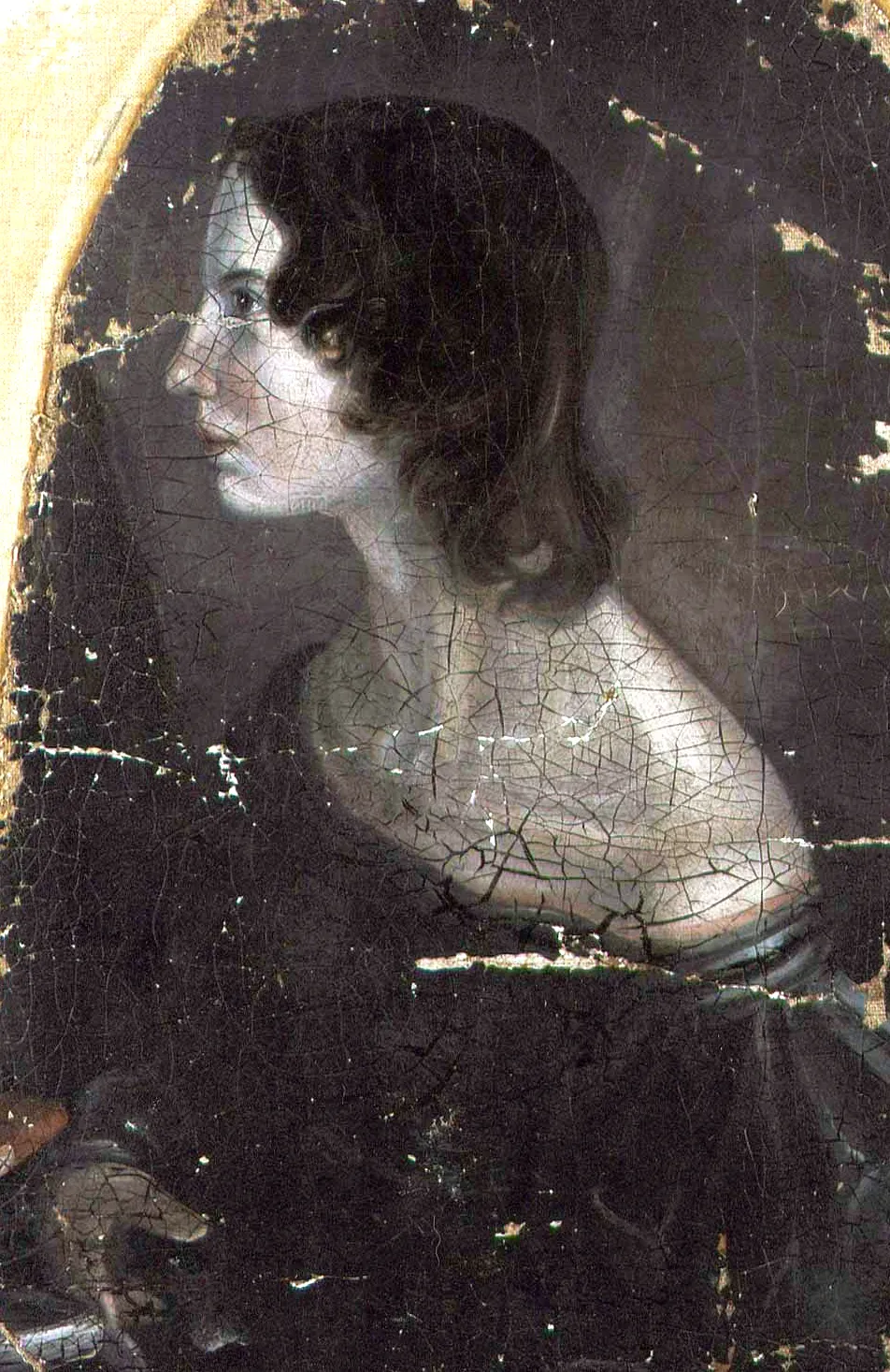
Emily Jane Brontë
A Little Budding Rose
It was a little budding rose,
Round like a fairy globe,
And shyly did its leaves unclose
Hid in their mossy robe,
But sweet was the slight and spicy smell
It breathed from its heart invisible.
The rose is blasted, withered, blighted,
Its root has felt a worm,
And like a heart beloved and slighted,
Failed, faded, shrunk its form.
Bud of beauty, bonnie flower,
I stole thee from thy natal bower.
I was the worm that withered thee,
Thy tears of dew all fell for me;
Leaf and stalk and rose are gone,
Exile earth they died upon.
Yes, that last breath of balmy scent
With alien breezes sadly blent!
258
Thomas Hardy
Unknowing
WHEN, soul in soul reflected,
We breathed an æthered air,
When we neglected
All things elsewhere,
And left the friendly friendless
To keep our love aglow,
We deemed it endless...
--We did not know!
When, by mad passion goaded,
We planned to hie away,
But, unforeboded,
The storm-shafts gray
So heavily down-pattered
That none could forthward go,
Our lives seemed shattered...
--We did not know!
When I found you, helpless lying,
And you waived my deep misprise,
And swore me, dying,
In phantom-guise
To wing to me when grieving,
And touch away my woe,
We kissed, believing...
--We did not know!
But though, your powers outreckoning,
You hold you dead and dumb,
Or scorn my beckoning,
And will not come;
And I say, "'Twere mood ungainly
To store her memory so:"
I say it vainly--
I feel and know!
256
Christina Rossetti
Light Love
'Oh, sad thy lot before I came,
But sadder when I go;
My presence but a flash of flame,
A transitory glow
Between two barren wastes like snow.
What wilt thou do when I am gone,
Where wilt thou rest, my dear?
For cold thy bed to rest upon,
And cold the falling year
Whose withered leaves are lost and sere.'
She hushed the baby at her breast,
She rocked it on her knee:
'And I will rest my lonely rest,
Warmed with the thought of thee,
Rest lulled to rest by memory.'
She hushed the baby with her kiss,
She hushed it with her breast:
'Is death so sadder much than this—
Sure death that builds a nest
For those who elsewhere cannot rest?'
'Oh, sad thy note, my mateless dove,
With tender nestling cold;
But hast thou ne'er another love
Left from the days of old,
To build thy nest of silk and gold,
To warm thy paleness to a blush
When I am far away—
To warm thy coldness to a flush,
And turn thee back to May,
And turn thy twilight back to day?'
She did not answer him again,
But leaned her face aside,
Weary with the pang of shame and pain,
And sore with wounded pride:
He knew his very soul had lied.
She strained his baby in her arms,
His baby to her heart:
'Even let it go, the love that harms:
We twain will never part;
Mine own, his own, how dear thou art.'
'Now never teaze me, tender-eyed,
Sigh-voiced,' he said in scorn:
'For nigh at hand there blooms a bride,
My bride before the morn;
Ripe-blooming she, as thou forlorn.
Ripe-blooming she, my rose, my peach;
She woos me day and night:
I watch her tremble in my reach;
She reddens, my delight,
She ripens, reddens in my sight.'
'And is she like a sunlit rose?
Am I like withered leaves?
Haste where thy spiced garden blows:
But in bare Autumn eves
Wilt thou have store of harvest sheaves?
Thou leavest love, true love behind,
To seek a love as true;
Go, seek in haste: but wilt thou find?
Change new again for new;
Pluck up, enjoy—yea, trample too.
'Alas for her, poor faded rose,
Alas for her her, like me,
Cast down and trampled in the snows.'
'Like thee? nay, not like thee:
She leans, but from a guarded tree.
Farewell, and dream as long ago,
Before we ever met:
Farewell; my swift-paced horse seems slow.'
She raised her eyes, not wet
But hard, to Heaven: 'Does God forget?'
254

William Shakespeare
Take, O take those Lips away
TAKE, O take those lips away,
That so sweetly were forsworn;
And those eyes, the break of day,
Lights that do mislead the morn!
But my kisses bring again,
Bring again;
Seals of love, but seal'd in vain,
Seal'd in vain!
That so sweetly were forsworn;
And those eyes, the break of day,
Lights that do mislead the morn!
But my kisses bring again,
Bring again;
Seals of love, but seal'd in vain,
Seal'd in vain!
251
Christina Rossetti
Once For All
I said: This is a beautiful fresh rose.
I said: I will delight me with its scent,
Will watch its lovely curve of languishment,
Will watch its leaves unclose, its heart unclose.
I said: Old earth has put away her snows,
All living things make merry to their bent,
A flower is come for every flower that went.
In autumn, the sun glows, the south wind blows,
So walking in a garden of delight
I came upon one sheltered shadowed nook
Where broad leaf-shadows veiled the day with night
And there lay snow unmelted by the sun: -
I answered: Take who will the path I took,
Winter nips once for all; love is but one.
252
Henry Lawson
Peter Anderson And Co.
He had offices in Sydney, not so many years ago,
And his shingle bore the legend `Peter Anderson and Co.',
But his real name was Careless, as the fellows understood --
And his relatives decided that he wasn't any good.
'Twas their gentle tongues that blasted any `character' he had --
He was fond of beer and leisure -- and the Co. was just as bad.
It was limited in number to a unit, was the Co. -'
Twas a bosom chum of Peter and his Christian name was Joe.
'Tis a class of men belonging to these soul-forsaken years:
Third-rate canvassers, collectors, journalists and auctioneers.
They are never very shabby, they are never very spruce --
Going cheerfully and carelessly and smoothly to the deuce.
Some are wanderers by profession, `turning up' and gone as soon,
Travelling second-class, or steerage (when it's cheap they go saloon);
Free from `ists' and `isms', troubled little by belief or doubt --
Lazy, purposeless, and useless -- knocking round and hanging out.
They will take what they can get, and they will give what they can give,
God alone knows how they manage -- God alone knows how they live!
They are nearly always hard-up, but are cheerful all the while --
Men whose energy and trousers wear out sooner than their smile!
They, no doubt, like us, are haunted by the boresome `if' or `might',
But their ghosts are ghosts of daylight -- they are men who live at night!
Peter met you with the comic smile of one who knows you well,
And is mighty glad to see you, and has got a joke to tell;
He could laugh when all was gloomy, he could grin when all was blue,
Sing a comic song and act it, and appreciate it, too.
Only cynical in cases where his own self was the jest,
And the humour of his good yarns made atonement for the rest.
Seldom serious -- doing business just as 'twere a friendly game --
Cards or billiards -- nothing graver. And the Co. was much the same.
They tried everything and nothing 'twixt the shovel and the press,
And were more or less successful in their ventures -- mostly less.
Once they ran a country paper till the plant was seized for debt,
And the local sinners chuckle over dingy copies yet.
They'd been through it all and knew it in the land of Bills and Jims --
Using Peter's own expression, they had been in `various swims'.
Now and then they'd take an office, as they called it, -- make a dash
Into business life as `agents' -- something not requiring cash.
(You can always furnish cheaply, when your cash or credit fails,
With a packing-case, a hammer, and a pound of two-inch nails --
And, maybe, a drop of varnish and sienna, too, for tints,
And a scrap or two of oilcloth, and a yard or two of chintz).
They would pull themselves together, pay a week's rent in advance,
But it never lasted longer than a month by any chance.
The office was their haven, for they lived there when hard-up --
A `daily' for a table cloth -- a jam tin for a cup;
And if the landlord's bailiff happened round in times like these
And seized the office-fittings -- well, there wasn't much to seize --
They would leave him in possession. But at other times they shot
The moon, and took an office where the landlord knew them not.
And when morning brought the bailiff there'd be nothing to be seen
Save a piece of bevelled cedar where the tenant's plate had been;
There would be no sign of Peter -- there would be no sign of Joe
Till another portal boasted `Peter Anderson and Co.'
And when times were locomotive, billiard-rooms and private bars --
Spicy parties at the cafe -- long cab-drives beneath the stars;
Private picnics down the Harbour -- shady campings-out, you know --
No one would have dreamed 'twas Peter -
no one would have thought 'twas Joe!
Free-and-easies in their `diggings', when the funds began to fail,
Bosom chums, cigars, tobacco, and a case of English ale --
Gloriously drunk and happy, till they heard the roosters crow --
And the landlady and neighbours made complaints about the Co.
But that life! it might be likened to a reckless drinking-song,
For it can't go on for ever, and it never lasted long.
. . . . .
Debt-collecting ruined Peter -- people talked him round too oft,
For his heart was soft as butter (and the Co.'s was just as soft);
He would cheer the haggard missus, and he'd tell her not to fret,
And he'd ask the worried debtor round with him to have a wet;
He would ask him round the corner, and it seemed to him and her,
After each of Peter's visits, things were brighter than they were.
But, of course, it wasn't business -- only Peter's careless way;
And perhaps it pays in heaven, but on earth it doesn't pay.
They got harder up than ever, and, to make it worse, the Co.
Went more often round the corner than was good for him to go.
`I might live,' he said to Peter, `but I haven't got the nerve --
I am going, Peter, going -- going, going -- no reserve.
Eat and drink and love they tell us, for to-morrow we may die,
Buy experience -- and we bought it -- we're experienced, you and I.'
Then, with a weary movement of his hand across his brow:
`The death of such philosophy's the death I'm dying now.
Pull yourself together, Peter; 'tis the dying wish of Joe
That the business world shall honour Peter Anderson and Co.
`When you feel your life is sinking in a dull and useless course,
And begin to find in drinking keener pleasure and remorse --
When you feel the love of leisure on your careless heart take holt,
Break away from friends and pleasure, though it give your heart a jolt.
Shun the poison breath of cities -- billiard-rooms and private bars,
Go where you can breathe God's air and see the grandeur of the stars!
Find again and follow up the old ambitions that you had --
See if you can raise a drink, old man, I'm feelin' mighty bad --
Hot and sweetened, nip o' butter -- squeeze o' lemon, Pete,' he sighed.
And, while Peter went to fetch it, Joseph went to sleep -- and died
With a smile -- anticipation, maybe, of the peace to come,
Or a joke to try on Peter -- or, perhaps, it was the rum.
. . . . .
Peter staggered, gripped the table, swerved as some old drunkard swerves --
At a gulp he drank the toddy, just to brace his shattered nerves.
It was awful, if you like. But then he hadn't time to think --
All is nothing! Nothing matters! Fill your glasses -- dead man's drink.
. . . . .
Yet, to show his heart was not of human decency bereft,
Peter paid the undertaker. He got drunk on what was left;
Then he shed some tears, half-maudlin, on the grave where lay the Co.,
And he drifted to a township where the city failures go.
Where, though haunted by the man he was, the wreck he yet might be,
Or the man he might have been, or by each spectre of the three,
And the dying words of Joseph, ringing through his own despair,
Peter `pulled himself together' and he started business there.
But his life was very lonely, and his heart was very sad,
And no help to reformation was the company he had --
Men who might have been, who had been, but who were not in the swim -'
Twas a town of wrecks and failures -- they appreciated him.
They would ask him who the Co. was -- that queer company he kept --
And he'd always answer vaguely -- he would say his partner slept;
That he had a `sleeping partner' -- jesting while his spirit broke --
And they grinned above their glasses, for they took it as a joke.
He would shout while he had money, he would joke while he had breath --
No one seemed to care or notice how he drank himself to death;
Till at last there came a morning when his smile was seen no more --
He was gone from out the office, and his shingle from the door,
And a boundary-rider jogging out across the neighb'ring run
Was attracted by a something that was blazing in the sun;
And he found that it was Peter, lying peacefully at rest,
With a bottle close beside him and the shingle on his breast.
Well, they analysed the liquor, and it would appear that he
Qualified his drink with something good for setting spirits free.
Though 'twas plainly self-destruction -- `'twas his own affair,' they said;
And the jury viewed him sadly, and they found -- that he was dead.
251
Thomas Hardy
The Dream-Follower
A dream of mine flew over the mead
To the halls where my old Love reigns;
And it drew me on to follow its lead:
And I stood at her window-panes;
And I saw but a thing of flesh and bone
Speeding on to its cleft in the clay;
And my dream was scared, and expired on a moan,
And I whitely hastened away.
To the halls where my old Love reigns;
And it drew me on to follow its lead:
And I stood at her window-panes;
And I saw but a thing of flesh and bone
Speeding on to its cleft in the clay;
And my dream was scared, and expired on a moan,
And I whitely hastened away.
247
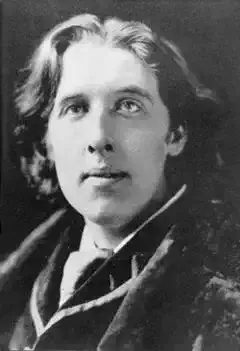
Oscar Wilde
Flower of Love
Sweet, I blame you not, for mine the fault was, had I not been made of common
clay
I had climbed the higher heights unclimbed yet, seen the fuller air, the
larger day.
From the wildness of my wasted passion I had struck a better, clearer song,
Lit some lighter light of freer freedom, battled with some Hydra-headed wrong.
Had my lips been smitten into music by the kisses that but made them bleed,
You had walked with Bice and the angels on that verdant and enamelled meed.
I had trod the road which Dante treading saw the suns of seven circles shine,
Ay! perchance had seen the heavens opening, as they opened to the Florentine.
And the mighty nations would have crowned me, who am crownless now and without
name,
And some orient dawn had found me kneeling on the threshold of the House of
Fame.
I had sat within that marble circle where the oldest bard is as the young,
And the pipe is ever dropping honey, and the lyre's strings are ever strung.
Keats had lifted up his hymeneal curls from out the poppy-seeded wine,
With ambrosial mouth had kissed my forehead, clasped the hand of noble love in
mine.
And at springtide, when the apple-blossoms brush the burnished bosom of the
dove,
Two young lovers lying in an orchard would have read the story of our love;
Would have read the legend of my passion, known the bitter secret of my heart,
Kissed as we have kissed, but never parted as we two are fated now to part.
For the crimson flower of our life is eaten by the cankerworm of truth,
And no hand can gather up the fallen withered petals of the rose of youth.
Yet I am not sorry that I loved you -ah! what else had I a boy to do? -
For the hungry teeth of time devour, and the silent-footed years pursue.
Rudderless, we drift athwart a tempest, and when once the storm of youth is
past,
Without lyre, without lute or chorus, Death the silent pilot comes at last.
And within the grave there is no pleasure, for the blindworm battens on the
root,
And Desire shudders into ashes, and the tree of Passion bears no fruit.
Ah! what else had I to do but love you? God's own mother was less dear to me,
And less dear the Cytheraean rising like an argent lily from the sea.
I have made my choice, have lived my poems, and, though youth is gone in
wasted days,
I have found the lover's crown of myrtle better than the poet's crown of bays.
244
Robert W. Service
The Philistine And The Bohemian
She was a Philistine spick and span,
He was a bold Bohemian.
She had the mode, and the last at that;
He had a cape and a brigand hat.
She was so riant and chic and trim;
He was so shaggy, unkempt and grim.
On the rue de la Paix she was wont to shine;
The rue de la Gaîté was more his line.
She doted on Barclay and Dell and Caine;
He quoted Mallarmé and Paul Verlaine.
She was a triumph at Tango teas;
At Vorticist's suppers he sought to please.
She thought that Franz Lehar was utterly great;
Of Strauss and Stravinsky he'd piously prate.
She loved elegance, he loved art;
They were as wide as the poles apart:
Yet -- Cupid and Caprice are hand and glove --
They met at a dinner, they fell in love.
Home he went to his garret bare,
Thrilling with rapture, hope, despair.
Swift he gazed in his looking-glass,
Made a grimace and murmured: "Ass!"
Seized his scissors and fiercely sheared,
Severed his buccaneering beard;
Grabbed his hair, and clip! clip! clip!
Off came a bunch with every snip.
Ran to a tailor's in startled state,
Suits a dozen commanded straight;
Coats and overcoats, pants in pairs,
Everything that a dandy wears;
Socks and collars, and shoes and ties,
Everything that a dandy buys.
Chums looked at him with wondering stare,
Fancied they'd seen him before somewhere;
A Brummell, a D'Orsay, a beau so fine,
A shining, immaculate Philistine.
Home she went in a raptured daze,
Looked in a mirror with startled gaze,
Didn't seem to be pleased at all;
Savagely muttered: "Insipid Doll!"
Clutched her hair and a pair of shears,
Cropped and bobbed it behind the ears;
Aimed at a wan and willowy-necked
Sort of a Holman Hunt effect;
Robed in subtile and sage-green tones,
Like the dames of Rossetti and E. Burne-Jones;
Girdled her garments billowing wide,
Moved with an undulating glide;
All her frivolous friends forsook,
Cultivated a soulful look;
Gushed in a voice with a creamy throb
Over some weirdly Futurist daub --
Did all, in short, that a woman can
To be a consummate Bohemian.
A year went past with its hopes and fears,
A year that seemed like a dozen years.
They met once more. . . . Oh, at last! At last!
They rushed together, they stopped aghast.
They looked at each other with blank dismay,
They simply hadn't a word to say.
He thought with a shiver: "Can this be she?"
She thought with a shudder: "This can't be he?"
This simpering dandy, so sleek and spruce;
This languorous lily in garments loose;
They sought to brace from the awful shock:
Taking a seat, they tried to talk.
She spoke of Bergson and Pater's prose,
He prattled of dances and ragtime shows;
She purred of pictures, Matisse, Cezanne,
His tastes to the girls of Kirchner ran;
She raved of Tchaikovsky and Caesar Franck,
He owned that he was a jazz-band crank!
They made no headway. Alas! alas!
He thought her a bore, she thought him an ass.
And so they arose and hurriedly fled;
Perish Illusion, Romance, you're dead.
He loved elegance, she loved art,
Better at once to part, to part.
And what is the moral of all this rot?
Don't try to be what you know you're not.
And if you're made on a muttonish plan,
Don't seek to seem a Bohemian;
And if to the goats your feet incline,
Don't try to pass for a Philistine.
243
Christina Rossetti
Cousin Kate
I was a cottage maiden
Hardened by sun and air
Contented with my cottage mates,
Not mindful I was fair.
Why did a great lord find me out,
And praise my flaxen hair?
Why did a great lord find me out,
To fill my heart with care?
He lured me to his palace home Woe's
me for joy thereof-
To lead a shameless shameful life,
His plaything and his love.
He wore me like a silken knot,
He changed me like a glove;
So now I moan, an unclean thing,
Who might have been a dove.
O Lady kate, my cousin Kate,
You grew more fair than I:
He saw you at your father's gate,
Chose you, and cast me by.
He watched your steps along the lane,
Your work among the rye;
He lifted you from mean estate
To sit with him on high.
Because you were so good and pure
He bound you with his ring:
The neighbors call you good and pure,
Call me an outcast thing.
Even so I sit and howl in dust,
You sit in gold and sing:
Now which of us has tenderer heart?
You had the stronger wing.
O cousin Kate, my love was true,
Your love was writ in sand:
If he had fooled not me but you,
If you stood where I stand,
He'd not have won me with his love
Nor bought me with his land;
I would have spit into his face
And not have taken his hand.
Yet I've a gift you have not got,
And seem not like to get:
For all your clothes and wedding-ring
I've little doubt you fret.
My fair-haired son, my shame, my pride,
Cling closer, closer yet:
Your father would give his lands for one
To wear his coronet.
242
Christina Rossetti
Mirage
The hope I dreamed of was a dream,
Was but a dream; and now I wake,
Exceeding comfortless, and worn, and old,
For a dream's sake.
I hang my harp upon a tree,
A weeping willow in a lake;
I hang my silent harp there, wrung and snapped
For a dream's sake.
Lie still, lie still, my breaking heart;
My silent heart, lie still and break:
Life, and the world, and mine own self, are changed
For a dream's sake.
239
Henry Lawson
Do You Think That I Do Not Know?
They say that I never have written of love,
As a writer of songs should do;
They say that I never could touch the strings
With a touch that is firm and true;
They say I know nothing of women and men
In the fields where Love's roses grow,
And they say I must write with a halting pen
Do you think that I do not know?
When the love-burst came, like an English Spring,
In days when our hair was brown,
And the hem of her skirt was a sacred thing
And her hair was an angel's crown.
The shock when another man touched her arm,
Where the dancers sat round in a row;
The hope and despair, and the false alarm
Do you think that I do not know?
By the arbour lights on the western farms,
You remember the question put,
While you held her warm in your quivering arms
And you trembled from head to foot.
The electric shock from her finger tips,
And the murmuring answer low,
The soft, shy yielding of warm red lips
Do you think that I do not know?
She was buried at Brighton, where Gordon sleeps,
When I was a world away;
And the sad old garden its secret keeps,
For nobody knows to-day.
She left a message for me to read,
Where the wild wide oceans flow;
Do you know how the heart of a man can bleed
Do you think that I do not know?
I stood by the grave where the dead girl lies,
When the sunlit scenes were fair,
And the white clouds high in the autumn skies,
And I answered the message there.
But the haunting words of the dead to me
Shall go wherever I go.
She lives in the Marriage that Might Have Been
Do you think that I do not know?
They sneer or scoff, and they pray or groan,
And the false friend plays his part.
Do you think that the blackguard who drinks alone
Knows aught of a pure girl's heart?
Knows aught of the first pure love of a boy
With his warm young blood aglow,
Knows aught of the thrill of the world-old joy
Do you think that I do not know?
They say that I never have written of love,
They say that my heart is such
That finer feelings are far above;
But a writer may know too much.
There are darkest depths in the brightest nights,
When the clustering stars hang low;
There are things it would break his strong heart to write
Do you think that I do not know?
239
Thomas Hardy
In The Vaulted Way
In the vaulted way, where the passage turned
To the shadowy corner that none could see,
You paused for our parting, - plaintively:
Though overnight had come words that burned
My fond frail happiness out of me.
And then I kissed you, - despite my thought
That our spell must end when reflection came
On what you had deemed me, whose one long aim
Had been to serve you; that what I sought
Lay not in a heart that could breathe such blame.
But yet I kissed you: whereon you again
As of old kissed me. Why, why was it so?
Do you cleave to me after that light-tongued blow?
If you scorned me at eventide, how love then?
The thing is dark, Dear. I do not know.
237
Robert W. Service
Expectation
My flask of wine was ruby red
And swift I ran my sweet to see;
With eyes that snapped delight I said:
"How mad with love a lad can be!"
The moon was laughing overhead;
I danced as nimbly as a flea.
Thought I: In two weeks time we'll wed;
No more a lonesome widow she;
For I have bought a double bed
And I will father children three.
So singing like a lark I sped
To her who ne'er expected me.
And then I went with wary tread,
Her sweet surprise to greet with glee;
To where her lamplit lattice shed
A rosy radiance on the lea:
. . . And then my heart sank low like lead,
Two shadows on the blind to see.
A man was sitting on the bed,
And she was nudely on his knee. . . .
I saw her face drain white with dread,
I saw her lover madly flee. . . .
Oh how her blood is ruby red,
And I await the gallows tree
235
Thomas Hardy
A Commonplace Day
The day is turning ghost,
And scuttles from the kalendar in fits and furtively,
To join the anonymous host
Of those that throng oblivion; ceding his place, maybe,
To one of like degree.
I part the fire-gnawed logs,
Rake forth the embers, spoil the busy flames, and lay the ends
Upon the shining dogs;
Further and further from the nooks the twilight's stride extends,
And beamless black impends.
Nothing of tiniest worth
Have I wrought, pondered, planned; no one thing asking blame or
praise,
Since the pale corpse-like birth
Of this diurnal unit, bearing blanks in all its rays -
Dullest of dull-hued Days!
Wanly upon the panes
The rain slides as have slid since morn my colourless thoughts; and
yet
Here, while Day's presence wanes,
And over him the sepulchre-lid is slowly lowered and set,
He wakens my regret.
Regret--though nothing dear
That I wot of, was toward in the wide world at his prime,
Or bloomed elsewhere than here,
To die with his decease, and leave a memory sweet, sublime,
Or mark him out in Time . . .
--Yet, maybe, in some soul,
In some spot undiscerned on sea or land, some impulse rose,
Or some intent upstole
Of that enkindling ardency from whose maturer glows
The world's amendment flows;
But which, benumbed at birth
By momentary chance or wile, has missed its hope to be
Embodied on the earth;
And undervoicings of this loss to man's futurity
May wake regret in me.
236
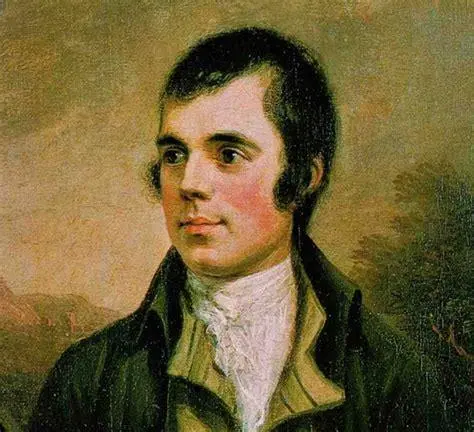
Robert Burns
Ye Banks And Braes O'Bonnie Doon
Ye banks and braes o' bonnie Doon,
How can ye bloom sae fair!
How can ye chant, ye little birds,
And I sae fu' o' care!
Thou'll break my heart, thou bonnie bird
That sings upon the bough;
Thou minds me o' the happy days
When my fause Luve was true.
Thou'll break my heart, thou bonnie bird
That sings beside thy mate;
For sae I sat, and sae I sang,
And wist na o' my fate.
Aft hae I roved by bonnie Doon
To see the woodbine twine,
And ilka bird sang o' its love;
And sae did I o' mine.
Wi' lightsome heart I pu'd a rose
Frae aff its thorny tree;
And my fause luver staw the rose,
But left the thorn wi' me.
234
Henry Lawson
When Hopes Ran High
When hopes ran high the world was young,
We thought that we would never die,
And glorious were the songs we sung
In those grand days when hopes ran high.
When hopes ran high the world was true
We thought that friends could never lie—
There have been bitter truths for you
And me, since days when hopes ran high.
We thought that we would never die,
And glorious were the songs we sung
In those grand days when hopes ran high.
When hopes ran high the world was true
We thought that friends could never lie—
There have been bitter truths for you
And me, since days when hopes ran high.
236