
Disillusionment and Lost Love
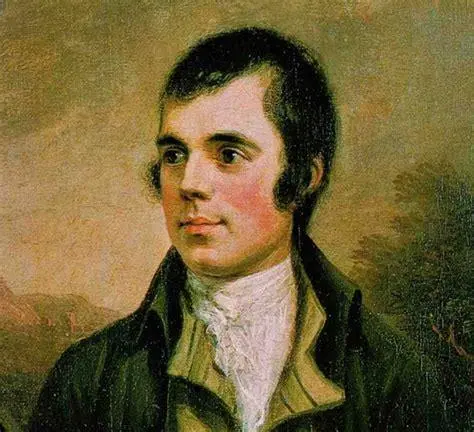
Robert Burns
Ae Fond Kiss, And Then We Sever
Ae fond kiss, and then we sever;
Ae fareweel, and then for ever!
Deep in heart-wrung tears I'll pledge thee,
Warring sighs and groans I'll wage thee.
Who shall say that Fortune grieves him
While the star of hope she leaves him?
Me, nae cheerful twinkle lights me,
Dark despair around benights me.
I'll ne'er blame my partial fancy;
Naething could resist my Nancy;
But to see her was to love her,
Love but her, and love for ever.
Had we never loved sae kindly,
Had we never loved sae blindly,
Never met -or never parted,
We had ne'er been broken-hearted.
Fare thee weel, thou first and fairest!
Fare thee weel, thou best and dearest!
Thine be ilka joy and treasure,
Peace, enjoyment, love, and pleasure!
Ae fond kiss, and then we sever;
Ae fareweel, alas, for ever!
Deep in heart-wrung tears I'll pledge thee,
Warring sighs and groans I'll wage thee.
235

Christina Rossetti
Goodbye In Fear, Goodbye In Sorrow
‘Goodbye in fear, goodbye in sorrow,
Goodbye, and all in vain,
Never to meet again, my dear -’
‘Never to part again.’
‘Goodbye today, goodbye tomorrow,
Goodbye till earth shall wane,
Never to meet again, my dear -’
‘Never to part again.’
Goodbye, and all in vain,
Never to meet again, my dear -’
‘Never to part again.’
‘Goodbye today, goodbye tomorrow,
Goodbye till earth shall wane,
Never to meet again, my dear -’
‘Never to part again.’
235
Christina Rossetti
Last Night
Where were you last night? I watched at the gate;
I went down early, I stayed down late.
Were you snug at home, I should like to know,
Or were you in the coppice wheedling Kate?
She's a fine girl, with a fine clear skin;
Easy to woo, perhaps not hard to win.
Speak up like a man and tell me the truth:
I'm not one to grow downhearted and thin.
If you love her best speak up like a man;
It's not I will stand in the light of your plan:
Some girls might cry and scold you a bit,
And say they couldn't bear it; but I can.
Love was pleasant enough, and the days went fast;
Pleasant while it lasted, but it needn't last;
Awhile on the wax and awhile on the wane,
Now dropped away into the past.
Was it pleasant to you? To me it was;
Now clean gone as an image from glass,
As a goodly rainbow that fades away,
As dew that steams upward from the grass,
As the first spring day, or the last summer day,
As the sunset flush that leaves heaven grey,
As a flame burnt out for lack of oil,
Which no pains relight or ever may.
Good luck to Kate and good luck to you:
I guess she'll be kind when you come to woo.
I wish her a pretty face that will last,
I wish her a husband steady and true.
Hate you? not I, my very good friend;
All things begin and all have an end.
But let broken be broken; I put no faith
In quacks who set up to patch and mend.
Just my love and one word to Kate:
Not to let time slip if she means to mate;—
For even such a thing has been known
As to miss the chance while we weigh and wait.
231
Christina Rossetti
An End
Love, strong as Death, is dead.
Come, let us make his bed
Among the dying flowers:
A green turf at his head;
And a stone at his feet,
Whereon we may sit
In the quiet evening hours.
He was born in the Spring,
And died before the harvesting:
On the last warm summer day
He left us; he would not stay
For Autumn twilight cold and grey.
Sit we by his grave, and sing
He is gone away.
To few chords and sad and low
Sing we so:
Be our eyes fixed on the grass
Shadow-veiled as the years pass
While we think of all that was
In the long ago.
233

John Greenleaf Whittier
The New Wife and the Old
Dark the halls, and cold the feast,
Gone the bridemaids, gone the priest.
All is over, all is done,
Twain of yesterday are one!
Blooming girl and manhood gray,
Autumn in the arms of May!
Hushed within and hushed without,
Dancing feet and wrestlers' shout;
Dies the bonfire on the hill;
All is dark and all is still,
Save the starlight, save the breeze
Moaning through the graveyard trees,
And the great sea-waves below,
Pulse of the midnight beating slow.
From the brief dream of a bride
She hath wakened, at his side.
With half-uttered shriek and start,
Feels
she not his beating heart?
And the pressure of his arm,
And his breathing near and warm?
Lightly from the bridal bed
Springs that fair dishevelled head,
And a feeling, new, intense,
Half of shame, half innocence,
Maiden fear and wonder speaks
Through her lips and changing cheeks.
From the oaken mantel glowing,
Faintest light the lamp is throwing
On the mirror's antique mould,
High-backed chair, and wainscot old,
And, through faded curtains stealing,
His dark sleeping face revealing.
Listless lies the strong man there,
Silver-streaked his careless hair;
Lips of love have left no trace
On that hard and haughty face;
And that forehead's knitted thought
Love's soft hand hath not unwrought.
'Yet,' she sighs, 'he loves me well,
More than these calm lips will tell.
Stooping to my lowly state,
He hath made me rich and great,
And I bless him, though he be
Hard and stern to all save me!'
While she speaketh, falls the light
O'er her fingers small and white;
Gold and gem, and costly ring
Back the timid lustre fling,
Love's
selectest gifts, and rare,
His proud hand had fastened there.
Gratefully she marks the glow
From those tapering lines of snow;
Fondly o'er the sleeper bending
His black hair with golden blending,
In her soft and light caress,
Cheek and lip together press.
Ha!-that start of horror! why
That wild stare and wilder cry,
Full of terror, full of pain?
Is there madness in her brain?
Hark! that gasping, hoarse and low,
'Spare me,-spare me,-let me go!'
God have mercy!-icy cold
Spectral hands her own enfold,
Drawing silently from them
Love's fair gifts of gold and gem.
'Waken! save me!' still as death
At her side he slumbereth.
Ring and bracelet all are gone,
And that ice-cold hand withdrawn;
But she hears a murmur low,
Full of sweetness, full of woe,
Half a sigh and half a moan
'Fear not! give the dead her own!'
Ah!-the dead wife's voice she knows!
That cold hand whose pressure froze,
Once in warmest life had borne
Gem and band her own hath worn.
'Wake thee! wake thee!' Lo, his eyes
Open with a dull surprise.
In his arms the strong man folds her,
Closer to his breast he holds her;
Trembling limbs his own are meeting,
And he feels her heart's quick beating
'Nay, my dearest, why this fear?'
'Hush!' she saith, 'the dead is here!'
'Nay, a dream,-an idle dream.'
But before the lamp's pale gleam
Tremblingly her hand she raises.
There no more the diamond blazes,
Clasp of pearl, or ring of gold,'
Ah!' she sighs, 'her hand was cold!'
Broken words of cheer he saith,
But his dark lip quivereth,
And as o'er the past he thinketh,
From his young wife's arms he shrinketh;
Can those soft arms round him lie,
Underneath his dead wife's eye?
She her fair young head can rest
Soothed and childlike on his breast,
And in trustful innocence
Draw new strength and courage thence;
He, the proud man, feels within
But the cowardice of sin!
She can murmur in her thought
Simple prayers her mother taught,
And His blessed angels call,
Whose great love is over all;
He, alone, in prayerless pride,
Meets the dark Past at her side!
One, who living shrank with dread
From his look, or word, or tread,
Unto whom her early grave
Was as freedom to the slave,
Moves him at this midnight hour,
With the dead's unconscious power!
Ah, the dead, the unforgot!
From their solemn homes of thought,
Where the cypress shadows blend
Darkly over foe and friend,
Or in love or sad rebuke,
Back upon the living look.
And the tenderest ones and weakest,
Who their wrongs have borne the meekest,
Lifting from those dark, still places,
Sweet and sad-remembered faces,
O'er the guilty hearts behind
An unwitting triumph find.
231

Jonathan Swift
The Progress Of Marriage
Aetatis suae fifty-two,
A rich Divine began to woo
A handsome young imperious girl,
Nearly related to an Earl.
Her parents and her friends consent,
The couple to the temple went.
They first invite the Cyprian Queen,
’Twas answered, she would not be seen;
The Graces next, and all the Muses
Were bid in form, but sent excuses.
Juno attended at the porch,
With farthing candle for a torch,
While Mistress Iris held her train,
The faded bow distilling rain.
Then Hebe came and took her place,
But showed no more than half her face.
What’er these dire forebodings meant,
In mirth the wedding-day was spent;
The wedding-day, you take me right,
I promise nothing for the night.
The bridegroom, dressed to make a figure,
Assumes an artificial vigour,
A flourished night-cap on to grace
His ruddy, wrinkled, smirking face,
Like the faint red upon a pippin,
Half withered by a winter’s keeping.
And thus set out, this happy pair,
The Swain is rich, the Nymph is fair;
But, which I gladly would forget,
The Swain is old, the Nymph coquette;
Both from the goal together start,
Scarce run a step before they part;
No common ligament that binds
The various textures of their minds,
Their thoughts and actions, hopes and fears,
Less corresponding than their years.
Her spouse desires his coffee soon,
She rises to her tea at noon.
While he goes out to cheapen books,
She at the glass consults her looks
While Betty’s buzzing in her ear,
Lord, what a dress these Parsons wear!
So odd a choice how could she make?
Wished him a Colonel for her sake.
Then, on her fingers ends, she counts
Exact to what his age amounts;
The Dean, she heard her Uncle say,
Is fifty, if he be a day;
His ruddy cheeks are no disguise;
You see the crows-feet round his eyes.
At one she rambles to the shops,
To cheapen tea, and talk with fops;
Or calls a council of her maids
And tradesmen, to compare brocades.
Her weighty morning business o’er,
Sits down to dinner just at four;
Minds nothing that is done or said,
Her evening work so fills her head.
The Dean, who used to dine at one,
Is mawkish, and his stomach gone;
In thread-bare gown, would scarce a louse hold,
Looks like the chaplain of the household,
Beholds her from the chaplain’s place
In French brocades and Flanders lace;
He wonders what employs her brain;
But never asks, or asks in vain;
His mind is full of other cares,
And in the sneaking parson’s airs
Computes, that half a parish dues
Will hardly find his wife in shoes.
Can’st thou imagine, dull Divine,
’Twill gain her love to make her fine?
Hath she no other wants beside?
You raise desire as well as pride,
Enticing coxcombs to adore,
And teach her to despise thee more.
If in her coach she’ll condescend
To place him at the hinder end,
Her hoop is hoist above his nose,
His odious gown would soil her clothes,
And drops him at the church, to pray,
While she drives on to see the play.
He like an orderly Divine
Comes home a quarter after nine,
And meets her hasting to the Ball:
Her chairmen push him from the wall;
He enters in, and walks up stairs,
And calls the family to prayers,
Then goes alone to take his rest
In bed, where he can spare her best.
At five the footmen make a din,
Her Ladyship is just come in;
The Masquerade began at two,
She stole away with much ado,
And shall be chid this afternoon
For leaving company so soon;
She’ll say, and she may truly say’t,
She can’t abide to stay out late.
But now, though scarce a twelvemonth married
His Lady has twelve times miscarried;
The cause, alas, is quickly guessed,
The Town has whispered round the jest;
Think on some remedy in time,
You find His Reverence past his prime,
Already dwindled to a lath;
No other way but try the Bath.
For Venus rising from the ocean,
Infused a strong prolific potion,
That mixed with Achelaus’ spring,
The hornéd flood, as poets sing,
Who, with an English Beauty smitten,
Ran underground from Greece to Britain,
The genial Virtue with him brought,
And gave the Nymph a plenteous draught;
Then fled, and left his Horn behind
For husbands past their youth to find;
The Nymph who still with passion burned
Was to a boiling fountain turned,
Where childless wives crowd every morn
To drink in Achelaus’ Horn;
And here the father often gains
That title by another’s pains.
Hither, though much against his grain,
The Dean has carried Lady Jane;
He for a while would not consent,
But vowed his money all was spent;
His money spent! a clownish reason!
And must My Lady slip her Season?
The Doctor with a double fee,
Was bribed to make the Dean agree.
Here all diversions of the place
Are proper in my Lady’s case
With which she patiently complies,
Merely because her friends advise;
His money and her time employs
In music, raffling-rooms, and toys,
Or in the Cross Bath seeks an heir,
Since others oft have found one there;
Where if the Dean by chance appears,
It shames his cassock and his years;
He keeps his distance in the gallery
’Till banished by some coxcomb’s raillery,
For ’twould his character expose
To bathe among the belles and beaux.
So have I seen within a pen,
Young ducklings fostered by a hen;
But when let out, they run and muddle,
As instinct leads them, in a puddle;
The sober hen, not born to swim,
With mournful note clucks round the brim.
The Dean, with all his best endeavour,
Gets not an heir, but gets a fever;
A victim to the last essays
Of vigor in declining days,
He dies, and leaves his mourning mate
(What could he less?) his whole estate.
The widow goes through all her forms;
New lovers now will come in swarms.
Oh, may I see her soon dispensing
Her favours to some broken Ensign!
Him let her marry for his face,
And only coat of tarnished lace;
To turn her naked out of doors,
And spend her jointure on his whores:
But for a parting present leave her
A rooted pox to last for ever.
227
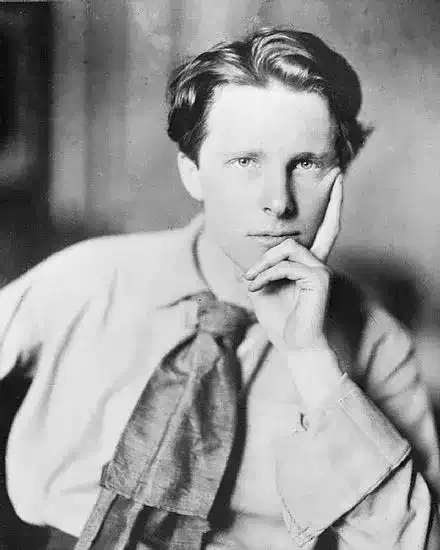
Rupert Brooke
Success
I think if you had loved me when I wanted;
If I'd looked up one day, and seen your eyes,
And found my wild sick blasphemous prayer granted,
And your brown face, that's full of pity and wise,
Flushed suddenly; the white godhead in new fear
Intolerably so struggling, and so shamed;
Most holy and far, if you'd come all too near,
If earth had seen Earth's lordliest wild limbs tamed,
Shaken, and trapped, and shivering, for MY touch --
Myself should I have slain? or that foul you?
But this the strange gods, who had given so much,
To have seen and known you, this they might not do.
One last shame's spared me, one black word's unspoken;
And I'm alone; and you have not awoken.
226

Spike Milligan
Goodbye S.S.
Go away girl, go away
and let me pack my dreams
Now where did I put those yesteryears
made up with broken seams
Where shall I sweep the pieces
my God they still look new
There's a taxi waiting at the door
but there's only room for you
and let me pack my dreams
Now where did I put those yesteryears
made up with broken seams
Where shall I sweep the pieces
my God they still look new
There's a taxi waiting at the door
but there's only room for you
226
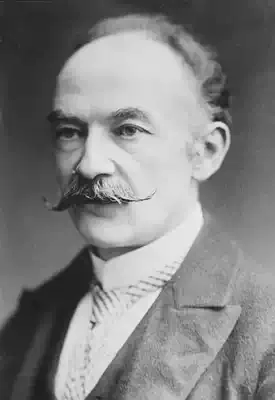
Thomas Hardy
Neutral Tones
WE stood by a pond that winter day,
And the sun was white, as though chidden of God,
And a few leaves lay on the starving sod,
--They had fallen from an ash, and were gray.
Your eyes on me were as eyes that rove
Over tedious riddles solved years ago;
And some words played between us to and fro--
On which lost the more by our love.
The smile on your mouth was the deadest thing
Alive enough to have strength to die;
And a grin of bitterness swept thereby
Like an ominous bird a-wing....
Since then, keen lessons that love deceives,
And wrings with wrong, have shaped to me
Your face, and the God-curst sun, and a tree,
And a pond edged with grayish leaves.
226

Robert W. Service
Confetti In The Wind
He wrote a letter in his mind
To answer one a maid had sent;
He sought the fitting word to find,
As on by hill and rill he went.
By bluebell wood and hawthorn lane,
The cadence sweet and silken phrase
He incubated in his brain
For days and days.
He wrote his letter on a page
Of paper with a satin grain;
It did not ring, so in a rage
He tore it up and tried again.
Time after time he drafted it;
He polished it all through the night;
He tuned and pruned till bit by bit
He got it right.
He took his letter to the post,
Yet long he held it in his hand.
Strangely his mood had veered, almost
Reversed,--he could not understand.
The girl was vague, the words were vain;
April romance had come to grief . . .
He tore his letter up again,-Oh
blest relief!
224
Thomas Hardy
In A Eweleaze Near Weatherbury
THE years have gathered grayly
Since I danced upon this leaze
With one who kindled gayly
Love's fitful ecstasies!
But despite the term as teacher,
I remain what I was then
In each essential feature
Of the fantasies of men.
Yet I note the little chisel
Of ever-napping Time,
Defacing ghast and grizzel
The blazon of my prime.
When at night he thinks me sleeping,
I feel him boring sly
Within my bones, and heaping
Quaintest pains for by-and-by.
Still, I'd go the world with Beauty,
I would laugh with her and sing,
I would shun divinest duty
To resume her worshipping.
But she'd scorn my brave endeavor,
She would not balm the breeze
By murmuring, "Thine for ever!"
As she did upon this leaze.
226
Robert W. Service
The Decision
Said she: 'Although my husband Jim
Is with his home content,
I never should have married him,
We are so different.
Oh yes, I know he loves me well,
Our children he adores;
But he's so dull, and I rebel
Against a life that bores.
'Of course there is another man,
Quite pennyless is he;
And yet with hope and joy we plan
A home beyond the sea.
Though I forfeit the name of wife
And neighbours ostracise,
Such happiness will crown our life
Their censure we'll despise.
'But then what will my children think,
Whose love is pure and true?'
Said I: 'Your memory will stink
If they should speak of you.
Your doting Jim will curse your name,
And if you make a mess
Of life, oh do not in your shame
Dare hope for happiness.'
Well, still with Jim she lives serene,
And has of kiddies three.
'Oh what a fool I might have been
To leave my home,' says she.
'Of course Jim is a priceless bore,
But he's so sweet to me . . .
Come darling won't you let me pour
Another cup of tea?'
222
Thomas Hardy
She, to Him, II
Perhaps, long hence, when I have passed away,
Some other’s feature, accent, thought like mine,
Will carry you back to what I used to say,
And bring some memory of your love’s decline.
Then you may pause awhile and think, “Poor jade!”
And yield a sigh to me—as gift benign,
Not as the tittle of a debt unpaid
To one who could to you her all resign—
And thus reflecting, you will never see
That your thin thought, in two small words conveyed,
Was no such fleeting phantom-thought to me,
But the Whole Life wherein my part was played;
And you amid its fitful masquerade
A Thought—as I in yours but seem to be.
219
Rupert Brooke
The One Before the Last
I dreamt I was in love again
With the One Before the Last,
And smiled to greet the pleasant pain
Of that innocent young past.
But I jumped to feel how sharp had been
The pain when it did live,
How the faded dreams of Nineteen-ten
Were Hell in Nineteen-five.
The boy's woe was as keen and clear,
The boy's love just as true,
And the One Before the Last, my dear,
Hurt quite as much as you.
* * * * *
Sickly I pondered how the lover
Wrongs the unanswering tomb,
And sentimentalizes over
What earned a better doom.
Gently he tombs the poor dim last time,
Strews pinkish dust above,
And sighs, "The dear dead boyish pastime!
But THIS -- ah, God! -- is Love!"
-- Better oblivion hide dead true loves,
Better the night enfold,
Than men, to eke the praise of new loves,
Should lie about the old!
* * * * *
Oh! bitter thoughts I had in plenty.
But here's the worst of it --
I shall forget, in Nineteen-twenty,
YOU ever hurt abit!
218
Rupert Brooke
The Chilterns
Your hands, my dear, adorable,
Your lips of tenderness
-- Oh, I've loved you faithfully and well,
Three years, or a bit less.
It wasn't a success.
Thank God, that's done! and I'll take the road,
Quit of my youth and you,
The Roman road to Wendover
By Tring and Lilley Hoo,
As a free man may do.
For youth goes over, the joys that fly,
The tears that follow fast;
And the dirtiest things we do must lie
Forgotten at the last;
Even Love goes past.
What's left behind I shall not find,
The splendour and the pain;
The splash of sun, the shouting wind,
And the brave sting of rain,
I may not meet again.
But the years, that take the best away,
Give something in the end;
And a better friend than love have they,
For none to mar or mend,
That have themselves to friend.
I shall desire and I shall find
The best of my desires;
The autumn road, the mellow wind
That soothes the darkening shires.
And laughter, and inn-fires.
White mist about the black hedgerows,
The slumbering Midland plain,
The silence where the clover grows,
And the dead leaves in the lane,
Certainly, these remain.
And I shall find some girl perhaps,
And a better one than you,
With eyes as wise, but kindlier,
And lips as soft, but true.
And I daresay she will do.
219
Thomas Hardy
The Inconsistent
I say, "She was as good as fair,"
When standing by her mound;
"Such passing sweetness," I declare,
"No longer treads the ground."
I say, "What living Love can catch
Her bloom and bonhomie,
And what in newer maidens match
Her olden warmth to me!"
- There stands within yon vestry-nook
Where bonded lovers sign,
Her name upon a faded book
With one that is not mine.
To him she breathed the tender vow
She once had breathed to me,
But yet I say, "O love, even now
Would I had died for thee!"
217
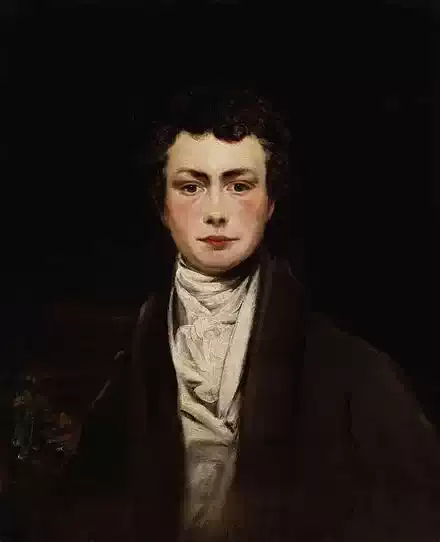
Thomas Moore
The Dream of Those Days
The dream of those days when first I sung thee is o'er
Thy triumph hath stain'd the charm thy sorrows then wore;
And even the light which Hope once shed o'er thy chains,
Alas, not a gleam to grace thy freedom remains.
Say, is it that slavery sunk so deep in thy heart,
That still the dark brand is there, though chainless thou art;
And Freedom's sweet fruit, for which thy spirit long burn'd,
Now, reaching at last thy lip, to ashes hath turn'd?
Up Liberty's steep by Truth and Eloquence led,
With eyes on her temple fix'd, how proud was thy tread!
Ah, better thou ne'er hadst lived that summit to gain,
Denied in the porch, than thus dishonour the fane.
214
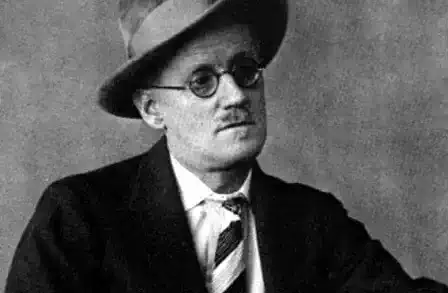
James Joyce
Dear Heart, Why Will You Use Me So?
Dear heart, why will you use me so?
Dear eyes that gently me upbraid,
Still are you beautiful -- - but O,
How is your beauty raimented!
Through the clear mirror of your eyes,
Through the soft sigh of kiss to kiss,
Desolate winds assail with cries
The shadowy garden where love is.
And soon shall love dissolved be
When over us the wild winds blow -- -
But you, dear love, too dear to me,
Alas! why will you use me so?
216
Rupert Brooke
The Life Beyond
He wakes, who never thought to wake again,
Who held the end was Death. He opens eyes
Slowly, to one long livid oozing plain
Closed down by the strange eyeless heavens.
He lies;
And waits; and once in timeless sick surmise
Through the dead air heaves up an unknown hand,
Like a dry branch. No life is in that land,
Himself not lives, but is a thing that cries;
An unmeaning point upon the mud; a speck
Of moveless horror; an Immortal One
Cleansed of the world, sentient and dead; a fly
Fast-stuck in grey sweat on a corpse’s neck.
I though when love for you died, I should die.
It’s dead. Alone, most strangely, I live on.
212
Thomas Moore
Lalla Rookh
"How sweetly," said the trembling maid,
Of her own gentle voice afraid,
So long had they in silence stood,
Looking upon that tranquil flood--
"How sweetly does the moon-beam smile
To-night upon yon leafy isle!
Oft in my fancy's wanderings,
I've wish'd that little isle had wings,
And we, within its fairy bow'rs,
Were wafted off to seas unknown,
Where not a pulse should beat but ours,
And we might live, love, die alone!
Far from the cruel and the cold,--
Where the bright eyes of angels only
Should come around us, to behold
A paradise so pure and lonely.
Would this be world enough for thee?"--
Playful she turn'd, that he might see
The passing smile her cheek put on;
But when she mark'd how mournfully
His eyes met hers, that smile was gone;
And, bursting into heart-felt tears,
"Yes, yes," she cried, "my hourly fears
My dreams have boded all too right--
We part--for ever part--to-night!
I knew, I knew it could not last--
'Twas bright, 'twas heav'nly, but 'tis past!
Oh! ever thus, from childhood's hour,
I've seen my fondest hopes decay;
I never lov'd a tree or flow'r,
But 'twas the first to fade away.
I never nurs'd a dear gazelle
To glad me with its soft black eye,
But when it came to know me well
And love me, it was sure to die!
Now too--the joy most like divine
Of all I ever dreamt or knew,
To see thee, hear thee, call thee mine,--
Oh misery! must I lose that too?
Yet go--on peril's brink we meet;--
Those frightful rocks--that treach'rous sea--
No, never come again--though sweet,
Though heav'n, it may be death to thee.
Farewell--and blessings on thy way,
Where'er thou goest, beloved stranger!
Better to sit and watch that ray,
And think thee safe, though far away,
Than have thee near me, and in danger!"
211
Jonathan Swift
Phillis, Or, the Progress of Love
Desponding Phillis was endu'd
With ev'ry Talent of a Prude,
She trembled when a Man drew near;
Salute her, and she turn'd her Ear:
If o'er against her you were plac't
She durst not look above your Wa[i]st;
She'd rather take you to her Bed
Than let you see her dress her Head;
In Church you heard her thro' the Crowd
Repeat the Absolution loud;
In Church, secure behind her Fan
She durst behold that Monster, Man:
There practic'd how to place her Head,
And bit her Lips to make them red:
Or on the Matt devoutly kneeling
Would lift her Eyes up to the Ceeling,
And heave her Bosom unaware
For neighb'ring Beaux to see it bare.
At length a lucky Lover came,
And found Admittance to the Dame.
Suppose all Partys now agreed,
The Writings drawn, the Lawyer fee'd,
The Vicar and the Ring bespoke:
Guess how could such a Match be broke.
See then what Mortals place their Bliss in!
Next morn betimes the Bride was missing,
The Mother scream'd, the Father chid,
Where can this idle Wench be hid?
No news of Phil. The Bridegroom came,
And thought his Bride had sculk't for shame,
Because her Father us'd to say
The Girl had such a Bashfull way.
Now John the Butler must be sent
To learn the Road that Phillis went;
The Groom was wisht to saddle Crop,
For John must neither light nor stop;
But find her where so'er she fled,
And bring her back, alive or dead.
See here again the Dev'l to do;
For truly John was missing too:
The Horse and Pillion both were gone
Phillis, it seems, was fled with John.
Old Madam who went up to find
What Papers Phil had left behind,
A Letter on the Toylet sees
To my much honor'd Father; These:
('Tis always done, Romances tell us,
When Daughters run away with Fellows)
Fill'd with the choicest common-places,
By others us'd in the like Cases.
That, long ago a Fortune-teller
Exactly said what now befell her,
And in a Glass had made her see
A serving-Man of low Degree:
It was her Fate; must be forgiven;
For Marriages were made in Heaven:
His Pardon begg'd, but to be plain,
She'd do't if 'twere to do again.
Thank God, 'twas neither Shame nor Sin,
For John was come of honest Kin:
Love never thinks of Rich and Poor,
She'd beg with John from Door to Door:
Forgive her, if it be a Crime,
She'll never do't another Time,
She ne'r before in all her Life
Once disobey'd him, Maid nor Wife.
One Argument she summ'd up all in,
The Thing was done and past recalling:
And therefore hop'd she should recover
His Favor, when his Passion's over.
She valued not what others thought her;
And was--His most obedient Daughter.
Fair Maidens all attend the Muse
Who now the wandring Pair pursues:
Away they rose in homely Sort
Their Journy long, their Money Short;
The loving Couple well bemir'd,
The Horse and both the Riders tir'd:
Their Vittells bad, their Lodging worse,
Phil cry'd, and John began to curse;
Phil wish't, that she had strained a Limb
When first she ventur'd out with him.
John wish't, that he had broke a Leg
When first for her he quitted Peg.
But what Adventures more befell 'em
The Muse hath now no time to tell 'em.
How Jonny wheadled, threatned, fawnd,
Till Phillis all her Trinkets pawn'd:
How oft she broke her marriage Vows
In kindness to maintain her Spouse;
Till Swains unwholsome spoyled the Trade,
For now the Surgeon must be paid;
To whom those Perquisites are gone
In Christian Justice due to John.
When Food and Rayment now grew scarce
Fate put a Period to the Farce;
And with exact Poetic Justice:
For John is Landlord, Phillis Hostess;
They keep at Stains the old blue Boar,
Are Cat and Dog, and Rogue and Whore.
213
Rupert Brooke
He Wonders Whether To Praise Or To Blame Her
I have peace to weigh your worth, now all is over,
But if to praise or blame you, cannot say.
For, who decries the loved, decries the lover;
Yet what man lauds the thing he's thrown away?
Be you, in truth, this dull, slight, cloudy naught,
The more fool I, so great a fool to adore;
But if you're that high goddess once I thought,
The more your godhead is, I lose the more.
Dear fool, pity the fool who thought you clever!
Dear wisdom, do not mock the fool that missed you!
Most fair, -- the blind has lost your face for ever!
Most foul, -- how could I see you while I kissed you?
So . . . the poor love of fools and blind I've proved you,
For, foul or lovely, 'twas a fool that loved you.
207
Christina Rossetti
Heart’s Chill Between
I did not chide him, though I knew
That he was false to me.
Chide the exhaling of the dew,
The ebbing of the sea,
The fading of a rosy hue,—
But not inconstancy.
Why strive for love when love is o'er?
Why bind a restive heart?—
He never knew the pain I bore
In saying: 'We must part;
Let us be friends and nothing more.'
—Oh, woman's shallow art!
But it is over, it is done,—
I hardly heed it now;
So many weary years have run
Since then, I think not how
Things might have been,—but greet each one
With an unruffled brow.
What time I am where others be,
My heart seems very calm—
Stone calm; but if all go from me,
There comes a vague alarm,
A shrinking in the memory
From some forgotten harm.
And often through the long, long night,
Waking when none are near,
I feel my heart beat fast with fright,
Yet know not what I fear.
Oh how I long to see the light,
And the sweet birds to hear!
To have the sun upon my face,
To look up through the trees,
To walk forth in the open space
And listen to the breeze,—
And not to dream the burial-place
Is clogging my weak knees.
Sometimes I can nor weep nor pray,
But am half stupefied:
And then all those who see me say
Mine eyes are opened wide
And that my wits seem gone away—
Ah, would that I had died!
Would I could die and be at peace,
Or living could forget!
My grief nor grows nor doth decrease,
But ever is:—and yet
Methinks, now, that all this shall cease
Before the sun shall set.
207
Rupert Brooke
And love has changed to kindliness
When love has changed to kindliness --
Oh, love, our hungry lips, that press
So tight that Time's an old god's dream
Nodding in heaven, and whisper stuff
Seven million years were not enough
To think on after, make it seem
Less than the breath of children playing,
A blasphemy scarce worth the saying,
A sorry jest, "When love has grown
To kindliness -- to kindliness!" . . .
And yet -- the best that either's known
Will change, and wither, and be less,
At last, than comfort, or its own
Remembrance. And when some caress
Tendered in habit (once a flame
All heaven sang out to) wakes the shame
Unworded, in the steady eyes
We'll have, -- that day, what shall we do?
Being so noble, kill the two
Who've reached their second-best? Being wise,
Break cleanly off, and get away.
Follow down other windier skies
New lures, alone? Or shall we stay,
Since this is all we've known, content
In the lean twilight of such day,
And not remember, not lament?
That time when all is over, and
Hand never flinches, brushing hand;
And blood lies quiet, for all you're near;
And it's but spoken words we hear,
Where trumpets sang; when the mere skies
Are stranger and nobler than your eyes;
And flesh is flesh, was flame before;
And infinite hungers leap no more
In the chance swaying of your dress;
And love has changed to kindliness.
207