
Disillusionment and Lost Love
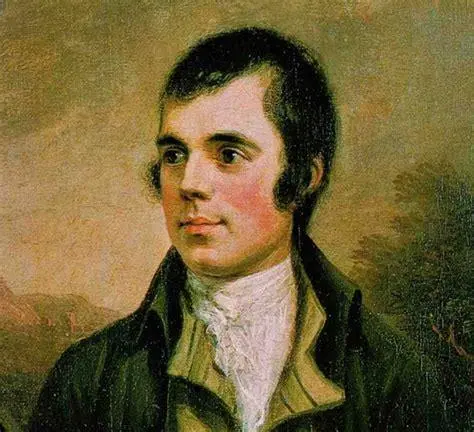
Robert Burns
The Banks O' Doon
Ye banks and braes o' bonie Doon,
How can ye bloom sae fresh and fair?
How can ye chant, ye little birds,
And I sae weary fu' o' care!
Thou'll break my heart, thou warbling bird,
That wantons thro' the flowering thorn:
Thou minds me o' departed joys,
Departed never to return.
Aft I rov'd by Bonie Doon,
To see the rose and woodbine twine:
And ilka bird sang o' its luve,
And fondly sae did I o' mine.
Wi' lightsome heart I pu'd a rose,
Fu' sweet upon its thorny tree!
Any my fause luver staw my rose,
But ah! he left the thorn wi' me.
204
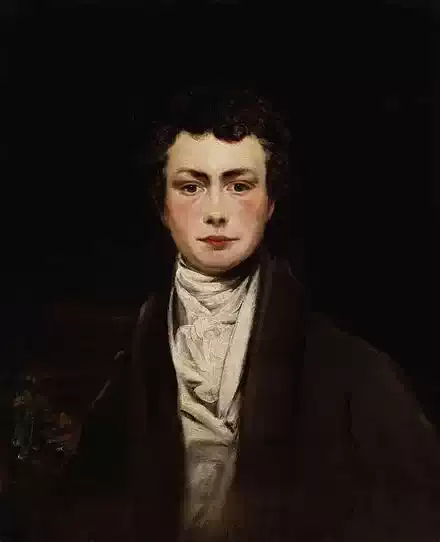
Thomas Moore
Sail On, Sail On
Sail on, sail on, thou fearless bark --
Where'er blows the welcome wind,
It cannot lead to scenes more dark,
More sad than those we leave behind.
Each wave that passes seems to say,
"Though death beneath our smile may be,
Less cold we are, less false than they,
Whose smiling wreck'd thy hopes and thee."
Sail on, sail on -- through endless space --
Through calm -- through tempest -- stop no more:
The stormiest sea's a resting-place
To him who leaves such hearts on shore.
Or -- if some desert land we meet,
Where never yet false-hearted men
Profaned a world, that else were sweet --
Then rest thee, bark, but not till then.
202

Robert W. Service
Katie Drummond
My Louis loved me oh so well
And spiered me for his wife;
He would have haled me from the hell
That was my bawdy life:
The mother of his bairns to be,
Daftlike he saw in me.
But I, a hizzie of the town
Just telt him we must part;
Loving too well to drag him down
I tore him from my heart:
To save the honour of his name
I went back to my shame.
They say he soared to starry fame,
Romance flowed from his pen;
A prince of poets he became,
Pride of his fellow men:
My breast was pillow for his head,
Yet naught of his I've read.
Smoking my cutty pipe the while,
In howths of Leith I lag;
* My Louis lies in South Sea isle
As I a sodden hag
Live on . . . Oh Love, by men enskied
The day you went--I died.
*R.L.S.
202

Henry Lawson
Break o’ Day
You love me, you say, and I think you do,
But I know so many who don’t,
And how can I say I’ll be true to you
When I know very well that I won’t?
I have journeyed long and my goal is far,
I love, but I cannot bide,
For as sure as rises the morning star,
With the break of day I’ll ride.
I was doomed to ruin or doomed to mar
The home wherever I stay,
But I’ll think of you as the morning star
And they call me Break o’ Day.
They well might have named me the Fall o’ Night,
For drear is the track I mark,
But I love fair girls and I love the light,
For I and my tribe were dark.
You may love me dear, for a day and night,
You may cast your life aside;
But as sure as the morning star shines bright
With the break of day I’ll ride.
There was never a lover so proud and kind,
There was never a friend so true;
But the song of my life I have left behind
In the heart of a girl like you.
There was never so deep or cruel a wrong
In the land that is far away,
There was never so bitter a broken heart
That rode at the break of day.
God bless you, dear, with your red-gold hair
And your pitying eyes of grey—
Oh! my heart forbids that a star so fair
Should be marred by the Break o’ Day.
Live on, my girl, as the girl you are,
Be a good and a true man’s bride,
For as sure as beckons the evening star
With the fall o’ night I’ll ride.
I was born to ruin or born to mar
The home wherever I light.
Oh! I wish that you were the Evening Star
And that I were the Fall o’ Night.
203
Thomas Moore
I Saw From the Beach
I saw from the beach, when the morning was shining,
A bark o'er the waters move gloriously on;
I came when the sun o'er that beach was declining,
The bark was still there, but the waters were gone.
And such is the fate of our life's early promise,
So passing the spring-tide of joy we have known;
Each wave that we danced on at morning ebbs from us,
And leaves us, at eve, on the bleak shore alone.
Oh, who would not welcome that moment's returning
When passion first waked a new life through his frame,
And his soul, like the wood that grows precious in burning,
Gave out all its sweets to love's exquisite flame.
195

D.H. Lawrence
How Beastly the Bourgeois Is
How beastly the bourgeois is
especially the male of the species--
Presentable, eminently presentable-shall
I make you a present of him?
Isn't he handsome? Isn't he healthy? Isn't he a fine specimen?
Doesn't he look the fresh clean Englishman, outside?
Isn't it God's own image? tramping his thirty miles a day
after partridges, or a little rubber ball?
wouldn't you like to be like that, well off, and quite the
thing
Oh, but wait!
Let him meet a new emotion, let him be faced with another
man's need,
let him come home to a bit of moral difficulty, let life
face him with a new demand on his understanding
and then watch him go soggy, like a wet meringue.
Watch him turn into a mess, either a fool or a bully.
Just watch the display of him, confronted with a new
demand on his intelligence,
a new life-demand.
How beastly the bourgeois is
especially the male of the species--
Nicely groomed, like a mushroom
standing there so sleek and erect and eyeable-and
like a fungus, living on the remains of a bygone life
sucking his life out of the dead leaves of greater life
than his own.
And even so, he's stale, he's been there too long.
Touch him, and you'll find he's all gone inside
just like an old mushroom, all wormy inside, and hollow
under a smooth skin and an upright appearance.
Full of seething, wormy, hollow feelings
rather nasty--
How beastly the bourgeois is!
Standing in their thousands, these appearances, in damp
England
what a pity they can't all be kicked over
like sickening toadstools, and left to melt back, swiftly
into the soil of England.
especially the male of the species--
Presentable, eminently presentable-shall
I make you a present of him?
Isn't he handsome? Isn't he healthy? Isn't he a fine specimen?
Doesn't he look the fresh clean Englishman, outside?
Isn't it God's own image? tramping his thirty miles a day
after partridges, or a little rubber ball?
wouldn't you like to be like that, well off, and quite the
thing
Oh, but wait!
Let him meet a new emotion, let him be faced with another
man's need,
let him come home to a bit of moral difficulty, let life
face him with a new demand on his understanding
and then watch him go soggy, like a wet meringue.
Watch him turn into a mess, either a fool or a bully.
Just watch the display of him, confronted with a new
demand on his intelligence,
a new life-demand.
How beastly the bourgeois is
especially the male of the species--
Nicely groomed, like a mushroom
standing there so sleek and erect and eyeable-and
like a fungus, living on the remains of a bygone life
sucking his life out of the dead leaves of greater life
than his own.
And even so, he's stale, he's been there too long.
Touch him, and you'll find he's all gone inside
just like an old mushroom, all wormy inside, and hollow
under a smooth skin and an upright appearance.
Full of seething, wormy, hollow feelings
rather nasty--
How beastly the bourgeois is!
Standing in their thousands, these appearances, in damp
England
what a pity they can't all be kicked over
like sickening toadstools, and left to melt back, swiftly
into the soil of England.
189

Christina Rossetti
Grown And Flown
I loved my love from green of Spring
Until sere Autumn's fall;
But now that leaves are withering
How should one love at all?
One heart's too small
For hunger, cold, love, everything.
I loved my love on sunny days
Until late Summer's wane;
But now that frost begins to glaze
How should one love again ?
Nay, love and pain
Walk wide apart in diverse ways.
I loved my love - alas to see
That this should be, alas!
I thought that this could scarcely be,
Yet has it come to pass:
Sweet sweet love was,
Now bitter bitter grown to me.
190
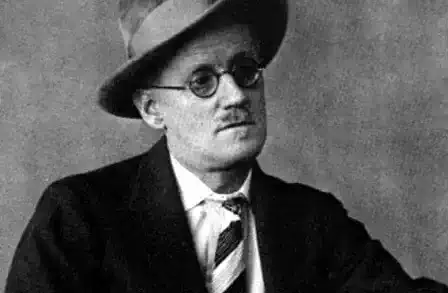
James Joyce
Gentle Lady, Do Not Sing
Gentle lady, do not sing
Sad songs about the end of love;
Lay aside sadness and sing
How love that passes is enough.
Sing about the long deep sleep
Of lovers that are dead, and how
In the grave all love shall sleep:
Love is aweary now.
Sad songs about the end of love;
Lay aside sadness and sing
How love that passes is enough.
Sing about the long deep sleep
Of lovers that are dead, and how
In the grave all love shall sleep:
Love is aweary now.
190
Thomas Moore
When First I Met Thee
When first I met thee, warm and young,
There shone such truth about thee,
And on thy lip such promise hung,
I did not dare to doubt thee.
I saw thee change, yet still relied,
Still clung with hope the fonder,
And thought, though false to all beside,
From me thou couldst not wander.
But go, deceiver! go,
The heart, whose hopes could make it
Trust one so false, so low,
Deserves that thou shouldst break it.
When every tongue thy follies named,
I fled the unwelcome story,
Or found, in even the faults they blamed,
Some gleams of future glory.
I still was true, when nearer friends
Conspired to wrong, to slight thee;
The heart that now thy falsehood rends
Would then have bled to right thee.
But go, deceiver! go --
Some day, perhaps, thou'lt waken
From pleasure's dream, to know
The grief of hearts forsaken.
Even now, though youth its bloom has shed,
No lights of age adorn thee;
The few who loved thee once have fled,
And they who flatter scorn thee.
Thy midnight cup is pledged to slaves,
No genial ties enwreath it;
The smiling there, like light on graves,
Has rank cold hearts beneath it.
Go -- go -- though worlds were thine,
I would not now surrender
One taintless tear of mine
For all thy guilty splendour!
And days may come, thou false one! yet,
When even those ties shall sever!
When thou wilt call, with vain regret,
On her thou'st lost for ever;
On her who, in thy fortune's fall,
With smiles had still received thee,
And gladly died to prove thee all
Her fancy first believed thee.
Go -- go -- 'tis vain to curse,
'Tis weakness to upbraid thee;
Hate cannot wish thee worse
Than guilt and shame have made thee.
191
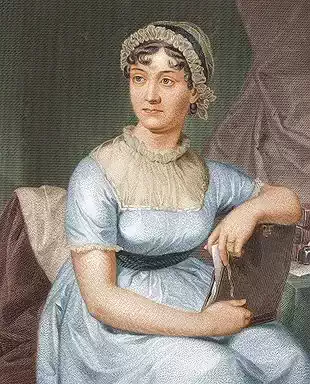
Jane Austen
Ode to Pity
Ever musing I delight to tread
The Paths of honour and the Myrtle Grove
Whilst the pale Moon her beams doth shed
On disappointed Love.
While Philomel on airy hawthorn Bush
Sings sweet and Melancholy, And the thrush
Converses with the Dove.
2
Gently brawling down the turnpike road,
Sweetly noisy falls the Silent Stream--
The Moon emerges from behind a Cloud
And darts upon the Myrtle Grove her beam.
Ah! then what Lovely Scenes appear,
The hut, the Cot, the Grot, and Chapel queer,
And eke the Abbey too a mouldering heap,
Cnceal'd by aged pines her head doth rear
And quite invisible doth take a peep.
190
Robert W. Service
Café Comedy
She
I'm waiting for the man I hope to wed.
I've never seen him - that's the funny part.
I promised I would wear a rose of red,
Pinned on my coat above my fluttered heart,
So that he'd know me - a precaution wise,
Because I wrote him I was twenty-three,
And Oh such heaps and heaps of silly lies. . .
So when we meet what will he think of me?
It's funny, but it has its sorry side;
I put an advert. in the evening Press:
"A lonely maiden fain would be a bride."
Oh it was shameless of me, I confess.
But I am thirty-nine and in despair,
Wanting a home and children ere too late,
And I forget I'm no more young and fair I'll
hide my rose and run...No, no, I'll wait.
An hour has passed and I am waiting still.
I ought to feel relieved, but I'm so sad.
I would have liked to see him, just to thrill,
And sigh and say: "There goes my lovely lad!
My one romance!" Ah, Life's malign mishap!
"Garcon, a cafè creme." I'll stay till nine. . .
The cafè's empty, just an oldish chap
Who's sitting at the table next to mine. . .
He
I'm waiting for the girl I mean to wed.
She was to come at eight and now it's nine.
She'd pin upon her coat a rose of red,
And I would wear a marguerite in mine.
No sign of her I see...It's true my eyes
Need stronger glasses than the ones I wear,
But Oh I feel my heart would recognize
Her face without the rose - she is so fair.
Ah! what deceivers are we aging men!
What vanity keeps youthful hope aglow!
Poor girl! I sent a photo taken when
I was a student, twenty years ago.
(Hers is so Springlike, Oh so blossom sweet!)
How she will shudder when she sees me now!
I think I'd better hide that marguerite -
How can I age and ugliness avow?
She does not come. It's after nine o'clock.
What fools we fogeys are! I'll try to laugh;
(Garcon, you might bring me another bock)
Falling in love, just from a photograph.
Well, that's the end. I'll go home and forget,
Then realizing I am over ripe
I'll throw away this silly cigarette
And philosophically light my pipe.
* * * * *
The waiter brought the coffee and the beer,
And there they sat, so woe-begone a pair,
And seemed to think: "Why do we linger here?"
When suddenly they turned, to start and stare.
She spied a marguerite, he glimpsed a rose;
Their eyes were joined and in a flash they knew. . .
The sleepy waiter saw, when time to close,
The sweet romance of those deceiving two,
Whose lips were joined, their hearts, their future too.
180
James Joyce
Now, O Now in This Brown Land
Now, O now, in this brown land
Where Love did so sweet music make
We two shall wander, hand in hand,
Forbearing for old friendship' sake,
Nor grieve because our love was gay
Which now is ended in this way.
A rogue in red and yellow dress
Is knocking, knocking at the tree;
And all around our loneliness
The wind is whistling merrily.
The leaves -- - they do not sigh at all
When the year takes them in the fall.
Now, O now, we hear no more
The vilanelle and roundelay!
Yet will we kiss, sweetheart, before
We take sad leave at close of day.
Grieve not, sweetheart, for anything -- -
The year, the year is gathering.
181
James Joyce
Watching the Needleboats at San Sabba
I heard their young hearts crying
Loveward above the glancing oar
And heard the prairie grasses sighing:
No more, return no more!
O hearts, O sighing grasses,
Vainly your loveblown bannerets mourn!
No more will the wild wind that passes
Return, no more return.
Loveward above the glancing oar
And heard the prairie grasses sighing:
No more, return no more!
O hearts, O sighing grasses,
Vainly your loveblown bannerets mourn!
No more will the wild wind that passes
Return, no more return.
179
Robert W. Service
Maternity
There once was a Square, such a square little Square,
And he loved a trim Triangle;
But she was a flirt and around her skirt
Vainly she made him dangle.
Oh he wanted to wed and he had no dread
Of domestic woes and wrangles;
For he thought that his fate was to procreate
Cute little Squares and Triangles.
Now it happened one day on that geometric way
There swaggered a big bold Cube.
With a haughty stare and he made that Square
Have the air of a perfect boob;
To his solid spell the Triangle fell,
And she thrilled with love's sweet sickness,
For she took delight in his breadth and height -
But how she adored his thickness!
So that poor little Square just died of despair,
For his love he could not strangle;
While the bold Cube led to the bridal bed
That cute and acute Triangle.
The Square's sad lot she has long forgot,
And his passionate pretensions . . .
For she dotes on her kids-Oh such cute Pyramids
In a world of three dimensions.
178

Thomas Hardy
Her Initals
UPON a poet's page I wrote
Of old two letters of her name;
Part seemed she of the effulgent thought
Whence that high singer's rapture came.
--When now I turn the leaf the same
Immortal light illumes the lay
But from the letters of her name
The radiance has died away.
Of old two letters of her name;
Part seemed she of the effulgent thought
Whence that high singer's rapture came.
--When now I turn the leaf the same
Immortal light illumes the lay
But from the letters of her name
The radiance has died away.
155

Siegfried Sassoon
'In the Pink'
So Davies wrote: ' This leaves me in the pink. '
Then scrawled his name: ' Your loving sweetheart Willie '
With crosses for a hug. He'd had a drink
Of rum and tea; and, though the barn was chilly,
For once his blood ram warm; he had pay to spend,
Winter was passing; soon the year would mend.
He couldn't sleep that night. Stiff in the dark
He groaned and thought of Sundays at the farm,
When he'd go out as cheerful as a lark
In his best suit to wander arm-in-arm
With brown-eyed Gwen, and whisper in her ear
The simple, silly things she liked to hear.
And then he thought: to-morrow night we trudge
Up to the trenches, and my boots are rotten.
Five miles of stodgy clay and freezing sludge,
And everything but wretchedness forgotten.
To-night he's in the pink; but soon he'll die.
And still the war goes on; he don't know why.
122
Siegfried Sassoon
Arms and the Man
Young Croesus went to pay his call
On Colonel Sawbones, Caxton Hall:
And, though his wound was healed and mended,
He hoped he’d get his leave extended.
The waiting-room was dark and bare.
He eyed a neat-framed notice there
Above the fireplace hung to show
Disabled heroes where to go
For arms and legs; with scale of price,
And words of dignified advice
How officers could get them free.
Elbow or shoulder, hip or knee,
Two arms, two legs, though all were lost,
They’d be restored him free of cost.
Then a Girl Guide looked to say,
‘Will Captain Croesus come this way?’
132
Siegfried Sassoon
Blighters
The House is crammed: tier beyond tier they grin
And cackle at the Show, while prancing ranks
Of harlots shrill the chorus, drunk with din;
‘We’re sure the Kaiser loves our dear old Tanks!’
I’d like to see a Tank come down the stalls,
Lurching to rag-time tunes, or ‘Home, sweet Home’,
And there’d be no more jokes in Music-halls
To mock the riddled corpses round Bapaume.
119
Siegfried Sassoon
Twelve Months After
Hullo! here’s my platoon, the lot I had last year.
‘The war’ll be over soon.’
‘What ’opes?’
‘No bloody fear!’
Then, ‘Number Seven, ’shun! All present and correct.’
They’re standing in the sun, impassive and erect.
Young Gibson with his grin; and Morgan, tired and white;
Jordan, who’s out to win a D.C.M. some night;
And Hughes that’s keen on wiring; and Davies (’),
Who always must be firing at the Boche front line.
. . . .
‘Old soldiers never die; they simply fide a-why!’
That’s what they used to sing along the roads last spring;
That’s what they used to say before the push began;
That’s where they are to-day, knocked over to a man.
129
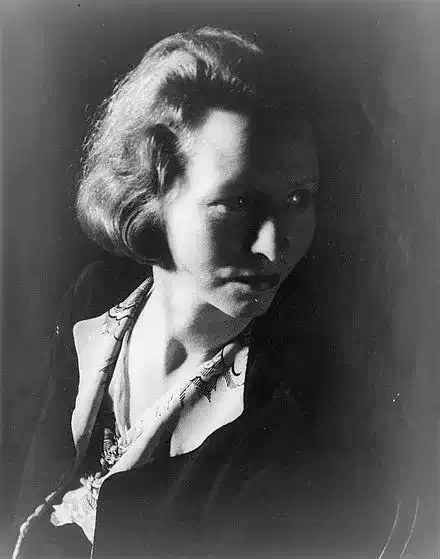
Edna St. Vincent Millay
And we are done forever
And we are done forever; by and by
I shall forget you, as I said, but now,
If you entreat me with your loveliest lie
I will protest you with my favorite vow.
I would indeed that love were longer-lived,
And vows were not so brittle as they are,
But so it is, and nature has contrived
To struggle on without a break thus far, -
Whether or not we find what we are seeking
Is idle, biologically speaking.
112

Ella Wheeler Wilcox
What I Have Seen #2
I saw a maid with her chivalrous lover:
He was both tender and true;
He kissed her lips, vowing over and over,
'Darling, I worship you.'
Sing, sing, bird of the spring,
Tell of the flowers the summer will bring.
I saw the maiden, sweet, loving, confiding,
Smile when he whispered 'Mine,'
Saw her lips meet his with no word of chiding,
Though his breath fumed with wine.
Wail, wail, Nightingale,
Sing of a mourner bowed and pale.
I saw the lover and maid at the altar,
Bound by the bands divine;
Heard the responses-they fail not nor falter-
Saw the guests pledge in wine.
Howl, howl, ominous Owl,
Shriek of the terrible tempest's scowl.
I saw the drunkard's wife weeping in anguish,
Saw her struck down by a blow;
I saw the husband in prison-cells languish-
Thus ends the tale of woe.
Shriek, shriek, O Raven! speak
Of the terrible midnight, dark and bleak.
18
Ella Wheeler Wilcox
What I Have Seen #4
I saw a youth, one of God's favored few,
Crowned with beauty, and talents, and health;
He had climbed the steep pathway, and cut his way through
To the summit of glory and wealth.
The day is breaking, hearts are waking,
Refreshed for the field of labor:
Arise, arise, like the king of the skies,
With a greeting for friend and neighbor.
He had toiled hard for the honors he'd won,
He had climbed over high rocks, forded streams;
Braved the bleak winter snow, the hot summer sun,
He was reaching the goal of his dreams.
The day hangs around us, the sun hath bound us
With fetters silken and yellow:
Flow, flow away, fleeting day,
Golden-hearted and mellow.
I saw the youth lift a mug to his mouth,
Drink the last drop of the fearful first glass!
Ah! his veins thrill in a fierce, scorching drouth,
He fills it again, again drinks it! alas!
The day is dying, hearts are sighing,
Crushed with a weight of sorrow:
Sleep, oh! sleep, in a slumber deep,
And wait for a bright to-morrow.
I saw him low in the dust at my feet,
Gone beauty, health, wealth, strength, talents, all;
From the summit of Fame to the slime of the street,
He had bartered his soul for the fiend Alcohol.
The night hangs o'er us, the wind's wild chorus
Shrieks like a demons' revel:
Weep, sob, weep, for the fog is deep,
And the world is sold to the devil.
14
Previous
Page 13