Jane Austen

Jane Austen

1775–1817 · lived 41 years GB GB

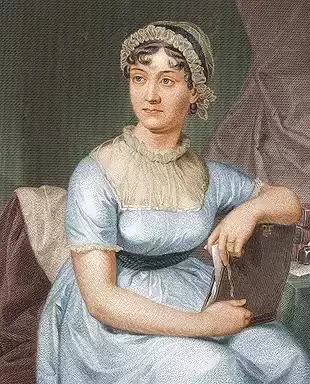
Jane Austen was an English novelist whose works brilliantly satirize the British landed gentry at the turn of the 19th century. Her novels, set in the world of country estates and drawing-rooms, are celebrated for their wit, keen social observation, and nuanced exploration of marriage, class, and morality. Through memorable characters and elegant prose, Austen deftly examines the limited options available to women of her time, while championing intelligence, integrity, and genuine affection. Her enduring appeal lies in her timeless insights into human nature and social dynamics.

n. 1775-12-16, Steventon · m. 1817-07-18, Winchester

5,338 Views

When Stretch'd on One's Bed

When Stretch'd on One's Bed

When stretch'd on one's bed
With a fierce-throbbing head,
Which preculdes alike thought or repose,
How little one cares
For the grandest affairs
That may busy the world as it goes!


How little one feels
For the waltzes and reels
Of our Dance-loving friends at a Ball!
How slight one's concern
To conjecture or learn
What their flounces or hearts may befall.


How little one minds
If a company dines
On the best that the Season affords!
How short is one's muse
O'er the Sauces and Stews,
Or the Guests, be they Beggars or Lords.


How little the Bells,
Ring they Peels, toll they Knells,
Can attract our attention or Ears!
The Bride may be married,
The Corse may be carried
And touch nor our hopes nor our fears.


Our own bodily pains
Ev'ry faculty chains;
We can feel on no subject besides.
Tis in health and in ease
We the power must seize
For our friends and our souls to provide.
Read full poem
Bio

Identification and basic context

Jane Austen was an English novelist. She is widely regarded as one of the greatest writers in English literature. Austen was born in 1775 and died in 1817. She came from a moderately prosperous gentry family in Hampshire, England, and her novels are deeply rooted in the social milieu of the landed gentry. She wrote in English.

Childhood and education

Jane Austen was born and raised in Steventon, Hampshire. She was the seventh of eight children born to Reverend George Austen and Cassandra Leigh Austen. Her father was a clergyman who supplemented his income by farming and dealing in wool. The Austen children received a good education for the time. Jane attended boarding schools in Oxford and Reading, but her formal education was limited. Much of her learning came from her father's extensive library and from the intellectual environment of her large family. She began writing stories at a young age, often for the amusement of her family.

Literary trajectory

Austen began writing in her early teens, producing juvenilia such as parodies and short novels. Her first completed novel was *Elinor and Marianne*, which later evolved into *Sense and Sensibility*. She faced significant challenges in getting her work published. Her first novel, *Pride and Prejudice*, was written in 1796 but not published until 1813. *Sense and Sensibility* was published anonymously in 1811, followed by *Mansfield Park* (1814), *Emma* (1815), and *Northanger Abbey* and *Persuasion* (published posthumously in 1817). Her literary output was concentrated in the last decade of her life.

Works, style, and literary characteristics

Austen's six major novels are *Sense and Sensibility*, *Pride and Prejudice*, *Mansfield Park*, *Emma*, *Northanger Abbey*, and *Persuasion*. Her works are characterized by their focus on the domestic lives of the English gentry, exploring themes of love, marriage, social class, economic security, and individual morality. Austen's style is marked by irony, witty dialogue, and subtle social commentary. She employs free indirect discourse, allowing readers insight into her characters' thoughts and feelings. Her tone is often satirical, highlighting the follies and vanities of her society, but also deeply empathetic. Her language is precise and elegant, with a keen ear for the nuances of conversation. She is noted for her realistic portrayals of character and social dynamics, eschewing the melodrama and gothic elements prevalent in some contemporary literature.

Cultural and historical context

Austen lived during the Regency period in Britain, a time of social and political change, but her novels focus on the seemingly stable world of the country gentry. She was part of a literary tradition that valued realism and social observation. Her contemporaries included writers like Sir Walter Scott and Mary Shelley, though Austen's focus remained on the domestic sphere. The Napoleonic Wars were ongoing, but their direct impact is rarely felt in her novels, which are more concerned with local social hierarchies and personal relationships. The limited roles and opportunities for women in society, particularly regarding marriage and financial independence, are central to her narratives.

Personal life

Austen never married and had no children, a fact that has led to much speculation about her personal life and its influence on her novels. She lived with her family for most of her life, moving with them from Steventon to Bath and then to Chawton. Her close relationship with her sister Cassandra, who was her confidante and executor, was particularly significant. While her novels often focus on courtship and marriage, her personal life was characterized by familial affection and intellectual companionship rather than romantic entanglements. She experienced periods of illness, and her death is thought to have been from cancer.

Recognition and reception

During her lifetime, Austen's novels were well-received by critics and the reading public, though they were published anonymously, and her authorship was not widely advertised. She gained a reputation for writing 'novels of manners.' Her popularity grew posthumously, especially after her authorship was acknowledged. Over time, her work has been recognized as embodying a profound understanding of human nature and social dynamics, securing her place as a canonical figure in English literature. Her novels continue to be widely read, studied, and adapted.

Influences and legacy

Austen was influenced by earlier novelists such as Samuel Richardson and Fanny Burney. Her own legacy is immense; she is considered a foundational figure in the development of the novel of manners and has influenced countless writers with her wit, psychological insight, and narrative technique. Her exploration of female protagonists navigating social and romantic challenges remains relevant. Her works have been translated into numerous languages and adapted into highly successful films and television series, reaching new audiences worldwide.

Interpretation and critical analysis

Austen's novels are subjects of ongoing critical analysis, with scholars exploring themes of social class, gender roles, economic pressures, and the nature of happiness. Her use of irony and free indirect discourse has been particularly scrutinized. Debates often center on whether her work is a conservative reinforcement of social norms or a subtle critique of them, particularly concerning women's limited agency. Her protagonists are often analyzed for their intelligence, moral reasoning, and capacity for self-awareness.

Curiosities and lesser-known aspects

Austen's decision to publish anonymously, though common for female authors of her time, has added an element of mystique to her persona. She was known for her sharp wit and playful sense of humor, often expressed in her letters. It is believed that she wrote her novels in short bursts, often while sitting at a small writing desk in the common room of her family home, where she had to put her work away whenever someone entered. Her keen observation skills were honed by her quiet, observant position within her family and social circles.

Death and memory

Jane Austen died on July 18, 1817, at the age of 41. While the exact cause of her death is uncertain, it is generally believed to have been cancer. She was buried in Winchester Cathedral. Her memory is honored through her enduring literary works, which continue to be celebrated for their insight, humor, and artistry. The Jane Austen Society works to preserve her legacy and promote the study of her works.

Poems

7

When Stretch'd on One's Bed

When Stretch'd on One's Bed

When stretch'd on one's bed
With a fierce-throbbing head,
Which preculdes alike thought or repose,
How little one cares
For the grandest affairs
That may busy the world as it goes!


How little one feels
For the waltzes and reels
Of our Dance-loving friends at a Ball!
How slight one's concern
To conjecture or learn
What their flounces or hearts may befall.


How little one minds
If a company dines
On the best that the Season affords!
How short is one's muse
O'er the Sauces and Stews,
Or the Guests, be they Beggars or Lords.


How little the Bells,
Ring they Peels, toll they Knells,
Can attract our attention or Ears!
The Bride may be married,
The Corse may be carried
And touch nor our hopes nor our fears.


Our own bodily pains
Ev'ry faculty chains;
We can feel on no subject besides.
Tis in health and in ease
We the power must seize
For our friends and our souls to provide.
174

Oh! Mr Best You're Very Bad

Oh! Mr Best You're Very Bad

Oh! Mr. Best, you're very bad
And all the world shall know it;
Your base behaviour shall be sung
By me, a tunefull Poet.--
You used to go to Harrowgate
Each summer as it came,
And why I pray should you refuse
To go this year the same?--


The way's as plain, the road's as smooth,
The Posting not increased;
You're scarcely stouter than you were,
Not younger Sir at least.--


If e'er the waters were of use
Why now their use forego?
You may not live another year,
All's mortal here below.--


It is your duty Mr Best
To give your health repair.
Vain else your Richard's pills will be,
And vain your Consort's care.


But yet a nobler Duty calls
You now towards the North.
Arise ennobled--as Escort
Of Martha Lloyd stand forth.


She wants your aid--she honours you
With a distinguished call.
Stand forth to be the friend of her
Who is the friend of all.--


Take her, and wonder at your luck,
In having such a Trust.
Her converse sensible and sweet
Will banish heat and dust.--


So short she'll make the journey seem
You'll bid the Chaise stand still.
T'will be like driving at full speed
From Newb'ry to Speen hill.--


Convey her safe to Morton's wife
And I'll forget the past,
And write some verses in your praise
As finely and as fast.


But if you still refuse to go
I'll never let your rest,
Buy haunt you with reproachful song


Oh! wicked Mr. Best!--
156

This Little Bag

This Little Bag

This little bag I hope will prove
To be not vainly made--
For, if you should a needle want
It will afford you aid.
And as we are about to part
T'will serve another end,
For when you look upon the Bag
You'll recollect your friend
181

Mock Panegyric on a Young Friend

Mock Panegyric on a Young Friend

In measured verse I'll now rehearse
The charms of lovely Anna:
And, first, her mind is unconfined
Like any vast savannah.


Ontario's lake may fitly speak
Her fancy's ample bound:
Its circuit may, on strict survey
Five hundred miles be found.


Her wit descends on foes and friends
Like famed Niagara's fall;
And travellers gaze in wild amaze,
And listen, one and all.


Her judgment sound, thick, black, profound,
Like transatlantic groves,
Dispenses aid, and friendly shade
To all that in it roves.


If thus her mind to be defined
America exhausts,
And all that's grand in that great land
In similes it costs --


Oh how can I her person try
To image and portray?
How paint the face, the form how trace,
In which those virtues lay?


Another world must be unfurled,
Another language known,
Ere tongue or sound can publish round
Her charms of flesh and bone.
178

Ode to Pity

Ode to Pity

1

Ever musing I delight to tread
The Paths of honour and the Myrtle Grove
Whilst the pale Moon her beams doth shed
On disappointed Love.
While Philomel on airy hawthorn Bush
Sings sweet and Melancholy, And the thrush
Converses with the Dove.


2


Gently brawling down the turnpike road,
Sweetly noisy falls the Silent Stream--
The Moon emerges from behind a Cloud
And darts upon the Myrtle Grove her beam.
Ah! then what Lovely Scenes appear,
The hut, the Cot, the Grot, and Chapel queer,
And eke the Abbey too a mouldering heap,
Cnceal'd by aged pines her head doth rear
And quite invisible doth take a peep.
180

Happy the Lab'rer

Happy the Lab'rer

Happy the lab'rer in his Sunday clothes!
In light-drab coat, smart waistcoat, well-darn'd hose,
Andhat upon his head, to church he goes;
As oft, with conscious pride, he downward throws
A glance upon the ample cabbage rose
That, stuck in button-hole, regales his nose,
He envies not the gayest London beaux.
In church he takes his seat among the rows,
Pays to the place the reverence he owes,
Likes best the prayers whose meaning least he knows,
Lists to the sermon in a softening doze,
And rouses joyous at the welcome close.
213

I've a Pain in my Head

I've a Pain in my Head

'I've a pain in my head'
Said the suffering Beckford;
To her Doctor so dread.
'Oh! what shall I take for't?'


Said this Doctor so dread
Whose name it was Newnham.
'For this pain in your head
Ah! What can you do Ma'am?'


Said Miss Beckford, 'Suppose
If you think there's no risk,
I take a good Dose
Of calomel brisk.'-


'What a praise worthy Notion.'
Replied Mr. Newnham.
'You shall have such a potion
And so will I too Ma'am.'
205

Quotes

40

Videos

50

Comments (0)

Share
Log in to post a comment.

No comments yet. Be the first to comment.