
Destiny and Overcoming

Thomas Hardy
Heredity
I am the family face;
Flesh perishes, I live on,
Projecting trait and trace
Through time to times anon,
And leaping from place to place
Over oblivion.
The years-heired feature that can
In curve and voice and eye
Despise the human span
Of durance -- that is I;
The eternal thing in man,
That heeds no call to die
Flesh perishes, I live on,
Projecting trait and trace
Through time to times anon,
And leaping from place to place
Over oblivion.
The years-heired feature that can
In curve and voice and eye
Despise the human span
Of durance -- that is I;
The eternal thing in man,
That heeds no call to die
205

Henry Lawson
Break o’ Day
You love me, you say, and I think you do,
But I know so many who don’t,
And how can I say I’ll be true to you
When I know very well that I won’t?
I have journeyed long and my goal is far,
I love, but I cannot bide,
For as sure as rises the morning star,
With the break of day I’ll ride.
I was doomed to ruin or doomed to mar
The home wherever I stay,
But I’ll think of you as the morning star
And they call me Break o’ Day.
They well might have named me the Fall o’ Night,
For drear is the track I mark,
But I love fair girls and I love the light,
For I and my tribe were dark.
You may love me dear, for a day and night,
You may cast your life aside;
But as sure as the morning star shines bright
With the break of day I’ll ride.
There was never a lover so proud and kind,
There was never a friend so true;
But the song of my life I have left behind
In the heart of a girl like you.
There was never so deep or cruel a wrong
In the land that is far away,
There was never so bitter a broken heart
That rode at the break of day.
God bless you, dear, with your red-gold hair
And your pitying eyes of grey—
Oh! my heart forbids that a star so fair
Should be marred by the Break o’ Day.
Live on, my girl, as the girl you are,
Be a good and a true man’s bride,
For as sure as beckons the evening star
With the fall o’ night I’ll ride.
I was born to ruin or born to mar
The home wherever I light.
Oh! I wish that you were the Evening Star
And that I were the Fall o’ Night.
203
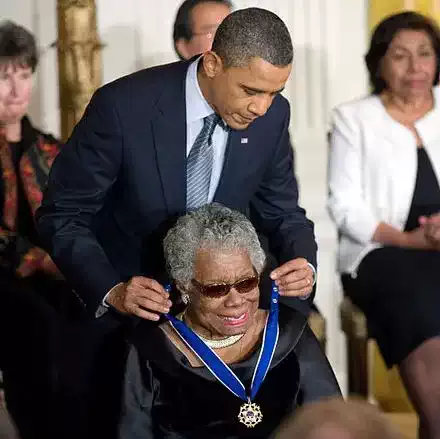
Maya Angelou
Still I Rise
You may write me down in history
With your bitter, twisted lies,
You may trod me in the very dirt
But still, like dust, I'll rise.
Does my sassiness upset you?
Why are you beset with gloom?
'Cause I walk like I've got oil wells
Pumping in my living room.
Just like moons and like suns,
With the certainty of tides,
Just like hopes springing high,
Still I'll rise.
Did you want to see me broken?
Bowed head and lowered eyes?
Shoulders falling down like teardrops.
Weakened by my soulful cries.
Does my haughtiness offend you?
Don't you take it awful hard
'Cause I laugh like I've got gold mines
Diggin' in my own back yard.
You may shoot me with your words,
You may cut me with your eyes,
You may kill me with your hatefulness,
But still, like air, I'll rise.
Does my sexiness upset you?
Does it come as a surprise
That I dance like I've got diamonds
At the meeting of my thighs?
Out of the huts of history's shame
I rise
Up from a past that's rooted in pain
I rise
I'm a black ocean, leaping and wide,
Welling and swelling I bear in the tide.
Leaving behind nights of terror and fear
I rise
Into a daybreak that's wondrously clear
I rise
Bringing the gifts that my ancestors gave,
I am the dream and the hope of the slave.
I rise
I rise
I rise.
199
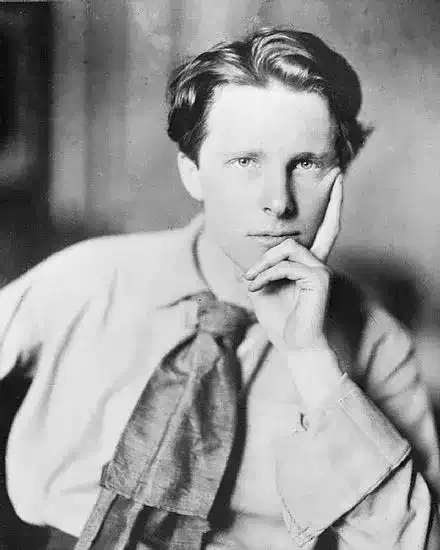
Rupert Brooke
II: Safety
Dear! of all happy in the hour, most blest
He who has found our hid security,
Assured in the dark tides of the world that rest,
And heard our word, 'Who is so safe as we?'
We have found safety with all things undying,
The winds, and morning, tears of men and mirth,
The deep night, and birds singing, and clouds flying,
And sleep, and freedom, and the autumnal earth.
We have built a house that is not for Time's throwing.
We have gained a peace unshaken by pain for ever.
War knows no power. Safe shall be my going,
Secretly armed against all death's endeavour;
Safe though all safety's lost; safe where men fall;
And if these poor limbs die, safest of all.
196

Homero
The Iliad: Book 15
But when their flight had taken them past the trench and the set
stakes, and many had fallen by the hands of the Danaans, the Trojans
made a halt on reaching their chariots, routed and pale with fear.
Jove now woke on the crests of Ida, where he was lying with
golden-throned Juno by his side, and starting to his feet he saw the
Trojans and Achaeans, the one thrown into confusion, and the others
driving them pell-mell before them with King Neptune in their midst.
He saw Hector lying on the ground with his comrades gathered round
him, gasping for breath, wandering in mind and vomiting blood, for
it was not the feeblest of the Achaeans who struck him.
The sire of gods and men had pity on him, and looked fiercely on
Juno. "I see, Juno," said he, "you mischief- making trickster, that
your cunning has stayed Hector from fighting and has caused the rout
of his host. I am in half a mind to thrash you, in which case you will
be the first to reap the fruits of your scurvy knavery. Do you not
remember how once upon a time I had you hanged? I fastened two
anvils on to your feet, and bound your hands in a chain of gold
which none might break, and you hung in mid-air among the clouds.
All the gods in Olympus were in a fury, but they could not reach you
to set you free; when I caught any one of them I gripped him and
hurled him from the heavenly threshold till he came fainting down to
earth; yet even this did not relieve my mind from the incessant
anxiety which I felt about noble Hercules whom you and Boreas had
spitefully conveyed beyond the seas to Cos, after suborning the
tempests; but I rescued him, and notwithstanding all his mighty
labours I brought him back again to Argos. I would remind you of
this that you may learn to leave off being so deceitful, and
discover how much you are likely to gain by the embraces out of
which you have come here to trick me."
Juno trembled as he spoke, and said, "May heaven above and earth
below be my witnesses, with the waters of the river Styx- and this
is the most solemn oath that a blessed god can take- nay, I swear also
by your own almighty head and by our bridal bed- things over which I
could never possibly perjure myself- that Neptune is not punishing
Hector and the Trojans and helping the Achaeans through any doing of
mine; it is all of his own mere motion because he was sorry to see the
Achaeans hard pressed at their ships: if I were advising him, I should
tell him to do as you bid him."
The sire of gods and men smiled and answered, "If you, Juno, were
always to support me when we sit in council of the gods, Neptune, like
it or no, would soon come round to your and my way of thinking. If,
then, you are speaking the truth and mean what you say, go among the
rank and file of the gods, and tell Iris and Apollo lord of the bow,
that I want them- Iris, that she may go to the Achaean host and tell
Neptune to leave off fighting and go home, and Apollo, that he may
send Hector again into battle and give him fresh strength; he will
thus forget his present sufferings, and drive the Achaeans back in
confusion till they fall among the ships of Achilles son of Peleus.
Achilles will then send his comrade Patroclus into battle, and
Hector will kill him in front of Ilius after he has slain many
warriors, and among them my own noble son Sarpedon. Achilles will kill
Hector to avenge Patroclus, and from that time I will bring it about
that the Achaeans shall persistently drive the Trojans back till
they fulfil the counsels of Minerva and take Ilius. But I will not
stay my anger, nor permit any god to help the Danaans till I have
accomplished the desire of the son of Peleus, according to the promise
I made by bowing my head on the day when Thetis touched my knees and
besought me to give him honour."
Juno heeded his words and went from the heights of Ida to great
Olympus. Swift as the thought of one whose fancy carries him over vast
continents, and he says to himself, "Now I will be here, or there,"
and he would have all manner of things- even so swiftly did Juno
wing her way till she came to high Olympus and went in among the
gods who were gathered in the house of Jove. When they saw her they
all of them came up to her, and held out their cups to her by way of
greeting. She let the others be, but took the cup offered her by
lovely Themis, who was first to come running up to her. "Juno," said
she, "why are you here? And you seem troubled- has your husband the
son of Saturn been frightening you?"
And Juno answered, "Themis, do not ask me about it. You know what
a proud and cruel disposition my husband has. Lead the gods to
table, where you and all the immortals can hear the wicked designs
which he has avowed. Many a one, mortal and immortal, will be
angered by them, however peaceably he may be feasting now."
On this Juno sat down, and the gods were troubled throughout the
house of Jove. Laughter sat on her lips but her brow was furrowed with
care, and she spoke up in a rage. "Fools that we are," she cried,
"to be thus madly angry with Jove; we keep on wanting to go up to
him and stay him by force or by persuasion, but he sits aloof and
cares for nobody, for he knows that he is much stronger than any other
of the immortals. Make the best, therefore, of whatever ills he may
choose to send each one of you; Mars, I take it, has had a taste of
them already, for his son Ascalaphus has fallen in battle- the man
whom of all others he loved most dearly and whose father he owns
himself to be."
When he heard this Mars smote his two sturdy thighs with the flat of
his hands, and said in anger, "Do not blame me, you gods that dwell in
heaven, if I go to the ships of the Achaeans and avenge the death of
my son, even though it end in my being struck by Jove's lightning
and lying in blood and dust among the corpses."
As he spoke he gave orders to yoke his horses Panic and Rout,
while he put on his armour. On this, Jove would have been roused to
still more fierce and implacable enmity against the other immortals,
had not Minerva, ararmed for the safety of the gods, sprung from her
seat and hurried outside. She tore the helmet from his head and the
shield from his shoulders, and she took the bronze spear from his
strong hand and set it on one side; then she said to Mars, "Madman,
you are undone; you have ears that hear not, or you have lost all
judgement and understanding; have you not heard what Juno has said
on coming straight from the presence of Olympian Jove? Do you wish
to go through all kinds of suffering before you are brought back
sick and sorry to Olympus, after having caused infinite mischief to
all us others? Jove would instantly leave the Trojans and Achaeans
to themselves; he would come to Olympus to punish us, and would grip
us up one after another, guilty or not guilty. Therefore lay aside
your anger for the death of your son; better men than he have either
been killed already or will fall hereafter, and one cannot protect
every one's whole family."
With these words she took Mars back to his seat. Meanwhile Juno
called Apollo outside, with Iris the messenger of the gods. "Jove,"
she said to them, "desires you to go to him at once on Mt. Ida; when
you have seen him you are to do as he may then bid you."
Thereon Juno left them and resumed her seat inside, while Iris and
Apollo made all haste on their way. When they reached
many-fountained Ida, mother of wild beasts, they found Jove seated
on topmost Gargarus with a fragrant cloud encircling his head as
with a diadem. They stood before his presence, and he was pleased with
them for having been so quick in obeying the orders his wife had given
them.
He spoke to Iris first. "Go," said he, "fleet Iris, tell King
Neptune what I now bid you- and tell him true. Bid him leave off
fighting, and either join the company of the gods, or go down into the
sea. If he takes no heed and disobeys me, let him consider well
whether he is strong enough to hold his own against me if I attack
him. I am older and much stronger than he is; yet he is not afraid
to set himself up as on a level with myself, of whom all the other
gods stand in awe."
Iris, fleet as the wind, obeyed him, and as the cold hail or
snowflakes that fly from out the clouds before the blast of Boreas,
even so did she wing her way till she came close up to the great
shaker of the earth. Then she said, "I have come, O dark-haired king
that holds the world in his embrace, to bring you a message from Jove.
He bids you leave off fighting, and either join the company of the
gods or go down into the sea; if, however, you take no heed and
disobey him, he says he will come down here and fight you. He would
have you keep out of his reach, for he is older and much stronger than
you are, and yet you are not afraid to set yourself up as on a level
with himself, of whom all the other gods stand in awe."
Neptune was very angry and said, "Great heavens! strong as Jove
may be, he has said more than he can do if he has threatened
violence against me, who am of like honour with himself. We were three
brothers whom Rhea bore to Saturn- Jove, myself, and Hades who rules
the world below. Heaven and earth were divided into three parts, and
each of us was to have an equal share. When we cast lots, it fell to
me to have my dwelling in the sea for evermore; Hades took the
darkness of the realms under the earth, while air and sky and clouds
were the portion that fell to Jove; but earth and great Olympus are
the common property of all. Therefore I will not walk as Jove would
have me. For all his strength, let him keep to his own third share and
be contented without threatening to lay hands upon me as though I were
nobody. Let him keep his bragging talk for his own sons and daughters,
who must perforce obey him.
Iris fleet as the wind then answered, "Am I really, Neptune, to take
this daring and unyielding message to Jove, or will you reconsider
your answer? Sensible people are open to argument, and you know that
the Erinyes always range themselves on the side of the older person."
Neptune answered, "Goddess Iris, your words have been spoken in
season. It is well when a messenger shows so much discretion.
Nevertheless it cuts me to the very heart that any one should rebuke
so angrily another who is his own peer, and of like empire with
himself. Now, however, I will give way in spite of my displeasure;
furthermore let me tell you, and I mean what I say- if contrary to the
desire of myself, Minerva driver of the spoil, Juno, Mercury, and King
Vulcan, Jove spares steep Ilius, and will not let the Achaeans have
the great triumph of sacking it, let him understand that he will incur
our implacable resentment."
Neptune now left the field to go down under the sea, and sorely
did the Achaeans miss him. Then Jove said to Apollo, "Go, dear
Phoebus, to Hector, for Neptune who holds the earth in his embrace has
now gone down under the sea to avoid the severity of my displeasure.
Had he not done so those gods who are below with Saturn would have
come to hear of the fight between us. It is better for both of us that
he should have curbed his anger and kept out of my reach, for I should
have had much trouble with him. Take, then, your tasselled aegis,
and shake it furiously, so as to set the Achaean heroes in a panic;
take, moreover, brave Hector, O Far-Darter, into your own care, and
rouse him to deeds of daring, till the Achaeans are sent flying back
to their ships and to the Hellespont. From that point I will think
it well over, how the Achaeans may have a respite from their
troubles."
Apollo obeyed his father's saying, and left the crests of Ida,
flying like a falcon, bane of doves and swiftest of all birds. He
found Hector no longer lying upon the ground, but sitting up, for he
had just come to himself again. He knew those who were about him,
and the sweat and hard breathing had left him from the moment when the
will of aegis-bearing Jove had revived him. Apollo stood beside him
and said, "Hector, son of Priam, why are you so faint, and why are you
here away from the others? Has any mishap befallen you?"
Hector in a weak voice answered, "And which, kind sir, of the gods
are you, who now ask me thus? Do you not know that Ajax struck me on
the chest with a stone as I was killing his comrades at the ships of
the Achaeans, and compelled me to leave off fighting? I made sure that
this very day I should breathe my last and go down into the house of
Hades."
Then King Apollo said to him, "Take heart; the son of Saturn has
sent you a mighty helper from Ida to stand by you and defend you, even
me, Phoebus Apollo of the golden sword, who have been guardian
hitherto not only of yourself but of your city. Now, therefore,
order your horsemen to drive their chariots to the ships in great
multitudes. I will go before your horses to smooth the way for them,
and will turn the Achaeans in flight."
As he spoke he infused great strength into the shepherd of his
people. And as a horse, stabled and full-fed, breaks loose and gallops
gloriously over the plain to the place where he is wont to take his
bath in the river- he tosses his head, and his mane streams over his
shoulders as in all the pride of his strength he flies full speed to
the pastures where the mares are feeding- even so Hector, when he
heard what the god said, urged his horsemen on, and sped forward as
fast as his limbs could take him. As country peasants set their hounds
on to a homed stag or wild goat- he has taken shelter under rock or
thicket, and they cannot find him, but, lo, a bearded lion whom
their shouts have roused stands in their path, and they are in no
further humour for the chase- even so the Achaeans were still charging
on in a body, using their swords and spears pointed at both ends,
but when they saw Hector going about among his men they were afraid,
and their hearts fell down into their feet.
Then spoke Thoas son of Andraemon, leader of the Aetolians, a man
who could throw a good throw, and who was staunch also in close fight,
while few could surpass him in debate when opinions were divided. He
then with all sincerity and goodwill addressed them thus: "What, in
heaven's name, do I now see? Is it not Hector come to life again?
Every one made sure he had been killed by Ajax son of Telamon, but
it seems that one of the gods has again rescued him. He has killed
many of us Danaans already, and I take it will yet do so, for the hand
of Jove must be with him or he would never dare show himself so
masterful in the forefront of the battle. Now, therefore, let us all
do as I say; let us order the main body of our forces to fall back
upon the ships, but let those of us who profess to be the flower of
the army stand firm, and see whether we cannot hold Hector back at the
point of our spears as soon as he comes near us; I conceive that he
will then think better of it before he tries to charge into the
press of the Danaans."
Thus did he speak, and they did even as he had said. Those who
were about Ajax and King Idomeneus, the followers moreover of
Teucer, Meriones, and Meges peer of Mars called all their best men
about them and sustained the fight against Hector and the Trojans, but
the main body fell back upon the ships of the Achaeans.
The Trojans pressed forward in a dense body, with Hector striding on
at their head. Before him went Phoebus Apollo shrouded in cloud
about his shoulders. He bore aloft the terrible aegis with its
shaggy fringe, which Vulcan the smith had given Jove to strike
terror into the hearts of men. With this in his hand he led on the
Trojans.
The Argives held together and stood their ground. The cry of
battle rose high from either side, and the arrows flew from the
bowstrings. Many a spear sped from strong hands and fastened in the
bodies of many a valiant warrior, while others fell to earth midway,
before they could taste of man's fair flesh and glut themselves with
blood. So long as Phoebus Apollo held his aegis quietly and without
shaking it, the weapons on either side took effect and the people
fell, but when he shook it straight in the face of the Danaans and
raised his mighty battle-cry their hearts fainted within them and they
forgot their former prowess. As when two wild beasts spring in the
dead of night on a herd of cattle or a large flock of sheep when the
herdsman is not there- even so were the Danaans struck helpless, for
Apollo filled them with panic and gave victory to Hector and the
Trojans.
The fight then became more scattered and they killed one another
where they best could. Hector killed Stichius and Arcesilaus, the one,
leader of the Boeotians, and the other, friend and comrade of
Menestheus. Aeneas killed Medon and Iasus. The first was bastard son
to Oileus, and brother to Ajax, but he lived in Phylace away from
his own country, for he had killed a man, a kinsman of his
stepmother Eriopis whom Oileus had married. Iasus had become a
leader of the Athenians, and was son of Sphelus the son of Boucolos.
Polydamas killed Mecisteus, and Polites Echius, in the front of the
battle, while Agenor slew Clonius. Paris struck Deiochus from behind
in the lower part of the shoulder, as he was flying among the
foremost, and the point of the spear went clean through him.
While they were spoiling these heroes of their armour, the
Achaeans were flying pellmell to the trench and the set stakes, and
were forced back within their wall. Hector then cried out to the
Trojans, "Forward to the ships, and let the spoils be. If I see any
man keeping back on the other side the wall away from the ships I will
have him killed: his kinsmen and kinswomen shall not give him his dues
of fire, but dogs shall tear him in pieces in front of our city."
As he spoke he laid his whip about his horses' shoulders and
called to the Trojans throughout their ranks; the Trojans shouted with
a cry that rent the air, and kept their horses neck and neck with
his own. Phoebus Apollo went before, and kicked down the banks of
the deep trench into its middle so as to make a great broad bridge, as
broad as the throw of a spear when a man is trying his strength. The
Trojan battalions poured over the bridge, and Apollo with his
redoubtable aegis led the way. He kicked down the wall of the Achaeans
as easily as a child who playing on the sea-shore has built a house of
sand and then kicks it down again and destroys it- even so did you,
O Apollo, shed toil and trouble upon the Argives, filling them with
panic and confusion.
Thus then were the Achaeans hemmed in at their ships, calling out to
one another and raising their hands with loud cries every man to
heaven. Nestor of Gerene, tower of strength to the Achaeans, lifted up
his hands to the starry firmament of heaven, and prayed more fervently
than any of them. "Father Jove," said he, "if ever any one in
wheat-growing Argos burned you fat thigh-bones of sheep or heifer
and prayed that he might return safely home, whereon you bowed your
head to him in assent, bear it in mind now, and suffer not the Trojans
to triumph thus over the Achaeans."
All counselling Jove thundered loudly in answer to die prayer of the
aged son of Neleus. When the heard Jove thunder they flung
themselves yet more fiercely on the Achaeans. As a wave breaking
over the bulwarks of a ship when the sea runs high before a galefor
it is the force of the wind that makes the waves so great- even so
did the Trojans spring over the wall with a shout, and drive their
chariots onwards. The two sides fought with their double-pointed
spears in hand-to-hand encounter-the Trojans from their chariots,
and the Achaeans climbing up into their ships and wielding the long
pikes that were lying on the decks ready for use in a sea-fight,
jointed and shod with bronze.
Now Patroclus, so long as the Achaeans and Trojans were fighting
about the wall, but were not yet within it and at the ships,
remained sitting in the tent of good Eurypylus, entertaining him
with his conversation and spreading herbs over his wound to ease his
pain. When, however, he saw the Trojans swarming through the breach in
the wall, while the Achaeans were clamouring and struck with panic, he
cried aloud, and smote his two thighs with the flat of his hands.
"Eurypylus," said he in his dismay, "I know you want me badly, but I
cannot stay with you any longer, for there is hard fighting going
on; a servant shall take care of you now, for I must make all speed to
Achilles, and induce him to fight if I can; who knows but with
heaven's help I may persuade him. A man does well to listen to the
advice of a friend."
When he had thus spoken he went his way. The Achaeans stood firm and
resisted the attack of the Trojans, yet though these were fewer in
number, they could not drive them back from the ships, neither could
the Trojans break the Achaean ranks and make their way in among the
tents and ships. As a carpenter's line gives a true edge to a piece of
ship's timber, in the hand of some skilled workman whom Minerva has
instructed in all kinds of useful arts- even so level was the issue of
the fight between the two sides, as they fought some round one and
some round another.
Hector made straight for Ajax, and the two fought fiercely about the
same ship. Hector could not force Ajax back and fire the ship, nor yet
could Ajax drive Hector from the spot to which heaven had brought him.
Then Ajax struck Caletor son of Clytius in the chest with a spear as
he was bringing fire towards the ship. He fell heavily to the ground
and the torch dropped from his hand. When Hector saw his cousin fallen
in front of the ship he shouted to the Trojans and Lycians saying,
"Trojans, Lycians, and Dardanians good in close fight, bate not a jot,
but rescue the son of Clytius lest the Achaeans strip him of his
armour now that he has fallen."
He then aimed a spear at Ajax, and missed him, but he hit
Lycophron a follower of Ajax, who came from Cythera, but was living
with Ajax inasmuch as he had killed a man among the Cythereans.
Hector's spear struck him on the head below the ear, and he fell
headlong from the ship's prow on to the ground with no life left in
him. Ajax shook with rage and said to his brother, "Teucer, my good
fellow, our trusty comrade the son of Mastor has fallen, he came to
live with us from Cythera and whom we honoured as much as our own
parents. Hector has just killed him; fetch your deadly arrows at
once and the bow which Phoebus Apollo gave you."
Teucer heard him and hastened towards him with his bow and quiver in
his hands. Forthwith he showered his arrows on the Trojans, and hit
Cleitus the son of Pisenor, comrade of Polydamas the noble son of
Panthous, with the reins in his hands as he was attending to his
horses; he was in the middle of the very thickest part of the fight,
doing good service to Hector and the Trojans, but evil had now come
upon him, and not one of those who were fain to do so could avert
it, for the arrow struck him on the back of the neck. He fell from his
chariot and his horses shook the empty car as they swerved aside. King
Polydamas saw what had happened, and was the first to come up to the
horses; he gave them in charge to Astynous son of Protiaon, and
ordered him to look on, and to keep the horses near at hand. He then
went back and took his place in the front ranks.
Teucer then aimed another arrow at Hector, and there would have been
no more fighting at the ships if he had hit him and killed him then
and there: Jove, however, who kept watch over Hector, had his eyes
on Teucer, and deprived him of his triumph, by breaking his
bowstring for him just as he was drawing it and about to take his aim;
on this the arrow went astray and the bow fell from his hands.
Teucer shook with anger and said to his brother, "Alas, see how heaven
thwarts us in all we do; it has broken my bowstring and snatched the
bow from my hand, though I strung it this selfsame morning that it
might serve me for many an arrow."
Ajax son of Telamon answered, "My good fellow, let your bow and your
arrows be, for Jove has made them useless in order to spite the
Danaans. Take your spear, lay your shield upon your shoulder, and both
fight the Trojans yourself and urge others to do so. They may be
successful for the moment but if we fight as we ought they will find
it a hard matter to take the ships."
Teucer then took his bow and put it by in his tent. He hung a shield
four hides thick about his shoulders, and on his comely head he set
his helmet well wrought with a crest of horse-hair that nodded
menacingly above it; he grasped his redoubtable bronze-shod spear, and
forthwith he was by the side of Ajax.
When Hector saw that Teucer's bow was of no more use to him, he
shouted out to the Trojans and Lycians, "Trojans, Lycians, and
Dardanians good in close fight, be men, my friends, and show your
mettle here at the ships, for I see the weapon of one of their
chieftains made useless by the hand of Jove. It is easy to see when
Jove is helping people and means to help them still further, or
again when he is bringing them down and will do nothing for them; he
is now on our side, and is going against the Argives. Therefore
swarm round the ships and fight. If any of you is struck by spear or
sword and loses his life, let him die; he dies with honour who dies
fighting for his country; and he will leave his wife and children safe
behind him, with his house and allotment unplundered if only the
Achaeans can be driven back to their own land, they and their ships."
With these words he put heart and soul into them all. Ajax on the
other side exhorted his comrades saying, "Shame on you Argives, we are
now utterly undone, unless we can save ourselves by driving the
enemy from our ships. Do you think, if Hector takes them, that you
will be able to get home by land? Can you not hear him cheering on his
whole host to fire our fleet, and bidding them remember that they
are not at a dance but in battle? Our only course is to fight them
with might and main; we had better chance it, life or death, once
for all, than fight long and without issue hemmed in at our ships by
worse men than ourselves."
With these words he put life and soul into them all. Hector then
killed Schedius son of Perimedes, leader of the Phoceans, and Ajax
killed Laodamas captain of foot soldiers and son to Antenor. Polydamas
killed Otus of Cyllene a comrade of the son of Phyleus and chief of
the proud Epeans. When Meges saw this he sprang upon him, but
Polydamas crouched down, and he missed him, for Apollo would not
suffer the son of Panthous to fall in battle; but the spear hit
Croesmus in the middle of his chest, whereon he fell heavily to the
ground, and Meges stripped him of his armour. At that moment the
valiant soldier Dolops son of Lampus sprang upon Lampus was son of
Laomedon and for his valour, while his son Dolops was versed in all
the ways of war. He then struck the middle of the son of Phyleus'
shield with his spear, setting on him at close quarters, but his
good corslet made with plates of metal saved him; Phyleus had
brought it from Ephyra and the river Selleis, where his host, King
Euphetes, had given it him to wear in battle and protect him. It now
served to save the life of his son. Then Meges struck the topmost
crest of Dolops's bronze helmet with his spear and tore away its plume
of horse-hair, so that all newly dyed with scarlet as it was it
tumbled down into the dust. While he was still fighting and
confident of victory, Menelaus came up to help Meges, and got by the
side of Dolops unperceived; he then speared him in the shoulder,
from behind, and the point, driven so furiously, went through into his
chest, whereon he fell headlong. The two then made towards him to
strip him of his armour, but Hector called on all his brothers for
help, and he especially upbraided brave Melanippus son of Hiketaon,
who erewhile used to pasture his herds of cattle in Percote before the
war broke out; but when the ships of the Danaans came, he went back to
Ilius, where he was eminent among the Trojans, and lived near Priam
who treated him as one of his own sons. Hector now rebuked him and
said, "Why, Melanippus, are we thus remiss? do you take no note of the
death of your kinsman, and do you not see how they are trying to
take Dolops's armour? Follow me; there must be no fighting the Argives
from a distance now, but we must do so in close combat till either
we kill them or they take the high wall of Ilius and slay her people."
He led on as he spoke, and the hero Melanippus followed after.
Meanwhile Ajax son of Telamon was cheering on the Argives. "My
friends," he cried, "be men, and fear dishonour; quit yourselves in
battle so as to win respect from one another. Men who respect each
other's good opinion are less likely to be killed than those who do
not, but in flight there is neither gain nor glory."
Thus did he exhort men who were already bent upon driving back the
Trojans. They laid his words to heart and hedged the ships as with a
wall of bronze, while Jove urged on the Trojans. Menelaus of the
loud battle-cry urged Antilochus on. "Antilochus," said he, "you are
young and there is none of the Achaeans more fleet of foot or more
valiant than you are. See if you cannot spring upon some Trojan and
kill him."
He hurried away when he had thus spurred Antilochus, who at once
darted out from the front ranks and aimed a spear, after looking
carefully round him. The Trojans fell back as he threw, and the dart
did not speed from his hand without effect, for it struck Melanippus
the proud son of Hiketaon in the breast by the nipple as he was coming
forward, and his armour rang rattling round him as he fell heavily
to the ground. Antilochus sprang upon him as a dog springs on a fawn
which a hunter has hit as it was breaking away from its covert, and
killed it. Even so, O Melanippus, did stalwart Antilochus spring
upon you to strip you of your armour; but noble Hector marked him, and
came running up to him through the thick of the battle. Antilochus,
brave soldier though he was, would not stay to face him, but fled like
some savage creature which knows it has done wrong, and flies, when it
has killed a dog or a man who is herding his cattle, before a body
of men can be gathered to attack it. Even so did the son of Nestor
fly, and the Trojans and Hector with a cry that rent the air
showered their weapons after him; nor did he turn round and stay his
flight till he had reached his comrades.
The Trojans, fierce as lions, were still rushing on towards the
ships in fulfilment of the behests of Jove who kept spurring them on
to new deeds of daring, while he deadened the courage of the Argives
and defeated them by encouraging the Trojans. For he meant giving
glory to Hector son of Priam, and letting him throw fire upon the
ships, till he had fulfilled the unrighteous prayer that Thetis had
made him; Jove, therefore, bided his time till he should see the glare
of a blazing ship. From that hour he was about so to order that the
Trojans should be driven back from the ships and to vouchsafe glory to
the Achaeans. With this purpose he inspired Hector son of Priam, who
was cager enough already, to assail the ships. His fury was as that of
Mars, or as when a fire is raging in the glades of some dense forest
upon the mountains; he foamed at the mouth, his eyes glared under
his terrible eye-brows, and his helmet quivered on his temples by
reason of the fury with which he fought. Jove from heaven was with
him, and though he was but one against many, vouchsafed him victory
and glory; for he was doomed to an early death, and already Pallas
Minerva was hurrying on the hour of his destruction at the hands of
the son of Peleus. Now, however, he kept trying to break the ranks
of the enemy wherever he could see them thickest, and in the goodliest
armour; but do what he might he could not break through them, for they
stood as a tower foursquare, or as some high cliff rising from the
grey sea that braves the anger of the gale, and of the waves that
thunder up against it. He fell upon them like flames of fire from
every quarter. As when a wave, raised mountain high by wind and storm,
breaks over a ship and covers it deep in foam, the fierce winds roar
against the mast, the hearts of the sailors fail them for fear, and
they are saved but by a very little from destruction- even so were the
hearts of the Achaeans fainting within them. Or as a savage lion
attacking a herd of cows while they are feeding by thousands in the
low-lying meadows by some wide-watered shore- the herdsman is at his
wit's end how to protect his herd and keeps going about now in the van
and now in the rear of his cattle, while the lion springs into the
thick of them and fastens on a cow so that they all tremble for
fear- even so were the Achaeans utterly panic-stricken by Hector and
father Jove. Nevertheless Hector only killed Periphetes of Mycenae; he
was son of Copreus who was wont to take the orders of King
Eurystheus to mighty Hercules, but the son was a far better man than
the father in every way; he was fleet of foot, a valiant warrior,
and in understanding ranked among the foremost men of Mycenae. He it
was who then afforded Hector a triumph, for as he was turning back
he stumbled against the rim of his shield which reached his feet,
and served to keep the javelins off him. He tripped against this and
fell face upward, his helmet ringing loudly about his head as he did
so. Hector saw him fall and ran up to him; he then thrust a spear into
his chest, and killed him close to his own comrades. These, for all
their sorrow, could not help him for they were themselves terribly
afraid of Hector.
They had now reached the ships and the prows of those that had
been drawn up first were on every side of them, but the Trojans came
pouring after them. The Argives were driven back from the first row of
ships, but they made a stand by their tents without being broken up
and scattered; shame and fear restrained them. They kept shouting
incessantly to one another, and Nestor of Gerene, tower of strength to
the Achaeans, was loudest in imploring every man by his parents, and
beseeching him to stand firm.
"Be men, my friends," he cried, "and respect one another's good
opinion. Think, all of you, on your children, your wives, your
property, and your parents whether these be alive or dead. On their
behalf though they are not here, I implore you to stand firm, and
not to turn in flight."
With these words he put heart and soul into them all. Minerva lifted
the thick veil of darkness from their eyes, and much light fell upon
them, alike on the side of the ships and on that where the fight was
raging. They could see Hector and all his men, both those in the
rear who were taking no part in the battle, and those who were
fighting by the ships.
Ajax could not bring himself to retreat along with the rest, but
strode from deck to deck with a great sea-pike in his hands twelve
cubits long and jointed with rings. As a man skilled in feats of
horsemanship couples four horses together and comes tearing full speed
along the public way from the country into some large town- many
both men and women marvel as they see him for he keeps all the time
changing his horse, springing from one to another without ever missing
his feet while the horses are at a gallop- even so did Ajax go
striding from one ship's deck to another, and his voice went up into
the heavens. He kept on shouting his orders to the Danaans and
exhorting them to defend their ships and tents; neither did Hector
remain within the main body of the Trojan warriors, but as a dun eagle
swoops down upon a flock of wild-fowl feeding near a river-geese, it
may be, or cranes, or long-necked swans- even so did Hector make
straight for a dark-prowed ship, rushing right towards it; for Jove
with his mighty hand impelled him forward, and roused his people to
follow him.
And now the battle again raged furiously at the ships. You would
have thought the men were coming on fresh and unwearied, so fiercely
did they fight; and this was the mind in which they were- the Achaeans
did not believe they should escape destruction but thought
themselves doomed, while there was not a Trojan but his heart beat
high with the hope of firing the ships and putting the Achaean
heroes to the sword.
Thus were the two sides minded. Then Hector seized the stern of
the good ship that had brought Protesilaus to Troy, but never bore him
back to his native land. Round this ship there raged a close
hand-to-hand fight between Danaans and Trojans. They did not fight
at a distance with bows and javelins, but with one mind hacked at
one another in close combat with their mighty swords and spears
pointed at both ends; they fought moreover with keen battle-axes and
with hatchets. Many a good stout blade hilted and scabbarded with
iron, fell from hand or shoulder as they fought, and the earth ran red
with blood. Hector, when he had seized the ship, would not loose his
hold but held on to its curved stern and shouted to the Trojans,
"Bring fire, and raise the battle-cry all of you with a single
voice. Now has Jove vouchsafed us a day that will pay us for all the
rest; this day we shall take the ships which came hither against
heaven's will, and which have caused us such infinite suffering
through the cowardice of our councillors, who when I would have done
battle at the ships held me back and forbade the host to follow me; if
Jove did then indeed warp our judgements, himself now commands me
and cheers me on."
As he spoke thus the Trojans sprang yet more fiercely on the
Achaeans, and Ajax no longer held his ground, for he was overcome by
the darts that were flung at him, and made sure that he was doomed.
Therefore he left the raised deck at the stern, and stepped back on to
the seven-foot bench of the oarsmen. Here he stood on the look-out,
and with his spear held back Trojan whom he saw bringing fire to the
ships. All the time he kept on shouting at the top of his voice and
exhorting the Danaans. "My friends," he cried, "Danaan heroes,
servants of Mars, be men my friends, and fight with might and with
main. Can we hope to find helpers hereafter, or a wall to shield us
more surely than the one we have? There is no strong city within
reach, whence we may draw fresh forces to turn the scales in our
favour. We are on the plain of the armed Trojans with the sea behind
us, and far from our own country. Our salvation, therefore, is in
the might of our hands and in hard fighting."
As he spoke he wielded his spear with still greater fury, and when
any Trojan made towards the ships with fire at Hector's bidding, he
would be on the look-out for him, and drive at him with his long
spear. Twelve men did he thus kill in hand-to-hand fight before the
ships.
Translated by Samuel Butler
193

Robert W. Service
The Ballad Of The Northern Lights
One of the Down and Out--that's me. Stare at me well, ay, stare!
Stare and shrink--say! you wouldn't think that I was a millionaire.
Look at my face, it's crimped and gouged--one of them death-mask things;
Don't seem the sort of man, do I, as might be the pal of kings?
Slouching along in smelly rags, a bleary-eyed, no-good bum;
A knight of the hollow needle, pard, spewed from the sodden slum.
Look me all over from head to foot; how much would you think I was worth?
A dollar? a dime? a nickel? Why, I'm the wealthest man on earth.
No, don't you think that I'm off my base. You'll sing a different tune
If only you'll let me spin my yarn. Come over to this saloon;
Wet my throat--it's as dry as chalk, and seeing as how it's you,
I'll tell the tale of a Northern trail, and so help me God, it's true.
I'll tell of the howling wilderness and the haggard Arctic heights,
Of a reckless vow that I made, and how I staked the Northern Lights.
Remember the year of the Big Stampede and the trail of Ninety-eight,
When the eyes of the world were turned to the North, and the hearts of men elate;
Hearts of the old dare-devil breed thrilled at the wondrous strike,
And to every man who could hold a pan came the message, "Up and hike".
Well, I was there with the best of them, and I knew I would not fail.
You wouldn't believe it to see me now; but wait till you've heard my tale.
You've read of the trail of Ninety-eight, but its woe no man may tell;
It was all of a piece and a whole yard wide, and the name of the brand was "Hell".
We heard the call and we staked our all; we were plungers playing blind,
And no man cared how his neighbor fared, and no man looked behind;
For a ruthless greed was born of need, and the weakling went to the wall,
And a curse might avail where a prayer would fail, and the gold lust crazed us all.
Bold were we, and they called us three the "Unholy Trinity";
There was Ole Olson, the Sailor Swede, and the Dago Kid and me.
We were the discards of the pack, the foreloopers of Unrest,
Reckless spirits of fierce revolt in the ferment of the West.
We were bound to win and we revelled in the hardships of the way.
We staked our ground and our hopes were crowned, and we hoisted out the pay.
We were rich in a day beyond our dreams, it was gold from the grass-roots down;
But we weren't used to such sudden wealth, and there was the siren town.
We were crude and careless frontiersmen, with much in us of the beast;
We could bear the famine worthily, but we lost our heads at the feast.
The town looked mighty bright to us, with a bunch of dust to spend,
And nothing was half too good them days, and everyone was our friend.
Wining meant more than mining then, and life was a dizzy whirl,
Gambling and dropping chunks of gold down the neck of a dance-hall girl;
Till we went clean mad, it seems to me, and we squandered our last poke,
And we sold our claim, and we found ourselves one bitter morning--broke.
The Dago Kid he dreamed a dream of his mother's aunt who died--
In the dawn-light dim she came to him, and she stood by his bedside,
And she said: "Go forth to the highest North till a lonely trail ye find;
Follow it far and trust your star, and fortune will be kind."
But I jeered at him, and then there came the Sailor Swede to me,
And he said: "I dreamed of my sister's son, who croaked at the age of three.
From the herded dead he sneaked and said: `Seek you an Arctic trail;
'Tis pale and grim by the Polar rim, but seek and ye shall not fail.'"
And lo! that night I too did dream of my mother's sister's son,
And he said to me: "By the Arctic Sea there's a treasure to be won.
Follow and follow a lone moose trail, till you come to a valley grim,
On the slope of the lonely watershed that borders the Polar brim."
Then I woke my pals, and soft we swore by the mystic Silver Flail,
'Twas the hand of Fate, and to-morrow straight we would seek the lone moose trail.
We watched the groaning ice wrench free, crash on with a hollow din;
Men of the wilderness were we, freed from the taint of sin.
The mighty river snatched us up and it bore us swift along;
The days were bright, and the morning light was sweet with jewelled song.
We poled and lined up nameless streams, portaged o'er hill and plain;
We burnt our boat to save the nails, and built our boat again;
We guessed and groped, North, ever North, with many a twist and turn;
We saw ablaze in the deathless days the splendid sunsets burn.
O'er soundless lakes where the grayling makes a rush at the clumsy fly;
By bluffs so steep that the hard-hit sheep falls sheer from out the sky;
By lilied pools where the bull moose cools and wallows in huge content;
By rocky lairs where the pig-eyed bears peered at our tiny tent.
Through the black canyon's angry foam we hurled to dreamy bars,
And round in a ring the dog-nosed peaks bayed to the mocking stars.
Spring and summer and autumn went; the sky had a tallow gleam,
Yet North and ever North we pressed to the land of our Golden Dream.
So we came at last to a tundra vast and dark and grim and lone;
And there was the little lone moose trail, and we knew it for our own.
By muskeg hollow and nigger-head it wandered endlessly;
Sorry of heart and sore of foot, weary men were we.
The short-lived sun had a leaden glare and the darkness came too soon,
And stationed there with a solemn stare was the pinched, anaemic moon.
Silence and silvern solitude till it made you dumbly shrink,
And you thought to hear with an outward ear the things you thought to think.
Oh, it was wild and weird and wan, and ever in camp o' nights
We would watch and watch the silver dance of the mystic Northern Lights.
And soft they danced from the Polar sky and swept in primrose haze;
And swift they pranced with their silver feet, and pierced with a blinding blaze.
They danced a cotillion in the sky; they were rose and silver shod;
It was not good for the eyes of man--'twas a sight for the eyes of God.
It made us mad and strange and sad, and the gold whereof we dreamed
Was all forgot, and our only thought was of the lights that gleamed.
Oh, the tundra sponge it was golden brown, and some was a bright blood-red;
And the reindeer moss gleamed here and there like the tombstones of the dead.
And in and out and around about the little trail ran clear,
And we hated it with a deadly hate and we feared with a deadly fear.
And the skies of night were alive with light, with a throbbing, thrilling flame;
Amber and rose and violet, opal and gold it came.
It swept the sky like a giant scythe, it quivered back to a wedge;
Argently bright, it cleft the night with a wavy golden edge.
Pennants of silver waved and streamed, lazy banners unfurled;
Sudden splendors of sabres gleamed, lightning javelins were hurled.
There in our awe we crouched and saw with our wild, uplifted eyes
Charge and retire the hosts of fire in the battlefield of the skies.
But all things come to an end at last, and the muskeg melted away,
And frowning down to bar our path a muddle of mountains lay.
And a gorge sheered up in granite walls, and the moose trail crept betwixt;
'Twas as if the earth had gaped too far and her stony jaws were fixt.
Then the winter fell with a sudden swoop, and the heavy clouds sagged low,
And earth and sky were blotted out in a whirl of driving snow.
We were climbing up a glacier in the neck of a mountain pass,
When the Dago Kid slipped down and fell into a deep crevasse.
When we got him out one leg hung limp, and his brow was wreathed with pain,
And he says: "'Tis badly broken, boys, and I'll never walk again.
It's death for all if ye linger here, and that's no cursed lie;
Go on, go on while the trail is good, and leave me down to die."
He raved and swore, but we tended him with our uncouth, clumsy care.
The camp-fire gleamed and he gazed and dreamed with a fixed and curious stare.
Then all at once he grabbed my gun and he put it to his head,
And he says: "I'll fix it for you, boys"--them are the words he said.
So we sewed him up in a canvas sack and we slung him to a tree;
And the stars like needles stabbed our eyes, and woeful men were we.
And on we went on our woeful way, wrapped in a daze of dream,
And the Northern Lights in the crystal nights came forth with a mystic gleam.
They danced and they danced the devil-dance over the naked snow;
And soft they rolled like a tide upshoaled with a ceaseless ebb and flow.
They rippled green with a wondrous sheen, they fluttered out like a fan;
They spread with a blaze of rose-pink rays never yet seen of man.
They writhed like a brood of angry snakes, hissing and sulphur pale;
Then swift they changed to a dragon vast, lashing a cloven tail.
It seemed to us, as we gazed aloft with an everlasting stare,
The sky was a pit of bale and dread, and a monster revelled there.
We climbed the rise of a hog-back range that was desolate and drear,
When the Sailor Swede had a crazy fit, and he got to talking queer.
He talked of his home in Oregon and the peach trees all in bloom,
And the fern head-high, and the topaz sky, and the forest's scented gloom.
He talked of the sins of his misspent life, and then he seemed to brood,
And I watched him there like a fox a hare, for I knew it was not good.
And sure enough in the dim dawn-light I missed him from the tent,
And a fresh trail broke through the crusted snow, and I knew not where it went.
But I followed it o'er the seamless waste, and I found him at shut of day,
Naked there as a new-born babe--so I left him where he lay.
Day after day was sinister, and I fought fierce-eyed despair,
And I clung to life, and I struggled on, I knew not why nor where.
I packed my grub in short relays, and I cowered down in my tent,
And the world around was purged of sound like a frozen continent.
Day after day was dark as death, but ever and ever at nights,
With a brilliancy that grew and grew, blazed up the Northern Lights.
They rolled around with a soundless sound like softly bruised silk;
They poured into the bowl of the sky with the gentle flow of milk.
In eager, pulsing violet their wheeling chariots came,
Or they poised above the Polar rim like a coronal of flame.
From depths of darkness fathomless their lancing rays were hurled,
Like the all-combining search-lights of the navies of the world.
There on the roof-pole of the world as one bewitched I gazed,
And howled and grovelled like a beast as the awful splendors blazed.
My eyes were seared, yet thralled I peered through the parka hood nigh blind;
But I staggered on to the lights that shone, and never I looked behind.
There is a mountain round and low that lies by the Polar rim,
And I climbed its height in a whirl of light, and I peered o'er its jagged brim;
And there in a crater deep and vast, ungained, unguessed of men,
The mystery of the Arctic world was flashed into my ken.
For there these poor dim eyes of mine beheld the sight of sights--
That hollow ring was the source and spring of the mystic Northern Lights.
Then I staked that place from crown to base, and I hit the homeward trail.
Ah, God! it was good, though my eyes were blurred, and I crawled like a sickly snail.
In that vast white world where the silent sky communes with the silent snow,
In hunger and cold and misery I wandered to and fro.
But the Lord took pity on my pain, and He led me to the sea,
And some ice-bound whalers heard my moan, and they fed and sheltered me.
They fed the feeble scarecrow thing that stumbled out of the wild
With the ravaged face of a mask of death and the wandering wits of a child--
A craven, cowering bag of bones that once had been a man.
They tended me and they brought me back to the world, and here I am.
Some say that the Northern Lights are the glare of the Arctic ice and snow;
And some that it's electricity, and nobody seems to know.
But I'll tell you now--and if I lie, may my lips be stricken dumb-It's
a mine, a mine of the precious stuff that men call radium.
I'ts a million dollars a pound, they say, and there's tons and tons in sight.
You can see it gleam in a golden stream in the solitudes of night.
And it's mine, all mine--and say! if you have a hundred plunks to spare,
I'll let you have the chance of your life, I'll sell you a quarter share.
You turn it down? Well, I'll make it ten, seeing as you are my friend.
Nothing doing? Say! don't be hard--have you got a dollar to lend?
Just a dollar to help me out, I know you'll treat me white;
I'll do as much for you some day . . . God bless you, sir; good-night.
192
Horácio
BkI:XV Nereus’ Prophecy of Troy
While Paris, the traitorous shepherd, her guest,
bore Helen over the waves, in a ship from Troy,
Nereus, the sea-god, checked the swift breeze
with an unwelcome calm, to tell
their harsh fate: ‘You’re taking a bird of ill-omen,
back home, whom the Greeks, new armed, will look for again,
having sworn to destroy the marriage your planning
and the empire of old Priam.
Ah, what sweated labour for men and for horses
draws near! What disaster you bring for the Trojan
people! Athene’s already prepared her helm,
breastplate, chariot, and fury.
Uselessly daring, through Venus’ protection,
you’ll comb your hair and pluck at the peace-loving lyre,
make the music for songs that please girls: uselessly
you’ll hide, in the depths of your room,
from the heavy spears, from the arrows of Cretan
reeds, and the noise of the battle, and swift-footed
Ajax quick to follow: yet, ah too late, you’ll bathe
your adulterous hair in the dust!
Have you thought of Ulysses, the bane of your race,
have you even considered Pylian Nestor?
Teucer of Salamis presses you fearlessly,
Sthenelus, skilful in warfare,
and if it’s a question of handling the horses
he’s no mean charioteer. And Meriones
you’ll know him too. See fierce Tydides, his father’s
braver, he’s raging to find you.
As the deer sees the wolf there, over the valley,
and forgets its pastures, a coward, you’ll flee him,
breathing hard, as you run, with your head thrown high,
not as you promised your mistress.
The anger of Achilles’ armies may delay
the day of destruction for Troy and its women:
but after so many winters the fires of Greece
will burn the Dardanian houses.’
191
Homero
The Iliad: Book 4
Now the gods were sitting with Jove in council upon the golden floor
while Hebe went round pouring out nectar for them to drink, and as
they pledged one another in their cups of gold they looked down upon
the town of Troy. The son of Saturn then began to tease Juno,
talking at her so as to provoke her. "Menelaus," said he, "has two
good friends among the goddesses, Juno of Argos, and Minerva of
Alalcomene, but they only sit still and look on, while Venus keeps
ever by Alexandrus' side to defend him in any danger; indeed she has
just rescued him when he made sure that it was all over with himfor
the victory really did lie with Menelaus. We must consider what we
shall do about all this; shall we set them fighting anew or make peace
between them? If you will agree to this last Menelaus can take back
Helen and the city of Priam may remain still inhabited."
Minerva and Juno muttered their discontent as they sat side by
side hatching mischief for the Trojans. Minerva scowled at her father,
for she was in a furious passion with him, and said nothing, but
Juno could not contain herself. "Dread son of Saturn," said she,
"what, pray, is the meaning of all this? Is my trouble, then, to go
for nothing, and the sweat that I have sweated, to say nothing of my
horses, while getting the people together against Priam and his
children? Do as you will, but we other gods shall not all of us
approve your counsel."
Jove was angry and answered, "My dear, what harm have Priam and
his sons done you that you are so hotly bent on sacking the city of
Ilius? Will nothing do for you but you must within their walls and eat
Priam raw, with his sons and all the other Trojans to boot? Have it
your own way then; for I would not have this matter become a bone of
contention between us. I say further, and lay my saying to your heart,
if ever I want to sack a city belonging to friends of yours, you
must not try to stop me; you will have to let me do it, for I am
giving in to you sorely against my will. Of all inhabited cities under
the sun and stars of heaven, there was none that I so much respected
as Ilius with Priam and his whole people. Equitable feasts were
never wanting about my altar, nor the savour of burning fat, which
is honour due to ourselves."
"My own three favourite cities," answered Juno, "are Argos,
Sparta, and Mycenae. Sack them whenever you may be displeased with
them. I shall not defend them and I shall not care. Even if I did, and
tried to stay you, I should take nothing by it, for you are much
stronger than I am, but I will not have my own work wasted. I too am a
god and of the same race with yourself. I am Saturn's eldest daughter,
and am honourable not on this ground only, but also because I am
your wife, and you are king over the gods. Let it be a case, then,
of give-and-take between us, and the rest of the gods will follow
our lead. Tell Minerva to go and take part in the fight at once, and
let her contrive that the Trojans shall be the first to break their
oaths and set upon the Achaeans."
The sire of gods and men heeded her words, and said to Minerva,
"Go at once into the Trojan and Achaean hosts, and contrive that the
Trojans shall be the first to break their oaths and set upon the
Achaeans."
This was what Minerva was already eager to do, so down she darted
from the topmost summits of Olympus. She shot through the sky as
some brilliant meteor which the son of scheming Saturn has sent as a
sign to mariners or to some great army, and a fiery train of light
follows in its wake. The Trojans and Achaeans were struck with awe
as they beheld, and one would turn to his neighbour, saying, "Either
we shall again have war and din of combat, or Jove the lord of
battle will now make peace between us."
Thus did they converse. Then Minerva took the form of Laodocus,
son of Antenor, and went through the ranks of the Trojans to find
Pandarus, the redoubtable son of Lycaon. She found him standing
among the stalwart heroes who had followed him from the banks of the
Aesopus, so she went close up to him and said, "Brave son of Lycaon,
will you do as I tell you? If you dare send an arrow at Menelaus you
will win honour and thanks from all the Trojans, and especially from
prince Alexandrus- he would be the first to requite you very
handsomely if he could see Menelaus mount his funeral pyre, slain by
an arrow from your hand. Take your home aim then, and pray to Lycian
Apollo, the famous archer; vow that when you get home to your strong
city of Zelea you will offer a hecatomb of firstling lambs in his
honour."
His fool's heart was persuaded, and he took his bow from its case.
This bow was made from the horns of a wild ibex which he had killed as
it was bounding from a rock; he had stalked it, and it had fallen as
the arrow struck it to the heart. Its horns were sixteen palms long,
and a worker in horn had made them into a bow, smoothing them well
down, and giving them tips of gold. When Pandarus had strung his bow
he laid it carefully on the ground, and his brave followers held their
shields before him lest the Achaeans should set upon him before he had
shot Menelaus. Then he opened the lid of his quiver and took out a
winged arrow that had yet been shot, fraught with the pangs of
death. He laid the arrow on the string and prayed to Lycian Apollo,
the famous archer, vowing that when he got home to his strong city
of Zelea he would offer a hecatomb of firstling lambs in his honour.
He laid the notch of the arrow on the oxhide bowstring, and drew
both notch and string to his breast till the arrow-head was near the
bow; then when the bow was arched into a half-circle he let fly, and
the bow twanged, and the string sang as the arrow flew gladly on
over the heads of the throng.
But the blessed gods did not forget thee, O Menelaus, and Jove's
daughter, driver of the spoil, was the first to stand before thee
and ward off the piercing arrow. She turned it from his skin as a
mother whisks a fly from off her child when it is sleeping sweetly;
she guided it to the part where the golden buckles of the belt that
passed over his double cuirass were fastened, so the arrow struck
the belt that went tightly round him. It went right through this and
through the cuirass of cunning workmanship; it also pierced the belt
beneath it, which he wore next his skin to keep out darts or arrows;
it was this that served him in the best stead, nevertheless the
arrow went through it and grazed the top of the skin, so that blood
began flowing from the wound.
As when some woman of Meonia or Caria strains purple dye on to a
piece of ivory that is to be the cheek-piece of a horse, and is to
be laid up in a treasure house- many a knight is fain to bear it,
but the king keeps it as an ornament of which both horse and driver
may be proud- even so, O Menelaus, were your shapely thighs and your
legs down to your fair ancles stained with blood.
When King Agamemnon saw the blood flowing from the wound he was
afraid, and so was brave Menelaus himself till he saw that the barbs
of the arrow and the thread that bound the arrow-head to the shaft
were still outside the wound. Then he took heart, but Agamemnon heaved
a deep sigh as he held Menelaus's hand in his own, and his comrades
made moan in concert. "Dear brother, "he cried, "I have been the death
of you in pledging this covenant and letting you come forward as our
champion. The Trojans have trampled on their oaths and have wounded
you; nevertheless the oath, the blood of lambs, the drink-offerings
and the right hands of fellowship in which have put our trust shall
not be vain. If he that rules Olympus fulfil it not here and now,
he. will yet fulfil it hereafter, and they shall pay dearly with their
lives and with their wives and children. The day will surely come when
mighty Ilius shall be laid low, with Priam and Priam's people, when
the son of Saturn from his high throne shall overshadow them with
his awful aegis in punishment of their present treachery. This shall
surely be; but how, Menelaus, shall I mourn you, if it be your lot now
to die? I should return to Argos as a by-word, for the Achaeans will
at once go home. We shall leave Priam and the Trojans the glory of
still keeping Helen, and the earth will rot your bones as you lie here
at Troy with your purpose not fulfilled. Then shall some braggart
Trojan leap upon your tomb and say, 'Ever thus may Agamemnon wreak his
vengeance; he brought his army in vain; he is gone home to his own
land with empty ships, and has left Menelaus behind him.' Thus will
one of them say, and may the earth then swallow me."
But Menelaus reassured him and said, "Take heart, and do not alarm
the people; the arrow has not struck me in a mortal part, for my outer
belt of burnished metal first stayed it, and under this my cuirass and
the belt of mail which the bronze-smiths made me."
And Agamemnon answered, "I trust, dear Menelaus, that it may be even
so, but the surgeon shall examine your wound and lay herbs upon it
to relieve your pain."
He then said to Talthybius, "Talthybius, tell Machaon, son to the
great physician, Aesculapius, to come and see Menelaus immediately.
Some Trojan or Lycian archer has wounded him with an arrow to our
dismay, and to his own great glory."
Talthybius did as he was told, and went about the host trying to
find Machaon. Presently he found standing amid the brave warriors
who had followed him from Tricca; thereon he went up to him and
said, "Son of Aesculapius, King Agamemnon says you are to come and see
Menelaus immediately. Some Trojan or Lycian archer has wounded him
with an arrow to our dismay and to his own great glory."
Thus did he speak, and Machaon was moved to go. They passed
through the spreading host of the Achaeans and went on till they
came to the place where Menelaus had been wounded and was lying with
the chieftains gathered in a circle round him. Machaon passed into the
middle of the ring and at once drew the arrow from the belt, bending
its barbs back through the force with which he pulled it out. He undid
the burnished belt, and beneath this the cuirass and the belt of
mail which the bronze-smiths had made; then, when he had seen the
wound, he wiped away the blood and applied some soothing drugs which
Chiron had given to Aesculapius out of the good will he bore him.
While they were thus busy about Menelaus, the Trojans came forward
against them, for they had put on their armour, and now renewed the
fight.
You would not have then found Agamemnon asleep nor cowardly and
unwilling to fight, but eager rather for the fray. He left his chariot
rich with bronze and his panting steeds in charge of Eurymedon, son of
Ptolemaeus the son of Peiraeus, and bade him hold them in readiness
against the time his limbs should weary of going about and giving
orders to so many, for he went among the ranks on foot. When he saw
men hasting to the front he stood by them and cheered them on.
"Argives," said he, "slacken not one whit in your onset; father Jove
will be no helper of liars; the Trojans have been the first to break
their oaths and to attack us; therefore they shall be devoured of
vultures; we shall take their city and carry off their wives and
children in our ships."
But he angrily rebuked those whom he saw shirking and disinclined to
fight. "Argives," he cried, "cowardly miserable creatures, have you no
shame to stand here like frightened fawns who, when they can no longer
scud over the plain, huddle together, but show no fight? You are as
dazed and spiritless as deer. Would you wait till the Trojans reach
the sterns of our ships as they lie on the shore, to see, whether
the son of Saturn will hold his hand over you to protect you?"
Thus did he go about giving his orders among the ranks. Passing
through the crowd, he came presently on the Cretans, arming round
Idomeneus, who was at their head, fierce as a wild boar, while
Meriones was bringing up the battalions that were in the rear.
Agamemnon was glad when he saw him, and spoke him fairly. "Idomeneus,"
said he, "I treat you with greater distinction than I do any others of
the Achaeans, whether in war or in other things, or at table. When the
princes are mixing my choicest wines in the mixing-bowls, they have
each of them a fixed allowance, but your cup is kept always full
like my own, that you may drink whenever you are minded. Go,
therefore, into battle, and show yourself the man you have been always
proud to be."
Idomeneus answered, "I will be a trusty comrade, as I promised you
from the first I would be. Urge on the other Achaeans, that we may
join battle at once, for the Trojans have trampled upon their
covenants. Death and destruction shall be theirs, seeing they have
been the first to break their oaths and to attack us."
The son of Atreus went on, glad at heart, till he came upon the
two Ajaxes arming themselves amid a host of foot-soldiers. As when a
goat-herd from some high post watches a storm drive over the deep
before the west wind- black as pitch is the offing and a mighty
whirlwind draws towards him, so that he is afraid and drives his flock
into a cave- even thus did the ranks of stalwart youths move in a dark
mass to battle under the Ajaxes, horrid with shield and spear. Glad
was King Agamemnon when he saw them. "No need," he cried, "to give
orders to such leaders of the Argives as you are, for of your own
selves you spur your men on to fight with might and main. Would, by
father Jove, Minerva, and Apollo that all were so minded as you are,
for the city of Priam would then soon fall beneath our hands, and we
should sack it."
With this he left them and went onward to Nestor, the facile speaker
of the Pylians, who was marshalling his men and urging them on, in
company with Pelagon, Alastor, Chromius, Haemon, and Bias shepherd
of his people. He placed his knights with their chariots and horses in
the front rank, while the foot-soldiers, brave men and many, whom he
could trust, were in the rear. The cowards he drove into the middle,
that they might fight whether they would or no. He gave his orders
to the knights first, bidding them hold their horses well in hand,
so as to avoid confusion. "Let no man," he said, "relying on his
strength or horsemanship, get before the others and engage singly with
the Trojans, nor yet let him lag behind or you will weaken your
attack; but let each when he meets an enemy's chariot throw his
spear from his own; this be much the best; this is how the men of
old took towns and strongholds; in this wise were they minded."
Thus did the old man charge them, for he had been in many a fight,
and King Agamemnon was glad. "I wish," he said to him, that your limbs
were as supple and your strength as sure as your judgment is; but age,
the common enemy of mankind, has laid his hand upon you; would that it
had fallen upon some other, and that you were still young."
And Nestor, knight of Gerene, answered, "Son of Atreus, I too
would gladly be the man I was when I slew mighty Ereuthalion; but
the gods will not give us everything at one and the same time. I was
then young, and now I am old; still I can go with my knights and
give them that counsel which old men have a right to give. The
wielding of the spear I leave to those who are younger and stronger
than myself."
Agamemnon went his way rejoicing, and presently found Menestheus,
son of Peteos, tarrying in his place, and with him were the
Athenians loud of tongue in battle. Near him also tarried cunning
Ulysses, with his sturdy Cephallenians round him; they had not yet
heard the battle-cry, for the ranks of Trojans and Achaeans had only
just begun to move, so they were standing still, waiting for some
other columns of the Achaeans to attack the Trojans and begin the
fighting. When he saw this Agamemnon rebuked them and said, "Son of
Peteos, and you other, steeped in cunning, heart of guile, why stand
you here cowering and waiting on others? You two should be of all
men foremost when there is hard fighting to be done, for you are
ever foremost to accept my invitation when we councillors of the
Achaeans are holding feast. You are glad enough then to take your fill
of roast meats and to drink wine as long as you please, whereas now
you would not care though you saw ten columns of Achaeans engage the
enemy in front of you."
Ulysses glared at him and answered, "Son of Atreus, what are you
talking about? How can you say that we are slack? When the Achaeans
are in full fight with the Trojans, you shall see, if you care to do
so, that the father of Telemachus will join battle with the foremost
of them. You are talking idly."
When Agamemnon saw that Ulysses was angry, he smiled pleasantly at
him and withdrew his words. "Ulysses," said he, "noble son of Laertes,
excellent in all good counsel, I have neither fault to find nor orders
to give you, for I know your heart is right, and that you and I are of
a mind. Enough; I will make you amends for what I have said, and if
any ill has now been spoken may the gods bring it to nothing."
He then left them and went on to others. Presently he saw the son of
Tydeus, noble Diomed, standing by his chariot and horses, with
Sthenelus the son of Capaneus beside him; whereon he began to
upbraid him. "Son of Tydeus," he said, "why stand you cowering here
upon the brink of battle? Tydeus did not shrink thus, but was ever
ahead of his men when leading them on against the foe- so, at least,
say they that saw him in battle, for I never set eyes upon him myself.
They say that there was no man like him. He came once to Mycenae,
not as an enemy but as a guest, in company with Polynices to recruit
his forces, for they were levying war against the strong city of
Thebes, and prayed our people for a body of picked men to help them.
The men of Mycenae were willing to let them have one, but Jove
dissuaded them by showing them unfavourable omens. Tydeus,
therefore, and Polynices went their way. When they had got as far
the deep-meadowed and rush-grown banks of the Aesopus, the Achaeans
sent Tydeus as their envoy, and he found the Cadmeans gathered in
great numbers to a banquet in the house of Eteocles. Stranger though
he was, he knew no fear on finding himself single-handed among so
many, but challenged them to contests of all kinds, and in each one of
them was at once victorious, so mightily did Minerva help him. The
Cadmeans were incensed at his success, and set a force of fifty youths
with two captains- the godlike hero Maeon, son of Haemon, and
Polyphontes, son of Autophonus- at their head, to lie in wait for
him on his return journey; but Tydeus slew every man of them, save
only Maeon, whom he let go in obedience to heaven's omens. Such was
Tydeus of Aetolia. His son can talk more glibly, but he cannot fight
as his father did."
Diomed made no answer, for he was shamed by the rebuke of Agamemnon;
but the son of Capaneus took up his words and said, "Son of Atreus,
tell no lies, for you can speak truth if you will. We boast
ourselves as even better men than our fathers; we took seven-gated
Thebes, though the wall was stronger and our men were fewer in number,
for we trusted in the omens of the gods and in the help of Jove,
whereas they perished through their own sheer folly; hold not, then,
our fathers in like honour with us."
Diomed looked sternly at him and said, "Hold your peace, my
friend, as I bid you. It is not amiss that Agamemnon should urge the
Achaeans forward, for the glory will be his if we take the city, and
his the shame if we are vanquished. Therefore let us acquit
ourselves with valour."
As he spoke he sprang from his chariot, and his armour rang so
fiercely about his body that even a brave man might well have been
scared to hear it.
As when some mighty wave that thunders on the beach when the west
wind has lashed it into fury- it has reared its head afar and now
comes crashing down on the shore; it bows its arching crest high
over the jagged rocks and spews its salt foam in all directions
even so did the serried phalanxes of the Danaans march steadfastly
to battle. The chiefs gave orders each to his own people, but the
men said never a word; no man would think it, for huge as the host
was, it seemed as though there was not a tongue among them, so
silent were they in their obedience; and as they marched the armour
about their bodies glistened in the sun. But the clamour of the Trojan
ranks was as that of many thousand ewes that stand waiting to be
milked in the yards of some rich flockmaster, and bleat incessantly in
answer to the bleating of their lambs; for they had not one speech nor
language, but their tongues were diverse, and they came from many
different places. These were inspired of Mars, but the others by
Minerva- and with them came Panic, Rout, and Strife whose fury never
tires, sister and friend of murderous Mars, who, from being at first
but low in stature, grows till she uprears her head to heaven,
though her feet are still on earth. She it was that went about among
them and flung down discord to the waxing of sorrow with even hand
between them.
When they were got together in one place shield clashed with
shield and spear with spear in the rage of battle. The bossed
shields beat one upon another, and there was a tramp as of a great
multitude- death-cry and shout of triumph of slain and slayers, and
the earth ran red with blood. As torrents swollen with rain course
madly down their deep channels till the angry floods meet in some
gorge, and the shepherd the hillside hears their roaring from afareven
such was the toil and uproar of the hosts as they joined in
battle.
First Antilochus slew an armed warrior of the Trojans, Echepolus,
son of Thalysius, fighting in the foremost ranks. He struck at the
projecting part of his helmet and drove the spear into his brow; the
point of bronze pierced the bone, and darkness veiled his eyes;
headlong as a tower he fell amid the press of the fight, and as he
dropped King Elephenor, son of Chalcodon and captain of the proud
Abantes began dragging him out of reach of the darts that were falling
around him, in haste to strip him of his armour. But his purpose was
not for long; Agenor saw him haling the body away, and smote him in
the side with his bronze-shod spear- for as he stooped his side was
left unprotected by his shield- and thus he perished. Then the fight
between Trojans and Achaeans grew furious over his body, and they flew
upon each other like wolves, man and man crushing one upon the other.
Forthwith Ajax, son of Telamon, slew the fair youth Simoeisius,
son of Anthemion, whom his mother bore by the banks of the Simois,
as she was coming down from Mt. Ida, where she had been with her
parents to see their flocks. Therefore he was named Simoeisius, but he
did not live to pay his parents for his rearing, for he was cut off
untimely by the spear of mighty Ajax, who struck him in the breast
by the right nipple as he was coming on among the foremost fighters;
the spear went right through his shoulder, and he fell as a poplar
that has grown straight and tall in a meadow by some mere, and its top
is thick with branches. Then the wheelwright lays his axe to its roots
that he may fashion a felloe for the wheel of some goodly chariot, and
it lies seasoning by the waterside. In such wise did Ajax fell to
earth Simoeisius, son of Anthemion. Thereon Antiphus of the gleaming
corslet, son of Priam, hurled a spear at Ajax from amid the crowd
and missed him, but he hit Leucus, the brave comrade of Ulysses, in
the groin, as he was dragging the body of Simoeisius over to the other
side; so he fell upon the body and loosed his hold upon it. Ulysses
was furious when he saw Leucus slain, and strode in full armour
through the front ranks till he was quite close; then he glared
round about him and took aim, and the Trojans fell back as he did
so. His dart was not sped in vain, for it struck Democoon, the bastard
son of Priam, who had come to him from Abydos, where he had charge
of his father's mares. Ulysses, infuriated by the death of his
comrade, hit him with his spear on one temple, and the bronze point
came through on the other side of his forehead. Thereon darkness
veiled his eyes, and his armour rang rattling round him as he fell
heavily to the ground. Hector, and they that were in front, then
gave round while the Argives raised a shout and drew off the dead,
pressing further forward as they did so. But Apollo looked down from
Pergamus and called aloud to the Trojans, for he was displeased.
"Trojans," he cried, "rush on the foe, and do not let yourselves be
thus beaten by the Argives. Their skins are not stone nor iron that
when hit them you do them no harm. Moreover, Achilles, the son of
lovely Thetis, is not fighting, but is nursing his anger at the
ships."
Thus spoke the mighty god, crying to them from the city, while
Jove's redoubtable daughter, the Trito-born, went about among the host
of the Achaeans, and urged them forward whenever she beheld them
slackening.
Then fate fell upon Diores, son of Amarynceus, for he was struck
by a jagged stone near the ancle of his right leg. He that hurled it
was Peirous, son of Imbrasus, captain of the Thracians, who had come
from Aenus; the bones and both the tendons were crushed by the
pitiless stone. He fell to the ground on his back, and in his death
throes stretched out his hands towards his comrades. But Peirous,
who had wounded him, sprang on him and thrust a spear into his
belly, so that his bowels came gushing out upon the ground, and
darkness veiled his eyes. As he was leaving the body, Thoas of Aetolia
struck him in the chest near the nipple, and the point fixed itself in
his lungs. Thoas came close up to him, pulled the spear out of his
chest, and then drawing his sword, smote him in the middle of the
belly so that he died; but he did not strip him of his armour, for his
Thracian comrades, men who wear their hair in a tuft at the top of
their heads, stood round the body and kept him off with their long
spears for all his great stature and valour; so he was driven back.
Thus the two corpses lay stretched on earth near to one another, the
one captain of the Thracians and the other of the Epeans; and many
another fell round them.
And now no man would have made light of the fighting if he could
have gone about among it scatheless and unwounded, with Minerva
leading him by the hand, and protecting him from the storm of spears
and arrows. For many Trojans and Achaeans on that day lay stretched
side by side face downwards upon the earth.
Translated by Samuel Butler
189
Homero
The Iliad: Book 8
Now when Morning, clad in her robe of saffron, had begun to suffuse
light over the earth, Jove called the gods in council on the topmost
crest of serrated Olympus. Then he spoke and all the other gods gave
ear. "Hear me," said he, "gods and goddesses, that I may speak even as
I am minded. Let none of you neither goddess nor god try to cross
me, but obey me every one of you that I may bring this matter to an
end. If I see anyone acting apart and helping either Trojans or
Danaans, he shall be beaten inordinately ere he come back again to
Olympus; or I will hurl him down into dark Tartarus far into the
deepest pit under the earth, where the gates are iron and the floor
bronze, as far beneath Hades as heaven is high above the earth, that
you may learn how much the mightiest I am among you. Try me and find
out for yourselves. Hangs me a golden chain from heaven, and lay
hold of it all of you, gods and goddesses together- tug as you will,
you will not drag Jove the supreme counsellor from heaven to earth;
but were I to pull at it myself I should draw you up with earth and
sea into the bargain, then would I bind the chain about some
pinnacle of Olympus and leave you all dangling in the mid firmament.
So far am I above all others either of gods or men."
They were frightened and all of them of held their peace, for he had
spoken masterfully; but at last Minerva answered, "Father, son of
Saturn, king of kings, we all know that your might is not to be
gainsaid, but we are also sorry for the Danaan warriors, who are
perishing and coming to a bad end. We will, however, since you so
bid us, refrain from actual fighting, but we will make serviceable
suggestions to the Argives that they may not all of them perish in
your displeasure."
Jove smiled at her and answered, "Take heart, my child,
Trito-born; I am not really in earnest, and I wish to be kind to you."
With this he yoked his fleet horses, with hoofs of bronze and
manes of glittering gold. He girded himself also with gold about the
body, seized his gold whip and took his seat in his chariot. Thereon
he lashed his horses and they flew forward nothing loth midway twixt
earth and starry heaven. After a while he reached many-fountained Ida,
mother of wild beasts, and Gargarus, where are his grove and
fragrant altar. There the father of gods and men stayed his horses,
took them from the chariot, and hid them in a thick cloud; then he
took his seat all glorious upon the topmost crests, looking down
upon the city of Troy and the ships of the Achaeans.
The Achaeans took their morning meal hastily at the ships, and
afterwards put on their armour. The Trojans on the other hand likewise
armed themselves throughout the city, fewer in numbers but
nevertheless eager perforce to do battle for their wives and children.
All the gates were flung wide open, and horse and foot sallied forth
with the tramp as of a great multitude.
When they were got together in one place, shield clashed with
shield, and spear with spear, in the conflict of mail-clad men. Mighty
was the din as the bossed shields pressed hard on one anotherdeath-
cry and shout of triumph of slain and slayers, and the earth
ran red with blood.
Now so long as the day waxed and it was still morning their
weapons beat against one another, and the people fell, but when the
sun had reached mid-heaven, the sire of all balanced his golden
scales, and put two fates of death within them, one for the Trojans
and the other for the Achaeans. He took the balance by the middle, and
when he lifted it up the day of the Achaeans sank; the death-fraught
scale of the Achaeans settled down upon the ground, while that of
the Trojans rose heavenwards. Then he thundered aloud from Ida, and
sent the glare of his lightning upon the Achaeans; when they saw this,
pale fear fell upon them and they were sore afraid.
Idomeneus dared not stay nor yet Agamemnon, nor did the two
Ajaxes, servants of Mars, hold their ground. Nestor knight of Gerene
alone stood firm, bulwark of the Achaeans, not of his own will, but
one of his horses was disabled. Alexandrus husband of lovely Helen had
hit it with an arrow just on the top of its head where the mane begins
to grow away from the skull, a very deadly place. The horse bounded in
his anguish as the arrow pierced his brain, and his struggles threw
others into confusion. The old man instantly began cutting the
traces with his sword, but Hector's fleet horses bore down upon him
through the rout with their bold charioteer, even Hector himself,
and the old man would have perished there and then had not Diomed been
quick to mark, and with a loud cry called Ulysses to help him.
"Ulysses," he cried, "noble son of Laertes where are you flying
to, with your back turned like a coward? See that you are not struck
with a spear between the shoulders. Stay here and help me to defend
Nestor from this man's furious onset."
Ulysses would not give ear, but sped onward to the ships of the
Achaeans, and the son of Tydeus flinging himself alone into the
thick of the fight took his stand before the horses of the son of
Neleus. "Sir," said he, "these young warriors are pressing you hard,
your force is spent, and age is heavy upon you, your squire is naught,
and your horses are slow to move. Mount my chariot and see what the
horses of Tros can do- how cleverly they can scud hither and thither
over the plain either in flight or in pursuit. I took them from the
hero Aeneas. Let our squires attend to your own steeds, but let us
drive mine straight at the Trojans, that Hector may learn how
furiously I too can wield my spear."
Nestor knight of Gerene hearkened to his words. Thereon the
doughty squires, Sthenelus and kind-hearted Eurymedon, saw to Nestor's
horses, while the two both mounted Diomed's chariot. Nestor took the
reins in his hands and lashed the horses on; they were soon close up
with Hector, and the son of Tydeus aimed a spear at him as he was
charging full speed towards them. He missed him, but struck his
charioteer and squire Eniopeus son of noble Thebaeus in the breast
by the nipple while the reins were in his hands, so that he died there
and then, and the horses swerved as he fell headlong from the chariot.
Hector was greatly grieved at the loss of his charioteer, but let
him lie for all his sorrow, while he went in quest of another
driver; nor did his steeds have to go long without one, for he
presently found brave Archeptolemus the son of Iphitus, and made him
get up behind the horses, giving the reins into his hand.
All had then been lost and no help for it, for they would have
been penned up in Ilius like sheep, had not the sire of gods and men
been quick to mark, and hurled a fiery flaming thunderbolt which
fell just in front of Diomed's horses with a flare of burning
brimstone. The horses were frightened and tried to back beneath the
car, while the reins dropped from Nestor's hands. Then he was afraid
and said to Diomed, "Son of Tydeus, turn your horses in flight; see
you not that the hand of Jove is against you? To-day he vouchsafes
victory to Hector; to-morrow, if it so please him, he will again grant
it to ourselves; no man, however brave, may thwart the purpose of
Jove, for he is far stronger than any."
Diomed answered, "All that you have said is true; there is a grief
however which pierces me to the very heart, for Hector will talk among
the Trojans and say, 'The son of Tydeus fled before me to the
ships.' This is the vaunt he will make, and may earth then swallow
me."
"Son of Tydeus," replied Nestor, "what mean you? Though Hector say
that you are a coward the Trojans and Dardanians will not believe him,
nor yet the wives of the mighty warriors whom you have laid low."
So saying he turned the horses back through the thick of the battle,
and with a cry that rent the air the Trojans and Hector rained their
darts after them. Hector shouted to him and said, "Son of Tydeus,
the Danaans have done you honour hitherto as regards your place at
table, the meals they give you, and the filling of your cup with wine.
Henceforth they will despise you, for you are become no better than
a woman. Be off, girl and coward that you are, you shall not scale our
walls through any Hinching upon my part; neither shall you carry off
our wives in your ships, for I shall kill you with my own hand."
The son of Tydeus was in two minds whether or no to turn his
horses round again and fight him. Thrice did he doubt, and thrice
did Jove thunder from the heights of. Ida in token to the Trojans that
he would turn the battle in their favour. Hector then shouted to
them and said, "Trojans, Lycians, and Dardanians, lovers of close
fighting, be men, my friends, and fight with might and with main; I
see that Jove is minded to vouchsafe victory and great glory to
myself, while he will deal destruction upon the Danaans. Fools, for
having thought of building this weak and worthless wall. It shall
not stay my fury; my horses will spring lightly over their trench, and
when I am BOOK at their ships forget not to bring me fire that I may
burn them, while I slaughter the Argives who will be all dazed and
bewildered by the smoke."
Then he cried to his horses, "Xanthus and Podargus, and you Aethon
and goodly Lampus, pay me for your keep now and for all the
honey-sweet corn with which Andromache daughter of great Eetion has
fed you, and for she has mixed wine and water for you to drink
whenever you would, before doing so even for me who am her own
husband. Haste in pursuit, that we may take the shield of Nestor,
the fame of which ascends to heaven, for it is of solid gold, arm-rods
and all, and that we may strip from the shoulders of Diomed. the
cuirass which Vulcan made him. Could we take these two things, the
Achaeans would set sail in their ships this self-same night."
Thus did he vaunt, but Queen Juno made high Olympus quake as she
shook with rage upon her throne. Then said she to the mighty god of
Neptune, "What now, wide ruling lord of the earthquake? Can you find
no compassion in your heart for the dying Danaans, who bring you
many a welcome offering to Helice and to Aegae? Wish them well then.
If all of us who are with the Danaans were to drive the Trojans back
and keep Jove from helping them, he would have to sit there sulking
alone on Ida."
King Neptune was greatly troubled and answered, "Juno, rash of
tongue, what are you talking about? We other gods must not set
ourselves against Jove, for he is far stronger than we are."
Thus did they converse; but the whole space enclosed by the ditch,
from the ships even to the wall, was filled with horses and
warriors, who were pent up there by Hector son of Priam, now that
the hand of Jove was with him. He would even have set fire to the
ships and burned them, had not Queen Juno put it into the mind of
Agamemnon, to bestir himself and to encourage the Achaeans. To this
end he went round the ships and tents carrying a great purple cloak,
and took his stand by the huge black hull of Ulysses' ship, which
was middlemost of all; it was from this place that his voice would
carry farthest, on the one hand towards the tents of Ajax son of
Telamon, and on the other towards those of Achilles- for these two
heroes, well assured of their own strength, had valorously drawn up
their ships at the two ends of the line. From this spot then, with a
voice that could be heard afar, he shouted to the Danaans, saying,
"Argives, shame on you cowardly creatures, brave in semblance only;
where are now our vaunts that we should prove victorious- the vaunts
we made so vaingloriously in Lemnos, when we ate the flesh of horned
cattle and filled our mixing-bowls to the brim? You vowed that you
would each of you stand against a hundred or two hundred men, and
now you prove no match even for one- for Hector, who will be ere
long setting our ships in a blaze. Father Jove, did you ever so ruin a
great king and rob him so utterly of his greatness? yet, when to my
sorrow I was coming hither, I never let my ship pass your altars
without offering the fat and thigh-bones of heifers upon every one
of them, so eager was I to sack the city of Troy. Vouchsafe me then
this prayer- suffer us to escape at any rate with our lives, and let
not the Achaeans be so utterly vanquished by the Trojans."
Thus did he pray, and father Jove pitying his tears vouchsafed him
that his people should live, not die; forthwith he sent them an eagle,
most unfailingly portentous of all birds, with a young fawn in its
talons; the eagle dropped the fawn by the altar on which the
Achaeans sacrificed to Jove the lord of omens; When, therefore, the
people saw that the bird had come from Jove, they sprang more fiercely
upon the Trojans and fought more boldly.
There was no man of all the many Danaans who could then boast that
he had driven his horses over the trench and gone forth to fight
sooner than the son of Tydeus; long before any one else could do so he
slew an armed warrior of the Trojans, Agelaus the son of Phradmon.
He had turned his horses in flight, but the spear struck him in the
back midway between his shoulders and went right through his chest,
and his armour rang rattling round him as he fell forward from his
chariot.
After him came Agamemnon and Menelaus, sons of Atreus, the two
Ajaxes clothed in valour as with a garment, Idomeneus and his
companion in arms Meriones, peer of murderous Mars, and Eurypylus
the brave son of Euaemon. Ninth came Teucer with his bow, and took his
place under cover of the shield of Ajax son of Telamon. When Ajax
lifted his shield Teucer would peer round, and when he had hit any one
in the throng, the man would fall dead; then Teucer would hie back
to Ajax as a child to its mother, and again duck down under his
shield.
Which of the Trojans did brave Teucer first kill? Orsilochus, and
then Ormenus and Ophelestes, Daetor, Chromius, and godlike
Lycophontes, Amopaon son of Polyaemon, and Melanippus. these in turn
did he lay low upon the earth, and King Agamemnon was glad when he saw
him making havoc of the Trojans with his mighty bow. He went up to him
and said, "Teucer, man after my own heart, son of Telamon, captain
among the host, shoot on, and be at once the saving of the Danaans and
the glory of your father Telamon, who brought you up and took care
of you in his own house when you were a child, bastard though you
were. Cover him with glory though he is far off; I will promise and
I will assuredly perform; if aegis-bearing Jove and Minerva grant me
to sack the city of Ilius, you shall have the next best meed of honour
after my own- a tripod, or two horses with their chariot, or a woman
who shall go up into your bed."
And Teucer answered, "Most noble son of Atreus, you need not urge
me; from the moment we began to drive them back to Ilius, I have never
ceased so far as in me lies to look out for men whom I can shoot and
kill; I have shot eight barbed shafts, and all of them have been
buried in the flesh of warlike youths, but this mad dog I cannot hit."
As he spoke he aimed another arrow straight at Hector, for he was
bent on hitting him; nevertheless he missed him, and the arrow hit
Priam's brave son Gorgythion in the breast. His mother, fair
Castianeira, lovely as a goddess, had been married from Aesyme, and
now he bowed his head as a garden poppy in full bloom when it is
weighed down by showers in spring- even thus heavy bowed his head
beneath the weight of his helmet.
Again he aimed at Hector, for he was longing to hit him, and again
his arrow missed, for Apollo turned it aside; but he hit Hector's
brave charioteer Archeptolemus in the breast, by the nipple, as he was
driving furiously into the fight. The horses swerved aside as he
fell headlong from the chariot, and there was no life left in him.
Hector was greatly grieved at the loss of his charioteer, but for
all his sorrow he let him lie where he fell, and bade his brother
Cebriones, who was hard by, take the reins. Cebriones did as he had
said. Hector thereon with a loud cry sprang from his chariot to the
ground, and seizing a great stone made straight for Teucer with intent
kill him. Teucer had just taken an arrow from his quiver and had
laid it upon the bow-string, but Hector struck him with the jagged
stone as he was taking aim and drawing the string to his shoulder;
he hit him just where the collar-bone divides the neck from the chest,
a very deadly place, and broke the sinew of his arm so that his
wrist was less, and the bow dropped from his hand as he fell forward
on his knees. Ajax saw that his brother had fallen, and running
towards him bestrode him and sheltered him with his shield.
Meanwhile his two trusty squires, Mecisteus son of Echius, and
Alastor, came up and bore him to the ships groaning in his great pain.
glad when he saw
Jove now again put heart into the Trojans, and they drove the
Achaeans to their deep trench with Hector in all his glory at their
head. As a hound grips a wild boar or lion in flank or buttock when he
gives him chase, and watches warily for his wheeling, even so did
Hector follow close upon the Achaeans, ever killing the hindmost as
they rushed panic-stricken onwards. When they had fled through the set
stakes and trench and many Achaeans had been laid low at the hands
of the Trojans, they halted at their ships, calling upon one another
and praying every man instantly as they lifted up their hands to the
gods; but Hector wheeled his horses this way and that, his eyes
glaring like those of Gorgo or murderous Mars.
Juno when she saw them had pity upon them, and at once said to
Minerva, "Alas, child of aegis-bearing Jove, shall you and I take no
more thought for the dying Danaans, though it be the last time we ever
do so? See how they perish and come to a bad end before the onset of
but a single man. Hector the son of Priam rages with intolerable fury,
and has already done great mischief."
Minerva answered, "Would, indeed, this fellow might die in his own
land, and fall by the hands of the Achaeans; but my father Jove is mad
with spleen, ever foiling me, ever headstrong and unjust. He forgets
how often I saved his son when he was worn out by the labours
Eurystheus had laid on him. He would weep till his cry came up to
heaven, and then Jove would send me down to help him; if I had had the
sense to foresee all this, when Eurystheus sent him to the house of
Hades, to fetch the hell-hound from Erebus, he would never have come
back alive out of the deep waters of the river Styx. And now Jove
hates me, while he lets Thetis have her way because she kissed his
knees and took hold of his beard, when she was begging him to do
honour to Achilles. I shall know what to do next time he begins
calling me his grey-eyed darling. Get our horses ready, while I go
within the house of aegis-bearing Jove and put on my armour; we
shall then find out whether Priam's son Hector will be glad to meet us
in the highways of battle, or whether the Trojans will glut hounds and
vultures with the fat of their flesh as they he dead by the ships of
the Achaeans."
Thus did she speak and white-armed Juno, daughter of great Saturn,
obeyed her words; she set about harnessing her gold-bedizened
steeds, while Minerva daughter of aegis-bearing Jove flung her
richly vesture, made with her own hands, on to the threshold of her
father, and donned the shirt of Jove, arming herself for battle.
Then she stepped into her flaming chariot, and grasped the spear so
stout and sturdy and strong with which she quells the ranks of
heroes who have displeased her. Juno lashed her horses, and the
gates of heaven bellowed as they flew open of their own accordgates
over which the Hours preside, in whose hands are heaven and
Olympus, either to open the dense cloud that hides them or to close
it. Through these the goddesses drove their obedient steeds.
But father Jove when he saw them from Ida was very angry, and sent
winged Iris with a message to them. "Go," said he, "fleet Iris, turn
them back, and see that they do not come near me, for if we come to
fighting there will be mischief. This is what I say, and this is
what I mean to do. I will lame their horses for them; I will hurl them
from their chariot, and will break it in pieces. It will take them all
ten years to heal the wounds my lightning shall inflict upon them;
my grey-eyed daughter will then learn what quarrelling with her father
means. I am less surprised and angry with Juno, for whatever I say she
always contradicts me."
With this Iris went her way, fleet as the wind, from the heights
of Ida to the lofty summits of Olympus. She met the goddesses at the
outer gates of its many valleys and gave them her message. "What,"
said she, "are you about? Are you mad? The son of Saturn forbids
going. This is what he says, and this is he means to do, he will
lame your horses for you, he will hurl you from your chariot, and will
break it in pieces. It will take you all ten years to heal the
wounds his lightning will inflict upon you, that you may learn,
grey-eyed goddess, what quarrelling with your father means. He is less
hurt and angry with Juno, for whatever he says she always
contradicts him but you, bold bold hussy, will you really dare to
raise your huge spear in defiance of Jove?"
With this she left them, and Juno said to Minerva, "Of a truth,
child of aegis-bearing Jove, I am not for fighting men's battles
further in defiance of Jove. Let them live or die as luck will have
it, and let Jove mete out his judgements upon the Trojans and
Danaans according to his own pleasure."
She turned her steeds; the Hours presently unyoked them, made them
fast to their ambrosial mangers, and leaned the chariot against the
end wall of the courtyard. The two goddesses then sat down upon
their golden thrones, amid the company of the other gods; but they
were very angry.
Presently father Jove drove his chariot to Olympus, and entered
the assembly of gods. The mighty lord of the earthquake unyoked his
horses for him, set the car upon its stand, and threw a cloth over it.
Jove then sat down upon his golden throne and Olympus reeled beneath
him. Minerva and Juno sat alone, apart from Jove, and neither spoke
nor asked him questions, but Jove knew what they meant, and said,
"Minerva and Juno, why are you so angry? Are you fatigued with killing
so many of your dear friends the Trojans? Be this as it may, such is
the might of my hands that all the gods in Olympus cannot turn me; you
were both of you trembling all over ere ever you saw the fight and its
terrible doings. I tell you therefore-and it would have surely been- I
should have struck you with lighting, and your chariots would never
have brought you back again to Olympus."
Minerva and Juno groaned in spirit as they sat side by side and
brooded mischief for the Trojans. Minerva sat silent without a word,
for she was in a furious passion and bitterly incensed against her
father; but Juno could not contain herself and said, "What, dread
son of Saturn, are you talking about? We know how great your power is,
nevertheless we have compassion upon the Danaan warriors who are
perishing and coming to a bad end. We will, however, since you so
bid us, refrain from actual fighting, but we will make serviceable
suggestions to the Argives, that they may not all of them perish in
your displeasure."
And Jove answered, "To-morrow morning, Juno, if you choose to do so,
you will see the son of Saturn destroying large numbers of the
Argives, for fierce Hector shall not cease fighting till he has roused
the son of Peleus when they are fighting in dire straits at their
ships' sterns about the body of Patroclus. Like it or no, this is
how it is decreed; for aught I care, you may go to the lowest depths
beneath earth and sea, where Iapetus and Saturn dwell in lone Tartarus
with neither ray of light nor breath of wind to cheer them. You may go
on and on till you get there, and I shall not care one whit for your
displeasure; you are the greatest vixen living."
Juno made him no answer. The sun's glorious orb now sank into
Oceanus and drew down night over the land. Sorry indeed were the
Trojans when light failed them, but welcome and thrice prayed for
did darkness fall upon the Achaeans.
Then Hector led the Trojans back from the ships, and held a
council on the open space near the river, where there was a spot ear
corpses. They left their chariots and sat down on the ground to hear
the speech he made them. He grasped a spear eleven cubits long, the
bronze point of which gleamed in front of it, while the ring round the
spear-head was of gold Spear in hand he spoke. "Hear me," said he,
"Trojans, Dardanians, and allies. I deemed but now that I should
destroy the ships and all the Achaeans with them ere I went back to
Ilius, but darkness came on too soon. It was this alone that saved
them and their ships upon the seashore. Now, therefore, let us obey
the behests of night, and prepare our suppers. Take your horses out of
their chariots and give them their feeds of corn; then make speed to
bring sheep and cattle from the city; bring wine also and corn for
your horses and gather much wood, that from dark till dawn we may burn
watchfires whose flare may reach to heaven. For the Achaeans may try
to fly beyond the sea by night, and they must not embark scatheless
and unmolested; many a man among them must take a dart with him to
nurse at home, hit with spear or arrow as he is leaping on board his
ship, that others may fear to bring war and weeping upon the
Trojans. Moreover let the heralds tell it about the city that the
growing youths and grey-bearded men are to camp upon its
heaven-built walls. Let the women each of them light a great fire in
her house, and let watch be safely kept lest the town be entered by
surprise while the host is outside. See to it, brave Trojans, as I
have said, and let this suffice for the moment; at daybreak I will
instruct you further. I pray in hope to Jove and to the gods that we
may then drive those fate-sped hounds from our land, for 'tis the
fates that have borne them and their ships hither. This night,
therefore, let us keep watch, but with early morning let us put on our
armour and rouse fierce war at the ships of the Achaeans; I shall then
know whether brave Diomed the son of Tydeus will drive me back from
the ships to the wall, or whether I shall myself slay him and carry
off his bloodstained spoils. To-morrow let him show his mettle,
abide my spear if he dare. I ween that at break of day, he shall be
among the first to fall and many another of his comrades round him.
Would that I were as sure of being immortal and never growing old, and
of being worshipped like Minerva and Apollo, as I am that this day
will bring evil to the Argives."
Thus spoke Hector and the Trojans shouted applause. They took
their sweating steeds from under the yoke, and made them fast each
by his own chariot. They made haste to bring sheep and cattle from the
city, they brought wine also and corn from their houses and gathered
much wood. They then offered unblemished hecatombs to the immortals,
and the wind carried the sweet savour of sacrifice to heaven- but
the blessed gods partook not thereof, for they bitterly hated Ilius
with Priam and Priam's people. Thus high in hope they sat through
the livelong night by the highways of war, and many a watchfire did
they kindle. As when the stars shine clear, and the moon is brightthere
is not a breath of air, not a peak nor glade nor jutting
headland but it stands out in the ineffable radiance that breaks
from the serene of heaven; the stars can all of them be told and the
heart of the shepherd is glad- even thus shone the watchfires of the
Trojans before Ilius midway between the ships and the river Xanthus. A
thousand camp-fires gleamed upon the plain, and in the glow of each
there sat fifty men, while the horses, champing oats and corn beside
their chariots, waited till dawn should come.
Translated by Samuel Butler
186
Horácio
BkII:XVII We’ll Go Together
Why do you stifle me with your complaining?
It’s neither the gods’ idea nor mine to die
before you, Maecenas, you’re the great
glory, and pillar of my existence.
Ah, if some premature blow snatches away
half of my spirit, why should the rest remain,
no longer as loved, nor surviving
entire? That day shall lead us to ruin
together. I’m not making some treacherous
promise: whenever you lead the way, let’s go,
let’s go, prepared as friends to set out,
you and I, to try the final journey.
No Chimaera’s fiery breath will ever tear
me from you, or if he should rise against me
hundred handed Gyas: that’s the will
of all-powerful Justice and the Fates.
Whether Libra or fearful Scorpio shone
more powerfully on me at my natal hour,
or Capricorn, which is the ruler
of the waters that flow round Italy,
our stars were mutually aspected in their
marvellous way. Jupiter’s protection shone,
brighter for you than baleful Saturn,
and rescued you, and held back the rapid
wings of Fate, that day when the people crowding
the theatre, three times broke into wild applause:
I’d have received the trunk of a tree
on my head, if Faunus, the guardian
of Mercurial poets, hadn’t warded off
the blow with his hand. So remember to make
due offering: you build a votive shrine:
I’ll come and sacrifice a humble lamb.
186

William Wordsworth
A Night Thought
Lo! where the Moon along the sky
Sails with her happy destiny;
Oft is she hid from mortal eye
Or dimly seen,
But when the clouds asunder fly
How bright her mien!
Far different we--a froward race,
Thousands though rich in Fortune's grace
With cherished sullenness of pace
Their way pursue,
Ingrates who wear a smileless face
The whole year through.
If kindred humours e'er would make
My spirit droop for drooping's sake,
From Fancy following in thy wake,
Bright ship of heaven!
A counter impulse let me take
And be forgiven.
186
Homero
The Odyssey: Book 9
And Ulysses answered, "King Alcinous, it is a good thing to hear a
bard with such a divine voice as this man has. There is nothing better
or more delightful than when a whole people make merry together,
with the guests sitting orderly to listen, while the table is loaded
with bread and meats, and the cup-bearer draws wine and fills his
cup for every man. This is indeed as fair a sight as a man can see.
Now, however, since you are inclined to ask the story of my sorrows,
and rekindle my own sad memories in respect of them, I do not know how
to begin, nor yet how to continue and conclude my tale, for the hand
of heaven has been laid heavily upon me.
"Firstly, then, I will tell you my name that you too may know it,
and one day, if I outlive this time of sorrow, may become my there
guests though I live so far away from all of you. I am Ulysses son
of Laertes, reknowned among mankind for all manner of subtlety, so
that my fame ascends to heaven. I live in Ithaca, where there is a
high mountain called Neritum, covered with forests; and not far from
it there is a group of islands very near to one another- Dulichium,
Same, and the wooded island of Zacynthus. It lies squat on the
horizon, all highest up in the sea towards the sunset, while the
others lie away from it towards dawn. It is a rugged island, but it
breeds brave men, and my eyes know none that they better love to
look upon. The goddess Calypso kept me with her in her cave, and
wanted me to marry her, as did also the cunning Aeaean goddess
Circe; but they could neither of them persuade me, for there is
nothing dearer to a man than his own country and his parents, and
however splendid a home he may have in a foreign country, if it be far
from father or mother, he does not care about it. Now, however, I will
tell you of the many hazardous adventures which by Jove's will I met
with on my return from Troy.
"When I had set sail thence the wind took me first to Ismarus, which
is the city of the Cicons. There I sacked the town and put the
people to the sword. We took their wives and also much booty, which we
divided equitably amongst us, so that none might have reason to
complain. I then said that we had better make off at once, but my
men very foolishly would not obey me, so they stayed there drinking
much wine and killing great numbers of sheep and oxen on the sea
shore. Meanwhile the Cicons cried out for help to other Cicons who
lived inland. These were more in number, and stronger, and they were
more skilled in the art of war, for they could fight, either from
chariots or on foot as the occasion served; in the morning, therefore,
they came as thick as leaves and bloom in summer, and the hand of
heaven was against us, so that we were hard pressed. They set the
battle in array near the ships, and the hosts aimed their
bronze-shod spears at one another. So long as the day waxed and it was
still morning, we held our own against them, though they were more
in number than we; but as the sun went down, towards the time when men
loose their oxen, the Cicons got the better of us, and we lost half
a dozen men from every ship we had; so we got away with those that
were left.
"Thence we sailed onward with sorrow in our hearts, but glad to have
escaped death though we had lost our comrades, nor did we leave till
we had thrice invoked each one of the poor fellows who had perished by
the hands of the Cicons. Then Jove raised the North wind against us
till it blew a hurricane, so that land and sky were hidden in thick
clouds, and night sprang forth out of the heavens. We let the ships
run before the gale, but the force of the wind tore our sails to
tatters, so we took them down for fear of shipwreck, and rowed our
hardest towards the land. There we lay two days and two nights
suffering much alike from toil and distress of mind, but on the
morning of the third day we again raised our masts, set sail, and took
our places, letting the wind and steersmen direct our ship. I should
have got home at that time unharmed had not the North wind and the
currents been against me as I was doubling Cape Malea, and set me
off my course hard by the island of Cythera.
"I was driven thence by foul winds for a space of nine days upon the
sea, but on the tenth day we reached the land of the Lotus-eater,
who live on a food that comes from a kind of flower. Here we landed to
take in fresh water, and our crews got their mid-day meal on the shore
near the ships. When they had eaten and drunk I sent two of my company
to see what manner of men the people of the place might be, and they
had a third man under them. They started at once, and went about among
the Lotus-eaters, who did them no hurt, but gave them to eat of the
lotus, which was so delicious that those who ate of it left off caring
about home, and did not even want to go back and say what had happened
to them, but were for staying and munching lotus with the
Lotus-eater without thinking further of their return; nevertheless,
though they wept bitterly I forced them back to the ships and made
them fast under the benches. Then I told the rest to go on board at
once, lest any of them should taste of the lotus and leave off wanting
to get home, so they took their places and smote the grey sea with
their oars.
"We sailed hence, always in much distress, till we came to the
land of the lawless and inhuman Cyclopes. Now the Cyclopes neither
plant nor plough, but trust in providence, and live on such wheat,
barley, and grapes as grow wild without any kind of tillage, and their
wild grapes yield them wine as the sun and the rain may grow them.
They have no laws nor assemblies of the people, but live in caves on
the tops of high mountains; each is lord and master in his family, and
they take no account of their neighbours.
"Now off their harbour there lies a wooded and fertile island not
quite close to the land of the Cyclopes, but still not far. It is
overrun with wild goats, that breed there in great numbers and are
never disturbed by foot of man; for sportsmen- who as a rule will
suffer so much hardship in forest or among mountain precipices- do not
go there, nor yet again is it ever ploughed or fed down, but it lies a
wilderness untilled and unsown from year to year, and has no living
thing upon it but only goats. For the Cyclopes have no ships, nor
yet shipwrights who could make ships for them; they cannot therefore
go from city to city, or sail over the sea to one another's country as
people who have ships can do; if they had had these they would have
colonized the island, for it is a very good one, and would yield
everything in due season. There are meadows that in some places come
right down to the sea shore, well watered and full of luscious
grass; grapes would do there excellently; there is level land for
ploughing, and it would always yield heavily at harvest time, for
the soil is deep. There is a good harbour where no cables are
wanted, nor yet anchors, nor need a ship be moored, but all one has to
do is to beach one's vessel and stay there till the wind becomes
fair for putting out to sea again. At the head of the harbour there is
a spring of clear water coming out of a cave, and there are poplars
growing all round it.
"Here we entered, but so dark was the night that some god must
have brought us in, for there was nothing whatever to be seen. A thick
mist hung all round our ships; the moon was hidden behind a mass of
clouds so that no one could have seen the island if he had looked
for it, nor were there any breakers to tell us we were close in
shore before we found ourselves upon the land itself; when, however,
we had beached the ships, we took down the sails, went ashore and
camped upon the beach till daybreak.
"When the child of morning, rosy-fingered Dawn, appeared, we admired
the island and wandered all over it, while the nymphs Jove's daughters
roused the wild goats that we might get some meat for our dinner. On
this we fetched our spears and bows and arrows from the ships, and
dividing ourselves into three bands began to shoot the goats. Heaven
sent us excellent sport; I had twelve ships with me, and each ship got
nine goats, while my own ship had ten; thus through the livelong day
to the going down of the sun we ate and drank our fill,- and we had
plenty of wine left, for each one of us had taken many jars full
when we sacked the city of the Cicons, and this had not yet run out.
While we were feasting we kept turning our eyes towards the land of
the Cyclopes, which was hard by, and saw the smoke of their stubble
fires. We could almost fancy we heard their voices and the bleating of
their sheep and goats, but when the sun went down and it came on dark,
we camped down upon the beach, and next morning I called a council.
"'Stay here, my brave fellows,' said I, 'all the rest of you,
while I go with my ship and exploit these people myself: I want to see
if they are uncivilized savages, or a hospitable and humane race.'
"I went on board, bidding my men to do so also and loose the
hawsers; so they took their places and smote the grey sea with their
oars. When we got to the land, which was not far, there, on the face
of a cliff near the sea, we saw a great cave overhung with laurels. It
was a station for a great many sheep and goats, and outside there
was a large yard, with a high wall round it made of stones built
into the ground and of trees both pine and oak. This was the abode
of a huge monster who was then away from home shepherding his
flocks. He would have nothing to do with other people, but led the
life of an outlaw. He was a horrid creature, not like a human being at
all, but resembling rather some crag that stands out boldly against
the sky on the top of a high mountain.
"I told my men to draw the ship ashore, and stay where they were,
all but the twelve best among them, who were to go along with
myself. I also took a goatskin of sweet black wine which had been
given me by Maron, Apollo son of Euanthes, who was priest of Apollo
the patron god of Ismarus, and lived within the wooded precincts of
the temple. When we were sacking the city we respected him, and spared
his life, as also his wife and child; so he made me some presents of
great value- seven talents of fine gold, and a bowl of silver, with
twelve jars of sweet wine, unblended, and of the most exquisite
flavour. Not a man nor maid in the house knew about it, but only
himself, his wife, and one housekeeper: when he drank it he mixed
twenty parts of water to one of wine, and yet the fragrance from the
mixing-bowl was so exquisite that it was impossible to refrain from
drinking. I filled a large skin with this wine, and took a wallet full
of provisions with me, for my mind misgave me that I might have to
deal with some savage who would be of great strength, and would
respect neither right nor law.
"We soon reached his cave, but he was out shepherding, so we went
inside and took stock of all that we could see. His cheese-racks
were loaded with cheeses, and he had more lambs and kids than his pens
could hold. They were kept in separate flocks; first there were the
hoggets, then the oldest of the younger lambs and lastly the very
young ones all kept apart from one another; as for his dairy, all
the vessels, bowls, and milk pails into which he milked, were swimming
with whey. When they saw all this, my men begged me to let them
first steal some cheeses, and make off with them to the ship; they
would then return, drive down the lambs and kids, put them on board
and sail away with them. It would have been indeed better if we had
done so but I would not listen to them, for I wanted to see the
owner himself, in the hope that he might give me a present. When,
however, we saw him my poor men found him ill to deal with.
"We lit a fire, offered some of the cheeses in sacrifice, ate others
of them, and then sat waiting till the Cyclops should come in with his
sheep. When he came, he brought in with him a huge load of dry
firewood to light the fire for his supper, and this he flung with such
a noise on to the floor of his cave that we hid ourselves for fear
at the far end of the cavern. Meanwhile he drove all the ewes
inside, as well as the she-goats that he was going to milk, leaving
the males, both rams and he-goats, outside in the yards. Then he
rolled a huge stone to the mouth of the cave- so huge that two and
twenty strong four-wheeled waggons would not be enough to draw it from
its place against the doorway. When he had so done he sat down and
milked his ewes and goats, all in due course, and then let each of
them have her own young. He curdled half the milk and set it aside
in wicker strainers, but the other half he poured into bowls that he
might drink it for his supper. When he had got through with all his
work, he lit the fire, and then caught sight of us, whereon he said:
"'Strangers, who are you? Where do sail from? Are you traders, or do
you sail the as rovers, with your hands against every man, and every
man's hand against you?'
"We were frightened out of our senses by his loud voice and
monstrous form, but I managed to say, 'We are Achaeans on our way home
from Troy, but by the will of Jove, and stress of weather, we have
been driven far out of our course. We are the people of Agamemnon, son
of Atreus, who has won infinite renown throughout the whole world,
by sacking so great a city and killing so many people. We therefore
humbly pray you to show us some hospitality, and otherwise make us
such presents as visitors may reasonably expect. May your excellency
fear the wrath of heaven, for we are your suppliants, and Jove takes
all respectable travellers under his protection, for he is the avenger
of all suppliants and foreigners in distress.'
"To this he gave me but a pitiless answer, 'Stranger,' said he, 'you
are a fool, or else you know nothing of this country. Talk to me,
indeed, about fearing the gods or shunning their anger? We Cyclopes do
not care about Jove or any of your blessed gods, for we are ever so
much stronger than they. I shall not spare either yourself or your
companions out of any regard for Jove, unless I am in the humour for
doing so. And now tell me where you made your ship fast when you
came on shore. Was it round the point, or is she lying straight off
the land?'
"He said this to draw me out, but I was too cunning to be caught
in that way, so I answered with a lie; 'Neptune,' said I, 'sent my
ship on to the rocks at the far end of your country, and wrecked it.
We were driven on to them from the open sea, but I and those who are
with me escaped the jaws of death.'
"The cruel wretch vouchsafed me not one word of answer, but with a
sudden clutch he gripped up two of my men at once and dashed them down
upon the ground as though they had been puppies. Their brains were
shed upon the ground, and the earth was wet with their blood. Then
he tore them limb from limb and supped upon them. He gobbled them up
like a lion in the wilderness, flesh, bones, marrow, and entrails,
without leaving anything uneaten. As for us, we wept and lifted up our
hands to heaven on seeing such a horrid sight, for we did not know
what else to do; but when the Cyclops had filled his huge paunch,
and had washed down his meal of human flesh with a drink of neat milk,
he stretched himself full length upon the ground among his sheep,
and went to sleep. I was at first inclined to seize my sword, draw it,
and drive it into his vitals, but I reflected that if I did we
should all certainly be lost, for we should never be able to shift the
stone which the monster had put in front of the door. So we stayed
sobbing and sighing where we were till morning came.
"When the child of morning, rosy-fingered Dawn, appeared, he again
lit his fire, milked his goats and ewes, all quite rightly, and then
let each have her own young one; as soon as he had got through with
all his work, he clutched up two more of my men, and began eating them
for his morning's meal. Presently, with the utmost ease, he rolled the
stone away from the door and drove out his sheep, but he at once put
it back again- as easily as though he were merely clapping the lid
on to a quiver full of arrows. As soon as he had done so he shouted,
and cried 'Shoo, shoo,' after his sheep to drive them on to the
mountain; so I was left to scheme some way of taking my revenge and
covering myself with glory.
"In the end I deemed it would be the best plan to do as follows. The
Cyclops had a great club which was lying near one of the sheep pens;
it was of green olive wood, and he had cut it intending to use it
for a staff as soon as it should be dry. It was so huge that we
could only compare it to the mast of a twenty-oared merchant vessel of
large burden, and able to venture out into open sea. I went up to this
club and cut off about six feet of it; I then gave this piece to the
men and told them to fine it evenly off at one end, which they
proceeded to do, and lastly I brought it to a point myself, charring
the end in the fire to make it harder. When I had done this I hid it
under dung, which was lying about all over the cave, and told the
men to cast lots which of them should venture along with myself to
lift it and bore it into the monster's eye while he was asleep. The
lot fell upon the very four whom I should have chosen, and I myself
made five. In the evening the wretch came back from shepherding, and
drove his flocks into the cave- this time driving them all inside, and
not leaving any in the yards; I suppose some fancy must have taken
him, or a god must have prompted him to do so. As soon as he had put
the stone back to its place against the door, he sat down, milked
his ewes and his goats all quite rightly, and then let each have her
own young one; when he had got through with all this work, he
gripped up two more of my men, and made his supper off them. So I went
up to him with an ivy-wood bowl of black wine in my hands:
"'Look here, Cyclops,' said I, you have been eating a great deal
of man's flesh, so take this and drink some wine, that you may see
what kind of liquor we had on board my ship. I was bringing it to
you as a drink-offering, in the hope that you would take compassion
upon me and further me on my way home, whereas all you do is to go
on ramping and raving most intolerably. You ought to be ashamed
yourself; how can you expect people to come see you any more if you
treat them in this way?'
"He then took the cup and drank. He was so delighted with the
taste of the wine that he begged me for another bowl full. 'Be so
kind,' he said, 'as to give me some more, and tell me your name at
once. I want to make you a present that you will be glad to have. We
have wine even in this country, for our soil grows grapes and the
sun ripens them, but this drinks like nectar and ambrosia all in one.'
"I then gave him some more; three times did I fill the bowl for him,
and three times did he drain it without thought or heed; then, when
I saw that the wine had got into his head, I said to him as
plausibly as I could: 'Cyclops, you ask my name and I will tell it
you; give me, therefore, the present you promised me; my name is
Noman; this is what my father and mother and my friends have always
called me.'
"But the cruel wretch said, 'Then I will eat all Noman's comrades
before Noman himself, and will keep Noman for the last. This is the
present that I will make him.'
As he spoke he reeled, and fell sprawling face upwards on the
ground. His great neck hung heavily backwards and a deep sleep took
hold upon him. Presently he turned sick, and threw up both wine and
the gobbets of human flesh on which he had been gorging, for he was
very drunk. Then I thrust the beam of wood far into the embers to heat
it, and encouraged my men lest any of them should turn
faint-hearted. When the wood, green though it was, was about to blaze,
I drew it out of the fire glowing with heat, and my men gathered round
me, for heaven had filled their hearts with courage. We drove the
sharp end of the beam into the monster's eye, and bearing upon it with
all my weight I kept turning it round and round as though I were
boring a hole in a ship's plank with an auger, which two men with a
wheel and strap can keep on turning as long as they choose. Even
thus did we bore the red hot beam into his eye, till the boiling blood
bubbled all over it as we worked it round and round, so that the steam
from the burning eyeball scalded his eyelids and eyebrows, and the
roots of the eye sputtered in the fire. As a blacksmith plunges an axe
or hatchet into cold water to temper it- for it is this that gives
strength to the iron- and it makes a great hiss as he does so, even
thus did the Cyclops' eye hiss round the beam of olive wood, and his
hideous yells made the cave ring again. We ran away in a fright, but
he plucked the beam all besmirched with gore from his eye, and
hurled it from him in a frenzy of rage and pain, shouting as he did so
to the other Cyclopes who lived on the bleak headlands near him; so
they gathered from all quarters round his cave when they heard him
crying, and asked what was the matter with him.
"'What ails you, Polyphemus,' said they, 'that you make such a
noise, breaking the stillness of the night, and preventing us from
being able to sleep? Surely no man is carrying off your sheep?
Surely no man is trying to kill you either by fraud or by force?
"But Polyphemus shouted to them from inside the cave, 'Noman is
killing me by fraud! Noman is killing me by force!'
"'Then,' said they, 'if no man is attacking you, you must be ill;
when Jove makes people ill, there is no help for it, and you had
better pray to your father Neptune.'
"Then they went away, and I laughed inwardly at the success of my
clever stratagem, but the Cyclops, groaning and in an agony of pain,
felt about with his hands till he found the stone and took it from the
door; then he sat in the doorway and stretched his hands in front of
it to catch anyone going out with the sheep, for he thought I might be
foolish enough to attempt this.
"As for myself I kept on puzzling to think how I could best save
my own life and those of my companions; I schemed and schemed, as
one who knows that his life depends upon it, for the danger was very
great. In the end I deemed that this plan would be the best. The
male sheep were well grown, and carried a heavy black fleece, so I
bound them noiselessly in threes together, with some of the withies on
which the wicked monster used to sleep. There was to be a man under
the middle sheep, and the two on either side were to cover him, so
that there were three sheep to each man. As for myself there was a ram
finer than any of the others, so I caught hold of him by the back,
esconced myself in the thick wool under his belly, and flung on
patiently to his fleece, face upwards, keeping a firm hold on it all
the time.
"Thus, then, did we wait in great fear of mind till morning came,
but when the child of morning, rosy-fingered Dawn, appeared, the
male sheep hurried out to feed, while the ewes remained bleating about
the pens waiting to be milked, for their udders were full to bursting;
but their master in spite of all his pain felt the backs of all the
sheep as they stood upright, without being sharp enough to find out
that the men were underneath their bellies. As the ram was going
out, last of all, heavy with its fleece and with the weight of my
crafty self; Polyphemus laid hold of it and said:
"'My good ram, what is it that makes you the last to leave my cave
this morning? You are not wont to let the ewes go before you, but lead
the mob with a run whether to flowery mead or bubbling fountain, and
are the first to come home again at night; but now you lag last of
all. Is it because you know your master has lost his eye, and are
sorry because that wicked Noman and his horrid crew have got him
down in his drink and blinded him? But I will have his life yet. If
you could understand and talk, you would tell me where the wretch is
hiding, and I would dash his brains upon the ground till they flew all
over the cave. I should thus have some satisfaction for the harm a
this no-good Noman has done me.'
"As spoke he drove the ram outside, but when we were a little way
out from the cave and yards, I first got from under the ram's belly,
and then freed my comrades; as for the sheep, which were very fat,
by constantly heading them in the right direction we managed to
drive them down to the ship. The crew rejoiced greatly at seeing those
of us who had escaped death, but wept for the others whom the
Cyclops had killed. However, I made signs to them by nodding and
frowning that they were to hush their crying, and told them to get all
the sheep on board at once and put out to sea; so they went aboard,
took their places, and smote the grey sea with their oars. Then,
when I had got as far out as my voice would reach, I began to jeer
at the Cyclops.
"'Cyclops,' said I, 'you should have taken better measure of your
man before eating up his comrades in your cave. You wretch, eat up
your visitors in your own house? You might have known that your sin
would find you out, and now Jove and the other gods have punished
you.'
"He got more and more furious as he heard me, so he tore the top
from off a high mountain, and flung it just in front of my ship so
that it was within a little of hitting the end of the rudder. The
sea quaked as the rock fell into it, and the wash of the wave it
raised carried us back towards the mainland, and forced us towards the
shore. But I snatched up a long pole and kept the ship off, making
signs to my men by nodding my head, that they must row for their
lives, whereon they laid out with a will. When we had got twice as far
as we were before, I was for jeering at the Cyclops again, but the men
begged and prayed of me to hold my tongue.
"'Do not,' they exclaimed, 'be mad enough to provoke this savage
creature further; he has thrown one rock at us already which drove
us back again to the mainland, and we made sure it had been the
death of us; if he had then heard any further sound of voices he would
have pounded our heads and our ship's timbers into a jelly with the
rugged rocks he would have heaved at us, for he can throw them a
long way.'
"But I would not listen to them, and shouted out to him in my
rage, 'Cyclops, if any one asks you who it was that put your eye out
and spoiled your beauty, say it was the valiant warrior Ulysses, son
of Laertes, who lives in Ithaca.'
"On this he groaned, and cried out, 'Alas, alas, then the old
prophecy about me is coming true. There was a prophet here, at one
time, a man both brave and of great stature, Telemus son of Eurymus,
who was an excellent seer, and did all the prophesying for the
Cyclopes till he grew old; he told me that all this would happen to me
some day, and said I should lose my sight by the hand of Ulysses. I
have been all along expecting some one of imposing presence and
superhuman strength, whereas he turns out to be a little insignificant
weakling, who has managed to blind my eye by taking advantage of me in
my drink; come here, then, Ulysses, that I may make you presents to
show my hospitality, and urge Neptune to help you forward on your
journey- for Neptune and I are father and son. He, if he so will,
shall heal me, which no one else neither god nor man can do.'
"Then I said, 'I wish I could be as sure of killing you outright and
sending you down to the house of Hades, as I am that it will take more
than Neptune to cure that eye of yours.'
"On this he lifted up his hands to the firmament of heaven and
prayed, saying, 'Hear me, great Neptune; if I am indeed your own
true-begotten son, grant that Ulysses may never reach his home
alive; or if he must get back to his friends at last, let him do so
late and in sore plight after losing all his men [let him reach his
home in another man's ship and find trouble in his house.']
"Thus did he pray, and Neptune heard his prayer. Then he picked up a
rock much larger than the first, swung it aloft and hurled it with
prodigious force. It fell just short of the ship, but was within a
little of hitting the end of the rudder. The sea quaked as the rock
fell into it, and the wash of the wave it raised drove us onwards on
our way towards the shore of the island.
"When at last we got to the island where we had left the rest of our
ships, we found our comrades lamenting us, and anxiously awaiting
our return. We ran our vessel upon the sands and got out of her on
to the sea shore; we also landed the Cyclops' sheep, and divided
them equitably amongst us so that none might have reason to
complain. As for the ram, my companions agreed that I should have it
as an extra share; so I sacrificed it on the sea shore, and burned its
thigh bones to Jove, who is the lord of all. But he heeded not my
sacrifice, and only thought how he might destroy my ships and my
comrades.
"Thus through the livelong day to the going down of the sun we
feasted our fill on meat and drink, but when the sun went down and
it came on dark, we camped upon the beach. When the child of
morning, rosy-fingered Dawn, appeared, I bade my men on board and
loose the hawsers. Then they took their places and smote the grey
sea with their oars; so we sailed on with sorrow in our hearts, but
glad to have escaped death though we had lost our comrades.
Translated by Samuel Butler
179
Henry Lawson
The Stranded Ship: (The “Vincennes”)
’Twas the glowing log of a picnic fire where a red light should not be,
Or the curtained glow of a sick room light in a window that faced the sea.
But the Manly lights seemed the Sydney lights, and the bluffs as the “Heads” were
seen;
And the Manly beach was the channel then—and the captain steered between.
The croakers said with a shoulder shrug, and a careless, know-all glance:
“You might pull out her stem, or pull out her stern—but she’ll sail no more for France!”
Her stem was dry when the tide was out, and behind her banked the sand,
Where strong gales come from the Hurricane east and the sun sets on the land.
When the tide was high and the rollers struck she shuddered as if in pain,
She had no hope for the open sea and the fair full breeze again.
She turned her side to the pounding seas and the foam glared over the rails,
It seemed her fate to be sold and stripped, and broken by winter gales.
But they sent strong gear, and they sent the gangs, and they sent her a man who
knew,
And the tugs came nosing round from the Heads to see what a tug could do;
The four-ton anchors they laid to sea in the waves and the wind and rain,
And the great steel hawser they hove aboard made fast to her cable chain.
And then, while the gaping townsfolk stared from the shining beach in doubt,
The crew and the shore-gangs lowered her yards and they hove the ballast out.
(To lie like a strange sea-grave upheaved on the smooth sand by her side)
And they made all ready and clear for the tugs to come on the rising tide.
And so, in the night when the tide was in and a black sky hid the stars,
The shoremen worked at the jumping winch and the crew at the capstan bars.
To seaward the two tugs rose and fell in their own wild stormy glare
And her head came round for a fathom’s length! for a mighty heave was there.
So, tide by tide, and yard by yard, they hove her off the shore
To fit, and load for her ports of call, and to sail for France once more.
Till at last she came with the wild blind rush of a frightened thing set free,
And they towed her round to the Sydney Heads and in from the stormy sea.
And the croakers say, when a man is down, with a shrug and a know-all glance,
Oh, he’ll never get out of the gutter again, he has done with every chance;
But we’ll “haul and heave on the block and sheeve”, wave-beaten and black-rock
hemmed,
And we’ll sail with cargoes that they shall buy, when their ships are all condemned.
179

Wilfred Owen
An Imperial Elegy
Not one corner of a foreign field
But a span as wide as Europe;
An appearance of a titan's grave,
And the length thereof a thousand miles,
It crossed all Europe like a mystic road,
Or as the Spirits' Pathway lieth on the night.
And I heard a voice crying
This is the Path of Glory.
But a span as wide as Europe;
An appearance of a titan's grave,
And the length thereof a thousand miles,
It crossed all Europe like a mystic road,
Or as the Spirits' Pathway lieth on the night.
And I heard a voice crying
This is the Path of Glory.
174
Henry Lawson
Joseph’s Dreams and Reuben's Brethren [A Recital in Six Chapters]
CHAPTER I
I cannot blame old Israel yet,
For I am not a sage—
I shall not know until I get
The son of my old age.
The mysteries of this Vale of Tears
We will perchance explain
When we have lived a thousand years
And died and come again.
No doubt old Jacob acted mean
Towards his father’s son;
But other hands were none too clean,
When all is said and done.
There were some things that had to be
In those old days, ’tis true—
But with old Jacob’s history
This tale has nought to do.
(They had to keep the birth-rate up,
And populate the land—
They did it, too, by simple means
That we can’t understand.
The Patriarchs’ way of fixing things
Would make an awful row,
And Sarah’s plain, straightforward plan
Would never answer now.)
his is a tale of simple men
And one precocious boy—
A spoilt kid, and, as usual,
His father’s hope and joy
(It mostly is the way in which
The younger sons behave
That brings the old man’s grey hairs down
In sorrow to the grave.)
Old Jacob loved the whelp, and made,
While meaning to be kind,
A coat of many colours that
Would strike a nigger blind!
It struck the brethren green, ’twas said—
I’d take a pinch of salt
Their coats had coloured patches too—
But that was not their fault.
Young Joseph had a soft thing on,
And, humbugged from his birth,
You may depend he worked the thing
For all that it was worth.
And that he grafted not but crowed,
You don’t need to be told,
And he was mighty cocky, with
His “Lo!” and his “Behold!”
He took in all his brothers said,
And went and told his Dad,
And then, when someone split on him,
No wonder they were mad.
But still he wasn’t satisfied,
And it would almost seem
He itched to rile his brethren, for
He went and dreamed a dream,
And told it to his brothers straight
(So Genesis believes):—
“Lo! we were working in the field,
And we were binding sheaves,
And my sheaf rose and stood upright,
And, straightway, for a sign,
Your sheaves came round about and made
Obeisance to mine!”
The brethren stared and made comment
In words that were not mild,
And when the meaning dawned on them
You bet that they were wild!
And Joseph left those angry men
To boil and blow off steam,
And ambled, chuckling, home agen
To dream another dream.
“Behold! I’ve dreamed a dream once more!”
He told ’em, frank and free—
“The sun, moon, and eleven stars
Have likewise bowed to me!”
(Perhaps Astronomy has changed
Since Joseph saw the light,
But I have wondered what the sun
Was doing out at night.)
And when they dropped!—you never heard,
In sheds or shanty bars,
Such awful language as escaped
From those eleven stars.
You know how Jacob-Israel loved
His hopeful youngest pup;
But, when he heard the latest dream,
It shook the old man up.
But Joseph talked his father round,
Who humoured every whim
(Perhaps old Jacob half-believed
They would bow down to him):
But, anyway, as always was,
He backed the youngest son,
And sent the others with the sheep
Out to the Check-’em run.
CHAPTER II
Now Jacob, with that wondrous tact
That doting parents show,
Or, anxious for his sons out back,
Sent, of all others, Joe!
To see if it was well with them
(And they were not asleep),
With one eye on his brothers’ camp,
And one eye on the sheep.
He drew a blank on Check-’em run—
Got bushed, too, you’ll be bound.
A certain cove—there’s always one—
Saw Joseph mooning round.
He asked him how it came to pass,
And what it was about,
And said, “They’re trav-lin’ now for grass
In Doothen—further out.”
He also muttered, “Strike me blue!”
While staring at the clothes—
He’d never seen a jackaroo
With such a coat as Joe’s.
He set the nameless on the track,
And scratched his head to think,
But gave it best, and, riding back,
Said firmly, “Strike me pink!”
’Twas blazing hot in Doothen then,
The sweat ran down in streams—
It melted out the memory
Of even Joseph’s dreams!
They’d had some trouble with the sheep,
Some Arabs and a “shirk”—
It was a favourable time
For Joe to get to work.
They saw him coming, “afar off”—
In this case, you might note,
Their eyesight wasn’t wonderful,
Considering the coat.
And what with sheep, and dust, and flies,
And damned shirks in the swim
With sheep stealers, the brethren were
For absenteeing him.
And, add to that, he scared the kine
With his infernal coat—
They trampled on the sheep and swine
And startled every goat.
The brethren had to round up then
As fast as ass could go,
And when they got to camp agen
They’d fixed it up for Joe.
Save poor old Rube—he had the blight,
But, grafting all the same,
He only looked on family rows
As just a blooming shame.
Like many an easy-going man,
He had a cunning soul.
He said, “We will not kill the kid,
But shove him in a hole,
And leave him there to dream o’ things”—
There’s not the slightest doubt
He meant to slip round after dark
And pull the youngster out,
And fill his gourd and tucker-bag,
And tell him “Not to mind”,
And start him on the back-track with
A gentle kick behind.
Some ’Tothersider prospectors
Had been there poking round;
You may depend that Reuben knew
’Twas “dry and shallow ground”.
They dropped young Joseph in a hole—
The giddy little goat—
And left him there, to cool his heels,
Without his overcoat.
(Don’t think that Moses, such a whale
On dry facts, thought it wet
To say, when they’d chucked Joseph in,
It was an empty pit!
So many things are preached and said
Where’er the Bible is
To prove that Moses never read
The “proofs” of Genesis.)
But let’s get on. While having grub,
A brethren sniffed and “seen”
Some Ishmaelites pass through the scrub—
Or O-asses, I mean.
They’d been right out to Gilead—
A rather longish trip—
For camel-loads of balm, and myrrh,
And spicery for ’Gyp.
(I’ve often seen the Afghans pass
With camel strings out back,
And thought ’twas somewhat similar
On that old Bible track.
I don’t know much of balm and myrrh,
Whatever they may be,
But e’en when sheepskins were not there,
I’ve smelt the spicery.)
It was the same in Canaan then
As it is here to-day:
A sudden thought jerked Judah up
For “brofit “ straight away.
The brethren got on one end too
When Judah jumped and said,
“We’ll sell the kid for what he brings!
He’s no good when he’s dead.”
And, to be short, they being Jews—
The “chosing” of the earth—
They sold him to the Ishmaelites
For more than twice his worth.
(Some Midianitish auctioneers
Were also on the job.)
’Twas “twenty bits of silver”, which
I s’pose was twenty bob.
So they most comfortably got
Young Joseph off their hands,
For Ishmael never bothered much
About receipts or brands.
(They spake not of his dreams and cheek,
His laziness, or “skite”;
No doubt they thought the Ishmaelites
Would see to that all right.)
Then Reuben came; he’d been around
To watch the sheep a bit,
And on his way back to the camp
He slipped round by the pit
To give young Joe a drink. He stared,
And, thinking Joe was dead,
He rent his gown like mad, and ran
For ashes for his head.
(As if that would do any good!
I only know that I
Cannot afford to rend my clothes
When my relations die.
I don’t suppose they would come back,
Or that the world would care,
If I went howling for a year
With ashes in my hair.)
You say he counted on a new
Rig-out? Yes? And you know
That Jacob tore his garment too,
So that old cock won’t crow.
Look here! You keep your smart remarks
Till after I am gone.
I won’t have Reuben silver-tailed—
Nor Pharaoh, later on.
The brethren humbugged Reuben well,
For fear he’d take the track,
And sneak in on the Ishmaelites,
And steal young Joseph back,
Or fight it out if he was caught,
And die—as it might be—
Or, at the best, go down with Joe
And into slavery.
Young Simeon slipped into the scrub,
To where the coat was hid,
And Judah stayed and wept with Rube,
While Levi killed a kid.
So they fixed up the wild-beast yarn,
And Hebrews sadly note—
Considering the price of cloth—
They had to spoil the coat.
(There was a yam about old Rube
That all true men despise,
Spread by his father’s concubines—
A vicious strumpet’s lies.
But I believe old Moses was,
As we are, well aware
That Reuben stood in this last scene
The central figure there.)
I feel for poor old Israel’s grief,
Believing all the same
(And not with atheist unbelief)
That Jacob was to blame.
’Twas ever so, and shall be done,
While one fond fool has breath—
Fond folly drives the youngest son
To ruin and to death.
The caravan went jogging on
To Pharaoh’s royal town,
But Genesis gives no account
Of Joseph’s journey down.
I wouldn’t be surprised to hear
He found it pretty rough,
But there’s a bare chance that his hide,
As well as cheek, was tough.
I see them toiling through the heat,
In patches and in dirt,
With sand-grooved sandals on their feet,
And slaves without a shirt—
The dust-caked thirst, the burning ground,
The mad and maddening flies,
That gathered like black goggles round
The piccaninnies’ eyes.
The Ishmaelites had tempers brief,
And whips of hide and gut,
And sometimes, p’raps, for Hagar’s sake,
Gave Joe an extra cut.
When, fainting by the way, he felt
The stimulating touch,
I have no doubt he often wished
He hadn’t dreamed so much.
He didn’t dream much on that trip,
Although he thought a lot.
However, they got down to ’Gyp
In good time, where he got
A wash and rest—he needed both—
And in the old slave-yard
Was sold to Captain Potiphar,
Of Pharaoh’s body-guard.
INTERLUDE
I PAUSE to state that later on
(And it seems worth the halt)
Smart Judah gat into a mess,
Though it was not his fault.
And I would only like to say,
In this most thankless task,
Wives sell to husbands every day,
And that without a mask.
But, what with family rows and drought,
And blessed women too,
The fathers of terrestrial tribes
Had quite enough to do.
They had to graft both day and night,
With no rest, save the last,
For when they were not grafting they
Were populating fast.
CHAPTER III
The Captain was a casual man,
But seemed a shrewd one too;
He got young Joseph’s measure soon,
And saw what he could do.
The Lord was with Joe, Moses said—
I know that Joe had pluck—
But I believe ’twas mostly check,
And his infernal luck.
The Captain made him manager,
Housekeeper, overseer,
And found that this arrangement paid—
That much at least is clear.
And what with merchants, clerks, and slaves,
Joe led a busy life,
With one eye on the maid-servants,
And “Jeames” and Potty’s wife.
The Captain seemed a casual man,
And “’Gyp” was on the glide:
There was a growing tendency
To live and let things slide.
He left all things in Joseph’s hands—
According to old Mose—
And knew not what he had besides
His tucker and his clothes.
I guess he had a shrewd idea,
For it is now, as then—
The world most often makes mistakes
With easy-going men.
The Captain often went away
For quietness and rest,
And, maybe, for some other things—
Well, Potiphar knew best.
Perhaps the missus knew it too—
At least, she should have known—
And Joe was handsome, strange, and new,
And she was much alone.
It seems a funny business now,
But I was never there—
Perhaps so long as cheques came in
The Captain didn’t care.
’Tis strange that Moses, such a whale
On details out of joint,
Should always come, in such a case,
So bluntly to the point.
He says Joe had a goodly form—
Or person it should be—
He says that she cast eyes on Joe,
And she said, “Lie with me.”
It took young Joseph sudden like.
He’d heard, while on the run,
Of other women who could lie,
And in more ways than one;
Of men who had been gaoled or hanged—
As they are here to-day—
(Likewise of lovers who were banged),
And so he edged away.
She never moved, and so he stayed
While she was there to hear,
For his infernal vanity
Was stronger than his fear.
He bragged his opportunity,
His strength, and godliness:
“There is no greater in the house
Than I.” (She made him less.)
’Twas cant to brag of purity
And right in that household,
For what was he if not a slave,
And basely bought and sold?
Unmanly for a man to treat
A love-starved woman so,
And cowardly to humiliate
A spirit thrust so low.
She knew that Joseph was a spy
On her and all the rest,
And this, with his outspoken “scorn”,
Made reasons manifest.
She had her passions (don’t be shocked,
For you have yours, no doubt),
And meant to take young Joseph down
And pay her husband out.
He was a slave, and bought and sold,
And I will say right here
His preaching was too manifold
And glib to be sincere,
When youth and “looks” turn goody-good—
You’ll see it at a glance—
They have one eye to woman’s help
And both on the main chance.
Now, had old Rube been in his place
(All honour to his name),
I’ll swear he would have taken things
Exactly as they came,
And kept it dark—or fought it out,
As the ungodly can—
But, whatsoe’er he might have done,
He would have been a man!
Howbeit, the missus stuck to Joe,
Vindictive, vicious, grim,
And bore his sermons and rebuffs
Until she cornered him. . . .
He left his garment in her hand,
And gat him out of that. . . .
About the merits of the case
I’ll say no more—that’s flat.
(He knew all right what she was at,
And Potiphar was out,
He went alone into the house
When no one was about.
He may have been half-drunk or mad,
He certainly was blind,
To run no further than the yard,
And leave his coat behind!)
But, seeing how our laws are fixed,
If I get in such dirt,
I’ll straightway get me out of that
If—I’ve to leave my shirt.
But I will keep the running up,
If I have common-sense,
Nor stop this side of Jericho
To think of my defence.
Joe should have streaked for Suez straight,
And tried his luck in flight
For Canaan, where they looked on things
In quite another light.
Old Jacob had experience,
And he’d have stuck to Joe.
He was a match for women’s lies
That flabbergast us so.
The missus told the self-same tale,
And in the self-same way,
As our enfranchised females do
In police courts every day.
Too cowardly to breathe a breath
Against the vilest rip,
We send straight men to gaol or death,
Just as they did in ’Gyp.
Now, Potiphar was wondrous mild—
Suspiciously, to say
The least. He didn’t operate
On Joseph straight away.
Perhaps he knew his wife no less
Than Joe, yet had regard
For his own peace and quietness—
So Joe got two years’ hard.
CHAPTER IV
The Lord was with him, Moses said,
Yet his luck didn’t fail,
For he got on the right side of
The governor of the gaol.
Perhaps he’d heard of Mrs P.,
And cases like to Joe’s,
And knew as much of woman’s work
As anybody knows.
He made Joe super-lag—a sort
Of deputy-retained
(The easy-going tendency
In Egypt seemed ingrained)—
Left everything in Joseph’s hands,
Except, maybe, the keys;
And thereafter he let things slide,
And smoked his pipe in peace.
Now Pharaoh had some trouble with
His butler and his cook,
But Pharaoh seemed most lenient
With asses bought to book—
He didn’t cut the weak end off
Each absent-minded wretch,
But mostly sent the idiots up
To “chokey” for a “stretch”.
They found themselves in Joseph’s care,
And it would almost seem
They’d got wind of his weaknesses,
For each one dreamed a dream.
“They dreamed a dream; both of them. Each
Man his dream in one night:
Each man according to his dream”
(And his own dream)—that’s right.
Next morning they made up their “mugs”,
And Joseph, passing through,
Asked them if they were feeling cronk,
And why they looked so blue?
They told him they had dreamed two dreams
(One each), and any dunce
Can understand how such remarks
Would int’rest Joe at once.
And there was no interpreter,
They said—and that was why
Joe said that that belonged to God—
But he would have a try.
I’ve noticed this with “Christians” since,
And often thought it odd—
They cannot keep their hands from things
They say belong to God.
The butler dreamed—or, anyway,
He said so (understand)—
He’d made some wine in Pharaoh’s cup,
And placed it in his hand—
And Pharaoh placed the wine inside,
I s’pose. But, anyways,
There were three branches in the dream,
Which were, of course, three days.
The butler might have one again,
And Joseph, going strong,
By evil chance get wind of it,
And diagnose it wrong!
The cook had been the butler’s mate,
And he thought (was it odd?)
That nightmare students such as Joe
Were safer far in quod.
He did repent him of his fault—
Though it was rather late—
For Pharaoh’s dreams had called a halt,
A reason of some weight.
The butler hoped to score, but ’twas
A risky thing to do,
And you will wonder, later on,
If Joe “forgat” him too.
’Twas plain to any fool, so Joe
Said: “Yet within three days
Shall Pharaoh lift thine head up, and
Restore thee to thy place.
Thou shalt deliver Pharaoh’s cup
Into his hand once more.
(And he shall drink the liquor down
Just as it was before.)
“But promise, when thou art all right,
And nothing is amiss,
To speak to Pharaoh of my case,
And get me out of this.
For I was kidnapped, likewise gaoled,
For nothing that I know.”
(And, granting his celibacy,
’Twould seem that that was so.)
The cook, he was a godless cook,
But quietly he stood,
’Til Joseph’s inspiration came—
And he saw it was good.
And then his dream he did unfold,
All straight and unrehearsed
(Without a “Lo!” or a “Behold!”
Or windmill business first):
“I’d three old baskets on me ’ed—
Now I ain’t tellin’ lies!—
The top ’un full of fancy bread
An’ pork ’n’ kidney pies.
I didn’t bother looking up,
For it was blazin’ ’ot—
There come a flock of crimson crows
And scoffed the bleedin’ lot.”
The cook he was a clever cook,
But he’d been on the spree—
He put the case as man to man,
And put it frank and free.
He patted Joseph on the back,
Told him to go ahead,
And Joseph met the cook half way,
And (man to man) he said:
“Within three days shall Pharaoh lift
Thine head from off of thee,
And he shall hang thee by the heels
To the most handy tree.
A flock of crows shall pick thy bones
(And, to be trebly sure,
His slaves shall pound them up with stones
And use them for manure).”
The butler passed an anxious night—
He wanted matters fixed—
For what if Joe’s prescriptions should
By some fool chance get mixed?
The cook—who was a careless cook—
Wrote scoff words on the wall,
But, when the time was up, he wished
He hadn’t dreamed at all.
And Pharaoh gave a feast—he’d got
Another chef this trip—
And his old butler he restored
Unto his butlership;
But hanged the cook. And after that—
Or this is how it seems—
The butler straight away forgat
Young Joseph and his dreams.
And maybe he was wise, for all
That anybody knows,
He’d seen the headless baker hanged,
And picked clean by the crows.
It struck him, too, when looking back
While calm and free from cares,
That Joseph had an off hand way
Of fixing up nightmares.
CHAPTER V
The gaol did Joseph little good,
Except by starts and fits,
But saved old Egypt for a while,
And brightened up his wits.
And, lest you thought me most unjust
In matters lately gone,
You read and know how holy Joe
Sold Egypt later on.
Her weather prophets were as good
As ours are, every bit,
But Pharaoh took to dreaming dreams,
And made a mess of it.
(And but for that—I do not care
What anybody thinks—
I’d not have lost my overcoat,
And watch and chain, and links.)
Now Joseph’s and the prisoners’ dreams
Were plain as dreams could be,
And more especially Pharaoh’s dreams,
As far as I can see—
The same man who invented them
Could well have read them too,
But any third-rate showman knows
That that would never do.
There must be “Lo’s”, “Beholds”, and “Yets”,
And “It must come to pass”,
’Til floods are gone, and tanks are dry,
And there’s no crops nor grass.
And “Likewise”, “Alsoes”, “Says unto”,
And countless weary “Ands”,
Until Japan sends Chinamen
To irrigate the lands.
And Pharaoh must take off his ring
(The one from off his hand),
To put upon Joe’s little fin,
That all might understand.
And they must ride in chariots,
Have banquets everywhere,
And launch trips up the Hawkesbury,
To see Australia there.
(I dreamed last night that cattle fed
Along the river flats,
They bore the brands of all the States,
And looked like “Queensland fats”.
And lo! a mob of strangers came,
All bones, from horn to heel,
But they had nostrils breathing flame,
And they had horns of steel.
I dreamed that seven sheep were shorn
That went by seven tracks,
And strove to live the winter through
With sackcloth on their backs.
And lo! I dreamed, from east and west
There came two blades of heat—
One blackened all the towns like fire,
Like drought one burnt the wheat.
A black slave and a white slave laid
A golden carpet down,
And yellow guards stood round about,
And he that came was brown.
Men slaved beneath the whip in pits,
Who now slave willingly—
They sold their birthright for a “score”.
Now read those dreams for me!)
But Joseph fixed up Pharaoh’s dreams
As quick as I can tell—
And, for Australia’s sake, I wish
That mine were fixed as well,
And nationalized from trusts and rings
And shady covenants;
But—we have thirteen little kings
Of thirteen Parliaments.
The years of plenty soon run out,
And, from the cricket score,
We’ll turn to face the years of drought
And might-be years of war.
With neither money, men, nor guns,
With nothing but despair—
But I get tired of printing truths
For use—no matter where.
Joe said to seek a wise man out,
And Pharaoh took the Jew—
Adventurers fix up our dreams,
And we elect them too.
I mean no slur on any tribe
(My best friend was a Yid),
But we let boodlers shape our ends,
And just as Pharaoh did.
But Joseph did spy out the land,
If not for his own good
(He only boodled on the grand,
It must be understood).
He made a corner first in wheat,
And did it thoroughly—
No “trust” has ever seen since then
So great a shark as he.
And when the fearful famine came,
And corn was in demand,
He grabbed, in God’s and Pharaoh’s name,
The money, stock, and land.
(He knew the drought was very bad
In Canaan; crops were gone;
But never once inquired how his
Old Dad was getting on.)
CHAPTER VI
And after many barren years
Of spirit-breaking work,
I see the brethren journeying down
From Canaan’s West-o’-Bourke
And into Egypt to buy corn—
As, at this very hour,
My brethren toil through blazing heat
The weary miles for flour.
’Twas noble of our Joseph then,
The Governor of the land,
To bait those weary, simple men,
With “monies” in their hand;
To gratify his secret spite,
As only cowards can;
And preen his blasted vanity,
And strike through Benjamin.
He put a cup in Benny’s sack,
And sent them on their way,
And sent the Pleece to bring ’em back
Before they’d gone a day.
The constable was well aware
Of Joseph’s little plan,
And most indignant when he caught
The wretched caravan.
He yelped: “Have such things come to pass?
Howld hard there! Jerk ’em up!
Put down yer packs from every ass,
And fork out Phairey’s cup!
It makes me sick, upon my soul,
The gratichood of man!
Ye had the feast, and then ye shtole
His silver billy-can.”
They swore that they had seen no cup,
And after each had sworn
They said the sandstorm coming up
Would simply spoil the corn.
They begged that he would wait until
They reached the nearest barn.
He said, “O that’s a wind that shook
The barley sort of yarn!
“(Now I’m no sergeant, understand—
Ye needn’t call me that—
Oi want no sugar wid me sand
Whin Joseph smells a rat.)
Take down yer sacks from off yer backs—
The other asses too—
And rip the neck of every sack—
The boys will see yer through.”
The cup was found in Benjamin’s,
As all the world’s aware—
The constable seemed most surprised,
Because he’d put it there.
“A greenhorn raised on asses’ milk!
Well, this beats all I know!”
And then, when he had cautioned them,
He took the gang in tow.
And when they started out to rend
Their turbans and their skirts,
He said, “Ye drunken lunatics,
Ye needn’t tear yer shirts—
Ye’re goin’ where there’s ladies now,
So keep yer shirts on, mind.
(The Guvnor got in trouble wanst
For leavin’ his behind.)”
And Joseph gaoled and frightened them.
(The “feast” was not amiss:
It showed him most magnanimous
With all that wasn’t his.)
He took some extra graveyard pulls
At his old Dad’s grey hairs,
’Til Judah spoke up like a man—
And spoke up unawares.
Then Joseph said that he was Joe,
With Egypt in his clutch—
You will not be surprised to know
It didn’t cheer them much.
And when he saw they were afraid,
And bowed beneath the rod,
He summoned snuffle to his aid,
And put it all on God.
And now the brethren understood,
With keen regret, no doubt,
That sin is seldom any good
Unless it’s carried out.
For after that heart-breaking trip
Across the scorching sands
They found themselves in Joseph’s grip,
With Benny on their hands.
(Poor Reuben, to persuade his dad
To let the youngster come,
Had left his own sons’ lives in pledge
For Benjamin, at home.
But life is made of many fires
And countless frying-pans—
As fast as we get rid of Joe’s
We’re plagued by Benjamin’s.)
Joe had a use for them, so he
Bade them to have no fear.
He said to them, “It was not you,
But God, who sent me here.
He sent me on to save your lives;
He hath sent you to me,
To see to you and all your wives,
And your posterity.
“The Lord God hath exalted me,
And made me His right hand—
A father unto Pharaoh, and
A ruler in the land,
And likewise lord of Egypt”—
He said a few things more,
And then he got to business straight—
I’ve heard such cant before.
Those who have read will understand
I never mean to scoff,
But I hate all hypocrisy
And blasted showing-off.
How cunningly our holy Joe
Fixed up his tribe’s affairs
For his own ends, and sprang the job
On Pharaoh unawares.
“The fame was heard in Pharaoh’s house,”
Where peace and kindness thrived,
Saying, “Joseph’s brethren are come”
(Joe’s brothers have arrived).
And Pharaoh heard, and was well pleased,
For he was white all through.
(And Moses says, without remark,
It pleased the servants too.)
But Pharaoh promptly put an end
To Joseph’s mummery.
He said, “Send waggons up, and bid
Thy people come to me.
Thou art commanded! Furnish them
With money and with food;
And say that I will give them land,
And see that it is good.”
And Jacob’s sons chucked up their runs
With blessings short and grim,
And Jacob took the stock and gear
And all his seed with him.
They sent the family tree ahead,
And Pharaoh read that same
(They found him very tired, ’twas said,
And misty when they came).
And Pharaoh unto Joseph spake
Most kind, though wearily:
“Thy father and thy brethren all
Are now come unto thee;
And Egypt is before thee now,
So in the best land make
Thy father and thy brethren dwell—
The land of Goshen take;
“And there, unhindered, let them thrive,
In comfort let them dwell,
Apart and free. My people love
All shepherds none too well—
But if thou knowest amongst them men
Of proved activity,
Then make them rulers over all
My flocks and herds for me.”
They brought five brethren unto him,
And he was very kind—
Perhaps he looked those brethren through,
And saw what lay behind.
His head he rested on his hand,
And smoothed his careworn brow,
He gazed on Israel thoughtfully,
And asked, “How old art thou?”
And Jacob told him, and was touched.
He said his days were few
And evil. They had not attained
To those his father knew.
But Jacob only had himself,
And no one else, to thank
If Joe had given his grey hairs
A second graveyard yank.
I think that Pharaoh was a man
Who always understood,
But was content to stand aside
If for his people’s good,
And seem not missed the while. He knew
His merits—and no pride—
And ’twas a grievous day for Jew
And Gentile when he died.
You know the rest of Joseph’s tale,
And well the poor Egyptians knew—
House agent on the grand old scale,
He boodled till the land was blue.
He squeezed them tight, and bled them white—
. . . . .
Until a Pharaoh came in sight
Who didn’t know him from a crow.
The Patriarchs, right back from Dad
To where the line begins,
Were great at passing “blessings” on,
Together with their sins.
Old Noah was about the first—
Cursed Ham till all was blue,
But ’twas with some effect he cursed,
And with good reason too.
And when the time had come to pass
For Jacob to be gone,
He polished up his father’s sins
And calmly passed them on.
He called his twelve sons round his bed
(Lest some good might befall),
He called his twelve sons to be blessed,
And cursed them, one and all
Save Joseph; and the rest had cause
To curse him ere they got
The English, who have every day
More cause to damn the lot.
And if they crossed the Red Sea now,
I guess we’d let them go,
With “Satan hurry Kohenstein”
And “God speed Ikey Mo!”
And lest my Jewish friends be wroth—
As they won’t be with me—
I’ll say that there is Jewish blood
In my posterity.
This verse, I trust, shall profit him
When he has ceased to grow—
My firstborn, who was known as “Jim”,
But whose true name is “Joe”.
AFTERWORD
I’ve written much that is to blame,
But I have only sought to show
That hearts of men were just the same
Some forty centuries ago.
All kindness comes with woman’s love—
That which she claims is due to her—
Not man! not man! but God above
Dare judge the wife of Potiphar.
And Jacob shall be ever blind
To reason and posterity,
In that “fond folly” of mankind
That is born of impotency.
No parents’ love or parents’ wealth
Shall ever fairly portioned be,
Faith shall not come, except by stealth,
Nor justice in one family.
And Joseph proved unto this hour—
Just what he was in Holy Writ—
A selfish tyrant in his power,
And, up or down, a hypocrite.
And Joseph still, whate’er befall,
But gives his place to Benjamin,
And Reuben bears the brunt of all,
Though Judah does the best he can.
The hearts of men shall never change
While one man dies and one is born,
We journey yet, though ways seem strange,
Down into Egypt to buy corn.
Some prosper there, and they forget;
And some go down, and are forgot;
And Pride and Self betray us yet,
Till Pharaohs rise that know us not.
But kindliness shall live for aye,
And, though we well our fate deserve,
Samaritans shall pass that way,
And kings like Pharaoh rule to serve.
We’re fighting out of Egypt’s track—
And, ah! the fight is ever grand—
Although, in Canaan or Out Back,
We never reach the Promised Land.
170
Robert W. Service
Spanish Peasant
We have no aspiration vain
For paradise Utopian,
And here in our sun-happy Spain,
Though man exploit his fellow man,
To high constraint we humbly yield,
And turn from politics to toil,
Content to till a kindly field
And bring forth bounty from the soil.
They tell us wars will never cease;
They sy the world is out of joint.
How well we Know! But peace is peace
Even imposed at pistol point.
And we have learnt our lesson well,
By many a death, by many a tear;
So let us live a feudal spell, -
The cost of freedom is too dear.
Let us be the cattle kind,
Praying the goad be not a sword;
In servitude obeying blind
The tyrant ruling of our Lord.
His army can be swift to slay,
His Church teach us humility . . .
But never never will we pay
Again blood-price for Liberty.
161
Homero
The Odyssey: Book 5
And now, as Dawn rose from her couch beside Tithonus- harbinger of
light alike to mortals and immortals- the gods met in council and with
them, Jove the lord of thunder, who is their king. Thereon Minerva
began to tell them of the many sufferings of Ulysses, for she pitied
him away there in the house of the nymph Calypso.
"Father Jove," said she, "and all you other gods that live in
everlasting bliss, I hope there may never be such a thing as a kind
and well-disposed ruler any more, nor one who will govern equitably. I
hope they will be all henceforth cruel and unjust, for there is not
one of his subjects but has forgotten Ulysses, who ruled them as
though he were their father. There he is, lying in great pain in an
island where dwells the nymph Calypso, who will not let him go; and he
cannot get back to his own country, for he can find neither ships
nor sailors to take him over the sea. Furthermore, wicked people are
now trying to murder his only son Telemachus, who is coming home
from Pylos and Lacedaemon, where he has been to see if he can get news
of his father."
"What, my dear, are you talking about?" replied her father, "did you
not send him there yourself, because you thought it would help Ulysses
to get home and punish the suitors? Besides, you are perfectly able to
protect Telemachus, and to see him safely home again, while the
suitors have to come hurry-skurrying back without having killed him."
When he had thus spoken, he said to his son Mercury, "Mercury, you
are our messenger, go therefore and tell Calypso we have decreed
that poor Ulysses is to return home. He is to be convoyed neither by
gods nor men, but after a perilous voyage of twenty days upon a raft
he is to reach fertile Scheria, the land of the Phaeacians, who are
near of kin to the gods, and will honour him as though he were one
of ourselves. They will send him in a ship to his own country, and
will give him more bronze and gold and raiment than he would have
brought back from Troy, if he had had had all his prize money and
had got home without disaster. This is how we have settled that he
shall return to his country and his friends."
Thus he spoke, and Mercury, guide and guardian, slayer of Argus, did
as he was told. Forthwith he bound on his glittering golden sandals
with which he could fly like the wind over land and sea. He took the
wand with which he seals men's eyes in sleep or wakes them just as
he pleases, and flew holding it in his hand over Pieria; then he
swooped down through the firmament till he reached the level of the
sea, whose waves he skimmed like a cormorant that flies fishing
every hole and corner of the ocean, and drenching its thick plumage in
the spray. He flew and flew over many a weary wave, but when at last
he got to the island which was his journey's end, he left the sea
and went on by land till he came to the cave where the nymph Calypso
lived.
He found her at home. There was a large fire burning on the
hearth, and one could smell from far the fragrant reek of burning
cedar and sandal wood. As for herself, she was busy at her loom,
shooting her golden shuttle through the warp and singing
beautifully. Round her cave there was a thick wood of alder, poplar,
and sweet smelling cypress trees, wherein all kinds of great birds had
built their nests- owls, hawks, and chattering sea-crows that occupy
their business in the waters. A vine loaded with grapes was trained
and grew luxuriantly about the mouth of the cave; there were also four
running rills of water in channels cut pretty close together, and
turned hither and thither so as to irrigate the beds of violets and
luscious herbage over which they flowed. Even a god could not help
being charmed with such a lovely spot, so Mercury stood still and
looked at it; but when he had admired it sufficiently he went inside
the cave.
Calypso knew him at once- for the gods all know each other, no
matter how far they live from one another- but Ulysses was not within;
he was on the sea-shore as usual, looking out upon the barren ocean
with tears in his eyes, groaning and breaking his heart for sorrow.
Calypso gave Mercury a seat and said: "Why have you come to see me,
Mercury- honoured, and ever welcome- for you do not visit me often?
Say what you want; I will do it for be you at once if I can, and if it
can be done at all; but come inside, and let me set refreshment before
you.
As she spoke she drew a table loaded with ambrosia beside him and
mixed him some red nectar, so Mercury ate and drank till he had had
enough, and then said:
"We are speaking god and goddess to one another, one another, and
you ask me why I have come here, and I will tell you truly as you
would have me do. Jove sent me; it was no doing of mine; who could
possibly want to come all this way over the sea where there are no
cities full of people to offer me sacrifices or choice hecatombs?
Nevertheless I had to come, for none of us other gods can cross
Jove, nor transgress his orders. He says that you have here the most
ill-starred of alf those who fought nine years before the city of King
Priam and sailed home in the tenth year after having sacked it. On
their way home they sinned against Minerva, who raised both wind and
waves against them, so that all his brave companions perished, and
he alone was carried hither by wind and tide. Jove says that you are
to let this by man go at once, for it is decreed that he shall not
perish here, far from his own people, but shall return to his house
and country and see his friends again."
Calypso trembled with rage when she heard this, "You gods," she
exclaimed, to be ashamed of yourselves. You are always jealous and
hate seeing a goddess take a fancy to a mortal man, and live with
him in open matrimony. So when rosy-fingered Dawn made love to
Orion, you precious gods were all of you furious till Diana went and
killed him in Ortygia. So again when Ceres fell in love with Iasion,
and yielded to him in a thrice ploughed fallow field, Jove came to
hear of it before so long and killed Iasion with his thunder-bolts.
And now you are angry with me too because I have a man here. I found
the poor creature sitting all alone astride of a keel, for Jove had
struck his ship with lightning and sunk it in mid ocean, so that all
his crew were drowned, while he himself was driven by wind and waves
on to my island. I got fond of him and cherished him, and had set my
heart on making him immortal, so that he should never grow old all his
days; still I cannot cross Jove, nor bring his counsels to nothing;
therefore, if he insists upon it, let the man go beyond the seas
again; but I cannot send him anywhere myself for I have neither
ships nor men who can take him. Nevertheless I will readily give him
such advice, in all good faith, as will be likely to bring him
safely to his own country."
"Then send him away," said Mercury, "or Jove will be angry with
you and punish you"'
On this he took his leave, and Calypso went out to look for Ulysses,
for she had heard Jove's message. She found him sitting upon the beach
with his eyes ever filled with tears, and dying of sheer
home-sickness; for he had got tired of Calypso, and though he was
forced to sleep with her in the cave by night, it was she, not he,
that would have it so. As for the day time, he spent it on the rocks
and on the sea-shore, weeping, crying aloud for his despair, and
always looking out upon the sea. Calypso then went close up to him
said:
"My poor fellow, you shall not stay here grieving and fretting
your life out any longer. I am going to send you away of my own free
will; so go, cut some beams of wood, and make yourself a large raft
with an upper deck that it may carry you safely over the sea. I will
put bread, wine, and water on board to save you from starving. I
will also give you clothes, and will send you a fair wind to take
you home, if the gods in heaven so will it- for they know more about
these things, and can settle them better than I can."
Ulysses shuddered as he heard her. "Now goddess," he answered,
"there is something behind all this; you cannot be really meaning to
help me home when you bid me do such a dreadful thing as put to sea on
a raft. Not even a well-found ship with a fair wind could venture on
such a distant voyage: nothing that you can say or do shall mage me go
on board a raft unless you first solemnly swear that you mean me no
mischief."
Calypso smiled at this and caressed him with her hand: "You know a
great deal," said she, "but you are quite wrong here. May heaven above
and earth below be my witnesses, with the waters of the river Styxand
this is the most solemn oath which a blessed god can take- that
I mean you no sort of harm, and am only advising you to do exactly
what I should do myself in your place. I am dealing with you quite
straightforwardly; my heart is not made of iron, and I am very sorry
for you."
When she had thus spoken she led the way rapidly before him, and
Ulysses followed in her steps; so the pair, goddess and man, went on
and on till they came to Calypso's cave, where Ulysses took the seat
that Mercury had just left. Calypso set meat and drink before him of
the food that mortals eat; but her maids brought ambrosia and nectar
for herself, and they laid their hands on the good things that were
before them. When they had satisfied themselves with meat and drink,
Calypso spoke, saying:
"Ulysses, noble son of Laertes, so you would start home to your
own land at once? Good luck go with you, but if you could only know
how much suffering is in store for you before you get back to your own
country, you would stay where you are, keep house along with me, and
let me make you immortal, no matter how anxious you may be to see this
wife of yours, of whom you are thinking all the time day after day;
yet I flatter myself that at am no whit less tall or well-looking than
she is, for it is not to be expected that a mortal woman should
compare in beauty with an immortal."
"Goddess," replied Ulysses, "do not be angry with me about this. I
am quite aware that my wife Penelope is nothing like so tall or so
beautiful as yourself. She is only a woman, whereas you are an
immortal. Nevertheless, I want to get home, and can think of nothing
else. If some god wrecks me when I am on the sea, I will bear it and
make the best of it. I have had infinite trouble both by land and
sea already, so let this go with the rest."
Presently the sun set and it became dark, whereon the pair retired
into the inner part of the cave and went to bed.
When the child of morning, rosy-fingered Dawn, appeared, Ulysses put
on his shirt and cloak, while the goddess wore a dress of a light
gossamer fabric, very fine and graceful, with a beautiful golden
girdle about her waist and a veil to cover her head. She at once set
herself to think how she could speed Ulysses on his way. So she gave
him a great bronze axe that suited his hands; it was sharpened on both
sides, and had a beautiful olive-wood handle fitted firmly on to it.
She also gave him a sharp adze, and then led the way to the far end of
the island where the largest trees grew- alder, poplar and pine,
that reached the sky- very dry and well seasoned, so as to sail
light for him in the water. Then, when she had shown him where the
best trees grew, Calypso went home, leaving him to cut them, which
he soon finished doing. He cut down twenty trees in all and adzed them
smooth, squaring them by rule in good workmanlike fashion. Meanwhile
Calypso came back with some augers, so he bored holes with them and
fitted the timbers together with bolts and rivets. He made the raft as
broad as a skilled shipwright makes the beam of a large vessel, and he
filed a deck on top of the ribs, and ran a gunwale all round it. He
also made a mast with a yard arm, and a rudder to steer with. He
fenced the raft all round with wicker hurdles as a protection
against the waves, and then he threw on a quantity of wood. By and
by Calypso brought him some linen to make the sails, and he made these
too, excellently, making them fast with braces and sheets. Last of
all, with the help of levers, he drew the raft down into the water.
In four days he had completed the whole work, and on the fifth
Calypso sent him from the island after washing him and giving him some
clean clothes. She gave him a goat skin full of black wine, and
another larger one of water; she also gave him a wallet full of
provisions, and found him in much good meat. Moreover, she made the
wind fair and warm for him, and gladly did Ulysses spread his sail
before it, while he sat and guided the raft skilfully by means of
the rudder. He never closed his eyes, but kept them fixed on the
Pleiads, on late-setting Bootes, and on the Bear- which men also
call the wain, and which turns round and round where it is, facing
Orion, and alone never dipping into the stream of Oceanus- for Calypso
had told him to keep this to his left. Days seven and ten did he
sail over the sea, and on the eighteenth the dim outlines of the
mountains on the nearest part of the Phaeacian coast appeared,
rising like a shield on the horizon.
But King Neptune, who was returning from the Ethiopians, caught
sight of Ulysses a long way off, from the mountains of the Solymi.
He could see him sailing upon the sea, and it made him very angry,
so he wagged his head and muttered to himself, saying, heavens, so the
gods have been changing their minds about Ulysses while I was away
in Ethiopia, and now he is close to the land of the Phaeacians,
where it is decreed that he shall escape from the calamities that have
befallen him. Still, he shall have plenty of hardship yet before he
has done with it."
Thereon he gathered his clouds together, grasped his trident,
stirred it round in the sea, and roused the rage of every wind that
blows till earth, sea, and sky were hidden in cloud, and night
sprang forth out of the heavens. Winds from East, South, North, and
West fell upon him all at the same time, and a tremendous sea got
up, so that Ulysses' heart began to fail him. "Alas," he said to
himself in his dismay, "what ever will become of me? I am afraid
Calypso was right when she said I should have trouble by sea before
I got back home. It is all coming true. How black is Jove making
heaven with his clouds, and what a sea the winds are raising from
every quarter at once. I am now safe to perish. Blest and thrice blest
were those Danaans who fell before Troy in the cause of the sons of
Atreus. Would that had been killed on the day when the Trojans were
pressing me so sorely about the dead body of Achilles, for then I
should have had due burial and the Achaeans would have honoured my
name; but now it seems that I shall come to a most pitiable end."
As he spoke a sea broke over him with such terrific fury that the
raft reeled again, and he was carried overboard a long way off. He let
go the helm, and the force of the hurricane was so great that it broke
the mast half way up, and both sail and yard went over into the sea.
For a long time Ulysses was under water, and it was all he could do to
rise to the surface again, for the clothes Calypso had given him
weighed him down; but at last he got his head above water and spat out
the bitter brine that was running down his face in streams. In spite
of all this, however, he did not lose sight of his raft, but swam as
fast as he could towards it, got hold of it, and climbed on board
again so as to escape drowning. The sea took the raft and tossed it
about as Autumn winds whirl thistledown round and round upon a road.
It was as though the South, North, East, and West winds were all
playing battledore and shuttlecock with it at once.
When he was in this plight, Ino daughter of Cadmus, also called
Leucothea, saw him. She had formerly been a mere mortal, but had
been since raised to the rank of a marine goddess. Seeing in what
great distress Ulysses now was, she had compassion upon him, and,
rising like a sea-gull from the waves, took her seat upon the raft.
"My poor good man," said she, "why is Neptune so furiously angry
with you? He is giving you a great deal of trouble, but for all his
bluster he will not kill you. You seem to be a sensible person, do
then as I bid you; strip, leave your raft to drive before the wind,
and swim to the Phaecian coast where better luck awaits you. And here,
take my veil and put it round your chest; it is enchanted, and you can
come to no harm so long as you wear it. As soon as you touch land take
it off, throw it back as far as you can into the sea, and then go away
again." With these words she took off her veil and gave it him. Then
she dived down again like a sea-gull and vanished beneath the dark
blue waters.
But Ulysses did not know what to think. "Alas," he said to himself
in his dismay, "this is only some one or other of the gods who is
luring me to ruin by advising me to will quit my raft. At any rate I
will not do so at present, for the land where she said I should be
quit of all troubles seemed to be still a good way off. I know what
I will do- I am sure it will be best- no matter what happens I will
stick to the raft as long as her timbers hold together, but when the
sea breaks her up I will swim for it; I do not see how I can do any
better than this."
While he was thus in two minds, Neptune sent a terrible great wave
that seemed to rear itself above his head till it broke right over the
raft, which then went to pieces as though it were a heap of dry
chaff tossed about by a whirlwind. Ulysses got astride of one plank
and rode upon it as if he were on horseback; he then took off the
clothes Calypso had given him, bound Ino's veil under his arms, and
plunged into the sea- meaning to swim on shore. King Neptune watched
him as he did so, and wagged his head, muttering to himself and
saying, "'There now, swim up and down as you best can till you fall in
with well-to-do people. I do not think you will be able to say that
I have let you off too lightly." On this he lashed his horses and
drove to Aegae where his palace is.
But Minerva resolved to help Ulysses, so she bound the ways of all
the winds except one, and made them lie quite still; but she roused
a good stiff breeze from the North that should lay the waters till
Ulysses reached the land of the Phaeacians where he would be safe.
Thereon he floated about for two nights and two days in the water,
with a heavy swell on the sea and death staring him in the face; but
when the third day broke, the wind fell and there was a dead calm
without so much as a breath of air stirring. As he rose on the swell
he looked eagerly ahead, and could see land quite near. Then, as
children rejoice when their dear father begins to get better after
having for a long time borne sore affliction sent him by some angry
spirit, but the gods deliver him from evil, so was Ulysses thankful
when he again saw land and trees, and swam on with all his strength
that he might once more set foot upon dry ground. When, however, he
got within earshot, he began to hear the surf thundering up against
the rocks, for the swell still broke against them with a terrific
roar. Everything was enveloped in spray; there were no harbours
where a ship might ride, nor shelter of any kind, but only
headlands, low-lying rocks, and mountain tops.
Ulysses' heart now began to fail him, and he said despairingly to
himself, "Alas, Jove has let me see land after swimming so far that
I had given up all hope, but I can find no landing place, for the
coast is rocky and surf-beaten, the rocks are smooth and rise sheer
from the sea, with deep water close under them so that I cannot
climb out for want of foothold. I am afraid some great wave will
lift me off my legs and dash me against the rocks as I leave the
water- which would give me a sorry landing. If, on the other hand, I
swim further in search of some shelving beach or harbour, a
hurricane may carry me out to sea again sorely against my will, or
heaven may send some great monster of the deep to attack me; for
Amphitrite breeds many such, and I know that Neptune is very angry
with me."
While he was thus in two minds a wave caught him and took him with
such force against the rocks that he would have been smashed and
torn to pieces if Minerva had not shown him what to do. He caught hold
of the rock with both hands and clung to it groaning with pain till
the wave retired, so he was saved that time; but presently the wave
came on again and carried him back with it far into the sea-tearing
his hands as the suckers of a polypus are torn when some one plucks it
from its bed, and the stones come up along with it even so did the
rocks tear the skin from his strong hands, and then the wave drew
him deep down under the water.
Here poor Ulysses would have certainly perished even in spite of his
own destiny, if Minerva had not helped him to keep his wits about him.
He swam seaward again, beyond reach of the surf that was beating
against the land, and at the same time he kept looking towards the
shore to see if he could find some haven, or a spit that should take
the waves aslant. By and by, as he swam on, he came to the mouth of
a river, and here he thought would be the best place, for there were
no rocks, and it afforded shelter from the wind. He felt that there
was a current, so he prayed inwardly and said:
"Hear me, O King, whoever you may be, and save me from the anger
of the sea-god Neptune, for I approach you prayerfully. Any one who
has lost his way has at all times a claim even upon the gods,
wherefore in my distress I draw near to your stream, and cling to
the knees of your riverhood. Have mercy upon me, O king, for I declare
myself your suppliant."
Then the god stayed his stream and stilled the waves, making all
calm before him, and bringing him safely into the mouth of the
river. Here at last Ulysses' knees and strong hands failed him, for
the sea had completely broken him. His body was all swollen, and his
mouth and nostrils ran down like a river with sea-water, so that he
could neither breathe nor speak, and lay swooning from sheer
exhaustion; presently, when he had got his breath and came to
himself again, he took off the scarf that Ino had given him and
threw it back into the salt stream of the river, whereon Ino
received it into her hands from the wave that bore it towards her.
Then he left the river, laid himself down among the rushes, and kissed
the bounteous earth.
"Alas," he cried to himself in his dismay, "what ever will become of
me, and how is it all to end? If I stay here upon the river bed
through the long watches of the night, I am so exhausted that the
bitter cold and damp may make an end of me- for towards sunrise
there will be a keen wind blowing from off the river. If, on the other
hand, I climb the hill side, find shelter in the woods, and sleep in
some thicket, I may escape the cold and have a good night's rest,
but some savage beast may take advantage of me and devour me."
In the end he deemed it best to take to the woods, and he found
one upon some high ground not far from the water. There he crept
beneath two shoots of olive that grew from a single stock- the one
an ungrafted sucker, while the other had been grafted. No wind,
however squally, could break through the cover they afforded, nor
could the sun's rays pierce them, nor the rain get through them, so
closely did they grow into one another. Ulysses crept under these
and began to make himself a bed to lie on, for there was a great
litter of dead leaves lying about- enough to make a covering for two
or three men even in hard winter weather. He was glad enough to see
this, so he laid himself down and heaped the leaves all round him.
Then, as one who lives alone in the country, far from any neighbor,
hides a brand as fire-seed in the ashes to save himself from having to
get a light elsewhere, even so did Ulysses cover himself up with
leaves; and Minerva shed a sweet sleep upon his eyes, closed his
eyelids, and made him lose all memories of his sorrows.
Translated by Samuel Butler
164
Homero
The Odyssey: Book 12
"After we were clear of the river Oceanus, and had got out into
the open sea, we went on till we reached the Aeaean island where there
is dawn and sunrise as in other places. We then drew our ship on to
the sands and got out of her on to the shore, where we went to sleep
and waited till day should break.
"Then, when the child of morning, rosy-fingered Dawn, appeared, I
sent some men to Circe's house to fetch the body of Elpenor. We cut
firewood from a wood where the headland jutted out into the sea, and
after we had wept over him and lamented him we performed his funeral
rites. When his body and armour had been burned to ashes, we raised
a cairn, set a stone over it, and at the top of the cairn we fixed the
oar that he had been used to row with.
"While we were doing all this, Circe, who knew that we had got
back from the house of Hades, dressed herself and came to us as fast
as she could; and her maid servants came with her bringing us bread,
meat, and wine. Then she stood in the midst of us and said, 'You
have done a bold thing in going down alive to the house of Hades,
and you will have died twice, to other people's once; now, then,
stay here for the rest of the day, feast your fill, and go on with
your voyage at daybreak tomorrow morning. In the meantime I will
tell Ulysses about your course, and will explain everything to him
so as to prevent your suffering from misadventure either by land or
sea.'
"We agreed to do as she had said, and feasted through the livelong
day to the going down of the sun, but when the sun had set and it came
on dark, the men laid themselves down to sleep by the stern cables
of the ship. Then Circe took me by the hand and bade me be seated away
from the others, while she reclined by my side and asked me all
about our adventures.
"'So far so good,' said she, when I had ended my story, 'and now pay
attention to what I am about to tell you- heaven itself, indeed,
will recall it to your recollection. First you will come to the Sirens
who enchant all who come near them. If any one unwarily draws in too
close and hears the singing of the Sirens, his wife and children
will never welcome him home again, for they sit in a green field and
warble him to death with the sweetness of their song. There is a great
heap of dead men's bones lying all around, with the flesh still
rotting off them. Therefore pass these Sirens by, and stop your
men's ears with wax that none of them may hear; but if you like you
can listen yourself, for you may get the men to bind you as you
stand upright on a cross-piece half way up the mast, and they must
lash the rope's ends to the mast itself, that you may have the
pleasure of listening. If you beg and pray the men to unloose you,
then they must bind you faster.
"'When your crew have taken you past these Sirens, I cannot give you
coherent directions as to which of two courses you are to take; I will
lay the two alternatives before you, and you must consider them for
yourself. On the one hand there are some overhanging rocks against
which the deep blue waves of Amphitrite beat with terrific fury; the
blessed gods call these rocks the Wanderers. Here not even a bird
may pass, no, not even the timid doves that bring ambrosia to Father
Jove, but the sheer rock always carries off one of them, and Father
Jove has to send another to make up their number; no ship that ever
yet came to these rocks has got away again, but the waves and
whirlwinds of fire are freighted with wreckage and with the bodies
of dead men. The only vessel that ever sailed and got through, was the
famous Argo on her way from the house of Aetes, and she too would have
gone against these great rocks, only that Juno piloted her past them
for the love she bore to Jason.
"'Of these two rocks the one reaches heaven and its peak is lost
in a dark cloud. This never leaves it, so that the top is never
clear not even in summer and early autumn. No man though he had twenty
hands and twenty feet could get a foothold on it and climb it, for
it runs sheer up, as smooth as though it had been polished. In the
middle of it there is a large cavern, looking West and turned
towards Erebus; you must take your ship this way, but the cave is so
high up that not even the stoutest archer could send an arrow into it.
Inside it Scylla sits and yelps with a voice that you might take to be
that of a young hound, but in truth she is a dreadful monster and no
one- not even a god- could face her without being terror-struck. She
has twelve mis-shapen feet, and six necks of the most prodigious
length; and at the end of each neck she has a frightful head with
three rows of teeth in each, all set very close together, so that they
would crunch any one to death in a moment, and she sits deep within
her shady cell thrusting out her heads and peering all round the rock,
fishing for dolphins or dogfish or any larger monster that she can
catch, of the thousands with which Amphitrite teems. No ship ever
yet got past her without losing some men, for she shoots out all her
heads at once, and carries off a man in each mouth.
"'You will find the other rocks lie lower, but they are so close
together that there is not more than a bowshot between them. [A
large fig tree in full leaf grows upon it], and under it lies the
sucking whirlpool of Charybdis. Three times in the day does she
vomit forth her waters, and three times she sucks them down again; see
that you be not there when she is sucking, for if you are, Neptune
himself could not save you; you must hug the Scylla side and drive
ship by as fast as you can, for you had better lose six men than
your whole crew.'
"'Is there no way,' said I, 'of escaping Charybdis, and at the
same time keeping Scylla off when she is trying to harm my men?'
"'You dare-devil,' replied the goddess, you are always wanting to
fight somebody or something; you will not let yourself be beaten
even by the immortals. For Scylla is not mortal; moreover she is
savage, extreme, rude, cruel and invincible. There is no help for
it; your best chance will be to get by her as fast as ever you can,
for if you dawdle about her rock while you are putting on your armour,
she may catch you with a second cast of her six heads, and snap up
another half dozen of your men; so drive your ship past her at full
speed, and roar out lustily to Crataiis who is Scylla's dam, bad
luck to her; she will then stop her from making a second raid upon
you.
"'You will now come to the Thrinacian island, and here you will
see many herds of cattle and flocks of sheep belonging to the sun-godseven
herds of cattle and seven flocks of sheep, with fifty head in
each flock. They do not breed, nor do they become fewer in number, and
they are tended by the goddesses Phaethusa and Lampetie, who are
children of the sun-god Hyperion by Neaera. Their mother when she
had borne them and had done suckling them sent them to the
Thrinacian island, which was a long way off, to live there and look
after their father's flocks and herds. If you leave these flocks
unharmed, and think of nothing but getting home, you may yet after
much hardship reach Ithaca; but if you harm them, then I forewarn
you of the destruction both of your ship and of your comrades; and
even though you may yourself escape, you will return late, in bad
plight, after losing all your men.'
"Here she ended, and dawn enthroned in gold began to show in heaven,
whereon she returned inland. I then went on board and told my men to
loose the ship from her moorings; so they at once got into her, took
their places, and began to smite the grey sea with their oars.
Presently the great and cunning goddess Circe befriended us with a
fair wind that blew dead aft, and stayed steadily with us, keeping our
sails well filled, so we did whatever wanted doing to the ship's gear,
and let her go as wind and helmsman headed her.
"Then, being much troubled in mind, I said to my men, 'My friends,
it is not right that one or two of us alone should know the prophecies
that Circe has made me, I will therefore tell you about them, so
that whether we live or die we may do so with our eyes open. First she
said we were to keep clear of the Sirens, who sit and sing most
beautifully in a field of flowers; but she said I might hear them
myself so long as no one else did. Therefore, take me and bind me to
the crosspiece half way up the mast; bind me as I stand upright,
with a bond so fast that I cannot possibly break away, and lash the
rope's ends to the mast itself. If I beg and pray you to set me
free, then bind me more tightly still.'
"I had hardly finished telling everything to the men before we
reached the island of the two Sirens, for the wind had been very
favourable. Then all of a sudden it fell dead calm; there was not a
breath of wind nor a ripple upon the water, so the men furled the
sails and stowed them; then taking to their oars they whitened the
water with the foam they raised in rowing. Meanwhile I look a large
wheel of wax and cut it up small with my sword. Then I kneaded the wax
in my strong hands till it became soft, which it soon did between
the kneading and the rays of the sun-god son of Hyperion. Then I
stopped the ears of all my men, and they bound me hands and feet to
the mast as I stood upright on the crosspiece; but they went on rowing
themselves. When we had got within earshot of the land, and the ship
was going at a good rate, the Sirens saw that we were getting in shore
and began with their singing.
"'Come here,' they sang, 'renowned Ulysses, honour to the Achaean
name, and listen to our two voices. No one ever sailed past us without
staying to hear the enchanting sweetness of our song- and he who
listens will go on his way not only charmed, but wiser, for we know
all the ills that the gods laid upon the Argives and Trojans before
Troy, and can tell you everything that is going to happen over the
whole world.'
"They sang these words most musically, and as I longed to hear
them further I made by frowning to my men that they should set me
free; but they quickened their stroke, and Eurylochus and Perimedes
bound me with still stronger bonds till we had got out of hearing of
the Sirens' voices. Then my men took the wax from their ears and
unbound me.
"Immediately after we had got past the island I saw a great wave
from which spray was rising, and I heard a loud roaring sound. The men
were so frightened that they loosed hold of their oars, for the
whole sea resounded with the rushing of the waters, but the ship
stayed where it was, for the men had left off rowing. I went round,
therefore, and exhorted them man by man not to lose heart.
"'My friends,' said I, 'this is not the first time that we have been
in danger, and we are in nothing like so bad a case as when the
Cyclops shut us up in his cave; nevertheless, my courage and wise
counsel saved us then, and we shall live to look back on all this as
well. Now, therefore, let us all do as I say, trust in Jove and row on
with might and main. As for you, coxswain, these are your orders;
attend to them, for the ship is in your hands; turn her head away from
these steaming rapids and hug the rock, or she will give you the
slip and be over yonder before you know where you are, and you will be
the death of us.'
"So they did as I told them; but I said nothing about the awful
monster Scylla, for I knew the men would not on rowing if I did, but
would huddle together in the hold. In one thing only did I disobey
Circe's strict instructions- I put on my armour. Then seizing two
strong spears I took my stand on the ship Is bows, for it was there
that I expected first to see the monster of the rock, who was to do my
men so much harm; but I could not make her out anywhere, though I
strained my eyes with looking the gloomy rock all over and over
"Then we entered the Straits in great fear of mind, for on the one
hand was Scylla, and on the other dread Charybdis kept sucking up
the salt water. As she vomited it up, it was like the water in a
cauldron when it is boiling over upon a great fire, and the spray
reached the top of the rocks on either side. When she began to suck
again, we could see the water all inside whirling round and round, and
it made a deafening sound as it broke against the rocks. We could
see the bottom of the whirlpool all black with sand and mud, and the
men were at their wit's ends for fear. While we were taken up with
this, and were expecting each moment to be our last, Scylla pounced
down suddenly upon us and snatched up my six best men. I was looking
at once after both ship and men, and in a moment I saw their hands and
feet ever so high above me, struggling in the air as Scylla was
carrying them off, and I heard them call out my name in one last
despairing cry. As a fisherman, seated, spear in hand, upon some
jutting rock throws bait into the water to deceive the poor little
fishes, and spears them with the ox's horn with which his spear is
shod, throwing them gasping on to the land as he catches them one by
one- even so did Scylla land these panting creatures on her rock and
munch them up at the mouth of her den, while they screamed and
stretched out their hands to me in their mortal agony. This was the
most sickening sight that I saw throughout all my voyages.
"When we had passed the [Wandering] rocks, with Scylla and
terrible Charybdis, we reached the noble island of the sun-god,
where were the goodly cattle and sheep belonging to the sun
Hyperion. While still at sea in my ship I could bear the cattle lowing
as they came home to the yards, and the sheep bleating. Then I
remembered what the blind Theban prophet Teiresias had told me, and
how carefully Aeaean Circe had warned me to shun the island of the
blessed sun-god. So being much troubled I said to the men, 'My men,
I know you are hard pressed, but listen while I tell you the
prophecy that Teiresias made me, and how carefully Aeaean Circe warned
me to shun the island of the blessed sun-god, for it was here, she
said, that our worst danger would lie. Head the ship, therefore,
away from the island.'
"The men were in despair at this, and Eurylochus at once gave me
an insolent answer. 'Ulysses,' said he, 'you are cruel; you are very
strong yourself and never get worn out; you seem to be made of iron,
and now, though your men are exhausted with toil and want of sleep,
you will not let them land and cook themselves a good supper upon this
island, but bid them put out to sea and go faring fruitlessly on
through the watches of the flying night. It is by night that the winds
blow hardest and do so much damage; how can we escape should one of
those sudden squalls spring up from South West or West, which so often
wreck a vessel when our lords the gods are unpropitious? Now,
therefore, let us obey the of night and prepare our supper here hard
by the ship; to-morrow morning we will go on board again and put out
to sea.'
"Thus spoke Eurylochus, and the men approved his words. I saw that
heaven meant us a mischief and said, 'You force me to yield, for you
are many against one, but at any rate each one of you must take his
solemn oath that if he meet with a herd of cattle or a large flock
of sheep, he will not be so mad as to kill a single head of either,
but will be satisfied with the food that Circe has given us.'
"They all swore as I bade them, and when they had completed their
oath we made the ship fast in a harbour that was near a stream of
fresh water, and the men went ashore and cooked their suppers. As soon
as they had had enough to eat and drink, they began talking about
their poor comrades whom Scylla had snatched up and eaten; this set
them weeping and they went on crying till they fell off into a sound
sleep.
"In the third watch of the night when the stars had shifted their
places, Jove raised a great gale of wind that flew a hurricane so that
land and sea were covered with thick clouds, and night sprang forth
out of the heavens. When the child of morning, rosy-fingered Dawn,
appeared, we brought the ship to land and drew her into a cave wherein
the sea-nymphs hold their courts and dances, and I called the men
together in council.
"'My friends,' said I, 'we have meat and drink in the ship, let us
mind, therefore, and not touch the cattle, or we shall suffer for
it; for these cattle and sheep belong to the mighty sun, who sees
and gives ear to everything. And again they promised that they would
obey.
"For a whole month the wind blew steadily from the South, and
there was no other wind, but only South and East. As long as corn
and wine held out the men did not touch the cattle when they were
hungry; when, however, they had eaten all there was in the ship,
they were forced to go further afield, with hook and line, catching
birds, and taking whatever they could lay their hands on; for they
were starving. One day, therefore, I went up inland that I might
pray heaven to show me some means of getting away. When I had gone far
enough to be clear of all my men, and had found a place that was
well sheltered from the wind, I washed my hands and prayed to all
the gods in Olympus till by and by they sent me off into a sweet
sleep.
"Meanwhile Eurylochus had been giving evil counsel to the men,
'Listen to me,' said he, 'my poor comrades. All deaths are bad
enough but there is none so bad as famine. Why should not we drive
in the best of these cows and offer them in sacrifice to the
immortal Rods? If we ever get back to Ithaca, we can build a fine
temple to the sun-god and enrich it with every kind of ornament; if,
however, he is determined to sink our ship out of revenge for these
homed cattle, and the other gods are of the same mind, I for one would
rather drink salt water once for all and have done with it, than be
starved to death by inches in such a desert island as this is.'
"Thus spoke Eurylochus, and the men approved his words. Now the
cattle, so fair and goodly, were feeding not far from the ship; the
men, therefore drove in the best of them, and they all stood round
them saying their prayers, and using young oak-shoots instead of
barley-meal, for there was no barley left. When they had done
praying they killed the cows and dressed their carcasses; they cut out
the thigh bones, wrapped them round in two layers of fat, and set some
pieces of raw meat on top of them. They had no wine with which to make
drink-offerings over the sacrifice while it was cooking, so they
kept pouring on a little water from time to time while the inward
meats were being grilled; then, when the thigh bones were burned and
they had tasted the inward meats, they cut the rest up small and put
the pieces upon the spits.
"By this time my deep sleep had left me, and I turned back to the
ship and to the sea shore. As I drew near I began to smell hot roast
meat, so I groaned out a prayer to the immortal gods. 'Father Jove,' I
exclaimed, 'and all you other gods who live in everlasting bliss,
you have done me a cruel mischief by the sleep into which you have
sent me; see what fine work these men of mine have been making in my
absence.'
"Meanwhile Lampetie went straight off to the sun and told him we had
been killing his cows, whereon he flew into a great rage, and said
to the immortals, 'Father Jove, and all you other gods who live in
everlasting bliss, I must have vengeance on the crew of Ulysses' ship:
they have had the insolence to kill my cows, which were the one
thing I loved to look upon, whether I was going up heaven or down
again. If they do not square accounts with me about my cows, I will go
down to Hades and shine there among the dead.'
"'Sun,' said Jove, 'go on shining upon us gods and upon mankind over
the fruitful earth. I will shiver their ship into little pieces with a
bolt of white lightning as soon as they get out to sea.'
"I was told all this by Calypso, who said she had heard it from
the mouth of Mercury.
"As soon as I got down to my ship and to the sea shore I rebuked
each one of the men separately, but we could see no way out of it, for
the cows were dead already. And indeed the gods began at once to
show signs and wonders among us, for the hides of the cattle crawled
about, and the joints upon the spits began to low like cows, and the
meat, whether cooked or raw, kept on making a noise just as cows do.
"For six days my men kept driving in the best cows and feasting upon
them, but when Jove the son of Saturn had added a seventh day, the
fury of the gale abated; we therefore went on board, raised our masts,
spread sail, and put out to sea. As soon as we were well away from the
island, and could see nothing but sky and sea, the son of Saturn
raised a black cloud over our ship, and the sea grew dark beneath
it. We not get on much further, for in another moment we were caught
by a terrific squall from the West that snapped the forestays of the
mast so that it fell aft, while all the ship's gear tumbled about at
the bottom of the vessel. The mast fell upon the head of the
helmsman in the ship's stern, so that the bones of his head were
crushed to pieces, and he fell overboard as though he were diving,
with no more life left in him.
"Then Jove let fly with his thunderbolts, and the ship went round
and round, and was filled with fire and brimstone as the lightning
struck it. The men all fell into the sea; they were carried about in
the water round the ship, looking like so many sea-gulls, but the
god presently deprived them of all chance of getting home again.
"I stuck to the ship till the sea knocked her sides from her keel
(which drifted about by itself) and struck the mast out of her in
the direction of the keel; but there was a backstay of stout
ox-thong still hanging about it, and with this I lashed the mast and
keel together, and getting astride of them was carried wherever the
winds chose to take me.
"[The gale from the West had now spent its force, and the wind got
into the South again, which frightened me lest I should be taken
back to the terrible whirlpool of Charybdis. This indeed was what
actually happened, for I was borne along by the waves all night, and
by sunrise had reacfied the rock of Scylla, and the whirlpool. She was
then sucking down the salt sea water, but I was carried aloft toward
the fig tree, which I caught hold of and clung on to like a bat. I
could not plant my feet anywhere so as to stand securely, for the
roots were a long way off and the boughs that overshadowed the whole
pool were too high, too vast, and too far apart for me to reach
them; so I hung patiently on, waiting till the pool should discharge
my mast and raft again- and a very long while it seemed. A juryman
is not more glad to get home to supper, after having been long
detained in court by troublesome cases, than I was to see my raft
beginning to work its way out of the whirlpool again. At last I let go
with my hands and feet, and fell heavily into the sea, bard by my raft
on to which I then got, and began to row with my hands. As for Scylla,
the father of gods and men would not let her get further sight of
me- otherwise I should have certainly been lost.]
"Hence I was carried along for nine days till on the tenth night the
gods stranded me on the Ogygian island, where dwells the great and
powerful goddess Calypso. She took me in and was kind to me, but I
need say no more about this, for I told you and your noble wife all
about it yesterday, and I hate saying the same thing over and over
again."
Translated by Samuel Butler
154
Previous
Page 10