
Pain and Despair

William Shakespeare
Sonnet 30: When to the sessions of sweet silent thought
When to the sessions of sweet silent thought
I summon up remembrance of things past,
I sigh the lack of many a thing I sought,
And with old woes new wail my dear time's waste:
Then can I drown an eye, unused to flow,
For precious friends hid in death's dateless night,
And weep afresh love's long since cancelled woe,
And moan the expense of many a vanished sight:
Then can I grieve at grievances foregone,
And heavily from woe to woe tell o'er
The sad account of fore-bemoanèd moan,
Which I new pay as if not paid before.
But if the while I think on thee, dear friend,
All losses are restored and sorrows end.
Read more →
1,775

Sylvia Plath
Lady Lazarus
I have done it again.
One year in every ten
I manage it
A sort of walking miracle, my skin
Bright as a Nazi lampshade,
My right foot
A paperweight,
My featureless, fine
Jew linen.
Peel off the napkin
O my enemy.
Do I terrify?
The nose, the eye pits, the full set of teeth?
The sour breath
Will vanish in a day.
Soon, soon the flesh
The grave cave ate will be
At home on me
And I a smiling woman.
I am only thirty.
And like the cat I have nine times to die.
This is Number Three.
What a trash
To annihilate each decade.
What a million filaments.
The Peanut-crunching crowd
Shoves in to see
Them unwrap me hand in foot
The big strip tease.
Gentleman , ladies
These are my hands
My knees.
I may be skin and bone,
Nevertheless, I am the same, identical woman.
The first time it happened I was ten.
It was an accident.
The second time I meant
To last it out and not come back at all.
I rocked shut
As a seashell.
They had to call and call
And pick the worms off me like sticky pearls.
Dying
Is an art, like everything else.
I do it exceptionally well.
I do it so it feels like hell.
I do it so it feels real.
I guess you could say Ive a call.
Its easy enough to do it in a cell.
Its easy enough to do it and stay put.
Its the theatrical
Comeback in broad day
To the same place, the same face, the same brute
Amused shout:
A miracle!
That knocks me out.
There is a charge
For the eyeing my scars, there is a charge
For the hearing of my heart
It really goes.
And there is a charge, a very large charge
For a word or a touch
Or a bit of blood
Or a piece of my hair on my clothes.
So, so, Herr Doktor.
So, Herr Enemy.
I am your opus,
I am your valuable,
The pure gold baby
That melts to a shriek.
I turn and burn.
Do not think I underestimate your great concern.
Ash, ash
You poke and stir.
Flesh, bone, there is nothing there
A cake of soap,
A wedding ring,
A gold filling.
Herr God, Herr Lucifer
Beware
Beware.
Out of the ash
I rise with my red hair
And I eat men like air.
Read more →
1,712

Emily Dickinson
I heard a fly buzz when I died
I heard a fly buzz when I died;
The stillness round my form
Was like the stillness in the air
Between the heaves of storm.
The eyes beside had wrung them dry,
And breaths were gathering sure
For that last onset, when the king
Be witnessed in his power.
I willed my keepsakes, signed away
What portion of me I
Could make assignable,--and then
There interposed a fly,
With blue, uncertain, stumbling buzz,
Between the light and me;
And then the windows failed, and then
I could not see to see.
Read more →
548
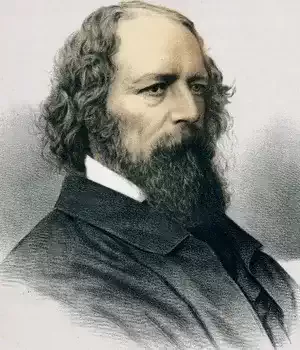
Alfred Lord Tennyson
Tears, Idle Tears
Tears, idle tears, I know not what they mean,
Tears from the depth of some divine despair
Rise in the heart, and gather to the eyes,
In looking on the happy Autumn-fields,
And thinking of the days that are no more.
Fresh as the first beam glittering on a sail,
That brings our friends up from the underworld,
Sad as the last which reddens over one
That sinks with all we love below the verge;
So sad, so fresh, the days that are no more.
Ah, sad and strange as in dark summer dawns
The earliest pipe of half-awakened birds
To dying ears, when unto dying eyes
The casement slowly grows a glimmering square;
So sad, so strange, the days that are no more.
Dear as remembered kisses after death,
And sweet as those by hopeless fancy feigned
On lips that are for others; deep as love,
Deep as first love, and wild with all regret;
O Death in Life, the days that are no more!
Read more →
824
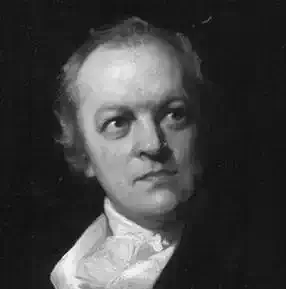
William Blake
The Sick Rose
O Rose, thou art sick!
The invisible worm
That flies in the night,
In the howling storm,
Has found out thy bed
Of crimson joy:
And his dark secret love
Does thy life destroy.
Read more →
839
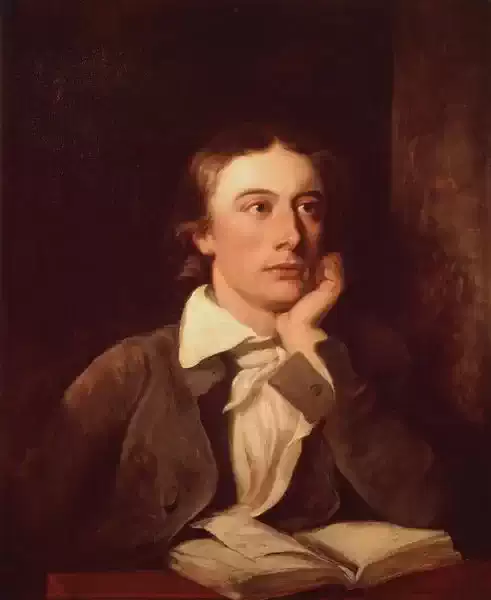
John Keats
Ode on Melancholy
No, no! go not to Lethe, neither twist
Wolf's-bane, tight-rooted, for its poisonous wine;
Nor suffer thy pale forehead to be kissed
By nightshade, ruby grape of Proserpine;
Make not your rosary of yew-berries,
Nor let the beetle nor the death-moth be
Your mournful Psyche, nor the downy owl
A partner in your sorrow's mysteries;
For shade to shade will come too drowsily,
And drown the wakeful anguish of the soul.
But when the melancholy fit shall fall
Sudden from heaven like a weeping cloud,
That fosters the droop-headed flowers all,
And hides the green hill in an April shroud;
Then glut thy sorrow on a morning rose,
Or on the rainbow of the salt sand-wave,
Or on the wealth of globed peonies;
Or if thy mistress some rich anger shows,
Emprison her soft hand, and let her rave,
And feed deep, deep upon her peerless eyes.
She dwells with Beauty -- Beauty that must die;
And Joy, whose hand is ever at his lips
Bidding adieu; and aching Pleasure nigh,
Turning to poison while the bee-mouth sips;
Ay, in the very temple of delight
Veiled Melancholy has her sovran shrine,
Though seen of none save him whose strenuous
tongue
Can burst Joy's grape against his palate fine;
His soul shall taste the sadness of her might,
And be among her cloudy trophies hung.
Read more →
671

W. H. Auden
Funeral Blues
Stop all the clocks, cut off the telephone,
Prevent the dog from barking with a juicy bone,
Silence the pianos and with muffled drum
Bring out the coffin, let the mourners come.
Let aeroplanes circle moaning overhead
Scribbling on the sky the message He Is Dead,
Put crepe bows round the white necks of the public doves,
Let the traffic policemen wear black cotton gloves.
He was my North, my South, my East and West,
My working week and my Sunday rest,
My noon, my midnight, my talk, my song;
I thought that love would last for ever; I was wrong.
The stars are not wanted now: put out every one;
Pack up the moon and dismantle the sun;
Pour away the ocean and sweep up the wood,
For nothing now can ever come to any good.
Read more →
3,065
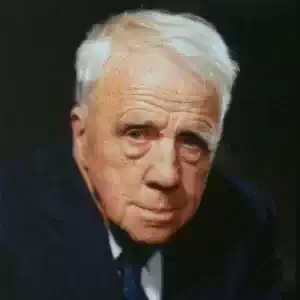
Robert Frost
Home Burial
He saw her from the bottom of the stairs
Before she saw him. She was starting down,
Looking back over her shoulder at some fear.
She took a doubtful step and then undid it
To raise herself and look again. He spoke
Advancing toward her: "What is it you see
From up there always? -- for I want to know."
She turned and sank upon her skirts at that,
And her face changed from terrified to dull.
He said to gain time: "What is it you see?"
Mounting until she cowered under him.
"I will find out now -- you must tell me, dear."
She, in her place, refused him any help,
With the least stiffening of her neck and silence.
She let him look, sure that he wouldn't see,
Blind creature; and a while he didn't see.
But at last he murmured, "Oh" and again, "Oh."
"What is it -- what?" she said.
"Just that I see."
"You don't," she challenged. "Tell me what it is."
"The wonder is I didn't see at once.
I never noticed it from here before.
I must be wonted to it -- that's the reason.
The little graveyard where my people are!
So small the window frames the whole of it.
Not so much larger than a bedroom, is it?
There are three stones of slate and one of marble,
Broad-shouldered little slabs there in the sunlight
On the sidehill. We haven't to mind those.
But I understand: it is not the stones,
But the child's mound ----"
"Don't, don't, don't,
don't," she cried.
She withdrew, shrinking from beneath his arm
That rested on the banister, and slid downstairs;
And turned on him with such a daunting look,
He said twice over before he knew himself:
"Can't a man speak of his own child he's lost?"
"Not you! -- Oh, where's my hat? Oh, I don't need it!
I must get out of here. I must get air.--
I don't know rightly whether any man can."
"Amy! Don't go to someone else this time.
Listen to me. I won't come down the stairs."
He sat and fixed his chin between his fists.
"There's something I should like to ask you, dear."
"You don't know how to ask it."
"Help me, then."
Her fingers moved the latch for all reply.
"My words are nearly always an offense.
I don't know how to speak of anything
So as to please you. But I might be taught,
I should suppose. I can't say I see how.
A man must partly give up being a man
With womenfolk. We could have some arrangement
By which I'd bind myself to keep hands off
Anything special you're a-mind to name.
Though I don't like such things 'twixt those that love.
Two that don't love can't live together without them.
But two that do can't live together with them."
She moved the latch a little. "Don't -- don't go.
Don't carry it to someone else this time.
Tell me about it if it's something human.
Let me into your grief. I'm not so much
Unlike other folks as your standing there
Apart would make me out. Give me my chance.
I do think, though, you overdo it a little.
What was it brought you up to think it the thing
To take your mother-loss of a first child
So inconsolably -- in the face of love.
You'd think his memory might be satisfied ----"
"There you go sneering now!"
"I'm not, I'm not!
You make me angry. I'll come down to you.
God, what a woman! And it's come to this,
A man can't speak of his own child that's dead."
"You can't because you don't know how to speak.
If you had any feelings, you that dug
With your own hand -- how could you? -- his little grave;
I saw you from that very window there,
Making the gravel leap and leap in air,
Leap up, like that, like that, and land so lightly
And roll back down the mound beside the hole.
I thought, Who is that man? I didn't know you.
And I crept down the stairs and up the stairs
To look again, and still your spade kept lifting.
Then you came in. I heard your rumbling voice
Out in the kitchen, and I don't know why,
But I went near to see with my own eyes.
You could sit there with the stains on your shoes
Of the fresh earth from your own baby's grave
And talk about your everyday concerns.
You had stood the spade up against the wall
Outside there in the entry, for I saw it."
"I shall laugh the worst laugh I ever laughed.
I'm cursed. God, if I don't believe I'm cursed."
"I can repeat the very words you were saying:
'Three foggy mornings and one rainy day
Will rot the best birch fence a man can build.'
Think of it, talk like that at such a time!
What had how long it takes a birch to rot
To do with what was in the darkened parlour?
You couldn't care! The nearest friends can go
With anyone to death, comes so far short
They might as well not try to go at all.
No, from the time when one is sick to death,
One is alone, and he dies more alone.
Friends make pretense of following to the grave,
But before one is in it, their minds are turned
And making the best of their way back to life
And living people, and things they understand.
But the world's evil. I won't have grief so
If I can change it. Oh, I won't, I won't!"
"There, you have said it all and you feel better.
You won't go now. You're crying. Close the door.
The heart's gone out of it: why keep it up?
Amyl There's someone coming down the road!"
"You -- oh, you think the talk is all. I must go --
Somewhere out of this house. How can I make you ----"
"If -- you -- do!" She was opening the door wider.
"Where do you mean to go? First tell me that.
I'll follow and bring you back by force. I will! --"
Read more →
591
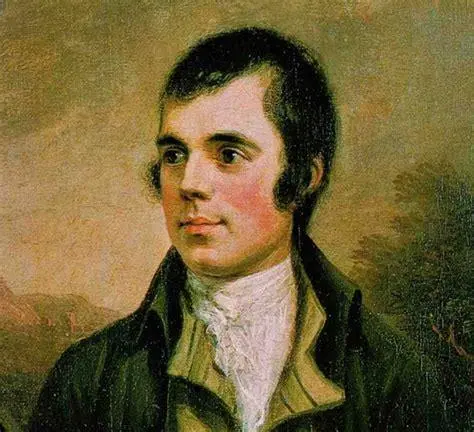
Robert Burns
To a Mouse, on Turning Up Her Nest With the Plough
Wee, sleeket, cowrin, tim'rous beastie,
Oh, what a panic's in thy breastie!
Thou need na start awa sae hasty
Wi' bickerin brattle!
I wad be laith to rin an' chase thee
Wi' murd'ring pattle!
I'm truly sorry man's dominion
Has broken Nature's social union,
An' justifies that ill opinion
Which makes thee startle
At me, thy poor earth-born companion,
An' fellow-mortal!
I doubt na, whyles, but thou may thieve:
What then? poor beastie, thou maun live!
A daimen icker in a thrave
'S a sma' request;
I'll get a blessin wi' the lave,
An' never miss 't!
Thy wee bit housie, too, in ruin!
Its silly wa's the win's are strewin!
An' naething, now, to big a new ane,
O' foggage green!
An' bleak December's winds ensuin
Baith snell an' keen!
Thou saw the fields laid bare an' wast,
An' weary winter comin fast,
An' cozie here beneath the blast
Thou thought to dwell,
Till crash! the cruel coulter past
Out thro' thy cell.
That wee bit heap o' leaves an' stibble
Has cost thee monie a weary nibble!
Now thou's turn'd out for a' thy trouble,
But house or hald,
To thole the winter's sleety dribble
An' cranreuch cauld!
But, Mousie, thou art no thy lane
In proving foresight may be vain:
The best laid schemes o' mice an' men
Gang aft agley,
An' lea'e us nought but grief an' pain
For promis'd joy.
Still thou art blest, compar'd wi' me!
The present only toucheth thee:
But, och! I backward cast my e'e
On prospects drear!
An' forward, tho' I canna see,
I guess an' fear!
Read more →
291
Robert Frost
Out, out--
The buzz-saw snarled and rattled in the yard
And made dust and dropped stove-length sticks of wood,
Sweet-scented stuff when the breeze drew across it.
And from there those that lifted eyes could count
Five mountain ranges one behind the other
Under the sunset far into Vermont.
And the saw snarled and rattled, snarled and rattled,
As it ran light, or had to bear a load.
And nothing happened: day was all but done.
Call it a day, I wish they might have said
To please the boy by giving him the half hour
That a boy counts so much when saved from work.
His sister stood beside them in her apron
To tell them "Supper." At the word, the saw,
As if to prove saws knew what supper meant,
Leaped out at the boy's hand, or seemed to leap--
He must have given the hand. However it was,
Neither refused the meeting. But the hand!
The boy's first outcry was a rueful laugh,
As he swung toward them holding up the hand
Half in appeal, but half as if to keep
The life from spilling. Then the boy saw all--
Since he was old enough to know, big boy
Doing a man's work, though a child at heart--
He saw all spoiled. "Don't let him cut my hand off--
The doctor, when he comes. Don't let him, sister!"
So. But the hand was gone already.
The doctor put him in the dark of ether.
He lay and puffed his lips out with his breath.
And then--the watcher at his pulse took fright.
No one believed. They listened at his heart.
Little--less--nothing!--and that ended it.
No more to build on there. And they, since they
Were not the one dead, turned to their affairs.
Read more →
492
John Keats
La Belle Dame Sans Merci (Original version )
Oh what can ail thee, knight-at-arms,
Alone and palely loitering?
The sedge has withered from the lake,
And no birds sing.
Oh what can ail thee, knight-at-arms,
So haggard and so woe-begone?
The squirrel's granary is full,
And the harvest's done.
I see a lily on thy brow,
With anguish moist and fever-dew,
And on thy cheeks a fading rose
Fast withereth too.
I met a lady in the meads,
Full beautiful - a faery's child,
Her hair was long, her foot was light,
And her eyes were wild.
I made a garland for her head,
And bracelets too, and fragrant zone;
She looked at me as she did love,
And made sweet moan.
I set her on my pacing steed,
And nothing else saw all day long,
For sidelong would she bend, and sing
A faery's song.
She found me roots of relish sweet,
And honey wild, and manna-dew,
And sure in language strange she said '
I love thee true'.
She took me to her elfin grot,
And there she wept and sighed full sore,
And there I shut her wild wild eyes
With kisses four.
And there she lulled me asleep
And there I dreamed - Ah! woe betide! -
The latest dream I ever dreamt
On the cold hill side.
I saw pale kings and princes too,
Pale warriors, death-pale were they all;
They cried - 'La Belle Dame sans Merci
Hath thee in thrall!'
I saw their starved lips in the gloam,
With horrid warning gaped wide,
And I awoke and found me here,
On the cold hill's side.
And this is why I sojourn here
Alone and palely loitering,
Though the sedge is withered from the lake,
And no birds sing.
Read more →
474
Robert Frost
Acquainted with the Night
I have been one acquainted with the night.
I have walked out in rain -- and back in rain.
I have outwalked the furthest city light.
I have looked down the saddest city lane.
I have passed by the watchman on his beat
And dropped my eyes, unwilling to explain.
I have stood still and stopped the sound of feet
When far away an interrupted cry
Came over houses from another street,
But not to call me back or say good-bye;
And further still at an unearthly height,
A luminary clock against the sky
Proclaimed the time was neither wrong nor right.
I have been one acquainted with the night.
Read more →
498
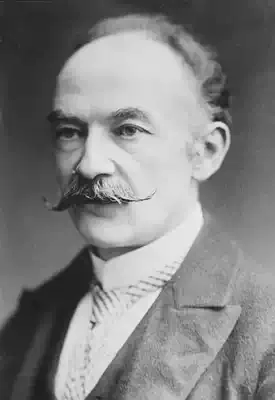
Thomas Hardy
Neutral Tones
WE stood by a pond that winter day,
And the sun was white, as though chidden of God,
And a few leaves lay on the starving sod,
--They had fallen from an ash, and were gray.
Your eyes on me were as eyes that rove
Over tedious riddles solved years ago;
And some words played between us to and fro--
On which lost the more by our love.
The smile on your mouth was the deadest thing
Alive enough to have strength to die;
And a grin of bitterness swept thereby
Like an ominous bird a-wing....
Since then, keen lessons that love deceives,
And wrings with wrong, have shaped to me
Your face, and the God-curst sun, and a tree,
And a pond edged with grayish leaves.
Read more →
226
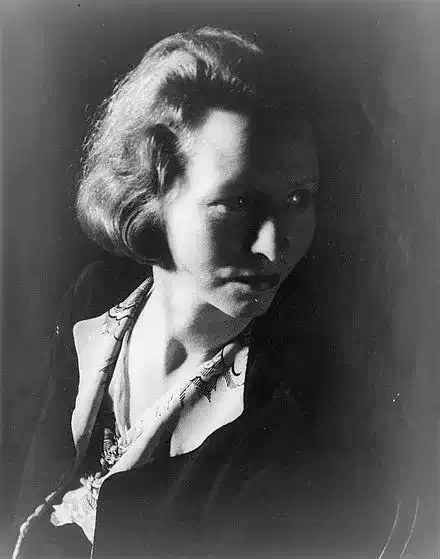
Edna St. Vincent Millay
Renascence
All I could see from where I stood
Was three long mountains and a wood;
I turned and looked another way,
And saw three islands in a bay.
So with my eyes I traced the line
Of the horizon, thin and fine,
Straight around till I was come
Back to where I'd started from;
And all I saw from where I stood
Was three long mountains and a wood.
Over these things I could not see;
These were the things that bounded me;
And I could touch them with my hand,
Almost, I thought, from where I stand.
And all at once things seemed so small
My breath came short, and scarce at all.
But, sure, the sky is big, I said;
Miles and miles above my head;
So here upon my back I'll lie
And look my fill into the sky.
And so I looked, and, after all,
The sky was not so very tall.
The sky, I said, must somewhere stop,
And -- sure enough! -- I see the top!
The sky, I thought, is not so grand;
I 'most could touch it with my hand!
And, reaching up my hand to try,
I screamed to feel it touch the sky.
I screamed, and -- lo! -- Infinity
Came down and settled over me;
And, pressing of the Undefined
The definition on my mind,
Held up before my eyes a glass
Through which my shrinking sight did pass
Until it seemed I must behold
Immensity made manifold;
Whispered to me a word whose sound
Deafened the air for worlds around,
And brought unmuffled to my ears
The gossiping of friendly spheres,
The creaking of the tented sky,
The ticking of Eternity.
I saw and heard, and knew at last
The How and Why of all things, past,
And present, and forevermore.
The universe, cleft to the core,
Lay open to my probing sense
That, sick'ning, I would fain pluck thence
But could not, -- nay! But needs must suck
At the great wound, and could not pluck
My lips away till I had drawn
All venom out. -- Ah, fearful pawn!
For my omniscience paid I toll
In infinite remorse of soul.
All sin was of my sinning, all
Atoning mine, and mine the gall
Of all regret. Mine was the weight
Of every brooded wrong, the hate
That stood behind each envious thrust,
Mine every greed, mine every lust.
And all the while for every grief,
Each suffering, I craved relief
With individual desire, --
Craved all in vain! And felt fierce fire
About a thousand people crawl;
Perished with each, -- then mourned for all!
A man was starving in Capri;
He moved his eyes and looked at me;
I felt his gaze, I heard his moan,
And knew his hunger as my own.
I saw at sea a great fog-bank
Between two ships that struck and sank;
A thousand screams the heavens smote;
And every scream tore through my throat.
No hurt I did not feel, no death
That was not mine; mine each last breath
That, crying, met an answering cry
From the compassion that was I.
All suffering mine, and mine its rod;
Mine, pity like the pity of God.
Ah, awful weight! Infinity
Pressed down upon the finite Me!
My anguished spirit, like a bird,
Beating against my lips I heard;
Yet lay the weight so close about
There was no room for it without.
And so beneath the Weight lay I
And suffered death, but could not die.
Long had I lain thus, craving death,
When quietly the earth beneath
Gave way, and inch by inch, so great
At last had grown the crushing weight,
Into the earth I sank till I
Full six feet under ground did lie,
And sank no more, -- there is no weight
Can follow here, however great.
From off my breast I felt it roll,
And as it went my tortured soul
Burst forth and fled in such a gust
That all about me swirled the dust.
Deep in the earth I rested now;
Cool is its hand upon the brow
And soft its breast beneath the head
Of one who is so gladly dead.
And all at once, and over all,
The pitying rain began to fall;
I lay and heard each pattering hoof
Upon my lowly, thatched roof,
And seemed to love the sound far more
Than ever I had done before.
For rain it hath a friendly sound
To one who's six feet underground;
And scarce the friendly voice or face:
A grave is such a quiet place.
The rain, I said, is kind to come
And speak to me in my new home.
I would I were alive again
To kiss the fingers of the rain,
To drink into my eyes the shine
Of every slanting silver line,
To catch the freshened, fragrant breeze
From drenched and dripping apple-trees.
For soon the shower will be done,
And then the broad face of the sun
Will laugh above the rain-soaked earth
Until the world with answering mirth
Shakes joyously, and each round drop
Rolls, twinkling, from its grass-blade top.
How can I bear it; buried here,
While overhead the sky grows clear
And blue again after the storm?
O, multi-colored, multiform,
Beloved beauty over me,
That I shall never, never see
Again! Spring-silver, autumn-gold,
That I shall never more behold!
Sleeping your myriad magics through,
Close-sepulchred away from you!
O God, I cried, give me new birth,
And put me back upon the earth!
Upset each cloud's gigantic gourd
And let the heavy rain, down-poured
In one big torrent, set me free,
Washing my grave away from me!
I ceased; and, through the breathless hush
That answered me, the far-off rush
Of herald wings came whispering
Like music down the vibrant string
Of my ascending prayer, and -- crash!
Before the wild wind's whistling lash
The startled storm-clouds reared on high
And plunged in terror down the sky,
And the big rain in one black wave
Fell from the sky and struck my grave.
I know not how such things can be
I only know there came to me
A fragrance such as never clings
To aught save happy living things;
A sound as of some joyous elf
Singing sweet songs to please himself,
And, through and over everything,
A sense of glad awakening.
The grass, a-tiptoe at my ear,
Whispering to me I could hear;
I felt the rain's cool finger-tips
Brushed tenderly across my lips,
Laid gently on my sealed sight,
And all at once the heavy night
Fell from my eyes and I could see, --
A drenched and dripping apple-tree,
A last long line of silver rain,
A sky grown clear and blue again.
And as I looked a quickening gust
Of wind blew up to me and thrust
Into my face a miracle
Of orchard-breath, and with the smell, --
I know not how such things can be! --
I breathed my soul back into me.
Ah! Up then from the ground sprang I
And hailed the earth with such a cry
As is not heard save from a man
Who has been dead, and lives again.
About the trees my arms I wound;
Like one gone mad I hugged the ground;
I raised my quivering arms on high;
I laughed and laughed into the sky,
Till at my throat a strangling sob
Caught fiercely, and a great heart-throb
Sent instant tears into my eyes;
O God, I cried, no dark disguise
Can e'er hereafter hide from me
Thy radiant identity!
Thou canst not move across the grass
But my quick eyes will see Thee pass,
Nor speak, however silently,
But my hushed voice will answer Thee.
I know the path that tells Thy way
Through the cool eve of every day;
God, I can push the grass apart
And lay my finger on Thy heart!
The world stands out on either side
No wider than the heart is wide;
Above the world is stretched the sky, --
No higher than the soul is high.
The heart can push the sea and land
Farther away on either hand;
The soul can split the sky in two,
And let the face of God shine through.
But East and West will pinch the heart
That cannot keep them pushed apart;
And he whose soul is flat -- the sky
Will cave in on him by and by.
Read more →
405
William Blake
The Chimney Sweeper
A little black thing in the snow,
Crying "weep! weep!" in notes of woe!
"Where are thy father and mother? Say!"--
"They are both gone up to the church to pray.
"Because I was happy upon the heath,
And smiled among the winter's snow,
They clothed me in the clothes of death,
And taught me to sing the notes of woe.
"And because I am happy and dance and sing,
They think they have done me no injury,
And are gone to praise God and his priest and king,
Who make up a heaven of our misery."
Read more →
475
Emily Dickinson
There's a certain Slant of light (258)
There's a certain Slant of light,
Winter Afternoons--
That oppresses, like the Heft
Of Cathedral Tunes--
Heavenly Hurt, it gives us--
We can find no scar,
But internal difference,
Where the Meanings, are--
None may teach it--Any-'
Tis the Seal Despair--
An imperial affliction
Sent us of the air--
When it comes, the Landscape listens-Shadows--
hold their breath--
When it goes, 'tis like the Distance
On the look of Death--
Read more →
204
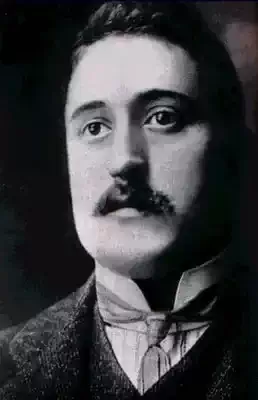
Guillaume Apollinaire
Shadow
Here you are beside me again
Memories of my companions killed in the war
The olive-branch of time
Memories that make only a single memory
As a hundred skins make only a single coat
As these thousands of wounds make only a single
newspaper article
Impalpable and ark presence who have assumed
the changing shape of my shadow
an Indian on the watch through all Eternity
shadow you creep beside me
but you do not hear me any more
you will not know any more the divine poems I sing
but I hear you still and see you still
Destinies
Multiple shadows may the sun preserve you
You who love me so much that you will never leave me
And who dance in the sun without stirring the dust
Shadow ink of the sun
Signature of my light
Holder of sorrows
A god that condescends.
Read more →
1,281
8
Emily Dickinson
We see-Comparatively
We see-Comparatively-
The Thing so towering high
We could not grasp its segment
Unaided-Yesterday-
This Morning's finer Verdict-
Makes scarcely worth the toil-
A furrow-Our Cordillera-
Our Apennine-a Knoll-
Perhaps 'tis kindly-done us-
The Anguish-and the loss-
The wrenching-for His Firmament
The Thing belonged to us-
To spare these Striding Spirits
Some Morning of Chagrin-
The waking in a Gnat's-embrace-
Our Giants-further on-
Read more →
1,075
8
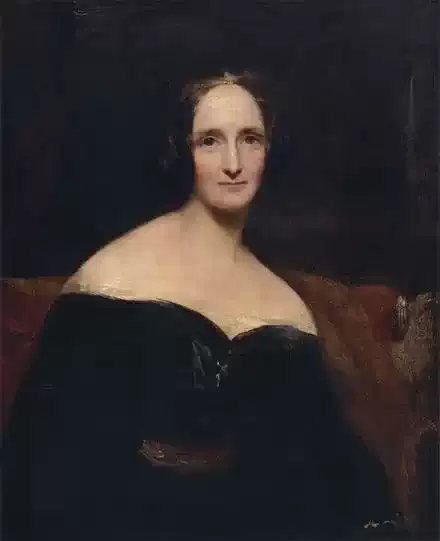
Percy Bysshe Shelley
On A Dead Violet
The odor from the flower is gone
Which like thy kisses breathed on me;
The color from the flower is flown
Which glowed of thee and only thee!
A shrivelled, lifeless, vacant form,
It lies on my abandoned breast;
And mocks the heart, which yet is warm,
With cold and silent rest.
I weep--my tears revive it not;
I sigh--it breathes no more on me:
Its mute and uncomplaining lot
Is such as mine should be.
Read more →
1,069
6
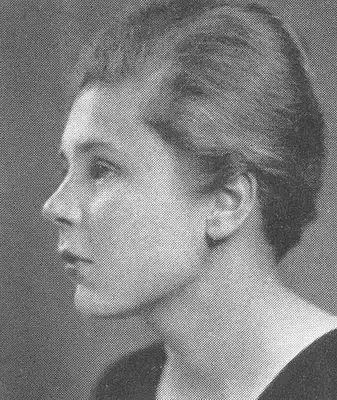
Elizabeth Bishop
Love Lies Sleeping
Earliest morning, switching all the tracks
that cross the sky from cinder star to star,
coupling the ends of streets
to trains of light.
now draw us into daylight in our beds;
and clear away what presses on the brain:
put out the neon shapes
that float and swell and glare
down the gray avenue between the eyes
in pinks and yellows, letters and twitching signs.
Hang-over moons, wane, wane!
From the window I see
an immense city, carefully revealed,
made delicate by over-workmanship,
detail upon detail,
cornice upon facade,
reaching up so languidly up into
a weak white sky, it seems to waver there.
(Where it has slowly grown
in skies of water-glass
from fused beads of iron and copper crystals,
the little chemical "garden" in a jar
trembles and stands again,
pale blue, blue-green, and brick.)
The sparrows hurriedly begin their play.
Then, in the West, "Boom!" and a cloud of smoke.
"Boom!" and the exploding ball
of blossom blooms again.
(And all the employees who work in a plants
where such a sound says "Danger," or once said "Death,"
turn in their sleep and feel
the short hairs bristling
on backs of necks.) The cloud of smoke moves off.
A shirt is taken of a threadlike clothes-line.
Along the street below
the water-wagon comes
throwing its hissing, snowy fan across
peelings and newspapers. The water dries
light-dry, dark-wet, the pattern
of the cool watermelon.
I hear the day-springs of the morning strike
from stony walls and halls and iron beds,
scattered or grouped cascades,
alarms for the expected:
queer cupids of all persons getting up,
whose evening meal they will prepare all day,
you will dine well
on his heart, on his, and his,
so send them about your business affectionately,
dragging in the streets their unique loves.
Scourge them with roses only,
be light as helium,
for always to one, or several, morning comes
whose head has fallen over the edge of his bed,
whose face is turned
so that the image of
the city grows down into his open eyes
inverted and distorted. No. I mean
distorted and revealed,
if he sees it at all.
Read more →
1,156
7
Emily Dickinson
The Test of Love—is Death
The Test of Love—is Death—
Our Lord—"so loved"—it saith—
What Largest Lover—hath
Another—doth—
If smaller Patience—be—
Through less Infinity—
If Bravo, sometimes swerve—
Through fainter Nerve—
Accept its Most—
And overlook—the Dust—
Last—Least—
The Cross'—Request—
Read more →
972
7
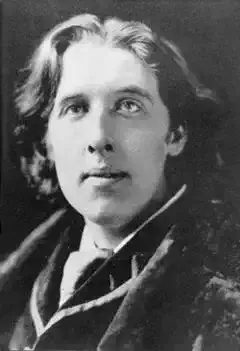
Oscar Wilde
A Vision
Two crowned Kings, and One that stood alone
With no green weight of laurels round his head,
But with sad eyes as one uncomforted,
And wearied with man's never-ceasing moan
For sins no bleating victim can atone,
And sweet long lips with tears and kisses fed.
Girt was he in a garment black and red,
And at his feet I marked a broken stone
Which sent up lilies, dove-like, to his knees.
Now at their sight, my heart being lit with flame,
I cried to Beatrice, 'Who are these?'
And she made answer, knowing well each name,
'AEschylos first, the second Sophokles,
And last (wide stream of tears!) Euripides.'
Read more →
2,324
6
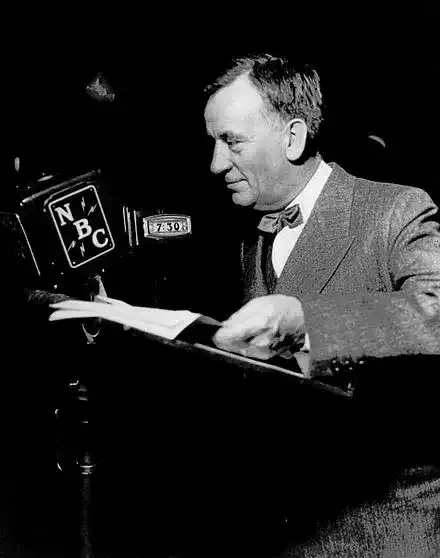
Edgar Albert Guest
The Proof Of Worth
Though victory's proof of the skill you possess,
Defeat is the proof of your grit;
A weakling can smile in his days of success,
But at trouble's first sign he will quit.
So the test of the heart and the test of your pluck
Isn't skies that are sunny and fair,
But how do you stand to the blow that is struck
And how do you battle despair?
A fool can seem wise when the pathway is clear
And it's easy to see the way out,
But the test of man's judgment is something to fear,
And what does he do when in doubt?
And the proof of his faith is the courage he shows
When sorrows lie deep in his breast;
It's the way that he suffers the griefs that he knows
That brings out his worst or his best.
The test of a man is how much he will bear
For a cause which he knows to be right,
How long will he stand in the depths of despair,
How much will he suffer and fight?
There are many to serve when the victory's near
And few are the hurts to be borne,
But it calls for a leader of courage to cheer
The men in a battle forlorn.
It's the way you hold out against odds that are great
That proves what your courage is worth,
It's the way that you stand to the bruises of fate
That shows up your stature and girth.
And victory's nothing but proof of your skill,
Veneered with a glory that's thin,
Unless it is proof of unfaltering will,
And unless you have suffered to win.
Read more →
10,068
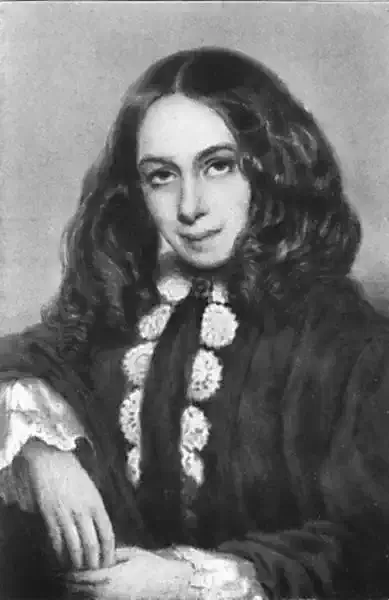
Elizabeth Barrett Browning
Sonnet XXX: I See Thine Image
I see thine image through my tears to-night,
And yet to-day I saw thee smiling. How
Refer the cause?--Beloved, is it thou
Or I, who makes me sad? The acolyte
Amid the chanted joy and thankful rite
May so fall flat, with pale insensate brow,
On the altar-stair. I hear thy voice and vow,
Perplexed, uncertain, since thou art out of sight,
As he, in his swooning ears, the choir's amen.
Beloved, dost thou love? or did I see all
The glory as I dreamed, and fainted when
Too vehement light dilated my ideal,
For my soul's eyes? Will that light come again,
As now these tears come--falling hot and real?
Read more →
1,713
Page 1
Next