
Seasons (Spring, Summer, Autumn, Winter)

Ogden Nash
Kipling's Vermont
The summer like a rajah dies,
And every widowed tree
Kindles for Congregationalist eyes
An alien suttee.
And every widowed tree
Kindles for Congregationalist eyes
An alien suttee.
236

Christina Rossetti
An End
Love, strong as Death, is dead.
Come, let us make his bed
Among the dying flowers:
A green turf at his head;
And a stone at his feet,
Whereon we may sit
In the quiet evening hours.
He was born in the Spring,
And died before the harvesting:
On the last warm summer day
He left us; he would not stay
For Autumn twilight cold and grey.
Sit we by his grave, and sing
He is gone away.
To few chords and sad and low
Sing we so:
Be our eyes fixed on the grass
Shadow-veiled as the years pass
While we think of all that was
In the long ago.
233

Thomas Hardy
Winter in Durnover Field
Scene.--A wide stretch of fallow ground recently sown with wheat, and
frozen to iron hardness. Three large birds walking about thereon,
and wistfully eyeing the surface. Wind keen from north-east: sky a
dull grey.
(Triolet)
Rook.--Throughout the field I find no grain;
The cruel frost encrusts the cornland!
Starling.--Aye: patient pecking now is vain
Throughout the field, I find . . .
Rook.--No grain!
Pigeon.--Nor will be, comrade, till it rain,
Or genial thawings loose the lorn land
Throughout the field.
Rook.--I find no grain:
The cruel frost encrusts the cornland!
233

Robert W. Service
The Convalescent
. . . So I walked among the willows very quietly all night;
There was no moon at all, at all; no timid star alight;
There was no light at all, at all; I wint from tree to tree,
And I called him as his mother called, but he nivver answered me.
Oh I called him all the night-time, as I walked the wood alone;
And I listened and I listened, but I nivver heard a moan;
Then I found him at the dawnin', when the sorry sky was red:
I was lookin' for the livin', but I only found the dead.
Sure I know that it was Shamus by the silver cross he wore;
But the bugles they were callin', and I heard the cannon roar.
Oh I had no time to tarry, so I said a little prayer,
And I clasped his hands together, and I left him lyin' there.
Now the birds are singin', singin', and I'm home in Donegal,
And it's Springtime, and I'm thinkin' that I only dreamed it all;
I dreamed about that evil wood, all crowded with its dead,
Where I knelt beside me brother when the battle-dawn was red.
Where I prayed beside me brother ere I wint to fight anew:
Such dreams as these are evil dreams; I can't believe it's true.
Where all is love and laughter, sure it's hard to think of loss . . .
But mother's sayin' nothin', and she clasps -- a silver cross.
232
Christina Rossetti
A Diamond Or A Coal?
A diamond or a coal?
A diamond, if you please:
Who cares about a clumsy coal
Beneath the summer trees?
A diamond or a coal?
A coal, sir, if you please:
One comes to care about the coal
What time the waters freeze.
A diamond, if you please:
Who cares about a clumsy coal
Beneath the summer trees?
A diamond or a coal?
A coal, sir, if you please:
One comes to care about the coal
What time the waters freeze.
232
Christina Rossetti
Who Hath Despised The Day Of Small Things?
As violets so be I recluse and sweet,
Cheerful as daisies unaccounted rare,
Still sunward-gazing from a lowly seat,
Still sweetening wintry air.
While half-awakened Spring lags incomplete,
While lofty forest trees tower bleak and bare,
Daisies and violets own remotest heat
And bloom and make them fair.
Cheerful as daisies unaccounted rare,
Still sunward-gazing from a lowly seat,
Still sweetening wintry air.
While half-awakened Spring lags incomplete,
While lofty forest trees tower bleak and bare,
Daisies and violets own remotest heat
And bloom and make them fair.
232
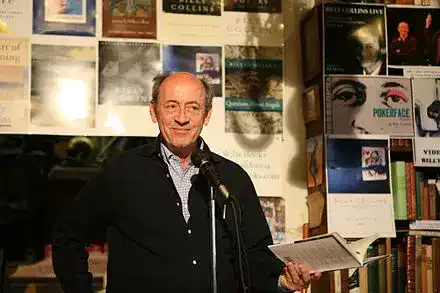
Billy Collins
Today
If ever there were a spring day so perfect, so uplifted by a warm intermittent breeze
229
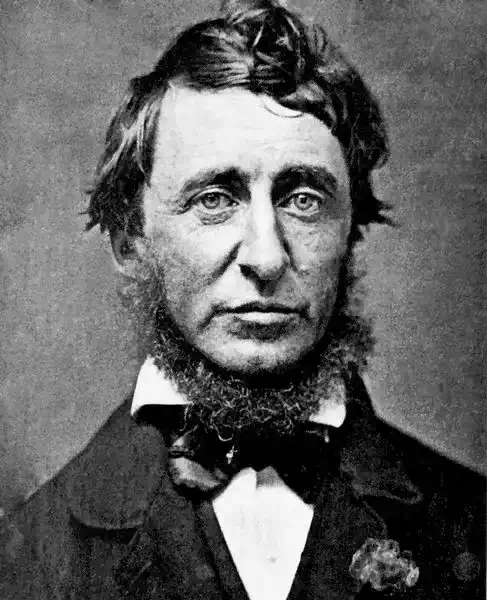
Henry David Thoreau
The Poet's Delay
IN vain I see the morning rise,
In vain observe the western blaze,
Who idly look to other skies,
Expecting life by other ways.
Amidst such boundless wealth without,
I only still am poor within,
The birds have sung their summer out,
But still my spring does not begin.
Shall I then wait the autumn wind,
Compelled to seek a milder day,
And leave no curious nest behind,
No woods still echoing to my lay?
227
Christina Rossetti
There Is But One May In The Year
There is but one May in the year,
And sometimes May is wet and cold;
There is but one May in the year
Before the year grows old.
Yet though it be the chilliest May,
With least of sun and most of showers,
Its wind and dew, its night and day,
Bring up the flowers.
And sometimes May is wet and cold;
There is but one May in the year
Before the year grows old.
Yet though it be the chilliest May,
With least of sun and most of showers,
Its wind and dew, its night and day,
Bring up the flowers.
226

Emily Dickinson
Like Some Old fashioned Miracle
Like Some Old fashioned Miracle
When Summertime is done-
Seems Summer's Recollection
And the Affairs of June
As infinite Tradition
As Cinderella's Bays-
Or Little John-of Lincoln Green-
Or Blue Beard's Galleries-
Her Bees have a fictitious Hum-
Her Blossoms, like a Dream-
Elate us-till we almost weep-
So plausible-they seem-
Her Memories like Strains-Review-
When Orchestra is dumb-
The Violin in Baize replaced-
And Ear-and Heaven-numb-
223

John Greenleaf Whittier
Summer By The Lakeside: Lake Winnipesaukee
I. NOON.
White clouds, whose shadows haunt the deep,
Light mists, whose soft embraces keep
The sunshine on the hills asleep!
O isles of calm! O dark, still wood!
And stiller skies that overbrood
Your rest with deeper quietude!
O shapes and hues, dim beckoning, through
Yon mountain gaps, my longing view
Beyond the purple and the blue,
To stiller sea and greener land,
And softer lights and airs more bland,
And skies,--the hollow of God's hand!
Transfused through you, O mountain friends!
With mine your solemn spirit blends,
And life no more hath separate ends.
I read each misty mountain sign,
I know the voice of wave and pine,
And I am yours, and ye are mine.
Life's burdens fall, its discords cease,
I lapse into the glad release
Of Nature's own exceeding peace.
O welcome calm of heart and mind!
As falls yon fir-tree's loosened rind
To leave a tenderer growth behind,
So fall the weary years away;
A child again, my head I lay
Upon the lap of this sweet day.
This western wind hath Lethean powers,
Yon noonday cloud nepenthe showers,
The lake is white with lotus-flowers!
Even Duty's voice is faint and low,
And slumberous Conscience, waking slow,
Forgets her blotted scroll to show.
The Shadow which pursues us all,
Whose ever-nearing steps appall,
Whose voice we hear behind us call,-
That Shadow blends with mountain gray,
It speaks but what the light waves say,-Death
walks apart from Fear to-day!
Rocked on her breast, these pines and I
Alike on Nature's love rely;
And equal seems to live or die.
Assured that He whose presence fills
With light the spaces of these hills
No evil to His creatures wills,
The simple faith remains, that He
Will do, whatever that may be,
The best alike for man and tree.
What mosses over one shall grow,
What light and life the other know,
Unanxious, leaving Him to show.
II. EVENING.
Yon mountain's side is black with night,
While, broad-orhed, o'er its gleaming crown
The moon, slow-rounding into sight,
On the hushed inland sea looks down.
How start to light the clustering isles,
Each silver-hemmed! How sharply show
The shadows of their rocky piles,
And tree-tops in the wave below!
How far and strange the mountains seem,
Dim-looming through the pale, still light
The vague, vast grouping of a dream,
They stretch into the solemn night.
Beneath, lake, wood, and peopled vale,
Hushed by that presence grand and grave,
Are silent, save the cricket's wail,
And low response of leaf and wave.
Fair scenes! whereto the Day and Night
Make rival love, I leave ye soon,
What time before the eastern light
The pale ghost of the setting moon
Shall hide behind yon rocky spines,
And the young archer, Morn, shall break
His arrows on the mountain pines,
And, golden-sandalled, walk the lake!
Farewell! around this smiling bay
Gay-hearted Health, and Life in bloom,
With lighter steps than mine, may stray
In radiant summers yet to come.
But none shall more regretful leave
These waters and these hills than I
Or, distant, fonder dream how eve
Or dawn is painting wave and sky;
How rising moons shine sad and mild
On wooded isle and silvering bay;
Or setting suns beyond the piled
And purple mountains lead the day;
Nor laughing girl, nor bearding boy,
Nor full-pulsed manhood, lingering here,
Shall add, to life's abounding joy,
The charmed repose to suffering dear.
Still waits kind Nature to impart
Her choicest gifts to such as gain
An entrance to her loving heart
Through the sharp discipline of pain.
Forever from the Hand that takes
One blessing from us others fall;
And, soon or late, our Father makes
His perfect recompense to all!
Oh, watched by Silence and the Night,
And folded in the strong embrace
Of the great mountains, with the light
Of the sweet heavens upon thy face,
Lake of the Northland! keep thy dower
Of beauty still, and while above
Thy solemn mountains speak of power,
Be thou the mirror of God's love.
221

Anonymous
Spring
Lenten ys come with love to toun{.e},
With blosmen and with bridd{.e}s roun{.e},
That al this bliss{.e} bryngeth;
Dayes-ey{.e}s in this dal{.e}s;
Not{.e}s suete of nyht{.e}gal{.e}s;
Uch foul song singeth.
The threstelcoc him threteth oo;
Away is huer{.e} wynter woo,
When woderov{.e} springeth.
This foul{.e}s singeth ferly fel{.e},
And wlyteth on huere wynter wel{.e},
That al the wod{.e} ryngeth.
The ros{.e} rayleth hir{.e} rode;
The lev{.e}s on the lyht{.e} wod{.e}
Waxen al with will{.e}.
The mon{.e} mandeth hir{.e} bleo;
The lil.e is lossom to seo,
The fenyl and the fill{.e}.
Wow{.e}s this wild{.e} drak{.e}s;
Mil{.e}s murgeth huer{.e} mak{.e}s;
Ase strem that striketh still{.e},
Mody meneth, so doth mo;
Ichot ycham on of tho,
For love that lik{.e}s ill{.e}.
The mon{.e} mandeth hir{.e} lyht,
So doth the semly sonn{.e} bryht,
When bridd{.e}s singeth brem{.e}.
Deaw{.e}s donketh the doun{.e}s;
Deor{.e}s with huere dern{.e} roun{.e}s,
Dom{.e}s fort{.e} dem{.e};
Worm{.e}s woweth under cloud{.e};
Wymmen waxeth wounder proud{.e},
So wel hit wol hem sem{.e}.
Yef me shal wont{.e} wille of on,
This wunn{.e} weole y wole forgon,
Ant wyht in wode be flem{.e}.
222
Henry David Thoreau
Tall Ambrosia
Among the signs of autumn I perceive
The Roman wormwood (called by learned men
Ambrosia elatior, food for gods,—
For to impartial science the humblest weed
Is as immortal once as the proudest flower—)
Sprinkles its yellow dust over my shoes
As I cross the now neglected garden.
—We trample under foot the food of gods
And spill their nectar in each dropp of dew—
My honest shoes, fast friends that never stray
Far from my couch, thus powdered, countryfied,
Bearing many a mile the marks of their adventure,
At the post-house disgrace the Gallic gloss
Of those well dressed ones who no morning dew
Nor Roman wormwood ever have been through,
Who never walk but are transported rather—
For what old crime of theirs I do not gather.
220
Christina Rossetti
I Dug And Dug Amongst The Snow
I dug and dug amongst the snow,
And thought the flowers would never grow;
I dug and dug amongst the sand,
And still no green thing came to hand.
Melt, O snow! the warm winds blow
To thaw the flowers and melt the snow;
But all the winds from every land
Will rear no blossom from the sand.
And thought the flowers would never grow;
I dug and dug amongst the sand,
And still no green thing came to hand.
Melt, O snow! the warm winds blow
To thaw the flowers and melt the snow;
But all the winds from every land
Will rear no blossom from the sand.
219

D.H. Lawrence
Craving for Spring
I wish it were spring in the world.
Let it be spring!
Come, bubbling, surging tide of sap!
Come, rush of creation!
Come, life! surge through this mass of mortification!
Come, sweep away these exquisite, ghastly first-flowers,
which are rather last-flowers!
Come, thaw down their cool portentousness, dissolve them:
snowdrops, straight, death-veined exhalations of white and purple crocuses,
flowers of the penumbra, issue of corruption, nourished in mortification,
jets of exquisite finality;
Come, spring, make havoc of them!
I trample on the snowdrops, it gives me pleasure to tread down the jonquils,
to destroy the chill Lent lilies;
for I am sick of them, their faint-bloodedness,
slow-blooded, icy-fleshed, portentous.
I want the fine, kindling wine-sap of spring,
gold, and of inconceivably fine, quintessential brightness,
rare almost as beams, yet overwhelmingly potent,
strong like the greatest force of world-balancing.
This is the same that picks up the harvest of wheat
and rocks it, tons of grain, on the ripening wind;
the same that dangles the globe-shaped pleiads of fruit
temptingly in mid-air, between a playful thumb and finger;
oh, and suddenly, from out of nowhere, whirls the pear-bloom,
upon us, and apple- and almond- and apricot- and quince-blossom,
storms and cumulus clouds of all imaginable blossom
about our bewildered faces,
though we do not worship.
I wish it were spring
cunningly blowing on the fallen sparks, odds and ends of the old, scattered fire,
and kindling shapely little conflagrations
curious long-legged foals, and wide-eared calves, and naked sparrow-bubs.
I wish that spring
would start the thundering traffic of feet
new feet on the earth, beating with impatience.
I wish it were spring, thundering
delicate, tender spring.
I wish these brittle, frost-lovely flowers of passionate, mysterious corruption
were not yet to come still more from the still-flickering discontent.
Oh, in the spring, the bluebell bows him down for very exuberance,
exulting with secret warm excess,
bowed down with his inner magnificence!
Oh, yes, the gush of spring is strong enough
to toss the globe of earth like a ball on a water-jet
dancing sportfully;
as you see a tiny celluloid ball tossing on a squirt of water
for men to shoot at, penny-a-time, in a booth at a fair.
The gush of spring is strong enough
to play with the globe of earth like a ball on a fountain;
At the same time it opens the tiny hands of the hazel
with such infinite patience.
The power of the rising, golden, all-creative sap could take the earth
and heave it off among the stars, into the invisible;
the same sets the throstle at sunset on a bough
singing against the blackbird;
comes out in the hesitating tremor of the primrose,
and betrays its candour in the round white strawberry flower,
is dignified in the foxglove, like a Red-Indian brave.
Ah come, come quickly, spring!
come and lift us towards our culmination, we myriads;
we who have never flowered, like patient cactuses.
Come and lift us to our end, to blossom, bring us to our summer
we who are winter-weary in the winter of the of the world.
Come making the chaffinch nests hollow and cosy,
come and soften the willow buds till they are puffed and furred,
then blow them over with gold.
Coma and cajole the gawky colt’s-foot flowers.
Come quickly, and vindicate us.
against too much death.
Come quickly, and stir the rotten globe of the world from within,
burst it with germination, with world anew.
Come now, to us, your adherents, who cannot flower from the ice.
All the world gleams with the lilies of death the Unconquerable,
but come, give us our turn.
Enough of the virgins and lilies, of passionate, suffocating perfume of corruption,
no more narcissus perfume, lily harlots, the blades of sensation
piercing the flesh to blossom of death.
Have done, have done with this shuddering, delicious business
of thrilling ruin in the flesh, of pungent passion, of rare, death-edged ecstasy.
Give us our turn, give us a chance, let our hour strike,
O soon, soon!
Let the darkness turn violet with rich dawn.
Let the darkness be warmed, warmed through to a ruddy violet,
incipient purpling towards summer in the world of the heart of man.
Are the violets already here!
Show me! I tremble so much to hear it, that even now
on the threshold of spring, I fear I shall die.
Show me the violets that are out.
Oh, if it be true, and the living darkness of the blood of man is purpling with violets,
if the violets are coming out from under the rack of men, winter-rotten and fallen,
we shall have spring.
Pray not to die on this Pisgah blossoming with violets.
Pray to live through.
If you catch a whiff of violets from the darkness of the shadow of man
it will be spring in the world,
it will be spring in the world of the living;
wonderment organising itself, heralding itself with the violets,
stirring of new seasons.
Ah, do not let me die on the brink of such anticipation!
Worse, let me not deceive myself.
214

William Wordsworth
Foresight
That is work of waste and ruin--
Do as Charles and I are doing!
Strawberry-blossoms, one and all,
We must spare them--here are many:
Look at it--the flower is small,
Small and low, though fair as any:
Do not touch it! summers two
I am older, Anne, than you.
Pull the primrose, sister Anne!
Pull as many as you can.
--Here are daisies, take your fill;
Pansies, and the cuckoo-flower:
Of the lofty daffodil
Make your bed, or make your bower;
Fill your lap, and fill your bosom;
Only spare the strawberry-blossom!
Primroses, the Spring may love them--
Summer knows but little of them:
Violets, a barren kind,
Withered on the ground must lie;
Daisies leave no fruit behind
When the pretty flowerets die;
Pluck them, and another year
As many will be blowing here.
God has given a kindlier power
To the favoured strawberry-flower.
Hither soon as spring is fled
You and Charles and I will walk;
Lurking berries, ripe and red,
Then will hang on every stalk,
Each within its leafy bower;
And for that promise spare the flower!
216
Christina Rossetti
Endure Hardness
A cold wind stirs the blackthorn
To burgeon and to blow,
Besprinkling half-green hedges
With flakes and sprays of snow.
Through coldness and through keenness,
Dear hearts, take comfort so:
Somewhere or other doubtless
These make the blackthorn blow.
To burgeon and to blow,
Besprinkling half-green hedges
With flakes and sprays of snow.
Through coldness and through keenness,
Dear hearts, take comfort so:
Somewhere or other doubtless
These make the blackthorn blow.
214
Christina Rossetti
If All Were Rain And Never Sun
If all were rain and never sun,
No bow could span the hill;
If all were sun and never rain,
There’d be no rainbow still.
No bow could span the hill;
If all were sun and never rain,
There’d be no rainbow still.
210
Thomas Hardy
To Flowers From Italy in Winter
Sunned in the South, and here to-day;
--If all organic things
Be sentient, Flowers, as some men say,
What are your ponderings?
How can you stay, nor vanish quite
From this bleak spot of thorn,
And birch, and fir, and frozen white
Expanse of the forlorn?
Frail luckless exiles hither brought!
Your dust will not regain
Old sunny haunts of Classic thought
When you shall waste and wane;
But mix with alien earth, be lit
With frigid Boreal flame,
And not a sign remain in it
To tell men whence you came.
206
Thomas Hardy
Birds at Winter Nightfall (Triolet)
Around the house the flakes fly faster,
And all the berries now are gone
From holly and cotoneaster
Around the house. The flakes fly!--faster
Shutting indoors that crumb-outcaster
We used to see upon the lawn
Around the house. The flakes fly faster,
And all the berries now are gone!
And all the berries now are gone
From holly and cotoneaster
Around the house. The flakes fly!--faster
Shutting indoors that crumb-outcaster
We used to see upon the lawn
Around the house. The flakes fly faster,
And all the berries now are gone!
205
Thomas Hardy
Weathers
This is the weather the cuckoo likes,
And so do I;
When showers betumble the chestnut spikes,
And nestlings fly;
And the little brown nightingale bills his best,
And they sit outside at 'The Traveller's Rest,'
And maids come forth sprig-muslin drest,
And citizens dream of the south and west,
And so do I.
This is the weather the shepherd shuns,
And so do I;
When beeches drip in browns and duns,
And thresh and ply;
And hill-hid tides throb, throe on throe,
And meadow rivulets overflow,
And drops on gate bars hang in a row,
And rooks in families homeward go,
And so do I.
And so do I;
When showers betumble the chestnut spikes,
And nestlings fly;
And the little brown nightingale bills his best,
And they sit outside at 'The Traveller's Rest,'
And maids come forth sprig-muslin drest,
And citizens dream of the south and west,
And so do I.
This is the weather the shepherd shuns,
And so do I;
When beeches drip in browns and duns,
And thresh and ply;
And hill-hid tides throb, throe on throe,
And meadow rivulets overflow,
And drops on gate bars hang in a row,
And rooks in families homeward go,
And so do I.
197
William Wordsworth
A Whirl-Blast from Behind the Hill
A Whirl-Blast from behind the hill
Rushed o'er the wood with startling sound;
Then--all at once the air was still,
And showers of hailstones pattered round.
Where leafless oaks towered high above,
I sat within an undergrove
Of tallest hollies, tall and green;
A fairer bower was never seen.
From year to year the spacious floor
With withered leaves is covered o'er,
And all the year the bower is green.
But see! where'er the hailstones drop
The withered leaves all skip and hop;
There's not a breeze--no breath of air--
Yet here, and there, and everywhere
Along the floor, beneath the shade
By those embowering hollies made,
The leaves in myriads jump and spring,
As if with pipes and music rare
Some Robin Good-fellow were there,
And all those leaves, in festive glee,
Were dancing to the minstrelsy.
201

Oscar Wilde
Le Jardin Des Tuileries
This winter air is keen and cold,
And keen and cold this winter sun,
But round my chair the children run
Like little things of dancing gold.
Sometimes about the painted kiosk
The mimic soldiers strut and stride,
Sometimes the blue-eyed brigands hide
In the bleak tangles of the bosk.
And sometimes, while the old nurse cons
Her book, they steal across the square,
And launch their paper navies where
Huge Triton writhes in greenish bronze.
And now in mimic flight they flee,
And now they rush, a boisterous band -
And, tiny hand on tiny hand,
Climb up the black and leafless tree.
Ah! cruel tree! if I were you,
And children climbed me, for their sake
Though it be winter I would break
Into spring blossoms white and blue!
193

Wilfred Owen
War broke: and now the Winter of the world
With perishing great darkness closes in.
The foul tornado, centred at Berlin,
Is over all the width of Europe whirled,
Rending the sails of progress. Rent or furled
Are all Art's ensigns. Verse wails. Now begin
Famines of thought and feeling. Love's wine's thin.
The grain of human Autumn rots, down-hurled.
For after Spring had bloomed in early Greece,
And Summer blazed her glory out with Rome,
An Autumn softly fell, a harvest home,
A slow grand age, and rich with all increase.
But now, for us, wild Winter, and the need
Of sowings for new Spring, and blood for seed.
194