
Seasons (Spring, Summer, Autumn, Winter)

John Greenleaf Whittier
St. Martin's Summer
Though flowers have perished at the touch
Of Frost, the early comer,
I hail the season loved so much,
The good St. Martin's summer.
O gracious morn, with rose-red dawn,
And thin moon curving o'er it!
The old year's darling, latest born,
More loved than all before it!
How flamed the sunrise through the pines!
How stretched the birchen shadows,
Braiding in long, wind-wavered lines
The westward sloping meadows!
The sweet day, opening as a flower
Unfolds its petals tender,
Renews for us at noontide's hour
The summer's tempered splendor.
The birds are hushed; alone the wind,
That through the woodland searches,
The red-oak's lingering leaves can find,
And yellow plumes of larches.
But still the balsam-breathing pine
Invites no thought of sorrow,
No hint of loss from air like wine
The earth's content can borrow.
The summer and the winter here
Midway a truce are holding,
A soft, consenting atmosphere
Their tents of peace enfolding.
The silent woods, the lonely hills,
Rise solemn in their gladness;
The quiet that the valley fills
Is scarcely joy or sadness.
How strange! The autumn yesterday
In winter's grasp seemed dying;
On whirling winds from skies of gray
The early snow was flying.
And now, while over Nature's mood
There steals a soft relenting,
I will not mar the present good,
Forecasting or lamenting.
My autumn time and Nature's hold
A dreamy tryst together,
And, both grown old, about us fold
The golden-tissued weather.
I lean my heart against the day
To feel its bland caressing;
I will not let it pass away
Before it leaves its blessing.
God's angels come not as of old
The Syrian shepherds knew them;
In reddening dawns, in sunset gold,
And warm noon lights I view them.
Nor need there is, in times like this
When heaven to earth draws nearer,
Of wing or song as witnesses
To make their presence clearer.
O stream of life, whose swifter flow
Is of the end forewarning,
Methinks thy sundown afterglow
Seems less of night than morning!
Old cares grow light; aside I lay
The doubts and fears that troubled;
The quiet of the happy day
Within my soul is doubled.
That clouds must veil this fair sunshine
Not less a joy I find it;
Nor less yon warm horizon line
That winter lurks behind it.
The mystery of the untried days
I close my eyes from reading;
His will be done whose darkest ways
To light and life are leading!
Less drear the winter night shall be,
If memory cheer and hearten
Its heavy hours with thoughts of thee,
Sweet summer of St. Martin!
253

James Whitcomb Riley
When The Frost Is On The Punkin
When the frost is on the punkin and the fodder's in the shock
And you hear the kyouck and gobble of the struttin' turkey cock
And the clackin' of the guineys, and the cluckin' of the hens
And the rooster's hallylooyer as he tiptoes on the fence
O, it's then's the times a feller is a-feelin' at his best
With the risin' sun to greet him from a night of peaceful rest
As he leaves the house, bareheaded, and goes out to feed the stock
When the frost is on the punkin and the fodder's in the shock
They's something kindo' harty-like about the atmusfere
When the heat of summer's over and the coolin' fall is here
Of course we miss the flowers, and the blossums on the trees
And the mumble of the hummin'-birds and buzzin' of the bees
But the air's so appetizin'; and the landscape through the haze
Of a crisp and sunny morning of the airly autumn days
Is a pictur' that no painter has the colorin' to mock
When the frost is on the punkin and the fodder's in the shock.
The husky, rusty russel of the tossels of the corn,
And the raspin' of the tangled leaves, as golden as the morn;
The stubble in the furries kindo' lonesome-like, but still
A-preachin' sermuns to us of the barns they growed to fill;
The strawstack in the medder, and the reaper in the shed;
The hosses in theyr stalls below the clover over-head!
O, it sets my hart a-clickin' like the tickin' of a clock,
When the frost is on the punkin and the fodder's in the shock!
Then your apples all is gethered, and the ones a feller keeps
Is poured around the celler-floor in red and yeller heaps;
And your cider-makin' 's over, and your wimmern-folks is through
With their mince and apple butter, and theyr souse and saussage, too!
I don't know how to tell it but ef sich a thing could be
As the Angels wantin' boardin', and they'd call around on me
I'd want to 'commodate 'em all the whole-indurin' flock
When the frost is on the punkin and the fodder's in the shock!
254

Emily Dickinson
Noon—is the Hinge of Day
Noon—is the Hinge of Day—
Evening—the Tissue Door—
Morning—the East compelling the sill
Till all the World is ajar—
Evening—the Tissue Door—
Morning—the East compelling the sill
Till all the World is ajar—
252

Anonymous
Cuckoo Song
Sing, cuccu, nu! Sing, cuccu!
Sing, cuccu! Sing, cuccu, nu!
Sumer is icumen in;
Lhud{.e} sing, cuccu!
Groweth sed, and bloweth med,
And springth the wud{.e} nu.
Sing, cuccu!
Aw{.e} bleteth after lomb,
Lhouth after calv{.e} cu;
Bulluc sterteth, buck{.e} verteth;
Mur.e sing, cuccu!
Cuccu! cuccu!
Wel sing{.e}s thu, cuccu;
Ne swik thu naver nu.
252

Henry Wadsworth Longfellow
Evangeline: Part The First. II.
NOW had the season returned, when the nights grow colder and longer,
And the retreating sun the sign of the Scorpion enters.
Birds of passage sailed through the leaden air, from the ice-bound,
Desolate northern bays to the shores of tropical islands.
Harvests were gathered in; and wild with the winds of September
Wrestled the trees of the forest, as Jacob of old with the angel.
All the signs foretold a winter long and inclement.
Bees, with prophetic instinct of want, had hoarded their honey
Till the hives overflowed; and the Indian hunters asserted
Cold would the winter be, for thick was the fur of the foxes.
Such was the advent of autumn. Then followed that beautiful season,
Called by the pious Acadian peasants the Summer of All-Saints!
Filled was the air with a dreamy and magical light; and the landscape
Lay as if new-created in all the freshness of childhood.
Peace seemed to reign upon earth, and the restless heart of the ocean
Was for a moment consoled. All sounds were in harmony blended.
Voices of children at play, the crowing of cocks in the farm-yards,
Whir of wings in the drowsy air, and the cooing of pigeons,
All were subdued and low as the murmurs of love, and the great sun
Looked with the eye of love through the golden vapors around him;
While arrayed in its robes of russet and scarlet and yellow,
Bright with the sheen of the dew, each glittering tree of the forest
Flashed like the plane-tree the Persian adorned with mantles and jewels.
Now recommenced the reign of rest and affection and stillness.
Day with its burden and heat had departed, and twilight descending
Brought back the evening star to the sky, and the herds to the homestead.
Pawing the ground they came, and resting their necks on each other,
And with their nostrils distended inhaling the freshness of evening.
Foremost, bearing the bell, Evangeline's beautiful heifer,
Proud of her snow-white hide, and the ribbon that waved from her collar,
Quietly paced and slow, as if conscious of human affection.
Then came the shepherd back with his bleating flocks from the seaside,
Where was their favorite pasture. Behind them followed the watch-dog,
Patient, full of importance, and grand in the pride of his instinct,
Walking from side to side with a lordly air, and superbly
Waving his bushy tail, and urging forward the stragglers;
Regent of flocks was he when the shepherd slept; their protector,
When from the forest at night, through the starry silence, the wolves howled.
Late, with the rising moon, returned the wains from the marshes,
Laden with briny hay, that filled the air with its odor.
Cheerily neighed the steeds, with dew on their manes and their fetlocks,
While aloft on their shoulders the wooden and ponderous saddles,
Painted with brilliant dyes, and adorned with tassels of crimson,
Nodded in bright array, like hollyhocks heavy with blossoms.
Patiently stood the cows meanwhile, and yielded their udders
Unto the milkmaid's hand; whilst loud and in regular cadence
Into the sounding pails the foaming streamlets descended.
Lowing of cattle and peals of laughter were heard in the farm-yard,
Echoed back by the barns. Anon they sank into stillness;
Heavily closed, with a jarring sound, the valves of the barn-doors,
Rattled the wooden bars, and all for a season was silent.
In-doors, warm by the wide-mouthed fireplace, idly the farmer
Sat in his elbow-chair; and watched how the flames and the smoke-wreaths
Struggled together like foe in a burning city. Behind him,
Nodding and mocking along the wall, with gestures fantastic,
Darted his own huge shadow, and vanished away into darkness.
Faces, clumsily carved in oak, on the back of his arm-chair
Laughed in the flickering light, and the pewter plates on the dresser
Caught and reflected the flame, as shields of armies the sunshine.
Fragments of song the old man sang, and carols of Christmas,
Such as at home, in the olden time, his fathers before him
Sang in their Norman orchards and bright Burgundian vineyards.
Close at her father's side was the gentle Evangeline seated,
Spinning flax for the loom, that stood in the corner behind her.
Silent awhile were its treadles, at rest was its diligent shuttle,
While the monotonous drone of the wheel, like the drone of a bagpipe,
Followed the old man's song, and united the fragments together.
As in a church, when the chant of the choir at intervals ceases,
Footfalls are heard in the aisles, or words of the priest at the altar,
So, in each pause of the song, with measured motion the clock clicked.
Thus as they sat, there were footsteps heard, and, suddenly lifted,
Sounded the wooden latch, and the door swung back on its hinges.
Benedict knew by the hob-nailed shoes it was Basil the blacksmith,
And by her beating heart Evangeline knew who was with him.
'Welcome!' the farmer exclaimed, as their footsteps paused on the threshold,
'Welcome, Basil, my friend! Come, take thy place on the settle
Close by the chimney-side, which is always empty without thee;
Take from the shelf overhead thy pipe and the box of tobacco;
Never so much thyself art thou as when through the curling
Smoke of the pipe or the forge thy friendly and jovial face gleams
Round and red as the harvest moon through the mist of the marshes.'
Then, with a smile of content, thus answered Basil the blacksmith,
Taking with easy air the accustomed seat by the fireside:'
Benedict Bellefontaine, thou hast ever thy jest and thy ballad!
Ever in cheerfullest mood art thou, when others are filled with
Gloomy forebodings of ill, and see only ruin before them.
Happy art thou, as if every day thou hadst picked up a horseshoe.'
Pausing a moment, to take the pipe that Evangeline brought him,
And with a coal from the embers had lighted, he slowly continued:'
Four days now are passed since the English ships at their anchors
Ride in the Gaspereau's mouth, with their cannon pointed against us,
What their design may be is unknown; but all are commanded
On the morrow to meet in the church, where his Majesty's mandate
Will be proclaimed as law in the land. Alas! in the mean time
Many surmises of evil alarm the hearts of the people.'
Then made answer the farmer:-'Perhaps some friendlier purpose
Brings these ships to our shores. Perhaps the harvests in England
By untimely rains or untimelier heat have been blighted,
And from our bursting barns they would feed their cattle and children.'
'Not so thinketh the folk in the village,' said, warmly, the blacksmith,
Shaking his head, as in doubt; then, heaving a sigh, he continued:
'Louisburg is not forgotten, nor Beau Séjour, nor Port Royal.
Many already have fled to the forest, and lurk on its outskirts,
Waiting with anxious hearts the dubious fate of to-morrow.
Arms have been taken from us, and warlike weapons of all kinds;
Nothing is left but the blacksmith's sledge and the scythe of the mower.'
Then with a pleasant smile made answer the jovial farmer:'
Safer are we unarmed, in the midst of our flocks and our cornfields,
Safer within these peaceful dikes, besieged by the ocean,
Than our fathers in forts, besieged by the enemy's cannon.
Fear no evil, my friend, and to-night may no shadow of sorrow
Fall on this house and hearth; for this is the night of the contract.
Built are the house and the barn. The merry lads of the village
Strongly have built them and well; and, breaking the glebe round about them,
Filled the barn with hay, and the house with food for a twelvemonth.
René Leblanc will be here anon, with his papers and inkhorn.
Shall we not then be glad, and rejoice in the joy of our children?'
As apart by the window she stood, with her hand in her lover's,
Blushing Evangeline heard the words that her father had spoken,
And, as they died on his lips, the worthy notary entered.
252
Emily Dickinson
Some Rainbow—coming from the Fair!
Some Rainbow—coming from the Fair!
Some Vision of the World Cashmere—
I confidently see!
Or else a Peacock's purple Train
Feather by feather—on the plain
Fritters itself away!
The dreamy Butterflies bestir!
Lethargic pools resume the whir
Of last year's sundered tune!
From some old Fortress on the sun
Baronial Bees—march—one by one—
In murmuring platoon!
The Robins stand as thick today
As flakes of snow stood yesterday—
On fence—and Roof—and Twig!
The Orchis binds her feather on
For her old lover - Don the Sun!
Revisiting the Bog!
Without Commander! Countless! Still!
The Regiments of Wood and Hill
In bright detachment stand!
Behold! Whose Multitudes are these?
The children of whose turbaned seas—
Or what Circassian Land?
251

Christina Rossetti
Once For All
I said: This is a beautiful fresh rose.
I said: I will delight me with its scent,
Will watch its lovely curve of languishment,
Will watch its leaves unclose, its heart unclose.
I said: Old earth has put away her snows,
All living things make merry to their bent,
A flower is come for every flower that went.
In autumn, the sun glows, the south wind blows,
So walking in a garden of delight
I came upon one sheltered shadowed nook
Where broad leaf-shadows veiled the day with night
And there lay snow unmelted by the sun: -
I answered: Take who will the path I took,
Winter nips once for all; love is but one.
252
Christina Rossetti
Is The Moon Tired? She Looks So Pale
Is the moon tired? she looks so pale
Within her misty veil:
She scales the sky from east to west,
And takes no rest.
Before the coming of the night
The moon shows papery white;
Before the dawning of the day
She fades away.
Within her misty veil:
She scales the sky from east to west,
And takes no rest.
Before the coming of the night
The moon shows papery white;
Before the dawning of the day
She fades away.
250
Christina Rossetti
Rushes In A Watery Place
Rushes in a watery place,
And reeds in a hollow;
A soaring skylark in the sky,
A darting swallow;
And where pale blossom used to hang
Ripe fruit to follow.
And reeds in a hollow;
A soaring skylark in the sky,
A darting swallow;
And where pale blossom used to hang
Ripe fruit to follow.
248
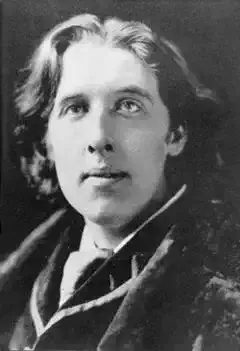
Oscar Wilde
By The Arno
THE oleander on the wall
Grows crimson in the dawning light,
Though the grey shadows of the night
Lie yet on Florence like a pall.
The dew is bright upon the hill,
And bright the blossoms overhead,
But ah! the grasshoppers have fled,
The little Attic song is still.
Only the leaves are gently stirred
By the soft breathing of the gale,
And in the almond-scented vale
The lonely nightingale is heard.
The day will make thee silent soon,
O nightingale sing on for love!
While yet upon the shadowy grove
Splinter the arrows of the moon.
Before across the silent lawn
In sea-green mist the morning steals,
And to love's frightened eyes reveals
The long white fingers of the dawn
Fast climbing up the eastern sky
To grasp and slay the shuddering night,
All careless of my heart's delight,
Or if the nightingale should die.
249
John Greenleaf Whittier
The Lumbermen
WILDLY round our woodland quarters
Sad-voiced Autumn grieves;
Thickly down these swelling waters
Float his fallen leaves.
Through the tall and naked timber,
Column-like and old,
Gleam the sunsets of November,
From their skies of gold.
O'er us, to the southland heading,
Screams the gray wild-goose;
On the night-frost sounds the treading
Of the brindled moose.
Noiseless creeping, while we're sleeping,
Frost his task-work plies;
Soon, his icy bridges heaping,
Shall our log-piles rise.
When, with sounds of smothered thunder,
On some night of rain,
Lake and river break asunder
Winter's weakened chain,
Down the wild March flood shall bear them
To the saw-mill's wheel,
Or where Steam, the slave, shall tear them
With his teeth of steel.
Be it starlight, be it moonlight,
In these vales below,
When the earliest beams of sunlight
Streak the mountain's snow,
Crisps the hoar-frost, keen and early,
To our hurrying feet,
And the forest echoes clearly
All our blows repeat.
Where the crystal Ambijejis
Stretches broad and clear,
And Millnoket's pine-black ridges
Hide the browsing deer:
Where, through lakes and wide morasses,
Or through rocky walls,
Swift and strong, Penobscot passes
White with foamy falls;
Where, through clouds, are glimpses given
Of Katahdin's sides, —
Rock and forest piled to heaven,
Torn and ploughed by slides!
Far below, the Indian trapping,
In the sunshine warm;
Far above, the snow-cloud wrapping
Half the peak in storm!
Where are mossy carpets better
Than the Persian weaves,
And than Eastern perfumes sweeter
Seem the fading leaves;
And a music wild and solemn,
From the pine-tree's height,
Rolls its vast and sea-like volume
On the wind of night;
Make we here our camp of winter;
And, through sleet and snow,
Pitchy knot and beechen splinter
On our hearth shall glow.
Here, with mirth to lighten duty,
We shall lack alone
Woman's smile and girlhood's beauty,
Childhood's lisping tone.
But their hearth is brighter burning
For our toil to-day;
And the welcome of returning
Shall our loss repay,
When, like seamen from the waters,
From the woods we come,
Greeting sisters, wives, and daughters,
Angels of our home!
Not for us the measured ringing
From the village spire,
Not for us the Sabbath singing
Of the sweet-voiced choir.
Ours the old, majestic temple,
Where God's brightness shines
Down the dome so grand and ample,
Propped by lofty pines!
Through each branch-enwoven skylight,
Speaks He in the breeze,
As of old beneath the twilight
Of lost Eden's trees!
For His ear, the inward feeling
Needs no outward tongue;
He can see the spirit kneeling
While the axe is swung.
Heeding truth alone, and turning
From the false and dim,
Lamp of toil or altar burning
Are alike to Him.
Strike, then, comrades! Trade is waiting
On our rugged toil;
Far ships waiting for the freighting
Of our woodland spoil!
Ships, whose traffic links these highlands,
Bleak and cold, of ours,
With the citron-planted islands
Of a clime of flowers;
To our frosts the tribute bringing
Of eternal heats;
In our lap of winter flinging
Tropic fruits and sweets.
Cheerly, on the axe of labor,
Let the sunbeams dance,
Better than the flash of sabre
Or the gleam of lance!
Strike! With every blow is given
Freer sun and sky,
And the long-hid earth to heaven
Looks, with wondering eye!
Loud behind us grow the murmurs
Of the age to come;
Clang of smiths, and tread of farmers,
Bearing harvest home!
Here her virgin lap with treasures
Shall the green earth fill;
Waving wheat and golden maize-ears
Crown each beechen hill.
Keep who will the city's alleys,
Take the smooth-shorn plain;
Give to us the cedarn valleys,
Rocks and hills of Maine!
In our North-land, wild and woody,
Let us still have part:
Rugged nurse and mother sturdy,
Hold us to thy heart!
Oh, our free hearts beat the warmer
For thy breath of snow;
And our tread is all the firmer
For thy rocks below.
Freedom, hand in hand with labor,
Walketh strong and brave;
On the forehead of his neighbor
No man writeth Slave!
Lo, the day breaks! old Katahdin's
Pine-trees show its fires,
While from these dim forest gardens
Rise their blackened spires.
Up, my comrades! up and doing!
Manhood's rugged play
Still renewing, bravely hewing
Through the world our way!
246
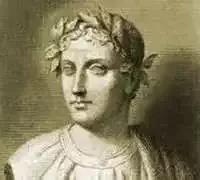
Horácio
BkIV:XII Spring
Now Spring’s companions, the Thracian northerlies,
that quieten the ocean, are swelling the canvas:
now fields are unfrozen, and rivers stop roaring
with their volumes of winter snow.
The sad swallow, tearfully mourning Itys, builds
her nest, she’s the House of Cecrops’ eternal shame,
avenging the barbarous lust of Tereus
with too savage a cruelty.
The shepherds, with indolent sheep, in the soft grass,
sing their songs to the sound of the pipes, and delight
great god, Pan, who is pleased with the flocks, and is pleased
by the dark hills of Arcady.
And, Virgil, the season has brought its thirst to us:
but if you’re eager to sip at a grape that was pressed
at Cales, you follower of noble youth, then
earn your wine with a gift of nard.
One small onyx box of nard elicits a jar
that’s lying there now in Sulpicius’ cellar,
sufficient for granting fresh hope, and effective
at washing away bitter care.
If you’re in a rush for pleasures like this, come quick
with your purchase: since I refuse to consider
dipping a gift-less you, in my wine, as if I’m
rich, my house filled with everything.
But abolish delay, and desire for profit,
and, remembering death’s sombre flames, while you can,
mix a little brief foolishness with your wisdom:
it’s sweet sometimes to play the fool.
244
Emily Dickinson
Morning—is the place for Dew
Morning—is the place for Dew—
Corn—is made at Noon—
After dinner light—for flowers—
Dukes—for Setting Sun!
Corn—is made at Noon—
After dinner light—for flowers—
Dukes—for Setting Sun!
243
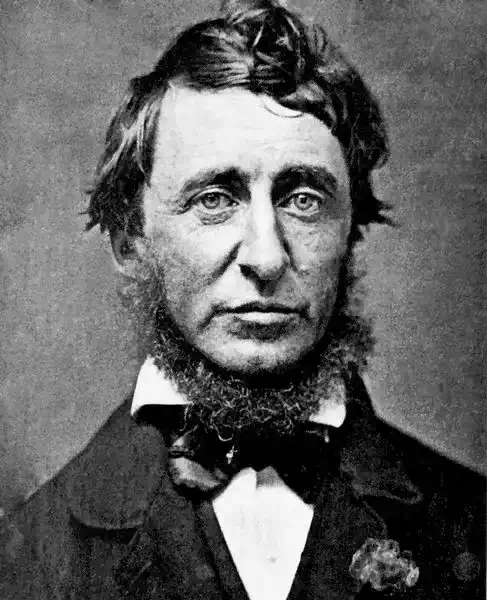
Henry David Thoreau
I am the Autumnal Sun
Sometimes a mortal feels in himself Nature
-- not his Father but his Mother stirs
within him, and he becomes immortal with her
immortality. From time to time she claims
kindredship with us, and some globule
from her veins steals up into our own.
I am the autumnal sun,
With autumn gales my race is run;
When will the hazel put forth its flowers,
Or the grape ripen under my bowers?
When will the harvest or the hunter's moon
Turn my midnight into mid-noon?
I am all sere and yellow,
And to my core mellow.
The mast is dropping within my woods,
The winter is lurking within my moods,
And the rustling of the withered leaf
Is the constant music of my grief...
244
Christina Rossetti
Summer
Winter is cold-hearted
Spring is yea and nay,
Autumn is a weather-cock
Blown every way:
Summer days for me
When every leaf is on its tree;
When Robin's not a beggar,
And Jenny Wren's a bride,
And larks hang singing, singing, singing,
Over the wheat-fields wide,
And anchored lilies ride,
And the pendulum spider
Swings from side to side,
And blue-black beetles transact business,
And gnats fly in a host,
And furry caterpillars hasten
That no time be lost,
And moths grow fat and thrive,
And ladybirds arrive.
Before green apples blush,
Before green nuts embrown,
Why, one day in the country
Is worth a month in town;
Is worth a day and a year
Of the dusty, musty, lag-last fashion
That days drone elsewhere.
244
Anonymous
May in the Green-Wood
IN somer when the shawes be sheyne,
And leves be large and long,
Hit is full merry in feyre foreste
To here the foulys song.
To se the dere draw to the dale
And leve the hilles hee,
And shadow him in the leves grene
Under the green-wode tree.
Hit befell on Whitsontide
Early in a May mornyng,
The Sonne up faire can shyne,
And the briddis mery can syng.
'This is a mery mornyng,' said Litulle Johne,
'Be Hym that dyed on tre;
A more mery man than I am one
Lyves not in Christiante.
'Pluk up thi hert, my dere mayster,'
Litulle Johne can say,
'And thynk hit is a fulle fayre tyme
In a mornynge of May.'
244
Christina Rossetti
Venus's Looking-Glass
I marked where lovely Venus and her court
With song and dance and merry laugh went by;
Weightless, their wingless feet seemed made to fly,
Bound from the ground and in mid air to sport.
Left far behind I heard the dolphins snort,
Tracking their goddess with a wistful eye,
Around whose head white doves rose, wheeling high
Or low, and cooed after their tender sort.
All this I saw in Spring. Through Summer heat
I saw the lovely Queen of Love no more.
But when flushed Autumn through the woodlands went
I spied sweet Venus walk amid the wheat:
Whom seeing, every harvester gave o'er
His toil, and laughed and hoped and was content.
242
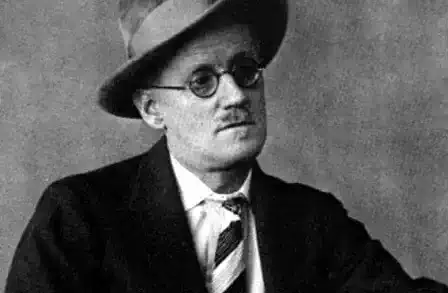
James Joyce
Winds of May
Winds of May, that dance on the sea,
Dancing a ring-around in glee
From furrow to furrow, while overhead
The foam flies up to be garlanded,
In silvery arches spanning the air,
Saw you my true love anywhere?
Welladay! Welladay!
For the winds of May!
Love is unhappy when love is away!
Dancing a ring-around in glee
From furrow to furrow, while overhead
The foam flies up to be garlanded,
In silvery arches spanning the air,
Saw you my true love anywhere?
Welladay! Welladay!
For the winds of May!
Love is unhappy when love is away!
241

D.H. Lawrence
The Enkindled Spring
This spring as it comes bursts up in bonfires green,
Wild puffing of emerald trees, and flame-filled bushes,
Thorn-blossom lifting in wreaths of smoke between
Where the wood fumes up and the watery, flickering rushes.
I am amazed at this spring, this conflagration
Of green fires lit on the soil of the earth, this blaze
Of growing, and sparks that puff in wild gyration,
Faces of people streaming across my gaze.
And I, what fountain of fire am I among
This leaping combustion of spring? My spirit is tossed
About like a shadow buffeted in the throng
Of flames, a shadow that’s gone astray, and is lost.
241
James Whitcomb Riley
Knee-Deep in June
Tell you what I like the best -'
Long about knee-deep in June,
'Bout the time strawberries melts
On the vine, -- some afternoon
Like to jes' git out and rest,
And not work at nothin' else!
Orchard's where I'd ruther be -Needn't
fence it in fer me! --
Jes' the whole sky overhead,
And the whole airth underneath --
Sort o' so's a man kin breathe
Like he ort, and kind o' has
Elbow-room to keerlessly
Sprawl out len'thways on the grass
Where the shadders thick and soft
As the kivvers on the bed
Mother fixes in the loft
Allus, when they's company!
Jes' a-sort o' lazin there S'lazy,
'at you peek and peer
Through the wavin' leaves above,
Like a feller 'ats in love
And don't know it, ner don't keer!
Ever'thing you hear and see
Got some sort o' interest -
Maybe find a bluebird's nest
Tucked up there conveenently
Fer the boy 'at's ap' to be
Up some other apple tree!
Watch the swallers skootin' past
Bout as peert as you could ast;
Er the Bob-white raise and whiz
Where some other's whistle is.
Ketch a shadder down below,
And look up to find the crow --
Er a hawk, - away up there,
'Pearantly froze in the air! --
Hear the old hen squawk, and squat
Over ever' chick she's got,
Suddent-like! - and she knows where
That-air hawk is, well as you! --
You jes' bet yer life she do! --
Eyes a-glitterin' like glass,
Waitin' till he makes a pass!
Pee-wees wingin', to express
My opinion, 's second-class,
Yit you'll hear 'em more er less;
Sapsucks gittin' down to biz,
Weedin' out the lonesomeness;
Mr. Bluejay, full o' sass,
In them baseball clothes o' his,
Sportin' round the orchad jes'
Like he owned the premises!
Sun out in the fields kin sizz,
But flat on yer back, I guess,
In the shade's where glory is!
That's jes' what I'd like to do
Stiddy fer a year er two!
Plague! Ef they ain't somepin' in
Work 'at kind o' goes ag'in'
My convictions! - 'long about
Here in June especially! --
Under some ole apple tree,
Jes' a-restin through and through,
I could git along without
Nothin' else at all to do
Only jes' a-wishin' you
Wuz a-gittin' there like me,
And June wuz eternity!
Lay out there and try to see
Jes' how lazy you kin be! --
Tumble round and souse yer head
In the clover-bloom, er pull
Yer straw hat acrost yer eyes
And peek through it at the skies,
Thinkin' of old chums 'ats dead,
Maybe, smilin' back at you
In betwixt the beautiful
Clouds o'gold and white and blue! --
Month a man kin railly love --
June, you know, I'm talkin' of!
March ain't never nothin' new! -April's
altogether too
Brash fer me! and May -- I jes'
'Bominate its promises, --
Little hints o' sunshine and
Green around the timber-land --
A few blossoms, and a few
Chip-birds, and a sprout er two, --
Drap asleep, and it turns in
Fore daylight and snows ag'in! --
But when June comes - Clear my th'oat
With wild honey! -- Rench my hair
In the dew! And hold my coat!
Whoop out loud! And th'ow my hat! --
June wants me, and I'm to spare!
Spread them shadders anywhere,
I'll get down and waller there,
And obleeged to you at that!
241
Emily Dickinson
New feet within my garden go
New feet within my garden go-
New fingers stir the sod-
A Troubadour upon the Elm
Betrays the solitude.
New children play upon the green-
New Weary sleep below-
And still the pensive Spring returns-
And still the punctual snow!
New fingers stir the sod-
A Troubadour upon the Elm
Betrays the solitude.
New children play upon the green-
New Weary sleep below-
And still the pensive Spring returns-
And still the punctual snow!
242

Mao Tsé-Tung
Winter clouds
Winter clouds snow-laden, cotton fluff flying,
None or few the unfallen flowers.
Chill waves sweep through steep skies,
Yet earth's gentle breath grows warm.
Only heroes can quell tigers and leopards
And wild bears never daunt the brave.
Plum blossoms welcome the whirling snow;
Small wonder flies freeze and perish.
None or few the unfallen flowers.
Chill waves sweep through steep skies,
Yet earth's gentle breath grows warm.
Only heroes can quell tigers and leopards
And wild bears never daunt the brave.
Plum blossoms welcome the whirling snow;
Small wonder flies freeze and perish.
238
Henry David Thoreau
Winter Memories
Within the circuit of this plodding life
There enter moments of an azure hue,
Untarnished fair as is the violet
Or anemone, when the spring stew them
By some meandering rivulet, which make
The best philosophy untrue that aims
But to console man for his grievences.
I have remembered when the winter came,
High in my chamber in the frosty nights,
When in the still light of the cheerful moon,
On the every twig and rail and jutting spout,
The icy spears were adding to their length
Against the arrows of the coming sun,
How in the shimmering noon of winter past
Some unrecorded beam slanted across
The upland pastures where the Johnwort grew;
Or heard, amid the verdure of my mind,
The bee's long smothered hum, on the blue flag
Loitering amidst the mead; or busy rill,
Which now through all its course stands still and dumb
Its own memorial, - purling at its play
Along the slopes, and through the meadows next,
Until its youthful sound was hushed at last
In the staid current of the lowland stream;
Or seen the furrows shine but late upturned,
And where the fieldfare followed in the rear,
When all the fields around lay bound and hoar
Beneath a thick integument of snow.
So by God's cheap economy made rich
To go upon my winter's task again.
236
Christina Rossetti
Three Seasons
'A cup for hope!' she said,
In springtime ere the bloom was old:
The crimson wine was poor and cold
By her mouth's richer red.
'A cup for love!' how low,
How soft the words; and all the while
Her blush was rippling with a smile
Like summer after snow.
'A cup for memory!'
Cold cup that one must drain alone:
While autumn winds are up and moan
Across the barren sea.
Hope, memory, love:
Hope for fair morn, and love for day,
And memory for the evening grey
And solitary dove.
235