
Seasons (Spring, Summer, Autumn, Winter)

George Herbert
The Flower
How fresh, O Lord, how sweet and clean
Are thy returns! ev'n as the flowers in spring;
To which, besides their own demean,
The late-past frosts tributes of pleasures bring.
Grief melts away
Like snow in May,
As if there were no such cold thing.
Who would have thought my shrivl'd heart
Could have recover'd greenness? It was gone
Quite under ground; as flowers depart
To see their mother-root, when they have blown;
Where they together
All the hard weather
Dead to the world, keep house unknown.
These are thy wonders, Lord of power,
Killing and quickning, bringing down to hell
And up to heaven in an hour;
Making a chiming of a passing-bell.
We say amiss,
This or that is:
Thy word is all, if we could spell.
O that I once past changing were,
Fast in thy Paradise, where no flower can wither!
Many a spring I shoot up fair,
Off'ring at heav'n, growing and groaning thither:
Nor doth my flower
Want a spring-shower,
My sins and I joining together:
But while I grow in a straight line,
Still upwards bent, as if heav'n were mine own,
Thy anger comes, and I decline:
What frost to that? what pole is not the zone,
Where all things burn,
When thou dost turn,
And the least frown of thine is shown?
And now in age I bud again,
After so many deaths I live and write;
I once more smell the dew and rain,
And relish versing: O my only light,
It cannot be
That I am her
On whom thy tempests fell all night.
These are thy wonders, Lord of love,
To make us see we are but flowers that glide:
Which when we once can find and prove,
Thou hast a garden for us, where to bide.
Who would be more,
Swelling through store,
Forfeit their Paradise by their pride.
283

Robert W. Service
Fallen Leaves
Why should I be the first to fall
Of all the leaves on this old tree?
Though sadly soon I know that all
Will lose their hold and follow me.
While my birth-brothers bravely blow,
Why should I be first to go?
Why should I be the last to cling
Of all the leaves on this bleak bough?
I've fluttered since the fire of Spring
And I am worn and withered now.
I would escape the Winter gale
And sleep soft-silvered by a snail.
When swoop the legions of the snow
To pitch their tents in roaring weather
We fallen leaves will lie below
And rot rejoicingly together;
And from our rich and dark decay
Will laugh our brothers of the May.
283

Emily Dickinson
The Bee is not afraid of me
The Bee is not afraid of me.
I know the Butterfly.
The pretty people in the Woods
Receive me cordially-
The Brooks laugh louder when I come-
The Breezes madder play;
Wherefore mine eye thy silver mists,
Wherefore, Oh Summer's Day?
I know the Butterfly.
The pretty people in the Woods
Receive me cordially-
The Brooks laugh louder when I come-
The Breezes madder play;
Wherefore mine eye thy silver mists,
Wherefore, Oh Summer's Day?
281

Christina Rossetti
Seasons
Oh the cheerful Budding-time!
When thorn-hedges turn to green,
When new leaves of elm and lime
Cleave and shed their winter screen;
Tender lambs are born and 'baa,'
North wind finds no snow to bring,
Vigorous Nature laughs 'Ha, ha,'
In the miracle of spring.
Oh the gorgeous Blossom-days!
When broad flag-flowers drink and blow,
In and out in summer-blaze
Dragon-flies flash to and fro;
Ashen branches hang out keys,
Oaks put forth the rosy shoot,
Wandering herds wax sleek at ease,
Lovely blossoms end in fruit.
Oh the shouting Harvest-weeks!
Mother earth grown fat with sheaves
Thrifty gleaner finds who seeks;
Russet-golden pomp of leaves
Crowns the woods, to fall at length;
Bracing winds are felt to stir,
Ocean gathers up her strength,
Beasts renew their dwindled fur.
Oh the starving Winter-lapse!
Ice-bound, hunger-pinched and dim;
Dormant roots recall their saps,
Empty nests show black and grim,
Short-lived sunshine gives no heat,
Undue buds are nipped by frost,
Snow sets forth a winding-sheet,
And all hope of life seems lost.
280
Emily Dickinson
She hideth Her the last
She hideth Her the last-
And is the first, to rise-
Her Night doth hardly recompense
The Closing of Her eyes-
She doth Her Purple Work-
And putteth Her away
In low Apartments in the Sod -
As worthily as We.
To imitate her life
As impotent would be
As make of Our imperfect Mints,
The Julep-of the Bee-
And is the first, to rise-
Her Night doth hardly recompense
The Closing of Her eyes-
She doth Her Purple Work-
And putteth Her away
In low Apartments in the Sod -
As worthily as We.
To imitate her life
As impotent would be
As make of Our imperfect Mints,
The Julep-of the Bee-
279

D.H. Lawrence
Trees in the Garden
Ah in the thunder air
how still the trees are!
And the lime-tree, lovely and tall, every leaf silent
hardly looses even a last breath of perfume.
And the ghostly, creamy coloured little tree of leaves
white, ivory white among the rambling greens
how evanescent, variegated elder, she hesitates on the green grass
as if, in another moment, she would disappear
with all her grace of foam!
And the larch that is only a column, it goes up too tall to see:
and the balsam-pines that are blue with the grey-blue blueness of
things from the sea,
and the young copper beech, its leaves red-rosy at the ends
how still they are together, they stand so still
in the thunder air, all strangers to one another
as the green grass glows upwards, strangers in the silent garden.
279

Henry Wadsworth Longfellow
Spring. (From The French Of Charles D'Orleans. XV. Century)
Gentle Spring! in sunshine clad,
Well dost thou thy power display!
For Winter maketh the light heart sad,
And thou, thou makest the sad heart gay,
He sees thee, and calls to his gloomy train,
The sleet, and the snow, and the wind, and the rain;
And they shrink away, and they flee in fear,
When thy merry step draws near.
Winter giveth the fields and the trees, so old,
Their beards of icicles and snow;
And the rain, it raineth so fast and cold,
We must cower over the embers low;
And, snugly housed from the wind and weather,
Mope like birds that are changing feather.
But the storm retires, and the sky grows clear,
When thy merry step draws near.
Winter maketh the sun in the gloomy sky
Wrap him round with a mantle of cloud;
But, Heaven be praised, thy step is nigh;
Thou tearest away the mournful shroud,
And the earth looks bright, and Winter surly,
Who has toiled for nought both late and early,
Is banished afar by the new-born year,
When thy merry step draws near.
280

James Whitcomb Riley
An Autumnal Extravaganza
With a sweeter voice than birds
Dare to twitter in their sleep,
Pipe for me a tune of words,
Till my dancing fancies leap
Into freedom vaster far
Than the realms of Reason are!
Sing for me with wilder fire
Than the lover ever sung,
From the time he twanged the lyre
When the world was baby-young.
O my maiden Autumn, you--
You have filled me through and through
With a passion so intense,
All of earthly eloquence
Fails, and falls, and swoons away
In your presence. Like as one
Who essays to look the sun
Fairly in the face, I say,
Though my eyes you dazzle blind
Greater dazzled is my mind.
So, my Autumn, let me kneel
At your feet and worship you!
Be my sweetheart; let me feel
Your caress; and tell me too
Why your smiles bewilder me--
Glancing into laughter, then
Trancing into calm again,
Till your meaning drowning lies
In the dim depths of your eyes.
Let me see the things you see
Down the depths of mystery!
Blow aside the hazy veil
From the daylight of your face
With the fragrance-ladened gale
Of your spicy breath and chase
Every dimple to its place.
Lift your gipsy finger-tips
To the roses of your lips,
And fling down to me a bud--
But an unblown kiss--but one--
It shall blossom in my blood,
Even after life is done--
When I dare to touch the brow
Your rare hair is veiling now--
When the rich, red-golden strands
Of the treasure in my hands
Shall be all of worldly worth
Heaven lifted from the earth,
Like a banner to have set
On its highest minaret.
280
Christina Rossetti
Gone For Ever
O happy rosebud blooming
Upon thy parent tree,
Nay, thou art too presuming
For soon the earth entombing
Thy faded charms shall be,
And the chill damp consuming.
O happy skylark springing
Up to the broad blue sky,
Too fearless in thy winging,
Too gladsome in thy singing,
Thou also soon shalt lie
Where no sweet notes are ringing.
And through life's shine and shower
We shall have joy and pain;
But in the summer bower,
And at the morning hour,
We still shall look in vain
For the same bird and flower.
276
James Whitcomb Riley
When Early March Seems Middle May
When country roads begin to thaw
In mottled spots of damp and dust,
And fences by the margin draw
Along the frosty crust
Their graphic silhouettes, I say,
The Spring is coming round this way.
When morning-time is bright with sun
And keen with wind, and both confuse
The dancing, glancing eyes of one
With tears that ooze and ooze--
And nose-tips weep as well as they,
The Spring is coming round this way.
When suddenly some shadow-bird
Goes wavering beneath the gaze,
And through the hedge the moan is heard
Of kine that fain would graze
In grasses new, I smile and say,
The Spring is coming round this way.
When knotted horse-tails are untied,
And teamsters whistle here and there.
And clumsy mitts are laid aside
And choppers' hands are bare,
And chips are thick where children play,
The Spring is coming round this way.
When through the twigs the farmer tramps,
And troughs are chunked beneath the trees,
And fragrant hints of sugar-camps
Astray in every breeze,--
When early March seems middle May,
The Spring is coming round this way.
When coughs are changed to laughs, and when
Our frowns melt into smiles of glee,
And all our blood thaws out again
In streams of ecstasy,
And poets wreak their roundelay,
The Spring is coming round this way.
277

Robert Louis Stevenson
It Blows A Snowing Gale
IT blows a snowing gale in the winter of the year;
The boats are on the sea and the crews are on the pier.
The needle of the vane, it is veering to and fro,
A flash of sun is on the veering of the vane.
Autumn leaves and rain,
The passion of the gale.
The boats are on the sea and the crews are on the pier.
The needle of the vane, it is veering to and fro,
A flash of sun is on the veering of the vane.
Autumn leaves and rain,
The passion of the gale.
278
Christina Rossetti
Bitter For Sweet
Summer is gone with all its roses,
Its sun and perfumes and sweet flowers,
Its warm air and refreshing showers:
And even Autumn closes.
Yea, Autumn's chilly self is going,
And winter comes which is yet colder;
Each day the hoar-frost waxes bolder,
And the last buds cease blowing.
Its sun and perfumes and sweet flowers,
Its warm air and refreshing showers:
And even Autumn closes.
Yea, Autumn's chilly self is going,
And winter comes which is yet colder;
Each day the hoar-frost waxes bolder,
And the last buds cease blowing.
275
Henry Wadsworth Longfellow
In The Harbour: The Poet's Calendar
JANUARY
Janus am I; oldest of potentates;
Forward I look, and backward, and below
I count, as god of avenues and gates,
The years that through my portals come and go.
I block the roads, and drift the fields with snow;
I chase the wild-fowl from the frozen fen;
My frosts congeal the rivers in their flow,
My fires light up the hearths and hearts of men.
FEBRUARY
I am lustration, and the sea is mine!
I wash the sands and headlands with my tide;
My brow is crowned with branches of the pine;
Before my chariot-wheels the fishes glide.
By me all things unclean are purified,
By me the souls of men washed white again;
E'en the unlovely tombs of those who died
Without a dirge, I cleanse from every stain.
MARCH
I Martius am! Once first, and now the third!
To lead the Year was my appointed place;
A mortal dispossessed me by a word,
And set there Janus with the double face.
Hence I make war on all the human race;
I shake the cities with my hurricanes;
I flood the rivers and their banks efface,
And drown the farms and hamlets with my rains.
APRIL
I open wide the portals of the Spring
To welcome the procession of the flowers,
With their gay banners, and the birds that sing
Their song of songs from their aerial towers.
I soften with my sunshine and my showers
The heart of earth; with thoughts of love I glide
Into the hearts of men; and with the Hours
Upon the Bull with wreathed horns I ride.
MAY
Hark! The sea-faring wild-fowl loud proclaim
My coming, and the swarming of the bees.
These are my heralds, and behold! my name
Is written in blossoms on the hawthorn-trees.
I tell the mariner when to sail the seas;
I waft o'er all the land from far away
The breath and bloom of the Hesperides,
My birthplace. I am Maia. I am May.
JUNE
Mine is the Month of Roses; yes, and mine
The Month of Marriages! All pleasant sights
And scents, the fragrance of the blossoming vine,
The foliage of the valleys and the heights.
Mine are the longest days, the loveliest nights;
The mower's scythe makes music to my ear;
I am the mother of all dear delights;
I am the fairest daughter of the year.
JULY
My emblem is the Lion, and I breathe
The breath of Libyan deserts o'er the land;
My sickle as a sabre I unsheathe,
And bent before me the pale harvests stand.
The lakes and rivers shrink at my command,
And there is thirst and fever in the air;
The sky is changed to brass, the earth to sand;
I am the Emperor whose name I bear.
AUGUST
The Emperor Octavian, called the August,
I being his favorite, bestowed his name
Upon me, and I hold it still in trust,
In memory of him and of his fame.
I am the Virgin, and my vestal flame
Burns less intensely than the Lion's rage;
Sheaves are my only garlands, and I claim
The golden Harvests as my heritage.
SEPTEMBER
I bear the Scales, where hang in equipoise
The night and day; and when unto my lips
I put my trumpet, with its stress and noise
Fly the white clouds like tattered sails of ships;
The tree-tops lash the air with sounding whips;
Southward the clamorous sea-fowl wing their flight;
The hedges are all red with haws and hips,
The Hunter's Moon reigns empress of the night.
OCTOBER
My ornaments are fruits; my garments leaves,
Woven like cloth of gold, and crimson dyed;
I do not boast the harvesting of sheaves,
O'er orchards and o'er vineyards I preside.
Though on the frigid Scorpion I ride,
The dreamy air is full, and overflows
With tender memories of the summer-tide,
And mingled voices of the doves and crows.
NOVEMBER
The Centaur, Sagittarius, am I,
Born of Ixion's and the cloud's embrace;
With sounding hoofs across the earth I fly,
A steed Thessalian with a human face.
Sharp winds the arrows are with which I chase
The leaves, half dead already with affright;
I shroud myself in gloom; and to the race
Of mortals bring nor comfort nor delight.
DECEMBER
Riding upon the Goat, with snow-white hair,
I come, the last of all. This crown of mine
Is of the holly; in my hand I bear
The thyrsus, tipped with fragrant cones of pine.
I celebrate the birth of the Divine,
And the return of the Saturnian reign;--
My songs are carols sung at every shrine.
Proclaiming 'Peace on earth, good will to men.'
274
Christina Rossetti
Winter Rain
Every valley drinks,
Every dell and hollow;
Where the kind rain sinks and sinks,
Green of Spring will follow.
Yet a lapse of weeks
Buds will burst their edges,
Strip their wool-coats, glue-coats, streaks,
In the woods and hedges;
Weave a bower of love
For birds to meet each other,
Weave a canopy above
Nest and egg and mother.
But for fattening rain
We should have no flowers,
Never a bud or leaf again
But for soaking showers;
Never a mated bird
In the rocking tree-tops,
Never indeed a flock or herd
To graze upon the lea-crops.
Lambs so woolly white,
Sheep the sun-bright leas on,
They could have no grass to bite
But for rain in season.
We should find no moss
In the shadiest places,
Find no waving meadow grass
Pied with broad-eyed daisies:
But miles of barren sand,
With never a son or daughter,
Not a lily on the land,
Or lily on the water.
274
Emily Dickinson
As if some little Arctic flower
As if some little Arctic flower
Upon the polar hem-
Went wandering down the Latitudes
Until it puzzled came
To continents of summer-
To firmaments of sun-
To strange, bright crowds of flowers-
And birds, of foreign tongue!
I say, As if this little flower
To Eden, wandered in-
What then? Why nothing,
Only, your inference therefrom!
269
Emily Dickinson
As imperceptibly as Grief
As imperceptibly as Grief
The Summer lapsed away-
Too imperceptible at last
To seem like Perfidy-
A Quietness distilled
As Twilight long begun,
Or Nature spending with herself
Sequestered Afternoon-
The Dusk drew earlier in-
The Morning foreign shone-
A courteous, yet harrowing Grace,
As Guest, that would be gone-
And thus, without a Wing
Or service of a Keel
Our Summer made her light escape
Into the Beautiful.
269
Emily Dickinson
Frequently the wood are pink
Frequently the wood are pink-
Frequently are brown.
Frequently the hills undress
Behind my native town.
Oft a head is crested
I was wont to see-
And as oft a cranny
Where it used to be-
And the Earth- they tell me-
On its Axis turned!
Wonderful Rotation!
By but twelve performed!
Frequently are brown.
Frequently the hills undress
Behind my native town.
Oft a head is crested
I was wont to see-
And as oft a cranny
Where it used to be-
And the Earth- they tell me-
On its Axis turned!
Wonderful Rotation!
By but twelve performed!
266

Anonymous
Lusty May
O LUSTY May, with Flora queen!
The balmy dropis from Phoebus sheen
Preluciand beams before the day:
By that Diana growis green
Through gladness of this lusty May.
Then Esperus, that is so bricht,
Til woful hairtis castis his light,
With bankis that bloomis on every brae;
And schouris are shed forth of their sicht
Through gladness of this lusty May.
Birdis on bewis of every birth,
Rejoicing notis makand their mirth
Richt plesantly upon the spray,
With flourishingis o'er field and firth
Through gladness of this lusty May.
All luvaris that are in care
To their ladies they do repair
In fresh morningis before the day,
And are in mirth ay mair and mair
Through gladness of this lusty May.
266

William Wordsworth
To My Sister
It is the first mild day of March:
Each minute sweeter than before
The redbreast sings from the tall larch
That stands beside our door.
There is a blessing in the air,
Which seems a sense of joy to yield
To the bare trees, and mountains bare,
And grass in the green field.
My sister! ('tis a wish of mine)
Now that our morning meal is done,
Make haste, your morning task resign;
Come forth and feel the sun.
Edward will come with you;--and, pray,
Put on with speed your woodland dress;
And bring no book: for this one day
We'll give to idleness.
No joyless forms shall regulate
Our living calendar:
We from to-day, my Friend, will date
The opening of the year.
Love, now a universal birth,
From heart to heart is stealing,
From earth to man, from man to earth:
--It is the hour of feeling.
One moment now may give us more
Than years of toiling reason:
Our minds shall drink at every pore
The spirit of the season.
Some silent laws our hearts will make,
Which they shall long obey:
We for the year to come may take
Our temper from to-day.
And from the blessed power that rolls
About, below, above,
We'll frame the measure of our souls:
They shall be tuned to love.
Then come, my Sister! come, I pray,
With speed put on your woodland dress;
And bring no book: for this one day
We'll give to idleness.
262
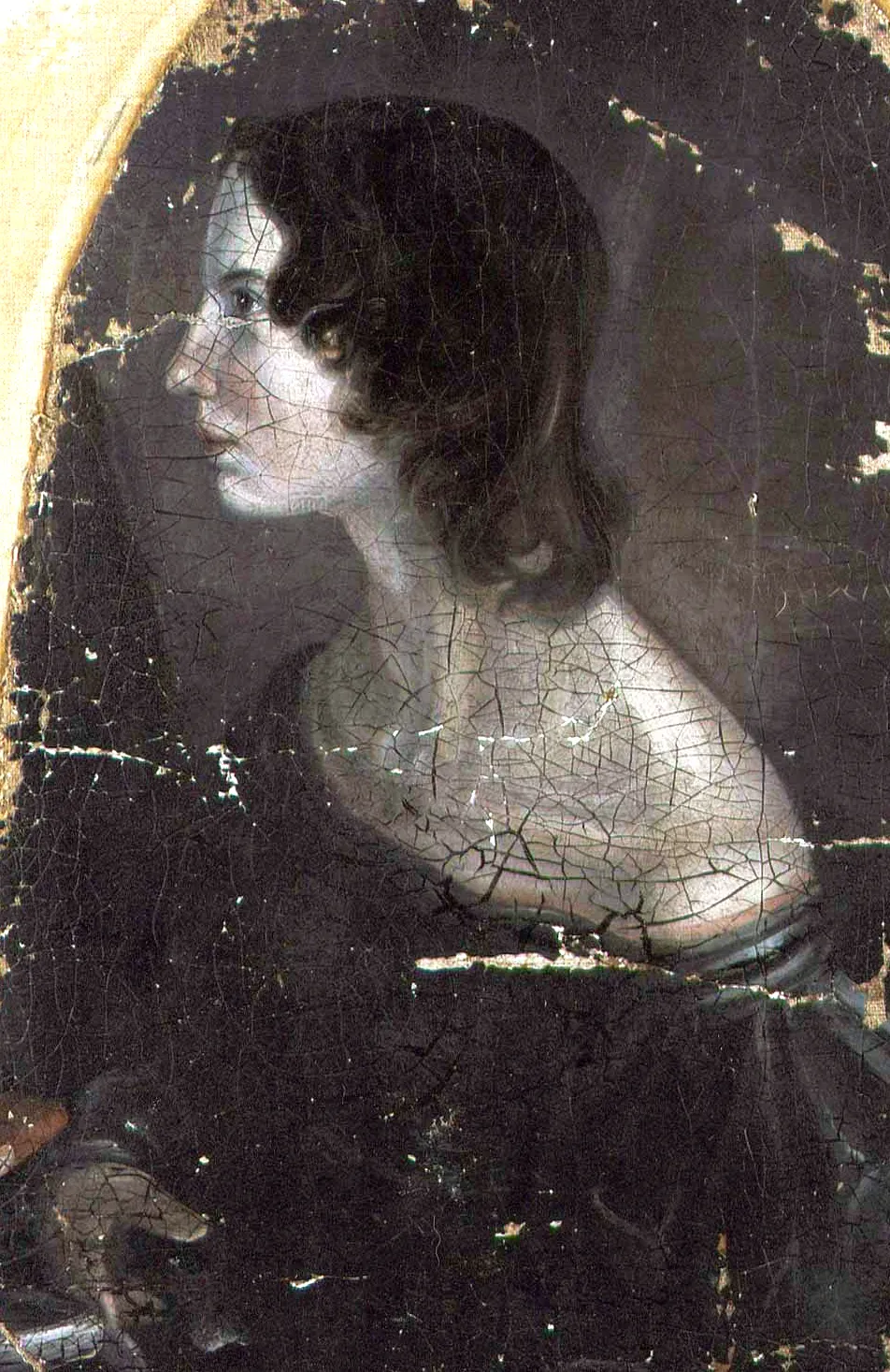
Emily Jane Brontë
'Fall, leaves, fall'
Fall, leaves, fall; die, flowers, away;
Lengthen night and shorten day;
Every leaf speaks bliss to me
Fluttering from the autumn tree.
I shall smile when wreaths of snow
Blossom where the rose should grow;
I shall sing when night's decay
Ushers in a drearier day.
Lengthen night and shorten day;
Every leaf speaks bliss to me
Fluttering from the autumn tree.
I shall smile when wreaths of snow
Blossom where the rose should grow;
I shall sing when night's decay
Ushers in a drearier day.
262
Christina Rossetti
Twilight Calm
Oh, pleasant eventide!
Clouds on the western side
Grow grey and greyer, hiding the warm sun:
The bees and birds, their happy labours done,
Seek their close nests and bide.
Screened in the leafy wood
The stock-doves sit and brood:
The very squirrel leaps from bough to bough
But lazily; pauses; and settles now
Where once he stored his food.
One by one the flowers close,
Lily and dewy rose
Shutting their tender petals from the moon:
The grasshoppers are still; but not so soon
Are still the noisy crows.
The dormouse squats and eats
Choice little dainty bits
Beneath the spreading roots of a broad lime
Nibbling his fill he stops from time to time
And listens where he sits.
From far the lowings come
Of cattle driven home:
From farther still the wind brings fitfully
The vast continual murmur of the sea,
Now loud, now almost dumb.
The gnats whirl in the air,
The evening gnats; and there
The owl opes broad his eyes and wings to sail
For prey; the bat wakes; and the shell-less snail
Comes forth, clammy and bare.
Hark! that's the nightingale,
Telling the selfsame tale
Her song told when this ancient earth was young:
So echoes answered when her song was sung
In the first wooded vale.
We call it love and pain
The passion of her strain;
And yet we little understand or know:
Why should it not be rather joy that so
Throbs in each throbbing vein?
In separate herds the deer
Lie; here the bucks, and here
The does, and by its mother sleeps the fawn:
Through all the hours of night until the dawn
They sleep, forgetting fear.
The hare sleeps where it lies,
With wary half-closed eyes;
The cock has ceased to crow, the hen to cluck:
Only the fox is out, some heedless duck
Or chicken to surprise.
Remote, each single star
Comes out, till there they are
All shining brightly: how the dews fall damp!
While close at hand the glow-worm lights her lamp,
Or twinkles from afar.
But evening now is done
As much as if the sun
Day-giving had arisen in the East:
For night has come; and the great calm has ceased,
The quiet sands have run.
260
Emily Dickinson
There are two Ripenings—one—of sight
There are two Ripenings—one—of sight—
Whose forces Spheric wind
Until the Velvet product
Drop spicy to the ground—
A homelier maturing—
A process in the Bur—
That teeth of Frosts alone disclose
In far October Air.
Whose forces Spheric wind
Until the Velvet product
Drop spicy to the ground—
A homelier maturing—
A process in the Bur—
That teeth of Frosts alone disclose
In far October Air.
262
Emily Dickinson
When Roses cease to bloom, Sir
When Roses cease to bloom, Sir,
And Violets are done-
When Bumblebees in solemn flight
Have passed beyond the Sun-
The hand that paused to gather
Upon this Summer's day
Will idle lie-in Auburn-
Then take my flowers-pray!
And Violets are done-
When Bumblebees in solemn flight
Have passed beyond the Sun-
The hand that paused to gather
Upon this Summer's day
Will idle lie-in Auburn-
Then take my flowers-pray!
260

John Greenleaf Whittier
From Snow-Bound, 11:1-40, 116-154
The sun that brief December day
Rose cheerless over hills of gray,
And, darkly circled, gave at noon
A sadder light than waning moon.
Slow tracing down the thickening sky
Its mute and ominous prophecy,
A portent seeming less than threat,
It sank from sight before it set.
A chill no coat, however stout,
Of homespun stuff could quite shut out,
A hard, dull bitterness of cold,
That checked, mid-vein, the circling race
Of life-blood in the sharpened face,
The coming of the snow-storm told.
The wind blew east: we heard the roar
Of Ocean on his wintry shore,
And felt the strong pulse throbbing there
Beat with low rhythm our inland air.
Meanwhile we did your nightly chores,-Brought
in the wood from out of doors,
Littered the stalls, and from the mows
Raked down the herd's-grass for the cows;
Heard the horse whinnying for his corn;
And, sharply clashing horn on horn,
Impatient down the stanchion rows
The cattle shake their walnut bows;
While, peering from his early perch
Upon the scaffold's pole of birch,
The cock his crested helmet bent
And down his querulous challenge sent.
Unwarmed by any sunset light
The gray day darkened into night,
A night made hoary with the swarm
And whirl-dance of the blinding storm,
As zigzag, wavering to and fro
Crossed and recrossed the wingèd snow:
And ere the early bed-time came
The white drift piled the window-frame,
And through the glass the clothes-line posts
Looked in like tall and sheeted ghosts.
*
As night drew on, and, from the crest
Of wooded knolls that ridged the west,
The sun, a snow-blown traveller, sank
From sight beneath the smothering bank,
We piled, with care, our nightly stack
Of wood against the chimney-back,-The
oaken log, green, huge, and thick,
And on its top the stout back-stick;
The knotty forestick laid apart,
And filled between with curious art
The ragged brush; then, hovering near,
We watched the first red blaze appear,
Heard the sharp crackle, caught the gleam
On whitewashed wall and sagging beam,
Until the old, rude-furnished room
Burst, flower-like, into rosy bloom;
While radiant with a mimic flame
Outside the sparkling drift became,
And through the bare-boughed lilac-tree
Our own warm hearth seemed blazing free.
The crane and pendent trammels showed,
The Turks' heads on the andirons glowed;
While childish fancy, prompt to tell
The meaning of the miracle,
Whispered the old rhyme: "Under the tree,
When fire outdoors burns merrily,
There the witches are making tea."
The moon above the eastern wood
Shone at its full; the hill-range stood
Transfigured in the silver flood,
Its blown snows flashing cold and keen,
Dead white, save where some sharp ravine
Took shadow, or the somber green
Of hemlocks turned to pitchy black
Against the whiteness at their back.
For such a world and such a night
Most fitting that unwarming light,
Which only seemed where'er it fell
To make the coldness visible.
257