
Seasons (Spring, Summer, Autumn, Winter)

Dylan Thomas
Why East Wind Chills
Why east wind chills and south wind cools
Shall not be known till windwell dries
And west's no longer drowned
In winds that bring the fruit and rind
Of many a hundred falls;
Why silk is soft and the stone wounds
The child shall question all his days,
Why night-time rain and the breast's blood
Both quench his thirst he'll have a black reply.
When cometh Jack Frost? the children ask.
Shall they clasp a comet in their fists?
Not till, from high and low, their dust
Sprinkles in children's eyes a long-last sleep
And dusk is crowded with the children's ghosts,
Shall a white answer echo from the rooftops.
All things are known: the stars' advice
Calls some content to travel with the winds,
Though what the stars ask as they round
Time upon time the towers of the skies
Is heard but little till the stars go out.
I hear content, and 'Be Content'
Ring like a handbell through the corridors,
And 'Know no answer,' and I know
No answer to the children's cry
Of echo's answer and the man of frost
And ghostly comets over the raised fists.
310

James Whitcomb Riley
Lullaby
The maple strews the embers of its leaves
O'er the laggard swallows nestled 'neath the eaves;
And the moody cricket falters in his cry--Baby-bye!--
And the lid of night is falling o'er the sky--Baby-bye!--
The lid of night is falling o'er the sky!
The rose is lying pallid, and the cup
Of the frosted calla-lily folded up;
And the breezes through the garden sob and sigh--Baby-bye!-O'er
the sleeping blooms of summer where they lie--Baby-bye!-O'er
the sleeping blooms of summer where they lie!
Yet, Baby--O my Baby, for your sake
This heart of mine is ever wide awake,
And my love may never droop a drowsy eye--Baby-bye!--
Till your own are wet above me when I die--Baby-bye!--
Till your own are wet above me when I die.
308

Robert Browning
Among the Rocks
Oh, good gigantic smile o' the brown old earth,
This autumn morning! How he sets his bones
To bask i' the sun, and thrusts out knees and feet
For the ripple to run over in its mirth;
Listening the while, where on the heap of stones
The white breast of the sea-lark twitters sweet.
That is the doctrine, simple, ancient, true;
Such is life's trial, as old earth smiles and knows.
If you loved only what were worth your love,
Love were clear gain, and wholly well for you:
Make the low nature better by your throes!
Give earth yourself, go up for gain above!
309

Emily Dickinson
'Tis not that Dying hurts us so
'Tis not that Dying hurts us so'
Tis Living-hurts us more-
But Dying-is a different way-
A Kind behind the Door-
The Southern Custom-of the Bird-
That ere the Frosts are due-
Accepts a better LatitudeWe-
are the Birds-that stay.
The Shrivers round Farmers' doors-
For whose reluctant Crumb-
We stipulate-till pitying Snows
Persuade our Feathers Home.
305
Emily Dickinson
My Garden—like the Beach
My Garden—like the Beach—
Denotes there be—a Sea—
That's Summer—
Such as These—the Pearls
She fetches—such as Me
Denotes there be—a Sea—
That's Summer—
Such as These—the Pearls
She fetches—such as Me
303
James Whitcomb Riley
Dead Leaves
DAWN
As though a gipsy maiden with dim look,
Sat crooning by the roadside of the year,
So, Autumn, in thy strangeness, thou art here
To read dark fortunes for us from the book
Of fate; thou flingest in the crinkled brook
The trembling maple's gold, and frosty-clear
Thy mocking laughter thrills the atmosphere,
And drifting on its current calls the rook
To other lands. As one who wades, alone,
Deep in the dusk, and hears the minor talk
Of distant melody, and finds the tone,
In some wierd way compelling him to stalk
The paths of childhood over,--so I moan,
And like a troubled sleeper, groping, walk.
DUSK
The frightened herds of clouds across the sky
Trample the sunshine down, and chase the day
Into the dusky forest-lands of gray
And somber twilight. Far, and faint, and high
The wild goose trails his harrow, with a cry
Sad as the wail of some poor castaway
Who sees a vessel drifting far astray
Of his last hope, and lays him down to die.
The children, riotous from school, grow bold
And quarrel with the wind, whose angry gust
Plucks off the summer hat, and flaps the fold
Of many a crimson cloak, and twirls the dust
In spiral shapes grotesque, and dims the gold
Of gleaming tresses with the blur of rust.
NIGHT
Funereal Darkness, drear and desolate,
Muffles the world. The moaning of the wind
Is piteous with sobs of saddest kind;
And laughter is a phantom at the gate
Of memory. The long-neglected grate
Within sprouts into flame and lights the mind
With hopes and wishes long ago refined
To ashes,--long departed friends await
Our words of welcome: and our lips are dumb
And powerless to greet the ones that press
Old kisses there. The baby beats its drum,
And fancy marches to the dear caress
Of mother-arms, and all the gleeful hum
Of home intrudes upon our loneliness.
304
Dylan Thomas
Especially When the October Wind
Especially when the October wind
With frosty fingers punishes my hair,
Caught by the crabbing sun I walk on fire
And cast a shadow crab upon the land,
By the sea's side, hearing the noise of birds,
Hearing the raven cough in winter sticks,
My busy heart who shudders as she talks
Sheds the syllabic blood and drains her words.
Shut, too, in a tower of words, I mark
On the horizon walking like the trees
The wordy shapes of women, and the rows
Of the star-gestured children in the park.
Some let me make you of the vowelled beeches,
Some of the oaken voices, from the roots
Of many a thorny shire tell you notes,
Some let me make you of the water's speeches.
Behind a pot of ferns the wagging clock
Tells me the hour's word, the neural meaning
Flies on the shafted disk, declaims the morning
And tells the windy weather in the cock.
Some let me make you of the meadow's signs;
The signal grass that tells me all I know
Breaks with the wormy winter through the eye.
Some let me tell you of the raven's sins.
Especially when the October wind
(Some let me make you of autumnal spells,
The spider-tongued, and the loud hill of Wales)
With fists of turnips punishes the land,
Some let me make you of the heartless words.
The heart is drained that, spelling in the scurry
Of chemic blood, warned of the coming fury.
By the sea's side hear the dark-vowelled birds.
302

Horácio
BkI:IV Spring
Fierce winter slackens its grip: it’s spring and the west wind’s sweet change:
the ropes are hauling dry hulls towards the shore,
The flock no longer enjoys the fold, or the ploughman the fire,
no more are the meadows white with hoary frost.
Now Cytherean Venus leads out her dancers, under the pendant moon,
and the lovely Graces have joined with the Nymphs,
treading the earth on tripping feet, while Vulcan, all on fire, visits
the tremendous Cyclopean forges.
Now its right to garland our gleaming heads, with green myrtle or flowers,
whatever the unfrozen earth now bears:
now it’s right to sacrifice to Faunus, in groves that are filled with shadow,
whether he asks a lamb, or prefers a kid.
Pale death knocks with impartial foot, at the door of the poor man’s cottage,
and at the prince’s gate. O Sestus, my friend,
the span of brief life prevents us from ever depending on distant hope.
Soon the night will crush you, the fabled spirits,
and Pluto’s bodiless halls: where once you’ve passed inside you’ll no longer
be allotted the lordship of wine by dice,
or marvel at Lycidas, so tender, for whom, already, the boys
are burning, and soon the girls will grow hotter.
302
Emily Dickinson
The Mountain sat upon the Plain
The Mountain sat upon the Plain
In his tremendous Chair-
His observation omnifold,
His inquest, everywhere-
The Seasons played around his knees
Like Children round a sire-
Grandfather of the Days is He
Of Dawn, the Ancestor-
In his tremendous Chair-
His observation omnifold,
His inquest, everywhere-
The Seasons played around his knees
Like Children round a sire-
Grandfather of the Days is He
Of Dawn, the Ancestor-
301

Carl Sandburg
Follies
Shaken,
The blossoms of lilac,
And shattered,
The atoms of purple.
Green dip the leaves,
Darker the bark,
Longer the shadows.
Sheer lines of poplar
Shimmer with masses of silver
And down in a garden old with years
And broken walls of ruin and story,
Roses rise with red rain-memories.
May!
In the open world
The sun comes and finds your face,
Remembering all.
299

Robert Burns
The Rigs O' Barley
It was upon a Lammas night,
When corn rigs are bonnie,
Beneath the moon's unclouded light,
I held away to Annie:
The time flew by wi' tentless heed
Till 'tween the late and early,
Wi' sma' persuasion, she agreed
To see me thro' the barley.
Corn rigs, an' barley rigs,
An' corn rigs are bonnie:
I'll ne'er forget that happy night,
Amang the rigs wi' Annie.
The sky was blue, the wind was still,
The moon was shining clearly:
I set her down, wi' right good will,
Amang the rigs o' barley:
I ken't her heart was a' my ain:
I lov'd her most sincerely;
I kiss'd her owre and owre again,
Amang the rigs o' barley.
Corn rigs...
I lock'd her in my fond embrace;
Her heart was beating rarely:
My blessings on that happy place,
Amang the rigs o' barley!
But by the moon and stars so bright,
That shone that hour so clearly!
She aye shall bless that happy night,
Amang the rigs o' barley.
Corn rigs...
I ha'e been blythe wi' comrades dear;
I ha'e been merry drinkin';
I ha'e been joyfu' gatherin' gear;
I ha'e been happy thinkin':
But a' the pleasures e'er I saw,
Tho' three times doubled fairly,
That happy night was worth then a',
Amang the rigs o' barley.
Corn rigs...
300
Emily Dickinson
I know a place where summer strives
I know a place where summer strives
With such a practised frost,
She each year leads her daisies back,
Recording briefly, 'Lost.'
But when the south wind stirs the pools
And struggles in the lanes,
Her heart misgives her for her vow,
And she pours soft refrains
Into the lap of adamant,
And spices, and the dew,
That stiffens quietly to quartz
Upon her amber shoe.
294
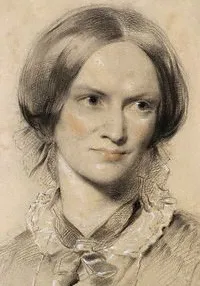
Charlotte Brontë
Speak of the North! A Lonely Moor
Speak of the North! A lonely moor
Silent and dark and tractless swells,
The waves of some wild streamlet pour
Hurriedly through its ferny dells.
Profoundly still the twilight air,
Lifeless the landscape; so we deem
Till like a phantom gliding near
A stag bends down to drink the stream.
And far away a mountain zone,
A cold, white waste of snowdrifts
lies,
And one star, large and soft and lone,
Silently lights the unclouded skies.
294

Christina Rossetti
Spring Quiet
Gone were but the Winter,
Come were but the Spring,
I would go to a covert
Where the birds sing;
Where in the whitethorn
Singeth a thrush,
And a robin sings
In the holly-bush.
Full of fresh scents
Are the budding boughs
Arching high over
A cool green house:
Full of sweet scents,
And whispering air
Which sayeth softly:
"We spread no snare;
"Here dwell in safety,
Here dwell alone,
With a clear stream
And a mossy stone.
"Here the sun shineth
Most shadily;
Here is heard an echo
Of the far sea,
Though far off it be."
293
James Whitcomb Riley
A Spring Song And A Later
She sang a song of May for me,
Wherein once more I heard
The mirth of my glad infancy--
The orchard's earliest bird--
The joyous breeze among the trees
New-clad in leaf and bloom,
And there the happy honey-bees
In dewy gleam and gloom.
So purely, sweetly on the sense
Of heart and spirit fell
Her song of Spring, its influence--
Still irresistible,--
Commands me here--with eyes ablur--
To mate her bright refrain.
Though I but shed a rhyme for her
As dim as Autumn rain.
293
Emily Dickinson
This Bauble was preferred of Bees
This Bauble was preferred of Bees-
By Butterflies admired
At Heavenly-Hopeless Distances-
Was justified of Bird-
Did Noon-enamel-in Herself
Was Summer to a Score
Who only knew of Universe-
It had created Her.
By Butterflies admired
At Heavenly-Hopeless Distances-
Was justified of Bird-
Did Noon-enamel-in Herself
Was Summer to a Score
Who only knew of Universe-
It had created Her.
292
Robert Burns
Winter: A Dirge
The wintry west extends his blast,
And hail and rain does blaw;
Or the stormy north sends driving forth
The blinding sleet and snaw:
While, tumbling brown, the burn comes down,
And roars frae bank to brae;
And bird and beast in covert rest,
And pass the heartless day.
"The sweeping blast, the sky o'ercast,"
The joyless winter day
Let others fear, to me more dear
Than all the pride of May:
The tempest's howl, it soothes my soul,
My griefs it seems to join;
The leafless trees my fancy please,
Their fate resembles mine!
Thou Power Supreme, whose mighty scheme
These woes of mine fulfil,
Here firm I rest; they must be best,
Because they are Thy will!
Then all I want-O do Thou grant
This one request of mine!-
Since to enjoy Thou dost deny,
Assist me to resign.
291

Henry Wadsworth Longfellow
The Children Of The Lord's Supper. (From The Swedish Of Bishop Tegner)
Pentecost, day of rejoicing, had come. The church of the village
Gleaming stood in the morning's sheen. On the spire of the bell
Decked with a brazen cock, the friendly flames of the Spring-sun
Glanced like the tongues of fire, beheld by Apostles aforetime.
Clear was the heaven and blue, and May, with her cap crowned with roses,
Stood in her holiday dress in the fields, and the wind and the brooklet
Murmured gladness and peace, God's-peace! with lips rosy-tinted
Whispered the race of the flowers, and merry on balancing branches
Birds were singing their carol, a jubilant hymn to the Highest.
Swept and clean was the churchyard. Adorned like a leaf-woven arbor
Stood its old-fashioned gate; and within upon each cross of iron
Hung was a fragrant garland, new twined by the hands of
affection.
Even the dial, that stood on a mound among the departed,
(There full a hundred years had it stood,) was embellished with blossoms
Like to the patriarch hoary, the sage of his kith and the hamlet,
Who on his birthday is crowned by children and children's children,
So stood the ancient prophet, and mute with his pencil of iron
Marked on the tablet of stone, and measured the time and its changes,
While all around at his feet, an eternity slumbered in quiet.
Also the church within was adorned, for this was the season
When the young, their parents' hope, and the loved-ones of heaven,
Should at the foot of the altar renew the vows of their
baptism.
Therefore each nook and corner was swept and cleaned, and the dust was
Blown from the walls and ceiling, and from the oil-painted benches.
There stood the church like a garden; the Feast of the Leafy Pavilions
Saw we in living presentment. From noble arms on the church wall
Grew forth a cluster of leaves, and the preacher's pulpit of oak-wood
Budded once more anew, as aforetime the rod before Aaron.
Wreathed thereon was the Bible with leaves, and the dove, washed with silver
Under its canopy fastened, had on it a necklace of wind-flowers.
But in front of the choir, round the altar-piece painted by
Horberg,
Crept a garland gigantic; and bright-curling tresses of
angels
Peeped, like the sun from a cloud, from out of the shadowy leaf-work.
Likewise the lustre of brass, new-polished, blinked from the ceiling,
And for lights there were lilies of Pentecost set in the sockets.
Loud rang the bells already; the thronging crowd was
assembled
Far from valleys and hills, to list to the holy preaching.
Hark! then roll forth at once the mighty tones of the organ,
Hover like voices from God, aloft like invisible spirits.
Like as Elias in heaven, when he cast from off him his
mantle,
So cast off the soul its garments of earth; and with one voice
Chimed in the congregation, and sang an anthem immortal
Of the sublime Wallin, of David's harp in the North-land
Tuned to the choral of Luther; the song on its mighty pinions
Took every living soul, and lifted it gently to heaven,
And each face did shine like the Holy One's face upon Tabor.
Lo! there entered then into the church the Reverend Teacher.
Father he hight and he was in the parish; a Christianly
plainness
Clothed from his head to his feet the old man of seventy winters.
Friendly was he to behold, and glad as the heralding angel
Walked he among the crowds, but still a contemplative
grandeur
Lay on his forehead as clear as on moss-covered gravestone a sunbeam.
As in his inspiration (an evening twilight that faintly
Gleams in the human soul, even now, from the day of creation)
Th' Artist, the friend of heaven, imagines Saint John when in Patmos,
Gray, with his eyes uplifted to heaven, so seemed then the old man:
Such was the glance of his eye, and such were his tresses of silver.
All the congregation arose in the pews that were numbered.
But with a cordial look, to the right and the left hand, the old man
Nodding all hail and peace, disappeared in the innermost chancel.
Simply and solemnly now proceeded the Christian service,
Singing and prayer, and at last an ardent discourse from the old man.
Many a moving word and warning, that out of the heart came,
Fell like the dew of the morning, like manna on those in the desert.
Then, when all was finished, the Teacher re-entered the
chancel
Followed therein by the young. The boys on the right had their places,
Delicate figures, with close-curling hair and cheeks rosy-blooming.
But on the left of these there stood the tremulous lilies,
Tinged with the blushing light of the dawn, the diffident maidens,--
Folding their hands in prayer, and their eyes cast down on the pavement
Now came, with question and answer, the catechism. In the beginning
Answered the children with troubled and faltering voice, but the old man's
Glances of kindness encouraged them soon, and the doctrines eternal
Flowed, like the waters of fountains, so clear from lips unpolluted.
Each time the answer was closed, and as oft as they named the Redeemer,
Lowly louted the boys, and lowly the maidens all courtesied.
Friendly the Teacher stood, like an angel of light there among them.
And to the children explained the holy, the highest, in few words,
Thorough, yet simple and clear, for sublimity always is simple,
Both in sermon and song, a child can seize on its meaning.
E'en as the green-growing bud unfolds when Springtide
approaches.
Leaf by leaf puts forth, and wanued, by the radiant sunshine,
Blushes with purple and gold, till at last the perfected blossom
Opens its odorous chalice, and rocks with its crown in the breezes,
So was unfolded here the Christian lore of salvation,
Line by line from the soul of childhood. The fathers and mothers
Stood behind them in tears, and were glad at the well-worded answer.
Now went the old man up to the altar;--and straightway transfigured
(So did it seem unto me) was then the affectionate Teacher.
Like the Lord's Prophet sublime, and awful as Death and as Judgment
Stood he, the God-commissioned, the soul-searcher, earthward descending
Glances, sharp as a sword, into hearts that to him were
transparent
Shot he; his voice was deep, was low like the thunder afar off.
So on a sudden transfigured he stood there, lie spake and he questioned.
'This is the faith of the Fathers, the faith the Apostles delivered,
This is moreover the faith whereunto I baptized you, while still ye
Lay on your mothers' breasts, and nearer the portals of heaven,
Slumbering received you then the Holy Church in its bosom;
Wakened from sleep are ye now, and the light in its radiant splendor
Downward rains from the heaven;--to-day on the threshold of childhood
Kindly she frees you again, to examine and make your election,
For she knows naught of compulsion, and only conviction
desireth.
This is the hour of your trial, the turning-point of existence,
Seed for the coming days; without revocation departeth
Now from your lips the confession; Bethink ye, before ye make answer!
Think not, O think not with guile to deceive the questioning Teacher.
Sharp is his eye to-day, and a curse ever rests upon falsehood.
Enter not with a lie on Life's journey; the multitude hears you,
Brothers and sisters and parents, what dear upon earth is and holy
Standeth before your sight as a witness; the Judge everlasting
Looks from the sun down upon you, and angels in waiting beside him
Grave your confession in letters of fire upon tablets eternal.
Thus, then,--believe ye in God, in the Father who this world created?
Him who redeemed it, the Son, and the Spirit where both are united?
Will ye promise me here, (a holy promise!) to cherish
God more than all things earthly, and every man as a brother?
Will ye promise me here, to confirm your faith by your living,
Th' heavenly faith of affection! to hope, to forgive, and to suffer,
Be what it may your condition, and walk before God in
uprightness?
Will ye promise me this before God and man?'--With a clear voice
Answered the young men Yes! and Yes! with lips softly-breathing
Answered the maidens eke. Then dissolved from the brow of the Teacher
Clouds with the lightnings therein, and lie spake in accents more gentle,
Soft as the evening's breath, as harps by Babylon's rivers.
'Hail, then, hail to you all! To the heirdom of heaven be ye welcome!
Children no more from this day, but by covenant brothers and sisters!
Yet,--for what reason not children? Of such is the kingdom of heaven.
Here upon earth an assemblage of children, in heaven one Father,
Ruling them all as his household,--forgiving in turn and chastising,
That is of human life a picture, as Scripture has taught us.
Blest are the pure before God! Upon purity and upon virtue
Resteth the Christian Faith: she herself from on high is descended.
Strong as a man and pure as a child, is the sum of the doctrine,
Which the Divine One taught, and suffered and died on the cross for
Oh, as ye wander this day from childhood's sacred asylum
Downward and ever downward, and deeper in Age's chill valley,
Oh, how soon will ye come,--too soon!--and long to turn
backward
Up to its hill-tops again, to the sun-illumined, where Judgment
Stood like a father before you, and Pardon, clad like a mother,
Gave you her hand to kiss, and the loving heart was for given
Life was a play and your hands grasped after the roses of heaven!
Seventy years have I lived already; the Father eternal
Gave rue gladness and care; but the loveliest hours of
existence,
When I have steadfastly gazed in their eyes, I have instantly known them,
Known them all again;-- the were my childhood's acquaintance.
Therefore take from henceforth, as guides in the paths of existence,
Prayer, with her eyes raised to heaven, and. Innocence, bride of man's childhood
Innocence, child beloved, is a guest from the world of the blessed,
Beautiful, and in her hand a lily; on life's roaring billows
Swings she in safety, she heedeth them not in the ship she is sleeping.
Calmly she gazes around in the turmoil of men; in the desert
Angels descend and minister unto her; she herself knoweth
Naught of her glorious attendance; but follows faithful and humble,
Follows so long as she may her friend; oh do not reject her,
For she cometh from God and she holdeth the keys of the heavens.
Prayer is Innocence' friend; and willingly flieth incessant
'Twixt rhe earth and the sky, the carrier-pigeon of heaven,
Son of Eternity, fettered in Time, and an exile, the Spirit
Tugs at his chains evermore, and struggles like flame ever upward.
Still he recalls with emotion his Father's manifold mansions,
Thinks of the land of his fathers, where blossomed more freshly the flowerets,
Shone a more beautiful sun, and he played with the winged angels.
Then grows the earth too narrow, too close; and homesick for heaven
Longs the wanderer again; and the Spirit's longings are worship;
Worship is called his most beautiful hour, and its tongue is entreaty.
Aid when the infinite burden of life descendeth upon us,
Crushes to earth our hope, and, under the earth, in the
graveyard,
Then it is good to pray unto God; for his sorrowiug children
Turns he ne'er from his door, but he heals and helps and consoles them,
Yet is it better to pray when all things are prosperous with us,
Pray in fortunate days, for life's most beautiful Fortune
Kneels before the Eternal's throne; and with hands interfolded,
Praises thankful and moved the only giver of blessings.
Or do ye know, ye children, one blessing that comes not from Heaven?
What has mankind forsooth, the poor! that it has not received?
Therefore, fall in the dust and pray! The seraphs adoring
Cover with pinions six their face in the glory of him who
Hung his masonry pendent on naught, when the world be created.
Earth declareth his might, and the firmament utters his glory.
Races blossom and die, and stars fall downward from heaven,
Downward like withered leaves; at the last stroke of midnight, millenniums
Lay themselves down at his feet, and he sees them, but counts them as nothing
Who shall stand in his presence? The wrath of the judge is terrific,
Casting the insolent down at a glance. When he speaks in his anger
Hillocks skip like the kid, and mountains leap like the roebuck.
Yet,--why are ye afraid, ye children? This awful avenger,
Ah! is a merciful God! God's voice was not in the earthquake,
Not in the fire, nor the storm, but it was in the whispering breezes.
Love is the root of creation; God's essence; worlds without number
Lie in his bosom like children; he made them for this purpose only.
Only to love and to be loved again, he breathed forth his spirit
Into the slumbering dust, and upright standing, it laid its
Hand on its heart, and felt it was warm with a flame out of heaven.
Quench, oh quench not that flame! It is the breath of your being.
Love is life, but hatred is death. Not father, nor mother
Loved you, as God has loved you; for 't was that you may be happy
Gave he his only Son. When he bowed down his head in the death-hour
Solemnized Love its triumph; the sacrifice then was completed.
Lo! then was rent on a sudden the veil of the temple, dividing
Earth and heaven apart, and the dead from their sepulchres rising
Whispered with pallid lips and low in the ears of each other
Th' answer, but dreamed of before, to creation's enigma,-- Atonement!
Depths of Love are Atonement's depths, for Love is Atonement.
Therefore, child of mortality, love thou the merciful Father;
Wish what the Holy One wishes, and not from fear, but affection
Fear is the virtue of slaves ; but the heart that loveth is willing
Perfect was before God, and perfect is Love, and Love only.
Lovest thou God as thou oughtest, then lovest thou likewise thy brethren:
One is the sun in heaven, and one, only one, is Love also.
Bears not each human figure the godlike stamp on his forehead
Readest thou not in his face thou origin? Is he not sailing
Lost like thyself on an ocean unknown, and is he not guided
By the same stars that guide thee? Why shouldst thou hate then thy brother?
Hateth he thee, forgive! For 't is sweet to stammer one letter
Of the Eternal's language;--on earth it is called Forgiveness!
Knowest thou Him, who forgave, with the crown of thorns on his temples?
Earnestly prayed for his foes, for his murderers? Say, dost thou know him?
Ah! thou confessest his name, so follow likewise his example,
Think of thy brother no ill, but throw a veil over his failings,
Guide the erring aright; for the good, the heavenly shepherd
Took the lost lamb in his arms, and bore it back to its mother.
This is the fruit of Love, and it is by its fruits that we know it.
Love is the creature's welfare, with God; but Love among mortals
Is but an endless sigh! He longs, and endures, and stands waiting,
Suffers and yet rejoices, and smiles with tears on his eyelids.
Hope,--so is called upon earth, his recompense, Hope, the befriending,
Does what she can, for she points evermore up to heaven, and faithful
Plunges her anchor's peak in the depths of the grave, and beneath it
Paints a more beautiful world, a dim, but a sweet play of shadows!
Races, better than we, have leaned on her wavering promise,
Having naught else but Hope. Then praise we our Father in heaven,
Him, who has given us more; for to us has Hope been
transfigured,
Groping no longer in night; she is Faith, she is living
assurance.
Faith is enlightened Hope; she is light, is the eye of
affection,
Dreams of the longing interprets, and carves their visions in marble.
Faith is the sun of life ; and her countenance shines like the Hebrew's,
For she has looked upon God; the heaven on its stable foundation
Draws she with chains down to earth, and the New Jerusalem sinketh
Splendid with portals twelve in golden vapors descending.
There enraptured she wanders. and looks at the figures majestic,
Fears not the winged crowd, in the midst of them all is her homestead.
Therefore love and believe; for works will follow spontaneous
Even as day does the sun; the Right from the Good is an
offspring,
Love in a bodily shape; and Christian works are no more than
Animate Love and faith, as flowers are the animate Springtide.
Works do follow us all unto God; there stand and bear witness
Not what they seemed,--but what they were only. Blessed is he who
Hears their confession secure; they are mute upon earth until death's hand
Opens the mouth of the silent. Ye children, does Death e'er alarm you?
Death is the brother of Love, twin-brother is he, and is only
More austere to behold. With a kiss upon lips that are fading
Takes he the soul and departs, and, rocked in the arms of affection,
Places the ransomed child, new born, 'fore the face of its father.
Sounds of his coming already I hear,--see dimly his pinions,
Swart as the night, but with stars strewn upon them! I fear not before him.
Death is only release, and in mercy is mute. On his bosom
Freer breathes, in its coolness, my breast; and face to face standing
Look I on God as he is, a sun unpolluted by vapors;
Look on the light of the ages I loved, the spirits majestic,
Nobler, better than I; they stand by the throne all
transfigured,
Vested in white, and with harps of gold, and are singing an anthem,
Writ in the climate of heaven, in the language spoken by angels.
You, in like manner, ye children beloved, he one day shall gather,
Never forgets he the weary;--then welcome, ye loved ones, hereafter!
Meanwhile forget not the keeping of vows, forget not the promise,
Wander from holiness onward to holiness; earth shall ye heed not
Earth is but dust and heaven is light; I have pledged you to heaven.
God of the universe, hear me! thou fountain of Love
everlasting,
Hark to the voice of thy servant! I send up my prayer to thy heaven!
Let me hereafter not miss at thy throne one spirit of all these,
Whom thou hast given me here! I have loved them all like a father.
May they bear witness for me, that I taught them the way of salvation,
Faithful, so far as I knew, of thy word; again may they know me,
Fall on their Teacher's breast, and before thy face may I place them,
Pure as they now are, but only more tried, and exclaiming with gladness,
Father, lo! I am here, and the children, whom thou hast given me!'
Weeping he spake in these words; and now at the beck of the old man
Knee against knee they knitted a wreath round the altar's enclosure.
Kneeling he read then the prayers of the consecration, and softly
With him the children read; at the close, with tremulous accents,
Asked he the peace of Heaven, a benediction upon them.
Now should have ended his task for the day; the following Sunday
Was for the young appointed to eat of the Lord's holy Supper.
Sudden, as struck from the clouds, stood the Teacher silent and laid his
Hand on his forehead, and cast his looks upward; while thoughts high and holy,
Flew through the midst of his soul, and his eyes glanced with wonderful brightness.
'On the next Sunday, who knows! perhaps I shall rest in the graveyard!
Some one perhaps of yourselves, a lily broken untimely,
Bow down his head to the earth; why delay I? the hour is accomplished,
Warm is the heart;--I will! for to-day grows the harvest of heaven.
What I began accomplish I now; what failing therein is
I, the old man, will answer to God and the reverend father.
Say to me only, ye children, ye denizens new-come in heaven,
Are ye ready this day to eat of the bread of Atonement?
What it denoteth, that know ye full well, I have told it you often.
Of the new covenant symbol it is, of Atonement a token,
Stablished between earth and heaven. Man by his sins and transgressions
Far has wandered from God, from his essence. 'T was in the beginning
Fast by the Tree of Knowledge he fell, and it hangs its crown o'er the
Fall to this day; in the Thought is the Fall; in the Heart the Atonement.
Infinite is the fall,--the Atonement infinite likewise.
See! behind me, as far as the old man remembers, and forward,
Far as Hope in her flight can reach with her wearied pinions,
Sin and Atonement incessant go through the lifetime of mortals.
Sin is brought forth full-grown; but Atonement sleeps in our bosoms
Still as the cradled babe; and dreams of heaven and of angels,
Cannot awake to sensation; is like the tones in the harp's strings,
Spirits imprisoned, that wait evermore the deliverer's finger.
Therefore, ye children beloved, descended the Prince of
Atonement,
Woke the slumberer from sleep, and she stands now with eyes all resplendent.
Bright as the vault of the sky, and battles with Sin and o'ercomes her.
Downward to earth he came and, transfigured, thence reascended,
Not from the heart in like wise, for there he still lives in the Spirit,
Loves and atones evermore. So long as Time is, is Atonement.
Therefore with reverence take this day her visible token.
Tokens are dead if the things live not. The light everlasting
Unto the blind is not, but is born of the eye that has vision.
Neither in bread nor in wine, but in the heart that is hallowed
Lieth forgiveness enshrined; the intention alone of amendment
Fruits of the earth ennobles to heavenly things, and removes all
Sin and the guerdon of sin. Only Love with his arms wide extended,
Penitence wee ping and praying; the Will that is tried, and whose gold flows
Purified forth from the flames; in a word, mankind by Atonement
Breaketh Atonement's bread, and drinketh Atonement's wine-cup.
But he who cometh up hither, unworthy, with hate in his bosom,
Scoffing at men and at God, is guilty of Christ's blessed body,
And the Redeemer's blood! To himself he eateth and drinketh
Death and doom ! And from this, preserve us, thou heavenly Father!
Are ye ready, ye children, to eat of the bread of Atonement?
Thus with emotion he asked, and together answered the children,
'Yes!' with deep sobs interrupted. Then read he the due
supplications,
Read the Form of Communion, and in chimed the organ and anthem:
'O Holy Lamb of God, who takest away our transgressions,
Hear us! give us thy peace! have mercy, have mercy upon us!'
Th' old man, with trembling hand, and heavenly pearls on his eyelids,
Filled now the chalice and paten, and dealt round the mystical symbols.
Oh, then seemed it to me as if God, with the broad eye of midday,
Clearer looked in at the windows, and all the trees in the church yard
Bowed down their summits of green, and the grass on the graves 'gan to shiver
But in the children (I noted it well ; I knew it) there ran a
Tremor of holy rapture along through their ice-cold members.
Decked like an altar before them, there stood the green earth, and above it
Heaven opened itself, as of old before Stephen; they saw there
Radiant in glory the Father, and on his right hand the
Redeemer.
Under them hear they the clang of harpstrings, and angels from gold clouds
Beckon to them like brothers, and fan with their pinions of purple.
Closed was the Teacher's task, and with heaven in their hearts and their faces,
Up rose the children all, and each bowed him, weeping full sorely,
Downward to kiss that reverend hand, but all of them pressed he
Moved to his bosom, and laid, with a prayer, his hands full of blessings,
Now on the holy breast, and now on the innocent tresses.
291
Emily Dickinson
South Winds jostle them
South Winds jostle them-
Bumblebees come
Hover-
hesitate-
Drink, and are gone-
Butterflies pause
On their passage CashmereI-
softly plucking,
Present them here!
Bumblebees come
Hover-
hesitate-
Drink, and are gone-
Butterflies pause
On their passage CashmereI-
softly plucking,
Present them here!
290

Dante Alighieri
Autumn Song
Know'st thou not at the fall of the leaf
How the heart feels a languid grief
Laid on it for a covering,
And how sleep seems a goodly thing
In Autumn at the fall of the leaf?
And how the swift beat of the brain
Falters because it is in vain,
In Autumn at the fall of the leaf
Knowest thou not? and how the chief
Of joys seems--not to suffer pain?
Know'st thou not at the fall of the leaf
How the soul feels like a dried sheaf
Bound up at length for harvesting,
And how death seems a comely thing
In Autumn at the fall of the leaf?
291
Emily Dickinson
There is a flower that Bees prefer
There is a flower that Bees prefer-
And Butterflies-desire-
To gain the Purple Democrat
The Humming Bird-aspire-
And Whatsoever Insect pass-
A Honey bear away
Proportioned to his several dearth
And her-capacity-
Her face be rounder than the Moon
And ruddier than the Gown
Or Orchis in the Pasture-
Or Rhododendron-worn-
She doth not wait for June-
Before the World be Green-
Her sturdy little Countenance
Against the Wind-be seen-
Contending with the Grass-
Near Kinsman to Herself-
For Privilege of Sod and Sun-
Sweet Litigants for Life-
And when the Hills be full-
And newer fashions blow-
Doth not retract a single spice
For pang of jealousy-
Her Public-be the Noon-
Her Providence-the Sun-
Her Progress-by the Bee-proclaimed-
In sovereign-Swerveless Tune-
The Bravest-of the HostSurrendering-
the last-
Nor even of Defeat-aware-
What cancelled by the Frost-
289

John Greenleaf Whittier
Our River
FOR A SUMMER FESTIVAL AT 'THE LAURELS' ON THE MERRIMAC.
Once more on yonder laurelled height
The summer flowers have budded;
Once more with summer's golden light
The vales of home are flooded;
And once more, by the grace of Him
Of every good the Giver,
We sing upon its wooded rim
The praises of our river,
Its pines above, its waves below,
The west-wind down it blowing,
As fair as when the young Brissot
Beheld it seaward flowing,-And
bore its memory o'er the deep,
To soothe a martyr's sadness,
And fresco, hi his troubled sleep,
His prison-walls with gladness.
We know the world is rich with streams
Renowned in song and story,
Whose music murmurs through our dreams
Of human love and glory
We know that Arno's banks are fair,
And Rhine has castled shadows,
And, poet-tuned, the Doon and Ayr
Go singing down their meadows.
But while, unpictured and unsung
By painter or by poet,
Our river waits the tuneful tongue
And cunning hand to show it,-We
only know the fond skies lean
Above it, warm with blessing,
And the sweet soul of our Undine
Awakes to our caressing.
No fickle sun-god holds the flocks
That graze its shores in keeping;
No icy kiss of Dian mocks
The youth beside it sleeping
Our Christian river loveth most
The beautiful and human;
The heathen streams of Naiads boast,
But ours of man and woman.
The miner in his cabin hears
The ripple we are hearing;
It whispers soft to homesick ears
Around the settler's clearing
In Sacramento's vales of corn,
Or Santee's bloom of cotton,
Our river by its valley-born
Was never yet forgotten.
The drum rolls loud, the bugle fills
The summer air with clangor;
The war-storm shakes the solid hills
Beneath its tread of anger;
Young eyes that last year smiled in ours
Now point the rifle's barrel,
And hands then stained with fruits and flowers
Bear redder stains of quarrel.
But blue skies smile, and flowers bloom on,
And rivers still keep flowing,
The dear God still his rain and sun
On good and ill bestowing.
His pine-trees whisper, 'Trust and wait!'
His flowers are prophesying
That all we dread of change or fate
His live is underlying.
And thou, O Mountain-born!--no more
We ask the wise Allotter
Than for the firmness of thy shore,
The calmness of thy water,
The cheerful lights that overlay,
Thy rugged slopes with beauty,
To match our spirits to our day
And make a joy of duty.
289
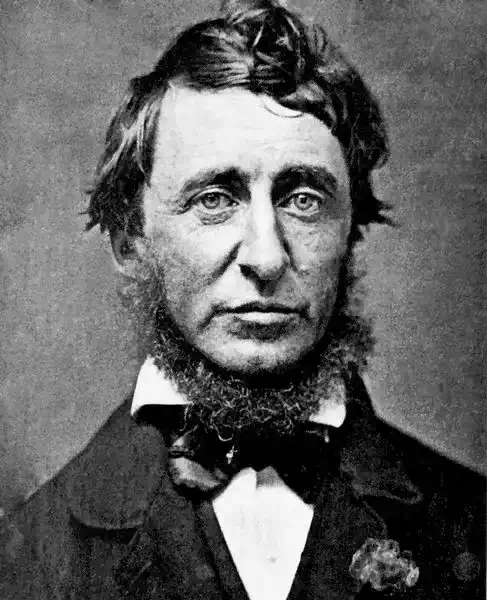
Henry David Thoreau
Song Of Nature
Mine are the night and morning,
The pits of air, the gull of space,
The sportive sun, the gibbous moon,
The innumerable days.
I hide in the solar glory,
I am dumb in the pealing song,
I rest on the pitch of the torrent,
In slumber I am strong.
No numbers have counted my tallies,
No tribes my house can fill,
I sit by the shining Fount of Life
And pour the deluge still;
And ever by delicate powers
Gathering along the centuries
From race on race the rarest flowers,
My wreath shall nothing miss.
And many a thousand summers
My gardens ripened well,
And light from meliorating stars
With firmer glory fell.
I wrote the past in characters
Of rock and fire the scroll,
The building in the coral sea,
The planting of the coal.
And thefts from satellites and rings
And broken stars I drew,
And out of spent and aged things
I formed the world anew;
What time the gods kept carnival,
Tricked out in star and flower,
And in cramp elf and saurian forms
They swathed their too much power.
Time and Thought were my surveyors,
They laid their courses well,
They boiled the sea, and piled the layers
Of granite, marl and shell.
But he, the man-child glorious, -
Where tarries he the while?
The rainbow shines his harbinger,
The sunset gleams his smile.
My boreal lights leap upward,
Forthright my planets roll,
And still the man-child is not born,
The summit of the whole.
Must time and tide forever run?
Will never my winds go sleep in the west?
Will never my wheels which whirl the sun
And satellites have rest?
Too much of donning and doffing,
Too slow the rainbow fades,
I weary of my robe of snow,
My leaves and my cascades;
I tire of globes and races,
Too long the game is played;
What without him is summer's pomp,
Or winter's frozen shade?
I travail in pain for him,
My creatures travail and wait;
His couriers come by squadrons,
He comes not to the gate.
Twice I have moulded an image,
And thrice outstretched my hand,
Made one of day and one of night
And one of the salt sea-sand.
One in a Judaean manger,
And one by Avon stream,
One over against the mouths of Nile,
And one in the Academe.
I moulded kings and saviors,
And bards o'er kings to rule; -
But fell the starry influence short,
The cup was never full.
Yet whirl the glowing wheels once more,
And mix the bowl again;
Seethe, Fate! the ancient elements,
Heat, cold, wet, dry, and peace, and pain.
Let war and trade and creeds and song
Blend, ripen race on race,
The sunburnt world a man shall breed
Of all the zones and countless days.
No ray is dimmed, no atom worn,
My oldest force is good as new,
And the fresh rose on yonder thorn
Gives back the bending heavens in dew.
283
John Greenleaf Whittier
Winter Roses
My garden roses long ago
Have perished from the leaf-strewn walks;
Their pale, fair sisters smile no more
Upon the sweet-brier stalks.
Gone with the flower-time of my life,
Spring's violets, summer's blooming pride,
And Nature's winter and my own
Stand, flowerless, side by side.
So might I yesterday have sung;
To-day, in bleak December's noon,
Come sweetest fragrance, shapes, and hues,
The rosy wealth of June!
Bless the young bands that culled the gift,
And bless the hearts that prompted it;
If undeserved it comes, at least
It seems not all unfit.
Of old my Quaker ancestors
Had gifts of forty stripes save one;
To-day as many roses crown
The gray head of their son.
And with them, to my fancy's eye,
The fresh-faced givers smiling come,
And nine and thirty happy girls
Make glad a lonely room.
They bring the atmosphere of youth;
The light and warmth of long ago
Are in my heart, and on my cheek
The airs of morning blow.
O buds of girlhood, yet unblown,
And fairer than the gift ye chose,
For you may years like leaves unfold
The heart of Sharon's rose
285