
Unrequited Love
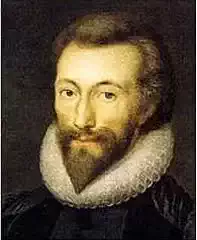
John Donne
The Broken Heart
He is stark mad, who ever says,
That he hath been in love an hour,
Yet not that love so soon decays,
But that it can ten in less space devour;
Who will believe me, if I swear
That I have had the plague a year ?
Who would not laugh at me, if I should say,
I saw a flask of powder burn a day ?
Ah, what trifle is a heart,
If once into Love’s hands it come!
All other griefs allow a part
To other griefs, and ask themselves but some,
They come to us, but us Love draws,
He swallows us, and never chaws:
By him, as by chain-shot, whole ranks do die,
He is the tyrant pike, our hearts the fry.
If`twere not so, what did become
Of my heart, when I first saw thee ?
I brought a heart into the room,
But from the room, I carried non with me;
If it had gone to thee, I know
Mine would have taught thy heart to show
More pity unto me: but Love, alas,
At one first blow did shiver it as glass.
Yet nothing can to nothing fall,
Nor any place be empty quite,
Therefore I think my breast hath all
Those pieces still, though they be not unite;
And now as broken glasses show
A hundred lesser faces, so
My rags of heart can like, wish, and adore,
But after one such love, can love no more.
339
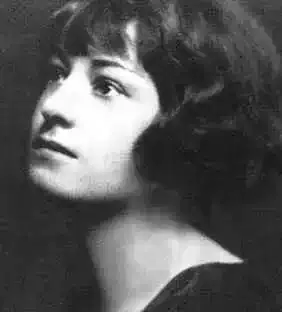
Dorothy Parker
Second Love
"So surely is she mine," you say, and turn
Your quick and steady mind to harder things-
To bills and bonds and talk of what men earn-
And whistle up the stair, of evenings.
And do you see a dream behind my eyes,
Or ask a simple question twice of me"
Thus women are," you say; for men are wise
And tolerant, in their security.
How shall I count the midnights I have known
When calm you turn to me, nor feel me start,
To find my easy lips upon your own
And know my breast beneath your rhythmic heart.
Your god defer the day I tell you this:
My lad, my lad, it is not you I kiss!
337

Johann Wolfgang von Goethe
From Faust - V. Margaret At Her Spinning-Wheel
MY heart is sad,
My peace is o'er;
I find it never
And nevermore.
When gone is he,
The grave I see;
The world's wide all
Is turned to gall.
Alas, my head
Is well-nigh crazed;
My feeble mind
Is sore amazed.
My heart is sad,
My peace is o'er;
I find it never
And nevermore.
For him from the window
Alone I spy;
For him alone
From home go I.
His lofty step,
His noble form,
His mouth's sweet smile,
His glances warm,
His voice so fraught
With magic bliss,
His hand's soft pressure,
And, ah, his kiss!
My heart is sad,
My peace is o'er;
I find it never
And nevermore.
My bosom yearns
For his form so fair;
Ah, could I clasp him
And hold him there!
My kisses sweet
Should stop his breath,
And 'neath his kisses
I'd sink in death!
My peace is o'er;
I find it never
And nevermore.
When gone is he,
The grave I see;
The world's wide all
Is turned to gall.
Alas, my head
Is well-nigh crazed;
My feeble mind
Is sore amazed.
My heart is sad,
My peace is o'er;
I find it never
And nevermore.
For him from the window
Alone I spy;
For him alone
From home go I.
His lofty step,
His noble form,
His mouth's sweet smile,
His glances warm,
His voice so fraught
With magic bliss,
His hand's soft pressure,
And, ah, his kiss!
My heart is sad,
My peace is o'er;
I find it never
And nevermore.
My bosom yearns
For his form so fair;
Ah, could I clasp him
And hold him there!
My kisses sweet
Should stop his breath,
And 'neath his kisses
I'd sink in death!
334
Dorothy Parker
Purposely Ungrammatical Love Song
There's many and many, and not so far,
Is willing to dry my tears away;
There's many to tell me what you are,
And never a lie to all they say.
It's little the good to hide my head,
It's never the use to bar my door;
There's many as counts the tears I shed,
There's mourning hearts for my heart is
There's honester eyes than your blue eyes,
There's better a mile than such as you.
But when did I say that I was wise,
And when did I hope that you were true?
323

William Shakespeare
Sonnet 42: That thou hast her, it is not all my grief
That thou hast her, it is not all my grief,
And yet it may be said I loved her dearly;
That she hath thee is of my wailing chief,
A loss in love that touches me more nearly.
Loving offenders, thus I will excuse ye:
Thou dost love her because thou know'st I love her,
And for my sake even so doth she abuse me,
Suff'ring my friend for my sake to approve her.
If I lose thee, my loss is my love's gain,
And, losing her, my friend hath found that loss;
Both find each other, and I lose both twain,
And both for my sake lay on me this cross.
But here's the joy: my friend and I are one,
Sweet flattery! Then she loves but me alone.
324
John Donne
Song: Go and catch a falling star
Go and catch a falling star,
Get with child a mandrake root,
Tell me where all past years are,
Or who cleft the devil's foot,
Teach me to hear mermaids singing,
Or to keep off envy's stinging,
And find
What wind
Serves to advance an honest mind.
If thou be'st born to strange sights,
Things invisible to see,
Ride ten thousand days and nights,
Till age snow white hairs on thee,
Thou, when thou return'st, wilt tell me,
All strange wonders that befell thee,
And swear,
No where
Lives a woman true, and fair.
If thou find'st one, let me know,
Such a pilgrimage were sweet;
Yet do not, I would not go,
Though at next door we might meet;
Though she were true, when you met her,
And last, till you write your letter,
Yet she
Will be
False, ere I come, to two, or three.
317

Robert Browning
One Way Of Love
.
All June I bound the rose in sheaves.
Now, rose by rose, I strip the leaves
And strew them where Pauline may pass.
She will not turn aside? Alas!
Let them lie. Suppose they die?
The chance was they might take her eye.
II.
How many a month I strove to suit
These stubborn fingers to the lute!
To-day I venture all I know.
She will not hear my music? So!
Break the string; fold music's wing:
Suppose Pauline had bade me sing!
III.
My whole life long I learned to love.
This hour my utmost art I prove
And speak my passion---heaven or hell?
She will not give me heaven? 'Tis well!
Lose who may---I still can say,
Those who win heaven, blest are they!
316
John Donne
A Self Accuser
Your mistress, that you follow whores, still taxeth
you ;
'Tis strange that she should thus confess it, though 't be true.
you ;
'Tis strange that she should thus confess it, though 't be true.
313

Edward Lear
The Courtship of the Yonghy-Bonghy-Bo
I
On the Coast of Coromandel
Where the early pumpkins blow,
In the middle of the woods
Lived the Yonghy-Bonghy-Bò.
Two old chairs, and half a candle,--
One old jug without a handle,--
These were all his worldly goods:
In the middle of the woods,
These were all the worldly goods,
Of the Yonghy-Bonghy-Bò,
Of the Yonghy-Bonghy-Bò.
II
Once, among the Bong-trees walking
Where the early pumpkins blow,
To a little heap of stones
Came the Yonghy-Bonghy-Bò.
There he heard a Lady talking,
To some milk-white Hens of Dorking,-''
Tis the lady Jingly Jones!
'On that little heap of stones
'Sits the Lady Jingly Jones!'
Said the Yonghy-Bonghy-Bò,
Said the Yonghy-Bonghy-Bò.
III
'Lady Jingly! Lady Jingly!
'Sitting where the pumpkins blow,
'Will you come and be my wife?'
Said the Yonghy-Bonghy-Bò.
'I am tired of living singly,-'
On this coast so wild and shingly,-'
I'm a-weary of my life:
'If you'll come and be my wife,
'Quite serene would be my life!'--
Said the Yonghy-Bonghy-Bò,
Said the Yonghy-Bonghy-Bò.
IV
'On this Coast of Coromandel,
'Shrimps and watercresses grow,
'Prawns are plentiful and cheap,'
Said the Yonghy-Bonghy-Bò.
'You shall have my chairs and candle,
'And my jug without a handle!-'
Gaze upon the rolling deep
('Fish is plentiful and cheap)
'As the sea, my love is deep!'
Said the Yonghy-Bonghy-Bò,
Said the Yonghy-Bonghy-Bò.
V
Lady Jingly answered sadly,
And her tears began to flow,-'
Your proposal comes too late,
'Mr. Yonghy-Bonghy-Bò!
'I would be your wife most gladly!'
(Here she twirled her fingers madly,)
'But in England I've a mate!
'Yes! you've asked me far too late,
'For in England I've a mate,
'Mr. Yonghy-Bonghy-Bò!
'Mr. Yonghy-Bonghy-Bò!'
VI
'Mr. Jones -- (his name is Handel,-'
Handel Jones, Esquire, & Co.)
'Dorking fowls delights to send,
'Mr. Yonghy-Bonghy-Bò!
'Keep, oh! keep your chairs and candle,
'And your jug without a handle,-'
I can merely be your friend!
'-- Should my Jones more Dorkings send,
'I will give you three, my friend!
'Mr. Yonghy-Bonghy-Bò!
'Mr. Yonghy-Bonghy-Bò!'
VII
'Though you've such a tiny body,
'And your head so large doth grow,-'
Though your hat may blow away,
'Mr. Yonghy-Bonghy-Bò!
'Though you're such a Hoddy Doddy-'
Yet a wish that I could modi'
fy the words I needs must say!
'Will you please to go away?
'That is all I have to say-'
Mr. Yonghy-Bonghy-Bò!
'Mr. Yonghy-Bonghy-Bò!'.
VIII
Down the slippery slopes of Myrtle,
Where the early pumpkins blow,
To the calm and silent sea
Fled the Yonghy-Bonghy-Bò.
There, beyond the Bay of Gurtle,
Lay a large and lively Turtle,-'
You're the Cove,' he said, 'for me
'On your back beyond the sea,
'Turtle, you shall carry me!'
Said the Yonghy-Bonghy-Bò,
Said the Yonghy-Bonghy-Bò.
IX
Through the silent-roaring ocean
Did the Turtle swiftly go;
Holding fast upon his shell
Rode the Yonghy-Bonghy-Bò.
With a sad primæval motion
Towards the sunset isles of Boshen
Still the Turtle bore him well.
Holding fast upon his shell,
'Lady Jingly Jones, farewell!'
Sang the Yonghy-Bonghy-Bò,
Sang the Yonghy-Bonghy-Bò.
X
From the Coast of Coromandel,
Did that Lady never go;
On that heap of stones she mourns
For the Yonghy-Bonghy-Bò.
On that Coast of Coromandel,
In his jug without a handle
Still she weeps, and daily moans;
On that little hep of stones
To her Dorking Hens she moans,
For the Yonghy-Bonghy-Bò,
For the Yonghy-Bonghy-Bò.
310
William Shakespeare
Sonnets to the Sundry Notes of Music
I.
IT was a lording's daughter, the fairest one of three,
That liked of her master as well as well might be,
Till looking on an Englishman, the fair'st that eye could see,
Her fancy fell a-turning.
Long was the combat doubtful that love with love did fight,
To leave the master loveless, or kill the gallant knight:
To put in practise either, alas, it was a spite
Unto the silly damsel!
But one must be refused; more mickle was the pain
That nothing could be used to turn them both to gain,
For of the two the trusty knight was wounded with disdain:
Alas, she could not help it!
Thus art with arms contending was victor of the day,
Which by a gift of learning did bear the maid away:
Then, lullaby, the learned man hath got the lady gay;
For now my song is ended.
II.
On a day, alack the day!
Love, whose month was ever May,
Spied a blossom passing fair,
Playing in the wanton air:
Through the velvet leaves the wind
All unseen, gan passage find;
That the lover, sick to death,
Wish'd himself the heaven's breath,
'Air,' quoth he, 'thy cheeks may blow;
Air, would I might triumph so!
But, alas! my hand hath sworn
Ne'er to pluck thee from thy thorn:
Vow, alack! for youth unmeet:
Youth, so apt to pluck a sweet.
Thou for whom Jove would swear
Juno but an Ethiope were;
Turning mortal for thy love.'
III.
My flocks feed not,
My ewes breed not,
My rams speed not,
All is amiss:
Love's denying,
Faith's defying,
Heart's renying,
Causer of this.
All my merry jigs are quite forgot,
All my lady's love is lost, God wot:
Where her faith was firmly fix'd in love,
There a nay is placed without remove.
One silly cross
Wrought all my loss;
O frowning Fortune, cursed, fickle dame!
For now I see
Inconstancy
More in women than in men remain.
In black mourn I,
All fears scorn I,
Love hath forlorn me,
Living in thrall:
Heart is bleeding,
All help needing,
O cruel speeding,
Fraughted with gall.
My shepherd's pipe can sound no deal;
My wether's bell rings doleful knell;
My curtail dog, that wont to have play'd
Plays not at all, but seems afraid;
My sighs so deep
Procure to weep,
In howling wise, to see my doleful plight.
How sighs resound
Through heartless ground,
Like a thousand vanquish'd men in bloody fight!
Clear wells spring not,
Sweet birds sing not,
Green plants bring not
Forth their dye;
Herds stand weeping,
Flocks all sleeping,
Nymphs back peeping
Fearfully:
All our pleasure known to us poor swains,
All our merry meetings on the plains,
All our evening sport from us is fled,
All our love is lost, for Love is dead
Farewell, sweet lass,
Thy like ne'er was
For a sweet content, the cause of all my moan:
Poor Corydon
Must live alone;
Other help for him I see that there is none.
IV.
When as thine eye hath chose the dame,
And stall'd the deer that thou shouldst strike,
Let reason rule things worthy blame,
As well as fancy partial might:
Take counsel of some wiser head,
Neither too young nor yet unwed.
And when thou comest thy tale to tell,
Smooth not thy tongue with filed talk,
Lest she some subtle practise smell,--
A cripple soon can find a halt;--
But plainly say thou lovest her well,
And set thy person forth to sell.
What though her frowning brows be bent,
Her cloudy looks will calm ere night:
And then too late she will repent
That thus dissembled her delight;
And twice desire, ere it be day,
That which with scorn she put away.
What though she strive to try her strength,
And ban and brawl, and say thee nay,
Her feeble force will yield at length,
When craft hath taught her thus to say,
'Had women been so strong as men,
In faith, you had not had it then.'
And to her will frame all thy ways;
Spare not to spend, and chiefly there
Where thy desert may merit praise,
By ringing in thy lady's ear:
The strongest castle, tower, and town,
The golden bullet beats it down.
Serve always with assured trust,
And in thy suit be humble true;
Unless thy lady prove unjust,
Press never thou to choose anew:
When time shall serve, be thou not slack
To proffer, though she put thee back.
The wiles and guiles that women work,
Dissembled with an outward show,
The tricks and toys that in them lurk,
The cock that treads them shall not know.
Have you not heard it said full oft,
A woman's nay doth stand for nought?
Think women still to strive with men,
To sin and never for to saint:
There is no heaven, by holy then,
When time with age doth them attaint.
Were kisses all the joys in bed,
One woman would another wed.
But, soft! enough, too much, I fear
Lest that my mistress hear my song,
She will not stick to round me i' the ear,
To teach my tongue to be so long:
Yet will she blush, here be it said,
To hear her secrets so bewray'd.
V.
Live with me, and be my love,
And we will all the pleasures prove
That hills and valleys, dales and fields,
And all the craggy mountains yields.
There will we sit upon the rocks,
And see the shepherds feed their flocks,
By shallow rivers, by whose falls
Melodious birds sing madrigals.
There will I make thee a bed of roses,
With a thousand fragrant posies,
A cap of flowers, and a kirtle
Embroider'd all with leaves of myrtle.
A belt of straw and ivy buds,
With coral clasps and amber studs;
And if these pleasures may thee move,
Then live with me and be my love.
LOVE'S ANSWER.
If that the world and love were young,
And truth in every shepherd's tongue,
These pretty pleasures might me move
To live with thee and be thy love.
VI.
As it fell upon a day
In the merry month of May,
Sitting in a pleasant shade
Which a grove of myrtles made,
Beasts did leap, and birds did sing,
Trees did grow, and plants did spring;
Every thing did banish moan,
Save the nightingale alone:
She, poor bird, as all forlorn,
Lean'd her breast up-till a thorn
And there sung the dolefull'st ditty,
That to hear it was great pity:
'Fie, fie, fie,' now would she cry;
'Tereu, tereu!' by and by;
That to hear her so complain,
Scarce I could from tears refrain;
For her griefs, so lively shown,
Made me think upon mine own.
Ah, thought I, thou mourn'st in vain!
None takes pity on thy pain:
Senseless trees they cannot hear thee;
Ruthless beasts they will not cheer thee:
King Pandion he is dead;
All thy friends are lapp'd in lead;
All thy fellow birds do sing,
Careless of thy sorrowing.
Even so, poor bird, like thee,
None alive will pity me.
Whilst as fickle Fortune smiled,
Thou and I were both beguiled.
Every one that flatters thee
Is no friend in misery.
Words are easy, like the wind;
Faithful friends are hard to find:
Every man will be thy friend
Whilst thou hast wherewith to spend;
But if store of crowns be scant,
No man will supply thy want.
If that one be prodigal,
Bountiful they will him call,
And with such-like flattering,
'Pity but he were a king;'
If he be addict to vice,
Quickly him they will entice;
If to women he be bent,
They have at commandement:
But if Fortune once do frown,
Then farewell his great renown
They that fawn'd on him before
Use his company no more.
He that is thy friend indeed,
He will help thee in thy need:
If thou sorrow, he will weep;
If thou wake, he cannot sleep;
Thus of every grief in heart
He with thee doth bear a part.
These are certain signs to know
Faithful friend from flattering foe.
294

Anonymous
Barbara Allen's Cruelty
IN Scarlet town, where I was born,
There was a fair maid dwellin',
Made every youth cry Well-a-way!
Her name was Barbara Allen.
All in the merry month of May,
When green buds they were swellin',
Young Jemmy Grove on his death-bed lay,
For love of Barbara Allen.
He sent his man in to her then,
To the town where she was dwellin',
'O haste and come to my master dear,
If your name be Barbara Allen.'
So slowly, slowly rase she up,
And slowly she came nigh him,
And when she drew the curtain by--
'Young man, I think you're dyin'.'
'O it 's I am sick and very very sick,
And it 's all for Barbara Allen.'
'O the better for me ye'se never be,
Tho' your heart's blood were a-spillin'!
'O dinna ye mind, young man,' says she,
'When the red wine ye were fillin',
That ye made the healths go round and round,
And slighted Barbara Allen?'
He turn'd his face unto the wall,
And death was with him dealin':
'Adieu, adieu, my dear friends all,
And be kind to Barbara Allen!'
As she was walking o'er the fields,
She heard the dead-bell knellin';
And every jow the dead-bell gave
Cried 'Woe to Barbara Allen.'
'O mother, mother, make my bed,
O make it saft and narrow:
My love has died for me to-day,
I'll die for him to-morrow.
'Farewell,' she said, 'ye virgins all,
And shun the fault I fell in:
Henceforth take warning by the fall
Of cruel Barbara Allen.'
290
John Donne
A dialogue between Sir Henry Wootton and Mr. Donne
[W.]
IF her disdain least change in you can move,
You do not love,
For when that hope gives fuel to the fire,
You sell desire.
Love is not love, but given free ;
And so is mine ; so should yours be.
[D.]
Her heart, that weeps to hear of others' moan,
To mine is stone.
Her eyes, that weep a stranger's eyes to see,
Joy to wound me.
Yet I so well affect each part,
As—caused by them—I love my smart.
[W.]
Say her disdainings justly must be graced
With name of chaste ;
And that she frowns lest longing should exceed,
And raging breed ;
So her disdains can ne'er offend,
Unless self-love take private end.
[D.]
'Tis love breeds love in me, and cold disdain
Kills that again,
As water causeth fire to fret and fume,
Till all consume.
Who can of love more rich gift make,
That to Love's self for love's own sake?
I'll never dig in quarry of an heart
To have no part,
Nor roast in fiery eyes, which always are
Canicular.
Who this way would a lover prove,
May show his patience, not his love.
A frown may be sometimes for physic good,
But not for food ;
And for that raging humour there is sure
A gentler cure.
Why bar you love of private end,
Which never should to public tend?
283
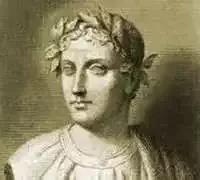
Horácio
BkIII:X Cruel One
If you drank the water of furthest Don, Lyce,
married to some fierce husband, you’d still expose me
to the wailing winds of your native North country,
stretched out here by your cruel door.
Hear how the frame creaks, how the trees that are planted
inside your beautiful garden moan in the wind,
and how Jupiter’s pure power and divinity
ices over the fallen snow.
Set aside your disdain, it’s hateful to Venus,
lest the rope fly off, while the wheel is still turning:
you’re no Penelope, resistant to suitors,
nor born of Etruscan parents.
O, spare your suppliants, though nothing moves you,
not gifts, not my prayers, not your lover’s pallor,
that’s tinged with violet, nor your husband smitten
with a Pierian mistress,
you, no more pliant than an unbending oak-tree,
no gentler in spirit than a Moorish serpent.
My body won’t always put up with your threshold,
or the rain that falls from the sky.
279
William Shakespeare
Sonnet 148: O me, what eyes hath Love put in my head
O me, what eyes hath Love put in my head,
Which have no correspondence with true sight!
Or, if they have, where is my judgment fled,
That censures falsely what they see aright?
If that be fair whereon my false eyes dote,
What means the world to say it is not so?
If it be not, then love doth well denote
Love's eye is not so true as all men's 'No.'
How can it? O, how can Love's eye be true,
That is so vex'd with watching and with tears?
No marvel then, though I mistake my view;
The sun itself sees not till heaven clears.
O cunning Love! with tears thou keep'st me blind,
Lest eyes well-seeing thy foul faults should find.
274
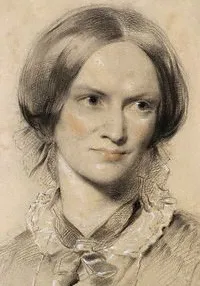
Charlotte Brontë
Preference
NOT in scorn do I reprove thee,
Not in pride thy vows I waive,
But, believe, I could not love thee,
Wert thou prince, and I a slave.
These, then, are thine oaths of passion ?
This, thy tenderness for me ?
Judged, even, by thine own confession,
Thou art steeped in perfidy.
Having vanquished, thou wouldst leave me !
Thus I read thee long ago;
Therefore, dared I not deceive thee,
Even with friendship's gentle show.
Therefore, with impassive coldness
Have I ever met thy gaze;
Though, full oft, with daring boldness,
Thou thine eyes to mine didst raise.
Why that smile ? Thou now art deeming
This my coldness all untrue,
But
a mask of frozen seeming,
Hiding secret fires from view.
Touch my hand, thou selfdeceiver,
Naybe
calm, for I am so:
Does it burn ? Does my lip quiver ?
Has mine eye a troubled glow ?
Canst thou call a moment's colour
To my foreheadto
my cheek ?
Canst thou tinge their tranquil pallor
With one flattering, feverish streak?
Am I marble ? What ! no woman
Could so calm before thee stand ?
Nothing living, sentient, human,
Could so coldly take thy hand ?
Yesa
sister might, a mother:
My goodwill
is sisterly:
Dream not, then, I strive to smother
Fires that inly burn for thee.
Rave not, rage not, wrath is fruitless,
Fury cannot change my mind;
I but deem the feeling rootless
Which so whirls in passion's wind.
Can I love ? Oh, deeplytruly
Warmlyfondlybut
not thee;
And my love is answered duly,
With an equal energy.
Wouldst thou see thy rival ? Hasten,
Draw that curtain soft aside,
Look where yon thick branches chasten
Noon, with shades of eventide.
In that glade, where foliage blending
Forms a green arch overhead,
Sits thy rival thoughtful bending
O'er a stand with papers spread
Motionless, his fingers plying
That untired, unresting pen;
Time and tide unnoticed flying,
There he sitsthe
first of men !
Man of conscienceman
of reason;
Stern, perchance, but ever just;
Foe to falsehood, wrong, and treason,
Honour's shield, and virtue's trust !
Worker, thinker, firm defender
Of Heaven's truthman's
liberty;
Soul of ironproof
to slander,
Rock where founders tyranny.
Fame he seeks notbut
full surely
She will seek him, in his home;
This I know, and wait securely
For the atoning hour to come.
To that man my faith is given,
Therefore, soldier, cease to sue;
While God reigns in earth and heaven,
I to him will still be true !
268
Anonymous
Phillada flouts Me
O WHAT a plague is love!
How shall I bear it?
She will inconstant prove,
I greatly fear it.
She so torments my mind
That my strength faileth,
And wavers with the wind
As a ship saileth.
Please her the best I may,
She loves still to gainsay;
Alack and well-a-day!
Phillada flouts me.
At the fair yesterday
She did pass by me;
She look'd another way
And would not spy me:
I woo'd her for to dine,
But could not get her;
Will had her to the wine--
He might entreat her.
With Daniel she did dance,
On me she look'd askance:
O thrice unhappy chance!
Phillada flouts me.
Fair maid, be not so coy,
Do not disdain me!
I am my mother's joy:
Sweet, entertain me!
She'll give me, when she dies,
All that is fitting:
Her poultry and her bees,
And her goose sitting,
A pair of mattrass beds,
And a bag full of shreds;
And yet, for all this guedes,
Phillada flouts me!
She hath a clout of mine
Wrought with blue coventry,
Which she keeps for a sign
Of my fidelity:
But i' faith, if she flinch
She shall not wear it;
To Tib, my t'other wench,
I mean to bear it.
And yet it grieves my heart
So soon from her to part:
Death strike me with his dart!
Phillada flouts me.
Thou shalt eat crudded cream
All the year lasting,
And drink the crystal stream
Pleasant in tasting;
Whig and whey whilst thou lust,
And bramble-berries,
Pie-lid and pastry-crust,
Pears, plums, and cherries.
Thy raiment shall be thin,
Made of a weevil's skin--
Yet all 's not worth a pin!
Phillada flouts me.
In the last month of May
I made her posies;
I heard her often say
That she loved roses.
Cowslips and gillyflowers
And the white lily
I brought to deck the bowers
For my sweet Philly.
But she did all disdain,
And threw them back again;
Therefore 'tis flat and plain
Phillada flouts me.
Fair maiden, have a care,
And in time take me;
I can have those as fair
If you forsake me:
For Doll the dairy-maid
Laugh'd at me lately,
And wanton Winifred
Favours me greatly.
One throws milk on my clothes,
T'other plays with my nose;
What wanting signs are those?
Phillada flouts me.
I cannot work nor sleep
At all in season:
Love wounds my heart so deep
Without all reason.
I 'gin to pine away
In my love's shadow,
Like as a fat beast may,
Penn'd in a meadow.
I shall be dead, I fear,
Within this thousand year:
And all for that my dear
Phillada flouts me.
261

Emily Dickinson
Could I—then—shut the door
Could I—then—shut the door—
Lest my beseeching face—at last—
Rejected—be—of Her?
Lest my beseeching face—at last—
Rejected—be—of Her?
245
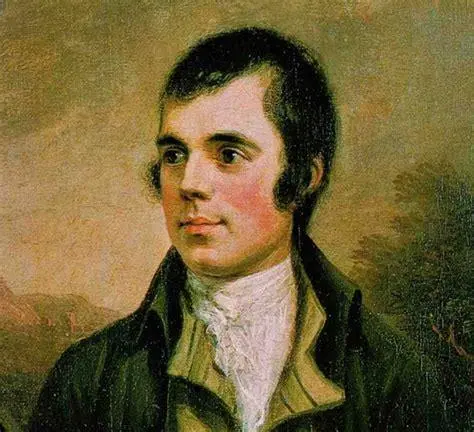
Robert Burns
O Tibbie, I Hae Seen The Day
Tune - "Invercauld's Reel, or Strathspey."
Choir. - O Tibbie, I hae seen the day,
Ye wadna been sae shy;
For laik o' gear ye lightly me,
But, trowth, I care na by.
Yestreen I met you on the moor,
Ye spak na, but gaed by like stour;
Ye geck at me because I'm poor,
But fient a hair care I.
O Tibbie, I hae seen the day, &c.
When coming hame on Sunday last,
Upon the road as I cam past,
Ye snufft and ga'e your head a cast-
But trowth I care't na by.
O Tibbie, I hae seen the day, &c.
I doubt na, lass, but ye may think,
Because ye hae the name o' clink,
That ye can please me at a wink,
Whene'er ye like to try.
O Tibbie, I hae seen the day, &c.
But sorrow tak' him that's sae mean,
Altho' his pouch o' coin were clean,
Wha follows ony saucy quean,
That looks sae proud and high.
O Tibbie, I hae seen the day, &c.
Altho' a lad were e'er sae smart,
If that he want the yellow dirt,
Ye'll cast your head anither airt,
And answer him fu' dry.
O Tibbie, I hae seen the day, &c.
But, if he hae the name o' gear,
Ye'll fasten to him like a brier,
Tho' hardly he, for sense or lear,
Be better than the kye.
O Tibbie, I hae seen the day, &c.
But, Tibbie, lass, tak' my advice:
Your daddie's gear maks you sae nice;
The deil a ane wad speir your price,
Were ye as poor as I.
O Tibbie, I hae seen the day, &c.
There lives a lass beside yon park,
I'd rather hae her in her sark,
Than you wi' a' your thousand mark;
That gars you look sae high.
O Tibbie, I hae seen the day, &c.
240
Robert Browning
You'll love me yet!—and I can tarry
You'll love me yet!—and I can tarry
Your love's protracted growing:
June reared that bunch of flowers you carry
From seeds of April's sowing.
I plant a heartful now: some seed
At least is sure to strike,
And yield—what you'll not pluck indeed,
Not love, but, may be, like!
You'll look at least on love's remains,
A grave's one violet:
Your look?—that pays a thousand pains.
What's death?—You'll love me yet!
237
Emily Dickinson
No matter—now—Sweet
No matter—now—Sweet—
But when I'm Earl—
Won't you wish you'd spoken
To that dull Girl?
Trivial a Word—just—
Trivial—a Smile—
But won't you wish you'd spared one
When I'm Earl?
I shan't need it—then—
Crests—will do—
Eagles on my Buckles—
On my Belt—too—
Ermine—my familiar Gown—
Say—Sweet—then
Won't you wish you'd smiled—just—
Me upon?
238

John Greenleaf Whittier
The Henchman
My lady walks her morning round,
My lady's page her fleet greyhound,
My lady's hair the fond winds stir,
And all the birds make songs for her.
Her thrushes sing in Rathburn bowers,
And Rathburn side is gay with flowers;
But ne'er like hers, in flower or bird,
Was beauty seen or music heard.
The distance of the stars is hers;
The least of all her worshippers,
The dust beneath her dainty heel,
She knows not that I see or feel.
Oh, proud and calm!-she cannot know
Where'er she goes with her I go;
Oh, cold and fair!-she cannot guess
I kneel to share her hound's caress!
Gay knights beside her hunt and hawk,
I rob their ears of her sweet talk;
Her suitors come from east and west,
I steal her smiles from every guest.
Unheard of her, in loving words,
I greet her with the song of birds;
I reach her with her green-armed bowers,
I kiss her with the lips of flowers.
The hound and I are on her trail,
The wind and I uplift her veil;
As if the calm, cold moon she were,
And I the tide, I follow her.
As unrebuked as they, I share
The license of the sun and air,
And in a common homage hide
My worship from her scorn and pride.
World-wide apart, and yet so near,
I breathe her charmed atmosphere,
Wherein to her my service brings
The reverence due to holy things.
Her maiden pride, her haughty name,
My dumb devotion shall not shame;
The love that no return doth crave
To knightly levels lifts the slave,
No lance have I, in joust or fight,
To splinter in my lady's sight
But, at her feet, how blest were I
For any need of hers to die!
235

Christina Rossetti
No, Thank You John
I never said I loved you, John:
Why will you tease me day by day,
And wax a weariness to think upon
With always "do" and "pray"?
You Know I never loved you, John;
No fault of mine made me your toast:
Why will you haunt me with a face as wan
As shows an hour-old ghost?
I dare say Meg or Moll would take
Pity upon you, if you'd ask:
And pray don't remain single for my sake
Who can't perform the task.
I have no heart?-Perhaps I have not;
But then you're mad to take offence
That don't give you what I have not got:
Use your common sense.
Let bygones be bygones:
Don't call me false, who owed not to be true:
I'd rather answer "No" to fifty Johns
Than answer "Yes" to you.
Let's mar our plesant days no more,
Song-birds of passage, days of youth:
Catch at today, forget the days before:
I'll wink at your untruth.
Let us strike hands as hearty friends;
No more, no less; and friendship's good:
Only don't keep in veiw ulterior ends, And points not understood
In open treaty. Rise above
Quibbles and shuffling off and on:
Here's friendship for you if you like; but love,-
No, thank you, John.
235
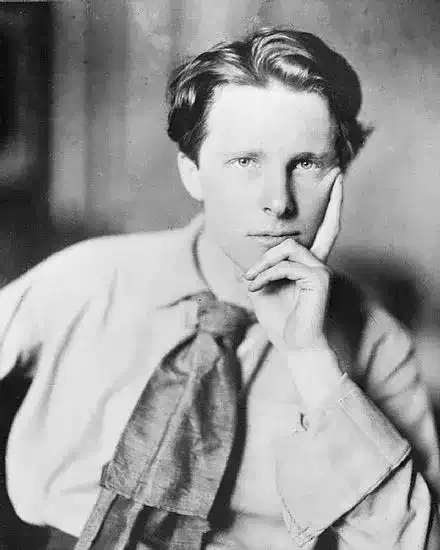
Rupert Brooke
Success
I think if you had loved me when I wanted;
If I'd looked up one day, and seen your eyes,
And found my wild sick blasphemous prayer granted,
And your brown face, that's full of pity and wise,
Flushed suddenly; the white godhead in new fear
Intolerably so struggling, and so shamed;
Most holy and far, if you'd come all too near,
If earth had seen Earth's lordliest wild limbs tamed,
Shaken, and trapped, and shivering, for MY touch --
Myself should I have slain? or that foul you?
But this the strange gods, who had given so much,
To have seen and known you, this they might not do.
One last shame's spared me, one black word's unspoken;
And I'm alone; and you have not awoken.
226
Lewis Carroll
My Fancy
I painted her a gushing thing,
With years about a score;
I little thought to find they were
A least a dozen more;
My fancy gave her eyes of blue,
A curly auburn head:
I came to find the blue a green,
The auburn turned to red.
She boxed my ears this morning,
They tingled very much;
I own that I could wish her
A somewhat lighter touch;
And if you ask me how
Her charms might be improved,
I would not have them added to,
But just a few removed!
She has the bear's ethereal grace,
The bland hyaena's laugh,
The footstep of the elephant,
The neck of a giraffe;
I love her still, believe me,
Though my heart its passion hides;
"She's all my fancy painted her,"
But oh! how much besides!
220