
Faith, Spirituality and Religion

Elizabeth Barrett Browning
Adequacy
NOW, by the verdure on thy thousand hills,
Beloved England, doth the earth appear
Quite good enough for men to overbear
The will of God in, with rebellious wills !
We cannot say the morning-sun fulfils
Ingloriously its course, nor that the clear
Strong stars without significance insphere
Our habitation: we, meantime, our ills
Heap up against this good and lift a cry
Against this work-day world, this ill-spread feast,
As if ourselves were better certainly
Than what we come to. Maker and High Priest,
I ask thee not my joys to multiply,--
Only to make me worthier of the least.
487
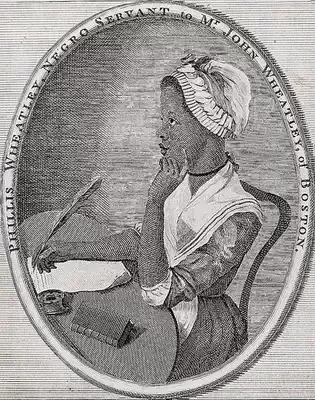
Phillis Wheatley
On The Death Of Rev. Mr. George Whitefield
HAIL, happy saint, on thine immortal throne,
Possest of glory, life, and bliss unknown;
We hear no more the music of thy tongue,
Thy wonted auditories cease to throng.
Thy sermons in unequall'd accents flow'd,
And ev'ry bosom with devotion glow'd;
Thou didst in strains of eloquence refin'd
Inflame the heart, and captivate the mind.
Unhappy we the setting sun deplore,
So glorious once, but ah! it shines no more.
Behold the prophet in his tow'ring flight!
He leaves the earth for heav'n's unmeasur'd height,
And worlds unknown receive him from our sight.
There Whitefield wings with rapid course his way,
And sails to Zion through vast seas of day.
Thy pray'rs, great saint, and thine incessant cries
Have pierc'd the bosom of thy native skies.
Thou moon hast seen, and all the stars of light,
How he has wrestled with his God by night.
He pray'd that grace in ev'ry heart might dwell,
He long'd to see America excell;
He charg'd its youth that ev'ry grace divine
Should with full lustre in their conduct shine;
That Saviour, which his soul did first receive,
The greatest gift that ev'n a God can give,
He freely offer'd to the num'rous throng,
That on his lips with list'ning pleasure hung.
"Take him, ye wretched, for your only good,
"Take him ye starving sinners, for your food;
"Ye thirsty, come to this life-giving stream,
"Ye preachers, take him for your joyful theme;
"Take him my dear Americans, he said,
"Be your complaints on his kind bosom laid:
"Take him, ye Africans, he longs for you,
"Impartial Saviour is his title due:
"Wash'd in the fountain of redeeming blood,
"You shall be sons, and kings, and priests to God."
Great Countess,* we Americans revere
Thy name, and mingle in thy grief sincere;
New England deeply feels, the Orphans mourn,
Their more than father will no more return.
But, though arrested by the hand of death,
Whitefield no more exerts his lab'ring breath,
Yet let us view him in th' eternal skies,
Let ev'ry heart to this bright vision rise;
While the tomb safe retains its sacred trust,
Till life divine re-animates his dust.
*The Countess of Huntingdon, to whom Mr. Whitefield was
Chaplain.
487

Ella Wheeler Wilcox
Christ Crucified
Now ere I slept, my prayer had been that I might see my way
To do the will of Christ, our Lord and Master, day by day;
And with this prayer upon my lips, I knew not that I dreamed,
But suddenly the world of night a pandemonium seemed.
From forest, and from slaughter house, from bull ring, and from stall,
There rose an anguished cry of pain, a loud, appealing call;
As man – the dumb beast’s next of kin – with gun, and whip, and knife,
Went pleasure-seeking through the earth, blood-bent on taking life.
From trap, and cage, and house, and zoo, and street, that awful strain
Of tortured creatures rose and swelled the orchestra of pain.
And then methought the gentle Christ appeared to me and spoke:
‘I called you, but ye answered not’ – and in my fear I woke.
Then next I heard the roar of mills; and moving through the noise,
Like phantoms in an underworld, were little girls and boys.
Their backs were bent, their brows were pale, their eyes were sad and old;
But by the labour of their hands greed added gold to gold.
Again the Presence and the Voice: ‘Behold the crimes I see,
As ye have done it unto these, so have ye done to me.’
Again I slept. I seemed to climb a hard, ascending track;
And just behind me laboured one whose patient face was black.
I pitied him; but hour by hour he gained upon the path;
He stood beside me, stood upright – and then I turned in wrath.
‘Go back! ’ I cried. ‘What right have you to walk beside me here?
For you are black, and I am white.’ I paused struck dumb with fear.
For lo! the black man was not there, but Christ stood in his place;
And oh! the pain, the pain, the pain that looked from his dear face.
Now when I woke, the air was rife with that sweet, rhythmic din
Which tells the world that Christ has come to save mankind from sin.
And through the open door of church and temple passed a throng,
To worship Him, with bended knee with sermon, and with song.
But over all I heard the cry of hunted, mangled things;
Those creatures which are part of God, though they have hoofs and wings.
I saw the mill, the mine, and shop, the little slaves of greed;
I heard the strife of race with race, all sprung from one God-seed.
And then I bowed my head in shame, and in contrition cried –
‘Lo, after nineteen hundred years, Christ still is crucified.’
484

Ezra Pound
Surgit Fama
There is a truce among the gods,
Kore is seen in the North
Skirting the blue-gray sea
In gilded and russet mantle.
The corn has again it's mother and she, Leuconoe,
That failed never women,
Fails not the earth now.
The tricksome Hermes is here;
He moves behind me
Eager to catch my words,
Eager to spread them with rumour;
To set upon them his change
Crafty and subtle;
To alter them to his purpose;
But do thou speak true, even to the letter:
‘Once more in Delos, once more is the altar a-quiver.
Once more is the chant heard.
Once more are the never abandoned gardens
Full of gossip and old tales.’
486

Rudyard Kipling
Eddi's Service
(A.D. )
Eddi, priest of St. Wilfrid
In his chapel at Manhood End,
Ordered a midnight service
For such as cared to attend.
But the Saxons were keeping Christmas,
And the night was stormy as well.
Nobody came to service,
Though Eddi rang the bell.
"'Wicked weather for walking,"
Said Eddi of Manhood End.
"But I must go on with the service
For such as care to attend."
The altar-lamps were lighted, --
An old marsh-donkey came,
Bold as a guest invited,
And stared at the guttering flame.
The storm beat on at the windows,
The water splashed on the floor,
And a wet, yoke-weary bullock
Pushed in through the open door.
"How do I know what is greatest,
How do I know what is least?
That is My Father's business,"
Said Eddi, Wilfrid's priest.
"But -- three are gathered together --
Listen to me and attend.
I bring good news, my brethren!"
Said Eddi of Manhood End.
And he told the Ox of a Manger
And a Stall in Bethlehem,
And he spoke to the Ass of a Rider,
That rode to Jerusalem.
They steamed and dripped in the chancel,
They listened and never stirred,
While, just as though they were Bishops,
Eddi preached them The World,
Till the gale blew off on the marshes
And the windows showed the day,
And the Ox and the Ass together
Wheeled and clattered away.
And when the Saxons mocked him,
Said Eddi of Manhood End,
"I dare not shut His chapel
On such as care to attend."
485

Lord Byron
On The Day Of The Destruction Of Jerusalem By Titus
From the last hill that looks on thy once holy dome,
I beheld thee, oh Sion! when render'd to Rome:
'Twas thy last sun went down, and the flames of thy fall
Flash'd back on the last glance I gave to thy wall.
I look'd for thy temple, I look'd for my home,
And forgot for a moment my bondage to come;
I beheld but the deathfire
that fed on thy fane,
And the fastfetter'd
hands that made vengeance in vain.
Oh many an eve, the high spot whence I gazed
Had reflected the last beam of day as it blazed;
While I stood on the height, and beheld the decline
Of the rays from the mountain that shone on thy shrine.
And now on that mountain I stood on that day,
But I mark'd not the twilight beam melting away;
Oh! would that the lightning had glared in its stead,
And the thunderbolt burst on the conqueror's head!
But the gods of the Pagan shall never profane
The shrine where Jehovah disdain'd not to reign;
And scatter'd and scorn'd as thy people may be,
Our worship, oh Father! is only for thee.
486
Rudyard Kipling
The Bell Buoy
They christened my brother of old--
And a saintly name he bears--
They gave him his place to hold
At the head of the belfry-stairs,
Where the minister-towers stand
And the breeding kestrels cry.
Would I change with my brother a league inland?
(Shoal! 'Ware shoal!) Not I!
In the flush of the hot June prime,
O'er sleek flood-tides afire,
I hear him hurry the chime
To the bidding of checked Desire;
Till the sweated ringers tire
And the wild bob-majors die.
Could I wait for my turn in the godly choir?
(Shoal! 'Ware shoal!) Not I!
When the smoking scud is blown--
When the greasy wind-rack lowers--
Apart and at peace and alone,
He counts the changeless hours.
He wars with darkling Powers
(I war with a darkling sea);
Would he stoop to my work in the gusty mirk?
(Shoal! 'Ware shoal!) Not he!
There was never a priest to pray
There was never a hand to toll,
When they made me guard of the bay,
And moored me over the shoal.
I rock, I reel, and I roll--
My four great hammers ply--
Could I speak or be still at the Church's will?
(Shoal! 'Ware shoal!) Not I!
The landward marks have failed,
The fog-bank glides unguessed,
The seaward lights are veiled,
The spent deep feigns her rest:
But my ear is laid to her breast,
I lift to the swell--I cry!
Could I wait in sloth on the Church's oath?
(Shoal! 'Ware shoal!) Not I!
At the careless end of night
I thrill to the nearing screw;
I turn in the clearing light
And I call to the drowsy crew;
And the mud boils foul and blue
As the blind bow backs away.
Will they give me their thanks if they clear the banks?
(Shoal! 'Ware shoal!) Not they!
The beach-pools cake and skim,
The bursting spray-heads freeze,
I gather on crown and rim
The grey, grained ice of the seas,
Where, sheathed from bitt to trees,
The plunging colliers lie.
Would I barter my place for the Church's grace?
(Shoal! 'Ware shoal!) Not I!
Through the blur of the whirling snow,
Or the black of the inky sleet,
The lanterns gather and grow,
And I look for the homeward fleet.
Rattle of block and sheet--
"Ready about-stand by!"
Shall I ask them a fee ere they fetch the quay?
(Shoal! 'Ware shoal!) Not I!
I dip and I surge and I swing
In the rip of the racing tide,
By the gates of doom I sing,
On the horns of death I ride.
A ship-length overside,
Between the course and the sand,
Fretted and bound I bide
Peril whereof I cry.
Would I change with my brother a league inland?
(Shoal! 'Ware shoal!) Not I!
487
Rudyard Kipling
Rimmon
-- After Boer War
Duly with knees that feign to quake--
Bent head and shaded brow,--
Yet once again, for my father's sake,
In Rimmon's House I bow.
The curtains part, the trumpet blares,
And the eunuchs howl aloud;
And the gilt, swag-bellied idol glares
Insolent over the crowd.
"This is Rimmon, Lord of the Earth--
"Fear Him and bow the knee!"
And I watch my comrades hide their mirth
That rode to the wars with me.
For we remember the sun and the sand
And the rocks whereon we trod,
Ere we came to a scorched and a scornful land
That did not know our God;
As we remember the sacrifice,
Dead men an hundred laid--
Slain while they served His mysteries,
And that He would not aid--
Not though we gashed ourselves and wept,
For the high-priest bade us wait;
Saying He went on a journey or slept,
Or was drunk or had taken a mate.
(Praise ye Rimmon, King of Kings,
Who ruleth Earth and Sky!
And again I bow as the censer swings
And the God Enthroned goes by.)
Ay, we remember His sacred ark
And the virtuous men that knelt
To the dark and the hush behind the dark
Wherein we dreamed He dwelt;
Until we entered to hale Him out
And found no more than an old
Uncleanly image girded about
The loins with scarlet and gold.
Him we o'erset with the butts of our spears--
Him and his vast designs--
To be scorn of our muleteers
And the jest of our halted line.
By the picket-pins that the dogs defile,
In the dung and the dust He lay,
Till the priests ran and chattered awhile
And we wiped Him and took Him away.
Hushing the matter before it was known,
They returned to our fathers afar,
And hastily set Him afresh on His throne
Because he had won us the war.
Wherefore with knees that feign to quake--
Bent head and shaded brow--
To this dog, for my father's sake,
In the Rimmon's House I bow!
486
Rudyard Kipling
The Threshold
In their deepest caverns of limestone
They pictured the Gods of Food--
The Horse, the Elk, and the Bison
That the hunting might be good;
With the Gods of Death and Terror--
The Mammoth, Tiger, and Bear.
And the pictures moved in the torchlight
To show that the Gods were there!
But that was before Ionia--
(Or the Seven Holy Islands of Ionia)
Any of the Mountains of Ionia,
Had bared their peaks to the air.
The close years packed behind them,
As the glaciers bite and grind,
Filling the new-gouged valleys
With Gods of every kind.
Gods of all-reaching power--
Gods of all-searching eyes--
But each to be wooed by worship
And won by sacrifice.
Till, after many winters, rose Ionia--
(Strange men brooding in Ionia)
Crystal-eyed Sages of Ionia
Who said, "These tales are lies.
"We dream one Breath in all things,
"That blows all things between.
"We dream one Matter in all things--
"Eternal, changeless, unseen.
"'That the heart of the Matter is single
"Till the Breath shall bid it bring forth--
"By choosing or losing its neighbour--
"All things made upon Earth."
But Earth was wiser than Ionia
(Babylon and Egypt than Ionia)
And they overlaid the teaching of Ionia
And the Truth was choked at birth.
It died at the Gate of Knowledge--
The Key to the Gate in its hand--
And the anxious priests and wizards
Re-blinded the wakening land;
For they showed, by answering echoes,
And chasing clouds as they rose,
How shadows should stand for bulwarks
Between mankind and its woes.
It was then that men bethought them of Ionia
(The few that had not allforgot Ionia)
Or the Word that was whispered in Ionia;
And they turned from the shadows and the shows.
They found one Breath in all things,
That moves all things between.
They proved one Matter in all things--
Eternal, changeless, unseen;
That the heart of the Matter was single
Till the Breath should bid it bring forth--
Even as men whispered in Ionia,
(Resolute, unsatisfied Ionia)
Ere the Word was stifled in Ionia--
All things known upon earth!
482

William Butler Yeats
King And No King
WOULD it were anything but merely voice!'
The No King cried who after that was King,
Because he had not heard of anything
That balanced with a word is more than noise;
Yet Old Romance being kind, let him prevail
Somewhere or somehow that I have forgot,
Though he'd but cannon -- Whereas we that had thought
To have lit upon as clean and sweet a tale
Have been defeated by that pledge you gave
In momentary anger long ago;
And I that have not your faith, how shall I know
That in the blinding light beyond the grave
We'll find so good a thing as that we have lost?
The hourly kindness, the day's common speech.
The habitual content of each with each
Men neither soul nor body has been crossed.
481

Robert Browning
Saul
I.
Said Abner, ``At last thou art come! Ere I tell, ere thou speak,
``Kiss my cheek, wish me well!'' Then I wished it, and did kiss his cheek.
And he, ``Since the King, O my friend, for thy countenance sent,
``Neither drunken nor eaten have we; nor until from his tent
``Thou return with the joyful assurance the King liveth yet,
``Shall our lip with the honey be bright, with the water be wet.
``For out of the black mid-tent's silence, a space of three days,
``Not a sound hath escaped to thy servants, of prayer nor of praise,
``To betoken that Saul and the Spirit have ended their strife,
``And that, faint in his triumph, the monarch sinks back upon life.
II.
``Yet now my heart leaps, O beloved! God's child with his dew
``On thy gracious gold hair, and those lilies still living and blue
``Just broken to twine round thy harp-strings, as if no wild beat
``Were now raging to torture the desert!''
III.
Then I, as was meet,
Knelt down to the God of my fathers, and rose on my feet,
And ran o'er the sand burnt to powder. The tent was unlooped;
I pulled up the spear that obstructed, and under I stooped
Hands and knees on the slippery grass-patch, all withered and gone,
That extends to the second enclosure, I groped my way on
Till I felt where the foldskirts fly open. Then once more I prayed,
And opened the foldskirts and entered, and was not afraid
But spoke, ``Here is David, thy servant!'' And no voice replied.
At the first I saw nought but the blackness but soon I descried
A something more black than the blackness---the vast, the upright
Main prop which sustains the pavilion: and slow into sight
Grew a figure against it, gigantic and blackest of all.
Then a sunbeam, that burst thro' the tent-roof, showed Saul.
IV.
He stood as erect as that tent-prop, both arms stretched out wide
On the great cross-support in the centre, that goes to each side;
He relaxed not a muscle, but hung there as, caught in his pangs
And waiting his change, the king-serpent all heavily hangs,
Far away from his kind, in the pine, till deliverance come
With the spring-time,---so agonized Saul, drear and stark, blind and dumb.
V.
Then I tuned my harp,---took off the lilies we twine round its chords
Lest they snap 'neath the stress of the noon-tide---those sunbeams like swords!
And I first played the tune all our sheep know, as, one after one,
So docile they come to the pen-door till folding be done.
They are white and untorn by the bushes, for lo, they have fed
Where the long grasses stifle the water within the stream's bed;
And now one after one seeks its lodging, as star follows star
Into eve and the blue far above us,---so blue and so far!
VI.
---Then the tune, for which quails on the cornland will each leave his mate
To fly after the player; then, what makes the crickets elate
Till for boldness they fight one another: and then, what has weight
To set the quick jerboa<*> amusing outside his sand house---
There are none such as he for a wonder, half bird and half mouse!
God made all the creatures and gave them our love and our fear,
To give sign, we and they are his children, one family here.
VII.
Then I played the help-tune of our reapers, their wine-song, when hand
Grasps at hand, eye lights eye in good friendship, and great hearts expand
And grow one in the sense of this world's life.---And then, the last song
When the dead man is praised on his journey---``Bear, bear him along
``With his few faults shut up like dead flowerets! Are balm-seeds not here
``To console us? The land has none left such as he on the bier.
``Oh, would we might keep thee, my brother!''---And then, the glad chaunt
Of the marriage,---first go the young maidens, next, she whom we vaunt
As the beauty, the pride of our dwelling.---And then, the great march
Wherein man runs to man to assist him and buttress an arch
Nought can break; who shall harm them, our friends?---Then, the chorus intoned
As the Levites go up to the altar in glory enthroned.
But I stopped here: for here in the darkness Saul groaned.
VIII.
And I paused, held my breath in such silence, and listened apart;
And the tent shook, for mighty Saul shuddered: and sparkles 'gan dart
From the jewels that woke in his turban, at once with a start,
All its lordly male-sapphires, and rubies courageous at heart.
So the head: but the body still moved not, still hung there erect.
And I bent once again to my playing, pursued it unchecked,
As I sang,---
IX.
``Oh, our manhood's prime vigour! No spirit feels waste,
``Not a muscle is stopped in its playing nor sinew unbraced.
``Oh, the wild joys of living! the leaping from rock up to rock,
``The strong rending of boughs from the fir-tree, the cool silver shock
``Of the plunge in a pool's living water, the hunt of the bear,
``And the sultriness showing the lion is couched in his lair.
``And the meal, the rich dates yellowed over with gold dust divine,
``And the locust-flesh steeped in the pitcher, the full draught of wine,
``And the sleep in the dried river-channel where bulrushes tell
``That the water was wont to go warbling so softly and well.
``How good is man's life, the mere living! how fit to employ
``All the heart and the soul and the senses for ever in joy!
``Hast thou loved the white locks of thy father, whose sword thou didst guard
``When he trusted thee forth with the armies, for glorious reward?
``Didst thou see the thin hands of thy mother, held up as men sung
``The low song of the nearly-departed, and bear her faint tongue
``Joining in while it could to the witness, `Let one more attest,
`` `I have lived, seen God's hand thro'a lifetime, and all was for best'?
``Then they sung thro' their tears in strong triumph, not much, but the rest.
``And thy brothers, the help and the contest, the working whence grew
``Such result as, from seething grape-bundles, the spirit strained true:
``And the friends of thy boyhood---that boyhood of wonder and hope,
``Present promise and wealth of the future beyond the eye's scope,---
``Till lo, thou art grown to a monarch; a people is thine;
``And all gifts, which the world offers singly, on one head combine!
``On one head, all the beauty and strength, love and rage (like the throe
``That, a-work in the rock, helps its labour and lets the gold go)
``High ambition and deeds which surpass it, fame crowning them,---all
``Brought to blaze on the head of one creature---King Saul!''
X.
And lo, with that leap of my spirit,---heart, hand, harp and voice,
Each lifting Saul's name out of sorrow, each bidding rejoice
Saul's fame in the light it was made for---as when, dare I say,
The Lord's army, in rapture of service, strains through its array,
And up soareth the cherubim-chariot---``Saul!'' cried I, and stopped,
And waited the thing that should follow. Then Saul, who hung propped
By the tent's cross-support in the centre, was struck by his name.
Have ye seen when Spring's arrowy summons goes right to the aim,
And some mountain, the last to withstand her, that held (he alone,
While the vale laughed in freedom and flowers) on a broad bust of stone
A year's snow bound about for a breastplate,---leaves grasp of the sheet?
Fold on fold all at once it crowds thunderously down to his feet,
And there fronts you, stark, black, but alive yet, your mountain of old,
With his rents, the successive bequeathings of ages untold---
Yea, each harm got in fighting your battles, each furrow and scar
Of his head thrust 'twixt you and the tempest---all hail, there they are!
---Now again to be softened with verdure, again hold the nest
Of the dove, tempt the goat and its young to the green on his crest
For their food in the ardours of summer. One long shudder thrilled
All the tent till the very air tingled, then sank and was stilled
At the King's self left standing before me, released and aware.
What was gone, what remained? All to traverse, 'twixt hope and despair;
Death was past, life not come: so he waited. Awhile his right hand
Held the brow, helped the eyes left too vacant forthwith to remand
To their place what new objects should enter: 'twas Saul as before.
I looked up and dared gaze at those eyes, nor was hurt any more
Than by slow pallid sunsets in autumn, ye watch from the shore,
At their sad level gaze o'er the ocean---a sun's slow decline
Over hills which, resolved in stern silence, o'erlap and entwine
Base with base to knit strength more intensely: so, arm folded arm
O'er the chest whose slow heavings subsided.
XI.
What spell or what charm,
(For, awhile there was trouble within me) what next should I urge
To sustain him where song had restored him?---Song filled to the verge
His cup with the wine of this life, pressing all that it yields
Of mere fruitage, the strength and the beauty: beyond, on what fields,
Glean a vintage more potent and perfect to brighten the eye
And bring blood to the lip, and commend them the cup they put by?
He saith, ``It is good;'' still he drinks not: he lets me praise life,
Gives assent, yet would die for his own part.
XII.
Then fancies grew rife
Which had come long ago on the pasture, when round me the sheep
Fed in silence---above, the one eagle wheeled slow as in sleep;
And I lay in my hollow and mused on the world that might lie
'Neath his ken, though I saw but the strip 'twixt the hill and the sky:
And I laughed---``Since my days are ordained to be passed with my flocks,
``Let me people at least, with my fancies, the plains and the rocks,
``Dream the life I am never to mix with, and image the show
``Of mankind as they live in those fashions I hardly shall know!
``Schemes of life, its best rules and right uses, the courage that gains,
``And the prudence that keeps what men strive for.'' And now these old trains
Of vague thought came again; I grew surer; so, once more the string
Of my harp made response to my spirit, as thus---
XIII.
``Yea, my King,''
I began---``thou dost well in rejecting mere comforts that spring
``From the mere mortal life held in common by man and by brute:
``In our flesh grows the branch of this life, in our soul it bears fruit.
``Thou hast marked the slow rise of the tree,---how its stem trembled first
``Till it passed the kid's lip, the stag's antler then safely outburst
``The fan-branches all round; and thou mindest when these too, in turn
``Broke a-bloom and the palm-tree seemed perfect: yet more was to learn,
``E'en the good that comes in with the palm-fruit. Our dates shall we slight,
``When their juice brings a cure for all sorrow? or care for the plight
``Of the palm's self whose slow growth produced them? Not so! stem and branch
``Shall decay, nor be known in their place, while the palm-wine shall staunch
``Every wound of man's spirit in winter. I pour thee such wine.
``Leave the flesh to the fate it was fit for! the spirit be thine!
``By the spirit, when age shall o'ercome thee, thou still shalt enjoy
``More indeed, than at first when inconscious, the life of a boy.
``Crush that life, and behold its wine running! Each deed thou hast done
``Dies, revives, goes to work in the world; until e'en as the sun
``Looking down on the earth, though clouds spoil him, though tempests efface,
``Can find nothing his own deed produced not, must everywhere trace
``The results of his past summer-prime'---so, each ray of thy will,
``Every flash of thy passion and prowess, long over, shall thrill
``Thy whole people, the countless, with ardour, till they too give forth
``A like cheer to their sons, who in turn, fill the South and the North
``With the radiance thy deed was the germ of. Carouse in the past!
``But the license of age has its limit; thou diest at last:
``As the lion when age dims his eyeball, the rose at her height
``So with man---so his power and his beauty for ever take flight.
``No! Again a long draught of my soul-wine! Look forth o'er the years!
``Thou hast done now with eyes for the actual; begin with the seer's!
``Is Saul dead? In the depth of the vale make his tomb---bid arise
``A grey mountain of marble heaped four-square, till, built to the skies,
``Let it mark where the great First King slumbers: whose fame would ye know?
``Up above see the rock's naked face, where the record shall go
``In great characters cut by the scribe,---Such was Saul, so he did;
``With the sages directing the work, by the populace chid,---
``For not half, they'll affirm, is comprised there! Which fault to amend,
``In the grove with his kind grows the cedar, whereon they shall spend
``(See, in tablets 'tis level before them) their praise, and record
``With the gold of the graver, Saul's story,---the statesman's great word
``Side by side with the poet's sweet comment. The river's a-wave
``With smooth paper-reeds grazing each other when prophet-winds rave:
``So the pen gives unborn generations their due and their part
``In thy being! Then, first of the mighty, thank God that thou art!''
XIV.
And behold while I sang ... but O Thou who didst grant me that day,
And before it not seldom hast granted thy help to essay,
Carry on and complete an adventure,---my shield and my sword
In that act where my soul was thy servant, thy word was my word,---
Still be with me, who then at the summit of human endeavour
And scaling the highest, man's thought could, gazed hopeless as ever
On the new stretch of heaven above me---till, mighty to save,
Just one lift of thy hand cleared that distance---God's throne from man's grave!
Let me tell out my tale to its ending---my voice to my heart
Which can scarce dare believe in what marvels last night I took part,
As this morning I gather the fragments, alone with my sheep,
And still fear lest the terrible glory evanish like sleep!
For I wake in the grey dewy covert, while Hebron<*> upheaves
The dawn struggling with night on his shoulder, and Kidron<*> retrieves
Slow the damage of yesterday's sunshine.
XV.
I say then,---my song
While I sang thus, assuring the monarch, and ever more strong
Made a proffer of good to console him---he slowly resumed
His old motions and habitudes kingly. The right-hand replumed
His black locks to their wonted composure, adjusted the swathes
Of his turban, and see---the huge sweat that his countenance bathes,
He wipes off with the robe; and he girds now his loins as of yore,
And feels slow for the armlets of price, with the clasp set before.
He is Saul, ye remember in glory,---ere error had bent
The broad brow from the daily communion; and still, though much spent
Be the life and the bearing that front you, the same, God did choose,
To receive what a man may waste, desecrate, never quite lose.
So sank he along by the tent-prop till, stayed by the pile
Of his armour and war-cloak and garments, he leaned there awhile,
And sat out my singing,---one arm round the tent-prop, to raise
His bent head, and the other hung slack---till I touched on the praise
I foresaw from all men in all time, to the man patient there;
And thus ended, the harp falling forward. Then first I was 'ware
That he sat, as I say, with my head just above his vast knees
Which were thrust out on each side around me, like oak-roots which please
To encircle a lamb when it slumbers. I looked up to know
If the best I could do had brought solace: he spoke not, but slow
Lifted up the hand slack at his side, till he laid it with care
Soft and grave, but in mild settled will, on my brow: thro' my hair
The large fingers were pushed, and he bent back my bead, with kind power---
All my face back, intent to peruse it, as men do a flower.
Thus held he me there with his great eyes that scrutinized mine---
And oh, all my heart how it loved him! but where was the sign?
I yearned---``Could I help thee, my father, inventing a bliss,
``I would add, to that life of the past, both the future and this;
``I would give thee new life altogether, as good, ages hence,
``As this moment,---had love but the warrant, love's heart to dispense!''
XVI.
Then the truth came upon me. No harp more---no song more! outbroke---
XVII.
``I have gone the whole round of creation: I saw and I spoke:
``I, a work of God's hand for that purpose, received in my brain
``And pronounced on the rest of his hand-work---returned him again
``His creation's approval or censure: I spoke as I saw:
``I report, as a man may of God's work---all's love, yet all's law.
``Now I lay down the judgeship he lent me. Each faculty tasked
``To perceive him, has gained an abyss, where a dewdrop was asked.
``Have I knowledge? confounded it shrivels at Wisdom laid bare.
``Have I forethought? how purblind, how blank, to the Infinite Care!
``Do I task any faculty highest, to image success?
``I but open my eyes,---and perfection, no more and no less,
``In the kind I imagined, full-fronts me, and God is seen God
``In the star, in the stone, in the flesh, in the soul and the clod.
``And thus looking within and around me, I ever renew
``(With that stoop of the soul which in bending upraises it too)
``The submission of man's nothing-perfect to God's all-complete,
``As by each new obeisance in spirit, I climb to his feet.
``Yet with all this abounding experience, this deity known,
``I shall dare to discover some province, some gift of my own.
``There's a faculty pleasant to exercise, hard to hoodwink,
``I am fain to keep still in abeyance, (I laugh as I think)
``Lest, insisting to claim and parade in it, wot ye, I worst
``E'en the Giver in one gift.---Behold, I could love if I durst!
``But I sink the pretension as fearing a man may o'ertake
``God's own speed in the one way of love: I abstain for love's sake.
``---What, my soul? see thus far and no farther? when doors great and small,
``Nine-and-ninety flew ope at our touch, should the hundredth appal?
``In the least things have faith, yet distrust in the greatest of all?
``Do I find love so full in my nature, God's ultimate gift,
``That I doubt his own love can compete with it? Here, the parts shift?
``Here, the creature surpass the Creator,---the end, what Began?
``Would I fain in my impotent yearning do all for this man,
``And dare doubt he alone shall not help him, who yet alone can?
``Would it ever have entered my mind, the bare will, much less power,
``To bestow on this Saul what I sang of, the marvellous dower
``Of the life he was gifted and filled with? to make such a soul,
``Such a body, and then such an earth for insphering the whole?
``And doth it not enter my mind (as my warm tears attest)
``These good things being given, to go on, and give one more, the best?
``Ay, to save and redeem and restore him, maintain at the height
``This perfection,---succeed with life's day-spring, death's minute of night?
``Interpose at the difficult minute, snatch Saul the mistake,
``Saul the failure, the ruin he seems now,---and bid him awake
``From the dream, the probation, the prelude, to find himself set
``Clear and safe in new light and new life,---a new harmony yet
``To be run, and continued, and ended---who knows?---or endure!
``The man taught enough, by life's dream, of the rest to make sure;
``By the pain-throb, triumphantly winning intensified bliss,
``And the next world's reward and repose, by the struggles in this.
XVIII.
``I believe it! 'Tis thou, God, that givest, 'tis I who receive:
``In the first is the last, in thy will is my power to believe.
``All's one gift: thou canst grant it moreover, as prompt to my prayer
``As I breathe out this breath, as I open these arms to the air.
``From thy will, stream the worlds, life and nature, thy dread Sabaoth:
``_I_ will?---the mere atoms despise me! Why am I not loth
``To look that, even that in the face too? Why is it I dare
``Think but lightly of such impuissance? What stops my despair?
``This;---'tis not what man Does which exalts him, but what man Would do!
``See the King---I would help him but cannot, the wishes fall through.
``Could I wrestle to raise him from sorrow, grow poor to enrich,
``To fill up his life, starve my own out, I would---knowing which,
``I know that my service is perfect. Oh, speak through me now!
``Would I suffer for him that I love? So wouldst thou---so wilt thou!
``So shall crown thee the topmost, ineffablest, uttermost crown---
``And thy love fill infinitude wholly, nor leave up nor down
``One spot for the creature to stand in! It is by no breath,
``Turn of eye, wave of hand, that salvation joins issue with death!
``As thy Love is discovered almighty, almighty be proved
``Thy power, that exists with and for it, of being Beloved!
``He who did most, shall bear most; the strongest shall stand the most weak.
``'Tis the weakness in strength, that I cry for! my flesh, that I seek
``In the Godhead! I seek and I find it. O Saul, it shall be
``A Face like my face that receives thee; a Man like to me,
``Thou shalt love and be loved by, for ever: a Hand like this hand
``Shall throw open the gates of new life to thee! See the Christ stand!''
XIX.
I know not too well how I found my way home in the night.
There were witnesses, cohorts about me, to left and to right,
Angels, powers, the unuttered, unseen, the alive, the aware:
I repressed, I got through them as hardly, as strugglingly there,
As a runner beset by the populace famished for news---
Life or death. The whole earth was awakened, hell loosed with her crews;
And the stars of night beat with emotion, and tingled and shot
Out in fire the strong pain of pent knowledge: but I fainted not,
For the Hand still impelled me at once and supported, suppressed
All the tumult, and quenched it with quiet, and holy behest,
Till the rapture was shut in itself, and the earth sank to rest.
Anon at the dawn, all that trouble had withered from earth---
Not so much, but I saw it die out in the day's tender birth;
In the gathered intensity brought to the grey of the hills;
In the shuddering forests' held breath; in the sudden wind-thrills;
In the startled wild beasts that bore off, each with eye sidling still
Though averted with wonder and dread; in the birds stiff and chill
That rose heavily, as I approached them, made stupid with awe:
E'en the serpent that slid away silent,---he felt the new law.
The same stared in the white humid faces upturned by the flowers;
The same worked in the heart of the cedar and moved the vine-bowers:
And the little brooks witnessing murmured, persistent and low,
With their obstinate, all but hushed voices---``E'en so, it is so!''
* The jumping hare.
* One of the three cities of Refuge.
* A brook in Jerusalem.
481
Elizabeth Barrett Browning
Exaggeration
WE overstate the ills of life, and take
Imagination (given us to bring down
The choirs of singing angels overshone
By God's clear glory) down our earth to rake
The dismal snows instead, flake following flake,
To cover all the corn; we walk upon
The shadow of hills across a level thrown,
And pant like climbers: near the alder brake
We sigh so loud, the nightingale within
Refuses to sing loud, as else she would.
O brothers, let us leave the shame and sin
Of taking vainly, in a plaintive mood,
The holy name of GRIEF !--holy herein
That by the grief of ONE came all our good.
483
Lord Byron
From The Last Hill That Looks On Thy Once Holy Dome
I.
From the last hill that looks on thy once holy dome,
I beheld thee, Oh Sion! when rendered to Rome:
'Twas thy last sun went down, and the flames of thy fall
Flash'd back on the last glance I gave to thy wall.
II.
I look'd for thy temple, I look'd for my home,
And forgot for a moment my bondage to come;
I beheld but the deathfire
that fed on thy fane,
And the fastfetter'd
hands that made vengeance in vain.
III.
Oh many an eve, the high spot whence I gazed
Had reflected the last beam of day as it blazed;
While I stood on the height, and beheld the decline
Of the rays from the mountain that shone on thy shrine.
IV.
And now on that mountain I stood on that day,
But I marked not the twilight beam melting away;
Oh! would that the lightning had glared in its stead,
And the thunderbolt burst on the conqueror's head!
V.
But the Gods of the Pagan shall never profane
The shrine where Jehovah disdain'd not to reign;
And scattered and scorn'd as thy people may be,
Our worship, oh Father! is only for thee.
483
Rudyard Kipling
Lispeth
Look, you have cast out Love! What Gods are these
You bid me please?
The Three in One, the One in Three? Not so!
To my own Gods I go.
It may be they shall give me greater ease
Than your cold Christ and tangled Trinities.
You bid me please?
The Three in One, the One in Three? Not so!
To my own Gods I go.
It may be they shall give me greater ease
Than your cold Christ and tangled Trinities.
481
Rudyard Kipling
The Necessitarian
I know not in Whose hands are laid
To empty upon earth
From unsuspected ambuscade
The very Urns of Mirth;
Who bids the Heavenly Lark arise
And cheer our solemn round--
The Jest beheld with streaming eyes
And grovellings on the ground;
Who joins the flats of Time and Chance
Behind the prey preferred,
And thrones on Shrieking Circumstance
The Sacredly Absurd,
Till Laughter, voiceless through excess,
Waves mute appeal and sore,
Above the midriff's deep distress,
For breath to laugh once more.
No creed hath dared to hail Him Lord,
No raptured choirs proclaim,
And Nature's strenuous Overword
Hath nowhere breathed His Name.
Yet, it must be, on wayside jape,
The selfsame Power bestows
The selfsame power as went to shape
His Planet or His Rose.
481
Rudyard Kipling
At His Execution
I am made all things to all men--
Hebrew, Roman, and Greek--
In each one's tongue I speak,
Suiting to each my word,
That some may be drawn to the Lord!
I am made all things to all men--
In City or Wilderness
Praising the crafts they profess
That some may be drawn to the Lord--
By any means to my Lord!
Since I was overcome
By that great Light and Word,
I have forgot or forgone
The self men call their own
(Being made all things to all men)
So that I might save some
At such small price to the Lord,
As being all things to all men.
I was made all things to all men,
But now my course is done--
And now is my reward...
Ah, Christ, when I stand at Thy Throne
With those I have drawn to the Lord,
Restore me my self again!
483

Alfred Lord Tennyson
The Holy Grail
From noiseful arms, and acts of prowess done
In tournament or tilt, Sir Percivale,
Whom Arthur and his knighthood called The Pure,
Had passed into the silent life of prayer,
Praise, fast, and alms; and leaving for the cowl
The helmet in an abbey far away
From Camelot, there, and not long after, died.
And one, a fellow-monk among the rest,
Ambrosius, loved him much beyond the rest,
And honoured him, and wrought into his heart
A way by love that wakened love within,
To answer that which came: and as they sat
Beneath a world-old yew-tree, darkening half
The cloisters, on a gustful April morn
That puffed the swaying branches into smoke
Above them, ere the summer when he died
The monk Ambrosius questioned Percivale:
`O brother, I have seen this yew-tree smoke,
Spring after spring, for half a hundred years:
For never have I known the world without,
Nor ever strayed beyond the pale: but thee,
When first thou camest--such a courtesy
Spake through the limbs and in the voice--I knew
For one of those who eat in Arthur's hall;
For good ye are and bad, and like to coins,
Some true, some light, but every one of you
Stamped with the image of the King; and now
Tell me, what drove thee from the Table Round,
My brother? was it earthly passion crost?'
`Nay,' said the knight; `for no such passion mine.
But the sweet vision of the Holy Grail
Drove me from all vainglories, rivalries,
And earthly heats that spring and sparkle out
Among us in the jousts, while women watch
Who wins, who falls; and waste the spiritual strength
Within us, better offered up to Heaven.'
To whom the monk: `The Holy Grail!--I trust
We are green in Heaven's eyes; but here too much
We moulder--as to things without I mean--
Yet one of your own knights, a guest of ours,
Told us of this in our refectory,
But spake with such a sadness and so low
We heard not half of what he said. What is it?
The phantom of a cup that comes and goes?'
`Nay, monk! what phantom?' answered Percivale.
`The cup, the cup itself, from which our Lord
Drank at the last sad supper with his own.
This, from the blessd land of Aromat--
After the day of darkness, when the dead
Went wandering o'er Moriah--the good saint
Arimathan Joseph, journeying brought
To Glastonbury, where the winter thorn
Blossoms at Christmas, mindful of our Lord.
And there awhile it bode; and if a man
Could touch or see it, he was healed at once,
By faith, of all his ills. But then the times
Grew to such evil that the holy cup
Was caught away to Heaven, and disappeared.'
To whom the monk: `From our old books I know
That Joseph came of old to Glastonbury,
And there the heathen Prince, Arviragus,
Gave him an isle of marsh whereon to build;
And there he built with wattles from the marsh
A little lonely church in days of yore,
For so they say, these books of ours, but seem
Mute of this miracle, far as I have read.
But who first saw the holy thing today?'
`A woman,' answered Percivale, `a nun,
And one no further off in blood from me
Than sister; and if ever holy maid
With knees of adoration wore the stone,
A holy maid; though never maiden glowed,
But that was in her earlier maidenhood,
With such a fervent flame of human love,
Which being rudely blunted, glanced and shot
Only to holy things; to prayer and praise
She gave herself, to fast and alms. And yet,
Nun as she was, the scandal of the Court,
Sin against Arthur and the Table Round,
And the strange sound of an adulterous race,
Across the iron grating of her cell
Beat, and she prayed and fasted all the more.
`And he to whom she told her sins, or what
Her all but utter whiteness held for sin,
A man wellnigh a hundred winters old,
Spake often with her of the Holy Grail,
A legend handed down through five or six,
And each of these a hundred winters old,
From our Lord's time. And when King Arthur made
His Table Round, and all men's hearts became
Clean for a season, surely he had thought
That now the Holy Grail would come again;
But sin broke out. Ah, Christ, that it would come,
And heal the world of all their wickedness!
"O Father!" asked the maiden, "might it come
To me by prayer and fasting?" "Nay," said he,
"I know not, for thy heart is pure as snow."
And so she prayed and fasted, till the sun
Shone, and the wind blew, through her, and I thought
She might have risen and floated when I saw her.
`For on a day she sent to speak with me.
And when she came to speak, behold her eyes
Beyond my knowing of them, beautiful,
Beyond all knowing of them, wonderful,
Beautiful in the light of holiness.
And "O my brother Percivale," she said,
"Sweet brother, I have seen the Holy Grail:
For, waked at dead of night, I heard a sound
As of a silver horn from o'er the hills
Blown, and I thought, `It is not Arthur's use
To hunt by moonlight;' and the slender sound
As from a distance beyond distance grew
Coming upon me--O never harp nor horn,
Nor aught we blow with breath, or touch with hand,
Was like that music as it came; and then
Streamed through my cell a cold and silver beam,
And down the long beam stole the Holy Grail,
Rose-red with beatings in it, as if alive,
Till all the white walls of my cell were dyed
With rosy colours leaping on the wall;
And then the music faded, and the Grail
Past, and the beam decayed, and from the walls
The rosy quiverings died into the night.
So now the Holy Thing is here again
Among us, brother, fast thou too and pray,
And tell thy brother knights to fast and pray,
That so perchance the vision may be seen
By thee and those, and all the world be healed."
`Then leaving the pale nun, I spake of this
To all men; and myself fasted and prayed
Always, and many among us many a week
Fasted and prayed even to the uttermost,
Expectant of the wonder that would be.
`And one there was among us, ever moved
Among us in white armour, Galahad.
"God make thee good as thou art beautiful,"
Said Arthur, when he dubbed him knight; and none,
In so young youth, was ever made a knight
Till Galahad; and this Galahad, when he heard
My sister's vision, filled me with amaze;
His eyes became so like her own, they seemed
Hers, and himself her brother more than I.
`Sister or brother none had he; but some
Called him a son of Lancelot, and some said
Begotten by enchantment--chatterers they,
Like birds of passage piping up and down,
That gape for flies--we know not whence they come;
For when was Lancelot wanderingly lewd?
`But she, the wan sweet maiden, shore away
Clean from her forehead all that wealth of hair
Which made a silken mat-work for her feet;
And out of this she plaited broad and long
A strong sword-belt, and wove with silver thread
And crimson in the belt a strange device,
A crimson grail within a silver beam;
And saw the bright boy-knight, and bound it on him,
Saying, "My knight, my love, my knight of heaven,
O thou, my love, whose love is one with mine,
I, maiden, round thee, maiden, bind my belt.
Go forth, for thou shalt see what I have seen,
And break through all, till one will crown thee king
Far in the spiritual city:" and as she spake
She sent the deathless passion in her eyes
Through him, and made him hers, and laid her mind
On him, and he believed in her belief.
`Then came a year of miracle: O brother,
In our great hall there stood a vacant chair,
Fashioned by Merlin ere he past away,
And carven with strange figures; and in and out
The figures, like a serpent, ran a scroll
Of letters in a tongue no man could read.
And Merlin called it "The Siege perilous,"
Perilous for good and ill; "for there," he said,
"No man could sit but he should lose himself:"
And once by misadvertence Merlin sat
In his own chair, and so was lost; but he,
Galahad, when he heard of Merlin's doom,
Cried, "If I lose myself, I save myself!"
`Then on a summer night it came to pass,
While the great banquet lay along the hall,
That Galahad would sit down in Merlin's chair.
`And all at once, as there we sat, we heard
A cracking and a riving of the roofs,
And rending, and a blast, and overhead
Thunder, and in the thunder was a cry.
And in the blast there smote along the hall
A beam of light seven times more clear than day:
And down the long beam stole the Holy Grail
All over covered with a luminous cloud.
And none might see who bare it, and it past.
But every knight beheld his fellow's face
As in a glory, and all the knights arose,
And staring each at other like dumb men
Stood, till I found a voice and sware a vow.
`I sware a vow before them all, that I,
Because I had not seen the Grail, would ride
A twelvemonth and a day in quest of it,
Until I found and saw it, as the nun
My sister saw it; and Galahad sware the vow,
And good Sir Bors, our Lancelot's cousin, sware,
And Lancelot sware, and many among the knights,
And Gawain sware, and louder than the rest.'
Then spake the monk Ambrosius, asking him,
`What said the King? Did Arthur take the vow?'
`Nay, for my lord,' said Percivale, `the King,
Was not in hall: for early that same day,
Scaped through a cavern from a bandit hold,
An outraged maiden sprang into the hall
Crying on help: for all her shining hair
Was smeared with earth, and either milky arm
Red-rent with hooks of bramble, and all she wore
Torn as a sail that leaves the rope is torn
In tempest: so the King arose and went
To smoke the scandalous hive of those wild bees
That made such honey in his realm. Howbeit
Some little of this marvel he too saw,
Returning o'er the plain that then began
To darken under Camelot; whence the King
Looked up, calling aloud, "Lo, there! the roofs
Of our great hall are rolled in thunder-smoke!
Pray Heaven, they be not smitten by the bolt."
For dear to Arthur was that hall of ours,
As having there so oft with all his knights
Feasted, and as the stateliest under heaven.
`O brother, had you known our mighty hall,
Which Merlin built for Arthur long ago!
For all the sacred mount of Camelot,
And all the dim rich city, roof by roof,
Tower after tower, spire beyond spire,
By grove, and garden-lawn, and rushing brook,
Climbs to the mighty hall that Merlin built.
And four great zones of sculpture, set betwixt
With many a mystic symbol, gird the hall:
And in the lowest beasts are slaying men,
And in the second men are slaying beasts,
And on the third are warriors, perfect men,
And on the fourth are men with growing wings,
And over all one statue in the mould
Of Arthur, made by Merlin, with a crown,
And peaked wings pointed to the Northern Star.
And eastward fronts the statue, and the crown
And both the wings are made of gold, and flame
At sunrise till the people in far fields,
Wasted so often by the heathen hordes,
Behold it, crying, "We have still a King."
`And, brother, had you known our hall within,
Broader and higher than any in all the lands!
Where twelve great windows blazon Arthur's wars,
And all the light that falls upon the board
Streams through the twelve great battles of our King.
Nay, one there is, and at the eastern end,
Wealthy with wandering lines of mount and mere,
Where Arthur finds the brand Excalibur.
And also one to the west, and counter to it,
And blank: and who shall blazon it? when and how?--
O there, perchance, when all our wars are done,
The brand Excalibur will be cast away.
`So to this hall full quickly rode the King,
In horror lest the work by Merlin wrought,
Dreamlike, should on the sudden vanish, wrapt
In unremorseful folds of rolling fire.
And in he rode, and up I glanced, and saw
The golden dragon sparkling over all:
And many of those who burnt the hold, their arms
Hacked, and their foreheads grimed with smoke, and seared,
Followed, and in among bright faces, ours,
Full of the vision, prest: and then the King
Spake to me, being nearest, "Percivale,"
(Because the hall was all in tumult--some
Vowing, and some protesting), "what is this?"
`O brother, when I told him what had chanced,
My sister's vision, and the rest, his face
Darkened, as I have seen it more than once,
When some brave deed seemed to be done in vain,
Darken; and "Woe is me, my knights," he cried,
"Had I been here, ye had not sworn the vow."
Bold was mine answer, "Had thyself been here,
My King, thou wouldst have sworn." "Yea, yea," said he,
"Art thou so bold and hast not seen the Grail?"
`"Nay, lord, I heard the sound, I saw the light,
But since I did not see the Holy Thing,
I sware a vow to follow it till I saw."
`Then when he asked us, knight by knight, if any
Had seen it, all their answers were as one:
"Nay, lord, and therefore have we sworn our vows."
`"Lo now," said Arthur, "have ye seen a cloud?
What go ye into the wilderness to see?"
`Then Galahad on the sudden, and in a voice
Shrilling along the hall to Arthur, called,
"But I, Sir Arthur, saw the Holy Grail,
I saw the Holy Grail and heard a cry-`
O Galahad, and O Galahad, follow me.'"
`"Ah, Galahad, Galahad," said the King, "for such
As thou art is the vision, not for these.
Thy holy nun and thou have seen a sign--
Holier is none, my Percivale, than she--
A sign to maim this Order which I made.
But ye, that follow but the leader's bell"
(Brother, the King was hard upon his knights)
"Taliessin is our fullest throat of song,
And one hath sung and all the dumb will sing.
Lancelot is Lancelot, and hath overborne
Five knights at once, and every younger knight,
Unproven, holds himself as Lancelot,
Till overborne by one, he learns--and ye,
What are ye? Galahads?--no, nor Percivales"
(For thus it pleased the King to range me close
After Sir Galahad); "nay," said he, "but men
With strength and will to right the wronged, of power
To lay the sudden heads of violence flat,
Knights that in twelve great battles splashed and dyed
The strong White Horse in his own heathen blood--
But one hath seen, and all the blind will see.
Go, since your vows are sacred, being made:
Yet--for ye know the cries of all my realm
Pass through this hall--how often, O my knights,
Your places being vacant at my side,
This chance of noble deeds will come and go
Unchallenged, while ye follow wandering fires
Lost in the quagmire! Many of you, yea most,
Return no more: ye think I show myself
Too dark a prophet: come now, let us meet
The morrow morn once more in one full field
Of gracious pastime, that once more the King,
Before ye leave him for this Quest, may count
The yet-unbroken strength of all his knights,
Rejoicing in that Order which he made."
`So when the sun broke next from under ground,
All the great table of our Arthur closed
And clashed in such a tourney and so full,
So many lances broken--never yet
Had Camelot seen the like, since Arthur came;
And I myself and Galahad, for a strength
Was in us from this vision, overthrew
So many knights that all the people cried,
And almost burst the barriers in their heat,
Shouting, "Sir Galahad and Sir Percivale!"
`But when the next day brake from under ground--
O brother, had you known our Camelot,
Built by old kings, age after age, so old
The King himself had fears that it would fall,
So strange, and rich, and dim; for where the roofs
Tottered toward each other in the sky,
Met foreheads all along the street of those
Who watched us pass; and lower, and where the long
Rich galleries, lady-laden, weighed the necks
Of dragons clinging to the crazy walls,
Thicker than drops from thunder, showers of flowers
Fell as we past; and men and boys astride
On wyvern, lion, dragon, griffin, swan,
At all the corners, named us each by name,
Calling, "God speed!" but in the ways below
The knights and ladies wept, and rich and poor
Wept, and the King himself could hardly speak
For grief, and all in middle street the Queen,
Who rode by Lancelot, wailed and shrieked aloud,
"This madness has come on us for our sins."
So to the Gate of the three Queens we came,
Where Arthur's wars are rendered mystically,
And thence departed every one his way.
`And I was lifted up in heart, and thought
Of all my late-shown prowess in the lists,
How my strong lance had beaten down the knights,
So many and famous names; and never yet
Had heaven appeared so blue, nor earth so green,
For all my blood danced in me, and I knew
That I should light upon the Holy Grail.
`Thereafter, the dark warning of our King,
That most of us would follow wandering fires,
Came like a driving gloom across my mind.
Then every evil word I had spoken once,
And every evil thought I had thought of old,
And every evil deed I ever did,
Awoke and cried, "This Quest is not for thee."
And lifting up mine eyes, I found myself
Alone, and in a land of sand and thorns,
And I was thirsty even unto death;
And I, too, cried, "This Quest is not for thee."
`And on I rode, and when I thought my thirst
Would slay me, saw deep lawns, and then a brook,
With one sharp rapid, where the crisping white
Played ever back upon the sloping wave,
And took both ear and eye; and o'er the brook
Were apple-trees, and apples by the brook
Fallen, and on the lawns. "I will rest here,"
I said, "I am not worthy of the Quest;"
But even while I drank the brook, and ate
The goodly apples, all these things at once
Fell into dust, and I was left alone,
And thirsting, in a land of sand and thorns.
`And then behold a woman at a door
Spinning; and fair the house whereby she sat,
And kind the woman's eyes and innocent,
And all her bearing gracious; and she rose
Opening her arms to meet me, as who should say,
"Rest here;" but when I touched her, lo! she, too,
Fell into dust and nothing, and the house
Became no better than a broken shed,
And in it a dead babe; and also this
Fell into dust, and I was left alone.
`And on I rode, and greater was my thirst.
Then flashed a yellow gleam across the world,
And where it smote the plowshare in the field,
The plowman left his plowing, and fell down
Before it; where it glittered on her pail,
The milkmaid left her milking, and fell down
Before it, and I knew not why, but thought
"The sun is rising," though the sun had risen.
Then was I ware of one that on me moved
In golden armour with a crown of gold
About a casque all jewels; and his horse
In golden armour jewelled everywhere:
And on the splendour came, flashing me blind;
And seemed to me the Lord of all the world,
Being so huge. But when I thought he meant
To crush me, moving on me, lo! he, too,
Opened his arms to embrace me as he came,
And up I went and touched him, and he, too,
Fell into dust, and I was left alone
And wearying in a land of sand and thorns.
`And I rode on and found a mighty hill,
And on the top, a city walled: the spires
Pricked with incredible pinnacles into heaven.
And by the gateway stirred a crowd; and these
Cried to me climbing, "Welcome, Percivale!
Thou mightiest and thou purest among men!"
And glad was I and clomb, but found at top
No man, nor any voice. And thence I past
Far through a ruinous city, and I saw
That man had once dwelt there; but there I found
Only one man of an exceeding age.
"Where is that goodly company," said I,
"That so cried out upon me?" and he had
Scarce any voice to answer, and yet gasped,
"Whence and what art thou?" and even as he spoke
Fell into dust, and disappeared, and I
Was left alone once more, and cried in grief,
"Lo, if I find the Holy Grail itself
And touch it, it will crumble into dust."
`And thence I dropt into a lowly vale,
Low as the hill was high, and where the vale
Was lowest, found a chapel, and thereby
A holy hermit in a hermitage,
To whom I told my phantoms, and he said:
`"O son, thou hast not true humility,
The highest virtue, mother of them all;
For when the Lord of all things made Himself
Naked of glory for His mortal change,
`Take thou my robe,' she said, `for all is thine,'
And all her form shone forth with sudden light
So that the angels were amazed, and she
Followed Him down, and like a flying star
Led on the gray-haired wisdom of the east;
But her thou hast not known: for what is this
Thou thoughtest of thy prowess and thy sins?
Thou hast not lost thyself to save thyself
As Galahad." When the hermit made an end,
In silver armour suddenly Galahad shone
Before us, and against the chapel door
Laid lance, and entered, and we knelt in prayer.
And there the hermit slaked my burning thirst,
And at the sacring of the mass I saw
The holy elements alone; but he,
"Saw ye no more? I, Galahad, saw the Grail,
The Holy Grail, descend upon the shrine:
I saw the fiery face as of a child
That smote itself into the bread, and went;
And hither am I come; and never yet
Hath what thy sister taught me first to see,
This Holy Thing, failed from my side, nor come
Covered, but moving with me night and day,
Fainter by day, but always in the night
Blood-red, and sliding down the blackened marsh
Blood-red, and on the naked mountain top
Blood-red, and in the sleeping mere below
Blood-red. And in the strength of this I rode,
Shattering all evil customs everywhere,
And past through Pagan realms, and made them mine,
And clashed with Pagan hordes, and bore them down,
And broke through all, and in the strength of this
Come victor. But my time is hard at hand,
And hence I go; and one will crown me king
Far in the spiritual city; and come thou, too,
For thou shalt see the vision when I go."
`While thus he spake, his eye, dwelling on mine,
Drew me, with power upon me, till I grew
One with him, to believe as he believed.
Then, when the day began to wane, we went.
`There rose a hill that none but man could climb,
Scarred with a hundred wintry water-courses--
Storm at the top, and when we gained it, storm
Round us and death; for every moment glanced
His silver arms and gloomed: so quick and thick
The lightnings here and there to left and right
Struck, till the dry old trunks about us, dead,
Yea, rotten with a hundred years of death,
Sprang into fire: and at the base we found
On either hand, as far as eye could see,
A great black swamp and of an evil smell,
Part black, part whitened with the bones of men,
Not to be crost, save that some ancient king
Had built a way, where, linked with many a bridge,
A thousand piers ran into the great Sea.
And Galahad fled along them bridge by bridge,
And every bridge as quickly as he crost
Sprang into fire and vanished, though I yearned
To follow; and thrice above him all the heavens
Opened and blazed with thunder such as seemed
Shoutings of all the sons of God: and first
At once I saw him far on the great Sea,
In silver-shining armour starry-clear;
And o'er his head the Holy Vessel hung
Clothed in white samite or a luminous cloud.
And with exceeding swiftness ran the boat,
If boat it were--I saw not whence it came.
And when the heavens opened and blazed again
Roaring, I saw him like a silver star--
And had he set the sail, or had the boat
Become a living creature clad with wings?
And o'er his head the Holy Vessel hung
Redder than any rose, a joy to me,
For now I knew the veil had been withdrawn.
Then in a moment when they blazed again
Opening, I saw the least of little stars
Down on the waste, and straight beyond the star
I saw the spiritual city and all her spires
And gateways in a glory like one pearl--
No larger, though the goal of all the saints--
Strike from the sea; and from the star there shot
A rose-red sparkle to the city, and there
Dwelt, and I knew it was the Holy Grail,
Which never eyes on earth again shall see.
Then fell the floods of heaven drowning the deep.
And how my feet recrost the deathful ridge
No memory in me lives; but that I touched
The chapel-doors at dawn I know; and thence
Taking my war-horse from the holy man,
Glad that no phantom vext me more, returned
To whence I came, the gate of Arthur's wars.'
`O brother,' asked Ambrosius,--`for in sooth
These ancient books--and they would win thee--teem,
Only I find not there this Holy Grail,
With miracles and marvels like to these,
Not all unlike; which oftentime I read,
Who read but on my breviary with ease,
Till my head swims; and then go forth and pass
Down to the little thorpe that lies so close,
And almost plastered like a martin's nest
To these old walls--and mingle with our folk;
And knowing every honest face of theirs
As well as ever shepherd knew his sheep,
And every homely secret in their hearts,
Delight myself with gossip and old wives,
And ills and aches, and teethings, lyings-in,
And mirthful sayings, children of the place,
That have no meaning half a league away:
Or lulling random squabbles when they rise,
Chafferings and chatterings at the market-cross,
Rejoice, small man, in this small world of mine,
Yea, even in their hens and in their eggs--
O brother, saving this Sir Galahad,
Came ye on none but phantoms in your quest,
No man, no woman?'
Then Sir Percivale:
`All men, to one so bound by such a vow,
And women were as phantoms. O, my brother,
Why wilt thou shame me to confess to thee
How far I faltered from my quest and vow?
For after I had lain so many nights
A bedmate of the snail and eft and snake,
In grass and burdock, I was changed to wan
And meagre, and the vision had not come;
And then I chanced upon a goodly town
With one great dwelling in the middle of it;
Thither I made, and there was I disarmed
By maidens each as fair as any flower:
But when they led me into hall, behold,
The Princess of that castle was the one,
Brother, and that one only, who had ever
Made my heart leap; for when I moved of old
A slender page about her father's hall,
And she a slender maiden, all my heart
Went after her with longing: yet we twain
Had never kissed a kiss, or vowed a vow.
And now I came upon her once again,
And one had wedded her, and he was dead,
And all his land and wealth and state were hers.
And while I tarried, every day she set
A banquet richer than the day before
By me; for all her longing and her will
Was toward me as of old; till one fair morn,
I walking to and fro beside a stream
That flashed across her orchard underneath
Her castle-walls, she stole upon my walk,
And calling me the greatest of all knights,
Embraced me, and so kissed me the first time,
And gave herself and all her wealth to me.
Then I remembered Arthur's warning word,
That most of us would follow wandering fires,
And the Quest faded in my heart. Anon,
The heads of all her people drew to me,
With supplication both of knees and tongue:
"We have heard of thee: thou art our greatest knight,
Our Lady says it, and we well believe:
Wed thou our Lady, and rule over us,
And thou shalt be as Arthur in our land."
O me, my brother! but one night my vow
Burnt me within, so that I rose and fled,
But wailed and wept, and hated mine own self,
And even the Holy Quest, and all but her;
Then after I was joined with Galahad
Cared not for her, nor anything upon earth.'
Then said the monk, `Poor men, when yule is cold,
Must be content to sit by little fires.
And this am I, so that ye care for me
Ever so little; yea, and blest be Heaven
That brought thee here to this poor house of ours
Where all the brethren are so hard, to warm
My cold heart with a friend: but O the pity
To find thine own first love once more--to hold,
Hold her a wealthy bride within thine arms,
Or all but hold, and then--cast her aside,
Foregoing all her sweetness, like a weed.
For we that want the warmth of double life,
We that are plagued with dreams of something sweet
Beyond all sweetness in a life so rich,--
Ah, blessd Lord, I speak too earthlywise,
Seeing I never strayed beyond the cell,
But live like an old badger in his earth,
With earth about him everywhere, despite
All fast and penance. Saw ye none beside,
None of your knights?'
`Yea so,' said Percivale:
`One night my pathway swerving east, I saw
The pelican on the casque of our Sir Bors
All in the middle of the rising moon:
And toward him spurred, and hailed him, and he me,
And each made joy of either; then he asked,
"Where is he? hast thou seen him--Lancelot?--Once,"
Said good Sir Bors, "he dashed across me--mad,
And maddening what he rode: and when I cried,
`Ridest thou then so hotly on a quest
So holy,' Lancelot shouted, `Stay me not!
I have been the sluggard, and I ride apace,
For now there is a lion in the way.'
So vanished."
`Then Sir Bors had ridden on
Softly, and sorrowing for our Lancelot,
Because his former madness, once the talk
And scandal of our table, had returned;
For Lancelot's kith and kin so worship him
That ill to him is ill to them; to Bors
Beyond the rest: he well had been content
Not to have seen, so Lancelot might have seen,
The Holy Cup of healing; and, indeed,
Being so clouded with his grief and love,
Small heart was his after the Holy Quest:
If God would send the vision, well: if not,
The Quest and he were in the hands of Heaven.
`And then, with small adventure met, Sir Bors
Rode to the lonest tract of all the realm,
And found a people there among their crags,
Our race and blood, a remnant that were left
Paynim amid their circles, and the stones
They pitch up straight to heaven: and their wise men
Were strong in that old magic which can trace
The wandering of the stars, and scoffed at him
And this high Quest as at a simple thing:
Told him he followed--almost Arthur's words--
A mocking fire: "what other fire than he,
Whereby the blood beats, and the blossom blows,
And the sea rolls, and all the world is warmed?"
And when his answer chafed them, the rough crowd,
Hearing he had a difference with their priests,
Seized him, and bound and plunged him into a cell
Of great piled stones; and lying bounden there
In darkness through innumerable hours
He heard the hollow-ringing heavens sweep
Over him till by miracle--what else?--
Heavy as it was, a great stone slipt and fell,
Such as no wind could move: and through the gap
Glimmered the streaming scud: then came a night
Still as the day was loud; and through the gap
The seven clear stars of Arthur's Table Round--
For, brother, so one night, because they roll
Through such a round in heaven, we named the stars,
Rejoicing in ourselves and in our King--
And these, like bright eyes of familiar friends,
In on him shone: "And then to me, to me,"
Said good Sir Bors, "beyond all hopes of mine,
Who scarce had prayed or asked it for myself--
Across the seven clear stars--O grace to me--
In colour like the fingers of a hand
Before a burning taper, the sweet Grail
Glided and past, and close upon it pealed
A sharp quick thunder." Afterwards, a maid,
Who kept our holy faith among her kin
In secret, entering, loosed and let him go.'
To whom the monk: `And I remember now
That pelican on the casque: Sir Bors it was
Who spake so low and sadly at our board;
And mighty reverent at our grace was he:
A square-set man and honest; and his eyes,
An out-door sign of all the warmth within,
Smiled with his lips--a smile beneath a cloud,
But heaven had meant it for a sunny one:
Ay, ay, Sir Bors, who else? But when ye reached
The city, found ye all your knights returned,
Or was there sooth in Arthur's prophecy,
Tell me, and what said each, and what the King?'
Then answered Percivale: `And that can I,
Brother, and truly; since the living words
Of so great men as Lancelot and our King
Pass not from door to door and out again,
But sit within the house. O, when we reached
The city, our horses stumbling as they trode
On heaps of ruin, hornless unicorns,
Cracked basilisks, and splintered cockatrices,
And shattered talbots, which had left the stones
Raw, that they fell from, brought us to the hall.
`And there sat Arthur on the das-throne,
And those that had gone out upon the Quest,
Wasted and worn, and but a tithe of them,
And those that had not, stood before the King,
Who, when he saw me, rose, and bad me hail,
Saying, "A welfare in thine eye reproves
Our fear of some disastrous chance for thee
On hill, or plain, at sea, or flooding ford.
So fierce a gale made havoc here of late
Among the strange devices of our kings;
Yea, shook this newer, stronger hall of ours,
And from the statue Merlin moulded for us
Half-wrenched a golden wing; but now--the Quest,
This vision--hast thou seen the Holy Cup,
That Joseph brought of old to Glastonbury?"
`So when I told him all thyself hast heard,
Ambrosius, and my fresh but fixt resolve
To pass away into the quiet life,
He answered not, but, sharply turning, asked
Of Gawain, "Gawain, was this Quest for thee?"
`"Nay, lord," said Gawain, "not for such as I.
Therefore I communed with a saintly man,
Who made me sure the Quest was not for me;
For I was much awearied of the Quest:
But found a silk pavilion in a field,
And merry maidens in it; and then this gale
Tore my pavilion from the tenting-pin,
And blew my merry maidens all about
With all discomfort; yea, and but for this,
My twelvemonth and a day were pleasant to me."
`He ceased; and Arthur turned to whom at first
He saw not, for Sir Bors, on entering, pushed
Athwart the throng to Lancelot, caught his hand,
Held it, and there, half-hidden by him, stood,
Until the King espied him, saying to him,
"Hail, Bors! if ever loyal man and true
Could see it, thou hast seen the Grail;" and Bors,
"Ask me not, for I may not speak of it:
I saw it;" and the tears were in his eyes.
`Then there remained but Lancelot, for the rest
Spake but of sundry perils in the storm;
Perhaps, like him of Cana in Holy Writ,
Our Arthur kept his best until the last;
"Thou, too, my Lancelot," asked the king, "my friend,
Our mightiest, hath this Quest availed for thee?"
`"Our mightiest!" answered Lancelot, with a groan;
"O King!"--and when he paused, methought I spied
A dying fire of madness in his eyes-"
O King, my friend, if friend of thine I be,
Happier are those that welter in their sin,
Swine in the mud, that cannot see for slime,
Slime of the ditch: but in me lived a sin
So strange, of such a kind, that all of pure,
Noble, and knightly in me twined and clung
Round that one sin, until the wholesome flower
And poisonous grew together, each as each,
Not to be plucked asunder; and when thy knights
Sware, I sware with them only in the hope
That could I touch or see the Holy Grail
They might be plucked asunder. Then I spake
To one most holy saint, who wept and said,
That save they could be plucked asunder, all
My quest were but in vain; to whom I vowed
That I would work according as he willed.
And forth I went, and while I yearned and strove
To tear the twain asunder in my heart,
My madness came upon me as of old,
And whipt me into waste fields far away;
There was I beaten down by little men,
Mean knights, to whom the moving of my sword
And shadow of my spear had been enow
To scare them from me once; and then I came
All in my folly to the naked shore,
Wide flats, where nothing but coarse grasses grew;
But such a blast, my King, began to blow,
So loud a blast along the shore and sea,
Ye could not hear the waters for the blast,
Though heapt in mounds and ridges all the sea
Drove like a cataract, and all the sand
Swept like a river, and the clouded heavens
Were shaken with the motion and the sound.
And blackening in the sea-foam swayed a boat,
Half-swallowed in it, anchored with a chain;
And in my madness to myself I said,
`I will embark and I will lose myself,
And in the great sea wash away my sin.'
I burst the chain, I sprang into the boat.
Seven days I drove along the dreary deep,
And with me drove the moon and all the stars;
And the wind fell, and on the seventh night
I heard the shingle grinding in the surge,
And felt the boat shock earth, and looking up,
Behold, the enchanted towers of Carbonek,
A castle like a rock upon a rock,
With chasm-like portals open to the sea,
And steps that met the breaker! there was none
Stood near it but a lion on each side
That kept the entry, and the moon was full.
Then from the boat I leapt, and up the stairs.
There drew my sword. With sudden-flaring manes
Those two great beasts rose upright like a man,
Each gript a shoulder, and I stood between;
And, when I would have smitten them, heard a voice,
`Doubt not, go forward; if thou doubt, the beasts
Will tear thee piecemeal.' Then with violence
The sword was dashed from out my hand, and fell.
And up into the sounding hall I past;
But nothing in the sounding hall I saw,
No bench nor table, painting on the wall
Or shield of knight; only the rounded moon
Through the tall oriel on the rolling sea.
But always in the quiet house I heard,
Clear as a lark, high o'er me as a lark,
A sweet voice singing in the topmost tower
To the eastward: up I climbed a thousand steps
With pain: as in a dream I seemed to climb
For ever: at the last I reached a door,
A light was in the crannies, and I heard,
`Glory and joy and honour to our Lord
And to the Holy Vessel of the Grail.'
Then in my madness I essayed the door;
It gave; and through a stormy glare, a heat
As from a seventimes-heated furnace, I,
Blasted and burnt, and blinded as I was,
With such a fierceness that I swooned away--
O, yet methought I saw the Holy Grail,
All palled in crimson samite, and around
Great angels, awful shapes, and wings and eyes.
And but for all my madness and my sin,
And then my swooning, I had sworn I saw
That which I saw; but what I saw was veiled
And covered; and this Quest was not for me."
`So speaking, and here ceasing, Lancelot left
The hall long silent, till Sir Gawain--nay,
Brother, I need not tell thee foolish words,--
A reckless and irreverent knight was he,
Now boldened by the silence of his King,--
Well, I will tell thee: "O King, my liege," he said,
"Hath Gawain failed in any quest of thine?
When have I stinted stroke in foughten field?
But as for thine, my good friend Percivale,
Thy holy nun and thou have driven men mad,
Yea, made our mightiest madder than our least.
But by mine eyes and by mine ears I swear,
I will be deafer than the blue-eyed cat,
And thrice as blind as any noonday owl,
To holy virgins in their ecstasies,
Henceforward."
`"Deafer," said the blameless King,
"Gawain, and blinder unto holy things
Hope not to make thyself by idle vows,
Being too blind to have desire to see.
But if indeed there came a sign from heaven,
Blessd are Bors, Lancelot and Percivale,
For these have seen according to their sight.
For every fiery prophet in old times,
And all the sacred madness of the bard,
When God made music through them, could but speak
His music by the framework and the chord;
And as ye saw it ye have spoken truth.
`"Nay--but thou errest, Lancelot: never yet
Could all of true and noble in knight and man
Twine round one sin, whatever it might be,
With such a closeness, but apart there grew,
Save that he were the swine thou spakest of,
Some root of knighthood and pure nobleness;
Whereto see thou, that it may bear its flower.
`"And spake I not too truly, O my knights?
Was I too dark a prophet when I said
To those who went upon the Holy Quest,
That most of them would follow wandering fires,
Lost in the quagmire?--lost to me and gone,
And left me gazing at a barren board,
And a lean Order--scarce returned a tithe--
And out of those to whom the vision came
My greatest hardly will believe he saw;
Another hath beheld it afar off,
And leaving human wrongs to right themselves,
Cares but to pass into the silent life.
And one hath had the vision face to face,
And now his chair desires him here in vain,
However they may crown him otherwhere.
`"And some among you held, that if the King
Had seen the sight he would have sworn the vow:
Not easily, seeing that the King must guard
That which he rules, and is but as the hind
To whom a space of land is given to plow.
Who may not wander from the allotted field
Before his work be done; but, being done,
Let visions of the night or of the day
Come, as they will; and many a time they come,
Until this earth he walks on seems not earth,
This light that strikes his eyeball is not light,
This air that smites his forehead is not air
But vision--yea, his very hand and foot--
In moments when he feels he cannot die,
And knows himself no vision to himself,
Nor the high God a vision, nor that One
Who rose again: ye have seen what ye have seen."
`So spake the King: I knew not all he meant.'
481
Lord Byron
The Harp The Monarch Minstrel Swept
The harp the monarch minstrel swept,
The King of men, the loved of Heaven,
Which Music hallow'd while she wept
O'er tones her heart of hearts had given,
Redoubled be her tears, its chords are riven!
It soften'd men of iron mould,
It gave them virtues not their own;
No ear so dull, no soul so cold,
That felt not, fired not to the tone,
Till David's lyre grew mightier than his throne!
It told the triumphs of our King,
It wafted glory to our God;
It made our gladden'd valleys ring,
The cedars bow, the mountains nod;
Its sound aspired to heaven and there abode!
Since then, though heard on earth no more,
Devotion and her daughter Love
Still bid the bursting spirit soar
To sounds that seem as from above,
In dreams that day's broad light can not remove.
479
Ella Wheeler Wilcox
Now I lay Me
When I pass from earth away,
Palsied though I be and gray,
May my spirit keep so young
That my failing, faltering tongue
Frames that prayer so dear to me
Taught me at my mother's knee:
'Now I lay me down to sleep,'
(Passing to Eternal rest
On the loving parent breast)
'I pray the Lord my soul to keep;'
(From all danger safe and calm
In the hollow of His palm
'If I should die before I wake,'
(Drifting with a bated breath
Out of slumber into death,)
'I pray the Lord my soul to take.'
(From the body's claim set free
Sheltered in the Great to be.)
Simple prayer of trust and truth
Taught me in my early youth-
Let my soul its beauty keep
When I lay me down to sleep.
478
Lord Byron
Bright Be The Place Of Thy Soul!
Bright be the place of thy soul!
No lovelier spirit than thine
E'er burst from its mortal control
In the orbs of the blessed to shine.
On earth thou wert all but divine,
As thy soul shall immortally be;
And our sorrow may cease to repine,
When we know that thy God is with thee.
Light be the turf of thy tomb!
May its verdure like emeralds be:
There should not be the shadow of gloom
In aught that reminds us of thee.
Young flowers and an evergreen tree
May spring from the spot of thy rest:
But nor cypress nor yew let us see;
For why should we mourn for the blest?
480
Rudyard Kipling
The Prayer
My brother kneels, so saith Kabir,
To stone and brass in heathen wise,
But in my brother's voice I hear
My own unanswered agonies.
His God is as his fates assign,
His prayer is all the world's--and mine.
To stone and brass in heathen wise,
But in my brother's voice I hear
My own unanswered agonies.
His God is as his fates assign,
His prayer is all the world's--and mine.
477
Ella Wheeler Wilcox
Begin The Day
Begin each morning with a talk to God,
And ask for your divine inheritance
Of usefulness, contentment, and success.
Resign all fear, all doubt, and all despair.
The stars doubt not, and they are undismayed,
Though whirled through space for countless centuries,
And told not why or wherefore: and the sea
With everlasting ebb and flow obeys,
And leaves the purpose with the unseen Cause.
The star sheds its radiance on a million worlds,
The sea is prodigal with waves, and yet
No lustre from the star is lost, and not
One dropp missing from the ocean tides.
Oh! brother to the star and sea, know all
God’s opulence is held in trust for those
Who wait serenely and who work in faith.
480

Johann Wolfgang von Goethe
Ganymede
How, in the light of morning,
Round me thou glowest,
Spring, thou beloved one!
With thousand-varying loving bliss
The sacred emotions
Born of thy warmth eternal
Press 'gainst my bosom,
Thou endlessly fair one!
Could I but hold thee clasp'd
Within mine arms!
Ah! upon thy bosom
Lay I, pining,
And then thy flowers, thy grass,
Were pressing against my heart.
Thou coolest the burning
Thirst of my bosom,
Beauteous morning breeze!
The nightingale then calls me
Sweetly from out of the misty vale.
I come, I come!
Whither? Ah, whither?
Up, up, lies my course.
While downward the clouds
Are hovering, the clouds
Are bending to meet yearning love.
For me,
Within thine arms
Upwards!
Embraced and embracing!
Upwards into thy bosom,
Oh Father all-loving!
480
Johann Wolfgang von Goethe
Procemion
IN His blest name, who was His own creation,
Who from all time makes making his vocation;
The name of Him who makes our faith so bright,
Love, confidence, activity, and might;
In that One's name, who, named though oft He be,
Unknown is ever in Reality:
As far as ear can reach, or eyesight dim,
Thou findest but the known resembling Him;
How high so'er thy fiery spirit hovers,
Its simile and type it straight discovers
Onward thou'rt drawn, with feelings light and gay,
Where'er thou goest, smiling is the way;
No more thou numbrest, reckonest no time,
Each step is infinite, each step sublime.
WHAT God would outwardly alone control,
And on his finger whirl the mighty Whole?
He loves the inner world to move, to view
Nature in Him, Himself in Nature too,
So that what in Him works, and is, and lives,
The measure of His strength, His spirit gives.
WITHIN us all a universe doth dwell;
And hence each people's usage laudable,
That ev'ry one the Best that meets his eyes
As God, yea e'en his God, doth recognise;
To Him both earth and heaven surrenders he,
Fears Him, and loves Him too, if that may be.
476