
Faith, Spirituality and Religion
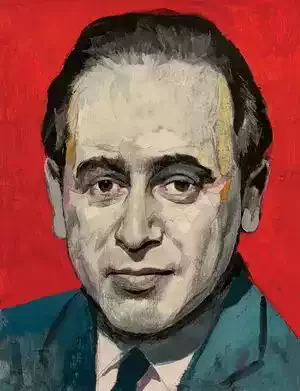
Paul Celan
Psalm
No-man kneads us again out of Earth and Loam,
no-man spirits our Dust.
No-man.
Praise to you, No-man.
For love of you
we will flower.
Moving
towards you.
A Nothing
we were, we are, we shall
be still, flowering:
the Nothing-, the
No-man’s-rose.
With
our Pistil soul-bright,
our Stamen heaven-torn,
our Corolla red
with the Violet-Word that we sang
over, O over
the thorn.
518
Henry Van Dyke
Reliance
Not to the swift, the race:
Not to the strong, the fight:
Not to the righteous, perfect grace:
Not to the wise, the light.
But often faltering feet
Come surest to the goal;
And they who walk in darkness meet
The sunrise of the soul.
A thousand times by night
The Syrian hosts have died;
A thousand times the vanquished right
Hath risen, glorified.
The truth the wise men sought
Was spoken by a child;
The alabaster box was brought
In trembling hands defiled.
Not from my torch, the gleam,
But from the stars above:
Not from my heart, life's crystal stream,
But from the depths of Love.
518

Rudyard Kipling
The Two-Sided Man
Much I owe to the Lands that grew--
More to the Lives that fed--
But most to Allah Who gave me two
Separate sides to my head.
Much I reflect on the Good and the True
In the Faiths beneath the sun,
But most to Allah Who gave me two
Sides to my head, not one.
Wesley's following, Calvin's flock,
White or yellow or bronze,
Shaman, Ju-ju or Angekok,
Minister, Mukamuk, Bonze--
Here is a health, my brothers, to you,
However your prayers are said,
And praised be Allah Who gave me two
Separate sides to my head!
I would go without shirt or shoe,
Friend, tobacco or bread,
Sooner than lose for a minute the two
Separate sides of my head!
520
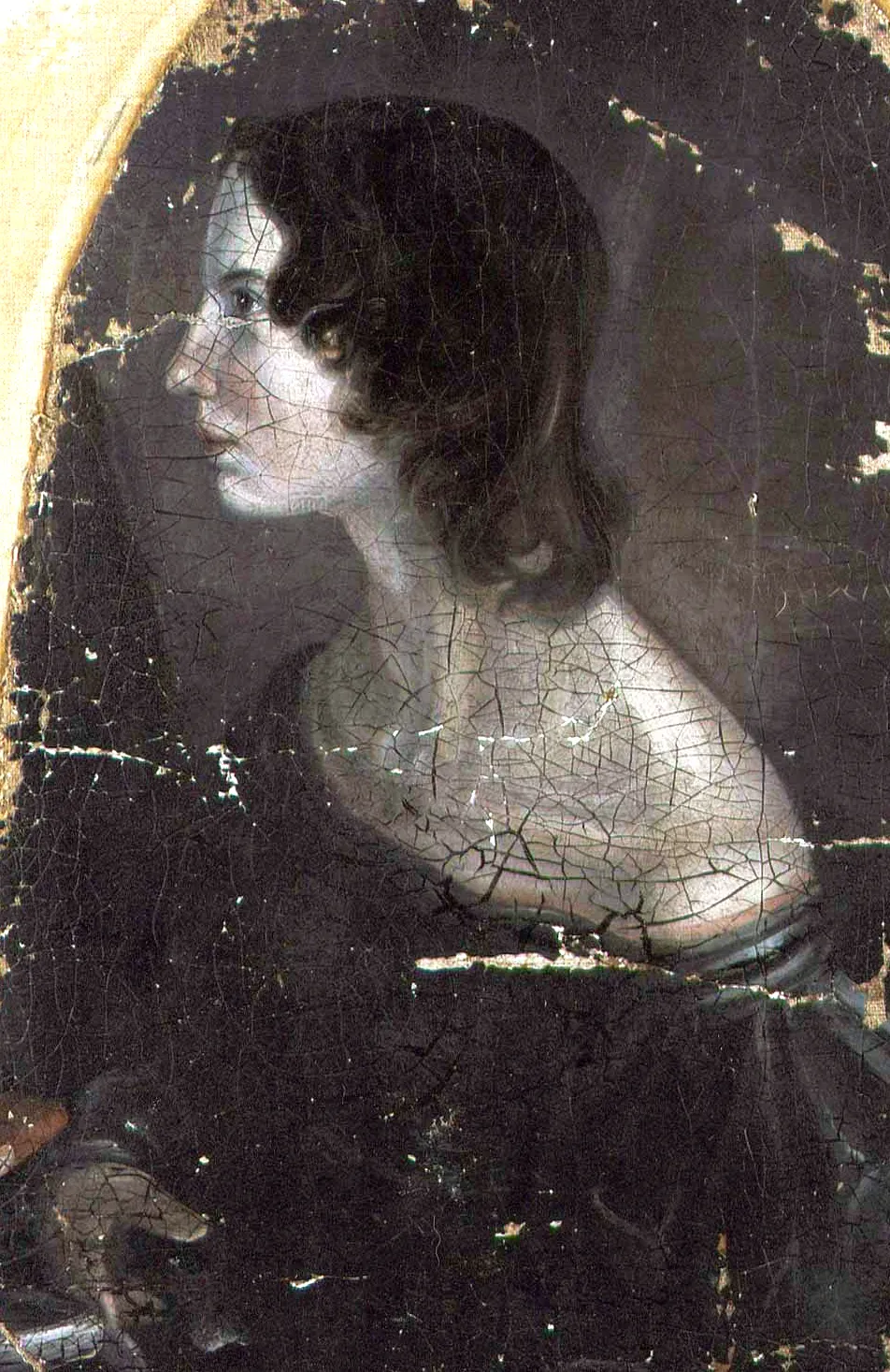
Emily Jane Brontë
My Comforter
Well hast thou spoken, and yet, not taught
A feeling strange or new;
Thou hast but roused a latent thought,
A cloud-closed beam of sunshine, brought
To gleam in open view.
Deep down, concealed within my soul,
That light lies hid from men;
Yet, glows unquenched - though shadows roll,
Its gentle ray cannot control,
About the sullen den.
Was I not vexed, in these gloomy ways
To walk alone so long?
Around me, wretches uttering praise,
Or howling o'er their hopeless days,
And each with Frenzy's tongue; -
A brotherhood of misery,
Their smiles as sad as sighs;
Whose madness daily maddened me,
Distorting into agony
The bliss before my eyes!
So stood I, in Heaven's glorious sun,
And in the glare of Hell;
My spirit drank a mingled tone,
Of seraph's song, and demon's moan;
What my soul bore, my soul alone
Within itself may tell!
Like a soft air, above a sea,
Tossed by the tempest's stir;
A thaw-wind, melting quietly
The snow-drift, on some wintry lea;
No: what sweet thing resembles thee,
My thoughtful Comforter?
And yet a little longer speak,
Calm this resentful mood;
And while the savage heart grows meek,
For other token do not seek,
But let the tear upon my cheek
Evince my gratitude!
519
Emily Jane Brontë
No Coward Soul Is Mine
No coward soul is mine,
No trembler in the world,s storm-troubled sphere:
I see Heaven's glories shine,
And Faith shines equal arming me from Fear.
O God within my breast.
Almighty ever-present Deity!
Life , that in me has rest,
As I Undying Life, have power in thee!
Vain are the thousand creeds
That move men's hearts, unutterably vain;
Worthless as withered weeds,
Or idlest froth amid the boundless main,
To waken doubt in one
Holding so fast by Thy infinity;
So surely anchored on
The steadfast rock of Immortality.
With wide-embracing love
Thy Spirit animates eternal years,
Pervades and broods above,
Changes, sustains, dissolves, creates, and rears.
Though Earth and moon were gone,
And suns and universes ceased to be,
And Thou wert left alone,
Every Existence would exist in thee.
There is not room for Death,
Nor atom that his might could render void:
Since thou art Being and Breath,
And what thou art may never be destroyed.
514

Muhammad Iqbal
The Morning Sun
Far from the ignoble strife of Man's tavern you are
The wine-cup adorning the sky's assemblage you are
The jewel which should be the pearl of the morning's bride's ear you are
The ornament which would be the pride of horizon's forehead you are
The blot of night's ink from time's page has been removed!
The star from sky like a spurious picture has been removed!
When from the roof of the sky your beauty appears
Effect of sleep's wine suddenly from eyes disappears
Perception's expanse gets filled with light
Though opens only the material eye your light
The spectacle which the eyes seek is desired
The effulgence which would open the insight is desired
The desires for freedom were not fulfilled in this life
We remained imprisoned in chains of dependence all life
The high and the low are alike for your eye
I too have longing for such a discerning eye
May my eye shedding tears in sympathy for others' woes be!
May my heart free from the prejudice of nation and customs be!
May my tongue be not bound with discrimination of color
May mankind be my nation, the whole world my country be
May secret of Nature's organization clear to my insight be
May smoke of my imagination's candle rising to the sky be
May search for secrets of opposites not make me restless!
May the Love-creating Beauty in everything appear to me!
If the rose petals get damaged by the breeze
May its pain dropping from my eye as a tear be
May the heart contain that little spark of Love's fire
The light of which may contain the secret of the Truth
May my heart not mine but the Beloved's mirror be!
May no thought in my mind except human sympathy be!
If you cannot endure the hardships of the tumultuous world
O the Great Luminary that is not the mark of greatness!
As you are not aware of your world-decorating beauty
You cannot be equal to a speck of dust at the Man's door!
The light of Man eager for the Spectacle ever remained
And you obligated to the tomorrow's morning ever remained
Longing for the Light of the Truth is only in our hearts
Abode of Lailah of desire for search is only in this litter
Opening of the difficult knot, Oh what a pleasure it is!
The pleasure of universal gain in our endless effort is!
Your bosom is unacquainted with the pain of investigation
You are not familiar with searching of the secrets of Nature
514
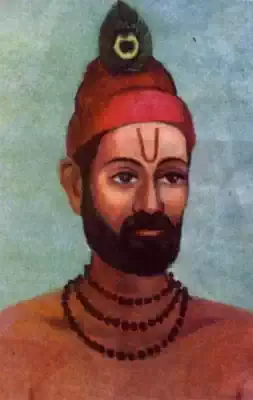
Kabir
I said to the wanting-creature inside me
I said to the wanting-creature inside me:
What is this river you want to cross?
There are no travelers on the river-road, and no road.
Do you see anyone moving about on that bank, or resting?
There is no river at all, and no boat, and no boatman.
There is no towrope either, and no one to pull it.
There is no ground, no sky, no time, no bank, no ford!
And there is no body, and no mind!
Do you believe there is some place that will
make the soul less thirsty?
In that great absence you will find nothing.
Be strong then, and enter into your own body;
there you have a solid place for your feet.
Think about it carefully!
Don't go off somewhere else!
Kabir says this: just throw away all thoughts
of imaginary things.
and stand firm in that which you are.
510

Ezra Pound
Sennin Poem By Kakuhaku
The red and green kingfishers
flash between the orchids and clover,
One bird casts its gleam on another.
Green vines hang through the high forest,
They weave a whole roof to the mountain,
The lone man sits with shut speech,
He purrs and pats the clear strings.
He throws his heart up through the sky,
He bites through the flower pistil
and brings up a fine fountain.
The red-pine-tree god looks at him and wonders.
He rides through the purple smoke to visit the sennin,
He takes 'Floating Hill' by the sleeve,
He claps his hand on the back of the great water sennin.
But you, you dam'd crowd of gnats,
Can you even tell the age of a turtle?
507

Christina Rossetti
Paradise: In A Symbol
Golden-winged, silver-winged,
Winged with flashing flame,
Such a flight of birds I saw,
Birds without a name:
Singing songs in their own tongue
(Song of songs) they came.
One to another calling,
Each answering each,
One to another calling
In their proper speech:
High above my head they wheeled,
Far out of reach.
On wings of flame they went and came
With a cadenced clang,
Their silver wings tinkled,
Their golden wings rang,
The wind it whistled through their wings
Where in Heaven they sang.
They flashed and they darted
Awhile before mine eyes,
Mounting, mounting, mounting still
In haste to scale the skies—
Birds without a nest on earth,
Birds of Paradise.
Where the moon riseth not,
Nor sun seeks the west,
There to sing their glory
Which they sing at rest,
There to sing their love-song
When they sing their best:
Not in any garden
That mortal foot hath trod,
Not in any flowering tree
That springs from earthly sod,
But in the garden where they dwell,
The Paradise of God.
508

Johann Wolfgang von Goethe
Book Of Suleika - The Reunion
CAN it be! of stars the star,
Do I press thee to my heart?
In the night of distance far,
What deep gulf, what bitter smart!
Yes, 'tis thou, indeed, at last,
Of my joys the partner dear!
Mindful, though, of sorrows past,
I the present needs must fear.
When the still-unfashion'd earth
Lay on God's eternal breast,
He ordain'd its hour of birth,
With creative joy possess'd.
Then a heavy sigh arose,
When He spake the sentence:--"Be!"
And the All, with mighty throes,
Burst into reality.
And when thus was born the light,
Darkness near it fear'd to stay,
And the elements with might
Fled on every side away;
Each on some far-distant trace,
Each with visions wild employ,
Numb, in boundless realm of space,
Harmony and feeling-void.
Dumb was all, all still and dead,
For the first time, God alone!
Then He form'd the morning-red,
Which soon made its kindness known:
It unravelled from the waste,
Bright and glowing harmony,
And once more with love was grac'd
What contended formerly.
And with earnest, noble strife,
Each its own Peculiar sought;
Back to full, unbounded life
Sight and feeling soon were brought.
Wherefore, if 'tis done, explore
How? why give the manner, name?
Allah need create no more,
We his world ourselves can frame.
So, with morning pinions bright,
To thy mouth was I impell'd;
Stamped with thousand seals by night,
Star-clear is the bond fast held.
Paragons on earth are we
Both of grief and joy sublime,
And a second sentence:--"Be!"
Parts us not a second time.
510

William Blake
Night
The sun descending in the west,
The evening star does shine;
The birds are silent in their nest,
And I must seek for mine.
The moon, like a flower,
In heaven's high bower,
With silent delight
Sits and smiles on the night.
Farewell, green fields and happy groves,
Where flocks have took delight.
Where lambs have nibbled, silent moves
The feet of angels bright;
Unseen they pour blessing,
And joy without ceasing,
On each bud and blossom,
And each sleeping bosom.
They look in every thoughtless nest,
Where birds are covered warm;
They visit caves of every beast,
To keep them all from harm.
If they see any weeping
That should have been sleeping,
They pour sleep on their head,
And sit down by their bed.
When wolves and tigers howl for prey,
They pitying stand and weep;
Seeking to drive their thirst away,
And keep them from the sheep.
But if they rush dreadful,
The angels, most heedful,
Receive each mild spirit,
New worlds to inherit.
And there the lion's ruddy eyes
Shall flow with tears of gold,
And pitying the tender cries,
And walking round the fold,
Saying, 'Wrath, by His meekness,
And, by His health, sickness
Is driven away
From our immortal day.
'And now beside thee, bleating lamb,
I can lie down and sleep;
Or think on Him who bore thy name,
Graze after thee and weep.
For, washed in life's river,
My bright mane for ever
Shall shine like the gold
As I guard o'er the fold.'
503

Lord Byron
Elegy On Newstead Abbey
'It is the voice of years that are gone!
they roll before me with all their deeds.' — OSSIAN
Newstead! fastfalling,
onceresplendent
dome!
Religion's shrine! repentant HENRY's pride!
Of warriors, monks, and dames the cloister'd tomb,
Whose pensive shades around thy ruins glide,
Hail to thy pile! more honour'd in thy fall
Than modern mansions in their pillar'd state;
Proudly majestic frowns thy vaulted hall,
Scowling defiance on the blasts of fate.
No mailclad
serfs, obedient to their lord,
In grim array the crimson cross demand;
Or gay assemble round the festive board
Their chief's retainers, an immortal band:
Else might inspiting Fancy's magic eye
Retrace their progress through the lapse of time,
Marking each ardent youth, ordaln'd to die,
A votive pilgrim in Judea's clime.
But not from thee, dark pile! departs the chief;
His feudal realm in other regions lay:
In thee the wounded conscience courts relief,
Retiring from the garish blare of day.
Yes! in thy gloomy cells and shades profound
The monk abjured a world he ne'er could view;
Or bloodstain'd
guilt repenting solace found,
Or innocence from stern oppression flew.
A monarch bade thee from that wild arise,
Where Sherwood's outlaws once were wont to prowl;
And Superstition's crimes, of various dyes,
Sought shelter in the priest's protecting cowl.
Where now the grass exhales a murky dew,
The humid pail of lifeextinguish'd
clay,
In sainted fame the sacred fathers grew,
Nor raised their pious voices but to pray.
Where now the bats their wavering wings extend
Soon as the gloaming spreads her waning shade,
The choir did oft their mingling vespers blend,
Or matin orisons to Mary pald.
Years roll on years; to ages, ages yield;
Abbots to abbots, in a line, succeed;
Religion's charter their protecting shield,
Till royal sacrilege their doom decreed,
One holy HENRY rear'd the Gothic walls,
And bade the pious inmates rest in peace
Another HENRY the kind gift recalls,
And bids devotion's hallow'd echos cease.
Vain is each threat or supplicating prayer;
He drives them exiles from their blest abode,
To roam a dreary world in deep despair —
No friend, no home, no refuge, but their God.
Hark how the hall, resounding to the strain
Shakes with the martial music's novel din!
The heralds of a warrior's haughty reign,
High crested banners wave thy wails within.
Of changing sentinels the distant hum,
The mirth of feasts, the clang of burnish'd arms,
The braying trumpet and the hoarser drum,
Unite in concert with increased alarms.
An abbey once, a regal fortress now,
Encircled by insulting rebel powers,
War's dread machines o'erhang thy threat'ning brow,
And dart destruction in sulphureous showers.
Ah vain defence! the hostile traitor's siege,
Though oft repulsed, by guile o'ercomes
the brave;
His thronging foes oppress the faithful liege,
Rebellion's reeking standards o'er him wave.
Not unavenged the raging baron yields;
The blood of traitors smears the purple plain
Unconqu'r'd still, his falchion there he wields,
And days of glory yet for him remain.
Still in that hour the warrior wish'd to strew
Selfgather'd
laurel on a selfsought
grave;
But Charles' protecting genius hither flew,
The monarch's friend, the monarch's hope, to save.
Trembling, she snatch'd him ftom th' unequal strife,
In other fields the torrent to repel;
For nobler combats, here reservedhis life,
To lead the hand where godlike FALKLAND fell
From thee, poor pile! to lawless plunder given,
While dying groans their painful requiem sound,
Far different incense now ascends to heaven,
Such victims wallow on the gory ground.
There many a pale and ruthless robber's corse,
Noisome and ghast, defiles thy sacred sod;
O'er mingling man, and horse commix'd with horse,
Corruption's heap, the savage spoilers trod.
Graves, long with rank and sighing weeds o'erspread,
Ransack'd, resign perforce their mortal mould:
From ruffian fangs escape not e'en the dead,
Raked from repose in search of buried gold.
Hush'd is the harp, unstrung the warlike lyre'
The minstrel's palsied hand reclines in death;
No more he strikes the quivering chords with fire,
Or sings the glories of the martial wreath.
At length the sated murderers, gorged with prey,
Retire: the clamour of the fight is o'er;
Silence again resumes her awful sway,
And sable Horror guards the massy door.
Here Desolation holds her dreary court:
What satellites declare her dismal reign!
Shrieking their dirge, illomen'd
birds resort,
To flit their vigils in the hoary fane.
Soon a new morn's restoring beams dispel
The clouds of anarchy from Britain's skies;
The fierce usurper seeks his native hell,
And Nature triumphs as the tyrant dies.
With storms she welcomes his expiring groans
Whirlwinds, responsive, greet his labouring breath;
Earth shudders as her caves receive his bones,
Loathing the offering of so dark a death.
The legal ruler now resumes the helm,
He guides through gentle seas the prow of state
Hope cheers, with wonted smiles, the peaceful realm,
And heals the bleeding wounds of wearied hate.
The gloomy tenants, Newstead! of thy cells,
Howling, resign their violated nest;
Again the master on his tenure dwells,
Enjoy'd, from absence, with enraptured zest.
Vassals, within thy hospitable pale,
Loudly carousing, bless their lord's return.
Culture again adorns the gladdening vale,
And matrons, once lamenting, cease to mourn.
A thousand songs on tuneful echo float,
Unwonted foliage mantles o'er the trees;
And hark! the horns proclalm a mellow note,
The hunters' cry hangs lengthening on the breeze.
Beneath their coursers' hoofs the valleys shake:
What fears, what anxious hopes attend the chase!
The dying stag seeks refuge in the lake;
Exulting shouts announce the finish'd race.
Ah happy days! too happy to endure!
Such simple sports our plain forefathers knew
No splendid vices glitter'd to allure;
Their joys were many, as their cares were few.
From these descending, sons to sires succeed
Time steals along, and Death uprears the dart;
Another chief impels the foaming steed,
Another crowd pursue the panting hart.
Newstead! what saddening change of scene is thine!
Thy yawning arch betokens slow decay;
The last and youngest of a noble line
Now holds thy mouldering turrets in his sway.
Deserted now, he scans thy gray worn towers;
Thy vaults, where dead of feudal ages sleep;
Thy cloisters, pervious to the wintry showers
These, these he views, and views them but to weep.
Yet are his tears no emblem of regret:
Cherish'd affection only bids them flow.
Pride, hope, and love forbid him to forget
But warm his bosom with irnpassion'd glow.
Yet he prefers thee to the gilded domes
Or gewgaw grottos of the vainly great,
Yet lingers 'mid thy damp and mossy tombs,
Nor breathes a murmur 'gainst the will of fate.
Haply thy sun, emerging, yet may shine,
Thee to irradiate with meridian ray;
Hours splendid as the past may still be thine,
And bless thy future as thy former day.
503

John Keats
The Eve Of Saint Mark. A Fragment
Upon a Sabbath-day it fell;
Twice holy was the Sabbath-bell
That call'd the folk to evening prayer;
The city streets were clean and fair
From wholesome drench of April rains;
And, on the western window panes,
The chilly sunset faintly told
Of unmatur'd green vallies cold,
Of the green thorny bloomless hedge,
Of rivers new with spring-tide sedge,
Of primroses by shelter'd rills,
And daisies on the aguish hills.
Twice holy was the Sabbath-bell:
The silent streets were crowded well
With staid and pious companies,
Warm from their fire-side orat'ries,
And moving with demurest air
To even-song and vesper prayer.
Each arched porch and entry low
Was fill'd with patient folk and slow,
With whispers hush, and shuffling feet,
While play'd the organ loud and sweet.
The bells had ceas'd, the prayers begun,
And Bertha had not yet half done
A curious volume, patch'd and torn,
That all day long, from earliest morn,
Had taken captive her two eyes
Among its golden broideries;
Perplex'd her with a thousand things,--
The stars of Heaven, and angels' wings,
Martyrs in a fiery blaze,
Azure saints in silver rays,
Moses' breastplate, and the seven
Candlesticks John saw in Heaven,
The winged Lion of Saint Mark,
And the Covenantal Ark
With its many mysteries,
Cherubim and golden mice.
Bertha was a maiden fair,
Dwelling in the old Minster-square;
From her fire-side she could see
Sidelong its rich antiquity,
Far as the Bishop's garden-wall;
Where sycamores and elm-trees tall,
Full-leav'd, the forest had outstript,
By no sharp north-wind ever nipt,
So shelter'd by the mighty pile.
Bertha arose, and read awhile
With forehead 'gainst the window-pane.
Again she try'd, and then again,
Until the dusk eve left her dark
Upon the legend of St. Mark.
From plaited lawn-frill, fine and thin,
She lifted up her soft warm chin,
With aching neck and swimming eyes,
And daz'd with saintly imageries.
All was gloom, and silent all,
Save now and then the still foot-fall
Of one returning homewards late
Past the echoing minster-gate.
The clamorous daws, that all the day
Above tree-tops and towers play,
Pair by pair had gone to rest,
Each in its ancient belfry-nest,
Where asleep they fall betimes
To music of the drowsy chimes.
All was silent, all was gloom
Abroad and in the homely room:
Down she sat, poor cheated soul!
And struck a lamp from the dismal coal;
Lean'd forward with bright drooping hair
And slant book full against the glare.
Her shadow, in uneasy guise,
hover'd about, a giant size,
On ceiling-beam and old oak chair,
The parrot's cage, and panel square;
And the warm angled winter screen,
On which were many monsters seen,
Call'd doves of Siam, Lima mice,
And legless birds of Paradise,
Macaw, and tender Avadavat,
And silken-furr'd Angora cat.
Untir'd she read, her shadow still
Glower'd about as it would fill
The room with wildest forms and shades,
As though some ghostly queen of spades
Had come to mock behind her back,
And dance, and ruffle her garments black.
Untir'd she read the legend page
Of holy Mark, from youth to age,
On land, on sea, in pagan chains,
Rejoicing for his many pains.
Sometimes the learned Eremite
With golden star, or dagger bright,
Referr'd to pious poesies
Written in smallest crow-quill size
Beneath the text; and thus the rhyme
Was parcell'd out from time to time:
---- 'Als writith he of swevenis,
Men han beforne they wake in bliss,
Whanne that hir friendes thinke him bound
In crimped shroude farre under grounde;
And how a litling child mote be
A saint er its nativitie,
Gif that the modre (God her blesse!)
Kepen in solitarinesse,
And kissen devoute the holy croce.
Of Goddes love, and Sathan's force,--
He writith; and thinges many mo
Of swiche thinges I may not show.
Bot I must tellen verilie
Somdel of Sainte Cicilie,
And chieftie what he auctorethe
Of Sainte Markis life and dethe:'
At length her constant eyelids come
Upon the fervent martyrdom;
Then lastly to his holy shrine,
Exalt amid the tapers' shine
At Venice,--
504
Rudyard Kipling
Buddha at Kamakura
Oye who treated the Narrow Way
By Tophet-flare to Judgment Day,
Be gentle when "the heathen" pray
To Buddha at Kamakura!
To him the Way, the Law, apart,
Whom Maya held beneath her heart,
Ananda's Lord, the Bodhisat,
The Buddha of Kamakura.
For though he neither burns nor sees,
Nor hears ye thank your Deities,
Ye have not sinned with such as these,
His children at Kamakura,
Yet spare us still the Western joke
When joss-sticks turn to scented smoke
The little sins of little folk
That worship at Kamakura --
The grey-robed, gay-sashed butterflies
That flit beneath the Master's eyes.
He is beyond the Mysteries
But loves them at Kamakura.
And whoso will, from Pride released,
Contemning neither creed nor priest,
May feel the Soul of all the East
About him at Kamakura.
Yea, every tale Ananda heard,
Of birth as fish or beast or bird,
While yet in lives the Master stirred,
The warm wind brings Kamakura.
Till drowsy eyelids seem to see
A-flower 'neath her golden htee
The Shwe-Dagon flare easterly
From Burmah to Kamakura,
And down the loaded air there comes
The thunder of Thibetan drums,
And droned -- "Om mane padme hums" --
A world's-width from Kamakura.
Yet Brahmans rule Benares still,
Buddh-Gaya's ruins pit the hill,
And beef-fed zealots threaten ill
To Buddha and Kamakura.
A tourist-show, a legend told,
A rusting bulk of bronze and gold,
So much, and scarce so much, ye hold
The meaning of Kamakura?
But when the morning prayer is prayed,
Think, ere ye pass to strife and trade,
Is God in human image made
No nearer than Kamakura?
497

Walt Whitman
God
THOUGHT of the Infinite--the All!
Be thou my God.
Lover Divine, and Perfect Comrade!
Waiting, content, invisible yet, but certain,
Be thou my God.
Thou--thou, the Ideal Man!
Fair, able, beautiful, content, and loving,
Complete in Body, and dilate in Spirit,
Be thou my God.
O Death--(for Life has served its turn;)
Opener and usher to the heavenly mansion!
Be thou my God.
Aught, aught, of mightiest, best, I see, conceive, or know,
(To break the stagnant tie--thee, thee to free, O Soul,)
Be thou my God.
Or thee, Old Cause, when'er advancing;
All great Ideas, the races' aspirations,
All that exalts, releases thee, my Soul!
All heroisms, deeds of rapt enthusiasts,
Be ye my Gods!
Or Time and Space!
Or shape of Earth, divine and wondrous!
Or shape in I myself--or some fair shape, I, viewing, worship,
Or lustrous orb of Sun, or star by night:
Be ye my Gods.
Be thou my God.
Lover Divine, and Perfect Comrade!
Waiting, content, invisible yet, but certain,
Be thou my God.
Thou--thou, the Ideal Man!
Fair, able, beautiful, content, and loving,
Complete in Body, and dilate in Spirit,
Be thou my God.
O Death--(for Life has served its turn;)
Opener and usher to the heavenly mansion!
Be thou my God.
Aught, aught, of mightiest, best, I see, conceive, or know,
(To break the stagnant tie--thee, thee to free, O Soul,)
Be thou my God.
Or thee, Old Cause, when'er advancing;
All great Ideas, the races' aspirations,
All that exalts, releases thee, my Soul!
All heroisms, deeds of rapt enthusiasts,
Be ye my Gods!
Or Time and Space!
Or shape of Earth, divine and wondrous!
Or shape in I myself--or some fair shape, I, viewing, worship,
Or lustrous orb of Sun, or star by night:
Be ye my Gods.
499

Kazi Nazrul Islam
You are always in my thoughts
You are always in my thoughts, oh my Lord.
I vainly look for you outside my heart.
You dwell inside me like life like the soul
You laugh while I erect a temple and install an Idol there
Like the wind, like light you permeate the world
Like the perfume ofa flower you encompass one's Being.
You are mercurial you are formless
I constantly see the miracle you unveil.
I am a partner day and night in your hide and seek Game.
[Original: Antore tumi acho chirodin; Translation: Abu Rushd]
499

Rabindranath Tagore
Salutation
In one salutation to thee, my God,
let all my senses spread out and touch this world at thy feet.
Like a rain-cloud of July
hung low with its burden of unshed showers
let all my mind bend down at thy door in one salutation to thee.
Let all my songs gather together their diverse strains into a single current
and flow to a sea of silence in one salutation to thee.
Like a flock of homesick cranes flying night and day
back to their mountain nests
let all my life take its voyage to its eternal home
in one salutation to thee.
497

Elizabeth Barrett Browning
Now he muses deep the meaning of the Heaven-words as they come.
Speak not! he is consecrated--Breathe
no breath across his eyes.
Lifted up and separated,
On the hand of God he lies,
In a sweetness beyond touching---held in cloistral sanctities.
Could ye bless him---father---mother ?
Bless the dimple in his cheek?
Dare ye look at one another,
And the benediction speak?
Would ye not break out in weeping, and confess yourselves too weak?
He is harmless---ye are sinful,--Ye
are troubled---he, at ease:
From his slumber, virtue winful
Floweth outward with increase---
Dare not bless him! but be blessed by his peace---and go in peace.
491
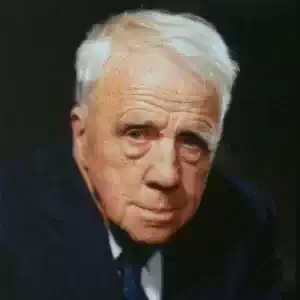
Robert Frost
Devotion
The heart can think of no devotion
Greater than being shore to ocean -
Holding the curve of one position,
Counting an endless repetition.
Greater than being shore to ocean -
Holding the curve of one position,
Counting an endless repetition.
494
Rudyard Kipling
Mulholland's Contract
The fear was on the cattle, for the gale was on the sea,
An' the pens broke up on the lower deck an' let the creatures free --
An' the lights went out on the lower deck, an' no one near but me.
I had been singin' to them to keep 'em quiet there,
For the lower deck is the dangerousest, requirin' constant care,
An' give to me as the strongest man, though used to drink and swear.
I see my chance was certain of bein' horned or trod,
For the lower deck was packed with steers thicker'n peas in a pod,
An' more pens broke at every roll -- so I made a Contract with God.
An' by the terms of the Contract, as I have read the same,
If He got me to port alive I would exalt His Name,
An' praise His Holy Majesty till further orders came.
He saved me from the cattle an' He saved me from the sea,
For they found me 'tween two drownded ones where the roll had landed me --
An' a four-inch crack on top of my head, as crazy as could be.
But that were done by a stanchion, an' not by a bullock at all,
An' I lay still for seven weeks convalessing of the fall,
An' readin' the shiny Scripture texts in the Seaman's Hospital.
An' I spoke to God of our Contract, an' He says to my prayer:
"I never puts on My ministers no more than they can bear.
So back you go to the cattle-boats an' preach My Gospel there.
"For human life is chancy at any kind of trade,
But most of all, as well you know, when the steers are mad-afraid;
So you go back to the cattle-boats an' preach 'em as I've said.
"They must quit drinkin' an' swearin', they mustn't knife on a blow,
They must quit gamblin' their wages, and you must preach it so;
For now those boats are more like Hell than anything else I know."
I didn't want to do it, for I knew what I should get,
An' I wanted to preach Religion, handsome an' out of the wet,
But the Word of the Lord were lain on me, an' I done what I was set.
I have been smit an' bruis]\ed, as warned would be the case,
An' turned my cheek to the smiter exactly as Scripture says;
But following that, I knocked him down an' led him up to Grace.
An' we have preaching on Sundays whenever the sea is calm,
An' I use no knife or pistol an' I never take no harm,
For the Lord abideth back of me to guide my fighting arm.
An' I sign for four-pound-ten a month and save the money clear,
An' I am in charge of the lower deck, an' I never lose a steer;
An' I believe in Almighty God an' preach His Gospel here.
The skippers say I'm crazy, but I can prove 'em wrong,
For I am in charge of the lower deck with all that doth belong --
Which they would not give to a lunatic, and the competition so strong!
492
William Blake
I Saw a Chapel
I saw a chapel all of gold
That none did dare to enter in,
And many weeping stood without,
Weeping, mourning, worshipping.
I saw a serpent rise between
The white pillars of the door,
And he forc'd and forc'd and forc'd,
Down the golden hinges tore.
And along the pavement sweet,
Set with pearls and rubies bright,
All his slimy length he drew
Till upon the altar white
Vomiting his poison out
On the bread and on the wine.
So I turn'd into a sty
And laid me down among the swine.
492
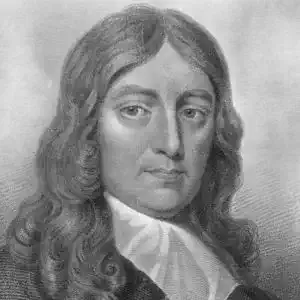
John Milton
Psalm 08
Aug. 14. 1653.
O Jehovah our Lord how wondrous great
And glorious is thy name through all the earth?
So as above the Heavens thy praise to set
Out of the tender mouths of latest bearth,
Out of the mouths of babes and sucklings thou
Hast founded strength because of all thy foes
To stint th'enemy, and slack th'avengers brow
That bends his rage thy providence to oppose.
When I behold thy Heavens, thy Fingers art,
The Moon and Starrs which thou so bright hast set,
In the pure firmament, then saith my heart,
O What is man that thou remembrest yet,
And think'st upon him; or of man begot
That him thou visit'st and of him art found;
Scarce to be less then Gods, thou mad'st his lot,
With honour and with state thou hast him crown'd.
O're the works of thy hand thou mad'st him Lord,
Thou hast put all under his lordly feet,
All Flocks, and Herds, by thy commanding word,
All beasts that in the field or forrest meet.
Fowl of the Heavens, and Fish that through the wet
Sea-paths in shoals do slide. And know no dearth.
O Jehovah our Lord how wondrous great
And glorious is thy name through all the earth.
O Jehovah our Lord how wondrous great
And glorious is thy name through all the earth?
So as above the Heavens thy praise to set
Out of the tender mouths of latest bearth,
Out of the mouths of babes and sucklings thou
Hast founded strength because of all thy foes
To stint th'enemy, and slack th'avengers brow
That bends his rage thy providence to oppose.
When I behold thy Heavens, thy Fingers art,
The Moon and Starrs which thou so bright hast set,
In the pure firmament, then saith my heart,
O What is man that thou remembrest yet,
And think'st upon him; or of man begot
That him thou visit'st and of him art found;
Scarce to be less then Gods, thou mad'st his lot,
With honour and with state thou hast him crown'd.
O're the works of thy hand thou mad'st him Lord,
Thou hast put all under his lordly feet,
All Flocks, and Herds, by thy commanding word,
All beasts that in the field or forrest meet.
Fowl of the Heavens, and Fish that through the wet
Sea-paths in shoals do slide. And know no dearth.
O Jehovah our Lord how wondrous great
And glorious is thy name through all the earth.
491
Rudyard Kipling
The Disciple
He that hath a Gospel
To loose upon Mankind,
Though he serve it utterly--
Body, soul and mind--
Though he go to Calvary
Daily for its gain--
It is His Disciple
Shall make his labour vain.
He that hath a Gospel
For all earth to own--
Though he etch it on the steel,
Or carve it on the stone--
Not to be misdoubted
Through the after-days--
It is His Disciple
Shall read it many ways.
It is His Disciple
(Ere Those Bones are dust )
Who shall change the Charter,
Who shall split the Trust--
Amplify distinctions,
Rationalize the Claim;
Preaching that the Master
Would have done the same.
It is His Disciple
Who shall tell us how
Much the Master would have scrapped
Had he lived till now--
What he would have modified
Of what he said before.
It is His Disciple
Shall do this and more....
He that hath a Gospel
Whereby Heaven is won
( Carpenter, or cameleer,
Or Maya's dreaming son ),
Many swords shall pierce Him,
Mingling blood with gall;
But His Own Disciple
Shall wound Him worst of all!
492
Rabindranath Tagore
Poems On Man
Man goes into the noisy crowd
to drown his own clamour of silence.
Man is immortal; therefore he must die endlessly.
For life is a creative idea;
it can only find itself in changing forms.
Man's abiding happiness is not in getting anything
but in giving himself up to what is greater than himself,
to ideas which are larger than his individual life,
the idea of his country,
of humanity,
of God.
489