
Children

Robert W. Service
Baby Sitter
From torrid heat to frigid cold
I've rovered land and sea;
And now, with halting heart I hold
My grandchild on my knee:
Yet while I've eighty years all told,
Of moons she has but three.
She sleeps, that fragile miniature
Of future maidenhood;
She will be wonderful, I'm sure,
As over her I brood;
She is so innocent, so pure,
I know she will be good.
My way I've won from woe to weal,
And hard has been the fight;
Yet in my ingle-nook I feel
A wondrous peace to-night;
And over me serenely steal
Warm waves of love and light.
"What sloppy stuff!" I hear you say.
"Give us a lusty song."
Alas! I'm bent and gnarled and grey,-My
life may not be long:
Yet let its crown of glory be
This child upon me knee.
230

William Wordsworth
Ruth
When Ruth was left half desolate,
Her Father took another Mate;
And Ruth, not seven years old,
A slighted child, at her own will
Went wandering over dale and hill,
In thoughtless freedom, bold.
And she had made a pipe of straw,
And music from that pipe could draw
Like sounds of winds and floods;
Had built a bower upon the green,
As if she from her birth had been
An infant of the woods.
Beneath her father's roof, alone
She seemed to live; her thoughts her own;
Herself her own delight;
Pleased with herself, nor sad, nor gay;
And, passing thus the live-long day,
She grew to woman's height.
There came a Youth from Georgia's shore--
A military casque he wore,
With splendid feathers drest;
He brought them from the Cherokees;
The feathers nodded in the breeze,
And made a gallant crest.
From Indian blood you deem him sprung:
But no! he spake the English tongue,
And bore a soldier's name;
And, when America was free
From battle and from jeopardy,
He 'cross the ocean came.
With hues of genius on his cheek
In finest tones the Youth could speak:
--While he was yet a boy,
The moon, the glory of the sun,
And streams that murmur as they run,
Had been his dearest joy.
He was a lovely Youth! I guess
The panther in the wilderness
Was not so fair as he;
And, when he chose to sport and play,
No dolphin ever was so gay
Upon the tropic sea.
Among the Indians he had fought,
And with him many tales he brought
Of pleasure and of fear;
Such tales as told to any maid
By such a Youth, in the green shade,
Were perilous to hear.
He told of girls--a happy rout!
Who quit their fold with dance and shout,
Their pleasant Indian town,
To gather strawberries all day long;
Returning with a choral song
When daylight is gone down.
He spake of plants that hourly change
Their blossoms, through a boundless range
Of intermingling hues;
With budding, fading, faded flowers
They stand the wonder of the bowers
From morn to evening dews.
He told of the magnolia, spread
High as a cloud, high over head!
The cypress and her spire;
--Of flowers that with one scarlet gleam
Cover a hundred leagues, and seem
To set the hills on fire.
The Youth of green savannahs spake,
And many an endless, endless lake,
With all its fairy crowds
Of islands, that together lie
As quietly as spots of sky
Among the evening clouds.
"How pleasant," then he said, "it were
A fisher or a hunter there,
In sunshine or in shade
To wander with an easy mind;
And build a household fire, and find
A home in every glade!
"What days and what bright years! Ah me!
Our life were life indeed, with thee
So passed in quiet bliss,
And all the while," said he, "to know
That we were in a world of woe,
On such an earth as this!"
And then he sometimes interwove
Fond thoughts about a father's love
"For there," said he, "are spun
Around the heart such tender ties,
That our own children to our eyes
Are dearer than the sun.
"Sweet Ruth! and could you go with me
My helpmate in the woods to be,
Our shed at night to rear;
Or run, my own adopted bride,
A sylvan huntress at my side,
And drive the flying deer!
"Beloved Ruth!"--No more he said,
The wakeful Ruth at midnight shed
A solitary tear:
She thought again--and did agree
With him to sail across the sea,
And drive the flying deer.
"And now, as fitting is and right,
We in the church our faith will plight,
A husband and a wife."
Even so they did; and I may say
That to sweet Ruth that happy day
Was more than human life.
Through dream and vision did she sink,
Delighted all the while to think
That on those lonesome floods,
And green savannahs, she should share
His board with lawful joy, and bear
His name in the wild woods.
But, as you have before been told,
This Stripling, sportive, gay, and bold,
And, with his dancing crest,
So beautiful, through savage lands
Had roamed about, with vagrant bands
Of Indians in the West.
The wind, the tempest roaring high,
The tumult of a tropic sky,
Might well be dangerous food
For him, a Youth to whom was given
So much of earth--so much of heaven,
And such impetuous blood.
Whatever in those climes he found
Irregular in sight or sound
Did to his mind impart
A kindred impulse, seemed allied
To his own powers, and justified
The workings of his heart.
Nor less, to feed voluptuous thought,
The beauteous forms of nature wrought,
Fair trees and gorgeous flowers;
The breezes their own languor lent;
The stars had feelings, which they sent
Into those favoured bowers.
Yet, in his worst pursuits, I ween
That sometimes there did intervene
Pure hopes of high intent:
For passions linked to forms so fair
And stately, needs must have their share
Of noble sentiment.
But ill he lived, much evil saw,
With men to whom no better law
Nor better life was known;
Deliberately, and undeceived,
Those wild men's vices he received,
And gave them back his own.
His genius and his moral frame
Were thus impaired, and he became
The slave of low desires:
A Man who without self-control
Would seek what the degraded soul
Unworthily admires.
And yet he with no feigned delight
Had wooed the Maiden, day and night
Had loved her, night and morn:
What could he less than love a Maid
Whose heart with so much nature played?
So kind and so forlorn!
Sometimes, most earnestly, he said,
"O Ruth! I have been worse than dead;
False thoughts, thoughts bold and vain,
Encompassed me on every side
When I, in confidence and pride,
Had crossed the Atlantic main.
"Before me shone a glorious world--
Fresh as a banner bright, unfurled
To music suddenly:
I looked upon those hills and plains,
And seemed as if let loose from chains,
To live at liberty.
"No more of this; for now, by thee
Dear Ruth! more happily set free
With nobler zeal I burn;
My soul from darkness is released,
Like the whole sky when to the east
The morning doth return."
Full soon that better mind was gone;
No hope, no wish remained, not one,--
They stirred him now no more;
New objects did new pleasure give,
And once again he wished to live
As lawless as before.
Meanwhile, as thus with him it fared,
They for the voyage were prepared,
And went to the sea-shore,
But, when they thither came the Youth
Deserted his poor Bride, and Ruth
Could never find him more.
God help thee, Ruth!--Such pains she had,
That she in half a year was mad,
And in a prison housed;
And there, with many a doleful song
Made of wild words, her cup of wrong
She fearfully caroused.
Yet sometimes milder hours she knew,
Nor wanted sun, nor rain, nor dew,
Nor pastimes of the May;
--They all were with her in her cell;
And a clear brook with cheerful knell
Did o'er the pebbles play.
When Ruth three seasons thus had lain,
There came a respite to her pain;
She from her prison fled;
But of the Vagrant none took thought;
And where it liked her best she sought
Her shelter and her bread.
Among the fields she breathed again:
The master-current of her brain
Ran permanent and free;
And, coming to the Banks of Tone,
There did she rest; and dwell alone
Under the greenwood tree.
The engines of her pain, the tools
That shaped her sorrow, rocks and pools,
And airs that gently stir
The vernal leaves--she loved them still;
Nor ever taxed them with the ill
Which had been done to her.
A Barn her 'winter' bed supplies;
But, till the warmth of summer skies
And summer days is gone,
(And all do in this tale agree)
She sleeps beneath the greenwood tree,
And other home hath none.
An innocent life, yet far astray!
And Ruth will, long before her day,
Be broken down and old:
Sore aches she needs must have! but less
Of mind, than body's wretchedness,
From damp, and rain, and cold.
If she is prest by want of food,
She from her dwelling in the wood
Repairs to a road-side;
And there she begs at one steep place
Where up and down with easy pace
The horsemen-travellers ride.
That oaten pipe of hers is mute,
Or thrown away; but with a flute
Her loneliness she cheers:
This flute, made of a hemlock stalk,
At evening in his homeward walk
The Quantock woodman hears.
I, too, have passed her on the hills
Setting her little water-mills
By spouts and fountains wild--
Such small machinery as she turned
Ere she had wept, ere she had mourned,
A young and happy Child!
Farewell! and when thy days are told,
Ill-fated Ruth, in hallowed mould
Thy corpse shall buried be,
For thee a funeral bell shall ring,
And all the congregation sing
A Christian psalm for thee.
229

Spike Milligan
The Soldiers at Lauro
Young are our dead
Like babies they lie
The wombs they blest once
Not healed dry
And yet - too soon
Into each space
A cold earth falls
On colder face.
Quite still they lie
These fresh-cut reeds
Clutched in earth
Like winter seeds
But they will not bloom
When called by spring
To burst with leaf
And blossoming
They sleep on
In silent dust
As crosses rot
And helmets rust.
229

Christina Rossetti
Our Little Baby Fell Asleep
Our little baby fell asleep,
And may not wake again
For days and days, and weeks and weeks;
But then he'll wake again,
And come with his own pretty look,
And kiss Mamma again.
And may not wake again
For days and days, and weeks and weeks;
But then he'll wake again,
And come with his own pretty look,
And kiss Mamma again.
223
Christina Rossetti
I Have A Poll Parrot
I have a Poll parrot,
And Poll is my doll,
And my nurse is Polly,
And my sister Poll.
‘Polly!’ cried Polly,
‘Don't tear Polly, dolly’ -
While soft-hearted Poll
Trembled for the doll.
And Poll is my doll,
And my nurse is Polly,
And my sister Poll.
‘Polly!’ cried Polly,
‘Don't tear Polly, dolly’ -
While soft-hearted Poll
Trembled for the doll.
225
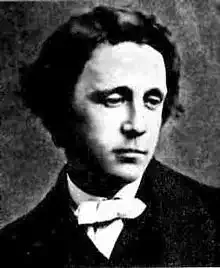
Lewis Carroll
Speak Roughly to Your Little Boy
And with that she
began nursing her child again, singing a sort of
lullaby to it as she did so, and giving it a violent
shake at the end of every line:
"Speak roughly to your little boy,
And beat him when he sneezes;
He only does it to annoy,
Because he knows it teases."CHORUS
(in which the cook and the baby joined): "
Wow! wow! wow!"While the Duchess
sang the second verse of
the song, she kept tossing the baby violently up
and down, and the poor little thing howled so,
that Alice could hardly hear the words:
"I speak severely to my boy,
I beat him when he sneezes;
For he can thoroughly enjoy
The pepper when he pleases!" CHORUS"Wow! wow! wow!"
214
Robert W. Service
My Will
I've made my Will. I don't believe
In luxury and wealth;
And to those loving ones who grieve
My age and frailing health
I give the meed to soothe their ways
That they may happy be,
And pass serenely all their days
In snug security.
That duty done, I leave behind
The all I have to give
To crippled children and the blind
Who lamentably live;
Hoping my withered hand may freight
To happiness a few
Poor innocents whom cruel fate
Has cheated of their due.
A am no grey philanthropist,
Too humble is my lot
Yet how I'm glad to give the grist
My singing mill has brought.
For I have had such lyric days,
So rich, so full, so sweet,
That I with gratitude and praise
Would make my life complete.
I'VE MADE MY WILL: now near the end,
At peace with all mankind,
To children lame I would be friend,
And brother to the blind . . .
And if there be a God, I pray
He bless my last bequest,
And in His love and pity say:
"Good servant,--rest!"
214
William Wordsworth
Foresight
That is work of waste and ruin--
Do as Charles and I are doing!
Strawberry-blossoms, one and all,
We must spare them--here are many:
Look at it--the flower is small,
Small and low, though fair as any:
Do not touch it! summers two
I am older, Anne, than you.
Pull the primrose, sister Anne!
Pull as many as you can.
--Here are daisies, take your fill;
Pansies, and the cuckoo-flower:
Of the lofty daffodil
Make your bed, or make your bower;
Fill your lap, and fill your bosom;
Only spare the strawberry-blossom!
Primroses, the Spring may love them--
Summer knows but little of them:
Violets, a barren kind,
Withered on the ground must lie;
Daisies leave no fruit behind
When the pretty flowerets die;
Pluck them, and another year
As many will be blowing here.
God has given a kindlier power
To the favoured strawberry-flower.
Hither soon as spring is fled
You and Charles and I will walk;
Lurking berries, ripe and red,
Then will hang on every stalk,
Each within its leafy bower;
And for that promise spare the flower!
216
Robert W. Service
Maids In May
Three maids there were in meadow bright,
The eldest less then seven;
Their eyes were dancing with delight,
And innocent as Heaven.
Wild flowers they wound with tender glee,
Their cheeks with rapture rosy;
All radiant they smiled at me,
When I besought a posy.
She gave me a columbine,
And one a poppy brought me;
The tiniest, with eyes ashine,
A simple daisy sought me.
And as I went my sober way,
I heard their careless laughter;
Their hearts too happy with to-day
To care for what comes after.
. . . . . . .
That's long ago; they're gone, all three,
To walk amid the shadows;
Forgotten is their lyric glee
In still and sunny meadows.
For Columbine loved life too well,
And went adventure fairing;
And sank into the pit of hell,
And passed but little caring.
While Poppy was a poor man's wife,
And children had a-plenty;
And went, worn out with toil and strife
When she was five-and-twenty.
And Daisy died while yet a child,
As fragile blossoms perish,
When Winter winds are harsh and wild,
With none to shield and cherish.
Ah me! How fate is dark and dour
To little Children of the Poor.
213
Christina Rossetti
In The Meadow - What In The Meadow?
In the meadow - what in the meadow?
Bluebells, buttercups, meadowsweet,
And fairy rings for the children's feet
In the meadow.
In the garden - what in the garden?
Jacob's-ladder and Solomon's-seal,
And Love-lies-bleeding beside All-heal
In the garden.
Bluebells, buttercups, meadowsweet,
And fairy rings for the children's feet
In the meadow.
In the garden - what in the garden?
Jacob's-ladder and Solomon's-seal,
And Love-lies-bleeding beside All-heal
In the garden.
211
Christina Rossetti
A Frisky Lamb
A frisky lamb
And a frisky child
Playing their pranks
In a cowslip meadow:
The sky all blue
And the air all mild
And the fields all sun
And the lanes half shadow.
And a frisky child
Playing their pranks
In a cowslip meadow:
The sky all blue
And the air all mild
And the fields all sun
And the lanes half shadow.
208

D.H. Lawrence
A Baby Running Barefoot
When the bare feet of the baby beat across the grass
The little white feet nod like white flowers in the wind,
They poise and run like ripples lapping across the water;
And the sight of their white play among the grass
Is like a little robin’s song, winsome,
Or as two white butterflies settle in the cup of one flower
For a moment, then away with a flutter of wings.
I long for the baby to wander hither to me
Like a wind-shadow wandering over the water,
So that she can stand on my knee
With her little bare feet in my hands,
Cool like syringa buds,
Firm and silken like pink young peony flowers.
208
Robert W. Service
Child Lover
Drunk or sober Uncle Jim
Played the boy;
Never glum or sour or grim,
Oozin' joy.
Most folks thought he was no good,
Blamin' him;
But where kiddies were, you could
Bank on Jim.
Sure he allus hated work,
Lovin' play.
"Jest a good fer nuthin' jerk,"
Lots would say.
Yet how the children fell for him,
Whooped with glee:
Guys so popular as Jim
Seldom be.
How old songs, sweet as a bell,
He would sing!
What grand stories he would tell,
Gesturin'!
Elders reckoned him a sot,
Sighin' sad;
But with tiny toddlers what
Sport he had!
Might have had a brood, they said,
Of his own;
Lost his wife in childbirth bed,
Left him lone . . .
Well, now he is cold an' still,
Here's to him:
Kids an' mothers always will
Bless old Jim.
208
William Wordsworth
Rural Architecture
There's George Fisher, Charles Fleming, and Reginald Shore,
Three rosy-cheeked school-boys, the highest not more
Than the height of a counsellor's bag;
To the top of GREAT HOW did it please them to climb:
And there they built up, without mortar or lime,
A Man on the peak of the crag.
They built him of stones gathered up as they lay:
They built him and christened him all in one day,
An urchin both vigorous and hale;
And so without scruple they called him Ralph Jones.
Now Ralph is renowned for the length of his bones;
The Magog of Legberthwaite dale.
Just half a week after, the wind sallied forth,
And, in anger or merriment, out of the north,
Coming on with a terrible pother,
From the peak of the crag blew the giant away.
And what did these school-boys?--The very next day
They went and they built up another.
--Some little I've seen of blind boisterous works
By Christian disturbers more savage than Turks,
Spirits busy to do and undo:
At remembrance whereof my blood sometimes will flag;
Then, light-hearted Boys, to the top of the crag!
And I'll build up giant with you.
205
Christina Rossetti
A Baby's Cradle With No Baby In It
A baby's cradle with no baby in it,
A baby's grave where autumn leaves drop sere;
The sweet soul gathered home to Paradise,
The body waiting here.
A baby's grave where autumn leaves drop sere;
The sweet soul gathered home to Paradise,
The body waiting here.
196
Christina Rossetti
Dancing On The Hill-Tops
Dancing on the hill-tops,
Singing in the valleys,
Laughing with the echoes,
Merry little Alice.
Playing games with lambkins
In the flowering valleys,
Gathering pretty posies,
Helpful little Alice.
If her father's cottage
Turned into a palace,
And he owned the hill-tops
And the flowering valleys,
She’d be none the happier,
Happy little Alice.
200
Robert W. Service
Susie
My daughter Susie, aged two,
Apes me in every way,
For as my household chores I do
With brooms she loves to play.
A scrubbing brush to her is dear;
Ah! Though my soul it vex,
My bunch of cuteness has, I fear,
Kitchen complex.
My dream was that she might go far,
And play or sing or dance;
Aye, even be a movie star
Of glamour and romance.
But no more with such hope I think,
For now her fondest wish is
To draw a chair up to the sink
And wash the dishes.
Yet when you put it to a test
In ups and downs of life,
A maiden's mission may be best
To make a good house-wife;
To bake, to cook, to knit, to lave:
And so I pray that Sue
Will keep a happy hearth and have
A baby too.
193
Christina Rossetti
Crying, My Little One, Footsore And Weary?
Crying, my little one, footsore and weary?
Fall asleep, pretty one, warm on my shoulder:
I must tramp on through the winter night dreary,
While the snow falls on me colder and colder.
You are my one, and I have not another;
Sleep soft, my darling, my trouble and treasure;
Sleep warm and soft in the arms of your mother,
Dreaming of pretty things, dreaming of pleasure.
193
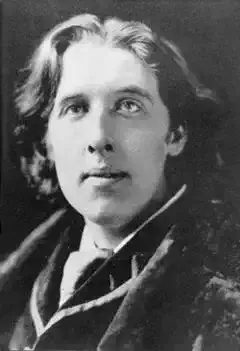
Oscar Wilde
Le Jardin Des Tuileries
This winter air is keen and cold,
And keen and cold this winter sun,
But round my chair the children run
Like little things of dancing gold.
Sometimes about the painted kiosk
The mimic soldiers strut and stride,
Sometimes the blue-eyed brigands hide
In the bleak tangles of the bosk.
And sometimes, while the old nurse cons
Her book, they steal across the square,
And launch their paper navies where
Huge Triton writhes in greenish bronze.
And now in mimic flight they flee,
And now they rush, a boisterous band -
And, tiny hand on tiny hand,
Climb up the black and leafless tree.
Ah! cruel tree! if I were you,
And children climbed me, for their sake
Though it be winter I would break
Into spring blossoms white and blue!
193
Robert W. Service
Two Children
Give me your hand, oh little one!
Like children be we two;
Yet I am old, my day is done
That barely breaks for you.
A baby-basket hard you hold,
With in it cherries four:
You cherish them as men do gold,
And count them o'er.
And then you stumble in your walk;
The cherries scattered lie.
You pick them up with foolish talk
And foolish glad am I,
When you wipe one quite clean of dust
And give it unto me;
So in the baby-basket just
Are three.
All this is simple, I confess,
A moment piled with peace;
Yet loving men have died for less,
And will till time shall cease. . . .
A silken hand in crinkled one-O
Little Innocence!
O blessed moment in the son
E'er I go hence!
188
Robert W. Service
Dolls
She said: "I am too old to play
With dolls," and put them all away,
Into a box, one rainy day.
I think she must have felt some pain,
She looked so long into the rain,
Then sighed: "I'll bring you out again;
"For I'll have little children too,
With sunny hair and eyes of blue
And they will play and play with you.
"And now good-bye, my pretty dears;
There in the dark for years and years,
Dream of your little mother's tears."
Eglantine, Pierrot and Marie Claire,
Topsy and Tiny and Teddy Bear,
Side by side in the coffer there.
Time went by; one day she kneeled
By a wooden Cross in Flanders Field,
And wept for the One the earth concealed;
And made a vow she would never wed,
But always be true to the deathless dead,
Until the span of her life be sped.
* *
* * *
* *
More years went on and they made her wise
By sickness and pain and sacrifice,
With greying tresses and tired eyes.
And then one evening of weary rain,
She opened the old oak box again,
And her heart was clutched with an ancient pain
For there in the quiet dark they lay,
Just as they were when she put them away...
O but it seemed like yesterday!
Topsy and Tiny and Teddy Bear,
Eglantine, Pierrot and Marie Claire,
Ever so hopefully waiting there.
But she looked at them through her blinding tears,
And she said: "You've been patient, my pretty dears;
You've waited and waited all these years.
"I've broken a promise I made so true;
But my heart, my darlings, is broken too:
No little Mothers have I for you.
"My hands are withered, my hair is grey;
Yet just for a moment I'll try to play
With you as I did that long dead day...
"Ah no, I cannot. I try in vain . . .
I stare and I stare into the rain . . .
I'll put you back in your box again.
"Bless you, darlings, perhaps one day,
Some little Mother will find you and play,
And once again you'll be glad and gay.
"But when in the friendly dark I lie,
No one will ever love you as I . . . .
My little children . . . good-bye . . . good-bye."
190

Jack Prelutsky
Dora Diller
'My stomach's full of butterflies!'
lamented Dora Diller.
Her mother sighed. 'That's no surprise,
you ate a caterpillar!'
lamented Dora Diller.
Her mother sighed. 'That's no surprise,
you ate a caterpillar!'
156
Jack Prelutsky
As Soon as Fred Gets Out of Bed
As soon as Fred gets out of bed,
his underwear goes on his head.
His mother laughs, "Don't put it there,
a head's no place for underwear!"
But near his ears, above his brains,
is where Fred's underwear remains.
At night when Fred goes back to bed,
he deftly plucks it off his head.
His mother switches off the light
and softly croons, "Good night! Good night!"
And then, for reasons no one knows,
Fred's underwear goes on his toes.
164
William Wordsworth
Evening on Calais Beach
IT is a beauteous evening, calm and free,
The holy time is quiet as a Nun
Breathless with adoration; the broad sun
Is sinking down in its tranquillity;
The gentleness of heaven broods o'er the sea:
Listen! the mighty Being is awake,
And doth with his eternal motion make
A sound like thunder--everlastingly.
Dear Child! dear Girl! that walkest with me here,
If thou appear untouch'd by solemn thought,
Thy nature is not therefore less divine:
Thou liest in Abraham's bosom all the year;
And worshipp'st at the Temple's inner shrine,
God being with thee when we know it not.
158