
Children

Robert W. Service
Jim
Never knew Jim, did you? Our boy Jim?
Bless you, there was the likely lad;
Supple and straight and long of limb,
Clean as a whistle, and just as glad.
Always laughing, wasn't he, dad?
Joy, pure joy to the heart of him,
And, oh, but the soothering ways he had,
Jim, our Jim!
But I see him best as a tiny tot,
A bonny babe, though it's me that speaks;
Laughing there in his little cot,
With his sunny hair and his apple cheeks.
And my! but the blue, blue eyes he'd got,
And just where his wee mouth dimpled dim
Such a fairy mark like a beauty spot -
That was Jim.
Oh, the war, the war! How my eyes were wet!
But he says: "Don't be sorrowing, mother dear;
You never knew me to fail you yet,
And I'll be back in a year, a year."
'Twas at Mons he fell, in the first attack;
For so they said, and their eyes were dim;
But I laughed in their faces: "He'll come back,
Will my Jim."
Now, we'd been wedded for twenty year,
And Jim was the only one we'd had;
So when I whispered in father's ear,
He wouldn't believe me -- would you, dad?
There! I must hurry . . . hear him cry?
My new little baby. . . . See! that's him.
What are we going to call him? Why,
Jim, just Jim.
Jim! For look at him laughing there
In the same old way in his tiny cot,
With his rosy cheeks and his sunny hair,
And look, just look . . . his beauty spot
In the selfsame place. . . . Oh, I can't explain,
And of course you think it's a mother's whim,
But I know, I know it's my boy again,
Same wee Jim.
Just come back as he said he would;
Come with his love and his heart of glee.
Oh, I cried and I cried, but the Lord was good;
From the shadow of Death he set Jim free.
So I'll have him all over again, you see.
Can you wonder my mother-heart's a-brim?
Oh, how happy we're going to be!
Aren't we, Jim?
258

James Whitcomb Riley
To a Boy Whistling
The smiling face of a happy boy
With its enchanted key
Is now unlocking in memory
My store of heartiest joy.
And my lost life again to-day,
In pleasant colors all aglow,
From rainbow tints, to pure white snow,
Is a panorama sliding away.
The whistled air of a simple tune
Eddies and whirls my thoughts around,
As fairy balloons of thistle-down
Sail through the air of June.
O happy boy with untaught grace!
What is there in the world to give
That can buy one hour of the life you live
Or the trivial cause of your smiling face!
255
Robert W. Service
Strip Teaser
My precious grand-child, aged two,
Is eager to unlace one shoe,
And then the other;
Her cotton socks she'll deftly doff
Despite the mild reproaches of
Her mother.
Around the house she loves to fare,
And with her rosy tootsies bare,
Pit-pat the floor;
And though remonstrances we make
She presently decides to take
Off something more.
Her pinafore she next unties,
And then before we realise,
Her dress drops down;
Her panties and her brassiere,
Her chemise and her underwear
Are round her strown.
And now she dances all about,
As naked as a new-caught trout,
With impish glee;
And though she's beautiful like that,
(A cherubim, but not so fat),
Quite shocked are we.
And so we dread with dim dismay
Some day she may her charms display
In skimpy wear;
Aye, even in a gee-string she
May frolic on the stage of the
Folies-Bèrgere
But e'er she does, I hope she'll read
This worldly wise and warning screed,
That to conceal,
Unto the ordinary man
Is often more alluring than
To ALL reveal.
253

Christina Rossetti
Playing At Bob Cherry
Playing at bob cherry
Tom and Nell and Hugh:
Cherry bob! cherry bob!
There's a bob for you.
Tom bobs a cherry
For gaping snapping Hugh,
While curly-pated Nelly
Snaps at it too.
Look, look, look -
Oh what a sight to see!
The wind is playing cherry bob
With the cherry tree.
Tom and Nell and Hugh:
Cherry bob! cherry bob!
There's a bob for you.
Tom bobs a cherry
For gaping snapping Hugh,
While curly-pated Nelly
Snaps at it too.
Look, look, look -
Oh what a sight to see!
The wind is playing cherry bob
With the cherry tree.
251
Robert W. Service
Adoption
Because I was a woman lone
And had of friends so few,
I made two little ones my own,
Whose parents no one knew;
Unwanted foundlings of the night,
Left at the convent door,
Whose tiny hands in piteous plight
Seemed to implore.
By Deed to them I gave my name,
And never will they know
That from the evil slums they came,
Two waifs of want and woe;
I fostered them with love and care
As if they were my own:
Now John, my son, is tall and fair,
And dark is Joan.
My boy's a member of the Bar,
My girl a nurse serene;
Yet when I think of what they are
And what they might have been,
With shuddering I glimpse a hell
Of black and bitter fruit . . .
Where John might be a criminal,
And Joan--a prostitute.
252
James Whitcomb Riley
At Noey's House
At Noey's house--when they arrived with him--
How snug seemed everything, and neat and trim:
The little picket-fence, and little gate-It's
little pulley, and its little weight,--
All glib as clock-work, as it clicked behind
Them, on the little red brick pathway, lined
With little paint-keg-vases and teapots
Of wee moss-blossoms and forgetmenots:
And in the windows, either side the door,
Were ranged as many little boxes more
Of like old-fashioned larkspurs, pinks and moss
And fern and phlox; while up and down across
Them rioted the morning-glory-vines
On taut-set cotton-strings, whose snowy lines
Whipt in and out and under the bright green
Like basting-threads; and, here and there between,
A showy, shiny hollyhock would flare
Its pink among the white and purple there.--
And still behind the vines, the children saw
A strange, bleached, wistful face that seemed to draw
A vague, indefinite sympathy. A face
It was of some newcomer to the place.--
In explanation, Noey, briefly, said
That it was 'Jason,' as he turned and led
The little fellows 'round the house to show
Them his menagerie of pets. And so
For quite a time the face of the strange guest
Was partially forgotten, as they pressed
About the squirrel-cage and rousted both
The lazy inmates out, though wholly loath
To whirl the wheel for them.--And then with awe
They walked 'round Noey's big pet owl, and saw
Him film his great, clear, liquid eyes and stare
And turn and turn and turn his head 'round there
The same way they kept circling--as though he
Could turn it one way thus eternally.
Behind the kitchen, then, with special pride
Noey stirred up a terrapin inside
The rain-barrel where he lived, with three or four
Little mud-turtles of a size not more
In neat circumference than the tiny toy
Dumb-watches worn by every little boy.
Then, back of the old shop, beneath the tree
Of 'rusty-coats,' as Noey called them, he
Next took the boys, to show his favorite new
Pet 'coon--pulled rather coyly into view
Up through a square hole in the bottom of
An old inverted tub he bent above,
Yanking a little chain, with 'Hey! you, sir!
Here's _comp'ny_ come to see you, Bolivur!'
Explanatory, he went on to say,
'I named him '_Bolivur_' jes thisaway,--
He looks so _round_ and _ovalish_ and _fat_,
'Peared like no other name 'ud fit but that.'
Here Noey's father called and sent him on
Some errand. 'Wait,' he said--'I won't be gone
A half a' hour.--Take Bud, and go on in
Where Jason is, tel I git back agin.'
Whoever _Jason_ was, they found him there
Still at the front-room window.--By his chair
Leaned a new pair of crutches; and from one
Knee down, a leg was bandaged.--'Jason done
That-air with one o' these-'ere tools _we_ call
A '_shin-hoe_'--but a _foot-adz_ mostly all
_Hardware_-store-keepers calls 'em.'--(_Noey_ made
This explanation later.)
Jason paid
But little notice to the boys as they
Came in the room:--An idle volume lay
Upon his lap--the only book in sight--
And Johnty read the title,--'Light, More Light,
There's Danger in the Dark,'--though _first_ and best--
In fact, the _whole_ of Jason's interest
Seemed centered on a little _dog_--one pet
Of Noey's all uncelebrated yet--
Though _Jason_, certainly, avowed his worth,
And niched him over all the pets on earth--
As the observant Johnty would relate
The _Jason_-episode, and imitate
The all-enthusiastic speech and air
Of Noey's kinsman and his tribute there:--
251
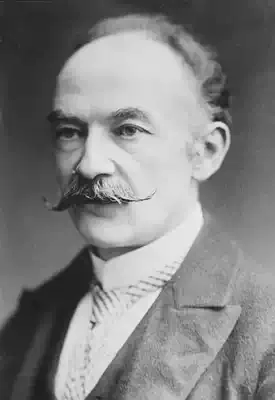
Thomas Hardy
To An Orphan Child
A Whimsey
AH, child, thou art but half thy darling mother's;
Hers couldst thou wholly be,
My light in thee would outglow all in others;
She would relive to me.
But niggard Nature's trick of birth
Bars, lest she overjoy,
Renewal of the loved on earth
Save with alloy.
The Dame has no regard, alas, my maiden,
For love and loss like mine--
No sympathy with mind-sight memory-laden;
Only with fickle eyne.
To her mechanic artistry
My dreams are all unknown,
And why I wish that thou couldst be
But One's alone!
251
Christina Rossetti
My Baby Has A Father And A Mother
My baby has a father and a mother,
Rich little baby!
Fatherless, motherless, I know another
Forlorn as may be:
Poor little baby!
Rich little baby!
Fatherless, motherless, I know another
Forlorn as may be:
Poor little baby!
250
Christina Rossetti
Lullaby, Oh, Lullaby!
Lullaby, oh, lullaby!
Flowers are closed and lambs are sleeping;
Lullaby, oh, lullaby!
Stars are up, the moon is peeping;
Lullaby, oh, lullaby!
While the birds are silence keeping,
(Lullaby, oh, lullaby!)
Sleep, my baby, fall a-sleeping,
Lullaby, oh, lullaby!
Flowers are closed and lambs are sleeping;
Lullaby, oh, lullaby!
Stars are up, the moon is peeping;
Lullaby, oh, lullaby!
While the birds are silence keeping,
(Lullaby, oh, lullaby!)
Sleep, my baby, fall a-sleeping,
Lullaby, oh, lullaby!
248
Christina Rossetti
Minnie And Mattie
Minnie and Mattie
And fat little May,
Out in the country,
Spending a day.
Such a bright day,
With the sun glowing,
And the trees half in leaf,
And the grass growing.
Pinky white pigling
Squeals through his snout,
Woolly white lambkin
Frisks all about.
Cluck! cluck! the nursing hen
Summons her folk, -
Ducklings all downy soft
Yellow as yolk.
Cluck! cluck! the mother hen
Summons her chickens
To peck the dainty bits
Found in her pickings.
Minnie and Mattie
And May carry posies,
Half of sweet violets,
Half of primroses.
Give the sun time enough,
Glowing and glowing,
He'll rouse the roses
And bring them blowing.
Don't wait for roses
Losing to-day,
O Minnie, Mattie,
And wise little May.
Violets and primroses
Blossom to-day
For Minnie and Mattie
And fat little May.
245

Anonymous
Godfrey Gordon
Godfrey Gordon Gustuvus Gore
The boy who'd never shut the door
His Father would Plead and mother implore
Godfrey Gordon Please Shut the door.
The boy who'd never shut the door
His Father would Plead and mother implore
Godfrey Gordon Please Shut the door.
243
Thomas Hardy
Mad Judy
When the hamlet hailed a birth
Judy used to cry:
When she heard our christening mirth
She would kneel and sigh.
She was crazed, we knew, and we
Humoured her infirmity.
When the daughters and the sons
Gathered them to wed,
And we like-intending ones
Danced till dawn was red,
She would rock and mutter, "More
Comers to this stony shore!"
When old Headsman Death laid hands
On a babe or twain,
She would feast, and by her brands
Sing her songs again.
What she liked we let her do,
Judy was insane, we knew.
244
Christina Rossetti
Angels At The Foot
Angels at the foot,
And Angels at the head,
And like a curly little lamb
My pretty babe in bed.
And Angels at the head,
And like a curly little lamb
My pretty babe in bed.
241
Christina Rossetti
Mother Shake The Cherry-Tree
Mother shake the cherry-tree,
Susan catch a cherry;
Oh how funny that will be,
Let's be merry!
One for brother, one for sister,
Two for mother more,
Six for father, hot and tired,
Knocking at the door.
Susan catch a cherry;
Oh how funny that will be,
Let's be merry!
One for brother, one for sister,
Two for mother more,
Six for father, hot and tired,
Knocking at the door.
241

Emily Dickinson
New feet within my garden go
New feet within my garden go-
New fingers stir the sod-
A Troubadour upon the Elm
Betrays the solitude.
New children play upon the green-
New Weary sleep below-
And still the pensive Spring returns-
And still the punctual snow!
New fingers stir the sod-
A Troubadour upon the Elm
Betrays the solitude.
New children play upon the green-
New Weary sleep below-
And still the pensive Spring returns-
And still the punctual snow!
242
Christina Rossetti
Three Little Children
Three little children
On the wide wide earth,
Motherless children -
Cared for from their birth
By tender angels.
Three little children
On the wide wide sea,
Motherless children -
Safe as safe can be
With guardian angels.
On the wide wide earth,
Motherless children -
Cared for from their birth
By tender angels.
Three little children
On the wide wide sea,
Motherless children -
Safe as safe can be
With guardian angels.
240
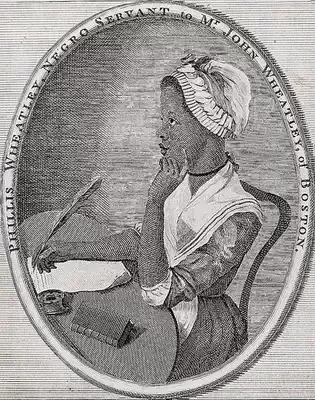
Phillis Wheatley
On The Death Of J. C. An Infant
NO more the flow'ry scenes of pleasure rife,
Nor charming prospects greet the mental eyes,
No more with joy we view that lovely face
Smiling, disportive, flush'd with ev'ry grace.
The tear of sorrow flows from ev'ry eye,
Groans answer groans, and sighs to sighs reply;
What sudden pangs shot thro' each aching heart,
When, Death, thy messenger dispatch'd his dart?
Thy dread attendants, all-destroying Pow'r,
Hurried the infant to his mortal hour.
Could'st thou unpitying close those radiant eyes?
Or fail'd his artless beauties to surprise?
Could not his innocence thy stroke controul,
Thy purpose shake, and soften all thy soul?
The blooming babe, with shades of Death o'erspread,
No more shall smile, no more shall raise its head,
But, like a branch that from the tree is torn,
Falls prostrate, wither'd, languid, and forlorn.
"Where flies my James?" 'tis thus I seem to hear
The parent ask, "Some angel tell me where
"He wings his passage thro' the yielding air?"
Methinks a cherub bending from the skies
Observes the question, and serene replies,
"In heav'ns high palaces your babe appears:
"Prepare to meet him, and dismiss your tears."
Shall not th' intelligence your grief restrain,
And turn the mournful to the cheerful strain?
Cease your complaints, suspend each rising sigh,
Cease to accuse the Ruler of the sky.
Parents, no more indulge the falling tear:
Let Faith to heav'n's refulgent domes repair,
There see your infant, like a seraph glow:
What charms celestial in his numbers flow
Melodious, while the foul-enchanting strain
Dwells on his tongue, and fills th' ethereal plain?
Enough--for ever cease your murm'ring breath;
Not as a foe, but friend converse with Death,
Since to the port of happiness unknown
He brought that treasure which you call your own.
The gift of heav'n intrusted to your hand
Cheerful resign at the divine command:
Not at your bar must sov'reign Wisdom stand.
239

Ogden Nash
Lines To Be Embroidered On A Bib
OR
The Child Is Father Of The Man, But Not For Quite A While
So Thomas Edison
Never drank his medicine;
So Blackstone and Hoyle
Refused cod-liver oil;
So Sir Thomas Malory
Never heard of a calory;
So the Earl of Lennox
Murdered Rizzio without the aid of vitamins or calisthenox;
So Socrates and Plato
Ate dessert without finishing their potato;
So spinach was too spinachy
For Leonardo da Vinaci;
Well, it's all immaterial,
So eat your nice cereal,
And if you want to name your ration,
First go get a reputation.
241
Anonymous
Hush a By Baby
Hush-a-by Baby
On the tree top,
When the wind blows
The cradle will rock;
When the bough breaks
The cradle will fall,
Down tumbles baby,
Cradle, and all.
On the tree top,
When the wind blows
The cradle will rock;
When the bough breaks
The cradle will fall,
Down tumbles baby,
Cradle, and all.
239
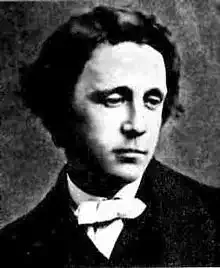
Lewis Carroll
Dedication
Inscribed to a Dear Child:
In Memory of Golden Summer Hours
And Whispers of a Summer Sea
Girt with a boyish garb for boyish task,
Eager she wields her spade: yet loves as well
Rest on a friendly knee, intent to ask
The tale he loves to tell.
Rude spirits of the seething outer strife,
Unmeet to read her pure and simple spright,
Deem if you list, such hours a waste of life,
Empty of all delight!
Chat on, sweet Maid, and rescue from annoy
Hearts that by wiser talk are unbeguiled.
Ah, happy he who owns that tenderest joy,
The heartlove
of a child!
234
Christina Rossetti
Lie A-Bed
Lie a-bed,
Sleepy head,
Shut up eyes, bo-peep;
Till daybreak
Never wake: -
Baby, sleep.
Sleepy head,
Shut up eyes, bo-peep;
Till daybreak
Never wake: -
Baby, sleep.
231
Christina Rossetti
A House Of Cards
A house of cards
Is neat and small:
Shake the table,
It must fall.
Find the Court cards
One by one;
Raise it, roof it, -
Now it's done: -
Shake the table!
That's the fun.
Is neat and small:
Shake the table,
It must fall.
Find the Court cards
One by one;
Raise it, roof it, -
Now it's done: -
Shake the table!
That's the fun.
231
Christina Rossetti
I Know A Baby, Such A Baby
I know a baby, such a baby, -
Round blue eyes and cheeks of pink,
Such an elbow furrowed with dimples,
Such a wrist where creases sink.
‘Cuddle and love me, cuddle and love me,’
Crows the mouth of coral pink:
Oh, the bald head, and, oh, the sweet lips,
And, oh, the sleepy eyes that wink!
Round blue eyes and cheeks of pink,
Such an elbow furrowed with dimples,
Such a wrist where creases sink.
‘Cuddle and love me, cuddle and love me,’
Crows the mouth of coral pink:
Oh, the bald head, and, oh, the sweet lips,
And, oh, the sleepy eyes that wink!
229