
Children

James Whitcomb Riley
The Pathos Of Applause
The greeting of the company throughout
Was like a jubilee,--the children's shout
And fusillading hand-claps, with great guns
And detonations of the older ones,
Raged to such tumult of tempestuous joy,
It even more alarmed than pleased the boy;
Till, with a sudden twitching lip, he slid
Down to the floor and dodged across and hid
His face against his mother as she raised
Him to the shelter of her heart, and praised
His story in low whisperings, and smoothed
The 'amber-colored hair,' and kissed, and soothed
And lulled him back to sweet tranquillity-'
And 'ats a sign 'at you're the Ma fer me!'
He lisped, with gurgling ecstasy, and drew
Her closer, with shut eyes; and feeling, too,
If he could only _purr_ now like a cat,
He would undoubtedly be doing that!
'And now'--the serious host said, lifting there
A hand entreating silence;--'now, aware
Of the good promise of our Traveler guest
To add some story with and for the rest,
I think I favor you, and him as well,
Asking a story I have heard him tell,
And know its truth,in each minute detail:'
Then leaning on his guest's chair, with a hale
Hand-pat by way of full indorsement, he
Said, 'Yes--the Free-Slave story--certainly.'
The old man, with his waddy notebook out,
And glittering spectacles, glanced round about
The expectant circle, and still firmer drew
His hat on, with a nervous cough or two:
And, save at times the big hard words, and tone
Of gathering passion--all the speaker's own,--
The tale that set each childish heart astir
Was thus told by 'The Noted Traveler.'
300
James Whitcomb Riley
Bewildering Emotions
The merriment that followed was subdued--
As though the story-teller's attitude
Were dual, in a sense, appealing quite
As much to sorrow as to mere delight,
According, haply, to the listener's bent
Either of sad or merry temperament.-'
And of your two appeals I much prefer
The pathos,' said 'The Noted Traveler,'-'
For should I live to twice my present years,
I know I could not quite forget the tears
That child-eyes bleed, the little palms nailed wide,
And quivering soul and body crucified....
But, bless 'em! there are no such children here
To-night, thank God!--Come here to me, my dear!'
He said to little Alex, in a tone
So winning that the sound of it alone
Had drawn a child more lothful to his knee:-'
And, now-sir, _I'll_ agree if _you'll_ agree,-_
You_ tell us all a story, and then _I_
Will tell one.'
'_But I can't._'
'Well, can't you _try?_'
'Yes, Mister: he _kin_ tell _one_. Alex, tell
The one, you know, 'at you made up so well,
About the _Bear_. He allus tells that one,'
Said Bud,--'He gits it mixed some 'bout the _gun_
An' _ax_ the Little Boy had, an' _apples_, too.'--
Then Uncle Mart said--'There, now! that'll do!--
Let _Alex_ tell his story his own way!'
And Alex, prompted thus, without delay
Began.
299
James Whitcomb Riley
Find The Favorite
Our three cats is Maltese cats,
An' they's two that's white,--
An' bofe of 'em's _deef_--an' that's
'Cause their _eyes_ ain't right.--
Uncle say that _Huxley_ say
Eyes of _white_ Maltese--
When they don't match thataway-They're
deef as you please!
_Girls, they_ like our white cats best,
'Cause they're white as snow,
Yes, an' look the stylishest--
But they're deef, you know!
They don't know their names, an' don't
Hear us when we call
'Come in, Nick an' Finn!'--they won't
Come fer us at all!
But our _other_ cat, _he_ knows
Mister Nick an' Finn,-Mowg's
_his_ name,--an' when _he_ goes
Fer 'em, they come in!
Mowgli's _all_ his name--the same
Me an' Muvver took
Like the Wolf-Child's _other_ name,
In 'The Jungul Book.'
I bet Mowg's the smartest cat
In the world!--_He's_ not
_White_, but mousy-plush, with that
Smoky gloss he's got!
All's got little bells to ring,
Round their neck; but none
Only Mowg _knows_ anything-He's
the only one!
I ist 'spect sometimes he hate
White cats' stupid ways:--
He won't hardly 'sociate
With 'em, lots o' days!
Mowg wants in where _we_ air,--well,
He'll ist take his paw
An' ist ring an' ring his bell
There till me er Ma
Er _some_body lets him in
Nen an' shuts the door.-
An', when he wants out ag'in,
Nen he'll ring some more.
Ort to hear our Katy tell!
She sleeps 'way up-stairs;
An' last night she hear Mowg's bell
Ringin' round _some_wheres...
Trees grows by her winder.--So,
She lean out an' see
Mowg up there, 'way out, you know,
In the clingstone-tree;-
An'-sir! he ist _hint_ an' _ring_,--
Till she ketch an' plat
Them limbs;--nen he crawl an' spring
In where Katy's at!
299

William Wordsworth
The Mother's Return
A MONTH, sweet Little-ones, is past
Since your dear Mother went away,---
And she tomorrow will return;
Tomorrow is the happy day.
O blessed tidings! thought of joy!
The eldest heard with steady glee;
Silent he stood; then laughed amain,---
And shouted, ' Mother, come to me!'
Louder and louder did he shout,
With witless hope to bring her near;
'Nay, patience! patience, little boy!
Your tender mother cannot hear.'
I told of hills, and far-off town,
And long, long vale to travel through;---
He listens, puzzled, sore perplexed,
But he submits; what can he do ?
No strife disturbs his sister's breast;
She wars not with the mystery
Of time and distance, night and day;
The bonds of our humanity.
Her joy is like an instinct, joy
Of kitten, bird, or summer fly;
She dances, runs without an aim,
She chatters in her ecstasy.
Her brother now takes up the note,
And echoes back his sister's glee;
They hug the infant in my arms,
As if to force his sympathy.
Then, settling into fond discourse,
We rested in the garden bower;
While sweetly shone the evening sun
In his departing hour.
We told o'er all that we had done,---
Our rambles by the swift brook's side
Far as the willow-skirted pool,
Where two fair swans together glide.
We talked of change, of winter gone,
Of green leaves on the hawthorn spray,
Of birds that build their nests and sing
And all 'since Mother went away!'
To her these tales they will repeat,
To her our new-born tribes will show,
The goslings green, the ass's colt,
The lambs that in the meadow go.
---But, see, the evening star comes forth!
To bed the children must depart;
A moment's heaviness they feel,
A sadness at the heart;
'Tis gone---and in a merry fit
They run up stairs in gamesome race;
I, too, infected by their mood,
I could have joined the wanton chase.
Five minutes past---and, O the change!
Asleep upon their beds they lie;
Their buy limbs in perfect rest,
And closed the sparkling eye.
301
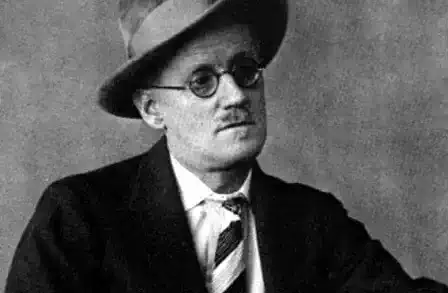
James Joyce
A Flower Given to My Daughter
Frail the white rose and frail are
Her hands that gave
Whose soul is sere and paler
Than time's wan wave.
Rosefrail and fair -- yet frailest
A wonder wild
In gentle eyes thou veilest,
My blueveined child.
Her hands that gave
Whose soul is sere and paler
Than time's wan wave.
Rosefrail and fair -- yet frailest
A wonder wild
In gentle eyes thou veilest,
My blueveined child.
298
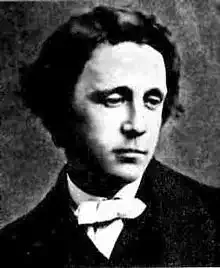
Lewis Carroll
Bessie's Song To Her Doll
Matilda Jane, you never look
At any toy or picturebook.
I show you pretty things in vain
You must be blind, Matilda Jane!
I ask you riddles, tell you tales,
But all our conversation fails.
You never answer me again
I fear you're dumb, Matilda Jane!
Matilda darling, when I call,
You never seem to hear at all.
I shout with all my might and main
But you're so deaf, Matilda Jane!
Matilda Jane, you needn't mind,
For, though you're deaf and dumb and blind,
There's some one loves you, it is plain
And that is me, Matilda Jane!
296

Anonymous
Cradle Song
O MY deir hert, young Jesus sweit,
Prepare thy creddil in my spreit,
And I sall rock thee in my hert
And never mair from thee depart.
But I sall praise thee evermoir
With sangis sweit unto thy gloir;
The knees of my hert sall I bow,
And sing that richt Balulalow!
Prepare thy creddil in my spreit,
And I sall rock thee in my hert
And never mair from thee depart.
But I sall praise thee evermoir
With sangis sweit unto thy gloir;
The knees of my hert sall I bow,
And sing that richt Balulalow!
294
James Whitcomb Riley
Where The Children Used To Play
The old farm-home is Mother's yet and mine,
And filled it is with plenty and to spare--,
But we are lonely here in life's decline,
Though fortune smiles around us everywhere:
We look across the gold
Of the harvests, as of old--
The corn, the fragrant clover, and the hay;
But most we turn our gaze,
As with eyes of other days,
To the orchard where the children used to play.
O from our life's full measure
And rich hoard of worldly treasure
We often turn our weary eyes away,
And hand in hand we wander
Down the old path winding yonder
To the orchard where the children used to play.
Our sloping pasture-lands are filled with herds;
The barn and granary-bins are bulging o'ver;
The grove's a paradise of singing birds--
The woodland brook leaps laughing by the door;
Yet lonely, lonely still,
Let us prosper as we will,
Our old hearts seem so empty everyway--
We can only through a mist
See the faces we have kissed
In the orchard where the children used to play.
O from our life's full measure
And rich hoard of worldly treasure
We often turn our weary eyes away,
And hand in hand we wander
Down the old path winding yonder
To the orchard where the children used to play.
294

Ogden Nash
The Parent
Children aren't happy with nothing to ignore,
And that's what parents were created for.
And that's what parents were created for.
293
James Whitcomb Riley
Home At Night
When chirping crickets fainter cry,
And pale stars blossom in the sky,
And twilight's gloom has dimmed the bloom
And blurred the butterfly:
When locust-blossoms fleck the walk,
And up the tiger-lily stalk
The glow-worm crawls and clings and falls
And glimmers down the garden-walls:
When buzzing things, with double wings
Of crisp and raspish flutterings,
Go whizzing by so very nigh
One thinks of fangs and stings:--
O then, within, is stilled the din
Of crib she rocks the baby in,
And heart and gate and latch's weight
Are lifted--and the lips of Kate.
291

Christina Rossetti
Your Brother Has A Falcon
Your brother has a falcon,
Your sister has a flower;
But what is left for mannikin,
Born within a hour?
I'll nurse you on my knee, my knee,
My own little son;
I'll rock you, rock you, in my arms,
My least little one.
Your sister has a flower;
But what is left for mannikin,
Born within a hour?
I'll nurse you on my knee, my knee,
My own little son;
I'll rock you, rock you, in my arms,
My least little one.
285
Ogden Nash
Soliloquy in Circles
Being a father
Is quite a bother.
You are as free as air
With time to spare,
You're a fiscal rocket
With change in your pocket,
And then one morn
A child is born.
Your life has been runcible,
Irresponsible,
Like an arrow or javelin
You've been constantly travelin'.
But mostly, I daresay,
Without a chaise percée,
To which by comparison
Nothing's embarison.
But all children matures,
Maybe even yours.
You improve them mentally
And straighten them dentally,
They grow tall as a lancer
And ask questions you can't answer,
And supply you with data
About how everybody else wears lipstick sooner and stays up later,
And if they are popular,
The phone they monopular.
They scorn the dominion
Of their parent's opinion,
They're no longer corralable
Once they find that you're fallible
But after you've raised them and educated them and gowned them,
They just take their little fingers and wrap you around them.
Being a father Is quite a bother,
But I like it, rather.
282
James Whitcomb Riley
Thomas The Pretender
Tommy's alluz playin' jokes,
An' actin' up, an' foolin' folks;
An' wunst one time he creep
In Pa's big chair, he did, one night,
An' squint an' shut his eyes bofe tight,
An' say, 'Now I 'm asleep.'
An' nen we knowed, an' Ma know' too,
He _ain't_ asleep no more 'n you!
An' wunst he clumbed on our back'fence
An' flop his arms an' nen commence
To crow, like he's a hen;
But when he failed off, like he done,
He didn't fool us childern none,
Ner didn't _crow_ again.
An' our Hired Man, as he come by,
Says, 'Tom can't _crow_, but he kin _cry_.'
279

Robert Louis Stevenson
Before This Little Gift Was Come
BEFORE this little gift was come
The little owner had made haste for home;
And from the door of where the eternal dwell,
Looked back on human things and smiled farewell.
O may this grief remain the only one!
O may our house be still a garrison
Of smiling children, and for evermore
The tune of little feet be heard along the floor!
The little owner had made haste for home;
And from the door of where the eternal dwell,
Looked back on human things and smiled farewell.
O may this grief remain the only one!
O may our house be still a garrison
Of smiling children, and for evermore
The tune of little feet be heard along the floor!
279
Ogden Nash
The Boy Who Laughed At Santa Claus
In Baltimore there lived a boy.
He wasn't anybody's joy.
Although his name was Jabez Dawes,
His character was full of flaws. In school he never led his classes,
He hid old ladies' reading glasses,
His mouth was open when he chewed,
And elbows to the table glued.
He stole the milk of hungry kittens,
And walked through doors marked NO ADMITTANCE.
He said he acted thus because
There wasn't any Santa Claus.
277
James Whitcomb Riley
A Prospective Visit
While _any_ day was notable and dear
That gave the children Noey, history here
Records his advent emphasized indeed
With sharp italics, as he came to feed
The stock one special morning, fair and bright,
When Johnty and Bud met him, with delight
Unusual even as their extra dress--
Garbed as for holiday, with much excess
Of proud self-consciousness and vain conceit
In their new finery.--Far up the street
They called to Noey, as he came, that they,
As promised, both were going back that day
To _his_ house with him!
And by time that each
Had one of Noey's hands--ceasing their speech
And coyly anxious, in their new attire,
To wake the comment of their mute desire,--
Noey seemed rendered voiceless. Quite a while
They watched him furtively.--He seemed to smile
As though he would conceal it; and they saw
Him look away, and his lips purse and draw
In curious, twitching spasms, as though he might
Be whispering,--while in his eye the white
Predominated strangely.--Then the spell
Gave way, and his pent speech burst audible:
'They wuz two stylish little boys,
and they wuz mighty bold ones,
Had two new pairs o' britches made
out o' their daddy's old ones!'
And at the inspirational outbreak,
Both joker and his victims seemed to take
An equal share of laughter,--and all through
Their morning visit kept recurring to
The funny words and jingle of the rhyme
That just kept getting funnier all the time.
276
James Whitcomb Riley
John Alden And Percilly
We got up a Christmas-doin's
Last Christmas Eve--
Kindo' dimonstration
'At I railly believe
Give more satisfaction--
Take it up and down--
Than ary intertainment
Ever come to town!
Railly was a _theater_-That's
what it was,--
But, bein' in the church, you know,
We had a '_Santy Clause_'--
So 's to git the _old folks_
To patternize, you see,
And _back_ the institootion up
Kindo' _morally_.
Schoolteacher writ the thing-(
Was a friend o' mine),
Got it out o' Longfeller's
Pome 'Evangeline'--
Er some'rs--'bout the _Purituns_--.
_Anyway_, the part
'_John Alden_' fell to _me_--
And learnt it all by heart!
Claircy was '_Percilly_'-(
Schoolteacher 'lowed
Me and her could act them two
Best of all the crowd)-Then--
blame ef he didn't
Git her Pap, i jing!--
To take the part o' '_Santy Clause_,'
To wind up the thing.
Law! the fun o' practisun!--
Was a week er two
Me and Claircy didn't have
Nothin' else to do!--
Kep' us jes a-meetin' round,
Kindo' here and there,
Ever' night rehearsin'-like,
And gaddin' ever'where!
Game was wo'th the candle, though!--
Christmas Eve at last
Rolled around.--And 'tendance jes
Couldn't been surpassed!--
Neighbors from the country
Come from Clay and Rush--
Yes, and 'crost the county-line
Clean from Puckerbrush!
Meetin'-house jes trimbled
As 'Old Santy' went
Round amongst the childern,
With their pepperment
And sassafrac and wintergreen
Candy, and 'a ball
O' popcorn,' the preacher 'nounced,
'Free fer each and all!'
Schoolteacher suddently
Whispered in my ear,-'
Guess I got you:--_Christmas-gift_!-_
Christmas is here_!'
I give _him_ a gold pen,
And case to hold the thing,--
And _Claircy_ whispered '_Christmas-gift_!'
And I give her a _ring_.
'And now,' says I, 'jes watch _me_-Christmas-
gift,' says I,
'_I'm_ a-goin' to git one-'_
Santy's_' comin' by!'--
Then I rech and grabbed him:
And, as you'll infer,
'Course I got the old man's,
And _he_ gimme _her_!
273

Walter de la Mare
Tom's Little Dog
Tom told his dog called Tim to beg,
And up at once he sat,
His two clear amber eyes fixed fast,
His haunches on his mat.
Tom poised a lump of sugar on
His nose; then, "Trust!" says he;
Stiff as a guardsman sat his Tim;
Never a hair stirred he.
"Paid for!" says Tom; and in a trice
Up jerked that moist black nose;
A snap of teeth, a crunch, a munch,
And down the sugar goes!
272

Edward Lear
Unicorny
Unicorny,
In a barn,
Little unicorn!
V was once a little van,
Vanny,
Flanny,
Manny
Vanny,
Drive really fasty,
Little van!
W was once a little witch,
Witchy,
Twitchy,
Cwitchy,
Witchy,
Fly real high,
Little witch!
X was once a little x-man,
Mexman,
Nexman,
Pexman,
Mexman,
X-man has big claws,
Little x-man!
Y was once a little yarn,
Yarny,
Carny,
Larny,
Yarny,
Rolly yarny,
Little yarn!
Z was once a little zucchini,
Winey,
Tiney,
Liney,
Winey,
Tinky zinky,
Little letter z!
267
James Whitcomb Riley
Some Scattering Remarks Of Bub's
Wunst I looked our pepper-box lid
An' cut little pie-dough biscuits, I did,
And cooked 'em on our stove one day
When our hired girl she said I may.
_Honey's_ the goodest thing--Oo-_ooh_!
And blackberry-pies is goodest, too!
But wite hot biscuits, ist soakin'-wet
Wiv tree-mullasus, is goodest yet!
Miss Maimie she's my Ma's friend,--an'
She's purtiest girl in all the lan'!--
An' sweetest smile an' voice an' face--
An' eyes ist looks like p'serves tas'e'!
I _ruther_ go to the Circus-show;
But, 'cause my _parunts_ told me so,
I ruther go to the Sund'y School,
'Cause there I learn the goldun rule.
Say, Pa,--what _is_ the goldun rule
'At's allus at the Sund'y School?
267

John Greenleaf Whittier
How The Robin Came
AN ALGONQUIN LEGEND.
HAPPY young friends, sit by me,
Under May's blown apple-tree,
While these home-birds in and out
Through the blossoms flit about.
Hear a story, strange and old,
By the wild red Indians told,
How the robin came to be:
Once a great chief left his son,-Well-
beloved, his only one,-When
the boy was well-nigh grown,
In the trial-lodge alone.
Left for tortures long and slow
Youths like him must undergo,
Who their pride of manhood test,
Lacking water, food, and rest.
Seven days the fast he kept,
Seven nights he never slept.
Then the young boy, wrung with pain,
Weak from nature's overstrain,
Faltering, moaned a low complaint
'Spare me, father, for I faint!'
But the chieftain, haughty-eyed,
Hid his pity in his pride.
'You shall be a hunter good,
Knowing never lack of food;
You shall be a warrior great,
Wise as fox and strong as bear;
Many scalps your belt shall wear,
If with patient heart you wait
Bravely till your task is done.
Better you should starving die
Than that boy and squaw should cry
Shame upon your father's son!'
When next morn the sun's first rays
Glistened on the hemlock sprays,
Straight that lodge the old chief sought,
And boiled sainp and moose meat brought.
'Rise and eat, my son!' he said.
Lo, he found the poor boy dead!
As with grief his grave they made,
And his bow beside him laid,
Pipe, and knife, and wampum-braid,
On the lodge-top overhead,
Preening smooth its breast of red
And the brown coat that it wore,
Sat a bird, unknown before.
And as if with human tongue,
'Mourn me not,' it said, or sung;
'I, a bird, am still your son,
Happier than if hunter fleet,
Or a brave, before your feet
Laying scalps in battle won.
Friend of man, my song shall cheer
Lodge and corn-land; hovering near,
To each wigwam I shall bring
Tidings of the corning spring;
Every child my voice shall know
In the moon of melting snow,
When the maple's red bud swells,
And the wind-flower lifts its bells.
As their fond companion
Men shall henceforth own your son,
And my song shall testify
That of human kin am I.'
Thus the Indian legend saith
How, at first, the robin came
With a sweeter life from death,
Bird for boy, and still the same.
If my young friends doubt that this
Is the robin's genesis,
Not in vain is still the myth
If a truth be found therewith
Unto gentleness belong
Gifts unknown to pride and wrong;
Happier far than hate is praise,-He
who sings than he who slays.
269

Robert W. Service
Joey
I thought I would go daft when Joey died.
He was my first, and wise beyond his years.
For nigh a hundred nights I cried and cried,
Until my weary eyes burned up my tears.
Willie and Rosie tried to comfort me:
A woeful, weeping family were we.
I was a widow with no friends at all,
Ironing men's shirts to buy my kiddies grub;
And then one day a lawyer came to call,
Me with my arms deep in the washing-tub.
The gentleman who ran poor Joey down
Was willing to give us a thousand poun'.
What a godsend! It meant goodbye to care,
The fear of being dumped out on the street.
Rosie and Willie could have wool to wear,
And more than bread and margerine to eat . . .
To Joey's broken little legs we owe
Our rescue from a fate of want and woe.
How happily he hurried home to me,
Bringing a new-baked, crisp-brown loaf of bread.
The headlights of the car he did not see,
And when help came they thought that he was dead.
He stared with wonder from a face so wan . . .
A long, last look and he was gone,--was gone.
We've comfort now, and yet it hurts to know
We owe our joy to little, laughing Joe.
263
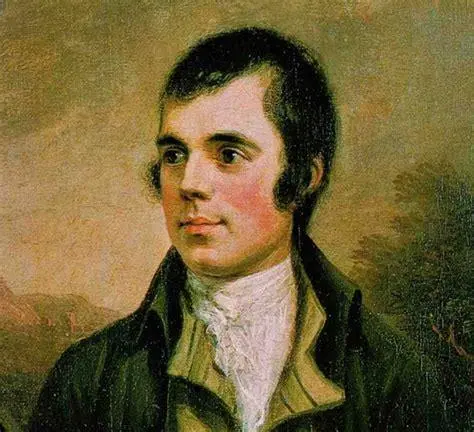
Robert Burns
A Poets Welcome to His Love-Begotten Daughter
Thou's welcome, wean; mishanter fa' me,
If thoughts o' thee, or yet thy mammie,
Shall ever daunton me or awe me,
My sweet wee lady,
Or if I blush when thou shalt ca' me
Tyta or daddie.
Tho' now they ca' me fornicator,
An' tease my name in countra clatter,
The mair they talk, I'm kend the better,
E'en let them clash;
An auld wife's tongue's a feckless matter
To gie ane fash.
Welcome! my bonie, sweet, wee dochter,
Tho' ye come here a wee unsought for,
And tho' your comin' I hae fought for,
Baith kirk and queir;
Yet, by my faith, ye're no unwrought for,
That I shall swear!
Sweet fruit o' monie a merry dint,
My funny toil is no a' tint,
Tho' thou cam to the warl' asklent,
Which fools may scoff at;
In my last plack thy part's be in't
The better ha'f o't.
Tho' I should be the waur bestead,
Thou's be as braw and bienly clad,
And thy young years as nicely bred
Wi' education,
As onie brat o' wedlock's bed,
In a' thy station.
Wee image o' my bonie Betty,
As fatherly I kiss and daut thee,
As dear and near my heart I set thee
Wi' as gude will
As a' the priests had seen me get thee
That's out o' hell.
Lord grant that thou may aye inherit
Thy mither's person, grace, an' merit,
An' thy poor, worthless daddy's spirit,
Without his failins,
'Twill please me mair to see thee heir it,
Than stockit mailens.
For if thou be what I wad hae thee,
And tak the counsel I shall gie thee,
I'll never rue my trouble wi' thee -
The cost nor shame o't,
But be a loving father to thee,
And brag the name o't.
259

Henry Lawson
The Babies of Walloon
He was lengthsman on the railway, and his station scarce deserved
That “pre-eminence in sorrow” of the Majesty he served,
But as dear to him and precious were the gifts reclaimed so soon—
Were the workman’s little daughters who were buried near Walloon.
Speak their names in tones that linger, just as though you held them dear;
There are eyes to which the mention of those names will bring a tear.
Little Kate and Bridget, straying in an autumn afternoon,
Were attracted by the lilies in the water of Walloon.
All is dark to us. The angels sing perhaps in Paradise
Of the younger sister’s danger, and the elder’s sacrifice;
But the facts were hidden from us, when the soft light from the moon
Glistened on the water-lilies o’er the Babies at Walloon.
Ah! the children love the lilies, while we elders are inclined
To the flowers that have poison for the body and the mind.
Better for the “strongly human” to have done with life as soon,
Better perish for a lily like the Babies of Walloon.
For they gather flowers early on the river far away,
Where the everlasting lilies keep their purity for aye,
And while summer brings our lilies to the run and the lagoon
May our children keep the legend of the Babies of Walloon.
257