
Children

James Whitcomb Riley
The Twins
One 's the pictur' of his Pa,
And the _other_ of her Ma--
Jes the bossest pair o' babies 'at a mortal ever saw!
And we love 'em as the bees
Loves the blossoms of the trees,
A-ridin' and a-rompin' in the breeze!
One's got her Mammy's eyes--
Soft and blue as Apurl-skies--
With the same sort of a smile, like--Yes,
and mouth about her size,--
Dimples, too, in cheek and chin,
'At my lips jes _wallers_ in,
A-goin' to work, er gittin' home agin.
And the _other_--Well, they say
That he's got his Daddy's way
O' bein' ruther soberfied, er ruther extry gay,--
That he either cries his best,
Er he laughs his howlin'est--
Like all he lacked was buttons and a vest!
Look at _her_!--and look at _him_!--
Talk about yer 'Cheru-_bim_!'
Roll 'em up in dreams together, rosy arm and chubby limb!
O we love 'em as the bees
Loves the blossoms of the trees,
A-ridin' and a-rompin' in the breeze!
323

Johann Wolfgang von Goethe
May
LIGHT and silv'ry cloudlets hover
In the air, as yet scarce warm;
Mild, with glimmer soft tinged over,
Peeps the sun through fragrant balm.
Gently rolls and heaves the ocean
As its waves the bank o'erflow.
And with ever restless motion
Moves the verdure to and fro,
Mirror'd brightly far below.
What is now the foliage moving?
Air is still, and hush'd the breeze,
Sultriness, this fullness loving,
Through the thicket, from the trees.
Now the eye at once gleams brightly,
See! the infant band with mirth
Moves and dances nimbly, lightly,
As the morning gave it birth,
Flutt'ring two and two o'er earth.
320

Billy Collins
Child Development
As sure as prehistoric fish grew legs
and sauntered off the beaches into forests
working up some irregular verbs for their
first conversation, so three-year-old children
enter the phase of name-calling.
Every day a new one arrives and is added
to the repertoire. You Dumb Goopyhead,
You Big Sewerface, You Poop-on-the-Floor
(a kind of Navaho ring to that one)
they yell from knee level, their little mugs
flushed with challenge.
Nothing Samuel Johnson would bother tossing out
in a pub, but then the toddlers are not trying
to devastate some fatuous Enlightenment hack.
They are just tormenting their fellow squirts
or going after the attention of the giants
way up there with their cocktails and bad breath
talking baritone nonsense to other giants,
waiting to call them names after thanking
them for the lovely party and hearing the door close.
The mature save their hothead invective
for things: an errant hammer, tire chains,
or receding trains missed by seconds,
though they know in their adult hearts,
even as they threaten to banish Timmy to bed
for his appalling behavior,
that their bosses are Big Fatty Stupids,
their wives are Dopey Dopeheads
and that they themselves are Mr. Sillypants.
321
James Whitcomb Riley
Little Orphant Annie
To all the little children: -- The happy ones; and sad ones;
The sober and the silent ones; the boisterous and glad ones;
The good ones -- Yes, the good ones, too; and all the lovely bad ones.
Little Orphant Annie's come to our house to stay,
An' wash the cups an' saucers up, an' brush the crumbs away,
An' shoo the chickens off the porch, an' dust the hearth, an' sweep,
An' make the fire, an' bake the bread, an' earn her board-an'-keep;
An' all us other childern, when the supper-things is done,
We set around the kitchen fire an' has the mostest fun
A-list'nin' to the witch-tales 'at Annie tells about,
An' the Gobble-uns 'at gits you
Ef you
Don't
Watch
Out!
Wunst they wuz a little boy wouldn't say his prayers,--
An' when he went to bed at night, away up-stairs,
His Mammy heerd him holler, an' his Daddy heerd him bawl,
An' when they turn't the kivvers down, he wuzn't there at all!
An' they seeked him in the rafter-room, an' cubby-hole, an' press,
An' seeked him up the chimbly-flue, an' ever'-wheres, I guess;
But all they ever found wuz thist his pants an' roundabout:--
An' the Gobble-uns 'll git you
Ef you
Don't
Watch
Out!
An' one time a little girl 'ud allus laugh an' grin,
An' make fun of ever' one, an' all her blood-an'-kin;
An' wunst, when they was 'company,' an' ole folks wuz there,
She mocked 'em an' shocked 'em, an' said she didn't care!
An' thist as she kicked her heels, an' turn't to run an' hide,
They wuz two great big Black Things a-standin' by her side,
An' they snatched her through the ceilin' 'fore she knowed what she's about!
An' the Gobble-uns 'll git you
Ef you
Don't
Watch
Out!
An' little Orphant Annie says, when the blaze is blue,
An' the lamp-wick sputters, an' the wind goes woo-oo!
An' you hear the crickets quit, an' the moon is gray,
An' the lightnin'-bugs in dew is all squenched away,--
You better mind yer parunts, an' yer teachurs fond an' dear,
An' churish them 'at loves you, an' dry the orphant's tear,
An' he'p the pore an' needy ones 'at clusters all about,
Er the Gobble-uns 'll git you
Ef you
Don't
Watch
Out!
319

Claude Mckay
Homing Swallows
Swift swallows sailing from the Spanish main,
O rain-birds racing merrily away
From hill-tops parched with heat and sultry plain
Of wilting plants and fainting flowers, say--
When at the noon-hour from the chapel school
The children dash and scamper down the dale,
Scornful of teacher's rod and binding rule
Forever broken and without avail,
Do they still stop beneath the giant tree
To gather locusts in their childish greed,
And chuckle when they break the pods to see
The golden powder clustered round the seed?
315
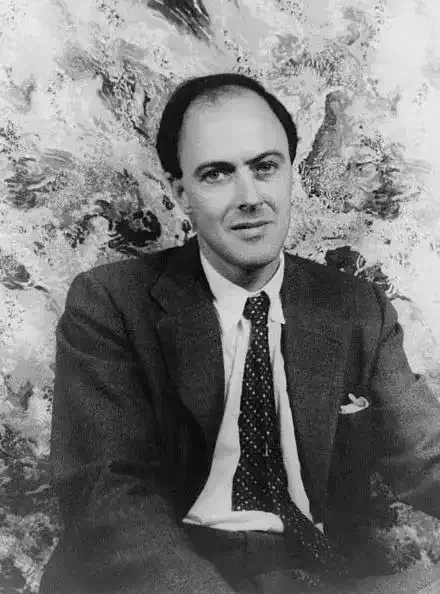
Roald Dahl
Television
The most important thing we've learned,
So far as children are concerned,
Is never, NEVER, NEVER let
Them near your television set --
Or better still, just don't install
The idiotic thing at all.
In almost every house we've been,
We've watched them gaping at the screen.
They loll and slop and lounge about,
And stare until their eyes pop out.
(Last week in someone's place we saw
A dozen eyeballs on the floor.)
They sit and stare and stare and sit
Until they're hypnotised by it,
Until they're absolutely drunk
With all that shocking ghastly junk.
Oh yes, we know it keeps them still,
They don't climb out the window sill,
They never fight or kick or punch,
They leave you free to cook the lunch
And wash the dishes in the sink --
But did you ever stop to think,
To wonder just exactly what
This does to your beloved tot?
IT ROTS THE SENSE IN THE HEAD!
IT KILLS IMAGINATION DEAD!
IT CLOGS AND CLUTTERS UP THE MIND!
IT MAKES A CHILD SO DULL AND BLIND
HE CAN NO LONGER UNDERSTAND
A FANTASY, A FAIRYLAND!
HIS BRAIN BECOMES AS SOFT AS CHEESE!
HIS POWERS OF THINKING RUST AND FREEZE!
HE CANNOT THINK -- HE ONLY SEES!
'All right!' you'll cry. 'All right!' you'll say,
'But if we take the set away,
What shall we do to entertain
Our darling children? Please explain!'
We'll answer this by asking you,
'What used the darling ones to do?
'How used they keep themselves contented
Before this monster was invented?'
Have you forgotten? Don't you know?
We'll say it very loud and slow:
THEY ... USED ... TO ... READ! They'd READ and READ,
AND READ and READ, and then proceed
To READ some more. Great Scott! Gadzooks!
One half their lives was reading books!
The nursery shelves held books galore!
Books cluttered up the nursery floor!
And in the bedroom, by the bed,
More books were waiting to be read!
Such wondrous, fine, fantastic tales
Of dragons, gypsies, queens, and whales
And treasure isles, and distant shores
Where smugglers rowed with muffled oars,
And pirates wearing purple pants,
And sailing ships and elephants,
And cannibals crouching 'round the pot,
Stirring away at something hot.
(It smells so good, what can it be?
Good gracious, it's Penelope.)
The younger ones had Beatrix Potter
With Mr. Tod, the dirty rotter,
And Squirrel Nutkin, Pigling Bland,
And Mrs. Tiggy-Winkle and-
Just How The Camel Got His Hump,
And How the Monkey Lost His Rump,
And Mr. Toad, and bless my soul,
There's Mr. Rate and Mr. Mole-
Oh, books, what books they used to know,
Those children living long ago!
So please, oh please, we beg, we pray,
Go throw your TV set away,
And in its place you can install
A lovely bookshelf on the wall.
Then fill the shelves with lots of books,
Ignoring all the dirty looks,
The screams and yells, the bites and kicks,
And children hitting you with sticks-
Fear not, because we promise you
That, in about a week or two
Of having nothing else to do,
They'll now begin to feel the need
Of having something to read.
And once they start -- oh boy, oh boy!
You watch the slowly growing joy
That fills their hearts. They'll grow so keen
They'll wonder what they'd ever seen
In that ridiculous machine,
That nauseating, foul, unclean,
Repulsive television screen!
And later, each and every kid
Will love you more for what you did.
315
James Whitcomb Riley
Iry And Billy Jo
Iry an' Billy an' Jo!--
Iry an' Billy's _the boys_,
An' _Jo's_ their _dog_, you know,--
Their pictures took all in a row.
Bet they kin kick up a noise--
Iry and Billy, the boys,
And that-air little dog Jo!
_Iry's_ the one 'at stands
Up there a-lookin' so mild
An' meek--with his hat in his hands,
Like such a 'bediant child-(_
Sakes-alive_!)--An' _Billy_ he sets
In the cheer an' holds onto Jo an' _sweats_
Hisse'f, a-lookin' so good! Ho-ho!
Iry an' Billy an' Jo!
Yit the way them boys, you know,
Usen to jes turn in
An' fight over that dog Jo
Wuz a burnin'-shame-an'-a-sin !--
Iry _he'd_ argy 'at, by gee-whizz!
That-air little Jo-dog wuz _his_!--
An' Billy _he'd_ claim it wuzn't so-'
Cause the dog wuz _his'n_!--An' at it they'd go,
Nip-an'-tugg, tooth-an'-toenail, you know--
Iry an' Billy an' Jo!
But their Pa--(He wuz the marshal then)
He 'tended-like 'at he _jerked 'em up_;
An' got a jury o' Brickyard men
An' helt a _trial_ about the pup:
An' _he_ says _he_ jes like to a-died
When the rest o' us town-boys _testified_--
Regardin', you know,
Iry an' Billy an' Jo.-
'Cause we all knowed, when _the Gypsies_ they
Camped down here by the crick last Fall,
They brung Jo with 'em, an' give him away
To Iry an' Billy fer nothin' at all!--
So the jury fetched in the _verdick_ so
Jo he ain't _neether_ o' theirn fer _shore_-He's
_both_ their dog, an' jes no more!
An' so
They've quit quarrelin' long ago,
Iry an' Billy an' Jo.
314
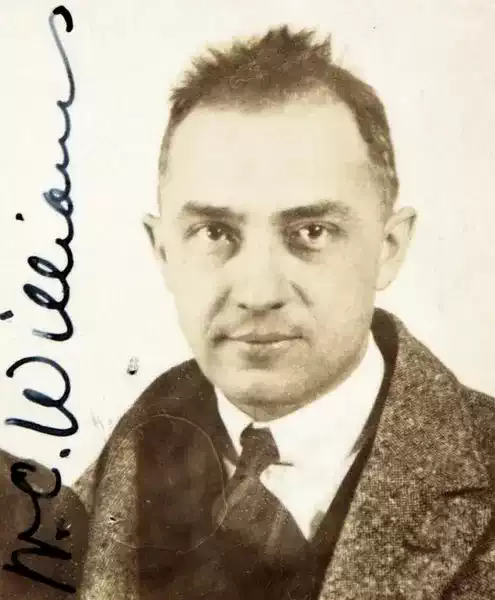
William Carlos Williams
The Cold Night
It is cold. The white moon
is up among her scattered stars--
like the bare thighs of
the Police Sergeant's wife--among
her five children . . .
No answer. Pale shadows lie upon
the frosted grass. One answer:
It is midnight, it is still
and it is cold . . . !
White thights of the sky! a
new answer out of the depths of
my male belly: In April . . .
In April I shall see again--In April!
the round and perfects thighs
of the Police Sergeant's wife
perfect still after many babies.
Oya!
315
James Whitcomb Riley
The Circus-Day Parade
Oh, the Circus-Day parade! How the bugles played and played!
And how the glossy horses tossed their flossy manes, and neighed,
As the rattle and the rhyme of the tenor-drummer's time
Filled all the hungry hearts of us with melody sublime!
How the grand band-wagon shone with a splendor all its own,
And glittered with a glory that our dreams had never known!
And how the boys behind, high and low of every kind,
Marched in unconscious capture, with a rapture undefined!
How the horsemen, two and two, with their plumes of white and blue,
And crimson, gold and purple, nodding by at me and you.
Waved the banners that they bore, as the Knights in days of yore,
Till our glad eyes gleamed and glistened like the spangles that they wore!
How the graceless-graceful stride of the elephant was eyed,
And the capers of the little horse that cantered at his side!
How the shambling camels, tame to the plaudits of their fame,
With listless eyes came silent, masticating as they came.
How the cages jolted past, with each wagon battened fast,
And the mystery within it only hinted of at last
From the little grated square in the rear, and nosing there
The snout of some strange animal that sniffed the outer air!
And, last of all, The Clown, making mirth for all the town,
With his lips curved ever upward and his eyebrows ever down,
And his chief attention paid to the little mule that played
A tattoo on the dashboard with his heels, in the parade.
Oh! the Circus-Day parade! How the bugles played and played!
And how the glossy horses tossed their flossy manes and neighed.
As the rattle and the rhyme of the tenor-drummer's time
Filled all the hungry hearts of us with melody sublime!
312
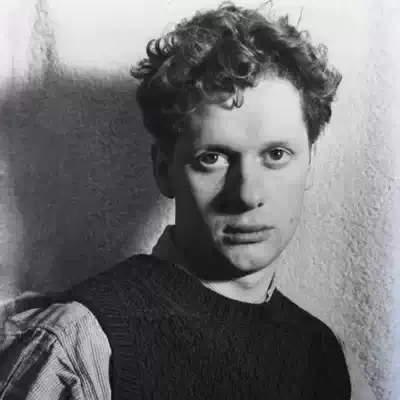
Dylan Thomas
Why East Wind Chills
Why east wind chills and south wind cools
Shall not be known till windwell dries
And west's no longer drowned
In winds that bring the fruit and rind
Of many a hundred falls;
Why silk is soft and the stone wounds
The child shall question all his days,
Why night-time rain and the breast's blood
Both quench his thirst he'll have a black reply.
When cometh Jack Frost? the children ask.
Shall they clasp a comet in their fists?
Not till, from high and low, their dust
Sprinkles in children's eyes a long-last sleep
And dusk is crowded with the children's ghosts,
Shall a white answer echo from the rooftops.
All things are known: the stars' advice
Calls some content to travel with the winds,
Though what the stars ask as they round
Time upon time the towers of the skies
Is heard but little till the stars go out.
I hear content, and 'Be Content'
Ring like a handbell through the corridors,
And 'Know no answer,' and I know
No answer to the children's cry
Of echo's answer and the man of frost
And ghostly comets over the raised fists.
310
James Whitcomb Riley
Dot Leedle Boy
Ot's a leedle Gristmas story
Dot I told der leedle folks--
Und I vant you stop dot laughin'
Und grackin' funny jokes!--
So help me Peter-Moses!
Ot's no time for monkey-shine,
Ober I vast told you somedings
Of dot leedle boy of mine!
Ot vas von cold Vinter vedder,
Ven der snow vas all about--
Dot you have to chop der hatchet
Eef you got der sauerkraut!
Und der cheekens on der hind leg
Vas standin' in der shine
Der sun shmile out dot morning
On dot leedle boy of mine.
He vas yoost a leedle baby
Not bigger as a doll
Dot time I got acquaintet--
Ach! you ought to heard 'im squall!--
I grackys! dot's der moosic
Ot make me feel so fine
Ven first I vas been marriet--
Oh, dot leedle boy of mine!
He look yoost like his fader!--
So, ven der vimmen said,
'Vot a purty leedle baby!'
Katrina shake der head. . . .
I dink she must 'a' notice
Dot der baby vas a-gryin',
Und she cover up der blankets
Of dot leedle boy of mine.
Vel, ven he vas got bigger,
Dot he grawl und bump his nose,
Und make der table over,
Und molasses on his glothes--
Dot make 'im all der sveeter,--
So I say to my Katrine,
'Better you vas quit a-shpankin'
Dot leedle boy of mine!'
No more he vas older
As about a dozen months
He speak der English language
Und der German--bote at vonce!
Und he dringk his glass of lager
Like a Londsman fon der Rhine--
Und I klingk my glass togeder
Mit dot leedle boy of mine!
I vish you could 'a' seen id--
Ven he glimb up on der chair
Und shmash der lookin'-glasses
Ven he try to comb his hair
Mit a hammer!--Und Katrina
Say, 'Dot's an ugly sign!'
But I laugh und vink my fingers
At dot leedle boy of mine.
But vonce, dot Vinter morning,
He shlip out in der snow
Mitout no stockin's on 'im.--
He say he 'vant to go
Und fly some mit der birdies!'
Und ve give 'im medi-cine
Ven he catch der 'parrygoric'--
Dot leedle boy of mine!
Und so I set und nurse 'im,
Vile der Gristmas vas come roun',
Und I told 'im 'bout 'Kriss Kringle,'
How he come der chimbly down:
Und I ask 'im eef he love 'im
Eef he bring 'im someding fine?
'Nicht besser as mein fader,'
Say dot leedle boy of mine.--
Und he put his arms aroun' me
Und hug so close und tight,
I hear der gclock a-tickin'
All der balance of der night! . . .
Someding make me feel so funny
Ven I say to my Katrine,
'Let us go und fill der stockin's
Of dot leedle boy of mine.'
Vell.--Ve buyed a leedle horses
Dot you pull 'im mit a shtring,
Und a leedle fancy jay-bird--
Eef you vant to hear 'im sing
You took 'im by der topknot
Und yoost blow in behine--
Und dot make much spectakel
For dot leedle boy of mine!
Und gandies, nuts und raizens--
Und I buy a leedle drum
Dot I vant to hear 'im rattle
Ven der Gristmas morning come!
Und a leedle shmall tin rooster
Dot vould crow so loud und fine
Ven he sqveeze 'im in der morning,
Dot leedle boy of mine!
Und--vile ve vas a-fixin'--
Dot leedle boy vake out!
I t'ought he been a-dreamin'
'Kriss Kringle' vas about,--
For he say--'DOT'S HIM!--I SEE 'IM
MIT DER SHTARS DOT MAKE DER SHINE!'
Und he yoost keep on a-gryin'--
Dot leedle boy of mine,--
Und gottin' vorse und vorser--
Und tumble on der bed!
So--ven der doctor seen id,
He kindo' shake his head,
Und feel his pulse--und visper,
'Der boy is a-dyin'.'
You dink I could BELIEVE id?--
DOT LEEDLE BOY OF MINE?
I told you, friends--dot's someding,
Der last time dot he speak
Und say, 'GOOT-BY, KRISS KRINGLE!'
--Dot make me feel so veak
I yoost kneel down und drimble,
Und bur-sed out a-gryin',
'MEIN GOTT, MEIN GOTT IN HIMMEL!--
DOT LEEDLE BOY OF MINE!'
. . . . . . . . . .
Der sun don't shine DOT Gristmas!
. . . Eef dot leedle boy vould LIFF'D--
No deefer-en'! for HEAVEN vas
His leedle Gristmas gift!
Und der ROOSTER, und der GANDY,
Und me--und my Katrine--
Und der jay-bird--is awaiting
For dot leedle boy of mine.
309
James Whitcomb Riley
No Boy Knows
There are many things that boys may know--
Why this and that are thus and so,--
Who made the world in the dark and lit
The great sun up to lighten it:
Boys know new things every day--
When they study, or when they play,--
When they idle, or sow and reap--
But no boy knows when he goes to sleep.
Boys who listen--or should, at least,--
May know that the round old earth rolls East;--
And know that the ice and the snow and the rain--
Ever repeating their parts again--
Are all just water the sunbeams first
Sip from the earth in their endless thirst,
And pour again till the low streams leap.--
But no boy knows when he goes to sleep.
A boy may know what a long glad while
It has been to him since the dawn's first smile,
When forth he fared in the realm divine
Of brook-laced woodland and spun-sunshine;--
He may know each call of his truant mates,
And the paths they went,--and the pasture-gates
Of the 'cross-lots home through the dusk so deep.--
But no boy knows when he goes to sleep.
O I have followed me, o'er and o'er,
From the flagrant drowse on the parlor-floor,
To the pleading voice of the mother when
I even doubted I heard it then--
To the sense of a kiss, and a moonlit room,
And dewy odors of locust-bloom--
A sweet white cot--and a cricket's cheep.--
But no boy knows when he goes to sleep.
308
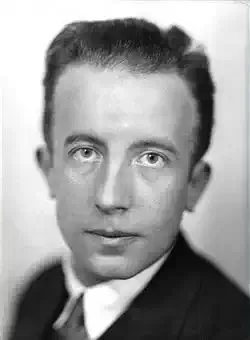
Paul Éluard
Other Children
"Little child of my five senses
and of my tenderness."
Let us cradle our loves,
We will have good children.
Well cared for,
We will fear nothing on earth,
Happiness, good fortune, prudence,
Our loves
And this leap from age to age,
From the order of a child to that of an old man,
Will not diminish us.
(Confidence).
and of my tenderness."
Let us cradle our loves,
We will have good children.
Well cared for,
We will fear nothing on earth,
Happiness, good fortune, prudence,
Our loves
And this leap from age to age,
From the order of a child to that of an old man,
Will not diminish us.
(Confidence).
307

Ogden Nash
Children's Party
May I join you in the doghouse, Rover?
I wish to retire till the party's over.
Since three o'clock I've done my best
To entertain each tiny guest. My conscience now I've left behind me,
And if they want me, let them find me.
I blew their bubbles, I sailed their boats,
I kept them from each other's throats. I told them tales of magic lands,
I took them out to wash their hands.
I sorted their rubbers and tied their laces,
I wiped their noses and dried their faces. Of similarities there's lots
Twixt tiny tots and Hottentots.
I've earned repose to heal the ravages
Of these angelic-looking savages. Oh, progeny playing by itself
Is a lonely little elf,
But progeny in roistering batches
Would drive St. francis from here to Natchez. Shunned are the games a parent
proposes,
They prefer to squirt each other with hoses,
Their playmates are their natural foemen
And they like to poke each other's abdomen. Their joy needs another woe's to cushion
it,
Say a puddle, and someone littler to push in it.
They observe with glee the ballistic results
Of ice cream with spoons for catapults, And inform the assembly with tears and glares
That everyone's presents are better than theirs.
Oh, little women and little men,
Someday I hope to love you again, But not till after the party's over,
So give me the key to the doghouse, Rover
307
James Whitcomb Riley
The Brook-Song
Little brook! Little brook!
You have such a happy look--
Such a very merry manner, as you swerve and
curve and crook--
And your ripples, one and one,
Reach each other's hands and run
Like laughing little children in the sun!
Little brook, sing to me:
Sing about a bumblebee
That tumbled from a lily-bell and grumbled
mumblingly,
Because he wet the film
Of his wings, and had to swim,
While the water-bugs raced round and
laughed at him!
Little brook-sing a song
Of a leaf that sailed along
Down the golden-braided centre of your current
swift and strong,
And a dragon-fly that lit
On the tilting rim of it,
And rode away and wasn't scared a bit.
And sing--how oft in glee
Came a truant boy like me,
Who loved to lean and listen to your lilting
melody,
Till the gurgle and refrain
Of your music in his brain
Wrought a happiness as keen to him
as pain.
Little brook-laugh and leap!
Do not let the dreamer weep:
Sing him all the songs of summer till he sink in
softest sleep;
And then sing soft and low
Through his dreams of long ago--
Sing back to him the rest he used to
know!
306

Emily Dickinson
Teach Him—When He makes the names
Teach Him—When He makes the names—
Such an one—to say—
On his babbling—Berry—lips—
As should sound—to me—
Were my Ear—as near his nest—
As my thought—today—
As should sound—
"Forbid us not"—
Some like "Emily."
Such an one—to say—
On his babbling—Berry—lips—
As should sound—to me—
Were my Ear—as near his nest—
As my thought—today—
As should sound—
"Forbid us not"—
Some like "Emily."
307
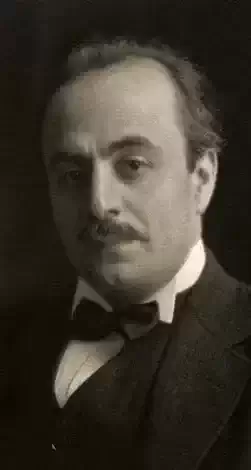
Khalil Gibran
Two Infants II
A prince stood on the balcony of his palace addressing a great multitude summoned for
the occasion and said, "Let me offer you and this whole fortunate country my
congratulations upon the birth of a new prince who will carry the name of my noble
family, and of whom you will be justly proud. He is the new bearer of a great and
illustrious ancestry, and upon him depends the brilliant future of this realm. Sing and
be merry!" The voices of the throngs, full of joy and thankfulness, flooded the sky with
exhilarating song, welcoming the new tyrant who would affix the yoke of oppression to
their necks by ruling the weak with bitter authority, and exploiting their bodies and
killing their souls. For that destiny, the people were singing and drinking ecstatically to
the heady of the new Emir.
Another child entered life and that kingdom at the same time. While the crowds were
glorifying the strong and belittling themselves by singing praise to a potential despot,
and while the angels of heaven were weeping over the people's weakness and
servitude, a sick woman was thinking. She lived in an old, deserted hovel and, lying in
her hard bed beside her newly born infant wrapped with ragged swaddles, was starving
to death. She was a penurious and miserable young wife neglected by humanity; her
husband had fallen into the trap of death set by the prince's oppression, leaving a
solitary woman to whom God had sent, that night, a tiny companion to prevent her
from working and sustaining life.
As the mass dispersed and silence was restored to the vicinity, the wretched woman
placed the infant on her lap and looked into his face and wept as if she were to baptize
him with tears. And with a hunger weakened voice she spoke to the child saying, "Why
have you left the spiritual world and come to share with me the bitterness of earthly
life? Why have you deserted the angels and the spacious firmament and come to this
miserable land of humans, filled with agony, oppression, and heartlessness? I have
nothing to give you except tears; will you be nourished on tears instead of milk? I have
no silk clothes to put on you; will my naked, shivering arms give you warmth? The little
animals graze in the pasture and return safely to their shed; and the small birds pick
the seeds and sleep placidly between the branches. But you, my beloved, have naught
save a loving but destitute mother."
Then she took the infant to her withered breast and clasped her arms around him as if
wanting to join the two bodies in one, as before. She lifted her burning eyes slowly
toward heaven and cried, "God! Have mercy on my unfortunate countrymen!"
At that moment the clouds floated from the face of the moon, whose beams penetrated
the transom of that poor home and fell upon two corpses.
307
James Whitcomb Riley
On The Sunny Side
Hi and whoop-hooray, boys!
Sing a song of cheer!
Here's a holiday, boys,
Lasting half a year!
Round the world, and half is
Shadow we have tried;
Now we're where the laugh is,--
On the sunny side!
Pigeons coo and mutter,
Strutting high aloof
Where the sunbeans flutter
Through the stable roof.
Hear the chickens cheep, boys,
And the hen with pride
Clucking them to sleep, boys,
On the sunny side!
Hear the clacking guinea;
Hear the cattle moo;
Hear the horses whinny,
Looking out at you!
On the hitching-block, boys,
Grandly satisfied,
See the old peacock, boys,
On the sunny side!
Robins in the peach-tree;
Bluebirds in the pear;
Blossoms over each tree
In the orchard there!
All the world's in joy, boys,
Glad and glorified
As a romping boy, boys,
On the sunny side!
Where's a heart as mellow?
Where's a soul as free?
Where is any fellow
We would rather be?
Just ourselves or none, boys,
World around and wide,
Laughing in the sun, boys,
On the sunny side!
306

Carl Sandburg
Sixteen Months
On the lips of the child Janet float changing dreams.
It is a thin spiral of blue smoke,
A morning campfire at a mountain lake.
On the lips of the child Janet,
Wisps of haze on ten miles of corn,
Young light blue calls to young light gold of morning.
It is a thin spiral of blue smoke,
A morning campfire at a mountain lake.
On the lips of the child Janet,
Wisps of haze on ten miles of corn,
Young light blue calls to young light gold of morning.
304

Spike Milligan
Unto Us...
Somewhere at some time
They committed themselves to me
And so, I was!
Small, but I WAS!
Tiny, in shape
Lusting to live
I hung in my pulsing cave.
Soon they knew of me
My mother --my father.
I had no say in my being
I lived on trust
And love
Tho' I couldn't think
Each part of me was saying
A silent 'Wait for me
I will bring you love!'
I was taken
Blind, naked, defenseless
By the hand of one
Whose good name
Was graven on a brass plate
in Wimpole Street,
and dropped on the sterile floor
of a foot operated plastic waste
bucket.
There was no Queens Counsel
To take my brief.
The cot I might have warmed
Stood in Harrod's shop window.
When my passing was told
My father smiled.
No grief filled my empty space.
My death was celebrated
With tickets to see Danny la Rue
Who was pretending to be a woman
Like my mother was.
304
James Whitcomb Riley
Little Dick And The Clock
When Dicky was sick
In the night, and the clock,
As he listened, said 'TickAtty--
tick-atty--tock!'
He said that _it_ said,
Every time it said 'Tick,'
It said 'Sick,' instead,
And he _heard_ it say 'Sick!'
And when it said 'TickAtty--
tick-atty--tock,'
He said it said 'SickAtty--
sick-atty--sock!'
And he tried to _see_ then,
But the light was too dim,
Yet he _heard_ it again-And't
was _talking_ to him!
And then it said 'SickAtty--
sick-atty--sick
You poor little DickAtty--
Dick-atty--dock!
Have you got the hick-
Atties? Hi! send for Doc
To hurry up quick
Atty--quick-atty--quock,
And heat a hot brick
Atty--
brick-atty--brock,
And rikle-ty wrap it
And clickle-ty clap it
Against his cold feet
Al-
ty--weep-aty--eepaty-_
There_ he goes, slapit
Ty--
slippaty--sleepaty!'
305
James Whitcomb Riley
Naughty Claude
When Little Claude was naughty wunst
At dinner-time, an' said
He won't say '_Thank you_' to his Ma,
She maked him go to bed
An' stay two hours an' not git up,--
So when the clock struck Two,
Nen Claude says,--'Thank you, Mr. Clock,
I'm much obleeged to you!'
At dinner-time, an' said
He won't say '_Thank you_' to his Ma,
She maked him go to bed
An' stay two hours an' not git up,--
So when the clock struck Two,
Nen Claude says,--'Thank you, Mr. Clock,
I'm much obleeged to you!'
305
James Whitcomb Riley
Our Little Girl
Her heart knew naught of sorrow,
Nor the vaguest taint of sin-'
Twas an ever-blooming blossom
Of the purity within:
And her hands knew only touches
Of the mother's gentle care,
And the kisses and caresses
Through the interludes of prayer.
Her baby-feet had journeyed
Such a little distance here,
They could have found no briers
In the path to interfere;
The little cross she carried
Could not weary her, we know,
For it lay as lightly on her
As a shadow on the snow.
And yet the way before us--
O how empty now and drear!--
How ev'n the dews of roses
Seem as dripping tears for her!
And the song-birds all seem crying,
As the winds cry and the rain,
All sobbingly,--'We want--we want
Our little girl again!'
302

Robert Louis Stevenson
The Flowers
All the names I know from nurse:
Gardener's garters, Shepherd's purse,
Bachelor's buttons, Lady's smock,
And the Lady Hollyhock.
Fairy places, fairy things,
Fairy woods where the wild bee wings,
Tiny trees for tiny dames--
These must all be fairy names!
Tiny woods below whose boughs
Shady fairies weave a house;
Tiny tree-tops, rose or thyme,
Where the braver fairies climb!
Fair are grown-up people's trees,
But the fairest woods are these;
Where, if I were not so tall,
I should live for good and all.
303