
Children
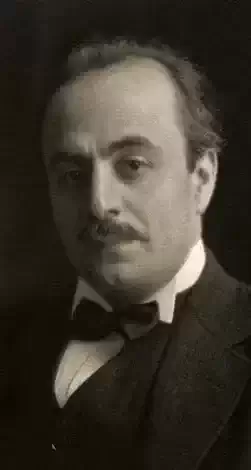
Khalil Gibran
The Widow and Her Son XXI
Night fell over North Lebanon and snow was covering the villages surrounded by the
Kadeesha Valley, giving the fields and prairies the appearance of a great sheet of
parchment upon which the furious Nature was recording her many deeds. Men came
home from the streets while silence engulfed the night.
In a lone house near those villages lived a woman who sat by her fireside spinning
wool, and at her side was her only child, staring now at the fire and then at his mother.
A terrible roar of thunder shook the house and the little boy shook with fright. He threw
his arms about his mother, seeking protection from Nature in her affection. She took
him to her bosom and kissed him; then she say him on her lap and said, "Do not fear,
my son, for Nature is but comparing her great power to man's weakness. There is a
Supreme Being beyond the falling snow and the heavy clouds and the blowing wind,
and He knows the needs of the earth, for He made it; and He looks upon the weak with
merciful eyes.
"Be brave, my boy. Nature smiles in Spring and laughs in Summer and yawns in
Autumn, but now she is weeping; and with her tears she waters life, hidden under the
earth.
"Sleep, my dear child; your father is viewing us from Eternity. The snow and thunder
bring us closer to him at this time.
"Sleep, my beloved, for this white blanket which makes us cold, keeps the seeds warm,
and these war-like things will produce beautiful flowers when Nisan comes.
"Thus, my child, man cannot reap love until after sad and revealing separation, and
bitter patience, and desperate hardship. Sleep, my little boy; sweet dreams will find
your soul who is unafraid of the terrible darkness of night and the biting frost."
The little boy looked upon his mother with sleep-laden eyes and said, "Mother, my eyes
are heavy, but I cannot go to bed without saying my prayer."
The woman looked at his angelic face, her vision blurred by misted eyes, and said,
"Repeat with me, my boy - 'God, have mercy on the poor and protect them from the
winter; warm their thin-clad bodies with Thy merciful hands; look upon the orphans
who are sleeping in wretched houses, suffering from hunger and cold. Hear, oh Lord,
the call of widows who are helpless and shivering with fear for their young. Open, oh
Lord, the hearts of all humans, that they may see the misery of the weak. Have mercy
upon the sufferers who knock on doors, and lead the wayfarers into warm places.
Watch, oh Lord, over the little birds and protect the trees and fields from the anger of
the storm; for Thou art merciful and full of love.'"
As Slumber captured the boy's spirit, his mother placed him in the bed and kissed his
eyes with quivering lips. Then she went back and sat by the hearth, spinning the wool
to make him raiment.
362

Ella Wheeler Wilcox
Why The Daisies Are Not All White
Uncle Rob says:
Once the daisies all were white,
Till a baby fellow
Ate his supper down one night,
And stained his face all yellow.
Smeared with butter, off to bed
Crept the sleepy flower.
'Fie!' the good nurse dew-drop said,
Come now to my bower.
'Let me wash you clean, I pray,
Like the pink and rosy.'
But the daisy pulled away
Like a stubborn posy.
All unwashed he went to sleep,
Naughty little fellow.
Ever since he's had to keep
That great patch of yellow.
So Uncle Rob says.
362

James Whitcomb Riley
A Diverted Tragedy
Gracie wuz allus a _careless_ tot;
But Gracie dearly loved her doll,
An' played wiv it on the winder-sill
'Way up-stairs, when she ought to _not_,
An' her muvver _telled_ her so an' all;
But she won't _mind_ what _she_ say--till,
First thing she know, her dolly fall
Clean spang out o' the winder plumb
Into the street! An' here Grace come
Down-stairs, two at a time, ist wild
An' a-screamin', 'Oh, my child! my child!'
Jule wuz a-bringin' their basket o' clo'es
Ist then into their hall down there,--
An' she ist stop' when Gracie bawl,
An' Jule she say 'She ist declare
She's ist in time!' An' what you s'pose?
She sets her basket down in the hall,
An' wite on top o' the snowy clo'es
Wuz Gracie's dolly a-layin' there
An' ist ain't bu'st ner hurt a-tall!
Nen Gracie smiled--ist _sobbed_ an' smiled--
An' cried, 'My child! my precious child!'
362

Henry Wadsworth Longfellow
Nature
As a fond mother, when the day is o'er,
Leads by the hand her little child to bed,
Half willing, half reluctant to be led,
And leave his broken playthings on the floor,
Still gazing at them through the open door,
Nor wholly reassured and comforted
By promises of others in their stead,
Which though more splendid, may not please him more;
So Nature deals with us, and takes away
Our playthings one by one, and by the hand
Leads us to rest so gently, that we go
Scarce knowing if we wish to go or stay,
Being too full of sleep to understand
How far the unknown transcends the what we know.
355

Carl Sandburg
Child Moon
The child's wonder
At the old moon
Comes back nightly.
She points her finger
To the far silent yellow thing
Shining through the branches
Filtering on the leaves a golden sand,
Crying with her little tongue, “See the moon!”
And in her bed fading to sleep
With babblings of the moon on her little mouth.
At the old moon
Comes back nightly.
She points her finger
To the far silent yellow thing
Shining through the branches
Filtering on the leaves a golden sand,
Crying with her little tongue, “See the moon!”
And in her bed fading to sleep
With babblings of the moon on her little mouth.
350

Robert Louis Stevenson
Singing
Of speckled eggs the birdie sings
And nests among the trees;
The sailor sings of ropes and things
In ships upon the seas.
The children sing in far Japan,
The children sing in Spain;
The organ with the organ man
Is singing in the rain.
And nests among the trees;
The sailor sings of ropes and things
In ships upon the seas.
The children sing in far Japan,
The children sing in Spain;
The organ with the organ man
Is singing in the rain.
351
James Whitcomb Riley
An Impetuous Resolve
When little Dickie Swope's a man,
He's go' to be a Sailor;
An' little Hamey Tincher, he's
A-go' to be a Tailor:
Bud Mitchell, he's a-go' to be
A stylish Carriage-Maker;
An' when _I_ grow a grea'-big man,
I'm go' to be a Baker!
An' Dick'll buy his sailor-suit
O' Hame; and Hame'll take it
An' buy as fine a double-rigg
As ever Bud can make it:
An' nen all three'll drive roun' fer me
An' we'll drive off togevver,
A-slingin' pie-crust 'long the road
Ferever an' ferever!
347
Robert Louis Stevenson
The Swing
How do you like to go up in a swing,
Up in the air so blue?
Oh, I do think it the pleasantest thing
Ever a child can do!
Up in the air and over the wall,
Till I can see so wide,
River and trees and cattle and all
Over the countryside--
Till I look down on the garden green,
Down on the roof so brown--
Up in the air I go flying again,
Up in the air and down!
348

Emily Dickinson
Some, too fragile for winter winds
Some, too fragile for winter winds
The thoughtful grave encloses-
Tenderly tucking them in from frost
Before their feet are cold.
Never the treasures in her nest
The cautious grave exposes,
Building where schoolboy dare not look,
And sportsman is not bold.
This covert have all the children
Early aged, and often cold,
Sparrow, unnoticed by the Father-
Lambs for whom time had not a fold.
347

William Wordsworth
Lucy Gray
Oft I had heard of Lucy Gray:
And, when I crossed the wild,
I chanced to see at break of day
The solitary child.
No mate, no comrade Lucy knew;
She dwelt on a wide moor,
--The sweetest thing that ever grew
Beside a human door!
You yet may spy the fawn at play,
The hare upon the green;
But the sweet face of Lucy Gray
Will never more be seen.
"To-night will be a stormy night--
You to the town must go;
And take a lantern, Child, to light
Your mother through the snow."
"That, Father! will I gladly do:
'Tis scarcely afternoon--
The minster-clock has just struck two,
And yonder is the moon!"
At this the Father raised his hook,
And snapped a faggot-band;
He plied his work;--and Lucy took
The lantern in her hand.
Not blither is the mountain roe:
With many a wanton stroke
Her feet disperse the powdery snow,
That rises up like smoke.
The storm came on before its time:
She wandered up and down;
And many a hill did Lucy climb:
But never reached the town.
The wretched parents all that night
Went shouting far and wide;
But there was neither sound nor sight
To serve them for a guide.
At day-break on a hill they stood
That overlooked the moor;
And thence they saw the bridge of wood,
A furlong from their door.
They wept--and, turning homeward, cried,
"In heaven we all shall meet;"
--When in the snow the mother spied
The print of Lucy's feet.
Then downwards from the steep hill's edge
They tracked the footmarks small;
And through the broken hawthorn hedge,
And by the long stone-wall;
And then an open field they crossed:
The marks were still the same;
They tracked them on, nor ever lost;
And to the bridge they came.
They followed from the snowy bank
Those footmarks, one by one,
Into the middle of the plank;
And further there were none!
--Yet some maintain that to this day
She is a living child;
That you may see sweet Lucy Gray
Upon the lonesome wild.
O'er rough and smooth she trips along,
And never looks behind;
And sings a solitary song
That whistles in the wind.
345
Emily Dickinson
Is it true, dear Sue?
Is it true, dear Sue?
Are there two?
I shouldn't like to come
For fear of joggling Him!
If I could shut him up
In a Coffee Cup,
Or tie him to a pin
Till I got in-
Or make him fast
To "Toby's" fist-
Hist! Whist! I'd come!
Are there two?
I shouldn't like to come
For fear of joggling Him!
If I could shut him up
In a Coffee Cup,
Or tie him to a pin
Till I got in-
Or make him fast
To "Toby's" fist-
Hist! Whist! I'd come!
339
Robert Louis Stevenson
Where Go the Boats?
Dark brown is the river,
Golden is the sand.
It flows along for ever,
With trees on either hand.
Green leaves a-floating,
Castles of the foam,
Boats of mine a-boating -
Where will all come home?
On goes the river
And out past the mill,
Away down the valley,
Away down the hill.
Away down the river,
A hundred miles or more,
Other little children
Shall bring my boats ashore.
338

John Clare
The Shepherds Calendar - February - A Thaw
The snow is gone from cottage tops
The thatch moss glows in brighter green
And eves in quick succession drops
Where grinning ides once hath been
Pit patting Wi a pleasant noise
In tubs set by the cottage door
And ducks and geese wi happy joys
Douse in the yard pond brimming oer
The sun peeps thro the window pane
Which childern mark wi laughing eye
And in the wet street steal again
To tell each other spring is nigh
And as young hope the past recalls
In playing groups will often draw
Building beside the sunny walls
Their spring-play-huts of sticks or straw
And oft in pleasures dreams they hie
Round homsteads by the village side
Scratting the hedgrow mosses bye
Where painted pooty shells abide
Mistaking oft the ivy spray
For leaves that come wi budding spring
And wondering in their search for play
Why birds delay to build and sing
The milkmaid singing leaves her bed
As glad as happy thoughts can be
While magpies chatter oer her head
As jocund in the change as she
Her cows around the closes stray
Nor lingering wait the foddering boy
Tossing the molehills in their play
And staring round in frolic joy
Ploughmen go whistling to their toils
And yoke again the rested plough
And mingling oer the mellow soils
Boys' shouts and whips are noising now
The shepherd now is often seen
By warm banks oer his work to bend
Or oer a gate or stile to lean
Chattering to a passing friend
Odd hive bees fancying winter oer
And dreaming in their combs of spring
Creeps on the slab beside their door
And strokes its legs upon its wing
While wild ones half asleep are humming
Round snowdrop bells a feeble note
And pigions coo of summer coming
Picking their feathers on the cote
The barking dogs by lane and wood
Drive sheep afield from foddering ground
And eccho in her summer mood
Briskly mocks the cheery sound
The flocks as from a prison broke
Shake their wet fleeces in the sun
While following fast a misty smoke
Reeks from the moist grass as they run
Nor more behind his masters heels
The dog creeps oer his winter pace
But cocks his tail and oer the fields
Runs many a wild and random chase
Following in spite of chiding calls
The startld cat wi harmless glee
Scaring her up the weed green walls
Or mossy mottld apple tree
As crows from morning perches flye
He barks and follows them in vain
Een larks will catch his nimble eye
And off he starts and barks again
Wi breathless haste and blinded guess
Oft following where the hare hath gone
Forgetting in his joys excess
His frolic puppy days are done
The gossips saunter in the sun
As at the spring from door to door
Of matters in the village done
And secret newsings mutterd oer
Young girls when they each other meet
Will stand their tales of love to tell
While going on errands down the street
Or fetching water from the well
A calm of pleasure listens round
And almost whispers winter bye
While fancy dreams of summer sounds
And quiet rapture fills the eye
The sun beams on the hedges lye
The south wind murmurs summer soft
And maids hang out white cloaths to dry
Around the eldern skirted croft
Each barns green thatch reeks in the sun
Its mate the happy sparrow calls
And as nest building spring begun
Peeps in the holes about the walls
The wren a sunny side the stack
Wi short tail ever on the strunt
Cockd gadding up above his back
Again for dancing gnats will hunt
The gladdend swine bolt from the sty
And round the yard in freedom run
Or stretching in their slumbers lye
Beside the cottage in the sun
The young horse whinneys to its mate
And sickens from the threshers door
Rubbing the straw yards banded gate
Longing for freedom on the moor
Hens leave their roosts wi cackling calls
To see the barn door free from snow
And cocks flye up the mossy walls
To clap their spangld wings and crow
About the steeples sunny top
The jackdaw flocks resemble spring
And in the stone archd windows pop
Wi summer noise and wanton wing
The small birds think their wants are oer
To see the snow hills fret again
And from the barns chaff litterd door
Betake them to the greening plain
The woodmans robin startles coy
Nor longer at his elbow comes
To peck wi hungers eager joy
Mong mossy stulps the litterd crumbs
Neath hedge and walls that screen the wind
The gnats for play will Hock together
And een poor flyes odd hopes will find
To venture in the mocking weather
From out their hiding holes again
Wi feeble pace they often creep
Along the sun warmd window pane
Like dreaming things that walk in sleep
The mavis thrush wi wild delight
Upon the orchards dripping tree
Mutters to see the day so bright
Spring scraps of young hopes poesy
And oft dame stops her burring wheel
To hear the robins note once more
That tutles while he pecks his meal
From sweet briar hips beside the door
The hedghog from its hollow root
Sees the wood moss clear of snow
And hunts each hedge for fallen fruit
Crab hip and winter bitten sloe
And oft when checkd by sudden fears
As shepherd dog his haunt espies
He rolls up in a ball of spears
And all his barking rage defies
Thus nature of the spring will dream
While south winds thaw but soon again
Frost breaths upon the stiffening stream
And numbs it into ice-the plain
Soon wears its merry garb of white
And icicles that fret at noon
Will eke their icy tails at night
Beneath the chilly stars and moon
Nature soon sickens of her joys
And all is sad and dumb again
Save merry shouts of sliding boys
About the frozen furrowd plain
The foddering boy forgets his song
And silent goes wi folded arms
And croodling shepherds bend along
Crouching to the whizzing storms
339
Henry Wadsworth Longfellow
The Castle-Builder. (Birds Of Passage. Flight The Third)
A gentle boy, with soft and silken locks,
A dreamy boy, with brown and tender eyes,
A castle-builder, with his wooden blocks,
And towers that touch imaginary skies.
A fearless rider on his father's knee,
An eager listener unto stories told
At the Round Table of the nursery,
Of heroes and adventures manifold.
There will be other towers for thee to build;
There will be other steeds for thee to ride;
There will be other legends, and all filled
With greater marvels and more glorified.
Build on, and make thy castles high and fair,
Rising and reaching upward to the skies;
Listen to voices in the upper air,
Nor lose thy simple faith in mysteries.
336

John Greenleaf Whittier
The Barefoot Boy
Blessings on thee, little man,
Barefoot boy, with cheek of tan!
With thy turned-up pantaloons,
And thy merry whistled tunes;
With thy red lip, redder still
Kissed by strawberries on the hill;
With the sunshine on thy face,
Through thy torn brim's jaunty grace;
From my heart I give thee joy, I
was once a barefoot boy!
Prince thou art, - the grown-up man
Only is republican.
Let the million-dollared ride!
Barefoot, trudging at his side,
Thou hast more than he can buy
In the reach of ear and eye, Outward
sunshine, inward joy:
Blessings on thee, barefoot boy!
Oh for boyhood's painless play,
Sleep that wakes in laughing day,
Health that mocks the doctor's rules,
Knowledge never learned of schools,
Of the wild bee's morning chase,
Of the wild-flower's time and place,
Flight of fowl and habitude
Of the tenants of the wood;
How the tortoise bears his shell,
How the woodchuck digs his cell,
And the ground-mole sinks his well;
How the robin feeds her young,
How the oriole's nest is hung;
Where the whitest lilies blow,
Where the freshest berries grow,
Where the ground-nut trails its vine,
Where the wood-grape's clusters shine;
Of the black wasp's cunning way,
Mason of his walls of clay,
And the architectural plans
Of gray hornet artisans!
For, eschewing books and tasks,
Nature answers all he asks;
Hand in hand with her he walks,
Face to face with her he talks,
Part and parcel of her joy, Blessings
on the barefoot boy!
Oh for boyhood's time of June,
Crowding years in one brief moon,
When all things I heard or saw,
Me, their master, waited for.
I was rich in flowers and trees,
Humming-birds and honey-bees;
For my sport the squirrel played,
Plied the snouted mole his spade;
For my taste the blackberry cone
Purpled over hedge and stone;
Laughed the brook for my delight
Through the day and through the night,
Whispering at the garden wall,
Talked with me from fall to fall;
Mine the sand-rimmed pickerel pond,
Mine the walnut slopes beyond,
Mine, on bending orchard trees,
Apples of Hesperides!
Still as my horizon grew,
Larger grew my riches too;
All the world I saw or knew
Seemed a complex Chinese toy,
Fashioned for a barefoot boy!
Oh for festal dainties spread,
Like my bowl of milk and bread;
Pewter spoon and bowl of wood,
On the door-stone, gray and rude!
O'er me, like a regal tent,
Cloudy-ribbed, the sunset bent,
Purple-curtained, fringed with gold,
Looped in many a wind-swung fold;
While for music came the play
Of the pied frogs' orchestra;
And, to light the noisy choir,
Lit the fly his lamp of fire.
I was monarch: pomp and joy
Waited on the barefoot boy!
Cheerily, then, my little man,
Live and laugh, as boyhood can!
Though the flinty slopes be hard,
Stubble-speared the new-mown sward,
Every morn shall lead thee through
Fresh baptisms of the dew;
Every evening from thy feet
Shall the cool wind kiss the heat:
All too soon these feet must hide
In the prison cells of pride,
Lose the freedom of the sod,
Like a colt's for work be shod,
Made to tread the mills of toil,
Up and down in ceaseless moil:
Happy if their track be found
Never on forbidden ground;
Happy if they sink not in
Quick and treacherous sands of sin.
Ah! that thou couldst know thy joy,
Ere it passes, barefoot boy!
332

Walter de la Mare
The Keys of Morning
While at her bedroom window once,
Learning her task for school,
Little Louisa lonely sat
In the morning clear and cool,
She slanted her small bead-brown eyes
Across the empty street,
And saw Death softly watching her
In the sunshine pale and sweet.
His was a long lean sallow face;
He sat with half-shut eyes,
Like a old sailor in a ship
Becalmed 'neath tropic skies.
Beside him in the dust he had set
His staff and shady hat;
These, peeping small, Louisa saw
Quite clearly where she sat -
The thinness of his coal-black locks,
His hands so long and lean
They scarcely seemed to grasp at all
The keys that hung between:
Both were of gold, but one was small,
And with this last did he
Wag in the air, as if to say,
"Come hither, child, to me!"
Louisa laid her lesson book
On the cold window-sill;
And in the sleepy sunshine house
Went softly down, until
She stood in the half-opened door,
And peeped. But strange to say
Where Death just now had sunning sat
Only a shadow lay:
Just the tall chimney's round-topped cowl,
And the small sun behind,
Had with its shadow in the dust
Called sleepy Death to mind.
But most she thought how strange it was
Two keys that he should bear,
And that, when beckoning, he should wag
The littlest in the air.
331
Henry Van Dyke
The Window
All night long, by a distant bell,
The passing hours were notched
On the dark, while her breathing rose and fell,
And the spark of life I watched
In her face was glowing or fading, -- who could tell? --
And the open window of the room,
With a flare of yellow light,
Was peering out into the gloom,
Like an eye that searched the night.
Oh, what do you see in the dark, little window, and why do you fear?
"I see that the garden is crowded with creeping forms of fear:
Little white ghosts in the locust-tree, that wave in the night-wind's breath,
And low in the leafy laurels the larking shadow of death."
Sweet, clear notes of a waking bird
Told of the passing away
Of the dark, -- and my darling may have heard;
For she smiled in her sleep, while the ray
Of the rising dawn spoke joy without a word,
Till the splendor born in the east outburned
The yellow lamplight, pale and thin,
And the open window slowly turned
To the eye of the morning, looking in.
Oh, what do you see in the room, little window, that makes you so bright?
"I see that a child is asleep on her pillow, soft and white,
With the rose of life on her tips, and the breath of life in her breast,
And the arms of God around her as she quietly takes her rest."
328
James Whitcomb Riley
Extremes
I
A little boy once played so loud
That the Thunder, up in a thunder-cloud,
Said, 'Since I can't be heard, why, then
I'll never, never thunder again!'
II
And a little girl once kept so still
That she heard a fly on the window-sill
Whisper and say to a lady-bird,-'
She's the stilliest child I ever heard!'
329
James Whitcomb Riley
Elmer Brown
Awf'lest boy in this-here town
Er anywheres is Elmer Brown!
He'll mock you--yes, an' strangers, too,
An' make a face an' yell at you,-'_
Here's_ the way _you_ look!'
Yes, an' wunst in School one day,
An' Teacher's lookin' wite that way,
He helt his slate, an' hide his head,
An' maked a face at _her_, an' said,-'_
Here's_ the way _you_ look!'
An' sir! when Rosie Wheeler smile
One morning at him 'crosst the aisle,
He twist his face all up, an' black
His nose wiv ink, an' whisper back,-'_
Here's_ the way _you_ look!'
Wunst when his Aunt's all dressed to call,
An' kiss him good-bye in the hall,
An' latch the gate an' start away,
He holler out to her an' say,-'_
Here's_ the way _you_ look!'
An' when his Pa he read out loud
The speech he maked, an' feel so proud
It's in the paper--Elmer's Ma
She ketched him--wite behind his Pa,-'_
Here's_ the way _you_ look!'
Nen when his Ma she slip an' take
Him in the other room an' shake
Him good! w'y, he don't care--no-_sir_!--
He ist look up an' laugh at her,-'_
Here's_ the way _you_ look!'
328
Robert Louis Stevenson
In Port
Last, to the chamber where I lie
My fearful footsteps patter nigh,
And come out from the cold and gloom
Into my warm and cheerful room.
There, safe arrived, we turn about
To keep the coming shadows out,
And close the happy door at last
On all the perils that we past.
Then, when mamma goes by to bed,
She shall come in with tip-toe tread,
And see me lying warm and fast
And in the land of Nod at last.
327
James Whitcomb Riley
A Noted Traveler
Even in such a scene of senseless play
The children were surprised one summer-day
By a strange man who called across the fence,
Inquiring for their father's residence;
And, being answered that this was the place,
Opened the gate, and with a radiant face,
Came in and sat down with them in the shade
And waited--till the absent father made
His noon appearance, with a warmth and zest
That told he had no ordinary guest
In this man whose low-spoken name he knew
At once, demurring as the stranger drew
A stuffy notebook out and turned and set
A big fat finger on a page and let
The writing thereon testify instead
Of further speech. And as the father read
All silently, the curious children took
Exacting inventory both of book
And man:--He wore a long-napped white fur-hat
Pulled firmly on his head, and under that
Rather long silvery hair, or iron-gray--
For he was not an old man,--anyway,
Not beyond sixty. And he wore a pair
Of square-framed spectacles--or rather there
Were two more than a pair,--the extra two
Flared at the corners, at the eyes' side-view,
In as redundant vision as the eyes
Of grasshoppers or bees or dragonflies.
Later the children heard the father say
He was 'A Noted Traveler,' and would stay
Some days with them--In which time host and guest
Discussed, alone, in deepest interest,
Some vague, mysterious matter that defied
The wistful children, loitering outside
The spare-room door. There Bud acquired a quite
New list of big words--such as 'Disunite,'
And 'Shibboleth,' and 'Aristocracy,'
And 'Juggernaut,' and 'Squatter Sovereignty,'
And 'Anti-slavery,' 'Emancipate,'
'Irrepressible conflict,' and 'The Great
Battle of Armageddon'--obviously
A pamphlet brought from Washington, D. C.,
And spread among such friends as might occur
Of like views with 'The Noted Traveler.'
323
Walter de la Mare
Melmillo
Three and thirty birds there stood
In an elder in a wood;
Called Melmillo -- flew off three,
Leaving thirty in the tree;
Called Melmillo -- nine now gone,
And the boughs held twenty-one;
Called Melmillo -- and eighteen
Left but three to nod and preen;
Called Melmillo -- three--two--one--
Now of birds were feathers none.
Then stole slim Me.millo in
To that wood all dusk and green,
And with lean long palms outspread
Softly a strange dance did tread;
Not a note of music she
Had for echoing company;
All the birds were flown to rest
In the hollow of her breast;
In the wood -- thorn, elder willow --
Danced alone -- lone danced Melmillo.
323
James Whitcomb Riley
The Raggedy Man
2
3
4
6
7
8
O the Raggedy Man! He works fer Pa;
An' he's the goodest man ever you saw!
He comes to our house every day,
An' waters the horses, an' feeds 'em hay;
An' he opens the shed -- an' we all ist laugh
When he drives out our little old wobble-ly calf;
An' nen -- ef our hired girl says he can --
He milks the cow fer 'Lizabuth Ann. -9
Ain't he a' awful good Raggedy Man?
Raggedy! Raggedy! Raggedy Man!
11
12
13
14
16
17
W'y, The Raggedy Man -- he's ist so good,
He splits the kindlin' an' chops the wood;
An' nen he spades in our garden, too,
An' does most things 'at boys can't do. --
He clumbed clean up in our big tree
An' shooked a' apple down fer me --
An' 'nother 'n', too, fer 'Lizabuth Ann -18
19
An' 'nother 'n', too, fer The Raggedy Man. -Ain't
he a' awful kind Raggedy Man?
Raggedy! Raggedy! Raggedy Man!
21
22
An' The Raggedy Man one time say he
Pick' roast' rambos from a' orchurd-tree,
23 An' et 'em -- all ist roast' an' hot! -24
An' it's so, too! -- 'cause a corn-crib got
Afire one time an' all burn' down
26 On "The Smoot Farm," 'bout four mile from town -27
On "The Smoot Farm"! Yes -- an' the hired han'
28
29
'At worked there nen 'uz The Raggedy Man! -Ain't
he the beatin'est Raggedy Man?
Raggedy! Raggedy! Raggedy Man!
31
32
33
34
36
37
38
39
41
The Raggedy Man's so good an' kind
He'll be our "horsey," an' "haw" an' mind
Ever'thing 'at you make him do --
An' won't run off -- 'less you want him to!
I drived him wunst way down our lane
An' he got skeered, when it 'menced to rain,
An' ist rared up an' squealed and run
Purt' nigh away! -- an' it's all in fun!
Nen he skeered ag'in at a' old tin can ...
Whoa! y' old runaway Raggedy Man!
Raggedy! Raggedy! Raggedy Man!
42
43
44
An' The Raggedy Man, he knows most rhymes,
An' tells 'em, ef I be good, sometimes:
Knows 'bout Giunts, an' Griffuns, an' Elves,
46
47
48
An' the Squidgicum-Squees 'at swallers the'rselves:
An', wite by the pump in our pasture-lot,
He showed me the hole 'at the Wunks is got,
'At lives 'way deep in the ground, an' can
49 Turn into me, er 'Lizabuth Ann!
50 Er Ma, er Pa, er The Raggedy Man!
51 Ain't he a funny old Raggedy Man?
52 Raggedy! Raggedy! Raggedy Man!
53 An' wunst, when The Raggedy Man come late,
54 An' pigs ist root' thue the garden-gate,
55 He 'tend like the pigs 'uz bears an' said,
56 "Old Bear-shooter'll shoot 'em dead!"
57 An' race' an' chase' 'em, an' they'd ist run
58 When he pint his hoe at 'em like it's a gun
59 An' go "Bang! -- Bang!" nen 'tend he stan'
60 An' load up his gun ag'in! Raggedy Man!
61 He's an old Bear-shooter Raggedy Man!
62 Raggedy! Raggedy! Raggedy Man!
63 An' sometimes The Raggedy Man lets on
64 We're little prince-children, an' old King's gone
65 To git more money, an' lef' us there -66
And Robbers is ist thick ever'where;
67 An' nen -- ef we all won't cry, fer shore -68
The Raggedy Man he'll come and "'splore
69 The Castul-halls," an' steal the "gold" -70
An' steal us, too, an' grab an' hold
71 An' pack us off to his old "Cave"! -- An'
72 Haymow's the "cave" o' The Raggedy Man! -73
Raggedy! Raggedy! Raggedy Man!
74 The Raggedy Man -- one time, when he
75 Wuz makin' a little bow-'n'-orry fer me,
76 Says "When you're big like your Pa is,
77 Air you go' to keep a fine store like his -78
An' be a rich merchunt -- an' wear fine clothes? -79
Er what air you go' to be, goodness knows?"
80 An' nen he laughed at 'Lizabuth Ann,
81 An' I says "'M go' to be a Raggedy Man! -82
I'm ist go' to be a nice Raggedy Man!"
83 Raggedy! Raggedy! Raggedy Man!
324
Robert Louis Stevenson
The Hayloft
Through all the pleasant meadow-side
The grass grew shoulder-high,
Till the shining scythes went far and wide
And cut it down to dry.
Those green and sweetly smelling crops
They led the waggons home;
And they piled them here in mountain tops
For mountaineers to roam.
Here is Mount Clear, Mount Rusty-Nail,
Mount Eagle and Mount High;--
The mice that in these mountains dwell,
No happier are than I!
Oh, what a joy to clamber there,
Oh, what a place for play,
With the sweet, the dim, the dusty air,
The happy hills of hay!
324