
Children

Ella Wheeler Wilcox
About May
One night Nurse Sleep held out her hand
To tired little May.
'Come, go with me to Wonderland,'
She said, 'I know the way.
Just rock-a-by-hum-m-m,
And lo! we come
To the place where the dream-girls play.'
But naughty May, she wriggled away
From Sleep's soft arms, and said:
'I must stay awake till I eat my cake,
And then I will go to bed;
With a by-lo, away I will go.'
But the good nurse shook her head.
She shook her head and away she sped,
While May sat munching her crumb.
But after the cake there came an ache,
Though May cried: 'Come, Sleep, come,
And it's oh! my! let us by-lo-by'-
All save the echoes were dumb.
She ran after Sleep toward Wonderland,
Ran till the morning light;
And just as she caught her and grasped her hand,
A nightmare gave her a fright.
And it's by-lo, I hope she'll know
Better another night.
400

Robert Louis Stevenson
Tall as a guardsman, pale as the east at dawn
Tall as a guardsman, pale as the east at dawn,
Who strides in strange apparel on the lawn?
Rails for his breakfast? routs his vassals out
(Like boys escaped from school) with song and shout?
Kind and unkind, his Maker's final freak,
Part we deride the child, part dread the antique!
See where his gang, like frogs, among the dew
Crouch at their duty, an unquiet crew;
Adjust their staring kilts; and their swift eyes
Turn still to him who sits to supervise.
He in the midst, perched on a fallen tree,
Eyes them at labour; and, guitar on knee,
Now ministers alarm, now scatters joy,
Now twangs a halting chord, now tweaks a boy.
Thorough in all, my resolute vizier
Plays both the despot and the volunteer,
Exacts with fines obedience to my laws,
And for his music, too, exacts applause.
402
Ella Wheeler Wilcox
Baby's First Journey
Lightly they hold him and lightly they sway him-
Soft as a pillow are somebody's arms.
Down he goes slowly, ever so lowly
Over the rim of the cradle they lay him
Baby's
first journey is free from alarms.
Baby is growing while Mama sings by-lo,
Sturdy and rosy and laughing and fair,
Crowing and growing past every one's knowing,
Out goes the cradle and in comes the 'high-lo,'
Baby's next journey is into this chair.
Crying or cooing or waking or sleeping,
Baby is ever a thing to adore.
Look at him yonder-oh what a wonder,
Who would believe it, the darling is creeping,
Baby's next journey is over the floor.
Sweeter and cuter and brighter and stronger,
Mama can see every day how he's grown.
Shoes are all battered, stockings all tattered,
Oh! but the baby is baby no longer
Look at the fellow-he's walking alone!
397

Johann Wolfgang von Goethe
Ballad Of The Banished And Returning Count
OH, enter old minstrel, thou time-honour'd one!
We children are here in the hall all alone,
The portals we straightway will bar.
Our mother is praying, our father is gone
To the forest, on wolves to make war.
Oh sing us a ballad, the tale then repeat,
'Till brother and I learn it right;
We long have been hoping a minstrel to meet,
For children hear tales with delight.
"At midnight, when darkness its fearful veil weaves,
His lofty and stately old castle he leaves,
But first he has buried his wealth.
What figure is that in his arms one perceives,
As the Count quits the gateway by stealth?
O'er what is his mantle so hastily thrown?
What bears he along in his flight?
A daughter it is, and she gently sleeps on"--
The children they hear with delight.
"The morning soon glimmers. the world is so wide,
In valleys and forests a home is supplied,
The bard in each village is cheer'd.
Thus lives he and wanders, while years onward glide,
And longer still waxes his beard;
But the maiden so fair in his arms grows amain,
'Neath her star all-protecting and bright,
Secured in the mantle from wind and from rain--"
The children they hear with delight.
"And year upon year with swift footstep now steals,
The mantle it fades, many rents it reveals,
The maiden no more it can hold.
The father he sees her, what rapture he feels!
His joy cannot now be controll'd.
How worthy she seems of the race whence she springs,
How noble and fair to the sight!
What wealth to her dearly-loved father she brings!"--
The children they hear with delight.
"Then comes there a princely knight galloping by,
She stretches her hand out, as soon as he's nigh,
But alms he refuses to give.
He seizes her hand, with a smile in his eye:
'Thou art mine!' he exclaims, 'while I live!'
'When thou know'st,' cries the old man, 'the treasure that's
there,
A princess thou'lt make her of right;
Betroth'd be she now, on this spot green and fair--'"
The children they hear with delight.
"So she's bless'd by the priest on the hallowed place,
And she goes with a smiling but sorrowful face,
From her father she fain would not part.
The old man still wanders with ne'er-changing pace,
He covers with joy his sad heart.
So I think of my daughter, as years pass away,
And my grandchildren far from my sight;
I bless them by night, and I bless them by day"--
The children they hear with delight.
He blesses the children: a knocking they hear,
The father it is! They spring forward in fear,
The old man they cannot conceal-"
Thou beggar, wouldst lure, then, my children so dear?
Straight seize him, ye vassals of steel!
To the dungeon most deep, with the fool-hardy knave!"
The mother from far hears the fight;
She hastens with flatt'ring entreaty to crave--
The children they hear with delight.
The vassals they suffer the Bard to stand there,
And mother and children implore him to spare,
The proud prince would stifle his ire,
'Till driven to fury at hearing their prayer,
His smouldering anger takes fire:
"Thou pitiful race! Oh, thou beggarly crew!
Eclipsing my star, once so bright!
Ye'll bring me destruction, ye sorely shall rue!"
The children they hear with affright.
The old man still stands there with dignified mien,
The vassals of steel quake before him, I ween,
The Count's fury increases in power;
"My wedded existence a curse long has been,
And these are the fruits from that flower!
'Tis ever denied, and the saying is true,
That to wed with the base-born is right;
The beggar has borne me a beggarly crew,--"
The children they hear with affright.
"If the husband, the father, thus treats you with scorn,
If the holiest bonds by him rashly are torn,
Then come to your father--to me!
The beggar may gladden life's pathway forlorn,
Though aged and weak he may be.
This castle is mine! thou hast made it thy prey,
Thy people 'twas put me to flight;
The tokens I bear will confirm what I say"--
The children they hear with delight.
"The king who erst govern'd returneth again,
And restores to the Faithful the goods that were ta'en,
I'll unseal all my treasures the while;
The laws shall be gentle, and peaceful the reign"--
The old man thus cries with a smile-
"Take courage, my son! all hath turned out for good,
And each hath a star that is bright,
Those the princess hath borne thee are princely in blood,"--
The children thy hear with delight.
398

Emily Dickinson
Whose are the little beds, I asked
Whose are the little beds, I asked
Which in the valleys lie?
Some shook their heads, and others smiled-
And no one made reply.
Perhaps they did not hear, I said,
I will inquire again-
Whose are the beds-the tiny beds
So thick upon the plain?
'Tis Daisy, in the shortest-
A little further on-
Nearest the door-to wake the Ist-
Little Leontoden.
'Tis Iris, Sir, and Aster-
Anemone, and Bell-
Bartsia, in the blanket red-
And chubby Daffodil.
Meanwhile, at many cradles
Her busy foot she plied-
Humming the quaintest lullaby
That ever rocked a child.
Hush! Epigea wakens!
The Crocus stirs her lids
Rhodora's
cheek is crimson,
She's dreaming of the woods!
Then turning from them reverent-
Their bedtime 'tis, she said-
The Bumble bees will wake them
When April woods are red.
396
Ella Wheeler Wilcox
Older Than You
We are younger in years! Yes, that is true;
But in some things we are older than you.
For instance, you sometimes say with a smile,
'It will do to drink wine once in a while.'
We say, 'It will not do at all!'
Wine is an imp of old Alcohol.
So are gin and beer, and cider, too.
If you drink up them, they will eat up you.
'Cider is not a strong drink,' you say.
Ah! but, my friend, it opens the way
For brandy and whiskey to follow fast.
It has done it many a time in the past.
It tempts and teases the appetite.
Let it alone, boys, keep to the right;
Onward and upward we mean to go.
Heaven is reached that way, you know.
People who drink are behind the time.
They are back with darkness, and woe, and crime.
This age is progressive. You people who drink,
Though ever so little, just pause and think-
Think of the anguish that liquor makes;
Think of the hearts that it burdens and breaks.
Let it alone: stop drinking to-day-
This is what we, the children, say.
395
Robert Louis Stevenson
My Ship and I
O it's I that am the captain of a tidy little ship,
Of a ship that goes a sailing on the pond;
And my ship it keeps a-turning all around and all about;
But when I'm a little older, I shall find the secret out
How to send my vessel sailing on beyond.
For I mean to grow a little as the dolly at the helm,
And the dolly I intend to come alive;
And with him beside to help me, it's a-sailing I shall go,
It's a-sailing on the water, when the jolly breezes blow
And the vessel goes a dive-dive-dive.
O it's then you'll see me sailing through the rushes and the reeds,
And you'll hear the water singing at the prow;
For beside the dolly sailor, I'm to voyage and explore,
To land upon the island where no dolly was before,
And to fire the penny cannon in the bow.
394
Ella Wheeler Wilcox
Breaking The Day In Two
When from dawn till noon seems one long day,
And from noon till night another,
Oh, then should a little boy come from play,
And creep into the arms of his mother.
Snugly creep and fall asleep,
O come, my baby, do;
Creep into my lap, and with a nap,
We'll break the day in two.
When the shadows slant for afternoon,
When the midday meal is over;
When the winds have sung themselves into a swoon,
And the bees drone in the clover.
Then hie to me, hie, for a lullaby-
Come, my baby, do;
Creep into my lap, and with a nap
We'll break the day in two.
We'll break it in two with a crooning song,
With a soft and soothing number;
For the day has no right to be so long
And keep my baby from slumber.
Then rock-a-by, rock, may white dreams flock
Like angels over you;
Baby's gone, and the deed is done
We've broken the day in two.
391

Henry Wadsworth Longfellow
The Angel And The Child. (From Jean Reboul, The Baker Of Nismes)
An angel with a radiant face,
Above a cradle bent to look,
Seemed his own image there to trace,
As in the waters of a brook.
'Dear child! who me resemblest so,'
It whispered, 'come, O come with me!
Happy together let us go,
The earth unworthy is of thee!
'Here none to perfect bliss attain;
The soul in pleasure suffering lies;
Joy hath an undertone of pain,
And even the happiest hours their sighs.
'Fear doth at every portal knock;
Never a day serene and pure
From the o'ershadowing tempest's shock
Hath made the morrow's dawn secure.
'What then, shall sorrows and shall fears
Come to disturb so pure a brow?
And with the bitterness of tears
These eyes of azure troubled grow?
'Ah no! into the fields of space,
Away shalt thou escape with me;
And Providence will grant thee grace
Of all the days that were to be.
'Let no one in thy dwelling cower,
In sombre vestments draped and veiled;
But let them welcome thy last hour,
As thy first moments once they hailed.
'Without a cloud be there each brow;
There let the grave no shadow cast;
When one is pure as thou art now,
The fairest day is still the last.'
And waving wide his wings of white,
The angel, at these words, had sped
Towards the eternal realms of light!--
Poor mother! see, thy son is dead!
390
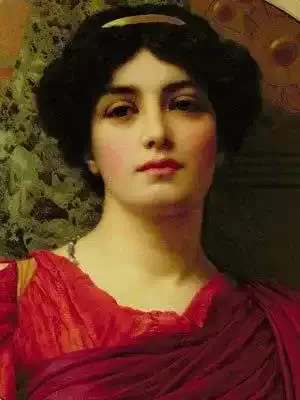
Safo
We put the urn abord ship
We put the urn aboard ship
with this inscription:
This is the dust of little
Timas who unmarried was led
into Persephone's dark bedroom
And she being far from home, girls
her age took new-edged blades
to cut, in mourning for her,
these curls of their soft hair
with this inscription:
This is the dust of little
Timas who unmarried was led
into Persephone's dark bedroom
And she being far from home, girls
her age took new-edged blades
to cut, in mourning for her,
these curls of their soft hair
392
Robert Louis Stevenson
From a Railway Carriage
Faster than fairies, faster than witches,
Bridges and houses, hedges and ditches;
And charging along like troops in a battle
All through the meadows the horses and cattle:
All of the sights of the hill and the plain
Fly as thick as driving rain;
And ever again, in the wink of an eye,
Painted stations whistle by.
Here is a child who clambers and scrambles,
All by himself and gathering brambles;
Here is a tramp who stands and gazes;
And here is the green for stringing the daisies!
Here is a cart runaway in the road
Lumping along with man and load;
And here is a mill, and there is a river:
Each a glimpse and gone forever!
390

Walt Whitman
A Child's Amaze
SILENT and amazed, even when a little boy,
I remember I heard the preacher every Sunday put God in his
statements,
As contending against some being or influence.
I remember I heard the preacher every Sunday put God in his
statements,
As contending against some being or influence.
388
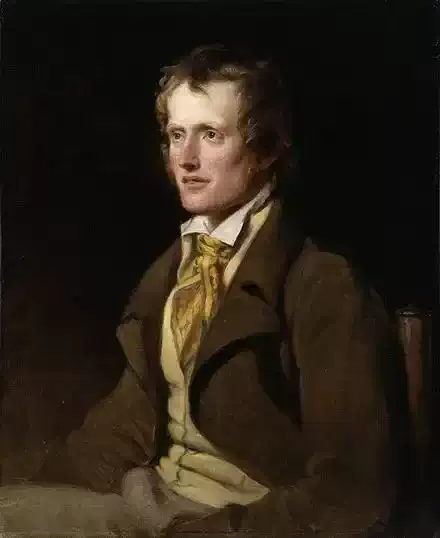
John Clare
Little Trotty Wagtail
Little trotty wagtail he went in the rain,
And tittering, tottering sideways he neer got straight again,
He stooped to get a worm, and looked up to get a fly,
And then he flew away ere his feathers they were dry.
Little trotty wagtail, he waddled in the mud,
And left his little footmarks, trample where he would.
He waddled in the water-pudge, and waggle went his tail,
And chirrupt up his wings to dry upon the garden rail.
Little trotty wagtail, you nimble all about,
And in the dimpling water-pudge you waddle in and out;
Your home is nigh at hand, and in the warm pig-stye,
So, little Master Wagtail, I'll bid you a good-bye.
386
Ella Wheeler Wilcox
The King Of Candyland
Have you heard of the king of Candy land?
Well, listen while I sing,
He has pages on every hand,
For he is a mighty king,
And thousands of children bend the knee,
And bow to this ruler of high degree.
He has a smile, oh! like the sun!
And his face is round and bland,
His bright eyes twinkle and glow with fun,
As the children kiss his hand.
And everything toothsome, melting, sweet,
He scatters freely before their feet.
But wo! for the children who follow him,
With loving praises and laughter,
For he is a monster ugly and grim
That they go running after.
And when they get well into the chase
He lifts his masque and shows his face.
And ah! but that is a gruesome sight
For the followers of the king.
The cheeks grow pale that once were bright,
And they sob instead of sing.
And their teeth drop out and their eyes grow red,
And they cannot sleep when they go to bed.
And after they see the monster's face,
They have no peaceful hour.
And they have aches in every place,
And what was sweet seems sour.
Oh wo! for that sorrowful foolish band
Who follow the king of Candy land.
382
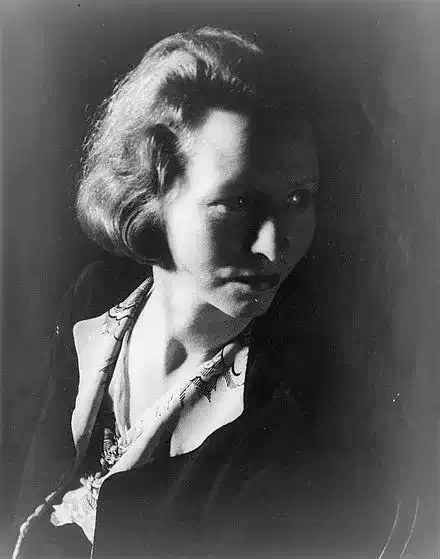
Edna St. Vincent Millay
A Visit To The Asylum
Once from a big, big building,
When I was small, small,
The queer folk in the windows
Would smile at me and call.
And in the hard wee gardens
Such pleasant men would hoe:
"Sir, may we touch the little girl's hair!"—
It was so red, you know.
They cut me coloured asters
With shears so sharp and neat,
They brought me grapes and plums and pears
And pretty cakes to eat.
And out of all the windows,
No matter where we went,
The merriest eyes would follow me
And make me compliment.
There were a thousand windows,
All latticed up and down.
And up to all the windows,
When we went back to town,
The queer folk put their faces,
As gentle as could be;
"Come again, little girl!" they called, and I
Called back, "You come see me!"
381
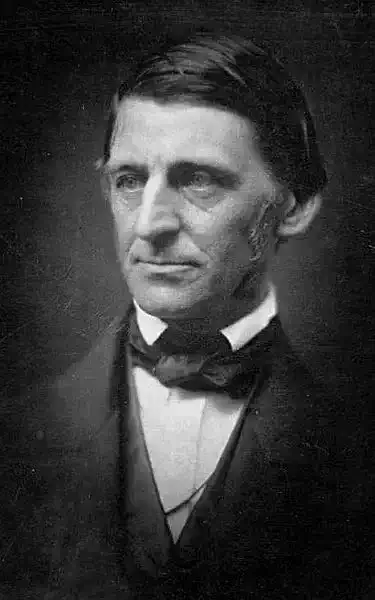
Ralph Waldo Emerson
Threnody
The south-wind brings
Life, sunshine, and desire,
And on every mount and meadow
Breathes aromatic fire,
But over the dead he has no power,
The lost, the lost he cannot restore,
And, looking over the hills, I mourn
The darling who shall not return.
I see my empty house,
I see my trees repair their boughs,
And he, —the wondrous child,
Whose silver warble wild
Outvalued every pulsing sound
Within the air's cerulean round,
The hyacinthine boy, for whom
Morn well might break, and April bloom,
The gracious boy, who did adorn
The world whereinto he was born,
And by his countenance repay
The favor of the loving Day,
Has disappeared from the Day's eye;
Far and wide she cannot find him,
My hopes pursue, they cannot bind him.
Returned this day the south-wind searches
And finds young pines and budding birches,
But finds not the budding man;
Nature who lost him, cannot remake him;
Fate let him fall, Fate can't retake him;
Nature, Fate, men, him seek in vain.
And whither now, my truant wise and sweet,
Oh, whither tend thy feet?
I had the right, few days ago,
Thy steps to watch, thy place to know;
How have I forfeited the right?
Hast thou forgot me in a new delight?
I hearken for thy household cheer,
O eloquent child!
Whose voice, an equal messenger,
Conveyed thy meaning mild.
What though the pains and joys
Whereof it spoke were toys
Fitting his age and ken;—
Yet fairest dames and bearded men,
Who heard the sweet request
So gentle, wise, and grave,
Bended with joy to his behest,
And let the world's affairs go by,
Awhile to share his cordial game,
Or mend his wicker wagon frame,
Still plotting how their hungry ear
That winsome voice again might hear,
For his lips could well pronounce
Words that were persuasions.
Gentlest guardians marked serene
His early hope, his liberal mien,
Took counsel from his guiding eyes
To make this wisdom earthly wise.
Ah! vainly do these eyes recall
The school-march, each day's festival,
When every morn my bosom glowed
To watch the convoy on the road;—
The babe in willow wagon closed,
With rolling eyes and face composed,
With children forward and behind,
Like Cupids studiously inclined,
And he, the Chieftain, paced beside,
The centre of the troop allied,
With sunny face of sweet repose,
To guard the babe from fancied foes,
The little Captain innocent
Took the eye with him as he went,
Each village senior paused to scan
And speak the lovely caravan.
From the window I look out
To mark thy beautiful parade
Stately marching in cap and coat
To some tune by fairies played;
A music heard by thee alone
To works as noble led thee on.
Now love and pride, alas, in vain,
Up and down their glances strain.
The painted sled stands where it stood,
The kennel by the corded wood,
The gathered sticks to stanch the wall
Of the snow-tower, when snow should fall,
The ominous hole he dug in the sand,
And childhood's castles built or planned.
His daily haunts I well discern,
The poultry yard, the shed, the barn,
And every inch of garden ground
Paced by the blessed feet around,
From the road-side to the brook;
Whereinto he loved to look.
Step the meek birds where erst they ranged,
The wintry garden lies unchanged,
The brook into the stream runs on,
But the deep-eyed Boy is gone.
On that shaded day,
Dark with more clouds than tempests are,
When thou didst yield thy innocent breath
In bird-like heavings unto death,
Night came, and Nature had not thee,—
I said, we are mates in misery.
The morrow dawned with needless glow,
Each snow-bird chirped, each fowl must crow,
Each tramper started,— but the feet
Of the most beautiful and sweet
Of human youth had left the hill
And garden,—they were bound and still,
There's not a sparrow or a wren,
There's not a blade of autumn grain,
Which the four seasons do not tend,
And tides of life and increase lend,
And every chick of every bird,
And weed and rock-moss is preferred.
O ostriches' forgetfulness!
O loss of larger in the less!
Was there no star that could be sent,
No watcher in the firmament,
No angel from the countless host,
That loiters round the crystal coast,
Could stoop to heal that only child,
Nature's sweet marvel undefiled,
And keep the blossom of the earth,
Which all her harvests were not worth?
Not mine, I never called thee mine,
But nature's heir,— if I repine,
And, seeing rashly torn and moved,
Not what I made, but what I loved.
Grow early old with grief that then
Must to the wastes of nature go,—
'Tis because a general hope
Was quenched, and all must doubt and grope
For flattering planets seemed to say,
This child should ills of ages stay,—
By wondrous tongue and guided pen
Bring the flown muses back to men. —
Perchance, not he, but nature ailed,
The world, and not the infant failed,
It was not ripe yet, to sustain
A genius of so fine a strain,
Who gazed upon the sun and moon
As if he came unto his own,
And pregnant with his grander thought,
Brought the old order into doubt.
Awhile his beauty their beauty tried,
They could not feed him, and he died,
And wandered backward as in scorn
To wait an Æon to be born.
Ill day which made this beauty waste;
Plight broken, this high face defaced!
Some went and came about the dead,
And some in books of solace read,
Some to their friends the tidings say,
Some went to write, some went to pray,
One tarried here, there hurried one,
But their heart abode with none.
Covetous death bereaved us all
To aggrandize one funeral.
The eager Fate which carried thee
Took the largest part of me.
For this losing is true dying,
This is lordly man's down-lying,
This is slow but sure reclining,
Star by star his world resigning.
O child of Paradise!
Boy who made dear his father's home
In whose deep eyes
Men read the welfare of the times to come;
I am too much bereft;
The world dishonored thou hast left;
O truths and natures costly lie;
O trusted, broken prophecy!
O richest fortune sourly crossed;
Born for the future, to the future lost!
The deep Heart answered, Weepest thou?
Worthier cause for passion wild,
If I had not taken the child.
And deemest thou as those who pore
With aged eyes short way before?
Think'st Beauty vanished from the coast
Of matter, and thy darling lost?
Taught he not thee, — the man of eld,
Whose eyes within his eyes beheld
Heaven's numerous hierarchy span
The mystic gulf from God to man?
To be alone wilt thou begin,
When worlds of lovers hem thee in?
To-morrow, when the masks shall fall
That dizen nature's carnival,
The pure shall see, by their own will,
Which overflowing love shall fill,—
'Tis not within the force of Fate
The fate-conjoined to separate.
But thou, my votary, weepest thou?
I gave thee sight, where is it now?
I taught thy heart beyond the reach
Of ritual, Bible, or of speech;
Wrote in thy mind's transparent table
As far as the incommunicable;
Taught thee each private sign to raise
Lit by the supersolar blaze.
Past utterance and past belief,
And past the blasphemy of grief,
The mysteries of nature's heart,—
And though no muse can these impart,
Throb thine with nature's throbbing breast,
And all is clear from east to west.
I came to thee as to a friend,
Dearest, to thee I did not send
Tutors, but a joyful eye,
Innocence that matched the sky,
Lovely locks a form of wonder,
Laughter rich as woodland thunder;
That thou might'st entertain apart
The richest flowering of all art;
And, as the great all-loving Day
Through smallest chambers takes its way,
That thou might'st break thy daily bread
With Prophet, Saviour, and head;
That thou might'st cherish for thine own
The riches of sweet Mary's Son,
Boy-Rabbi, Israel's Paragon:
And thoughtest thou such guest
Would in thy hall take up his rest?
Would rushing life forget its laws,
Fate's glowing revolution pause?
High omens ask diviner guess,
Not to be conned to tediousness.
And know, my higher gifts unbind
The zone that girds the incarnate mind,
When the scanty shores are full
With Thought's perilous whirling pool,
When frail Nature can no more,—
Then the spirit strikes the hour,
My servant Death with solving rite
Pours finite into infinite.
Wilt thou freeze love's tidal flow,
Whose streams through nature circling go?
Nail the star struggling to its track
On the half-climbed Zodiack?
Light is light which radiates,
Blood is blood which circulates,
Life is life which generates,
And many-seeming life is one,—
Wilt thou transfix and make it none,
Its onward stream too starkly pent
In figure, bone, and lineament?
Wilt thou uncalled interrogate
Talker! the unreplying fate?
Nor see the Genius of the whole
Ascendant in the private soul,
Beckon it when to go and come,
Self-announced its hour of doom.
Fair the soul's recess and shrine,
Magic-built, to last a season,
Masterpiece of love benign!
Fairer than expansive reason
Whose omen 'tis, and sign.
Wilt thou not ope this heart to know
What rainbows teach and sunsets show,
Verdict which accumulates
From lengthened scroll of human fates,
Voice of earth to earth returned,
Prayers of heart that inly burned;
Saying, what is excellent,
As God lives, is permanent
Hearts are dust, hearts' loves remain,
Heart's love will meet thee again.
Revere the Maker; fetch thine eye
Up to His style, and manners of the sky.
Not of adamant and gold
Built He heaven stark and cold,
No, but a nest of bending reeds,
Flowering grass and scented weeds,
Or like a traveller's fleeting tent,
Or bow above the tempest pent,
Built of tears and sacred flames,
And virtue reaching to its aims;
Built of furtherance and pursuing,
Not of spent deeds, but of doing.
Silent rushes the swift Lord
Through ruined systems still restored,
Broad-sowing, bleak and void to bless,
Plants with worlds the wilderness,
Waters with tears of ancient sorrow
Apples of Eden ripe to-morrow;
House and tenant go to ground,
Lost in God, in Godhead found.
381
Ella Wheeler Wilcox
Peek-A-Boo
The cunningest thing that a baby can do
Is the very first time it plays peek-a-boo;
When it hides its pink little face in its hands,
And crows, and shows that it understands
What nurse, and mamma and papa, too,
Mean when they hide and cry, 'Peek-a-boo, peek-a-boo.'
Oh, what a wonderful thing it is,
When they find that baby can play like this;
And everyone listens, and thinks it true
That baby's gurgle means 'Peek-a-boo, peek-a-boo';
And over and over the changes are rung
On the marvelous infant who talks so young.
I wonder if any one ever knew
A baby that never played peek-a-boo, peek-a-boo.
'Tis old as the hills are. I believe
Cain was taught it by Mother Eve;
For Cain was an innocent baby, too,
And I am sure he played peek-a-boo, peek-a-boo.
And the whole world full of the children of men,
Have all of them played that game since then.
Kings and princes and beggars, too,
Everyone has played peek-a-boo, peek-a-boo.
Thief and robber and ruffian bold,
The crazy tramp and the drunkard old,
All have been babies who laughed and knew
How to hide, and play peek-a-boo, peek-a-boo.
381
John Clare
Merry Maid
Bonny and stout and brown, without a hat,
She frowns offended when they call her fat--
Yet fat she is, the merriest in the place,
And all can know she wears a pretty face.
But still she never heeds what praise can say,
But does the work, and oft runs out to play,
To run about the yard and ramp and noise
And spring the mop upon the servant boys.
When old hens noise and cackle every where
She hurries eager if the eggs are dear,
And runs to seek them when they lay away
To get them ready for the market day.
She gambols with the men and laughs aloud
And only quarrels when they call her proud.
377
Robert Louis Stevenson
Looking-Glass River
Smooth it glides upon its travel,
Here a wimple, there a gleam--
O the clean gravel!
O the smooth stream!
Sailing blossoms, silver fishes,
Pave pools as clear as air--
How a child wishes
To live down there!
We can see our colored faces
Floating on the shaken pool
Down in cool places,
Dim and very cool;
Till a wind or water wrinkle,
Dipping marten, plumping trout,
Spreads in a twinkle
And blots all out.
See the rings pursue each other;
All below grows black as night,
Just as if mother
Had blown out the light!
Patience, children, just a minute--
See the spreading circles die;
The stream and all in it
Will clear by-and-by.
375
Walt Whitman
Offerings
A THOUSAND perfect men and women appear,
Around each gathers a cluster of friends, and gay children and
youths, with offerings.
Around each gathers a cluster of friends, and gay children and
youths, with offerings.
374
John Clare
To Anna Three Years Old
My Anna, summer laughs in mirth,
And we will of the party be,
And leave the crickets in the hearth
For green fields' merry minstrelsy.
I see thee now with little hand
Catch at each object passing bye,
The happiest thing in all the land
Except the bee and butterfly.
* * * * *
And limpid brook that leaps along,
Gilt with the summer's burnished gleam,
Will stop thy little tale or song
To gaze upon its crimping stream.
Thou'lt leave my hand with eager speed
The new discovered things to see--
The old pond with its water weed
And danger-daring willow tree,
Who leans an ancient invalid
Oer spots where deepest waters be.
In sudden shout and wild surprise
I hear thy simple wonderment,
As new things meet thy childish eyes
And wake some innocent intent;
As bird or bee or butterfly
Bounds through the crowd of merry leaves
And starts the rapture of thine eye
To run for what it neer achieves.
But thou art on the bed of pain,
So tells each poor forsaken toy.
Ah, could I see that happy hour
When these shall be thy heart's employ,
And see thee toddle oer the plain,
And stoop for flowers, and shout for joy.
373
Ella Wheeler Wilcox
An Empty Crib
Beside a crib that holds a baby’s stocking,
A tattered picture book, a broken toy,
A sleeping mother dreams that she is rocking
Her fair-haired cherub boy.
Upon the cradle’s side her light touch keeping,
She gently rocks it, crooning low a song;
And smiles to think her little one is sleeping,
So peacefully and long.
Step light, breathe low, break not her rapturous dreaming,
Wake not the sleeper from her trance of joy,
For never more save in sweet slumber-seeming
Will she watch o’er her little boy.
God pity her when from her dream Elysian
She wakes to see the empty crib, and weep;
Knowing her joy was but a sleeper’s vision,
Tread lightly – let her sleep.
371

James Whitcomb Riley
The Hoosier Folk-Child
The Hoosier Folk-Child--all unsung--
Unlettered all of mind and tongue;
Unmastered, unmolested--made
Most wholly frank and unafraid:
Untaught of any school--unvexed
Of law or creed--all unperplexed--
Unsermoned, aye, and undefiled,
An all imperfect-perfect child--
A type which (Heaven forgive us!) you
And I do tardy honor to,
And so, profane the sanctities
Of our most sacred memories.
Who, growing thus from boy to man,
That dares not be American?
Go, Pride, with prudent underbuzz--
Go _whistle_! as the Folk-Child does.
The Hoosier Folk-Child's world is not
Much wider than the stable-lot
Between the house and highway fence
That bounds the home his father rents.
His playmates mostly are the ducks
And chickens, and the boy that 'shucks
Corn by the shock,' and talks of town,
And whether eggs are 'up' or 'down,'
And prophesies in boastful tone
Of 'owning horses of his own,'
And 'being his own man,' and 'when
He gets to be, what he'll do then.'--
Takes out his jack-knife dreamily
And makes the Folk-Child two or three
Crude corn-stalk figures,--a wee span
Of horses and a little man.
The Hoosier Folk-Child's eyes are wise
And wide and round as Brownies' eyes:
The smile they wear is ever blent
With all-expectant wonderment,--
On homeliest things they bend a look
As rapt as o'er a picture-book,
And seem to ask, whate'er befall,
The happy reason of it all:--
Why grass is all so glad a green,
And leaves--and what their lispings mean;--
Why buds grow on the boughs, and why
They burst in blossom by and by--
As though the orchard in the breeze
Had shook and popped its _popcorn-trees_,
To lure and whet, as well they might,
Some seven-league giant's appetite!
The Hoosier Folk-Child's chubby face
Has scant refinement, caste or grace,--
From crown to chin, and cheek to cheek,
It bears the grimy water-streak
Of rinsings such as some long rain
Might drool across the window-pane
Wherethrough he peers, with troubled frown,
As some lorn team drives by for town.
His brow is elfed with wispish hair,
With tangles in it here and there,
As though the warlocks snarled it so
At midmirk when the moon sagged low,
And boughs did toss and skreek and shake,
And children moaned themselves awake,
With fingers clutched, and starting sight
Blind as the blackness of the night!
The Hoosier Folk-Child!--Rich is he
In all the wealth of poverty!
He owns nor title nor estate,
Nor speech but half articulate,--
He owns nor princely robe nor crown;--
Yet, draped in patched and faded brown,
He owns the bird-songs of the hills--
The laughter of the April rills;
And his are all the diamonds set.
In Morning's dewy coronet,--
And his the Dusk's first minted stars
That twinkle through the pasture-bars,
And litter all the skies at night
With glittering scraps of silver light;--
The rainbow's bar, from rim to rim,
In beaten gold, belongs to him.
366
Henry Wadsworth Longfellow
The Hanging Of The Crane
The lights are out, and gone are all the guests
That thronging came with merriment and jests
To celebrate the Hanging of the Crane
In the new house,--into the night are gone;
But still the fire upon the hearth burns on,
And I alone remain.
O fortunate, O happy day,
When a new household finds its place
Among the myriad homes of earth,
Like a new star just sprung to birth,
And rolled on its harmonious way
Into the boundless realms of space!
So said the guests in speech and song,
As in the chimney, burning bright,
We hung the iron crane to-night,
And merry was the feast and long.
II.
And now I sit and muse on what may be,
And in my vision see, or seem to see,
Through floating vapors interfused with light,
Shapes indeterminate, that gleam and fade,
As shadows passing into deeper shade
Sink and elude the sight.
For two alone, there in the hall,
As spread the table round and small;
Upon the polished silver shine
The evening lamps, but, more divine,
The light of love shines over all;
Of love, that says not mine and thine,
But ours, for ours is thine and mine.
They want no guests, to come between
Their tender glances like a screen,
And tell them tales of land and sea,
And whatsoever may betide
The great, forgotten world outside;
They want no guests; they needs must be
Each other's own best company.
III.
The picture fades; as at a village fair
A showman's views, dissolving into air,
Again appear transfigured on the screen,
So in my fancy this; and now once more,
In part transfigured, through the open door
Appears the selfsame scene.
Seated, I see the two again,
But not alone; they entertain
A little angel unaware,
With face as round as is the moon;
A royal guest with flaxen hair,
Who, throned upon his lofty chair,
Drums on the table with his spoon,
Then drops it careless on the floor,
To grasp at things unseen before.
Are these celestial manners? these
The ways that win, the arts that please?
Ah yes; consider well the guest,
And whatsoe'er he does seems best;
He ruleth by the right divine
Of helplessness, so lately born
In purple chambers of the morn,
As sovereign over thee and thine.
He speaketh not; and yet there lies
A conversation in his eyes;
The golden silence of the Greek,
The gravest wisdom of the wise,
Not spoken in language, but in looks
More legible than printed books,
As if he could but would not speak.
And now, O monarch absolute,
Thy power is put to proof; for, lo!
Resistless, fathomless, and slow,
The nurse comes rustling like the sea,
And pushes back thy chair and thee,
And so good night to King Canute.
IV.
As one who walking in a forest sees
A lovely landscape through the parted frees,
Then sees it not, for boughs that intervene
Or as we see the moon sometimes revealed
Through drifting clouds, and then again concealed,
So I behold the scene.
There are two guests at table now;
The king, deposed and older grown,
No longer occupies the throne,--
The crown is on his sister's brow;
A Princess from the Fairy Isles,
The very pattern girl of girls.
All covered and embowered in curls,
Rose-tinted from the Isle of Flowers,
And sailing with soft, silken sails
From far-off Dreamland into ours.
Above their bowls with rims of blue
Four azure eyes of deeper hue
Are looking, dreamy with delight;
Limpid as planets that emerge
Above the ocean's rounded verge,
Soft-shining through the summer night.
Steadfast they gaze, yet nothing see
Beyond the horizon of their bowls;
Nor care they for the world that rolls
With all its freight of troubled souls
Into the days that are to be.
V.
Again the tossing boughs shut out the scene,
Again the drifting vapors intervene,
And the moon's pallid disk is hidden quite;
And now I see the table wider grown,
As round a pebble into water thrown
Dilates a ring of light.
I see the table wider grown,
I see it garlanded with guests,
As if fair Ariadne's Crown
Out of the sky had fallen down;
Maidens within whose tender breasts
A thousand restless hopes and fears,
Forth reaching to the coming years,
Flutter awhile, then quiet lie
Like timid birds that fain would fly,
But do not dare to leave their nests;--
And youths, who in their strength elate
Challenge the van and front of fate,
Eager as champions to be
In the divine knight-errantry
Of youth, that travels sea and land
Seeking adventures, or pursues,
Through cities, and through solitudes
Frequented by the lyric Muse,
The phantom with the beckoning hand,
That still allures and still eludes.
O sweet illusions of the brain!
O sudden thrills of fire and frost!
The world is bright while ye remain,
And dark and dead when ye are lost!
VI.
The meadow-brook, that seemeth to stand still,
Quickens its current as it nears the mill;
And so the stream of Time that lingereth
In level places, and so dull appears,
Runs with a swifter current as it nears
The gloomy mills of Death.
And now, like the magician's scroll,
That in the owner's keeping shrinks
With every wish he speaks or thinks,
Till the last wish consumes the whole,
The table dwindles, and again
I see the two alone remain.
The crown of stars is broken in parts;
Its jewels, brighter than the day,
Have one by one been stolen away
To shine in other homes and hearts.
One is a wanderer now afar
In Ceylon or in Zanzibar,
Or sunny regions of Cathay;
And one is in the boisterous camp
Mid clink of arms and horses' tramp,
And battle's terrible array.
I see the patient mother read,
With aching heart, of wrecks that float
Disabled on those seas remote,
Or of some great heroic deed
On battle-fie1ds where thousands bleed
To lift one hero into fame.
Anxious she bends her graceful head
Above these chronicles of pain,
And trembles with a secret dread
Lest there among the drowned or slain
She find the one beloved name.
VII.
After a day of cloud and wind and rain
Sometimes the setting sun breaks out again,
And touching all the darksome woods with light,
Smiles on the fields, until they laugh and sing,
Then like a ruby from the horizon's ring
Drops down into the night.
What see I now? The night is fair,
The storm of grief, the clouds of care,
The wind, the rain, have passed away;
The lamps are lit, the fires burn bright,
The house is full of life and light:
It is the Golden Wedding day.
The guests come thronging in once more,
Quick footsteps sound along the floor,
The trooping children crowd the stair,
And in and out and everywhere
Flashes along the corridor
The sunshine of their golden hair.
On the round table in the hall
Another Ariadne's Crown
Out of the sky hath fallen down;
More than one Monarch of the Moon
Is drumming with his silver spoon;
The light of love shines over all.
O fortunate, O happy day!
The people sing, the people say.
The ancient bridegroom and the bride,
Smiling contented and serene
Upon the blithe, bewildering scene,
Behold, well pleased, on every side
Their forms and features multiplied,
As the reflection of a light
Between two burnished mirrors gleams,
Or lamps upon a bridge at night
Stretch on and on before the sight,
Till the long vista endless seems.
364