
Children

Ezra Pound
The Study In Aesthetics
The very small children in patched clothing,
Being smitten with an unusual wisdom,
Stopped in their play as she passed them
And cried up from their cobbles:
Guarda! Ahi, guarda! Ch’ è be’ a!
But three years after this
I heard the young Dante, whose last name I do not
know--
For there are, in Sirmione, twenty-eight young Dantes
and thirty-four Catulli;
And there had been a great catch of sardines,
And his elders
Were packing them in the great wooden boxes
For the market in Brescia, and he
Leapt about, snatching at the bright fish
And getting in both of their ways;
And in vain they commanded him to stafermo!
And when they would not let him arrange
The fish in the boxes
He stroked those which were already arranged,
Murmuring for his own satisfaction
This identical phrase:
Ch’ è be’ a
And at this I was mildly abashed.
480

William Blake
The Chimney Sweeper
A little black thing in the snow,
Crying "weep! weep!" in notes of woe!
"Where are thy father and mother? Say!"--
"They are both gone up to the church to pray.
"Because I was happy upon the heath,
And smiled among the winter's snow,
They clothed me in the clothes of death,
And taught me to sing the notes of woe.
"And because I am happy and dance and sing,
They think they have done me no injury,
And are gone to praise God and his priest and king,
Who make up a heaven of our misery."
470

William Wordsworth
The Two April Mornings
We walked along, while bright and red
Uprose the morning sun;
And Matthew stopped, he looked, and said
`The will of God be done!'
A village schoolmaster was he,
With hair of glittering grey;
As blithe a man as you could see
On a spring holiday.
And on that morning, through the grass
And by the steaming rills
We travelled merrily, to pass
A day among the hills.
`Our work,' said I, `was well begun;
Then, from thy breast what thought,
Beneath so beautiful a sun,
So sad a sigh has brought?'
A second time did Matthew stop;
And fixing still his eye
Upon the eastern mountain-top,
To me he made reply:
`Yon cloud with that long purple cleft
Brings fresh into my mind
A day like this, which I have left
Full thirty years behind.
`And just above yon slope of corn
Such colours, and no other,
Were in the sky, that April morn,
Of this the very brother.
`With rod and line I sued the sport
Which that sweet season gave,
And, to the churchyard come, stopped short
Beside my daughter's grave.
`Nine summers had she scarcely seen,
The pride of all the vale;
And then she sang: -she would have been
A very nightingale.
`Six feet in earth my Emma lay;
And yet I loved her more -
For so it seemed, -than till that day
I e'er had loved before.
`And turning from her grave, I met
Beside the churchyard yew
A blooming girl, whose hair was wet
With points of morning dew.
`A basket on her head she bare;
Her brow was smooth and white:
To see a child so very fair,
It was a pure delight!
`No fountain from its rocky cave
E'er tripped with foot so free;
She seemed as happy as a wave
That dances on the sea.
`There came from me a sigh of pain
Which I could ill confine;
I looked at her, and looked again:
And did not wish her mine!'
- Matthew is in his grave, yet now
Methinks I see him stand
As that moment, with a bough
Of wilding in his hand.
470
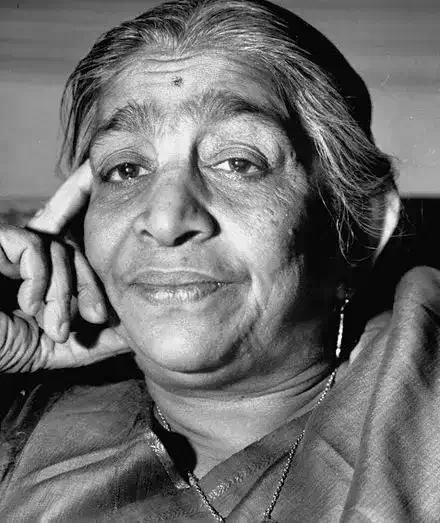
Sarojini Naidu
To My Children
Jaya Surya
GOLDEN sun of victory, born
In my life's unclouded morn,
In my lambent sky of love,
May your growing glory prove
Sacred to your consecration,
To my heart and to my nation.
Sun of victory, may you be
Sun of song and liberty.
Padmaja
Lotus-maiden, you who claim
All the sweetness of your name,
Lakshmi, fortune's queen, defend you,
Lotus-born like you, and send you
Balmy moons of love to bless you,
Gentle joy-winds to caress you.
Lotus-maiden, may you be
Fragrant of all ecstasy.
Ranadheera
Little lord of battle, hail
In your newly-tempered mail!
Learn to conquer, learn to fight
In the foremost flanks of right,
Like Valmiki's heroes bold,
Rubies girt in epic gold.
Lord of battle, may you be,
Lord of love and chivalry.
Lilamani
Limpid jewel of delight
Severed from the tender night
Of your sheltering mother-mine,
Leap and sparkle, dance and shine,
Blithely and securely set
In love's magic coronet.
Living jewel, may you be
Laughter-bound and sorrow-free.
463
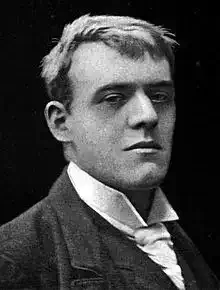
Hilaire Belloc
The Birds
When Jesus Christ was four years old
The angels brought Him toys of gold,
Which no man ever had bought or sold.
And yet with these He would not play.
He made Him small fowl out of clay,
And blessed them till they flew away:
Tu creasti Domine
Jesus Christ, Thou child so wise,
Bless mine hands and fill mine eyes,
And bring my soul to Paradise.
456
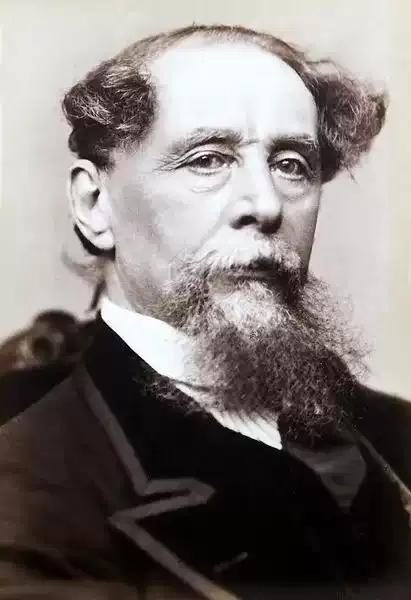
Charles Dickens
A Child's Hymn
Hear my prayer, O heavenly Father,
Ere I lay me down to sleep;
Bid Thy angels, pure and holy,
Round my bed their vigil keep.
My sins are heavy, but Thy mercy
Far outweighs them, every one;
Down before Thy cross I cast them,
Trusting in Thy help alone.
Keep me through this night of peril
Underneath its boundless shade;
Take me to Thy rest, I pray Thee,
When my pilgrimage is made.
None shall measure out Thy patience
By the span of human thought;
None shall bound the tender mercies
Which Thy Holy Son has bought.
Pardon all my past transgressions,
Give me strength for days to come;
Guide and guard me with Thy blessing
Till Thy angels bid me home.
453

Billy Collins
Snow Day
Today we woke up to a revolution of snow,
its white flag waving over everything,
the landscape vanished,
not a single mouse to punctuate the blankness,
and beyond these windows
the government buildings smothered,
schools and libraries buried, the post office lost
under the noiseless drift,
the paths of trains softly blocked,
the world fallen under this falling.
In a while I will put on some boots
and step out like someone walking in water,
and the dog will porpoise through the drifts,
and I will shake a laden branch,
sending a cold shower down on us both.
But for now I am a willing prisoner in this house,
a sympathizer with the anarchic cause of snow.
I will make a pot of tea
and listen to the plastic radio on the counter,
as glad as anyone to hear the news
that the Kiddie Corner School is closed,
the Ding-Dong School, closed,
the All Aboard Children's School, closed,
the Hi-Ho Nursery School, closed,
along with -- some will be delighted to hear -
the Toadstool School, the Little School,
Little Sparrows Nursery School,
Little Stars Pre-School, Peas-and-Carrots Day School,
the Tom Thumb Child Center, all closed,
and -- clap your hands -- the Peanuts Play School.
So this is where the children hide all day,
These are the nests where they letter and draw,
where they put on their bright miniature jackets,
all darting and climbing and sliding,
all but the few girls whispering by the fence.
And now I am listening hard
in the grandiose silence of the snow,
trying to hear what those three girls are plotting,
what riot is afoot,
which small queen is about to be brought down.
444

Emily Dickinson
Over the fence
Over the fence
Strawberries-
grow-
Over the fence-
I could climb-if I tried, I know-
Berries are nice!
But-if I stained my Apron-
God would certainly scold!
Oh, dear,-I guess if He were a BoyHe'd-
climb-if He could!
Strawberries-
grow-
Over the fence-
I could climb-if I tried, I know-
Berries are nice!
But-if I stained my Apron-
God would certainly scold!
Oh, dear,-I guess if He were a BoyHe'd-
climb-if He could!
442

Ella Wheeler Wilcox
A Baby In The House
I knew that a baby was hid in that house,
Though I saw no cradle and heard no cry;
But the husband was tip-toeing 'round like a mouse,
And the good wife was humming a soft lullaby;
And there was a look on the face of the mother,
That I knew could mean only one thing, and no other.
The mother, I said to myself, for I knew
That the woman before me was certainly that;
And there lay in a corner a tiny cloth shoe,
And I saw on a stand such a wee little hat;
And the beard of the husband said, plain as could be,
'Two fat chubby hands have been tugging at me.'
And he took from his pocket a gay picture-book,
And a dog that could bark, if you pulled on a string;
And the wife laid them up with such a pleased look;
And I said to myself, 'There is no other thing
But a babe that could bring about all this, and so
That one thing is in hiding somewhere, I know.'
I stayed but a moment, and saw nothing more,
And heard not a sound, yet I know I was right;
What else could the shoe mean that lay on the floor,
The book and the toy, and the faces so bright;
And what made the husband as still as a mouse?
I am sure, very sure, there's a babe in that house.
440

Robert Louis Stevenson
Fairy Bread
Come up here, O dusty feet!
Here is fairy ready to eat.
Here in my retiring room,
Children ,you may dine
On the golden smell of broom
And the shade of pine;
And when you have eaten well,
Fairy stories hear and tell.
Here is fairy ready to eat.
Here in my retiring room,
Children ,you may dine
On the golden smell of broom
And the shade of pine;
And when you have eaten well,
Fairy stories hear and tell.
438
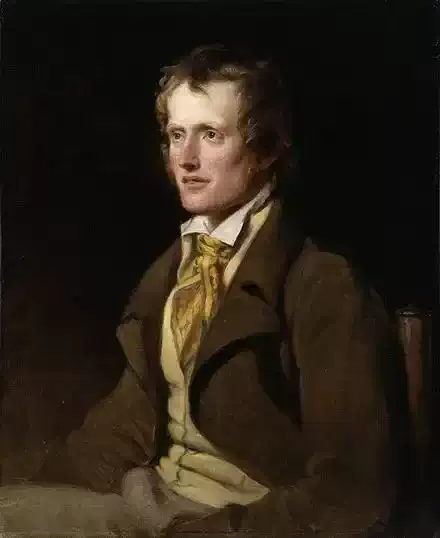
John Clare
The Shepherds Calendar - April
The infant april joins the spring
And views its watery skye
As youngling linnet trys its wing
And fears at first to flye
With timid step she ventures on
And hardly dares to smile
The blossoms open one by one
And sunny hours beguile
But finer days approacheth yet
With scenes more sweet to charm
And suns arrive that rise and set
Bright strangers to a storm
And as the birds with louder song
Each mornings glory cheers
With bolder step she speeds along
And looses all her fears
In wanton gambols like a child
She tends her early toils
And seeks the buds along the wild
That blossom while she smiles
And laughing on with nought to chide
She races with the hours
Or sports by natures lovley side
And fills her lap with flowers
Tho at her birth north cutting gales
Her beautys oft disguise
And hopfull blossoms turning pales
Upon her bosom dies
Yet ere she seeks another place
And ends her reign in this
She leaves us with as fair a face
As ere gave birth to bliss
And fairey month of waking mirth
From whom our joys ensue
Thou early gladder of the earth
Thrice welcom here anew
With thee the bud unfolds to leaves
The grass greens on the lea
And flowers their tender boon recieves
To bloom and smile with thee
The shepherds on thy pasture walks
The first fair cowslip finds
Whose tufted flowers on slender stalks
Keep nodding to the winds
And tho thy thorns withold the may
Their shades the violets bring
Which childern stoop for in their play
As tokens of the spring
The time when daiseys bloom divine
With thy calm hours begun
And crowflowers blazing blooms are thine
Bright childern of the sun
Along thy woodlands shaded nooks
The primrose wanly comes
And shining in thy pebley brooks
The horse bleb gaily blooms
The long lost charm of sparkling dew
Thy gentle birth recieves
And on thy wreathing locks we view
The first infolding leaves
And seeking firstling buds and flowers
The trials of thy skill
Were pastimes of my infant hours
And so they haunt me still
To see thy first broad arum leaves
I lovd them from a child
And where thy woodbines sprouting weaves
I joyd to trace the wild
And jocund as thy lambs at play
I met the wanton wind
With feelings that have passd away
Whose shadows cling behind
Those joys which childhood claims its own
Woud they were kin to men
Those treasures to the world unknown
When known-was witherd then
But hovering round our growing years
To gild cares sable shroud
Their spirit thro the gloom appears
As suns behind a cloud
As thou first met my infant eyes
When thro thy fields I flew
Whose distance where they meet the skyes
Was all the worlds I knew
That warmth of fancys wildest hours
Which made things kin to life
That heard a voice in trees and flowers
Has swoond in reasons strife
Sweet month thy pleasures bids thee be
The fairest child of spring
And every hour that comes with thee
Comes some new joy to bring
The trees still deepen in their bloom
Crass greens the meadow lands
And flowers with every morning come
As dropt by fairey hands
The field and gardens lovley hours
Begin and end with thee
For whats so sweet as peeping flowers
And bursting buds to see
What time the dews unsullied drops
In burnishd gold distills
On crocus flowers unclosing tops
And drooping daffodills
Each day with added glorys come
And as they leave the night
Put on the roseys lovley bloom
And blushes with delight
And suns that wait their welcome birth
With earlier haste pursue
Their journeys to this lower earth
To free their steps from dew
To see thee come all hearts rejoice
And warms with feelings strong
With thee all nature finds a voice
And hums a waking song
The lover views thy welcome hours
And thinks of summer come
And takes the maid thy early flowers
To tempt her steps from home
Along each hedge and sprouting bush
The singing birds are blest
And linnet green and speckld thrush
Prepare their mossy nest
On the warm bed thy plain supplys
The young lambs find repose
And mid thy green hills basking lies
Like spots of lingering snows
Young things of tender life again
Enjoys thy sunny hours
And gosslings waddle ocr the plain
As yellow as its flowers
Or swim the pond in wild delight
To catch the water flye
Where hissing geese in ceasless spite
Make childern scamper bye
Again the fairey tribes pursue
Their pleasures on the plain
And brightend with the morning dew
Black circles shine again
And on its superstitious ground
Where flowers seem loath to dwell
The toadstools fuzzy balls abound
And mushrooms yearly swell
The seasons beautys all are thine
That visit with the year
Beautys that poets think divine
And all delight to hear
Thy latter days a pleasure brings
That gladden every heart
Pleasures that come like lovley things
But like to shades depart
Thy opend leaves and ripend buds
The cuckoo makes his choice
And shepherds in thy greening woods
First hears the cheering voice
And to thy ripend blooming bowers
The nightingale belongs
And singing to thy parting hours
Keeps night awake with songs
With thee the swallow dares to come
And primes his sutty wings
And urgd to seek their yearly home
Thy suns the Martin brings
And lovley month be leisure mine
Thy yearly mate to be
Tho may day scenes may brighter shine
Their birth belongs to thee
I waked me with thy rising sun
And thy first glorys viewd
And as thy welcome hours begun
Their sunny steps pursued
And now thy sun is on the set
Like to a lovley eve
I view thy parting with regret
And linger loath to leave
Thou lovley april fare thee well
Thou early child of spring
Tho born where storms too often dwell
Thy parents news to bring
Yet what thy parting youth supplys
No other months excell
Thou first for flowers and sunny skyes
Sweet april fare thee well.
436
Ella Wheeler Wilcox
A Fisherman's Baby
Oh hush, little baby, thy papa's at sea;
The big billows rock him as mamma rocks thee.
He hastes to his dear ones o'er billows of foam;
Then sleep, little darling, till papa comes home.
Sleep, little baby; hush, little baby;
Papa is coming, no longer to roam.
The shells and the pebbles, all day tossed about,
Are lulled into sleep by the tide ebbing out.
The tired shore slumbers, stretched out in the sand,
While the waves hurry off at mid-ocean's command.
Then hush, little darling; sleep, little darling;
Sleep, baby, rocked by thy mother's own hand.
The winds that have rollicked all day in the west
Are hushed into sleep on the calm evening's breast.
The boats that were out with the wild sea at play
Are now rocked to sleep in the arms of the bay.
Then rest, little baby; sleep, little baby;
Papa will come at the break of the day.
Sleep, little darling; too soon thou wilt be
A man like thy father, to sail o'er the sea.
Then sleep will not come at thy bidding or prayer,
For thou wilt be harassed by danger and care.
Then sleep, little darling; rest, little baby;
Rest whilst thou may, dear, and sleep whilst thou dare.
433
Ella Wheeler Wilcox
The River Of Sleep
There are curious isles in the River of Sleep,
Curious isles without number.
We'll visit them all as we leisurely creep
Down the winding stream whose current is deep,
In our beautiful barge of Slumber.
The very first isle in this wonderful stream
Quite close to the shore is lying,
And after a supper of cakes and cream
We come to the Night-Mare-Isle with a scream,
And hurry away from it crying.
And next is the Island-of-Lullaby,
And every one there rejoices.
The winds are only a perfumed sigh,
And the birds that sing in the treetops try
To imitate Mothers' voices.
A little beyond is the Isle-of-Dreams;
Oh, that is the place to be straying.
Everything there is just as it seems;
Dolls are real and sunshine gleams,
And no one calls us from playing.
And then we come to the drollest isle,
And the funniest sounds come pouring
Down from its borderlands once in a while,
And we lean o'er our barge and listen and smile;
For that is the Isle-of-Snoring.
And the very last isle in the River of Sleep
Is the sunshiny Isle-of-Waking.
We see it first with our eyes a-peep,
And we give a yawn-then away we leap,
The barge of Slumber forsaking.
431
Ella Wheeler Wilcox
Mother's Kisses
Baby was playing and down he fell, down he fell, down he fell,
Mama will kiss him and make him well,
Oh! what a miracle this is!
Baby was running and stubbed his toe, stubbed his toe, stubbed his toe,
If mama will kiss him the pain will go-
Magical mother's kisses.
Once an angel fair and calm,
Brewed a wondrous soothing balm
From the sweet immortal flowers,
Growing in the heavenly bowers,
Then the mothers of the earth,
All were called and told its worth.
'But anoint your lips with this,'
Said the angel, 'and your kiss
Shall have magic in its touch.'
Now 'tis plain to see why such
Soothing balm for bruise or wound
In a mother's kiss is found.
Baby was playing and down he fell, down he fell, down he fell,
Mama will kiss him, and make him well,
Oh! what a miracle this is.
Baby was running and stubbed his toe, stubbed his toe, stubbed his toe,
If mama kisses him, pain will go-
Magical mother's kisses.
433
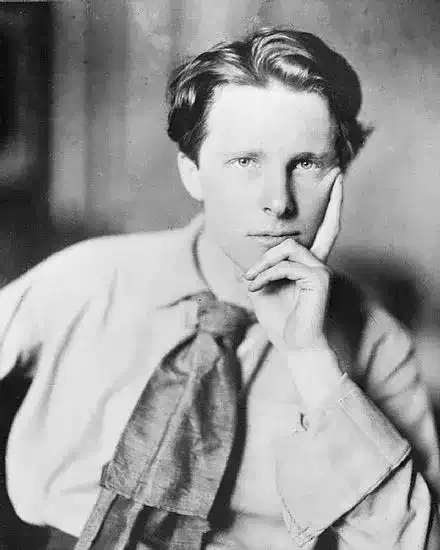
Rupert Brooke
The Vision of the Archangels
Slowly up silent peaks, the white edge of the world,
Trod four archangels, clear against the unheeding sky,
Bearing, with quiet even steps, and great wings furled,
A little dingy coffin; where a child must lie,
It was so tiny. (Yet, you had fancied, God could never
Have bidden a child turn from the spring and the sunlight,
And shut him in that lonely shell, to drop for ever
Into the emptiness and silence, into the night.…)
They then from the sheer summit cast, and watched it fall,
Through unknown glooms, that frail black coffin—and therein
God’s little pitiful Body lying, worn and thin,
And curled up like some crumpled, lonely flower petal—
Till it was no more visible; then turned again
With sorrowful quiet faces downward to the plain.
428
Robert Louis Stevenson
A Good Play
We built a ship upon the stairs
All made of the back-bedroom chairs,
And filled it full of soft pillows
To go a-sailing on the billows.
We took a saw and several nails,
And water in the nursery pails;
And Tom said, "Let us also take
An apple and a slice of cake;"--
Which was enough for Tom and me
To go a-sailing on, till tea.
We sailed along for days and days,
And had the very best of plays;
But Tom fell out and hurt his knee,
So there was no one left but me.
430

Johann Wolfgang von Goethe
Faithful Eckart
"OH, would we were further! Oh, would we were home,
The phantoms of night tow'rd us hastily come,
The band of the Sorceress sisters.
They hitherward speed, and on finding us here,
They'll drink, though with toil we have fetch'd it, the beer,
And leave us the pitchers all empty."
Thus speaking, the children with fear take to flight,
When sudden an old man appears in their sight:
"Be quiet, child! children, be quiet!
From hunting they come, and their thirst they would still,
So leave them to swallow as much as they will,
And the Evil Ones then will be gracious."
As said, so 'twas done! and the phantoms draw near,
And shadowlike seem they, and grey they appear,
Yet blithely they sip and they revel
The beer has all vanish'd, the pitchers are void;
With cries and with shouts the wild hunters, o'erjoy'd,
Speed onward o'er vale and o'er mountain.
The children in terror fly nimbly tow'rd home,
And with them the kind one is careful to come:
"My darlings, oh, be not so mournful!-
"They'll blame us and beat us, until we are dead."-"
No, no! ye will find that all goes well," he said;
"Be silent as mice, then, and listen!
"And he by whose counsels thus wisely ye're taught,
Is he who with children loves ever to sport.
The trusty and faithful old Eckart.
Ye have heard of the wonder for many a day,
But ne'er had a proof of the marvellous lay,--
Your hands hold a proof most convincing."
They arrive at their home, and their pitchers they place
By the side of their parents, with fear on their face,
Awaiting a beating and scolding.
But see what they're tasting: the choicest of beer!
Though three times and four times they quaff the good cheer
The pitchers remain still unemptied.
The marvel it lasts till the dawning of day;
All people who hear of it doubtless will say:
"What happen'd at length to the pitchers?"
In secret the children they smile, as they wait;
At last, though, they stammer, and stutter, and prate,
And straightway the pitchers were empty.
And if, children, with kindness address'd ye may be,
Whether father, or master, or alderman he,
Obey him, and follow his bidding!
And if 'tis unpleasant to bridle the tongue,
Yet talking is bad, silence good for the young--
And then will the beer fill your pitchers!
426
Johann Wolfgang von Goethe
Coptic Song
LEAVE we the pedants to quarrel and strive,
Rigid and cautious the teachers to be!
All of the wisest men e'er seen alive
Smile, nod, and join in the chorus with me:
"Vain 'tis to wait till the dolt grows less silly!
Play then the fool with the fool, willy-nilly,--
Children of wisdom,--remember the word!"
Merlin the old, from his glittering grave,
When I, a stripling, once spoke to him,--gave
Just the same answer as that I've preferr'd;
"Vain 'tis to wait till the dolt grows less silly!
Play then the fool with the fool, willy-nilly,--
Children of wisdom,--remember the word!"
And on the Indian breeze as it booms,
And in the depths of Egyptian tombs,
Only the same holy saying I've heard:
"Vain 'tis to wait till the dolt grows less silly!
Play then the fool with the fool, willy-nilly,--
Children of wisdom,--remember the word!"
419
Johann Wolfgang von Goethe
The Spring Oracle
OH prophetic bird so bright,
Blossom-songster, cuckoo bight!
In the fairest time of year,
Dearest bird, oh! deign to hear
What a youthful pair would pray,
Do thou call, if hope they may:
Thy cuck-oo, thy cuck-oo.
Ever more cuck-oo, cuck-oo!
Hearest thou? A loving pair
Fain would to the altar fare;
Yes! a pair in happy youth,
Full of virtue, full of truth.
Is the hour not fix'd by fate?
Say, how long must they still wait?
Hark! cuck-oo! hark! cuck-oo!
Silent yet! for shame, cuck-oo!
'Tis not our fault, certainly!
Only two years patient be!
But if we ourselves please here,
Will pa-pa-papas appear?
Know that thou'lt more kindness do us,
More thou'lt prophesy unto us.
One! cuck-oo! Two! cuck-oo!
Ever, ever, cuck-oo, cuck-oo, coo!
If we've calculated clearly,
We have half a dozen nearly.
If good promises we'll give,
Wilt thou say how long we'II live?
Truly, we'll confess to thee,
We'd prolong it willingly.
Coo cuck-oo, coo cuck-oo,
Coo, coo, coo, coo, coo, coo, coo, coo, coo!
Life is one continued feast-(
If we keep no score, at least).
If now we together dwell,
Will true love remain as well?
For if that should e'er decay,
Happiness would pass away.
Coo cuck-oo, coo cuck-oo,
Coo, coo, coo, coo, coo, coo, coo, coo, coo!
420
John Clare
Dyke Side
The frog croaks loud, and maidens dare not pass
But fear the noisome toad and shun the grass;
And on the sunny banks they dare not go
Where hissing snakes run to the flood below.
The nuthatch noises loud in wood and wild,
Like women turning skreeking to a child.
The schoolboy hears and brushes through the trees
And runs about till drabbled to the knees.
The old hawk winnows round the old crow's nest;
The schoolboy hears and wonder fills his breast.
He throws his basket down to climb the tree
And wonders what the red blotched eggs can be:
The green woodpecker bounces from the view
And hollos as he buzzes bye 'kew kew.'
417
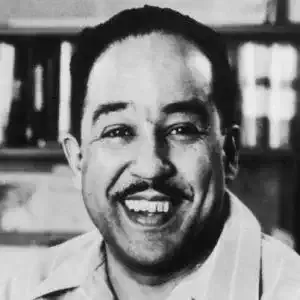
Langston Hughes
In Time Of Silver Rain
In time of silver rain
The earth puts forth new life again,
Green grasses grow
And flowers lift their heads,
And over all the plain
The wonder spreads
Of Life,
Of Life,
Of life!
In time of silver rain
The butterflies lift silken wings
To catch a rainbow cry,
And trees put forth new leaves to sing
In joy beneath the sky
As down the roadway
Passing boys and girls
Go singing, too,
In time of silver rain When spring
And life
Are new.
416
William Blake
Nurse's Song (Innocence)
When voices of children are heard on the green
And laughing is heard on the hill,
My heart is at rest within my breast
And everything else is still
Then come home my children the sun is gone down
And the dews of night arise
Come come leave off play, and let us away
Till the morning appears in the skies
No no let us play, for it is yet day
And we cannot go to sleep
Besides in the sky, the little birds fly
And the hills are all covered with sheep
Well well go & play till the light fades away
And then go home to bed
The little ones leaped & shouted & laugh'd
And all the hills echoed
418
Ella Wheeler Wilcox
Five Little Toes At Night
This little toe is tired,
This little toe needs rocking,
This little toe is sleepy you know,
But this little toe keeps talking,
This toe big and tall is the mischief of all,
For he made a great hole in his stocking.
This little toe needs rocking,
This little toe is sleepy you know,
But this little toe keeps talking,
This toe big and tall is the mischief of all,
For he made a great hole in his stocking.
402

Phillis Wheatley
On The Death Of A Young Lady Of Five Years Of Age
FROM dark abodes to fair etherial light
Th' enraptur'd innocent has wing'd her flight;
On the kind bosom of eternal love
She finds unknown beatitude above.
This known, ye parents, nor her loss deplore,
She feels the iron hand of pain no more;
The dispensations of unerring grace,
Should turn your sorrows into grateful praise;
Let then no tears for her henceforward flow,
No more distress'd in our dark vale below,
Her morning sun, which rose divinely bright,
Was quickly mantled with the gloom of night;
But hear in heav'n's blest bow'rs your Nancy fair,
And learn to imitate her language there.
"Thou, Lord, whom I behold with glory crown'd,
"By what sweet name, and in what tuneful sound
"Wilt thou be prais'd? Seraphic pow'rs are faint
"Infinite love and majesty to paint.
"To thee let all their graceful voices raise,
"And saints and angels join their songs of praise."
Perfect in bliss she from her heav'nly home
Looks down, and smiling beckons you to come;
Why then, fond parents, why these fruitless groans?
Restrain your tears, and cease your plaintive moans.
Freed from a world of sin, and snares, and pain,
Why would you wish your daughter back again?
No--bow resign'd. Let hope your grief control,
And check the rising tumult of the soul.
Calm in the prosperous, and adverse day,
Adore the God who gives and takes away;
Eye him in all, his holy name revere,
Upright your actions, and your hearts sincere,
Till having sail'd through life's tempestuous sea,
And from its rocks, and boist'rous billows free,
Yourselves, safe landed on the blissful shore,
Shall join your happy babe to part no more.
399