
Children

Rudyard Kipling
A Counting-Out Song
What is the song the children sing,
When doorway lilacs bloom in Spring,
And the Schools are loosed, and the games are played
That were deadly earnest when Earth was made?
Hear them chattering, shrill and hard,
After dinner-time, out in the yard,
As the sides are chosen and all submit
To the chance of the lot that shall make them "It."
(Singing) "Eenee, Meenee, Mainee, Mo!
Catch a nigger by the toe!
(If he hollers let him go!)
Eenee, Meenee. Mainee, Mo!
You-are-It!"
Eenee, Meenee, Mainee, and Mo
Were the First Big Four of the Long Ago,
When the Pole of the Earth sloped thirty degrees,
And Central Europe began to freeze,
And they needed Ambassadors staunch and stark
To steady the Tribes in the gathering dark:
But the frost was fierce and flesh was frail,
So they launched a Magic that could not fail.
(Singing) "Eenee, Meenee, Mainee, Mo!
Hear the wolves across the snow!
Some one has to kill 'em--so
Eenee, Meenee, Mainee, Mo
Make--you--It!"
Slowly the Glacial Epoch passed,
Central Europe thawed out at last;
And, under the slush of the melting snows
The first dim shapes of the Nations rose.
Rome, Britannia, Belgium, Gaul--
Flood and avalanche fathered them all;
And the First Big Four, as they watched the mess,
Pitied Man in his helplessness.
(Singing) "Eenee, Meenee, Mainee, Mo!
Trouble starts When Nations grow,
Some one has to stop it--so
Eenee, Meenee, Mainee, Mo!
Make-you-It!"
Thus it happened, but none can tell
What was the Power behind the spell--
Fear, or Duty, or Pride, or Faith--
That sent men shuddering out to death--
To cold and watching, and, worse than these,
Work, more work, when they looked for ease--
To the days discomfort, the nights despair,
In the hope of a prize that they never could share,
(Singing) "Eenee, Meenee, Mainee, Mo!
Man is born to Toil and Woe.
One will cure another--so
Eenee, Meenee, Mainee, Mo
Make--you--It!"
Once and again, as the Ice went North
The grass crept up to the Firth of Forth.
Once and again, as the Ice came South
The glaciers ground over Lossiemouth.
But, grass or glacier, cold or hot,
The men went out who would rather not,
And fought with the Tiger, the Pig and the Ape,
To hammer the world into decent shape.
(Singing) "Eenee, Meenee, Mainee, Mo!
What's the use of doing so?
Ask the Gods, for we don't know;
But Eenee, Meenee, Mainee, Mo
Make-us-It!"
Nothing is left of that terrible rune
But a tag of gibberish tacked to a tune
That ends the waiting and settles the claims
Of children arguing over their games;
For never yet has a boy been found
To shirk his turn when the turn came round;
Nor even a girl has been known to say
"If you laugh at me I shan't play."
For-- "Eenee, Meenee, Mainee, Mo,
(Don't you let the grown-ups know!)
You may hate it ever so,
But if you're chose you're bound to go,
When Eenee, Meenee, Mainee, Mo
Make-you-It!"
564

Rabindranath Tagore
Sleep-Stealer
Who stole sleep from baby's eyes? I must know.
Clasping her pitcher to her waist mother went to fetch water
from the village near by.
It was noon. The children's playtime was over; the ducks in
the pond were silent.
The shepherd boy lay asleep under the shadow of the banyan
tree.
The crane stood grave and still in the swamp near the mango
grove.
In the meanwhile the Sleep-stealer came and, snatching sleep
from baby's eyes, flew away.
When mother came back she found baby travelling the room over
on all fours.
Who stole sleep from our baby's eyes? I must know. I must find
her and chain her up.
I must look into that dark cave, where, through boulders and
scowling stones, trickles a tiny stream.
I must search in the drowsy shade of the bakula grove, where
pigeons coo in their corner, and fairies' anklets tinkle in the
stillness of starry nights.
In the evening I will peep into the whispering silence of the
bamboo forest, where fireflies squander their light, and will ask
every creature I meet, "Can anybody tell me where the Sleep-stealer
lives?"
Who stole sleep from baby's eyes? I must know.
Shouldn't I give her a good lesson if I could only catch her!
I would raid her nest and see where she hoards all her stolen
sleep.
I would plunder it all, and carry it home.
I would bind her two wings securely, set her on the bank of
the river, and then let her play at fishing with a reed among the
rushes and water-lilies.
When the marketing is over in the evening, and the village
children sit in their mothers' laps, then the night birds will
mockingly din her ears with:
"Whose sleep will you steal now?"
563
Rudyard Kipling
A Child's Garden
R. L. Stevenson
Now there is nothing wrong with me
Except -- I think it's called T.B.
And that is why I have to lay
Out in the garden all the day.
Our garden is not very wide
And cars go by on either side,
And make an angry-hooty noise
That rather startles little boys.
But worst of all is when they take
Me out in cars that growl and shake,
With charabancs so dreadful-near
I have to shut my eyes for fear.
But when I'm on my back again,
I watch the Croydon aeroplane
That flies across to France, and sings
Like hitting thick piano-strings.
When I am strong enough to do
The things I'm truly wishful to,
I'll never use a car or train
But always have an aeroplane;
And just go zooming round and round,
And frighten Nursey with the sound,
And see the angel-side of clouds,
And spit on all those motor-crowds!
567

John Milton
On The Death Of A Fair Infant Dying Of A Cough
I
O fairest flower no sooner blown but blasted,
Soft silken Primrose fading timelesslie,
Summers chief honour if thou hadst outlasted
Bleak winters force that made thy blossome drie;
For he being amorous on that lovely die
That did thy cheek envermeil, thought to kiss
But kill'd alas, and then bewayl'd his fatal bliss.
II
For since grim Aquilo his charioter
By boistrous rape th' Athenian damsel got,
He thought it toucht his Deitie full neer,
If likewise he some fair one wedded not,
Thereby to wipe away th' infamous blot,
Of long-uncoupled bed, and childless eld,
Which 'mongst the wanton gods a foul reproach was held.
III
So mounting up in ycie-pearled carr,
Through middle empire of the freezing aire
He wanderd long, till thee he spy'd from farr,
There ended was his quest, there ceast his care
Down he descended from his Snow-soft chaire,
But all unwares with his cold-kind embrace
Unhous'd thy Virgin Soul from her fair hiding place.
IV
Yet art thou not inglorious in thy fate;
For so Apollo, with unweeting hand
Whilome did slay his dearly-loved mate
Young Hyacinth born on Eurotas' strand,
Young Hyacinth the pride of Spartan land;
But then transform'd him to a purple flower
Alack that so to change thee winter had no power.
V
Yet can I not perswade me thou art dead
Or that thy coarse corrupts in earths dark wombe,
Or that thy beauties lie in wormie bed,
Hid from the world in a low delved tombe;
Could Heav'n for pittie thee so strictly doom?
O no! for something in thy face did shine
Above mortalitie that shew'd thou wast divine.
VI
Resolve me then oh Soul most surely blest
(If so it be that thou these plaints dost hear)
Tell me bright Spirit where e're thou hoverest
Whether above that high first-moving Spheare
Or in the Elisian fields (if such there were.)
Oh say me true if thou wert mortal wight
And why from us so quickly thou didst take thy flight.
VII
Wert thou some Starr which from the ruin'd roofe
Of shak't Olympus by mischance didst fall;
Which carefull Jove in natures true behoofe
Took up, and in fit place did reinstall?
Or did of late earths Sonnes besiege the wall
Of sheenie Heav'n, and thou some goddess fled
Amongst us here below to hide thy nectar'd head
VIII
Or wert thou that just Maid who once before
Forsook the hated earth, O tell me sooth
And cam'st again to visit us once more?
Or wert thou that sweet smiling Youth!
Or that c[r]own'd Matron sage white-robed Truth?
Or any other of that heav'nly brood
Let down in clowdie throne to do the world some good.
Note: 53 Or wert thou] Or wert thou Mercy -- conjectured by
John Heskin Ch. Ch. Oxon. from Ode on Nativity, st. 15.
IX
Or wert thou of the golden-winged boast,
Who having clad thy self in humane weed,
To earth from thy praefixed seat didst poast,
And after short abode flie back with speed,
As if to shew what creatures Heav'n doth breed,
Thereby to set the hearts of men on fire
To scorn the sordid world, and unto Heav'n aspire.
X
But oh why didst thou not stay here below
To bless us with thy heav'n-lov'd innocence,
To slake his wrath whom sin hath made our foe
To turn Swift-rushing black perdition hence,
Or drive away the slaughtering pestilence,
To stand 'twixt us and our deserved smart
But thou canst best perform that office where thou art.
XI
Then thou the mother of so sweet a child
Her false imagin'd loss cease to lament,
And wisely learn to curb thy sorrows wild;
Think what a present thou to God hast sent,
And render him with patience what he lent;
This if thou do he will an off-spring give,
That till the worlds last-end shall make thy name to live.
561
Rabindranath Tagore
Superior
Mother, your baby is silly! She is so absurdly childish!
She does not know the difference between the lights in the
streets and the stars.
When we play at eating with pebbles, she thinks they are real
food, and tries to put them into her mouth.
When I open a book before her and ask her to learn her a, b,
c, she tears the leaves with her hands and roars for joy at
nothing; this is your baby's way of doing her lesson.
When I shake my head at her in anger and scold her and call
her naughty, she laughs and thinks it great fun.
Everybody knows that father is away, but if in play I call
aloud "Father," she looks about her in excitement and thinks that
father is near.
When I hold my class with the donkeys that our washer man
brings to carry away the clothes and I warn her that I am the
schoolmaster, she will scream for no reason and call me dada.
Your baby wants to catch the moon. She is so funny; she calls
Ganesh Ganush.
Mother, your baby is silly! She is so absurdly childish!
567

Robert Louis Stevenson
A Good Boy
I woke before the morning, I was happy all the day,
I never said an ugly word, but smiled and stuck to play.
And now at last the sun is going down behind the wood,
And I am very happy, for I know that I've been good.
My bed is waiting cool and fresh, with linen smooth and fair,
And I must be off to sleepsin-by, and not forget my prayer.
I know that, till to-morrow I shall see the sun arise,
No ugly dream shall fright my mind, no ugly sight my eyes.
But slumber hold me tightly till I waken in the dawn,
And hear the thrushes singing in the lilacs round the lawn.
537

Paul Laurence Dunbar
Little Brown Baby
Little brown baby wif spa'klin' eyes,
Come to yo' pappy an' set on his knee.
What you been doin', suh -- makin' san' pies?
Look at dat bib -- you's es du'ty ez me.
Look at dat mouf -- dat's merlasses, I bet;
Come hyeah, Maria, an' wipe off his han's.
Bees gwine to ketch you an' eat you up yit,
Bein' so sticky an sweet -- goodness lan's!
Little brown baby wif spa'klin' eyes,
Who's pappy's darlin' an' who's pappy's chile?
Who is it all de day nevah once tries
Fu' to be cross, er once loses dat smile?
Whah did you git dem teef? My, you's a scamp!
Whah did dat dimple come f'om in yo' chin?
Pappy do' know you -- I b'lieves you's a tramp;
Mammy, dis hyeah's some ol' straggler got in!
Let's th'ow him outen de do' in de san',
We do' want stragglers a-layin' 'roun' hyeah;
Let's gin him 'way to de big buggah-man;
I know he's hidin' erroun' hyeah right neah.
Buggah-man, buggah-man, come in de do',
Hyeah's a bad boy you kin have fu' to eat.
Mammy an' pappy do' want him no mo',
Swaller him down f'om his haid to his feet!
Dah, now, I t'ought dat you'd hug me up close.
Go back, ol' buggah, you sha'n't have dis boy.
He ain't no tramp, ner no straggler, of co'se;
He's pappy's pa'dner an' play-mate an' joy.
Come to you' pallet now -- go to yo' res';
Wisht you could allus know ease an' cleah skies;
Wisht you could stay jes' a chile on my breas'--
Little brown baby wif spa'klin' eyes!
531

William Blake
Sleep! Sleep! Beauty Bright
Sleep! sleep! beauty bright,
Dreaming o'er the joys of night;
Sleep! sleep! in thy sleep
Little sorrows sit and weep.
Sweet Babe, in thy face
Soft desires I can trace,
Secret joys and secret smiles,
Little pretty infant wiles.
As thy softest limbs I feel,
Smiles as of the morning steal
O'er thy cheek, and o'er thy breast
Where thy little heart does rest.
O! the cunning wiles that creep
In thy little heart asleep.
When thy little heart does wake
Then the dreadful lightnings break,
From thy cheek and from thy eye,
O'er the youthful harvests nigh.
Infant wiles and infant smiles
Heaven and Earth of peace beguiles.
529
Rudyard Kipling
To James Whitcomb Riley
Your trail runs to the westward,
And mine to my own place;
There is water between our lodges,
And I have not seen your face.
But since I have read your verses
'Tis easy to guess the rest,--
Because in the hearts of the children
There is neither East nor West.
Born to a thousand fortunes
Of good or evil hap,
Once they were kings together,
Throned in a mother's lap.
Surely they know that secret--
Yellow and black and white--
When they meet as kings together
In innocent dreams at night.
By a moon they all can play with--
Grubby and grimed and unshod,
Very happy together,
And very near to God.
Your trail runs to the westward,
And mine to my own place:
There is water between our lodges,
And you cannot see my face.--
And that is well--for crying
Should neither be written nor seen,
But if I call you Smoke-in-the-Eyes,
I know you will know what I mean.
530

Ella Wheeler Wilcox
The Boys' And Girls' Thanksgiving of 1892
Never since the race was started,
Had a boy in any clime,
Cause to be so thankful-hearted,
As the boys of present time.
Not a girl in old times living-
Let the world talk as it may-
Found such reasons for Thanksgiving,
As the girls who live to-day!
Grandmas, in their corners sitting,
Toiling till the day grew late,
What knew they with endless knitting,
Of the jolly roller-skate?
Grandpas sitting by the fender,
Reading by the faggots' blaze,
What knew they of modern splendor
Found in incandescent rays?
Where they toiled in bitter weather,
Braving rain and snow and sleet,
Gathering sticks of wood together,
We have radiators' heat.
But these fruits of modern science
They first planted seed by seed,
In their strength and self-reliance
We may find a noble creed.
With the dawn of great inventions,
Came the anti-warring days.
Men are sick of armed contentions,
God be thanked with heart-felt praise.
Once a boy was trained for fighting,
Now the world is better taught,
'Tis an age when wrongs are righting
By the force of common thought.
Once a girl was trained for sewing,
Spinning, knitting, nothing more.
She must never think of knowing
Aught of things outside her door.
If she soared above her spinning,
If she sought a life more broad,
She was looked upon as sinning
'Gainst the laws of man and God.
Now a girl is taught she's human,
Brain and body, soul and heart
All are needed by the woman
Who to-day would play her part.
Swift and sure the world advances,
Let the critic carp who may.
God be praised for all the chances
Boys and girls enjoy to-day.
502

John Clare
Sport In The Meadows
Maytime is to the meadows coming in,
And cowslip peeps have gotten eer so big,
And water blobs and all their golden kin
Crowd round the shallows by the striding brig.
Daisies and buttercups and ladysmocks
Are all abouten shining here and there,
Nodding about their gold and yellow locks
Like morts of folken flocking at a fair.
The sheep and cows are crowding for a share
And snatch the blossoms in such eager haste
That basket-bearing children running there
Do think within their hearts they'll get them all
And hoot and drive them from their graceless waste
As though there wa'n't a cowslip peep to spare.
--For they want some for tea and some for wine
And some to maken up a cuckaball
To throw across the garland's silken line
That reaches oer the street from wall to wall.
--Good gracious me, how merrily they fare:
One sees a fairer cowslip than the rest,
And off they shout--the foremost bidding fair
To get the prize--and earnest half and jest
The next one pops her down--and from her hand
Her basket falls and out her cowslips all
Tumble and litter there--the merry band
In laughing friendship round about her fall
To helpen gather up the littered flowers
That she no loss may mourn. And now the wind
In frolic mood among the merry hours
Wakens with sudden start and tosses off
Some untied bonnet on its dancing wings;
Away they follow with a scream and laugh,
And aye the youngest ever lags behind,
Till on the deep lake's very bank it hings.
They shout and catch it and then off they start
And chase for cowslips merry as before,
And each one seems so anxious at the heart
As they would even get them all and more.
One climbs a molehill for a bunch of may,
One stands on tiptoe for a linnet's nest
And pricks her hand and throws her flowers away
And runs for plantin leaves to have it drest.
So do they run abouten all the day
And teaze the grass-hid larks from getting rest.
--Scarce give they time in their unruly haste
To tie a shoestring that the grass unties--
And thus they run the meadows' bloom to waste,
Till even comes and dulls their phantasies,
When one finds losses out to stifle smiles
Of silken bonnet-strings--and utters sigh
Oer garments renten clambering over stiles.
Yet in the morning fresh afield they hie,
Bidding the last day's troubles all goodbye;
When red pied cow again their coming hears,
And ere they clap the gate she tosses up
Her head and hastens from the sport she fears:
The old yoe calls her lamb nor cares to stoop
To crop a cowslip in their company.
Thus merrily the little noisy troop
Along the grass as rude marauders hie,
For ever noisy and for ever gay
While keeping in the meadows holiday.
504

Alfred Lord Tennyson
Spring
Birds' love and birds' song
Flying here and there,
Birds' songand birds' love
And you with gold for hair!
Birds' songand birds' love
Passing with the weather,
Men's song and men's love,
To love once and forever.
Men's love and birds' love,
And women's love and men's!
And you my wren with a crown of gold,
You my queen of the wrens!
You the queen of the wrens -We'll
be birds of a feather,
I'll be King of the Queen of the wrens,
And all in a nest together.
489

Elizabeth Barrett Browning
Now he muses deep the meaning of the Heaven-words as they come.
Speak not! he is consecrated--Breathe
no breath across his eyes.
Lifted up and separated,
On the hand of God he lies,
In a sweetness beyond touching---held in cloistral sanctities.
Could ye bless him---father---mother ?
Bless the dimple in his cheek?
Dare ye look at one another,
And the benediction speak?
Would ye not break out in weeping, and confess yourselves too weak?
He is harmless---ye are sinful,--Ye
are troubled---he, at ease:
From his slumber, virtue winful
Floweth outward with increase---
Dare not bless him! but be blessed by his peace---and go in peace.
491

Boris Pasternak
So they begin. With two years gone...
So they begin. With two years gone
From nurse to countless tunes they scuttle.
They chirp and whistle. Then comes on
The third year, and they start to prattle.
So they begin to see and know.
In din of started turbines roaring
Mother seems not their mother now,
And you not you, and home is foreign.
What meaning has the menacing
Beauty beneath the lilac seated,
If to steal children's not the thing?
So first they fear that they are cheated.
So ripen fears. Can he endure
A star to beat him in successes,
When he's a Faust, a sorcerer?
So first his gipsy life progresses.
So from the fence where home should lie
In flight above are found to hover
Seas unexpected as a sigh.
So first iambics they discover.
So summer nights fall down and pray
'Thy will be done' where oats are sprouting,
And menace with your eyes the day.
So with the sun they start disputing.
So verses start them on their way.
484
Robert Louis Stevenson
Escape at Bedtime
The lights from the parlour and kitchen shone out
Through the blinds and the windows and bars;
And high overhead and all moving about,
There were thousands of millions of stars.
There ne'er were such thousands of leaves on a tree,
Nor of people in church or the Park,
As the crowds of the stars that looked down upon me,
And that glittered and winked in the dark.
The Dog, and the Plough, and the Hunter, and all,
And the star of the sailor, and Mars,
These shown in the sky, and the pail by the wall
Would be half full of water and stars.
They saw me at last, and they chased me with cries,
And they soon had me packed into bed;
But the glory kept shining and bright in my eyes,
And the stars going round in my head.
483

Ezra Pound
The Study In Aesthetics
The very small children in patched clothing,
Being smitten with an unusual wisdom,
Stopped in their play as she passed them
And cried up from their cobbles:
Guarda! Ahi, guarda! Ch’ è be’ a!
But three years after this
I heard the young Dante, whose last name I do not
know--
For there are, in Sirmione, twenty-eight young Dantes
and thirty-four Catulli;
And there had been a great catch of sardines,
And his elders
Were packing them in the great wooden boxes
For the market in Brescia, and he
Leapt about, snatching at the bright fish
And getting in both of their ways;
And in vain they commanded him to stafermo!
And when they would not let him arrange
The fish in the boxes
He stroked those which were already arranged,
Murmuring for his own satisfaction
This identical phrase:
Ch’ è be’ a
And at this I was mildly abashed.
480
William Blake
The Land of Dreams
Awake, awake, my little boy!
Thou wast thy mother's only joy;
Why dost thou weep in thy gentle sleep?
Awake! thy father does thee keep.
'O, what land is the Land of Dreams?
What are its mountains, and what are its streams?
O father! I saw my mother there,
Among the lilies by waters fair.
'Among the lambs, cloth?d in white,
She walk'd with her Thomas in sweet delight.
I wept for joy, like a dove I mourn;
O! when shall I again return?'
Dear child, I also by pleasant streams
Have wander'd all night in the Land of Dreams;
But tho' calm and warm the waters wide,
I could not get to the other side.
'Father, O father! what do we here
In this land of unbelief and fear?
The Land of Dreams is better far
Above the light of the morning star.'
962
William Blake
The Chimney Sweeper
A little black thing in the snow,
Crying "weep! weep!" in notes of woe!
"Where are thy father and mother? Say!"--
"They are both gone up to the church to pray.
"Because I was happy upon the heath,
And smiled among the winter's snow,
They clothed me in the clothes of death,
And taught me to sing the notes of woe.
"And because I am happy and dance and sing,
They think they have done me no injury,
And are gone to praise God and his priest and king,
Who make up a heaven of our misery."
470
William Blake
Songs Of Innocence: Introduction
Piping down the valleys wild
Piping songs of pleasant glee
On a cloud I saw a child.
And he laughing said to me.
Pipe a song about a Lamb:
So I piped with merry chear,
Piper, pipe that song again--
So I piped, he wept to hear.
Drop thy pipe thy happy pipe
Sing thy songs of happy chear,
So I sung the same again
While he wept with joy to hear
Piper sit thee down and write
In a book that all may read--
So he vanished from my sight
And I pluck'd a hollow reed.
And I made a rural pen,
And I stained the water clear,
And I wrote my happy songs,
Every child may joy to hear.
946
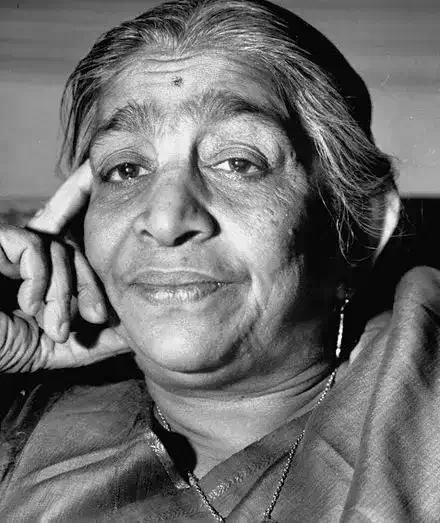
Sarojini Naidu
To My Children
Jaya Surya
GOLDEN sun of victory, born
In my life's unclouded morn,
In my lambent sky of love,
May your growing glory prove
Sacred to your consecration,
To my heart and to my nation.
Sun of victory, may you be
Sun of song and liberty.
Padmaja
Lotus-maiden, you who claim
All the sweetness of your name,
Lakshmi, fortune's queen, defend you,
Lotus-born like you, and send you
Balmy moons of love to bless you,
Gentle joy-winds to caress you.
Lotus-maiden, may you be
Fragrant of all ecstasy.
Ranadheera
Little lord of battle, hail
In your newly-tempered mail!
Learn to conquer, learn to fight
In the foremost flanks of right,
Like Valmiki's heroes bold,
Rubies girt in epic gold.
Lord of battle, may you be,
Lord of love and chivalry.
Lilamani
Limpid jewel of delight
Severed from the tender night
Of your sheltering mother-mine,
Leap and sparkle, dance and shine,
Blithely and securely set
In love's magic coronet.
Living jewel, may you be
Laughter-bound and sorrow-free.
463
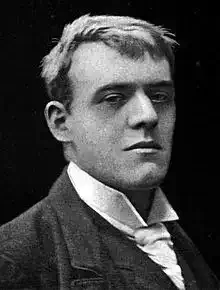
Hilaire Belloc
The Birds
When Jesus Christ was four years old
The angels brought Him toys of gold,
Which no man ever had bought or sold.
And yet with these He would not play.
He made Him small fowl out of clay,
And blessed them till they flew away:
Tu creasti Domine
Jesus Christ, Thou child so wise,
Bless mine hands and fill mine eyes,
And bring my soul to Paradise.
456
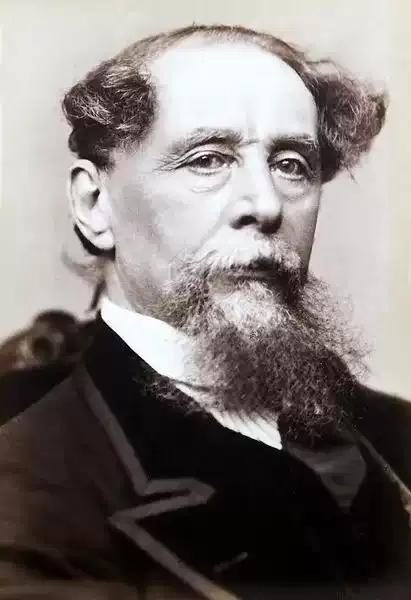
Charles Dickens
A Child's Hymn
Hear my prayer, O heavenly Father,
Ere I lay me down to sleep;
Bid Thy angels, pure and holy,
Round my bed their vigil keep.
My sins are heavy, but Thy mercy
Far outweighs them, every one;
Down before Thy cross I cast them,
Trusting in Thy help alone.
Keep me through this night of peril
Underneath its boundless shade;
Take me to Thy rest, I pray Thee,
When my pilgrimage is made.
None shall measure out Thy patience
By the span of human thought;
None shall bound the tender mercies
Which Thy Holy Son has bought.
Pardon all my past transgressions,
Give me strength for days to come;
Guide and guard me with Thy blessing
Till Thy angels bid me home.
453

Billy Collins
Snow Day
Today we woke up to a revolution of snow,
its white flag waving over everything,
the landscape vanished,
not a single mouse to punctuate the blankness,
and beyond these windows
the government buildings smothered,
schools and libraries buried, the post office lost
under the noiseless drift,
the paths of trains softly blocked,
the world fallen under this falling.
In a while I will put on some boots
and step out like someone walking in water,
and the dog will porpoise through the drifts,
and I will shake a laden branch,
sending a cold shower down on us both.
But for now I am a willing prisoner in this house,
a sympathizer with the anarchic cause of snow.
I will make a pot of tea
and listen to the plastic radio on the counter,
as glad as anyone to hear the news
that the Kiddie Corner School is closed,
the Ding-Dong School, closed,
the All Aboard Children's School, closed,
the Hi-Ho Nursery School, closed,
along with -- some will be delighted to hear -
the Toadstool School, the Little School,
Little Sparrows Nursery School,
Little Stars Pre-School, Peas-and-Carrots Day School,
the Tom Thumb Child Center, all closed,
and -- clap your hands -- the Peanuts Play School.
So this is where the children hide all day,
These are the nests where they letter and draw,
where they put on their bright miniature jackets,
all darting and climbing and sliding,
all but the few girls whispering by the fence.
And now I am listening hard
in the grandiose silence of the snow,
trying to hear what those three girls are plotting,
what riot is afoot,
which small queen is about to be brought down.
444
