
Flowers and Gardens

Christina Rossetti
If Stars Dropped Out Of Heaven
If stars dropped out of heaven,
And if flowers took their place,
The sky would still look very fair,
And fair earth's face.
Winged angels might fly down to us
To pluck the stars,
Be we could only long for flowers
Beyond the cloudy bars.
And if flowers took their place,
The sky would still look very fair,
And fair earth's face.
Winged angels might fly down to us
To pluck the stars,
Be we could only long for flowers
Beyond the cloudy bars.
234
1
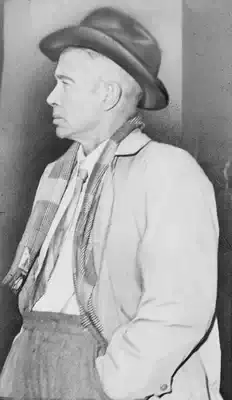
E. E. Cummings
somewhere i have never travelled, gladly beyond
somewhere i have never travelled,gladly beyond
any experience,your eyes have their silence:
in your most frail gesture are things which enclose me,
or which i cannot touch because they are too near
your slightest look will easily unclose me
though i have closed myself as fingers,
you open always petal by petal myself as Spring opens
(touching skilfully,mysteriously)her first rose
or if your wish be to close me, i and
my life will shut very beautifully ,suddenly,
as when the heart of this flower imagines
the snow carefully everywhere descending;
nothing which we are to perceive in this world equals
the power of your intense fragility:whose texture
compels me with the color of its countries,
rendering death and forever with each breathing
(i do not know what it is about you that closes
and opens;only something in me understands
the voice of your eyes is deeper than all roses)
nobody,not even the rain,has such small hands
1,280
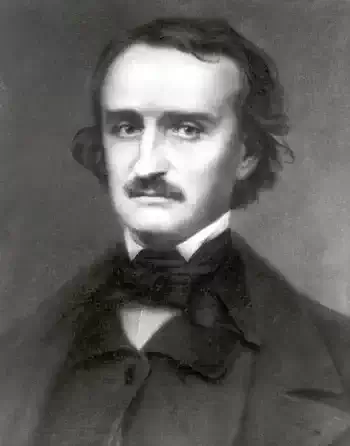
Edgar Allan Poe
To One in Paradise
Thou wast all that to me, love,
For which my soul did pine-
A green isle in the sea, love,
A fountain and a shrine,
All wreathed with fairy fruits and flowers,
And all the flowers were mine.
Ah, dream too bright to last!
Ah, starry Hope! that didst arise
But to be overcast!
A voice from out the Future cries,
"Onward!"- but o'er the Past
(Dim gulf!) my spirit hovering lies
Mute, motionless, aghast!
For, alas! alas! with me
The light of life is o'er!
"No more-- no more-- no more,"
(Such language holds the solemn sea
To the sands upon the shore)
Shall bloom the thunder-blasted tree
Or the stricken eagle soar!
And all my hours are trances,
And all my nightly dreams
Are where thy dark eye glances,
And where thy footstep gleams-
In what ethereal dances,
By what Italian streams.
Alas! for that accursed time
They bore thee o'er the billow,
From Love to titled age and crime,
And an unholy pillow!--
From me, and from our misty clime,
Where weeps the silver willow!
1834
1,367
Edgar Allan Poe
To
Sleep on, sleep on, another hour —
I would not break so calm a sleep,
To wake to sunshine and to show'r,
To smile and weep.
Sleep on, sleep on, like sculptured thing,
Majestic, beautiful art thou;
Sure seraph shields thee with his wing
And fans thy brow —
We would not deem thee child of earth,
For, O, angelic, is thy form!
But, that in heav'n thou had'st thy birth,
Where comes no storm
To mar the bright, the perfect flow'r,
But all is beautiful and still —
And golden sands proclaim the hour
Which brings no ill.
Sleep on, sleep on, some fairy dream
Perchance is woven in thy sleep —
But, O, thy spirit, calm, serene,
Must wake to weep.
1833
1,143

Oscar Wilde
Magdalen Walks
THE little white clouds are racing over the sky,
And the fields are strewn with the gold of the flower of March,
The daffodil breaks under foot, and the tasselled larch
Sways and swings as the thrush goes hurrying by.
A delicate odour is borne on the wings of the morning breeze,
The odour of leaves, and of grass, and of newly up-turned earth,
The birds are singing for joy of the Spring's glad birth,
Hopping from branch to branch on the rocking trees.
And all the woods are alive with the murmur and sound of Spring,
And the rosebud breaks into pink on the climbing briar,
And the crocus-bed is a quivering moon of fire
Girdled round with the belt of an amethyst ring.
And the plane to the pine-tree is whispering some tale of love
Till it rustles with laughter and tosses its mantle of green,
And the gloom of the wych-elm's hollow is lit with the iris sheen
Of the burnished rainbow throat and the silver breast of a dove.
See! the lark starts up from his bed in the meadow there,
Breaking the gossamer threads and the nets of dew,
And flashing a-down the river, a flame of blue!
The kingfisher flies like an arrow, and wounds the air.
882

Alfred Lord Tennyson
The Flower
Once in a golden hour
I cast to earth a seed.
Up there came a flower,
The people said, a weed.
To and fro they went
Thro' my garden bower,
And muttering discontent
Cursed me and my flower.
Then it grew so tall
It wore a crown of light,
But thieves from o'er the wall
Stole the seed by night.
Sow'd it far and wide
By every town and tower,
Till all the people cried,
"Splendid is the flower!"
Read my little fable:
He that runs may read.
Most can raise the flowers now,
For all have got the seed.
And some are pretty enough,
And some are poor indeed;
And now again the people
Call it but a weed.
812

William Blake
The Sick Rose
O Rose, thou art sick!
The invisible worm
That flies in the night,
In the howling storm,
Has found out thy bed
Of crimson joy:
And his dark secret love
Does thy life destroy.
The invisible worm
That flies in the night,
In the howling storm,
Has found out thy bed
Of crimson joy:
And his dark secret love
Does thy life destroy.
838
Oscar Wilde
Under The Balcony
O beautiful star with the crimson mouth!
O moon with the brows of gold!
Rise up, rise up, from the odorous south!
And light for my love her way,
Lest her little feet should stray
On the windy hill and the wold!
O beautiful star with the crimson mouth!
O moon with the brows of gold!
O ship that shakes on the desolate sea!
O ship with the wet, white sail!
Put in, put in, to the port to me!
For my love and I would go
To the land where the daffodils blow
In the heart of a violet dale!
O ship that shakes on the desolate sea!
O ship with the wet, white sail!
O rapturous bird with the low, sweet note!
O bird that sits on the spray!
Sing on, sing on, from your soft brown throat!
And my love in her little bed
Will listen, and lift her head
From the pillow, and come my way!
O rapturous bird with the low, sweet note!
O bird that sits on the spray!
O blossom that hangs in the tremulous air!
O blossom with lips of snow!
Come down, come down, for my love to wear!
You will die on her head in a crown,
You will die in a fold of her gown,
To her little light heart you will go!
O blossom that hangs in the tremulous air!
O blossom with lips of snow!
O moon with the brows of gold!
Rise up, rise up, from the odorous south!
And light for my love her way,
Lest her little feet should stray
On the windy hill and the wold!
O beautiful star with the crimson mouth!
O moon with the brows of gold!
O ship that shakes on the desolate sea!
O ship with the wet, white sail!
Put in, put in, to the port to me!
For my love and I would go
To the land where the daffodils blow
In the heart of a violet dale!
O ship that shakes on the desolate sea!
O ship with the wet, white sail!
O rapturous bird with the low, sweet note!
O bird that sits on the spray!
Sing on, sing on, from your soft brown throat!
And my love in her little bed
Will listen, and lift her head
From the pillow, and come my way!
O rapturous bird with the low, sweet note!
O bird that sits on the spray!
O blossom that hangs in the tremulous air!
O blossom with lips of snow!
Come down, come down, for my love to wear!
You will die on her head in a crown,
You will die in a fold of her gown,
To her little light heart you will go!
O blossom that hangs in the tremulous air!
O blossom with lips of snow!
742
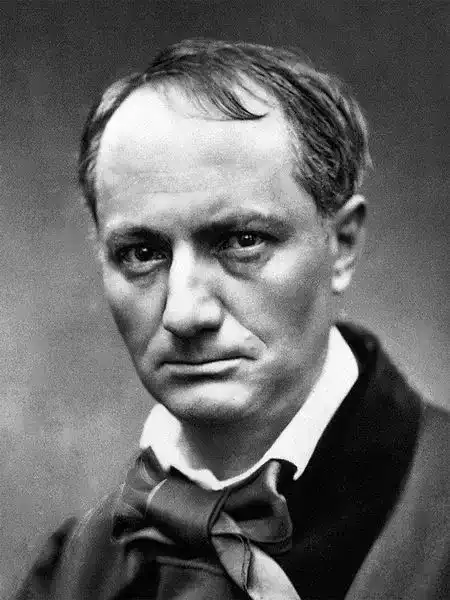
Charles Baudelaire
Evening Harmony
The hour has come at last when, trembling to and fro,
Each flower is a censer sifting its perfume;
The scent and sounds all swirl in evening’s gentle fume;
A melancholy waltz, a languid vertigo!
Each flower is a censer sifting its perfume;
A violin’s vibrato wounds the heart of woe;
A melancholy waltz, a languid vertigo!
The sky, a lofty altar, lovely in the gloom,
A violin’s vibrato wounds the heart of woe,
A tender heart detests the black of nullity,
The sky, a lofty altar, lovely in the gloom;
The sun is drowning in the evening’s blood-red glow.
A tender heart detests the black of nullity,
And lovingly preserves each trace of long ago!
The sun is drowning in the evening’s blood-red glow …
Your memory shines through me like an ostensory!
Each flower is a censer sifting its perfume;
The scent and sounds all swirl in evening’s gentle fume;
A melancholy waltz, a languid vertigo!
Each flower is a censer sifting its perfume;
A violin’s vibrato wounds the heart of woe;
A melancholy waltz, a languid vertigo!
The sky, a lofty altar, lovely in the gloom,
A violin’s vibrato wounds the heart of woe,
A tender heart detests the black of nullity,
The sky, a lofty altar, lovely in the gloom;
The sun is drowning in the evening’s blood-red glow.
A tender heart detests the black of nullity,
And lovingly preserves each trace of long ago!
The sun is drowning in the evening’s blood-red glow …
Your memory shines through me like an ostensory!
707
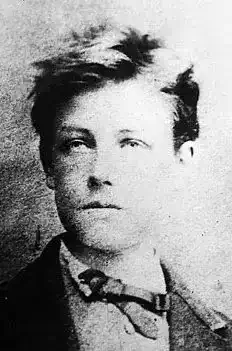
Arthur Rimbaud
What One Says To The Poet On The Subject Of Flowers
I
Thus, ever, towards the azure night
Where there quivers a topaz sea,
Will function in your evening light
The Lilies, those clysters of ecstasy!
In our own age of sago, as they must,
Since all the Plants are workers first,
The Lilies will drink a blue disgust,
From your religious Prose, not verse!
– The Lily of Monsieur de Kerdrel
The sonnet of eighteen thirty, the plant,
That Lily, they bestow on ‘The Minstrel’
With the carnation and the amaranth!
Lilies! Lilies! You see never a one!
Yet in your Verses, like the Sinners’
Sleeves, those of soft-footed women,
Always those white flowers shiver!
Always, Dear, when you take a bathe,
Your Shirt with yellow armpits rots
Swells to the breeze of rising day,
Above the soiled forget-me-nots!
Love, only, through your nets
Smuggles Lilies – O unequal!
And the Woodland Violets,
The dark Nymphs’ sugary spittle!...
II
O Poets, if you could but own
To the red on the laurel’s firm stem
To the Roses, the Roses, blown,
With a thousand octaves swollen!
If BANVILLE could make them snow,
Blood-stained, whirling in gyrations,
Blacking the eye of that stranger so,
Who sees wicked interpretations!
In your forests, by your paths,
O so placid photographers!
Like the stoppers on carafes,
The Flora’s more or less diverse!
Always the vegetables, French,
Absurd, consumptive, up for a fight,
Bellies of basset hounds they drench,
Peacefully passed in evening light;
Always, after fearful drawings
Of blue Lotus or that Sunflower,
Pink prints, subjects befitting
Girls in communion’s sweet hour!
The Asoka Ode agrees with the
Loretto window stanza; showers
Of bright butterflies, heavy, flutter,
Dunging on the daisy flowers.
Old verdures, old braided ribbons!
O vegetable biscuit bakes!
Fantastic flowers of old Salons!
– For cockchafers, not rattlesnakes,
Those vegetable dolls in tears
Grandville would have mislaid
In the margin, sucking colours
From spiteful stars with eye-shades!
Yes, the drooling of your flutes
Produces precious sugar!
– Heaps of fried eggs in old boots,
Lily, Lilac, Rose, Asoka!...
III
O white Hunter, running through,
Stocking-less, the Panic field,
Shouldn’t you, couldn’t you
Acquire a little botany?
You’d have succeed, I’m afraid,
To russet Crickets, Spanish Fly,
Rio golds to Rhine blue, Norway
To Florida, in the blink of an eye:
But, Dear, art cannot, for us,
– It’s true – permit, it’s wrong,
To the astounding Eucalyptus,
Boa-Constrictors, hexameter-long;
There…! As if Mahogany
Served, even in our Guiana,
Only the Capuchin monkey
To ride the mad weight of liana!
– In short, a single Flower: is it,
Lily or Rosemary, live or dead,
Worth a spot of sea-gull’s shit,
Worth a candle drip, I said?
– And I mean what I say, mind!
Even you, squatting there, in one
Of those bamboo-huts – blind
Shut, behind brown Persian curtain –
You’d scrawl about things floral
Worthy of some wild Oise department!...
– Poet, yet that’s a rationale
No less laughable than it’s arrogant!
IV
Speak, not of pampas in the spring,
Black with terrible rebellions,
But of tobacco, cotton growing!
Speak of exotic harvest seasons!
Speak, white brow that Phoebus tanned,
Of how many dollars Pedro
Velasquez of Havana earned;
En-shit the Bay of Sorrento
Where in thousands rest the Swans;
Let your stanzas undertake
The draining of the mangrove swamps,
Filled with hydras, water-snakes!
Your quatrains plunge in blood-wet groves
Return, bringing Humanity
Diverse offerings, sugars, cloves,
Lozenges and rubber-trees!
Let us know if the yellowness
Of snowy Peaks, near the Tropic,
Is prolific insect’s nests
Or lichens microscopic!
Seek, O Hunter, our wish what’s more,
Diverse fragrant madders,
That, for our Army, Nature
Might cause to bloom in trousers!
Seek, beside the slumbering Glades,
Flowers that look like muzzles, oh,
Out of which drip gold pomades,
On the dark hide of the buffalo!
Seek wild fields, where in the Blue
Trembles the silver of pubescence,
Calyxes of fiery eggs that brew
Steeped in burning oily essence!
Seek the Thistle’s cotton-bin,
Whose downy wool ten asses
With ember eyes toil to spin!
Seek flowers which are chassis!
Yes, seek at the heart of black seams
Nigh-on stone-like flowers – marvels! –
That near their hard pale ovaries
Bear soft gemmiferous tonsils!
Serve us, O Crammer, as you can,
On a fine vermilion platter
Stews of syrupy Lilies, plan
To corrode our German silver!
V
Many will sing of Love sublime,
The thief of sombre Indulgence:
Not Renan, nor Murr the cat, I’m
Sure, know Thyrsi, blue, immense!
You’ll quicken, in our torpors,
Hysterias, through your fragrances;
Exalt us towards candours
Purer than Marys’ whitenesses…
Colonist! Trader! Medium!
Your Rhyme, pink, white, will be
A welling ray of sodium,
A well-tapped dripping rubber-tree!
From your dark Poems – Juggler!
Let dioptric white, green, red,
Burst out like strange flowers,
Electric butterflies instead!
See! It’s the Century of hell!
Telegraph poles will honour
– A lyre, where steel songs swell,
Your magnificent shoulder!
Rhyme us above all a version
On the ills of potato blight!
– And to aid the composition
Of Poems of mysterious light
To be read from Tréguier
To Paramaribo, don’t forget
To buy Tomes by Monsieur Figuier,
– Illustrated – from Monsieur Hachette!
693
Oscar Wilde
Le Jardin
The lily's withered chalice falls
Around its rod of dusty gold,
And from the beech-trees on the wold
The last wood-pigeon coos and calls.
The gaudy leonine sunflower
Hangs black and barren on its stalk,
And down the windy garden walk
The dead leaves scatter, - hour by hour.
Pale privet-petals white as milk
Are blown into a snowy mass:
The roses lie upon the grass
Like little shreds of crimson silk.
675
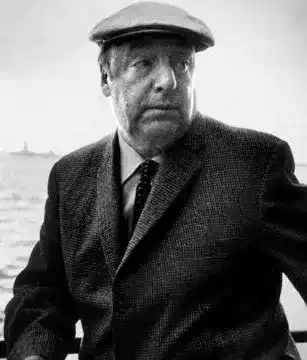
Pablo Neruda
Enigma with Flower
Victory. It has come late, I had not learnt
how to arrive, like the lily, at will,
the white figure, that pierces
the motionless eternity of earth,
pushing at clear, faint, form,
till the hour strikes: that clay,
with a white ray, or a spur of milk.
Shedding of clothing, the thick darkness of soil,
on whose cliff the fair flower advances,
till the flag of its whiteness
defeats the contemptible deep of night,
and, from the motion of light,
spills itself in astonished seed.
617
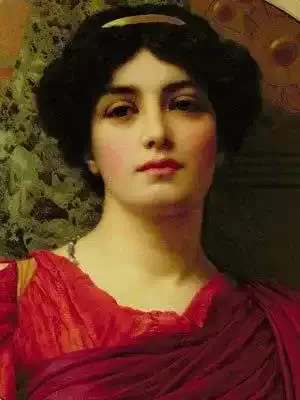
Safo
Song of The Rose
F Zeus chose us a King of the flowers in his mirth,
He would call to the rose, and would royally crown it;
For the rose, ho, the rose! is the grace of the earth,
Is the light of the plants that are growing upon it!
For the rose, ho, the rose! is the eye of the flowers,
Is the blush of the meadows that feel themselves fair,
Is the lightning of beauty that strikes through the bowers
On pale lovers that sit in the glow unaware.
Ho, the rose breathes of love! ho, the rose lifts the cup
To the red lips of Cypris invoked for a guest!
Ho, the rose having curled its sweet leaves for the world
Takes delight in the motion its petals keep up,
As they laugh to the wind as it laughs from the west.
626
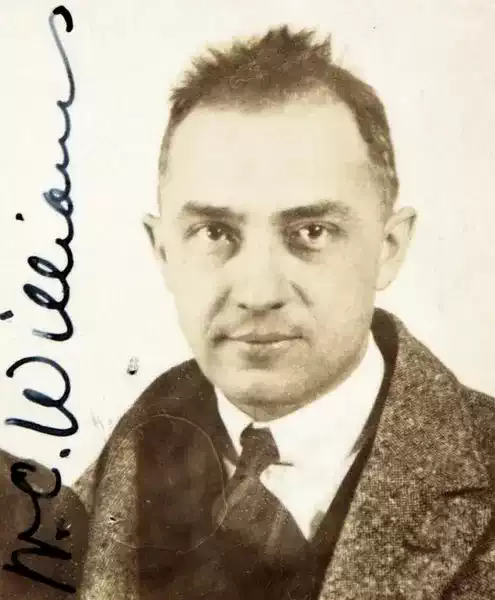
William Carlos Williams
A Celebration
A middle-northern March, now as always--
gusts from the South broken against cold winds--
but from under, as if a slow hand lifted a tide,
it moves--not into April--into a second March,
the old skin of wind-clear scales dropping
upon the mold: this is the shadow projects the tree
upward causing the sun to shine in his sphere.
So we will put on our pink felt hat--new last year!
--newer this by virtue of brown eyes turning back
the seasons--and let us walk to the orchid-house,
see the flowers will take the prize tomorrow
at the Palace.
Stop here, these are our oleanders.
When they are in bloom--
You would waste words
It is clearer to me than if the pink
were on the branch. It would be a searching in
a colored cloud to reveal that which now, huskless,
shows the very reason for their being.
And these the orange-trees, in blossom--no need
to tell with this weight of perfume in the air.
If it were not so dark in this shed one could better
see the white.
It is that very perfume
has drawn the darkness down among the leaves.
Do I speak clearly enough?
It is this darkness reveals that which darkness alone
loosens and sets spinning on waxen wings--
not the touch of a finger-tip, not the motion
of a sigh. A too heavy sweetness proves
its own caretaker.
And here are the orchids!
Never having seen
such gaiety I will read these flowers for you:
This is an odd January, died--in Villon's time.
Snow, this is and this the stain of a violet
grew in that place the spring that foresaw its own doom.
And this, a certain July from Iceland:
a young woman of that place
breathed it toward the South. It took root there.
The color ran true but the plant is small.
This falling spray of snow-flakes is
a handful of dead Februaries
prayed into flower by Rafael Arevalo Martinez
of Guatemala.
Here's that old friend who
went by my side so many years: this full, fragile
head of veined lavender. Oh that April
that we first went with our stiff lusts
leaving the city behind, out to the green hill--
May, they said she was. A hand for all of us:
this branch of blue butterflies tied to this stem.
June is a yellow cup I'll not name; August
the over-heavy one. And here are--
russet and shiny, all but March. And March?
Ah, March--
Flowers are a tiresome pastime.
One has a wish to shake them from their pots
root and stem, for the sun to gnaw.
Walk out again into the cold and saunter home
to the fire. This day has blossomed long enough.
I have wiped out the red night and lit a blaze
instead which will at least warm our hands
and stir up the talk.
I think we have kept fair time.
Time is a green orchard.
553

Rabindranath Tagore
Flower
Pluck this little flower and take it, delay not! I fear lest it
droop and drop into the dust.
I may not find a place in thy garland, but honour it with a touch of
pain from thy hand and pluck it. I fear lest the day end before I am
aware, and the time of offering go by.
Though its colour be not deep and its smell be faint, use this flower
in thy service and pluck it while there is time.
549

John Clare
Evening Primrose
When once the sun sinks in the west,
And dewdrops pearl the evening's breast;
Almost as pale as moonbeams are,
Or its companionable star,
The evening primrose opes anew
Its delicate blossoms to the dew;
And, hermit-like, shunning the light,
Wastes its fair bloom upon the night,
Who, blindfold to its fond caresses,
Knows not the beauty it possesses;
Thus it blooms on while night is by;
When day looks out with open eye,
Bashed at the gaze it cannot shun,
It faints and withers and is gone.
528
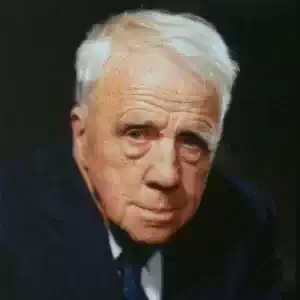
Robert Frost
Rose Pogonias
A saturated meadow,
Sun-shaped and jewel-small,
A circle scarcely wider
Than the trees around were tall;
Where winds were quite excluded,
And the air was stifling sweet
With the breath of many flowers, --
A temple of the heat.
There we bowed us in the burning,
As the sun's right worship is,
To pick where none could miss them
A thousand orchises;
For though the grass was scattered,
yet every second spear
Seemed tipped with wings of color,
That tinged the atmosphere.
We raised a simple prayer
Before we left the spot,
That in the general mowing
That place might be forgot;
Or if not all so favored,
Obtain such grace of hours,
that none should mow the grass there
While so confused with flowers.
519

Lord Byron
Translation Of The Romaic Song
I enter thy garden of roses,
Beloved and fair Haidée,
Each morning where Flora reposes,
For surely I see her in thee.
Oh, Lovely! thus low I implore thee,
Receive this fond truth from my tongue,
Which utters its song to adore thee,
Yet trembles for what it has sung;
As the branch, at the bidding of Nature,
Adds fragrance and fruit to the tree,
Through her eyes, through her every feature,
Shines the soul of the young Haidée.
But the loveliest garden grows hateful
When Love has abandon'd the bowers;
Bring me hemlock since
mine is ungrateful,
That herb is more fragrant than flowers.
The poison, when pour 'd from the chalice,
Will deeply embitter the bowl;
But when drunk to escape from thy malice,
The draught shall be sweet to my soul.
Too cruel! in vain I implore thee
My heart from these horrors to save:
Will nought to my bosom restore thee?
Then open the gates of the grave.
As the chief who to combat advances
Secure of his conquest before,
Thus thou, with those eyes for thy lances,
Halt pierced through my heart to its core.
Ah, tell me, my soul! must I perish
By pangs which a smile would dispel?
Would the hope, which thou once bad'st me cherish,
For torture repay me too well?
Now sad is the garden of roses,
Beloved but false Haidée!
There Flora all wither'd reposes,
And mourns o'er thing absence with me.
512
William Blake
To Autum
O Autumn, laden with fruit, and stain'd
With the blood of the grape, pass not, but sit
Beneath my shady roof; there thou may'st rest,
And tune thy jolly voice to my fresh pipe,
And all the daughters of the year shall dance!
Sing now the lusty song of fruits and flowers.
'The narrow bud opens her beauties to
The sun, and love runs in her thrilling veins;
Blossoms hang round the brows of Morning, and
Flourish down the bright cheek of modest Eve,
Till clust'ring Summer breaks forth into singing,
And feather'd clouds strew flowers round her head.
'The spirits of the air live in the smells
Of fruit; and Joy, with pinions light, roves round
The gardens, or sits singing in the trees.'
Thus sang the jolly Autumn as he sat,
Then rose, girded himself, and o'er the bleak
Hills fled from our sight; but left his golden load.
504
Robert Frost
Asking for Roses
A house that lacks, seemingly, mistress and master,
With doors that none but the wind ever closes,
Its floor all littered with glass and with plaster;
It stands in a garden of old-fashioned roses.
I pass by that way in the gloaming with Mary;
'I wonder,' I say, 'who the owner of those is.'
'Oh, no one you know,' she answers me airy,
'But one we must ask if we want any roses.'
So we must join hands in the dew coming coldly
There in the hush of the wood that reposes,
And turn and go up to the open door boldly,
And knock to the echoes as beggars for roses.
'Pray, are you within there, Mistress Who-were-you?'
'Tis Mary that speaks and our errand discloses.
'Pray, are you within there? Bestir you, bestir you!
'Tis summer again; there's two come for roses.
'A word with you, that of the singer recalling--
Old Herrick: a saying that every maid knows is
A flower unplucked is but left to the falling,
And nothing is gained by not gathering roses.'
We do not loosen our hands' intertwining
(Not caring so very much what she supposes),
There when she comes on us mistily shining
And grants us by silence the boon of her roses.
476

John Keats
To A Friend Who Sent Me Some Roses
As late I rambled in the happy fields,
What time the skylark shakes the tremulous dew
From his lush clover covert;-when anew
Adventurous knights take up their dinted shields;
I saw the sweetest flower wild nature yields,
A fresh-blown musk-rose; 'twas the first that threw
Its sweets upon the summer: graceful it grew
As is the wand that Queen Titania wields.
And, as I feasted on its fragrancy,
I thought the garden-rose it far excelled;
But when, O Wells! thy roses came to me,
My sense with their deliciousness was spelled:
Soft voices had they, that with tender plea
Whispered of peace, and truth, and friendliness unquelled.
472

Matsuo Bashō
A monk sips morning tea
A monk sips morning tea,
it's quiet,
the chrysanthemum's flowering.
Translated by Robert Hass
it's quiet,
the chrysanthemum's flowering.
Translated by Robert Hass
473
John Keats
Stanzas To Miss Wylie
1.
O come Georgiana! the rose is full blown,
The riches of Flora are lavishly strown,
The air is all softness, and crystal the streams,
The West is resplendently clothed in beams.
2.
O come! let us haste to the freshening shades,
The quaintly carv'd seats, and the opening glades;
Where the faeries are chanting their evening hymns,
And in the last sun-beam the sylph lightly swims.
3.
And when thou art weary I'll find thee a bed,
Of mosses and flowers to pillow thy head:
And there Georgiana I'll sit at thy feet,
While my story of love I enraptur'd repeat.
4.
So fondly I'll breathe, and so softly I'll sigh,
Thou wilt think that some amorous Zephyr is nigh:
Yet no -- as I breathe I will press thy fair knee,
And then thou wilt know that the sigh comes from me.
5.
Ah! why dearest girl should we lose all these blisses?
That mortal's a fool who such happiness misses:
So smile acquiescence, and give me thy hand,
With love-looking eyes, and with voice sweetly bland.
471

Alexander Pope
Summer
See what delights in sylvan scenes appear!
Descending Gods have found Elysium here.
In woods bright Venus with Adonis stray'd,
And chaste Diana haunts the forest shade.
Come lovely nymph, and bless the silent hours,
When swains from shearing seek their nightly bow'rs;
When weary reapers quit the sultry field,
And crown'd with corn, their thanks to Ceres yield.
This harmless grove no lurking viper hides,
But in my breast the serpent Love abides.
Here bees from blossoms sip the rosy dew,
But your Alexis knows no sweets but you.
Oh deign to visit our forsaken seats,
The mossy fountains, and the green retreats!
Where-e'er you walk, cool gales shall fan the glade,
Trees, where you sit, shall crowd into a shade,
Where-e'er you tread, the blushing flow'rs shall rise,
And all things flourish where you turn your eyes.
Oh! How I long with you to pass my days,
Invoke the muses, and resound your praise;
Your praise the birds shall chant in ev'ry grove,
And winds shall waft it to the pow'rs above.
But wou'd you sing, and rival Orpheus' strain,
The wond'ring forests soon shou'd dance again,
The moving mountains hear the pow'rful call,
And headlong streams hang list'ning in their fall!
But see, the shepherds shun the noon-day heat,
The lowing herds to murm'ring brooks retreat,
To closer shades the panting flocks remove,
Ye Gods! And is there no relief for Love?
But soon the sun with milder rays descends
To the cool ocean, where his journey ends;
On me Love's fiercer flames for ever prey,
By night he scorches, as he burns by day.
449
Page 1
Next