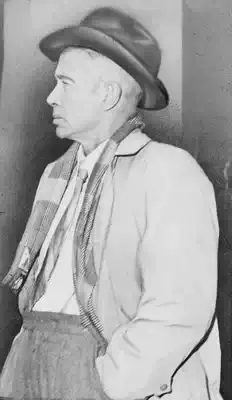
Identification and basic context
Full name: Edward Estlin Cummings. He often signed his name in lowercase, e.g., 'e. e. cummings,' as a deliberate stylistic choice to emphasize his rejection of traditional conventions and his focus on the individual. He was an American writer, poet, painter, essayist, author, and playwright. He wrote in English.
Childhood and education
Cummings was born in Cambridge, Massachusetts. His father, Edward Cummings, was a professor of English at Harvard University and later a minister. His mother, Rebecca Haseltine Clarke, was a writer. Cummings attended Cambridge School of C. J. of America and then Harvard University, where he studied English and Classics and began to experiment with poetry. He received his Master's degree from Harvard in 1915. His early influences included classical literature and the burgeoning modernist movements in art and literature.
Literary trajectory
Cummings's literary career began during his time at Harvard. His first collection of poems, *Tulips and Chimneys*, was published in 1923. Throughout his life, he continued to write prolifically, producing poetry, novels, plays, and essays. He was a highly original voice whose work evolved stylistically but remained committed to his core themes of love, nature, and individualism. He was also active as a painter, exhibiting his artwork throughout his career.
Works, style, and literary characteristics
Cummings's major works include *Tulips and Chimneys* (1923), *NoThanks* (1935), and *95 Poems* (1958). His poetry is instantly recognizable for its unique style: unconventional use of capitalization, punctuation, and spacing; invented words; and often a playful, lyrical tone. Common themes include romantic love, the beauty of nature, the individual's struggle against conformity, and a critique of mass society and political institutions. He often employed the sonnet form but radically adapted it to his experimental style. His language is rich with imagery, often celebrating the simple and the profound. He brought a fresh, modern sensibility to lyric poetry.
Cultural and historical context
Cummings lived through significant historical periods, including World War I and World War II, and the social and political changes of the 20th century. His experiences during WWI, particularly his imprisonment in France for alleged espionage, deeply impacted him and are reflected in his novel *The Enormous Room* (1922). He was often critical of what he perceived as the conformity and soullessness of modern industrial society. His work can be seen as a reaction against the prevailing social and political currents of his time, emphasizing individual freedom and authentic experience.
Personal life
Cummings had a complex personal life, marked by a passionate engagement with art and life. He was married twice. His time in Paris in the early 1920s was formative, exposing him to avant-garde artistic circles. He maintained a strong connection to his family and friends, and his personal relationships often found expression in his poetry.
Recognition and reception
While Cummings was not always embraced by mainstream literary critics during his lifetime, he achieved significant popularity among readers for his accessible themes and innovative style. He received several honors and awards for his poetry, including the Shelley Memorial Award and the National Medal for Literature. His work continues to be widely read and studied.
Influences and legacy
Cummings was influenced by traditional poets like William Blake and E. A. Robinson, as well as by modernist painters and poets. His legacy lies in his distinctive contribution to American poetry, demonstrating the power of linguistic and visual experimentation to convey profound human emotions and ideas. He inspired many poets to explore unconventional forms and to celebrate individuality.
Interpretation and critical analysis
Cummings's poetry is often interpreted as a celebration of romantic love, the natural world, and the inherent value of the individual consciousness. His experiments with form are seen not as mere gimmickry but as integral to his message of liberation from restrictive norms. His critique of conformity and his embrace of sincerity are recurring points of critical analysis.
Curiosities and lesser-known aspects
Cummings was a passionate visual artist in addition to being a poet and writer. He often integrated his paintings and drawings with his poems. He was also known for his strong opinions and his independent spirit, often refusing to compromise his artistic vision.
Death and memory
Edward Estlin Cummings died in North Conway, New Hampshire. His enduring legacy is secured by his unique and beloved body of work, which continues to captivate readers with its originality and emotional depth.