

Awards
Bollingen Prize for Poetry
Description
History and Foundation
The Bollingen Prize for Poetry is one of the most prestigious literary awards in the United States, focused exclusively on poetry. It was established in 1948 by Yale University, with financial support from the Bollingen Foundation. Its creation aimed to honor and promote American poetry, recognizing both established poets and those who demonstrated significant potential to shape the future of the poetic form.
Criteria and Categories
Originally, the prize was awarded for a specific work of poetry published within a given period. However, starting in 1963, the criteria were changed to reward the lifetime achievement of an American poet. This change reflected a desire to recognize a poet's continuous contribution and lasting impact on the literary landscape.
The prize is biennial, alternating with the Bollingen Prize in Translation, which recognizes works of literary translation. Selection criteria emphasize artistic excellence, formal innovation, thematic depth, and influence on the American poetic tradition. The jury is composed of renowned academics, critics, and poets, ensuring a rigorous and informed evaluation.
Relevance and Impact
The Bollingen Prize holds considerable importance in the American literary world. Over the decades, it has honored some of the most influential poets of the 20th and 21st centuries, whose works continue to be studied and admired. Its award often sparks debate and media attention, bringing poetry to a wider audience and validating the work of its recipients.
The list of winners includes names such as T.S. Eliot, Wallace Stevens, Ezra Pound, Marianne Moore, Elizabeth Bishop, and John Ashbery, among many others. These poets not only defined modern American poetry but also influenced subsequent generations of writers. The prize serves as a mark of quality and recognition of poetic mastery, helping to solidify the place of its recipients in literary history.
Curiosities and Controversies
One of the most notable editions of the prize was in 1949 when it was awarded to Ezra Pound. At the time, Pound was imprisoned in Europe for treason due to his support for Mussolini's fascist regime during World War II. The decision to award Pound generated a huge scandal and controversy, dividing the literary community and the general public.
Yale University defended the decision, arguing that the prize was intended to honor Pound's poetic work, regardless of his political views. This episode highlights the complex relationship between art, politics, and morality, and how literary awards can sometimes become the center of broader social debates.
Another curiosity is the biennial nature of the prize, which allows for greater depth in considering candidates and a pause for reflection on the state of poetry. The Bollingen Foundation, which funds the prize, has a significant legacy in supporting the arts and humanities, and the poetry prize is one of its most lasting and impactful contributions.
Winners

Arthur Sze


Joy Harjo

Mei-mei Berssenbrugge

Charles Bernstein

Jean Valentine

Nathaniel Mackey

Charles Wright

Susan Howe

Allen Grossman
Allen Grossman was an American poet and literary critic, known for his dense and intellectually demanding poetry. His work explores themes such as history, culture, mythology, and the search for order and meaning in a chaotic universe. As a critic, Grossman focused on analyzing literary tradition and the structures that shape human understanding. His poetry is often characterized by an epic tone and a language rich in references, reflecting a deep engagement with the great questions of existence and civilization.

Frank Bidart

Jay Wright
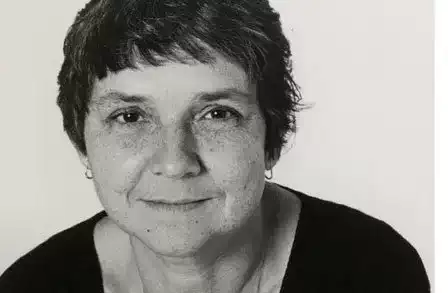
Adrienne Rich
Adrienne Rich was an American poet, essayist, and feminist activist, recognized for her politically engaged poetry and her exploration of identity, sexuality, and social oppression. Throughout her career, her work evolved to address themes of radical feminism, lesbianism, pacifism, and social justice, becoming an influential voice in counterculture movements and gender studies.
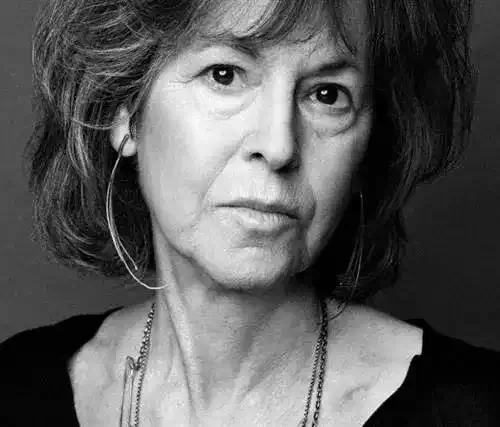
Louise Glück
Louise Glück was an American poet known for her lyrical and introspective writing, which frequently explored themes of loss, desire, family, and nature. Her work is marked by raw emotional intensity, direct language, and careful structure, often revisiting classical myths and fairy tales to explore the human psyche. Throughout her career, Glück received widespread acclaim, culminating in the Nobel Prize in Literature in 2020, solidifying her place as one of the most significant voices in contemporary American poetry.

Robert Creeley
Robert Creeley was an American poet, a central figure in post-war poetry and associated with the Black Mountain poets. His work is characterized by colloquial language, concision, and a deep exploration of personal experience and the human condition. He influenced generations of poets with his innovative approach. Creeley had a prolific career and an important role as an educator and editor, contributing significantly to the development of contemporary poetry.

Gary Snyder

Kenneth Koch
Kenneth Koch was an American poet celebrated for his experimental, humorous, and playful poetry. His work frequently challenged literary conventions, incorporating elements of surrealism, pop art, and everyday life into poems that celebrated creativity and imagination. Koch also distinguished himself as an educator, inspiring generations of writers to explore new forms of expression. His poetry is characterized by an irreverent and accessible tone, often engaging with music, visual arts, and popular culture. He sought to democratize poetry, making it an accessible and enjoyable activity for everyone, as evidenced by his innovative arts education programs. Kenneth Koch left a legacy of joy and innovation in the landscape of modern poetry.

Mark Strand

Donald Justice

Laura Riding Jackson
Laura Riding Jackson, born Laura Reichenthal, was an American poet, literary critic, and novelist of great originality and complexity. Her work is marked by a profound investigation into language, truth, and the nature of reality, challenging literary and philosophical conventions. As a poet, Riding explored the possibilities of the written word with remarkable intellectual intensity and formal freedom. Her prose and criticism also reflect sharp thinking and a relentless pursuit of authenticity, making her a unique and influential, though often controversial, figure in 20th-century literature.

Edgar Bowers

Stanley Kunitz

Fred Chappell
Fred Chappell is an acclaimed American poet, novelist, and essayist, known for his vigorous and lyrical prose, often set in the rural landscapes of North Carolina. His work explores the complexities of human nature, American folklore, and the intersections between the mundane and the transcendent. As a poet, Chappell demonstrates remarkable formal mastery, combining humor, intelligence, and a profound sensitivity to the mysteries of life. His novels, particularly the "The Mis-Adventures of Lincoln" series.
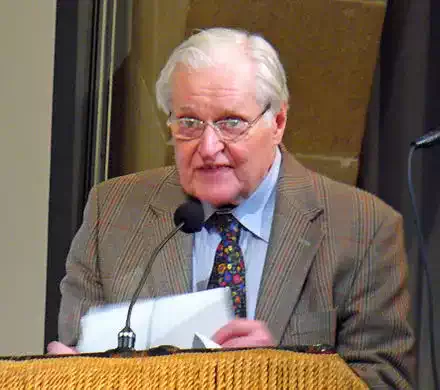
John Ashbery
John Ashbery was one of the most influential American poets of the second half of the 20th century, known for his challenging and innovative poetry. His work explores the nature of language, consciousness, and reality, often through lengthy, stream-of-consciousness poems. Ashbery demonstrated a remarkable ability to blend the colloquial with the sublime, the personal with the impersonal, creating a unique style that defies easy categorization. He was also a respected literary critic and teacher, leaving a lasting legacy on contemporary poetry.

Anthony Hecht

John Hollander

Howard Nemerov

May Swenson

W. S. Merwin

David Ignatow

A.R. Ammons

James Merrill

Mona Van Duyn

Richard Wilbur

John Berryman
John Berryman was a renowned American poet, known for his lyrical intensity and exploration of themes such as pain, identity, madness, and mortality. His most celebrated work, "The Dream Songs," is a monumental piece that earned him the Pulitzer Prize and the National Book Award, establishing him as one of the most important voices in 20th-century American poetry. Berryman struggled with mental health issues throughout his life, and this personal anguish often shines through in his poetry, giving it a brutal honesty and remarkable emotional depth.

Karl Shapiro
Karl Shapiro was an American poet, known for his direct poetry, often socially and personally critical. He served in World War II, and this experience significantly influenced his work. His poetry is characterized by its use of colloquial language and its straightforward approach to themes such as war, identity, and American society.

Robert Penn Warren

Horace Gregory
Horace Gregory was an American poet, literary critic, and translator. His poetic work is known for its introspection, exploration of social and historical themes, and a style that often blends the lyrical with the narrative. He was also a long-time scholar of poetry, contributing critical analyses and important translations. As a critic, Gregory offered insightful reviews of modern and classical poets, while his translations, notably of Catullus, helped make ancient poetry more accessible to the contemporary audience.
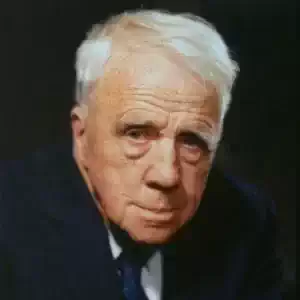
Robert Frost
Robert Frost was an American poet whose work is often associated with the rural life of New England. His poetry is characterized by its accessible language, conversational tone, and exploration of profound themes about nature, human existence, and the choices people make. Despite often being perceived as a simple observer of country life, Frost's poems delve into complex psychological states and philosophical questions, making him one of America's most celebrated and enduring literary figures.

John Hall Wheelock

Richard Eberhart

Yvor Winters

Delmore Schwartz
Delmore Schwartz was an American poet, short story writer, and literary critic, known for his exploration of existential themes and the influence of modernism in his work. His writing is characterized by intellectual and emotional intensity, addressing the human condition, alienation, and the search for meaning.

Theodore Roethke
Theodore Roethke was an influential American poet known for his profound explorations of nature, the human psyche, and the existential condition. His work, marked by intense lyricism and a strong connection to the natural world, evolved from early symbolism to a more direct and introspective exploration. Roethke is remembered for his formal mastery and his ability to evoke inner and outer landscapes with equal vividness. Considered one of the most important American poets of his generation, Roethke left a lasting legacy through his poetry, which continues to resonate for its emotional honesty and profound observation of the world. His writing is characterized by a distinct musicality and powerful imagery, capturing both the beauty and the anguish of existence.
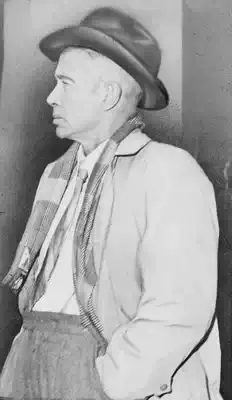
E. E. Cummings
E. E. Cummings was an American poet, painter, essayist, author, and playwright, renowned for his unconventional style that defied traditional grammar, syntax, and punctuation. His poetry often celebrated individualism, nature, and love, expressed through playful experimentation with form and a distinctive visual arrangement of words on the page. Cummings's work is characterized by its lyrical intensity, its embrace of the simple and the sublime, and its critique of conformity and societal norms. He was a prolific artist whose unique voice continues to resonate, making him one of the most beloved and accessible poets of the 20th century.

Allen Tate
Allen Tate was an influential American poet, literary critic, and professor, a central figure of the modernist movement and one of the founders of the New Criticism movement. His poetic work is known for its intellectual intensity, use of symbolism, and exploration of themes such as the decline of the American South, religion, and the nature of art. As a critic, Tate advocated for a rigorous approach to textual analysis, focusing on the structure and language of the literary work. His influence extended for decades, shaping the teaching and appreciation of literature in the English-speaking world.

Conrad Aiken

Léonie Adams

Louise Bogan
Louise Bogan was an American poet known for her emotional intensity and technical skill in her work. Her poetry often explores themes of female identity, anguish, and the human condition, with precise and evocative language. Despite facing personal difficulties, Bogan maintained a consistent and influential literary output. Her work is marked by deep introspection and a lyrical approach that resonates with inner experience. She is considered one of the most significant voices in 20th-century American poetry, admired for her originality and expressive power.

W. H. Auden

W. H. Auden was a British poet, naturalized American, widely considered one of the greatest poets of the 20th century. His work is characterized by thematic and stylistic diversity, addressing issues from social and political matters to intimate reflections on love, death, and faith. Auden stood out for his sharp intellect, mastery of language, and ability to move between the colloquial and the elevated.
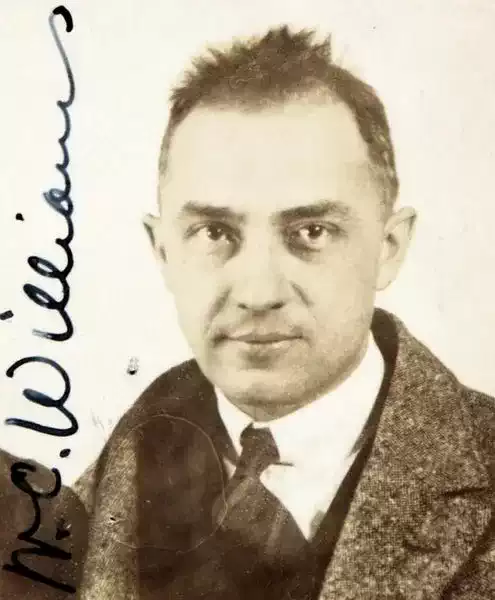
William Carlos Williams
William Carlos Williams was an American poet, physician, and writer closely associated with the Modernist movement. His poetry is characterized by its focus on everyday American life, colloquial speech, and vivid imagery, often drawing inspiration from the ordinary objects and experiences of his surroundings. Williams championed the idea of a distinctly American poetry, free from European influences, and his work significantly impacted the development of Imagism and later poetic movements.

Marianne Moore

John Crowe Ransom
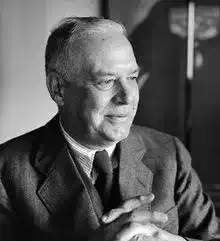
Wallace Stevens
Wallace Stevens was a prominent American Modernist poet. He is known for his meticulously crafted verse that explores the relationship between imagination and reality, the role of the poet in society, and the nature of beauty and perception. His work is characterized by its philosophical depth, vivid imagery, and distinctive use of language, often evoking a sense of rich, sensory experience.
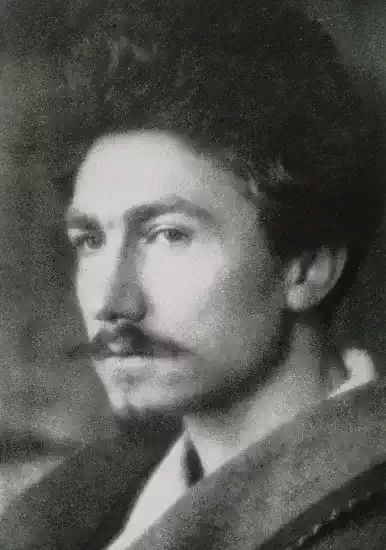
Ezra Pound
Ezra Pound was a highly influential American poet and critic, and a major figure in the modernist movement. He was a key proponent of Imagism and Vorticism, championing a return to classical forms and precise imagery in poetry. Pound's extensive work, most notably "The Cantos," is characterized by its complex allusions, multilingualism, and engagement with history, economics, and art. His influence extended to many other writers, including T.S. Eliot, Ernest Hemingway, and James Joyce, whom he actively supported and promoted.