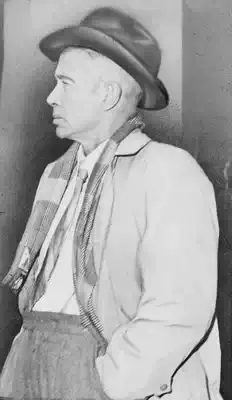
E. E. Cummings

E. E. Cummings

1894–1962 · lived 67 years US US

E. E. Cummings was an American poet, painter, essayist, author, and playwright, renowned for his unconventional style that defied traditional grammar, syntax, and punctuation. His poetry often celebrated individualism, nature, and love, expressed through playful experimentation with form and a distinctive visual arrangement of words on the page. Cummings's work is characterized by its lyrical intensity, its embrace of the simple and the sublime, and its critique of conformity and societal norms. He was a prolific artist whose unique voice continues to resonate, making him one of the most beloved and accessible poets of the 20th century.

n. 1894-10-14, Cambridge · m. 1962-09-03, Joy Farm

12,882 Views

I Am A Beggar Always

I Am A Beggar Always

i am a beggar always
who begs in your mind


(slightly smiling, patient, unspeaking
with a sign on his
chest
BLIND)yes i


am this person of whom somehow
you are never wholly rid(and who


does not ask for more than
just enough dreams to
live on)

after all, kid


you might as well
toss him a few thoughts


a little love preferably,
anything which you can't
pass off on other people: for
instance a
plugged promise


the he will maybe (hearing something
fall into his hat)go wandering
after it with fingers;till having


found
what was thrown away

himself
taptaptaps out of your brain, hopes, life
to(carefully turning a
corner)never bother you any more


Anonymous submission.
Read full poem
Bio

Identification and basic context

Full name: Edward Estlin Cummings. He often signed his name in lowercase, e.g., 'e. e. cummings,' as a deliberate stylistic choice to emphasize his rejection of traditional conventions and his focus on the individual. He was an American writer, poet, painter, essayist, author, and playwright. He wrote in English.

Childhood and education

Cummings was born in Cambridge, Massachusetts. His father, Edward Cummings, was a professor of English at Harvard University and later a minister. His mother, Rebecca Haseltine Clarke, was a writer. Cummings attended Cambridge School of C. J. of America and then Harvard University, where he studied English and Classics and began to experiment with poetry. He received his Master's degree from Harvard in 1915. His early influences included classical literature and the burgeoning modernist movements in art and literature.

Literary trajectory

Cummings's literary career began during his time at Harvard. His first collection of poems, *Tulips and Chimneys*, was published in 1923. Throughout his life, he continued to write prolifically, producing poetry, novels, plays, and essays. He was a highly original voice whose work evolved stylistically but remained committed to his core themes of love, nature, and individualism. He was also active as a painter, exhibiting his artwork throughout his career.

Works, style, and literary characteristics

Cummings's major works include *Tulips and Chimneys* (1923), *NoThanks* (1935), and *95 Poems* (1958). His poetry is instantly recognizable for its unique style: unconventional use of capitalization, punctuation, and spacing; invented words; and often a playful, lyrical tone. Common themes include romantic love, the beauty of nature, the individual's struggle against conformity, and a critique of mass society and political institutions. He often employed the sonnet form but radically adapted it to his experimental style. His language is rich with imagery, often celebrating the simple and the profound. He brought a fresh, modern sensibility to lyric poetry.

Cultural and historical context

Cummings lived through significant historical periods, including World War I and World War II, and the social and political changes of the 20th century. His experiences during WWI, particularly his imprisonment in France for alleged espionage, deeply impacted him and are reflected in his novel *The Enormous Room* (1922). He was often critical of what he perceived as the conformity and soullessness of modern industrial society. His work can be seen as a reaction against the prevailing social and political currents of his time, emphasizing individual freedom and authentic experience.

Personal life

Cummings had a complex personal life, marked by a passionate engagement with art and life. He was married twice. His time in Paris in the early 1920s was formative, exposing him to avant-garde artistic circles. He maintained a strong connection to his family and friends, and his personal relationships often found expression in his poetry.

Recognition and reception

While Cummings was not always embraced by mainstream literary critics during his lifetime, he achieved significant popularity among readers for his accessible themes and innovative style. He received several honors and awards for his poetry, including the Shelley Memorial Award and the National Medal for Literature. His work continues to be widely read and studied.

Influences and legacy

Cummings was influenced by traditional poets like William Blake and E. A. Robinson, as well as by modernist painters and poets. His legacy lies in his distinctive contribution to American poetry, demonstrating the power of linguistic and visual experimentation to convey profound human emotions and ideas. He inspired many poets to explore unconventional forms and to celebrate individuality.

Interpretation and critical analysis

Cummings's poetry is often interpreted as a celebration of romantic love, the natural world, and the inherent value of the individual consciousness. His experiments with form are seen not as mere gimmickry but as integral to his message of liberation from restrictive norms. His critique of conformity and his embrace of sincerity are recurring points of critical analysis.

Curiosities and lesser-known aspects

Cummings was a passionate visual artist in addition to being a poet and writer. He often integrated his paintings and drawings with his poems. He was also known for his strong opinions and his independent spirit, often refusing to compromise his artistic vision.

Death and memory

Edward Estlin Cummings died in North Conway, New Hampshire. His enduring legacy is secured by his unique and beloved body of work, which continues to captivate readers with its originality and emotional depth.

Poems

23

my father moved through dooms of love

my father moved through dooms of love

my father moved through dooms of love
through sames of am through haves of give,
singing each morning out of each night
my father moved through depths of height


this motionless forgetful where
turned at his glance to shining here;
that if(so timid air is firm)
under his eyes would stir and squirm


newly as from unburied which
floats the first who, his april touch
drove sleeping selves to swarm their fates
woke dreamers to their ghostly roots


and should some why completely weep
my father's fingers brought her sleep:
vainly no smallest voice might cry
for he could feel the mountains grow.


Lifting the valleys of the sea
my father moved through griefs of joy;
praising a forehead called the moon
singing desire into begin


joy was his song and joy so pure
a heart of star by him could steer
and pure so now and now so yes
the wrists of twilight would rejoice


keen as midsummer's keen beyond
conceiving mind of sun will stand,
so strictly(over utmost him
so hugely)stood my father's dream


his flesh was flesh his blood was blood:
no hungry man but wished him food;
no cripple wouldn't creep one mile
uphill to only see him smile.


Scorning the pomp of must and shall
my father moved through dooms of feel;
his anger was as right as rain
his pity was as green as grain


septembering arms of year extend
less humbly wealth to foe and friend
than he to foolish and to wise
offered immeasurable is


proudly and(by octobering flame
beckoned)as earth will downward climb,


so naked for immortal work
his shoulders marched against the dark


his sorrow was as true as bread:
no liar looked him in the head;
if every friend became his foe
he'd laugh and build a world with snow.


My father moved through theys of we,
singing each new leaf out of each tree
(and every child was sure that spring
danced when she heard my father sing)


then let men kill which cannot share,
let blood and flesh be mud and mire,
scheming imagine,passion willed,
freedom a drug that's bought and sold


giving to steal and cruel kind,
a heart to fear,to doubt a mind,
to differ a disease of same,
conform the pinnacle of am


though dull were all we taste as bright,
bitter all utterly things sweet,
maggoty minus and dumb death
all we inherit,all bequeath


and nothing quite so least as truth
-i say though hate were why men breathebecause
my father lived his soul
love is the whole and more than all
612

maggie and milly and molly and may

maggie and milly and molly and may

maggie and milly and molly and may
went down to the beach (to play one day)


and maggie discovered a shell that sang
so sweetly she couldn’t remember her troubles,and


milly befriended a stranded star
whose rays five languid fingers were;


and molly was chased by a horrible thing
which raced sideways while blowing bubbles:and


may came home with a smooth round stone
as small as a world and as large as alone.


For whatever we lose(like a you or a me)
it’s always ourselves we find in the sea
921

it may not always be so

it may not always be so

it may not always be so; and i say
that if your lips, which i have loved, should touch
another's, and your dear strong fingers clutch
his heart, as mine in time not far away;
if on another's face your sweet hair lay
in such a silence as i know, or such
great writhing words as, uttering overmuch,
stand helplessly before the spirit at bay;


if this should be, i say if this should be -you
of my heart, send me a little word;
that i may go unto him, and take his hands,
saying, Accept all happiness from me.
Then shall i turn my face, and hear one bird
sing terribly afar in the lost lands.
643

in time of daffodils(who know

in time of daffodils(who know

in time of daffodils(who know
the goal of living is to grow)
forgetting why,remember how


in time of lilacs who proclaim
the aim of waking is to dream,
remember so(forgetting seem)


in time of roses(who amaze
our now and here with paradise)
forgetting if,remember yes


in time of all sweet things beyond
whatever mind may comprehend,
remember seek(forgetting find)


and in a mystery to be
(when time from time shall set us free)
forgetting me,remember me
461

If I have made, my lady, intricate

If I have made, my lady, intricate

If I have made, my lady, intricate
imperfect various things chiefly which wrong
your eyes (frailer than most deep dreams are frail)
songs less firm than your body's whitest song
upon my mind - if I have failed to snare
the glance too shy - if through my singing slips
the very skillful strangeness of your smile
the keen primeval silence of your hair


-let the world say "his most wise music stole
nothing from death" you
will only create
(who are so perfectly alive) my shame:
lady whose profound and fragile lips
the sweet small clumsy feet of April came


into the ragged meadow of my soul.
583

in just

in just


in Justspring
when the world is mudluscious
the little
lame balloonman
whistles far and wee


and eddieandbill come
running from marbles and
piracies and it's spring


when the world is puddle-wonderful


the queer
old balloonman whistles
far and wee
and bettyandisbel come dancing
from hop-scotch and jump-rope and


it's spring
and the goat-footed
balloonMan whistles
far
and
wee
625

i sing of Olaf glad and big

i sing of Olaf glad and big

i sing of Olaf glad and big
whose warmest heart recoiled at war:
a conscientious object-or


his wellbelovéd colonel (trig
westpointer most succinctly bred)
took erring Olaf soon in hand;
but-though an host of overjoyed
noncoms (first knocking on the head
him) do through icy waters roll
that helplessness which others stroke
with brushes recently employed
anent this muddy toiletbowl,
while kindred intellects evoke
allegiance per blunt instruments-
Olaf (being to all intents
a corpse and wanting any rag
upon what God unto him gave)
responds, without getting annoyed
"I will not kiss your fucking flag"


straightaway the silver bird looked grave
(departing hurriedly to shave)


but-though all kinds of officers
(a yearning nation's blueeyed pride)
their passive prey did kick and curse
until for wear their clarion
voices and boots were much the worse,
and egged the firstclassprivates on
his rectum wickedly to tease
by means of skillfully applied
bayonets roasted hot with heat-
Olaf (upon what were once knees)
does almost ceaselessly repeat
"there is some shit I will not eat"


our president,being of which
assertions duly notified
threw the yellowsonofabitch
into a dungeon,where he died


Christ (of His mercy infinite)
i pray to see;and Olaf,too


preponderatingly because
unless statistics lie he was
more brave than me:more blond than you
700

if everything happens that can't be done

if everything happens that can't be done

if everything happens that can't be done
(and anything's righter
than books
could plan)
the stupidest teacher will almost guess
(with a run
skip
around we go yes)
there's nothing as something as one


one hasn't a why or because or although
(and buds know better
than books
don't grow)
one's anything old being everything new
(with a what
which
around we come who)
one's everyanything so


so world is a leaf so tree is a bough
(and birds sing sweeter
than books
tell how)
so here is away and so your is a my
(with a down
up
around again fly)
forever was never till now


now i love you and you love me
(and books are shutter
than books
can be)
and deep in the high that does nothing but fall
(with a shout
each
around we go all)
there's somebody calling who's we


we're anything brighter than even the sun
(we're everything greater
than books
might mean)
we're everanything more than believe
(with a spin
leap
alive we're alive)
we're wonderful one times one
658

i have found what you are like

i have found what you are like

i have found what you are like
the rain

(Who feathers frightened fields
with the superior dust-of-sleep. wields


easily the pale club of the wind
and swirled justly souls of flower strike


the air in utterable coolness


deeds of gren thrilling light

with thinned
newfragile yellows

lurch and press
--in the woods
which
stutter
and

sing
And the coolness of your smile is
stirringofbirds between my arms;but
i should rather than anything
have(almost when hugeness will shut
quietly)almost,

your kiss
550

Fame Speaks

Fame Speaks

Stand forth,John Keats! On earth thou knew'st me not;
Steadfast through all the storms of passion,thou,
True to thy muse,and virgin to thy vow;
Resigned,if name with ashes were forgot,
So thou one arrow in the gold had'st shot!
I never placed my laurel on thy brow,
But on thy name I come to lay it now,
When thy bones wither in the earthly plot.
Fame is my name. I dwell among the clouds,
Being immortal,and the wreath I bring
Itself is Immortality. The sweets
Of earth I know not,more the pains,but wing
In mine own ether,with the crownéd crowds
Born of the centuries.-Stand forth,John Keats!
576

Quotes

40

Videos

50

Comments (0)

Share
Log in to post a comment.

No comments yet. Be the first to comment.