
War and Peace

Thomas Hardy
The Going of the Battery Wives. (Lament)
I
O it was sad enough, weak enough, mad enough -
Light in their loving as soldiers can be -
First to risk choosing them, leave alone losing them
Now, in far battle, beyond the South Sea! . . .
II
- Rain came down drenchingly; but we unblenchingly
Trudged on beside them through mirk and through mire,
They stepping steadily--only too readily! -
Scarce as if stepping brought parting-time nigher.
III
Great guns were gleaming there, living things seeming there,
Cloaked in their tar-cloths, upmouthed to the night;
Wheels wet and yellow from axle to felloe,
Throats blank of sound, but prophetic to sight.
IV
Gas-glimmers drearily, blearily, eerily
Lit our pale faces outstretched for one kiss,
While we stood prest to them, with a last quest to them
Not to court perils that honour could miss.
V
Sharp were those sighs of ours, blinded these eyes of ours,
When at last moved away under the arch
All we loved. Aid for them each woman prayed for them,
Treading back slowly the track of their march.
VI
Someone said: "Nevermore will they come: evermore
Are they now lost to us." O it was wrong!
Though may be hard their ways, some Hand will guard their ways,
Bear them through safely, in brief time or long.
VII
- Yet, voices haunting us, daunting us, taunting us,
Hint in the night-time when life beats are low
Other and graver things . . . Hold we to braver things,
Wait we, in trust, what Time's fulness shall show.
258
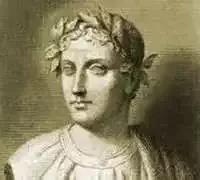
Horácio
BkIII:II Dulce Et Decorum Est
Let the boy toughened by military service
learn how to make bitterest hardship his friend,
and as a horseman, with fearful lance,
go to vex the insolent Parthians,
spending his life in the open, in the heart
of dangerous action. And seeing him, from
the enemy’s walls, let the warring
tyrant’s wife, and her grown-up daughter, sigh:
‘Ah, don’t let the inexperienced lover
provoke the lion that’s dangerous to touch,
whom a desire for blood sends raging
so swiftly through the core of destruction.’
It’s sweet and fitting to die for one’s country.
Yet death chases after the soldier who runs,
and it won’t spare the cowardly back
or the limbs, of peace-loving young men.
Virtue, that’s ignorant of sordid defeat,
shines out with its honour unstained, and never
takes up the axes or puts them down
at the request of a changeable mob.
Virtue, that opens the heavens for those who
did not deserve to die, takes a road denied
to others, and scorns the vulgar crowd
and the bloodied earth, on ascending wings.
And there’s a true reward for loyal silence:
I forbid the man who divulged those secret
rites of Ceres, to exist beneath
the same roof as I, or untie with me
the fragile boat: often careless Jupiter
included the innocent with the guilty,
but lame-footed Punishment rarely
forgets the wicked man, despite his start.
258

Anonymous
Episode
"THEN he goes to his chamber, a grief-song chants
alone for his lost. Too large all seems,
homestead and house. So the helmet-of-Weders
hid in his heart for Herebeald
waves of woe. No way could he take
to avenge on the slayer slaughter so foul;
nor e'en could he harass that hero at all
with loathing deed, though he loved him not.
And so for the sorrow his soul endured,
men's gladness he gave up and God's light chose.
Lands and cities he left his sons
(as the wealthy do) when he went from earth.
There was strife and struggle 'twixt Swede and Geat
o'er the width of waters; war arose,
hard battle-horror, when Hrethel died,
and Ongentheow's offspring grew
strife-keen, bold, nor brooked o'er the seas
pact of peace, but pushed their hosts
to harass in hatred by Hreosnabeorh.
Men of my folk for that feud had vengeance,
for woful war ('tis widely known),
though one of them bought it with blood of his heart,
a bargain hard: for Haethcyn proved
fatal that fray, for the first-of-Geats.
At morn, I heard, was the murderer killed
by kinsman for kinsman, with clash of sword,
when Ongentheow met Eofor there.
Wide split the war-helm: wan he fell,
hoary Scylfing; the hand that smote him
of feud was mindful, nor flinched from the death-blow.
-- "For all that he gave me, my gleaming sword
repaid him at war, -- such power I wielded, --
for lordly treasure: with land he entrusted me,
homestead and house. He had no need
from Swedish realm, or from Spear-Dane folk,
or from men of the Gifths, to get him help, --
some warrior worse for wage to buy!
Ever I fought in the front of all,
sole to the fore; and so shall I fight
while I bide in life and this blade shall last
that early and late hath loyal proved
since for my doughtiness Daeghrefn fell,
slain by my hand, the Hugas' champion.
Nor fared he thence to the Frisian king
with the booty back, and breast-adornments;
but, slain in struggle, that standard-bearer
fell, atheling brave. Not with blade was he slain,
but his bones were broken by brawny gripe,
his heart-waves stilled. -- The sword-edge now,
hard blade and my hand, for the hoard shall strive."
Beowulf spake, and a battle-vow made
his last of all: "I have lived through many
wars in my youth; now once again,
old folk-defender, feud will I seek,
do doughty deeds, if the dark destroyer
forth from his cavern come to fight me!"
Then hailed he the helmeted heroes all,
for the last time greeting his liegemen dear,
comrades of war: "I should carry no weapon,
no sword to the serpent, if sure I knew
how, with such enemy, else my vows
I could gain as I did in Grendel's day.
But fire in this fight I must fear me now,
and poisonous breath; so I bring with me
breastplate and board. From the barrow's keeper
no footbreadth flee I. One fight shall end
our war by the wall, as Wyrd allots,
all mankind's master. My mood is bold
but forbears to boast o'er this battling-flyer.
-- Now abide by the barrow, ye breastplate-mailed,
ye heroes in harness, which of us twain
better from battle-rush bear his wounds.
Wait ye the finish. The fight is not yours,
nor meet for any but me alone
to measure might with this monster here
and play the hero. Hardily I
shall win that wealth, or war shall seize,
cruel killing, your king and lord!"
Up stood then with shield the sturdy champion,
stayed by the strength of his single manhood,
and hardy 'neath helmet his harness bore
under cleft of the cliffs: no coward's path!
Soon spied by the wall that warrior chief,
survivor of many a victory-field
where foemen fought with furious clashings,
an arch of stone; and within, a stream
that broke from the barrow. The brooklet's wave
was hot with fire. The hoard that way
he never could hope unharmed to near,
or endure those deeps, for the dragon's flame.
Then let from his breast, for he burst with rage,
the Weder-Geat prince a word outgo;
stormed the stark-heart; stern went ringing
and clear his cry 'neath the cliff-rocks gray.
The hoard-guard heard a human voice;
his rage was enkindled. No respite now
for pact of peace! The poison-breath
of that foul worm first came forth from the cave,
hot reek-of-fight: the rocks resounded.
Stout by the stone-way his shield he raised,
lord of the Geats, against the loathed-one;
while with courage keen that coiled foe
came seeking strife. The sturdy king
had drawn his sword, not dull of edge,
heirloom old; and each of the two
felt fear of his foe, though fierce their mood.
Stoutly stood with his shield high-raised
the warrior king, as the worm now coiled
together amain: the mailed-one waited.
Now, spire by spire, fast sped and glided
that blazing serpent. The shield protected,
soul and body a shorter while
for the hero-king than his heart desired,
could his will have wielded the welcome respite
but once in his life! But Wyrd denied it,
and victory's honors. -- His arm he lifted
lord of the Geats, the grim foe smote
with atheling's heirloom. Its edge was turned
brown blade, on the bone, and bit more feebly
than its noble master had need of then
in his baleful stress. -- Then the barrow's keeper
waxed full wild for that weighty blow,
cast deadly flames; wide drove and far
those vicious fires. No victor's glory
the Geats' lord boasted; his brand had failed,
naked in battle, as never it should,
excellent iron! -- 'Twas no easy path
that Ecgtheow's honored heir must tread
over the plain to the place of the foe;
for against his will he must win a home
elsewhere far, as must all men, leaving
this lapsing life! -- Not long it was
ere those champions grimly closed again.
The hoard-guard was heartened; high heaved hisbreast
once more; and by peril was pressed again,
enfolded in flames, the folk-commander!
Nor yet about him his band of comrades,
sons of athelings, armed stood
with warlike front: to the woods they bent them,
their lives to save. But the soul of one
with care was cumbered. Kinship true
can never be marred in a noble mind!
258

Henry Lawson
Skaal
While they struggle on exhausted,
While they plough through bog and flood,
While they drag their sick and wounded
Where the tracks are drenched with blood;
While the Fates seemed joined to crush her
And her bravest hearts lie low,
I might sing one song for Russia,
Even though she be our foe.
Still be generous to foemen,
And have charity for all—
Right or wrong, fill up the wine cup;
‘Skaal!’ unto all brave men—‘Skaal!’
While they suffer, cold and hungry,
All the heart-break of defeat,
And the twice heroic rearguard
Grimly holds the grim retreat;
While they fight the last alive on
Fields where countless corpses are,
We might drop one tear for Ivan,
Dead for Russia and the Czar!
Sullen grief of boorish brother,
Sister’s scalding tears that flow,
Choking grief of grey-haired mother,
Father’s stony face bent low:
Hopeless stare of wife or daughter,
And the sweetheart dumb and white,
And the far-off fields of slaughter
Where their Ivan lies to-night.
Even England feared disaster,
With all Europe in despair,
In the days when Europe’s master
Baited Bruin in his lair.
Greater nations made submission,
And a tyrant’s yoke they earned;
But The Man with curbed ambition
Staggered back while Moscow burned,—
Burned to save the world from ruin
That dark winter long ago;
Ah! the gaunt and hunted Bruin
Hugged the tyrant in the snow!
We can cry the crimes of Russia,
Who know naught of Russia’s work—
We who died to conquer freemen,
We who fought to save the Turk.
Ah! we well may cant and cackle,
In the streets and in the clubs,
While the Russia that we know not
Licks her wounds and feeds her cubs.
But the Fates for ever beckon—
Every nation has its debt,
And her foes may have to reckon,
Reckon with ‘der Russland’ yet.
Through long ages slept the Dragon,
We have roused the ugly beast—
Russia still may stand the vanguard
Of the West against the East.
And though Ivan sees no farther
Than to-night through lurid gloom
Every hour he holds Port Arthur
May postpone the White Man’s doom.
Right or wrong—whate’er in future
May this blundering world befall,
Human kindness will survive it—
Brothers! ‘Skaal!’ to brave men, ‘Skaal!’
258

Robert W. Service
My Prisoner
We was in a crump-'ole, 'im and me;
Fightin' wiv our bayonets was we;
Fightin' 'ard as 'ell we was,
Fightin' fierce as fire because
It was 'im or me as must be downed;
'E was twice as big as me;
I was 'arf the weight of 'e;
We was like a terryer and a 'ound.
'Struth! But 'e was sich a 'andsome bloke.
Me, I'm 'andsome as a chunk o' coke.
Did I give it 'im? Not 'arf!
Why, it fairly made me laugh,
'Cos 'is bloomin' bellows wasn't sound.
Couldn't fight for monkey nuts.
Soon I gets 'im in the guts,
There 'e lies a-floppin' on the ground.
In I goes to finish up the job.
Quick 'e throws 'is 'ands above 'is nob;
Speakin' English good as me:
"'Tain't no use to kill," says 'e;
"Can't yer tyke me prisoner instead?"
"Why, I'd like to, sir," says I;
"But -- yer knows the reason why:
If we pokes our noses out we're dead.
"Sorry, sir. Then on the other 'and
(As a gent like you must understand),
If I 'olds you longer 'ere,
Wiv yer pals so werry near,
It's me 'oo'll 'ave a free trip to Berlin;
If I lets yer go away,
Why, you'll fight another day:
See the sitooation I am in.
"Anyway I'll tell you wot I'll do,
Bein' kind and seein' as it's you,
Knowin' 'ow it's cold, the feel
Of a 'alf a yard o' steel,
I'll let yer 'ave a rifle ball instead;
Now, jist think yerself in luck. . . .
'Ere, ol' man! You keep 'em stuck,
Them saucy dooks o' yours, above yer 'ead."
'Ow 'is mits shot up it made me smile!
'Ow 'e seemed to ponder for a while!
Then 'e says: "It seems a shyme,
Me, a man wot's known ter Fyme:
Give me blocks of stone, I'll give yer gods.
Whereas, pardon me, I'm sure
You, my friend, are still obscure. . . ."
"In war," says I, "that makes no blurry odds."
Then says 'e: "I've painted picters too. . . .
Oh, dear God! The work I planned to do,
And to think this is the end!"
"'Ere," says I, "my hartist friend,
Don't you give yerself no friskin' airs.
Picters, statoos, is that why
You should be let off to die?
That the best ye done? Just say yer prayers."
Once again 'e seems ter think awhile.
Then 'e smiles a werry 'aughty smile:
"Why, no, sir, it's not the best;
There's a locket next me breast,
Picter of a gel 'oo's eyes are blue.
That's the best I've done," says 'e.
"That's me darter, aged three. . . ."
"Blimy!" says I, "I've a nipper, too."
Straight I chucks my rifle to one side;
Shows 'im wiv a lovin' farther's pride
Me own little Mary Jane.
Proud 'e shows me 'is Elaine,
And we talks as friendly as can be;
Then I 'elps 'im on 'is way,
'Opes 'e's sife at 'ome to-day,
Wonders -- 'ow would eE 'Aave treated me?
258

John Greenleaf Whittier
The Pipes At Lucknow
Pipes of the misty moorlands,
Voice of the glens and hills;
The droning of the torrents,
The treble of the rills!
Not the braes of bloom and heather,
Nor the mountains dark with rain,
Nor maiden bower, nor border tower,
Have heard your sweetest strain!
Dear to the Lowland reaper,
And plaided mountaineer, To
the cottage and the castle
The Scottish pipes are dear; Sweet
sounds the ancient pibroch
O'er mountain, loch, and glade;
But the sweetest of all music
The pipes at Lucknow played.
Day by day the Indian tiger
Louder yelled, and nearer crept;
Round and round the jungle-serpent
Near and nearer circles swept.
'Pray for rescue, wives and mothers, Pray
to-day!' the soldier said;
'To-morrow, death's between us
And the wrong and shame we dread.'
Oh, they listened, looked, and waited,
Till their hope became despair;
And the sobs of low bewailing
Filled the pauses of their prayer.
Then up spake a Scottish maiden.
With her ear unto the ground:
'Dinna ye hear it? - dinna ye hear it?
The pipes o' Havelock sound!'
Hushed the wounded man his groaning;
Hushed the wife her little ones;
Alone they heard the drum-roll
And the roar of Sepoy guns.
But to sounds of home and childhood
The Highland ear was true; As
her mother's cradle-crooning
The mountain pipes she knew.
Like the march of soundless music
Through the vision of the seer,
More of feeling than of hearing,
Of the heart than of the ear,
She knew the droning pibroch,
She knew the Campbell's call:
'Hark! hear ye no MacGregor's,
The grandest o' them all!'
Oh, they listened, dumb and breathless,
And they caught the sound at last;
Faint and far beyond the Goomtee
Rose and fell the piper's blast!
Then a burst of wild thanksgiving
Mingled woman's voice and man's;
'God be praised! - the march of Havelock!
The piping of the clans!'
Louder, nearer, fierce as vengeance,
Sharp and shrill as swords at strife,
Came the wild MacGregor's clan-call,
Stinging all the air to life.
But when the far-off dust-cloud
To plaided legions grew,
Full tenderly and blithesomely
The pipes of rescue blew!
Round the silver domes of Lucknow.
Moslem mosque and Pagan shrine,
Breathed the air to Britons dearest,
The air of Auld Lang Syne.
O'er the cruel roll of war-drums
Rose that sweet and homelike strain;
And the tartan clove the turban,
As the Goomtee cleaves the plain.
Dear to the corn-land reaper
And plaided mountaineer, To
the cottage and the castle
The piper's song is dear.
Sweet sounds the Gaelic pibroch
O'er mountain, glen, and glade;
But the sweetest of all music
The pipes at Lucknow played!
258
John Greenleaf Whittier
Hymn For The Opening Of Thomas Starr King’s House Of Worship, 1864
Amidst these glorious works of Thine,
The solemn minarets of the pine,
And awful Shasta's icy shrine,-
Where swell Thy hymns from wave and gale,
And organ-thunders never fail,
Behind the cataract's silver veil,
Our puny walls to Thee we raise,
Our poor reed-music sounds Thy praise:
Forgive, O Lord, our childish ways!
For, kneeling on these altar-stairs,
We urge Thee not with selfish prayers,
Nor murmur at our daily cares.
Before Thee, in an evil day,
Our country's bleeding heart we lay,
And dare not ask Thy hand to stay;
But, through the war-cloud, pray to Thee
For union, but a union free,
With peace that comes of purity!
That Thou wilt bare Thy arm to, save
And, smiting through this Red Sea wave,
Make broad a pathway for the slave!
For us, confessing all our need,
We trust nor rite nor word nor deed,
Nor yet the broken staff of creed.
Assured alone that Thou art good
To each, as to the multitude,
Eternal Love and Fatherhood,-
Weak, sinful, blind, to Thee we kneel,
Stretch dumbly forth our hands, and feel
Our weakness is our strong appeal.
So, by these Western gates of Even
We wait to see with Thy forgiven
The opening Golden Gate of Heaven!
Suffice it now. In time to be
Shall holier altars rise to Thee,-Thy
Church our broad humanity
White flowers of love its walls shall climb,
Soft bells of peace shall ring its chime,
Its days shall all be holy time.
A sweeter song shall then be heard,--
The music of the world's accord
Confessing Christ, the Inward Word!
That song shall swell from shore to shore,
One hope, one faith, one love, restore
The seamless robe that Jesus wore.
258
Thomas Hardy
Channel Firing
That night your great guns, unawares,
Shook all our coffins as we lay,
And broke the chancel window-squares,
We thought it was the judgement day
And sat upright. While drearisome
Arose the howl of wakened hounds:
The mouse let fall the altar-crumb,
The worms drew back into the mounds,
The glebe cow drooled. Till God called, "No;
It's gunnery practice out at sea
Just as before you went below;
The world is as it used to be:
"All nations striving strong to make
Red war yet redder. Mad as hatters
They do more for Christés sake
Than you who are helpless in such matters.
"That this is not the judgment hour
For some of them's a blessed thing,
For if it were they'd have to scour
Hells floor for so much threatening...
"Ha, ha. It will be warmer when
I blow the trumpet (if indeed
I ever do; for you are men,
And rest eternal sorely need)."
So down we lay again. "I wonder,
Will the world ever saner be,"
Said one, "than when He sent us under
In our indifferent century!"
And many a skeleton shook his head.
"Instead of preaching forty year,"
My neighbor Oarson Thirdly said,
"I wish I had stuck to pipes and beer."
Again the guns disturbed the hour,
Roaring their readiness to avenge,
As far inland as Stourton Tower,
And Camelot, and starlit Stonehenge.
256
Robert W. Service
Barcelona
The night before I left Milan
A mob jammed the Cathedral Square,
And high the tide of passion ran
As politics befouled the air.
A seething hell of human strife,
I shrank back from its evil core,
Seeing in this convulsive life
The living seeds of war.
To Barcelona then I came,
And oh the heavenly release!
From conflict and consuming flame
I knew the preciousness of peace.
Such veneration for the law!
How decorous was every one!
And then (significant) I saw
Each copper packed a tommy gun.
Well, maybe it is best that way.
Peace can mean more than liberty:
These people, state-directed, may
Be happier than those more free.
When politics wield evil grip,
And warring factions rise and fall,
Benevolent dictatorship
May be the answer, after all.
256
Robert W. Service
Fighting Mac
A Life Tragedy
A pistol shot rings round and round the world;
In pitiful defeat a warrior lies.
A last defiance to dark Death is hurled,
A last wild challenge shocks the sunlit skies.
Alone he falls, with wide, wan, woeful eyes:
Eyes that could smile at death -- could not face shame.
Alone, alone he paced his narrow room,
In the bright sunshine of that Paris day;
Saw in his thought the awful hand of doom;
Saw in his dream his glory pass away;
Tried in his heart, his weary heart, to pray:
"O God! who made me, give me strength to face
The spectre of this bitter, black disgrace."
* * * * *
The burn brawls darkly down the shaggy glen;
The bee-kissed heather blooms around the door;
He sees himself a barefoot boy again,
Bending o'er page of legendary lore.
He hears the pibroch, grips the red claymore,
Runs with the Fiery Cross, a clansman true,
Sworn kinsman of Rob Roy and Roderick Dhu.
Eating his heart out with a wild desire,
One day, behind his counter trim and neat,
He hears a sound that sets his brain afire -The
Highlanders are marching down the street.
Oh, how the pipes shrill out, the mad drums beat!
"On to the gates of Hell, my Gordons gay!"
He flings his hated yardstick away.
He sees the sullen pass, high-crowned with snow,
Where Afghans cower with eyes of gleaming hate.
He hurls himself against the hidden foe.
They try to rally -- ah, too late, too late!
Again, defenseless, with fierce eyes that wait
For death, he stands, like baited bull at bay,
And flouts the Boers, that mad Majuba day.
He sees again the murderous Soudan,
Blood-slaked and rapine-swept. He seems to stand
Upon the gory plain of Omdurman.
Then Magersfontein, and supreme command
Over his Highlanders. To shake his hand
A King is proud, and princes call him friend.
And glory crowns his life -- and now the end,
The awful end. His eyes are dark with doom;
He hears the shrapnel shrieking overhead;
He sees the ravaged ranks, the flame-stabbed gloom.
Oh, to have fallen! -- the battle-field his bed,
With Wauchope and his glorious brother-dead.
Why was he saved for this, for this? And now
He raises the revolver to his brow.
* * * * *
In many a Highland home, framed with rude art,
You'll find his portrait, rough-hewn, stern and square;
It's graven in the Fuyam fellah's heart;
The Ghurka reads it at his evening prayer;
The raw lands know it, where the fierce suns glare;
The Dervish fears it. Honor to his name
Who holds aloft the shield of England's fame.
Mourn for our hero, men of Northern race!
We do not know his sin; we only know
His sword was keen. He laughed death in the face,
And struck, for Empire's sake, a giant blow.
His arm was strong. Ah! well they learnt, the foe
The echo of his deeds is ringing yet --
Will ring for aye. All else . . . let us forget.
255
Robert W. Service
The Man From Athabaska
Oh the wife she tried to tell me that 'twas nothing but the thrumming
Of a wood-pecker a-rapping on the hollow of a tree;
And she thought that I was fooling when I said it was the drumming
Of the mustering of legions, and 'twas calling unto me;
'Twas calling me to pull my freight and hop across the sea.
And a-mending of my fish-nets sure I started up in wonder,
For I heard a savage roaring and 'twas coming from afar;
Oh the wife she tried to tell me that 'twas only summer thunder,
And she laughed a bit sarcastic when I told her it was War;
'Twas the chariots of battle where the mighty armies are.
Then down the lake came Half-breed Tom with russet sail a-flying,
And the word he said was "War" again, so what was I to do?
Oh the dogs they took to howling, and the missis took to crying,
As I flung my silver foxes in the little birch canoe:
Yes, the old girl stood a-blubbing till an island hid the view.
Says the factor: "Mike, you're crazy! They have soldier men a-plenty.
You're as grizzled as a badger, and you're sixty year or so."
"But I haven't missed a scrap," says I, "since I was one and twenty.
And shall I miss the biggest? You can bet your whiskers -- no!"
So I sold my furs and started . . . and that's eighteen months ago.
For I joined the Foreign Legion, and they put me for a starter
In the trenches of the Argonne with the Boche a step away;
And the partner on my right hand was an apache from Montmartre;
On my left there was a millionaire from Pittsburg, U. S. A.
(Poor fellow! They collected him in bits the other day.)
But I'm sprier than a chipmunk, save a touch of the lumbago,
And they calls me Old Methoosalah, and `blagues' me all the day.
I'm their exhibition sniper, and they work me like a Dago,
And laugh to see me plug a Boche a half a mile away.
Oh I hold the highest record in the regiment, they say.
And at night they gather round me, and I tell them of my roaming
In the Country of the Crepuscule beside the Frozen Sea,
Where the musk-ox runs unchallenged, and the cariboo goes homing;
And they sit like little children, just as quiet as can be:
Men of every crime and colour, how they harken unto me!
And I tell them of the Furland, of the tumpline and the paddle,
Of secret rivers loitering, that no one will explore;
And I tell them of the ranges, of the pack-strap and the saddle,
And they fill their pipes in silence, and their eyes beseech for more;
While above the star-shells fizzle and the high explosives roar.
And I tell of lakes fish-haunted, where the big bull moose are calling,
And forests still as sepulchres with never trail or track;
And valleys packed with purple gloom, and mountain peaks appalling,
And I tell them of my cabin on the shore at Fond du Lac;
And I find myself a-thinking: Sure I wish that I was back.
So I brag of bear and beaver while the batteries are roaring,
And the fellows on the firing steps are blazing at the foe;
And I yarn of fur and feather when the `marmites' are a-soaring,
And they listen to my stories, seven `poilus' in a row,
Seven lean and lousy poilus with their cigarettes aglow.
And I tell them when it's over how I'll hike for Athabaska;
And those seven greasy poilus they are crazy to go too.
And I'll give the wife the "pickle-tub" I promised, and I'll ask her
The price of mink and marten, and the run of cariboo,
And I'll get my traps in order, and I'll start to work anew.
For I've had my fill of fighting, and I've seen a nation scattered,
And an army swung to slaughter, and a river red with gore,
And a city all a-smoulder, and . . . as if it really mattered,
For the lake is yonder dreaming, and my cabin's on the shore;
And the dogs are leaping madly, and the wife is singing gladly,
And I'll rest in Athabaska, and I'll leave it nevermore.
256
Anonymous
Beowulf (Episode )
THEN Hrothgar went with his hero-train,
defence-of-Scyldings, forth from hall;
fain would the war-lord Wealhtheow seek,
couch of his queen. The King-of-Glory
against this Grendel a guard had set,
so heroes heard, a hall-defender,
who warded the monarch and watched for the monster.
In truth, the Geats' prince gladly trusted
his mettle, his might, the mercy of God!
Cast off then his corselet of iron,
helmet from head; to his henchman gave, --
choicest of weapons, -- the well-chased sword,
bidding him guard the gear of battle.
Spake then his Vaunt the valiant man,
Beowulf Geat, ere the bed be sought: --
"Of force in fight no feebler I count me,
in grim war-deeds, than Grendel deems him.
Not with the sword, then, to sleep of death
his life will I give, though it lie in my power.
No skill is his to strike against me,
my shield to hew though he hardy be,
bold in battle; we both, this night,
shall spurn the sword, if he seek me here,
unweaponed, for war. Let wisest God,
sacred Lord, on which side soever
doom decree as he deemeth right."
Reclined then the chieftain, and cheek-pillows held
the head of the earl, while all about him
seamen hardy on hall-beds sank.
None of them thought that thence their steps
to the folk and fastness that fostered them,
to the land they loved, would lead them back!
Full well they wist that on warriors many
battle-death seized, in the banquet-hall,
of Danish clan. But comfort and help,
war-weal weaving, to Weder folk
the Master gave, that, by might of one,
over their enemy all prevailed,
by single strength. In sooth 'tis told
that highest God o'er human kind
hath wielded ever! -- Thro' wan night striding,
came the walker-in-shadow. Warriors slept
whose hest was to guard the gabled hall, --
all save one. 'Twas widely known
that against God's will the ghostly ravager
him could not hurl to haunts of darkness;
wakeful, ready, with warrior's wrath,
bold he bided the battle's issue.
Beowulf, -- the "one."
253
Anonymous
Beowulf (Episode )
WENT he forth to find at fall of night
that haughty house, and heed wherever
the Ring-Danes, outrevelled, to rest had gone.
Found within it the atheling band
asleep after feasting and fearless of sorrow,
of human hardship. Unhallowed wight,
grim and greedy, he grasped betimes,
wrathful, reckless, from resting-places,
thirty of the thanes, and thence he rushed
fain of his fell spoil, faring homeward,
laden with slaughter, his lair to seek.
Then at the dawning, as day was breaking,
the might of Grendel to men was known;
then after wassail was wail uplifted,
loud moan in the morn. The mighty chief,
atheling excellent, unblithe sat,
labored in woe for the loss of his thanes,
when once had been traced the trail of the fiend,
spirit accurst: too cruel that sorrow,
too long, too loathsome. Not late the respite;
with night returning, anew began
ruthless murder; he recked no whit,
firm in his guilt, of the feud and crime.
They were easy to find who elsewhere sought
in room remote their rest at night,
bed in the bowers, when that bale was shown,
was seen in sooth, with surest token, --
the hall-thane's hate. Such held themselves
far and fast who the fiend outran!
Thus ruled unrighteous and raged his fill
one against all; until empty stood
that lordly building, and long it bode so.
Twelve years' tide the trouble he bore,
sovran of Scyldings, sorrows in plenty,
boundless cares. There came unhidden
tidings true to the tribes of men,
in sorrowful songs, how ceaselessly Grendel
harassed Hrothgar, what hate he bore him,
what murder and massacre, many a year,
feud unfading, -- refused consent
to deal with any of Daneland's earls,
make pact of peace, or compound for gold:
still less did the wise men ween to get
great fee for the feud from his fiendish hands.
But the evil one ambushed old and young
death-shadow dark, and dogged them still,
lured, or lurked in the livelong night
of misty moorlands: men may say not
where the haunts of these Hell-Runes be.
Such heaping of horrors the hater of men,
lonely roamer, wrought unceasing,
harassings heavy. O'er Heorot he lorded,
gold-bright hall, in gloomy nights;
and ne'er could the prince approach his throne,
-- 'twas judgment of God, -- or have joy in his hall.
Sore was the sorrow to Scyldings'-friend,
heart-rending misery. Many nobles
sat assembled, and searched out counsel
how it were best for bold-hearted men
against harassing terror to try their hand.
Whiles they vowed in their heathen fanes
altar-offerings, asked with words
that the slayer-of-souls would succor give them
for the pain of their people. Their practice this,
their heathen hope; 'twas Hell they thought of
in mood of their mind. Almighty they knew not,
Doomsman of Deeds and dreadful Lord,
nor Heaven's-Helmet heeded they ever,
Wielder-of-Wonder. -- Woe for that man
who in harm and hatred hales his soul
to fiery embraces; -- nor favor nor change
awaits he ever. But well for him
that after death-day may draw to his Lord,
and friendship find in the Father's arms!
253
Henry Lawson
Grey Wolves Grey
The Russian march is soft and slow,
Through dust and heat, or slush and snow,
When the Russian skies hang grey and low
To the frontiers far where the Russians go;
And they march to-night and they march to-day
Like the grey wolves grey, like the grey wolves grey.
Nor song nor sound their track reveals,
Save the ceaseless “clock” of the waggon wheels;
But a rift in the mist shows a glint of sun
On the long, dark shape of a toiling gun;
And they strain by night and they drag by day
To a distant goal, like the grey wolves grey.
As the horses toil at the ends of trains,
And the ends of roads on the Blacksoil Plains.
And Ivan digs in the frozen clay,
And he rolls the logs a bed to lay
For a gun that’s five hundred miles away,
But as sure to come as the grey wolves grey.
He is marching on with a purpose grand,
For brother Slav in another land;
Whose tongue, perchance, he cannot understand.—
But he knows the cry from the far-away,
And he smells the blood like the grey wolves grey.
And Ivan’s wife in her den at home,
While hunger looms and his lean wolves come—
With her grey-black bread like the Darling mud,
And her tea-bricks bound with the bullock’s blood—
She shields her cubs by night and day
Like the crouching sluts of the grey wolves grey.
And I march with Ivan where’er he be,
With the foreign blood that is strong in me,
And the love and the hate that is fantasy,
Like the ghosts of a father’s memory.
With the blood that is strange to us to-day
As the strange wild blood of the grey wolves grey.
Grey wolves,
Grey wolves—
The strange wild blood of the grey wolves grey.
253
Thomas Hardy
The Pity Of It
I walked in loamy Wessex lanes, afar
From rail-track and from highway, and I heard
In field and farmstead many an ancient word
Of local lineage like "Thu bist," "Er war,"
"Ich woll," "Er sholl," and by-talk similar,
Nigh as they speak who in this month's moon gird
At England's very loins, thereunto spurred
By gangs whose glory threats and slaughters are.
Then seemed a Heart crying: "Whosoever they be
At root and bottom of this, who flung this flame
Between kin folk kin tongued even as are we,
Sinister, ugly, lurid, be their fame;
May their familiars grow to shun their name,
And their brood perish everlastingly."
251
Thomas Hardy
The Sick God
I
In days when men had joy of war,
A God of Battles sped each mortal jar;
The peoples pledged him heart and hand,
From Israel's land to isles afar.
II
His crimson form, with clang and chime,
Flashed on each murk and murderous meeting-time,
And kings invoked, for rape and raid,
His fearsome aid in rune and rhyme.
III
On bruise and blood-hole, scar and seam,
On blade and bolt, he flung his fulgid beam:
His haloes rayed the very gore,
And corpses wore his glory-gleam.
IV
Often an early King or Queen,
And storied hero onward, knew his sheen;
'Twas glimpsed by Wolfe, by Ney anon,
And Nelson on his blue demesne.
V
But new light spread. That god's gold nimb
And blazon have waned dimmer and more dim;
Even his flushed form begins to fade,
Till but a shade is left of him.
VI
That modern meditation broke
His spell, that penmen's pleadings dealt a stroke,
Say some; and some that crimes too dire
Did much to mire his crimson cloak.
VII
Yea, seeds of crescive sympathy
Were sown by those more excellent than he,
Long known, though long contemned till then -
The gods of men in amity.
VIII
Souls have grown seers, and thought out-brings
The mournful many-sidedness of things
With foes as friends, enfeebling ires
And fury-fires by gaingivings!
IX
He scarce impassions champions now;
They do and dare, but tensely--pale of brow;
And would they fain uplift the arm
Of that faint form they know not how.
X
Yet wars arise, though zest grows cold;
Wherefore, at whiles, as 'twere in ancient mould
He looms, bepatched with paint and lath;
But never hath he seemed the old!
XI
Let men rejoice, let men deplore.
The lurid Deity of heretofore
Succumbs to one of saner nod;
The Battle-god is god no more.
252
Robert W. Service
Spartan Mother
My mother loved her horses and
Her hounds of pedigree;
She did not kiss the baby hand
I held to her in glee.
Of course I had a sweet nou-nou
Who tended me with care,
And mother reined her nag to view
Me with a critic air.
So I went to a famous school,
But holidays were short;
My mother thought me just a fool,
Unfit for games and sport.
For I was fond of books and art,
And hated hound and steed:
Said Mother, 'Boy, you break my heart!
You are not of our breed.'
Then came the War. The Mater said:
'Thank God, a son I give
To King and Country,'--well, I'm dead
Who would have loved to live.
'For England's sake,' said she, 'he died.
For that my boy I bore.'
And now she talks of me with pride.
A hero of the War.
Mother, I think that you are glad
I ended up that way.
Your horses and your dogs you had,
And still you have today.
Your only child you say you gave
Your Country to defend . . .
Dear Mother, from a hero's grave
I--curse you in the end.
252
Robert W. Service
The Sniper
Because back home in Tennessee
I was a champeen shot,
They made a sniper outa me
An' ninety krouts I got:
I wish to Christ I'd not!
Athinkin' o' them blasted lives
It's kindo' blue I be;
Them lads no doubt had kids an' wives
An' happy home like me:
Them stiffs I still can see.
Aye, ninety men or more my hand
Has hustled down to hell;
They've loaded me with medals and
They tell me I done well:
A hero for a spell.
But Heaven help me to forget
Them fellow men I've slain,
The bubbling flow of blood I've let . . .
I'll never kill again:
To swat flies gives me pain.
Just let me dream when we will see
And end of soldierin';
When flags of famous victory
Will be amoulderin':
An' lethal steel an' battle blast
Be nightmares of the past.
253
Henry Lawson
Jack Cornstalk in his Teens
“If not in the Garden, he had in the ark,
To neither the beasts’ nor the passengers’ joy.
Full many a boyish and monkeyish lark,
The sandy-complexioned, the freckle-faced boy.
And down through the ages he rattles the drums,
While armies and nations each other destroy;
The century goes, and the century comes
But he lives on forever, the freckle-faced boy.
All over the world are the lands of his birth;
And when Time and Transgression this planet destroy
He will come to advise the last man on earth
The fatherly, chummy, the freckle-faced boy.”
252
Henry Lawson
The Iron Wedding Rings
In these days of peace and money, free to all the Commonweal,
There are ancient dames in Buckland wearing wedding rings of steel;
Wedding rings of steel and iron, worn on wrinkled hands and old,
And the wearers would not give them, not for youth nor wealth untold.
In the days of black oppression, when the best abandoned hope,
And all Buckland crouched in terror of the prison and the rope,
Many fair young wives in Buckland prayed beside their lonely beds
For the absent ones who knew not where to lay their outlawed heads.
But a whisper went through Buckland, to the rebels only known,
That the man across the border had a chance to hold his own.
There were men that came in darkness, quiet, grim and travel-worn,
And, by twos, and threes, the young men stole away to join Kinghorn.
Slipping powder-horns and muskets from beneath the floors and thatch,
There were boys who kissed their mothers ere they softly dropped the latch;
There were hunters' wives in backwoods who sat strangely still and white
Till the dawn, because their men-folk went a-hunting in the night.
But the rebels needed money, and so, through the Buckland hills,
Came again, by night, the gloomy men of monosyllables;
And the ladies gave their jewels to be smuggled out and sold,
And the homely wives of Buckland gave their wedding rings of gold.
And a Buckland smith in secret, and in danger, in his shed
Made them rings of baser metals (from the best he had, to lead),
To be gilt and worn to market, or to meetings where they.prayed,
Lest the spies should get an inkling, and the husbands be betrayed.
Then a silence fell on Buckland; there was peace throughout the land,
And a loyalty that puzzled all the captains in command;
There was too much Law and Order for the men who weren't blind,
And the greatest of the king's men wasn't easy in his mind.
They were hunting rebels, certes, and the troops were understood
To be searching for a stronghold like a needle in a wood;
But whene'er the king was prayed for in the meeting-houses, then
It was strange with how much unction ancient sinners cried "Ah-men!"
Till at last, when all was quiet, through the gloomy Buckland hills
Once again there came those furtive men of monosyllables;
And their message was – "Take warning what the morrow may reveal,
Death and Freedom may be married with a wedding ring of steel."
In the morning, from the marshes, rose the night-mist, cold and damp,
From the shipping in the harbour and the sleeping royal camp;
From the lanes and from the by-streets and the high streets of the town,
And above the hills of Buckland, where the rebel guns looked down.
And the first one sent a message to the camp to fight or yield,
And the wintry sun looked redly on a bloody battlefield;
Till the man from 'cross the border marched through Buckland once again,
With a charter for the people and ten thousand fighting men.
There are ancient dames in Buckland with old secrets to reveal,
Wearing wedding rings of iron, wearing wedding rings of steel;
And their tears drop on the metal when their thoughts are far away
In the past where their young husbands died on Buckland field that day.
251
Robert W. Service
Ant Hill
Black ants have made a musty mound
My purple pine tree under,
And I am often to be found,
Regarding it with wonder.
Yet as I watch, somehow it;s odd,
Above their busy striving
I feel like an ironic god
Surveying human striving.
Then one day came my serving maid,
And just in time I caught her,
For on each lusty arm she weighed
A pail of boiling water.
She said with glee: "When this I spill,
Of life they'll soon be lacking."
Said I: "If even one you kill,
You bitch! I'll send you packing."
Just think - ten thousand eager lives
In that toil-worn upcasting,
Their homes, their babies and their wives
Destroyed in one fell blasting!
Imagine that swift-scalding hell! . . .
And though, mayhap, it seems a
Fantastic, far-fetched parallel -
Remember . . . Hiroshima.
252
John Greenleaf Whittier
The Slave Ships
'ALL ready?' cried the captain;
'Ay, ay!' the seamen said;
'Heave up the worthless lubbers, —
The dying and the dead.'
Up from the slave-ship's prison
Fierce, bearded heads were thrust
'Now let the sharks look to it,—
Toss up the dead ones first!'
Corpse after corpse came.up, —
Death had been busy there;
Where every blow is mercy,
Why should the spoiler spare?
Corpse after corpse they cast
Sullenly from the ship,
Yet bloody with the traces
Of fetter-link and whip.
Gloomily stood the captain,
With his arms upon his breast,
With his cold brow sternly knotted,
And his iron lip compressed.
'Are all the dead dogs over?'
Growled through that matted lip;
'The blind ones are no better,
Let's lighten the good ship.'
Hark! from the ship's dark bosom,
The very sounds of hell!
The ringing clank of iron,
The maniac's short, sharp yell!
The hoarse, low curse, throat-stified;
The starving infant's moan,
The horror of a breaking heart
Poured through a mother's groan.
Up from that loathsome prison
The stricken blind ones came:
Below, had all been darkness,
Above, was still the same.
Yet the holy breath of heaven
Was sweetly breathing there,
And the heated brow of fever
Cooled in the soft sea air.
'Overboard with them, shipmates!'
Cutlass and dirk were plied;
Fettered and blind, one after one,
Plunged down the vessel's side.
The sabre smote above,.
Beneath, the lean shark lay,
Waiting with wide and bloody jaw
His quick and human prey.
God of the earth! what cries
Rang upward unto thee?
Voices of agony and blood,
From ship-deck and from sea.
The last dull plunge was heard,
The last wave caught its stain,
And the unsated shark looked up
For human hearts in vain.
. . . . . . . .
Red glowed the western waters,
The setting sun was there,
Scattering alike on wave and cloud
His fiery mesh of hair.
Amidst a group in blindness,
A solitary eye
Gazed, from the burdened slaver's deck,
Into that burning sky.
' A storm,' spoke out the gazer,
'Is gathering and at hand;
Curse on't, I'd give my other eye
For one firm rood of land.'
And then he laughed, but only
His echoed laugh replied,
For the blinded and the suffering
Alone were at his side.
Night settled on the waters,
And on a stormy heaven,
While fiercely on that lone ship's track
The thunder-gust was driven.
'A sail! — thank God, a sail!'
And as the helmsman spoke,
Up through the stormy murmur
A shout of gladness broke.
Down came the stranger vessel,
Unheeding on her way,
So near that on the slaver's deck
Fell off her driven spray.
' Ho! for the love of mercy,
We're perishing and blind!'
A wail of utter agony
Came back upon the wind:
' Help us! for we are stricken
With blindness every one;
Ten days we've floated fearfully,
Unnoting star or sun.
Our ship's the slaver Leon, —
We're but a score on board;
Our slaves are all gone over, —
Help, for the love of God!'
On livid brows of agony
The broad red lightning shone;
But the roar of wind and thunder
Stifled the answering groan;
Wailed from the broken waters
A last despairing cry,
As, kindling in the stormy light,
The stranger ship went by.
. . . . . . . .
In the sunny Guadaloupe
A dark-hulled vessel lay,
With a crew who noted never
The nightfall or the day.
The blossom of the orange
Was white by every stream,
And tropic leaf, and flower, and bird
Were in the warm sunbeam.
And the sky was bright as ever,
And the moonlight slept as well,
On the palm-trees by the hillside,
And the streamlet of the dell:
And the glances of the Creole
Were still as archly deep,
And her smiles as full as ever
Of passion and of sleep.
But vain were bird and blossom,
The green earth and the sky,
And the smile of human faces,
To the slaver's darkened eye;
At the breaking of the morning,
At the star-lit evening time,
O'er a world of light and beauty
Fell the blackness of his crime.
250
Robert W. Service
Funk
When your marrer bone seems 'oller,
And you're glad you ain't no taller,
And you're all a-shakin' like you 'ad the chills;
When your skin creeps like a pullet's,
And you're duckin' all the bullets,
And you're green as gorgonzola round the gills;
When your legs seem made of jelly,
And you're squeamish in the belly,
And you want to turn about and do a bunk:
For Gawd's sake, kid, don't show it!
Don't let your mateys know it -
You're just sufferin' from funk, funk, funk.
Of course there's no denyin'
That it ain't so easy tryin'
To grin and grip your rifle by the butt,
When the 'ole world rips asunder,
And you sees yer pal go under,
As a bunch of shrapnel sprays 'im on the nut;
I admit it's 'ard contrivin'
When you 'ears the shells arrivin',
To discover you're a bloomin' bit o' spunk;
But, my lad, you've got to do it,
And your God will see you through it,
For wot 'E 'ates is funk, funk, funk.
So stand up, son; look gritty,
And just 'um a lively ditty,
And only be afraid to be afraid;
Just 'old yer rifle steady,
And 'ave yer bay'nit ready,
For that's the way good soldier-men is made.
And if you 'as to die,
As it sometimes 'appens, why,
Far better die a 'ero than a skunk;
A-doin' of yer bit,
And so -- to 'ell with it,
There ain't no bloomin' funk, funk, funk.
250
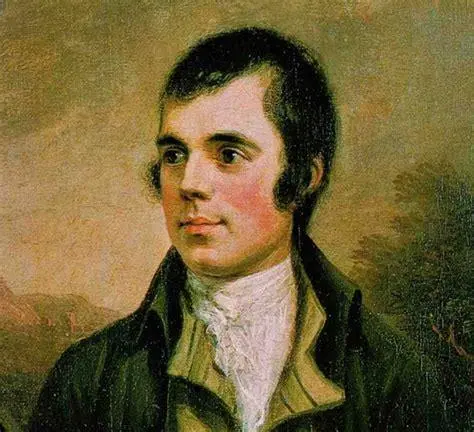
Robert Burns
Lament for Culloden
THE lovely lass o' Inverness,
Nae joy nor pleasure can she see;
For e'en and morn she cries, 'Alas!'
And aye the saut tear blin's her e'e:
'Drumossie moor, Drumossie day,
A waefu' day it was to me!
For there I lost my father dear,
My father dear and brethren three.
'Their winding-sheet the bluidy clay,
Their graves are growing green to see;
And by them lies the dearest lad
That ever blest a woman's e'e!
Now wae to thee, thou cruel lord,
A bluidy man I trow thou be;
For monie a heart thou hast made sair,
That ne'er did wrang to thine or thee.'
250