
War and Peace

Anonymous
Episode
IT was heavy hap for that hero young
on his lord beloved to look and find him
lying on earth with life at end,
sorrowful sight. But the slayer too,
awful earth-dragon, empty of breath,
lay felled in fight, nor, fain of its treasure,
could the writhing monster rule it more.
For edges of iron had ended its days,
hard and battle-sharp, hammers' leaving;
and that flier-afar had fallen to ground
hushed by its hurt, its hoard all near,
no longer lusty aloft to whirl
at midnight, making its merriment seen,
proud of its prizes: prone it sank
by the handiwork of the hero-king.
Forsooth among folk but few achieve,
-- though sturdy and strong, as stories tell me,
and never so daring in deed of valor, --
the perilous breath of a poison-foe
to brave, and to rush on the ring-board hall,
whenever his watch the warden keeps
bold in the barrow. Beowulf paid
the price of death for that precious hoard;
and each of the foes had found the end
of this fleeting life.
Befell erelong
that the laggards in war the wood had left,
trothbreakers, cowards, ten together,
fearing before to flourish a spear
in the sore distress of their sovran lord.
Now in their shame their shields they carried,
armor of fight, where the old man lay;
and they gazed on Wiglaf. Wearied he sat
at his sovran's shoulder, shieldsman good,
to wake him with water. Nowise it availed.
Though well he wished it, in world no more
could he barrier life for that leader-of-battles
nor baffle the will of all-wielding God.
Doom of the Lord was law o'er the deeds
of every man, as it is to-day.
Grim was the answer, easy to get,
from the youth for those that had yielded to fear!
Wiglaf spake, the son of Weohstan, --
mournful he looked on those men unloved: --
"Who sooth will speak, can say indeed
that the ruler who gave you golden rings
and the harness of war in which ye stand
-- for he at ale-bench often-times
bestowed on hall-folk helm and breastplate,
lord to liegemen, the likeliest gear
which near of far he could find to give, --
threw away and wasted these weeds of battle,
on men who failed when the foemen came!
Not at all could the king of his comrades-in-arms
venture to vaunt, though the Victory-Wielder,
God, gave him grace that he got revenge
sole with his sword in stress and need.
To rescue his life, 'twas little that I
could serve him in struggle; yet shift I made
(hopeless it seemed) to help my kinsman.
Its strength ever waned, when with weapon I struck
that fatal foe, and the fire less strongly
flowed from its head. -- Too few the heroes
in throe of contest that thronged to our king!
Now gift of treasure and girding of sword,
joy of the house and home-delight
shall fail your folk; his freehold-land
every clansman within your kin
shall lose and leave, when lords highborn
hear afar of that flight of yours,
a fameless deed. Yea, death is better
for liegemen all than a life of shame!"
230

Spike Milligan
The Soldiers at Lauro
Young are our dead
Like babies they lie
The wombs they blest once
Not healed dry
And yet - too soon
Into each space
A cold earth falls
On colder face.
Quite still they lie
These fresh-cut reeds
Clutched in earth
Like winter seeds
But they will not bloom
When called by spring
To burst with leaf
And blossoming
They sleep on
In silent dust
As crosses rot
And helmets rust.
229

John Greenleaf Whittier
The Wife Of Manoah To Her Husband
Against the sunset's glowing wall
The city towers rise black and tall,
Where Zorah, on its rocky height,
Stands like an armed man in the light.
Down Eshtaol's vales of ripened grain
Falls like a cloud the night amain,
And up the hillsides climbing slow
The barley reapers homeward go.
Look, dearest! how our fair child's head
The sunset light hath hallowed,
Where at this olive's foot he lies,
Uplooking to the tranquil skies.
Oh, while beneath the fervent heat
Thy sickle swept the bearded wheat,
I've watched, with mingled joy and dread,
Our child upon his grassy bed.
Joy, which the mother feels alone
Whose morning hope like mine had flown,
When to her bosom, over-blessed,
A dearer life than hers is pressed.
Dread, for the future dark and still,
Which shapes our dear one to its will;
Forever in his large calm eyes,
I read a tale of sacrifice.
The same foreboding awe I felt
When at the altar's side we knelt,
And he, who as a pilgrim came,
Rose, winged and glorious, through the flame.
I slept not, though the wild bees made
A dreamlike murmuring in the shade,
And on me the warm-fingered hours
Pressed with the drowsy smell of flowers.
Before me, in a vision, rose
The hosts of Israel's scornful foes,-Rank
over rank, helm, shield, and spear,
Glittered in noon's hot atmosphere.
I heard their boast, and bitter word,
Their mockery of the Hebrew's Lord,
I saw their hands His ark assail,
Their feet profane His holy veil.
No angel down the blue space spoke,
No thunder from the still sky broke;
But in their midst, in power and awe,
Like God's waked wrath, our child I saw!
A child no more!--harsh-browed and strong,
He towered a giant in the throng,
And down his shoulders, broad and bare,
Swept the black terror of his hair.
He raised his arm--he smote amain;
As round the reaper falls the grain,
So the dark host around him fell,
So sank the foes of Israel!
Again I looked. In sunlight shone
The towers and domes of Askelon;
Priest, warrior, slave, a mighty crowd
Within her idol temple bowed.
Yet one knelt not; stark, gaunt, and blind,
His arms the massive pillars twined,-An
eyeless captive, strong with hate,
He stood there like an evil Fate.
The red shrines smoked,--the trumpets pealed
He stooped,--the giant columns reeled;
Reeled tower and fane, sank arch and wall,
And the thick dust-cloud closed o'er all!
Above the shriek, the crash, the groan
Of the fallen pride of Askelon,
I heard, sheer down the echoing sky,
A voice as of an angel cry,-
The voice of him, who at our side
Sat through the golden eventide;
Of him who, on thy altar's blaze,
Rose fire-winged, with his song of praise.
'Rejoice o'er Israel's broken chain,
Gray mother of the mighty slain!
Rejoice!' it cried, 'he vanquisheth!
The strong in life is strong in death!
'To him shall Zorah's daughters raise
Through coming years their hymns of praise,
And gray old men at evening tell
Of all be wrought for Israel.
'And they who sing and they who hear
Alike shall hold thy memory dear,
And pour their blessings on thy head,
O mother of the mighty dead!'
It ceased; and though a sound I heard
As if great wings the still air stirred,
I only saw the barley sheaves
And hills half hid by olive leaves.
I bowed my face, in awe and fear,
On the dear child who slumbered near;
'With me, as with my only son,
O God,' I said, 'Thy will be done!'
227
Anonymous
Beowulf (Episode )
HROTHGAR answered, helmet of Scyldings: --
"I knew him of yore in his youthful days;
his aged father was Ecgtheow named,
to whom, at home, gave Hrethel the Geat
his only daughter. Their offspring bold
fares hither to seek the steadfast friend.
And seamen, too, have said me this, --
who carried my gifts to the Geatish court,
thither for thanks, -- he has thirty men's
heft of grasp in the gripe of his hand,
the bold-in-battle. Blessed God
out of his mercy this man hath sent
to Danes of the West, as I ween indeed,
against horror of Grendel. I hope to give
the good youth gold for his gallant thought.
Be thou in haste, and bid them hither,
clan of kinsmen, to come before me;
and add this word, -- they are welcome guests
to folk of the Danes."
[To the door of the hall
Wulfgar went] and the word declared: --
"To you this message my master sends,
East-Danes' king, that your kin he knows,
hardy heroes, and hails you all
welcome hither o'er waves of the sea!
Ye may wend your way in war-attire,
and under helmets Hrothgar greet;
but let here the battle-shields bide your parley,
and wooden war-shafts wait its end."
Uprose the mighty one, ringed with his men,
brave band of thanes: some bode without,
battle-gear guarding, as bade the chief.
Then hied that troop where the herald led them,
under Heorot's roof: [the hero strode,]
hardy 'neath helm, till the hearth he neared.
Beowulf spake, -- his breastplate gleamed,
war-net woven by wit of the smith: --
"Thou Hrothgar, hail! Hygelac's I,
kinsman and follower. Fame a plenty
have I gained in youth! These Grendel-deeds
I heard in my home-land heralded clear.
Seafarers say how stands this hall,
of buildings best, for your band of thanes
empty and idle, when evening sun
in the harbor of heaven is hidden away.
So my vassals advised me well, --
brave and wise, the best of men, --
O sovran Hrothgar, to seek thee here,
for my nerve and my might they knew full well.
Themselves had seen me from slaughter come
blood-flecked from foes, where five I bound,
and that wild brood worsted. I' the waves I slew
nicors by night, in need and peril
avenging the Weders, whose woe they sought, --
crushing the grim ones. Grendel now,
monster cruel, be mine to quell
in single battle! So, from thee,
thou sovran of the Shining-Danes,
Scyldings'-bulwark, a boon I seek, --
and, Friend-of-the-folk, refuse it not,
O Warriors'-shield, now I've wandered far, --
that I alone with my liegemen here,
this hardy band, may Heorot purge!
More I hear, that the monster dire,
in his wanton mood, of weapons recks not;
hence shall I scorn -- so Hygelac stay,
king of my kindred, kind to me! --
brand or buckler to bear in the fight,
gold-colored targe: but with gripe alone
must I front the fiend and fight for life,
foe against foe. Then faith be his
in the doom of the Lord whom death shall take.
Fain, I ween, if the fight he win,
in this hall of gold my Geatish band
will he fearless eat, -- as oft before, --
my noblest thanes. Nor need'st thou then
to hide my head; for his shall I be,
dyed in gore, if death must take me;
and my blood-covered body he'll bear as prey,
ruthless devour it, the roamer-lonely,
with my life-blood redden his lair in the fen:
no further for me need'st food prepare!
To Hygelac send, if Hild should take me,
best of war-weeds, warding my breast,
armor excellent, heirloom of Hrethel
and work of Wayland. Fares Wyrd as she must."
227

Mao Tsé-Tung
Against the First Encirclement Campaign
Forests blaze red beneath the frosty sky,
The wrath of Heaven's armies soars to the clouds.
Mist veils Lungkang, its thousand peaks blurred.
All cry out in unison:
Our van has taken Chang Hui-tsan!
The enemy returns to Kiangsi two hundred thousand strong,
Fumes billowing in the wind in mid-sky.
Workers and peasants are wakened in their millions
To fight as one man,
Under the riot of red flags round the foot of Puchou !
226

Henry Lawson
The Star of Australasia
We boast no more of our bloodless flag, that rose from a nation's slime;
Better a shred of a deep-dyed rag from the storms of the olden time.
From grander clouds in our `peaceful skies' than ever were there before
I tell you the Star of the South shall rise -- in the lurid clouds of war.
It ever must be while blood is warm and the sons of men increase;
For ever the nations rose in storm, to rot in a deadly peace.
There comes a point that we will not yield, no matter if right or wrong,
And man will fight on the battle-field
while passion and pride are strong --
So long as he will not kiss the rod, and his stubborn spirit sours,
And the scorn of Nature and curse of God are heavy on peace like ours.
. . . . .
There are boys out there by the western creeks, who hurry away from school
To climb the sides of the breezy peaks or dive in the shaded pool,
Who'll stick to their guns when the mountains quake
to the tread of a mighty war,
And fight for Right or a Grand Mistake as men never fought before;
When the peaks are scarred and the sea-walls crack
till the furthest hills vibrate,
And the world for a while goes rolling back in a storm of love and hate.
. . . . .
There are boys to-day in the city slum and the home of wealth and pride
Who'll have one home when the storm is come, and fight for it side by side,
Who'll hold the cliffs 'gainst the armoured hells
that batter a coastal town,
Or grimly die in a hail of shells when the walls come crashing down.
And many a pink-white baby girl, the queen of her home to-day,
Shall see the wings of the tempest whirl the mist of our dawn away --
Shall live to shudder and stop her ears to the thud of the distant gun,
And know the sorrow that has no tears when a battle is lost and won, --
As a mother or wife in the years to come, will kneel, wild-eyed and white,
And pray to God in her darkened home for the `men in the fort to-night'.
. . . . .
But, oh! if the cavalry charge again as they did when the world was wide,
'Twill be grand in the ranks of a thousand men
in that glorious race to ride
And strike for all that is true and strong,
for all that is grand and brave,
And all that ever shall be, so long as man has a soul to save.
He must lift the saddle, and close his `wings', and shut his angels out,
And steel his heart for the end of things,
who'd ride with a stockman scout,
When the race they ride on the battle track, and the waning distance hums,
And the shelled sky shrieks or the rifles crack
like stockwhip amongst the gums -
And the `straight' is reached and the field is `gapped'
and the hoof-torn sward grows red
With the blood of those who are handicapped with iron and steel and lead;
And the gaps are filled, though unseen by eyes,
with the spirit and with the shades
Of the world-wide rebel dead who'll rise and rush with the Bush Brigades.
. . . . .
All creeds and trades will have soldiers there -
give every class its due --
And there'll be many a clerk to spare for the pride of the jackeroo.
They'll fight for honour and fight for love, and a few will fight for gold,
For the devil below and for God above, as our fathers fought of old;
And some half-blind with exultant tears, and some stiff-lipped, stern-eyed,
For the pride of a thousand after-years and the old eternal pride;
The soul of the world they will feel and see
in the chase and the grim retreat -They'll
know the glory of victory -- and the grandeur of defeat.
The South will wake to a mighty change ere a hundred years are done
With arsenals west of the mountain range and every spur its gun.
And many a rickety son of a gun, on the tides of the future tossed,
Will tell how battles were really won that History says were lost,
Will trace the field with his pipe, and shirk
the facts that are hard to explain,
As grey old mates of the diggings work the old ground over again --
How `this was our centre, and this a redoubt,
and that was a scrub in the rear,
And this was the point where the guards held out,
and the enemy's lines were here.'
. . . . .
They'll tell the tales of the nights before
and the tales of the ship and fort
Till the sons of Australia take to war as their fathers took to sport,
Their breath come deep and their eyes grow bright
at the tales of our chivalry,
And every boy will want to fight, no matter what cause it be --
When the children run to the doors and cry:
`Oh, mother, the troops are come!'
And every heart in the town leaps high at the first loud thud of the drum.
They'll know, apart from its mystic charm, what music is at last,
When, proud as a boy with a broken arm, the regiment marches past.
And the veriest wreck in the drink-fiend's clutch,
no matter how low or mean,
Will feel, when he hears the march, a touch
of the man that he might have been.
And fools, when the fiends of war are out and the city skies aflame,
Will have something better to talk about than an absent woman's shame,
Will have something nobler to do by far than jest at a friend's expense,
Or blacken a name in a public bar or over a backyard fence.
And this you learn from the libelled past,
though its methods were somewhat rude --
A nation's born where the shells fall fast, or its lease of life renewed.
We in part atone for the ghoulish strife,
and the crimes of the peace we boast,
And the better part of a people's life in the storm comes uppermost.
The self-same spirit that drives the man to the depths of drink and crime
Will do the deeds in the heroes' van that live till the end of time.
The living death in the lonely bush, the greed of the selfish town,
And even the creed of the outlawed push is chivalry -- upside down.
'Twill be while ever our blood is hot, while ever the world goes wrong,
The nations rise in a war, to rot in a peace that lasts too long.
And southern nation and southern state, aroused from their dream of ease,
Must sign in the Book of Eternal Fate their stormy histories.
226
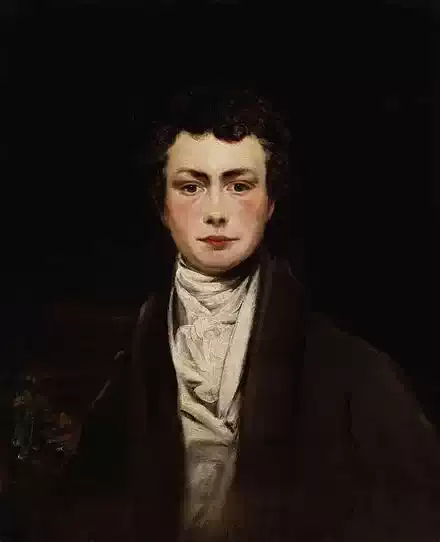
Thomas Moore
After the Battle
Night closed around the conqueror's way,
And lightnings show'd the distant hill,
Where those who lost that dreadful day
Stood few and faint, but fearless still.
The soldier's hope, the patriot's zeal,
For ever dimm'd, for ever crost --
Oh! who shall say what heroes feel,
When all but life and honour's lost?
The last sad hour of freedom's dream,
And valour's task, moved slowly by,
While mute they watch'd, till morning's beam
Should rise and give them light to die.
There's yet a world, where souls are free,
Where tyrants taint not nature's bliss; --
If death that world's bright opening be,
Oh! who would live a slave in this?
229
Anonymous
Beowulf (Episode )
HROTHGAR spake, helmet-of-Scyldings: --
"Ask not of pleasure! Pain is renewed
to Danish folk. Dead is Aeschere,
of Yrmenlaf the elder brother,
my sage adviser and stay in council,
shoulder-comrade in stress of fight
when warriors clashed and we warded our heads,
hewed the helm-boars; hero famed
should be every earl as Aeschere was!
But here in Heorot a hand hath slain him
of wandering death-sprite. I wot not whither,
proud of the prey, her path she took,
fain of her fill. The feud she avenged
that yesternight, unyieldingly,
Grendel in grimmest grasp thou killedst, --
seeing how long these liegemen mine
he ruined and ravaged. Reft of life,
in arms he fell. Now another comes,
keen and cruel, her kin to avenge,
faring far in feud of blood:
so that many a thane shall think, who e'er
sorrows in soul for that sharer of rings,
this is hardest of heart-bales. The hand lies low
that once was willing each wish to please.
Land-dwellers here and liegemen mine,
who house by those parts, I have heard relate
that such a pair they have sometimes seen,
march-stalkers mighty the moorland haunting,
wandering spirits: one of them seemed,
so far as my folk could fairly judge,
of womankind; and one, accursed,
in man's guise trod the misery-track
of exile, though huger than human bulk.
Grendel in days long gone they named him,
folk of the land; his father they knew not,
nor any brood that was born to him
of treacherous spirits. Untrod is their home;
by wolf-cliffs haunt they and windy headlands,
fenways fearful, where flows the stream
from mountains gliding to gloom of the rocks,
underground flood. Not far is it hence
in measure of miles that the mere expands,
and o'er it the frost-bound forest hanging,
sturdily rooted, shadows the wave.
By night is a wonder weird to see,
fire on the waters. So wise lived none
of the sons of men, to search those depths!
Nay, though the heath-rover, harried by dogs,
the horn-proud hart, this holt should seek,
long distance driven, his dear life first
on the brink he yields ere he brave the plunge
to hide his head: 'tis no happy place!
Thence the welter of waters washes up
wan to welkin when winds bestir
evil storms, and air grows dusk,
and the heavens weep. Now is help once more
with thee alone! The land thou knowst not,
place of fear, where thou findest out
that sin-flecked being. Seek if thou dare!
I will reward thee, for waging this fight,
with ancient treasure, as erst I did,
with winding gold, if thou winnest back."
224
Henry Lawson
The Cockney Soul
From Woolwich and Brentford and Stamford Hill, from Richmond into the Strand,
Oh, the Cockney soul is a silent soul – as it is in every land!
But out on the sand with a broken band it's sarcasm spurs them through;
And, with never a laugh, in a gale and a half, 'tis the Cockney cheers the crew.
Oh, send them a tune from the music-halls with a chorus to shake the sky!
Oh, give them a deep-sea chanty now – and a star to steer them by!
Now this is a song of the great untrained, a song of the Unprepared,
Who had never the brains to plead unfit, or think of the things they dared;
Of the grocer-souled and the draper-souled, and the clerks of the four o'clock,
Who stood for London and died for home in the nineteen-fourteen shock.
Oh, this is a pork-shop warrior's chant – come back from it, maimed and blind,
To a little old counter in Grey's Inn-road and a tiny parlour behind;
And the bedroom above, where the wife and he go silently mourning yet
For a son-in-law who shall never come back and a dead son's room "To Let".
(But they have a boy "in the fried-fish line" in a shop across the "wye",
Who will take them "aht" and "abaht" to-night and cheer their old eyes dry.)
And this is a song of the draper's clerk (what have you all to say?) –
He'd a tall top-hat and a walking-coat in the city every day –
He wears no flesh on his broken bones that lie in the shell-churned loam;
For he went over the top and struck with his cheating yard-wand – home.
(Oh, touch your hat to the tailor-made before you are aware,
And lilt us a lay of Bank-holiday and the lights of Leicester-square!)
Hats off to the dowager lady at home in her house in Russell-square!
Like the pork-shop back and the Brixton flat, they are silently mourning there;
For one lay out ahead of the rest in the slush 'neath a darkening sky,
With the blood of a hundred earls congealed and his eye-glass to his eye.
(He gave me a cheque in an envelope on a distant gloomy day;
He gave me his hand at the mansion door and he said: "Good-luck! Good-bai!")
225

Robert W. Service
Enemy Conscript
What are we fighting for,
We fellows who go to war?
fighting for Freedom's sake!
(You give me the belly-ache.)
Freedom to starve or slave!
Freedom! aye, in the grave.
Fighting for "hearth and home,"
Who haven't an inch of loam?
Hearth? Why even a byre
Can only be ours for hire.
Dying for future peace?
Killing that killing cease?
To hell with such tripe, I say.
"Sufficient unto the day."
It isn't much fun being dead.
Better to le in bed,
Cuddle up to the wife,
Making, not taking life.
To the corpse that stinks in the clay,
Does it matter who wins the day?
What odds if tyrants reign?
They can't put irons on the brain.
One always can eat one's grub,
Smoke and drink in a pub.
There's happiness in a glass,
A pipe and the kiss of a lass.
It's the best we get anyhow,
In the life we are living now.
Who's wanting a hero's fate?
To the dead cheers come too late.
Flesh is softer than steel;
Wounds are weary to heal.
In the maniac hell of the fray
Who is there dares to say?
"Hate will be vanquished by Love;
God's in His Heaven above."
When those who govern us lead
The lads they command to bleed;
When rulers march at the head,
And statesmen fall with the dead;
When Kings leap into the fray,
Fight in the old-time way,
Perish beside their men,
Maybe, O maybe then
War will be part of the past,
Peace will triumph at last.
Meantime such lads as I,
Who wouldn't have harmed a fly,
Have got to get out and kill
Lads whom we bear no ill;
As simple as we, no doubt,
Who seek what it's all about;
Who die in defence of - what?
Homes that they haven't got;
Who perish when all they ask
is to finish the daily task;
Make bread for the little ones,
Not feed the greed of the guns,
When fields of battle are red,
And diplomats die in bed.
222
Anonymous
Beowulf (excerpt): Have mind, thou honored offspring of Healfdene
BEOWULF spake, bairn of Ecgtheow: --
"Have mind, thou honored offspring of Healfdene
gold-friend of men, now I go on this quest,
sovran wise, what once was said:
if in thy cause it came that I
should lose my life, thou wouldst loyal bide
to me, though fallen, in father's place!
Be guardian, thou, to this group of my thanes,
my warrior-friends, if War should seize me;
and the goodly gifts thou gavest me,
Hrothgar beloved, to Hygelac send!
Geatland's king may ken by the gold,
Hrethel's son see, when he stares at the treasure,
that I got me a friend for goodness famed,
and joyed while I could in my jewel-bestower.
And let Unferth wield this wondrous sword,
earl far-honored, this heirloom precious,
hard of edge: with Hrunting I
seek doom of glory, or Death shall take me."
After these words the Weder-Geat lord
boldly hastened, biding never
answer at all: the ocean floods
closed o'er the hero. Long while of the day
fled ere he felt the floor of the sea.
Soon found the fiend who the flood-domain
sword-hungry held these hundred winters,
greedy and grim, that some guest from above,
some man, was raiding her monster-realm.
She grasped out for him with grisly claws,
and the warrior seized; yet scathed she not
his body hale; the breastplate hindered,
as she strove to shatter the sark of war,
the linked harness, with loathsome hand.
Then bore this brine-wolf, when bottom she touched,
the lord of rings to the lair she haunted
whiles vainly he strove, though his valor held,
weapon to wield against wondrous monsters
that sore beset him; sea-beasts many
tried with fierce tusks to tear his mail,
and swarmed on the stranger. But soon he marked
he was now in some hall, he knew not which,
where water never could work him harm,
nor through the roof could reach him ever
fangs of the flood. Firelight he saw,
beams of a blaze that brightly shone.
Then the warrior was ware of that wolf-of-the-deep,
mere-wife monstrous. For mighty stroke
he swung his blade, and the blow withheld not.
Then sang on her head that seemly blade
its war-song wild. But the warrior found
the light-of-battle was loath to bite,
to harm the heart: its hard edge failed
the noble at need, yet had known of old
strife hand to hand, and had helmets cloven,
doomed men's fighting-gear. First time, this,
for the gleaming blade that its glory fell.
Firm still stood, nor failed in valor,
heedful of high deeds, Hygelac's kinsman;
flung away fretted sword, featly jewelled,
the angry earl; on earth it lay
steel-edged and stiff. His strength he trusted,
hand-gripe of might. So man shall do
whenever in war he weens to earn him
lasting fame, nor fears for his life!
Seized then by shoulder, shrank not from combat,
the Geatish war-prince Grendel's mother.
Flung then the fierce one, filled with wrath,
his deadly foe, that she fell to ground.
Swift on her part she paid him back
with grisly grasp, and grappled with him.
Spent with struggle, stumbled the warrior,
fiercest of fighting-men, fell adown.
On the hall-guest she hurled herself, hent her short sword,
broad and brown-edged, the bairn to avenge,
the sole-born son. -- On his shoulder lay
braided breast-mail, barring death,
withstanding entrance of edge or blade.
Life would have ended for Ecgtheow's son,
under wide earth for that earl of Geats,
had his armor of war not aided him,
battle-net hard, and holy God
wielded the victory, wisest Maker.
The Lord of Heaven allowed his cause;
and easily rose the earl erect.
222
Robert W. Service
The Revelation
The same old sprint in the morning, boys, to the same old din and smut;
Chained all day to the same old desk, down in the same old rut;
Posting the same old greasy books, catching the same old train:
Oh, how will I manage to stick it all, if I ever get back again?
We've bidden good-bye to life in a cage, we're finished with pushing a pen;
They're pumping us full of bellicose rage, they're showing us how to be men.
We're only beginning to find ourselves; we're wonders of brawn and thew;
But when we go back to our Sissy jobs, -- oh, what are we going to do?
For shoulders curved with the counter stoop will be carried erect and square;
And faces white from the office light will be bronzed by the open air;
And we'll walk with the stride of a new-born pride, with a new-found joy in our eyes,
Scornful men who have diced with death under the naked skies.
And when we get back to the dreary grind, and the bald-headed boss's call,
Don't you think that the dingy window-blind, and the dingier office wall,
Will suddenly melt to a vision of space, of violent, flame-scarred night?
Then . . . oh, the joy of the danger-thrill, and oh, the roar of the fight!
Don't you think as we peddle a card of pins the counter will fade away,
And again we'll be seeing the sand-bag rims, and the barb-wire's misty grey?
As a flat voice asks for a pound of tea, don't you fancy we'll hear instead
The night-wind moan and the soothing drone of the packet that's overhead?
Don't you guess that the things we're seeing now will haunt us through all the years;
Heaven and hell rolled into one, glory and blood and tears;
Life's pattern picked with a scarlet thread, where once we wove with a grey
To remind us all how we played our part in the shock of an epic day?
Oh, we're booked for the Great Adventure now, we're pledged to the Real Romance;
We'll find ourselves or we'll lose ourselves somewhere in giddy old France;
We'll know the zest of the fighter's life; the best that we have we'll give;
We'll hunger and thirst; we'll die . . . but first -- we'll live; by the gods, we'll live!
We'll breathe free air and we'll bivouac under the starry sky;
We'll march with men and we'll fight with men, and we'll see men laugh and die;
We'll know such joy as we never dreamed; we'll fathom the deeps of pain:
But the hardest bit of it all will be -- when we come back home again.
For some of us smirk in a chiffon shop, and some of us teach in a school;
Some of us help with the seat of our pants to polish an office stool;
The merits of somebody's soap or jam some of us seek to explain,
But all of us wonder what we'll do when we have to go back again.
221

Wilfred Owen
On Seeing a Piece of Our Artillery Brought into Action
Be slowly lifted up, thou long black arm,
Great gun towering towards Heaven, about to curse;
Sway steep against them, and for years rehearse
Huge imprecations like a blasting charm!
Reach at that Arrogance which needs thy harm,
And beat it down before its sins grow worse;
Spend our resentment, cannon,--yea, disburse
Our gold in shapes of flame, our breaths in storm.
Yet, for men's sakes whom thy vast malison
Must wither innocent of enmity,
Be not withdrawn, dark arm, thy spoilure done,
Safe to the bosom of our prosperity.
But when thy spell be cast complete and whole,
May God curse thee, and cut thee from our soul!
221
Robert W. Service
My Mate
I've been sittin' starin', starin' at 'is muddy pair of boots,
And tryin' to convince meself it's 'im.
(Look out there, lad! That sniper -- 'e's a dysey when 'e shoots;
'E'll be layin' of you out the same as Jim.)
Jim as lies there in the dug-out wiv 'is blanket round 'is 'ead,
To keep 'is brains from mixin' wiv the mud;
And 'is face as white as putty, and 'is overcoat all red,
Like 'e's spilt a bloomin' paint-pot -- but it's blood.
And I'm tryin' to remember of a time we wasn't pals.
'Ow often we've played 'ookey, 'im and me;
And sometimes it was music-'alls, and sometimes it was gals,
And even there we 'ad no disagree.
For when 'e copped Mariar Jones, the one I liked the best,
I shook 'is 'and and loaned 'im 'arf a quid;
I saw 'im through the parson's job, I 'elped 'im make 'is nest,
I even stood god-farther to the kid.
So when the war broke out, sez 'e: "Well, wot abaht it, Joe?"
"Well, wot abaht it, lad?" sez I to 'im.
'Is missis made a awful fuss, but 'e was mad to go,
('E always was 'igh-sperrited was Jim).
Well, none of it's been 'eaven, and the most of it's been 'ell,
But we've shared our baccy, and we've 'alved our bread.
We'd all the luck at Wipers, and we shaved through Noove Chapelle,
And . . . that snipin' barstard gits 'im on the 'ead.
Now wot I wants to know is, why it wasn't me was took?
I've only got meself, 'e stands for three.
I'm plainer than a louse, while 'e was 'andsome as a dook;
'E always WAS a better man than me.
'E was goin' 'ome next Toosday; 'e was 'appy as a lark,
And 'e'd just received a letter from 'is kid;
And 'e struck a match to show me, as we stood there in the dark,
When . . . that bleedin' bullet got 'im on the lid.
'E was killed so awful sudden that 'e 'adn't time to die.
'E sorto jumped, and came down wiv a thud.
Them corpsy-lookin' star-shells kept a-streamin' in the sky,
And there 'e lay like nothin' in the mud.
And there 'e lay so quiet wiv no mansard to 'is 'ead,
And I'm sick, and blamed if I can understand:
The pots of 'alf and 'alf we've 'ad, and ZIP! like that -- 'e's dead,
Wiv the letter of 'is nipper in 'is 'and.
There's some as fights for freedom and there's some as fights for fun,
But me, my lad, I fights for bleedin' 'ate.
You can blame the war and blast it, but I 'opes it won't be done
Till I gets the bloomin' blood-price for me mate.
It'll take a bit o' bayonet to level up for Jim;
Then if I'm spared I think I'll 'ave a bid,
Wiv 'er that was Mariar Jones to take the place of 'im,
To sorter be a farther to 'is kid.
221

William Ernest Henley
England, My England
WHAT have I done for you,
England, my England?
What is there I would not do,
England, my own?
With your glorious eyes austere,
As the Lord were walking near,
Whispering terrible things and dear
As the Song on your bugles blown,
England--
Round the world on your bugles blown!
Where shall the watchful sun,
England, my England,
Match the master-work you've done,
England, my own?
When shall he rejoice agen
Such a breed of mighty men
As come forward, one to ten,
To the Song on your bugles blown,
England--
Down the years on your bugles blown?
Ever the faith endures,
England, my England:--
'Take and break us: we are yours,
England, my own!
Life is good, and joy runs high
Between English earth and sky:
Death is death; but we shall die
To the Song on your bugles blown,
England--
To the stars on your bugles blown!'
They call you proud and hard,
England, my England:
You with worlds to watch and ward,
England, my own!
You whose mail'd hand keeps the keys
Of such teeming destinies,
You could know nor dread nor ease
Were the Song on your bugles blown,
England,
Round the Pit on your bugles blown!
Mother of Ships whose might,
England, my England,
Is the fierce old Sea's delight,
England, my own,
Chosen daughter of the Lord,
Spouse-in-Chief of the ancient Sword,
There 's the menace of the Word
In the Song on your bugles blown,
England--
Out of heaven on your bugles blown!
222
Anonymous
Soldiers Who Wish to be a Hero
Soldiers who wish to be a hero
Are practically zero.
But those who wish to be civilians,
Jesus, they run into millions.
Are practically zero.
But those who wish to be civilians,
Jesus, they run into millions.
219
Robert W. Service
The Black Dudeen
Humping it here in the dug-out,
Sucking me black dudeen,
I'd like to say in a general way,
There's nothing like Nickyteen;
There's nothing like Nickyteen, me boys,
Be it pipes or snipes or cigars;
So be sure that a bloke
Has plenty to smoke,
If you wants him to fight your wars.
When I've eat my fill and my belt is snug,
I begin to think of my baccy plug.
I whittle a fill in my horny palm,
And the bowl of me old clay pipe I cram.
I trim the edges, I tamp it down,
I nurse a light with an anxious frown;
I begin to draw, and my cheeks tuck in,
And all my face is a blissful grin;
And up in a cloud the good smoke goes,
And the good pipe glimmers and fades and glows;
In its throat it chuckles a cheery song,
For I likes it hot and I likes it strong.
Oh, it's good is grub when you're feeling hollow,
But the best of a meal's the smoke to follow.
There was Micky and me on a night patrol,
Having to hide in a fizz-bang hole;
And sure I thought I was worse than dead
Wi' them crump-crumps hustlin' over me head.
Sure I thought 'twas the dirty spot,
Hammer and tongs till the air was hot.
And mind you, water up to your knees.
And cold! A monkey of brass would freeze.
And if we ventured our noses out
A "typewriter" clattered its pills about.
The Field of Glory! Well, I don't think!
I'd sooner be safe and snug in clink.
Then Micky, he goes and he cops one bad,
He always was having ill-luck, poor lad.
Says he: "Old chummy, I'm booked right through;
Death and me 'as a wrongday voo.
But . . . 'aven't you got a pinch of shag? -I'd
sell me perishin' soul for a fag."
And there he shivered and cussed his luck,
So I gave him me old black pipe to suck.
And he heaves a sigh, and he takes to it
Like a babby takes to his mammy's tit;
Like an infant takes to his mother's breast,
Poor little Micky! he went to rest.
But the dawn was near, though the night was black,
So I left him there and I started back.
And I laughed as the silly old bullets came,
For the bullet ain't made wot's got me name.
Yet some of 'em buzzed onhealthily near,
And one little blighter just chipped me ear.
But there! I got to the trench all right,
When sudden I jumped wi' a start o' fright,
And a word that doesn't look well in type:
I'd clean forgotten me old clay pipe.
So I had to do it all over again,
Crawling out on that filthy plain.
Through shells and bombs and bullets and all --
Only this time -- I do not crawl.
I run like a man wot's missing a train,
Or a tom-cat caught in a plump of rain.
I hear the spit of a quick-fire gun
Tickle my heels, but I run, I run.
Through crash and crackle, and flicker and flame,
(Oh, the packet ain't issued wot's got me name!)
I run like a man that's no ideer
Of hunting around for a sooveneer.
I run bang into a German chap,
And he stares like an owl, so I bash his map.
And just to show him that I'm his boss,
I gives him a kick on the parados.
And I marches him back with me all serene,
Wiv, tucked in me grup, me old dudeen.
Sitting here in the trenches
Me heart's a-splittin' with spleen,
For a parcel o' lead comes missing me head,
But it smashes me old dudeen.
God blast that red-headed sniper!
I'll give him somethin' to snipe;
Before the war's through
Just see how I do
That blighter that smashed me pipe.
218

Homero
The Iliad: Book 6
The fight between Trojans and Achaeans was now left to rage as it
would, and the tide of war surged hither and thither over the plain as
they aimed their bronze-shod spears at one another between the streams
of Simois and Xanthus.
First, Ajax son of Telamon, tower of strength to the Achaeans, broke
a phalanx of the Trojans, and came to the assistance of his comrades
by killing Acamas son of Eussorus, the best man among the Thracians,
being both brave and of great stature. The spear struck the projecting
peak of his helmet: its bronze point then went through his forehead
into the brain, and darkness veiled his eyes.
Then Diomed killed Axylus son of Teuthranus, a rich man who lived in
the strong city of Arisbe, and was beloved by all men; for he had a
house by the roadside, and entertained every one who passed; howbeit
not one of his guests stood before him to save his life, and Diomed
killed both him and his squire Calesius, who was then his
charioteer- so the pair passed beneath the earth.
Euryalus killed Dresus and Opheltius, and then went in pursuit of
Aesepus and Pedasus, whom the naiad nymph Abarbarea had borne to noble
Bucolion. Bucolion was eldest son to Laomedon, but he was a bastard.
While tending his sheep he had converse with the nymph, and she
conceived twin sons; these the son of Mecisteus now slew, and he
stripped the armour from their shoulders. Polypoetes then killed
Astyalus, Ulysses Pidytes of Percote, and Teucer Aretaon. Ablerus fell
by the spear of Nestor's son Antilochus, and Agamemnon, king of men,
killed Elatus who dwelt in Pedasus by the banks of the river
Satnioeis. Leitus killed Phylacus as he was flying, and Eurypylus slew
Melanthus.
Then Menelaus of the loud war-cry took Adrestus alive, for his
horses ran into a tamarisk bush, as they were flying wildly over the
plain, and broke the pole from the car; they went on towards the
city along with the others in full flight, but Adrestus rolled out,
and fell in the dust flat on his face by the wheel of his chariot;
Menelaus came up to him spear in hand, but Adrestus caught him by
the knees begging for his life. "Take me alive," he cried, "son of
Atreus, and you shall have a full ransom for me: my father is rich and
has much treasure of gold, bronze, and wrought iron laid by in his
house. From this store he will give you a large ransom should he
hear of my being alive and at the ships of the Achaeans."
Thus did he plead, and Menelaus was for yielding and giving him to a
squire to take to the ships of the Achaeans, but Agamemnon came
running up to him and rebuked him. "My good Menelaus," said he,
"this is no time for giving quarter. Has, then, your house fared so
well at the hands of the Trojans? Let us not spare a single one of
them- not even the child unborn and in its mother's womb; let not a
man of them be left alive, but let all in Ilius perish, unheeded and
forgotten."
Thus did he speak, and his brother was persuaded by him, for his
words were just. Menelaus, therefore, thrust Adrestus from him,
whereon King Agamemnon struck him in the flank, and he fell: then
the son of Atreus planted his foot upon his breast to draw his spear
from the body.
Meanwhile Nestor shouted to the Argives, saying, "My friends, Danaan
warriors, servants of Mars, let no man lag that he may spoil the dead,
and bring back much booty to the ships. Let us kill as many as we can;
the bodies will lie upon the plain, and you can despoil them later
at your leisure."
With these words he put heart and soul into them all. And now the
Trojans would have been routed and driven back into Ilius, had not
Priam's son Helenus, wisest of augurs, said to Hector and Aeneas,
"Hector and Aeneas, you two are the mainstays of the Trojans and
Lycians, for you are foremost at all times, alike in fight and
counsel; hold your ground here, and go about among the host to rally
them in front of the gates, or they will fling themselves into the
arms of their wives, to the great joy of our foes. Then, when you have
put heart into all our companies, we will stand firm here and fight
the Danaans however hard they press us, for there is nothing else to
be done. Meanwhile do you, Hector, go to the city and tell our
mother what is happening. Tell her to bid the matrons gather at the
temple of Minerva in the acropolis; let her then take her key and open
the doors of the sacred building; there, upon the knees of Minerva,
let her lay the largest, fairest robe she has in her house- the one
she sets most store by; let her, moreover, promise to sacrifice twelve
yearling heifers that have never yet felt the goad, in the temple of
the goddess, if she will take pity on the town, with the wives and
little ones of the Trojans, and keep the son of Tydeus from falling on
the goodly city of Ilius; for he fights with fury and fills men's
souls with panic. I hold him mightiest of them all; we did not fear
even their great champion Achilles, son of a goddess though he be,
as we do this man: his rage is beyond all bounds, and there is none
can vie with him in prowess"
Hector did as his brother bade him. He sprang from his chariot,
and went about everywhere among the host, brandishing his spears,
urging the men on to fight, and raising the dread cry of battle.
Thereon they rallied and again faced the Achaeans, who gave ground and
ceased their murderous onset, for they deemed that some one of the
immortals had come down from starry heaven to help the Trojans, so
strangely had they rallied. And Hector shouted to the Trojans,
"Trojans and allies, be men, my friends, and fight with might and
main, while I go to Ilius and tell the old men of our council and
our wives to pray to the gods and vow hecatombs in their honour."
With this he went his way, and the black rim of hide that went round
his shield beat against his neck and his ancles.
Then Glaucus son of Hippolochus, and the son of Tydeus went into the
open space between the hosts to fight in single combat. When they were
close up to one another Diomed of the loud war-cry was the first to
speak. "Who, my good sir," said he, "who are you among men? I have
never seen you in battle until now, but you are daring beyond all
others if you abide my onset. Woe to those fathers whose sons face
my might. If, however, you are one of the immortals and have come down
from heaven, I will not fight you; for even valiant Lycurgus, son of
Dryas, did not live long when he took to fighting with the gods. He it
was that drove the nursing women who were in charge of frenzied
Bacchus through the land of Nysa, and they flung their thyrsi on the
ground as murderous Lycurgus beat them with his oxgoad. Bacchus
himself plunged terror-stricken into the sea, and Thetis took him to
her bosom to comfort him, for he was scared by the fury with which the
man reviled him. Thereon the gods who live at ease were angry with
Lycurgus and the son of Saturn struck him blind, nor did he live
much longer after he had become hateful to the immortals. Therefore
I will not fight with the blessed gods; but if you are of them that
eat the fruit of the ground, draw near and meet your doom."
And the son of Hippolochus answered, son of Tydeus, why ask me of my
lineage? Men come and go as leaves year by year upon the trees.
Those of autumn the wind sheds upon the ground, but when spring
returns the forest buds forth with fresh vines. Even so is it with the
generations of mankind, the new spring up as the old are passing away.
If, then, you would learn my descent, it is one that is well known
to many. There is a city in the heart of Argos, pasture land of
horses, called Ephyra, where Sisyphus lived, who was the craftiest
of all mankind. He was the son of Aeolus, and had a son named Glaucus,
who was father to Bellerophon, whom heaven endowed with the most
surpassing comeliness and beauty. But Proetus devised his ruin, and
being stronger than he, drove him from the land of the Argives, over
which Jove had made him ruler. For Antea, wife of Proetus, lusted
after him, and would have had him lie with her in secret; but
Bellerophon was an honourable man and would not, so she told lies
about him to Proteus. 'Proetus,' said she, 'kill Bellerophon or die,
for he would have had converse with me against my will.' The king
was angered, but shrank from killing Bellerophon, so he sent him to
Lycia with lying letters of introduction, written on a folded
tablet, and containing much ill against the bearer. He bade
Bellerophon show these letters to his father-in-law, to the end that
he might thus perish; Bellerophon therefore went to Lycia, and the
gods convoyed him safely.
"When he reached the river Xanthus, which is in Lycia, the king
received him with all goodwill, feasted him nine days, and killed nine
heifers in his honour, but when rosy-fingered morning appeared upon
the tenth day, he questioned him and desired to see the letter from
his son-in-law Proetus. When he had received the wicked letter he
first commanded Bellerophon to kill that savage monster, the Chimaera,
who was not a human being, but a goddess, for she had the head of a
lion and the tail of a serpent, while her body was that of a goat, and
she breathed forth flames of fire; but Bellerophon slew her, for he
was guided by signs from heaven. He next fought the far-famed
Solymi, and this, he said, was the hardest of all his battles.
Thirdly, he killed the Amazons, women who were the peers of men, and
as he was returning thence the king devised yet another plan for his
destruction; he picked the bravest warriors in all Lycia, and placed
them in ambuscade, but not a man ever came back, for Bellerophon
killed every one of them. Then the king knew that he must be the
valiant offspring of a god, so he kept him in Lycia, gave him his
daughter in marriage, and made him of equal honour in the kingdom with
himself; and the Lycians gave him a piece of land, the best in all the
country, fair with vineyards and tilled fields, to have and to hold.
"The king's daughter bore Bellerophon three children, Isander,
Hippolochus, and Laodameia. Jove, the lord of counsel, lay with
Laodameia, and she bore him noble Sarpedon; but when Bellerophon
came to be hated by all the gods, he wandered all desolate and
dismayed upon the Alean plain, gnawing at his own heart, and
shunning the path of man. Mars, insatiate of battle, killed his son
Isander while he was fighting the Solymi; his daughter was killed by
Diana of the golden reins, for she was angered with her; but
Hippolochus was father to myself, and when he sent me to Troy he urged
me again and again to fight ever among the foremost and outvie my
peers, so as not to shame the blood of my fathers who were the noblest
in Ephyra and in all Lycia. This, then, is the descent I claim."
Thus did he speak, and the heart of Diomed was glad. He planted
his spear in the ground, and spoke to him with friendly words. "Then,"
he said, you are an old friend of my father's house. Great Oeneus once
entertained Bellerophon for twenty days, and the two exchanged
presents. Oeneus gave a belt rich with purple, and Bellerophon a
double cup, which I left at home when I set out for Troy. I do not
remember Tydeus, for he was taken from us while I was yet a child,
when the army of the Achaeans was cut to pieces before Thebes.
Henceforth, however, I must be your host in middle Argos, and you mine
in Lycia, if I should ever go there; let us avoid one another's spears
even during a general engagement; there are many noble Trojans and
allies whom I can kill, if I overtake them and heaven delivers them
into my hand; so again with yourself, there are many Achaeans whose
lives you may take if you can; we two, then, will exchange armour,
that all present may know of the old ties that subsist between us."
With these words they sprang from their chariots, grasped one
another's hands, and plighted friendship. But the son of Saturn made
Glaucus take leave of his wits, for he exchanged golden armour for
bronze, the worth of a hundred head of cattle for the worth of nine.
Now when Hector reached the Scaean gates and the oak tree, the wives
and daughters of the Trojans came running towards him to ask after
their sons, brothers, kinsmen, and husbands: he told them to set about
praying to the gods, and many were made sorrowful as they heard him.
Presently he reached the splendid palace of King Priam, adorned with
colonnades of hewn stone. In it there were fifty bedchambers- all of
hewn stone- built near one another, where the sons of Priam slept,
each with his wedded wife. Opposite these, on the other side the
courtyard, there were twelve upper rooms also of hewn stone for
Priam's daughters, built near one another, where his sons-in-law slept
with their wives. When Hector got there, his fond mother came up to
him with Laodice the fairest of her daughters. She took his hand
within her own and said, "My son, why have you left the battle to come
hither? Are the Achaeans, woe betide them, pressing you hard about the
city that you have thought fit to come and uplift your hands to Jove
from the citadel? Wait till I can bring you wine that you may make
offering to Jove and to the other immortals, and may then drink and be
refreshed. Wine gives a man fresh strength when he is wearied, as
you now are with fighting on behalf of your kinsmen."
And Hector answered, "Honoured mother, bring no wine, lest you unman
me and I forget my strength. I dare not make a drink-offering to
Jove with unwashed hands; one who is bespattered with blood and
filth may not pray to the son of Saturn. Get the matrons together, and
go with offerings to the temple of Minerva driver of the spoil; there,
upon the knees of Minerva, lay the largest and fairest robe you have
in your house- the one you set most store by; promise, moreover, to
sacrifice twelve yearling heifers that have never yet felt the goad,
in the temple of the goddess if she will take pity on the town, with
the wives and little ones of the Trojans, and keep the son of Tydeus
from off the goodly city of Ilius, for he fights with fury, and
fills men's souls with panic. Go, then, to the temple of Minerva,
while I seek Paris and exhort him, if he will hear my words. Would
that the earth might open her jaws and swallow him, for Jove bred
him to be the bane of the Trojans, and of Priam and Priam's sons.
Could I but see him go down into the house of Hades, my heart would
forget its heaviness."
His mother went into the house and called her waiting-women who
gathered the matrons throughout the city. She then went down into
her fragrant store-room, where her embroidered robes were kept, the
work of Sidonian women, whom Alexandrus had brought over from Sidon
when he sailed the seas upon that voyage during which he carried off
Helen. Hecuba took out the largest robe, and the one that was most
beautifully enriched with embroidery, as an offering to Minerva: it
glittered like a star, and lay at the very bottom of the chest. With
this she went on her way and many matrons with her.
When they reached the temple of Minerva, lovely Theano, daughter
of Cisseus and wife of Antenor, opened the doors, for the Trojans
had made her priestess of Minerva. The women lifted up their hands
to the goddess with a loud cry, and Theano took the robe to lay it
upon the knees of Minerva, praying the while to the daughter of
great Jove. "Holy Minerva," she cried, "protectress of our city,
mighty goddess, break the spear of Diomed and lay him low before the
Scaean gates. Do this, and we will sacrifice twelve heifers that
have never yet known the goad, in your temple, if you will have pity
upon the town, with the wives and little ones If the Trojans." Thus
she prayed, but Pallas Minerva granted not her prayer.
While they were thus praying to the daughter of great Jove, Hector
went to the fair house of Alexandrus, which he had built for him by
the foremost builders in the land. They had built him his house,
storehouse, and courtyard near those of Priam and Hector on the
acropolis. Here Hector entered, with a spear eleven cubits long in his
hand; the bronze point gleamed in front of him, and was fastened to
the shaft of the spear by a ring of gold. He found Alexandrus within
the house, busied about his armour, his shield and cuirass, and
handling his curved bow; there, too, sat Argive Helen with her
women, setting them their several tasks; and as Hector saw him he
rebuked him with words of scorn. "Sir," said he, "you do ill to
nurse this rancour; the people perish fighting round this our town;
you would yourself chide one whom you saw shirking his part in the
combat. Up then, or ere long the city will be in a blaze."
And Alexandrus answered, "Hector, your rebuke is just; listen
therefore, and believe me when I tell you that I am not here so much
through rancour or ill-will towards the Trojans, as from a desire to
indulge my grief. My wife was even now gently urging me to battle, and
I hold it better that I should go, for victory is ever fickle. Wait,
then, while I put on my armour, or go first and I will follow. I shall
be sure to overtake you."
Hector made no answer, but Helen tried to soothe him. "Brother,"
said she, "to my abhorred and sinful self, would that a whirlwind
had caught me up on the day my mother brought me forth, and had
borne me to some mountain or to the waves of the roaring sea that
should have swept me away ere this mischief had come about. But, since
the gods have devised these evils, would, at any rate, that I had been
wife to a better man- to one who could smart under dishonour and men's
evil speeches. This fellow was never yet to be depended upon, nor
never will be, and he will surely reap what he has sown. Still,
brother, come in and rest upon this seat, for it is you who bear the
brunt of that toil that has been caused by my hateful self and by
the sin of Alexandrus- both of whom Jove has doomed to be a theme of
song among those that shall be born hereafter."
And Hector answered, "Bid me not be seated, Helen, for all the
goodwill you bear me. I cannot stay. I am in haste to help the
Trojans, who miss me greatly when I am not among them; but urge your
husband, and of his own self also let him make haste to overtake me
before I am out of the city. I must go home to see my household, my
wife and my little son, for I know not whether I shall ever again
return to them, or whether the gods will cause me to fill by the hands
of the Achaeans."
Then Hector left her, and forthwith was at his own house. He did not
find Andromache, for she was on the wall with her child and one of her
maids, weeping bitterly. Seeing, then, that she was not within, he
stood on the threshold of the women's rooms and said, "Women, tell me,
and tell me true, where did Andromache go when she left the house? Was
it to my sisters, or to my brothers' wives? or is she at the temple of
Minerva where the other women are propitiating the awful goddess?"
His good housekeeper answered, "Hector, since you bid me tell you
truly, she did not go to your sisters nor to your brothers' wives, nor
yet to the temple of Minerva, where the other women are propitiating
the awful goddess, but she is on the high wall of Ilius, for she had
heard the Trojans were being hard pressed, and that the Achaeans
were in great force: she went to the wall in frenzied haste, and the
nurse went with her carrying the child."
Hector hurried from the house when she had done speaking, and went
down the streets by the same way that he had come. When he had gone
through the city and had reached the Scaean gates through which he
would go out on to the plain, his wife came running towards him,
Andromache, daughter of great Eetion who ruled in Thebe under the
wooded slopes of Mt. Placus, and was king of the Cilicians. His
daughter had married Hector, and now came to meet him with a nurse who
carried his little child in her bosom- a mere babe. Hector's darling
son, and lovely as a star. Hector had named him Scamandrius, but the
people called him Astyanax, for his father stood alone as chief
guardian of Ilius. Hector smiled as he looked upon the boy, but he did
not speak, and Andromache stood by him weeping and taking his hand
in her own. "Dear husband," said she, "your valour will bring you to
destruction; think on your infant son, and on my hapless self who
ere long shall be your widow- for the Achaeans will set upon you in
a body and kill you. It would be better for me, should I lose you,
to lie dead and buried, for I shall have nothing left to comfort me
when you are gone, save only sorrow. I have neither father nor
mother now. Achilles slew my father when he sacked Thebe the goodly
city of the Cilicians. He slew him, but did not for very shame despoil
him; when he had burned him in his wondrous armour, he raised a barrow
over his ashes and the mountain nymphs, daughters of aegis-bearing
Jove, planted a grove of elms about his tomb. I had seven brothers
in my father's house, but on the same day they all went within the
house of Hades. Achilles killed them as they were with their sheep and
cattle. My mother- her who had been queen of all the land under Mt.
Placus- he brought hither with the spoil, and freed her for a great
sum, but the archer- queen Diana took her in the house of your father.
Nay- Hector- you who to me are father, mother, brother, and dear
husband- have mercy upon me; stay here upon this wall; make not your
child fatherless, and your wife a widow; as for the host, place them
near the fig-tree, where the city can be best scaled, and the wall
is weakest. Thrice have the bravest of them come thither and
assailed it, under the two Ajaxes, Idomeneus, the sons of Atreus,
and the brave son of Tydeus, either of their own bidding, or because
some soothsayer had told them."
And Hector answered, "Wife, I too have thought upon all this, but
with what face should I look upon the Trojans, men or women, if I
shirked battle like a coward? I cannot do so: I know nothing save to
fight bravely in the forefront of the Trojan host and win renown alike
for my father and myself. Well do I know that the day will surely come
when mighty Ilius shall be destroyed with Priam and Priam's people,
but I grieve for none of these- not even for Hecuba, nor King Priam,
nor for my brothers many and brave who may fall in the dust before
their foes- for none of these do I grieve as for yourself when the day
shall come on which some one of the Achaeans shall rob you for ever of
your freedom, and bear you weeping away. It may be that you will
have to ply the loom in Argos at the bidding of a mistress, or to
fetch water from the springs Messeis or Hypereia, treated brutally
by some cruel task-master; then will one say who sees you weeping,
'She was wife to Hector, the bravest warrior among the Trojans
during the war before Ilius.' On this your tears will break forth anew
for him who would have put away the day of captivity from you. May I
lie dead under the barrow that is heaped over my body ere I hear
your cry as they carry you into bondage."
He stretched his arms towards his child, but the boy cried and
nestled in his nurse's bosom, scared at the sight of his father's
armour, and at the horse-hair plume that nodded fiercely from his
helmet. His father and mother laughed to see him, but Hector took
the helmet from his head and laid it all gleaming upon the ground.
Then he took his darling child, kissed him, and dandled him in his
arms, praying over him the while to Jove and to all the gods.
"Jove," he cried, "grant that this my child may be even as myself,
chief among the Trojans; let him be not less excellent in strength,
and let him rule Ilius with his might. Then may one say of him as he
comes from battle, 'The son is far better than the father.' May he
bring back the blood-stained spoils of him whom he has laid low, and
let his mother's heart be glad.'"
With this he laid the child again in the arms of his wife, who
took him to her own soft bosom, smiling through her tears. As her
husband watched her his heart yearned towards her and he caressed
her fondly, saying, "My own wife, do not take these things too
bitterly to heart. No one can hurry me down to Hades before my time,
but if a man's hour is come, be he brave or be he coward, there is
no escape for him when he has once been born. Go, then, within the
house, and busy yourself with your daily duties, your loom, your
distaff, and the ordering of your servants; for war is man's matter,
and mine above all others of them that have been born in Ilius."
He took his plumed helmet from the ground, and his wife went back
again to her house, weeping bitterly and often looking back towards
him. When she reached her home she found her maidens within, and
bade them all join in her lament; so they mourned Hector in his own
house though he was yet alive, for they deemed that they should
never see him return safe from battle, and from the furious hands of
the Achaeans.
Paris did not remain long in his house. He donned his goodly
armour overlaid with bronze, and hasted through the city as fast as
his feet could take him. As a horse, stabled and fed, breaks loose and
gallops gloriously over the plain to the place where he is wont to
bathe in the fair-flowing river- he holds his head high, and his
mane streams upon his shoulders as he exults in his strength and flies
like the wind to the haunts and feeding ground of the mares- even so
went forth Paris from high Pergamus, gleaming like sunlight in his
armour, and he laughed aloud as he sped swiftly on his way.
Forthwith he came upon his brother Hector, who was then turning away
from the place where he had held converse with his wife, and he was
himself the first to speak. "Sir," said he, "I fear that I have kept
you waiting when you are in haste, and have not come as quickly as you
bade me."
"My good brother," answered Hector, you fight bravely, and no man
with any justice can make light of your doings in battle. But you
are careless and wilfully remiss. It grieves me to the heart to hear
the ill that the Trojans speak about you, for they have suffered
much on your account. Let us be going, and we will make things right
hereafter, should Jove vouchsafe us to set the cup of our
deliverance before ever-living gods of heaven in our own homes, when
we have chased the Achaeans from Troy."
Translated by Samuel Butler
217
Homero
The Iliad: Book 20
Thus, then, did the Achaeans arm by their ships round you, O son
of Peleus, who were hungering for battle; while the Trojans over
against them armed upon the rise of the plain.
Meanwhile Jove from the top of many-delled Olympus, bade Themis
gather the gods in council, whereon she went about and called them
to the house of Jove. There was not a river absent except Oceanus, nor
a single one of the nymphs that haunt fair groves, or springs of
rivers and meadows of green grass. When they reached the house of
cloud-compelling Jove, they took their seats in the arcades of
polished marble which Vulcan with his consummate skill had made for
father Jove.
In such wise, therefore, did they gather in the house of Jove.
Neptune also, lord of the earthquake, obeyed the call of the
goddess, and came up out of the sea to join them. There, sitting in
the midst of them, he asked what Jove's purpose might be. "Why,"
said he, "wielder of the lightning, have you called the gods in
council? Are you considering some matter that concerns the Trojans and
Achaeans- for the blaze of battle is on the point of being kindled
between them?"
And Jove answered, "You know my purpose, shaker of earth, and
wherefore I have called you hither. I take thought for them even in
their destruction. For my own part I shall stay here seated on Mt.
Olympus and look on in peace, but do you others go about among Trojans
and Achaeans, and help either side as you may be severally disposed.
If Achilles fights the Trojans without hindrance they will make no
stand against him; they have ever trembled at the sight of him, and
now that he is roused to such fury about his comrade, he will override
fate itself and storm their city."
Thus spoke Jove and gave the word for war, whereon the gods took
their several sides and went into battle. Juno, Pallas Minerva,
earth-encircling Neptune, Mercury bringer of good luck and excellent
in all cunning- all these joined the host that came from the ships;
with them also came Vulcan in all his glory, limping, but yet with his
thin legs plying lustily under him. Mars of gleaming helmet joined the
Trojans, and with him Apollo of locks unshorn, and the archer
goddess Diana, Leto, Xanthus, and laughter-loving Venus.
So long as the gods held themselves aloof from mortal warriors the
Achaeans were triumphant, for Achilles who had long refused to fight
was now with them. There was not a Trojan but his limbs failed him for
fear as he beheld the fleet son of Peleus all glorious in his
armour, and looking like Mars himself. When, however, the Olympians
came to take their part among men, forthwith uprose strong Strife,
rouser of hosts, and Minerva raised her loud voice, now standing by
the deep trench that ran outside the wall, and now shouting with all
her might upon the shore of the sounding sea. Mars also bellowed out
upon the other side, dark as some black thunder-cloud, and called on
the Trojans at the top of his voice, now from the acropolis, and now
speeding up the side of the river Simois till he came to the hill
Callicolone.
Thus did the gods spur on both hosts to fight, and rouse fierce
contention also among themselves. The sire of gods and men thundered
from heaven above, while from beneath Neptune shook the vast earth,
and bade the high hills tremble. The spurs and crests of
many-fountained Ida quaked, as also the city of the Trojans and the
ships of the Achaeans. Hades, king of the realms below, was struck
with fear; he sprang panic-stricken from his throne and cried aloud in
terror lest Neptune, lord of the earthquake, should crack the ground
over his head, and lay bare his mouldy mansions to the sight of
mortals and immortals- mansions so ghastly grim that even the gods
shudder to think of them. Such was the uproar as the gods came
together in battle. Apollo with his arrows took his stand to face King
Neptune, while Minerva took hers against the god of war; the
archer-goddess Diana with her golden arrows, sister of far-darting
Apollo, stood to face Juno; Mercury the lusty bringer of good luck
faced Leto, while the mighty eddying river whom men can Scamander, but
gods Xanthus, matched himself against Vulcan.
The gods, then, were thus ranged against one another. But the
heart of Achilles was set on meeting Hector son of Priam, for it was
with his blood that he longed above all things else to glut the
stubborn lord of battle. Meanwhile Apollo set Aeneas on to attack
the son of Peleus, and put courage into his heart, speaking with the
voice of Lycaon son of Priam. In his likeness therefore, he said to
Aeneas, "Aeneas, counsellor of the Trojans, where are now the brave
words with which you vaunted over your wine before the Trojan princes,
saying that you would fight Achilles son of Peleus in single combat?"
And Aeneas answered, "Why do you thus bid me fight the proud son
of Peleus, when I am in no mind to do so? Were I to face him now, it
would not be for the first time. His spear has already put me to Right
from Ida, when he attacked our cattle and sacked Lyrnessus and
Pedasus; Jove indeed saved me in that he vouchsafed me strength to
fly, else had the fallen by the hands of Achilles and Minerva, who
went before him to protect him and urged him to fall upon the
Lelegae and Trojans. No man may fight Achilles, for one of the gods is
always with him as his guardian angel, and even were it not so, his
weapon flies ever straight, and fails not to pierce the flesh of him
who is against him; if heaven would let me fight him on even terms
he should not soon overcome me, though he boasts that he is made of
bronze."
Then said King Apollo, son to Jove, "Nay, hero, pray to the
ever-living gods, for men say that you were born of Jove's daughter
Venus, whereas Achilles is son to a goddess of inferior rank. Venus is
child to Jove, while Thetis is but daughter to the old man of the sea.
Bring, therefore, your spear to bear upon him, and let him not scare
you with his taunts and menaces."
As he spoke he put courage into the heart of the shepherd of his
people, and he strode in full armour among the ranks of the foremost
fighters. Nor did the son of Anchises escape the notice of white-armed
Juno, as he went forth into the throng to meet Achilles. She called
the gods about her, and said, "Look to it, you two, Neptune and
Minerva, and consider how this shall be; Phoebus Apollo has been
sending Aeneas clad in full armour to fight Achilles. Shall we turn
him back at once, or shall one of us stand by Achilles and endow him
with strength so that his heart fail not, and he may learn that the
chiefs of the immortals are on his side, while the others who have all
along been defending the Trojans are but vain helpers? Let us all come
down from Olympus and join in the fight, that this day he may take
no hurt at the hands of the Trojans. Hereafter let him suffer whatever
fate may have spun out for him when he was begotten and his mother
bore him. If Achilles be not thus assured by the voice of a god, he
may come to fear presently when one of us meets him in battle, for the
gods are terrible if they are seen face to face."
Neptune lord of the earthquake answered her saying, "Juno,
restrain your fury; it is not well; I am not in favour of forcing
the other gods to fight us, for the advantage is too greatly on our
own side; let us take our places on some hill out of the beaten track,
and let mortals fight it out among themselves. If Mars or Phoebus
Apollo begin fighting, or keep Achilles in check so that he cannot
fight, we too, will at once raise the cry of battle, and in that
case they will soon leave the field and go back vanquished to
Olympus among the other gods."
With these words the dark-haired god led the way to the high
earth-barrow of Hercules, built round solid masonry, and made by the
Trojans and Pallas Minerva for him fly to when the sea-monster was
chasing him from the shore on to the plain. Here Neptune and those
that were with him took their seats, wrapped in a thick cloud of
darkness; but the other gods seated themselves on the brow of
Callicolone round you, O Phoebus, and Mars the waster of cities.
Thus did the gods sit apart and form their plans, but neither side
was willing to begin battle with the other, and Jove from his seat
on high was in command over them all. Meanwhile the whole plain was
alive with men and horses, and blazing with the gleam of armour. The
earth rang again under the tramp of their feet as they rushed
towards each other, and two champions, by far the foremost of them
all, met between the hosts to fight- to wit, Aeneas son of Anchises,
and noble Achilles.
Aeneas was first to stride forward in attack, his doughty helmet
tossing defiance as he came on. He held his strong shield before his
breast, and brandished his bronze spear. The son of Peleus from the
other side sprang forth to meet him, fike some fierce lion that the
whole country-side has met to hunt and kill- at first he bodes no ill,
but when some daring youth has struck him with a spear, he crouches
openmouthed, his jaws foam, he roars with fury, he lashes his tail
from side to side about his ribs and loins, and glares as he springs
straight before him, to find out whether he is to slay, or be slain
among the foremost of his foes- even with such fury did Achilles
burn to spring upon Aeneas.
When they were now close up with one another Achilles was first to
speak. "Aeneas," said he, "why do you stand thus out before the host
to fight me? Is it that you hope to reign over the Trojans in the seat
of Priam? Nay, though you kill me Priam will not hand his kingdom over
to you. He is a man of sound judgement, and he has sons of his own. Or
have the Trojans been allotting you a demesne of passing richness,
fair with orchard lawns and corn lands, if you should slay me? This
you shall hardly do. I have discomfited you once already. Have you
forgotten how when you were alone I chased you from your herds
helter-skelter down the slopes of Ida? You did not turn round to
look behind you; you took refuge in Lyrnessus, but I attacked the
city, and with the help of Minerva and father Jove I sacked it and
carried its women into captivity, though Jove and the other gods
rescued you. You think they will protect you now, but they will not do
so; therefore I say go back into the host, and do not face me, or
you will rue it. Even a fool may be wise after the event."
Then Aeneas answered, "Son of Peleus, think not that your words
can scare me as though I were a child. I too, if I will, can brag
and talk unseemly. We know one another's race and parentage as matters
of common fame, though neither have you ever seen my parents nor I
yours. Men say that you are son to noble Peleus, and that your
mother is Thetis, fair-haired daughter of the sea. I have noble
Anchises for my father, and Venus for my mother; the parents of one or
other of us shall this day mourn a son, for it will be more than silly
talk that shall part us when the fight is over. Learn, then, my
lineage if you will- and it is known to many.
"In the beginning Dardanus was the son of Jove, and founded
Dardania, for Ilius was not yet stablished on the plain for men to
dwell in, and her people still abode on the spurs of many-fountained
Ida. Dardanus had a son, king Erichthonius, who was wealthiest of
all men living; he had three thousand mares that fed by the
water-meadows, they and their foals with them. Boreas was enamoured of
them as they were feeding, and covered them in the semblance of a
dark-maned stallion. Twelve filly foals did they conceive and bear
him, and these, as they sped over the rich plain, would go bounding on
over the ripe ears of corn and not break them; or again when they
would disport themselves on the broad back of Ocean they could
gallop on the crest of a breaker. Erichthonius begat Tros, king of the
Trojans, and Tros had three noble sons, Ilus, Assaracus, and
Ganymede who was comeliest of mortal men; wherefore the gods carried
him off to be Jove's cupbearer, for his beauty's sake, that he might
dwell among the immortals. Ilus begat Laomedon, and Laomedon begat
Tithonus, Priam, Lampus, Clytius, and Hiketaon of the stock of Mars.
But Assaracus was father to Capys, and Capys to Anchises, who was my
father, while Hector is son to Priam.
"Such do I declare my blood and lineage, but as for valour, Jove
gives it or takes it as he will, for he is lord of all. And now let
there be no more of this prating in mid-battle as though we were
children. We could fling taunts without end at one another; a
hundred-oared galley would not hold them. The tongue can run all
whithers and talk all wise; it can go here and there, and as a man
says, so shall he be gainsaid. What is the use of our bandying hard
like women who when they fall foul of one another go out and wrangle
in the streets, one half true and the other lies, as rage inspires
them? No words of yours shall turn me now that I am fain to fighttherefore
let us make trial of one another with our spears."
As he spoke he drove his spear at the great and terrible shield of
Achilles, which rang out as the point struck it. The son of Peleus
held the shield before him with his strong hand, and he was afraid,
for he deemed that Aeneas's spear would go through it quite easily,
not reflecting that the god's glorious gifts were little likely to
yield before the blows of mortal men; and indeed Aeneas's spear did
not pierce the shield, for the layer of gold, gift of the god,
stayed the point. It went through two layers, but the god had made the
shield in five, two of bronze, the two innermost ones of tin, and
one of gold; it was in this that the spear was stayed.
Achilles in his turn threw, and struck the round shield of Aeneas at
the very edge, where the bronze was thinnest; the spear of Pelian
ash went clean through, and the shield rang under the blow; Aeneas was
afraid, and crouched backwards, holding the shield away from him;
the spear, however, flew over his back, and stuck quivering in the
ground, after having gone through both circles of the sheltering
shield. Aeneas though he had avoided the spear, stood still, blinded
with fear and grief because the weapon had gone so near him; then
Achilles sprang furiously upon him, with a cry as of death and with
his keen blade drawn, and Aeneas seized a great stone, so huge that
two men, as men now are, would be unable to lift it, but Aeneas
wielded it quite easily.
Aeneas would then have struck Achilles as he was springing towards
him, either on the helmet, or on the shield that covered him, and
Achilles would have closed with him and despatched him with his sword,
had not Neptune lord of the earthquake been quick to mark, and said
forthwith to the immortals, "Alas, I am sorry for great Aeneas, who
will now go down to the house of Hades, vanquished by the son of
Peleus. Fool that he was to give ear to the counsel of Apollo.
Apollo will never save him from destruction. Why should this man
suffer when he is guiltless, to no purpose, and in another's
quarrel? Has he not at all times offered acceptable sacrifice to the
gods that dwell in heaven? Let us then snatch him from death's jaws,
lest the son of Saturn be angry should Achilles slay him. It is fated,
moreover, that he should escape, and that the race of Dardanus, whom
Jove loved above all the sons born to him of mortal women, shall not
perish utterly without seed or sign. For now indeed has Jove hated the
blood of Priam, while Aeneas shall reign over the Trojans, he and
his children's children that shall be born hereafter."
Then answered Juno, "Earth-shaker, look to this matter yourself, and
consider concerning Aeneas, whether you will save him, or suffer
him, brave though he be, to fall by the hand of Achilles son of
Peleus. For of a truth we two, I and Pallas Minerva, have sworn full
many a time before all the immortals, that never would we shield
Trojans from destruction, not even when all Troy is burning in the
flames that the Achaeans shall kindle."
When earth-encircling Neptune heard this he went into the battle
amid the clash of spears, and came to the place where Achilles and
Aeneas were. Forthwith he shed a darkness before the eyes of the son
of Peleus, drew the bronze-headed ashen spear from the shield of
Aeneas, and laid it at the feet of Achilles. Then he lifted Aeneas
on high from off the earth and hurried him away. Over the heads of
many a band of warriors both horse and foot did he soar as the god's
hand sped him, till he came to the very fringe of the battle where the
Cauconians were arming themselves for fight. Neptune, shaker of the
earth, then came near to him and said, Aeneas, what god has egged
you on to this folly in fighting the son of Peleus, who is both a
mightier man of valour and more beloved of heaven than you are? Give
way before him whensoever you meet him, lest you go down to the
house of Hades even though fate would have it otherwise. When Achilles
is dead you may then fight among the foremost undaunted, for none
other of the Achaeans shall slay you."
The god left him when he had given him these instructions, and at
once removed the darkness from before the eyes of Achilles, who opened
them wide indeed and said in great anger, "Alas! what marvel am I
now beholding? Here is my spear upon the ground, but I see not him
whom I meant to kill when I hurled it. Of a truth Aeneas also must
be under heaven's protection, although I had thought his boasting
was idle. Let him go hang; he will be in no mood to fight me
further, seeing how narrowly he has missed being killed. I will now
give my orders to the Danaans and attack some other of the Trojans."
He sprang forward along the line and cheered his men on as he did
so. "Let not the Trojans," he cried, "keep you at arm's length,
Achaeans, but go for them and fight them man for man. However
valiant I may be, I cannot give chase to so many and fight all of
them. Even Mars, who is an immortal, or Minerva, would shrink from
flinging himself into the jaws of such a fight and laying about him;
nevertheless, so far as in me lies I will show no slackness of hand or
foot nor want of endurance, not even for a moment; I will utterly
break their ranks, and woe to the Trojan who shall venture within
reach of my spear."
Thus did he exhort them. Meanwhile Hector called upon the Trojans
and declared that he would fight Achilles. "Be not afraid, proud
Trojans," said he, "to face the son of Peleus; I could fight gods
myself if the battle were one of words only, but they would be more
than a match for me, if we had to use our spears. Even so the deed
of Achilles will fall somewhat short of his word; he will do in
part, and the other part he will clip short. I will go up against
him though his hands be as fire- though his hands be fire and his
strength iron."
Thus urged the Trojans lifted up their spears against the
Achaeans, and raised the cry of battle as they flung themselves into
the midst of their ranks. But Phoebus Apollo came up to Hector and
said, "Hector, on no account must you challenge Achilles to single
combat; keep a lookout for him while you are under cover of the others
and away from the thick of the fight, otherwise he will either hit you
with a spear or cut you down at close quarters."
Thus he spoke, and Hector drew back within the crowd, for he was
afraid when he heard what the god had said to him. Achilles then
sprang upon the Trojans with a terrible cry, clothed in valour as with
a garment. First he killed Iphition son of Otrynteus, a leader of much
people whom a naiad nymph had borne to Otrynteus waster of cities,
in the land of Hyde under the snowy heights of Mt. Tmolus. Achilles
struck him full on the head as he was coming on towards him, and split
it clean in two; whereon he fell heavily to the ground and Achilles
vaunted over him saying, "You he low, son of Otrynteus, mighty hero;
your death is here, but your lineage is on the Gygaean lake where your
father's estate lies, by Hyllus, rich in fish, and the eddying
waters of Hermus."
Thus did he vaunt, but darkness closed the eyes of the other. The
chariots of the Achaeans cut him up as their wheels passed over him in
the front of the battle, and after him Achilles killed Demoleon, a
valiant man of war and son to Antenor. He struck him on the temple
through his bronze-cheeked helmet. The helmet did not stay the
spear, but it went right on, crushing the bone so that the brain
inside was shed in all directions, and his lust of fighting was ended.
Then he struck Hippodamas in the midriff as he was springing down from
his chariot in front of him, and trying to escape. He breathed his
last, bellowing like a bull bellows when young men are dragging him to
offer him in sacrifice to the King of Helice, and the heart of the
earth-shaker is glad; even so did he bellow as he lay dying.
Achilles then went in pursuit of Polydorus son of Priam, whom his
father had always forbidden to fight because he was the youngest of
his sons, the one he loved best, and the fastest runner. He, in his
folly and showing off the fleetness of his feet, was rushing about
among front ranks until he lost his life, for Achilles struck him in
the middle of the back as he was darting past him: he struck him
just at the golden fastenings of his belt and where the two pieces
of the double breastplate overlapped. The point of the spear pierced
him through and came out by the navel, whereon he fell groaning on
to his knees and a cloud of darkness overshadowed him as he sank
holding his entrails in his hands.
When Hector saw his brother Polydorus with his entrails in his hands
and sinking down upon the ground, a mist came over his eyes, and he
could not bear to keep longer at a distance; he therefore poised his
spear and darted towards Achilles like a flame of fire. When
Achilles saw him he bounded forward and vaunted saying, "This is he
that has wounded my heart most deeply and has slain my beloved
comrade. Not for long shall we two quail before one another on the
highways of war."
He looked fiercely on Hector and said, "Draw near, that you may meet
your doom the sooner." Hector feared him not and answered, "Son of
Peleus, think not that your words can scare me as though I were a
child; I too if I will can brag and talk unseemly; I know that you are
a mighty warrior, mightier by far than I, nevertheless the issue
lies in the the lap of heaven whether I, worse man though I be, may
not slay you with my spear, for this too has been found keen ere now."
He hurled his spear as he spoke, but Minerva breathed upon it, and
though she breathed but very lightly she turned it back from going
towards Achilles, so that it returned to Hector and lay at his feet in
front of him. Achilles then sprang furiously on him with a loud cry,
bent on killing him, but Apollo caught him up easily as a god can, and
hid him in a thick darkness. Thrice did Achilles spring towards him
spear in hand, and thrice did he waste his blow upon the air. When
he rushed forward for the fourth time as though he were a god, he
shouted aloud saying, "Hound, this time too you have escaped deathbut
of a truth it came exceedingly near you. Phoebus Apollo, to whom
it seems you pray before you go into battle, has again saved you;
but if I too have any friend among the gods I will surely make an
end of you when I come across you at some other time. Now, however,
I will pursue and overtake other Trojans."
On this he struck Dryops with his spear, about the middle of his
neck, and he fell headlong at his feet. There he let him lie and
stayed Demouchus son of Philetor, a man both brave and of great
stature, by hitting him on the knee with a spear; then he smote him
with his sword and killed him. After this he sprang on Laogonus and
Dardanus, sons of Bias, and threw them from their chariot, the one
with a blow from a thrown spear, while the other he cut down in
hand-to-hand fight. There was also Tros the son of Alastor- he came up
to Achilles and clasped his knees in the hope that he would spare
him and not kill him but let him go, because they were both of the
same age. Fool, he might have known that he should not prevail with
him, for the man was in no mood for pity or forbearance but was in
grim earnest. Therefore when Tros laid hold of his knees and sought
a hearing for his prayers, Achilles drove his sword into his liver,
and the liver came rolling out, while his bosom was all covered with
the black blood that welled from the wound. Thus did death close his
eyes as he lay lifeless.
Achilles then went up to Mulius and struck him on the ear with a
spear, and the bronze spear-head came right out at the other ear. He
also struck Echeclus son of Agenor on the head with his sword, which
became warm with the blood, while death and stern fate closed the eyes
of Echeclus. Next in order the bronze point of his spear wounded
Deucalion in the fore-arm where the sinews of the elbow are united,
whereon he waited Achilles' onset with his arm hanging down and
death staring him in the face. Achilles cut his head off with a blow
from his sword and flung it helmet and all away from him, and the
marrow came oozing out of his backbone as he lay. He then went in
pursuit of Rhigmus, noble son of Peires, who had come from fertile
Thrace, and struck him through the middle with a spear which fixed
itself in his belly, so that he fell headlong from his chariot. He
also speared Areithous squire to Rhigmus in the back as he was turning
his horses in flight, and thrust him from his chariot, while the
horses were struck with panic.
As a fire raging in some mountain glen after long drought- and the
dense forest is in a blaze, while the wind carries great tongues of
fire in every direction- even so furiously did Achilles rage, wielding
his spear as though he were a god, and giving chase to those whom he
would slay, till the dark earth ran with blood. Or as one who yokes
broad-browed oxen that they may tread barley in a threshing-floor- and
it is soon bruised small under the feet of the lowing cattle- even
so did the horses of Achilles trample on the shields and bodies of the
slain. The axle underneath and the railing that ran round the car were
bespattered with clots of blood thrown up by the horses' hoofs, and
from the tyres of the wheels; but the son of Peleus pressed on to
win still further glory, and his hands were bedrabbled with gore.
Translated by Samuel Butler
218
Robert W. Service
The Stretcher-Bearer
My stretcher is one scarlet stain,
And as I tries to scrape it clean,
I tell you wot -- I'm sick with pain
For all I've 'eard, for all I've seen;
Around me is the 'ellish night,
And as the war's red rim I trace,
I wonder if in 'Eaven's height,
Our God don't turn away 'Is Face.
I don't care 'oose the Crime may be;
I 'olds no brief for kin or clan;
I 'ymns no 'ate: I only see
As man destroys his brother man;
I waves no flag: I only know,
As 'ere beside the dead I wait,
A million 'earts is weighed with woe,
A million 'omes is desolate.
In drippin' darkness, far and near,
All night I've sought them woeful ones.
Dawn shudders up and still I 'ear
The crimson chorus of the guns.
Look! like a ball of blood the sun
'Angs o'er the scene of wrath and wrong. . . .
"Quick! Stretcher-bearers on the run!"
O Prince of Peace! 'ow long, 'ow long?
216
Thomas Moore
The Ghost of Miltiades
The Ghost of Miltiades came at night,
And he stood by the bed of the Benthamite,
And he said, in a voice, that thrill'd the frame,
"If ever the sound of Marathon's name
Hath fir'd they blood or flush'd thy brow,
Lover of Liberty, rise thee now!"
The Benthamite, yawning, left his bed --
Away to the Stock Exchange he sped,
And he found the Scrip of Greece so high,
That it fir'd his blood, it flush'd his eye,
And oh, 'twas a sight to see,
For never was Greek more Greek than he!
And still as the premium higher went,
His ecstas rose - so much per cent.,
(As we see in a glass, that tells the weather,
The heat and the silver rise together,)
And Liberty sung from the patriot's lip,
While a voice from pocket whisper'd "Scrip!"
The Ghost of Miltiades came again; --
He smil'd as the pale moon smiles through rain,
For his soul was glad at the patriot strain;
(And poor, dear ghost -- how little he knew
The jobs and the tricks of the Philhellene crew!)
"Blessings and thanks!" was all he said,
Then, melting away, like a night-dream, fled!
The Benthamite hears -- amaz'd that ghosts
Could be such fools -- and away he posts,
A patriot still? Ah no, ah no --
Goddess of Freedom, thy scrip is low,
And, warm and fond as they lovers are,
Thou triest their passion, when under par.
The Benthamite's ardour fast decays,
By turns he weeps, and swears, and prays,
And wishes the d--l had Crescent and Cross,
Ere he had been forc'd to sell at a loss.
They quote thim the Stock of various nations,
But, spite of his classical associations,
Lord how he loathes the Greek quotations!
"Who'll buy my Scrip! Who'll buy my Scrip?"
Is now the theme of the patriot's lip,
And he runs to tell how hard his lot is
To Messrs. Orlando and Luriottis,
And says, "Oh Greece, for Liberty's sake,
Do buy my Scrip and I vow to break
Those dark, unholy bonds of thine --
If you'll only consent to buy up mine!"
The Ghost of Miltiades came once more; --
His brow, like the night, was lowering o'er,
And he said, with a look that flash'd dismay,
"Of Liberty's foes the worst are they
Who turn to a trade her cause divine,
And gamble for gold on Freedom's shrine!"
Thus saying, the Ghost, as he took his flight,
Gave a Parthian kick to the Benthamite,
Which sent him, whimpering, off to Jerry --
And vanish'd away to the Stygian ferry!
214
Anonymous
Beowulf (Episode )
AND the lord of earls, to each that came
with Beowulf over the briny ways,
an heirloom there at the ale-bench gave,
precious gift; and the price bade pay
in gold for him whom Grendel erst
murdered, -- and fain of them more had killed,
had not wisest God their Wyrd averted,
and the man's brave mood. The Maker then
ruled human kind, as here and now.
Therefore is insight always best,
and forethought of mind. How much awaits him
of lief and of loath, who long time here,
through days of warfare this world endures!
Then song and music mingled sounds
in the presence of Healfdene's head-of-armies
and harping was heard with the hero-lay
as Hrothgar's singer the hall-joy woke
along the mead-seats, making his song
of that sudden raid on the sons of Finn.
Healfdene's hero, Hnaef the Scylding,
was fated to fall in the Frisian slaughter.
Hildeburh needed not hold in value
her enemies' honor! Innocent both
were the loved ones she lost at the linden-play,
bairn and brother, they bowed to fate,
stricken by spears; 'twas a sorrowful woman!
None doubted why the daughter of Hoc
bewailed her doom when dawning came,
and under the sky she saw them lying,
kinsmen murdered, where most she had kenned
of the sweets of the world! By war were swept, too,
Finn's own liegemen, and few were left;
in the parleying-place he could ply no longer
weapon, nor war could he wage on Hengest,
and rescue his remnant by right of arms
from the prince's thane. A pact he offered:
another dwelling the Danes should have,
hall and high-seat, and half the power
should fall to them in Frisian land;
and at the fee-gifts, Folcwald's son
day by day the Danes should honor,
the folk of Hengest favor with rings,
even as truly, with treasure and jewels,
with fretted gold, as his Frisian kin
he meant to honor in ale-hall there.
Pact of peace they plighted further
on both sides firmly. Finn to Hengest
with oath, upon honor, openly promised
that woful remnant, with wise-men's aid,
nobly to govern, so none of the guests
by word or work should warp the treaty,
or with malice of mind bemoan themselves
as forced to follow their fee-giver's slayer,
lordless men, as their lot ordained.
Should Frisian, moreover, with foeman's taunt,
that murderous hatred to mind recall,
then edge of the sword must seal his doom.
Oaths were given, and ancient gold
heaped from hoard. -- The hardy Scylding,
battle-thane best, on his balefire lay.
All on the pyre were plain to see
the gory sark, the gilded swine-crest,
boar of hard iron, and athelings many
slain by the sword: at the slaughter they fell.
It was Hildeburh's hest, at Hnaef's own pyre
the bairn of her body on brands to lay,
his bones to burn, on the balefire placed,
at his uncle's side. In sorrowful dirges
bewept them the woman: great wailing ascended.
Then wound up to welkin the wildest of death-fires,
roared o'er the hillock: heads all were melted,
gashes burst, and blood gushed out
from bites of the body. Balefire devoured,
greediest spirit, those spared not by war
out of either folk: their flower was gone.
215
Anonymous
Edom o' Gordon
IT fell about the Martinmas,
When the wind blew shrill and cauld,
Said Edom o' Gordon to his men,
'We maun draw to a hauld.
'And what a hauld sall we draw to,
My merry men and me?
We will gae to the house o' the Rodes,
To see that fair ladye.'
The lady stood on her castle wa',
Beheld baith dale and down;
There she was ware of a host of men
Cam riding towards the town.
'O see ye not, my merry men a',
O see ye not what I see?
Methinks I see a host of men;
I marvel wha they be.'
She ween'd it had been her lovely lord,
As he cam riding hame;
It was the traitor, Edom o' Gordon,
Wha reck'd nae sin nor shame.
She had nae sooner buskit hersell,
And putten on her gown,
But Edom o' Gordon an' his men
Were round about the town.
They had nae sooner supper set,
Nae sooner said the grace,
But Edom o' Gordon an' his men
Were lighted about the place.
The lady ran up to her tower-head,
Sae fast as she could hie,
To see if by her fair speeches
She could wi' him agree.
'Come doun to me, ye lady gay,
Come doun, come doun to me;
This night sall ye lig within mine arms,
To-morrow my bride sall be.'
'I winna come down, ye fals Gordon,
I winna come down to thee;
I winna forsake my ain dear lord,
That is sae far frae me.'
'Gie owre your house, ye lady fair,
Gie owre your house to me;
Or I sall brenn yoursel therein,
But and your babies three.'
'I winna gie owre, ye fals Gordon,
To nae sic traitor as yee;
And if ye brenn my ain dear babes,
My lord sall mak ye dree.
'Now reach my pistol, Glaud, my man,
And charge ye weel my gun;
For, but an I pierce that bluidy butcher,
My babes, we been undone!'
She stood upon her castle wa',
And let twa bullets flee:
She miss'd that bluidy butcher's heart,
And only razed his knee.
'Set fire to the house!' quo' fals Gordon,
All wud wi' dule and ire:
'Fals lady, ye sall rue this deid
As ye brenn in the fire!'
Wae worth, wae worth ye, Jock, my man!
I paid ye weel your fee;
Why pu' ye out the grund-wa' stane,
Lets in the reek to me?
'And e'en wae worth ye, Jock, my man!
I paid ye weel your hire;
Why pu' ye out the grund-wa' stane,
To me lets in the fire?'
'Ye paid me weel my hire, ladye,
Ye paid me weel my fee:
But now I'm Edom o' Gordon's man--
Maun either do or die.'
O then bespake her little son,
Sat on the nurse's knee:
Says, 'Mither dear, gie owre this house,
For the reek it smithers me.'
'I wad gie a' my gowd, my bairn,
Sae wad I a' my fee,
For ae blast o' the western wind,
To blaw the reek frae thee.'
O then bespake her dochter dear--
She was baith jimp and sma':
'O row me in a pair o' sheets,
And tow me owre the wa'!'
They row'd her in a pair o' sheets,
And tow'd her owre the wa';
But on the point o' Gordon's spear
She gat a deadly fa'.
O bonnie, bonnie was her mouth,
And cherry were her cheiks,
And clear, clear was her yellow hair,
Whereon the red blood dreips.
Then wi' his spear he turn'd her owre;
O gin her face was wane!
He said, 'Ye are the first that e'er
I wish'd alive again.'
He turn'd her owre and owre again;
O gin her skin was white!
'I might hae spared that bonnie face
To hae been some man's delight.
'Busk and boun, my merry men a',
For ill dooms I do guess;
I canna look in that bonnie face
As it lies on the grass.'
'Wha looks to freits, my master dear,
It 's freits will follow them;
Let it ne'er be said that Edom o' Gordon
Was daunted by a dame.'
But when the lady saw the fire
Come flaming owre her head,
She wept, and kiss'd her children twain,
Says, 'Bairns, we been but dead.'
The Gordon then his bugle blew,
And said, 'Awa', awa'!
This house o' the Rodes is a' in a flame;
I hauld it time to ga'.'
And this way lookit her ain dear lord,
As he cam owre the lea;
He saw his castle a' in a lowe,
As far as he could see.
The sair, O sair, his mind misgave,
And all his heart was wae:
'Put on, put on, my wighty men,
Sae fast as ye can gae.
'Put on, put on, my wighty men,
Sae fast as ye can drie!
For he that 's hindmost o' the thrang
Sall ne'er get good o' me.'
Then some they rade, and some they ran,
Out-owre the grass and bent;
But ere the foremost could win up,
Baith lady and babes were brent.
And after the Gordon he is gane,
Sae fast as he might drie;
And soon i' the Gordon's foul heart's blude
He 's wroken his dear ladye.
214
Robert W. Service
The Whistle Of Sandy McGraw
You may talk o' your lutes and your dulcimers fine,
Your harps and your tabors and cymbals and a',
But here in the trenches jist gie me for mine
The wee penny whistle o' Sandy McGraw.
Oh, it's: "Sandy, ma lad, will you lilt us a tune?"
And Sandy is willin' and trillin' like mad;
Sae silvery sweet that we a' throng aroun',
And some o' it's gay, but the maist o' it's sad.
Jist the wee simple airs that sink intae your hert,
And grup ye wi' love and wi' longin' for hame;
And ye glour like an owl till you're feelin' the stert
O' a tear, and you blink wi' a feelin' o' shame.
For his song's o' the heather, and here in the dirt
You listen and dream o' a land that's sae braw,
And he mak's you forget a' the harm and the hurt,
For he pipes like a laverock, does Sandy McGraw.
* * * * *
At Eepers I mind me when rank upon rank
We rose from the trenches and swept like the gale,
Till the rapid-fire guns got us fell on the flank
And the murderin' bullets came swishin' like hail:
Till a' that were left o' us faltered and broke;
Till it seemed for a moment a panicky rout,
When shrill through the fume and the flash and the smoke
The wee valiant voice o' a whistle piped out.
`The Campbells are Comin'': Then into the fray
We bounded wi' bayonets reekin' and raw,
And oh we fair revelled in glory that day,
Jist thanks to the whistle o' Sandy McGraw.
* * * * *
At Loose, it wis after a sconnersome fecht,
On the field o' the slain I wis crawlin' aboot;
And the rockets were burnin' red holes in the nicht;
And the guns they were veciously thunderin' oot;
When sudden I heard a bit sound like a sigh,
And there in a crump-hole a kiltie I saw:
"Whit ails ye, ma lad? Are ye woundit?" says I.
"I've lost ma wee whustle," says Sandy McGraw.
"'Twas oot by yon bing where we pressed the attack,
It drapped frae ma pooch, and between noo and dawn
There isna much time so I'm jist crawlin' back. . . ."
"Ye're daft, man!" I telt him, but Sandy wis gone.
Weel, I waited a wee, then I crawled oot masel,
And the big stuff wis gorin' and roarin' around,
And I seemed tae be under the oxter o' hell,
And Creation wis crackin' tae bits by the sound.
And I says in ma mind: "Gang ye back, ye auld fule!"
When I thrilled tae a note that wis saucy and sma';
And there in a crater, collected and cool,
Wi' his wee penny whistle wis Sandy McGraw.
Ay, there he wis playin' as gleg as could be,
And listenin' hard wis a spectacled Boche;
Then Sandy turned roon' and he noddit tae me,
And he says: "Dinna blab on me, Sergeant McTosh.
The auld chap is deein'. He likes me tae play.
It's makin' him happy. Jist see his een shine!"
And thrillin' and sweet in the hert o' the fray
Wee Sandy wis playin' The Watch on the Rhine.
* * * * *
The last scene o' a' -- 'twas the day that we took
That bit o' black ruin they ca' Labbiesell.
It seemed the hale hillside jist shivered and shook,
And the red skies were roarin' and spewin' oot shell.
And the Sergeants were cursin' tae keep us in hand,
And hard on the leash we were strainin' like dugs,
When upward we shot at the word o' command,
And the bullets were dingin' their songs in oor lugs.
And onward we swept wi' a yell and a cheer,
And a' wis destruction, confusion and din,
And we knew that the trench o' the Boches wis near,
And it seemed jist the safest bit hole tae be in.
So we a' tumbled doon, and the Boches were there,
And they held up their hands, and they yelled: "Kamarad!"
And I merched aff wi' ten, wi' their palms in the air,
And my! I wis prood-like, and my! I wis glad.
And I thocht: if ma lassie could see me jist then. . . .
When sudden I sobered at somethin' I saw,
And I stopped and I stared, and I halted ma men,
For there on a stretcher wis Sandy McGraw.
Weel, he looks in ma face, jist as game as ye please:
"Ye ken hoo I hate tae be workin'," says he;
"But noo I can play in the street for bawbees,
Wi' baith o' ma legs taken aff at the knee."
And though I could see he wis rackit wi' pain,
He reached for his whistle and stertit tae play;
And quaverin' sweet wis the pensive refrain:
The floors o' the forest are a' wede away.
Then sudden he stoppit: "Man, wis it no grand
Hoo we took a' them trenches?" . . . He shakit his heid:
"I'll -- no -- play -- nae -- mair ----" feebly doon frae his hand
Slipped the wee penny whistle and -- Sandy wis deid.
* * * * *
And so you may talk o' your Steinways and Strads,
Your wonderful organs and brasses sae braw;
But oot in the trenches jist gie me, ma lads,
Yon wee penny whistle o' Sandy McGraw.
216