
Justice and Equality

Henry Lawson
One Hundred and Three
With the frame of a man, and the face of a boy, and a manner strangely wild,
And the great, wide, wondering, innocent eyes of a silent-suffering child;
With his hideous dress and his heavy boots, he drags to Eternity—
And the Warder says, in a softened tone: ‘Keep step, One Hundred and Three.’
’Tis a ghastly travesty of drill—or a ghastly farce of work—
But One Hundred and Three, he catches step with a start, a shuffle and jerk.
’Tis slow starvation in separate cells, and a widow’s son is he,
And the widow, she drank before he was born—(Keep step, One Hundred and Three!)
They shut a man in the four-by-eight, with a six-inch slit for air,
Twenty-three hours of the twenty-four, to brood on his virtues there.
And the dead stone walls and the iron door close in as an iron band
On eyes that followed the distant haze far out on the level land.
Bread and water and hominy, and a scrag of meat and a spud,
A Bible and thin flat book of rules, to cool a strong man’s blood;
They take the spoon from the cell at night—and a stranger might think it odd;
But a man might sharpen it on the floor, and go to his own Great God.
One Hundred and Three, it is hard to believe that you saddled your horse at dawn;
There were girls that rode through the bush at eve, and girls who lolled on the lawn.
There were picnic parties in sunny bays, and ships on the shining sea;
There were foreign ports in the glorious days—(Hold up, One Hundred and Three!)
A man came out at exercise time from one of the cells to-day:
’Twas the ghastly spectre of one I knew, and I thought he was far away;
We dared not speak, but he signed ‘Farewell—fare—well,’ and I knew by this
And the number stamped on his clothes (not sewn) that a heavy sentence was his.
Where five men do the work of a boy, with warders not to see,
It is sad and bad and uselessly mad, it is ugly as it can be,
From the flower-beds laid to fit the gaol, in circle and line absurd,
To the gilded weathercock on the church, agape like a strangled bird.
Agape like a strangled bird in the sun, and I wonder what he could see?
The Fleet come in, and the Fleet go out? (Hold up, One Hundred and Three!)
The glorious sea, and the bays and Bush, and the distant mountains blue
(Keep step, keep step, One Hundred and Three, for my lines are halting too)
The great, round church with its volume of sound, where we dare not turn our eyes—
They take us there from our separate hells to sing of Paradise.
In all the creeds there is hope and doubt, but of this there is no doubt:
That starving prisoners faint in church, and the warders carry them out.
They double-lock at four o’clock and the warders leave their keys,
And the Governor strolls with a friend at eve through his stone conservatories;
Their window slits are like idiot mouths with square stone chins adrop,
And the weather-stains for the dribble, and the dead flat foreheads atop.
No light save the lights in the yard beneath the clustering lights of the Lord—
And the lights turned in to the window slits of the Observation Ward.
(They eat their meat with their fingers there in a madness starved and dull—
Oh! the padded cells and the “O—b—s” are nearly always full.)
Rules, regulations—red-tape and rules; all and alike they bind:
Under ‘separate treatment ’ place the deaf; in the dark cell shut the blind!
And somewhere down in his sandstone tomb, with never a word to save,
One Hundred and Three is keeping step, as he’ll keep it to his grave.
The press is printing its smug, smug lies, and paying its shameful debt—
It speaks of the comforts that prisoners have, and ‘holidays’ prisoners get.
The visitors come with their smug, smug smiles through the gaol on a working day,
And the public hears with its large, large ears what authorities have to say.
They lay their fingers on well-hosed walls, and they tread on the polished floor;
They peep in the generous shining cans with their ration Number Four.
And the visitors go with their smug, smug smiles; the reporters’ work is done;
Stand up! my men, who have done your time on ration Number One!
Speak up, my men! I was never the man to keep my own bed warm,
I have jogged with you round in the Fools’ Parade, and I’ve worn your uniform;
I’ve seen you live, and I’ve seen you die, and I’ve seen your reason fail—
I’ve smuggled tobacco and loosened my tongue—and I’ve been punished in gaol.
Ay! clang the spoon on the iron floor, and shove in the bread with your toe,
And shut with a bang the iron door, and clank the bolt—just so,
With an ignorant oath for a last good-night—or the voice of a filthy thought.
By the Gipsy Blood you have caught a man you’ll be sorry that ever you caught.
He shall be buried alive without meat, for a day and a night unheard
If he speak to a fellow prisoner, though he die for want of a word.
He shall be punished, and he shall be starved, and he shall in darkness rot,
He shall be murdered body and soul—and God said, ‘Thou shalt not!’
I’ve seen the remand-yard men go out, by the subway out of the yard—
And I’ve seen them come in with a foolish grin and a sentence of Three Years Hard.
They send a half-starved man to the court, where the hearts of men they carve—
Then feed him up in the hospital to give him the strength to starve.
You get the gaol-dust in your throat, in your skin the dead gaol-white;
You get the gaol-whine in your voice and in every letter you write.
And in your eyes comes the bright gaol-light—not the glare of the world’s distraught,
Not the hunted look, nor the guilty look, but the awful look of the Caught.
There was one I met—’twas a mate of mine—in a gaol that is known to us;
He died—and they said it was ‘heart disease’; but he died for want of a truss.
I’ve knelt at the head of the pallid dead, where the living dead were we,
And I’ve closed the yielding lids with my thumbs—(Keep step, One Hundred and
Three!)
A criminal face is rare in gaol, where all things else are ripe—
It is higher up in the social scale that you’ll find the criminal type.
But the kindness of man to man is great when penned in a sandstone pen—
The public call us the ‘criminal class,’ but the warders call us ‘the men.’
The brute is a brute, and a kind man kind, and the strong heart does not fail—
A crawler’s a crawler everywhere, but a man is a man in gaol!
For forced ‘desertion’ or drunkenness, or a law’s illegal debt,
While never a man who was a man was ‘reformed’ by punishment yet.
The champagne lady comes home from the course in charge of the criminal swell—
They carry her in from the motor car to the lift in the Grand Hotel.
But armed with the savage Habituals Act they are waiting for you and me,
And the drums, they are beating loud and near. (Keep step, One Hundred and Three!)
The clever scoundrels are all outside, and the moneyless mugs in gaol—
Men do twelve months for a mad wife’s lies or Life for a strumpet’s tale.
If the people knew what the warders know, and felt as the prisoners feel—
If the people knew, they would storm their gaols as they stormed the old Bastile.
And the cackling, screaming half-human hens who were never mothers nor wives
Would send their sisters to such a hell for the term of their natural lives,
Where laws are made in a Female Fit in the Land of the Crazy Fad,
And drunkards in judgment on drunkards sit and the mad condemn the mad.
The High Church service swells and swells where the tinted Christs look down—
It is easy to see who is weary and faint and weareth the thorny crown.
There are swift-made signs that are not to God, and they march us Hellward then.
It is hard to believe that we knelt as boys to ‘for ever and ever, Amen. ’
Warders and prisoners all alike in a dead rot dry and slow—
The author must not write for his own, and the tailor must not sew.
The billet-bound officers dare not speak and discharged men dare not tell
Though many and many an innocent man must brood in this barren hell.
We are most of us criminal, most of us mad, and we do what we can do.
(Remember the Observation Ward and Number Forty-Two.)
There are eyes that see through stone and iron, though the rest of the world be blind—
We are prisoners all in God’s Great Gaol, but the Governor, He is kind.
They crave for sunlight, they crave for meat, they crave for the might-have-been,
But the cruellest thing in the walls of a gaol is the craving for nicotine.
Yet the spirit of Christ is everywhere where the heart of a man can dwell,
It comes like tobacco in prison—or like news to the separate cell.
They have smuggled him out to the Hospital with no one to tell the tale,
But it’s little the doctors and nurses can do for the patient from Starvinghurst Gaol.
He cannot swallow the food they bring, for a gaol-starved man is he,
And the blanket and screen are ready to draw—(Keep step, One Hundred and Three!)
‘What were you doing, One Hundred and Three?’ and the answer is ‘Three years hard,
And a month to go’—and the whisper is low: ‘There’s the moonlight—out in the yard.’
The drums, they are beating far and low, and the footstep’s light and free,
And the angels are whispering over his bed: ‘Keep step, One Hundred and Three!’
Read more →
250

Robert W. Service
The Judgement
The Judge looked down, his face was grim,
He scratched his ear;
The gangster's moll looked up at him
With eyes of fear.
She thought: 'This guy in velvet gown,
With balding pate,
Who now on me is looking down,
Can seal my fate.'
The Judge thought: 'Fifteen years or ten
I might decree.
Just let me say the word and then
Go home to tea.
But then this poor wretch might not be
So long alive . . .'
So with surprise he heard that he
Was saying 'Five'.
The Judge went home. His daughter's child
Was five that day;
And with sweet gifts around her piled
She laughed in play.
Then mused the Judge: 'Life oft bestows
Such evil odds.
May he who human mercy shows
Not count on God's?'
Read more →
249
Robert W. Service
The Duel
In Pat Mahoney's booze bazaar the fun was fast and free,
And Ragtime Billy spanked the baby grand;
While caroling a saucy song was Montreal Maree,
With sozzled sourdoughs giving her a hand.
When suddenly erupting in the gay and gilded hall,
A stranger draped himself upon the bar;
As in a voice like bedrock grit he hollered: "Drinks for all,"
And casually lit a long cigar.
He bore a battered stetson on the grizzle of his dome,
And a bunch of inky whiskers on his jaw;
The suddenly I knew the guy - 'twas Black Moran from Nome.
A guinney like greased lightening on the draw.
But no one got his number in that wild and wooly throng,
As they hailed his invitation with eclaw,
And they crowded round the stranger, but I knew something was wrong.
When in there stomped the Sheriff, Red McGraw.
Now Red McGraw from Arkansaw was noted for his spunk;
He had a dozen notches on his gun;
And whether he was sober or whether he was drunk,
He kept the lousy outlaws on the run.
So now he shouts: "Say, boys, there's been a hold-up Hunker Way,
And by this poke I'm throwin' on the bar,
I bet I'll get the bastard braced before another day,
Or send him where a dozen others are."
He banged the bag of gold-dust on the bar for all to see,
When in a lazy drawl the stranger spoke:
"As I'm the man you're lookin' for an feelin' mighty free,
I reckon, Sheriff, I'll jest take yer poke.
It's pleasant meetin' you like this, an' talkin' man to man,
For all the North had heard o' Ref McGraw.
I'm glad to make ye eat yer words, since I am Black Moran,
An' no man livin' beats me on the draw."
And as they boldly bellied, each man's hand was on his rod,
Yet at that dreaded name the Sheriff knew
A single fumbling movement and he'd go to meet his God,
The which he had no great desire to do.
So there they stood like carven wood and hushed was every breath,
We watched them glaring, staring eye to eye;
But neither drew, for either knew a second split meant death -
And so a minute . . . two . . . three three went by.
The sweat pricked on the Sheriff's brow as suddenly he broke
And limp and weak he wilted to the floor;
And then the stranger's hand shot out and grabbed the heavy poke
As jeeringly he backed up to the door.
"Say, folks," he cried, "I'm off downstream; no more of me you'll see,
But let me state the job was pretty raw. . . .
The guy that staged the robbery he thought to pin on me
Was your bastard Sheriff, Red McGraw."
Read more →
246
Henry Lawson
The Spirits for Good
We come with peace and reason,
We come with love and light,
To banish black self-treason
And everlasting night.
We know no god nor devil,
We neither drive nor lead—
We come to banish evil
In thought as well as deed.
And this our grandest mission,
And this our purest worth;
To banish superstition,
The blackest curse on earth.
We come to pass no sentence,
For ours is not the power—
The coward’s vain repentance
But wastes the waiting hour.
’Tis not for us to lengthen
The years of wasted lives;
We come to help and strengthen
The goodness that survives.
We promise nought hereafter,
We cannot conquer pain,
But work, and rest, and laughter,
Will soothe the tortured brain.
That which is lost, we cannot
Restore to any one—
But Truth and Right must triumph,
And Justice must be done!
We come in many guises;
But every one is plain
To each pure thought that rises
Again and yet again.
We are ourselves and human,
And ours our destiny;
The souls of Man and Woman
Divorced by Vanity.
Read more →
242
Robert W. Service
Violet De Vere
You've heard of Violet de Vere, strip-teaser of renown,
Whose sitting-base out-faired the face of any girl in town;
Well, she was haled before the Bench for breachin' of the Peace,
Which signifies araisin' Cain, an' beatin' up the police.
So there she stood before the Court of ruddy Judge McGraw
Whom folks called Old Necessity, because he knew no law.
Aye, crackin' in a silken gown, an' sheddin' of a tear,
Ashine wi' gold an' precious stones sat Violet de Vere.
Old Judge McGraw looked dourly down an' stroked his silver beard.
Says he: "Although the Sheriff's bruised, the lady should be heared.
What can you say in your defence? We'll give you a square deal."
"I jest forget," said Violet. "Maybe it was my heel.
I always want to kick the gong when I am feelin' gay;
It's most unfortunate, I guess, his face was in the way."
Then scratchin' of his snowy pow the Judge looked down severe,
Where bright wi' paint like plaster saint sat Violet de Vere.
Says he: "I'm going to impose a twenty dollar fine."
Says Violet: "Your Honour, to your judgement I resign.
I realize I should not my agility reveal:
Next time I'll kick the Sheriff with my toe and not my heel.
I'm grateful to the Court because I'm not put in the clink;
There's twenty plunks to pay my fine,--but now I come to think:
Judge, darlin', you've been owin' me five bucks for near a year:
Take fifteen,--there! We'll call it square," said Violet de Vere.
Read more →
242
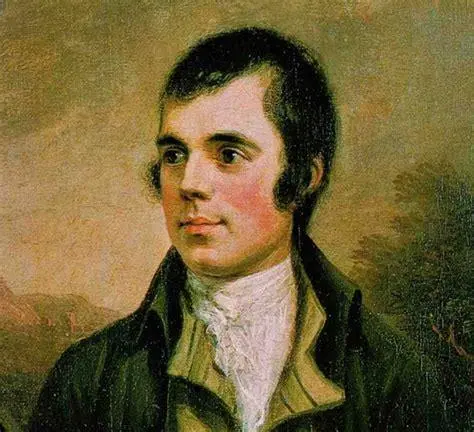
Robert Burns
For a' That and a' That
Is there, for honest poverty,
That hings his head, an' a' that?
The coward slave, we pass him by,
We dare be poor for a' that!
For a' that, an' a' that,
Our toils obscure, an' a' that;
The rank is but the guinea's stamp;
The man's the gowd for a' that,
What tho' on hamely fare we dine,
Wear hoddin-gray, an' a' that;
Gie fools their silks, and knaves their wine,
A man's a man for a' that.
For a' that, an' a' that,
Their tinsel show an' a' that;
The honest man, tho' e'er sae poor,
Is king o' men for a' that.
Ye see yon birkie, ca'd a lord
Wha struts, an' stares, an' a' that;
Tho' hundreds worship at his word,
He's but a coof for a' that:
For a' that, an' a' that,
His riband, star, an' a' that,
The man o' independent mind,
He looks and laughs at a' that.
A prince can mak a belted knight,
A marquis, duke, an' a' that;
But an honest man's aboon his might,
Guid faith he mauna fa' that!
For a' that, an' a' that,
Their dignities, an' a' that,
The pith o' sense, an' pride o' worth,
Are higher rank than a' that.
Then let us pray that come it may,
As come it will for a' that,
That sense and worth, o'er a' the earth,
May bear the gree, an' a' that.
For a' that, an' a' that,
It's coming yet, for a' that,
That man to man, the warld o'er,
Shall brothers be for a' that.
Read more →
241

William Wordsworth
Andrew Jones
I hate that Andrew Jones; he'll breed
His children up to waste and pillage.
I wish the press-gang or the drum
With its tantara sound would come,
And sweep him from the village!
I said not this, because he loves
Through the long day to swear and tipple;
But for the poor dear sake of one
To whom a foul deed he had done,
A friendless man, a travelling cripple!
For this poor crawling helpless wretch,
Some horseman who was passing by,
A penny on the ground had thrown;
But the poor cripple was alone
And could not stoop--no help was nigh.
Inch-thick the dust lay on the ground
For it had long been droughty weather;
So with his staff the cripple wrought
Among the dust till he had brought
The half-pennies together.
It chanced that Andrew passed that way
Just at the time; and there he found
The cripple in the mid-day heat
Standing alone, and at his feet
He saw the penny on the ground.
He stopped and took the penny up:
And when the cripple nearer drew,
Quoth Andrew, "Under half-a-crown,
What a man finds is all his own,
And so, my Friend, good-day to you."
And 'hence' I said, that Andrew's boys
Will all be trained to waste and pillage;
And wished the press-gang, or the drum
With its tantara sound, would come
And sweep him from the village.
Read more →
240
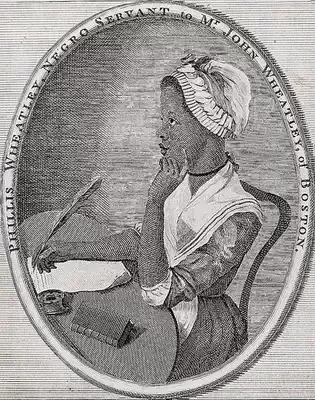
Phillis Wheatley
To the Rt. Hon. William, Earl of Dartmouth
Hail, happy day, when, smiling like the morn,
Fair Freedom rose New-England to adorn:
The northern clime beneath her genial ray,
Dartmouth, congratulates thy blissful sway:
Elate with hope her race no longer mourns,
Each soul expands, each grateful bosom burns,
While in thine hand with pleasure we behold
The silken reins, and Freedom's charms unfold.
Long lost to realms beneath the northern skies
She shines supreme, while hated faction dies:
Soon as appear'd the Goddess long desir'd,
Sick at the view, she languish'd and expir'd;
Thus from the splendors of the morning light
The owl in sadness seeks the caves of night.
No more, America, in mournful strain
Of wrongs, and grievance unredress'd complain,
No longer shalt thou dread the iron chain,
Which wanton Tyranny with lawless hand
Had made, and with it meant t' enslave the land.
Should you, my lord, while you peruse my song,
Wonder from whence my love of Freedom sprung,
Whence flow these wishes for the common good,
By feeling hearts alone best understood,
I, young in life, by seeming cruel fate
Was snatch'd from Afric's fancy'd happy seat:
What pangs excruciating must molest,
What sorrows labour in my parent's breast?
Steel'd was that soul and by no misery mov'd
That from a father seiz'd his babe belov'd:
Such, such my case. And can I then but pray
Others may never feel tyrannic sway?
For favours past, great Sir, our thanks are due,
And thee we ask thy favours to renew,
Since in thy pow'r, as in thy will before,
To sooth the griefs, which thou did'st once deplore.
May heav'nly grace the sacred sanction give
To all thy works, and thou for ever live
Not only on the wings of fleeting Fame,
Though praise immortal crowns the patriot's name,
But to conduct to heav'ns refulgent fane,
May fiery coursers sweep th' ethereal plain,
And bear thee upwards to that blest abode,
Where, like the prophet, thou shalt find thy God.
Read more →
239
Robert W. Service
Divine Detachment
One day the Great Designer sought
His Clerk of Birth and Death.
Said he: "Two souls are in my thought,
to whom I gave life-breath.
I deemed my work was fitly done,
But yester-eve I saw
That in the finished brain of one
There was a tiny flaw.
"It worried me, and I would know,
Since I am all to blame,
What happened to them down below,
Of honour or of shame;
For if the later did befall,
My sorrow will be grave . . ."
Then numbers astronomical
unto the Clerk he gave.
The Keeper of the Rolls replied:
"Of them I've little trace;
But one he was a Prince of pride
And one of lowly race.
One was a Holy Saint proclaimed;
For one no hell sufficed . . . .
Let's see - the last was Nero named,
The other . . . Jesus Christ."
Read more →
235
Robert W. Service
The Silent Ones
I'm just an ordinary chap
Who comes home to his tea,
And mostly I don't care a rap
What people think of me;
I do my job and take my pay,
And love of peace expound;
But as I go my patient way,
--Don't push me round.
Though I respect authority
And order never flout,
When Law and Justice disagree
You can include me out.
The Welfare State I tolerate
If it is kept in bound,
But if you wish to rouse my hate
--Just push me round.
And that's the way with lots of us:
We want to feel we're free;
So labour governments we cuss
And mock at monarchy.
Yea, we are men of secret mirth,
And fury seldom sound;
But if you value peace on earth
--Don't push us round.
Read more →
233

John Greenleaf Whittier
To The Reformers Of England
GOD bless ye, brothers! in the fight
Ye 're waging now, ye cannot fail,
For better is your sense of right
Than king-craft's triple mail.
Than tyrant's law, or bigot's ban,
More mighty is your simplest word;
The free heart of an honest man
Than crosier or the sword.
Go, let your blinded Church rehearse
The lesson it has learned so well;
It moves not with its prayer or curse
The gates of heaven or hell.
Let the State scaffold rise again;
Did Freedom die when Russell died?
Forget ye how the blood of Vane
From earth's green bosom cried?
The great hearts of your olden time
Are beating with you, full and strong;
All holy memories and sublime
And glorious round ye throng.
The bluff, bold men of Runnymede
Are with ye still in times like these;
The shades of England's mighty dead,
Your cloud of witnesses!
The truths ye urge are borne abroad
By every wind and every tide;
The voice of Nature and of God
Speaks out upon your side.
The weapons which your hands have found
Are those which Heaven itself has wrought,
Light, Truth, and Love; your battle-ground
The free, broad field of Thought.
No partial, selfish purpose breaks
The simple beauty of your plan,
Nor lie from throne or altar shakes
Your steady faith in man.
The languid pulse of England starts
And bounds beneath your words of power,
The beating of her million hearts
Is with you at this hour!
O ye who, with undoubting eyes,
Through present cloud and gathering storm,
Behold the span of Freedom's skies,
And sunshine soft and warm;
Press bravely onward! not in vain
Your generous trust in human-kind;
The good which bloodshed could not gain
Your peaceful zeal shall find.
Press on! the triumph shall be won
Of common rights and equal laws,
The glorious dream of Harrington,
And Sidney's good old cause.
Blessing the cotter and the crown,
Sweetening worn Labor's bitter cup;
And, plucking not the highest down,
Lifting the lowest up.
Press on! and we who may not share
The toil or glory of your fight
May ask, at least, in earnest prayer,
God's blessing on the right!
Read more →
229

Jonathan Swift
The Revolution At Market-Hill
From distant regions Fortune sends
An odd triumvirate of friends;
Where Phoebus pays a scanty stipend,
Where never yet a codling ripen'd:
Hither the frantic goddess draws
Three sufferers in a ruin'd cause:
By faction banish'd, here unite,
A Dean, a Spaniard, and a Knight;
Unite, but on conditions cruel;
The Dean and Spaniard find it too well,
Condemn'd to live in service hard;
On either side his honour's guard:
The Dean to guard his honour's back,
Must build a castle at Drumlack;
The Spaniard, sore against his will,
Must raise a fort at Market-Hill.
And thus the pair of humble gentry
At north and south are posted sentry;
While in his lordly castle fixt,
The knight triumphant reigns betwixt:
And, what the wretches most resent,
To be his slaves, must pay him rent;
Attend him daily as their chief,
Decant his wine, and carve his beef.
O Fortune! 'tis a scandal for thee
To smile on those who are least worthy:
Weigh but the merits of the three,
His slaves have ten times more than he.
Proud baronet of Nova Scotia!
The Dean and Spaniard must reproach ye:
Of their two fames the world enough rings:
Where are thy services and sufferings?
What if for nothing once you kiss'd,
Against the grain, a monarch's fist?
What if, among the courtly tribe,
You lost a place and saved a bribe?
And then in surly mood came here,
To fifteen hundred pounds a-year,
And fierce against the Whigs harangu'd?
You never ventured to be hang'd.
How dare you treat your betters thus?
Are you to be compared with us?
Come, Spaniard, let us from our farms
Call forth our cottagers to arms:
Our forces let us both unite,
Attack the foe at left and right;
From Market-Hill's exalted head,
Full northward let your troops be led;
While I from Drapier's-Mount descend,
And to the south my squadrons bend.
New-River Walk, with friendly shade,
Shall keep my host in ambuscade;
While you, from where the basin stands,
Shall scale the rampart with your bands.
Nor need we doubt the fort to win;
I hold intelligence within.
True, Lady Anne no danger fears,
Brave as the Upton fan she wears;
Then, lest upon our first attack
Her valiant arm should force us back,
And we of all our hopes deprived;
I have a stratagem contrived.
By these embroider'd high-heel shoes
She shall be caught as in a noose:
So well contriv'd her toes to pinch,
She'll not have power to stir an inch:
These gaudy shoes must Hannah place
Direct before her lady's face;
The shoes put on, our faithful portress
Admits us in, to storm the fortress,
While tortured madam bound remains,
Like Montezume, in golden chains;
Or like a cat with walnuts shod,
Stumbling at every step she trod.
Sly hunters thus, in Borneo's isle,
To catch a monkey by a wile,
The mimic animal amuse;
They place before him gloves and shoes;
Which, when the brute puts awkward on:
All his agility is gone;
In vain to frisk or climb he tries;
The huntsmen seize the grinning prize.
But let us on our first assault
Secure the larder and the vault;
The valiant Dennis, you must fix on,
And I'll engage with Peggy Dixon:
Then, if we once can seize the key
And chest that keeps my lady's tea,
They must surrender at discretion!
And, soon as we have gain'd possession,
We'll act as other conquerors do,
Divide the realm between us two;
Then, (let me see,) we'll make the knight
Our clerk, for he can read and write.
But must not think, I tell him that,
Like Lorimer to wear his hat;
Yet, when we dine without a friend,
We'll place him at the lower end.
Madam, whose skill does all in dress lie,
May serve to wait on Mrs. Leslie;
But, lest it might not be so proper
That her own maid should over-top her,
To mortify the creature more,
We'll take her heels five inches lower.
For Hannah, when we have no need of her,
'Twill be our interest to get rid of her;
And when we execute our plot,
'Tis best to hang her on the spot;
As all your politicians wise,
Dispatch the rogues by whom they rise.
Read more →
224
Henry Lawson
The Legend of Mammon Castle
IN THE days that will be olden after many years are gone,
Ere the world emerged from darkness floating out into the dawn,
On a mountain rising steeply from the depth of marsh and wood
Raised in scorn above the lowlands Mammon Castle proudly stood—
Mammon Castle, built of marble that was cut and reared with pain
By the poor and starving wretches who were serfs on that domain—
All the jewel-studded windows shone at sunset like a fire,
And a diamond was flashing from the needle of the spire.
Now the nobles held the castle by a title that was old,
And they drank from crystal goblets and they ate from plates of gold;
The coffers of the castle they were plenished by the thralls,
And many were the revels that were held in Mammon’s halls.
And the plunder from the toilers more than paid for silks and wine,
So the flower-beds were bordered with the jewels of the mine,
All the serfs were taught to worship both the lady and the lord,
And the nobles taught their children to be wiser far than God.
But a vassal preached sedition and in a gloomy hour
Came the wild and haggard vassals to the gate of Mammon Tower;
They asked for food and shelter and were answered by a blow,
And, rising in their anger, soon they laid the castle low.
The jewels of the castle went to buy the people bread,
And according to his labour was the toiler clothed and fed.
And with the wood and marble—my dreaming tells me so—
Many little homes were builded in the valleys down below.
Read more →
225
John Greenleaf Whittier
Toussaint L’Ouverture
'T WAS night. The tranquil moonlight smile
With which Heaven dreams of Earth, shed down
Its beauty on the Indian isle, —
On broad green field and white-walled town;
And inland waste of rock and wood,
In searching sunshine, wild and rude,
Rose, mellowed through the silver gleam,
Soft as the landscape of a dream.
All motionless and dewy wet,
Tree, vine, and flower in shadow met:
The myrtle with its snowy bloom,
Crossing the nightshade's solemn gloom, —
The white cecropia's silver rind
Relieved by deeper green behind,
The orange with its fruit of gold,
The lithe paullinia's verdant fold,
The passion-flower, with symbol holy,
Twining its tendrils long and lowly,
The rhexias dark, and cassia tall,
And proudly rising over all,
The kingly palm's imperial stem,.
Crowned with its leafy diadem,
Star-like, beneath whose sombre shade,
The fiery-winged cucullo played!
How lovely was thine aspect, then,
Fair island of the Western Sea!
Lavish of beauty, even whe
Thy brutes were happier than thy men,
For they, at least, were free!
Regardless of thy glorious clime,
Unmindful of thy soil of flowers,
The toiling negro sighed, that Time
No faster sped his hours.
For, by the dewy moonlight still,
He fed the weary-turning mill,
Or bent him in the chill morass,
To pluck the long and tangled grass,
And hear above his scar-worn back
The heavy slave-whip's frequent crack:
While in his heart one evil thought
In solitary madness wrought,
One baleful fire surviving still
The quenching of the immortal mind,
One sterner passion of his kind,
Which even fetters could not kill,
The savage hope, to deal, erelong,
A vengeance bitterer than his wrong!
Hark to that cry! long, loud, and shrill,
From field and forest, rock and hill,
Thrilling and horrible it rang,
Around, beneath, above;
The wild beast from his cavern sprang,
The wild bird from her grove!
Nor fear, nor joy, nor agony
Were mingled in that midnight cry;
But like the lion's growl of wrath,
When falls that hunter in his path
Whose barbed arrow, deeply set,
Is rankling in his bosom yet,
It told of hate, full, deep, and strong,
Of vengeance kindling out of wrong;
It was as if the crimes of years —
The unrequited toil, the tears,
The shame and hate, which liken well
Earth's garden to the nether hell—
Had found in nature's self a tongue,
On which the gathered horror hung;
As if from cliff, and stream, and glen
Burst on the startled ears of men
That voice which rises unto God,
Solemn and stern, —the cry of blood!
It ceased, and all was still once more,
Save ocean chafing on his shore,
The sighing of the wind between
The broad banana's leaves of green,
Or bough by restless plumage shook,
Or murmuring voice of mountain brook.
Brief was the silence. Once again
Pealed to the skies that frantic yell,
Glowed on the heavens a fiery stain,
And flashes rose and fell;
And painted on the blood-red sky,
Dark, naked arms were tossed on high;
And, round the white man's lordly hall,
Trod, fierce and free, the brute he made;
And those who crept along the wall,
And answered to his lightest call
With more than spaniel dread,
The creatures of his lawless beck,
Were trampling on his very neck!
And on the night-air, wild and clear,
Rose woman's shriek of more than fear;
For bloodied arms were round her thrown,
Aan dark cheeks pressed against her own!
Then, injured Afric! for the shame
Of thy own daughters, vengeance came
Full on the scornful hearts of those,
Who mocked thee in thy nameless woes,
And to thy hapless children gave
One choice,—pollution or the grave!
Where then was he whose fiery zeal
Had taught the trampled heart to feel,
Until despair itself grew strong,
And vengeance fed its torch from wrong?
Now, when the thunderbolt is speeding;
Now, when oppression's heart is bleeding;
Now, when the latent curse of Time
Is raining down in fire and blood,
That curse which, through long years of crime,
Has gathered, drop by drop, its flood, —
Why strikes he not, the foremost one,
Where murder's sternest deeds are done?
He stood the aged palms beneath,
That shadowed o'er his humble door,
Listening, with half-suspended breath,
To the wild sounds of fear and death,
Toussaint L'Ouverture!
What marvel that his heart beat high!
The blow for freedom had been given,
And blood had answered to the cry
Which Earth sent up to Heaven!
What marvel that a fierce delight
Smiled grimly o'er his brow of night,
As groan and shout and bursting flame
Told where the midnight tempest came,
With blood and fire along its van,
And death behind! he was a Man!
Yes, dark-souled chieftain! if the light
Of mild Religion's heavenly ray
Unveiled not to thy mental sight
The lowlier and the purer way,
In which the Holy Sufferer trod,
Meekly amidst the sons of crime;
That calm reliance upon God
For justice in His own good time;
That gentleness to which belongs
Forgiveness for its many wrongs,
Even as the primal martyr, kneeling
For mercy on the evil-dealing;
Let not the favored white man name
Thy stern appeal, with words of blame.
Has he not, with the light of heaven
Broadly around him, made the same?
Yea, on his thousand war-fields striven,
And gloried in his ghastly shame?
Kneeling amidst his brother's blood,
To offer mockery unto God,
As if the High and Holy One
Could smile on deeds of murder done!
As if a human sacrifice
Were purer in His holy eyes,
Though offered up by Christian hands,
Than the foul rites of Pagan lands!
. . . . . . . .
Sternly, amidst his household band,
His carbine grasped within his hand,
The white man stood, prepared and still,
Waiting the shock of maddened men,
Unchained, and fierce as tigers, when
The horn winds through their caverned hill.
And one was weeping in his sight,
The sweetest flower of all the isle,
The bride who seemed but yesternight
Love's fair embodied smile.
And, clinging to her trembling knee,
Looked up the form of infancy,
With tearful glance in either face
The secret of its fear to trace.
'Ha! stand or die!' The white man's eye
His steady musket gleamed along,
As a tall Negro hastened nigh,
With fearless step and strong.
'What, ho, Toussaint!' A moment more,
His shadow crossed the lighted floor.
'Away!' he shouted; 'fly with me,
The white man's bark is on the sea;
Her sails must catch the seaward wind,
For sudden vengeance sweeps behind.
Our brethren from their graves have spoken,
The yoke is spurned, the chain is broken;
On all the hills our fires are glowing,
Through all the vales red blood is flowing!
No more the mocking White shall rest
His foot upon the Negro's breast;
No more, at morn or eve, shall drip
The warm blood from the driver's whip:
Yet, though Tonssaint has vengeance sworn
For all the wrongs his race have borne,
Though for each drop of Negro blood
The white man's veins shall pour a flood;
Not all alone the sense of ill
Around his heart is lingering still,
Nor deeper can the white man feel
The generous warmth of grateful zeal.
Friends of the Negro! fly with me,
The path is open to the sea:
Away, for life!' He spoke, and pressed
The young child to his manly breast,
As, headlong, through the cracking cane,
Down swept the dark insurgent train,
Drunken and grim, with shout and yell
Howled through the dark, like sounds from hell.
Far out, in peace, the white man's sail
Swayed free before the sunrise gale.
Cloud-like that island hung afar,
Along the bright horizon's verge,
O'er which the curse of servile war
Rolled its red torrent, surge on surge;
And he, the Negro champion, where
In the fierce tumult struggled he?
Go trace him by the fiery glare
Of dwellings in the midnight air,
The yells of triumph and despair,
The streams that crimson to the sea!
Sleep calmly in thy dungeon-tomb,
Beneath Besançon's alien sky,
Dark Haytien! for the time shall come,
Yea, even now is nigh,
When, everywhere, thy name shall be
Redeemed from color's infamy;
And men shall learn to speak of thee
As one of earth's great spirits, born
In servitude, and nursed in scorn,
Casting aside the weary weight
And fetters of its low estate,
In that strong majesty of soul
Which knows no color, tongue, or clime,
Which still hath spurned the base control
Of tyrants through all time!
Far other hands than mine may wreathe
The laurel round thy brow of death,
And speak thy praise, as one whose word
A thousand fiery spirits stirred,
Who crushed his foeman as a worm,1
Whose step on human hearts fell firm:
Be mine the better task to find
A tribute for thy lofty mind,
Amidst whose gloomy vengeance shone
Some milder virtues all thine own,
Some gleams of feeling pure and warm,
Like sunshine on a sky of storm,
Proofs that the Negro's heart retains
Some nobleness amid its chains, —
That kindness to the wronged is never
Without its excellent reward,
Holy to human-kind and ever
Acceptable to God.
Read more →
225
Robert W. Service
Two Words
'God' is composed of letters three,
But if you put an 'l'
Before the last it seems to me
A synonym for Hell.
For all of envy, greed and hate
The human heart can hold
Respond unto the devil's bait
Of Gold.
When God created Gold to be
For our adorning fit,
I little think he dreamed that we
Would come to worship it.
But when you ruefully have scanned
The chronicles of Time,
You'll find that lucre lends a hand
To Crime.
So if you are a millionaire,
To be of Heaven sure,
Give every penny you can spare
Unto the sick and poor.
From Gold strike out the evil 'ell,'
And so with letters odd
You can with peace of spirit spell
Just GOD.
Read more →
224
Henry Lawson
The Hymn of the Socialists
By the bodies and minds and souls that rot in a common stye
In the city’s offal-holes, where the dregs of its horrors lie —
By the prayers that bubble out, but never ascend to God,
We swear the tyrants of earth to rout, with tongue and with pen and sword!
By the child that sees the light, where the pestilent air stagnates,
By the woman, worn and white, who under the street-lamp waits,
By the horror of vice that thrives in the dens of the wretched poor,
We swear to strike when the time arrives, for all that is good and pure!
By the rights that were always ours — the rights that we ne’er enjoyed,
And the gloomy cloud that lowers on the brow of the unemployed;
By the struggling mothers and wives — by girls in the streets of sin —
We swear to strike when the time arrives, for our kind and our kith and kin!
By our burning hate for men who rob us of ours by might,
And drive to the slum and den, the poor from the sun and light,
By the hell-born greed that drives our sons o’er the world to roam,
We swear to strike when the time arrives, and strike for our friends and home.
By the little of manhood left in a world of want and sin,
By the rift in the dark cloud’s brow where the light still struggles in,
By the love that scarce survives in a stream that is sluggish and thin,
We swear to work till the time arrives for ourselves and our kind and kin.
The little of love may dry in its stream that scarcely flows,
The little of manhood die and the rift in the dark clouds close,
And hope may vanish from earth and all that is pure and bright,
But we swear to strike eer that time has birth with the whole of our gathered might!
Read more →
223
John Greenleaf Whittier
Leggett’s Monument
Yes, pile the marble o'er him! It is well
That ye who mocked him in his long stern strife,
And planted in the pathway of his life
The ploughshares of your hatred hot from hell,
Who clamored down the bold reformer when
He pleaded for his captive fellow-men,
Who spurned him in the market-place, and sought
Within thy walls, St. Tammany, to bind
In party chains the free and honest thought,
The angel utterance of an upright mind,
Well is it now that o'er his grave ye raise
The stony tribute of your tardy praise,
For not alone that pile shall tell to Fame
Of the brave heart beneath, but of the builders' shame!
Read more →
223
John Greenleaf Whittier
The Poor Voter On Election Day
THE proudest now is but my peer,
The highest not more high;
To-day, of all the weary year,
A king of men am I.
To-day, alike are great and small,
The nameless and the known;
My palace is the people's hall,
The ballot-box my throne!
Who serves to-day upon the list
Beside the served shall stand;
Alike the brown and wrinkled fist,
The gloved and dainty hand!
The rich is level with the poor,
The weak is strong to-day;
And sleekest broadcloth counts no more
Than homespun frock of gray.
To-day let pomp and vain pretence
My stubborn right abide;
I set a plain man's common sense
Against the pedant's pride.
To-day shall simple manhood try
The strength of gold and land;
The wide world has not wealth to buy
The power in my right hand!
While there's a grief to seek redress,
Or balance to adjust,
Where weighs our living manhood less
Than Mammon's vilest dust, —
While there's a right to need my vote,
A wrong to sweep away,
Up! clouted knee and ragged coat!
A man's a man to-day!
Read more →
219

Anonymous
At Liberty I Sit and See
At liberty I sit and see
Them, that have erst laugh'd me to scorn,
Whipp'd with the whip that scourged me:
And now they ban that they were born.
I see them sit full soberly
And think their earnest looks to hide;
Now, in themselves, they cannot spy
That they or this in me have spied.
I see them sitting all alone,
Marking the steps, each word and look;
And now they tread where I have gone,
The painful path that I forsook.
Now I see well I saw no whit
When they saw well, that now are blind;
But happy hap hath made me quit,
And just judgement hath them assign'd.
I see them wander all alone,
And tread full fast, in dreadful doubt,
The self-same path that I have gone:
Blessed be hap that brought me out!
At liberty all this I see,
And say no word but erst among,
Smiling at them that laugh'd at me:
Lo, such is hap! Mark well my song!
Read more →
220
Robert W. Service
The Outlaw
A wild and woeful race he ran
Of lust and sin by land and sea;
Until, abhorred of God and man,
They swung him from the gallows-tree.
And then he climbed the Starry Stair,
And dumb and naked and alone,
With head unbowed and brazen glare,
He stood before the Judgment Throne.
The Keeper of the Records spoke:
"This man, O Lord, has mocked Thy Name.
The weak have wept beneath his yoke,
The strong have fled before his flame.
The blood of babes is on his sword;
His life is evil to the brim:
Look down, decree his doom, O Lord!
Lo! there is none will speak for him."
The golden trumpets blew a blast
That echoed in the crypts of Hell,
For there was Judgment to be passed,
And lips were hushed and silence fell.
The man was mute; he made no stir,
Erect before the Judgment Seat . . .
When all at once a mongrel cur
Crept out and cowered and licked his feet.
It licked his feet with whining cry.
Come Heav'n, come Hell, what did it care?
It leapt, it tried to catch his eye;
Its master, yea, its God was there.
Then, as a thrill of wonder sped
Through throngs of shining seraphim,
The Judge of All looked down and said:
"Lo! here is ONE who pleads for him.
"And who shall love of these the least,
And who by word or look or deed
Shall pity show to bird or beast,
By Me shall have a friend in need.
Aye, though his sin be black as night,
And though he stand 'mid men alone,
He shall be softened in My sight,
And find a pleader by My Throne.
"So let this man to glory win;
From life to life salvation glean;
By pain and sacrifice and sin,
Until he stand before Me -- clean.
For he who loves the least of these
(And here I say and here repeat)
Shall win himself an angel's pleas
For Mercy at My Judgment Seat."
Read more →
216
John Greenleaf Whittier
The World’s Convention Of The Friends Of Emancipation, Held In London In
YES, let them gather! Summon forth
The pledged philanthropy of Earth.
From every land, whose hills have heard
The bugle blast of Freedom waking;
Or shrieking of her symbol-bird
From out his cloudy eyrie breaking:
Where Justice hath one worshipper,
Or truth one altar built to her;
Where'er a human eye is weeping
O'er wrongs which Earth's sad children know;
Where'er a single heart is keeping
Its prayerful watch with human woe:
Thence let them come, and greet each other,
And know in each a friend and brother!
Yes, let them come! from each green vale
Where England's old baronial halls
Still bear upon their storied walls
The grim crusader's rusted mail,
Battered by Paynim spear and brand
On Malta's rock or Syria's sand.!
And mouldering pennon-staves once set
Within the soil of Palestine,
By Jordan and Gennesaret;
Or, borne with England's battle line,
O'er Acre's shattered turrets stooping,
Or, midst the camp their banners drooping,
With dews from hallowed Hermon wet,
A holier summons now is given
Than that gray herinit's voice of old,
Which unto all the winds of heaven
The banners of the Cross unrolled!
Not for the long-deserted shrine;
Not for the dull unconscious sod,
Which tells not by one lingering sign
That there the hope of Israel trod;
But for that truth, for which alone
In pilgrim eyes are sanctified
The garden moss, the mountain stone,
Whereon His holy sandals pressed, —
The fountain which His lip hath blessed, —
Whate'er hath touched His garment's hem
At Bethany or Bethlehem,
Or Jordan's river-side.
For Freedom in the name of Him
Who came to raise Earth's drooping poor,
To break the chain from every limb,
The bolt from every prison door!
For these, o'er all the earth hath passed
An ever-deepening trumpet blast,
As if an angel's breath had lent
Its vigor to the instrument.
And Wales, from Snowrich's mountain wall,
Shall startle at that thrilling call,
As if she heard her bards again;
And Erin's 'harp on Tara's wall'
Give out its ancient strain,
Mirthful and sweet, yet sad withal, —
The melody which Erin loves,
When o'er that harp, 'mid bursts of gladness
And slogan cries and lyke-wake sadness,
The hand of her O'Connell moves!
Scotland, from lake and tarn and rill,
And mountain hold, and heathery hill,
Shall catch and echo back the note,
As if she heard upon the air
Once more her Cameronian's prayer.
And song of Freedom float.
And cheering echoes shall reply
From each remote dependency,
Where Britain's mighty sway is known,
In tropic sea or frozen zone;
Where'er her sunset flag is furling,
Or morning gun-fire's smoke is curling;
From Indian Bengal's groves of palm
And rosy fields and gales of balm,
Where Eastern pomp and power are rolled
Through regal Ava's gates of gold;
And from the lakes and ancient woods
And dim Canadian solitudes,
Whence, sternly from her rocky throne,
Queen of the North, Quebec looks down;
And from those bright and ransomed Isles
Where all unwonted Freedom smiles,
And the dark laborer still retains
The scar of slavery's broken chains!
From the hoar Alps, which sentinel
The gateways of the land of Tell,
Where morning's keen and earliest glance
On Jura's rocky wall is thrown,
And from the olive bowers of France
And vine groves garlanding the Rhone, —
'Friends of the Blacks,' as true and tried
As those who stood by Oge's side,
And heard the Haytien's tale of wrong,
Shall gather at that summons strong;
Broglie, Passy, and he whose song
Breathed over Syria's holy sod,
And in the paths which Jesus trod,
And murmured midst the hills which hem
Crownless and sad Jerusalem,
Hath echoes whereso'er the tone
Of Israel's prophey-lyre is known.
Still let them come; from Quito's walls,
And from the Orinoco's tide,
From Lima's Inca-haunted halls,
From Santa Fe and Yucatan, —
Men who by swart Guerrero's side
Proclaimed the deathless rights of man,
Broke every bond and fetter off,
And hailed in every sable serf
A free and brother Mexican!
Chiefs who across the Andes' chain
Have followed Freedom's flowing pennon,
And seen on Junin's fearful plain,
Glare o'er the broken ranks of Spain
The fire-burst of Bolivar's cannon!
And Hayti, from her mountain land,
Shall send the sons of those who hurled
Defiance from her blazing strand,
The war-gage from her Petition's hand,
Alone against a hostile world.
Nor all unmindful, thou, the while,
Land of the dark and mystic Nile!
Thy Moslem mercy yet may shame
All tyrants of a Christian name,
When in the shade of Gizeh's pile,
Or, where, from Abyssinian hills
El Gerek's upper fountain fills,
Or where from Mountains of the Moon
El Abiad bears his watery boon,
Where'er thy lotus blossoms swim
Within their ancient hallowed waters;
Where'er is heard the Coptic hymn,
Or song of Nubia's sable daughters;
The curse of slavery and the crime,
Thy bequest from remotest time,
At thy dark Mehemet's decree
Forevermore shall pass from thee;
And chains forsake each captive's limb
Of all those tribes, whose hills around
Have echoed back the cymbal sound
And victor horn of Ibrahim.
And thou whose glory and whose crime
To earth's remotest bound and clime,
In mingled tones of awe and scorn,
The echoes of a world have borne,
My country! glorious at thy birth,
A day-star flashing brightly forth,
The herald-sign of Freedom's dawn!
Oh, who could dream that saw thee then,
And watched thy rising from afar,
That vapors from oppression's fen
Would cloud the upward tending star?
Or, that earth's tyrant powers, which heard,
Awe-struck, the shout which hailed thy dawning,
Would rise so soon, prince, peer, and king,
To mock thee with their welcoming,
Like Hades when her thrones were stirred
To greet the down-east Star of Morning!
'Aha! and art thou fallen thus?
Art thou become as one of us?'
Land of my fathers! there will stand,
Amidst that world-assembled band,
Those owning thy maternal claim
Unweakened by thy crime and shame;
The sad reprovers of thy wrong;
The children thou hast spurned so long.
Still with affection's fondest yearning
To their unnatural mother turning.
No traitors they! but tried and leal,
Whose own is but thy general weal,
Still blending with the patriot's zeal
The Christian's love for human kind,
To caste and climate unconfined.
A holy gathering! peaceful all:
No threat of war, no savage call
For vengeance on an erring brother!
But in their stead the godlike plan
To teach the brotherhood of man
To love and reverence one another,
As sharers of a common blood,
The children of a common God!
Yet, even at its lightest word,
Shall Slavery's darkest depths be stirred:
Spain, watching from her Moro's keep
Her slave-ships traversing the deep,
And Rio, in her strength and pride,
Lifting, along her mountain-side,
Her snowy battlements and towers,
Her lemon-groves and tropic bowers,
With bitter hate and sullen fear
Its freedom-giving voice shall hear;
And where my country's flag is flowing,
On breezes from Mount Vernon blowing,
Above the Nation's council halls,
Where Freedom's praise is loud and long,
While close beneath the outward walls
The driver plies his reeking thong;
The hammer of the man-thief falls,
O'er hypocritic cheek and brow
The crimson flush of shame shall glow
And all who for their native land
Are pledging life and heart and hand,
Worn watchers o'er her changing weal,
Who for her tarnished honor feel,
Through cottage door and council-hall
Shall thunder an awakening call.
The pen along its page shall burn
With all intolerable scorn;
An eloquent rebuke shall go
On all the winds that Southward blow;
From priestly lips, now sealed and dumb,
Warning and dread appeal shall come,
Like those which Israel heard from him,
The Prophet of the Cherubim;
Or those which sad Esaias hurled
Against a sin-accursed world!
Its wizard leaves the Press shall fling
Unceasing from its iron wing,
With characters inscribed thereon,
As fearful in the despot's hall
As to the pomp of Babylon
The fire-sign on the palace wall!
And, from her dark iniquities,
Methinks I see my country rise:
Not challenging the nations round
To note her tardy justice done;
Her captives from their chains unbound,
Her prisons opening to the sun:
But tearfully her arms extending
Over the poor and unoffending;
Her regal emblem now no longer
A bird of prey with talons reeking,
Above the dying captive shrieking,
But, spreading out her ample wing,
A broad, impartial covering,
The weaker sheltered by the stronger!
Oh, then to Faith's anointed eyes
The promised token shall be given;
And on a nation's sacrifice,
Atoning for the sin of years,
And wet with penitential tears,
The fire shall fall from Heaven!
Read more →
210
Henry Lawson
Macleay Street and Red Rock Lane
Macleay Street looks to Mosman,
Across the other side,
With brave asphalted pavements
And roadway clean and wide.
Macleay Street hath its mansions,
Its grounds and greenery;
Macleay Street hath its terraces
As terraces should be.
Red Rock Lane looks to nowhere,
With pockets into hell;
Red Rock Lane is a horror
Of heat and dirt and smell.
Red Rock Lane hath its brothels,
Of houses one in three;
Red Rock Lane hath its corner pubs
As fourth-rate pubs should be.
Macleay Street, cool and quiet,
Is marked off from the town,
And standing in the centre
The tall arc lamps look down.
The jealous closed cabs vanish
That stole from out the row,
Fair women stroll bareheaded,
And theatre parties go.
Red Rock Lane, hot with riot,
Hides things that none should know;
The furtive couples vanish
Through doorways dark and low.
Lust, thievery, drink and madness
In one infernal stew—
And Mrs Johnson, raving,
Walks out—bareheaded too.
Macleay Street hath its swindles,
But on a public scale;
Macleay Street hath its razzles
Until the night grows pale.
Macleay Street hath its scandals,
But—only this is plain,
That nothing is a scandal
Down there in Red Rock Lane.
Macleay Street looks to Mosman
In morning’s rosy glow,
And freshly to the city
The summer-suited go
While wild-eyed, foul and shaking,
Red Rock Lane wakes again.
This morning at the Central
They’re fining Red Rock Lane.
The Central says “the risin’”,
“Seven days”, or what you will;
Macleay Street says, “Drive slowly”
When any one is ill.
The law sends Black Maria
When Red Rock Lane is dead.
But doctors come in motor cars
When Macleay Street’s got a head.
The grey-faced, weedy parents
Sunk in Red Rock Lane holes—
They worry, pinch, and perish
To save their children’s souls.
The fairy of Macleay Street
Shall never soil her hands—
Her Pa is independent,
Or high up in “the Lands”.
And—well, there seems no moral,
And nothing more to tell,
But because of that fierce sympathy
Of souls to souls in hell;
And because of that wild kindness
To souls in sordid pain,
My soul I’d rather venture
With some in Red Rock Lane.
Read more →
206
Robert W. Service
Dumb Swede
With barbwire hooch they filled him full,
Till he was drunker than all hell,
And then they peddled him the bull
About a claim they had to sell.
A thousand bucks they made him pay,
Knowing that he had nothing more,
And when he begged it back next day,
And wept! - they kicked him from the door.
They reckoned they were mighty slick,
Them two tinhorns from Idaho;
That poor dumb Swede could swing a pick,
but that was all he'd ever know.
So sitting in a poker game,
They lost the price for which they sold
To that bonehead a poor dud claim
That didn't have a speck of gold.
My story's true as gospel creed
Of these bright boys from Idaho;
They made a sucker of that Swede
And laughed to see the poor boob go,
And work like nigger on his ground,
Bucked by the courage of despair . . .
Till lo! A rich pay-streak he found,
That made him twice a millionaire.
So two smart Alecs, mighty sick,
Begged jobs at fifteen bucks a day.
Then said the Swede: "Give each a pick
And let them sweat to make their pay."
And though he don't know what it means,
Folks call that Swede "magnanimous"
-But picking nuggets big as beans,
you oughta' hear them fellers cuss!
Read more →
205
Henry Lawson
For there's a swellin' in my heart -- a tightness in my throat --
For there's a swellin' in my heart -- a tightness in my throat --
We are for'ard when there's trouble! We are for'ard when there's graft!
But the men who never battle always seem to travel aft;
With their dressin'-cases, aft,
With their swell pyjamas, aft --
Yes! the idle and the careless, they have ease an' comfort, aft.
I feel so low an' wretched, as I mooch about the deck,
That I'm ripe for jumpin' over -- an' I wish there was a wreck!
We are driven to New Zealand to be shot out over there --
Scarce a shillin' in our pockets, nor a decent rag to wear,
With the everlastin' worry lest we don't get into graft --
There is little left to land for if you cannot travel aft;
No anxiety abaft,
They have stuff to land with, aft --
Oh, there's little left to land for if you cannot travel aft;
But it's grand at sea this mornin', an' Creation almost speaks,
Sailin' past the Bay of Islands with its pinnacles an' peaks,
With the sunny haze all round us an' the white-caps on the blue,
An' the orphan rocks an' breakers -- Oh, it's glorious sailin' through!
To the south a distant steamer, to the west a coastin' craft,
An' we see the beauty for'ard, better than if we were aft;
Spite of op'ra-glasses, aft;
But, ah well, they're brothers aft --
Nature seems to draw us closer -- bring us nearer fore-'n'-aft.
What's the use of bein' bitter? What's the use of gettin' mad?
What's the use of bein' narrer just because yer luck is bad?
What's the blessed use of frettin' like a child that wants the moon?
There is broken hearts an' trouble in the gilded first saloon!
We are used to bein' shabby -- we have got no overdraft --
We can laugh at troubles for'ard that they couldn't laugh at aft;
Spite o' pride an' tone abaft
(Keepin' up appearance, aft)
There's anxiety an' worry in the breezy cabins aft.
But the curse o' class distinctions from our shoulders shall be hurled,
An' the influence of woman revolutionize the world;
There'll be higher education for the toilin' starvin' clown,
An' the rich an' educated shall be educated down;
An' we all will meet amidships on this stout old earthly craft,
An' there won't be any friction 'twixt the classes fore-'n'-aft.
We'll be brothers, fore-'n'-aft!
Yes, an' sisters, fore-'n'-aft!
When the people work together, and there ain't no fore-'n'-aft.
Read more →
200